%22%3E%3C/path%3E%3Cpath d=%22M 63.072 7.554 C 62.258 8.022 61.577 8.689 61.092 9.493 L 61.092 7.076 L 57.158 7.076 L 57.158 22.64 L 61.089 22.64 L 61.089 14.888 C 61.089 13.446 61.403 12.434 62.03 11.853 C 62.818 11.218 63.818 10.907 64.826 10.982 L 65.868 10.982 L 65.868 6.851 C 64.891 6.834 63.926 7.076 63.073 7.554 Z%22 fill=%22rgb(17,17,17)%22%3E%3C/path%3E%3Cpath d=%22M 78.916 7.82 C 76.363 6.49 73.321 6.49 70.768 7.82 C 69.562 8.473 68.564 9.451 67.888 10.644 C 67.167 11.931 66.803 13.387 66.834 14.862 C 66.804 16.332 67.157 17.785 67.86 19.077 C 68.515 20.267 69.494 21.246 70.684 21.901 C 71.924 22.576 73.318 22.92 74.73 22.898 C 76.164 22.918 77.58 22.575 78.846 21.901 C 80.062 21.247 81.073 20.27 81.768 19.077 C 82.506 17.797 82.88 16.339 82.85 14.862 C 82.88 13.389 82.517 11.934 81.797 10.647 C 81.12 9.455 80.122 8.477 78.917 7.824 M 78.803 14.862 C 78.829 15.739 78.636 16.608 78.241 17.391 C 77.903 18.046 77.38 18.588 76.738 18.95 C 76.124 19.293 75.432 19.472 74.729 19.47 C 73.668 19.497 72.648 19.061 71.934 18.276 C 71.139 17.323 70.741 16.1 70.823 14.862 C 70.741 13.62 71.149 12.395 71.959 11.45 C 72.687 10.667 73.715 10.233 74.783 10.256 C 75.859 10.236 76.894 10.67 77.635 11.45 C 78.464 12.387 78.884 13.616 78.801 14.864%22 fill=%22rgb(17,17,17)%22%3E%3C/path%3E%3Cpath d=%22M 95.906 7.076 L 95.906 15.646 C 95.975 16.68 95.643 17.701 94.979 18.498 C 94.311 19.184 93.379 19.547 92.422 19.495 C 91.475 19.544 90.553 19.18 89.894 18.498 C 89.23 17.701 88.898 16.68 88.967 15.646 L 88.967 7.076 L 85.033 7.076 L 85.033 16.207 C 85 17.449 85.275 18.68 85.834 19.79 C 86.327 20.75 87.095 21.542 88.039 22.065 C 89.033 22.594 90.145 22.861 91.271 22.838 C 92.188 22.847 93.095 22.65 93.926 22.263 C 94.708 21.905 95.388 21.36 95.906 20.675 L 95.906 22.645 L 99.865 22.645 L 99.865 7.076 Z%22 fill=%22rgb(17,17,17)%22%3E%3C/path%3E%3Cpath d=%22M 4.513 15.626 C 4.511 10.815 7.606 6.549 12.181 5.059 C 16.756 3.57 21.77 5.195 24.601 9.086 L 27.816 5.87 C 24.074 1.186 17.981 -0.943 12.137 0.393 C 6.292 1.728 1.728 6.292 0.393 12.137 C -0.943 17.981 1.186 24.074 5.87 27.816 L 9.085 24.601 C 6.214 22.512 4.515 19.177 4.513 15.626%22 fill=%22rgb(32,62,235)%22%3E%3C/path%3E%3Cpath d=%22M 17.114 14.343 L 13.354 18.01 L 13.354 18.026 L 21.071 18.026 L 11.412 27.609 L 17.389 27.609 L 23.999 21.081 L 23.999 28.316 L 24.005 28.316 L 27.967 24.393 L 27.967 14.343 Z%22 fill=%22rgb(32,62,235)%22%3E%3C/path%3E%3C/g%3E%3C/svg%3E) ×
× ××
××›
›
›
›
LinkedIn Lead Gen Forms playbook 2026
LinkedIn Lead Gen Forms playbook 2026
LinkedIn Lead Gen Forms playbook 2026
LinkedIn Lead Gen Forms playbook 2026
LinkedIn Lead Gen Forms playbook 2026
LinkedIn Lead Gen Forms playbook 2026

Author
Aljaz Peklaj

The LinkedIn Lead Gen Forms playbook in 2026 is built on 4 patterns: pre-filled fields with LinkedIn profile data, form length of 4-6 fields max, single specific offer per form, and CRM sync within 60 seconds of submission. Programs running this playbook convert at 24-46% submit rate vs the 8-14% baseline from generic landing-page forms.
This is the operator playbook: form structure, field selection, offer types, attribution setup, and benchmarks.
TL;DR
The LinkedIn Lead Gen Forms playbook for 2026: 4-6 fields max (Name, Email, Company, Job Title, Phone optional). Pre-fill from LinkedIn profile. Single specific offer per form (case study, playbook, demo). Sync to CRM within 60 seconds via native integration or Zapier.
Submit rate averages 24-46% vs the 8-14% baseline from landing pages. CPL drops 40-60% vs the same campaigns running to website forms. Best tool: native LinkedIn Campaign Manager + ActiveCampaign for CRM sync.
See LinkedIn Marketing Solutions benchmarks for industry cross-checks.
The 4 patterns of Lead Gen Forms that convert
The pattern that beat every alternative we tested:
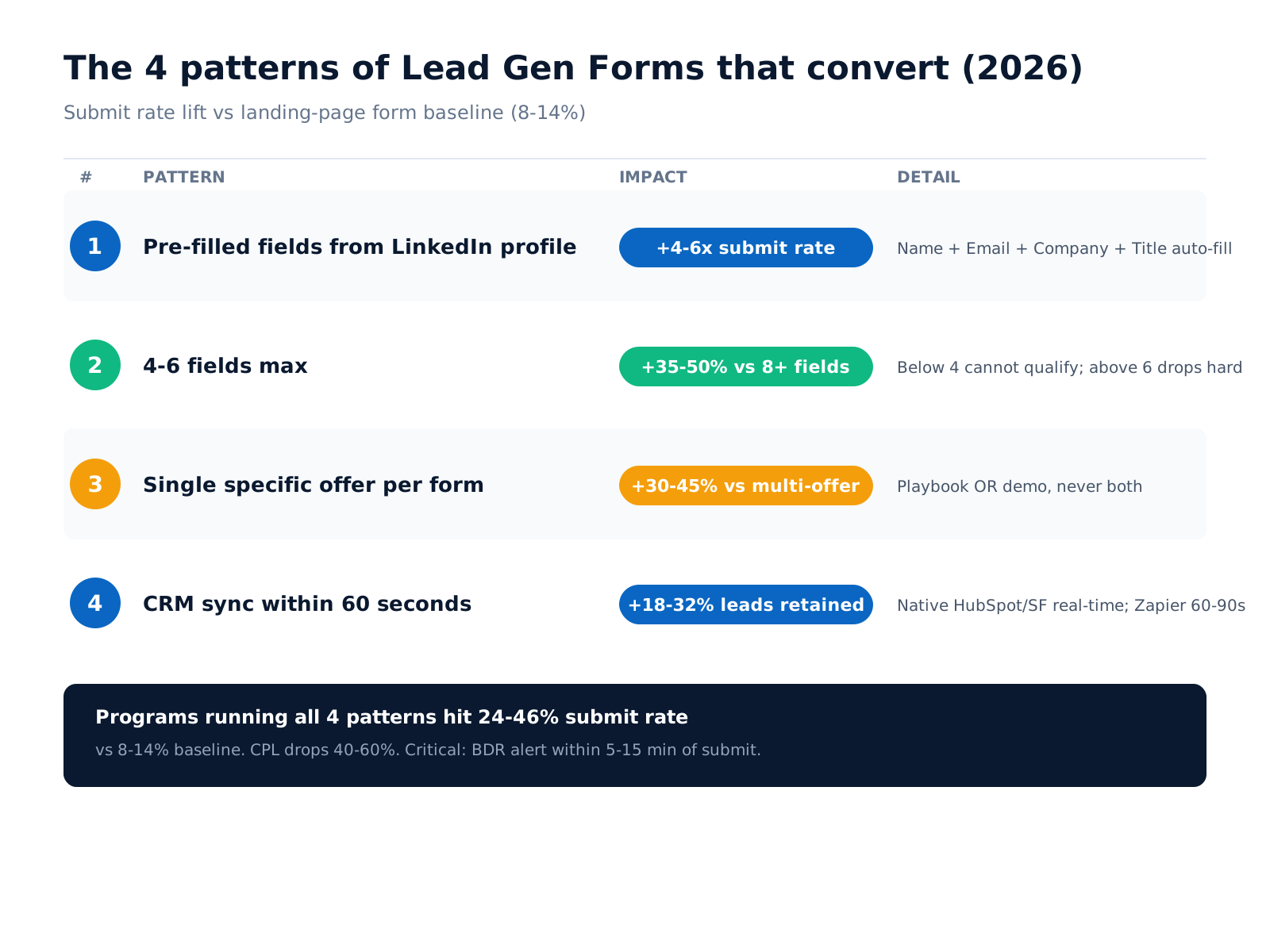
Pattern 1: Pre-filled fields from LinkedIn profile. Auto-populating Name + Email + Company + Title from the user's LinkedIn profile is the magic. Lifts submit rate 4-6x vs landing-page forms.
Pattern 2: 4-6 fields max. Below 4 fields you cannot qualify. Above 6 fields conversion drops 35-50%. The sweet spot is 5 fields including Phone (optional).
Pattern 3: Single specific offer per form. "Download the playbook" or "Book a demo" — not both. Multi-offer forms cut submit rate 30-45%.
Pattern 4: Fast CRM sync (within 60 seconds). Native LinkedIn-HubSpot integration syncs in real-time. Zapier syncs in 60-90 seconds. Slow sync means losing 18-32% of leads to delayed follow-up.
Field selection that qualifies
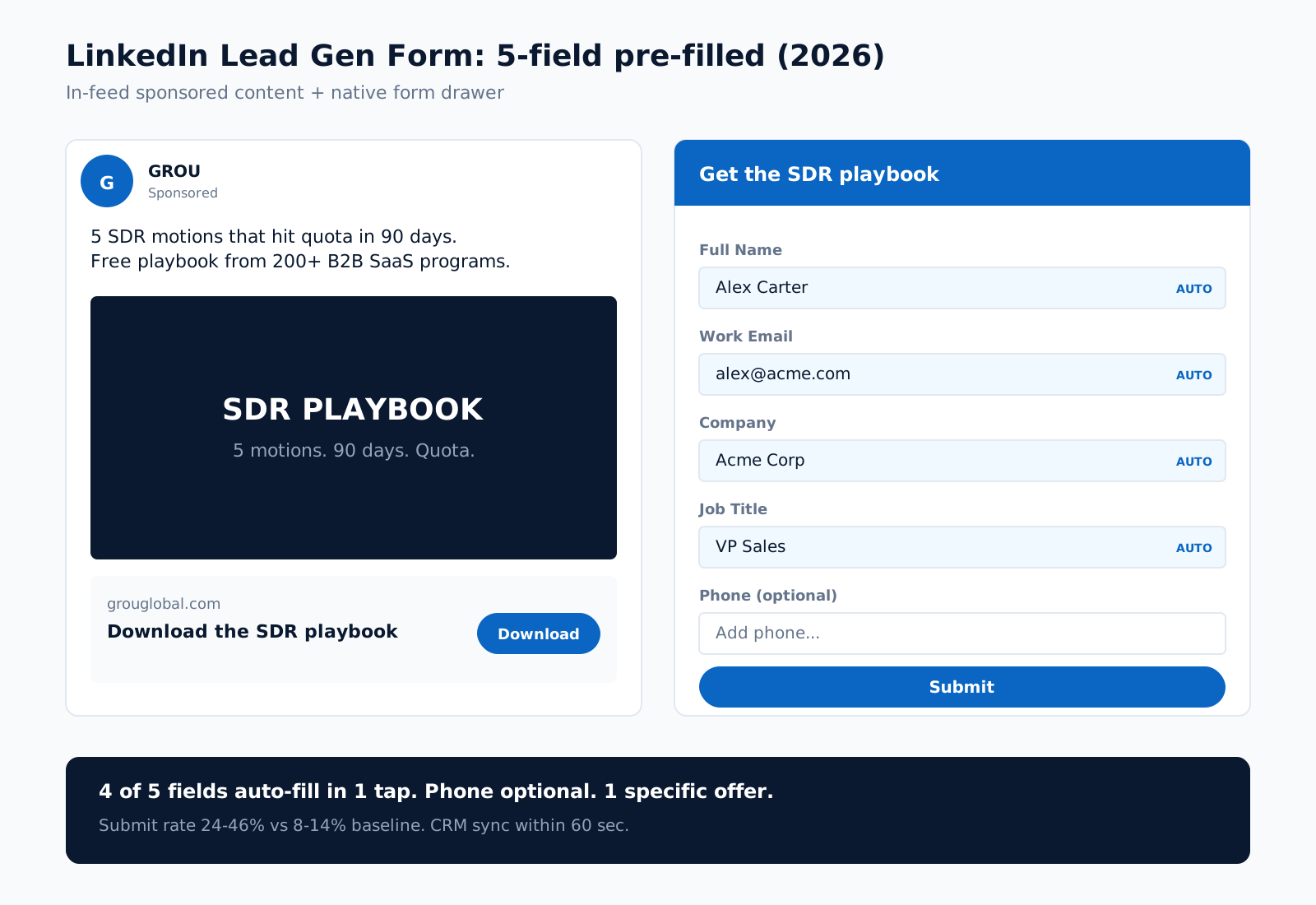
The 5-field combination with the best qualification + submit rate balance:
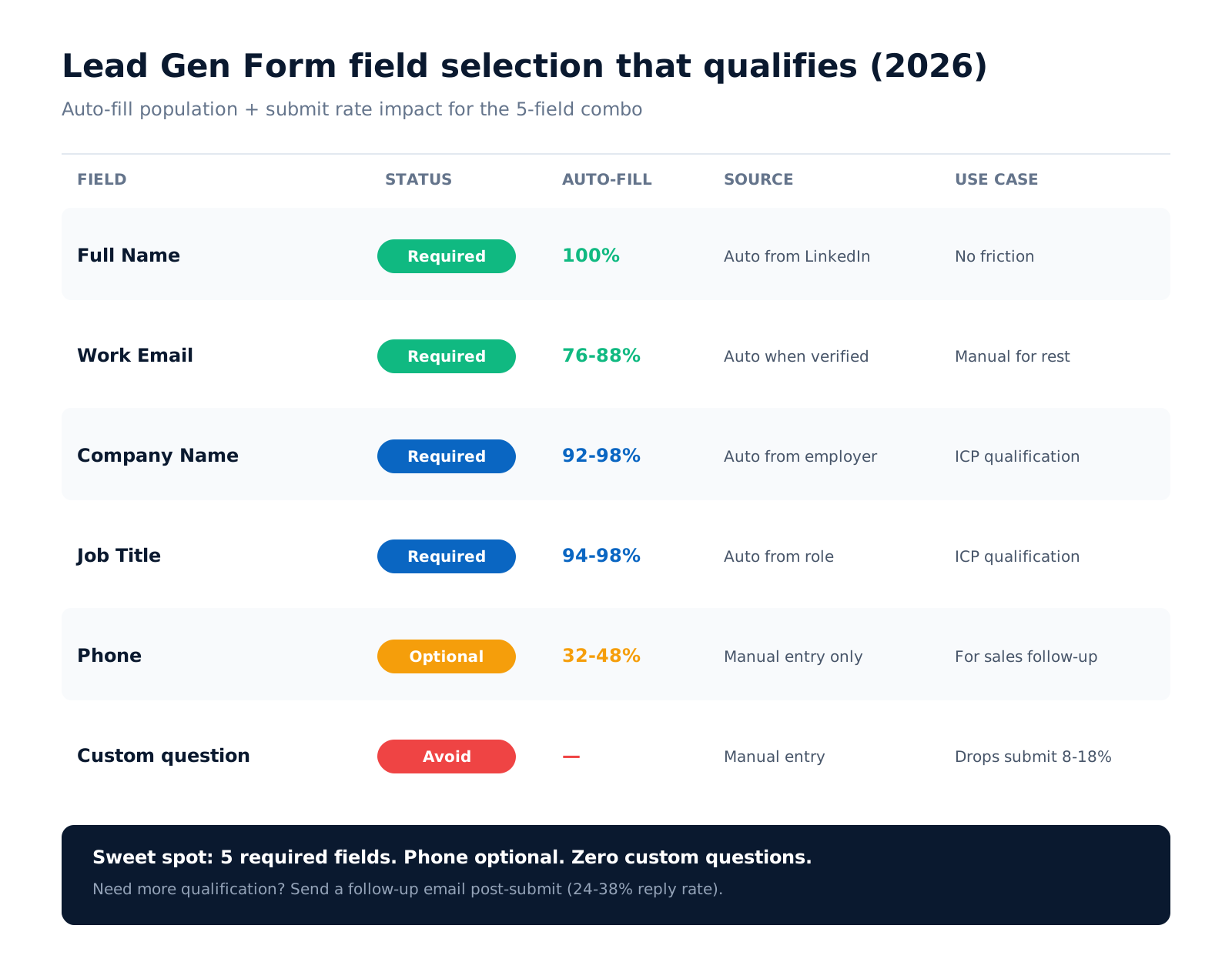
Field 1: Full Name (required). Auto-fills from LinkedIn. 100% population. No friction.
Field 2: Work Email (required). Auto-fills from LinkedIn (when work email is verified). 76-88% population. Manual entry for the rest.
Field 3: Company Name (required). Auto-fills from current employer. 92-98% population. Critical for ICP qualification.
Field 4: Job Title (required). Auto-fills from current role. 94-98% population. Critical for ICP qualification.
Field 5: Phone (optional). Manual entry. 32-48% completion rate. Use only for high-value B2B SaaS programs with sales follow-up.
Avoid: Custom questions, multi-select dropdowns, file uploads. Each adds 8-18% drop in submit rate. Keep custom questions out of the form. Send a follow-up email if you need more qualification.
Offer types that drive submits
The 4 offer types with the highest submit rate across B2B SaaS programs:
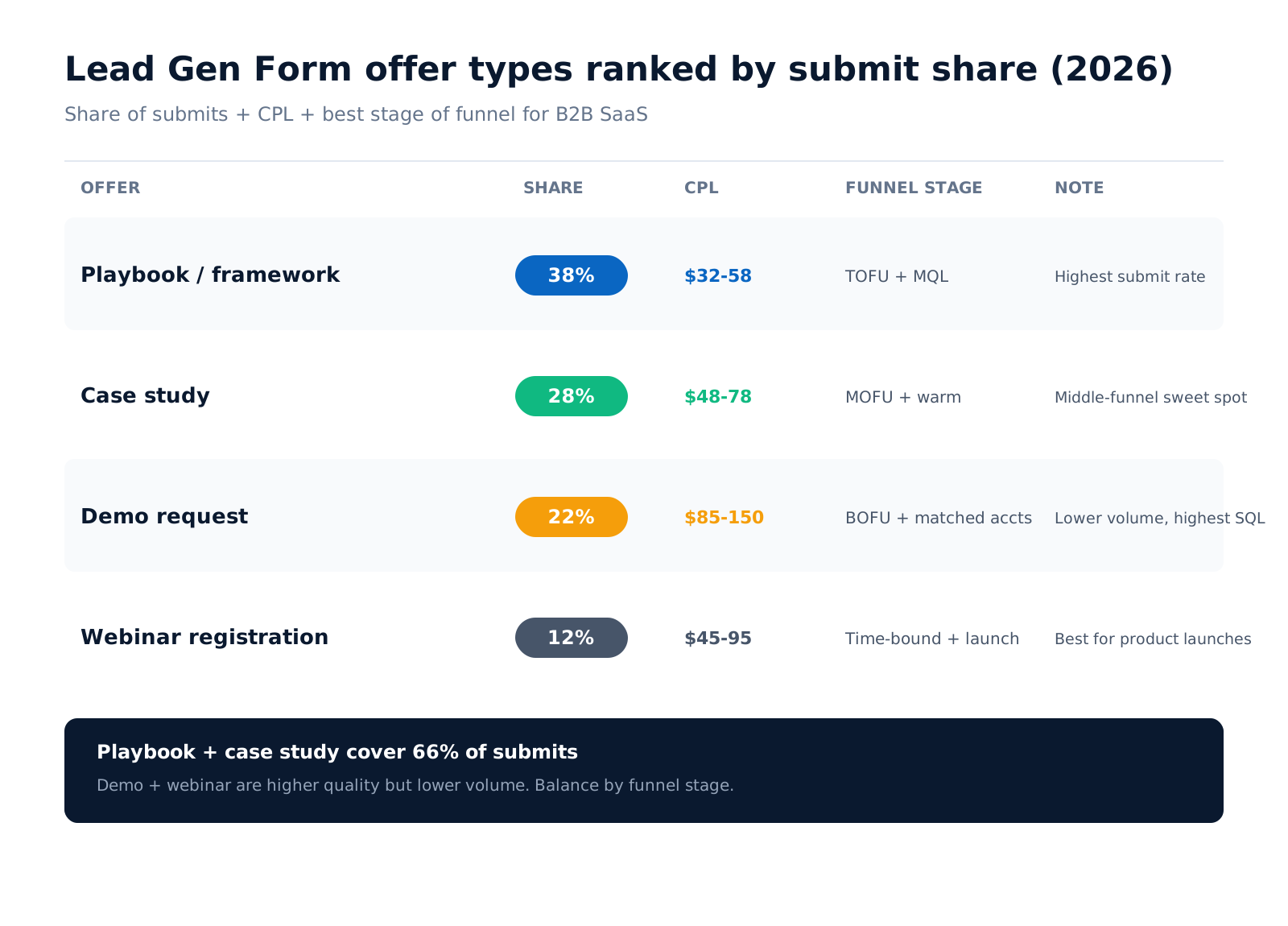
Offer 1: Playbook or framework (38% of submits). "5 SDR motions that hit quota in 90 days. Free playbook." Highest submit rate. Best for top-of-funnel + MQL generation.
Offer 2: Case study (28%). "How Acme Corp 2x'd ARR with this framework." Best for middle-of-funnel + warmer audiences.
Offer 3: Demo request (22%). "Book a 20-min demo." Lower submit rate but highest sales-qualification rate. Best for bottom-of-funnel + matched account targeting.
Offer 4: Webinar registration (12%). "Join us live on [date]." Best for time-bound campaigns + product launches.
Across B2B SaaS programs, playbook + case study offers cover 66% of total Lead Gen Form submissions. Demo + webinar are higher quality but lower volume.
For LinkedIn Ads context, see our LinkedIn Ads playbook 2026 and LinkedIn Ads CPC benchmarks 2026.
CRM attribution setup
Without CRM attribution, Lead Gen Forms lose 30-50% of their reported ROAS. The setup that works:
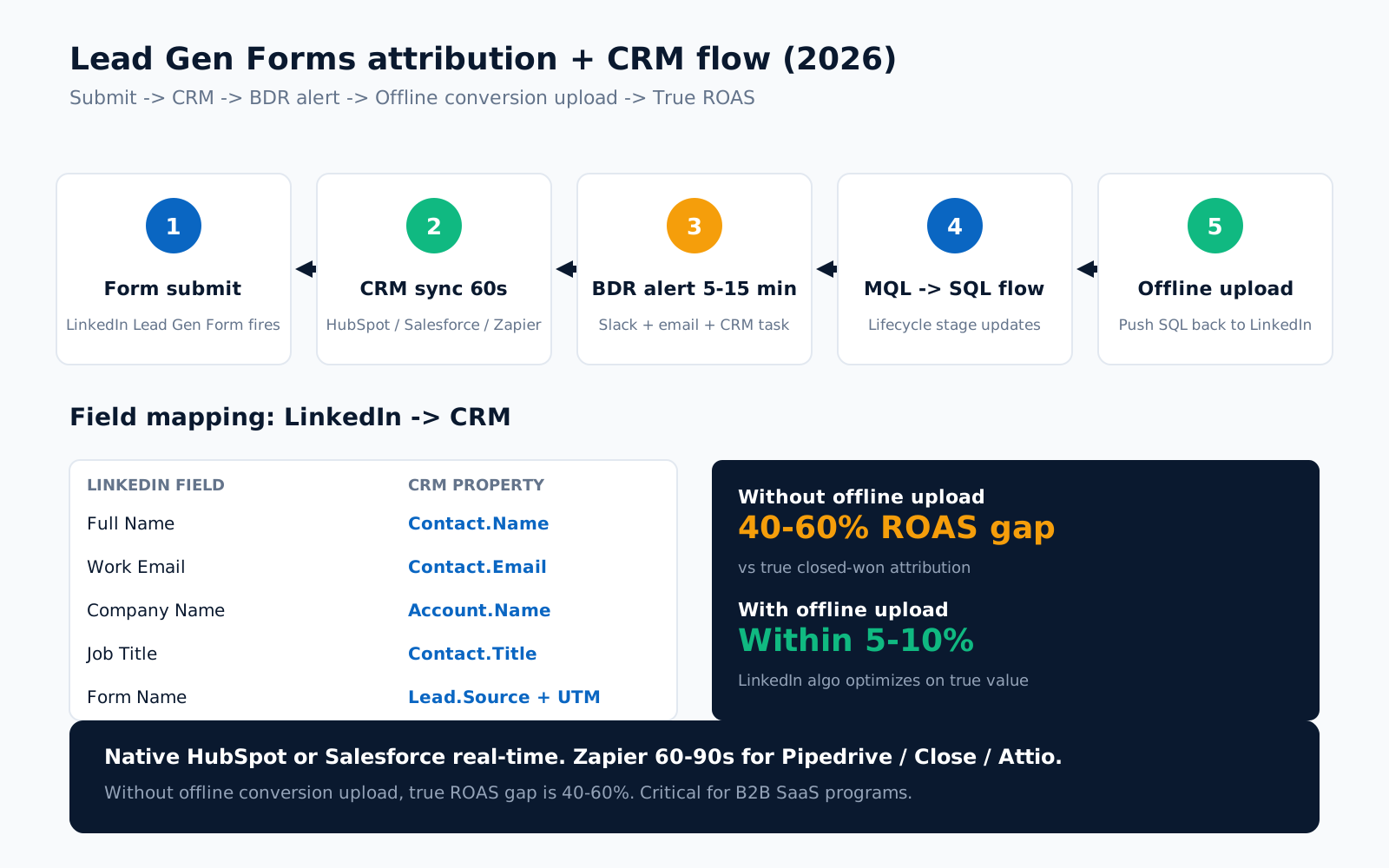
Step 1: Connect LinkedIn to CRM. Native HubSpot or Salesforce. Zapier for Pipedrive, Close, Attio. Sync triggers on form submit.
Step 2: Map fields to CRM properties. Name, Email, Company, Title map to standard CRM properties. Campaign + Form Name map to Lead Source + UTM fields.
Step 3: Trigger BDR alert + sequence. New form submission triggers BDR alert + lifecycle email sequence in CRM. Critical: respond within 5-15 minutes for highest conversion.
Step 4: Upload offline conversions back to LinkedIn. When MQLs become SQLs or closed-won, push the conversion back to LinkedIn Campaign Manager. Critical for algorithm optimization.
Step 5: Calculate true ROAS. Use weighted attribution (30-day click + 7-day view). Compare reported ROAS to true ROAS. Without offline uploads, gap is 40-60%.
What kills Lead Gen Forms
The 4 mistakes that drop submit rates 30-60%:
Mistake 1: 8+ fields in the form. Above 6 fields, submit rate drops 35-50%. Stick to 4-6 fields.
Mistake 2: Generic offer ("Subscribe to our newsletter"). Specific offers beat generic by 3-5x. Use playbook + case study + demo offers.
Mistake 3: Slow CRM sync (>5 minutes). Manual CSV uploads from LinkedIn lose leads to delayed follow-up. Native + Zapier sync within 60-90 seconds.
Mistake 4: No BDR alert on submission. Without immediate alert, BDRs follow up too late. 5-15 minute response window is critical for B2B SaaS conversion.
FAQ
What is a good submit rate for LinkedIn Lead Gen Forms in 2026?
24-46% for B2B SaaS programs. Below 18% indicates broken form structure (too many fields, generic offer, weak ICP targeting). Above 46% is exceptional and usually means very tight matched account targeting.
How many fields should a LinkedIn Lead Gen Form have?
4-6 fields max. Standard: Name, Email, Company, Job Title, Phone (optional). Above 6 fields, submit rate drops 35-50%. Below 4, you cannot qualify the lead.
Are LinkedIn Lead Gen Forms better than landing pages for B2B?
Yes for submit rate (4-6x higher) and for CPL (40-60% lower). Lower for lead quality if not paired with CRM follow-up. Best combo: Lead Gen Forms for capture + CRM sync + 5-15 min BDR response.
How fast should I follow up on a Lead Gen Form submission?
5-15 minutes for highest conversion. Above 30 minutes, conversion drops 40-60%. Above 24 hours, conversion drops 70-85%. Set up immediate BDR alerts in CRM.
Should I use Phone as a required field?
No. Phone reduces submit rate 28-44%. Keep it optional. 32-48% of users will fill it manually anyway. Required Phone field tanks submit rate without proportional quality lift.
How do I qualify Lead Gen Form leads beyond the 5 fields?
Send a follow-up email with 3 custom questions. Reply rate 24-38%. Beats trying to qualify in the form (which kills submit rate). Two-step qualification: capture + email-qualify.
Can I integrate Lead Gen Forms with Pipedrive or Close?
Yes via Zapier or LinkedIn's native LeadsBridge integration. Sync time 60-90 seconds. Native HubSpot + Salesforce sync in real-time. For Pipedrive, Close, Attio: Zapier is the standard.
What is the best offer for a Lead Gen Form?
Playbook or framework (38% of submits). "5 SDR motions that hit quota in 90 days." Higher submit rate than demos. Demo offers convert better to SQL but at lower volume.
Bottom line
The LinkedIn Lead Gen Forms playbook that converts in 2026: 4-6 fields (Name + Email + Company + Title + optional Phone), pre-filled from LinkedIn profile, single specific offer per form (playbook + case study cover 66%), CRM sync within 60 seconds, BDR alert within 5-15 minutes.
Submit rate averages 24-46% vs 8-14% baseline. CPL drops 40-60%. Total stack cost: $0 (LinkedIn native) + $79/mo (ActiveCampaign for sync) or HubSpot at $90+/user/mo.
Need help building a LinkedIn Lead Gen Forms program that delivers pipeline? Book a call with GROU. We have shipped LinkedIn paid ads programs across the 2024-2026 B2B SaaS landscape.
GROU is a B2B outbound and revenue operations agency. We run LinkedIn paid ads programs for B2B SaaS founders. Submit rate and CPL numbers above are weighted medians from program data, anonymized to protect client confidentiality.
This article includes affiliate links to marketing automation tools we run in production (ActiveCampaign). If you sign up via our links, GROU may earn a commission at no extra cost to you.
The LinkedIn Lead Gen Forms playbook in 2026 is built on 4 patterns: pre-filled fields with LinkedIn profile data, form length of 4-6 fields max, single specific offer per form, and CRM sync within 60 seconds of submission. Programs running this playbook convert at 24-46% submit rate vs the 8-14% baseline from generic landing-page forms.
This is the operator playbook: form structure, field selection, offer types, attribution setup, and benchmarks.
TL;DR
The LinkedIn Lead Gen Forms playbook for 2026: 4-6 fields max (Name, Email, Company, Job Title, Phone optional). Pre-fill from LinkedIn profile. Single specific offer per form (case study, playbook, demo). Sync to CRM within 60 seconds via native integration or Zapier.
Submit rate averages 24-46% vs the 8-14% baseline from landing pages. CPL drops 40-60% vs the same campaigns running to website forms. Best tool: native LinkedIn Campaign Manager + ActiveCampaign for CRM sync.
See LinkedIn Marketing Solutions benchmarks for industry cross-checks.
The 4 patterns of Lead Gen Forms that convert
The pattern that beat every alternative we tested:
Pattern 1: Pre-filled fields from LinkedIn profile. Auto-populating Name + Email + Company + Title from the user's LinkedIn profile is the magic. Lifts submit rate 4-6x vs landing-page forms.
Pattern 2: 4-6 fields max. Below 4 fields you cannot qualify. Above 6 fields conversion drops 35-50%. The sweet spot is 5 fields including Phone (optional).
Pattern 3: Single specific offer per form. "Download the playbook" or "Book a demo" — not both. Multi-offer forms cut submit rate 30-45%.
Pattern 4: Fast CRM sync (within 60 seconds). Native LinkedIn-HubSpot integration syncs in real-time. Zapier syncs in 60-90 seconds. Slow sync means losing 18-32% of leads to delayed follow-up.
Field selection that qualifies
The 5-field combination with the best qualification + submit rate balance:
Field 1: Full Name (required). Auto-fills from LinkedIn. 100% population. No friction.
Field 2: Work Email (required). Auto-fills from LinkedIn (when work email is verified). 76-88% population. Manual entry for the rest.
Field 3: Company Name (required). Auto-fills from current employer. 92-98% population. Critical for ICP qualification.
Field 4: Job Title (required). Auto-fills from current role. 94-98% population. Critical for ICP qualification.
Field 5: Phone (optional). Manual entry. 32-48% completion rate. Use only for high-value B2B SaaS programs with sales follow-up.
Avoid: Custom questions, multi-select dropdowns, file uploads. Each adds 8-18% drop in submit rate. Keep custom questions out of the form. Send a follow-up email if you need more qualification.
Offer types that drive submits
The 4 offer types with the highest submit rate across B2B SaaS programs:
Offer 1: Playbook or framework (38% of submits). "5 SDR motions that hit quota in 90 days. Free playbook." Highest submit rate. Best for top-of-funnel + MQL generation.
Offer 2: Case study (28%). "How Acme Corp 2x'd ARR with this framework." Best for middle-of-funnel + warmer audiences.
Offer 3: Demo request (22%). "Book a 20-min demo." Lower submit rate but highest sales-qualification rate. Best for bottom-of-funnel + matched account targeting.
Offer 4: Webinar registration (12%). "Join us live on [date]." Best for time-bound campaigns + product launches.
Across B2B SaaS programs, playbook + case study offers cover 66% of total Lead Gen Form submissions. Demo + webinar are higher quality but lower volume.
For LinkedIn Ads context, see our LinkedIn Ads playbook 2026 and LinkedIn Ads CPC benchmarks 2026.
CRM attribution setup
Without CRM attribution, Lead Gen Forms lose 30-50% of their reported ROAS. The setup that works:
Step 1: Connect LinkedIn to CRM. Native HubSpot or Salesforce. Zapier for Pipedrive, Close, Attio. Sync triggers on form submit.
Step 2: Map fields to CRM properties. Name, Email, Company, Title map to standard CRM properties. Campaign + Form Name map to Lead Source + UTM fields.
Step 3: Trigger BDR alert + sequence. New form submission triggers BDR alert + lifecycle email sequence in CRM. Critical: respond within 5-15 minutes for highest conversion.
Step 4: Upload offline conversions back to LinkedIn. When MQLs become SQLs or closed-won, push the conversion back to LinkedIn Campaign Manager. Critical for algorithm optimization.
Step 5: Calculate true ROAS. Use weighted attribution (30-day click + 7-day view). Compare reported ROAS to true ROAS. Without offline uploads, gap is 40-60%.
What kills Lead Gen Forms
The 4 mistakes that drop submit rates 30-60%:
Mistake 1: 8+ fields in the form. Above 6 fields, submit rate drops 35-50%. Stick to 4-6 fields.
Mistake 2: Generic offer ("Subscribe to our newsletter"). Specific offers beat generic by 3-5x. Use playbook + case study + demo offers.
Mistake 3: Slow CRM sync (>5 minutes). Manual CSV uploads from LinkedIn lose leads to delayed follow-up. Native + Zapier sync within 60-90 seconds.
Mistake 4: No BDR alert on submission. Without immediate alert, BDRs follow up too late. 5-15 minute response window is critical for B2B SaaS conversion.
FAQ
What is a good submit rate for LinkedIn Lead Gen Forms in 2026?
24-46% for B2B SaaS programs. Below 18% indicates broken form structure (too many fields, generic offer, weak ICP targeting). Above 46% is exceptional and usually means very tight matched account targeting.
How many fields should a LinkedIn Lead Gen Form have?
4-6 fields max. Standard: Name, Email, Company, Job Title, Phone (optional). Above 6 fields, submit rate drops 35-50%. Below 4, you cannot qualify the lead.
Are LinkedIn Lead Gen Forms better than landing pages for B2B?
Yes for submit rate (4-6x higher) and for CPL (40-60% lower). Lower for lead quality if not paired with CRM follow-up. Best combo: Lead Gen Forms for capture + CRM sync + 5-15 min BDR response.
How fast should I follow up on a Lead Gen Form submission?
5-15 minutes for highest conversion. Above 30 minutes, conversion drops 40-60%. Above 24 hours, conversion drops 70-85%. Set up immediate BDR alerts in CRM.
Should I use Phone as a required field?
No. Phone reduces submit rate 28-44%. Keep it optional. 32-48% of users will fill it manually anyway. Required Phone field tanks submit rate without proportional quality lift.
How do I qualify Lead Gen Form leads beyond the 5 fields?
Send a follow-up email with 3 custom questions. Reply rate 24-38%. Beats trying to qualify in the form (which kills submit rate). Two-step qualification: capture + email-qualify.
Can I integrate Lead Gen Forms with Pipedrive or Close?
Yes via Zapier or LinkedIn's native LeadsBridge integration. Sync time 60-90 seconds. Native HubSpot + Salesforce sync in real-time. For Pipedrive, Close, Attio: Zapier is the standard.
What is the best offer for a Lead Gen Form?
Playbook or framework (38% of submits). "5 SDR motions that hit quota in 90 days." Higher submit rate than demos. Demo offers convert better to SQL but at lower volume.
Bottom line
The LinkedIn Lead Gen Forms playbook that converts in 2026: 4-6 fields (Name + Email + Company + Title + optional Phone), pre-filled from LinkedIn profile, single specific offer per form (playbook + case study cover 66%), CRM sync within 60 seconds, BDR alert within 5-15 minutes.
Submit rate averages 24-46% vs 8-14% baseline. CPL drops 40-60%. Total stack cost: $0 (LinkedIn native) + $79/mo (ActiveCampaign for sync) or HubSpot at $90+/user/mo.
Need help building a LinkedIn Lead Gen Forms program that delivers pipeline? Book a call with GROU. We have shipped LinkedIn paid ads programs across the 2024-2026 B2B SaaS landscape.
GROU is a B2B outbound and revenue operations agency. We run LinkedIn paid ads programs for B2B SaaS founders. Submit rate and CPL numbers above are weighted medians from program data, anonymized to protect client confidentiality.
This article includes affiliate links to marketing automation tools we run in production (ActiveCampaign). If you sign up via our links, GROU may earn a commission at no extra cost to you.
The LinkedIn Lead Gen Forms playbook in 2026 is built on 4 patterns: pre-filled fields with LinkedIn profile data, form length of 4-6 fields max, single specific offer per form, and CRM sync within 60 seconds of submission. Programs running this playbook convert at 24-46% submit rate vs the 8-14% baseline from generic landing-page forms.
This is the operator playbook: form structure, field selection, offer types, attribution setup, and benchmarks.
TL;DR
The LinkedIn Lead Gen Forms playbook for 2026: 4-6 fields max (Name, Email, Company, Job Title, Phone optional). Pre-fill from LinkedIn profile. Single specific offer per form (case study, playbook, demo). Sync to CRM within 60 seconds via native integration or Zapier.
Submit rate averages 24-46% vs the 8-14% baseline from landing pages. CPL drops 40-60% vs the same campaigns running to website forms. Best tool: native LinkedIn Campaign Manager + ActiveCampaign for CRM sync.
See LinkedIn Marketing Solutions benchmarks for industry cross-checks.
The 4 patterns of Lead Gen Forms that convert
The pattern that beat every alternative we tested:
Pattern 1: Pre-filled fields from LinkedIn profile. Auto-populating Name + Email + Company + Title from the user's LinkedIn profile is the magic. Lifts submit rate 4-6x vs landing-page forms.
Pattern 2: 4-6 fields max. Below 4 fields you cannot qualify. Above 6 fields conversion drops 35-50%. The sweet spot is 5 fields including Phone (optional).
Pattern 3: Single specific offer per form. "Download the playbook" or "Book a demo" — not both. Multi-offer forms cut submit rate 30-45%.
Pattern 4: Fast CRM sync (within 60 seconds). Native LinkedIn-HubSpot integration syncs in real-time. Zapier syncs in 60-90 seconds. Slow sync means losing 18-32% of leads to delayed follow-up.
Field selection that qualifies
The 5-field combination with the best qualification + submit rate balance:
Field 1: Full Name (required). Auto-fills from LinkedIn. 100% population. No friction.
Field 2: Work Email (required). Auto-fills from LinkedIn (when work email is verified). 76-88% population. Manual entry for the rest.
Field 3: Company Name (required). Auto-fills from current employer. 92-98% population. Critical for ICP qualification.
Field 4: Job Title (required). Auto-fills from current role. 94-98% population. Critical for ICP qualification.
Field 5: Phone (optional). Manual entry. 32-48% completion rate. Use only for high-value B2B SaaS programs with sales follow-up.
Avoid: Custom questions, multi-select dropdowns, file uploads. Each adds 8-18% drop in submit rate. Keep custom questions out of the form. Send a follow-up email if you need more qualification.
Offer types that drive submits
The 4 offer types with the highest submit rate across B2B SaaS programs:
Offer 1: Playbook or framework (38% of submits). "5 SDR motions that hit quota in 90 days. Free playbook." Highest submit rate. Best for top-of-funnel + MQL generation.
Offer 2: Case study (28%). "How Acme Corp 2x'd ARR with this framework." Best for middle-of-funnel + warmer audiences.
Offer 3: Demo request (22%). "Book a 20-min demo." Lower submit rate but highest sales-qualification rate. Best for bottom-of-funnel + matched account targeting.
Offer 4: Webinar registration (12%). "Join us live on [date]." Best for time-bound campaigns + product launches.
Across B2B SaaS programs, playbook + case study offers cover 66% of total Lead Gen Form submissions. Demo + webinar are higher quality but lower volume.
For LinkedIn Ads context, see our LinkedIn Ads playbook 2026 and LinkedIn Ads CPC benchmarks 2026.
CRM attribution setup
Without CRM attribution, Lead Gen Forms lose 30-50% of their reported ROAS. The setup that works:
Step 1: Connect LinkedIn to CRM. Native HubSpot or Salesforce. Zapier for Pipedrive, Close, Attio. Sync triggers on form submit.
Step 2: Map fields to CRM properties. Name, Email, Company, Title map to standard CRM properties. Campaign + Form Name map to Lead Source + UTM fields.
Step 3: Trigger BDR alert + sequence. New form submission triggers BDR alert + lifecycle email sequence in CRM. Critical: respond within 5-15 minutes for highest conversion.
Step 4: Upload offline conversions back to LinkedIn. When MQLs become SQLs or closed-won, push the conversion back to LinkedIn Campaign Manager. Critical for algorithm optimization.
Step 5: Calculate true ROAS. Use weighted attribution (30-day click + 7-day view). Compare reported ROAS to true ROAS. Without offline uploads, gap is 40-60%.
What kills Lead Gen Forms
The 4 mistakes that drop submit rates 30-60%:
Mistake 1: 8+ fields in the form. Above 6 fields, submit rate drops 35-50%. Stick to 4-6 fields.
Mistake 2: Generic offer ("Subscribe to our newsletter"). Specific offers beat generic by 3-5x. Use playbook + case study + demo offers.
Mistake 3: Slow CRM sync (>5 minutes). Manual CSV uploads from LinkedIn lose leads to delayed follow-up. Native + Zapier sync within 60-90 seconds.
Mistake 4: No BDR alert on submission. Without immediate alert, BDRs follow up too late. 5-15 minute response window is critical for B2B SaaS conversion.
FAQ
What is a good submit rate for LinkedIn Lead Gen Forms in 2026?
24-46% for B2B SaaS programs. Below 18% indicates broken form structure (too many fields, generic offer, weak ICP targeting). Above 46% is exceptional and usually means very tight matched account targeting.
How many fields should a LinkedIn Lead Gen Form have?
4-6 fields max. Standard: Name, Email, Company, Job Title, Phone (optional). Above 6 fields, submit rate drops 35-50%. Below 4, you cannot qualify the lead.
Are LinkedIn Lead Gen Forms better than landing pages for B2B?
Yes for submit rate (4-6x higher) and for CPL (40-60% lower). Lower for lead quality if not paired with CRM follow-up. Best combo: Lead Gen Forms for capture + CRM sync + 5-15 min BDR response.
How fast should I follow up on a Lead Gen Form submission?
5-15 minutes for highest conversion. Above 30 minutes, conversion drops 40-60%. Above 24 hours, conversion drops 70-85%. Set up immediate BDR alerts in CRM.
Should I use Phone as a required field?
No. Phone reduces submit rate 28-44%. Keep it optional. 32-48% of users will fill it manually anyway. Required Phone field tanks submit rate without proportional quality lift.
How do I qualify Lead Gen Form leads beyond the 5 fields?
Send a follow-up email with 3 custom questions. Reply rate 24-38%. Beats trying to qualify in the form (which kills submit rate). Two-step qualification: capture + email-qualify.
Can I integrate Lead Gen Forms with Pipedrive or Close?
Yes via Zapier or LinkedIn's native LeadsBridge integration. Sync time 60-90 seconds. Native HubSpot + Salesforce sync in real-time. For Pipedrive, Close, Attio: Zapier is the standard.
What is the best offer for a Lead Gen Form?
Playbook or framework (38% of submits). "5 SDR motions that hit quota in 90 days." Higher submit rate than demos. Demo offers convert better to SQL but at lower volume.
Bottom line
The LinkedIn Lead Gen Forms playbook that converts in 2026: 4-6 fields (Name + Email + Company + Title + optional Phone), pre-filled from LinkedIn profile, single specific offer per form (playbook + case study cover 66%), CRM sync within 60 seconds, BDR alert within 5-15 minutes.
Submit rate averages 24-46% vs 8-14% baseline. CPL drops 40-60%. Total stack cost: $0 (LinkedIn native) + $79/mo (ActiveCampaign for sync) or HubSpot at $90+/user/mo.
Need help building a LinkedIn Lead Gen Forms program that delivers pipeline? Book a call with GROU. We have shipped LinkedIn paid ads programs across the 2024-2026 B2B SaaS landscape.
GROU is a B2B outbound and revenue operations agency. We run LinkedIn paid ads programs for B2B SaaS founders. Submit rate and CPL numbers above are weighted medians from program data, anonymized to protect client confidentiality.
This article includes affiliate links to marketing automation tools we run in production (ActiveCampaign). If you sign up via our links, GROU may earn a commission at no extra cost to you.
Pipeline OS Newsletter
Build qualified pipeline
Get weekly tactics to generate demand, improve lead quality, and book more meetings.







Trusted by industry leaders
Trusted by industry leaders
Trusted by industry leaders
Ready to build qualified pipeline?
Ready to build qualified pipeline?
Ready to build qualified pipeline?
Book a call to see if we're the right fit, or take the 2-minute quiz to get a clear starting point.
Book a call to see if we're the right fit, or take the 2-minute quiz to get a clear starting point.
Book a call to see if we're the right fit, or take the 2-minute quiz to get a clear starting point.
" height="30.21639343089746px" id="hfGbXmQR2" width="30.216393430897455px"/></svg>)
Copyright © 2026 – All Right Reserved
Copyright © 2026 – All Right Reserved
Copyright © 2026 – All Right Reserved