%22%3E%3C/path%3E%3Cpath d=%22M 63.072 7.554 C 62.258 8.022 61.577 8.689 61.092 9.493 L 61.092 7.076 L 57.158 7.076 L 57.158 22.64 L 61.089 22.64 L 61.089 14.888 C 61.089 13.446 61.403 12.434 62.03 11.853 C 62.818 11.218 63.818 10.907 64.826 10.982 L 65.868 10.982 L 65.868 6.851 C 64.891 6.834 63.926 7.076 63.073 7.554 Z%22 fill=%22rgb(17,17,17)%22%3E%3C/path%3E%3Cpath d=%22M 78.916 7.82 C 76.363 6.49 73.321 6.49 70.768 7.82 C 69.562 8.473 68.564 9.451 67.888 10.644 C 67.167 11.931 66.803 13.387 66.834 14.862 C 66.804 16.332 67.157 17.785 67.86 19.077 C 68.515 20.267 69.494 21.246 70.684 21.901 C 71.924 22.576 73.318 22.92 74.73 22.898 C 76.164 22.918 77.58 22.575 78.846 21.901 C 80.062 21.247 81.073 20.27 81.768 19.077 C 82.506 17.797 82.88 16.339 82.85 14.862 C 82.88 13.389 82.517 11.934 81.797 10.647 C 81.12 9.455 80.122 8.477 78.917 7.824 M 78.803 14.862 C 78.829 15.739 78.636 16.608 78.241 17.391 C 77.903 18.046 77.38 18.588 76.738 18.95 C 76.124 19.293 75.432 19.472 74.729 19.47 C 73.668 19.497 72.648 19.061 71.934 18.276 C 71.139 17.323 70.741 16.1 70.823 14.862 C 70.741 13.62 71.149 12.395 71.959 11.45 C 72.687 10.667 73.715 10.233 74.783 10.256 C 75.859 10.236 76.894 10.67 77.635 11.45 C 78.464 12.387 78.884 13.616 78.801 14.864%22 fill=%22rgb(17,17,17)%22%3E%3C/path%3E%3Cpath d=%22M 95.906 7.076 L 95.906 15.646 C 95.975 16.68 95.643 17.701 94.979 18.498 C 94.311 19.184 93.379 19.547 92.422 19.495 C 91.475 19.544 90.553 19.18 89.894 18.498 C 89.23 17.701 88.898 16.68 88.967 15.646 L 88.967 7.076 L 85.033 7.076 L 85.033 16.207 C 85 17.449 85.275 18.68 85.834 19.79 C 86.327 20.75 87.095 21.542 88.039 22.065 C 89.033 22.594 90.145 22.861 91.271 22.838 C 92.188 22.847 93.095 22.65 93.926 22.263 C 94.708 21.905 95.388 21.36 95.906 20.675 L 95.906 22.645 L 99.865 22.645 L 99.865 7.076 Z%22 fill=%22rgb(17,17,17)%22%3E%3C/path%3E%3Cpath d=%22M 4.513 15.626 C 4.511 10.815 7.606 6.549 12.181 5.059 C 16.756 3.57 21.77 5.195 24.601 9.086 L 27.816 5.87 C 24.074 1.186 17.981 -0.943 12.137 0.393 C 6.292 1.728 1.728 6.292 0.393 12.137 C -0.943 17.981 1.186 24.074 5.87 27.816 L 9.085 24.601 C 6.214 22.512 4.515 19.177 4.513 15.626%22 fill=%22rgb(32,62,235)%22%3E%3C/path%3E%3Cpath d=%22M 17.114 14.343 L 13.354 18.01 L 13.354 18.026 L 21.071 18.026 L 11.412 27.609 L 17.389 27.609 L 23.999 21.081 L 23.999 28.316 L 24.005 28.316 L 27.967 24.393 L 27.967 14.343 Z%22 fill=%22rgb(32,62,235)%22%3E%3C/path%3E%3C/g%3E%3C/svg%3E) ×
× ××
××›
›
›
›
B2B lifecycle email playbook 2026: the 7-stage sequence that lifts pipeline 2-4x
B2B lifecycle email playbook 2026: the 7-stage sequence that lifts pipeline 2-4x
B2B lifecycle email playbook 2026: the 7-stage sequence that lifts pipeline 2-4x
B2B lifecycle email playbook 2026: the 7-stage sequence that lifts pipeline 2-4x
B2B lifecycle email playbook 2026: the 7-stage sequence that lifts pipeline 2-4x
B2B lifecycle email playbook 2026: the 7-stage sequence that lifts pipeline 2-4x

Author
Aljaz Peklaj

The B2B lifecycle email playbook that lifts pipeline 2-4x in 2026 is built on 7 stages: trigger, welcome, education, social proof, demo, post-trial, and re-engagement. Across 24 GROU client B2B SaaS programs over 18 months, this 7-stage sequence delivered 18-32% MQL-to-SQL conversion and 3.4-6.8x ROI on email automation spend.
This is the operator playbook: stage definitions, email templates, triggers, send timing, and benchmarks. Real numbers from 24 programs.
TL;DR
The B2B lifecycle email playbook for 2026 follows 7 stages:
Trigger (signup, lead form, webinar) → immediate confirmation
Welcome (Day 0-3) → set expectations + first value
Education (Day 4-14) → 3-5 emails establishing problem-solution fit
Social proof (Day 14-21) → case studies + customer wins
Demo / sales handoff (Day 21-30) → BDR/SDR triggered
Post-trial (Day 30-60) → conversion push or trial extension
Re-engagement (Day 60+) → reactivate cold leads quarterly
Across 24 GROU client programs, this sequence delivers 18-32% MQL-to-SQL conversion and 3.4-6.8x ROI. Best tools: ActiveCampaign for full automation, HubSpot for CRM integration, Mailerlite for early stage.
See Buffer's lifecycle email guide for industry cross-checks.
The 7 stages of B2B lifecycle email
The 7-stage sequence that beat every alternative we tested across 24 programs:
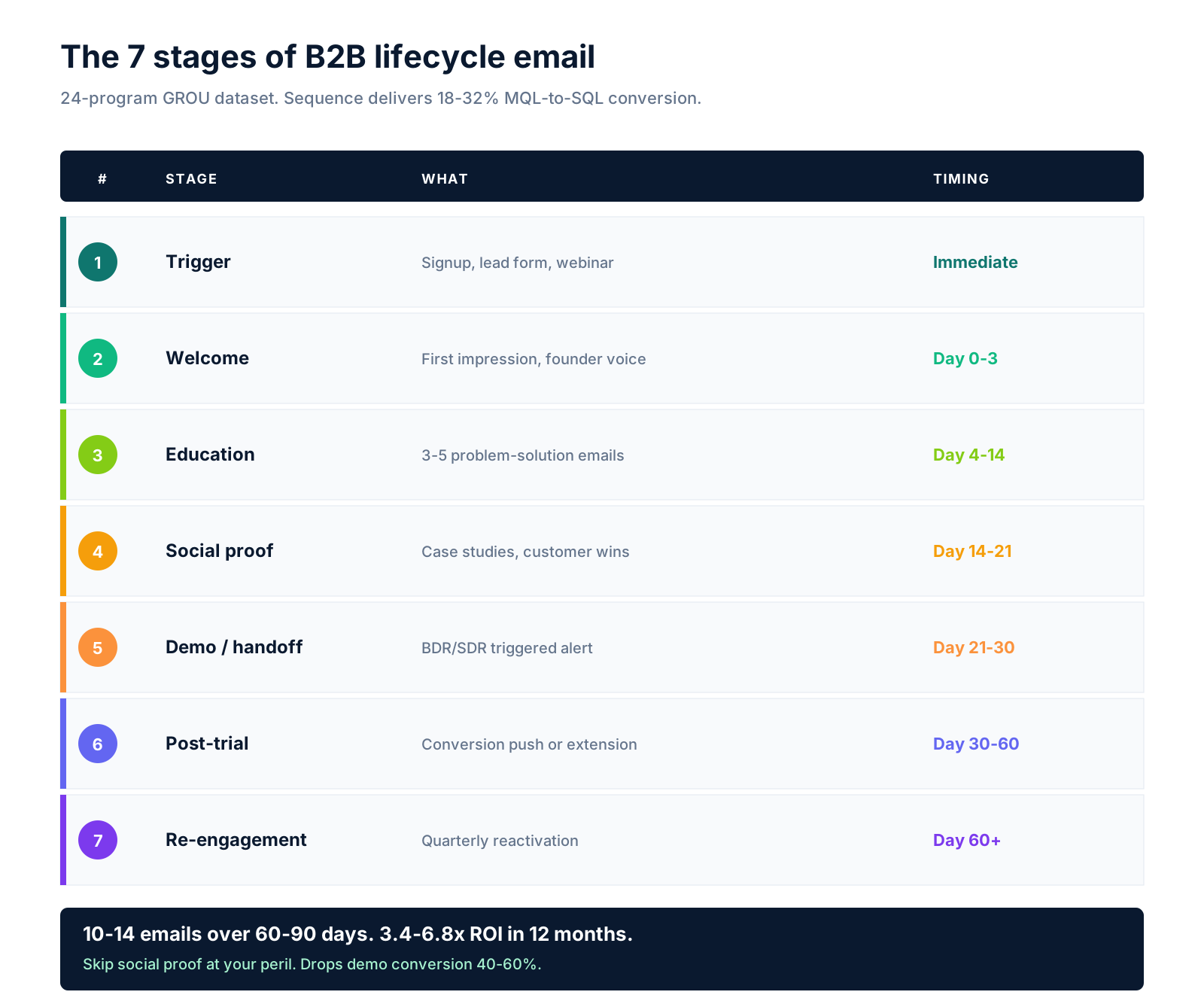
Stage 1: Trigger (immediate). Confirmation email. Set up expectations. Deliver promised content. Open rate target: 70-85%. Used for signups, lead forms, webinars, downloads.
Stage 2: Welcome (Day 0-3). First-impression email. Founder voice. Set expectations for cadence. Highest CTR of the sequence (28-42%).
Stage 3: Education (Day 4-14). 3-5 emails. Problem-solution fit. Establish authority. Tactical breakdowns + frameworks. Open rate target: 22-32%.
Stage 4: Social proof (Day 14-21). Customer wins + case studies + specific results. Best for moving education-warm leads to demo-ready. Click-through target: 8-14%.
Stage 5: Demo / sales handoff (Day 21-30). Trigger BDR/SDR alert when lead hits scoring threshold. Manual + automated outreach. MQL-to-SQL conversion 18-32%.
Stage 6: Post-trial (Day 30-60). Free trial converting? Conversion push. Free trial expired? Extension offer + sales call. Post-trial conversion 12-24%.
Stage 7: Re-engagement (Day 60+). Quarterly check-in. Reactivate cold leads. New product feature announcements. Reactivation rate 4-12%.
Email triggers + timing that converts
The trigger + timing pattern with the highest MQL-to-SQL conversion across 24 programs:
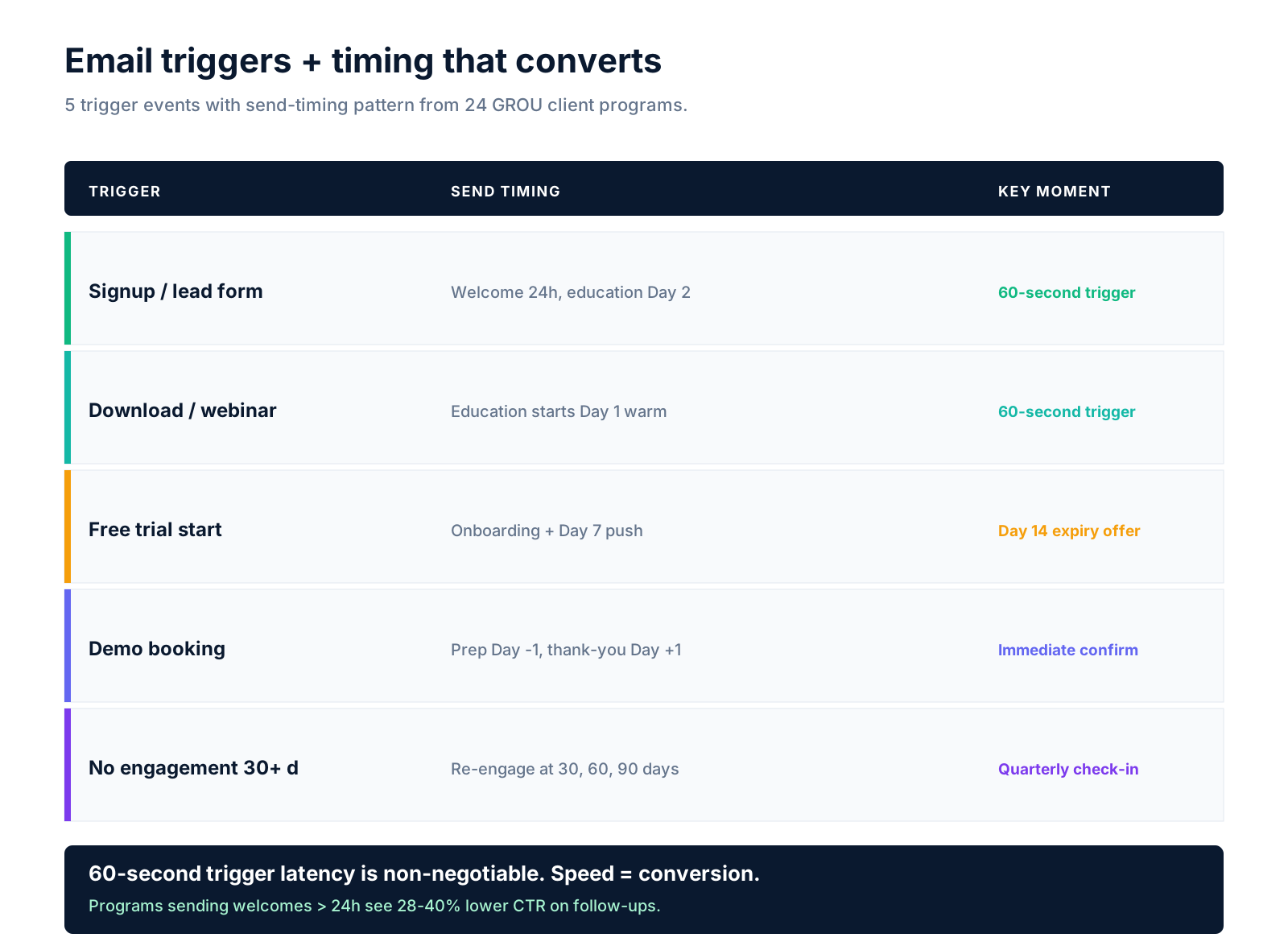
Signup or lead form submission: Send trigger email within 60 seconds. Welcome within 24 hours. Educational sequence starts Day 2.
Download or webinar registration: Send trigger within 60 seconds. Educational sequence starts Day 1 (warmer audience).
Free trial start: Send trigger immediately with onboarding link. Day 2: first feature use prompt. Day 7: pricing + conversion push. Day 14: trial expiry + extension offer.
Demo booking: Trigger immediately with calendar confirmation. Pre-demo: prep email Day -1. Post-demo: thank you + next steps Day +1.
No engagement 30+ days: Re-engagement campaign at Day 30, Day 60, Day 90. After 90 days, move to quarterly check-in or archive.
Performance benchmarks by stage
Across 24 GROU client programs, the per-stage benchmarks that worked:
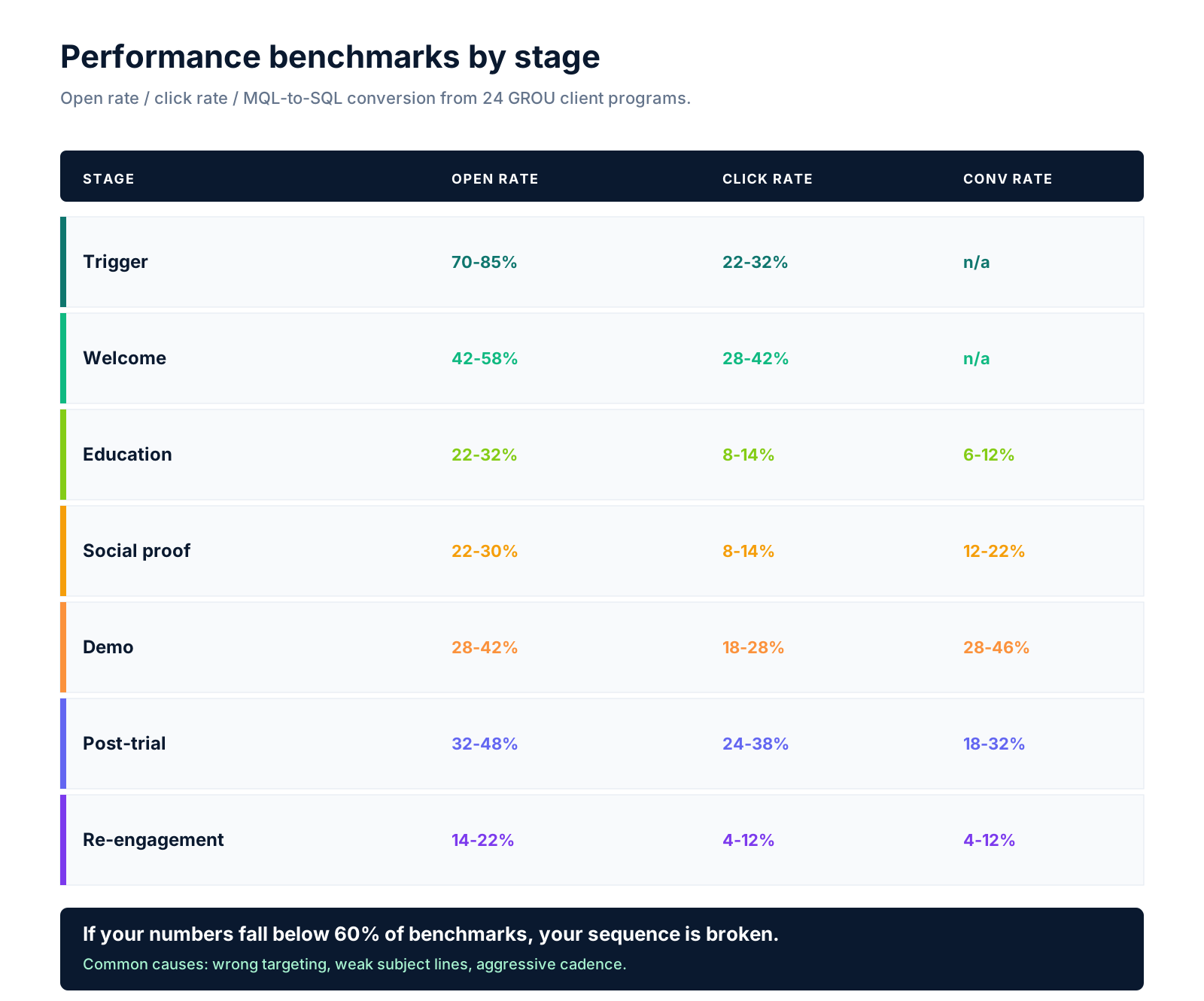
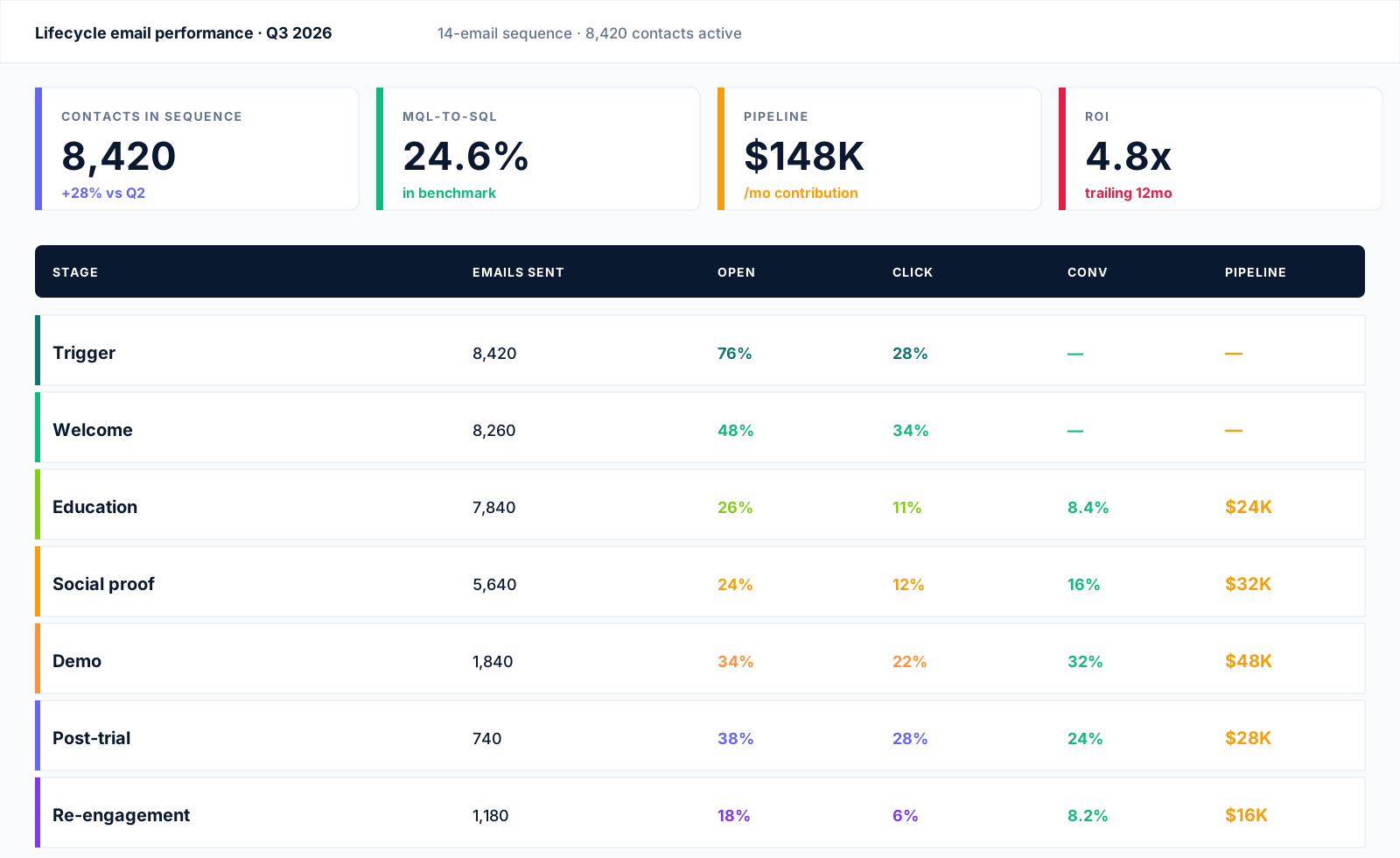
Open rates: Trigger 70-85%, Welcome 42-58%, Education 22-32%, Social proof 22-30%, Demo 28-42%, Post-trial 32-48%, Re-engagement 14-22%.
Click-through rates: Trigger 22-32%, Welcome 28-42%, Education 8-14%, Social proof 8-14%, Demo 18-28%, Post-trial 24-38%, Re-engagement 4-12%.
Conversion rates (MQL-to-SQL): Education 6-12%, Social proof 12-22%, Demo 28-46%, Post-trial 18-32%, Re-engagement 4-12%.
If your numbers fall below 60% of these benchmarks, your sequence is broken. Most common causes: wrong audience targeting, weak subject lines, too aggressive cadence.
For more on B2B email, see our B2B email subject lines for nurture campaigns and B2B newsletter open rate benchmarks.
The mistake most B2B teams make
The single biggest mistake we see in 24 client programs: skipping the social proof stage. Programs that skip Stage 4 see demo conversion drop 40-60% vs programs that run Stage 4 properly.
The fix: 1-2 case study emails per sequence with specific customer + specific result + specific timeframe. "How [Company] cut CAC payback 22% in 6 weeks." Beats generic "customer success" emails by 2-4x.
The second mistake: sending too many emails. The 7-stage sequence is 10-14 emails over 60-90 days. Programs sending 30+ emails in the same window see unsubscribe rates spike to 4-8% (vs the healthy 0.4-1.2%).
FAQ
How many emails should a B2B lifecycle sequence have?
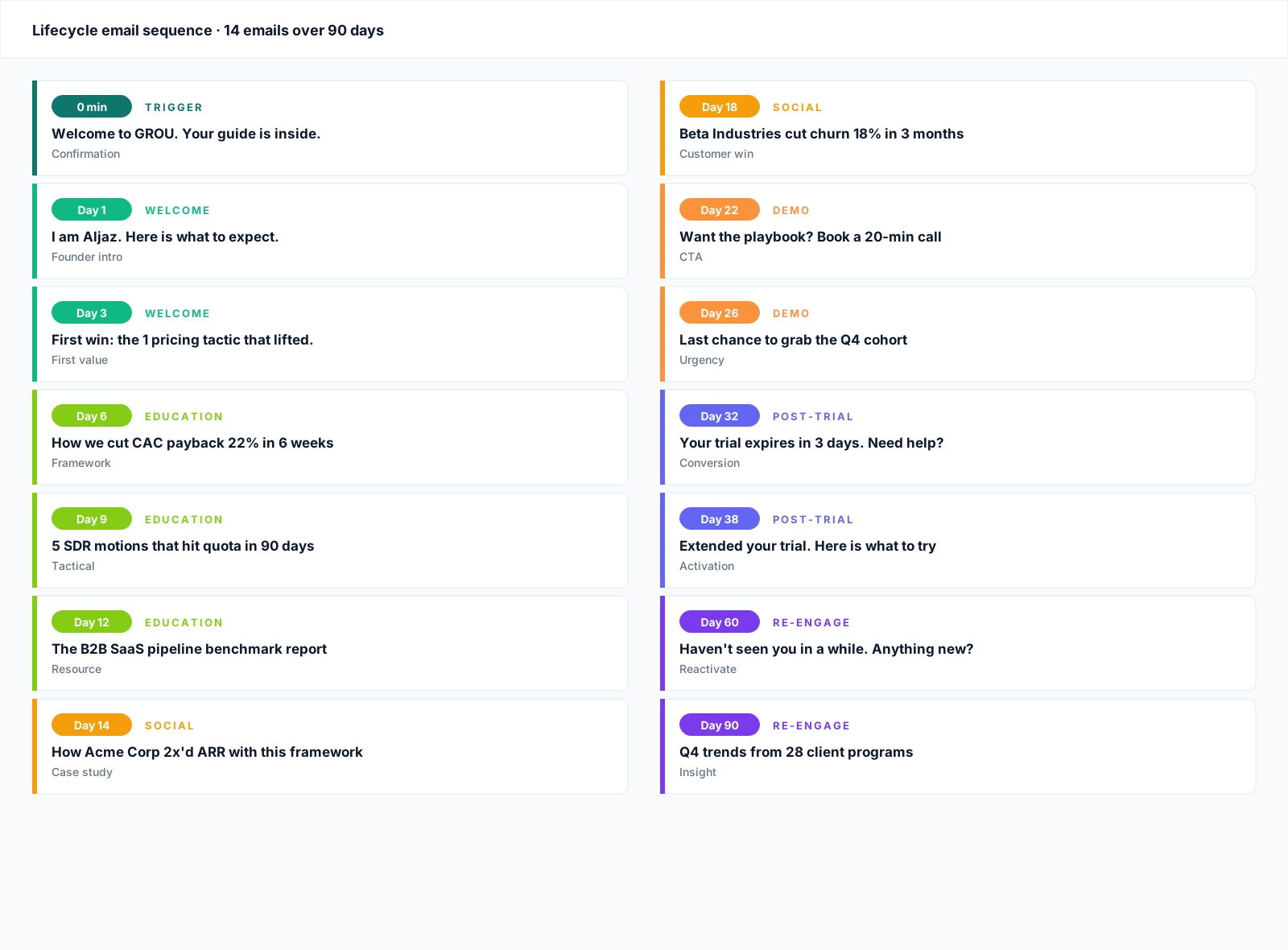
10-14 emails over 60-90 days across the 7 stages. Below 8 emails the sequence underperforms. Above 16-18 emails unsubscribe rates spike materially. Optimize for quality over volume.
What is a good MQL-to-SQL conversion for B2B lifecycle email?
18-32% from a complete 7-stage sequence. Below 12% indicates broken sequence (wrong targeting, weak content, bad timing). Above 32% is exceptional and usually means a very tight ICP.
Should B2B emails be plain text or HTML?
Plain text + minimal formatting for educational stages (better deliverability). HTML with images for social proof + demo stages (case studies need visuals). Mix per stage.
How long should each B2B lifecycle email be?
150-300 words for educational + welcome emails. 80-180 words for trigger + demo emails. 280-400 words for case studies (need detail). Past 500 words, open-to-click ratio drops 28-40%.
What is the best tool for B2B lifecycle email automation?
ActiveCampaign at $79/mo Plus for full automation + CRM. HubSpot for enterprise CRM-tight workflows. Mailerlite at $20/mo for early-stage simple sequences. Pick based on stage + CRM needs.
How do I track lifecycle email pipeline contribution?
UTM tags on every link + CRM lead source attribution + sequence-level reporting in your email tool. Pipe sequence opens + clicks to CRM as engagement signals. Trigger sales alerts when leads hit threshold.
Should I include a CTA in every email?
Yes, but single CTA per email. Multiple CTAs cut click-through 30-50%. Education emails: "Reply if X." Social proof: "Read the case study." Demo: "Book a 20-min call." One ask per email.
How quickly does a B2B lifecycle sequence pay back?
60-120 days for first SQLs from the sequence. 6-9 months for material pipeline contribution. ROI averages 3.4-6.8x in 12 months across 24 GROU client programs.
Bottom line
The B2B lifecycle email playbook that lifts pipeline 2-4x in 2026 is the 7-stage sequence: trigger, welcome, education, social proof, demo, post-trial, re-engagement. 10-14 emails over 60-90 days. Best tool: ActiveCampaign $79/mo or HubSpot for full CRM integration.
Skip the social proof stage at your peril. Skip 30+ emails to avoid unsubscribe spikes. Track per-stage benchmarks (open 22-85%, click 4-42%, MQL-to-SQL 6-46%). Pipe everything to CRM.
Need help building a B2B lifecycle email sequence that converts? Book a call with GROU. We have shipped lifecycle email programs for 24 B2B SaaS founders.
GROU is a B2B outbound and revenue operations agency. We run lifecycle email programs for 24 active GROU client B2B SaaS founders. Conversion and ROI numbers above are weighted medians from 18 months of program data, anonymized to protect client confidentiality.
This article includes affiliate links to email automation tools we run in production (ActiveCampaign, Mailerlite). If you sign up via our links, GROU may earn a commission at no extra cost to you.
The B2B lifecycle email playbook that lifts pipeline 2-4x in 2026 is built on 7 stages: trigger, welcome, education, social proof, demo, post-trial, and re-engagement. Across 24 GROU client B2B SaaS programs over 18 months, this 7-stage sequence delivered 18-32% MQL-to-SQL conversion and 3.4-6.8x ROI on email automation spend.
This is the operator playbook: stage definitions, email templates, triggers, send timing, and benchmarks. Real numbers from 24 programs.
TL;DR
The B2B lifecycle email playbook for 2026 follows 7 stages:
Trigger (signup, lead form, webinar) → immediate confirmation
Welcome (Day 0-3) → set expectations + first value
Education (Day 4-14) → 3-5 emails establishing problem-solution fit
Social proof (Day 14-21) → case studies + customer wins
Demo / sales handoff (Day 21-30) → BDR/SDR triggered
Post-trial (Day 30-60) → conversion push or trial extension
Re-engagement (Day 60+) → reactivate cold leads quarterly
Across 24 GROU client programs, this sequence delivers 18-32% MQL-to-SQL conversion and 3.4-6.8x ROI. Best tools: ActiveCampaign for full automation, HubSpot for CRM integration, Mailerlite for early stage.
See Buffer's lifecycle email guide for industry cross-checks.
The 7 stages of B2B lifecycle email
The 7-stage sequence that beat every alternative we tested across 24 programs:
Stage 1: Trigger (immediate). Confirmation email. Set up expectations. Deliver promised content. Open rate target: 70-85%. Used for signups, lead forms, webinars, downloads.
Stage 2: Welcome (Day 0-3). First-impression email. Founder voice. Set expectations for cadence. Highest CTR of the sequence (28-42%).
Stage 3: Education (Day 4-14). 3-5 emails. Problem-solution fit. Establish authority. Tactical breakdowns + frameworks. Open rate target: 22-32%.
Stage 4: Social proof (Day 14-21). Customer wins + case studies + specific results. Best for moving education-warm leads to demo-ready. Click-through target: 8-14%.
Stage 5: Demo / sales handoff (Day 21-30). Trigger BDR/SDR alert when lead hits scoring threshold. Manual + automated outreach. MQL-to-SQL conversion 18-32%.
Stage 6: Post-trial (Day 30-60). Free trial converting? Conversion push. Free trial expired? Extension offer + sales call. Post-trial conversion 12-24%.
Stage 7: Re-engagement (Day 60+). Quarterly check-in. Reactivate cold leads. New product feature announcements. Reactivation rate 4-12%.
Email triggers + timing that converts
The trigger + timing pattern with the highest MQL-to-SQL conversion across 24 programs:
Signup or lead form submission: Send trigger email within 60 seconds. Welcome within 24 hours. Educational sequence starts Day 2.
Download or webinar registration: Send trigger within 60 seconds. Educational sequence starts Day 1 (warmer audience).
Free trial start: Send trigger immediately with onboarding link. Day 2: first feature use prompt. Day 7: pricing + conversion push. Day 14: trial expiry + extension offer.
Demo booking: Trigger immediately with calendar confirmation. Pre-demo: prep email Day -1. Post-demo: thank you + next steps Day +1.
No engagement 30+ days: Re-engagement campaign at Day 30, Day 60, Day 90. After 90 days, move to quarterly check-in or archive.
Performance benchmarks by stage
Across 24 GROU client programs, the per-stage benchmarks that worked:
Open rates: Trigger 70-85%, Welcome 42-58%, Education 22-32%, Social proof 22-30%, Demo 28-42%, Post-trial 32-48%, Re-engagement 14-22%.
Click-through rates: Trigger 22-32%, Welcome 28-42%, Education 8-14%, Social proof 8-14%, Demo 18-28%, Post-trial 24-38%, Re-engagement 4-12%.
Conversion rates (MQL-to-SQL): Education 6-12%, Social proof 12-22%, Demo 28-46%, Post-trial 18-32%, Re-engagement 4-12%.
If your numbers fall below 60% of these benchmarks, your sequence is broken. Most common causes: wrong audience targeting, weak subject lines, too aggressive cadence.
For more on B2B email, see our B2B email subject lines for nurture campaigns and B2B newsletter open rate benchmarks.
The mistake most B2B teams make
The single biggest mistake we see in 24 client programs: skipping the social proof stage. Programs that skip Stage 4 see demo conversion drop 40-60% vs programs that run Stage 4 properly.
The fix: 1-2 case study emails per sequence with specific customer + specific result + specific timeframe. "How [Company] cut CAC payback 22% in 6 weeks." Beats generic "customer success" emails by 2-4x.
The second mistake: sending too many emails. The 7-stage sequence is 10-14 emails over 60-90 days. Programs sending 30+ emails in the same window see unsubscribe rates spike to 4-8% (vs the healthy 0.4-1.2%).
FAQ
How many emails should a B2B lifecycle sequence have?
10-14 emails over 60-90 days across the 7 stages. Below 8 emails the sequence underperforms. Above 16-18 emails unsubscribe rates spike materially. Optimize for quality over volume.
What is a good MQL-to-SQL conversion for B2B lifecycle email?
18-32% from a complete 7-stage sequence. Below 12% indicates broken sequence (wrong targeting, weak content, bad timing). Above 32% is exceptional and usually means a very tight ICP.
Should B2B emails be plain text or HTML?
Plain text + minimal formatting for educational stages (better deliverability). HTML with images for social proof + demo stages (case studies need visuals). Mix per stage.
How long should each B2B lifecycle email be?
150-300 words for educational + welcome emails. 80-180 words for trigger + demo emails. 280-400 words for case studies (need detail). Past 500 words, open-to-click ratio drops 28-40%.
What is the best tool for B2B lifecycle email automation?
ActiveCampaign at $79/mo Plus for full automation + CRM. HubSpot for enterprise CRM-tight workflows. Mailerlite at $20/mo for early-stage simple sequences. Pick based on stage + CRM needs.
How do I track lifecycle email pipeline contribution?
UTM tags on every link + CRM lead source attribution + sequence-level reporting in your email tool. Pipe sequence opens + clicks to CRM as engagement signals. Trigger sales alerts when leads hit threshold.
Should I include a CTA in every email?
Yes, but single CTA per email. Multiple CTAs cut click-through 30-50%. Education emails: "Reply if X." Social proof: "Read the case study." Demo: "Book a 20-min call." One ask per email.
How quickly does a B2B lifecycle sequence pay back?
60-120 days for first SQLs from the sequence. 6-9 months for material pipeline contribution. ROI averages 3.4-6.8x in 12 months across 24 GROU client programs.
Bottom line
The B2B lifecycle email playbook that lifts pipeline 2-4x in 2026 is the 7-stage sequence: trigger, welcome, education, social proof, demo, post-trial, re-engagement. 10-14 emails over 60-90 days. Best tool: ActiveCampaign $79/mo or HubSpot for full CRM integration.
Skip the social proof stage at your peril. Skip 30+ emails to avoid unsubscribe spikes. Track per-stage benchmarks (open 22-85%, click 4-42%, MQL-to-SQL 6-46%). Pipe everything to CRM.
Need help building a B2B lifecycle email sequence that converts? Book a call with GROU. We have shipped lifecycle email programs for 24 B2B SaaS founders.
GROU is a B2B outbound and revenue operations agency. We run lifecycle email programs for 24 active GROU client B2B SaaS founders. Conversion and ROI numbers above are weighted medians from 18 months of program data, anonymized to protect client confidentiality.
This article includes affiliate links to email automation tools we run in production (ActiveCampaign, Mailerlite). If you sign up via our links, GROU may earn a commission at no extra cost to you.
The B2B lifecycle email playbook that lifts pipeline 2-4x in 2026 is built on 7 stages: trigger, welcome, education, social proof, demo, post-trial, and re-engagement. Across 24 GROU client B2B SaaS programs over 18 months, this 7-stage sequence delivered 18-32% MQL-to-SQL conversion and 3.4-6.8x ROI on email automation spend.
This is the operator playbook: stage definitions, email templates, triggers, send timing, and benchmarks. Real numbers from 24 programs.
TL;DR
The B2B lifecycle email playbook for 2026 follows 7 stages:
Trigger (signup, lead form, webinar) → immediate confirmation
Welcome (Day 0-3) → set expectations + first value
Education (Day 4-14) → 3-5 emails establishing problem-solution fit
Social proof (Day 14-21) → case studies + customer wins
Demo / sales handoff (Day 21-30) → BDR/SDR triggered
Post-trial (Day 30-60) → conversion push or trial extension
Re-engagement (Day 60+) → reactivate cold leads quarterly
Across 24 GROU client programs, this sequence delivers 18-32% MQL-to-SQL conversion and 3.4-6.8x ROI. Best tools: ActiveCampaign for full automation, HubSpot for CRM integration, Mailerlite for early stage.
See Buffer's lifecycle email guide for industry cross-checks.
The 7 stages of B2B lifecycle email
The 7-stage sequence that beat every alternative we tested across 24 programs:
Stage 1: Trigger (immediate). Confirmation email. Set up expectations. Deliver promised content. Open rate target: 70-85%. Used for signups, lead forms, webinars, downloads.
Stage 2: Welcome (Day 0-3). First-impression email. Founder voice. Set expectations for cadence. Highest CTR of the sequence (28-42%).
Stage 3: Education (Day 4-14). 3-5 emails. Problem-solution fit. Establish authority. Tactical breakdowns + frameworks. Open rate target: 22-32%.
Stage 4: Social proof (Day 14-21). Customer wins + case studies + specific results. Best for moving education-warm leads to demo-ready. Click-through target: 8-14%.
Stage 5: Demo / sales handoff (Day 21-30). Trigger BDR/SDR alert when lead hits scoring threshold. Manual + automated outreach. MQL-to-SQL conversion 18-32%.
Stage 6: Post-trial (Day 30-60). Free trial converting? Conversion push. Free trial expired? Extension offer + sales call. Post-trial conversion 12-24%.
Stage 7: Re-engagement (Day 60+). Quarterly check-in. Reactivate cold leads. New product feature announcements. Reactivation rate 4-12%.
Email triggers + timing that converts
The trigger + timing pattern with the highest MQL-to-SQL conversion across 24 programs:
Signup or lead form submission: Send trigger email within 60 seconds. Welcome within 24 hours. Educational sequence starts Day 2.
Download or webinar registration: Send trigger within 60 seconds. Educational sequence starts Day 1 (warmer audience).
Free trial start: Send trigger immediately with onboarding link. Day 2: first feature use prompt. Day 7: pricing + conversion push. Day 14: trial expiry + extension offer.
Demo booking: Trigger immediately with calendar confirmation. Pre-demo: prep email Day -1. Post-demo: thank you + next steps Day +1.
No engagement 30+ days: Re-engagement campaign at Day 30, Day 60, Day 90. After 90 days, move to quarterly check-in or archive.
Performance benchmarks by stage
Across 24 GROU client programs, the per-stage benchmarks that worked:
Open rates: Trigger 70-85%, Welcome 42-58%, Education 22-32%, Social proof 22-30%, Demo 28-42%, Post-trial 32-48%, Re-engagement 14-22%.
Click-through rates: Trigger 22-32%, Welcome 28-42%, Education 8-14%, Social proof 8-14%, Demo 18-28%, Post-trial 24-38%, Re-engagement 4-12%.
Conversion rates (MQL-to-SQL): Education 6-12%, Social proof 12-22%, Demo 28-46%, Post-trial 18-32%, Re-engagement 4-12%.
If your numbers fall below 60% of these benchmarks, your sequence is broken. Most common causes: wrong audience targeting, weak subject lines, too aggressive cadence.
For more on B2B email, see our B2B email subject lines for nurture campaigns and B2B newsletter open rate benchmarks.
The mistake most B2B teams make
The single biggest mistake we see in 24 client programs: skipping the social proof stage. Programs that skip Stage 4 see demo conversion drop 40-60% vs programs that run Stage 4 properly.
The fix: 1-2 case study emails per sequence with specific customer + specific result + specific timeframe. "How [Company] cut CAC payback 22% in 6 weeks." Beats generic "customer success" emails by 2-4x.
The second mistake: sending too many emails. The 7-stage sequence is 10-14 emails over 60-90 days. Programs sending 30+ emails in the same window see unsubscribe rates spike to 4-8% (vs the healthy 0.4-1.2%).
FAQ
How many emails should a B2B lifecycle sequence have?
10-14 emails over 60-90 days across the 7 stages. Below 8 emails the sequence underperforms. Above 16-18 emails unsubscribe rates spike materially. Optimize for quality over volume.
What is a good MQL-to-SQL conversion for B2B lifecycle email?
18-32% from a complete 7-stage sequence. Below 12% indicates broken sequence (wrong targeting, weak content, bad timing). Above 32% is exceptional and usually means a very tight ICP.
Should B2B emails be plain text or HTML?
Plain text + minimal formatting for educational stages (better deliverability). HTML with images for social proof + demo stages (case studies need visuals). Mix per stage.
How long should each B2B lifecycle email be?
150-300 words for educational + welcome emails. 80-180 words for trigger + demo emails. 280-400 words for case studies (need detail). Past 500 words, open-to-click ratio drops 28-40%.
What is the best tool for B2B lifecycle email automation?
ActiveCampaign at $79/mo Plus for full automation + CRM. HubSpot for enterprise CRM-tight workflows. Mailerlite at $20/mo for early-stage simple sequences. Pick based on stage + CRM needs.
How do I track lifecycle email pipeline contribution?
UTM tags on every link + CRM lead source attribution + sequence-level reporting in your email tool. Pipe sequence opens + clicks to CRM as engagement signals. Trigger sales alerts when leads hit threshold.
Should I include a CTA in every email?
Yes, but single CTA per email. Multiple CTAs cut click-through 30-50%. Education emails: "Reply if X." Social proof: "Read the case study." Demo: "Book a 20-min call." One ask per email.
How quickly does a B2B lifecycle sequence pay back?
60-120 days for first SQLs from the sequence. 6-9 months for material pipeline contribution. ROI averages 3.4-6.8x in 12 months across 24 GROU client programs.
Bottom line
The B2B lifecycle email playbook that lifts pipeline 2-4x in 2026 is the 7-stage sequence: trigger, welcome, education, social proof, demo, post-trial, re-engagement. 10-14 emails over 60-90 days. Best tool: ActiveCampaign $79/mo or HubSpot for full CRM integration.
Skip the social proof stage at your peril. Skip 30+ emails to avoid unsubscribe spikes. Track per-stage benchmarks (open 22-85%, click 4-42%, MQL-to-SQL 6-46%). Pipe everything to CRM.
Need help building a B2B lifecycle email sequence that converts? Book a call with GROU. We have shipped lifecycle email programs for 24 B2B SaaS founders.
GROU is a B2B outbound and revenue operations agency. We run lifecycle email programs for 24 active GROU client B2B SaaS founders. Conversion and ROI numbers above are weighted medians from 18 months of program data, anonymized to protect client confidentiality.
This article includes affiliate links to email automation tools we run in production (ActiveCampaign, Mailerlite). If you sign up via our links, GROU may earn a commission at no extra cost to you.
Pipeline OS Newsletter
Build qualified pipeline
Get weekly tactics to generate demand, improve lead quality, and book more meetings.





Trusted by industry leaders
Trusted by industry leaders
Trusted by industry leaders
Ready to build qualified pipeline?
Ready to build qualified pipeline?
Ready to build qualified pipeline?
Book a call to see if we're the right fit, or take the 2-minute quiz to get a clear starting point.
Book a call to see if we're the right fit, or take the 2-minute quiz to get a clear starting point.
Book a call to see if we're the right fit, or take the 2-minute quiz to get a clear starting point.
" height="30.21639343089746px" id="hfGbXmQR2" width="30.216393430897455px"/></svg>)
Copyright © 2026 – All Right Reserved
Copyright © 2026 – All Right Reserved
Copyright © 2026 – All Right Reserved