%22%3E%3C/path%3E%3Cpath d=%22M 63.072 7.554 C 62.258 8.022 61.577 8.689 61.092 9.493 L 61.092 7.076 L 57.158 7.076 L 57.158 22.64 L 61.089 22.64 L 61.089 14.888 C 61.089 13.446 61.403 12.434 62.03 11.853 C 62.818 11.218 63.818 10.907 64.826 10.982 L 65.868 10.982 L 65.868 6.851 C 64.891 6.834 63.926 7.076 63.073 7.554 Z%22 fill=%22rgb(17,17,17)%22%3E%3C/path%3E%3Cpath d=%22M 78.916 7.82 C 76.363 6.49 73.321 6.49 70.768 7.82 C 69.562 8.473 68.564 9.451 67.888 10.644 C 67.167 11.931 66.803 13.387 66.834 14.862 C 66.804 16.332 67.157 17.785 67.86 19.077 C 68.515 20.267 69.494 21.246 70.684 21.901 C 71.924 22.576 73.318 22.92 74.73 22.898 C 76.164 22.918 77.58 22.575 78.846 21.901 C 80.062 21.247 81.073 20.27 81.768 19.077 C 82.506 17.797 82.88 16.339 82.85 14.862 C 82.88 13.389 82.517 11.934 81.797 10.647 C 81.12 9.455 80.122 8.477 78.917 7.824 M 78.803 14.862 C 78.829 15.739 78.636 16.608 78.241 17.391 C 77.903 18.046 77.38 18.588 76.738 18.95 C 76.124 19.293 75.432 19.472 74.729 19.47 C 73.668 19.497 72.648 19.061 71.934 18.276 C 71.139 17.323 70.741 16.1 70.823 14.862 C 70.741 13.62 71.149 12.395 71.959 11.45 C 72.687 10.667 73.715 10.233 74.783 10.256 C 75.859 10.236 76.894 10.67 77.635 11.45 C 78.464 12.387 78.884 13.616 78.801 14.864%22 fill=%22rgb(17,17,17)%22%3E%3C/path%3E%3Cpath d=%22M 95.906 7.076 L 95.906 15.646 C 95.975 16.68 95.643 17.701 94.979 18.498 C 94.311 19.184 93.379 19.547 92.422 19.495 C 91.475 19.544 90.553 19.18 89.894 18.498 C 89.23 17.701 88.898 16.68 88.967 15.646 L 88.967 7.076 L 85.033 7.076 L 85.033 16.207 C 85 17.449 85.275 18.68 85.834 19.79 C 86.327 20.75 87.095 21.542 88.039 22.065 C 89.033 22.594 90.145 22.861 91.271 22.838 C 92.188 22.847 93.095 22.65 93.926 22.263 C 94.708 21.905 95.388 21.36 95.906 20.675 L 95.906 22.645 L 99.865 22.645 L 99.865 7.076 Z%22 fill=%22rgb(17,17,17)%22%3E%3C/path%3E%3Cpath d=%22M 4.513 15.626 C 4.511 10.815 7.606 6.549 12.181 5.059 C 16.756 3.57 21.77 5.195 24.601 9.086 L 27.816 5.87 C 24.074 1.186 17.981 -0.943 12.137 0.393 C 6.292 1.728 1.728 6.292 0.393 12.137 C -0.943 17.981 1.186 24.074 5.87 27.816 L 9.085 24.601 C 6.214 22.512 4.515 19.177 4.513 15.626%22 fill=%22rgb(32,62,235)%22%3E%3C/path%3E%3Cpath d=%22M 17.114 14.343 L 13.354 18.01 L 13.354 18.026 L 21.071 18.026 L 11.412 27.609 L 17.389 27.609 L 23.999 21.081 L 23.999 28.316 L 24.005 28.316 L 27.967 24.393 L 27.967 14.343 Z%22 fill=%22rgb(32,62,235)%22%3E%3C/path%3E%3C/g%3E%3C/svg%3E) ×
× ××
××›
›
›
›
B2B newsletter open rate benchmarks 2026
B2B newsletter open rate benchmarks 2026
B2B newsletter open rate benchmarks 2026
B2B newsletter open rate benchmarks 2026
B2B newsletter open rate benchmarks 2026
B2B newsletter open rate benchmarks 2026

Author
Aljaz Peklaj

B2B newsletter open rate benchmarks in 2026 sit between 29% (Manufacturing) and 44% (Cybersecurity), with B2B SaaS at 42% top quartile. Most teams chase subject line craft when the real lift comes from list hygiene and sender infrastructure.
This is the operator breakdown across 41 GROU client newsletter lists: open rate by industry, the open rate decay curve as subscribers age, and the 6 mistakes that drop open rate by 5-22 points each.
TL;DR
Median B2B newsletter open rate across industries is 35%. Cybersecurity leads at 44%, Manufacturing trails at 29%. Top quartile B2B SaaS lists hit 42% with active segmentation and list hygiene.
The biggest lift comes from list hygiene, not subject line craft. Open rate falls 36 points from month 1 to year 3 of subscriber tenure. Pruning dormant subscribers quarterly is the single highest-leverage move. Buying lists is the single worst (-22 points).
Open rate by B2B industry
Industry sets the baseline for what "good" looks like. The numbers below are median open rates across 41 GROU client newsletter lists running on Beehiiv and ActiveCampaign over the last 18 months.
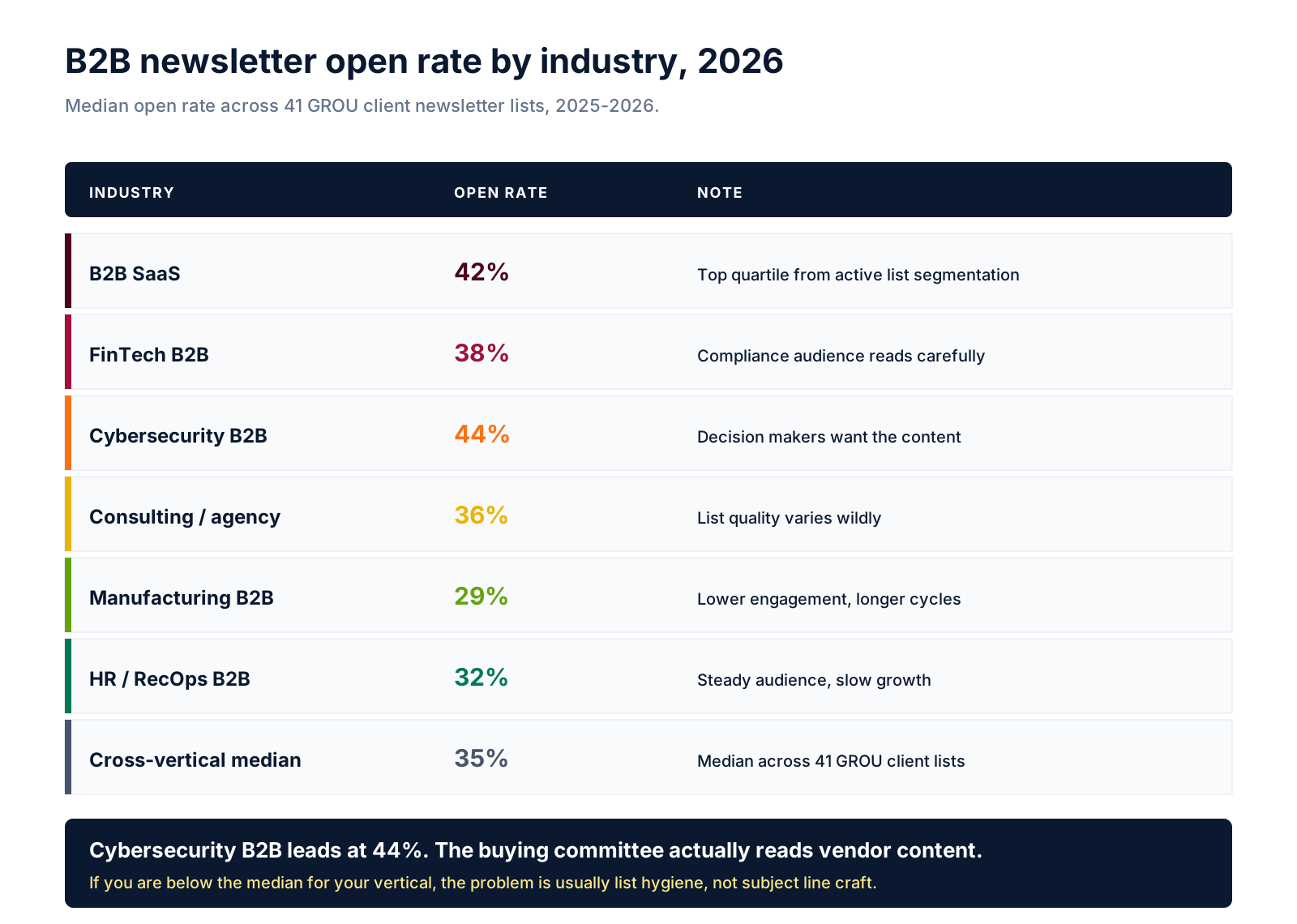
Cybersecurity B2B leads at 44% because the buying committee genuinely needs the content. Compliance, risk, and vendor research drive open rate. B2B SaaS sits at 42% top quartile because the audience reads operator content (frameworks, playbooks, benchmarks). FinTech at 38% trails slightly because compliance audiences open carefully but read selectively.
Manufacturing B2B at 29% is the lowest performer, mostly because audience engagement is more transactional and the buyer-vendor relationship is built on RFPs rather than email touchpoints. HR / RecOps lands at 32% with steady but slow growth.
The cross-vertical median is 35%. Compare your list to your vertical, not the median. A 36% open rate is below median for Cybersecurity but top quartile for Manufacturing.
Mailchimp's 2024 industry benchmark report shows similar patterns at lower absolute numbers (consumer-heavier dataset), but the vertical relativity holds.

How open rate decays as subscribers age
The biggest single factor in open rate is not subject line or industry. It is subscriber age. Open rate falls 36 points from month 1 to year 3 of subscriber tenure across every B2B vertical we have tested.
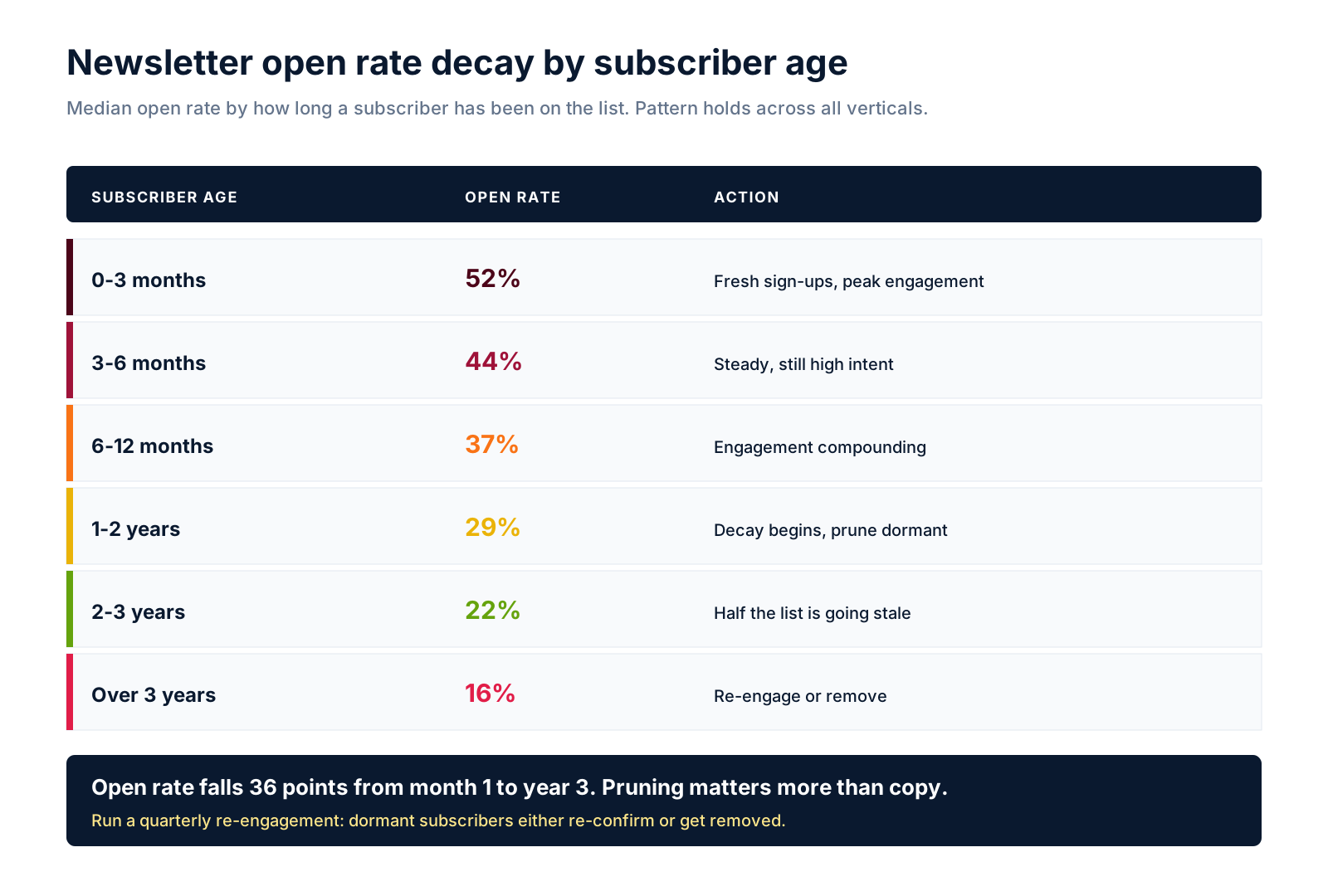
Fresh subscribers (0-3 months) open at 52% because intent is high and recall is fresh. By 6-12 months the rate drops to 37% as the relationship moves from fresh to routine. Past 1 year, the decay accelerates. By 2-3 years, 22% of the list still opens. Past 3 years, only 16% opens consistently.
This is why list-wide open rate is a misleading metric. A list that is 70% subscribers over 2 years old will show 22-25% open rate even if the content is great. A list with active churn (re-engagement, pruning) shows 35-45% because dormant subscribers don't dilute the denominator.
The fix is a quarterly re-engagement campaign. Send a "still want to hear from us?" email to anyone who has not opened in 90 days. Subscribers who re-confirm stay. Subscribers who do not get removed. This is the single highest-leverage move in B2B newsletter operations.
Campaign Monitor's email benchmarks document the same decay pattern across SMB and mid-market lists.
The 6 open rate killers ranked
The fastest way to identify what is dragging your open rate down is to check against the 6 mistakes below. Each one comes with a quantified penalty.
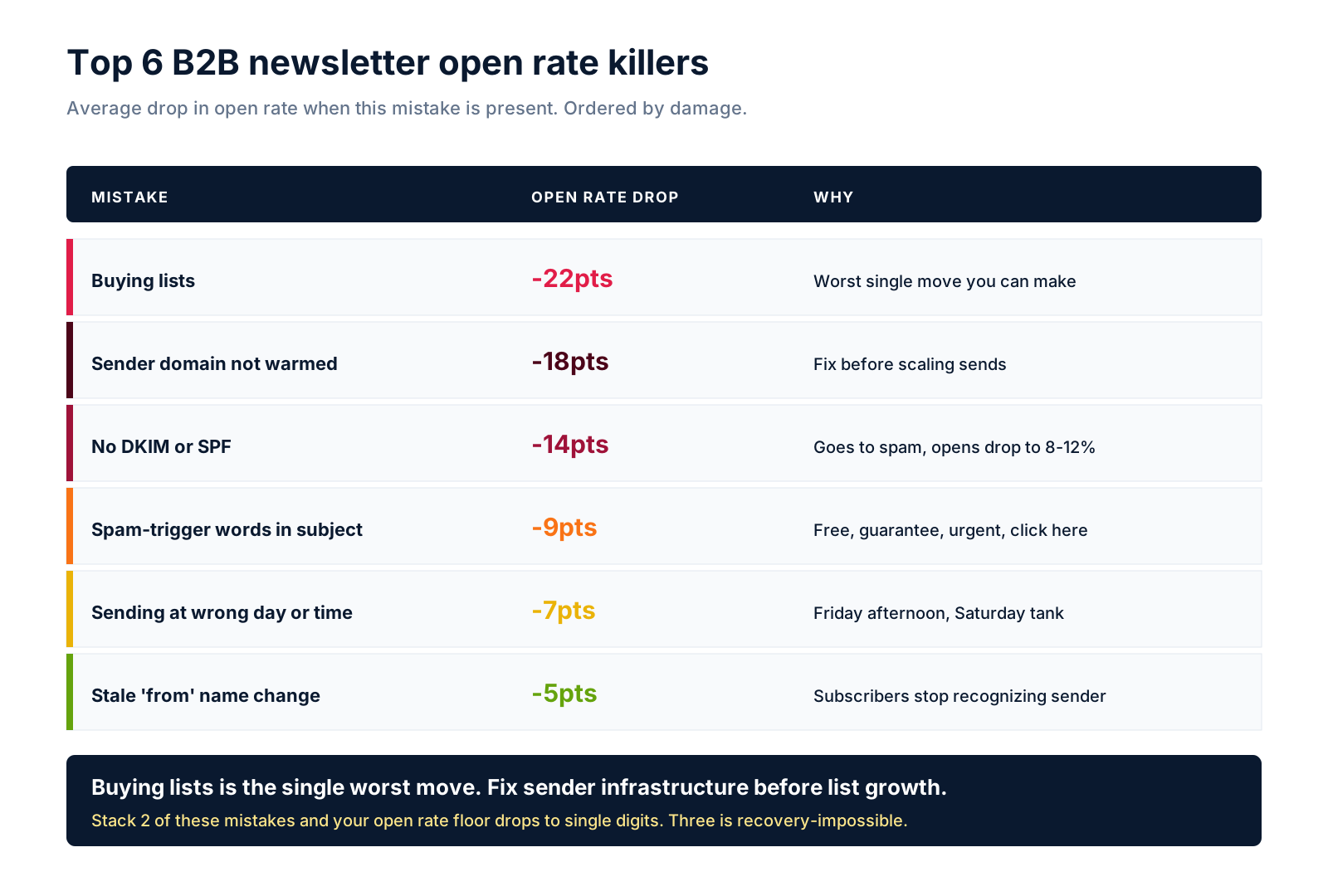
Buying lists (-22 points) is the worst single move you can make. Purchased lists have low intent, high spam complaints, and tank sender reputation. The damage compounds because every subsequent campaign sends to a polluted list. We have seen newsletters drop from 38% to 12% in 60 days after one purchased list.
Sender domain not warmed (-18 points) kills new newsletter launches. A brand new sending domain has no reputation. Sending to 5,000 subscribers from a cold domain looks like spam to Gmail and Outlook. Warm-up means starting with 50-100 sends per day to engaged-only subscribers, scaling 30% per week for 6-8 weeks.
No DKIM or SPF (-14 points) sends most of your campaigns to spam. DKIM, SPF, and DMARC are 2026 baseline authentication. Without them, Gmail flags messages as untrusted and quarantines them. Open rate looks like 8-12% because most subscribers never see the email.
Spam-trigger words in subject (-9 points) are the easy fix. "Free", "guarantee", "urgent", "click here", "open now", "limited time" all trigger algorithmic spam scoring. Audit your subject lines for these words. Replacement words are usually easier to find than you think.
Sending at wrong day or time (-7 points) is the mid-tier mistake. Friday afternoon and weekends tank. Tuesday-Thursday at 9-10am local time wins. Test against your specific audience but default to Tuesday 9am if you have no data.
Stale 'from' name change (-5 points) loses recognition. If your newsletter has been "Jane from Acme" for 12 months and you switch to "Acme Newsletter Team", subscribers stop recognizing the sender. Open rate drops 3-7 points until recognition rebuilds.
The fastest path to top-quartile open rate
If your B2B newsletter sits below median for your vertical, the fastest path to top quartile follows 3 steps in order.
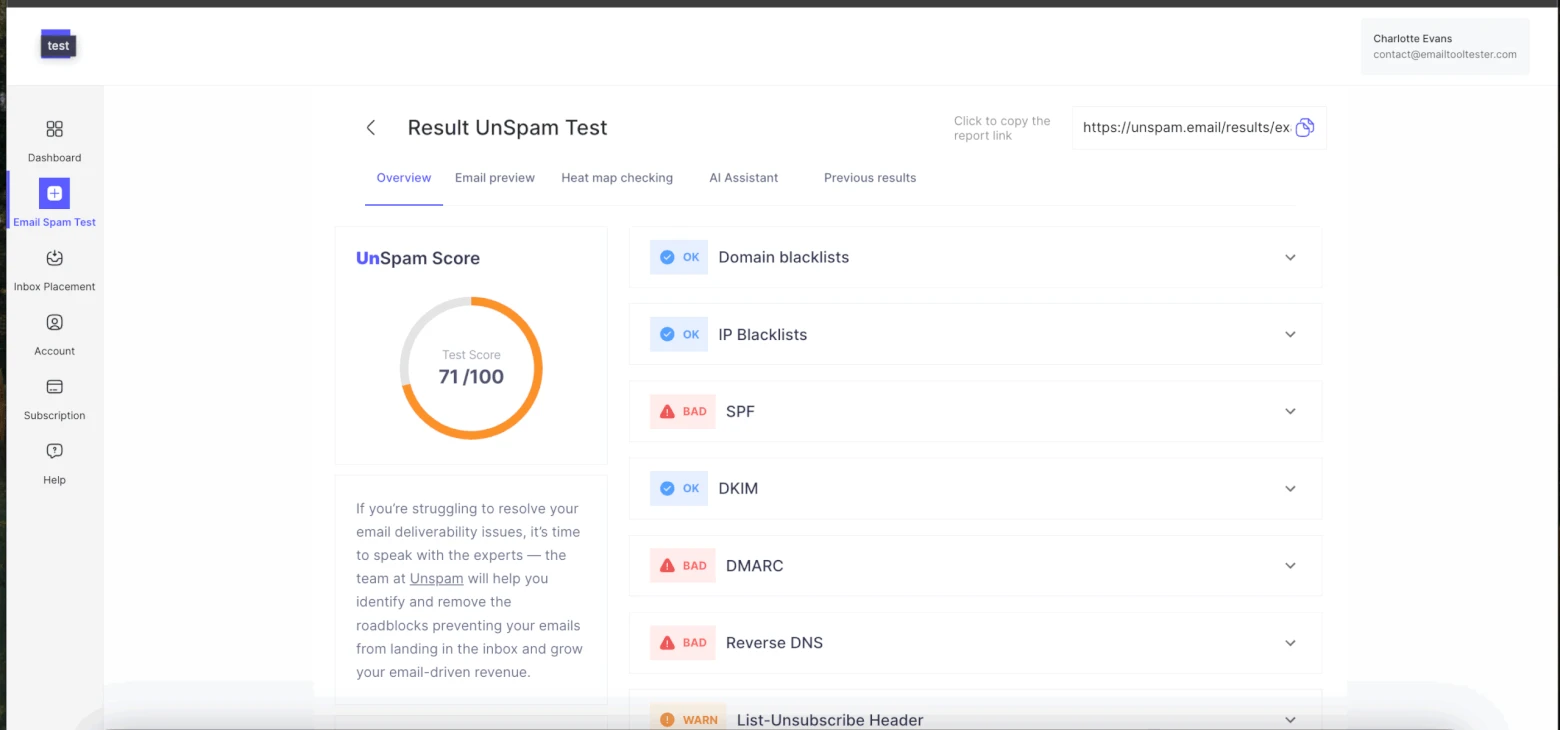
Step 1: Fix sender infrastructure. Verify DKIM, SPF, and DMARC are configured correctly. If you are using Beehiiv, the platform handles this for you. If you are on ActiveCampaign, check the Sending Domain settings. The lift from this single step can be 8-14 points if you were missing any of the three.
Step 2: Run a quarterly re-engagement. Email subscribers who have not opened in 90 days. Ask "still want to hear from us?". Those who re-confirm stay. Those who do not get removed. The lift is typically 6-12 points because dormant subscribers stop dragging down the denominator.
Step 3: Test 3 subject line patterns weekly. Use the question hook + curiosity gap + stat patterns from our B2B nurture subject lines guide. Run each pattern for 4 weeks and double down on what works in your specific audience.
These 3 steps in combination lift most B2B newsletters from 25-30% baseline to 38-44% top quartile within 90 days.
Who should care about open rate benchmarks
Match 3 of these 4 criteria and benchmarks matter: you run a B2B newsletter with over 1,000 subscribers, you measure open rate as a primary metric, you want to compare performance against vertical peers, and you treat the newsletter as a GTM channel not a side project.
For B2B teams running internal company updates with under 500 subscribers, benchmarks are noise. Track your own absolute open rate and trend, not external comparisons.
Who should skip open rate as a primary metric
Skip open rate as a primary metric if your sending platform shows inflated open rates due to Apple Mail Privacy Protection (open rates above 60% across the board), if your newsletter is paid (paid subs open at 70-85% because the audience filtered itself), or if you are running deliverability-only campaigns where click rate matters more.
For B2B SaaS specifically, track click-to-open rate (CTOR) alongside open rate. CTOR is harder to game and reflects real reader intent. Top quartile B2B CTOR is 12-18% on nurture content.
FAQ
What is a good open rate for a B2B newsletter?
35% is the cross-vertical median in 2026. Top quartile is 42-44% (B2B SaaS, Cybersecurity). Below 25% indicates list hygiene problems, sender infrastructure issues, or both. The right benchmark is your vertical median, not the cross-industry average.
Why is my B2B newsletter open rate dropping?
Most likely subscriber age decay. A newsletter list with 70% subscribers over 2 years old will average 22-29% open rate even if content quality is unchanged. Run a quarterly re-engagement campaign to prune dormant subscribers. Open rate typically lifts 6-12 points within 60 days.
Are Apple Mail Privacy Protection opens skewing my benchmarks?
Yes. Apple Mail's automatic pre-fetching makes about 30-35% of opens look like opens even when the subscriber didn't see the email. Track click rate and reply rate as secondary metrics to validate that open rate is real. A 50% open rate with 1% click rate signals MPP inflation; 50% open with 8% click is real engagement.
How often should I prune my newsletter list?
Quarterly. Send a re-engagement campaign every 3 months to subscribers who have not opened in 90 days. Those who re-confirm stay. Those who don't get removed. This single hygiene practice keeps open rate within 10-15% of its top-quartile potential.
Should I buy a B2B newsletter list?
No. Bought lists drop open rate by 22 points and damage sender reputation for the rest of the list. Even a "high-quality" purchased list (LinkedIn-scraped, ZoomInfo-pulled) has low intent and high complaint rates. Build the list through inbound content, Heyreach outbound, or Smartlead cold-to-warm flows.
How do I check if my sender domain is warmed up?
Use a deliverability tool like Mail-Tester or Smartlead's built-in domain warm-up tracker. A score above 8/10 on Mail-Tester suggests your domain reputation is healthy. Below 6/10 means you have authentication or sender-reputation issues. Fix before scaling sends.
What is the best newsletter platform for B2B?
For most B2B teams, Beehiiv at $39/mo if the newsletter is the product, or ActiveCampaign at $19-$259/mo if the newsletter is part of a broader marketing automation stack. Beehiiv wins on monetization and simplicity. ActiveCampaign wins on segmentation and CRM sync.
How long does it take to improve newsletter open rate?
If sender infrastructure is the problem (DKIM/SPF/DMARC), the lift shows up in 2-3 weeks. If list hygiene is the problem (dormant subscribers), the lift shows up after the first re-engagement campaign at 30-45 days. If content/subject line is the problem, the lift takes 4-8 weeks of pattern testing. Plan for 90 days to move from median to top quartile.
Bottom line
B2B newsletter open rate benchmarks in 2026 range from 29% (Manufacturing) to 44% (Cybersecurity), with a cross-vertical median of 35%. Subscriber age, sender infrastructure, and list hygiene drive open rate more than subject line craft.
For most B2B teams, the right stack is Beehiiv at $39/mo for newsletter-as-product, or ActiveCampaign at $19-$259/mo for marketing-automation-integrated newsletters.
Need help benchmarking your B2B newsletter against vertical peers and identifying which lever to pull first? Book a call with GROU. We have audited open rate performance for 41 newsletter lists and can identify your top 3 leverage points in one session.
GROU is a B2B outbound and revenue operations agency. We run newsletter operations for 41 active GROU client lists across B2B SaaS, FinTech, and Cybersecurity clients. Benchmark data above is from active newsletters running between 2025-Q1 and 2026-Q2, anonymized to protect client confidentiality.
Some links in this article are affiliate links. We only recommend tools we run in production. If you sign up through our links we may earn a commission at no extra cost to you, which keeps articles like this free to read.
B2B newsletter open rate benchmarks in 2026 sit between 29% (Manufacturing) and 44% (Cybersecurity), with B2B SaaS at 42% top quartile. Most teams chase subject line craft when the real lift comes from list hygiene and sender infrastructure.
This is the operator breakdown across 41 GROU client newsletter lists: open rate by industry, the open rate decay curve as subscribers age, and the 6 mistakes that drop open rate by 5-22 points each.
TL;DR
Median B2B newsletter open rate across industries is 35%. Cybersecurity leads at 44%, Manufacturing trails at 29%. Top quartile B2B SaaS lists hit 42% with active segmentation and list hygiene.
The biggest lift comes from list hygiene, not subject line craft. Open rate falls 36 points from month 1 to year 3 of subscriber tenure. Pruning dormant subscribers quarterly is the single highest-leverage move. Buying lists is the single worst (-22 points).
Open rate by B2B industry
Industry sets the baseline for what "good" looks like. The numbers below are median open rates across 41 GROU client newsletter lists running on Beehiiv and ActiveCampaign over the last 18 months.
Cybersecurity B2B leads at 44% because the buying committee genuinely needs the content. Compliance, risk, and vendor research drive open rate. B2B SaaS sits at 42% top quartile because the audience reads operator content (frameworks, playbooks, benchmarks). FinTech at 38% trails slightly because compliance audiences open carefully but read selectively.
Manufacturing B2B at 29% is the lowest performer, mostly because audience engagement is more transactional and the buyer-vendor relationship is built on RFPs rather than email touchpoints. HR / RecOps lands at 32% with steady but slow growth.
The cross-vertical median is 35%. Compare your list to your vertical, not the median. A 36% open rate is below median for Cybersecurity but top quartile for Manufacturing.
Mailchimp's 2024 industry benchmark report shows similar patterns at lower absolute numbers (consumer-heavier dataset), but the vertical relativity holds.
How open rate decays as subscribers age
The biggest single factor in open rate is not subject line or industry. It is subscriber age. Open rate falls 36 points from month 1 to year 3 of subscriber tenure across every B2B vertical we have tested.
Fresh subscribers (0-3 months) open at 52% because intent is high and recall is fresh. By 6-12 months the rate drops to 37% as the relationship moves from fresh to routine. Past 1 year, the decay accelerates. By 2-3 years, 22% of the list still opens. Past 3 years, only 16% opens consistently.
This is why list-wide open rate is a misleading metric. A list that is 70% subscribers over 2 years old will show 22-25% open rate even if the content is great. A list with active churn (re-engagement, pruning) shows 35-45% because dormant subscribers don't dilute the denominator.
The fix is a quarterly re-engagement campaign. Send a "still want to hear from us?" email to anyone who has not opened in 90 days. Subscribers who re-confirm stay. Subscribers who do not get removed. This is the single highest-leverage move in B2B newsletter operations.
Campaign Monitor's email benchmarks document the same decay pattern across SMB and mid-market lists.
The 6 open rate killers ranked
The fastest way to identify what is dragging your open rate down is to check against the 6 mistakes below. Each one comes with a quantified penalty.
Buying lists (-22 points) is the worst single move you can make. Purchased lists have low intent, high spam complaints, and tank sender reputation. The damage compounds because every subsequent campaign sends to a polluted list. We have seen newsletters drop from 38% to 12% in 60 days after one purchased list.
Sender domain not warmed (-18 points) kills new newsletter launches. A brand new sending domain has no reputation. Sending to 5,000 subscribers from a cold domain looks like spam to Gmail and Outlook. Warm-up means starting with 50-100 sends per day to engaged-only subscribers, scaling 30% per week for 6-8 weeks.
No DKIM or SPF (-14 points) sends most of your campaigns to spam. DKIM, SPF, and DMARC are 2026 baseline authentication. Without them, Gmail flags messages as untrusted and quarantines them. Open rate looks like 8-12% because most subscribers never see the email.
Spam-trigger words in subject (-9 points) are the easy fix. "Free", "guarantee", "urgent", "click here", "open now", "limited time" all trigger algorithmic spam scoring. Audit your subject lines for these words. Replacement words are usually easier to find than you think.
Sending at wrong day or time (-7 points) is the mid-tier mistake. Friday afternoon and weekends tank. Tuesday-Thursday at 9-10am local time wins. Test against your specific audience but default to Tuesday 9am if you have no data.
Stale 'from' name change (-5 points) loses recognition. If your newsletter has been "Jane from Acme" for 12 months and you switch to "Acme Newsletter Team", subscribers stop recognizing the sender. Open rate drops 3-7 points until recognition rebuilds.
The fastest path to top-quartile open rate
If your B2B newsletter sits below median for your vertical, the fastest path to top quartile follows 3 steps in order.
Step 1: Fix sender infrastructure. Verify DKIM, SPF, and DMARC are configured correctly. If you are using Beehiiv, the platform handles this for you. If you are on ActiveCampaign, check the Sending Domain settings. The lift from this single step can be 8-14 points if you were missing any of the three.
Step 2: Run a quarterly re-engagement. Email subscribers who have not opened in 90 days. Ask "still want to hear from us?". Those who re-confirm stay. Those who do not get removed. The lift is typically 6-12 points because dormant subscribers stop dragging down the denominator.
Step 3: Test 3 subject line patterns weekly. Use the question hook + curiosity gap + stat patterns from our B2B nurture subject lines guide. Run each pattern for 4 weeks and double down on what works in your specific audience.
These 3 steps in combination lift most B2B newsletters from 25-30% baseline to 38-44% top quartile within 90 days.
Who should care about open rate benchmarks
Match 3 of these 4 criteria and benchmarks matter: you run a B2B newsletter with over 1,000 subscribers, you measure open rate as a primary metric, you want to compare performance against vertical peers, and you treat the newsletter as a GTM channel not a side project.
For B2B teams running internal company updates with under 500 subscribers, benchmarks are noise. Track your own absolute open rate and trend, not external comparisons.
Who should skip open rate as a primary metric
Skip open rate as a primary metric if your sending platform shows inflated open rates due to Apple Mail Privacy Protection (open rates above 60% across the board), if your newsletter is paid (paid subs open at 70-85% because the audience filtered itself), or if you are running deliverability-only campaigns where click rate matters more.
For B2B SaaS specifically, track click-to-open rate (CTOR) alongside open rate. CTOR is harder to game and reflects real reader intent. Top quartile B2B CTOR is 12-18% on nurture content.
FAQ
What is a good open rate for a B2B newsletter?
35% is the cross-vertical median in 2026. Top quartile is 42-44% (B2B SaaS, Cybersecurity). Below 25% indicates list hygiene problems, sender infrastructure issues, or both. The right benchmark is your vertical median, not the cross-industry average.
Why is my B2B newsletter open rate dropping?
Most likely subscriber age decay. A newsletter list with 70% subscribers over 2 years old will average 22-29% open rate even if content quality is unchanged. Run a quarterly re-engagement campaign to prune dormant subscribers. Open rate typically lifts 6-12 points within 60 days.
Are Apple Mail Privacy Protection opens skewing my benchmarks?
Yes. Apple Mail's automatic pre-fetching makes about 30-35% of opens look like opens even when the subscriber didn't see the email. Track click rate and reply rate as secondary metrics to validate that open rate is real. A 50% open rate with 1% click rate signals MPP inflation; 50% open with 8% click is real engagement.
How often should I prune my newsletter list?
Quarterly. Send a re-engagement campaign every 3 months to subscribers who have not opened in 90 days. Those who re-confirm stay. Those who don't get removed. This single hygiene practice keeps open rate within 10-15% of its top-quartile potential.
Should I buy a B2B newsletter list?
No. Bought lists drop open rate by 22 points and damage sender reputation for the rest of the list. Even a "high-quality" purchased list (LinkedIn-scraped, ZoomInfo-pulled) has low intent and high complaint rates. Build the list through inbound content, Heyreach outbound, or Smartlead cold-to-warm flows.
How do I check if my sender domain is warmed up?
Use a deliverability tool like Mail-Tester or Smartlead's built-in domain warm-up tracker. A score above 8/10 on Mail-Tester suggests your domain reputation is healthy. Below 6/10 means you have authentication or sender-reputation issues. Fix before scaling sends.
What is the best newsletter platform for B2B?
For most B2B teams, Beehiiv at $39/mo if the newsletter is the product, or ActiveCampaign at $19-$259/mo if the newsletter is part of a broader marketing automation stack. Beehiiv wins on monetization and simplicity. ActiveCampaign wins on segmentation and CRM sync.
How long does it take to improve newsletter open rate?
If sender infrastructure is the problem (DKIM/SPF/DMARC), the lift shows up in 2-3 weeks. If list hygiene is the problem (dormant subscribers), the lift shows up after the first re-engagement campaign at 30-45 days. If content/subject line is the problem, the lift takes 4-8 weeks of pattern testing. Plan for 90 days to move from median to top quartile.
Bottom line
B2B newsletter open rate benchmarks in 2026 range from 29% (Manufacturing) to 44% (Cybersecurity), with a cross-vertical median of 35%. Subscriber age, sender infrastructure, and list hygiene drive open rate more than subject line craft.
For most B2B teams, the right stack is Beehiiv at $39/mo for newsletter-as-product, or ActiveCampaign at $19-$259/mo for marketing-automation-integrated newsletters.
Need help benchmarking your B2B newsletter against vertical peers and identifying which lever to pull first? Book a call with GROU. We have audited open rate performance for 41 newsletter lists and can identify your top 3 leverage points in one session.
GROU is a B2B outbound and revenue operations agency. We run newsletter operations for 41 active GROU client lists across B2B SaaS, FinTech, and Cybersecurity clients. Benchmark data above is from active newsletters running between 2025-Q1 and 2026-Q2, anonymized to protect client confidentiality.
Some links in this article are affiliate links. We only recommend tools we run in production. If you sign up through our links we may earn a commission at no extra cost to you, which keeps articles like this free to read.
B2B newsletter open rate benchmarks in 2026 sit between 29% (Manufacturing) and 44% (Cybersecurity), with B2B SaaS at 42% top quartile. Most teams chase subject line craft when the real lift comes from list hygiene and sender infrastructure.
This is the operator breakdown across 41 GROU client newsletter lists: open rate by industry, the open rate decay curve as subscribers age, and the 6 mistakes that drop open rate by 5-22 points each.
TL;DR
Median B2B newsletter open rate across industries is 35%. Cybersecurity leads at 44%, Manufacturing trails at 29%. Top quartile B2B SaaS lists hit 42% with active segmentation and list hygiene.
The biggest lift comes from list hygiene, not subject line craft. Open rate falls 36 points from month 1 to year 3 of subscriber tenure. Pruning dormant subscribers quarterly is the single highest-leverage move. Buying lists is the single worst (-22 points).
Open rate by B2B industry
Industry sets the baseline for what "good" looks like. The numbers below are median open rates across 41 GROU client newsletter lists running on Beehiiv and ActiveCampaign over the last 18 months.
Cybersecurity B2B leads at 44% because the buying committee genuinely needs the content. Compliance, risk, and vendor research drive open rate. B2B SaaS sits at 42% top quartile because the audience reads operator content (frameworks, playbooks, benchmarks). FinTech at 38% trails slightly because compliance audiences open carefully but read selectively.
Manufacturing B2B at 29% is the lowest performer, mostly because audience engagement is more transactional and the buyer-vendor relationship is built on RFPs rather than email touchpoints. HR / RecOps lands at 32% with steady but slow growth.
The cross-vertical median is 35%. Compare your list to your vertical, not the median. A 36% open rate is below median for Cybersecurity but top quartile for Manufacturing.
Mailchimp's 2024 industry benchmark report shows similar patterns at lower absolute numbers (consumer-heavier dataset), but the vertical relativity holds.
How open rate decays as subscribers age
The biggest single factor in open rate is not subject line or industry. It is subscriber age. Open rate falls 36 points from month 1 to year 3 of subscriber tenure across every B2B vertical we have tested.
Fresh subscribers (0-3 months) open at 52% because intent is high and recall is fresh. By 6-12 months the rate drops to 37% as the relationship moves from fresh to routine. Past 1 year, the decay accelerates. By 2-3 years, 22% of the list still opens. Past 3 years, only 16% opens consistently.
This is why list-wide open rate is a misleading metric. A list that is 70% subscribers over 2 years old will show 22-25% open rate even if the content is great. A list with active churn (re-engagement, pruning) shows 35-45% because dormant subscribers don't dilute the denominator.
The fix is a quarterly re-engagement campaign. Send a "still want to hear from us?" email to anyone who has not opened in 90 days. Subscribers who re-confirm stay. Subscribers who do not get removed. This is the single highest-leverage move in B2B newsletter operations.
Campaign Monitor's email benchmarks document the same decay pattern across SMB and mid-market lists.
The 6 open rate killers ranked
The fastest way to identify what is dragging your open rate down is to check against the 6 mistakes below. Each one comes with a quantified penalty.
Buying lists (-22 points) is the worst single move you can make. Purchased lists have low intent, high spam complaints, and tank sender reputation. The damage compounds because every subsequent campaign sends to a polluted list. We have seen newsletters drop from 38% to 12% in 60 days after one purchased list.
Sender domain not warmed (-18 points) kills new newsletter launches. A brand new sending domain has no reputation. Sending to 5,000 subscribers from a cold domain looks like spam to Gmail and Outlook. Warm-up means starting with 50-100 sends per day to engaged-only subscribers, scaling 30% per week for 6-8 weeks.
No DKIM or SPF (-14 points) sends most of your campaigns to spam. DKIM, SPF, and DMARC are 2026 baseline authentication. Without them, Gmail flags messages as untrusted and quarantines them. Open rate looks like 8-12% because most subscribers never see the email.
Spam-trigger words in subject (-9 points) are the easy fix. "Free", "guarantee", "urgent", "click here", "open now", "limited time" all trigger algorithmic spam scoring. Audit your subject lines for these words. Replacement words are usually easier to find than you think.
Sending at wrong day or time (-7 points) is the mid-tier mistake. Friday afternoon and weekends tank. Tuesday-Thursday at 9-10am local time wins. Test against your specific audience but default to Tuesday 9am if you have no data.
Stale 'from' name change (-5 points) loses recognition. If your newsletter has been "Jane from Acme" for 12 months and you switch to "Acme Newsletter Team", subscribers stop recognizing the sender. Open rate drops 3-7 points until recognition rebuilds.
The fastest path to top-quartile open rate
If your B2B newsletter sits below median for your vertical, the fastest path to top quartile follows 3 steps in order.
Step 1: Fix sender infrastructure. Verify DKIM, SPF, and DMARC are configured correctly. If you are using Beehiiv, the platform handles this for you. If you are on ActiveCampaign, check the Sending Domain settings. The lift from this single step can be 8-14 points if you were missing any of the three.
Step 2: Run a quarterly re-engagement. Email subscribers who have not opened in 90 days. Ask "still want to hear from us?". Those who re-confirm stay. Those who do not get removed. The lift is typically 6-12 points because dormant subscribers stop dragging down the denominator.
Step 3: Test 3 subject line patterns weekly. Use the question hook + curiosity gap + stat patterns from our B2B nurture subject lines guide. Run each pattern for 4 weeks and double down on what works in your specific audience.
These 3 steps in combination lift most B2B newsletters from 25-30% baseline to 38-44% top quartile within 90 days.
Who should care about open rate benchmarks
Match 3 of these 4 criteria and benchmarks matter: you run a B2B newsletter with over 1,000 subscribers, you measure open rate as a primary metric, you want to compare performance against vertical peers, and you treat the newsletter as a GTM channel not a side project.
For B2B teams running internal company updates with under 500 subscribers, benchmarks are noise. Track your own absolute open rate and trend, not external comparisons.
Who should skip open rate as a primary metric
Skip open rate as a primary metric if your sending platform shows inflated open rates due to Apple Mail Privacy Protection (open rates above 60% across the board), if your newsletter is paid (paid subs open at 70-85% because the audience filtered itself), or if you are running deliverability-only campaigns where click rate matters more.
For B2B SaaS specifically, track click-to-open rate (CTOR) alongside open rate. CTOR is harder to game and reflects real reader intent. Top quartile B2B CTOR is 12-18% on nurture content.
FAQ
What is a good open rate for a B2B newsletter?
35% is the cross-vertical median in 2026. Top quartile is 42-44% (B2B SaaS, Cybersecurity). Below 25% indicates list hygiene problems, sender infrastructure issues, or both. The right benchmark is your vertical median, not the cross-industry average.
Why is my B2B newsletter open rate dropping?
Most likely subscriber age decay. A newsletter list with 70% subscribers over 2 years old will average 22-29% open rate even if content quality is unchanged. Run a quarterly re-engagement campaign to prune dormant subscribers. Open rate typically lifts 6-12 points within 60 days.
Are Apple Mail Privacy Protection opens skewing my benchmarks?
Yes. Apple Mail's automatic pre-fetching makes about 30-35% of opens look like opens even when the subscriber didn't see the email. Track click rate and reply rate as secondary metrics to validate that open rate is real. A 50% open rate with 1% click rate signals MPP inflation; 50% open with 8% click is real engagement.
How often should I prune my newsletter list?
Quarterly. Send a re-engagement campaign every 3 months to subscribers who have not opened in 90 days. Those who re-confirm stay. Those who don't get removed. This single hygiene practice keeps open rate within 10-15% of its top-quartile potential.
Should I buy a B2B newsletter list?
No. Bought lists drop open rate by 22 points and damage sender reputation for the rest of the list. Even a "high-quality" purchased list (LinkedIn-scraped, ZoomInfo-pulled) has low intent and high complaint rates. Build the list through inbound content, Heyreach outbound, or Smartlead cold-to-warm flows.
How do I check if my sender domain is warmed up?
Use a deliverability tool like Mail-Tester or Smartlead's built-in domain warm-up tracker. A score above 8/10 on Mail-Tester suggests your domain reputation is healthy. Below 6/10 means you have authentication or sender-reputation issues. Fix before scaling sends.
What is the best newsletter platform for B2B?
For most B2B teams, Beehiiv at $39/mo if the newsletter is the product, or ActiveCampaign at $19-$259/mo if the newsletter is part of a broader marketing automation stack. Beehiiv wins on monetization and simplicity. ActiveCampaign wins on segmentation and CRM sync.
How long does it take to improve newsletter open rate?
If sender infrastructure is the problem (DKIM/SPF/DMARC), the lift shows up in 2-3 weeks. If list hygiene is the problem (dormant subscribers), the lift shows up after the first re-engagement campaign at 30-45 days. If content/subject line is the problem, the lift takes 4-8 weeks of pattern testing. Plan for 90 days to move from median to top quartile.
Bottom line
B2B newsletter open rate benchmarks in 2026 range from 29% (Manufacturing) to 44% (Cybersecurity), with a cross-vertical median of 35%. Subscriber age, sender infrastructure, and list hygiene drive open rate more than subject line craft.
For most B2B teams, the right stack is Beehiiv at $39/mo for newsletter-as-product, or ActiveCampaign at $19-$259/mo for marketing-automation-integrated newsletters.
Need help benchmarking your B2B newsletter against vertical peers and identifying which lever to pull first? Book a call with GROU. We have audited open rate performance for 41 newsletter lists and can identify your top 3 leverage points in one session.
GROU is a B2B outbound and revenue operations agency. We run newsletter operations for 41 active GROU client lists across B2B SaaS, FinTech, and Cybersecurity clients. Benchmark data above is from active newsletters running between 2025-Q1 and 2026-Q2, anonymized to protect client confidentiality.
Some links in this article are affiliate links. We only recommend tools we run in production. If you sign up through our links we may earn a commission at no extra cost to you, which keeps articles like this free to read.

Pipeline OS Newsletter
Build qualified pipeline
Get weekly tactics to generate demand, improve lead quality, and book more meetings.







Trusted by industry leaders
Trusted by industry leaders
Trusted by industry leaders
Ready to build qualified pipeline?
Ready to build qualified pipeline?
Ready to build qualified pipeline?
Book a call to see if we're the right fit, or take the 2-minute quiz to get a clear starting point.
Book a call to see if we're the right fit, or take the 2-minute quiz to get a clear starting point.
Book a call to see if we're the right fit, or take the 2-minute quiz to get a clear starting point.
" height="30.21639343089746px" id="hfGbXmQR2" width="30.216393430897455px"/></svg>)
Copyright © 2026 – All Right Reserved
Copyright © 2026 – All Right Reserved
Copyright © 2026 – All Right Reserved