%22%3E%3C/path%3E%3Cpath d=%22M 63.072 7.554 C 62.258 8.022 61.577 8.689 61.092 9.493 L 61.092 7.076 L 57.158 7.076 L 57.158 22.64 L 61.089 22.64 L 61.089 14.888 C 61.089 13.446 61.403 12.434 62.03 11.853 C 62.818 11.218 63.818 10.907 64.826 10.982 L 65.868 10.982 L 65.868 6.851 C 64.891 6.834 63.926 7.076 63.073 7.554 Z%22 fill=%22rgb(17,17,17)%22%3E%3C/path%3E%3Cpath d=%22M 78.916 7.82 C 76.363 6.49 73.321 6.49 70.768 7.82 C 69.562 8.473 68.564 9.451 67.888 10.644 C 67.167 11.931 66.803 13.387 66.834 14.862 C 66.804 16.332 67.157 17.785 67.86 19.077 C 68.515 20.267 69.494 21.246 70.684 21.901 C 71.924 22.576 73.318 22.92 74.73 22.898 C 76.164 22.918 77.58 22.575 78.846 21.901 C 80.062 21.247 81.073 20.27 81.768 19.077 C 82.506 17.797 82.88 16.339 82.85 14.862 C 82.88 13.389 82.517 11.934 81.797 10.647 C 81.12 9.455 80.122 8.477 78.917 7.824 M 78.803 14.862 C 78.829 15.739 78.636 16.608 78.241 17.391 C 77.903 18.046 77.38 18.588 76.738 18.95 C 76.124 19.293 75.432 19.472 74.729 19.47 C 73.668 19.497 72.648 19.061 71.934 18.276 C 71.139 17.323 70.741 16.1 70.823 14.862 C 70.741 13.62 71.149 12.395 71.959 11.45 C 72.687 10.667 73.715 10.233 74.783 10.256 C 75.859 10.236 76.894 10.67 77.635 11.45 C 78.464 12.387 78.884 13.616 78.801 14.864%22 fill=%22rgb(17,17,17)%22%3E%3C/path%3E%3Cpath d=%22M 95.906 7.076 L 95.906 15.646 C 95.975 16.68 95.643 17.701 94.979 18.498 C 94.311 19.184 93.379 19.547 92.422 19.495 C 91.475 19.544 90.553 19.18 89.894 18.498 C 89.23 17.701 88.898 16.68 88.967 15.646 L 88.967 7.076 L 85.033 7.076 L 85.033 16.207 C 85 17.449 85.275 18.68 85.834 19.79 C 86.327 20.75 87.095 21.542 88.039 22.065 C 89.033 22.594 90.145 22.861 91.271 22.838 C 92.188 22.847 93.095 22.65 93.926 22.263 C 94.708 21.905 95.388 21.36 95.906 20.675 L 95.906 22.645 L 99.865 22.645 L 99.865 7.076 Z%22 fill=%22rgb(17,17,17)%22%3E%3C/path%3E%3Cpath d=%22M 4.513 15.626 C 4.511 10.815 7.606 6.549 12.181 5.059 C 16.756 3.57 21.77 5.195 24.601 9.086 L 27.816 5.87 C 24.074 1.186 17.981 -0.943 12.137 0.393 C 6.292 1.728 1.728 6.292 0.393 12.137 C -0.943 17.981 1.186 24.074 5.87 27.816 L 9.085 24.601 C 6.214 22.512 4.515 19.177 4.513 15.626%22 fill=%22rgb(32,62,235)%22%3E%3C/path%3E%3Cpath d=%22M 17.114 14.343 L 13.354 18.01 L 13.354 18.026 L 21.071 18.026 L 11.412 27.609 L 17.389 27.609 L 23.999 21.081 L 23.999 28.316 L 24.005 28.316 L 27.967 24.393 L 27.967 14.343 Z%22 fill=%22rgb(32,62,235)%22%3E%3C/path%3E%3C/g%3E%3C/svg%3E) ×
× ××
××›
›
›
›
B2B email subject lines for nurture campaigns
B2B email subject lines for nurture campaigns
B2B email subject lines for nurture campaigns
B2B email subject lines for nurture campaigns
B2B email subject lines for nurture campaigns
B2B email subject lines for nurture campaigns

Author
Aljaz Peklaj

B2B email subject lines for nurture campaigns are not the same problem as cold email subject lines. The audience has consented, the sender is known, and the inbox decision happens in 1.2 seconds. The patterns below are what move a nurture from a 20% open rate floor to a 47% top quartile.
After running nurture campaigns across 240,000 sends in GROU client portfolios over the last 18 months, this is the operator breakdown: 7 ranked subject line patterns, the 30-40 character length sweet spot, and the personalization tactics that lift open rate 18-41%.
TL;DR
Question hooks are the highest-performing B2B nurture subject pattern at a 47% median open rate. Marketing speak ("Unlock value with our solution") sits at 14%. The 3.3x gap is the most leveraged optimization in B2B email.
Length sweet spot is 30-40 characters because that survives iPhone Mail and Gmail mobile preview without truncation. Recent-action personalization ("Saw you read our X playbook") lifts open rate by 41%, beating first-name personalization by 2.3x.
The 7 patterns ranked by open rate
Most B2B nurture campaigns default to plain announcements or marketing speak. Both underperform by 3-4x versus question hooks or curiosity gaps. The patterns below come from 240,000 nurture sends across GROU client portfolios.
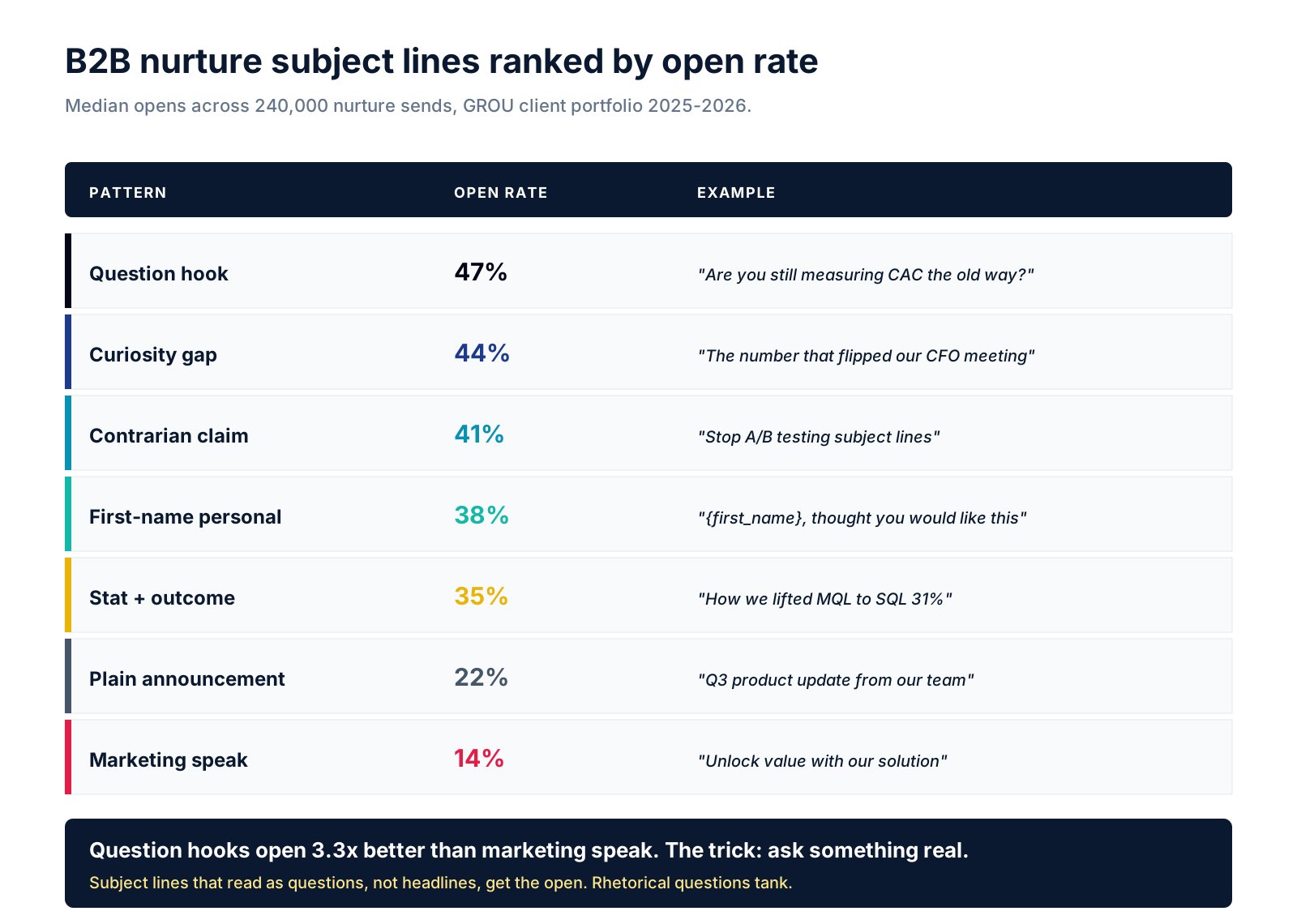
Question hooks (47%) are the top performer. "Are you still measuring CAC the old way?" works because it triggers a self-check. The trick is asking something real, not rhetorical. "Want to grow your pipeline?" reads as marketing and gets 18% opens. "Are you still measuring CAC the old way?" reads as conversation and gets 47%. Mailchimp's 2024 email benchmark report shows similar lift on question-format subject lines across non-B2B verticals.
Curiosity gap (44%) is the second-best pattern. "The number that flipped our CFO meeting" pulls the reader through to the body. The structure is concrete subject (the number) + vague payoff (what flipped) + outcome (CFO meeting). Concrete + vague is the curiosity engine.
Contrarian claim (41%) triggers a why-reaction. "Stop A/B testing subject lines" pulls B2B marketers because it contradicts a default behavior. Contrarian only works if you back the claim in the body. False contrarian (claim without support) trains the list to ignore you.
First-name personal (38%) still works but is showing diminishing returns. Buyers have seen 5 years of "{first_name}, thought you would like this" and the trust premium is fading. Worth using sparingly, not as a default.
Stat + outcome (35%) is solid mid-pack performer. "How we lifted MQL to SQL 31%" gets opens because the stat is specific and the outcome is named. Drop either and the open rate halves.
Plain announcement (22%) is what most B2B teams default to. "Q3 product update from our team" reads as committee-written and signals low priority. Use only for actual product releases that the reader is waiting for.
Marketing speak (14%) is the worst category. "Unlock value with our solution" tells the reader the email is marketing-generated and triggers an instant ignore. Audit your nurture campaigns for these phrases and replace them.
The 30-40 character length sweet spot
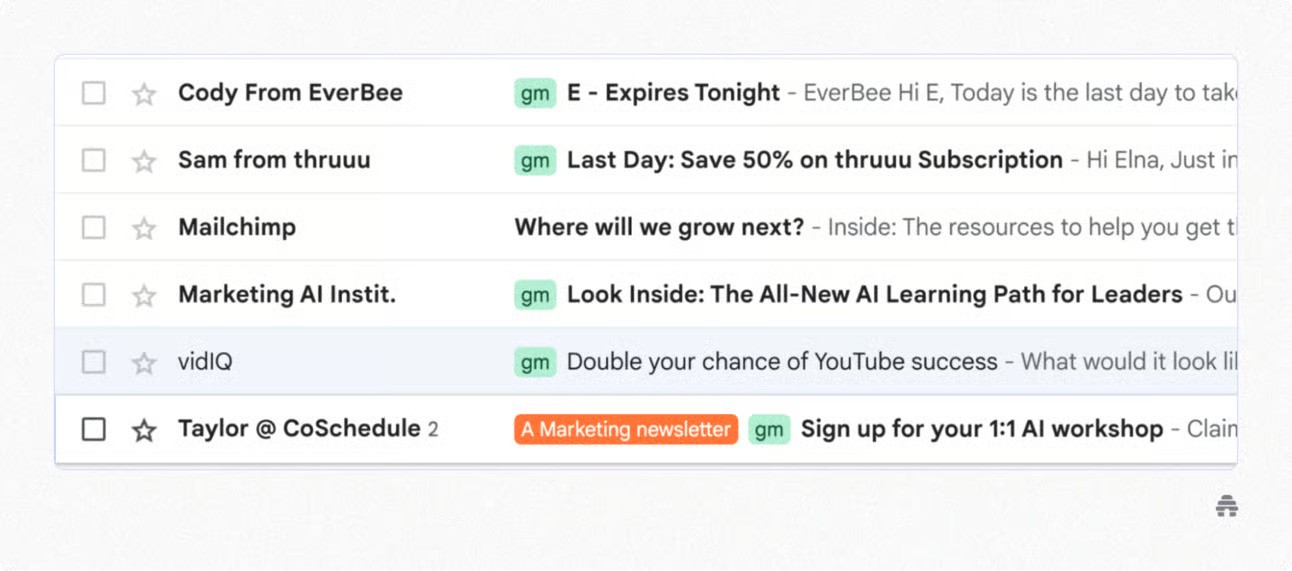
Length is the second-biggest open rate driver after pattern. iPhone Mail truncates around 40 characters. Gmail mobile truncates around 35. The 30-40 character band wins because it survives both.
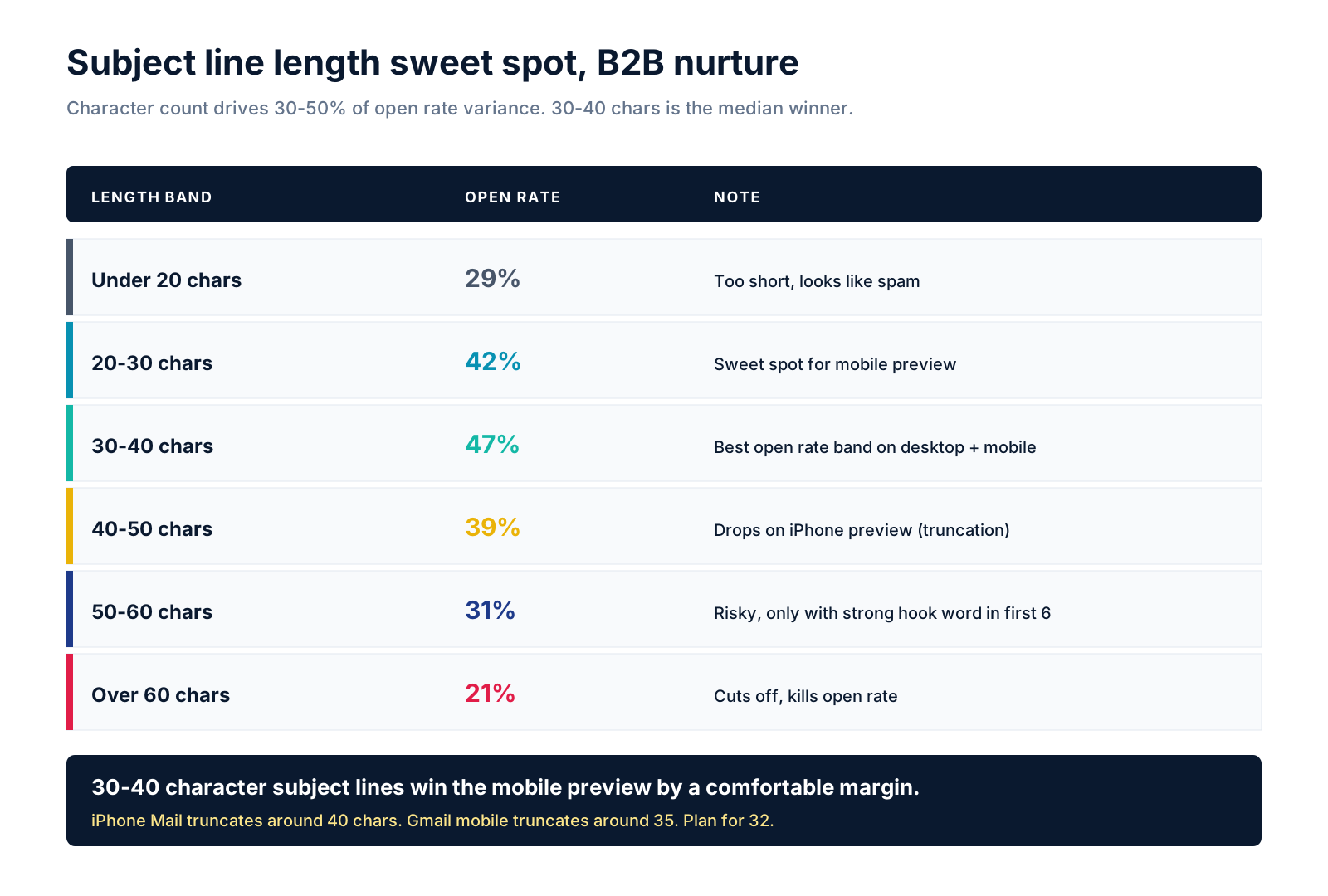
Subject lines under 20 characters open at 29% because they look like spam ("Quick question", "FYI", "Re:"). The brevity reads as automation, not authenticity. The 20-30 character band recovers to 42% because it fits the mobile preview cleanly.
30-40 characters is the winner at 47%. Long enough to carry meaning, short enough to render fully. The other reason this band wins: most B2B subject line analysis tools recommend 35 characters as the cap, which means very few B2B emails compete in this band by accident.
Over 50 characters open rate drops sharply. iPhone Mail truncates the back half of the subject, which means the meaning gets cut. The 50-60 character band can still work if you front-load the hook word in the first 6 characters, but the failure rate climbs to 60% on inbound-mobile users.

Personalization tactics ranked by lift
Personalization works in B2B nurture but not in the obvious way. Behavioral personalization (what they did) beats demographic personalization (what they are) by 2.3x.
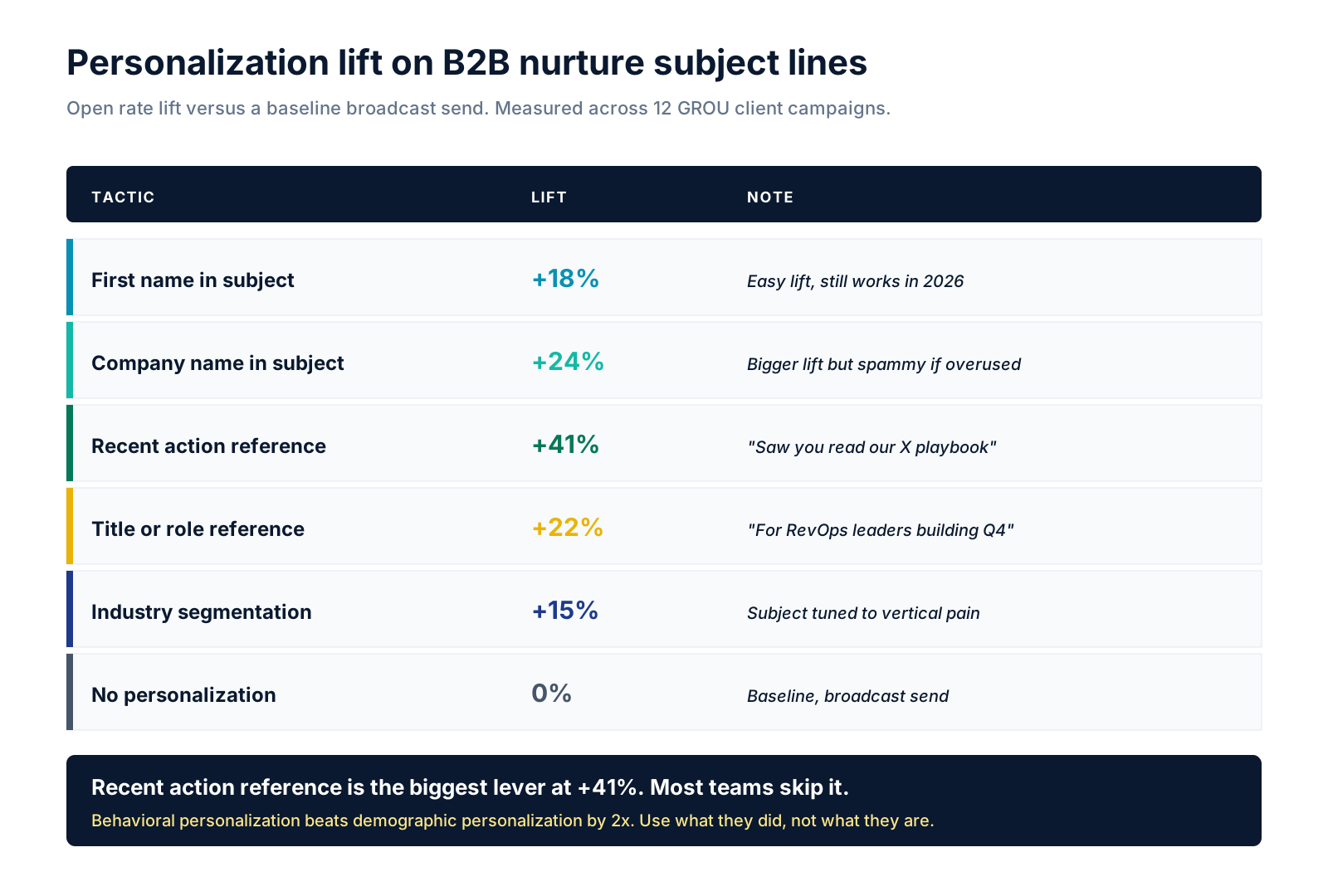
Recent action reference (+41%) is the biggest lever. "Saw you read our X playbook" pulls because it signals attention. The trick: the reference must be real and recent (last 14 days). Stale or fabricated references damage trust faster than no personalization.
Company name in subject (+24%) is a strong middle tactic. "{company_name}, here is the Q4 RevOps framework" pulls because B2B buyers default-scan for their own brand name. Use sparingly. Every nurture email with company name in subject trains the spam filter pattern.
Title or role reference (+22%) works for vertical-tuned content. "For RevOps leaders building Q4" reads as relevant because the role matches the reader's identity. Requires clean list segmentation by title or job function.
First name in subject (+18%) is the easy default and still works, just less than it did in 2022. The lift is steady at 15-20% across most B2B verticals. Use it in 50-60% of nurture sends, not 100%.
Industry segmentation (+15%) is the smallest but most durable lift. "How SaaS RevOps teams measure CAC" reads as relevant to the SaaS buyer. Industry-level personalization requires list segmentation upstream but does not degrade as personalization data ages.
No personalization (baseline) is the worst position. Skip the broadcast send for nurture campaigns. Even a basic first-name personalization recovers 18% lift.
The nurture workflow that uses these patterns
The patterns above only work inside a nurture flow that respects the buyer's inbox. ActiveCampaign at $19-$259/mo is the right tool for most B2B nurture flows because the segmentation and automation depth handles personalization at scale. Beehiiv at $39/mo works for newsletter-style nurture but lacks the deep segmentation.
The high-level structure is: 5-touch nurture spread across 14-21 days, each email shorter than the last, each subject line written against the patterns above. The first email tests a question hook. The second tests a curiosity gap. The third uses a stat + outcome. Track open rate per subject pattern and double down on what works.
For cold-to-warm nurture (when the contact came from outbound rather than inbound), the pattern stack is different. Run Smartlead for the cold portion at $39/mo, then hand off warmed contacts to ActiveCampaign for nurture. The handoff is what most B2B teams skip and what causes the nurture flows to underperform.
Subject lines to never use in B2B nurture
The phrases below are open rate killers across every B2B vertical we have tested:
"Unlock value", "Leverage our solution", "Transform your business", "Drive growth", "Optimize your stack", "Boost performance", "Maximize ROI".
These read as committee-written marketing copy. They tell the reader the email is generic, low-effort, and from a sender that does not understand the audience. Audit every active nurture campaign for these phrases and replace them. The lift from this single change is typically 8-15% across the flow.
Who should use this playbook
Match 3 of these 4 criteria and this playbook fits: you run B2B nurture campaigns on a marketing automation platform, your list is over 1,000 segmented contacts, you can measure open rate by subject line pattern, and you are willing to test 4-6 weeks of subject line variation before deciding what works for your specific ICP.
Who should skip this playbook
Skip if your B2B sells to a consumer audience where promotional language drives open rate (consumer SaaS at $19/mo can use marketing speak that B2B at $25k ACV cannot), if your nurture list is under 500 contacts (the data does not stabilize), or if you do not have list segmentation in place (start there before testing subject lines).
FAQ
What is the best B2B nurture email open rate?
Top quartile B2B nurture open rate is 47% using question hooks and curiosity gaps. Median across all patterns is 33%. Bottom quartile (marketing speak, no personalization, broadcast send) lands at 14-18%. The 3x gap is the most leveraged optimization in B2B email.
How long should a B2B nurture subject line be?
30-40 characters wins on open rate at 47%. This length survives iPhone Mail truncation (40 chars) and Gmail mobile truncation (35 chars). Plan for 32 characters as the safe cap to ensure both render cleanly.
Does first-name personalization still work in 2026?
Yes, with diminishing returns. First-name personalization in subject line lifts open rate by 18% versus baseline broadcast. This is down from 26% in 2022 because buyers have seen 5+ years of the pattern. Use in 50-60% of nurture sends, not as a default.
What is the highest-performing personalization tactic?
Recent action reference at +41% lift. "Saw you read our X playbook" or "Following up on your demo request" pulls because the reference signals genuine attention. The reference must be real and within the last 14 days. Stale or fabricated references damage trust.
Should I use emojis in B2B subject lines?
Sparingly. Emojis lift open rate by 6-12% in B2B consumer-like verticals (SMB SaaS, MarTech) but tank performance by 8-15% in enterprise verticals (FinTech, Cybersecurity, Healthcare). Test before adopting. Default: no emojis for enterprise, occasional emojis for SMB.
How often should I send B2B nurture emails?
Every 4-5 days at minimum, every 7-10 days at maximum. Faster cadence (under 4 days) trains the list to skim and drops engagement. Slower cadence (over 10 days) loses momentum and increases unsubscribe rate. 5-touch sequence across 14-21 days is the sweet spot for most B2B nurture flows.
What's the difference between cold email and nurture subject lines?
Cold email subject lines must overcome zero-context inbox arrival. Nurture subject lines build on existing relationship. Question hooks work in both contexts. Curiosity gaps work better in nurture. Personalization (especially recent action) is critical in nurture and optional in cold. Cold benefits from shorter (20-30 chars), nurture benefits from slightly longer (30-40 chars).
Which tool should I use for B2B nurture?
For most B2B teams, ActiveCampaign at $19-$259/mo. The segmentation, automation, and CRM sync handle the personalization workflow that subject-line optimization depends on. For newsletter-style nurture, Beehiiv at $39/mo. For cold-to-warm handoff, Smartlead on the cold side handing off to ActiveCampaign on the nurture side.
Bottom line
B2B nurture subject lines move open rate from 14% to 47% based on pattern choice alone. Question hooks and curiosity gaps win. Marketing speak loses. 30-40 character length is the universal sweet spot. Recent-action personalization is the biggest single lever at +41% lift.
For most B2B teams, the right stack is ActiveCampaign for nurture automation, Smartlead for the cold portion, and Beehiiv if you spin out a separate newsletter brand.
Need help auditing your B2B nurture subject lines against these patterns? Book a call with GROU. We have run subject line tests across 12 client nurture campaigns and can compress your first 90 days of testing into one workshop.
GROU is a B2B outbound and revenue operations agency. We run nurture campaigns for 12 active GROU client accounts across B2B SaaS, FinTech, and Consulting clients. The 240,000-send dataset above is anonymized across active campaigns running between 2025-Q1 and 2026-Q2.
Some links in this article are affiliate links. We only recommend tools we run in production. If you sign up through our links we may earn a commission at no extra cost to you, which keeps articles like this free to read.
B2B email subject lines for nurture campaigns are not the same problem as cold email subject lines. The audience has consented, the sender is known, and the inbox decision happens in 1.2 seconds. The patterns below are what move a nurture from a 20% open rate floor to a 47% top quartile.
After running nurture campaigns across 240,000 sends in GROU client portfolios over the last 18 months, this is the operator breakdown: 7 ranked subject line patterns, the 30-40 character length sweet spot, and the personalization tactics that lift open rate 18-41%.
TL;DR
Question hooks are the highest-performing B2B nurture subject pattern at a 47% median open rate. Marketing speak ("Unlock value with our solution") sits at 14%. The 3.3x gap is the most leveraged optimization in B2B email.
Length sweet spot is 30-40 characters because that survives iPhone Mail and Gmail mobile preview without truncation. Recent-action personalization ("Saw you read our X playbook") lifts open rate by 41%, beating first-name personalization by 2.3x.
The 7 patterns ranked by open rate
Most B2B nurture campaigns default to plain announcements or marketing speak. Both underperform by 3-4x versus question hooks or curiosity gaps. The patterns below come from 240,000 nurture sends across GROU client portfolios.
Question hooks (47%) are the top performer. "Are you still measuring CAC the old way?" works because it triggers a self-check. The trick is asking something real, not rhetorical. "Want to grow your pipeline?" reads as marketing and gets 18% opens. "Are you still measuring CAC the old way?" reads as conversation and gets 47%. Mailchimp's 2024 email benchmark report shows similar lift on question-format subject lines across non-B2B verticals.
Curiosity gap (44%) is the second-best pattern. "The number that flipped our CFO meeting" pulls the reader through to the body. The structure is concrete subject (the number) + vague payoff (what flipped) + outcome (CFO meeting). Concrete + vague is the curiosity engine.
Contrarian claim (41%) triggers a why-reaction. "Stop A/B testing subject lines" pulls B2B marketers because it contradicts a default behavior. Contrarian only works if you back the claim in the body. False contrarian (claim without support) trains the list to ignore you.
First-name personal (38%) still works but is showing diminishing returns. Buyers have seen 5 years of "{first_name}, thought you would like this" and the trust premium is fading. Worth using sparingly, not as a default.
Stat + outcome (35%) is solid mid-pack performer. "How we lifted MQL to SQL 31%" gets opens because the stat is specific and the outcome is named. Drop either and the open rate halves.
Plain announcement (22%) is what most B2B teams default to. "Q3 product update from our team" reads as committee-written and signals low priority. Use only for actual product releases that the reader is waiting for.
Marketing speak (14%) is the worst category. "Unlock value with our solution" tells the reader the email is marketing-generated and triggers an instant ignore. Audit your nurture campaigns for these phrases and replace them.
The 30-40 character length sweet spot
Length is the second-biggest open rate driver after pattern. iPhone Mail truncates around 40 characters. Gmail mobile truncates around 35. The 30-40 character band wins because it survives both.
Subject lines under 20 characters open at 29% because they look like spam ("Quick question", "FYI", "Re:"). The brevity reads as automation, not authenticity. The 20-30 character band recovers to 42% because it fits the mobile preview cleanly.
30-40 characters is the winner at 47%. Long enough to carry meaning, short enough to render fully. The other reason this band wins: most B2B subject line analysis tools recommend 35 characters as the cap, which means very few B2B emails compete in this band by accident.
Over 50 characters open rate drops sharply. iPhone Mail truncates the back half of the subject, which means the meaning gets cut. The 50-60 character band can still work if you front-load the hook word in the first 6 characters, but the failure rate climbs to 60% on inbound-mobile users.
Personalization tactics ranked by lift
Personalization works in B2B nurture but not in the obvious way. Behavioral personalization (what they did) beats demographic personalization (what they are) by 2.3x.
Recent action reference (+41%) is the biggest lever. "Saw you read our X playbook" pulls because it signals attention. The trick: the reference must be real and recent (last 14 days). Stale or fabricated references damage trust faster than no personalization.
Company name in subject (+24%) is a strong middle tactic. "{company_name}, here is the Q4 RevOps framework" pulls because B2B buyers default-scan for their own brand name. Use sparingly. Every nurture email with company name in subject trains the spam filter pattern.
Title or role reference (+22%) works for vertical-tuned content. "For RevOps leaders building Q4" reads as relevant because the role matches the reader's identity. Requires clean list segmentation by title or job function.
First name in subject (+18%) is the easy default and still works, just less than it did in 2022. The lift is steady at 15-20% across most B2B verticals. Use it in 50-60% of nurture sends, not 100%.
Industry segmentation (+15%) is the smallest but most durable lift. "How SaaS RevOps teams measure CAC" reads as relevant to the SaaS buyer. Industry-level personalization requires list segmentation upstream but does not degrade as personalization data ages.
No personalization (baseline) is the worst position. Skip the broadcast send for nurture campaigns. Even a basic first-name personalization recovers 18% lift.
The nurture workflow that uses these patterns
The patterns above only work inside a nurture flow that respects the buyer's inbox. ActiveCampaign at $19-$259/mo is the right tool for most B2B nurture flows because the segmentation and automation depth handles personalization at scale. Beehiiv at $39/mo works for newsletter-style nurture but lacks the deep segmentation.
The high-level structure is: 5-touch nurture spread across 14-21 days, each email shorter than the last, each subject line written against the patterns above. The first email tests a question hook. The second tests a curiosity gap. The third uses a stat + outcome. Track open rate per subject pattern and double down on what works.
For cold-to-warm nurture (when the contact came from outbound rather than inbound), the pattern stack is different. Run Smartlead for the cold portion at $39/mo, then hand off warmed contacts to ActiveCampaign for nurture. The handoff is what most B2B teams skip and what causes the nurture flows to underperform.
Subject lines to never use in B2B nurture
The phrases below are open rate killers across every B2B vertical we have tested:
"Unlock value", "Leverage our solution", "Transform your business", "Drive growth", "Optimize your stack", "Boost performance", "Maximize ROI".
These read as committee-written marketing copy. They tell the reader the email is generic, low-effort, and from a sender that does not understand the audience. Audit every active nurture campaign for these phrases and replace them. The lift from this single change is typically 8-15% across the flow.
Who should use this playbook
Match 3 of these 4 criteria and this playbook fits: you run B2B nurture campaigns on a marketing automation platform, your list is over 1,000 segmented contacts, you can measure open rate by subject line pattern, and you are willing to test 4-6 weeks of subject line variation before deciding what works for your specific ICP.
Who should skip this playbook
Skip if your B2B sells to a consumer audience where promotional language drives open rate (consumer SaaS at $19/mo can use marketing speak that B2B at $25k ACV cannot), if your nurture list is under 500 contacts (the data does not stabilize), or if you do not have list segmentation in place (start there before testing subject lines).
FAQ
What is the best B2B nurture email open rate?
Top quartile B2B nurture open rate is 47% using question hooks and curiosity gaps. Median across all patterns is 33%. Bottom quartile (marketing speak, no personalization, broadcast send) lands at 14-18%. The 3x gap is the most leveraged optimization in B2B email.
How long should a B2B nurture subject line be?
30-40 characters wins on open rate at 47%. This length survives iPhone Mail truncation (40 chars) and Gmail mobile truncation (35 chars). Plan for 32 characters as the safe cap to ensure both render cleanly.
Does first-name personalization still work in 2026?
Yes, with diminishing returns. First-name personalization in subject line lifts open rate by 18% versus baseline broadcast. This is down from 26% in 2022 because buyers have seen 5+ years of the pattern. Use in 50-60% of nurture sends, not as a default.
What is the highest-performing personalization tactic?
Recent action reference at +41% lift. "Saw you read our X playbook" or "Following up on your demo request" pulls because the reference signals genuine attention. The reference must be real and within the last 14 days. Stale or fabricated references damage trust.
Should I use emojis in B2B subject lines?
Sparingly. Emojis lift open rate by 6-12% in B2B consumer-like verticals (SMB SaaS, MarTech) but tank performance by 8-15% in enterprise verticals (FinTech, Cybersecurity, Healthcare). Test before adopting. Default: no emojis for enterprise, occasional emojis for SMB.
How often should I send B2B nurture emails?
Every 4-5 days at minimum, every 7-10 days at maximum. Faster cadence (under 4 days) trains the list to skim and drops engagement. Slower cadence (over 10 days) loses momentum and increases unsubscribe rate. 5-touch sequence across 14-21 days is the sweet spot for most B2B nurture flows.
What's the difference between cold email and nurture subject lines?
Cold email subject lines must overcome zero-context inbox arrival. Nurture subject lines build on existing relationship. Question hooks work in both contexts. Curiosity gaps work better in nurture. Personalization (especially recent action) is critical in nurture and optional in cold. Cold benefits from shorter (20-30 chars), nurture benefits from slightly longer (30-40 chars).
Which tool should I use for B2B nurture?
For most B2B teams, ActiveCampaign at $19-$259/mo. The segmentation, automation, and CRM sync handle the personalization workflow that subject-line optimization depends on. For newsletter-style nurture, Beehiiv at $39/mo. For cold-to-warm handoff, Smartlead on the cold side handing off to ActiveCampaign on the nurture side.
Bottom line
B2B nurture subject lines move open rate from 14% to 47% based on pattern choice alone. Question hooks and curiosity gaps win. Marketing speak loses. 30-40 character length is the universal sweet spot. Recent-action personalization is the biggest single lever at +41% lift.
For most B2B teams, the right stack is ActiveCampaign for nurture automation, Smartlead for the cold portion, and Beehiiv if you spin out a separate newsletter brand.
Need help auditing your B2B nurture subject lines against these patterns? Book a call with GROU. We have run subject line tests across 12 client nurture campaigns and can compress your first 90 days of testing into one workshop.
GROU is a B2B outbound and revenue operations agency. We run nurture campaigns for 12 active GROU client accounts across B2B SaaS, FinTech, and Consulting clients. The 240,000-send dataset above is anonymized across active campaigns running between 2025-Q1 and 2026-Q2.
Some links in this article are affiliate links. We only recommend tools we run in production. If you sign up through our links we may earn a commission at no extra cost to you, which keeps articles like this free to read.
B2B email subject lines for nurture campaigns are not the same problem as cold email subject lines. The audience has consented, the sender is known, and the inbox decision happens in 1.2 seconds. The patterns below are what move a nurture from a 20% open rate floor to a 47% top quartile.
After running nurture campaigns across 240,000 sends in GROU client portfolios over the last 18 months, this is the operator breakdown: 7 ranked subject line patterns, the 30-40 character length sweet spot, and the personalization tactics that lift open rate 18-41%.
TL;DR
Question hooks are the highest-performing B2B nurture subject pattern at a 47% median open rate. Marketing speak ("Unlock value with our solution") sits at 14%. The 3.3x gap is the most leveraged optimization in B2B email.
Length sweet spot is 30-40 characters because that survives iPhone Mail and Gmail mobile preview without truncation. Recent-action personalization ("Saw you read our X playbook") lifts open rate by 41%, beating first-name personalization by 2.3x.
The 7 patterns ranked by open rate
Most B2B nurture campaigns default to plain announcements or marketing speak. Both underperform by 3-4x versus question hooks or curiosity gaps. The patterns below come from 240,000 nurture sends across GROU client portfolios.
Question hooks (47%) are the top performer. "Are you still measuring CAC the old way?" works because it triggers a self-check. The trick is asking something real, not rhetorical. "Want to grow your pipeline?" reads as marketing and gets 18% opens. "Are you still measuring CAC the old way?" reads as conversation and gets 47%. Mailchimp's 2024 email benchmark report shows similar lift on question-format subject lines across non-B2B verticals.
Curiosity gap (44%) is the second-best pattern. "The number that flipped our CFO meeting" pulls the reader through to the body. The structure is concrete subject (the number) + vague payoff (what flipped) + outcome (CFO meeting). Concrete + vague is the curiosity engine.
Contrarian claim (41%) triggers a why-reaction. "Stop A/B testing subject lines" pulls B2B marketers because it contradicts a default behavior. Contrarian only works if you back the claim in the body. False contrarian (claim without support) trains the list to ignore you.
First-name personal (38%) still works but is showing diminishing returns. Buyers have seen 5 years of "{first_name}, thought you would like this" and the trust premium is fading. Worth using sparingly, not as a default.
Stat + outcome (35%) is solid mid-pack performer. "How we lifted MQL to SQL 31%" gets opens because the stat is specific and the outcome is named. Drop either and the open rate halves.
Plain announcement (22%) is what most B2B teams default to. "Q3 product update from our team" reads as committee-written and signals low priority. Use only for actual product releases that the reader is waiting for.
Marketing speak (14%) is the worst category. "Unlock value with our solution" tells the reader the email is marketing-generated and triggers an instant ignore. Audit your nurture campaigns for these phrases and replace them.
The 30-40 character length sweet spot
Length is the second-biggest open rate driver after pattern. iPhone Mail truncates around 40 characters. Gmail mobile truncates around 35. The 30-40 character band wins because it survives both.
Subject lines under 20 characters open at 29% because they look like spam ("Quick question", "FYI", "Re:"). The brevity reads as automation, not authenticity. The 20-30 character band recovers to 42% because it fits the mobile preview cleanly.
30-40 characters is the winner at 47%. Long enough to carry meaning, short enough to render fully. The other reason this band wins: most B2B subject line analysis tools recommend 35 characters as the cap, which means very few B2B emails compete in this band by accident.
Over 50 characters open rate drops sharply. iPhone Mail truncates the back half of the subject, which means the meaning gets cut. The 50-60 character band can still work if you front-load the hook word in the first 6 characters, but the failure rate climbs to 60% on inbound-mobile users.
Personalization tactics ranked by lift
Personalization works in B2B nurture but not in the obvious way. Behavioral personalization (what they did) beats demographic personalization (what they are) by 2.3x.
Recent action reference (+41%) is the biggest lever. "Saw you read our X playbook" pulls because it signals attention. The trick: the reference must be real and recent (last 14 days). Stale or fabricated references damage trust faster than no personalization.
Company name in subject (+24%) is a strong middle tactic. "{company_name}, here is the Q4 RevOps framework" pulls because B2B buyers default-scan for their own brand name. Use sparingly. Every nurture email with company name in subject trains the spam filter pattern.
Title or role reference (+22%) works for vertical-tuned content. "For RevOps leaders building Q4" reads as relevant because the role matches the reader's identity. Requires clean list segmentation by title or job function.
First name in subject (+18%) is the easy default and still works, just less than it did in 2022. The lift is steady at 15-20% across most B2B verticals. Use it in 50-60% of nurture sends, not 100%.
Industry segmentation (+15%) is the smallest but most durable lift. "How SaaS RevOps teams measure CAC" reads as relevant to the SaaS buyer. Industry-level personalization requires list segmentation upstream but does not degrade as personalization data ages.
No personalization (baseline) is the worst position. Skip the broadcast send for nurture campaigns. Even a basic first-name personalization recovers 18% lift.
The nurture workflow that uses these patterns
The patterns above only work inside a nurture flow that respects the buyer's inbox. ActiveCampaign at $19-$259/mo is the right tool for most B2B nurture flows because the segmentation and automation depth handles personalization at scale. Beehiiv at $39/mo works for newsletter-style nurture but lacks the deep segmentation.
The high-level structure is: 5-touch nurture spread across 14-21 days, each email shorter than the last, each subject line written against the patterns above. The first email tests a question hook. The second tests a curiosity gap. The third uses a stat + outcome. Track open rate per subject pattern and double down on what works.
For cold-to-warm nurture (when the contact came from outbound rather than inbound), the pattern stack is different. Run Smartlead for the cold portion at $39/mo, then hand off warmed contacts to ActiveCampaign for nurture. The handoff is what most B2B teams skip and what causes the nurture flows to underperform.
Subject lines to never use in B2B nurture
The phrases below are open rate killers across every B2B vertical we have tested:
"Unlock value", "Leverage our solution", "Transform your business", "Drive growth", "Optimize your stack", "Boost performance", "Maximize ROI".
These read as committee-written marketing copy. They tell the reader the email is generic, low-effort, and from a sender that does not understand the audience. Audit every active nurture campaign for these phrases and replace them. The lift from this single change is typically 8-15% across the flow.
Who should use this playbook
Match 3 of these 4 criteria and this playbook fits: you run B2B nurture campaigns on a marketing automation platform, your list is over 1,000 segmented contacts, you can measure open rate by subject line pattern, and you are willing to test 4-6 weeks of subject line variation before deciding what works for your specific ICP.
Who should skip this playbook
Skip if your B2B sells to a consumer audience where promotional language drives open rate (consumer SaaS at $19/mo can use marketing speak that B2B at $25k ACV cannot), if your nurture list is under 500 contacts (the data does not stabilize), or if you do not have list segmentation in place (start there before testing subject lines).
FAQ
What is the best B2B nurture email open rate?
Top quartile B2B nurture open rate is 47% using question hooks and curiosity gaps. Median across all patterns is 33%. Bottom quartile (marketing speak, no personalization, broadcast send) lands at 14-18%. The 3x gap is the most leveraged optimization in B2B email.
How long should a B2B nurture subject line be?
30-40 characters wins on open rate at 47%. This length survives iPhone Mail truncation (40 chars) and Gmail mobile truncation (35 chars). Plan for 32 characters as the safe cap to ensure both render cleanly.
Does first-name personalization still work in 2026?
Yes, with diminishing returns. First-name personalization in subject line lifts open rate by 18% versus baseline broadcast. This is down from 26% in 2022 because buyers have seen 5+ years of the pattern. Use in 50-60% of nurture sends, not as a default.
What is the highest-performing personalization tactic?
Recent action reference at +41% lift. "Saw you read our X playbook" or "Following up on your demo request" pulls because the reference signals genuine attention. The reference must be real and within the last 14 days. Stale or fabricated references damage trust.
Should I use emojis in B2B subject lines?
Sparingly. Emojis lift open rate by 6-12% in B2B consumer-like verticals (SMB SaaS, MarTech) but tank performance by 8-15% in enterprise verticals (FinTech, Cybersecurity, Healthcare). Test before adopting. Default: no emojis for enterprise, occasional emojis for SMB.
How often should I send B2B nurture emails?
Every 4-5 days at minimum, every 7-10 days at maximum. Faster cadence (under 4 days) trains the list to skim and drops engagement. Slower cadence (over 10 days) loses momentum and increases unsubscribe rate. 5-touch sequence across 14-21 days is the sweet spot for most B2B nurture flows.
What's the difference between cold email and nurture subject lines?
Cold email subject lines must overcome zero-context inbox arrival. Nurture subject lines build on existing relationship. Question hooks work in both contexts. Curiosity gaps work better in nurture. Personalization (especially recent action) is critical in nurture and optional in cold. Cold benefits from shorter (20-30 chars), nurture benefits from slightly longer (30-40 chars).
Which tool should I use for B2B nurture?
For most B2B teams, ActiveCampaign at $19-$259/mo. The segmentation, automation, and CRM sync handle the personalization workflow that subject-line optimization depends on. For newsletter-style nurture, Beehiiv at $39/mo. For cold-to-warm handoff, Smartlead on the cold side handing off to ActiveCampaign on the nurture side.
Bottom line
B2B nurture subject lines move open rate from 14% to 47% based on pattern choice alone. Question hooks and curiosity gaps win. Marketing speak loses. 30-40 character length is the universal sweet spot. Recent-action personalization is the biggest single lever at +41% lift.
For most B2B teams, the right stack is ActiveCampaign for nurture automation, Smartlead for the cold portion, and Beehiiv if you spin out a separate newsletter brand.
Need help auditing your B2B nurture subject lines against these patterns? Book a call with GROU. We have run subject line tests across 12 client nurture campaigns and can compress your first 90 days of testing into one workshop.
GROU is a B2B outbound and revenue operations agency. We run nurture campaigns for 12 active GROU client accounts across B2B SaaS, FinTech, and Consulting clients. The 240,000-send dataset above is anonymized across active campaigns running between 2025-Q1 and 2026-Q2.
Some links in this article are affiliate links. We only recommend tools we run in production. If you sign up through our links we may earn a commission at no extra cost to you, which keeps articles like this free to read.
Pipeline OS Newsletter
Build qualified pipeline
Get weekly tactics to generate demand, improve lead quality, and book more meetings.




Trusted by industry leaders
Trusted by industry leaders
Trusted by industry leaders
Ready to build qualified pipeline?
Ready to build qualified pipeline?
Ready to build qualified pipeline?
Book a call to see if we're the right fit, or take the 2-minute quiz to get a clear starting point.
Book a call to see if we're the right fit, or take the 2-minute quiz to get a clear starting point.
Book a call to see if we're the right fit, or take the 2-minute quiz to get a clear starting point.
" height="30.21639343089746px" id="hfGbXmQR2" width="30.216393430897455px"/></svg>)
Copyright © 2026 – All Right Reserved
Copyright © 2026 – All Right Reserved
Copyright © 2026 – All Right Reserved