%22%3E%3C/path%3E%3Cpath d=%22M 63.072 7.554 C 62.258 8.022 61.577 8.689 61.092 9.493 L 61.092 7.076 L 57.158 7.076 L 57.158 22.64 L 61.089 22.64 L 61.089 14.888 C 61.089 13.446 61.403 12.434 62.03 11.853 C 62.818 11.218 63.818 10.907 64.826 10.982 L 65.868 10.982 L 65.868 6.851 C 64.891 6.834 63.926 7.076 63.073 7.554 Z%22 fill=%22rgb(17,17,17)%22%3E%3C/path%3E%3Cpath d=%22M 78.916 7.82 C 76.363 6.49 73.321 6.49 70.768 7.82 C 69.562 8.473 68.564 9.451 67.888 10.644 C 67.167 11.931 66.803 13.387 66.834 14.862 C 66.804 16.332 67.157 17.785 67.86 19.077 C 68.515 20.267 69.494 21.246 70.684 21.901 C 71.924 22.576 73.318 22.92 74.73 22.898 C 76.164 22.918 77.58 22.575 78.846 21.901 C 80.062 21.247 81.073 20.27 81.768 19.077 C 82.506 17.797 82.88 16.339 82.85 14.862 C 82.88 13.389 82.517 11.934 81.797 10.647 C 81.12 9.455 80.122 8.477 78.917 7.824 M 78.803 14.862 C 78.829 15.739 78.636 16.608 78.241 17.391 C 77.903 18.046 77.38 18.588 76.738 18.95 C 76.124 19.293 75.432 19.472 74.729 19.47 C 73.668 19.497 72.648 19.061 71.934 18.276 C 71.139 17.323 70.741 16.1 70.823 14.862 C 70.741 13.62 71.149 12.395 71.959 11.45 C 72.687 10.667 73.715 10.233 74.783 10.256 C 75.859 10.236 76.894 10.67 77.635 11.45 C 78.464 12.387 78.884 13.616 78.801 14.864%22 fill=%22rgb(17,17,17)%22%3E%3C/path%3E%3Cpath d=%22M 95.906 7.076 L 95.906 15.646 C 95.975 16.68 95.643 17.701 94.979 18.498 C 94.311 19.184 93.379 19.547 92.422 19.495 C 91.475 19.544 90.553 19.18 89.894 18.498 C 89.23 17.701 88.898 16.68 88.967 15.646 L 88.967 7.076 L 85.033 7.076 L 85.033 16.207 C 85 17.449 85.275 18.68 85.834 19.79 C 86.327 20.75 87.095 21.542 88.039 22.065 C 89.033 22.594 90.145 22.861 91.271 22.838 C 92.188 22.847 93.095 22.65 93.926 22.263 C 94.708 21.905 95.388 21.36 95.906 20.675 L 95.906 22.645 L 99.865 22.645 L 99.865 7.076 Z%22 fill=%22rgb(17,17,17)%22%3E%3C/path%3E%3Cpath d=%22M 4.513 15.626 C 4.511 10.815 7.606 6.549 12.181 5.059 C 16.756 3.57 21.77 5.195 24.601 9.086 L 27.816 5.87 C 24.074 1.186 17.981 -0.943 12.137 0.393 C 6.292 1.728 1.728 6.292 0.393 12.137 C -0.943 17.981 1.186 24.074 5.87 27.816 L 9.085 24.601 C 6.214 22.512 4.515 19.177 4.513 15.626%22 fill=%22rgb(32,62,235)%22%3E%3C/path%3E%3Cpath d=%22M 17.114 14.343 L 13.354 18.01 L 13.354 18.026 L 21.071 18.026 L 11.412 27.609 L 17.389 27.609 L 23.999 21.081 L 23.999 28.316 L 24.005 28.316 L 27.967 24.393 L 27.967 14.343 Z%22 fill=%22rgb(32,62,235)%22%3E%3C/path%3E%3C/g%3E%3C/svg%3E) ×
× ××
××›
›
›
›
Best email verification tools 2026: 8 ranked picks
Best email verification tools 2026: 8 ranked picks
Best email verification tools 2026: 8 ranked picks
Best email verification tools 2026: 8 ranked picks
Best email verification tools 2026: 8 ranked picks
Best email verification tools 2026: 8 ranked picks

Author
Aljaz Peklaj

Email verification is the cheapest deliverability insurance you can buy: a few dollars per thousand addresses to keep bounces under the thresholds that get sending domains flagged. The category splits into bulk verifiers, catch-all specialists, and waterfall tools that verify while they enrich. We ranked eight, led by Emailable for bulk verification and BetterContact for catch-all resolution.
This list is about validating addresses you already have; finding new ones is the other job, ranked in our best email finder tools list.
TL;DR
Verify every list before every send: mailbox providers' bulk-sender rules leave little room for bounces, and Google's sender guidelines put the spam-complaint ceiling at fractions of a percent, so a dirty list can damage a domain in one campaign. The stack that covers most teams: Emailable (~$0.007/email) as the bulk workhorse, BetterContact (credits from ~$15/month) to resolve the catch-alls other tools mark "risky", and MillionVerifier (~$37 per 10k) when price per credit is the deciding factor. Independent testing in Instantly's 2026 verification benchmark puts top tools at 95-99% accuracy, with catch-all domains as the gap that separates them. Budget $30-80 per 10k contacts and treat it as part of list-building cost, not an optional extra.
The ranking
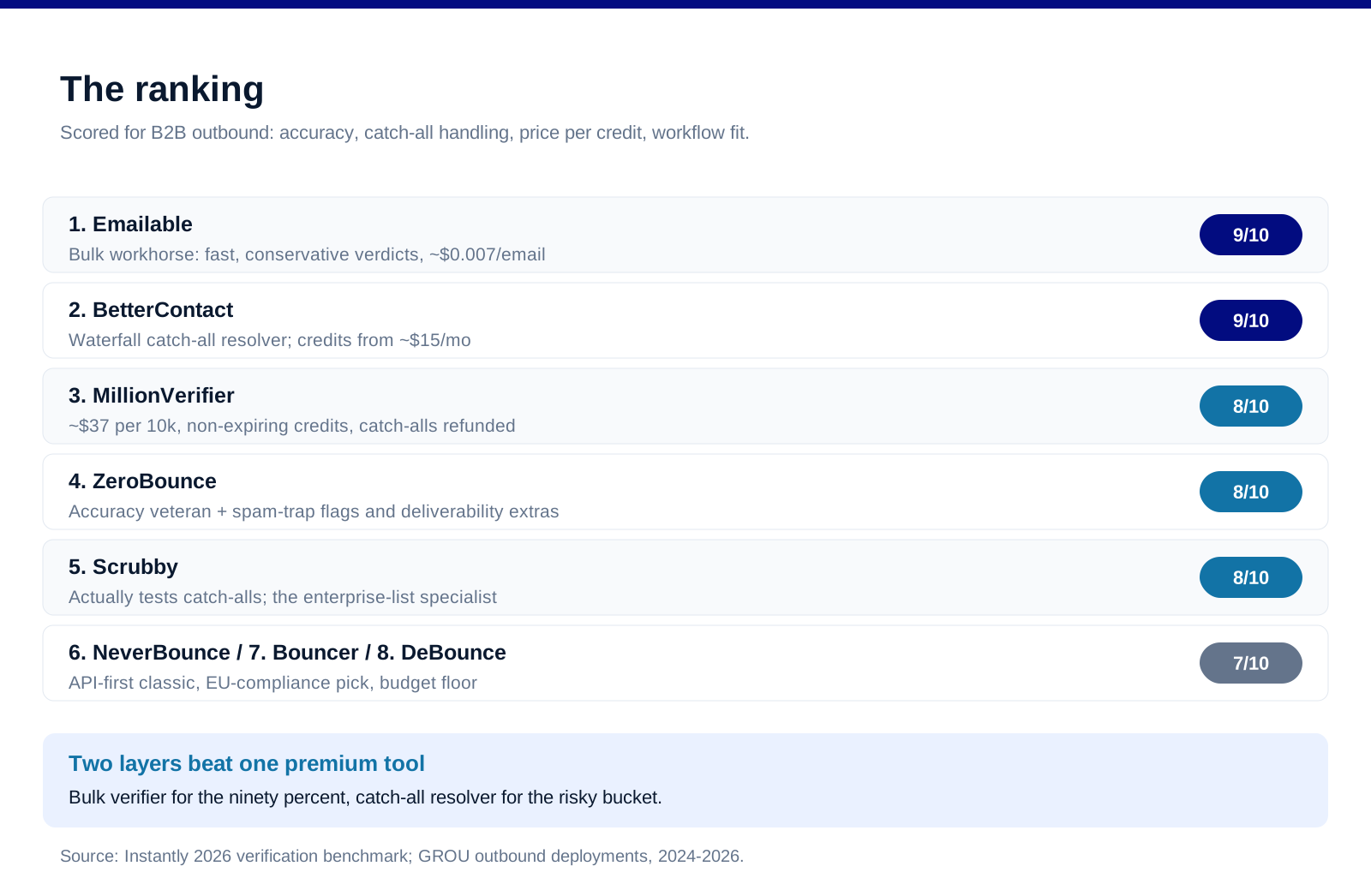
1. Emailable (9/10)
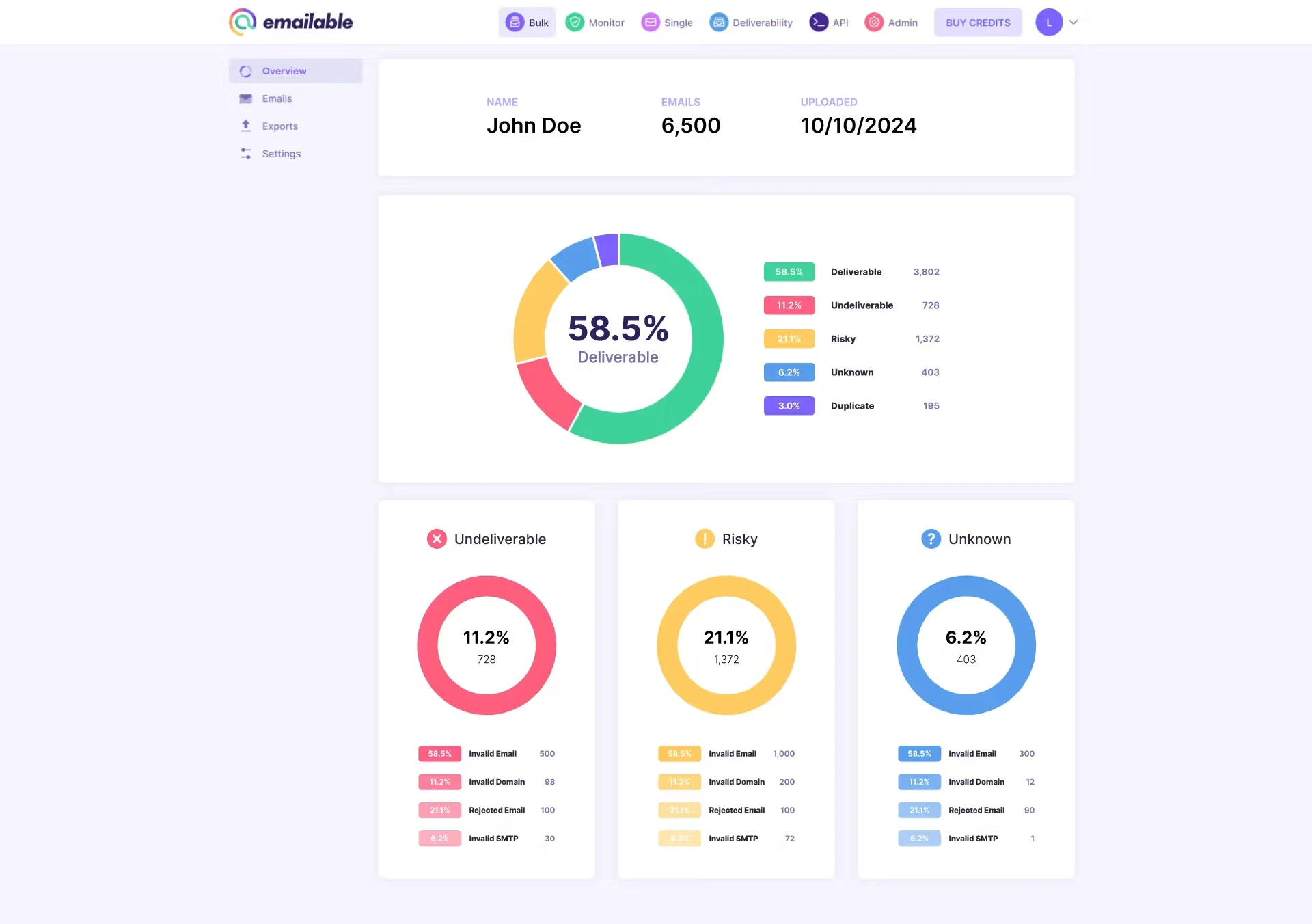
The bulk workhorse. Fast list processing, clean API, integrations across the common senders and stacks, and ~$0.007 per email with volume pricing below that. Verdicts are conservative in the right way: fewer false "deliverables" that turn into bounces. Best default for teams verifying lists on a rhythm.
2. BetterContact (9/10)
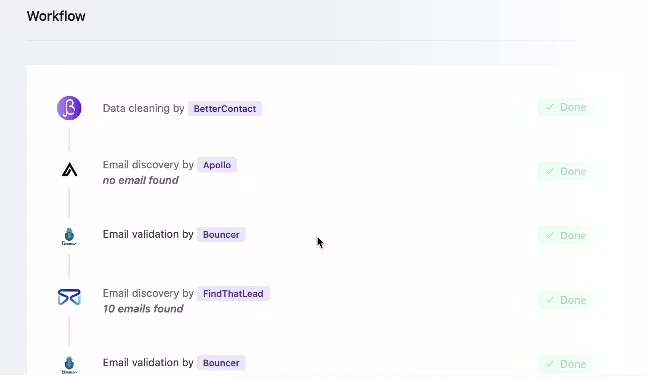
The catch-all solver. Instead of one engine, it waterfalls a list through multiple verification and enrichment sources and returns a usable verdict on addresses everyone else labels "risky". Credits from about $15/month. Best second layer: run it only on the catch-alls and unknowns from your bulk pass, which is where the recoverable pipeline hides.
3. MillionVerifier (8/10)
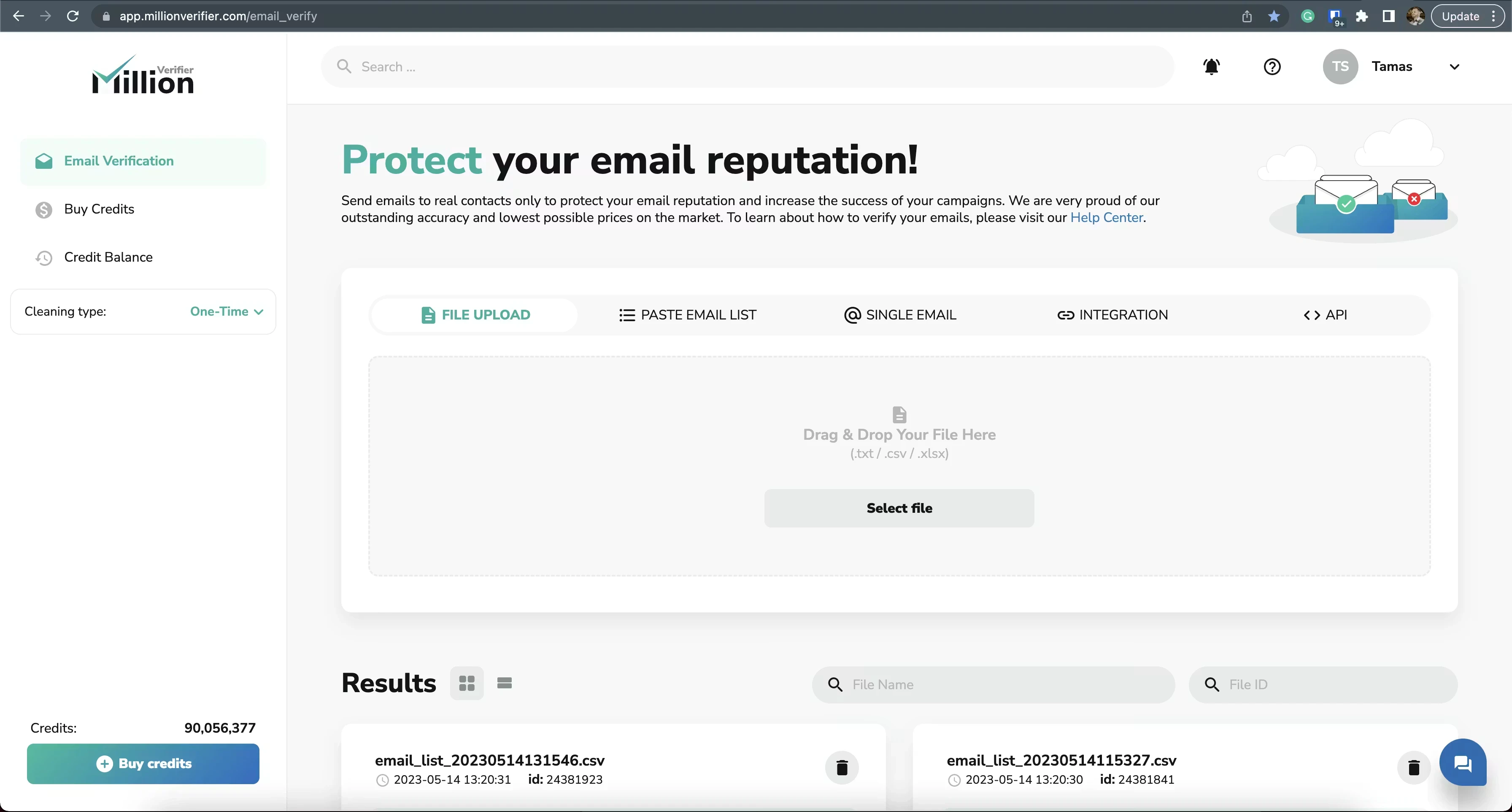
The value pick: about $37 per 10,000 verifications, pay-as-you-go with credits that do not expire monthly, and 96%+ accuracy in independent tests. Credits refunded on catch-alls is a rare, honest touch. Best for agencies and high-volume senders where per-credit price compounds.
4. ZeroBounce (8/10)
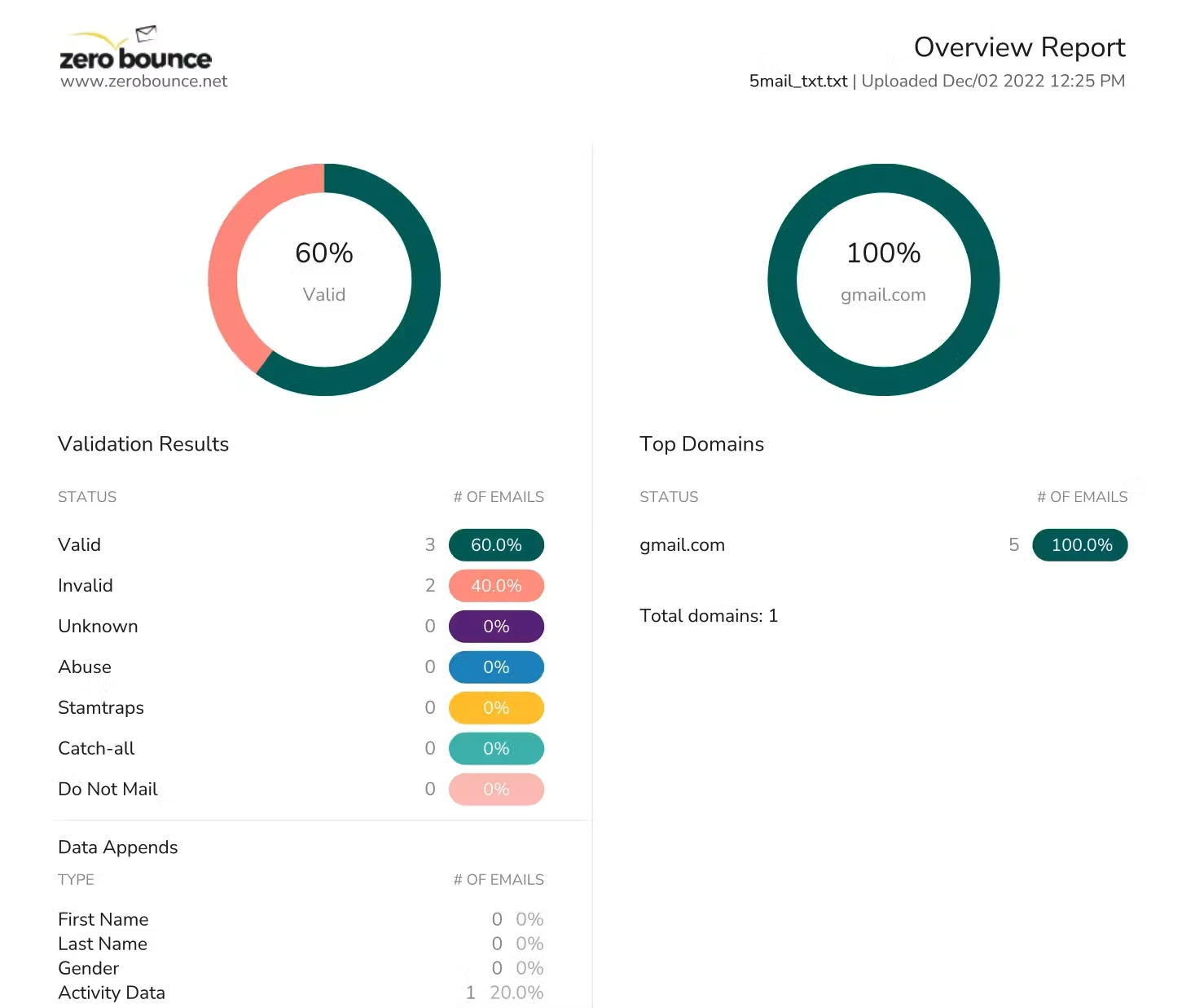
The accuracy veteran at ~$0.008 per email. Adds spam-trap and abuse detection, disposable-domain flags, and deliverability extras (inbox placement tests, blacklist monitoring) that turn it into a mini deliverability suite. Best when you want verification plus diagnostics in one place.
5. Scrubby (8/10)
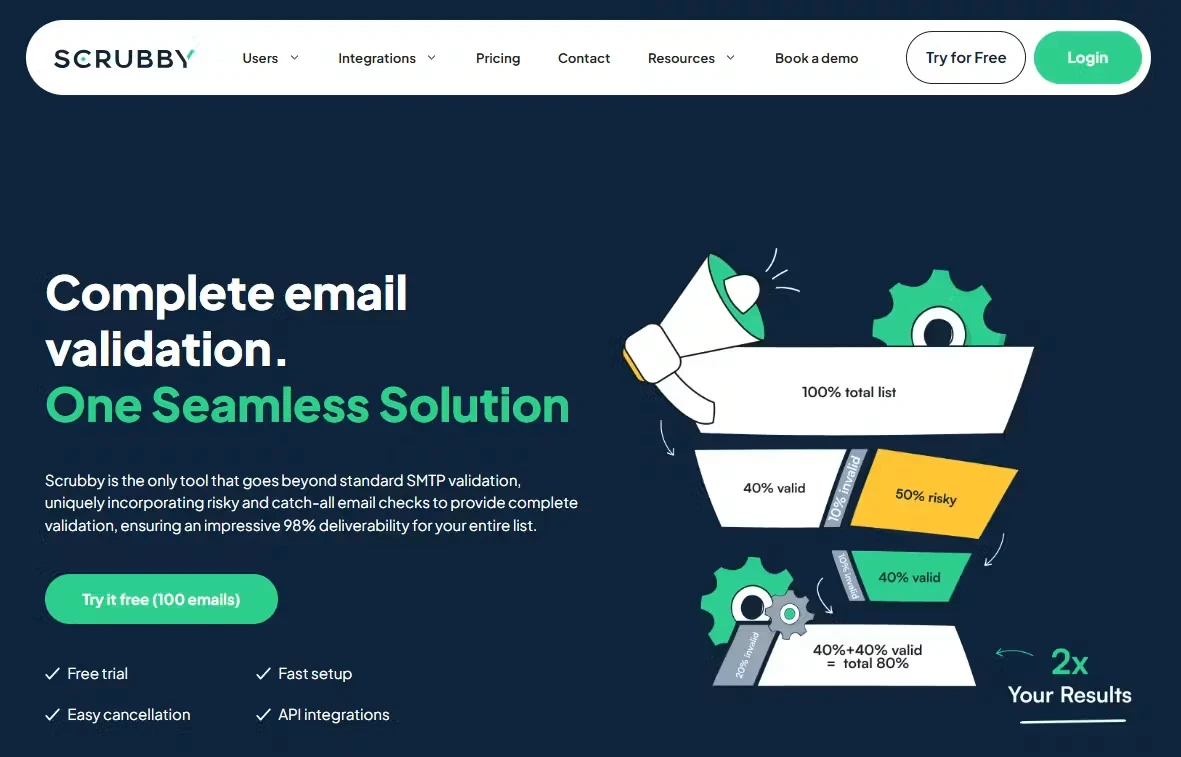
The catch-all specialist: one of the few verifiers that actually tests catch-all addresses rather than labeling them, at ~$0.02 per email, with ~93% accuracy on the hardest category there is. Best for outbound teams whose ICP skews to enterprise domains, where catch-all rates run high.
6. NeverBounce (7/10)
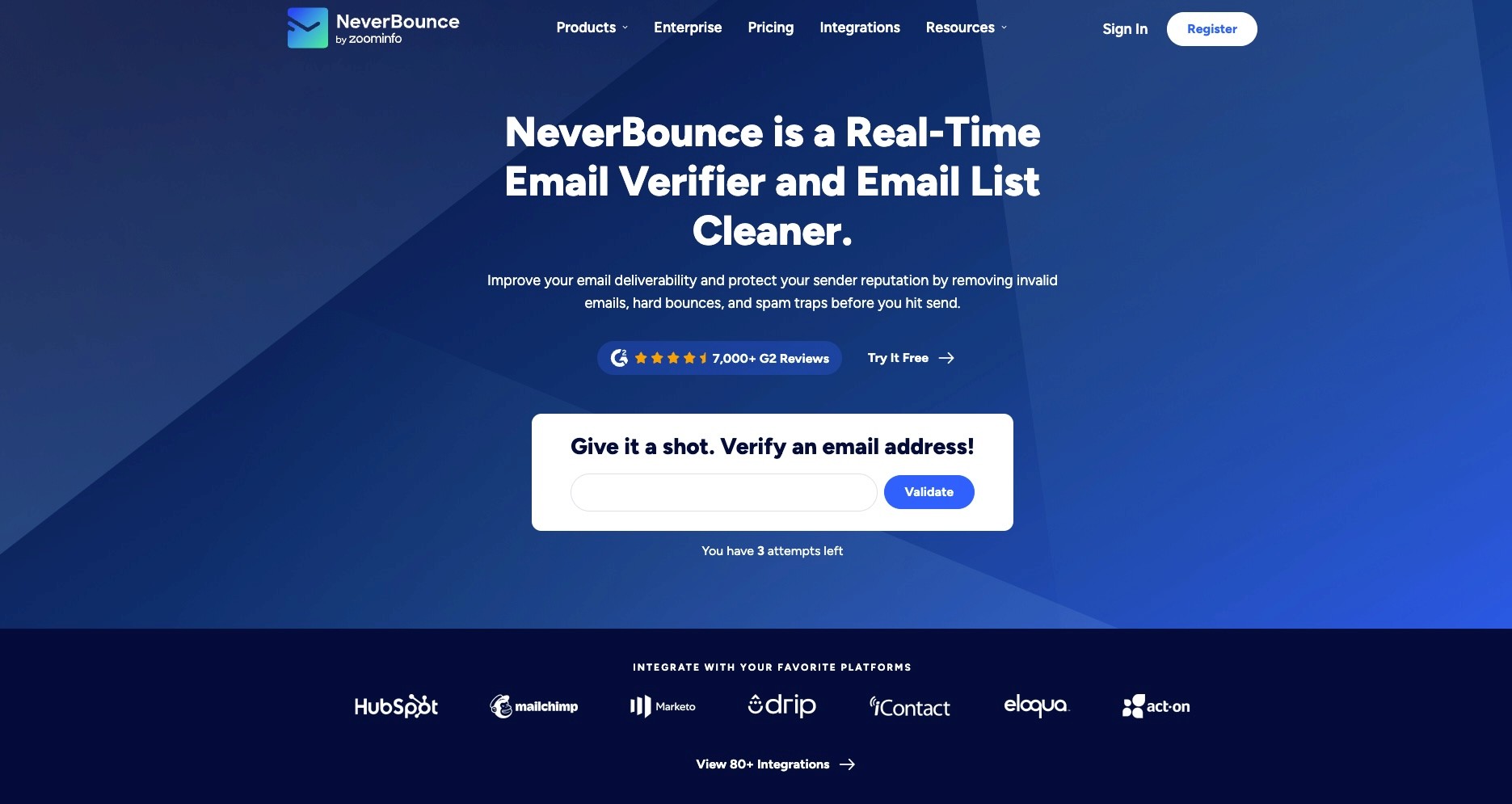
The API-first classic at ~$0.008 per email with 97%+ accuracy and the cleanest developer documentation in the category. Catch-alls get labeled, not resolved. Best when verification is wired into a product or an internal pipeline rather than run from a dashboard.
7. Bouncer (7/10)
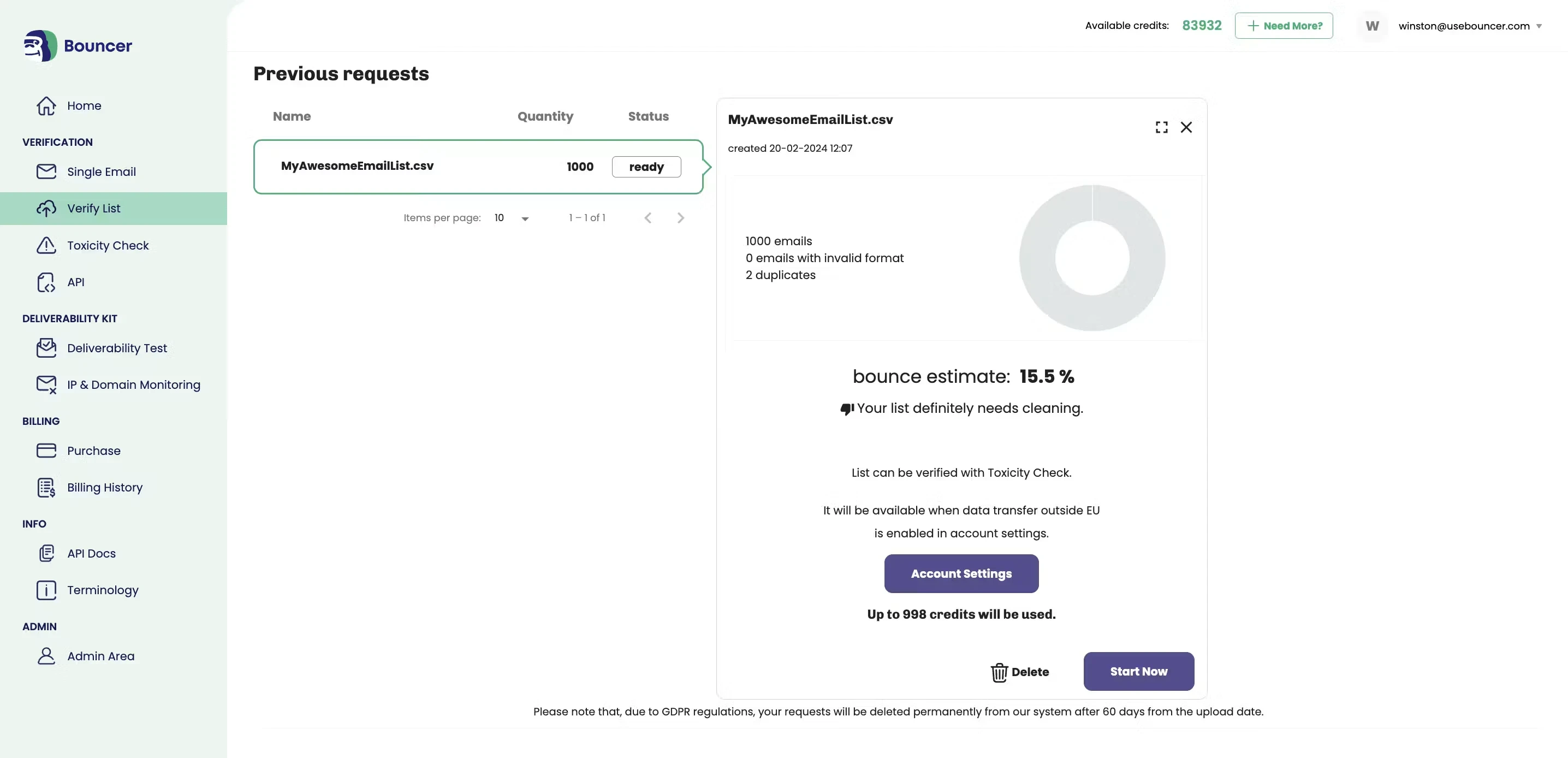
The EU pick: ~$0.008 per email, solid 97% accuracy, and a GDPR-first posture (EU processing, DPA out of the box) that makes procurement conversations short. Best for European senders and anyone whose legal team asks where the data lives.
8. DeBounce (7/10)
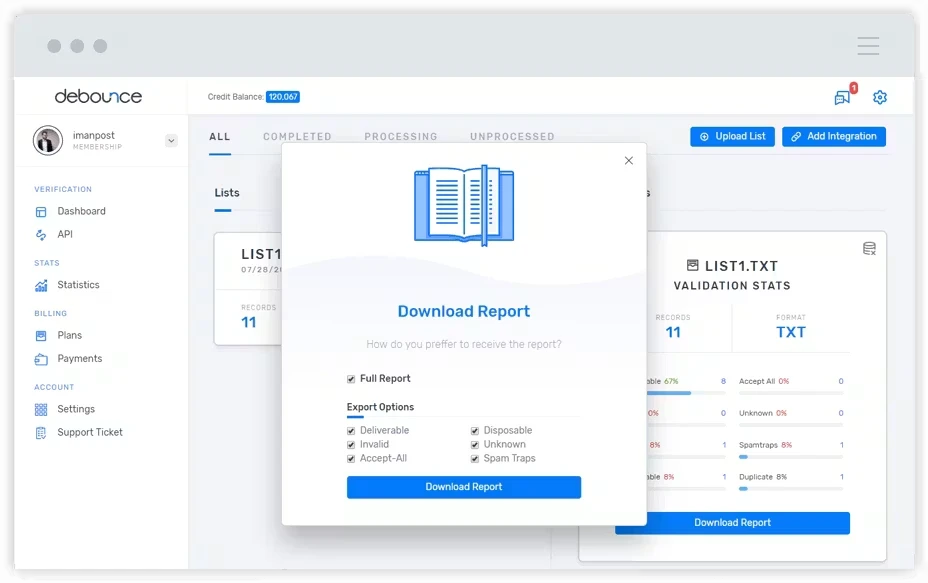
The budget floor that still holds: ~$0.004 per email with credits that never expire and 95%+ accuracy. Fewer extras, weaker catch-all handling. Best for small teams verifying occasionally, where credit expiry on other tools quietly doubles the real price.
Pricing at a glance
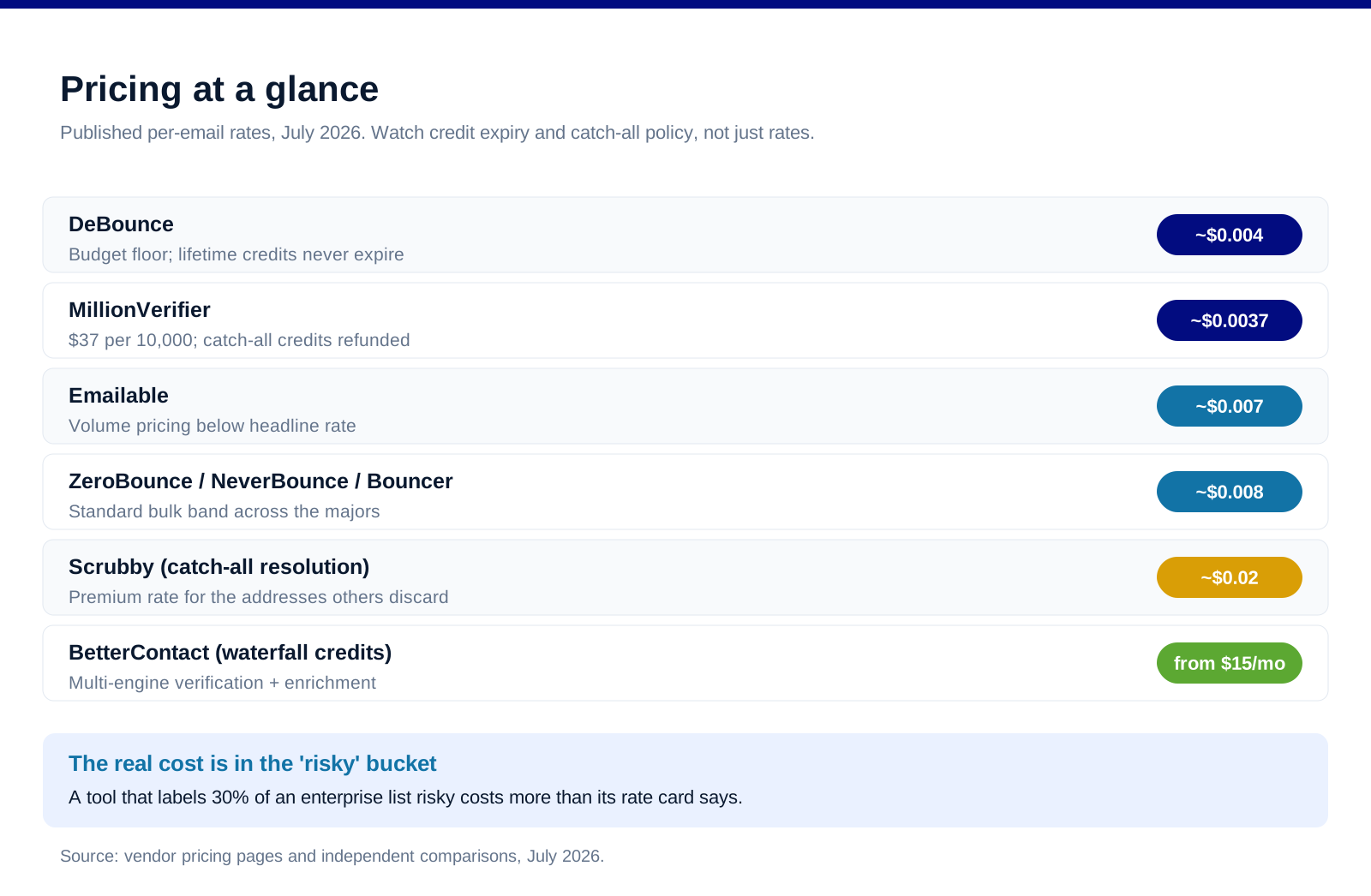
Per-email pricing converges around $0.004-0.008 for standard verification; the real price differences live in credit expiry, minimum purchases, and what happens to catch-alls. A tool that marks 30% of an enterprise list "risky" and charges you for the privilege is more expensive than its rate card says. That is why the two-layer stack (bulk verifier + catch-all resolver) usually beats one premium tool on both cost and recovered volume.
The two-layer workflow
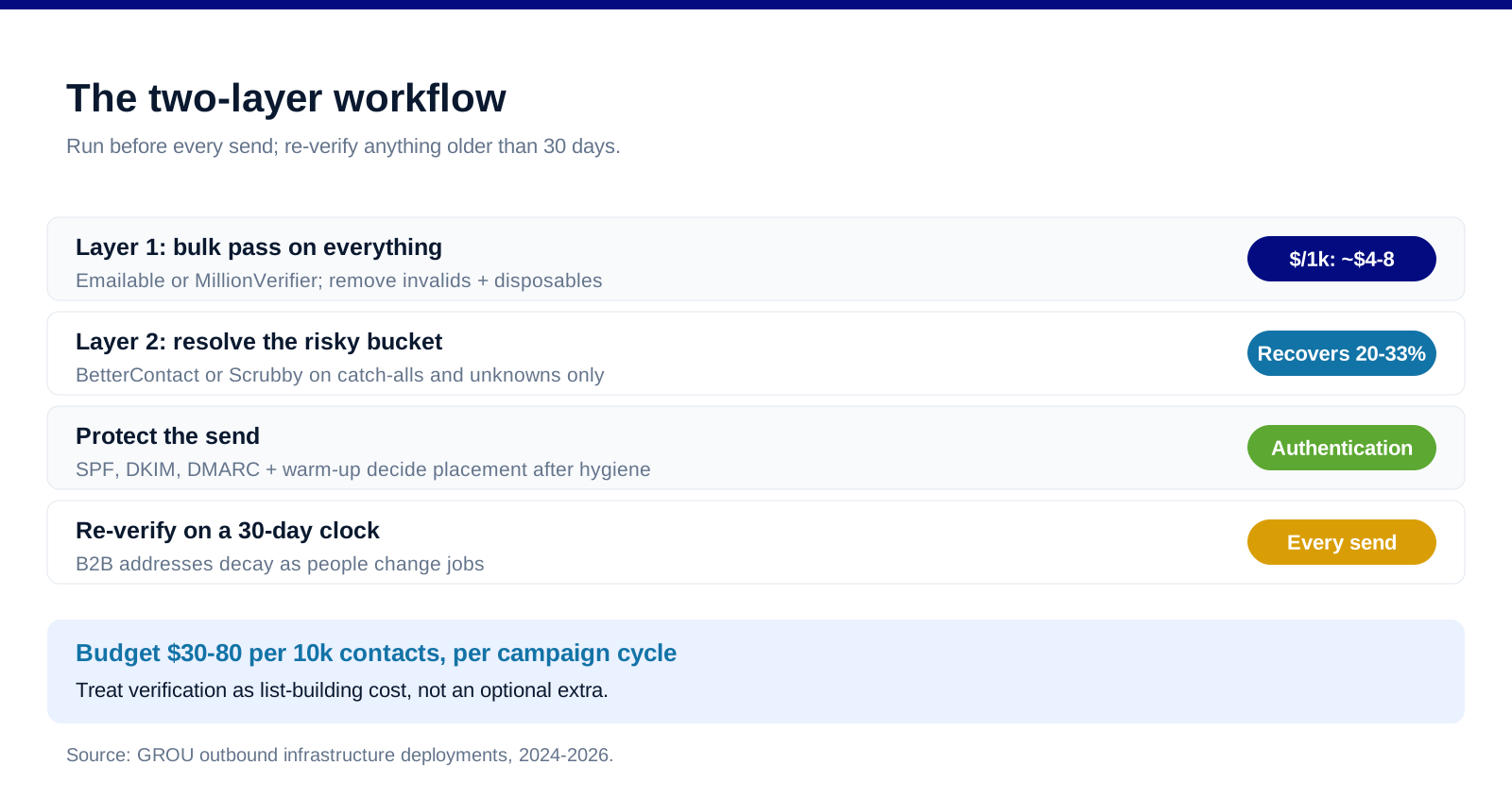
Layer 1: bulk pass on everything. Run the full list through Emailable or MillionVerifier. Remove invalids and disposables immediately. Cost: a few dollars per thousand.
Layer 2: resolve the risky bucket. Send catch-alls and unknowns through BetterContact or Scrubby instead of deleting them. On enterprise-heavy B2B lists this recovers a fifth to a third of contacts that a single-tool workflow throws away.
Then protect the send. Verification keeps bounces down, but authentication and warm-up decide inbox placement: pair this stack with the records from our SPF, DKIM and DMARC setup guide, and keep list hygiene running per our email list segmentation guide. Re-verify anything older than 30 days before it gets a send; B2B addresses decay constantly as people change jobs.
FAQ
What is the best email verification tool in 2026?
Emailable is the best bulk default for accuracy, speed, and price around $0.007 per email, with BetterContact as the best companion for resolving catch-alls. Single best all-rounder depends on volume: MillionVerifier wins on pure price, ZeroBounce on bundled deliverability extras.
How much does email verification cost?
Standard bulk verification runs $0.004-0.008 per email ($40-80 per 10k), catch-all resolution around $0.02 per address, and waterfall tools price by monthly credits from about $15. Budget it as part of list-building cost per campaign, not a one-off.
What accuracy can I expect from email verifiers?
Independent benchmarks put leading tools at 95-99% on standard addresses, with real-world results varying by list source and domain mix. Catch-all domains are the honest differentiator: most tools label them risky, and only specialist approaches actually resolve them.
What is a catch-all email and why does it matter?
A catch-all domain accepts mail to any address, so standard SMTP checks cannot confirm whether a specific mailbox exists. On enterprise-heavy B2B lists catch-alls can be a third of contacts, which is why a resolver layer recovers real pipeline that bulk tools discard.
How often should you verify email lists?
Before every send, and re-verify anything older than about 30 days. B2B addresses decay continuously as people change roles, and mailbox providers judge senders on rolling bounce and complaint rates, not intentions.
Do email verification tools stop emails going to spam?
They prevent the bounce damage that drags a domain's reputation down, which is necessary but not sufficient. Inbox placement also depends on authentication (SPF, DKIM, DMARC), warm-up, volume discipline, and content quality; verification is the first layer, not the whole defense.
Bottom line
Email verification in 2026 is a two-layer job: a bulk workhorse for the ninety percent (Emailable, or MillionVerifier on price) and a catch-all resolver for the risky bucket (BetterContact, or Scrubby at enterprise skew). $30-80 per 10k contacts, run before every send, keeps the sending domain out of trouble and recovers the contacts your competitors delete.
Want list building, verification, and deliverability run as one system instead of a tool pile? Book a call with GROU. We run outbound infrastructure inside B2B revenue engines across verticals.
We are GROU, a B2B pipeline agency that runs lead generation, outbound, and LinkedIn content for clients across manufacturing, fintech, iGaming, software, and professional services. The ranking reflects verification tooling deployed across our outbound programs between 2024 and 2026, anonymized to protect client confidentiality.
Some links in this article are affiliate. We may earn a small commission at no extra cost to you. We only recommend tools we've deployed for clients.
Email verification is the cheapest deliverability insurance you can buy: a few dollars per thousand addresses to keep bounces under the thresholds that get sending domains flagged. The category splits into bulk verifiers, catch-all specialists, and waterfall tools that verify while they enrich. We ranked eight, led by Emailable for bulk verification and BetterContact for catch-all resolution.
This list is about validating addresses you already have; finding new ones is the other job, ranked in our best email finder tools list.
TL;DR
Verify every list before every send: mailbox providers' bulk-sender rules leave little room for bounces, and Google's sender guidelines put the spam-complaint ceiling at fractions of a percent, so a dirty list can damage a domain in one campaign. The stack that covers most teams: Emailable (~$0.007/email) as the bulk workhorse, BetterContact (credits from ~$15/month) to resolve the catch-alls other tools mark "risky", and MillionVerifier (~$37 per 10k) when price per credit is the deciding factor. Independent testing in Instantly's 2026 verification benchmark puts top tools at 95-99% accuracy, with catch-all domains as the gap that separates them. Budget $30-80 per 10k contacts and treat it as part of list-building cost, not an optional extra.
The ranking
1. Emailable (9/10)
The bulk workhorse. Fast list processing, clean API, integrations across the common senders and stacks, and ~$0.007 per email with volume pricing below that. Verdicts are conservative in the right way: fewer false "deliverables" that turn into bounces. Best default for teams verifying lists on a rhythm.
2. BetterContact (9/10)
The catch-all solver. Instead of one engine, it waterfalls a list through multiple verification and enrichment sources and returns a usable verdict on addresses everyone else labels "risky". Credits from about $15/month. Best second layer: run it only on the catch-alls and unknowns from your bulk pass, which is where the recoverable pipeline hides.
3. MillionVerifier (8/10)
The value pick: about $37 per 10,000 verifications, pay-as-you-go with credits that do not expire monthly, and 96%+ accuracy in independent tests. Credits refunded on catch-alls is a rare, honest touch. Best for agencies and high-volume senders where per-credit price compounds.
4. ZeroBounce (8/10)
The accuracy veteran at ~$0.008 per email. Adds spam-trap and abuse detection, disposable-domain flags, and deliverability extras (inbox placement tests, blacklist monitoring) that turn it into a mini deliverability suite. Best when you want verification plus diagnostics in one place.
5. Scrubby (8/10)
The catch-all specialist: one of the few verifiers that actually tests catch-all addresses rather than labeling them, at ~$0.02 per email, with ~93% accuracy on the hardest category there is. Best for outbound teams whose ICP skews to enterprise domains, where catch-all rates run high.
6. NeverBounce (7/10)
The API-first classic at ~$0.008 per email with 97%+ accuracy and the cleanest developer documentation in the category. Catch-alls get labeled, not resolved. Best when verification is wired into a product or an internal pipeline rather than run from a dashboard.
7. Bouncer (7/10)
The EU pick: ~$0.008 per email, solid 97% accuracy, and a GDPR-first posture (EU processing, DPA out of the box) that makes procurement conversations short. Best for European senders and anyone whose legal team asks where the data lives.
8. DeBounce (7/10)
The budget floor that still holds: ~$0.004 per email with credits that never expire and 95%+ accuracy. Fewer extras, weaker catch-all handling. Best for small teams verifying occasionally, where credit expiry on other tools quietly doubles the real price.
Pricing at a glance
Per-email pricing converges around $0.004-0.008 for standard verification; the real price differences live in credit expiry, minimum purchases, and what happens to catch-alls. A tool that marks 30% of an enterprise list "risky" and charges you for the privilege is more expensive than its rate card says. That is why the two-layer stack (bulk verifier + catch-all resolver) usually beats one premium tool on both cost and recovered volume.
The two-layer workflow
Layer 1: bulk pass on everything. Run the full list through Emailable or MillionVerifier. Remove invalids and disposables immediately. Cost: a few dollars per thousand.
Layer 2: resolve the risky bucket. Send catch-alls and unknowns through BetterContact or Scrubby instead of deleting them. On enterprise-heavy B2B lists this recovers a fifth to a third of contacts that a single-tool workflow throws away.
Then protect the send. Verification keeps bounces down, but authentication and warm-up decide inbox placement: pair this stack with the records from our SPF, DKIM and DMARC setup guide, and keep list hygiene running per our email list segmentation guide. Re-verify anything older than 30 days before it gets a send; B2B addresses decay constantly as people change jobs.
FAQ
What is the best email verification tool in 2026?
Emailable is the best bulk default for accuracy, speed, and price around $0.007 per email, with BetterContact as the best companion for resolving catch-alls. Single best all-rounder depends on volume: MillionVerifier wins on pure price, ZeroBounce on bundled deliverability extras.
How much does email verification cost?
Standard bulk verification runs $0.004-0.008 per email ($40-80 per 10k), catch-all resolution around $0.02 per address, and waterfall tools price by monthly credits from about $15. Budget it as part of list-building cost per campaign, not a one-off.
What accuracy can I expect from email verifiers?
Independent benchmarks put leading tools at 95-99% on standard addresses, with real-world results varying by list source and domain mix. Catch-all domains are the honest differentiator: most tools label them risky, and only specialist approaches actually resolve them.
What is a catch-all email and why does it matter?
A catch-all domain accepts mail to any address, so standard SMTP checks cannot confirm whether a specific mailbox exists. On enterprise-heavy B2B lists catch-alls can be a third of contacts, which is why a resolver layer recovers real pipeline that bulk tools discard.
How often should you verify email lists?
Before every send, and re-verify anything older than about 30 days. B2B addresses decay continuously as people change roles, and mailbox providers judge senders on rolling bounce and complaint rates, not intentions.
Do email verification tools stop emails going to spam?
They prevent the bounce damage that drags a domain's reputation down, which is necessary but not sufficient. Inbox placement also depends on authentication (SPF, DKIM, DMARC), warm-up, volume discipline, and content quality; verification is the first layer, not the whole defense.
Bottom line
Email verification in 2026 is a two-layer job: a bulk workhorse for the ninety percent (Emailable, or MillionVerifier on price) and a catch-all resolver for the risky bucket (BetterContact, or Scrubby at enterprise skew). $30-80 per 10k contacts, run before every send, keeps the sending domain out of trouble and recovers the contacts your competitors delete.
Want list building, verification, and deliverability run as one system instead of a tool pile? Book a call with GROU. We run outbound infrastructure inside B2B revenue engines across verticals.
We are GROU, a B2B pipeline agency that runs lead generation, outbound, and LinkedIn content for clients across manufacturing, fintech, iGaming, software, and professional services. The ranking reflects verification tooling deployed across our outbound programs between 2024 and 2026, anonymized to protect client confidentiality.
Some links in this article are affiliate. We may earn a small commission at no extra cost to you. We only recommend tools we've deployed for clients.
Email verification is the cheapest deliverability insurance you can buy: a few dollars per thousand addresses to keep bounces under the thresholds that get sending domains flagged. The category splits into bulk verifiers, catch-all specialists, and waterfall tools that verify while they enrich. We ranked eight, led by Emailable for bulk verification and BetterContact for catch-all resolution.
This list is about validating addresses you already have; finding new ones is the other job, ranked in our best email finder tools list.
TL;DR
Verify every list before every send: mailbox providers' bulk-sender rules leave little room for bounces, and Google's sender guidelines put the spam-complaint ceiling at fractions of a percent, so a dirty list can damage a domain in one campaign. The stack that covers most teams: Emailable (~$0.007/email) as the bulk workhorse, BetterContact (credits from ~$15/month) to resolve the catch-alls other tools mark "risky", and MillionVerifier (~$37 per 10k) when price per credit is the deciding factor. Independent testing in Instantly's 2026 verification benchmark puts top tools at 95-99% accuracy, with catch-all domains as the gap that separates them. Budget $30-80 per 10k contacts and treat it as part of list-building cost, not an optional extra.
The ranking
1. Emailable (9/10)
The bulk workhorse. Fast list processing, clean API, integrations across the common senders and stacks, and ~$0.007 per email with volume pricing below that. Verdicts are conservative in the right way: fewer false "deliverables" that turn into bounces. Best default for teams verifying lists on a rhythm.
2. BetterContact (9/10)
The catch-all solver. Instead of one engine, it waterfalls a list through multiple verification and enrichment sources and returns a usable verdict on addresses everyone else labels "risky". Credits from about $15/month. Best second layer: run it only on the catch-alls and unknowns from your bulk pass, which is where the recoverable pipeline hides.
3. MillionVerifier (8/10)
The value pick: about $37 per 10,000 verifications, pay-as-you-go with credits that do not expire monthly, and 96%+ accuracy in independent tests. Credits refunded on catch-alls is a rare, honest touch. Best for agencies and high-volume senders where per-credit price compounds.
4. ZeroBounce (8/10)
The accuracy veteran at ~$0.008 per email. Adds spam-trap and abuse detection, disposable-domain flags, and deliverability extras (inbox placement tests, blacklist monitoring) that turn it into a mini deliverability suite. Best when you want verification plus diagnostics in one place.
5. Scrubby (8/10)
The catch-all specialist: one of the few verifiers that actually tests catch-all addresses rather than labeling them, at ~$0.02 per email, with ~93% accuracy on the hardest category there is. Best for outbound teams whose ICP skews to enterprise domains, where catch-all rates run high.
6. NeverBounce (7/10)
The API-first classic at ~$0.008 per email with 97%+ accuracy and the cleanest developer documentation in the category. Catch-alls get labeled, not resolved. Best when verification is wired into a product or an internal pipeline rather than run from a dashboard.
7. Bouncer (7/10)
The EU pick: ~$0.008 per email, solid 97% accuracy, and a GDPR-first posture (EU processing, DPA out of the box) that makes procurement conversations short. Best for European senders and anyone whose legal team asks where the data lives.
8. DeBounce (7/10)
The budget floor that still holds: ~$0.004 per email with credits that never expire and 95%+ accuracy. Fewer extras, weaker catch-all handling. Best for small teams verifying occasionally, where credit expiry on other tools quietly doubles the real price.
Pricing at a glance
Per-email pricing converges around $0.004-0.008 for standard verification; the real price differences live in credit expiry, minimum purchases, and what happens to catch-alls. A tool that marks 30% of an enterprise list "risky" and charges you for the privilege is more expensive than its rate card says. That is why the two-layer stack (bulk verifier + catch-all resolver) usually beats one premium tool on both cost and recovered volume.
The two-layer workflow
Layer 1: bulk pass on everything. Run the full list through Emailable or MillionVerifier. Remove invalids and disposables immediately. Cost: a few dollars per thousand.
Layer 2: resolve the risky bucket. Send catch-alls and unknowns through BetterContact or Scrubby instead of deleting them. On enterprise-heavy B2B lists this recovers a fifth to a third of contacts that a single-tool workflow throws away.
Then protect the send. Verification keeps bounces down, but authentication and warm-up decide inbox placement: pair this stack with the records from our SPF, DKIM and DMARC setup guide, and keep list hygiene running per our email list segmentation guide. Re-verify anything older than 30 days before it gets a send; B2B addresses decay constantly as people change jobs.
FAQ
What is the best email verification tool in 2026?
Emailable is the best bulk default for accuracy, speed, and price around $0.007 per email, with BetterContact as the best companion for resolving catch-alls. Single best all-rounder depends on volume: MillionVerifier wins on pure price, ZeroBounce on bundled deliverability extras.
How much does email verification cost?
Standard bulk verification runs $0.004-0.008 per email ($40-80 per 10k), catch-all resolution around $0.02 per address, and waterfall tools price by monthly credits from about $15. Budget it as part of list-building cost per campaign, not a one-off.
What accuracy can I expect from email verifiers?
Independent benchmarks put leading tools at 95-99% on standard addresses, with real-world results varying by list source and domain mix. Catch-all domains are the honest differentiator: most tools label them risky, and only specialist approaches actually resolve them.
What is a catch-all email and why does it matter?
A catch-all domain accepts mail to any address, so standard SMTP checks cannot confirm whether a specific mailbox exists. On enterprise-heavy B2B lists catch-alls can be a third of contacts, which is why a resolver layer recovers real pipeline that bulk tools discard.
How often should you verify email lists?
Before every send, and re-verify anything older than about 30 days. B2B addresses decay continuously as people change roles, and mailbox providers judge senders on rolling bounce and complaint rates, not intentions.
Do email verification tools stop emails going to spam?
They prevent the bounce damage that drags a domain's reputation down, which is necessary but not sufficient. Inbox placement also depends on authentication (SPF, DKIM, DMARC), warm-up, volume discipline, and content quality; verification is the first layer, not the whole defense.
Bottom line
Email verification in 2026 is a two-layer job: a bulk workhorse for the ninety percent (Emailable, or MillionVerifier on price) and a catch-all resolver for the risky bucket (BetterContact, or Scrubby at enterprise skew). $30-80 per 10k contacts, run before every send, keeps the sending domain out of trouble and recovers the contacts your competitors delete.
Want list building, verification, and deliverability run as one system instead of a tool pile? Book a call with GROU. We run outbound infrastructure inside B2B revenue engines across verticals.
We are GROU, a B2B pipeline agency that runs lead generation, outbound, and LinkedIn content for clients across manufacturing, fintech, iGaming, software, and professional services. The ranking reflects verification tooling deployed across our outbound programs between 2024 and 2026, anonymized to protect client confidentiality.
Some links in this article are affiliate. We may earn a small commission at no extra cost to you. We only recommend tools we've deployed for clients.

Pipeline OS Newsletter
Build qualified pipeline
Get weekly tactics to generate demand, improve lead quality, and book more meetings.





Trusted by industry leaders
Trusted by industry leaders
Trusted by industry leaders
Ready to build qualified pipeline?
Ready to build qualified pipeline?
Ready to build qualified pipeline?
Book a call to see if we're the right fit, or take the 2-minute quiz to get a clear starting point.
Book a call to see if we're the right fit, or take the 2-minute quiz to get a clear starting point.
Book a call to see if we're the right fit, or take the 2-minute quiz to get a clear starting point.
" height="30.21639343089746px" id="hfGbXmQR2" width="30.216393430897455px"/></svg>)
Copyright © 2026 – All Right Reserved
Copyright © 2026 – All Right Reserved
Copyright © 2026 – All Right Reserved