%22%3E%3C/path%3E%3Cpath d=%22M 63.072 7.554 C 62.258 8.022 61.577 8.689 61.092 9.493 L 61.092 7.076 L 57.158 7.076 L 57.158 22.64 L 61.089 22.64 L 61.089 14.888 C 61.089 13.446 61.403 12.434 62.03 11.853 C 62.818 11.218 63.818 10.907 64.826 10.982 L 65.868 10.982 L 65.868 6.851 C 64.891 6.834 63.926 7.076 63.073 7.554 Z%22 fill=%22rgb(17,17,17)%22%3E%3C/path%3E%3Cpath d=%22M 78.916 7.82 C 76.363 6.49 73.321 6.49 70.768 7.82 C 69.562 8.473 68.564 9.451 67.888 10.644 C 67.167 11.931 66.803 13.387 66.834 14.862 C 66.804 16.332 67.157 17.785 67.86 19.077 C 68.515 20.267 69.494 21.246 70.684 21.901 C 71.924 22.576 73.318 22.92 74.73 22.898 C 76.164 22.918 77.58 22.575 78.846 21.901 C 80.062 21.247 81.073 20.27 81.768 19.077 C 82.506 17.797 82.88 16.339 82.85 14.862 C 82.88 13.389 82.517 11.934 81.797 10.647 C 81.12 9.455 80.122 8.477 78.917 7.824 M 78.803 14.862 C 78.829 15.739 78.636 16.608 78.241 17.391 C 77.903 18.046 77.38 18.588 76.738 18.95 C 76.124 19.293 75.432 19.472 74.729 19.47 C 73.668 19.497 72.648 19.061 71.934 18.276 C 71.139 17.323 70.741 16.1 70.823 14.862 C 70.741 13.62 71.149 12.395 71.959 11.45 C 72.687 10.667 73.715 10.233 74.783 10.256 C 75.859 10.236 76.894 10.67 77.635 11.45 C 78.464 12.387 78.884 13.616 78.801 14.864%22 fill=%22rgb(17,17,17)%22%3E%3C/path%3E%3Cpath d=%22M 95.906 7.076 L 95.906 15.646 C 95.975 16.68 95.643 17.701 94.979 18.498 C 94.311 19.184 93.379 19.547 92.422 19.495 C 91.475 19.544 90.553 19.18 89.894 18.498 C 89.23 17.701 88.898 16.68 88.967 15.646 L 88.967 7.076 L 85.033 7.076 L 85.033 16.207 C 85 17.449 85.275 18.68 85.834 19.79 C 86.327 20.75 87.095 21.542 88.039 22.065 C 89.033 22.594 90.145 22.861 91.271 22.838 C 92.188 22.847 93.095 22.65 93.926 22.263 C 94.708 21.905 95.388 21.36 95.906 20.675 L 95.906 22.645 L 99.865 22.645 L 99.865 7.076 Z%22 fill=%22rgb(17,17,17)%22%3E%3C/path%3E%3Cpath d=%22M 4.513 15.626 C 4.511 10.815 7.606 6.549 12.181 5.059 C 16.756 3.57 21.77 5.195 24.601 9.086 L 27.816 5.87 C 24.074 1.186 17.981 -0.943 12.137 0.393 C 6.292 1.728 1.728 6.292 0.393 12.137 C -0.943 17.981 1.186 24.074 5.87 27.816 L 9.085 24.601 C 6.214 22.512 4.515 19.177 4.513 15.626%22 fill=%22rgb(32,62,235)%22%3E%3C/path%3E%3Cpath d=%22M 17.114 14.343 L 13.354 18.01 L 13.354 18.026 L 21.071 18.026 L 11.412 27.609 L 17.389 27.609 L 23.999 21.081 L 23.999 28.316 L 24.005 28.316 L 27.967 24.393 L 27.967 14.343 Z%22 fill=%22rgb(32,62,235)%22%3E%3C/path%3E%3C/g%3E%3C/svg%3E) ×
× ××
××›
›
›
›
Email list segmentation for B2B: 7 segments that convert
Email list segmentation for B2B: 7 segments that convert
Email list segmentation for B2B: 7 segments that convert
Email list segmentation for B2B: 7 segments that convert
Email list segmentation for B2B: 7 segments that convert
Email list segmentation for B2B: 7 segments that convert

Author
Aljaz Peklaj

Segmented email beats blasted email by a wide, well-documented margin: Mailchimp's long-running dataset puts segmented campaigns at roughly 14% higher opens and 100% higher clicks than unsegmented sends, and in B2B the gap widens because buying committees and deal cycles punish one-size-fits-all messaging. The problem is never whether to segment, it is which segments earn their maintenance cost. These seven do.
The segments, the data each one needs, the lift to expect, and the build order that keeps it manageable.
TL;DR
Seven segments cover 95% of what B2B email needs: lifecycle stage (where they are in the funnel), ICP fit tier (how much you want them), engagement recency (30/90/180-day activity bands), behavior and intent (what they did on your site or product), source channel (how they entered the list), persona (who they are in the buying committee), and customer vs prospect (never mix those sends). Build them in that order, power them with data you already have in the ESP and CRM, and expect the documented lift: double-digit open improvements and click-through gains up to 100%+ versus unsegmented sends. Start with three segments, not seven: lifecycle, engagement recency, and customer/prospect split deliver most of the gain for a tenth of the upkeep.
The sequences these segments feed: our B2B lifecycle email playbook and re-engagement playbook.
The 7 segments worth building
Each row here earns its keep with a distinct message, not just a distinct label. If two segments would receive the same email, they are one segment.
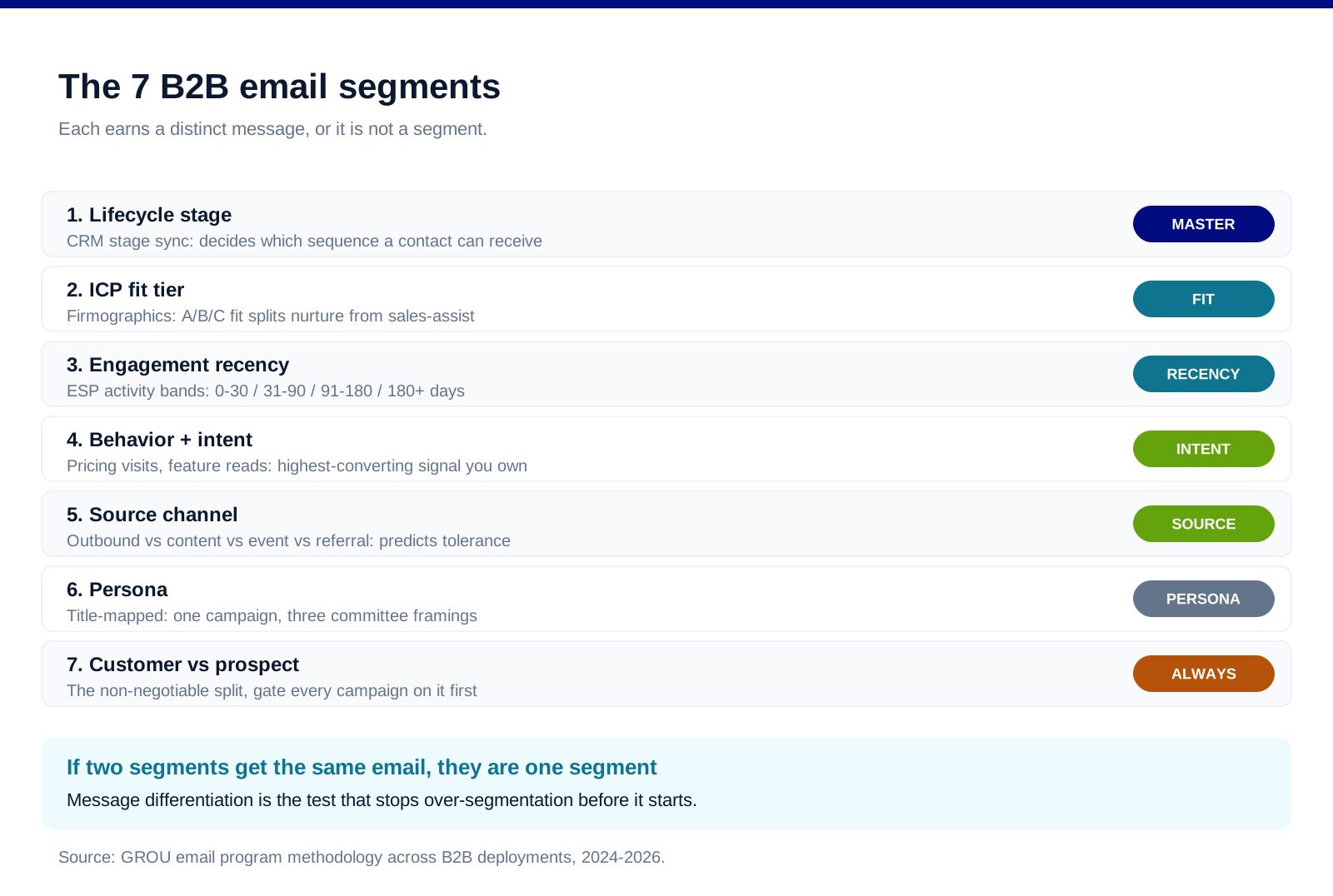
1. Lifecycle stage. Subscriber, MQL, opportunity, customer, churned. Sourced from CRM stage sync. This is the master segment: it decides which of your sequences a contact can even legally-sensibly receive, starting with the welcome sequence.
2. ICP fit tier. A/B/C fit from firmographics: industry, size, geography, tech stack. High-fit contacts get sales-assisted plays; low-fit get pure nurture. Keeps SDR time pointed at the accounts that matter.
3. Engagement recency. Active 0-30 days, cooling 31-90, dormant 91-180, dead 180+. ESP-native data, zero setup cost, and the trigger for both send-frequency changes and the re-engagement sequence.
4. Behavior and intent. Pricing page visits, feature page reads, webinar attendance, content topic clusters consumed. The highest-converting signal you own; route pricing-page visitors to sales-touch emails, not the newsletter.
5. Source channel. Outbound-sourced, content download, event badge scan, referral, product signup. Channel predicts intent and tolerance: an outbound-sourced contact needs proof-first messaging, a referral needs a fraction of the nurture.
6. Persona. Economic buyer, champion, end user, technical evaluator, mapped from title. In committee-driven B2B deals the same announcement needs three different framings; persona segments are how one campaign does that.
7. Customer vs prospect. The non-negotiable split. Customers receiving prospect promos and prospects receiving feature-release notes is the fastest credibility leak in B2B email.
What segmentation is actually worth
The published numbers cluster tightly, and our client deployments match them. Anchor expectations on ranges, not points.
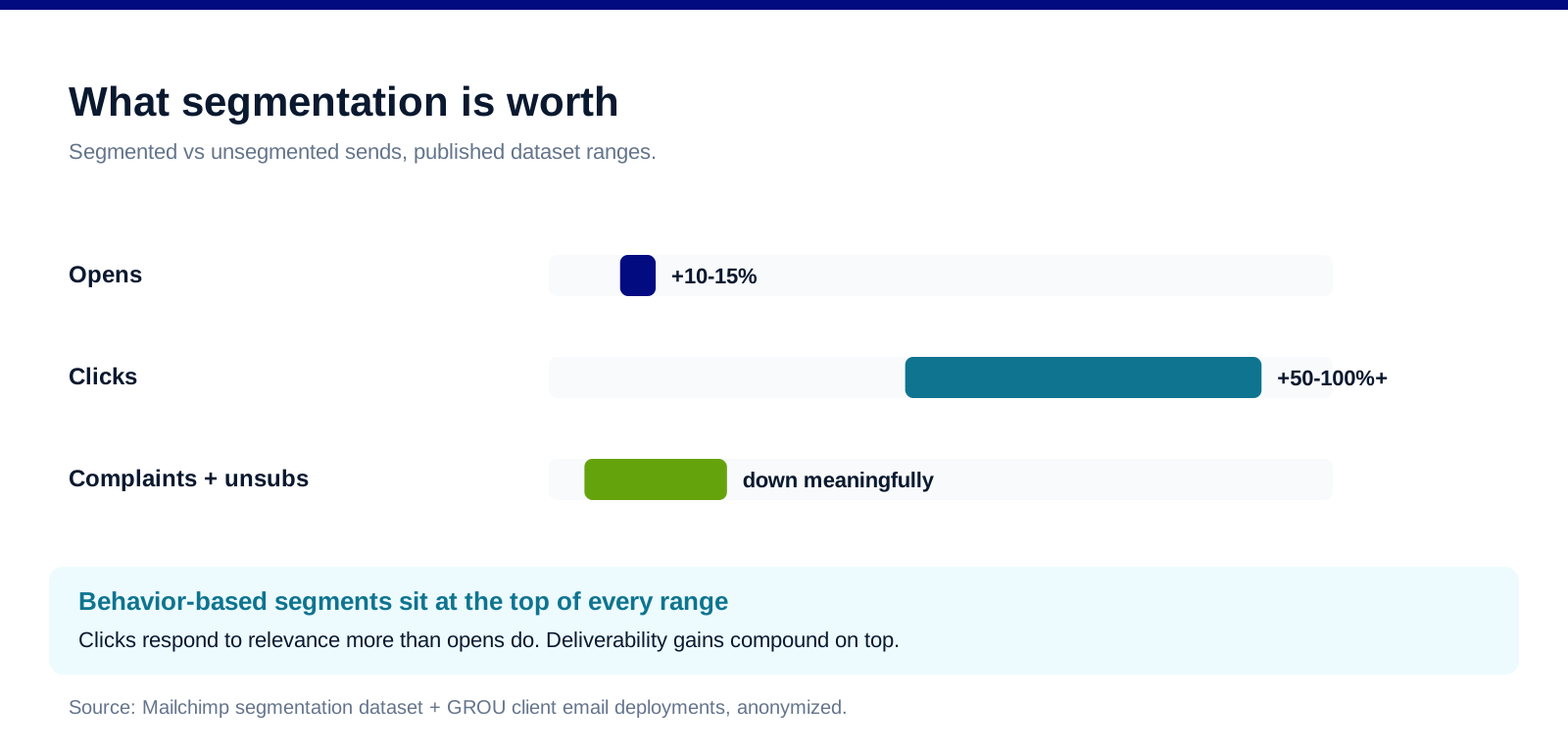
Opens: +10-15% for segmented versus unsegmented campaigns across the Mailchimp dataset, driven mostly by relevance-trained sender reputation and better subject fit.
Clicks: +50-100%+. The headline gain. Clicks respond to relevance more than opens do, and behavior-based segments sit at the top of that range.
Unsubscribes and complaints: down meaningfully. Frequency-capping dormant bands and splitting customer sends removes the two biggest complaint sources, which compounds into deliverability: segmentation is as much an inbox placement strategy as a conversion one, and email's overall economics, roughly $36 returned per $1 spent in Litmus' analysis, reward every point of it.
Against your own baseline, benchmark opens with our B2B newsletter open rate benchmarks before and after the rollout, and give the test 60 days, per HubSpot's marketing research segmentation remains one of the highest-ROI email tactics available precisely because most lists still underuse it.
The build order
Seven segments on day one is how segmentation projects die. Build in four stages, each self-funding before the next.
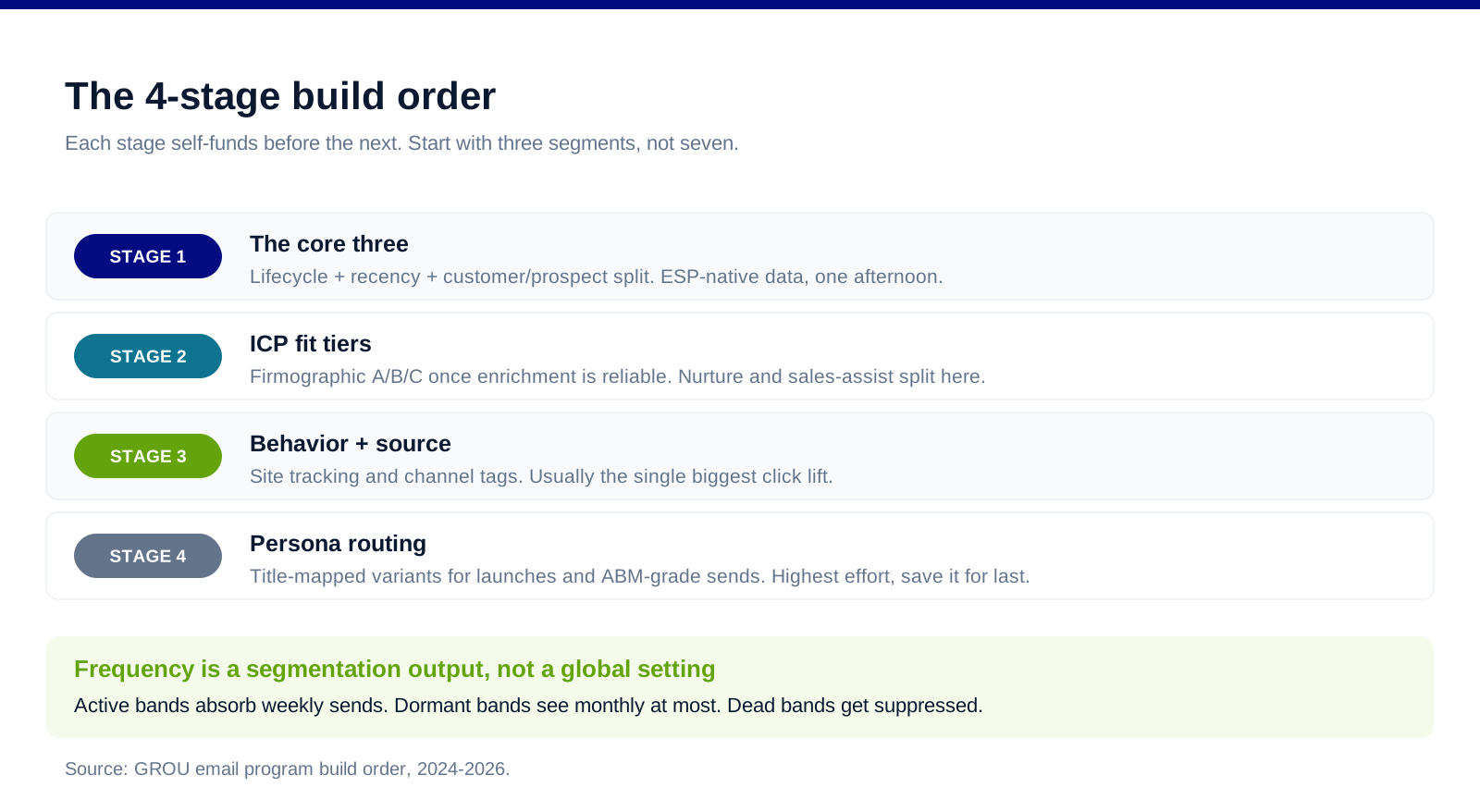
Stage 1: the core three. Lifecycle, engagement recency, customer/prospect split. All three run on data your ESP and CRM already hold; a platform like ActiveCampaign or Brevo builds them as dynamic segments in an afternoon.
Stage 2: ICP fit. Add firmographic tiers once enrichment data is reliable. This is where nurture and sales-assist tracks split.
Stage 3: behavior and source. Wire site tracking and channel tags. Pricing-page and re-visit triggers go live here, and this stage usually produces the single biggest click lift.
Stage 4: persona routing. Title-mapped variants for committee-facing campaigns. Highest effort, reserve it for launches and ABM-grade sends. Lighter-weight ESPs like Mailerlite handle stages 1-2 fine; stages 3-4 want automation depth.
The segmentation mistakes that undo the lift
Mistake 1: over-segmentation. Twenty micro-segments nobody maintains converge back to spray-and-pray with extra steps. Every segment must map to a genuinely different message.
Mistake 2: static segments. A list built once and never recalculated is wrong within a quarter. Use dynamic rules, never one-time exports.
Mistake 3: no sunset policy. Keeping 180-day dead contacts in active sends drags deliverability for the whole domain. Suppress or win-back, never ignore.
Mistake 4: segmenting sends but not frequency. Active contacts can absorb weekly; dormant bands should see monthly at most. Frequency is a segmentation output, not a global setting.
FAQ
What is the best way to segment a B2B email list?
Start with three: lifecycle stage, engagement recency, and a hard customer/prospect split. They run on data you already have and deliver most of the documented lift. Add ICP fit, behavior, source, and persona segments in that order as each earns its upkeep.
How much does email segmentation improve performance?
Published benchmarks show roughly 14% higher opens and up to 100% higher clicks versus unsegmented sends, with behavior-based segments at the top of the range. Deliverability gains compound on top as complaint and unsubscribe rates fall.
How many email segments should a B2B company have?
Five to nine active segments serves most B2B lists under 100k contacts. The test is message differentiation: if two segments would receive the same email, merge them. More segments than your team can write distinct content for is over-segmentation.
What data do you need for B2B email segmentation?
Stage and firmographic fields from the CRM, engagement and click data from the ESP, site behavior from tracking scripts, and source tags captured at signup. Stages 1-2 of the build need nothing you do not already collect.
How do you segment inactive email subscribers?
Band them by recency: 31-90 days cooling, 91-180 dormant, 180+ dead. Reduce frequency per band, run the dormant band through a re-engagement sequence, and suppress the dead band entirely; sending to it costs deliverability on every other segment.
Should customers and prospects get different emails?
Always, without exception. Separate the lists, separate the calendars, and gate every campaign by that split first. Cross-contamination between promo and customer communications is the most common and most avoidable B2B email credibility failure.
Bottom line
Segmentation is the cheapest performance upgrade in B2B email because the inputs already exist in your stack: lifecycle, recency, and the customer split get you most of the documented 100% click lift in an afternoon of ESP configuration, and behavior triggers take you the rest of the way when you are ready. Build the seven segments in order, keep them dynamic, sunset the dead weight, and let frequency follow the segments.
Want the segmentation, sequences, and deliverability built as one system? Book a call with GROU. We run email programs inside B2B revenue engines across verticals.
We are GROU, a B2B pipeline agency that runs lead generation, outbound, and LinkedIn content for clients across manufacturing, fintech, iGaming, software, and professional services. Impact ranges combine published platform datasets with results from our client email deployments, anonymized to protect confidentiality.
Some links in this article are affiliate. We may earn a small commission at no extra cost to you. We only recommend tools we've deployed for clients.
Segmented email beats blasted email by a wide, well-documented margin: Mailchimp's long-running dataset puts segmented campaigns at roughly 14% higher opens and 100% higher clicks than unsegmented sends, and in B2B the gap widens because buying committees and deal cycles punish one-size-fits-all messaging. The problem is never whether to segment, it is which segments earn their maintenance cost. These seven do.
The segments, the data each one needs, the lift to expect, and the build order that keeps it manageable.
TL;DR
Seven segments cover 95% of what B2B email needs: lifecycle stage (where they are in the funnel), ICP fit tier (how much you want them), engagement recency (30/90/180-day activity bands), behavior and intent (what they did on your site or product), source channel (how they entered the list), persona (who they are in the buying committee), and customer vs prospect (never mix those sends). Build them in that order, power them with data you already have in the ESP and CRM, and expect the documented lift: double-digit open improvements and click-through gains up to 100%+ versus unsegmented sends. Start with three segments, not seven: lifecycle, engagement recency, and customer/prospect split deliver most of the gain for a tenth of the upkeep.
The sequences these segments feed: our B2B lifecycle email playbook and re-engagement playbook.
The 7 segments worth building
Each row here earns its keep with a distinct message, not just a distinct label. If two segments would receive the same email, they are one segment.
1. Lifecycle stage. Subscriber, MQL, opportunity, customer, churned. Sourced from CRM stage sync. This is the master segment: it decides which of your sequences a contact can even legally-sensibly receive, starting with the welcome sequence.
2. ICP fit tier. A/B/C fit from firmographics: industry, size, geography, tech stack. High-fit contacts get sales-assisted plays; low-fit get pure nurture. Keeps SDR time pointed at the accounts that matter.
3. Engagement recency. Active 0-30 days, cooling 31-90, dormant 91-180, dead 180+. ESP-native data, zero setup cost, and the trigger for both send-frequency changes and the re-engagement sequence.
4. Behavior and intent. Pricing page visits, feature page reads, webinar attendance, content topic clusters consumed. The highest-converting signal you own; route pricing-page visitors to sales-touch emails, not the newsletter.
5. Source channel. Outbound-sourced, content download, event badge scan, referral, product signup. Channel predicts intent and tolerance: an outbound-sourced contact needs proof-first messaging, a referral needs a fraction of the nurture.
6. Persona. Economic buyer, champion, end user, technical evaluator, mapped from title. In committee-driven B2B deals the same announcement needs three different framings; persona segments are how one campaign does that.
7. Customer vs prospect. The non-negotiable split. Customers receiving prospect promos and prospects receiving feature-release notes is the fastest credibility leak in B2B email.
What segmentation is actually worth
The published numbers cluster tightly, and our client deployments match them. Anchor expectations on ranges, not points.
Opens: +10-15% for segmented versus unsegmented campaigns across the Mailchimp dataset, driven mostly by relevance-trained sender reputation and better subject fit.
Clicks: +50-100%+. The headline gain. Clicks respond to relevance more than opens do, and behavior-based segments sit at the top of that range.
Unsubscribes and complaints: down meaningfully. Frequency-capping dormant bands and splitting customer sends removes the two biggest complaint sources, which compounds into deliverability: segmentation is as much an inbox placement strategy as a conversion one, and email's overall economics, roughly $36 returned per $1 spent in Litmus' analysis, reward every point of it.
Against your own baseline, benchmark opens with our B2B newsletter open rate benchmarks before and after the rollout, and give the test 60 days, per HubSpot's marketing research segmentation remains one of the highest-ROI email tactics available precisely because most lists still underuse it.
The build order
Seven segments on day one is how segmentation projects die. Build in four stages, each self-funding before the next.
Stage 1: the core three. Lifecycle, engagement recency, customer/prospect split. All three run on data your ESP and CRM already hold; a platform like ActiveCampaign or Brevo builds them as dynamic segments in an afternoon.
Stage 2: ICP fit. Add firmographic tiers once enrichment data is reliable. This is where nurture and sales-assist tracks split.
Stage 3: behavior and source. Wire site tracking and channel tags. Pricing-page and re-visit triggers go live here, and this stage usually produces the single biggest click lift.
Stage 4: persona routing. Title-mapped variants for committee-facing campaigns. Highest effort, reserve it for launches and ABM-grade sends. Lighter-weight ESPs like Mailerlite handle stages 1-2 fine; stages 3-4 want automation depth.
The segmentation mistakes that undo the lift
Mistake 1: over-segmentation. Twenty micro-segments nobody maintains converge back to spray-and-pray with extra steps. Every segment must map to a genuinely different message.
Mistake 2: static segments. A list built once and never recalculated is wrong within a quarter. Use dynamic rules, never one-time exports.
Mistake 3: no sunset policy. Keeping 180-day dead contacts in active sends drags deliverability for the whole domain. Suppress or win-back, never ignore.
Mistake 4: segmenting sends but not frequency. Active contacts can absorb weekly; dormant bands should see monthly at most. Frequency is a segmentation output, not a global setting.
FAQ
What is the best way to segment a B2B email list?
Start with three: lifecycle stage, engagement recency, and a hard customer/prospect split. They run on data you already have and deliver most of the documented lift. Add ICP fit, behavior, source, and persona segments in that order as each earns its upkeep.
How much does email segmentation improve performance?
Published benchmarks show roughly 14% higher opens and up to 100% higher clicks versus unsegmented sends, with behavior-based segments at the top of the range. Deliverability gains compound on top as complaint and unsubscribe rates fall.
How many email segments should a B2B company have?
Five to nine active segments serves most B2B lists under 100k contacts. The test is message differentiation: if two segments would receive the same email, merge them. More segments than your team can write distinct content for is over-segmentation.
What data do you need for B2B email segmentation?
Stage and firmographic fields from the CRM, engagement and click data from the ESP, site behavior from tracking scripts, and source tags captured at signup. Stages 1-2 of the build need nothing you do not already collect.
How do you segment inactive email subscribers?
Band them by recency: 31-90 days cooling, 91-180 dormant, 180+ dead. Reduce frequency per band, run the dormant band through a re-engagement sequence, and suppress the dead band entirely; sending to it costs deliverability on every other segment.
Should customers and prospects get different emails?
Always, without exception. Separate the lists, separate the calendars, and gate every campaign by that split first. Cross-contamination between promo and customer communications is the most common and most avoidable B2B email credibility failure.
Bottom line
Segmentation is the cheapest performance upgrade in B2B email because the inputs already exist in your stack: lifecycle, recency, and the customer split get you most of the documented 100% click lift in an afternoon of ESP configuration, and behavior triggers take you the rest of the way when you are ready. Build the seven segments in order, keep them dynamic, sunset the dead weight, and let frequency follow the segments.
Want the segmentation, sequences, and deliverability built as one system? Book a call with GROU. We run email programs inside B2B revenue engines across verticals.
We are GROU, a B2B pipeline agency that runs lead generation, outbound, and LinkedIn content for clients across manufacturing, fintech, iGaming, software, and professional services. Impact ranges combine published platform datasets with results from our client email deployments, anonymized to protect confidentiality.
Some links in this article are affiliate. We may earn a small commission at no extra cost to you. We only recommend tools we've deployed for clients.
Segmented email beats blasted email by a wide, well-documented margin: Mailchimp's long-running dataset puts segmented campaigns at roughly 14% higher opens and 100% higher clicks than unsegmented sends, and in B2B the gap widens because buying committees and deal cycles punish one-size-fits-all messaging. The problem is never whether to segment, it is which segments earn their maintenance cost. These seven do.
The segments, the data each one needs, the lift to expect, and the build order that keeps it manageable.
TL;DR
Seven segments cover 95% of what B2B email needs: lifecycle stage (where they are in the funnel), ICP fit tier (how much you want them), engagement recency (30/90/180-day activity bands), behavior and intent (what they did on your site or product), source channel (how they entered the list), persona (who they are in the buying committee), and customer vs prospect (never mix those sends). Build them in that order, power them with data you already have in the ESP and CRM, and expect the documented lift: double-digit open improvements and click-through gains up to 100%+ versus unsegmented sends. Start with three segments, not seven: lifecycle, engagement recency, and customer/prospect split deliver most of the gain for a tenth of the upkeep.
The sequences these segments feed: our B2B lifecycle email playbook and re-engagement playbook.
The 7 segments worth building
Each row here earns its keep with a distinct message, not just a distinct label. If two segments would receive the same email, they are one segment.
1. Lifecycle stage. Subscriber, MQL, opportunity, customer, churned. Sourced from CRM stage sync. This is the master segment: it decides which of your sequences a contact can even legally-sensibly receive, starting with the welcome sequence.
2. ICP fit tier. A/B/C fit from firmographics: industry, size, geography, tech stack. High-fit contacts get sales-assisted plays; low-fit get pure nurture. Keeps SDR time pointed at the accounts that matter.
3. Engagement recency. Active 0-30 days, cooling 31-90, dormant 91-180, dead 180+. ESP-native data, zero setup cost, and the trigger for both send-frequency changes and the re-engagement sequence.
4. Behavior and intent. Pricing page visits, feature page reads, webinar attendance, content topic clusters consumed. The highest-converting signal you own; route pricing-page visitors to sales-touch emails, not the newsletter.
5. Source channel. Outbound-sourced, content download, event badge scan, referral, product signup. Channel predicts intent and tolerance: an outbound-sourced contact needs proof-first messaging, a referral needs a fraction of the nurture.
6. Persona. Economic buyer, champion, end user, technical evaluator, mapped from title. In committee-driven B2B deals the same announcement needs three different framings; persona segments are how one campaign does that.
7. Customer vs prospect. The non-negotiable split. Customers receiving prospect promos and prospects receiving feature-release notes is the fastest credibility leak in B2B email.
What segmentation is actually worth
The published numbers cluster tightly, and our client deployments match them. Anchor expectations on ranges, not points.
Opens: +10-15% for segmented versus unsegmented campaigns across the Mailchimp dataset, driven mostly by relevance-trained sender reputation and better subject fit.
Clicks: +50-100%+. The headline gain. Clicks respond to relevance more than opens do, and behavior-based segments sit at the top of that range.
Unsubscribes and complaints: down meaningfully. Frequency-capping dormant bands and splitting customer sends removes the two biggest complaint sources, which compounds into deliverability: segmentation is as much an inbox placement strategy as a conversion one, and email's overall economics, roughly $36 returned per $1 spent in Litmus' analysis, reward every point of it.
Against your own baseline, benchmark opens with our B2B newsletter open rate benchmarks before and after the rollout, and give the test 60 days, per HubSpot's marketing research segmentation remains one of the highest-ROI email tactics available precisely because most lists still underuse it.
The build order
Seven segments on day one is how segmentation projects die. Build in four stages, each self-funding before the next.
Stage 1: the core three. Lifecycle, engagement recency, customer/prospect split. All three run on data your ESP and CRM already hold; a platform like ActiveCampaign or Brevo builds them as dynamic segments in an afternoon.
Stage 2: ICP fit. Add firmographic tiers once enrichment data is reliable. This is where nurture and sales-assist tracks split.
Stage 3: behavior and source. Wire site tracking and channel tags. Pricing-page and re-visit triggers go live here, and this stage usually produces the single biggest click lift.
Stage 4: persona routing. Title-mapped variants for committee-facing campaigns. Highest effort, reserve it for launches and ABM-grade sends. Lighter-weight ESPs like Mailerlite handle stages 1-2 fine; stages 3-4 want automation depth.
The segmentation mistakes that undo the lift
Mistake 1: over-segmentation. Twenty micro-segments nobody maintains converge back to spray-and-pray with extra steps. Every segment must map to a genuinely different message.
Mistake 2: static segments. A list built once and never recalculated is wrong within a quarter. Use dynamic rules, never one-time exports.
Mistake 3: no sunset policy. Keeping 180-day dead contacts in active sends drags deliverability for the whole domain. Suppress or win-back, never ignore.
Mistake 4: segmenting sends but not frequency. Active contacts can absorb weekly; dormant bands should see monthly at most. Frequency is a segmentation output, not a global setting.
FAQ
What is the best way to segment a B2B email list?
Start with three: lifecycle stage, engagement recency, and a hard customer/prospect split. They run on data you already have and deliver most of the documented lift. Add ICP fit, behavior, source, and persona segments in that order as each earns its upkeep.
How much does email segmentation improve performance?
Published benchmarks show roughly 14% higher opens and up to 100% higher clicks versus unsegmented sends, with behavior-based segments at the top of the range. Deliverability gains compound on top as complaint and unsubscribe rates fall.
How many email segments should a B2B company have?
Five to nine active segments serves most B2B lists under 100k contacts. The test is message differentiation: if two segments would receive the same email, merge them. More segments than your team can write distinct content for is over-segmentation.
What data do you need for B2B email segmentation?
Stage and firmographic fields from the CRM, engagement and click data from the ESP, site behavior from tracking scripts, and source tags captured at signup. Stages 1-2 of the build need nothing you do not already collect.
How do you segment inactive email subscribers?
Band them by recency: 31-90 days cooling, 91-180 dormant, 180+ dead. Reduce frequency per band, run the dormant band through a re-engagement sequence, and suppress the dead band entirely; sending to it costs deliverability on every other segment.
Should customers and prospects get different emails?
Always, without exception. Separate the lists, separate the calendars, and gate every campaign by that split first. Cross-contamination between promo and customer communications is the most common and most avoidable B2B email credibility failure.
Bottom line
Segmentation is the cheapest performance upgrade in B2B email because the inputs already exist in your stack: lifecycle, recency, and the customer split get you most of the documented 100% click lift in an afternoon of ESP configuration, and behavior triggers take you the rest of the way when you are ready. Build the seven segments in order, keep them dynamic, sunset the dead weight, and let frequency follow the segments.
Want the segmentation, sequences, and deliverability built as one system? Book a call with GROU. We run email programs inside B2B revenue engines across verticals.
We are GROU, a B2B pipeline agency that runs lead generation, outbound, and LinkedIn content for clients across manufacturing, fintech, iGaming, software, and professional services. Impact ranges combine published platform datasets with results from our client email deployments, anonymized to protect confidentiality.
Some links in this article are affiliate. We may earn a small commission at no extra cost to you. We only recommend tools we've deployed for clients.
Pipeline OS Newsletter
Build qualified pipeline
Get weekly tactics to generate demand, improve lead quality, and book more meetings.





Trusted by industry leaders
Trusted by industry leaders
Trusted by industry leaders
Ready to build qualified pipeline?
Ready to build qualified pipeline?
Ready to build qualified pipeline?
Book a call to see if we're the right fit, or take the 2-minute quiz to get a clear starting point.
Book a call to see if we're the right fit, or take the 2-minute quiz to get a clear starting point.
Book a call to see if we're the right fit, or take the 2-minute quiz to get a clear starting point.
" height="30.21639343089746px" id="hfGbXmQR2" width="30.216393430897455px"/></svg>)
Copyright © 2026 – All Right Reserved
Copyright © 2026 – All Right Reserved
Copyright © 2026 – All Right Reserved