%22%3E%3C/path%3E%3Cpath d=%22M 63.072 7.554 C 62.258 8.022 61.577 8.689 61.092 9.493 L 61.092 7.076 L 57.158 7.076 L 57.158 22.64 L 61.089 22.64 L 61.089 14.888 C 61.089 13.446 61.403 12.434 62.03 11.853 C 62.818 11.218 63.818 10.907 64.826 10.982 L 65.868 10.982 L 65.868 6.851 C 64.891 6.834 63.926 7.076 63.073 7.554 Z%22 fill=%22rgb(17,17,17)%22%3E%3C/path%3E%3Cpath d=%22M 78.916 7.82 C 76.363 6.49 73.321 6.49 70.768 7.82 C 69.562 8.473 68.564 9.451 67.888 10.644 C 67.167 11.931 66.803 13.387 66.834 14.862 C 66.804 16.332 67.157 17.785 67.86 19.077 C 68.515 20.267 69.494 21.246 70.684 21.901 C 71.924 22.576 73.318 22.92 74.73 22.898 C 76.164 22.918 77.58 22.575 78.846 21.901 C 80.062 21.247 81.073 20.27 81.768 19.077 C 82.506 17.797 82.88 16.339 82.85 14.862 C 82.88 13.389 82.517 11.934 81.797 10.647 C 81.12 9.455 80.122 8.477 78.917 7.824 M 78.803 14.862 C 78.829 15.739 78.636 16.608 78.241 17.391 C 77.903 18.046 77.38 18.588 76.738 18.95 C 76.124 19.293 75.432 19.472 74.729 19.47 C 73.668 19.497 72.648 19.061 71.934 18.276 C 71.139 17.323 70.741 16.1 70.823 14.862 C 70.741 13.62 71.149 12.395 71.959 11.45 C 72.687 10.667 73.715 10.233 74.783 10.256 C 75.859 10.236 76.894 10.67 77.635 11.45 C 78.464 12.387 78.884 13.616 78.801 14.864%22 fill=%22rgb(17,17,17)%22%3E%3C/path%3E%3Cpath d=%22M 95.906 7.076 L 95.906 15.646 C 95.975 16.68 95.643 17.701 94.979 18.498 C 94.311 19.184 93.379 19.547 92.422 19.495 C 91.475 19.544 90.553 19.18 89.894 18.498 C 89.23 17.701 88.898 16.68 88.967 15.646 L 88.967 7.076 L 85.033 7.076 L 85.033 16.207 C 85 17.449 85.275 18.68 85.834 19.79 C 86.327 20.75 87.095 21.542 88.039 22.065 C 89.033 22.594 90.145 22.861 91.271 22.838 C 92.188 22.847 93.095 22.65 93.926 22.263 C 94.708 21.905 95.388 21.36 95.906 20.675 L 95.906 22.645 L 99.865 22.645 L 99.865 7.076 Z%22 fill=%22rgb(17,17,17)%22%3E%3C/path%3E%3Cpath d=%22M 4.513 15.626 C 4.511 10.815 7.606 6.549 12.181 5.059 C 16.756 3.57 21.77 5.195 24.601 9.086 L 27.816 5.87 C 24.074 1.186 17.981 -0.943 12.137 0.393 C 6.292 1.728 1.728 6.292 0.393 12.137 C -0.943 17.981 1.186 24.074 5.87 27.816 L 9.085 24.601 C 6.214 22.512 4.515 19.177 4.513 15.626%22 fill=%22rgb(32,62,235)%22%3E%3C/path%3E%3Cpath d=%22M 17.114 14.343 L 13.354 18.01 L 13.354 18.026 L 21.071 18.026 L 11.412 27.609 L 17.389 27.609 L 23.999 21.081 L 23.999 28.316 L 24.005 28.316 L 27.967 24.393 L 27.967 14.343 Z%22 fill=%22rgb(32,62,235)%22%3E%3C/path%3E%3C/g%3E%3C/svg%3E) ×
× ××
××

Review-site ads are the closest thing B2B has to bidding on a purchase order: the visitor is on a comparison page, shortlisting vendors, days or weeks from a decision. G2 and the Capterra network (Capterra, GetApp, Software Advice, all Gartner Digital Markets properties) sell that moment in two very different ways: G2 through subscription tiers with ads layered on, Capterra through a pure pay-per-click auction. This playbook covers how each side prices, the budget math, and the launch sequence that avoids the classic money pits.
These are ad channels, not tools, and they sit alongside the rest of your paid mix in our best paid ads channels for B2B ranking. The organic side of the same surfaces lives in our top B2B directories and top SaaS directories lists.
TL;DR
Two models, one intent pool. G2 sells subscriptions ($0 free tier, Starter at $2,999 in year one, Professional at $18k/yr, Enterprise at $34k/yr per its published FY26 price guide) with advertising products like G2 Clicks (pay-per-click on custom budgets) and paid promotions layered on top. The Capterra network runs a straight PPC auction across three sites from one campaign, with typical bids landing around $2-15 a click and crowded categories crossing $20, no subscription required. Start on Capterra PPC with $1,000-2,000/month to buy data, put 50-60% of budget on your main category, and build platform-specific landing pages; go paid on G2 only once your review profile is strong enough to convert the traffic you buy. Judged on pipeline, these clicks are expensive; judged on close rate, they are routinely the best cold traffic B2B money buys.
The measurement logic is the same as any paid channel: our Google Ads playbook covers the SQL-per-dollar math that applies here unchanged.
Why review-site intent is different
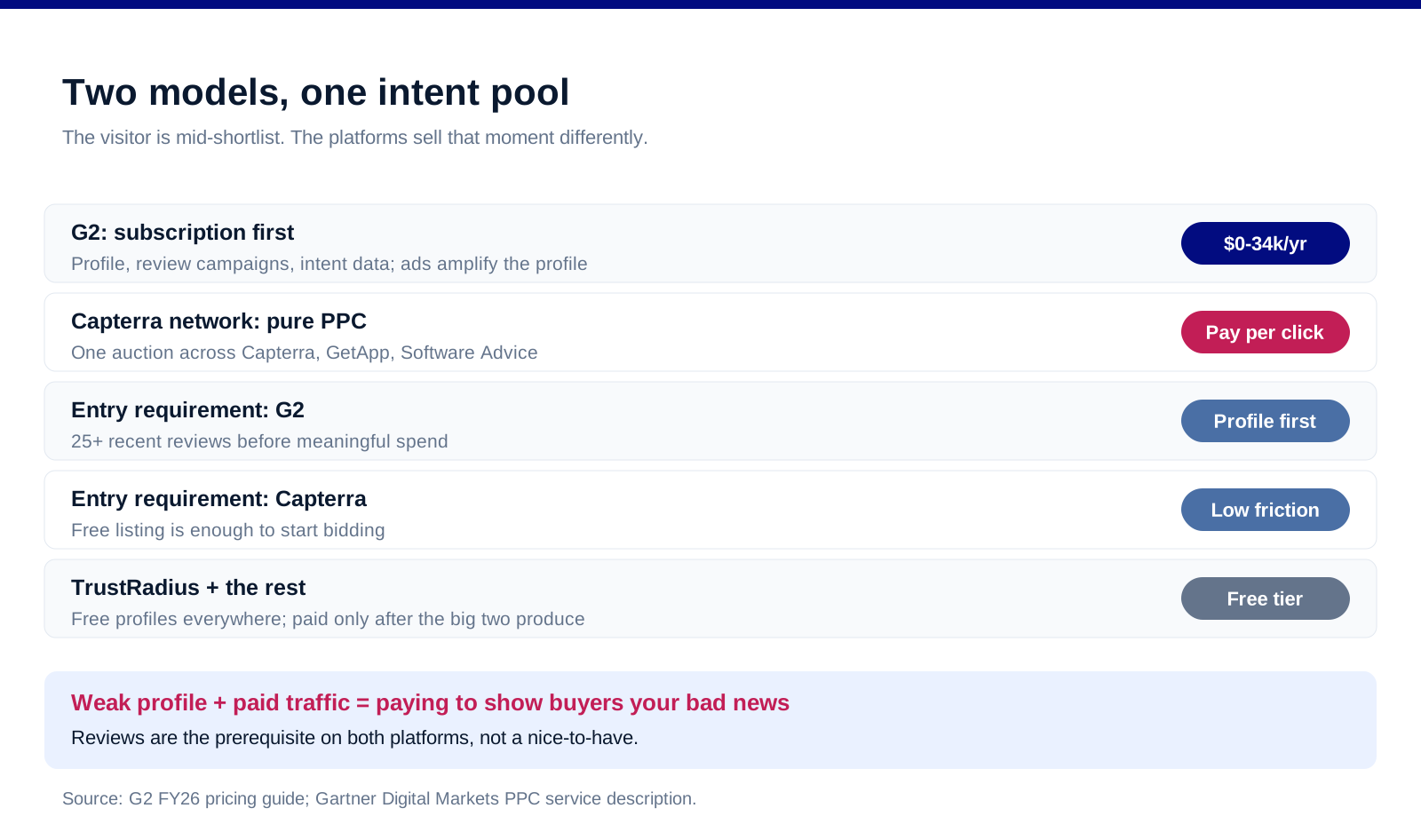
The buyer is mid-shortlist. Nobody browses software categories recreationally. A visitor on a category or comparison page is assembling a vendor list, which is why conversion-to-opportunity on this traffic beats nearly every other cold source even at higher CPCs.
G2: the profile is the product. The subscription buys profile control, review campaigns, buyer-intent data, and content; the ads amplify a profile that already converts. Strong reviews are a prerequisite, not a nice-to-have. Weak profile plus paid traffic equals paying to send buyers to your bad news.
Capterra network: the auction is the product. One campaign syndicates across Capterra, GetApp, and Software Advice, billed per click against a monthly cap you set, per the official PPC service description. A free listing is enough to start bidding, which makes it the lower-commitment entry into the channel. Note one operational quirk: budget changes and pauses take effect at the start of the following month, so set caps deliberately.
TrustRadius and the rest. Worth a free profile everywhere; worth paid spend only after the two big networks are instrumented and producing.
The G2 side: tiers, then ads
G2's published FY26 pricing makes the structure unusually transparent for this category.
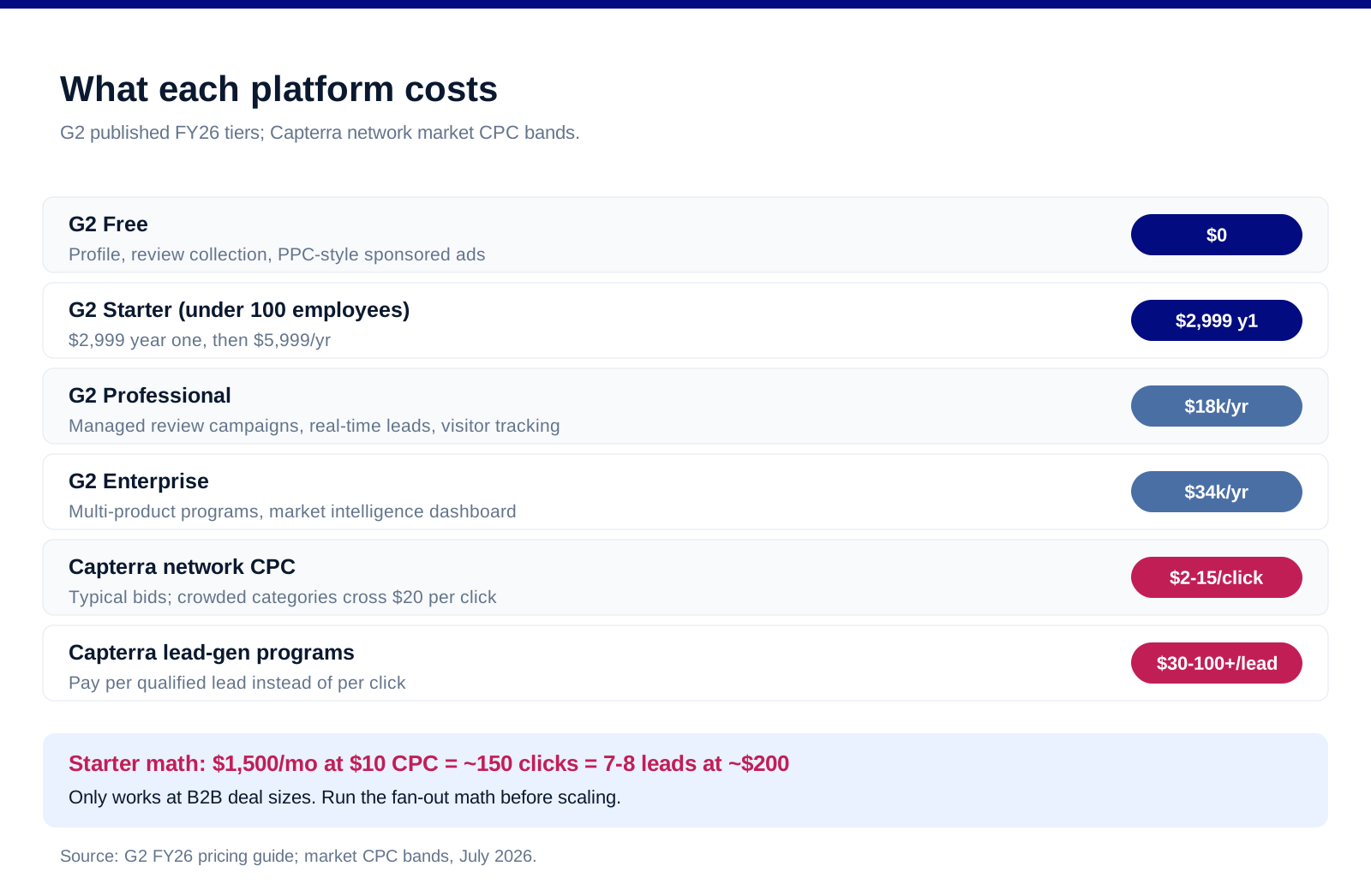
Free ($0). Basic profile, review collection, and access to PPC-style sponsored ads. This is where every vendor should already be standing.
Starter ($2,999 year one, then $5,999/yr). For companies under 100 employees: profile control and managed review collection at small-team pricing.
Professional ($18k/yr). G2-managed review campaigns with gift-card credits, real-time leads from custom CTAs, profile visitor tracking, and eligibility for the paid ad products.
Enterprise ($34k/yr). Multi-product review programs, solutions pages, and the market intelligence dashboard.
The ad layer. G2 Clicks runs pay-per-click on custom monthly budgets (G2's own documentation covers the mechanics), paid promotions sell category placements by the quarter or year, and content subscriptions run $13k-80k depending on scope. The working order: earn 25+ recent reviews organically or via a Professional campaign first, then buy traffic, because placement and conversion both track profile strength.
The Capterra side: pure PPC, real budget math
Capterra bidding behaves like search advertising with one twist: your bid buys position, but your review profile quality still moderates what that position costs and converts. Typical CPCs run $2-15 with competitive categories over $20, and lead-gen program pricing (where you pay per qualified lead instead of per click) runs roughly $30-100+ per lead.
The starter math: at a $10 average CPC and a $1,500/month budget, you buy about 150 clicks. A landing page converting at 5% yields roughly 7-8 leads at about $200 each, which only works at B2B deal sizes, so run the same fan-out math you would for any channel before scaling (our MQL to SQL benchmarks supply the conversion bands). Budget allocation that holds up: 50-60% on your main category, 20-30% testing adjacent categories, and the last 10-20% held back for bid increases to defend position when a competitor pushes.
Landing pages decide the whole equation. Pages that acknowledge where the visitor came from, mirror your review-site positioning, and answer comparison-stage questions convert at multiples of a generic homepage landing.
The 60-day launch plan
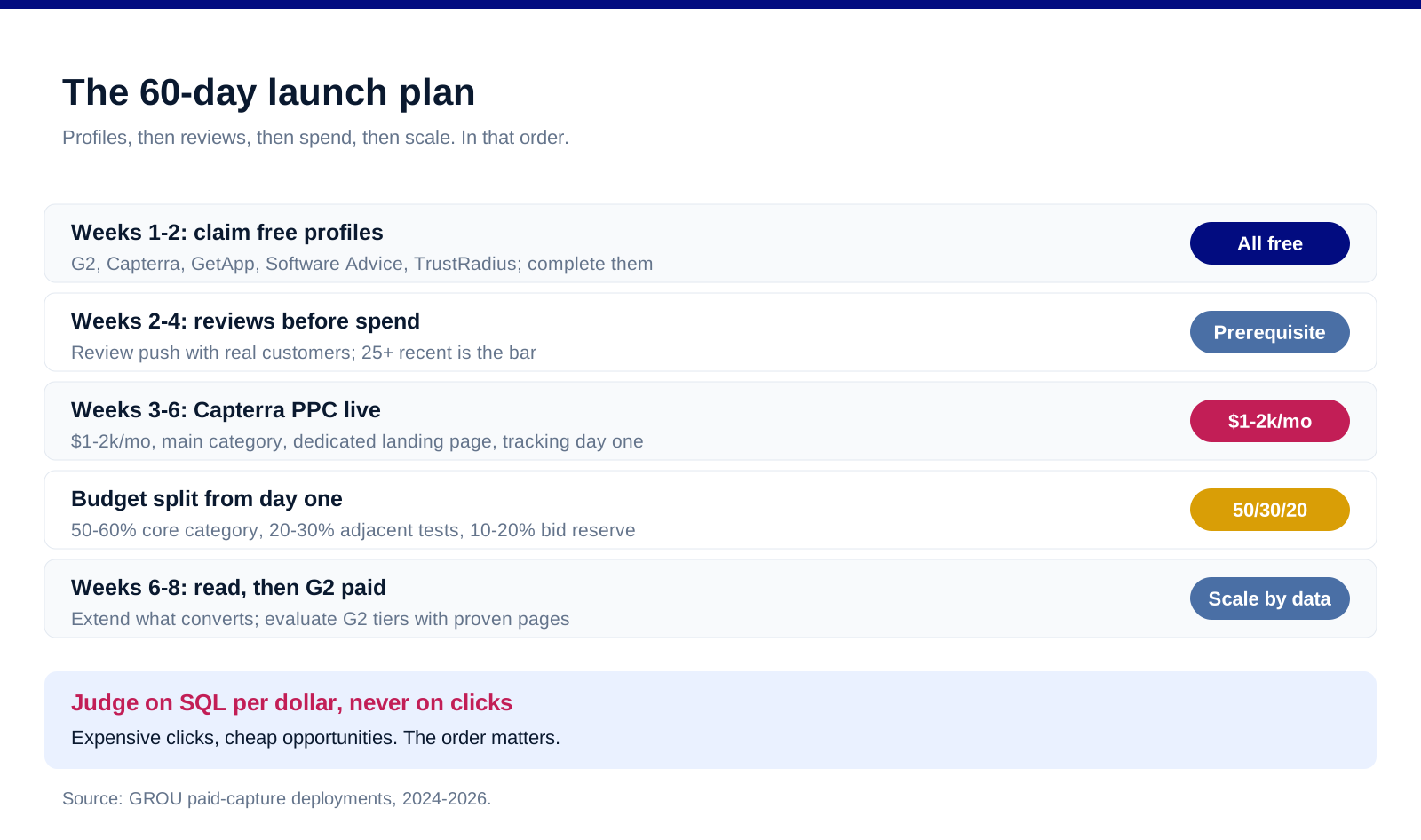
Weeks 1-2: claim and complete every free profile. G2, Capterra, GetApp, Software Advice, TrustRadius. Screenshots, category placement, feature checklists, pricing transparency where possible.
Weeks 2-4: reviews before spend. Run a review push with real customers. Ads on a thin profile are the channel's most reliable money pit.
Weeks 3-6: launch Capterra PPC at $1,000-2,000/month. Main category first, dedicated landing page live, conversion tracking installed on day one so the 30-day attribution window captures everything.
Weeks 6-8: read the data, then decide on G2. If Capterra clicks are converting to demos at viable cost, extend spend and evaluate G2 paid tiers with your now-proven landing pages and review base. Scale category by category, never all at once.
FAQ
How much do Capterra ads cost?
Typical cost per click runs $2-15 with competitive categories crossing $20, billed against a monthly budget cap you set, and pay-per-lead programs run roughly $30-100+ per qualified lead. A workable starter budget is $1,000-2,000 per month in your primary category.
How much does advertising on G2 cost?
The FY26 published tiers run from free through Starter at $2,999 in year one ($5,999 after), Professional at $18k/yr, and Enterprise at $34k/yr, with ad products like G2 Clicks (custom PPC budgets) and quarterly placement buyouts priced on top.
Are G2 and Capterra ads worth it for B2B?
At B2B deal sizes, usually yes: the traffic is comparison-stage buyers, and conversion-to-opportunity beats most cold channels even at $200+ per lead. The channel fails when the review profile is weak or the landing page is generic, not because the intent is missing.
Do you need reviews before running review-site ads?
Effectively yes. Placement pricing and conversion both track profile strength, and paid traffic to a sparse or low-rated profile converts against you. Aim for 25+ recent reviews before meaningful spend.
Capterra ads vs Google Ads: which first?
Capterra first when your category exists there: intent is pre-filtered to software buyers and setup is simpler. Google Ads adds volume and query control once the review-site economics are proven. They share the same measurement discipline, judged on SQL per dollar rather than clicks.
What is the difference between Capterra, GetApp, and Software Advice?
All three are Gartner Digital Markets properties, and one PPC campaign syndicates across them: Capterra as the broad directory, GetApp with an SMB lean, Software Advice with an advisor-assisted buyer flow. You manage them as one channel with one budget.
Bottom line
G2 and Capterra ads sell the last mile of B2B intent: G2 as a subscription whose ads amplify a strong review profile, the Capterra network as a straight PPC auction you can enter for $1,000 a month. Free profiles everywhere, reviews before spend, platform-specific landing pages, 50-60% of budget on the core category, and the same pipeline math as every other paid channel. Expensive clicks, cheap opportunities, in that order.
Want review-site capture wired into the rest of your paid and outbound mix? Book a call with GROU. We run paid capture inside B2B revenue engines across verticals.
We are GROU, a B2B pipeline agency that runs lead generation, outbound, and LinkedIn content for clients across manufacturing, fintech, iGaming, software, and professional services. The budget math and launch sequencing reflect our paid-capture deployments between 2024 and 2026, anonymized to protect client confidentiality.
Some links in this article are affiliate. We may earn a small commission at no extra cost to you. We only recommend tools we've deployed for clients.
Review-site ads are the closest thing B2B has to bidding on a purchase order: the visitor is on a comparison page, shortlisting vendors, days or weeks from a decision. G2 and the Capterra network (Capterra, GetApp, Software Advice, all Gartner Digital Markets properties) sell that moment in two very different ways: G2 through subscription tiers with ads layered on, Capterra through a pure pay-per-click auction. This playbook covers how each side prices, the budget math, and the launch sequence that avoids the classic money pits.
These are ad channels, not tools, and they sit alongside the rest of your paid mix in our best paid ads channels for B2B ranking. The organic side of the same surfaces lives in our top B2B directories and top SaaS directories lists.
TL;DR
Two models, one intent pool. G2 sells subscriptions ($0 free tier, Starter at $2,999 in year one, Professional at $18k/yr, Enterprise at $34k/yr per its published FY26 price guide) with advertising products like G2 Clicks (pay-per-click on custom budgets) and paid promotions layered on top. The Capterra network runs a straight PPC auction across three sites from one campaign, with typical bids landing around $2-15 a click and crowded categories crossing $20, no subscription required. Start on Capterra PPC with $1,000-2,000/month to buy data, put 50-60% of budget on your main category, and build platform-specific landing pages; go paid on G2 only once your review profile is strong enough to convert the traffic you buy. Judged on pipeline, these clicks are expensive; judged on close rate, they are routinely the best cold traffic B2B money buys.
The measurement logic is the same as any paid channel: our Google Ads playbook covers the SQL-per-dollar math that applies here unchanged.
Why review-site intent is different
The buyer is mid-shortlist. Nobody browses software categories recreationally. A visitor on a category or comparison page is assembling a vendor list, which is why conversion-to-opportunity on this traffic beats nearly every other cold source even at higher CPCs.
G2: the profile is the product. The subscription buys profile control, review campaigns, buyer-intent data, and content; the ads amplify a profile that already converts. Strong reviews are a prerequisite, not a nice-to-have. Weak profile plus paid traffic equals paying to send buyers to your bad news.
Capterra network: the auction is the product. One campaign syndicates across Capterra, GetApp, and Software Advice, billed per click against a monthly cap you set, per the official PPC service description. A free listing is enough to start bidding, which makes it the lower-commitment entry into the channel. Note one operational quirk: budget changes and pauses take effect at the start of the following month, so set caps deliberately.
TrustRadius and the rest. Worth a free profile everywhere; worth paid spend only after the two big networks are instrumented and producing.
The G2 side: tiers, then ads
G2's published FY26 pricing makes the structure unusually transparent for this category.
Free ($0). Basic profile, review collection, and access to PPC-style sponsored ads. This is where every vendor should already be standing.
Starter ($2,999 year one, then $5,999/yr). For companies under 100 employees: profile control and managed review collection at small-team pricing.
Professional ($18k/yr). G2-managed review campaigns with gift-card credits, real-time leads from custom CTAs, profile visitor tracking, and eligibility for the paid ad products.
Enterprise ($34k/yr). Multi-product review programs, solutions pages, and the market intelligence dashboard.
The ad layer. G2 Clicks runs pay-per-click on custom monthly budgets (G2's own documentation covers the mechanics), paid promotions sell category placements by the quarter or year, and content subscriptions run $13k-80k depending on scope. The working order: earn 25+ recent reviews organically or via a Professional campaign first, then buy traffic, because placement and conversion both track profile strength.
The Capterra side: pure PPC, real budget math
Capterra bidding behaves like search advertising with one twist: your bid buys position, but your review profile quality still moderates what that position costs and converts. Typical CPCs run $2-15 with competitive categories over $20, and lead-gen program pricing (where you pay per qualified lead instead of per click) runs roughly $30-100+ per lead.
The starter math: at a $10 average CPC and a $1,500/month budget, you buy about 150 clicks. A landing page converting at 5% yields roughly 7-8 leads at about $200 each, which only works at B2B deal sizes, so run the same fan-out math you would for any channel before scaling (our MQL to SQL benchmarks supply the conversion bands). Budget allocation that holds up: 50-60% on your main category, 20-30% testing adjacent categories, and the last 10-20% held back for bid increases to defend position when a competitor pushes.
Landing pages decide the whole equation. Pages that acknowledge where the visitor came from, mirror your review-site positioning, and answer comparison-stage questions convert at multiples of a generic homepage landing.
The 60-day launch plan
Weeks 1-2: claim and complete every free profile. G2, Capterra, GetApp, Software Advice, TrustRadius. Screenshots, category placement, feature checklists, pricing transparency where possible.
Weeks 2-4: reviews before spend. Run a review push with real customers. Ads on a thin profile are the channel's most reliable money pit.
Weeks 3-6: launch Capterra PPC at $1,000-2,000/month. Main category first, dedicated landing page live, conversion tracking installed on day one so the 30-day attribution window captures everything.
Weeks 6-8: read the data, then decide on G2. If Capterra clicks are converting to demos at viable cost, extend spend and evaluate G2 paid tiers with your now-proven landing pages and review base. Scale category by category, never all at once.
FAQ
How much do Capterra ads cost?
Typical cost per click runs $2-15 with competitive categories crossing $20, billed against a monthly budget cap you set, and pay-per-lead programs run roughly $30-100+ per qualified lead. A workable starter budget is $1,000-2,000 per month in your primary category.
How much does advertising on G2 cost?
The FY26 published tiers run from free through Starter at $2,999 in year one ($5,999 after), Professional at $18k/yr, and Enterprise at $34k/yr, with ad products like G2 Clicks (custom PPC budgets) and quarterly placement buyouts priced on top.
Are G2 and Capterra ads worth it for B2B?
At B2B deal sizes, usually yes: the traffic is comparison-stage buyers, and conversion-to-opportunity beats most cold channels even at $200+ per lead. The channel fails when the review profile is weak or the landing page is generic, not because the intent is missing.
Do you need reviews before running review-site ads?
Effectively yes. Placement pricing and conversion both track profile strength, and paid traffic to a sparse or low-rated profile converts against you. Aim for 25+ recent reviews before meaningful spend.
Capterra ads vs Google Ads: which first?
Capterra first when your category exists there: intent is pre-filtered to software buyers and setup is simpler. Google Ads adds volume and query control once the review-site economics are proven. They share the same measurement discipline, judged on SQL per dollar rather than clicks.
What is the difference between Capterra, GetApp, and Software Advice?
All three are Gartner Digital Markets properties, and one PPC campaign syndicates across them: Capterra as the broad directory, GetApp with an SMB lean, Software Advice with an advisor-assisted buyer flow. You manage them as one channel with one budget.
Bottom line
G2 and Capterra ads sell the last mile of B2B intent: G2 as a subscription whose ads amplify a strong review profile, the Capterra network as a straight PPC auction you can enter for $1,000 a month. Free profiles everywhere, reviews before spend, platform-specific landing pages, 50-60% of budget on the core category, and the same pipeline math as every other paid channel. Expensive clicks, cheap opportunities, in that order.
Want review-site capture wired into the rest of your paid and outbound mix? Book a call with GROU. We run paid capture inside B2B revenue engines across verticals.
We are GROU, a B2B pipeline agency that runs lead generation, outbound, and LinkedIn content for clients across manufacturing, fintech, iGaming, software, and professional services. The budget math and launch sequencing reflect our paid-capture deployments between 2024 and 2026, anonymized to protect client confidentiality.
Some links in this article are affiliate. We may earn a small commission at no extra cost to you. We only recommend tools we've deployed for clients.
Review-site ads are the closest thing B2B has to bidding on a purchase order: the visitor is on a comparison page, shortlisting vendors, days or weeks from a decision. G2 and the Capterra network (Capterra, GetApp, Software Advice, all Gartner Digital Markets properties) sell that moment in two very different ways: G2 through subscription tiers with ads layered on, Capterra through a pure pay-per-click auction. This playbook covers how each side prices, the budget math, and the launch sequence that avoids the classic money pits.
These are ad channels, not tools, and they sit alongside the rest of your paid mix in our best paid ads channels for B2B ranking. The organic side of the same surfaces lives in our top B2B directories and top SaaS directories lists.
TL;DR
Two models, one intent pool. G2 sells subscriptions ($0 free tier, Starter at $2,999 in year one, Professional at $18k/yr, Enterprise at $34k/yr per its published FY26 price guide) with advertising products like G2 Clicks (pay-per-click on custom budgets) and paid promotions layered on top. The Capterra network runs a straight PPC auction across three sites from one campaign, with typical bids landing around $2-15 a click and crowded categories crossing $20, no subscription required. Start on Capterra PPC with $1,000-2,000/month to buy data, put 50-60% of budget on your main category, and build platform-specific landing pages; go paid on G2 only once your review profile is strong enough to convert the traffic you buy. Judged on pipeline, these clicks are expensive; judged on close rate, they are routinely the best cold traffic B2B money buys.
The measurement logic is the same as any paid channel: our Google Ads playbook covers the SQL-per-dollar math that applies here unchanged.
Why review-site intent is different
The buyer is mid-shortlist. Nobody browses software categories recreationally. A visitor on a category or comparison page is assembling a vendor list, which is why conversion-to-opportunity on this traffic beats nearly every other cold source even at higher CPCs.
G2: the profile is the product. The subscription buys profile control, review campaigns, buyer-intent data, and content; the ads amplify a profile that already converts. Strong reviews are a prerequisite, not a nice-to-have. Weak profile plus paid traffic equals paying to send buyers to your bad news.
Capterra network: the auction is the product. One campaign syndicates across Capterra, GetApp, and Software Advice, billed per click against a monthly cap you set, per the official PPC service description. A free listing is enough to start bidding, which makes it the lower-commitment entry into the channel. Note one operational quirk: budget changes and pauses take effect at the start of the following month, so set caps deliberately.
TrustRadius and the rest. Worth a free profile everywhere; worth paid spend only after the two big networks are instrumented and producing.
The G2 side: tiers, then ads
G2's published FY26 pricing makes the structure unusually transparent for this category.
Free ($0). Basic profile, review collection, and access to PPC-style sponsored ads. This is where every vendor should already be standing.
Starter ($2,999 year one, then $5,999/yr). For companies under 100 employees: profile control and managed review collection at small-team pricing.
Professional ($18k/yr). G2-managed review campaigns with gift-card credits, real-time leads from custom CTAs, profile visitor tracking, and eligibility for the paid ad products.
Enterprise ($34k/yr). Multi-product review programs, solutions pages, and the market intelligence dashboard.
The ad layer. G2 Clicks runs pay-per-click on custom monthly budgets (G2's own documentation covers the mechanics), paid promotions sell category placements by the quarter or year, and content subscriptions run $13k-80k depending on scope. The working order: earn 25+ recent reviews organically or via a Professional campaign first, then buy traffic, because placement and conversion both track profile strength.
The Capterra side: pure PPC, real budget math
Capterra bidding behaves like search advertising with one twist: your bid buys position, but your review profile quality still moderates what that position costs and converts. Typical CPCs run $2-15 with competitive categories over $20, and lead-gen program pricing (where you pay per qualified lead instead of per click) runs roughly $30-100+ per lead.
The starter math: at a $10 average CPC and a $1,500/month budget, you buy about 150 clicks. A landing page converting at 5% yields roughly 7-8 leads at about $200 each, which only works at B2B deal sizes, so run the same fan-out math you would for any channel before scaling (our MQL to SQL benchmarks supply the conversion bands). Budget allocation that holds up: 50-60% on your main category, 20-30% testing adjacent categories, and the last 10-20% held back for bid increases to defend position when a competitor pushes.
Landing pages decide the whole equation. Pages that acknowledge where the visitor came from, mirror your review-site positioning, and answer comparison-stage questions convert at multiples of a generic homepage landing.
The 60-day launch plan
Weeks 1-2: claim and complete every free profile. G2, Capterra, GetApp, Software Advice, TrustRadius. Screenshots, category placement, feature checklists, pricing transparency where possible.
Weeks 2-4: reviews before spend. Run a review push with real customers. Ads on a thin profile are the channel's most reliable money pit.
Weeks 3-6: launch Capterra PPC at $1,000-2,000/month. Main category first, dedicated landing page live, conversion tracking installed on day one so the 30-day attribution window captures everything.
Weeks 6-8: read the data, then decide on G2. If Capterra clicks are converting to demos at viable cost, extend spend and evaluate G2 paid tiers with your now-proven landing pages and review base. Scale category by category, never all at once.
FAQ
How much do Capterra ads cost?
Typical cost per click runs $2-15 with competitive categories crossing $20, billed against a monthly budget cap you set, and pay-per-lead programs run roughly $30-100+ per qualified lead. A workable starter budget is $1,000-2,000 per month in your primary category.
How much does advertising on G2 cost?
The FY26 published tiers run from free through Starter at $2,999 in year one ($5,999 after), Professional at $18k/yr, and Enterprise at $34k/yr, with ad products like G2 Clicks (custom PPC budgets) and quarterly placement buyouts priced on top.
Are G2 and Capterra ads worth it for B2B?
At B2B deal sizes, usually yes: the traffic is comparison-stage buyers, and conversion-to-opportunity beats most cold channels even at $200+ per lead. The channel fails when the review profile is weak or the landing page is generic, not because the intent is missing.
Do you need reviews before running review-site ads?
Effectively yes. Placement pricing and conversion both track profile strength, and paid traffic to a sparse or low-rated profile converts against you. Aim for 25+ recent reviews before meaningful spend.
Capterra ads vs Google Ads: which first?
Capterra first when your category exists there: intent is pre-filtered to software buyers and setup is simpler. Google Ads adds volume and query control once the review-site economics are proven. They share the same measurement discipline, judged on SQL per dollar rather than clicks.
What is the difference between Capterra, GetApp, and Software Advice?
All three are Gartner Digital Markets properties, and one PPC campaign syndicates across them: Capterra as the broad directory, GetApp with an SMB lean, Software Advice with an advisor-assisted buyer flow. You manage them as one channel with one budget.
Bottom line
G2 and Capterra ads sell the last mile of B2B intent: G2 as a subscription whose ads amplify a strong review profile, the Capterra network as a straight PPC auction you can enter for $1,000 a month. Free profiles everywhere, reviews before spend, platform-specific landing pages, 50-60% of budget on the core category, and the same pipeline math as every other paid channel. Expensive clicks, cheap opportunities, in that order.
Want review-site capture wired into the rest of your paid and outbound mix? Book a call with GROU. We run paid capture inside B2B revenue engines across verticals.
We are GROU, a B2B pipeline agency that runs lead generation, outbound, and LinkedIn content for clients across manufacturing, fintech, iGaming, software, and professional services. The budget math and launch sequencing reflect our paid-capture deployments between 2024 and 2026, anonymized to protect client confidentiality.
Some links in this article are affiliate. We may earn a small commission at no extra cost to you. We only recommend tools we've deployed for clients.
Pipeline OS Newsletter
Build qualified pipeline
Get weekly tactics to generate demand, improve lead quality, and book more meetings.







Trusted by industry leaders
Trusted by industry leaders
Trusted by industry leaders
Ready to build qualified pipeline?
Ready to build qualified pipeline?
Ready to build qualified pipeline?
Book a call to see if we're the right fit, or take the 2-minute quiz to get a clear starting point.
Book a call to see if we're the right fit, or take the 2-minute quiz to get a clear starting point.
Book a call to see if we're the right fit, or take the 2-minute quiz to get a clear starting point.
" height="30.21639343089746px" id="hfGbXmQR2" width="30.216393430897455px"/></svg>)
Copyright © 2026 – All Right Reserved
Copyright © 2026 – All Right Reserved
Copyright © 2026 – All Right Reserved