%22%3E%3C/path%3E%3Cpath d=%22M 63.072 7.554 C 62.258 8.022 61.577 8.689 61.092 9.493 L 61.092 7.076 L 57.158 7.076 L 57.158 22.64 L 61.089 22.64 L 61.089 14.888 C 61.089 13.446 61.403 12.434 62.03 11.853 C 62.818 11.218 63.818 10.907 64.826 10.982 L 65.868 10.982 L 65.868 6.851 C 64.891 6.834 63.926 7.076 63.073 7.554 Z%22 fill=%22rgb(17,17,17)%22%3E%3C/path%3E%3Cpath d=%22M 78.916 7.82 C 76.363 6.49 73.321 6.49 70.768 7.82 C 69.562 8.473 68.564 9.451 67.888 10.644 C 67.167 11.931 66.803 13.387 66.834 14.862 C 66.804 16.332 67.157 17.785 67.86 19.077 C 68.515 20.267 69.494 21.246 70.684 21.901 C 71.924 22.576 73.318 22.92 74.73 22.898 C 76.164 22.918 77.58 22.575 78.846 21.901 C 80.062 21.247 81.073 20.27 81.768 19.077 C 82.506 17.797 82.88 16.339 82.85 14.862 C 82.88 13.389 82.517 11.934 81.797 10.647 C 81.12 9.455 80.122 8.477 78.917 7.824 M 78.803 14.862 C 78.829 15.739 78.636 16.608 78.241 17.391 C 77.903 18.046 77.38 18.588 76.738 18.95 C 76.124 19.293 75.432 19.472 74.729 19.47 C 73.668 19.497 72.648 19.061 71.934 18.276 C 71.139 17.323 70.741 16.1 70.823 14.862 C 70.741 13.62 71.149 12.395 71.959 11.45 C 72.687 10.667 73.715 10.233 74.783 10.256 C 75.859 10.236 76.894 10.67 77.635 11.45 C 78.464 12.387 78.884 13.616 78.801 14.864%22 fill=%22rgb(17,17,17)%22%3E%3C/path%3E%3Cpath d=%22M 95.906 7.076 L 95.906 15.646 C 95.975 16.68 95.643 17.701 94.979 18.498 C 94.311 19.184 93.379 19.547 92.422 19.495 C 91.475 19.544 90.553 19.18 89.894 18.498 C 89.23 17.701 88.898 16.68 88.967 15.646 L 88.967 7.076 L 85.033 7.076 L 85.033 16.207 C 85 17.449 85.275 18.68 85.834 19.79 C 86.327 20.75 87.095 21.542 88.039 22.065 C 89.033 22.594 90.145 22.861 91.271 22.838 C 92.188 22.847 93.095 22.65 93.926 22.263 C 94.708 21.905 95.388 21.36 95.906 20.675 L 95.906 22.645 L 99.865 22.645 L 99.865 7.076 Z%22 fill=%22rgb(17,17,17)%22%3E%3C/path%3E%3Cpath d=%22M 4.513 15.626 C 4.511 10.815 7.606 6.549 12.181 5.059 C 16.756 3.57 21.77 5.195 24.601 9.086 L 27.816 5.87 C 24.074 1.186 17.981 -0.943 12.137 0.393 C 6.292 1.728 1.728 6.292 0.393 12.137 C -0.943 17.981 1.186 24.074 5.87 27.816 L 9.085 24.601 C 6.214 22.512 4.515 19.177 4.513 15.626%22 fill=%22rgb(32,62,235)%22%3E%3C/path%3E%3Cpath d=%22M 17.114 14.343 L 13.354 18.01 L 13.354 18.026 L 21.071 18.026 L 11.412 27.609 L 17.389 27.609 L 23.999 21.081 L 23.999 28.316 L 24.005 28.316 L 27.967 24.393 L 27.967 14.343 Z%22 fill=%22rgb(32,62,235)%22%3E%3C/path%3E%3C/g%3E%3C/svg%3E) ×
× ××
××

Google Ads works for B2B SaaS in exactly one configuration: tight campaigns on high-intent searches, ruthless negatives, and landing pages built for the query, judged on pipeline rather than clicks. Run that way, it is the most predictable demand-capture channel available; run loose, it burns budget faster than any channel in B2B. This playbook covers the campaign types worth funding, the 4-campaign starter structure, the budget math, and the mistakes that torch spend.
The CPC data lives in our B2B Google Ads CPC benchmarks; this is the how.
TL;DR
Fund four campaign types in order: branded search (protect the name for pennies), high-intent category terms ("crm for saas companies"), competitor and alternative searches ("X alternative", "X vs Y"), and problem or jobs-to-be-done queries, with Display retargeting behind them and Performance Max only after search is instrumented. Start with the 4-campaign structure at a 10/40/25/25 budget split, exact and phrase match only, and a negative-keyword list from day one. Judge the account on SQL-per-dollar and CAC payback, never on clicks or raw MQLs: channel conversion data shows paid-search MQLs converting to SQL at 15-26%, solid but far below organic, so the funnel math has to price that in. Expect 4-6 weeks to statistical signal and a quarter to a stable CAC read.
Companion pieces: LinkedIn Ads playbook and best paid ads channels for B2B.
The campaign types worth funding
B2B SaaS search volume is thin and expensive, so the game is choosing queries where intent survives the click. Six candidates, ranked by how reliably they turn spend into pipeline.
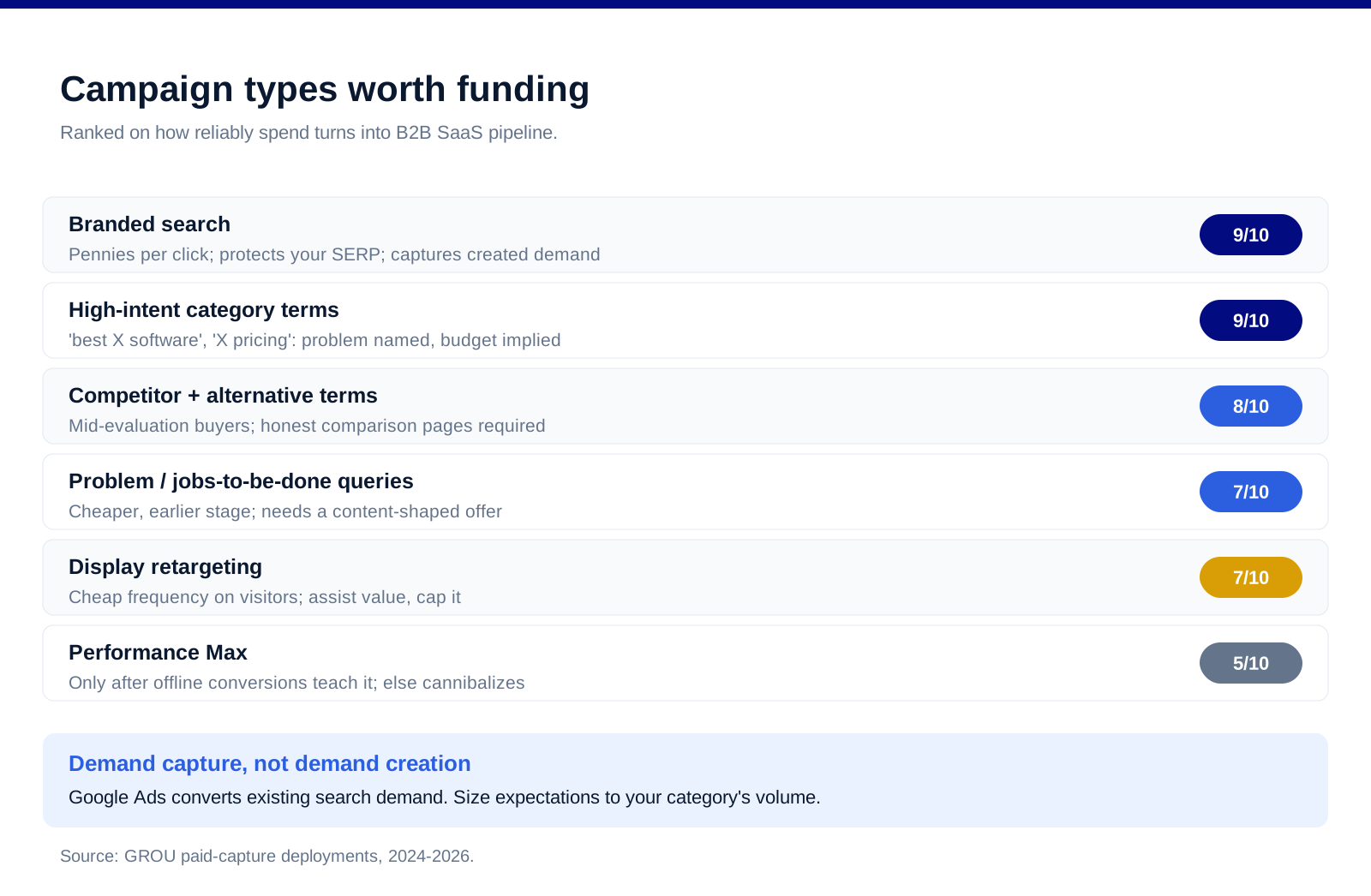
1. Branded search (9/10). Cheapest clicks in the account, protects the SERP from competitors bidding your name, and captures the demand every other channel created. Non-negotiable, tiny budget.
2. High-intent category terms (9/10). "Best {category} software", "{category} for {segment}", "{category} pricing". Expensive and worth it: the searcher has the problem named and budget implied.
3. Competitor and alternative terms (8/10). "{Competitor} alternative" and "vs" queries reach in-market buyers mid-evaluation. Landing pages must be honest comparisons, not attack ads, to convert and to keep quality score alive.
4. Problem and jobs-to-be-done queries (7/10). "How to reduce churn", "automate {workflow}". Cheaper, earlier-stage, needs a content-shaped offer rather than a demo CTA.
5. Display retargeting (7/10). Cheap frequency on people who already visited. Cap it, creative-refresh it, and expect assist value rather than last-click wins.
6. Performance Max (5/10, later). PMax without clean conversion data cannibalizes brand and floods junk placements. Earn it: feed it offline conversion imports after search is instrumented, or skip it.
The 4-campaign starter structure
One campaign per intent tier, so budgets, bids, and messages stay separable. Per Google's own guidance, conversion-based smart bidding needs clean per-campaign conversion signals to work, which is precisely what this structure protects.
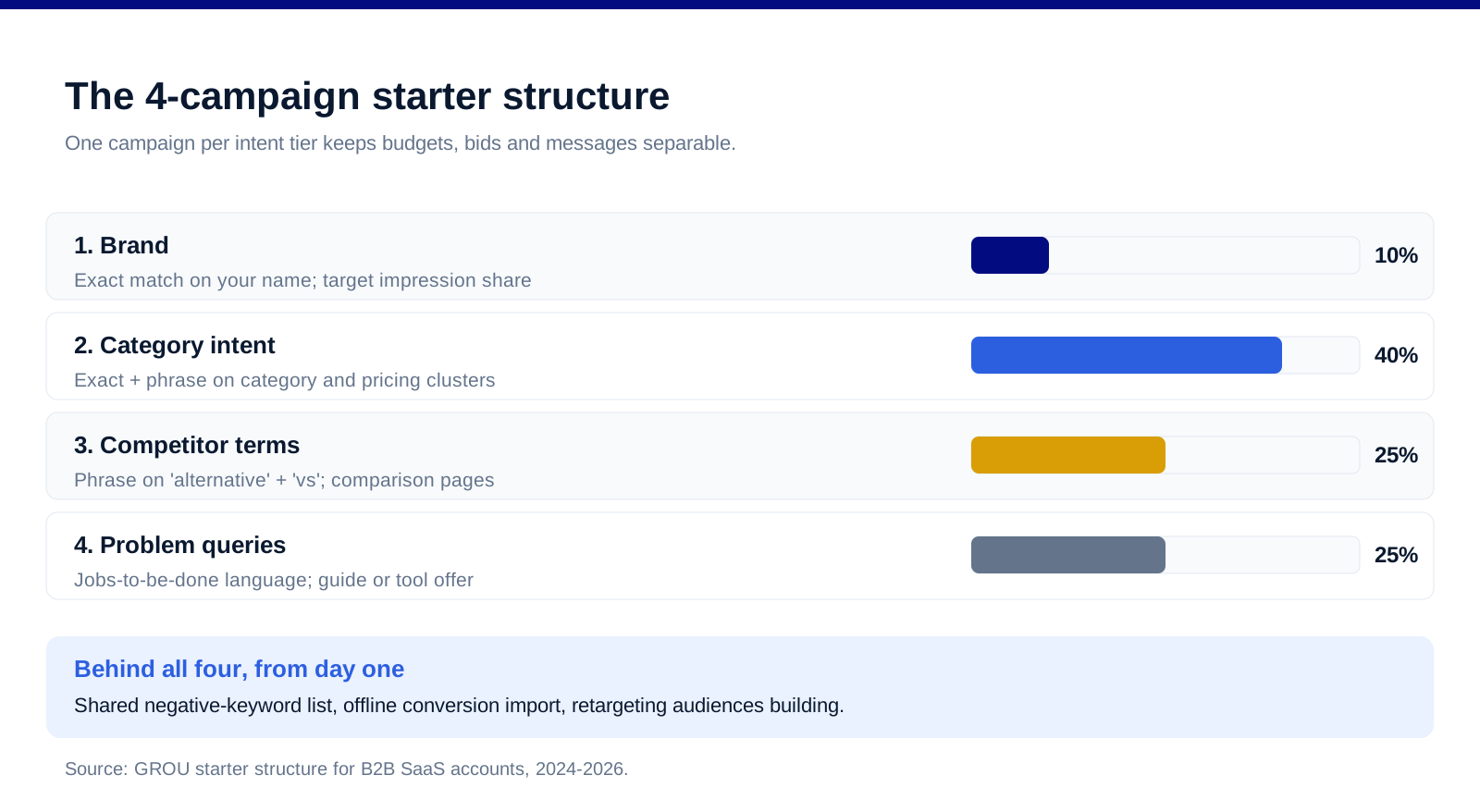
Campaign 1: Brand (10% of budget). Exact match on your name and product terms. Manual or target-impression-share bidding; this one just needs to exist.
Campaign 2: Category intent (40%). Exact and phrase match on category and pricing terms, one tightly-themed ad group per keyword cluster, landing pages that mirror the query. Keyword research in Semrush seeds the clusters; the search terms report prunes them weekly.
Campaign 3: Competitor terms (25%). Phrase match on alternative and vs queries, comparison landing pages, lower bid ceilings; CPCs here spike and quality scores start low.
Campaign 4: Problem queries (25%). Phrase match on jobs-to-be-done language with a guide, calculator, or template offer, feeding the nurture track rather than the demo calendar.
Behind all four: a shared negative-keyword list ("free", "jobs", "salary", "course", student and consumer noise) from day one, offline conversion import wired so closed-won deals teach the bidding, and retargeting audiences building from week one.
The budget math that keeps you honest
Clicks are the cost, pipeline is the product, and the conversion chain between them is where B2B SaaS accounts live or die. Paid-search MQLs convert to SQL at 15-26% in the channel data from our MQL to SQL benchmarks, which means every CPC has to be priced against a 4-7x fan-out to a sales conversation.
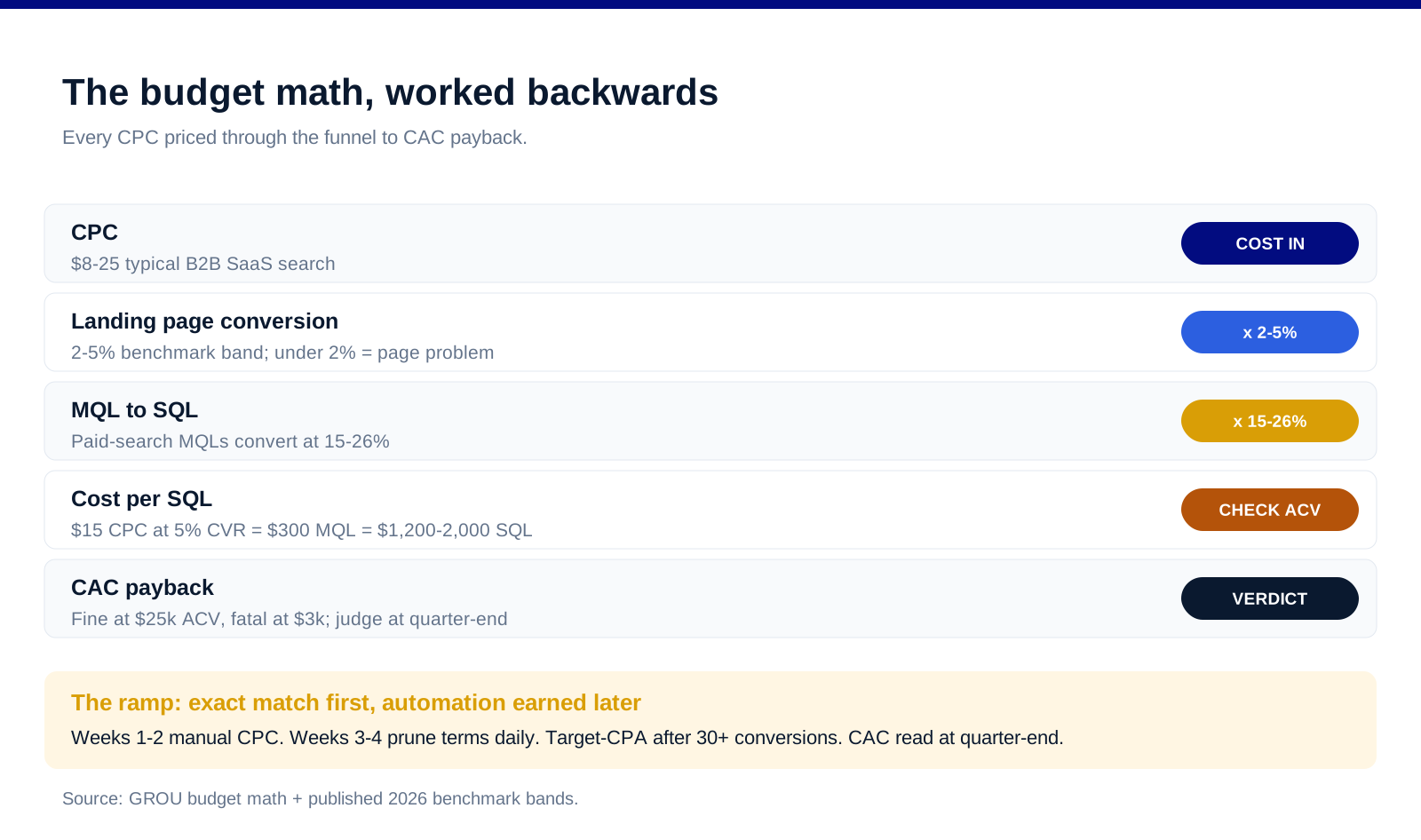
Work the chain backwards from unit economics: target CAC from your CAC payback benchmarks band, divide by close rate to get affordable cost-per-SQL, divide by the 15-26% MQL-to-SQL band for affordable cost-per-MQL, and only then judge whether a $8-25 B2B CPC works. A $15 CPC with a 5% landing-page conversion is a $300 MQL and roughly a $1,200-2,000 SQL: fine for a $25k ACV, fatal for a $3k one. Industry benchmark sets from WordStream put B2B search conversion averages in the 2-5% range, so a page converting under 2% is a page problem, not a channel problem.
The ramp: weeks 1-2 launch with exact match and manual CPC, weeks 3-4 prune search terms and add negatives daily, weeks 5-8 move winning campaigns to target-CPA once 30+ conversions exist, and quarter-end is the first honest CAC read. Anything judged earlier is noise.
The mistakes that burn B2B SaaS budgets
Mistake 1: broad match on day one. Broad match plus smart bidding before conversion data exists is a donation to Google. Earn broad match with clean signals or never use it.
Mistake 2: sending paid clicks to the homepage. The query names the intent; the page must answer it. Homepage landings halve conversion and quality score simultaneously.
Mistake 3: judging the account on MQL volume. Paid search fills forms easily; the 15-26% MQL-to-SQL fan-out decides whether those forms were pipeline. Wire offline conversions and judge on SQLs.
Mistake 4: no negative-keyword discipline. The search terms report is where B2B accounts leak: informational, consumer, and job-seeker queries eat 20-40% of unmanaged spend.
Mistake 5: PMax before instrumentation. Performance Max without offline conversion feeds optimizes toward whatever converts easiest, usually brand cannibalization and junk leads at scale.
FAQ
Does Google Ads work for B2B SaaS?
Yes, as a demand-capture channel: it converts existing search demand into pipeline predictably when campaigns stay on high-intent terms with matched landing pages. It does not create demand; pair it with the channels that do, and size expectations to your category's search volume.
How much budget does Google Ads need for B2B SaaS?
Enough to buy statistical signal: at $8-25 B2B CPCs, plan $3,000-10,000/month minimum so each core campaign sees 30+ conversions within a quarter. Below that floor, spread across fewer campaigns rather than starving four.
What is a good conversion rate for B2B SaaS Google Ads?
2-5% click-to-lead on search is the benchmark band; high-intent category and competitor pages should push toward the top of it. Under 2% signals a landing page or query-match problem before it signals a channel problem.
Should B2B SaaS companies bid on competitor keywords?
Usually yes, with honest comparison pages and controlled bids: competitor searchers are mid-evaluation and winnable. Expect higher CPCs and lower quality scores, cap the budget at roughly a quarter of spend, and never run attack copy.
Is Performance Max worth it for B2B SaaS?
Only after search campaigns are instrumented with offline conversion imports teaching Google what a real customer looks like. Launched cold, PMax cannibalizes branded search and floods low-quality placements; earned, it can extend reach efficiently.
How long before Google Ads shows results for B2B?
4-6 weeks to statistically meaningful conversion data, roughly a quarter to a trustworthy CAC read, given B2B sales cycles. Optimize weekly on search terms and negatives from day one, but hold structural judgments until the quarter closes.
Bottom line
Google Ads for B2B SaaS is a precision instrument sold as a volume machine: four campaigns, exact and phrase match, negatives from day one, landing pages that mirror queries, and every dollar judged through the MQL-to-SQL fan-out to CAC payback. Run the starter structure at 10/40/25/25, wire offline conversions before you trust any bidding automation, and let the quarter, not the click report, decide what scales.
Want the account built and run against pipeline instead of clicks? Book a call with GROU. We run paid capture inside B2B revenue engines across verticals.
We are GROU, a B2B pipeline agency that runs lead generation, outbound, and LinkedIn content for clients across manufacturing, fintech, iGaming, software, and professional services. The structure and budget math reflect our paid-capture deployments between 2024 and 2026, anonymized to protect client confidentiality.
Some links in this article are affiliate. We may earn a small commission at no extra cost to you. We only recommend tools we've deployed for clients.
Google Ads works for B2B SaaS in exactly one configuration: tight campaigns on high-intent searches, ruthless negatives, and landing pages built for the query, judged on pipeline rather than clicks. Run that way, it is the most predictable demand-capture channel available; run loose, it burns budget faster than any channel in B2B. This playbook covers the campaign types worth funding, the 4-campaign starter structure, the budget math, and the mistakes that torch spend.
The CPC data lives in our B2B Google Ads CPC benchmarks; this is the how.
TL;DR
Fund four campaign types in order: branded search (protect the name for pennies), high-intent category terms ("crm for saas companies"), competitor and alternative searches ("X alternative", "X vs Y"), and problem or jobs-to-be-done queries, with Display retargeting behind them and Performance Max only after search is instrumented. Start with the 4-campaign structure at a 10/40/25/25 budget split, exact and phrase match only, and a negative-keyword list from day one. Judge the account on SQL-per-dollar and CAC payback, never on clicks or raw MQLs: channel conversion data shows paid-search MQLs converting to SQL at 15-26%, solid but far below organic, so the funnel math has to price that in. Expect 4-6 weeks to statistical signal and a quarter to a stable CAC read.
Companion pieces: LinkedIn Ads playbook and best paid ads channels for B2B.
The campaign types worth funding
B2B SaaS search volume is thin and expensive, so the game is choosing queries where intent survives the click. Six candidates, ranked by how reliably they turn spend into pipeline.
1. Branded search (9/10). Cheapest clicks in the account, protects the SERP from competitors bidding your name, and captures the demand every other channel created. Non-negotiable, tiny budget.
2. High-intent category terms (9/10). "Best {category} software", "{category} for {segment}", "{category} pricing". Expensive and worth it: the searcher has the problem named and budget implied.
3. Competitor and alternative terms (8/10). "{Competitor} alternative" and "vs" queries reach in-market buyers mid-evaluation. Landing pages must be honest comparisons, not attack ads, to convert and to keep quality score alive.
4. Problem and jobs-to-be-done queries (7/10). "How to reduce churn", "automate {workflow}". Cheaper, earlier-stage, needs a content-shaped offer rather than a demo CTA.
5. Display retargeting (7/10). Cheap frequency on people who already visited. Cap it, creative-refresh it, and expect assist value rather than last-click wins.
6. Performance Max (5/10, later). PMax without clean conversion data cannibalizes brand and floods junk placements. Earn it: feed it offline conversion imports after search is instrumented, or skip it.
The 4-campaign starter structure
One campaign per intent tier, so budgets, bids, and messages stay separable. Per Google's own guidance, conversion-based smart bidding needs clean per-campaign conversion signals to work, which is precisely what this structure protects.
Campaign 1: Brand (10% of budget). Exact match on your name and product terms. Manual or target-impression-share bidding; this one just needs to exist.
Campaign 2: Category intent (40%). Exact and phrase match on category and pricing terms, one tightly-themed ad group per keyword cluster, landing pages that mirror the query. Keyword research in Semrush seeds the clusters; the search terms report prunes them weekly.
Campaign 3: Competitor terms (25%). Phrase match on alternative and vs queries, comparison landing pages, lower bid ceilings; CPCs here spike and quality scores start low.
Campaign 4: Problem queries (25%). Phrase match on jobs-to-be-done language with a guide, calculator, or template offer, feeding the nurture track rather than the demo calendar.
Behind all four: a shared negative-keyword list ("free", "jobs", "salary", "course", student and consumer noise) from day one, offline conversion import wired so closed-won deals teach the bidding, and retargeting audiences building from week one.
The budget math that keeps you honest
Clicks are the cost, pipeline is the product, and the conversion chain between them is where B2B SaaS accounts live or die. Paid-search MQLs convert to SQL at 15-26% in the channel data from our MQL to SQL benchmarks, which means every CPC has to be priced against a 4-7x fan-out to a sales conversation.
Work the chain backwards from unit economics: target CAC from your CAC payback benchmarks band, divide by close rate to get affordable cost-per-SQL, divide by the 15-26% MQL-to-SQL band for affordable cost-per-MQL, and only then judge whether a $8-25 B2B CPC works. A $15 CPC with a 5% landing-page conversion is a $300 MQL and roughly a $1,200-2,000 SQL: fine for a $25k ACV, fatal for a $3k one. Industry benchmark sets from WordStream put B2B search conversion averages in the 2-5% range, so a page converting under 2% is a page problem, not a channel problem.
The ramp: weeks 1-2 launch with exact match and manual CPC, weeks 3-4 prune search terms and add negatives daily, weeks 5-8 move winning campaigns to target-CPA once 30+ conversions exist, and quarter-end is the first honest CAC read. Anything judged earlier is noise.
The mistakes that burn B2B SaaS budgets
Mistake 1: broad match on day one. Broad match plus smart bidding before conversion data exists is a donation to Google. Earn broad match with clean signals or never use it.
Mistake 2: sending paid clicks to the homepage. The query names the intent; the page must answer it. Homepage landings halve conversion and quality score simultaneously.
Mistake 3: judging the account on MQL volume. Paid search fills forms easily; the 15-26% MQL-to-SQL fan-out decides whether those forms were pipeline. Wire offline conversions and judge on SQLs.
Mistake 4: no negative-keyword discipline. The search terms report is where B2B accounts leak: informational, consumer, and job-seeker queries eat 20-40% of unmanaged spend.
Mistake 5: PMax before instrumentation. Performance Max without offline conversion feeds optimizes toward whatever converts easiest, usually brand cannibalization and junk leads at scale.
FAQ
Does Google Ads work for B2B SaaS?
Yes, as a demand-capture channel: it converts existing search demand into pipeline predictably when campaigns stay on high-intent terms with matched landing pages. It does not create demand; pair it with the channels that do, and size expectations to your category's search volume.
How much budget does Google Ads need for B2B SaaS?
Enough to buy statistical signal: at $8-25 B2B CPCs, plan $3,000-10,000/month minimum so each core campaign sees 30+ conversions within a quarter. Below that floor, spread across fewer campaigns rather than starving four.
What is a good conversion rate for B2B SaaS Google Ads?
2-5% click-to-lead on search is the benchmark band; high-intent category and competitor pages should push toward the top of it. Under 2% signals a landing page or query-match problem before it signals a channel problem.
Should B2B SaaS companies bid on competitor keywords?
Usually yes, with honest comparison pages and controlled bids: competitor searchers are mid-evaluation and winnable. Expect higher CPCs and lower quality scores, cap the budget at roughly a quarter of spend, and never run attack copy.
Is Performance Max worth it for B2B SaaS?
Only after search campaigns are instrumented with offline conversion imports teaching Google what a real customer looks like. Launched cold, PMax cannibalizes branded search and floods low-quality placements; earned, it can extend reach efficiently.
How long before Google Ads shows results for B2B?
4-6 weeks to statistically meaningful conversion data, roughly a quarter to a trustworthy CAC read, given B2B sales cycles. Optimize weekly on search terms and negatives from day one, but hold structural judgments until the quarter closes.
Bottom line
Google Ads for B2B SaaS is a precision instrument sold as a volume machine: four campaigns, exact and phrase match, negatives from day one, landing pages that mirror queries, and every dollar judged through the MQL-to-SQL fan-out to CAC payback. Run the starter structure at 10/40/25/25, wire offline conversions before you trust any bidding automation, and let the quarter, not the click report, decide what scales.
Want the account built and run against pipeline instead of clicks? Book a call with GROU. We run paid capture inside B2B revenue engines across verticals.
We are GROU, a B2B pipeline agency that runs lead generation, outbound, and LinkedIn content for clients across manufacturing, fintech, iGaming, software, and professional services. The structure and budget math reflect our paid-capture deployments between 2024 and 2026, anonymized to protect client confidentiality.
Some links in this article are affiliate. We may earn a small commission at no extra cost to you. We only recommend tools we've deployed for clients.
Google Ads works for B2B SaaS in exactly one configuration: tight campaigns on high-intent searches, ruthless negatives, and landing pages built for the query, judged on pipeline rather than clicks. Run that way, it is the most predictable demand-capture channel available; run loose, it burns budget faster than any channel in B2B. This playbook covers the campaign types worth funding, the 4-campaign starter structure, the budget math, and the mistakes that torch spend.
The CPC data lives in our B2B Google Ads CPC benchmarks; this is the how.
TL;DR
Fund four campaign types in order: branded search (protect the name for pennies), high-intent category terms ("crm for saas companies"), competitor and alternative searches ("X alternative", "X vs Y"), and problem or jobs-to-be-done queries, with Display retargeting behind them and Performance Max only after search is instrumented. Start with the 4-campaign structure at a 10/40/25/25 budget split, exact and phrase match only, and a negative-keyword list from day one. Judge the account on SQL-per-dollar and CAC payback, never on clicks or raw MQLs: channel conversion data shows paid-search MQLs converting to SQL at 15-26%, solid but far below organic, so the funnel math has to price that in. Expect 4-6 weeks to statistical signal and a quarter to a stable CAC read.
Companion pieces: LinkedIn Ads playbook and best paid ads channels for B2B.
The campaign types worth funding
B2B SaaS search volume is thin and expensive, so the game is choosing queries where intent survives the click. Six candidates, ranked by how reliably they turn spend into pipeline.
1. Branded search (9/10). Cheapest clicks in the account, protects the SERP from competitors bidding your name, and captures the demand every other channel created. Non-negotiable, tiny budget.
2. High-intent category terms (9/10). "Best {category} software", "{category} for {segment}", "{category} pricing". Expensive and worth it: the searcher has the problem named and budget implied.
3. Competitor and alternative terms (8/10). "{Competitor} alternative" and "vs" queries reach in-market buyers mid-evaluation. Landing pages must be honest comparisons, not attack ads, to convert and to keep quality score alive.
4. Problem and jobs-to-be-done queries (7/10). "How to reduce churn", "automate {workflow}". Cheaper, earlier-stage, needs a content-shaped offer rather than a demo CTA.
5. Display retargeting (7/10). Cheap frequency on people who already visited. Cap it, creative-refresh it, and expect assist value rather than last-click wins.
6. Performance Max (5/10, later). PMax without clean conversion data cannibalizes brand and floods junk placements. Earn it: feed it offline conversion imports after search is instrumented, or skip it.
The 4-campaign starter structure
One campaign per intent tier, so budgets, bids, and messages stay separable. Per Google's own guidance, conversion-based smart bidding needs clean per-campaign conversion signals to work, which is precisely what this structure protects.
Campaign 1: Brand (10% of budget). Exact match on your name and product terms. Manual or target-impression-share bidding; this one just needs to exist.
Campaign 2: Category intent (40%). Exact and phrase match on category and pricing terms, one tightly-themed ad group per keyword cluster, landing pages that mirror the query. Keyword research in Semrush seeds the clusters; the search terms report prunes them weekly.
Campaign 3: Competitor terms (25%). Phrase match on alternative and vs queries, comparison landing pages, lower bid ceilings; CPCs here spike and quality scores start low.
Campaign 4: Problem queries (25%). Phrase match on jobs-to-be-done language with a guide, calculator, or template offer, feeding the nurture track rather than the demo calendar.
Behind all four: a shared negative-keyword list ("free", "jobs", "salary", "course", student and consumer noise) from day one, offline conversion import wired so closed-won deals teach the bidding, and retargeting audiences building from week one.
The budget math that keeps you honest
Clicks are the cost, pipeline is the product, and the conversion chain between them is where B2B SaaS accounts live or die. Paid-search MQLs convert to SQL at 15-26% in the channel data from our MQL to SQL benchmarks, which means every CPC has to be priced against a 4-7x fan-out to a sales conversation.
Work the chain backwards from unit economics: target CAC from your CAC payback benchmarks band, divide by close rate to get affordable cost-per-SQL, divide by the 15-26% MQL-to-SQL band for affordable cost-per-MQL, and only then judge whether a $8-25 B2B CPC works. A $15 CPC with a 5% landing-page conversion is a $300 MQL and roughly a $1,200-2,000 SQL: fine for a $25k ACV, fatal for a $3k one. Industry benchmark sets from WordStream put B2B search conversion averages in the 2-5% range, so a page converting under 2% is a page problem, not a channel problem.
The ramp: weeks 1-2 launch with exact match and manual CPC, weeks 3-4 prune search terms and add negatives daily, weeks 5-8 move winning campaigns to target-CPA once 30+ conversions exist, and quarter-end is the first honest CAC read. Anything judged earlier is noise.
The mistakes that burn B2B SaaS budgets
Mistake 1: broad match on day one. Broad match plus smart bidding before conversion data exists is a donation to Google. Earn broad match with clean signals or never use it.
Mistake 2: sending paid clicks to the homepage. The query names the intent; the page must answer it. Homepage landings halve conversion and quality score simultaneously.
Mistake 3: judging the account on MQL volume. Paid search fills forms easily; the 15-26% MQL-to-SQL fan-out decides whether those forms were pipeline. Wire offline conversions and judge on SQLs.
Mistake 4: no negative-keyword discipline. The search terms report is where B2B accounts leak: informational, consumer, and job-seeker queries eat 20-40% of unmanaged spend.
Mistake 5: PMax before instrumentation. Performance Max without offline conversion feeds optimizes toward whatever converts easiest, usually brand cannibalization and junk leads at scale.
FAQ
Does Google Ads work for B2B SaaS?
Yes, as a demand-capture channel: it converts existing search demand into pipeline predictably when campaigns stay on high-intent terms with matched landing pages. It does not create demand; pair it with the channels that do, and size expectations to your category's search volume.
How much budget does Google Ads need for B2B SaaS?
Enough to buy statistical signal: at $8-25 B2B CPCs, plan $3,000-10,000/month minimum so each core campaign sees 30+ conversions within a quarter. Below that floor, spread across fewer campaigns rather than starving four.
What is a good conversion rate for B2B SaaS Google Ads?
2-5% click-to-lead on search is the benchmark band; high-intent category and competitor pages should push toward the top of it. Under 2% signals a landing page or query-match problem before it signals a channel problem.
Should B2B SaaS companies bid on competitor keywords?
Usually yes, with honest comparison pages and controlled bids: competitor searchers are mid-evaluation and winnable. Expect higher CPCs and lower quality scores, cap the budget at roughly a quarter of spend, and never run attack copy.
Is Performance Max worth it for B2B SaaS?
Only after search campaigns are instrumented with offline conversion imports teaching Google what a real customer looks like. Launched cold, PMax cannibalizes branded search and floods low-quality placements; earned, it can extend reach efficiently.
How long before Google Ads shows results for B2B?
4-6 weeks to statistically meaningful conversion data, roughly a quarter to a trustworthy CAC read, given B2B sales cycles. Optimize weekly on search terms and negatives from day one, but hold structural judgments until the quarter closes.
Bottom line
Google Ads for B2B SaaS is a precision instrument sold as a volume machine: four campaigns, exact and phrase match, negatives from day one, landing pages that mirror queries, and every dollar judged through the MQL-to-SQL fan-out to CAC payback. Run the starter structure at 10/40/25/25, wire offline conversions before you trust any bidding automation, and let the quarter, not the click report, decide what scales.
Want the account built and run against pipeline instead of clicks? Book a call with GROU. We run paid capture inside B2B revenue engines across verticals.
We are GROU, a B2B pipeline agency that runs lead generation, outbound, and LinkedIn content for clients across manufacturing, fintech, iGaming, software, and professional services. The structure and budget math reflect our paid-capture deployments between 2024 and 2026, anonymized to protect client confidentiality.
Some links in this article are affiliate. We may earn a small commission at no extra cost to you. We only recommend tools we've deployed for clients.
Pipeline OS Newsletter
Build qualified pipeline
Get weekly tactics to generate demand, improve lead quality, and book more meetings.




Trusted by industry leaders
Trusted by industry leaders
Trusted by industry leaders
Ready to build qualified pipeline?
Ready to build qualified pipeline?
Ready to build qualified pipeline?
Book a call to see if we're the right fit, or take the 2-minute quiz to get a clear starting point.
Book a call to see if we're the right fit, or take the 2-minute quiz to get a clear starting point.
Book a call to see if we're the right fit, or take the 2-minute quiz to get a clear starting point.
" height="30.21639343089746px" id="hfGbXmQR2" width="30.216393430897455px"/></svg>)
Copyright © 2026 – All Right Reserved
Copyright © 2026 – All Right Reserved
Copyright © 2026 – All Right Reserved