%22%3E%3C/path%3E%3Cpath d=%22M 63.072 7.554 C 62.258 8.022 61.577 8.689 61.092 9.493 L 61.092 7.076 L 57.158 7.076 L 57.158 22.64 L 61.089 22.64 L 61.089 14.888 C 61.089 13.446 61.403 12.434 62.03 11.853 C 62.818 11.218 63.818 10.907 64.826 10.982 L 65.868 10.982 L 65.868 6.851 C 64.891 6.834 63.926 7.076 63.073 7.554 Z%22 fill=%22rgb(17,17,17)%22%3E%3C/path%3E%3Cpath d=%22M 78.916 7.82 C 76.363 6.49 73.321 6.49 70.768 7.82 C 69.562 8.473 68.564 9.451 67.888 10.644 C 67.167 11.931 66.803 13.387 66.834 14.862 C 66.804 16.332 67.157 17.785 67.86 19.077 C 68.515 20.267 69.494 21.246 70.684 21.901 C 71.924 22.576 73.318 22.92 74.73 22.898 C 76.164 22.918 77.58 22.575 78.846 21.901 C 80.062 21.247 81.073 20.27 81.768 19.077 C 82.506 17.797 82.88 16.339 82.85 14.862 C 82.88 13.389 82.517 11.934 81.797 10.647 C 81.12 9.455 80.122 8.477 78.917 7.824 M 78.803 14.862 C 78.829 15.739 78.636 16.608 78.241 17.391 C 77.903 18.046 77.38 18.588 76.738 18.95 C 76.124 19.293 75.432 19.472 74.729 19.47 C 73.668 19.497 72.648 19.061 71.934 18.276 C 71.139 17.323 70.741 16.1 70.823 14.862 C 70.741 13.62 71.149 12.395 71.959 11.45 C 72.687 10.667 73.715 10.233 74.783 10.256 C 75.859 10.236 76.894 10.67 77.635 11.45 C 78.464 12.387 78.884 13.616 78.801 14.864%22 fill=%22rgb(17,17,17)%22%3E%3C/path%3E%3Cpath d=%22M 95.906 7.076 L 95.906 15.646 C 95.975 16.68 95.643 17.701 94.979 18.498 C 94.311 19.184 93.379 19.547 92.422 19.495 C 91.475 19.544 90.553 19.18 89.894 18.498 C 89.23 17.701 88.898 16.68 88.967 15.646 L 88.967 7.076 L 85.033 7.076 L 85.033 16.207 C 85 17.449 85.275 18.68 85.834 19.79 C 86.327 20.75 87.095 21.542 88.039 22.065 C 89.033 22.594 90.145 22.861 91.271 22.838 C 92.188 22.847 93.095 22.65 93.926 22.263 C 94.708 21.905 95.388 21.36 95.906 20.675 L 95.906 22.645 L 99.865 22.645 L 99.865 7.076 Z%22 fill=%22rgb(17,17,17)%22%3E%3C/path%3E%3Cpath d=%22M 4.513 15.626 C 4.511 10.815 7.606 6.549 12.181 5.059 C 16.756 3.57 21.77 5.195 24.601 9.086 L 27.816 5.87 C 24.074 1.186 17.981 -0.943 12.137 0.393 C 6.292 1.728 1.728 6.292 0.393 12.137 C -0.943 17.981 1.186 24.074 5.87 27.816 L 9.085 24.601 C 6.214 22.512 4.515 19.177 4.513 15.626%22 fill=%22rgb(32,62,235)%22%3E%3C/path%3E%3Cpath d=%22M 17.114 14.343 L 13.354 18.01 L 13.354 18.026 L 21.071 18.026 L 11.412 27.609 L 17.389 27.609 L 23.999 21.081 L 23.999 28.316 L 24.005 28.316 L 27.967 24.393 L 27.967 14.343 Z%22 fill=%22rgb(32,62,235)%22%3E%3C/path%3E%3C/g%3E%3C/svg%3E) ×
× ××
××›
›
›
›
Pricing strategy for B2B SaaS 2026: the 5 models ranked by GTM motion fit
Pricing strategy for B2B SaaS 2026: the 5 models ranked by GTM motion fit
Pricing strategy for B2B SaaS 2026: the 5 models ranked by GTM motion fit
Pricing strategy for B2B SaaS 2026: the 5 models ranked by GTM motion fit
Pricing strategy for B2B SaaS 2026: the 5 models ranked by GTM motion fit
Pricing strategy for B2B SaaS 2026: the 5 models ranked by GTM motion fit

Author
Aljaz Peklaj

The B2B SaaS pricing strategy decision in 2026 comes down to 5 pricing models: seat-based, usage-based, tiered, value-based, and hybrid. Each model fits a specific GTM motion + ACV band. Pick wrong and CAC payback stretches 18+ months. Pick right and the model scales revenue without breaking customer trust.
This is the operator guide: 5 pricing models, how to pick based on ACV + motion, packaging strategy, and the pricing experiments worth running.
TL;DR
The 5 B2B SaaS pricing models in 2026: seat-based (Slack, Notion), usage-based (Twilio, Stripe), tiered (HubSpot, ActiveCampaign), value-based (Salesforce, Gong), hybrid (Datadog, Snowflake).
Decision rule: ACV under $10K + product-led = tiered or seat-based. $10K-$50K + hybrid GTM = tiered + usage-based. $50K+ + sales-led = value-based or hybrid.
For motion context, see our PLG vs SLG vs hybrid GTM motion 2026. For tooling, ActiveCampaign handles seat + tiered pricing automation.
The 5 pricing models ranked by GTM fit
How each model maps to motion + ACV:
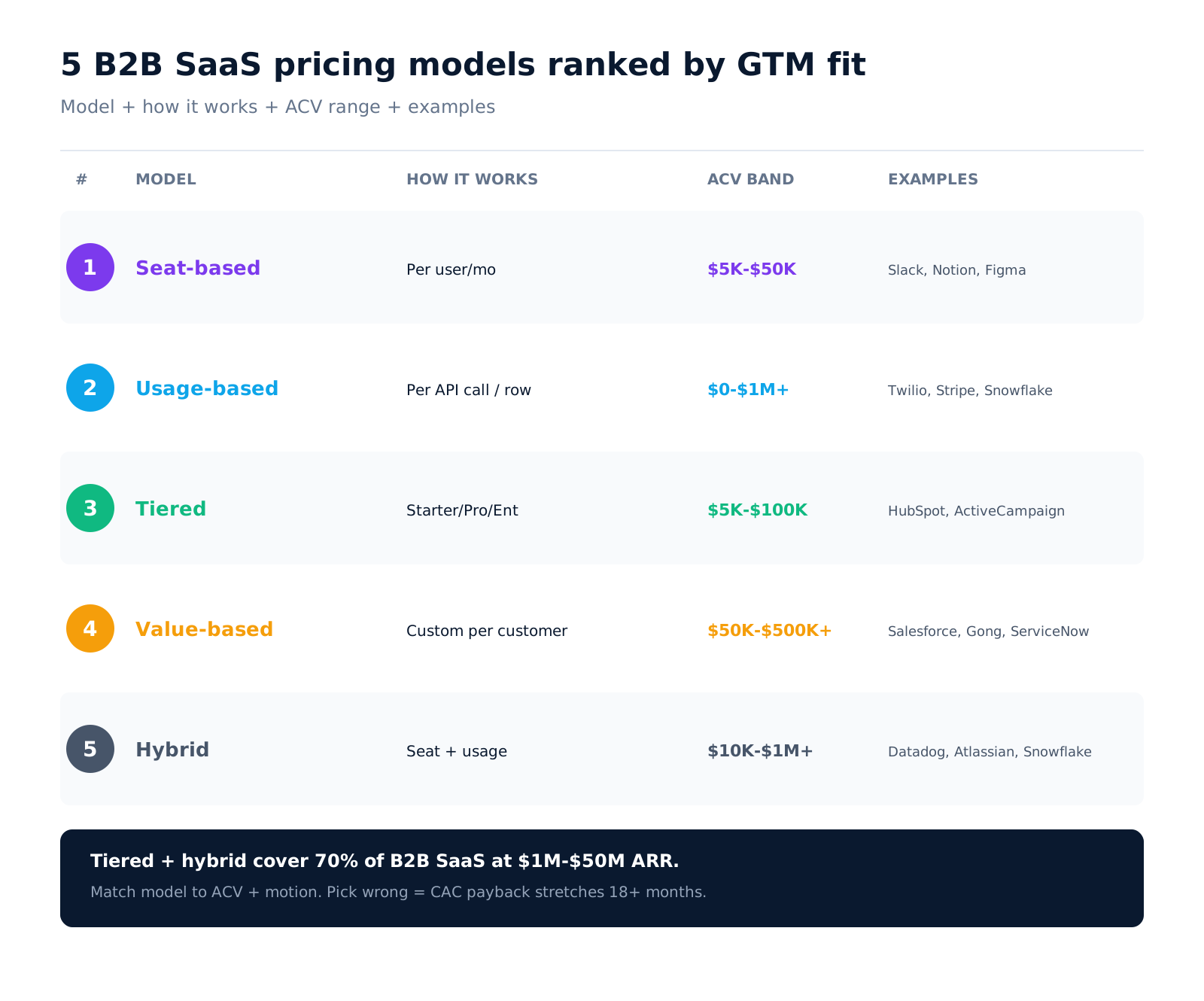
Model 1: Seat-based (per user/mo). Simple, predictable. Best for PLG + collaboration tools (Slack, Notion, Figma). ACV scales linearly with team adoption. Easy to budget for buyers. Limit: doesn't capture value when usage varies wildly.
Model 2: Usage-based (per API call, per row, per record). Aligns price with value consumed. Best for dev tools, data infra, communications (Twilio, Stripe, Snowflake). Variable revenue. Customers love it because they pay for what they use. Risk: revenue unpredictability.
Model 3: Tiered (Starter / Pro / Enterprise). Most common for B2B SaaS. Forces buyers into self-segmentation. Best for SMB + mid-market + freemium upgrades (HubSpot, ActiveCampaign, Calendly). Limit: feature creep across tiers kills clarity.
Model 4: Value-based (custom per customer). Negotiated based on customer outcome. Best for enterprise SLG + high-touch (Salesforce, Gong, ServiceNow). Maximizes ACV. Limit: requires sales process + slow.
Model 5: Hybrid (seat + usage, or tiered + usage). Captures both predictable + variable value. Best for $1M-$50M ARR + hybrid GTM (Datadog, Snowflake, Atlassian). Most complex but highest revenue ceiling.
When to pick which: the decision matrix
The 4-factor framework:
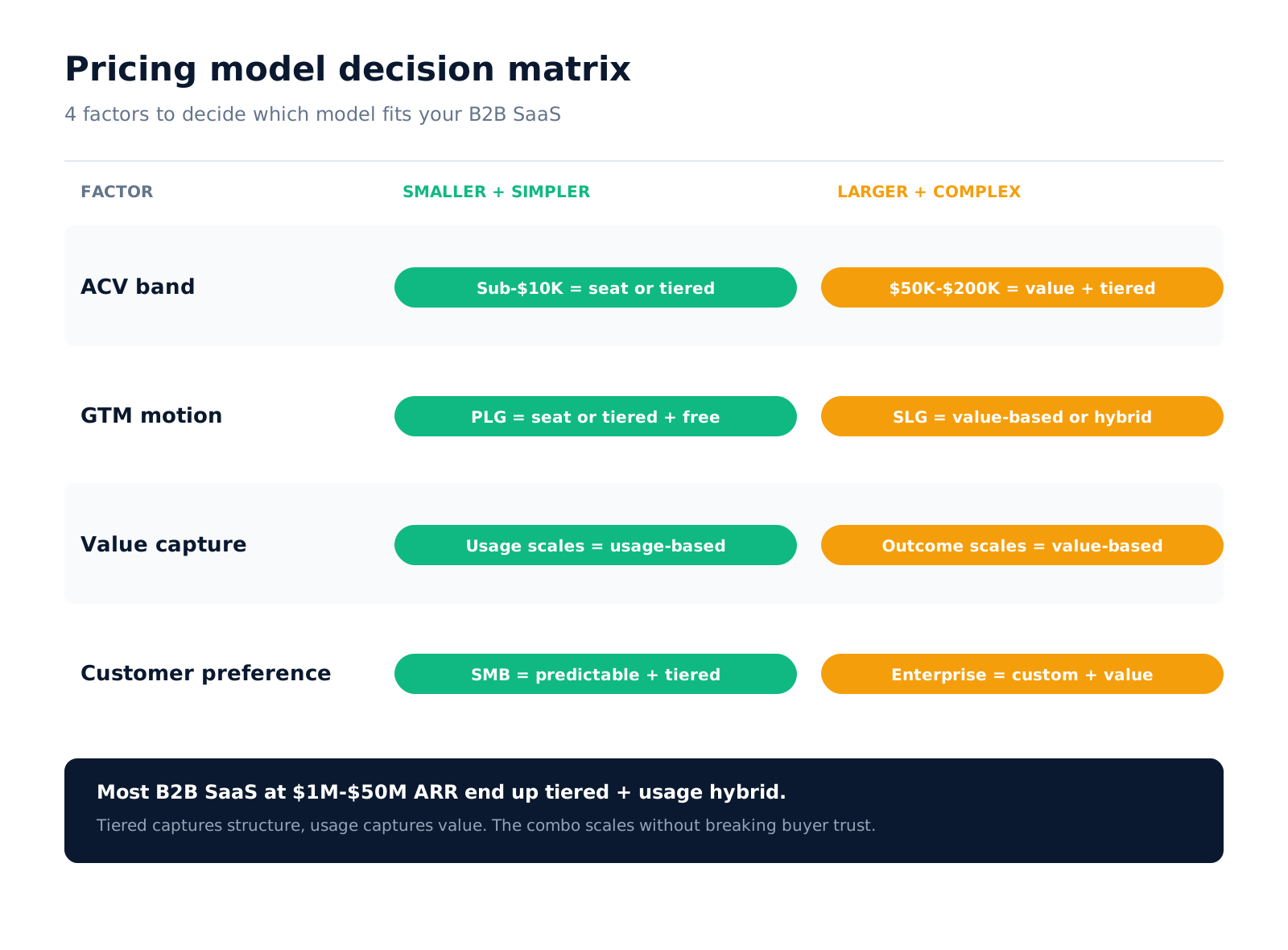
Factor 1: ACV band. Sub-$10K = seat or tiered. $10K-$50K = tiered + usage. $50K-$200K = value-based + tiered. $200K+ = value-based.
Factor 2: GTM motion. PLG = tiered or seat-based with freemium. SLG = value-based or hybrid. Hybrid GTM = tiered + usage.
Factor 3: Value capture. If value scales with usage (API, data, transactions) = usage-based. If value scales with team size (collaboration) = seat-based. If value scales with outcomes (revenue, savings) = value-based.
Factor 4: Customer preference. Most B2B buyers prefer predictable + tiered. Dev/technical buyers accept usage-based. Enterprise procurement prefers value-based custom contracts.
Packaging strategy that wins
How to structure tiers + features:
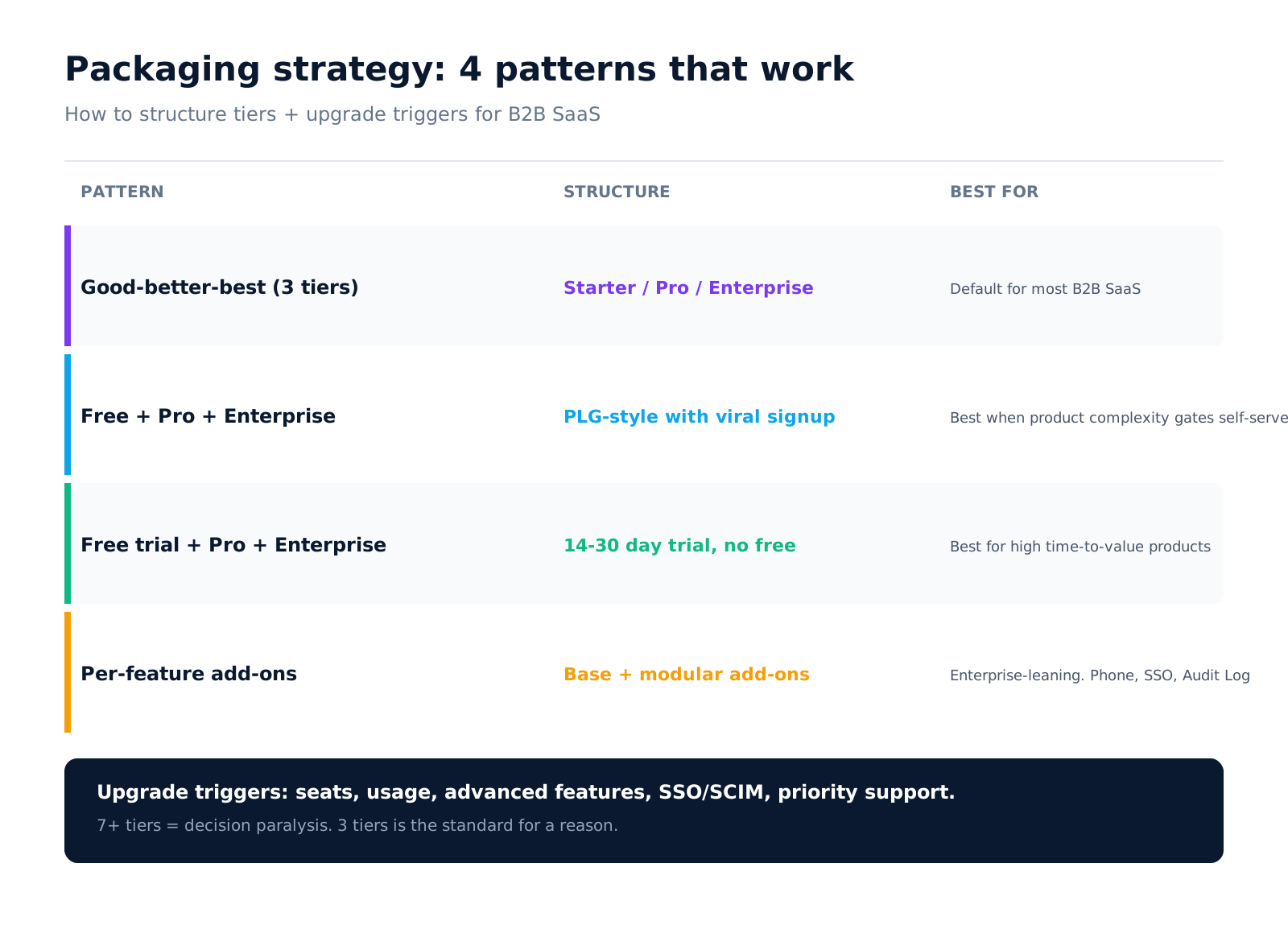
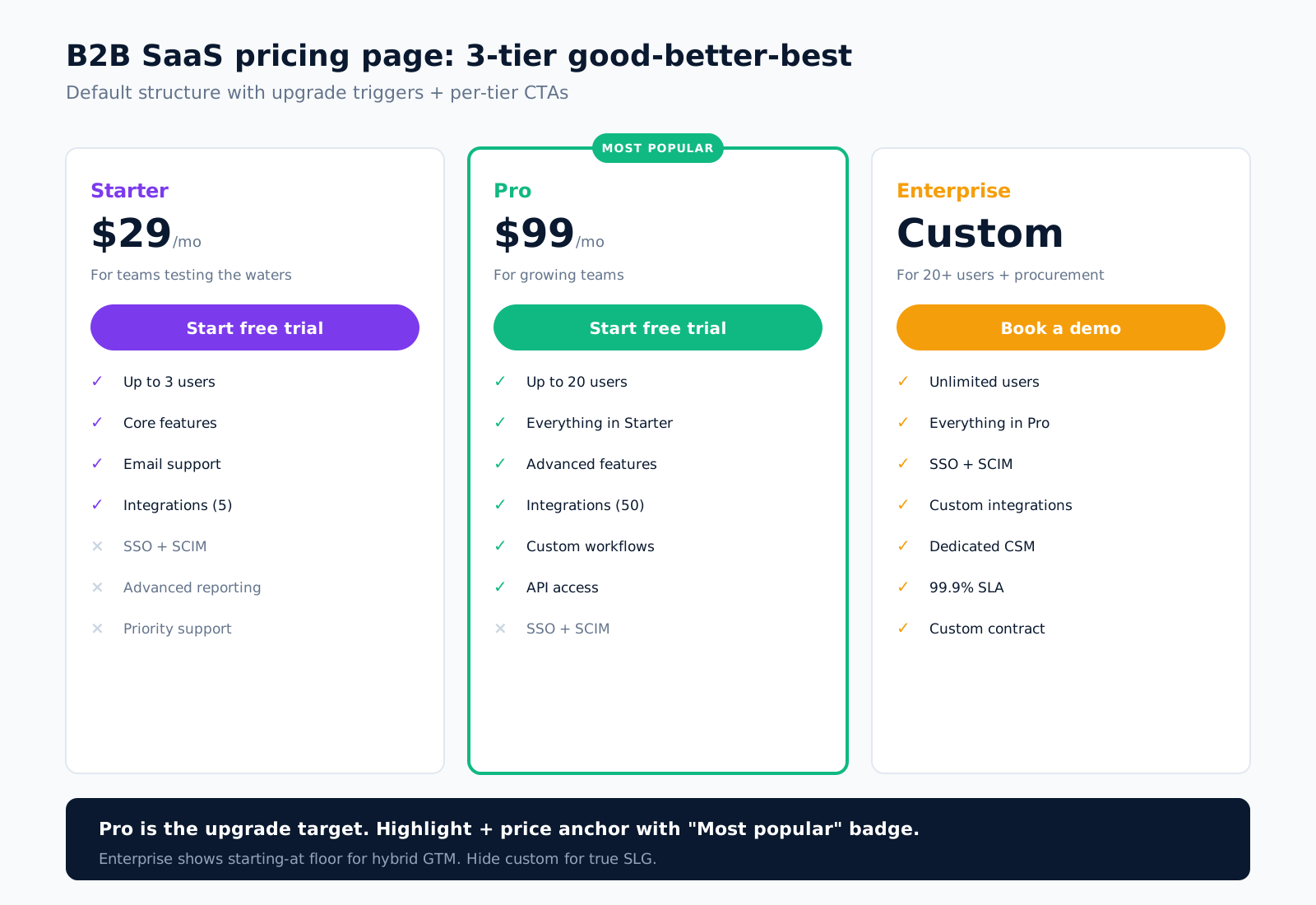
Pattern 1: Good-better-best (3 tiers). Starter (sub-$50/mo), Pro ($50-$500), Enterprise ($500+). Default for most B2B SaaS. Forces self-segmentation.
Pattern 2: Free tier + Pro + Enterprise. PLG-style. Free for activation, Pro for serious teams, Enterprise for procurement. Best when product complexity gates self-serve.
Pattern 3: Free trial + Pro + Enterprise. No free tier. 14-30 day trial. Pro starts at signup. Best for products with high time-to-value where free tier kills urgency.
Pattern 4: Per-feature add-ons. Base plan + modular add-ons (Phone, SSO, Audit Log, etc.). Best for enterprise-leaning ACVs. Complex but maximizes ACV.
Upgrade triggers: seat count, usage limits, advanced features, integrations, security/compliance (SSO, SCIM), priority support, custom contracts.
Pricing experiments worth running
What to test in 2026:
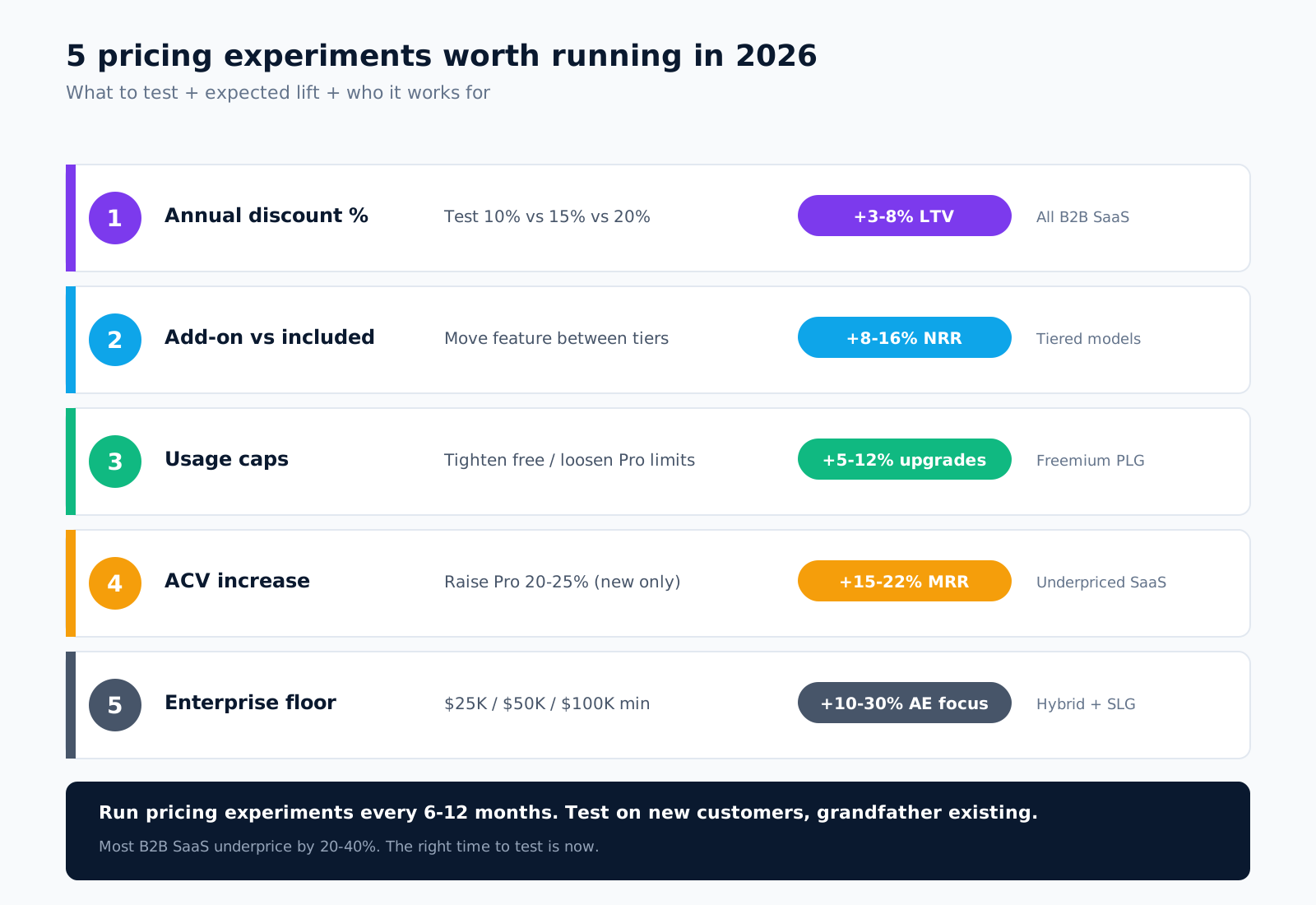
Experiment 1: Annual discount %. Test 10% vs 15% vs 20%. Most B2B SaaS overdiscount. 10-15% is the sweet spot. Higher than 20% leaves money on the table.
Experiment 2: Add-on vs included. Move a feature from Enterprise to Pro (or vice versa). Track NRR + churn. Adding to Pro increases adoption + reduces churn. Removing from Pro forces upgrades.
Experiment 3: Usage caps. Tighten free tier limits to push paid upgrades. Loosen Pro limits to reduce overage friction. Both lift NRR if balanced right.
Experiment 4: ACV increase. Raise Pro from $79 to $99 (25% lift). Track conversion + churn. Most B2B SaaS underprice by 20-40%. The right test is on new customers, not existing.
Experiment 5: Custom Enterprise floor. Set minimum Enterprise contract at $25K, $50K, $100K. Forces sales to qualify for ACV. Reduces wasted demo cycles.
For tooling context, see our ActiveCampaign pricing 2026 breakdown.
What kills pricing strategy
The 4 mistakes that crush margin:
Mistake 1: Pricing based on cost not value. Cost-plus pricing leaves money on the table. Value-based + benchmarking competitor pricing wins.
Mistake 2: 7+ tiers. Decision paralysis kills conversion. 3 tiers (Starter / Pro / Enterprise) is the standard for a reason.
Mistake 3: Hiding Enterprise pricing. "Contact us" reduces inbound. Show price ranges (or starting-at floors) for transparency. Hide only for true Enterprise SLG.
Mistake 4: Never raising prices. B2B SaaS underprices 20-40%. Raise 10-20% every 18-24 months for new customers. Grandfather existing. Most don't churn.
FAQ
What is the best pricing model for B2B SaaS in 2026?
Tiered + usage hybrid for hybrid GTM ($10K-$50K ACV). Seat-based for PLG collaboration tools. Value-based for SLG enterprise ($100K+). Match model to motion.
How many pricing tiers should B2B SaaS have?
3 tiers (Starter / Pro / Enterprise) is the default. Above 5 tiers = decision paralysis + lower conversion. Below 3 = miss segmentation opportunity. Optional: Free tier or Free trial layered on top.
Should B2B SaaS show enterprise pricing on the website?
Show starting-at floors for transparency. Full custom pricing fine to hide for true Enterprise SLG ($100K+ ACVs). For hybrid GTM at $25K-$100K, transparent pricing converts better.
What's a good annual discount for B2B SaaS?
10-15% for most. 20%+ overdiscounts and leaves money on the table. Test 10% vs 15% vs 20% on new customers. Top decile programs hit 12-14% discount with strong annual conversion.
How often should B2B SaaS raise prices?
Every 18-24 months for new customers. 10-20% increase. Grandfather existing for 12-18 months. Most customers don't churn (sub-2% incremental churn). Underpricing is the bigger risk.
Is usage-based pricing better than tiered for B2B SaaS?
Depends on value alignment. If value scales with usage (Twilio, Snowflake, Stripe) = usage-based wins. If value is binary (access vs no access) = tiered wins. Most B2B SaaS still need tiered.
Should I offer a free tier or free trial?
Free tier for PLG + collaboration tools where viral signup matters (Slack, Notion). Free trial (14-30 days) for products with high time-to-value where free tier kills urgency. Don't do both.
What's the right Enterprise contract minimum?
$25K-$100K depending on ACV band. Sets a sales qualification floor. Reduces demo cycles for sub-$25K customers (push them to self-serve). Forces AEs to focus on real Enterprise.
Bottom line
B2B SaaS pricing strategy in 2026: 5 models (seat, usage, tiered, value, hybrid). Match model to ACV + GTM motion. Tiered for SMB + mid-market. Value-based + hybrid for enterprise + scale.
Most B2B SaaS underprice by 20-40%. Run pricing experiments (annual discount, add-on packaging, usage caps, ACV increases) every 6-12 months. Raise prices for new customers every 18-24 months.
Need help building a B2B SaaS pricing strategy that scales? Book a call with GROU. We have shipped pricing + packaging programs across the 2024-2026 B2B SaaS landscape.
GROU is a B2B outbound and revenue operations agency. We run pricing + packaging programs for B2B SaaS founders. Pricing benchmarks above are weighted medians from program data, anonymized to protect client confidentiality.
This article includes affiliate links to marketing automation tools we run in production (ActiveCampaign). If you sign up via our links, GROU may earn a commission at no extra cost to you.
The B2B SaaS pricing strategy decision in 2026 comes down to 5 pricing models: seat-based, usage-based, tiered, value-based, and hybrid. Each model fits a specific GTM motion + ACV band. Pick wrong and CAC payback stretches 18+ months. Pick right and the model scales revenue without breaking customer trust.
This is the operator guide: 5 pricing models, how to pick based on ACV + motion, packaging strategy, and the pricing experiments worth running.
TL;DR
The 5 B2B SaaS pricing models in 2026: seat-based (Slack, Notion), usage-based (Twilio, Stripe), tiered (HubSpot, ActiveCampaign), value-based (Salesforce, Gong), hybrid (Datadog, Snowflake).
Decision rule: ACV under $10K + product-led = tiered or seat-based. $10K-$50K + hybrid GTM = tiered + usage-based. $50K+ + sales-led = value-based or hybrid.
For motion context, see our PLG vs SLG vs hybrid GTM motion 2026. For tooling, ActiveCampaign handles seat + tiered pricing automation.
The 5 pricing models ranked by GTM fit
How each model maps to motion + ACV:
Model 1: Seat-based (per user/mo). Simple, predictable. Best for PLG + collaboration tools (Slack, Notion, Figma). ACV scales linearly with team adoption. Easy to budget for buyers. Limit: doesn't capture value when usage varies wildly.
Model 2: Usage-based (per API call, per row, per record). Aligns price with value consumed. Best for dev tools, data infra, communications (Twilio, Stripe, Snowflake). Variable revenue. Customers love it because they pay for what they use. Risk: revenue unpredictability.
Model 3: Tiered (Starter / Pro / Enterprise). Most common for B2B SaaS. Forces buyers into self-segmentation. Best for SMB + mid-market + freemium upgrades (HubSpot, ActiveCampaign, Calendly). Limit: feature creep across tiers kills clarity.
Model 4: Value-based (custom per customer). Negotiated based on customer outcome. Best for enterprise SLG + high-touch (Salesforce, Gong, ServiceNow). Maximizes ACV. Limit: requires sales process + slow.
Model 5: Hybrid (seat + usage, or tiered + usage). Captures both predictable + variable value. Best for $1M-$50M ARR + hybrid GTM (Datadog, Snowflake, Atlassian). Most complex but highest revenue ceiling.
When to pick which: the decision matrix
The 4-factor framework:
Factor 1: ACV band. Sub-$10K = seat or tiered. $10K-$50K = tiered + usage. $50K-$200K = value-based + tiered. $200K+ = value-based.
Factor 2: GTM motion. PLG = tiered or seat-based with freemium. SLG = value-based or hybrid. Hybrid GTM = tiered + usage.
Factor 3: Value capture. If value scales with usage (API, data, transactions) = usage-based. If value scales with team size (collaboration) = seat-based. If value scales with outcomes (revenue, savings) = value-based.
Factor 4: Customer preference. Most B2B buyers prefer predictable + tiered. Dev/technical buyers accept usage-based. Enterprise procurement prefers value-based custom contracts.
Packaging strategy that wins
How to structure tiers + features:
Pattern 1: Good-better-best (3 tiers). Starter (sub-$50/mo), Pro ($50-$500), Enterprise ($500+). Default for most B2B SaaS. Forces self-segmentation.
Pattern 2: Free tier + Pro + Enterprise. PLG-style. Free for activation, Pro for serious teams, Enterprise for procurement. Best when product complexity gates self-serve.
Pattern 3: Free trial + Pro + Enterprise. No free tier. 14-30 day trial. Pro starts at signup. Best for products with high time-to-value where free tier kills urgency.
Pattern 4: Per-feature add-ons. Base plan + modular add-ons (Phone, SSO, Audit Log, etc.). Best for enterprise-leaning ACVs. Complex but maximizes ACV.
Upgrade triggers: seat count, usage limits, advanced features, integrations, security/compliance (SSO, SCIM), priority support, custom contracts.
Pricing experiments worth running
What to test in 2026:
Experiment 1: Annual discount %. Test 10% vs 15% vs 20%. Most B2B SaaS overdiscount. 10-15% is the sweet spot. Higher than 20% leaves money on the table.
Experiment 2: Add-on vs included. Move a feature from Enterprise to Pro (or vice versa). Track NRR + churn. Adding to Pro increases adoption + reduces churn. Removing from Pro forces upgrades.
Experiment 3: Usage caps. Tighten free tier limits to push paid upgrades. Loosen Pro limits to reduce overage friction. Both lift NRR if balanced right.
Experiment 4: ACV increase. Raise Pro from $79 to $99 (25% lift). Track conversion + churn. Most B2B SaaS underprice by 20-40%. The right test is on new customers, not existing.
Experiment 5: Custom Enterprise floor. Set minimum Enterprise contract at $25K, $50K, $100K. Forces sales to qualify for ACV. Reduces wasted demo cycles.
For tooling context, see our ActiveCampaign pricing 2026 breakdown.
What kills pricing strategy
The 4 mistakes that crush margin:
Mistake 1: Pricing based on cost not value. Cost-plus pricing leaves money on the table. Value-based + benchmarking competitor pricing wins.
Mistake 2: 7+ tiers. Decision paralysis kills conversion. 3 tiers (Starter / Pro / Enterprise) is the standard for a reason.
Mistake 3: Hiding Enterprise pricing. "Contact us" reduces inbound. Show price ranges (or starting-at floors) for transparency. Hide only for true Enterprise SLG.
Mistake 4: Never raising prices. B2B SaaS underprices 20-40%. Raise 10-20% every 18-24 months for new customers. Grandfather existing. Most don't churn.
FAQ
What is the best pricing model for B2B SaaS in 2026?
Tiered + usage hybrid for hybrid GTM ($10K-$50K ACV). Seat-based for PLG collaboration tools. Value-based for SLG enterprise ($100K+). Match model to motion.
How many pricing tiers should B2B SaaS have?
3 tiers (Starter / Pro / Enterprise) is the default. Above 5 tiers = decision paralysis + lower conversion. Below 3 = miss segmentation opportunity. Optional: Free tier or Free trial layered on top.
Should B2B SaaS show enterprise pricing on the website?
Show starting-at floors for transparency. Full custom pricing fine to hide for true Enterprise SLG ($100K+ ACVs). For hybrid GTM at $25K-$100K, transparent pricing converts better.
What's a good annual discount for B2B SaaS?
10-15% for most. 20%+ overdiscounts and leaves money on the table. Test 10% vs 15% vs 20% on new customers. Top decile programs hit 12-14% discount with strong annual conversion.
How often should B2B SaaS raise prices?
Every 18-24 months for new customers. 10-20% increase. Grandfather existing for 12-18 months. Most customers don't churn (sub-2% incremental churn). Underpricing is the bigger risk.
Is usage-based pricing better than tiered for B2B SaaS?
Depends on value alignment. If value scales with usage (Twilio, Snowflake, Stripe) = usage-based wins. If value is binary (access vs no access) = tiered wins. Most B2B SaaS still need tiered.
Should I offer a free tier or free trial?
Free tier for PLG + collaboration tools where viral signup matters (Slack, Notion). Free trial (14-30 days) for products with high time-to-value where free tier kills urgency. Don't do both.
What's the right Enterprise contract minimum?
$25K-$100K depending on ACV band. Sets a sales qualification floor. Reduces demo cycles for sub-$25K customers (push them to self-serve). Forces AEs to focus on real Enterprise.
Bottom line
B2B SaaS pricing strategy in 2026: 5 models (seat, usage, tiered, value, hybrid). Match model to ACV + GTM motion. Tiered for SMB + mid-market. Value-based + hybrid for enterprise + scale.
Most B2B SaaS underprice by 20-40%. Run pricing experiments (annual discount, add-on packaging, usage caps, ACV increases) every 6-12 months. Raise prices for new customers every 18-24 months.
Need help building a B2B SaaS pricing strategy that scales? Book a call with GROU. We have shipped pricing + packaging programs across the 2024-2026 B2B SaaS landscape.
GROU is a B2B outbound and revenue operations agency. We run pricing + packaging programs for B2B SaaS founders. Pricing benchmarks above are weighted medians from program data, anonymized to protect client confidentiality.
This article includes affiliate links to marketing automation tools we run in production (ActiveCampaign). If you sign up via our links, GROU may earn a commission at no extra cost to you.
The B2B SaaS pricing strategy decision in 2026 comes down to 5 pricing models: seat-based, usage-based, tiered, value-based, and hybrid. Each model fits a specific GTM motion + ACV band. Pick wrong and CAC payback stretches 18+ months. Pick right and the model scales revenue without breaking customer trust.
This is the operator guide: 5 pricing models, how to pick based on ACV + motion, packaging strategy, and the pricing experiments worth running.
TL;DR
The 5 B2B SaaS pricing models in 2026: seat-based (Slack, Notion), usage-based (Twilio, Stripe), tiered (HubSpot, ActiveCampaign), value-based (Salesforce, Gong), hybrid (Datadog, Snowflake).
Decision rule: ACV under $10K + product-led = tiered or seat-based. $10K-$50K + hybrid GTM = tiered + usage-based. $50K+ + sales-led = value-based or hybrid.
For motion context, see our PLG vs SLG vs hybrid GTM motion 2026. For tooling, ActiveCampaign handles seat + tiered pricing automation.
The 5 pricing models ranked by GTM fit
How each model maps to motion + ACV:
Model 1: Seat-based (per user/mo). Simple, predictable. Best for PLG + collaboration tools (Slack, Notion, Figma). ACV scales linearly with team adoption. Easy to budget for buyers. Limit: doesn't capture value when usage varies wildly.
Model 2: Usage-based (per API call, per row, per record). Aligns price with value consumed. Best for dev tools, data infra, communications (Twilio, Stripe, Snowflake). Variable revenue. Customers love it because they pay for what they use. Risk: revenue unpredictability.
Model 3: Tiered (Starter / Pro / Enterprise). Most common for B2B SaaS. Forces buyers into self-segmentation. Best for SMB + mid-market + freemium upgrades (HubSpot, ActiveCampaign, Calendly). Limit: feature creep across tiers kills clarity.
Model 4: Value-based (custom per customer). Negotiated based on customer outcome. Best for enterprise SLG + high-touch (Salesforce, Gong, ServiceNow). Maximizes ACV. Limit: requires sales process + slow.
Model 5: Hybrid (seat + usage, or tiered + usage). Captures both predictable + variable value. Best for $1M-$50M ARR + hybrid GTM (Datadog, Snowflake, Atlassian). Most complex but highest revenue ceiling.
When to pick which: the decision matrix
The 4-factor framework:
Factor 1: ACV band. Sub-$10K = seat or tiered. $10K-$50K = tiered + usage. $50K-$200K = value-based + tiered. $200K+ = value-based.
Factor 2: GTM motion. PLG = tiered or seat-based with freemium. SLG = value-based or hybrid. Hybrid GTM = tiered + usage.
Factor 3: Value capture. If value scales with usage (API, data, transactions) = usage-based. If value scales with team size (collaboration) = seat-based. If value scales with outcomes (revenue, savings) = value-based.
Factor 4: Customer preference. Most B2B buyers prefer predictable + tiered. Dev/technical buyers accept usage-based. Enterprise procurement prefers value-based custom contracts.
Packaging strategy that wins
How to structure tiers + features:
Pattern 1: Good-better-best (3 tiers). Starter (sub-$50/mo), Pro ($50-$500), Enterprise ($500+). Default for most B2B SaaS. Forces self-segmentation.
Pattern 2: Free tier + Pro + Enterprise. PLG-style. Free for activation, Pro for serious teams, Enterprise for procurement. Best when product complexity gates self-serve.
Pattern 3: Free trial + Pro + Enterprise. No free tier. 14-30 day trial. Pro starts at signup. Best for products with high time-to-value where free tier kills urgency.
Pattern 4: Per-feature add-ons. Base plan + modular add-ons (Phone, SSO, Audit Log, etc.). Best for enterprise-leaning ACVs. Complex but maximizes ACV.
Upgrade triggers: seat count, usage limits, advanced features, integrations, security/compliance (SSO, SCIM), priority support, custom contracts.
Pricing experiments worth running
What to test in 2026:
Experiment 1: Annual discount %. Test 10% vs 15% vs 20%. Most B2B SaaS overdiscount. 10-15% is the sweet spot. Higher than 20% leaves money on the table.
Experiment 2: Add-on vs included. Move a feature from Enterprise to Pro (or vice versa). Track NRR + churn. Adding to Pro increases adoption + reduces churn. Removing from Pro forces upgrades.
Experiment 3: Usage caps. Tighten free tier limits to push paid upgrades. Loosen Pro limits to reduce overage friction. Both lift NRR if balanced right.
Experiment 4: ACV increase. Raise Pro from $79 to $99 (25% lift). Track conversion + churn. Most B2B SaaS underprice by 20-40%. The right test is on new customers, not existing.
Experiment 5: Custom Enterprise floor. Set minimum Enterprise contract at $25K, $50K, $100K. Forces sales to qualify for ACV. Reduces wasted demo cycles.
For tooling context, see our ActiveCampaign pricing 2026 breakdown.
What kills pricing strategy
The 4 mistakes that crush margin:
Mistake 1: Pricing based on cost not value. Cost-plus pricing leaves money on the table. Value-based + benchmarking competitor pricing wins.
Mistake 2: 7+ tiers. Decision paralysis kills conversion. 3 tiers (Starter / Pro / Enterprise) is the standard for a reason.
Mistake 3: Hiding Enterprise pricing. "Contact us" reduces inbound. Show price ranges (or starting-at floors) for transparency. Hide only for true Enterprise SLG.
Mistake 4: Never raising prices. B2B SaaS underprices 20-40%. Raise 10-20% every 18-24 months for new customers. Grandfather existing. Most don't churn.
FAQ
What is the best pricing model for B2B SaaS in 2026?
Tiered + usage hybrid for hybrid GTM ($10K-$50K ACV). Seat-based for PLG collaboration tools. Value-based for SLG enterprise ($100K+). Match model to motion.
How many pricing tiers should B2B SaaS have?
3 tiers (Starter / Pro / Enterprise) is the default. Above 5 tiers = decision paralysis + lower conversion. Below 3 = miss segmentation opportunity. Optional: Free tier or Free trial layered on top.
Should B2B SaaS show enterprise pricing on the website?
Show starting-at floors for transparency. Full custom pricing fine to hide for true Enterprise SLG ($100K+ ACVs). For hybrid GTM at $25K-$100K, transparent pricing converts better.
What's a good annual discount for B2B SaaS?
10-15% for most. 20%+ overdiscounts and leaves money on the table. Test 10% vs 15% vs 20% on new customers. Top decile programs hit 12-14% discount with strong annual conversion.
How often should B2B SaaS raise prices?
Every 18-24 months for new customers. 10-20% increase. Grandfather existing for 12-18 months. Most customers don't churn (sub-2% incremental churn). Underpricing is the bigger risk.
Is usage-based pricing better than tiered for B2B SaaS?
Depends on value alignment. If value scales with usage (Twilio, Snowflake, Stripe) = usage-based wins. If value is binary (access vs no access) = tiered wins. Most B2B SaaS still need tiered.
Should I offer a free tier or free trial?
Free tier for PLG + collaboration tools where viral signup matters (Slack, Notion). Free trial (14-30 days) for products with high time-to-value where free tier kills urgency. Don't do both.
What's the right Enterprise contract minimum?
$25K-$100K depending on ACV band. Sets a sales qualification floor. Reduces demo cycles for sub-$25K customers (push them to self-serve). Forces AEs to focus on real Enterprise.
Bottom line
B2B SaaS pricing strategy in 2026: 5 models (seat, usage, tiered, value, hybrid). Match model to ACV + GTM motion. Tiered for SMB + mid-market. Value-based + hybrid for enterprise + scale.
Most B2B SaaS underprice by 20-40%. Run pricing experiments (annual discount, add-on packaging, usage caps, ACV increases) every 6-12 months. Raise prices for new customers every 18-24 months.
Need help building a B2B SaaS pricing strategy that scales? Book a call with GROU. We have shipped pricing + packaging programs across the 2024-2026 B2B SaaS landscape.
GROU is a B2B outbound and revenue operations agency. We run pricing + packaging programs for B2B SaaS founders. Pricing benchmarks above are weighted medians from program data, anonymized to protect client confidentiality.
This article includes affiliate links to marketing automation tools we run in production (ActiveCampaign). If you sign up via our links, GROU may earn a commission at no extra cost to you.
Pipeline OS Newsletter
Build qualified pipeline
Get weekly tactics to generate demand, improve lead quality, and book more meetings.






Trusted by industry leaders
Trusted by industry leaders
Trusted by industry leaders
Ready to build qualified pipeline?
Ready to build qualified pipeline?
Ready to build qualified pipeline?
Book a call to see if we're the right fit, or take the 2-minute quiz to get a clear starting point.
Book a call to see if we're the right fit, or take the 2-minute quiz to get a clear starting point.
Book a call to see if we're the right fit, or take the 2-minute quiz to get a clear starting point.
" height="30.21639343089746px" id="hfGbXmQR2" width="30.216393430897455px"/></svg>)
Copyright © 2026 – All Right Reserved
Copyright © 2026 – All Right Reserved
Copyright © 2026 – All Right Reserved