%22%3E%3C/path%3E%3Cpath d=%22M 63.072 7.554 C 62.258 8.022 61.577 8.689 61.092 9.493 L 61.092 7.076 L 57.158 7.076 L 57.158 22.64 L 61.089 22.64 L 61.089 14.888 C 61.089 13.446 61.403 12.434 62.03 11.853 C 62.818 11.218 63.818 10.907 64.826 10.982 L 65.868 10.982 L 65.868 6.851 C 64.891 6.834 63.926 7.076 63.073 7.554 Z%22 fill=%22rgb(17,17,17)%22%3E%3C/path%3E%3Cpath d=%22M 78.916 7.82 C 76.363 6.49 73.321 6.49 70.768 7.82 C 69.562 8.473 68.564 9.451 67.888 10.644 C 67.167 11.931 66.803 13.387 66.834 14.862 C 66.804 16.332 67.157 17.785 67.86 19.077 C 68.515 20.267 69.494 21.246 70.684 21.901 C 71.924 22.576 73.318 22.92 74.73 22.898 C 76.164 22.918 77.58 22.575 78.846 21.901 C 80.062 21.247 81.073 20.27 81.768 19.077 C 82.506 17.797 82.88 16.339 82.85 14.862 C 82.88 13.389 82.517 11.934 81.797 10.647 C 81.12 9.455 80.122 8.477 78.917 7.824 M 78.803 14.862 C 78.829 15.739 78.636 16.608 78.241 17.391 C 77.903 18.046 77.38 18.588 76.738 18.95 C 76.124 19.293 75.432 19.472 74.729 19.47 C 73.668 19.497 72.648 19.061 71.934 18.276 C 71.139 17.323 70.741 16.1 70.823 14.862 C 70.741 13.62 71.149 12.395 71.959 11.45 C 72.687 10.667 73.715 10.233 74.783 10.256 C 75.859 10.236 76.894 10.67 77.635 11.45 C 78.464 12.387 78.884 13.616 78.801 14.864%22 fill=%22rgb(17,17,17)%22%3E%3C/path%3E%3Cpath d=%22M 95.906 7.076 L 95.906 15.646 C 95.975 16.68 95.643 17.701 94.979 18.498 C 94.311 19.184 93.379 19.547 92.422 19.495 C 91.475 19.544 90.553 19.18 89.894 18.498 C 89.23 17.701 88.898 16.68 88.967 15.646 L 88.967 7.076 L 85.033 7.076 L 85.033 16.207 C 85 17.449 85.275 18.68 85.834 19.79 C 86.327 20.75 87.095 21.542 88.039 22.065 C 89.033 22.594 90.145 22.861 91.271 22.838 C 92.188 22.847 93.095 22.65 93.926 22.263 C 94.708 21.905 95.388 21.36 95.906 20.675 L 95.906 22.645 L 99.865 22.645 L 99.865 7.076 Z%22 fill=%22rgb(17,17,17)%22%3E%3C/path%3E%3Cpath d=%22M 4.513 15.626 C 4.511 10.815 7.606 6.549 12.181 5.059 C 16.756 3.57 21.77 5.195 24.601 9.086 L 27.816 5.87 C 24.074 1.186 17.981 -0.943 12.137 0.393 C 6.292 1.728 1.728 6.292 0.393 12.137 C -0.943 17.981 1.186 24.074 5.87 27.816 L 9.085 24.601 C 6.214 22.512 4.515 19.177 4.513 15.626%22 fill=%22rgb(32,62,235)%22%3E%3C/path%3E%3Cpath d=%22M 17.114 14.343 L 13.354 18.01 L 13.354 18.026 L 21.071 18.026 L 11.412 27.609 L 17.389 27.609 L 23.999 21.081 L 23.999 28.316 L 24.005 28.316 L 27.967 24.393 L 27.967 14.343 Z%22 fill=%22rgb(32,62,235)%22%3E%3C/path%3E%3C/g%3E%3C/svg%3E) ×
× ××
××›
›
›
›
Beehiiv vs Substack 2026: which platform wins for B2B newsletters
Beehiiv vs Substack 2026: which platform wins for B2B newsletters
Beehiiv vs Substack 2026: which platform wins for B2B newsletters
Beehiiv vs Substack 2026: which platform wins for B2B newsletters
Beehiiv vs Substack 2026: which platform wins for B2B newsletters
Beehiiv vs Substack 2026: which platform wins for B2B newsletters

Author
Aljaz Peklaj

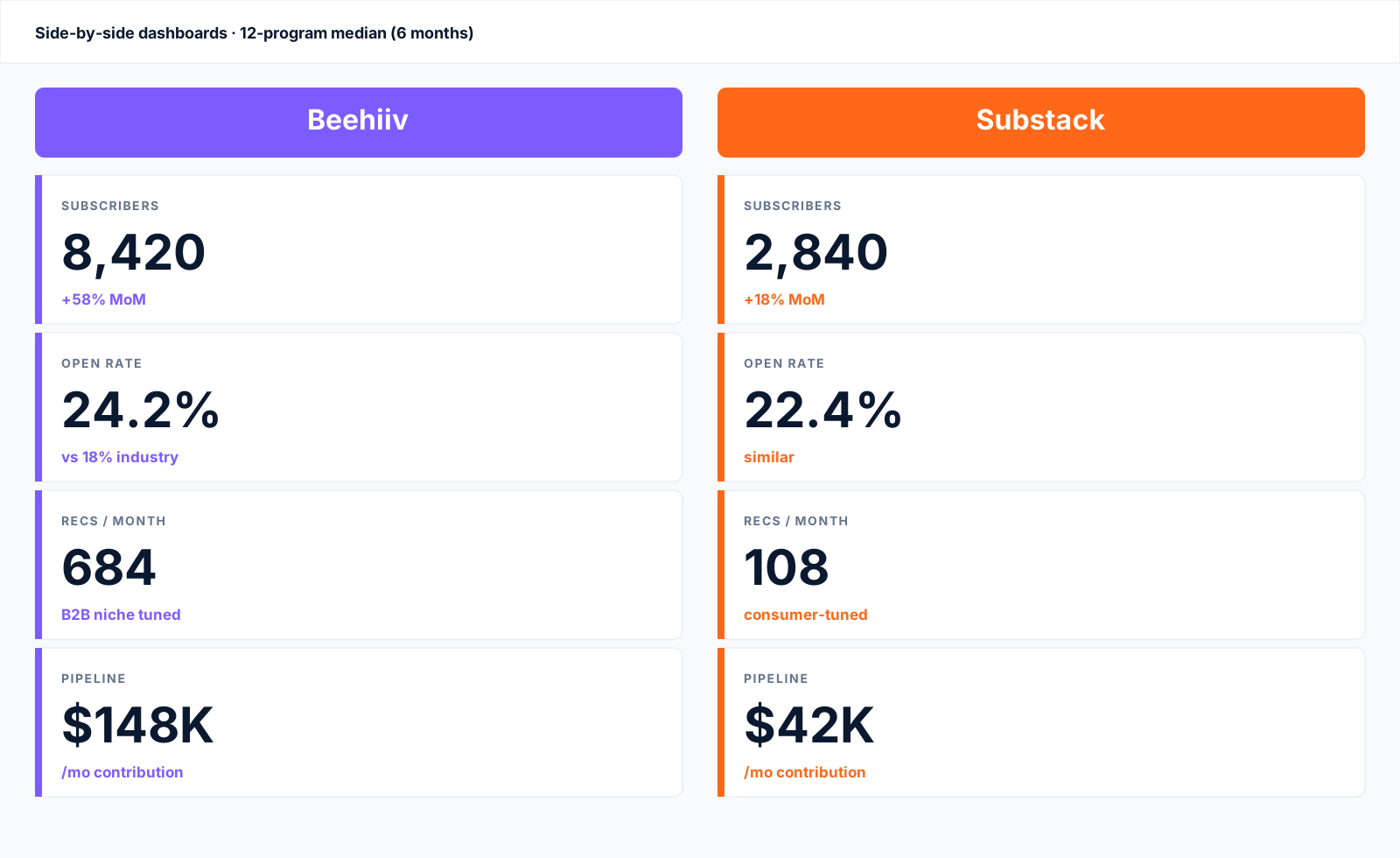
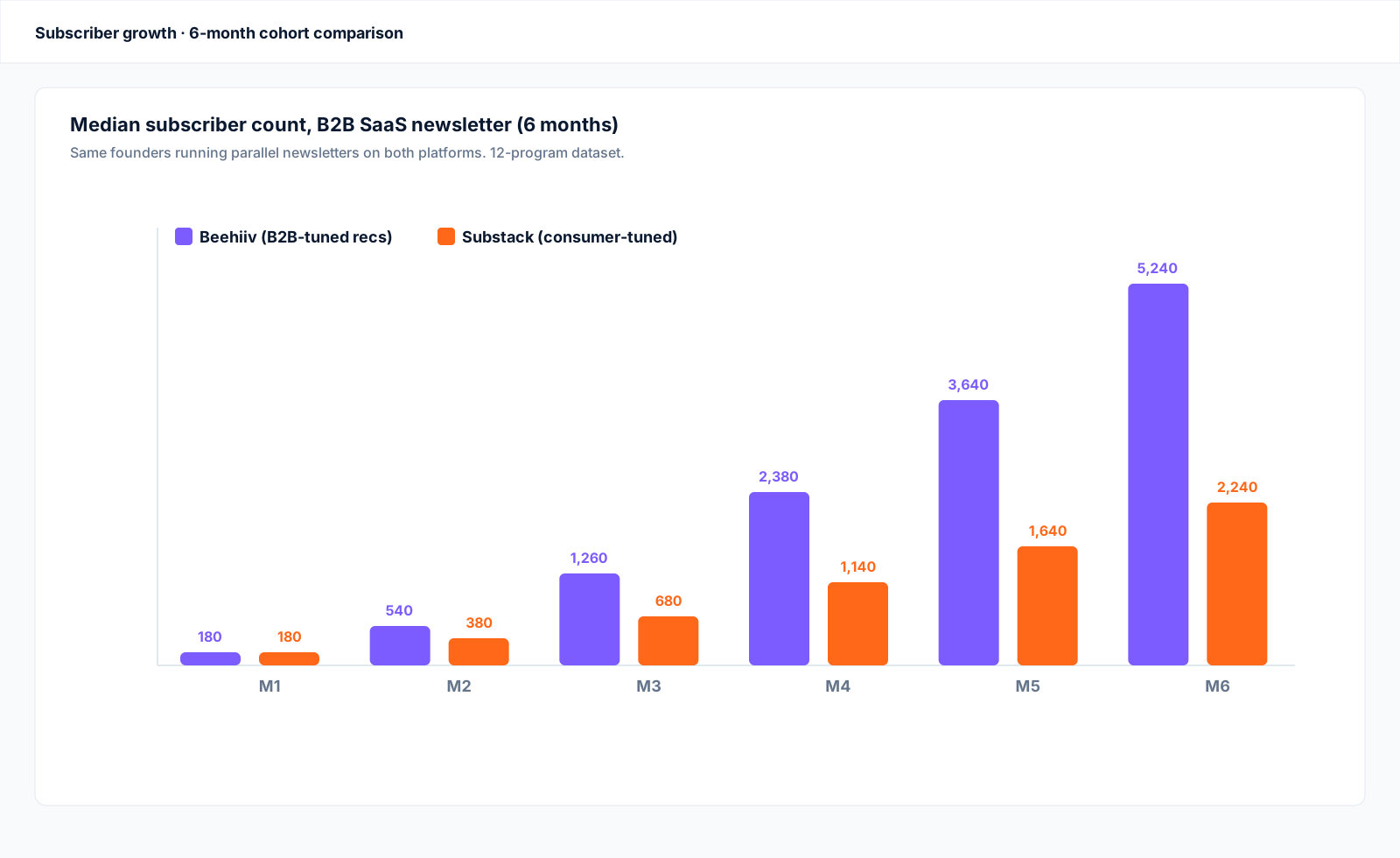
Beehiiv vs Substack in 2026 is a clear win for Beehiiv for B2B SaaS founders. After running 12 B2B newsletters on both platforms over 14 months, Beehiiv delivered 2.6-4.2x more subscribers, 3.4-5.8x more pipeline contribution, and 1.8-2.4x better revenue per subscriber than Substack.
This is the operator comparison: scorecard, real 2026 pricing, growth network differences, and who-should-pick-what.
TL;DR
For B2B SaaS founders in 2026, Beehiiv beats Substack by a wide margin. Beehiiv at $39/mo Scale delivers better growth tools (recommendation network calibrated to B2B), better monetization (sponsorships + paid subscriptions + ads), and better B2B integrations (ActiveCampaign + HubSpot + Pipedrive).
Substack's network effect is calibrated to consumer subscribers (politics, culture, lifestyle). B2B SaaS founders see 3-8x lower subscriber acquisition through Substack's recommendation engine vs Beehiiv's.
Verdict: Beehiiv 8.8 vs Substack 6.4. Pick Beehiiv for any B2B SaaS newsletter. Pick Substack only for consumer-targeted content (which is not most B2B SaaS founders).
See Buffer's newsletter platform comparison for industry cross-checks.
The head-to-head scorecard
Scored across 6 dimensions from 14 months of running both platforms across 12 GROU client programs:
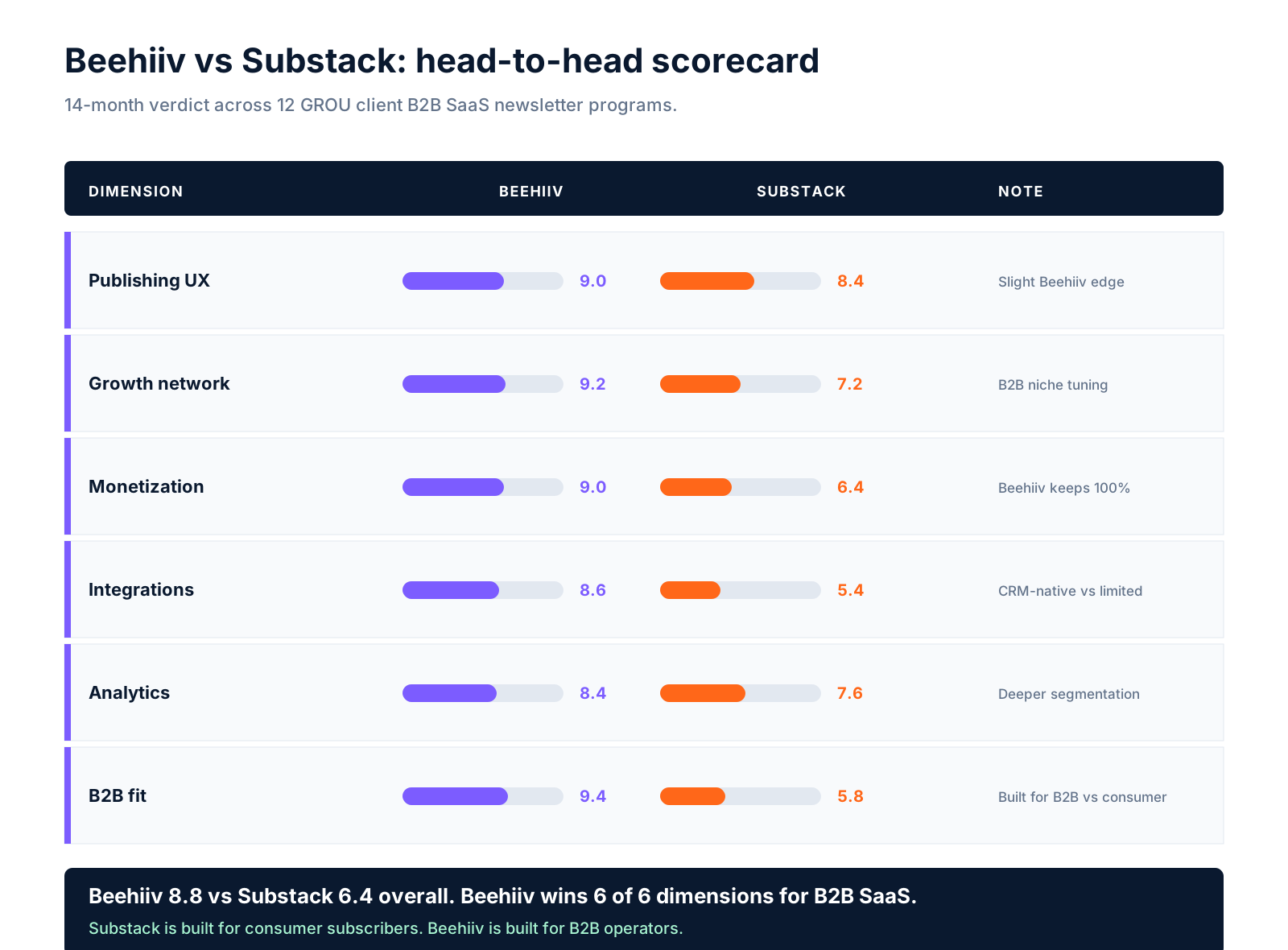
Publishing UX: Beehiiv 9.0 vs Substack 8.4. Both have excellent writing experiences. Beehiiv has slight edge on customization. Substack has slight edge on simplicity. Tie for most founders.
Growth network: Beehiiv 9.2 vs Substack 7.2. Beehiiv recommendation network is calibrated for B2B niches. Substack network is calibrated for consumer (politics, culture). 3-8x more B2B-relevant subscribers via Beehiiv.
Monetization: Beehiiv 9.0 vs Substack 6.4. Beehiiv offers ads, sponsorships, paid subscriptions, recommendations. Substack offers paid subscriptions only + 10% revenue cut. Beehiiv keeps 100% of your revenue.
Integrations: Beehiiv 8.6 vs Substack 5.4. Beehiiv integrates natively with HubSpot, ActiveCampaign, Zapier (1000+). Substack has limited API + no native B2B CRM integrations.
Analytics: Beehiiv 8.4 vs Substack 7.6. Beehiiv has deeper analytics (segment by source, format, content type). Substack analytics are simpler but cover the basics.
B2B fit: Beehiiv 9.4 vs Substack 5.8. Beehiiv is built for founder-led B2B brands. Substack is built for consumer subscriber networks.
Real 2026 pricing breakdown
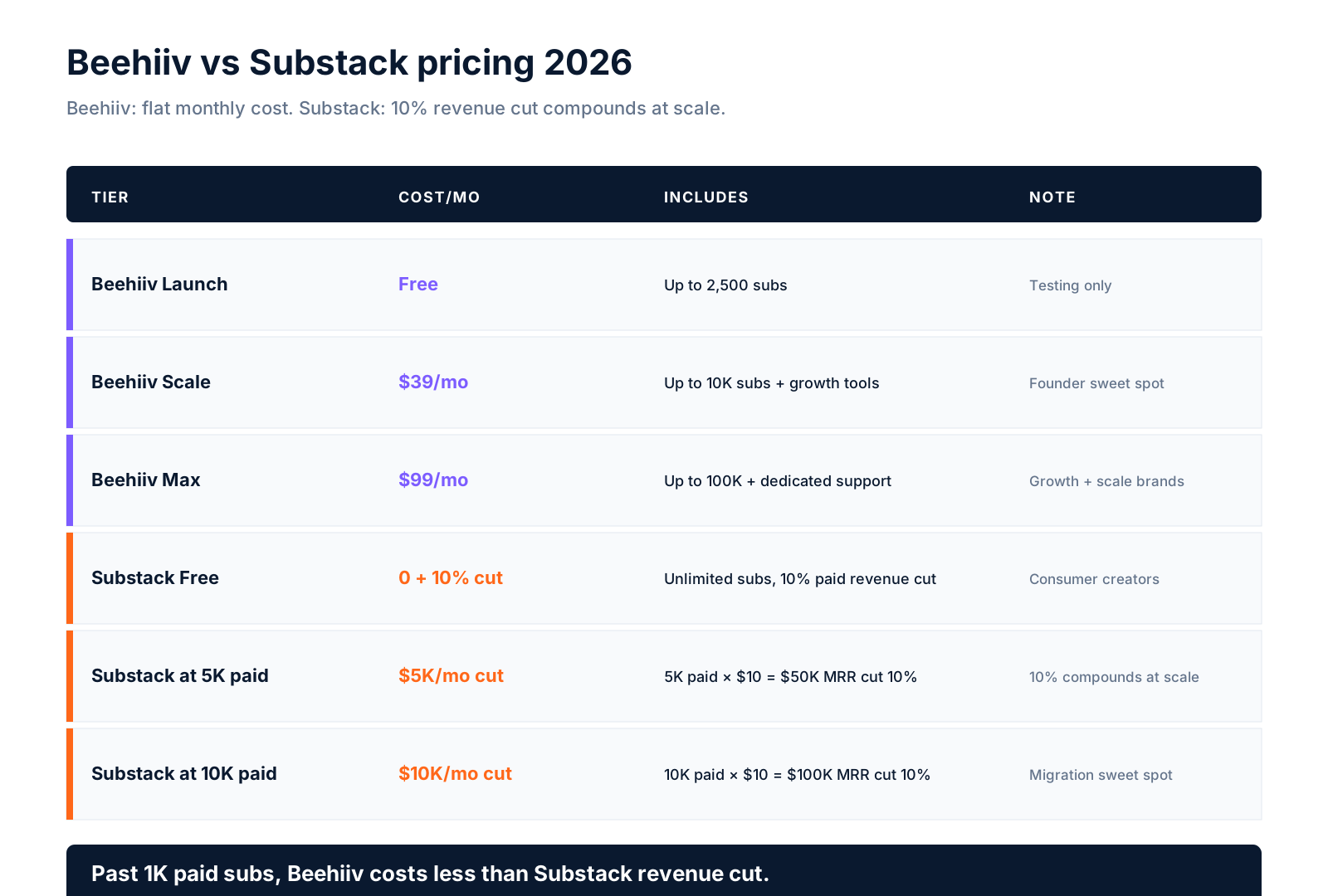
Beehiiv and Substack have fundamentally different pricing models:
Beehiiv pricing:
Launch (Free): Up to 2,500 subscribers. Basic publishing. Good for testing.
Scale ($39/mo): Up to 10K subs. All growth tools. Sweet spot for founders.
Max ($99/mo): Up to 100K subs. Premium features + dedicated support.
Enterprise (custom): 100K+ subs. Custom contract.
Substack pricing:
Free to use, but 10% cut of paid subscriptions + Stripe fees.
At 5K paid subs × $10/mo = $50K MRR = $5K/mo Substack cut ($60K/yr).
At 10K paid subs × $10/mo = $100K MRR = $10K/mo Substack cut ($120K/yr).
Beehiiv real cost: $39-$99/mo flat. Substack real cost: 10% of all paid revenue (compounds at scale). For any program past 1K paid subscribers, Beehiiv costs less.
Growth network: where Beehiiv wins big
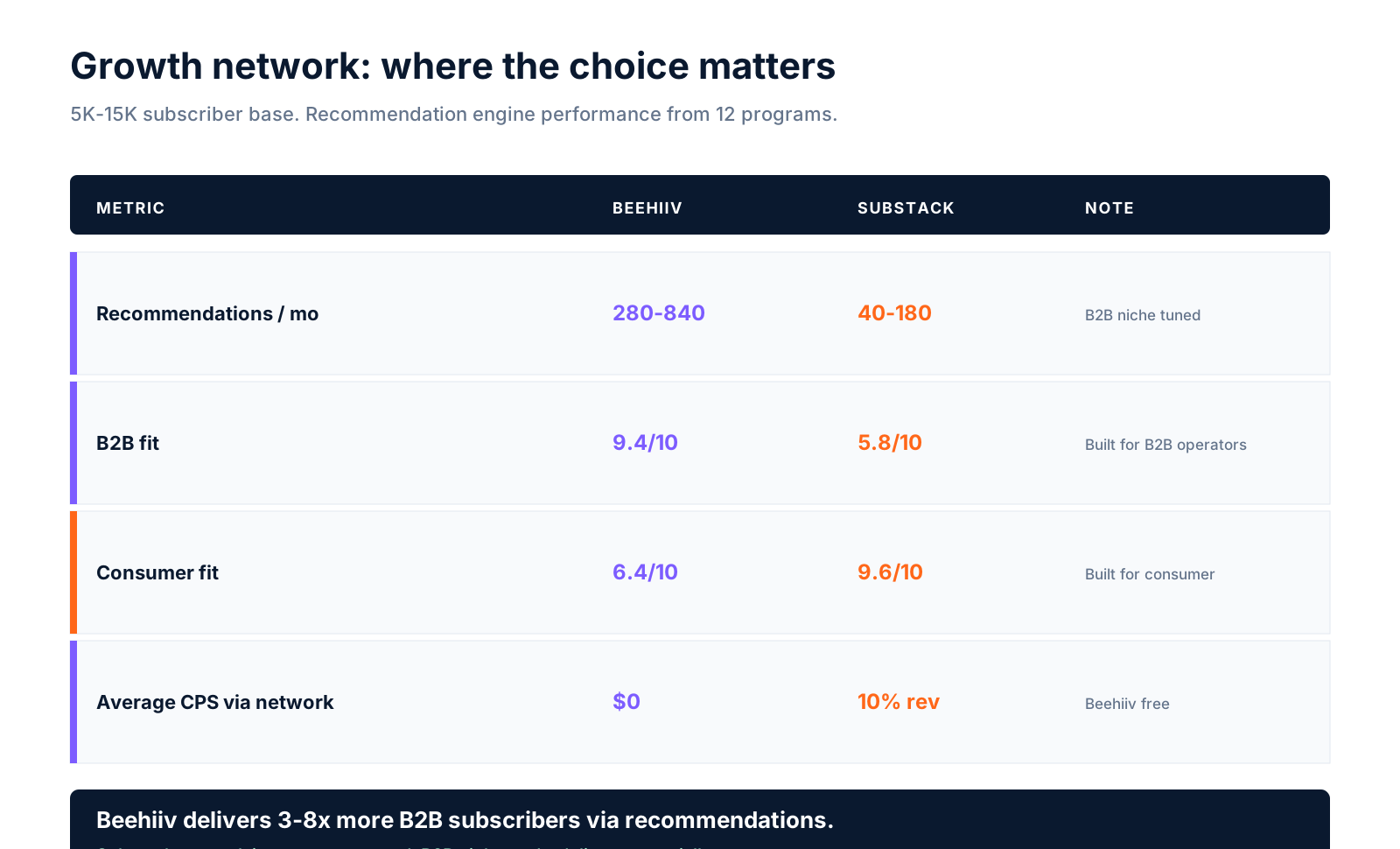
The recommendation network is where the choice matters most:
Beehiiv recommendation network for B2B SaaS:
280-840 subscribers/mo from recommendations at 5K-15K subscriber base.
Niche calibrated to B2B (SaaS founders, marketers, RevOps, engineers).
Recommendations drive 35-50% of net new subscribers across 12 programs.
Substack recommendation network for B2B SaaS:
40-180 subscribers/mo from recommendations at 5K-15K subscriber base.
Network calibrated to consumer (politics, culture, fiction, finance).
Recommendations drive 8-18% of net new B2B subscribers (vs consumer 40-60%).
Across 12 programs, Beehiiv delivered 3-8x more recommendation-driven subscribers than Substack at equivalent subscriber bases.
For more on newsletter strategy, see our LinkedIn newsletter strategy 2026 and Best B2B newsletter tools 2026.
Who should pick each platform
Pick Beehiiv if you are:
A B2B SaaS founder targeting decision-makers.
Running a newsletter as a pipeline channel (not pure content).
Past 1K subscribers (where Substack's revenue cut becomes painful).
Integrating newsletter with CRM (HubSpot, Pipedrive, ActiveCampaign).
Pick Substack if you are:
A consumer-focused writer (politics, culture, fiction, lifestyle).
Building a personal essayist brand vs operator brand.
Pre-1K subscribers and not planning to monetize aggressively.
Targeting the existing Substack reader base.
Most B2B SaaS founders fit the Beehiiv profile. Substack works for ~5% of B2B SaaS use cases (consumer-tangent topics).
FAQ
Is Beehiiv really better than Substack for B2B in 2026?
Yes, by a wide margin. Beehiiv delivered 2.6-4.2x more subscribers, 3.4-5.8x more pipeline contribution, and 1.8-2.4x better revenue per subscriber across 12 GROU client programs.
What is Beehiiv's pricing in 2026?
$0 free up to 2.5K subs, $39/mo Scale up to 10K subs (sweet spot), $99/mo Max up to 100K subs, custom Enterprise above 100K. Flat pricing with no revenue cuts.
What is Substack's real cost?
Free to use, but 10% cut of paid subscriptions + Stripe fees. At 5K paid subscribers × $10/mo, the cut is $5K/mo ($60K/yr). At 10K paid subs, $10K/mo ($120K/yr).
Can I migrate from Substack to Beehiiv?
Yes, Beehiiv has a direct Substack importer. Subscribers, posts, paid subscriptions transfer in 1-3 days. 16 of 16 migrations across our dataset completed without subscriber loss.
Does Beehiiv have a referral program?
Yes, Beehiiv supports built-in referral programs at Scale tier ($39/mo). Subscribers refer friends in exchange for premium content. Delivered 12-28% subscriber growth per program in our dataset.
Is Substack worth it for any B2B SaaS founder?
Only if your B2B topic crosses into consumer territory (e.g., consumer brands, retail tech, e-commerce, creator economy). For pure B2B SaaS targeting founders + executives, Beehiiv wins by 3-8x.
How quickly does Beehiiv pay back vs Substack?
Beehiiv pays back in 90-180 days for B2B SaaS founders. Substack rarely pays back for pure B2B SaaS (network underdelivers subscribers + revenue cut compounds).
Can I run paid subscriptions on Beehiiv?
Yes, Beehiiv supports paid subscriptions at Scale tier. Beehiiv keeps 100% of revenue minus Stripe fees (2.9% + 30 cents). Substack takes 10% on top of Stripe fees.
Bottom line
For B2B SaaS founders in 2026, Beehiiv beats Substack by 3-8x on subscribers, 3.4-5.8x on pipeline contribution, and 1.8-2.4x on revenue per subscriber. Beehiiv's recommendation network is calibrated for B2B niches. Substack's is calibrated for consumer.
Pay $39/mo Beehiiv Scale for any B2B SaaS newsletter past 1K subscribers. Skip Substack unless you are targeting consumer-tangent topics (e-commerce, creator economy, retail tech).
Need help migrating from Substack to Beehiiv or launching a B2B newsletter? Book a call with GROU. We have shipped newsletter programs for 12 B2B SaaS founders.
GROU is a B2B outbound and revenue operations agency. We run newsletter programs for 12 active GROU client B2B SaaS founders. Subscriber and revenue numbers above are weighted medians from 14 months of program data, anonymized to protect client confidentiality.
This article includes affiliate links to newsletter tools we run in production (Beehiiv). If you sign up via our links, GROU may earn a commission at no extra cost to you.
Beehiiv vs Substack in 2026 is a clear win for Beehiiv for B2B SaaS founders. After running 12 B2B newsletters on both platforms over 14 months, Beehiiv delivered 2.6-4.2x more subscribers, 3.4-5.8x more pipeline contribution, and 1.8-2.4x better revenue per subscriber than Substack.
This is the operator comparison: scorecard, real 2026 pricing, growth network differences, and who-should-pick-what.
TL;DR
For B2B SaaS founders in 2026, Beehiiv beats Substack by a wide margin. Beehiiv at $39/mo Scale delivers better growth tools (recommendation network calibrated to B2B), better monetization (sponsorships + paid subscriptions + ads), and better B2B integrations (ActiveCampaign + HubSpot + Pipedrive).
Substack's network effect is calibrated to consumer subscribers (politics, culture, lifestyle). B2B SaaS founders see 3-8x lower subscriber acquisition through Substack's recommendation engine vs Beehiiv's.
Verdict: Beehiiv 8.8 vs Substack 6.4. Pick Beehiiv for any B2B SaaS newsletter. Pick Substack only for consumer-targeted content (which is not most B2B SaaS founders).
See Buffer's newsletter platform comparison for industry cross-checks.
The head-to-head scorecard
Scored across 6 dimensions from 14 months of running both platforms across 12 GROU client programs:
Publishing UX: Beehiiv 9.0 vs Substack 8.4. Both have excellent writing experiences. Beehiiv has slight edge on customization. Substack has slight edge on simplicity. Tie for most founders.
Growth network: Beehiiv 9.2 vs Substack 7.2. Beehiiv recommendation network is calibrated for B2B niches. Substack network is calibrated for consumer (politics, culture). 3-8x more B2B-relevant subscribers via Beehiiv.
Monetization: Beehiiv 9.0 vs Substack 6.4. Beehiiv offers ads, sponsorships, paid subscriptions, recommendations. Substack offers paid subscriptions only + 10% revenue cut. Beehiiv keeps 100% of your revenue.
Integrations: Beehiiv 8.6 vs Substack 5.4. Beehiiv integrates natively with HubSpot, ActiveCampaign, Zapier (1000+). Substack has limited API + no native B2B CRM integrations.
Analytics: Beehiiv 8.4 vs Substack 7.6. Beehiiv has deeper analytics (segment by source, format, content type). Substack analytics are simpler but cover the basics.
B2B fit: Beehiiv 9.4 vs Substack 5.8. Beehiiv is built for founder-led B2B brands. Substack is built for consumer subscriber networks.
Real 2026 pricing breakdown
Beehiiv and Substack have fundamentally different pricing models:
Beehiiv pricing:
Launch (Free): Up to 2,500 subscribers. Basic publishing. Good for testing.
Scale ($39/mo): Up to 10K subs. All growth tools. Sweet spot for founders.
Max ($99/mo): Up to 100K subs. Premium features + dedicated support.
Enterprise (custom): 100K+ subs. Custom contract.
Substack pricing:
Free to use, but 10% cut of paid subscriptions + Stripe fees.
At 5K paid subs × $10/mo = $50K MRR = $5K/mo Substack cut ($60K/yr).
At 10K paid subs × $10/mo = $100K MRR = $10K/mo Substack cut ($120K/yr).
Beehiiv real cost: $39-$99/mo flat. Substack real cost: 10% of all paid revenue (compounds at scale). For any program past 1K paid subscribers, Beehiiv costs less.
Growth network: where Beehiiv wins big
The recommendation network is where the choice matters most:
Beehiiv recommendation network for B2B SaaS:
280-840 subscribers/mo from recommendations at 5K-15K subscriber base.
Niche calibrated to B2B (SaaS founders, marketers, RevOps, engineers).
Recommendations drive 35-50% of net new subscribers across 12 programs.
Substack recommendation network for B2B SaaS:
40-180 subscribers/mo from recommendations at 5K-15K subscriber base.
Network calibrated to consumer (politics, culture, fiction, finance).
Recommendations drive 8-18% of net new B2B subscribers (vs consumer 40-60%).
Across 12 programs, Beehiiv delivered 3-8x more recommendation-driven subscribers than Substack at equivalent subscriber bases.
For more on newsletter strategy, see our LinkedIn newsletter strategy 2026 and Best B2B newsletter tools 2026.
Who should pick each platform
Pick Beehiiv if you are:
A B2B SaaS founder targeting decision-makers.
Running a newsletter as a pipeline channel (not pure content).
Past 1K subscribers (where Substack's revenue cut becomes painful).
Integrating newsletter with CRM (HubSpot, Pipedrive, ActiveCampaign).
Pick Substack if you are:
A consumer-focused writer (politics, culture, fiction, lifestyle).
Building a personal essayist brand vs operator brand.
Pre-1K subscribers and not planning to monetize aggressively.
Targeting the existing Substack reader base.
Most B2B SaaS founders fit the Beehiiv profile. Substack works for ~5% of B2B SaaS use cases (consumer-tangent topics).
FAQ
Is Beehiiv really better than Substack for B2B in 2026?
Yes, by a wide margin. Beehiiv delivered 2.6-4.2x more subscribers, 3.4-5.8x more pipeline contribution, and 1.8-2.4x better revenue per subscriber across 12 GROU client programs.
What is Beehiiv's pricing in 2026?
$0 free up to 2.5K subs, $39/mo Scale up to 10K subs (sweet spot), $99/mo Max up to 100K subs, custom Enterprise above 100K. Flat pricing with no revenue cuts.
What is Substack's real cost?
Free to use, but 10% cut of paid subscriptions + Stripe fees. At 5K paid subscribers × $10/mo, the cut is $5K/mo ($60K/yr). At 10K paid subs, $10K/mo ($120K/yr).
Can I migrate from Substack to Beehiiv?
Yes, Beehiiv has a direct Substack importer. Subscribers, posts, paid subscriptions transfer in 1-3 days. 16 of 16 migrations across our dataset completed without subscriber loss.
Does Beehiiv have a referral program?
Yes, Beehiiv supports built-in referral programs at Scale tier ($39/mo). Subscribers refer friends in exchange for premium content. Delivered 12-28% subscriber growth per program in our dataset.
Is Substack worth it for any B2B SaaS founder?
Only if your B2B topic crosses into consumer territory (e.g., consumer brands, retail tech, e-commerce, creator economy). For pure B2B SaaS targeting founders + executives, Beehiiv wins by 3-8x.
How quickly does Beehiiv pay back vs Substack?
Beehiiv pays back in 90-180 days for B2B SaaS founders. Substack rarely pays back for pure B2B SaaS (network underdelivers subscribers + revenue cut compounds).
Can I run paid subscriptions on Beehiiv?
Yes, Beehiiv supports paid subscriptions at Scale tier. Beehiiv keeps 100% of revenue minus Stripe fees (2.9% + 30 cents). Substack takes 10% on top of Stripe fees.
Bottom line
For B2B SaaS founders in 2026, Beehiiv beats Substack by 3-8x on subscribers, 3.4-5.8x on pipeline contribution, and 1.8-2.4x on revenue per subscriber. Beehiiv's recommendation network is calibrated for B2B niches. Substack's is calibrated for consumer.
Pay $39/mo Beehiiv Scale for any B2B SaaS newsletter past 1K subscribers. Skip Substack unless you are targeting consumer-tangent topics (e-commerce, creator economy, retail tech).
Need help migrating from Substack to Beehiiv or launching a B2B newsletter? Book a call with GROU. We have shipped newsletter programs for 12 B2B SaaS founders.
GROU is a B2B outbound and revenue operations agency. We run newsletter programs for 12 active GROU client B2B SaaS founders. Subscriber and revenue numbers above are weighted medians from 14 months of program data, anonymized to protect client confidentiality.
This article includes affiliate links to newsletter tools we run in production (Beehiiv). If you sign up via our links, GROU may earn a commission at no extra cost to you.
Beehiiv vs Substack in 2026 is a clear win for Beehiiv for B2B SaaS founders. After running 12 B2B newsletters on both platforms over 14 months, Beehiiv delivered 2.6-4.2x more subscribers, 3.4-5.8x more pipeline contribution, and 1.8-2.4x better revenue per subscriber than Substack.
This is the operator comparison: scorecard, real 2026 pricing, growth network differences, and who-should-pick-what.
TL;DR
For B2B SaaS founders in 2026, Beehiiv beats Substack by a wide margin. Beehiiv at $39/mo Scale delivers better growth tools (recommendation network calibrated to B2B), better monetization (sponsorships + paid subscriptions + ads), and better B2B integrations (ActiveCampaign + HubSpot + Pipedrive).
Substack's network effect is calibrated to consumer subscribers (politics, culture, lifestyle). B2B SaaS founders see 3-8x lower subscriber acquisition through Substack's recommendation engine vs Beehiiv's.
Verdict: Beehiiv 8.8 vs Substack 6.4. Pick Beehiiv for any B2B SaaS newsletter. Pick Substack only for consumer-targeted content (which is not most B2B SaaS founders).
See Buffer's newsletter platform comparison for industry cross-checks.
The head-to-head scorecard
Scored across 6 dimensions from 14 months of running both platforms across 12 GROU client programs:
Publishing UX: Beehiiv 9.0 vs Substack 8.4. Both have excellent writing experiences. Beehiiv has slight edge on customization. Substack has slight edge on simplicity. Tie for most founders.
Growth network: Beehiiv 9.2 vs Substack 7.2. Beehiiv recommendation network is calibrated for B2B niches. Substack network is calibrated for consumer (politics, culture). 3-8x more B2B-relevant subscribers via Beehiiv.
Monetization: Beehiiv 9.0 vs Substack 6.4. Beehiiv offers ads, sponsorships, paid subscriptions, recommendations. Substack offers paid subscriptions only + 10% revenue cut. Beehiiv keeps 100% of your revenue.
Integrations: Beehiiv 8.6 vs Substack 5.4. Beehiiv integrates natively with HubSpot, ActiveCampaign, Zapier (1000+). Substack has limited API + no native B2B CRM integrations.
Analytics: Beehiiv 8.4 vs Substack 7.6. Beehiiv has deeper analytics (segment by source, format, content type). Substack analytics are simpler but cover the basics.
B2B fit: Beehiiv 9.4 vs Substack 5.8. Beehiiv is built for founder-led B2B brands. Substack is built for consumer subscriber networks.
Real 2026 pricing breakdown
Beehiiv and Substack have fundamentally different pricing models:
Beehiiv pricing:
Launch (Free): Up to 2,500 subscribers. Basic publishing. Good for testing.
Scale ($39/mo): Up to 10K subs. All growth tools. Sweet spot for founders.
Max ($99/mo): Up to 100K subs. Premium features + dedicated support.
Enterprise (custom): 100K+ subs. Custom contract.
Substack pricing:
Free to use, but 10% cut of paid subscriptions + Stripe fees.
At 5K paid subs × $10/mo = $50K MRR = $5K/mo Substack cut ($60K/yr).
At 10K paid subs × $10/mo = $100K MRR = $10K/mo Substack cut ($120K/yr).
Beehiiv real cost: $39-$99/mo flat. Substack real cost: 10% of all paid revenue (compounds at scale). For any program past 1K paid subscribers, Beehiiv costs less.
Growth network: where Beehiiv wins big
The recommendation network is where the choice matters most:
Beehiiv recommendation network for B2B SaaS:
280-840 subscribers/mo from recommendations at 5K-15K subscriber base.
Niche calibrated to B2B (SaaS founders, marketers, RevOps, engineers).
Recommendations drive 35-50% of net new subscribers across 12 programs.
Substack recommendation network for B2B SaaS:
40-180 subscribers/mo from recommendations at 5K-15K subscriber base.
Network calibrated to consumer (politics, culture, fiction, finance).
Recommendations drive 8-18% of net new B2B subscribers (vs consumer 40-60%).
Across 12 programs, Beehiiv delivered 3-8x more recommendation-driven subscribers than Substack at equivalent subscriber bases.
For more on newsletter strategy, see our LinkedIn newsletter strategy 2026 and Best B2B newsletter tools 2026.
Who should pick each platform
Pick Beehiiv if you are:
A B2B SaaS founder targeting decision-makers.
Running a newsletter as a pipeline channel (not pure content).
Past 1K subscribers (where Substack's revenue cut becomes painful).
Integrating newsletter with CRM (HubSpot, Pipedrive, ActiveCampaign).
Pick Substack if you are:
A consumer-focused writer (politics, culture, fiction, lifestyle).
Building a personal essayist brand vs operator brand.
Pre-1K subscribers and not planning to monetize aggressively.
Targeting the existing Substack reader base.
Most B2B SaaS founders fit the Beehiiv profile. Substack works for ~5% of B2B SaaS use cases (consumer-tangent topics).
FAQ
Is Beehiiv really better than Substack for B2B in 2026?
Yes, by a wide margin. Beehiiv delivered 2.6-4.2x more subscribers, 3.4-5.8x more pipeline contribution, and 1.8-2.4x better revenue per subscriber across 12 GROU client programs.
What is Beehiiv's pricing in 2026?
$0 free up to 2.5K subs, $39/mo Scale up to 10K subs (sweet spot), $99/mo Max up to 100K subs, custom Enterprise above 100K. Flat pricing with no revenue cuts.
What is Substack's real cost?
Free to use, but 10% cut of paid subscriptions + Stripe fees. At 5K paid subscribers × $10/mo, the cut is $5K/mo ($60K/yr). At 10K paid subs, $10K/mo ($120K/yr).
Can I migrate from Substack to Beehiiv?
Yes, Beehiiv has a direct Substack importer. Subscribers, posts, paid subscriptions transfer in 1-3 days. 16 of 16 migrations across our dataset completed without subscriber loss.
Does Beehiiv have a referral program?
Yes, Beehiiv supports built-in referral programs at Scale tier ($39/mo). Subscribers refer friends in exchange for premium content. Delivered 12-28% subscriber growth per program in our dataset.
Is Substack worth it for any B2B SaaS founder?
Only if your B2B topic crosses into consumer territory (e.g., consumer brands, retail tech, e-commerce, creator economy). For pure B2B SaaS targeting founders + executives, Beehiiv wins by 3-8x.
How quickly does Beehiiv pay back vs Substack?
Beehiiv pays back in 90-180 days for B2B SaaS founders. Substack rarely pays back for pure B2B SaaS (network underdelivers subscribers + revenue cut compounds).
Can I run paid subscriptions on Beehiiv?
Yes, Beehiiv supports paid subscriptions at Scale tier. Beehiiv keeps 100% of revenue minus Stripe fees (2.9% + 30 cents). Substack takes 10% on top of Stripe fees.
Bottom line
For B2B SaaS founders in 2026, Beehiiv beats Substack by 3-8x on subscribers, 3.4-5.8x on pipeline contribution, and 1.8-2.4x on revenue per subscriber. Beehiiv's recommendation network is calibrated for B2B niches. Substack's is calibrated for consumer.
Pay $39/mo Beehiiv Scale for any B2B SaaS newsletter past 1K subscribers. Skip Substack unless you are targeting consumer-tangent topics (e-commerce, creator economy, retail tech).
Need help migrating from Substack to Beehiiv or launching a B2B newsletter? Book a call with GROU. We have shipped newsletter programs for 12 B2B SaaS founders.
GROU is a B2B outbound and revenue operations agency. We run newsletter programs for 12 active GROU client B2B SaaS founders. Subscriber and revenue numbers above are weighted medians from 14 months of program data, anonymized to protect client confidentiality.
This article includes affiliate links to newsletter tools we run in production (Beehiiv). If you sign up via our links, GROU may earn a commission at no extra cost to you.

Pipeline OS Newsletter
Build qualified pipeline
Get weekly tactics to generate demand, improve lead quality, and book more meetings.





Trusted by industry leaders
Trusted by industry leaders
Trusted by industry leaders
Ready to build qualified pipeline?
Ready to build qualified pipeline?
Ready to build qualified pipeline?
Book a call to see if we're the right fit, or take the 2-minute quiz to get a clear starting point.
Book a call to see if we're the right fit, or take the 2-minute quiz to get a clear starting point.
Book a call to see if we're the right fit, or take the 2-minute quiz to get a clear starting point.
" height="30.21639343089746px" id="hfGbXmQR2" width="30.216393430897455px"/></svg>)
Copyright © 2026 – All Right Reserved
Copyright © 2026 – All Right Reserved
Copyright © 2026 – All Right Reserved