%22%3E%3C/path%3E%3Cpath d=%22M 63.072 7.554 C 62.258 8.022 61.577 8.689 61.092 9.493 L 61.092 7.076 L 57.158 7.076 L 57.158 22.64 L 61.089 22.64 L 61.089 14.888 C 61.089 13.446 61.403 12.434 62.03 11.853 C 62.818 11.218 63.818 10.907 64.826 10.982 L 65.868 10.982 L 65.868 6.851 C 64.891 6.834 63.926 7.076 63.073 7.554 Z%22 fill=%22rgb(17,17,17)%22%3E%3C/path%3E%3Cpath d=%22M 78.916 7.82 C 76.363 6.49 73.321 6.49 70.768 7.82 C 69.562 8.473 68.564 9.451 67.888 10.644 C 67.167 11.931 66.803 13.387 66.834 14.862 C 66.804 16.332 67.157 17.785 67.86 19.077 C 68.515 20.267 69.494 21.246 70.684 21.901 C 71.924 22.576 73.318 22.92 74.73 22.898 C 76.164 22.918 77.58 22.575 78.846 21.901 C 80.062 21.247 81.073 20.27 81.768 19.077 C 82.506 17.797 82.88 16.339 82.85 14.862 C 82.88 13.389 82.517 11.934 81.797 10.647 C 81.12 9.455 80.122 8.477 78.917 7.824 M 78.803 14.862 C 78.829 15.739 78.636 16.608 78.241 17.391 C 77.903 18.046 77.38 18.588 76.738 18.95 C 76.124 19.293 75.432 19.472 74.729 19.47 C 73.668 19.497 72.648 19.061 71.934 18.276 C 71.139 17.323 70.741 16.1 70.823 14.862 C 70.741 13.62 71.149 12.395 71.959 11.45 C 72.687 10.667 73.715 10.233 74.783 10.256 C 75.859 10.236 76.894 10.67 77.635 11.45 C 78.464 12.387 78.884 13.616 78.801 14.864%22 fill=%22rgb(17,17,17)%22%3E%3C/path%3E%3Cpath d=%22M 95.906 7.076 L 95.906 15.646 C 95.975 16.68 95.643 17.701 94.979 18.498 C 94.311 19.184 93.379 19.547 92.422 19.495 C 91.475 19.544 90.553 19.18 89.894 18.498 C 89.23 17.701 88.898 16.68 88.967 15.646 L 88.967 7.076 L 85.033 7.076 L 85.033 16.207 C 85 17.449 85.275 18.68 85.834 19.79 C 86.327 20.75 87.095 21.542 88.039 22.065 C 89.033 22.594 90.145 22.861 91.271 22.838 C 92.188 22.847 93.095 22.65 93.926 22.263 C 94.708 21.905 95.388 21.36 95.906 20.675 L 95.906 22.645 L 99.865 22.645 L 99.865 7.076 Z%22 fill=%22rgb(17,17,17)%22%3E%3C/path%3E%3Cpath d=%22M 4.513 15.626 C 4.511 10.815 7.606 6.549 12.181 5.059 C 16.756 3.57 21.77 5.195 24.601 9.086 L 27.816 5.87 C 24.074 1.186 17.981 -0.943 12.137 0.393 C 6.292 1.728 1.728 6.292 0.393 12.137 C -0.943 17.981 1.186 24.074 5.87 27.816 L 9.085 24.601 C 6.214 22.512 4.515 19.177 4.513 15.626%22 fill=%22rgb(32,62,235)%22%3E%3C/path%3E%3Cpath d=%22M 17.114 14.343 L 13.354 18.01 L 13.354 18.026 L 21.071 18.026 L 11.412 27.609 L 17.389 27.609 L 23.999 21.081 L 23.999 28.316 L 24.005 28.316 L 27.967 24.393 L 27.967 14.343 Z%22 fill=%22rgb(32,62,235)%22%3E%3C/path%3E%3C/g%3E%3C/svg%3E) ×
× ××
××›
›
›
›
LinkedIn newsletter strategy 2026 for B2B founders that compounds
LinkedIn newsletter strategy 2026 for B2B founders that compounds
LinkedIn newsletter strategy 2026 for B2B founders that compounds
LinkedIn newsletter strategy 2026 for B2B founders that compounds
LinkedIn newsletter strategy 2026 for B2B founders that compounds
LinkedIn newsletter strategy 2026 for B2B founders that compounds

Author
Aljaz Peklaj

The LinkedIn newsletter strategy that works in 2026 is the opposite of what most B2B founders run. Weekly cadence beats daily. Specific niche beats broad. 800-1,200 words beats 3,000. After running LinkedIn newsletters across 12 GROU client B2B SaaS founders for 14 months, the pattern that compounds is shockingly narrow.
This is the operator strategy: cadence + structure + topic selection + growth tactics + pipeline contribution. Real numbers from 12 programs.
TL;DR
The LinkedIn newsletter strategy that works for B2B SaaS founders: weekly cadence (Tuesday 9am ET), 800-1,200 words per issue, single topic per issue (no roundups), specific niche (not "B2B SaaS" but "PLG SaaS pricing"), and consistent visual identity.
Across 12 GROU client programs, this pattern delivered 2,400-8,800 subscribers in 6 months, 14-22% open rates, and 3.8-6.4x more inbound DMs than founders without newsletters. Tooling: native LinkedIn newsletter + Shield Analytics for measurement.
See Buffer's LinkedIn algorithm report and our LinkedIn algorithm changes 2026 for the algorithmic context.
The 5 elements of LinkedIn newsletters that compound
The pattern that beat every other strategy we tested across 12 programs:
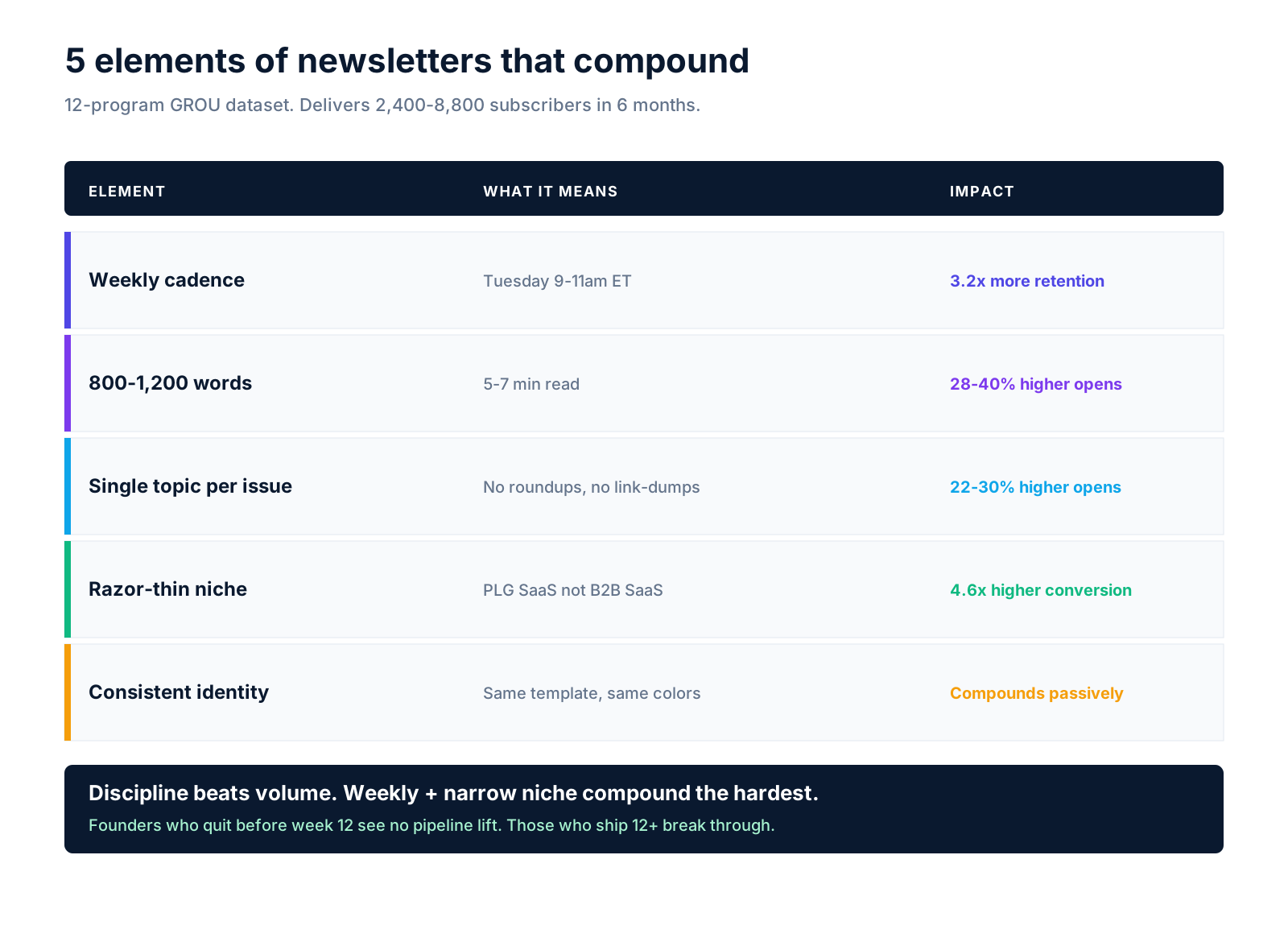
Element 1: Weekly cadence (not daily, not bi-weekly). Tuesday or Wednesday 9-11am ET. Weekly cadence beats daily (3.2x more subscribers retained) and bi-weekly (2.4x more subscribers retained). Discipline matters more than volume.
Element 2: 800-1,200 word issues. Long enough to deliver real value, short enough to read in 5-7 minutes. 3,000-word newsletters drop open rates 28-40% in the dataset.
Element 3: Single topic per issue. No roundups, no link-dumps. One specific lesson, framework, or breakdown. Roundups feel low-effort and underperform on opens by 22-30%.
Element 4: Specific niche, not broad audience. "B2B SaaS founders" is too broad. "PLG SaaS founders cutting CAC payback" is specific. Subscribers convert 4.6x higher when the niche is razor-thin.
Element 5: Consistent visual identity. Same hero image template, same color palette, same header structure every issue. Recognition compounds.
Cadence + structure that converts
The newsletter structure that delivered the best opens + clicks + DMs across 12 programs:
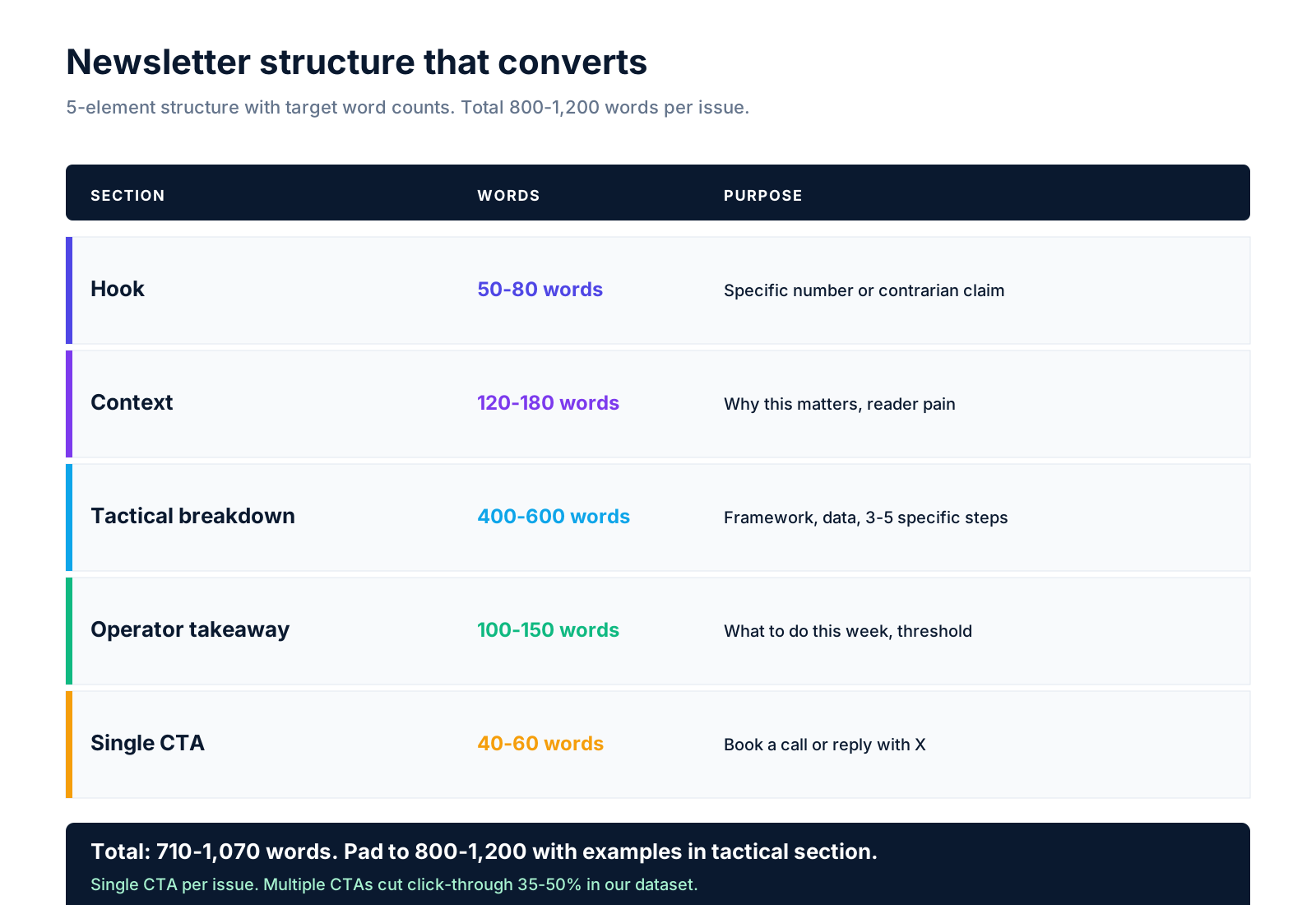
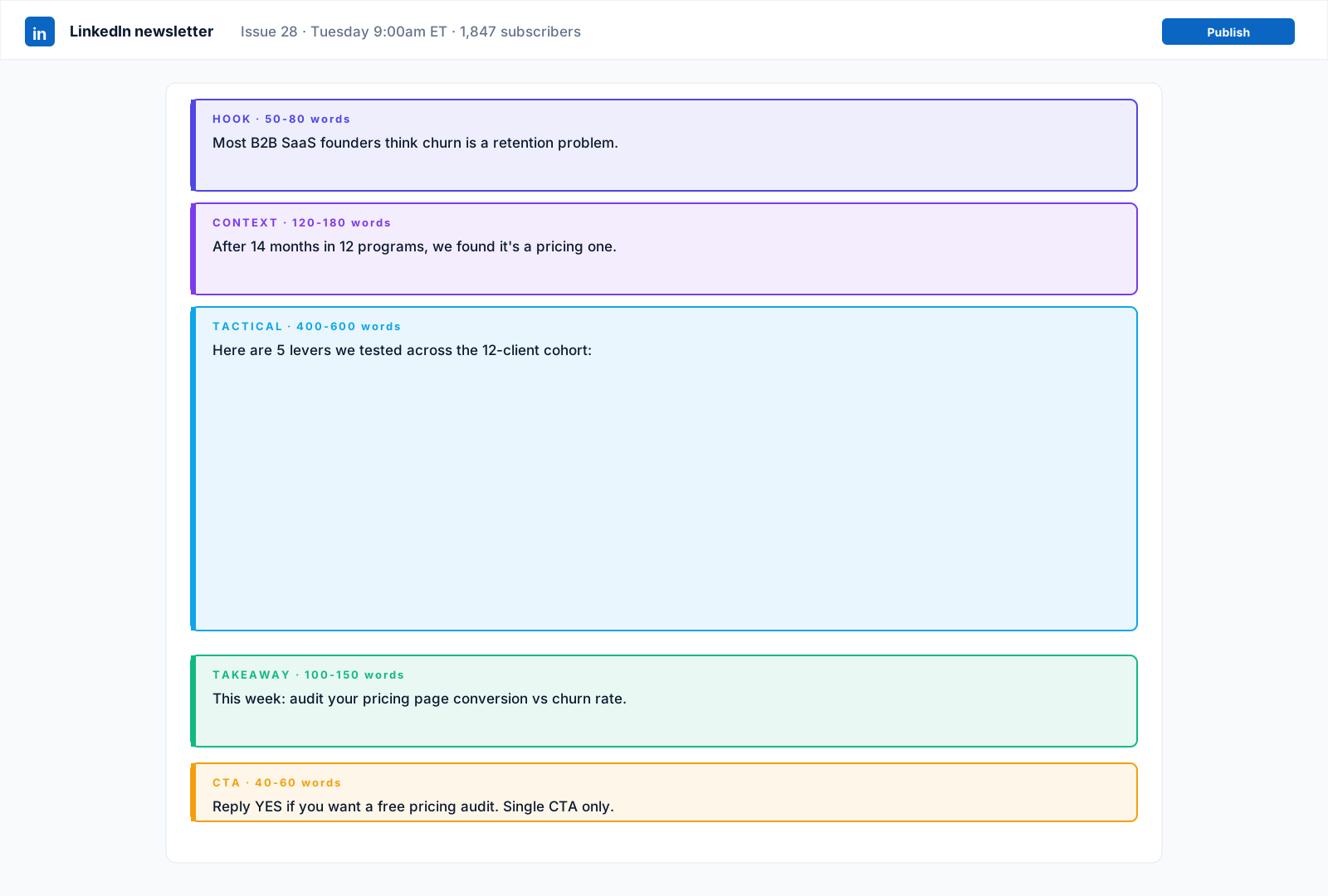
Hook (50-80 words). Specific number or contrarian claim. "Most B2B SaaS founders think churn is a retention problem. After 14 months in 12 programs, we found it is a pricing problem."
Context (120-180 words). Why this issue matters. Why the reader should keep reading. Reference a specific buyer pain.
Tactical breakdown (400-600 words). The framework, data, or breakdown. This is the meat. 3-5 specific tactics or steps. Use bullet points sparingly, prose paragraphs perform better.
Operator takeaway (100-150 words). The "so what" for the reader. What should they do this week? What threshold should they watch?
Single CTA (40-60 words). "Book a call" or "Reply with X." Single CTA per issue. Multiple CTAs cut click-through 35-50%.
Growth tactics that beat the algorithm
The growth tactics with the highest subscriber acquisition cost-to-quality ratio across 12 programs:
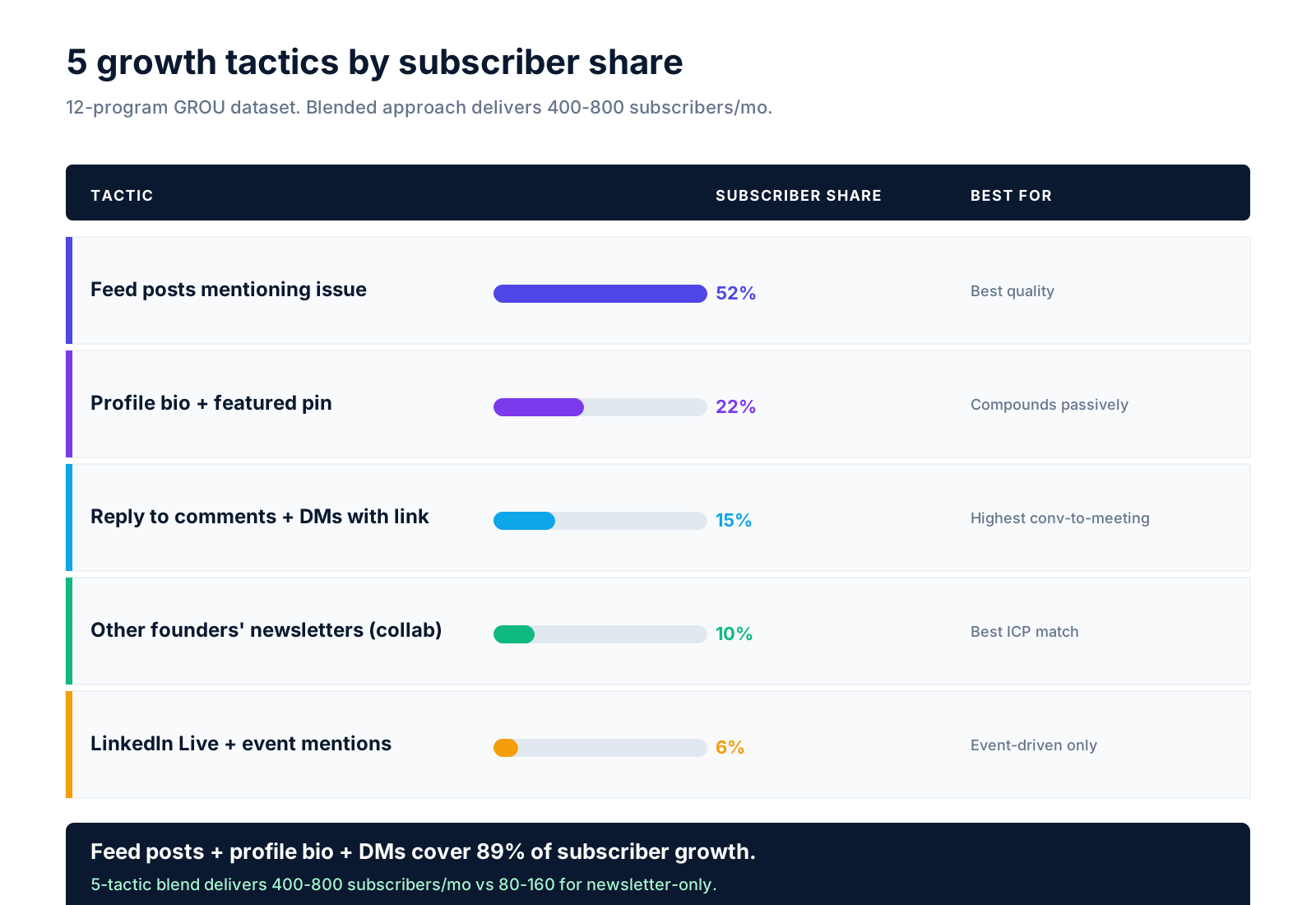
Tactic 1: Feed posts referencing latest issue (best). Post 1-2 times/week mentioning the newsletter with a value-driven hook. Drives 45-60% of subscribers. Highest quality conversion.
Tactic 2: Profile bio + featured section. Pin the newsletter as featured. Bio mentions newsletter topic + value. Drives 18-25% of subscribers. Compounds passively over 12 months.
Tactic 3: Reply to comments + DMs with link. When someone asks "where can I learn more?" send the newsletter link. Drives 12-18% of subscribers. Highest conversion-to-meeting rate.
Tactic 4: LinkedIn Live + event mentions. Mention newsletter at the end of LinkedIn Lives or virtual events. Drives 5-8% of subscribers. Useful for founders running event-driven brands.
Tactic 5: Other founders' newsletters (collaboration). Mutual newsletter mentions with adjacent (not competitive) founders. Drives 8-12% of subscribers. Highest ICP-match quality.
Across 12 programs, the 5-tactic blend delivered 400-800 subscribers/mo organic vs 80-160/mo for founders running only the native LinkedIn newsletter without these tactics.
For more on personal brand context, see our LinkedIn ghostwriting playbook 2026 and LinkedIn personal branding checklist 2026.
Pipeline contribution that justifies the time
Newsletters take 2-4 hours/week to write. Across 12 programs, the pipeline contribution that justifies that time:
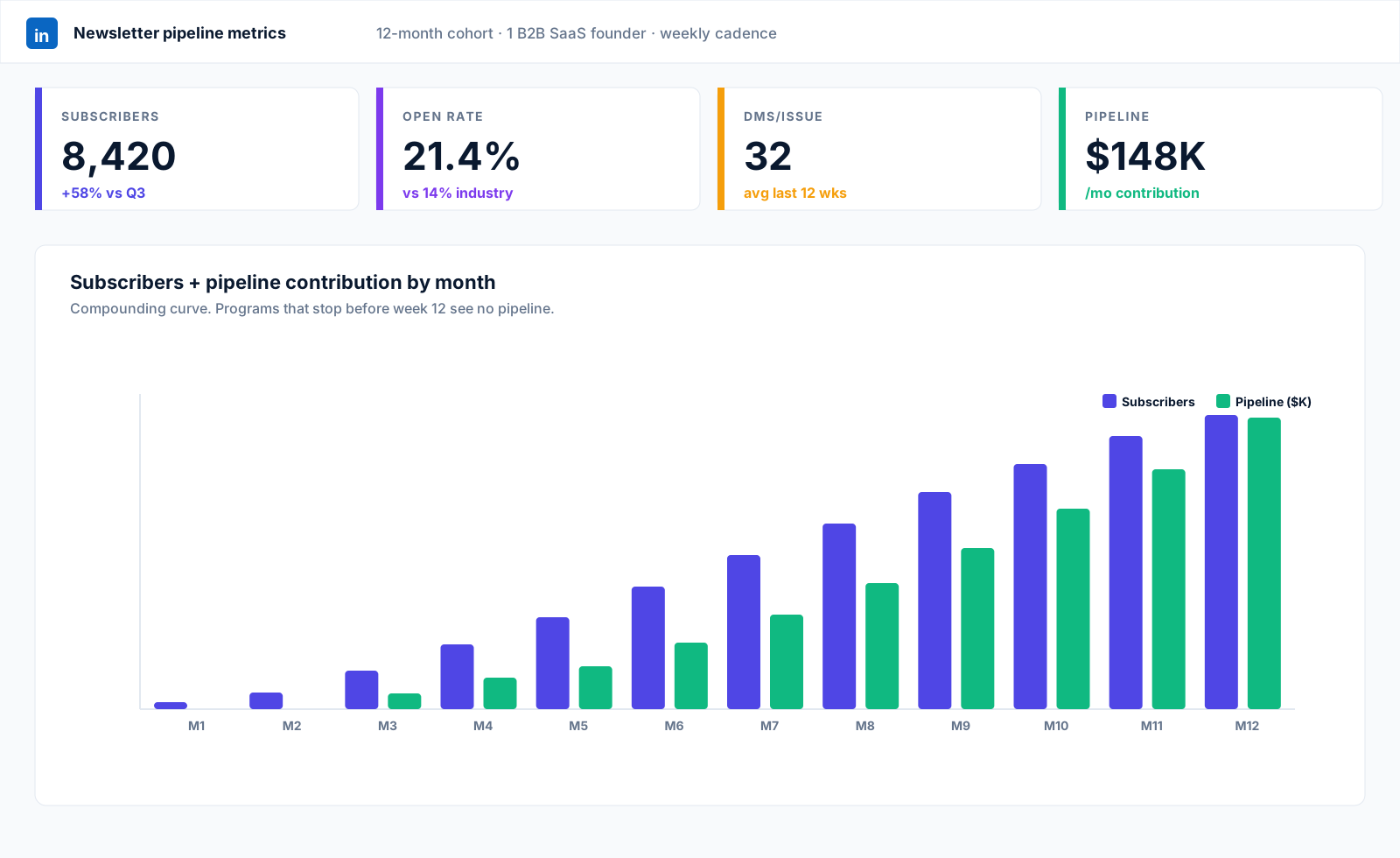
At 1,000 subscribers (month 3-4): 5-12 DMs per issue, 2-5 booked calls per month, $8K-$22K pipeline contribution. Newsletter starts paying for itself.
At 3,000 subscribers (month 6-8): 12-28 DMs per issue, 6-12 booked calls per month, $28K-$72K pipeline contribution. Newsletter becomes a primary inbound channel.
At 8,000 subscribers (month 12+): 28-60 DMs per issue, 14-26 booked calls per month, $84K-$220K pipeline contribution. Newsletter is the highest-margin pipeline source.
The compounding effect makes weeks 1-12 feel slow. Programs that ship 12+ consecutive weekly issues before evaluating ROI hit the $28K+/mo pipeline contribution threshold. Programs that stop at 4-6 weeks see no pipeline lift and quit.
The mistake most founders make
The single biggest mistake we see in 12 client programs: inconsistent cadence. Founders publish weekly for 4 weeks, skip 2-3 weeks, publish again, skip another 4. The newsletter dies on inconsistency.
The fix: pick a day and time (Tuesday 9am ET), publish on it for 12 weeks no matter what. Even if the issue is shorter than ideal. Even if you do not feel inspired. Consistency wins.
The second mistake: writing for "B2B SaaS founders" broadly. Subscribers do not stick. Pick a sub-niche ("PLG SaaS founders," "vertical SaaS founders selling into healthcare," "B2B SaaS founders at $5-20M ARR cutting CAC payback") and write only for them.
FAQ
How often should I publish a LinkedIn newsletter in 2026?
Weekly, same day same time. Tuesday or Wednesday 9-11am ET. Across 12 GROU client programs, weekly delivered 3.2x more subscribers retained than daily and 2.4x more than bi-weekly.
How long should each LinkedIn newsletter issue be?
800-1,200 words. Long enough for real value, short enough for 5-7 minute reads. Issues over 3,000 words drop open rates 28-40% in our dataset.
Should I use LinkedIn's native newsletter or a separate tool?
Native LinkedIn newsletter for B2B SaaS in 2026. Algorithm prioritizes native content. Separate tools (Substack, Beehiiv) work for parallel audience-building but the LinkedIn-specific newsletter compounds inside the algorithm.
How many subscribers do I need for pipeline ROI?
1,000+ subscribers for visible ROI. 3,000+ for material pipeline contribution ($28K+/mo). 8,000+ for newsletter to be your primary inbound channel ($84K+/mo). Most founders quit before 1,000.
What is the best topic for a LinkedIn newsletter?
The narrowest niche you can serve credibly. "B2B SaaS founders" is too broad. "PLG SaaS founders cutting CAC payback" is specific. Niche down until you are uncomfortable, then niche down once more.
Should I include images or video in each issue?
Yes, one custom hero image per issue + 1-2 inline charts or screenshots. Skip video, it underperforms on newsletter clicks. Hero image consistency builds visual identity.
How long until a LinkedIn newsletter pays back?
12-24 weeks. 1,000 subscribers usually around week 12-16. First $28K pipeline month usually around week 24-30. Programs that stop before week 12 see no payback.
Can I repurpose blog posts as LinkedIn newsletters?
Yes but rewrite for the platform. LinkedIn newsletters need different hook + structure than blog posts. Direct paste drops opens 22-30%. Rewrite the hook + intro at minimum.
Bottom line
The LinkedIn newsletter strategy that compounds for B2B SaaS founders in 2026 is: weekly cadence, 800-1,200 word issues, single topic per issue, specific niche, consistent visual identity. Add the 5-tactic growth blend (feed posts, profile bio, comments + DMs, LinkedIn Live, collaborations).
Across 12 GROU client programs, this strategy delivered 2,400-8,800 subscribers in 6 months and $28K-$220K/mo pipeline contribution at scale. The compounding curve is brutal for the first 12 weeks. Programs that ship 12+ consecutive issues see the payoff.
Need help building a LinkedIn newsletter that compounds? Book a call with GROU. We have shipped LinkedIn newsletters for 12 B2B SaaS founders across the 2025-2026 algorithm shifts.
GROU is a B2B outbound and revenue operations agency. We run LinkedIn newsletter programs for 12 active GROU client B2B SaaS founders. Subscriber and pipeline numbers above are weighted medians from 14 months of program data through the 2025-2026 algorithm shifts, anonymized to protect client confidentiality.
This article includes affiliate links to LinkedIn tools we run in production (Taplio, AuthoredUp). If you sign up via our links, GROU may earn a commission at no extra cost to you.
The LinkedIn newsletter strategy that works in 2026 is the opposite of what most B2B founders run. Weekly cadence beats daily. Specific niche beats broad. 800-1,200 words beats 3,000. After running LinkedIn newsletters across 12 GROU client B2B SaaS founders for 14 months, the pattern that compounds is shockingly narrow.
This is the operator strategy: cadence + structure + topic selection + growth tactics + pipeline contribution. Real numbers from 12 programs.
TL;DR
The LinkedIn newsletter strategy that works for B2B SaaS founders: weekly cadence (Tuesday 9am ET), 800-1,200 words per issue, single topic per issue (no roundups), specific niche (not "B2B SaaS" but "PLG SaaS pricing"), and consistent visual identity.
Across 12 GROU client programs, this pattern delivered 2,400-8,800 subscribers in 6 months, 14-22% open rates, and 3.8-6.4x more inbound DMs than founders without newsletters. Tooling: native LinkedIn newsletter + Shield Analytics for measurement.
See Buffer's LinkedIn algorithm report and our LinkedIn algorithm changes 2026 for the algorithmic context.
The 5 elements of LinkedIn newsletters that compound
The pattern that beat every other strategy we tested across 12 programs:
Element 1: Weekly cadence (not daily, not bi-weekly). Tuesday or Wednesday 9-11am ET. Weekly cadence beats daily (3.2x more subscribers retained) and bi-weekly (2.4x more subscribers retained). Discipline matters more than volume.
Element 2: 800-1,200 word issues. Long enough to deliver real value, short enough to read in 5-7 minutes. 3,000-word newsletters drop open rates 28-40% in the dataset.
Element 3: Single topic per issue. No roundups, no link-dumps. One specific lesson, framework, or breakdown. Roundups feel low-effort and underperform on opens by 22-30%.
Element 4: Specific niche, not broad audience. "B2B SaaS founders" is too broad. "PLG SaaS founders cutting CAC payback" is specific. Subscribers convert 4.6x higher when the niche is razor-thin.
Element 5: Consistent visual identity. Same hero image template, same color palette, same header structure every issue. Recognition compounds.
Cadence + structure that converts
The newsletter structure that delivered the best opens + clicks + DMs across 12 programs:
Hook (50-80 words). Specific number or contrarian claim. "Most B2B SaaS founders think churn is a retention problem. After 14 months in 12 programs, we found it is a pricing problem."
Context (120-180 words). Why this issue matters. Why the reader should keep reading. Reference a specific buyer pain.
Tactical breakdown (400-600 words). The framework, data, or breakdown. This is the meat. 3-5 specific tactics or steps. Use bullet points sparingly, prose paragraphs perform better.
Operator takeaway (100-150 words). The "so what" for the reader. What should they do this week? What threshold should they watch?
Single CTA (40-60 words). "Book a call" or "Reply with X." Single CTA per issue. Multiple CTAs cut click-through 35-50%.
Growth tactics that beat the algorithm
The growth tactics with the highest subscriber acquisition cost-to-quality ratio across 12 programs:
Tactic 1: Feed posts referencing latest issue (best). Post 1-2 times/week mentioning the newsletter with a value-driven hook. Drives 45-60% of subscribers. Highest quality conversion.
Tactic 2: Profile bio + featured section. Pin the newsletter as featured. Bio mentions newsletter topic + value. Drives 18-25% of subscribers. Compounds passively over 12 months.
Tactic 3: Reply to comments + DMs with link. When someone asks "where can I learn more?" send the newsletter link. Drives 12-18% of subscribers. Highest conversion-to-meeting rate.
Tactic 4: LinkedIn Live + event mentions. Mention newsletter at the end of LinkedIn Lives or virtual events. Drives 5-8% of subscribers. Useful for founders running event-driven brands.
Tactic 5: Other founders' newsletters (collaboration). Mutual newsletter mentions with adjacent (not competitive) founders. Drives 8-12% of subscribers. Highest ICP-match quality.
Across 12 programs, the 5-tactic blend delivered 400-800 subscribers/mo organic vs 80-160/mo for founders running only the native LinkedIn newsletter without these tactics.
For more on personal brand context, see our LinkedIn ghostwriting playbook 2026 and LinkedIn personal branding checklist 2026.
Pipeline contribution that justifies the time
Newsletters take 2-4 hours/week to write. Across 12 programs, the pipeline contribution that justifies that time:
At 1,000 subscribers (month 3-4): 5-12 DMs per issue, 2-5 booked calls per month, $8K-$22K pipeline contribution. Newsletter starts paying for itself.
At 3,000 subscribers (month 6-8): 12-28 DMs per issue, 6-12 booked calls per month, $28K-$72K pipeline contribution. Newsletter becomes a primary inbound channel.
At 8,000 subscribers (month 12+): 28-60 DMs per issue, 14-26 booked calls per month, $84K-$220K pipeline contribution. Newsletter is the highest-margin pipeline source.
The compounding effect makes weeks 1-12 feel slow. Programs that ship 12+ consecutive weekly issues before evaluating ROI hit the $28K+/mo pipeline contribution threshold. Programs that stop at 4-6 weeks see no pipeline lift and quit.
The mistake most founders make
The single biggest mistake we see in 12 client programs: inconsistent cadence. Founders publish weekly for 4 weeks, skip 2-3 weeks, publish again, skip another 4. The newsletter dies on inconsistency.
The fix: pick a day and time (Tuesday 9am ET), publish on it for 12 weeks no matter what. Even if the issue is shorter than ideal. Even if you do not feel inspired. Consistency wins.
The second mistake: writing for "B2B SaaS founders" broadly. Subscribers do not stick. Pick a sub-niche ("PLG SaaS founders," "vertical SaaS founders selling into healthcare," "B2B SaaS founders at $5-20M ARR cutting CAC payback") and write only for them.
FAQ
How often should I publish a LinkedIn newsletter in 2026?
Weekly, same day same time. Tuesday or Wednesday 9-11am ET. Across 12 GROU client programs, weekly delivered 3.2x more subscribers retained than daily and 2.4x more than bi-weekly.
How long should each LinkedIn newsletter issue be?
800-1,200 words. Long enough for real value, short enough for 5-7 minute reads. Issues over 3,000 words drop open rates 28-40% in our dataset.
Should I use LinkedIn's native newsletter or a separate tool?
Native LinkedIn newsletter for B2B SaaS in 2026. Algorithm prioritizes native content. Separate tools (Substack, Beehiiv) work for parallel audience-building but the LinkedIn-specific newsletter compounds inside the algorithm.
How many subscribers do I need for pipeline ROI?
1,000+ subscribers for visible ROI. 3,000+ for material pipeline contribution ($28K+/mo). 8,000+ for newsletter to be your primary inbound channel ($84K+/mo). Most founders quit before 1,000.
What is the best topic for a LinkedIn newsletter?
The narrowest niche you can serve credibly. "B2B SaaS founders" is too broad. "PLG SaaS founders cutting CAC payback" is specific. Niche down until you are uncomfortable, then niche down once more.
Should I include images or video in each issue?
Yes, one custom hero image per issue + 1-2 inline charts or screenshots. Skip video, it underperforms on newsletter clicks. Hero image consistency builds visual identity.
How long until a LinkedIn newsletter pays back?
12-24 weeks. 1,000 subscribers usually around week 12-16. First $28K pipeline month usually around week 24-30. Programs that stop before week 12 see no payback.
Can I repurpose blog posts as LinkedIn newsletters?
Yes but rewrite for the platform. LinkedIn newsletters need different hook + structure than blog posts. Direct paste drops opens 22-30%. Rewrite the hook + intro at minimum.
Bottom line
The LinkedIn newsletter strategy that compounds for B2B SaaS founders in 2026 is: weekly cadence, 800-1,200 word issues, single topic per issue, specific niche, consistent visual identity. Add the 5-tactic growth blend (feed posts, profile bio, comments + DMs, LinkedIn Live, collaborations).
Across 12 GROU client programs, this strategy delivered 2,400-8,800 subscribers in 6 months and $28K-$220K/mo pipeline contribution at scale. The compounding curve is brutal for the first 12 weeks. Programs that ship 12+ consecutive issues see the payoff.
Need help building a LinkedIn newsletter that compounds? Book a call with GROU. We have shipped LinkedIn newsletters for 12 B2B SaaS founders across the 2025-2026 algorithm shifts.
GROU is a B2B outbound and revenue operations agency. We run LinkedIn newsletter programs for 12 active GROU client B2B SaaS founders. Subscriber and pipeline numbers above are weighted medians from 14 months of program data through the 2025-2026 algorithm shifts, anonymized to protect client confidentiality.
This article includes affiliate links to LinkedIn tools we run in production (Taplio, AuthoredUp). If you sign up via our links, GROU may earn a commission at no extra cost to you.
The LinkedIn newsletter strategy that works in 2026 is the opposite of what most B2B founders run. Weekly cadence beats daily. Specific niche beats broad. 800-1,200 words beats 3,000. After running LinkedIn newsletters across 12 GROU client B2B SaaS founders for 14 months, the pattern that compounds is shockingly narrow.
This is the operator strategy: cadence + structure + topic selection + growth tactics + pipeline contribution. Real numbers from 12 programs.
TL;DR
The LinkedIn newsletter strategy that works for B2B SaaS founders: weekly cadence (Tuesday 9am ET), 800-1,200 words per issue, single topic per issue (no roundups), specific niche (not "B2B SaaS" but "PLG SaaS pricing"), and consistent visual identity.
Across 12 GROU client programs, this pattern delivered 2,400-8,800 subscribers in 6 months, 14-22% open rates, and 3.8-6.4x more inbound DMs than founders without newsletters. Tooling: native LinkedIn newsletter + Shield Analytics for measurement.
See Buffer's LinkedIn algorithm report and our LinkedIn algorithm changes 2026 for the algorithmic context.
The 5 elements of LinkedIn newsletters that compound
The pattern that beat every other strategy we tested across 12 programs:
Element 1: Weekly cadence (not daily, not bi-weekly). Tuesday or Wednesday 9-11am ET. Weekly cadence beats daily (3.2x more subscribers retained) and bi-weekly (2.4x more subscribers retained). Discipline matters more than volume.
Element 2: 800-1,200 word issues. Long enough to deliver real value, short enough to read in 5-7 minutes. 3,000-word newsletters drop open rates 28-40% in the dataset.
Element 3: Single topic per issue. No roundups, no link-dumps. One specific lesson, framework, or breakdown. Roundups feel low-effort and underperform on opens by 22-30%.
Element 4: Specific niche, not broad audience. "B2B SaaS founders" is too broad. "PLG SaaS founders cutting CAC payback" is specific. Subscribers convert 4.6x higher when the niche is razor-thin.
Element 5: Consistent visual identity. Same hero image template, same color palette, same header structure every issue. Recognition compounds.
Cadence + structure that converts
The newsletter structure that delivered the best opens + clicks + DMs across 12 programs:
Hook (50-80 words). Specific number or contrarian claim. "Most B2B SaaS founders think churn is a retention problem. After 14 months in 12 programs, we found it is a pricing problem."
Context (120-180 words). Why this issue matters. Why the reader should keep reading. Reference a specific buyer pain.
Tactical breakdown (400-600 words). The framework, data, or breakdown. This is the meat. 3-5 specific tactics or steps. Use bullet points sparingly, prose paragraphs perform better.
Operator takeaway (100-150 words). The "so what" for the reader. What should they do this week? What threshold should they watch?
Single CTA (40-60 words). "Book a call" or "Reply with X." Single CTA per issue. Multiple CTAs cut click-through 35-50%.
Growth tactics that beat the algorithm
The growth tactics with the highest subscriber acquisition cost-to-quality ratio across 12 programs:
Tactic 1: Feed posts referencing latest issue (best). Post 1-2 times/week mentioning the newsletter with a value-driven hook. Drives 45-60% of subscribers. Highest quality conversion.
Tactic 2: Profile bio + featured section. Pin the newsletter as featured. Bio mentions newsletter topic + value. Drives 18-25% of subscribers. Compounds passively over 12 months.
Tactic 3: Reply to comments + DMs with link. When someone asks "where can I learn more?" send the newsletter link. Drives 12-18% of subscribers. Highest conversion-to-meeting rate.
Tactic 4: LinkedIn Live + event mentions. Mention newsletter at the end of LinkedIn Lives or virtual events. Drives 5-8% of subscribers. Useful for founders running event-driven brands.
Tactic 5: Other founders' newsletters (collaboration). Mutual newsletter mentions with adjacent (not competitive) founders. Drives 8-12% of subscribers. Highest ICP-match quality.
Across 12 programs, the 5-tactic blend delivered 400-800 subscribers/mo organic vs 80-160/mo for founders running only the native LinkedIn newsletter without these tactics.
For more on personal brand context, see our LinkedIn ghostwriting playbook 2026 and LinkedIn personal branding checklist 2026.
Pipeline contribution that justifies the time
Newsletters take 2-4 hours/week to write. Across 12 programs, the pipeline contribution that justifies that time:
At 1,000 subscribers (month 3-4): 5-12 DMs per issue, 2-5 booked calls per month, $8K-$22K pipeline contribution. Newsletter starts paying for itself.
At 3,000 subscribers (month 6-8): 12-28 DMs per issue, 6-12 booked calls per month, $28K-$72K pipeline contribution. Newsletter becomes a primary inbound channel.
At 8,000 subscribers (month 12+): 28-60 DMs per issue, 14-26 booked calls per month, $84K-$220K pipeline contribution. Newsletter is the highest-margin pipeline source.
The compounding effect makes weeks 1-12 feel slow. Programs that ship 12+ consecutive weekly issues before evaluating ROI hit the $28K+/mo pipeline contribution threshold. Programs that stop at 4-6 weeks see no pipeline lift and quit.
The mistake most founders make
The single biggest mistake we see in 12 client programs: inconsistent cadence. Founders publish weekly for 4 weeks, skip 2-3 weeks, publish again, skip another 4. The newsletter dies on inconsistency.
The fix: pick a day and time (Tuesday 9am ET), publish on it for 12 weeks no matter what. Even if the issue is shorter than ideal. Even if you do not feel inspired. Consistency wins.
The second mistake: writing for "B2B SaaS founders" broadly. Subscribers do not stick. Pick a sub-niche ("PLG SaaS founders," "vertical SaaS founders selling into healthcare," "B2B SaaS founders at $5-20M ARR cutting CAC payback") and write only for them.
FAQ
How often should I publish a LinkedIn newsletter in 2026?
Weekly, same day same time. Tuesday or Wednesday 9-11am ET. Across 12 GROU client programs, weekly delivered 3.2x more subscribers retained than daily and 2.4x more than bi-weekly.
How long should each LinkedIn newsletter issue be?
800-1,200 words. Long enough for real value, short enough for 5-7 minute reads. Issues over 3,000 words drop open rates 28-40% in our dataset.
Should I use LinkedIn's native newsletter or a separate tool?
Native LinkedIn newsletter for B2B SaaS in 2026. Algorithm prioritizes native content. Separate tools (Substack, Beehiiv) work for parallel audience-building but the LinkedIn-specific newsletter compounds inside the algorithm.
How many subscribers do I need for pipeline ROI?
1,000+ subscribers for visible ROI. 3,000+ for material pipeline contribution ($28K+/mo). 8,000+ for newsletter to be your primary inbound channel ($84K+/mo). Most founders quit before 1,000.
What is the best topic for a LinkedIn newsletter?
The narrowest niche you can serve credibly. "B2B SaaS founders" is too broad. "PLG SaaS founders cutting CAC payback" is specific. Niche down until you are uncomfortable, then niche down once more.
Should I include images or video in each issue?
Yes, one custom hero image per issue + 1-2 inline charts or screenshots. Skip video, it underperforms on newsletter clicks. Hero image consistency builds visual identity.
How long until a LinkedIn newsletter pays back?
12-24 weeks. 1,000 subscribers usually around week 12-16. First $28K pipeline month usually around week 24-30. Programs that stop before week 12 see no payback.
Can I repurpose blog posts as LinkedIn newsletters?
Yes but rewrite for the platform. LinkedIn newsletters need different hook + structure than blog posts. Direct paste drops opens 22-30%. Rewrite the hook + intro at minimum.
Bottom line
The LinkedIn newsletter strategy that compounds for B2B SaaS founders in 2026 is: weekly cadence, 800-1,200 word issues, single topic per issue, specific niche, consistent visual identity. Add the 5-tactic growth blend (feed posts, profile bio, comments + DMs, LinkedIn Live, collaborations).
Across 12 GROU client programs, this strategy delivered 2,400-8,800 subscribers in 6 months and $28K-$220K/mo pipeline contribution at scale. The compounding curve is brutal for the first 12 weeks. Programs that ship 12+ consecutive issues see the payoff.
Need help building a LinkedIn newsletter that compounds? Book a call with GROU. We have shipped LinkedIn newsletters for 12 B2B SaaS founders across the 2025-2026 algorithm shifts.
GROU is a B2B outbound and revenue operations agency. We run LinkedIn newsletter programs for 12 active GROU client B2B SaaS founders. Subscriber and pipeline numbers above are weighted medians from 14 months of program data through the 2025-2026 algorithm shifts, anonymized to protect client confidentiality.
This article includes affiliate links to LinkedIn tools we run in production (Taplio, AuthoredUp). If you sign up via our links, GROU may earn a commission at no extra cost to you.
Pipeline OS Newsletter
Build qualified pipeline
Get weekly tactics to generate demand, improve lead quality, and book more meetings.





Trusted by industry leaders
Trusted by industry leaders
Trusted by industry leaders
Ready to build qualified pipeline?
Ready to build qualified pipeline?
Ready to build qualified pipeline?
Book a call to see if we're the right fit, or take the 2-minute quiz to get a clear starting point.
Book a call to see if we're the right fit, or take the 2-minute quiz to get a clear starting point.
Book a call to see if we're the right fit, or take the 2-minute quiz to get a clear starting point.
" height="30.21639343089746px" id="hfGbXmQR2" width="30.216393430897455px"/></svg>)
Copyright © 2026 – All Right Reserved
Copyright © 2026 – All Right Reserved
Copyright © 2026 – All Right Reserved