%22%3E%3C/path%3E%3Cpath d=%22M 63.072 7.554 C 62.258 8.022 61.577 8.689 61.092 9.493 L 61.092 7.076 L 57.158 7.076 L 57.158 22.64 L 61.089 22.64 L 61.089 14.888 C 61.089 13.446 61.403 12.434 62.03 11.853 C 62.818 11.218 63.818 10.907 64.826 10.982 L 65.868 10.982 L 65.868 6.851 C 64.891 6.834 63.926 7.076 63.073 7.554 Z%22 fill=%22rgb(17,17,17)%22%3E%3C/path%3E%3Cpath d=%22M 78.916 7.82 C 76.363 6.49 73.321 6.49 70.768 7.82 C 69.562 8.473 68.564 9.451 67.888 10.644 C 67.167 11.931 66.803 13.387 66.834 14.862 C 66.804 16.332 67.157 17.785 67.86 19.077 C 68.515 20.267 69.494 21.246 70.684 21.901 C 71.924 22.576 73.318 22.92 74.73 22.898 C 76.164 22.918 77.58 22.575 78.846 21.901 C 80.062 21.247 81.073 20.27 81.768 19.077 C 82.506 17.797 82.88 16.339 82.85 14.862 C 82.88 13.389 82.517 11.934 81.797 10.647 C 81.12 9.455 80.122 8.477 78.917 7.824 M 78.803 14.862 C 78.829 15.739 78.636 16.608 78.241 17.391 C 77.903 18.046 77.38 18.588 76.738 18.95 C 76.124 19.293 75.432 19.472 74.729 19.47 C 73.668 19.497 72.648 19.061 71.934 18.276 C 71.139 17.323 70.741 16.1 70.823 14.862 C 70.741 13.62 71.149 12.395 71.959 11.45 C 72.687 10.667 73.715 10.233 74.783 10.256 C 75.859 10.236 76.894 10.67 77.635 11.45 C 78.464 12.387 78.884 13.616 78.801 14.864%22 fill=%22rgb(17,17,17)%22%3E%3C/path%3E%3Cpath d=%22M 95.906 7.076 L 95.906 15.646 C 95.975 16.68 95.643 17.701 94.979 18.498 C 94.311 19.184 93.379 19.547 92.422 19.495 C 91.475 19.544 90.553 19.18 89.894 18.498 C 89.23 17.701 88.898 16.68 88.967 15.646 L 88.967 7.076 L 85.033 7.076 L 85.033 16.207 C 85 17.449 85.275 18.68 85.834 19.79 C 86.327 20.75 87.095 21.542 88.039 22.065 C 89.033 22.594 90.145 22.861 91.271 22.838 C 92.188 22.847 93.095 22.65 93.926 22.263 C 94.708 21.905 95.388 21.36 95.906 20.675 L 95.906 22.645 L 99.865 22.645 L 99.865 7.076 Z%22 fill=%22rgb(17,17,17)%22%3E%3C/path%3E%3Cpath d=%22M 4.513 15.626 C 4.511 10.815 7.606 6.549 12.181 5.059 C 16.756 3.57 21.77 5.195 24.601 9.086 L 27.816 5.87 C 24.074 1.186 17.981 -0.943 12.137 0.393 C 6.292 1.728 1.728 6.292 0.393 12.137 C -0.943 17.981 1.186 24.074 5.87 27.816 L 9.085 24.601 C 6.214 22.512 4.515 19.177 4.513 15.626%22 fill=%22rgb(32,62,235)%22%3E%3C/path%3E%3Cpath d=%22M 17.114 14.343 L 13.354 18.01 L 13.354 18.026 L 21.071 18.026 L 11.412 27.609 L 17.389 27.609 L 23.999 21.081 L 23.999 28.316 L 24.005 28.316 L 27.967 24.393 L 27.967 14.343 Z%22 fill=%22rgb(32,62,235)%22%3E%3C/path%3E%3C/g%3E%3C/svg%3E) ×
× ××
××›
›
›
›
LinkedIn DM scripts that get replies: 9 B2B templates
LinkedIn DM scripts that get replies: 9 B2B templates
LinkedIn DM scripts that get replies: 9 B2B templates
LinkedIn DM scripts that get replies: 9 B2B templates
LinkedIn DM scripts that get replies: 9 B2B templates
LinkedIn DM scripts that get replies: 9 B2B templates

Author
Aljaz Peklaj

The LinkedIn DMs that get replies in 2026 share one shape: one short paragraph, a question the prospect can answer in one to five words, and no pitch. Run that way, our campaign data shows warm-scenario DMs (profile viewers, post engagers) pulling 18-35% reply rates against 8-12% for standard cold messages. These are the nine scripts we run in client programs, with the rules and the sequence around them.
This covers the messages after the connection. For the invite itself, see our connection request messages guide.
TL;DR
Nine scripts cover the scenarios that matter: profile viewers (28-35% reply rate in our campaigns), new connections (15-20%), post engagers (18-25%), warm intros via mutuals (20-28%), event attendees (15-22%), comment and group threads (12-18%), plus two follow-ups. Six rules make them work: one paragraph of 3-4 sentences, under 75 words, a question answerable in 1-5 words, plain language that passes the 10-year-old test, a single CTA, and conversation before pitch, always. Wrap them in the human-like sequence (view, like, connect, message 4-24 hours after acceptance, follow up day 5-7) and send on weekdays in the prospect's timezone. Warm scenarios first: the same script sent to someone who engaged with you converts at 2-3x cold.
The six rules that earn replies
LinkedIn DMs die from length and neediness. LinkedIn's own sales guidance has said for years that shorter messages outperform, and our campaign data agrees violently.
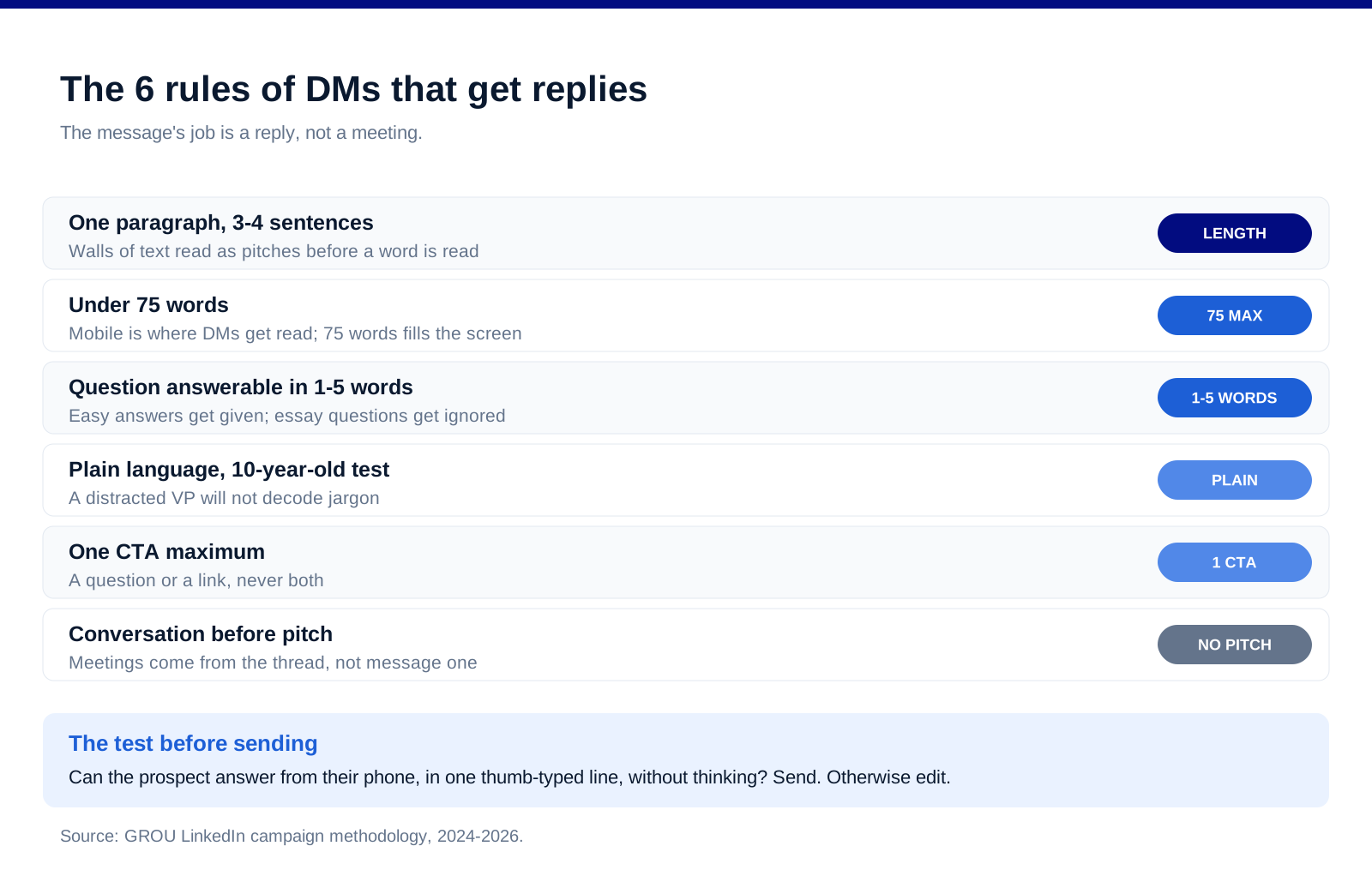
1. One paragraph, 3-4 sentences. Walls of text read as pitches before a word is read.
2. Under 75 words. Mobile is where DMs get read; 75 words fills the screen.
3. Ask a question answerable in 1-5 words. "What's your biggest challenge with deliverability right now?" gets answered. "Would love to explore synergies" does not.
4. Plain language, the 10-year-old test. If a 10-year-old cannot understand the message, a distracted VP will not try.
5. One CTA maximum. A question or a link, never both.
6. Conversation before pitch. The DM's job is a reply, not a meeting. Meetings come from the thread, and the pipeline math works: our own LinkedIn outreach vs cold email comparison covers when this channel beats the inbox.
The 9 scripts, by scenario
Match the script to the trigger, never blast one template. Reply rates below are from our client campaign data, 2024-2026.
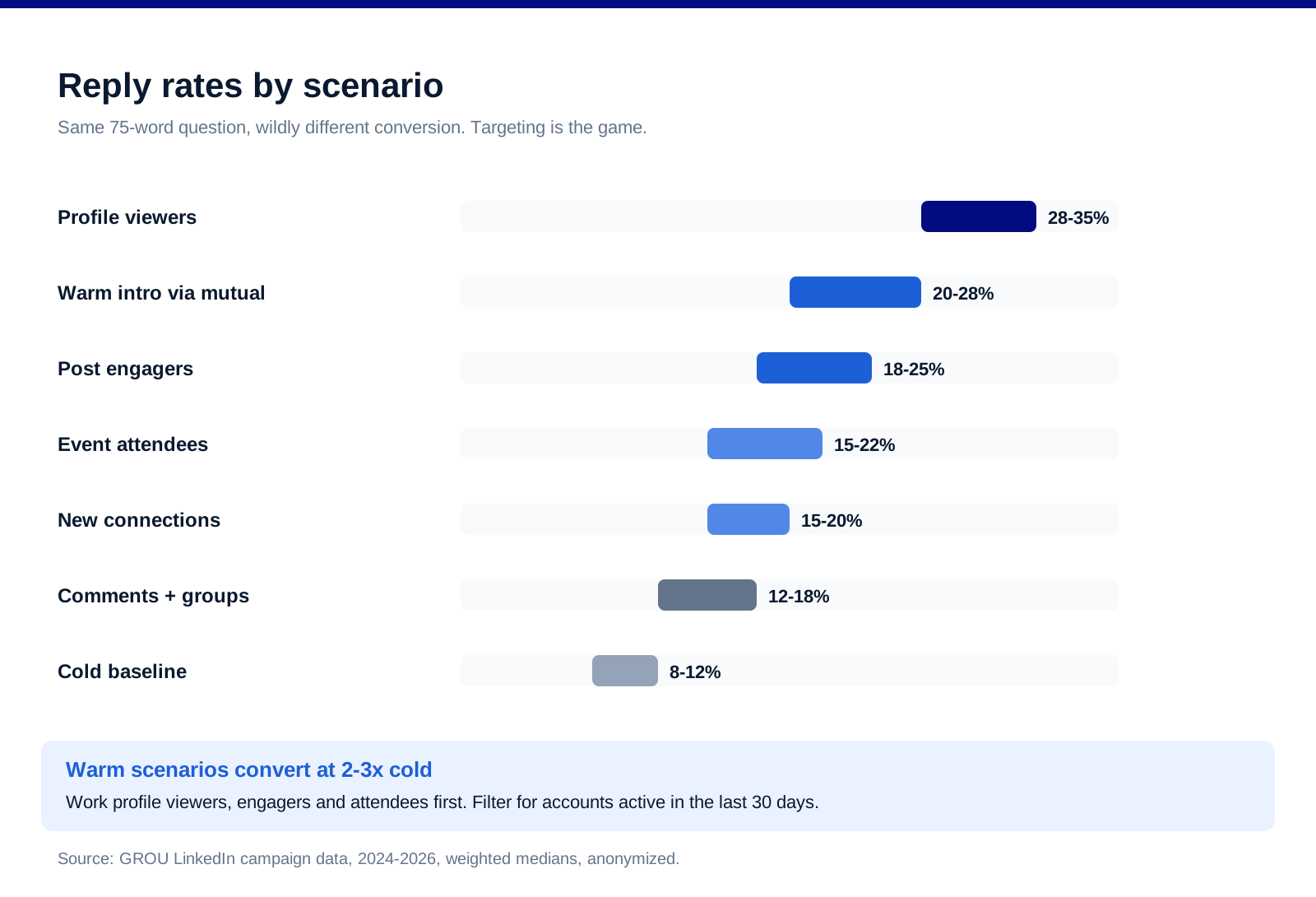
1. Profile viewer follow-up (28-35%). "Hey {first name}, noticed you checked out my profile. What caught your attention?" The highest-converting DM on LinkedIn because they moved first.
2. Connection acceptance message (15-20%). "Thanks for connecting, {first name}. Quick q: what's your biggest challenge with {relevant topic} right now?" Send 4-24 hours after acceptance, not 4 seconds.
3. Post engager follow-up (18-25%). "Hey {first name}, saw you liked my post about {topic}. Is {pain point} something you're dealing with at {company}?"
4. Warm intro via mutual (20-28%). "Hey {first name}, noticed we both know {mutual}. I've been working with {similar company} on {topic}. Open to a quick chat?" The one script where a soft meeting ask works in message one.
5. Event attendee follow-up (15-22%). "Saw you attended {event}. What was your biggest takeaway?" Runs hottest in the two weeks after the event.
6. Comment follow-up (12-18%). "Your comment on {post topic} was interesting, especially the point about {specific insight}. Is that something you're working on at {company}?" The {specific insight} clause is the whole message; generic praise reads as automation.
7. Group member outreach (12-18%). "Saw we're both in {group}. The discussion on {topic} was interesting. Something you're focused on at {company}?"
8. Follow-up, day 5-7 (adds 30-40% to thread totals). "Following up on my note. No worries if {topic} isn't a priority right now. But if it is, happy to share what's working for {similar company}." The permission to say no is what earns the reply.
9. Last ping, day 10-14. "{First name}, last ping on this. Totally understand if timing's off. Let me know if worth reconnecting in a few months." Then actually stop.
The sequence and timing around the scripts
A great DM inside a robotic sequence still reads as automation. The wrapper matters as much as the words.
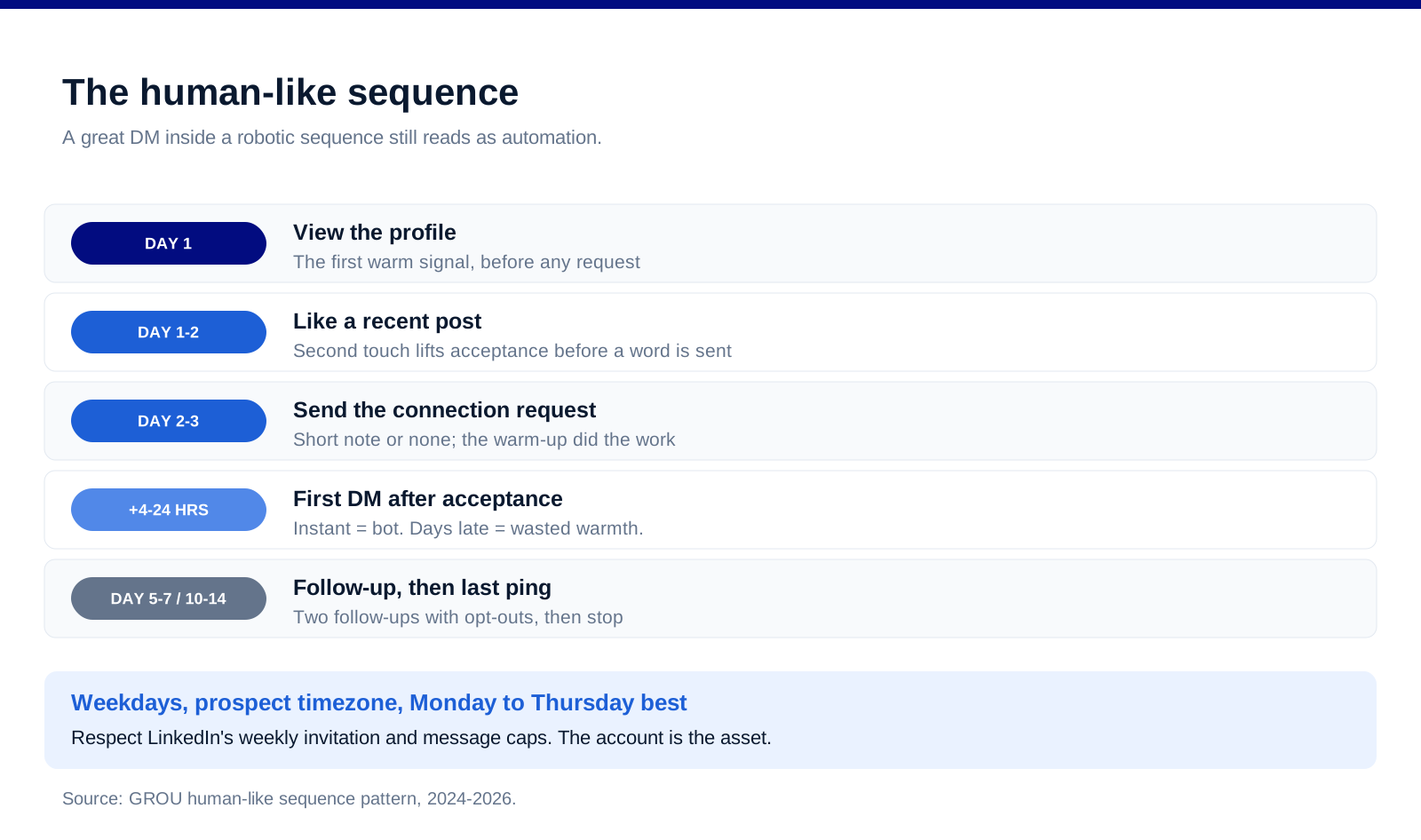
Day 1: view the profile. Day 1-2: like a recent post. Day 2-3: send the connection request. The view-and-like warm-up lifts acceptance before a word is sent.
4-24 hours after acceptance: first DM. Instant messages flag automation; multi-day silence wastes the warmth.
Day 5-7: follow-up. Day 10-14: last ping. Two follow-ups, then out, on weekdays in the prospect's timezone, Monday to Thursday performing best.
Targeting order: profile viewers, post engagers, and event attendees first ("posted in the last 30 days" is the active-user filter), cold lists last. Automation platforms like HeyReach or Expandi can run this sequence at team scale, but LinkedIn's own limits on invitations and messages are the hard ceiling: respect the weekly caps or lose the account that sends everything.
The DM mistakes that kill threads
Mistake 1: pitching in message one. The fastest route from "accepted" to "ignored". The first message buys a conversation, nothing else.
Mistake 2: the wall of text. Three paragraphs about your company is a delete on mobile, where most DMs are read.
Mistake 3: questions that need essays. "How do you think about your GTM strategy?" demands work. "Is hiring SDRs on your plate this quarter?" takes three words to answer.
Mistake 4: no opt-out in follow-ups. "No worries if this isn't a priority" converts better than pressure in every test we have run; permission to decline is what separates persistent from annoying.
FAQ
What is a good reply rate for LinkedIn DMs?
Against a cold baseline of 8-12%, warm-scenario DMs should hit 15-35%: profile viewers at the top (28-35%), post engagers and warm intros in the 18-28% band, acceptance messages 15-20%. Below 10% on warm scenarios means the script or the targeting is broken.
How long should a LinkedIn DM be?
Under 75 words, one paragraph, 3-4 sentences. DMs are read on mobile, and LinkedIn's own guidance has consistently favored shorter messages. If the message needs scrolling, it needs editing.
How soon after connecting should you message someone?
4 to 24 hours after acceptance. Instant automated messages flag the account as a bot; waiting days squanders the moment of attention that made them accept.
How many follow-ups should you send on LinkedIn?
Two: one at day 5-7 with an easy opt-out, one final ping at day 10-14 offering to reconnect later. Follow-ups add 30-40% to total thread replies; a third message adds unsubscribes-in-spirit and reports.
Do LinkedIn automation tools hurt reply rates?
Not when they run human-like sequences inside LinkedIn's limits: staggered actions, working-hours sending, weekly caps respected. Reply rates die from robotic timing and generic scripts, not from automation itself. The account risk lives in exceeding invitation and message limits, so treat the caps as hard.
Should you pitch your product in LinkedIn DMs?
Not in the first message, and usually not in the second. The DM earns a conversation; the conversation earns the meeting. The only partial exception is the warm-intro script, where a mutual connection lets a soft "open to a quick chat?" land in message one.
Bottom line
LinkedIn DMs are a targeting game wearing a copywriting costume: the same 75-word question converts at 8% cold and 30% to someone who viewed your profile yesterday. Run the nine scripts against their triggers, keep every message one short question, wrap them in the human-like sequence, and let two polite follow-ups do the compounding. The scripts are the easy part; the discipline is the moat.
Want the whole LinkedIn motion, targeting, scripts, and sequencing, run for you? Book a call with GROU. We run LinkedIn outreach programs for B2B teams across verticals.
We are GROU, a B2B pipeline agency that runs lead generation, outbound, and LinkedIn content for clients across manufacturing, fintech, iGaming, software, and professional services. Reply-rate ranges are weighted medians from our LinkedIn campaign deployments between 2024 and 2026, anonymized to protect client confidentiality.
Some links in this article are affiliate. We may earn a small commission at no extra cost to you. We only recommend tools we've deployed for clients.
The LinkedIn DMs that get replies in 2026 share one shape: one short paragraph, a question the prospect can answer in one to five words, and no pitch. Run that way, our campaign data shows warm-scenario DMs (profile viewers, post engagers) pulling 18-35% reply rates against 8-12% for standard cold messages. These are the nine scripts we run in client programs, with the rules and the sequence around them.
This covers the messages after the connection. For the invite itself, see our connection request messages guide.
TL;DR
Nine scripts cover the scenarios that matter: profile viewers (28-35% reply rate in our campaigns), new connections (15-20%), post engagers (18-25%), warm intros via mutuals (20-28%), event attendees (15-22%), comment and group threads (12-18%), plus two follow-ups. Six rules make them work: one paragraph of 3-4 sentences, under 75 words, a question answerable in 1-5 words, plain language that passes the 10-year-old test, a single CTA, and conversation before pitch, always. Wrap them in the human-like sequence (view, like, connect, message 4-24 hours after acceptance, follow up day 5-7) and send on weekdays in the prospect's timezone. Warm scenarios first: the same script sent to someone who engaged with you converts at 2-3x cold.
The six rules that earn replies
LinkedIn DMs die from length and neediness. LinkedIn's own sales guidance has said for years that shorter messages outperform, and our campaign data agrees violently.
1. One paragraph, 3-4 sentences. Walls of text read as pitches before a word is read.
2. Under 75 words. Mobile is where DMs get read; 75 words fills the screen.
3. Ask a question answerable in 1-5 words. "What's your biggest challenge with deliverability right now?" gets answered. "Would love to explore synergies" does not.
4. Plain language, the 10-year-old test. If a 10-year-old cannot understand the message, a distracted VP will not try.
5. One CTA maximum. A question or a link, never both.
6. Conversation before pitch. The DM's job is a reply, not a meeting. Meetings come from the thread, and the pipeline math works: our own LinkedIn outreach vs cold email comparison covers when this channel beats the inbox.
The 9 scripts, by scenario
Match the script to the trigger, never blast one template. Reply rates below are from our client campaign data, 2024-2026.
1. Profile viewer follow-up (28-35%). "Hey {first name}, noticed you checked out my profile. What caught your attention?" The highest-converting DM on LinkedIn because they moved first.
2. Connection acceptance message (15-20%). "Thanks for connecting, {first name}. Quick q: what's your biggest challenge with {relevant topic} right now?" Send 4-24 hours after acceptance, not 4 seconds.
3. Post engager follow-up (18-25%). "Hey {first name}, saw you liked my post about {topic}. Is {pain point} something you're dealing with at {company}?"
4. Warm intro via mutual (20-28%). "Hey {first name}, noticed we both know {mutual}. I've been working with {similar company} on {topic}. Open to a quick chat?" The one script where a soft meeting ask works in message one.
5. Event attendee follow-up (15-22%). "Saw you attended {event}. What was your biggest takeaway?" Runs hottest in the two weeks after the event.
6. Comment follow-up (12-18%). "Your comment on {post topic} was interesting, especially the point about {specific insight}. Is that something you're working on at {company}?" The {specific insight} clause is the whole message; generic praise reads as automation.
7. Group member outreach (12-18%). "Saw we're both in {group}. The discussion on {topic} was interesting. Something you're focused on at {company}?"
8. Follow-up, day 5-7 (adds 30-40% to thread totals). "Following up on my note. No worries if {topic} isn't a priority right now. But if it is, happy to share what's working for {similar company}." The permission to say no is what earns the reply.
9. Last ping, day 10-14. "{First name}, last ping on this. Totally understand if timing's off. Let me know if worth reconnecting in a few months." Then actually stop.
The sequence and timing around the scripts
A great DM inside a robotic sequence still reads as automation. The wrapper matters as much as the words.
Day 1: view the profile. Day 1-2: like a recent post. Day 2-3: send the connection request. The view-and-like warm-up lifts acceptance before a word is sent.
4-24 hours after acceptance: first DM. Instant messages flag automation; multi-day silence wastes the warmth.
Day 5-7: follow-up. Day 10-14: last ping. Two follow-ups, then out, on weekdays in the prospect's timezone, Monday to Thursday performing best.
Targeting order: profile viewers, post engagers, and event attendees first ("posted in the last 30 days" is the active-user filter), cold lists last. Automation platforms like HeyReach or Expandi can run this sequence at team scale, but LinkedIn's own limits on invitations and messages are the hard ceiling: respect the weekly caps or lose the account that sends everything.
The DM mistakes that kill threads
Mistake 1: pitching in message one. The fastest route from "accepted" to "ignored". The first message buys a conversation, nothing else.
Mistake 2: the wall of text. Three paragraphs about your company is a delete on mobile, where most DMs are read.
Mistake 3: questions that need essays. "How do you think about your GTM strategy?" demands work. "Is hiring SDRs on your plate this quarter?" takes three words to answer.
Mistake 4: no opt-out in follow-ups. "No worries if this isn't a priority" converts better than pressure in every test we have run; permission to decline is what separates persistent from annoying.
FAQ
What is a good reply rate for LinkedIn DMs?
Against a cold baseline of 8-12%, warm-scenario DMs should hit 15-35%: profile viewers at the top (28-35%), post engagers and warm intros in the 18-28% band, acceptance messages 15-20%. Below 10% on warm scenarios means the script or the targeting is broken.
How long should a LinkedIn DM be?
Under 75 words, one paragraph, 3-4 sentences. DMs are read on mobile, and LinkedIn's own guidance has consistently favored shorter messages. If the message needs scrolling, it needs editing.
How soon after connecting should you message someone?
4 to 24 hours after acceptance. Instant automated messages flag the account as a bot; waiting days squanders the moment of attention that made them accept.
How many follow-ups should you send on LinkedIn?
Two: one at day 5-7 with an easy opt-out, one final ping at day 10-14 offering to reconnect later. Follow-ups add 30-40% to total thread replies; a third message adds unsubscribes-in-spirit and reports.
Do LinkedIn automation tools hurt reply rates?
Not when they run human-like sequences inside LinkedIn's limits: staggered actions, working-hours sending, weekly caps respected. Reply rates die from robotic timing and generic scripts, not from automation itself. The account risk lives in exceeding invitation and message limits, so treat the caps as hard.
Should you pitch your product in LinkedIn DMs?
Not in the first message, and usually not in the second. The DM earns a conversation; the conversation earns the meeting. The only partial exception is the warm-intro script, where a mutual connection lets a soft "open to a quick chat?" land in message one.
Bottom line
LinkedIn DMs are a targeting game wearing a copywriting costume: the same 75-word question converts at 8% cold and 30% to someone who viewed your profile yesterday. Run the nine scripts against their triggers, keep every message one short question, wrap them in the human-like sequence, and let two polite follow-ups do the compounding. The scripts are the easy part; the discipline is the moat.
Want the whole LinkedIn motion, targeting, scripts, and sequencing, run for you? Book a call with GROU. We run LinkedIn outreach programs for B2B teams across verticals.
We are GROU, a B2B pipeline agency that runs lead generation, outbound, and LinkedIn content for clients across manufacturing, fintech, iGaming, software, and professional services. Reply-rate ranges are weighted medians from our LinkedIn campaign deployments between 2024 and 2026, anonymized to protect client confidentiality.
Some links in this article are affiliate. We may earn a small commission at no extra cost to you. We only recommend tools we've deployed for clients.
The LinkedIn DMs that get replies in 2026 share one shape: one short paragraph, a question the prospect can answer in one to five words, and no pitch. Run that way, our campaign data shows warm-scenario DMs (profile viewers, post engagers) pulling 18-35% reply rates against 8-12% for standard cold messages. These are the nine scripts we run in client programs, with the rules and the sequence around them.
This covers the messages after the connection. For the invite itself, see our connection request messages guide.
TL;DR
Nine scripts cover the scenarios that matter: profile viewers (28-35% reply rate in our campaigns), new connections (15-20%), post engagers (18-25%), warm intros via mutuals (20-28%), event attendees (15-22%), comment and group threads (12-18%), plus two follow-ups. Six rules make them work: one paragraph of 3-4 sentences, under 75 words, a question answerable in 1-5 words, plain language that passes the 10-year-old test, a single CTA, and conversation before pitch, always. Wrap them in the human-like sequence (view, like, connect, message 4-24 hours after acceptance, follow up day 5-7) and send on weekdays in the prospect's timezone. Warm scenarios first: the same script sent to someone who engaged with you converts at 2-3x cold.
The six rules that earn replies
LinkedIn DMs die from length and neediness. LinkedIn's own sales guidance has said for years that shorter messages outperform, and our campaign data agrees violently.
1. One paragraph, 3-4 sentences. Walls of text read as pitches before a word is read.
2. Under 75 words. Mobile is where DMs get read; 75 words fills the screen.
3. Ask a question answerable in 1-5 words. "What's your biggest challenge with deliverability right now?" gets answered. "Would love to explore synergies" does not.
4. Plain language, the 10-year-old test. If a 10-year-old cannot understand the message, a distracted VP will not try.
5. One CTA maximum. A question or a link, never both.
6. Conversation before pitch. The DM's job is a reply, not a meeting. Meetings come from the thread, and the pipeline math works: our own LinkedIn outreach vs cold email comparison covers when this channel beats the inbox.
The 9 scripts, by scenario
Match the script to the trigger, never blast one template. Reply rates below are from our client campaign data, 2024-2026.
1. Profile viewer follow-up (28-35%). "Hey {first name}, noticed you checked out my profile. What caught your attention?" The highest-converting DM on LinkedIn because they moved first.
2. Connection acceptance message (15-20%). "Thanks for connecting, {first name}. Quick q: what's your biggest challenge with {relevant topic} right now?" Send 4-24 hours after acceptance, not 4 seconds.
3. Post engager follow-up (18-25%). "Hey {first name}, saw you liked my post about {topic}. Is {pain point} something you're dealing with at {company}?"
4. Warm intro via mutual (20-28%). "Hey {first name}, noticed we both know {mutual}. I've been working with {similar company} on {topic}. Open to a quick chat?" The one script where a soft meeting ask works in message one.
5. Event attendee follow-up (15-22%). "Saw you attended {event}. What was your biggest takeaway?" Runs hottest in the two weeks after the event.
6. Comment follow-up (12-18%). "Your comment on {post topic} was interesting, especially the point about {specific insight}. Is that something you're working on at {company}?" The {specific insight} clause is the whole message; generic praise reads as automation.
7. Group member outreach (12-18%). "Saw we're both in {group}. The discussion on {topic} was interesting. Something you're focused on at {company}?"
8. Follow-up, day 5-7 (adds 30-40% to thread totals). "Following up on my note. No worries if {topic} isn't a priority right now. But if it is, happy to share what's working for {similar company}." The permission to say no is what earns the reply.
9. Last ping, day 10-14. "{First name}, last ping on this. Totally understand if timing's off. Let me know if worth reconnecting in a few months." Then actually stop.
The sequence and timing around the scripts
A great DM inside a robotic sequence still reads as automation. The wrapper matters as much as the words.
Day 1: view the profile. Day 1-2: like a recent post. Day 2-3: send the connection request. The view-and-like warm-up lifts acceptance before a word is sent.
4-24 hours after acceptance: first DM. Instant messages flag automation; multi-day silence wastes the warmth.
Day 5-7: follow-up. Day 10-14: last ping. Two follow-ups, then out, on weekdays in the prospect's timezone, Monday to Thursday performing best.
Targeting order: profile viewers, post engagers, and event attendees first ("posted in the last 30 days" is the active-user filter), cold lists last. Automation platforms like HeyReach or Expandi can run this sequence at team scale, but LinkedIn's own limits on invitations and messages are the hard ceiling: respect the weekly caps or lose the account that sends everything.
The DM mistakes that kill threads
Mistake 1: pitching in message one. The fastest route from "accepted" to "ignored". The first message buys a conversation, nothing else.
Mistake 2: the wall of text. Three paragraphs about your company is a delete on mobile, where most DMs are read.
Mistake 3: questions that need essays. "How do you think about your GTM strategy?" demands work. "Is hiring SDRs on your plate this quarter?" takes three words to answer.
Mistake 4: no opt-out in follow-ups. "No worries if this isn't a priority" converts better than pressure in every test we have run; permission to decline is what separates persistent from annoying.
FAQ
What is a good reply rate for LinkedIn DMs?
Against a cold baseline of 8-12%, warm-scenario DMs should hit 15-35%: profile viewers at the top (28-35%), post engagers and warm intros in the 18-28% band, acceptance messages 15-20%. Below 10% on warm scenarios means the script or the targeting is broken.
How long should a LinkedIn DM be?
Under 75 words, one paragraph, 3-4 sentences. DMs are read on mobile, and LinkedIn's own guidance has consistently favored shorter messages. If the message needs scrolling, it needs editing.
How soon after connecting should you message someone?
4 to 24 hours after acceptance. Instant automated messages flag the account as a bot; waiting days squanders the moment of attention that made them accept.
How many follow-ups should you send on LinkedIn?
Two: one at day 5-7 with an easy opt-out, one final ping at day 10-14 offering to reconnect later. Follow-ups add 30-40% to total thread replies; a third message adds unsubscribes-in-spirit and reports.
Do LinkedIn automation tools hurt reply rates?
Not when they run human-like sequences inside LinkedIn's limits: staggered actions, working-hours sending, weekly caps respected. Reply rates die from robotic timing and generic scripts, not from automation itself. The account risk lives in exceeding invitation and message limits, so treat the caps as hard.
Should you pitch your product in LinkedIn DMs?
Not in the first message, and usually not in the second. The DM earns a conversation; the conversation earns the meeting. The only partial exception is the warm-intro script, where a mutual connection lets a soft "open to a quick chat?" land in message one.
Bottom line
LinkedIn DMs are a targeting game wearing a copywriting costume: the same 75-word question converts at 8% cold and 30% to someone who viewed your profile yesterday. Run the nine scripts against their triggers, keep every message one short question, wrap them in the human-like sequence, and let two polite follow-ups do the compounding. The scripts are the easy part; the discipline is the moat.
Want the whole LinkedIn motion, targeting, scripts, and sequencing, run for you? Book a call with GROU. We run LinkedIn outreach programs for B2B teams across verticals.
We are GROU, a B2B pipeline agency that runs lead generation, outbound, and LinkedIn content for clients across manufacturing, fintech, iGaming, software, and professional services. Reply-rate ranges are weighted medians from our LinkedIn campaign deployments between 2024 and 2026, anonymized to protect client confidentiality.
Some links in this article are affiliate. We may earn a small commission at no extra cost to you. We only recommend tools we've deployed for clients.
Pipeline OS Newsletter
Build qualified pipeline
Get weekly tactics to generate demand, improve lead quality, and book more meetings.





Trusted by industry leaders
Trusted by industry leaders
Trusted by industry leaders
Ready to build qualified pipeline?
Ready to build qualified pipeline?
Ready to build qualified pipeline?
Book a call to see if we're the right fit, or take the 2-minute quiz to get a clear starting point.
Book a call to see if we're the right fit, or take the 2-minute quiz to get a clear starting point.
Book a call to see if we're the right fit, or take the 2-minute quiz to get a clear starting point.
" height="30.21639343089746px" id="hfGbXmQR2" width="30.216393430897455px"/></svg>)
Copyright © 2026 – All Right Reserved
Copyright © 2026 – All Right Reserved
Copyright © 2026 – All Right Reserved