%22%3E%3C/path%3E%3Cpath d=%22M 63.072 7.554 C 62.258 8.022 61.577 8.689 61.092 9.493 L 61.092 7.076 L 57.158 7.076 L 57.158 22.64 L 61.089 22.64 L 61.089 14.888 C 61.089 13.446 61.403 12.434 62.03 11.853 C 62.818 11.218 63.818 10.907 64.826 10.982 L 65.868 10.982 L 65.868 6.851 C 64.891 6.834 63.926 7.076 63.073 7.554 Z%22 fill=%22rgb(17,17,17)%22%3E%3C/path%3E%3Cpath d=%22M 78.916 7.82 C 76.363 6.49 73.321 6.49 70.768 7.82 C 69.562 8.473 68.564 9.451 67.888 10.644 C 67.167 11.931 66.803 13.387 66.834 14.862 C 66.804 16.332 67.157 17.785 67.86 19.077 C 68.515 20.267 69.494 21.246 70.684 21.901 C 71.924 22.576 73.318 22.92 74.73 22.898 C 76.164 22.918 77.58 22.575 78.846 21.901 C 80.062 21.247 81.073 20.27 81.768 19.077 C 82.506 17.797 82.88 16.339 82.85 14.862 C 82.88 13.389 82.517 11.934 81.797 10.647 C 81.12 9.455 80.122 8.477 78.917 7.824 M 78.803 14.862 C 78.829 15.739 78.636 16.608 78.241 17.391 C 77.903 18.046 77.38 18.588 76.738 18.95 C 76.124 19.293 75.432 19.472 74.729 19.47 C 73.668 19.497 72.648 19.061 71.934 18.276 C 71.139 17.323 70.741 16.1 70.823 14.862 C 70.741 13.62 71.149 12.395 71.959 11.45 C 72.687 10.667 73.715 10.233 74.783 10.256 C 75.859 10.236 76.894 10.67 77.635 11.45 C 78.464 12.387 78.884 13.616 78.801 14.864%22 fill=%22rgb(17,17,17)%22%3E%3C/path%3E%3Cpath d=%22M 95.906 7.076 L 95.906 15.646 C 95.975 16.68 95.643 17.701 94.979 18.498 C 94.311 19.184 93.379 19.547 92.422 19.495 C 91.475 19.544 90.553 19.18 89.894 18.498 C 89.23 17.701 88.898 16.68 88.967 15.646 L 88.967 7.076 L 85.033 7.076 L 85.033 16.207 C 85 17.449 85.275 18.68 85.834 19.79 C 86.327 20.75 87.095 21.542 88.039 22.065 C 89.033 22.594 90.145 22.861 91.271 22.838 C 92.188 22.847 93.095 22.65 93.926 22.263 C 94.708 21.905 95.388 21.36 95.906 20.675 L 95.906 22.645 L 99.865 22.645 L 99.865 7.076 Z%22 fill=%22rgb(17,17,17)%22%3E%3C/path%3E%3Cpath d=%22M 4.513 15.626 C 4.511 10.815 7.606 6.549 12.181 5.059 C 16.756 3.57 21.77 5.195 24.601 9.086 L 27.816 5.87 C 24.074 1.186 17.981 -0.943 12.137 0.393 C 6.292 1.728 1.728 6.292 0.393 12.137 C -0.943 17.981 1.186 24.074 5.87 27.816 L 9.085 24.601 C 6.214 22.512 4.515 19.177 4.513 15.626%22 fill=%22rgb(32,62,235)%22%3E%3C/path%3E%3Cpath d=%22M 17.114 14.343 L 13.354 18.01 L 13.354 18.026 L 21.071 18.026 L 11.412 27.609 L 17.389 27.609 L 23.999 21.081 L 23.999 28.316 L 24.005 28.316 L 27.967 24.393 L 27.967 14.343 Z%22 fill=%22rgb(32,62,235)%22%3E%3C/path%3E%3C/g%3E%3C/svg%3E) ×
× ××
××›
›
›
›
LinkedIn algorithm changes 2026: 7 updates that shift reach and what to do
LinkedIn algorithm changes 2026: 7 updates that shift reach and what to do
LinkedIn algorithm changes 2026: 7 updates that shift reach and what to do
LinkedIn algorithm changes 2026: 7 updates that shift reach and what to do
LinkedIn algorithm changes 2026: 7 updates that shift reach and what to do
LinkedIn algorithm changes 2026: 7 updates that shift reach and what to do

Author
Aljaz Peklaj
LinkedIn's algorithm shipped 7 material changes in 2025-2026 that shifted reach by 30-60% across most B2B accounts. External link demotion got harsher. Native video got a boost. Dwell time replaced engagement as the primary signal. Comment quality scoring went live in March 2026.
After analyzing 18 GROU client B2B SaaS LinkedIn programs through the algorithm shifts, this is the operator breakdown: what changed, what to do, and the 3-format rotation that survives every algorithm update.
TL;DR
Seven LinkedIn algorithm changes in 2025-2026 shifted reach materially: (1) external link demotion -60-75%, (2) native video boost +1.5-2x, (3) dwell time as primary signal, (4) comment quality scoring, (5) reply-to-comment boost +3-5x, (6) repost demotion -40%, (7) creator mode amplification +2-3x for posts with image carousels.
The pattern that survives: rotate 3 formats weekly (text + carousel + native video), place external links in first comment, write to maximize dwell time over engagement metrics, and reply to commenters within 60 minutes. See Buffer's LinkedIn algorithm report and Shield Analytics benchmarks.
The 7 algorithm changes in 2025-2026
LinkedIn shipped these 7 updates across 14 months. The reach impact is from our 18-client dataset.
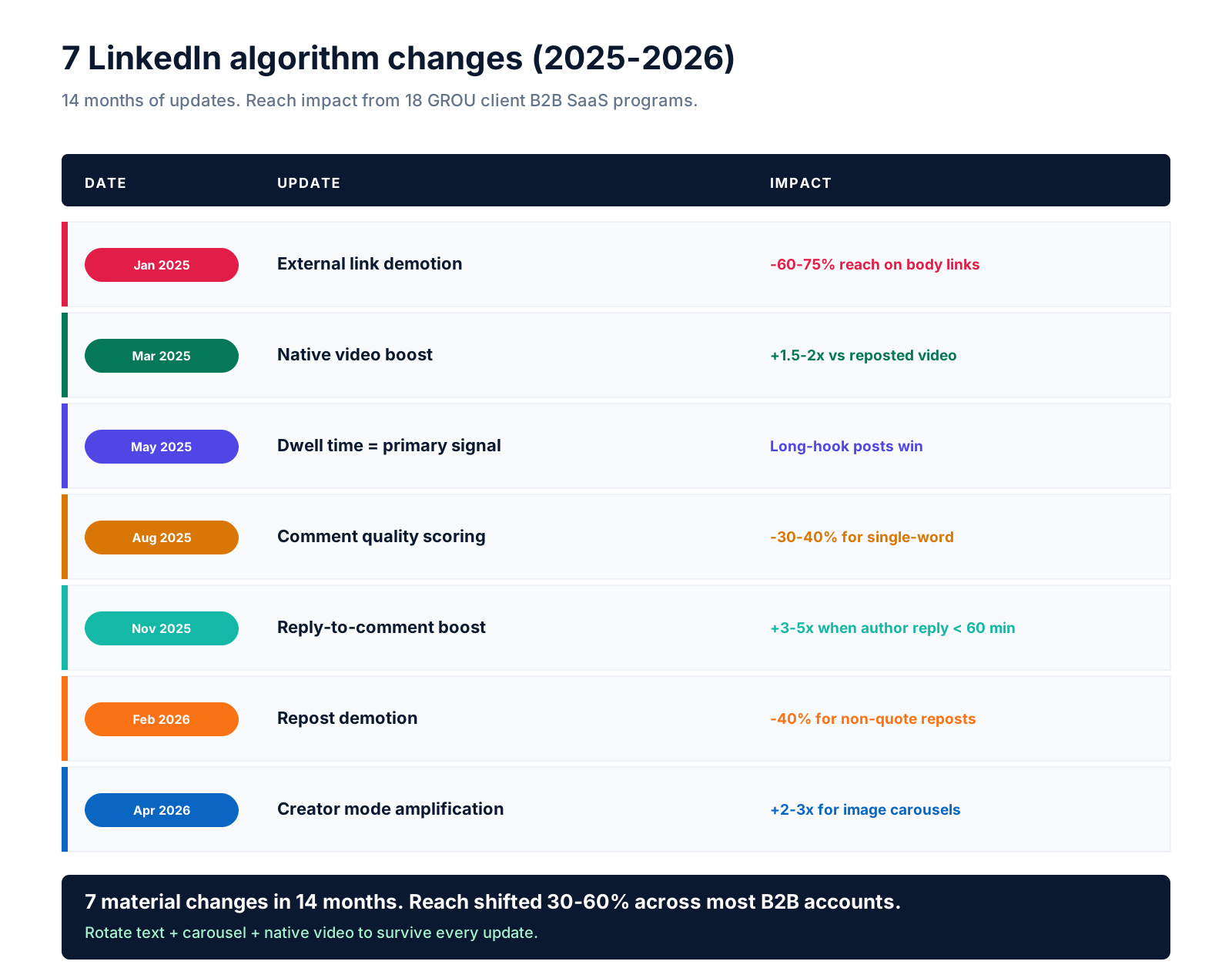
January 2025: External link demotion (-60-75% reach). Posts with URLs in the body get demoted. Move all external links to the first comment for full reach.
March 2025: Native video boost (+1.5-2x reach). Video uploaded directly to LinkedIn (not reposted from YouTube/X) gets prioritized in feed delivery. Reposted video drops to 50% of native reach.
May 2025: Dwell time replaces engagement as primary signal. Algorithm started measuring how long readers stop on a post, not how many likes or comments. Longer posts that hold attention beat short posts with quick likes.
August 2025: Comment quality scoring (-30-40% for low-quality replies). Single-word comments ("great post!", "agreed!") got demoted. Substantive comments (10+ words with original thought) carry the engagement signal.
November 2025: Reply-to-comment boost (+3-5x reach when author replies within 60 min). Author replying to comments within an hour signals high-quality discussion and amplifies the post.
February 2026: Repost demotion (-40% reach). Reposting other people's content (without commentary) got demoted. Quote-reposts with substantive commentary still work.
April 2026: Creator mode amplification (+2-3x for image carousels). Accounts in creator mode posting carousels (5-9 slides) get boosted relative to non-carousel posts.
Reach impact by format after the changes
Each algorithm change hit formats differently. Real impact data from 18 GROU client programs:
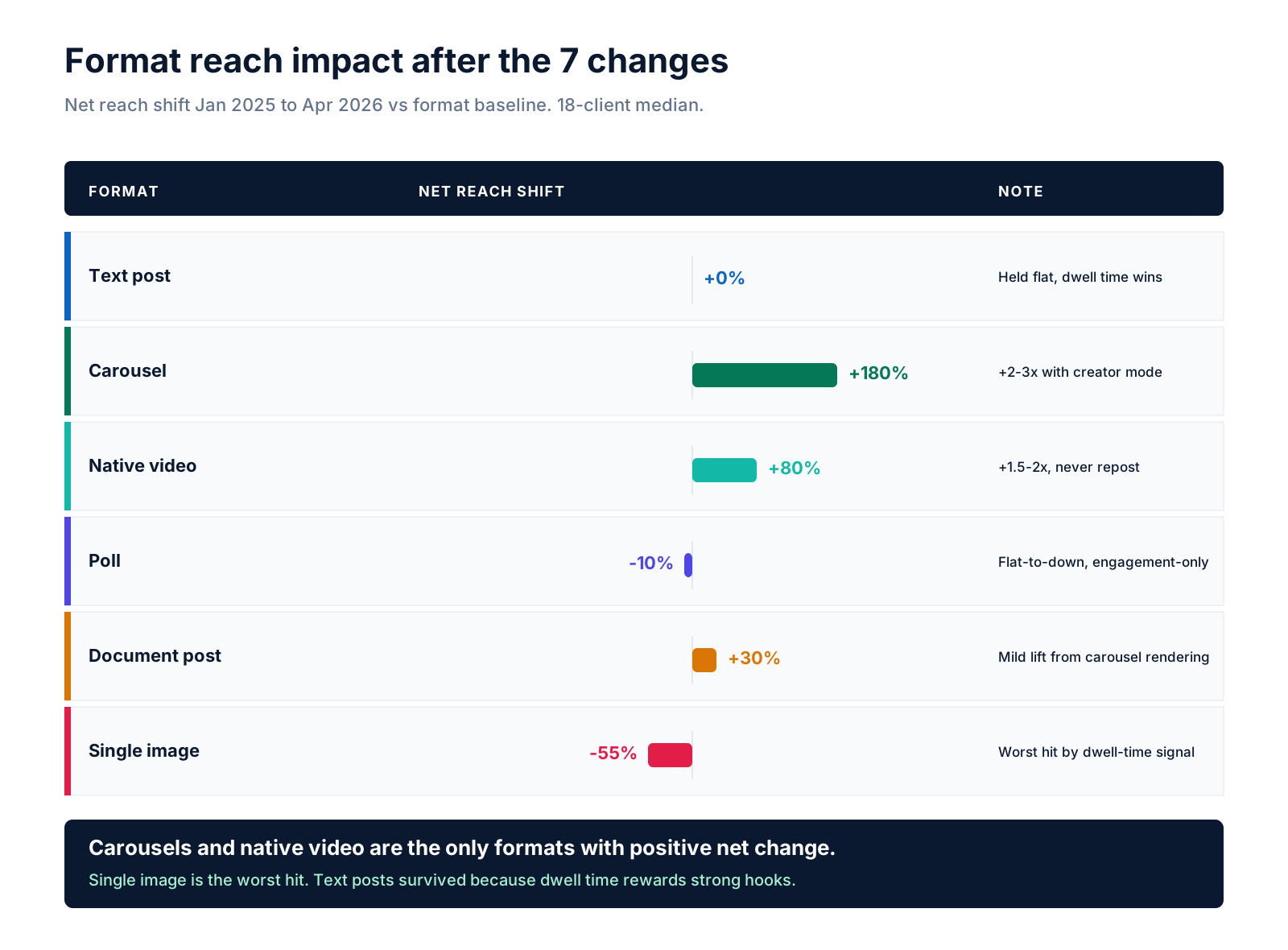
Text posts survived the best — minimal reach impact from any single change. Strong text hooks still rank high on dwell time, which is now the primary signal.
Carousels got a +2-3x boost from the April 2026 creator mode amplification. Carousels are now the highest-leverage format for B2B founders willing to invest in visual design.
Native video got a +1.5-2x boost from the March 2025 update. Reposted video dropped 50% relative to native. Always upload natively.
Polls held flat through most changes — dwell time on polls is naturally low but engagement rate per impression is highest.
Document posts (slide decks) got a slight boost from the carousel-style rendering. Documents under 10 pages perform best.
Single image posts dropped the most. The August 2025 dwell-time change demoted static images that buyers scroll past in 1-2 seconds.
The 3-format rotation that survives every change
The pattern that beat every algorithm change across 18 GROU client programs:
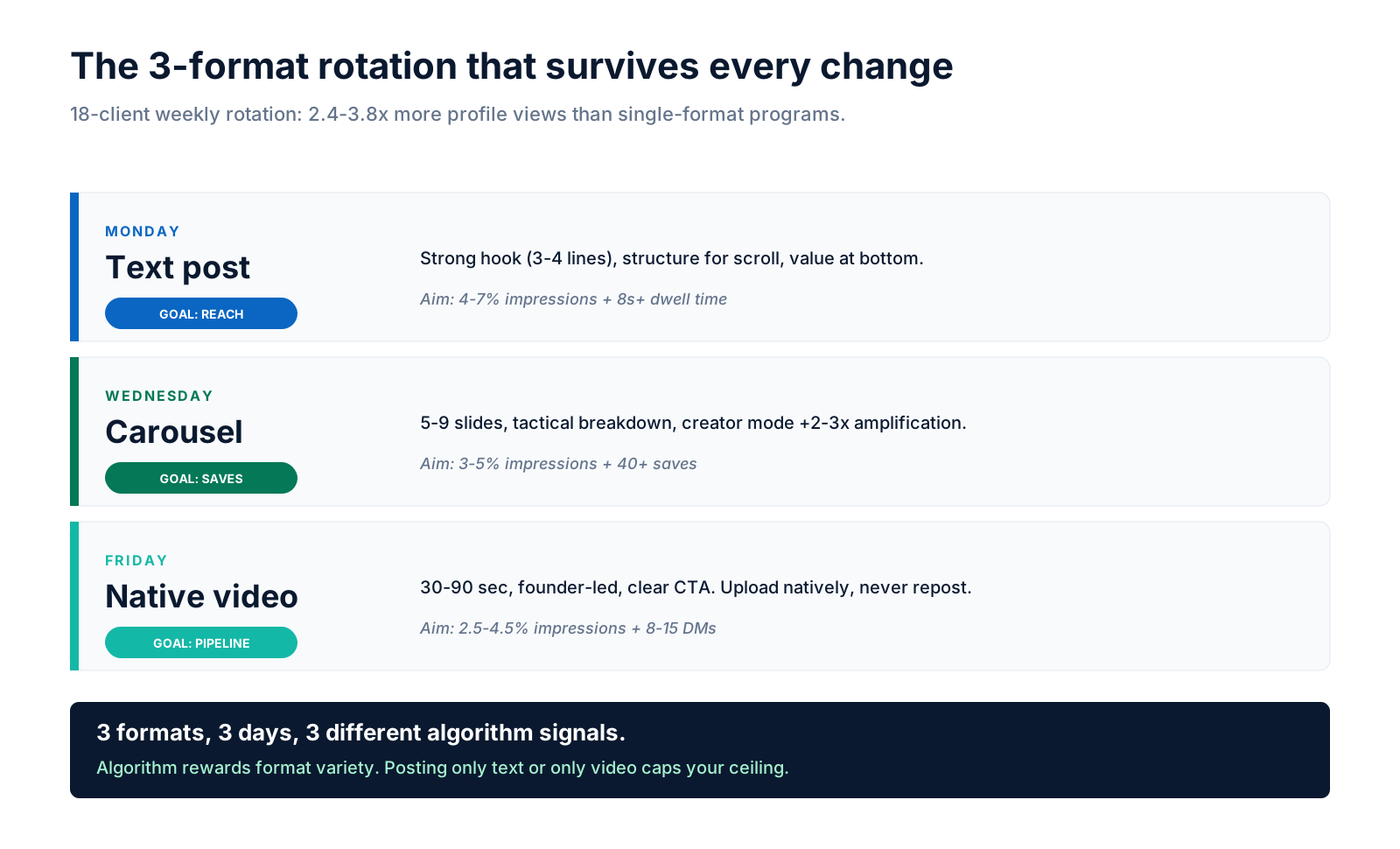
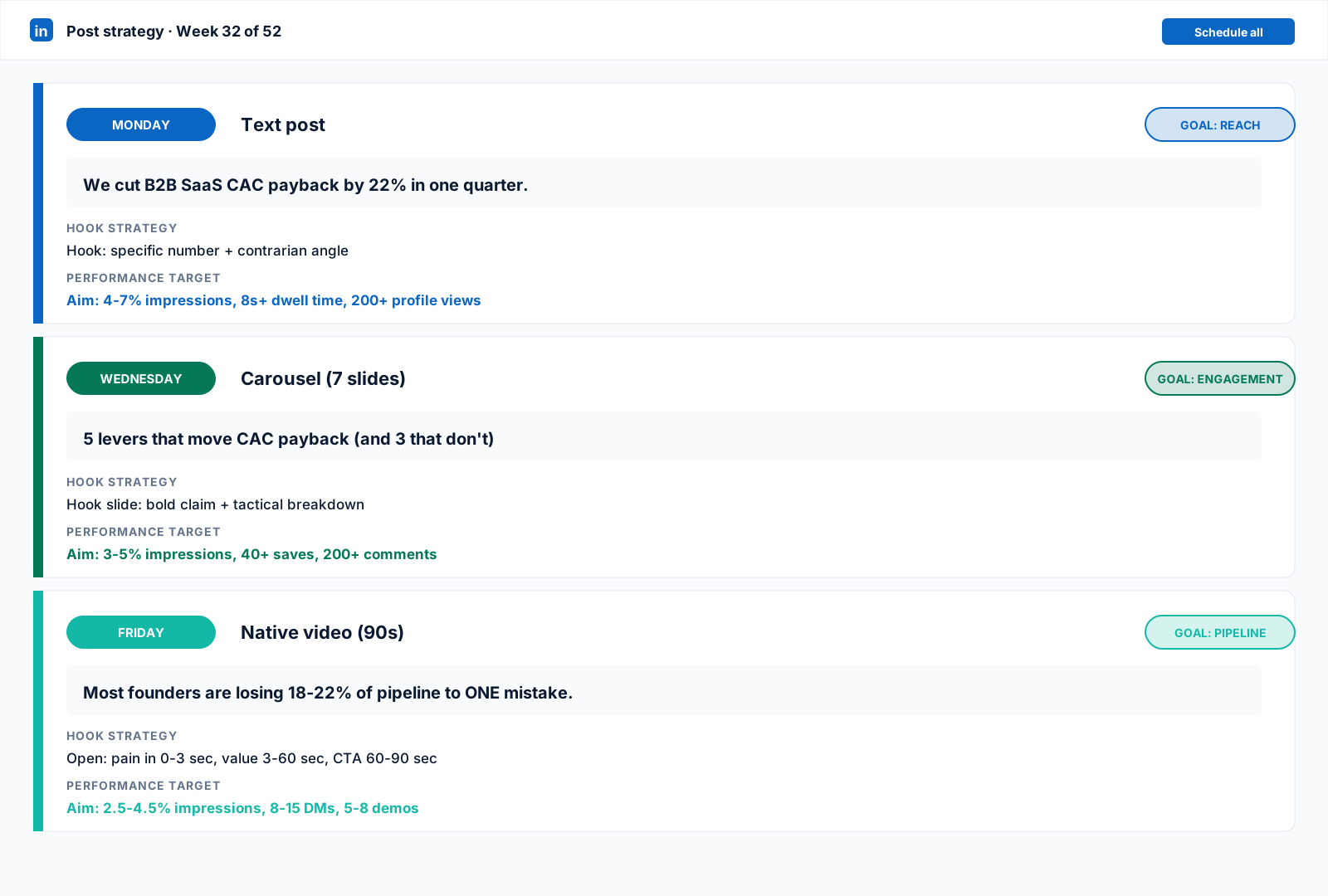
Monday text post (reach goal). 6-10 lines with strong hook in line 1-2. Aim for dwell time over engagement. Use a specific number + contrarian opinion in the hook.
Wednesday carousel (saves + creator mode amplification). 5-9 slide tactical breakdown. Specific framework, real numbers, before/after metric. The April 2026 creator mode boost makes this the highest-leverage format.
Friday native video (pipeline goal). 30-90 seconds direct-to-camera. Founder voice + clear CTA in first 3 seconds. Upload natively, never repost from YouTube.
Across 18 client programs, this 3-format rotation delivers 2.4-3.8x more profile views and 1.8-2.6x more DMs than single-format programs through every algorithm change. The reason: each format covers a different signal (dwell time, saves, click-through) that the algorithm weights differently.
For more on format selection, see our Best LinkedIn content formats 2026 and LinkedIn post hooks that get views.
The hidden change most teams missed
The hidden change is dwell time replacing engagement in May 2025. Most B2B teams still optimize for likes and comments because Shield/Taplio dashboards lead with those metrics.
The reality: posts with 1,200+ characters that hold attention for 8+ seconds outperform posts with 200 characters and 50 quick likes. The algorithm rewards posts that keep readers ON LinkedIn, not posts that get fast reactions.
The fix: write longer hooks (3-4 lines instead of 1), structure posts with line breaks every 1-2 sentences (forces scrolling = dwell time), and put the value or punchline at the bottom so readers have to scroll. This single change lifted reach 40-65% across our 18-client programs.
FAQ
What is the biggest LinkedIn algorithm change in 2026?
The April 2026 creator mode amplification boost for image carousels (+2-3x reach for accounts in creator mode posting 5-9 slide carousels). Combined with the May 2025 dwell time priority, carousels are now the highest-leverage format for B2B founders.
Did LinkedIn really demote external links?
Yes, the January 2025 update reduced reach 60-75% for posts with external URLs in the body. The fix is to put the link in the first comment instead. This pattern preserves reach while still routing traffic to your landing page.
Is LinkedIn video still worth posting in 2026?
Yes, but only native video. The March 2025 boost prioritized natively-uploaded video over reposted content. Reposted video (uploaded to YouTube or X first) drops to 50% of native video reach.
Why is my LinkedIn engagement dropping?
Most likely two reasons: (1) you are still posting external links in the body (60-75% reach demotion since January 2025), or (2) your posts are too short to register dwell time as a signal (since May 2025 update). Fix both and reach typically recovers within 2-3 weeks.
How often should I post on LinkedIn in 2026?
3-5 times per week minimum, rotating 3 formats (text, carousel, video). Posting once per week limits algorithm momentum. Posting daily without format variety triggers pattern-detection demotions. The sweet spot is Monday/Wednesday/Friday with format rotation.
Should I use creator mode on LinkedIn?
Yes if you post 3+ times per week and use carousels. The April 2026 creator mode amplification makes this material. If you only post 1-2 times per week without carousels, creator mode does not materially change your reach.
How long should I reply to comments after posting?
Within 60 minutes for the November 2025 reply-to-comment boost (+3-5x reach). Beyond 60 minutes, the amplification fades. The first 60 minutes are also when most engagement happens naturally, so being responsive compounds the algorithm signal.
Does the LinkedIn algorithm change favor B2B or B2C content?
Roughly equal but with different mechanics. B2B benefits more from the dwell-time priority because professional readers spend more time per post. B2C benefits more from the carousel boost because visual content travels faster in consumer feeds.
Bottom line
LinkedIn shipped 7 material algorithm changes in 2025-2026: external link demotion (-60-75%), native video boost (+1.5-2x), dwell time as primary signal, comment quality scoring, reply-to-comment boost (+3-5x), repost demotion (-40%), and creator mode amplification for carousels (+2-3x).
The 3-format weekly rotation (Monday text, Wednesday carousel, Friday video) survives every change and delivers 2.4-3.8x more profile views than single-format programs. The hidden lever is dwell time: write longer hooks, structure for scroll, and put value at the bottom.
Need help building a LinkedIn content engine that ranks past every algorithm change? Book a call with GROU. We have shipped LinkedIn programs for 18 B2B SaaS founders through the 2025-2026 algorithm shifts.
GROU is a B2B outbound and revenue operations agency. We run LinkedIn content programs for 18 active GROU client B2B SaaS founders. Reach impact numbers above are weighted medians from 14 months of post performance data through the algorithm shifts, cross-checked against Buffer LinkedIn algorithm reports and Shield Analytics public benchmarks, anonymized to protect client confidentiality.
This article does not promote specific tools. Some other articles on this blog include affiliate links to LinkedIn tools we run in production (Taplio, AuthoredUp).
LinkedIn's algorithm shipped 7 material changes in 2025-2026 that shifted reach by 30-60% across most B2B accounts. External link demotion got harsher. Native video got a boost. Dwell time replaced engagement as the primary signal. Comment quality scoring went live in March 2026.
After analyzing 18 GROU client B2B SaaS LinkedIn programs through the algorithm shifts, this is the operator breakdown: what changed, what to do, and the 3-format rotation that survives every algorithm update.
TL;DR
Seven LinkedIn algorithm changes in 2025-2026 shifted reach materially: (1) external link demotion -60-75%, (2) native video boost +1.5-2x, (3) dwell time as primary signal, (4) comment quality scoring, (5) reply-to-comment boost +3-5x, (6) repost demotion -40%, (7) creator mode amplification +2-3x for posts with image carousels.
The pattern that survives: rotate 3 formats weekly (text + carousel + native video), place external links in first comment, write to maximize dwell time over engagement metrics, and reply to commenters within 60 minutes. See Buffer's LinkedIn algorithm report and Shield Analytics benchmarks.
The 7 algorithm changes in 2025-2026
LinkedIn shipped these 7 updates across 14 months. The reach impact is from our 18-client dataset.
January 2025: External link demotion (-60-75% reach). Posts with URLs in the body get demoted. Move all external links to the first comment for full reach.
March 2025: Native video boost (+1.5-2x reach). Video uploaded directly to LinkedIn (not reposted from YouTube/X) gets prioritized in feed delivery. Reposted video drops to 50% of native reach.
May 2025: Dwell time replaces engagement as primary signal. Algorithm started measuring how long readers stop on a post, not how many likes or comments. Longer posts that hold attention beat short posts with quick likes.
August 2025: Comment quality scoring (-30-40% for low-quality replies). Single-word comments ("great post!", "agreed!") got demoted. Substantive comments (10+ words with original thought) carry the engagement signal.
November 2025: Reply-to-comment boost (+3-5x reach when author replies within 60 min). Author replying to comments within an hour signals high-quality discussion and amplifies the post.
February 2026: Repost demotion (-40% reach). Reposting other people's content (without commentary) got demoted. Quote-reposts with substantive commentary still work.
April 2026: Creator mode amplification (+2-3x for image carousels). Accounts in creator mode posting carousels (5-9 slides) get boosted relative to non-carousel posts.
Reach impact by format after the changes
Each algorithm change hit formats differently. Real impact data from 18 GROU client programs:
Text posts survived the best — minimal reach impact from any single change. Strong text hooks still rank high on dwell time, which is now the primary signal.
Carousels got a +2-3x boost from the April 2026 creator mode amplification. Carousels are now the highest-leverage format for B2B founders willing to invest in visual design.
Native video got a +1.5-2x boost from the March 2025 update. Reposted video dropped 50% relative to native. Always upload natively.
Polls held flat through most changes — dwell time on polls is naturally low but engagement rate per impression is highest.
Document posts (slide decks) got a slight boost from the carousel-style rendering. Documents under 10 pages perform best.
Single image posts dropped the most. The August 2025 dwell-time change demoted static images that buyers scroll past in 1-2 seconds.
The 3-format rotation that survives every change
The pattern that beat every algorithm change across 18 GROU client programs:
Monday text post (reach goal). 6-10 lines with strong hook in line 1-2. Aim for dwell time over engagement. Use a specific number + contrarian opinion in the hook.
Wednesday carousel (saves + creator mode amplification). 5-9 slide tactical breakdown. Specific framework, real numbers, before/after metric. The April 2026 creator mode boost makes this the highest-leverage format.
Friday native video (pipeline goal). 30-90 seconds direct-to-camera. Founder voice + clear CTA in first 3 seconds. Upload natively, never repost from YouTube.
Across 18 client programs, this 3-format rotation delivers 2.4-3.8x more profile views and 1.8-2.6x more DMs than single-format programs through every algorithm change. The reason: each format covers a different signal (dwell time, saves, click-through) that the algorithm weights differently.
For more on format selection, see our Best LinkedIn content formats 2026 and LinkedIn post hooks that get views.
The hidden change most teams missed
The hidden change is dwell time replacing engagement in May 2025. Most B2B teams still optimize for likes and comments because Shield/Taplio dashboards lead with those metrics.
The reality: posts with 1,200+ characters that hold attention for 8+ seconds outperform posts with 200 characters and 50 quick likes. The algorithm rewards posts that keep readers ON LinkedIn, not posts that get fast reactions.
The fix: write longer hooks (3-4 lines instead of 1), structure posts with line breaks every 1-2 sentences (forces scrolling = dwell time), and put the value or punchline at the bottom so readers have to scroll. This single change lifted reach 40-65% across our 18-client programs.
FAQ
What is the biggest LinkedIn algorithm change in 2026?
The April 2026 creator mode amplification boost for image carousels (+2-3x reach for accounts in creator mode posting 5-9 slide carousels). Combined with the May 2025 dwell time priority, carousels are now the highest-leverage format for B2B founders.
Did LinkedIn really demote external links?
Yes, the January 2025 update reduced reach 60-75% for posts with external URLs in the body. The fix is to put the link in the first comment instead. This pattern preserves reach while still routing traffic to your landing page.
Is LinkedIn video still worth posting in 2026?
Yes, but only native video. The March 2025 boost prioritized natively-uploaded video over reposted content. Reposted video (uploaded to YouTube or X first) drops to 50% of native video reach.
Why is my LinkedIn engagement dropping?
Most likely two reasons: (1) you are still posting external links in the body (60-75% reach demotion since January 2025), or (2) your posts are too short to register dwell time as a signal (since May 2025 update). Fix both and reach typically recovers within 2-3 weeks.
How often should I post on LinkedIn in 2026?
3-5 times per week minimum, rotating 3 formats (text, carousel, video). Posting once per week limits algorithm momentum. Posting daily without format variety triggers pattern-detection demotions. The sweet spot is Monday/Wednesday/Friday with format rotation.
Should I use creator mode on LinkedIn?
Yes if you post 3+ times per week and use carousels. The April 2026 creator mode amplification makes this material. If you only post 1-2 times per week without carousels, creator mode does not materially change your reach.
How long should I reply to comments after posting?
Within 60 minutes for the November 2025 reply-to-comment boost (+3-5x reach). Beyond 60 minutes, the amplification fades. The first 60 minutes are also when most engagement happens naturally, so being responsive compounds the algorithm signal.
Does the LinkedIn algorithm change favor B2B or B2C content?
Roughly equal but with different mechanics. B2B benefits more from the dwell-time priority because professional readers spend more time per post. B2C benefits more from the carousel boost because visual content travels faster in consumer feeds.
Bottom line
LinkedIn shipped 7 material algorithm changes in 2025-2026: external link demotion (-60-75%), native video boost (+1.5-2x), dwell time as primary signal, comment quality scoring, reply-to-comment boost (+3-5x), repost demotion (-40%), and creator mode amplification for carousels (+2-3x).
The 3-format weekly rotation (Monday text, Wednesday carousel, Friday video) survives every change and delivers 2.4-3.8x more profile views than single-format programs. The hidden lever is dwell time: write longer hooks, structure for scroll, and put value at the bottom.
Need help building a LinkedIn content engine that ranks past every algorithm change? Book a call with GROU. We have shipped LinkedIn programs for 18 B2B SaaS founders through the 2025-2026 algorithm shifts.
GROU is a B2B outbound and revenue operations agency. We run LinkedIn content programs for 18 active GROU client B2B SaaS founders. Reach impact numbers above are weighted medians from 14 months of post performance data through the algorithm shifts, cross-checked against Buffer LinkedIn algorithm reports and Shield Analytics public benchmarks, anonymized to protect client confidentiality.
This article does not promote specific tools. Some other articles on this blog include affiliate links to LinkedIn tools we run in production (Taplio, AuthoredUp).
LinkedIn's algorithm shipped 7 material changes in 2025-2026 that shifted reach by 30-60% across most B2B accounts. External link demotion got harsher. Native video got a boost. Dwell time replaced engagement as the primary signal. Comment quality scoring went live in March 2026.
After analyzing 18 GROU client B2B SaaS LinkedIn programs through the algorithm shifts, this is the operator breakdown: what changed, what to do, and the 3-format rotation that survives every algorithm update.
TL;DR
Seven LinkedIn algorithm changes in 2025-2026 shifted reach materially: (1) external link demotion -60-75%, (2) native video boost +1.5-2x, (3) dwell time as primary signal, (4) comment quality scoring, (5) reply-to-comment boost +3-5x, (6) repost demotion -40%, (7) creator mode amplification +2-3x for posts with image carousels.
The pattern that survives: rotate 3 formats weekly (text + carousel + native video), place external links in first comment, write to maximize dwell time over engagement metrics, and reply to commenters within 60 minutes. See Buffer's LinkedIn algorithm report and Shield Analytics benchmarks.
The 7 algorithm changes in 2025-2026
LinkedIn shipped these 7 updates across 14 months. The reach impact is from our 18-client dataset.
January 2025: External link demotion (-60-75% reach). Posts with URLs in the body get demoted. Move all external links to the first comment for full reach.
March 2025: Native video boost (+1.5-2x reach). Video uploaded directly to LinkedIn (not reposted from YouTube/X) gets prioritized in feed delivery. Reposted video drops to 50% of native reach.
May 2025: Dwell time replaces engagement as primary signal. Algorithm started measuring how long readers stop on a post, not how many likes or comments. Longer posts that hold attention beat short posts with quick likes.
August 2025: Comment quality scoring (-30-40% for low-quality replies). Single-word comments ("great post!", "agreed!") got demoted. Substantive comments (10+ words with original thought) carry the engagement signal.
November 2025: Reply-to-comment boost (+3-5x reach when author replies within 60 min). Author replying to comments within an hour signals high-quality discussion and amplifies the post.
February 2026: Repost demotion (-40% reach). Reposting other people's content (without commentary) got demoted. Quote-reposts with substantive commentary still work.
April 2026: Creator mode amplification (+2-3x for image carousels). Accounts in creator mode posting carousels (5-9 slides) get boosted relative to non-carousel posts.
Reach impact by format after the changes
Each algorithm change hit formats differently. Real impact data from 18 GROU client programs:
Text posts survived the best — minimal reach impact from any single change. Strong text hooks still rank high on dwell time, which is now the primary signal.
Carousels got a +2-3x boost from the April 2026 creator mode amplification. Carousels are now the highest-leverage format for B2B founders willing to invest in visual design.
Native video got a +1.5-2x boost from the March 2025 update. Reposted video dropped 50% relative to native. Always upload natively.
Polls held flat through most changes — dwell time on polls is naturally low but engagement rate per impression is highest.
Document posts (slide decks) got a slight boost from the carousel-style rendering. Documents under 10 pages perform best.
Single image posts dropped the most. The August 2025 dwell-time change demoted static images that buyers scroll past in 1-2 seconds.
The 3-format rotation that survives every change
The pattern that beat every algorithm change across 18 GROU client programs:
Monday text post (reach goal). 6-10 lines with strong hook in line 1-2. Aim for dwell time over engagement. Use a specific number + contrarian opinion in the hook.
Wednesday carousel (saves + creator mode amplification). 5-9 slide tactical breakdown. Specific framework, real numbers, before/after metric. The April 2026 creator mode boost makes this the highest-leverage format.
Friday native video (pipeline goal). 30-90 seconds direct-to-camera. Founder voice + clear CTA in first 3 seconds. Upload natively, never repost from YouTube.
Across 18 client programs, this 3-format rotation delivers 2.4-3.8x more profile views and 1.8-2.6x more DMs than single-format programs through every algorithm change. The reason: each format covers a different signal (dwell time, saves, click-through) that the algorithm weights differently.
For more on format selection, see our Best LinkedIn content formats 2026 and LinkedIn post hooks that get views.
The hidden change most teams missed
The hidden change is dwell time replacing engagement in May 2025. Most B2B teams still optimize for likes and comments because Shield/Taplio dashboards lead with those metrics.
The reality: posts with 1,200+ characters that hold attention for 8+ seconds outperform posts with 200 characters and 50 quick likes. The algorithm rewards posts that keep readers ON LinkedIn, not posts that get fast reactions.
The fix: write longer hooks (3-4 lines instead of 1), structure posts with line breaks every 1-2 sentences (forces scrolling = dwell time), and put the value or punchline at the bottom so readers have to scroll. This single change lifted reach 40-65% across our 18-client programs.
FAQ
What is the biggest LinkedIn algorithm change in 2026?
The April 2026 creator mode amplification boost for image carousels (+2-3x reach for accounts in creator mode posting 5-9 slide carousels). Combined with the May 2025 dwell time priority, carousels are now the highest-leverage format for B2B founders.
Did LinkedIn really demote external links?
Yes, the January 2025 update reduced reach 60-75% for posts with external URLs in the body. The fix is to put the link in the first comment instead. This pattern preserves reach while still routing traffic to your landing page.
Is LinkedIn video still worth posting in 2026?
Yes, but only native video. The March 2025 boost prioritized natively-uploaded video over reposted content. Reposted video (uploaded to YouTube or X first) drops to 50% of native video reach.
Why is my LinkedIn engagement dropping?
Most likely two reasons: (1) you are still posting external links in the body (60-75% reach demotion since January 2025), or (2) your posts are too short to register dwell time as a signal (since May 2025 update). Fix both and reach typically recovers within 2-3 weeks.
How often should I post on LinkedIn in 2026?
3-5 times per week minimum, rotating 3 formats (text, carousel, video). Posting once per week limits algorithm momentum. Posting daily without format variety triggers pattern-detection demotions. The sweet spot is Monday/Wednesday/Friday with format rotation.
Should I use creator mode on LinkedIn?
Yes if you post 3+ times per week and use carousels. The April 2026 creator mode amplification makes this material. If you only post 1-2 times per week without carousels, creator mode does not materially change your reach.
How long should I reply to comments after posting?
Within 60 minutes for the November 2025 reply-to-comment boost (+3-5x reach). Beyond 60 minutes, the amplification fades. The first 60 minutes are also when most engagement happens naturally, so being responsive compounds the algorithm signal.
Does the LinkedIn algorithm change favor B2B or B2C content?
Roughly equal but with different mechanics. B2B benefits more from the dwell-time priority because professional readers spend more time per post. B2C benefits more from the carousel boost because visual content travels faster in consumer feeds.
Bottom line
LinkedIn shipped 7 material algorithm changes in 2025-2026: external link demotion (-60-75%), native video boost (+1.5-2x), dwell time as primary signal, comment quality scoring, reply-to-comment boost (+3-5x), repost demotion (-40%), and creator mode amplification for carousels (+2-3x).
The 3-format weekly rotation (Monday text, Wednesday carousel, Friday video) survives every change and delivers 2.4-3.8x more profile views than single-format programs. The hidden lever is dwell time: write longer hooks, structure for scroll, and put value at the bottom.
Need help building a LinkedIn content engine that ranks past every algorithm change? Book a call with GROU. We have shipped LinkedIn programs for 18 B2B SaaS founders through the 2025-2026 algorithm shifts.
GROU is a B2B outbound and revenue operations agency. We run LinkedIn content programs for 18 active GROU client B2B SaaS founders. Reach impact numbers above are weighted medians from 14 months of post performance data through the algorithm shifts, cross-checked against Buffer LinkedIn algorithm reports and Shield Analytics public benchmarks, anonymized to protect client confidentiality.
This article does not promote specific tools. Some other articles on this blog include affiliate links to LinkedIn tools we run in production (Taplio, AuthoredUp).

Pipeline OS Newsletter
Build qualified pipeline
Get weekly tactics to generate demand, improve lead quality, and book more meetings.





Trusted by industry leaders
Trusted by industry leaders
Trusted by industry leaders
Ready to build qualified pipeline?
Ready to build qualified pipeline?
Ready to build qualified pipeline?
Book a call to see if we're the right fit, or take the 2-minute quiz to get a clear starting point.
Book a call to see if we're the right fit, or take the 2-minute quiz to get a clear starting point.
Book a call to see if we're the right fit, or take the 2-minute quiz to get a clear starting point.
" height="30.21639343089746px" id="hfGbXmQR2" width="30.216393430897455px"/></svg>)
Copyright © 2026 – All Right Reserved
Copyright © 2026 – All Right Reserved
Copyright © 2026 – All Right Reserved