%22%3E%3C/path%3E%3Cpath d=%22M 63.072 7.554 C 62.258 8.022 61.577 8.689 61.092 9.493 L 61.092 7.076 L 57.158 7.076 L 57.158 22.64 L 61.089 22.64 L 61.089 14.888 C 61.089 13.446 61.403 12.434 62.03 11.853 C 62.818 11.218 63.818 10.907 64.826 10.982 L 65.868 10.982 L 65.868 6.851 C 64.891 6.834 63.926 7.076 63.073 7.554 Z%22 fill=%22rgb(17,17,17)%22%3E%3C/path%3E%3Cpath d=%22M 78.916 7.82 C 76.363 6.49 73.321 6.49 70.768 7.82 C 69.562 8.473 68.564 9.451 67.888 10.644 C 67.167 11.931 66.803 13.387 66.834 14.862 C 66.804 16.332 67.157 17.785 67.86 19.077 C 68.515 20.267 69.494 21.246 70.684 21.901 C 71.924 22.576 73.318 22.92 74.73 22.898 C 76.164 22.918 77.58 22.575 78.846 21.901 C 80.062 21.247 81.073 20.27 81.768 19.077 C 82.506 17.797 82.88 16.339 82.85 14.862 C 82.88 13.389 82.517 11.934 81.797 10.647 C 81.12 9.455 80.122 8.477 78.917 7.824 M 78.803 14.862 C 78.829 15.739 78.636 16.608 78.241 17.391 C 77.903 18.046 77.38 18.588 76.738 18.95 C 76.124 19.293 75.432 19.472 74.729 19.47 C 73.668 19.497 72.648 19.061 71.934 18.276 C 71.139 17.323 70.741 16.1 70.823 14.862 C 70.741 13.62 71.149 12.395 71.959 11.45 C 72.687 10.667 73.715 10.233 74.783 10.256 C 75.859 10.236 76.894 10.67 77.635 11.45 C 78.464 12.387 78.884 13.616 78.801 14.864%22 fill=%22rgb(17,17,17)%22%3E%3C/path%3E%3Cpath d=%22M 95.906 7.076 L 95.906 15.646 C 95.975 16.68 95.643 17.701 94.979 18.498 C 94.311 19.184 93.379 19.547 92.422 19.495 C 91.475 19.544 90.553 19.18 89.894 18.498 C 89.23 17.701 88.898 16.68 88.967 15.646 L 88.967 7.076 L 85.033 7.076 L 85.033 16.207 C 85 17.449 85.275 18.68 85.834 19.79 C 86.327 20.75 87.095 21.542 88.039 22.065 C 89.033 22.594 90.145 22.861 91.271 22.838 C 92.188 22.847 93.095 22.65 93.926 22.263 C 94.708 21.905 95.388 21.36 95.906 20.675 L 95.906 22.645 L 99.865 22.645 L 99.865 7.076 Z%22 fill=%22rgb(17,17,17)%22%3E%3C/path%3E%3Cpath d=%22M 4.513 15.626 C 4.511 10.815 7.606 6.549 12.181 5.059 C 16.756 3.57 21.77 5.195 24.601 9.086 L 27.816 5.87 C 24.074 1.186 17.981 -0.943 12.137 0.393 C 6.292 1.728 1.728 6.292 0.393 12.137 C -0.943 17.981 1.186 24.074 5.87 27.816 L 9.085 24.601 C 6.214 22.512 4.515 19.177 4.513 15.626%22 fill=%22rgb(32,62,235)%22%3E%3C/path%3E%3Cpath d=%22M 17.114 14.343 L 13.354 18.01 L 13.354 18.026 L 21.071 18.026 L 11.412 27.609 L 17.389 27.609 L 23.999 21.081 L 23.999 28.316 L 24.005 28.316 L 27.967 24.393 L 27.967 14.343 Z%22 fill=%22rgb(32,62,235)%22%3E%3C/path%3E%3C/g%3E%3C/svg%3E) ×
× ××
××

Thought leader ads let you put paid budget behind a person's post rather than your company's. They work, and they are also the most constrained ad format LinkedIn sells: three objectives, no call-to-action button, no link you can add, no editing, and several of the post formats that perform best organically cannot be sponsored at all.
Those constraints are the whole article, because almost everything that goes wrong with this format comes from someone planning it as a lead generation channel and discovering the limits after the post is already live.
TL;DR
A thought leader ad sponsors an existing post from an employee, expert, customer or creator, with the author approving the request through Campaign Manager. LinkedIn supports it on Brand Awareness, Engagement and Video View objectives only, which means it is structurally not a lead generation format and cannot be made into one. You cannot add a headline, introductory text, a call-to-action button or a URL, and any edit has to come from the original author. Any link in the ad has to have been in the post before you sponsored it, so the post must be written with sponsorship in mind or it will drive no traffic at all. Posts containing multiple images, polls or documents cannot be promoted, which rules out the document carousel, one of the strongest organic formats on the platform. What you are buying is credibility and reach on a voice people already trust, measured on engagement and downstream branded search rather than on clicks. LinkedIn publishes no performance statistics for the format, so treat any "two times the click-through rate" figure you have seen as unsourced. Use it to make a good post reach further, not to make a bad campaign work.
What the format actually allows
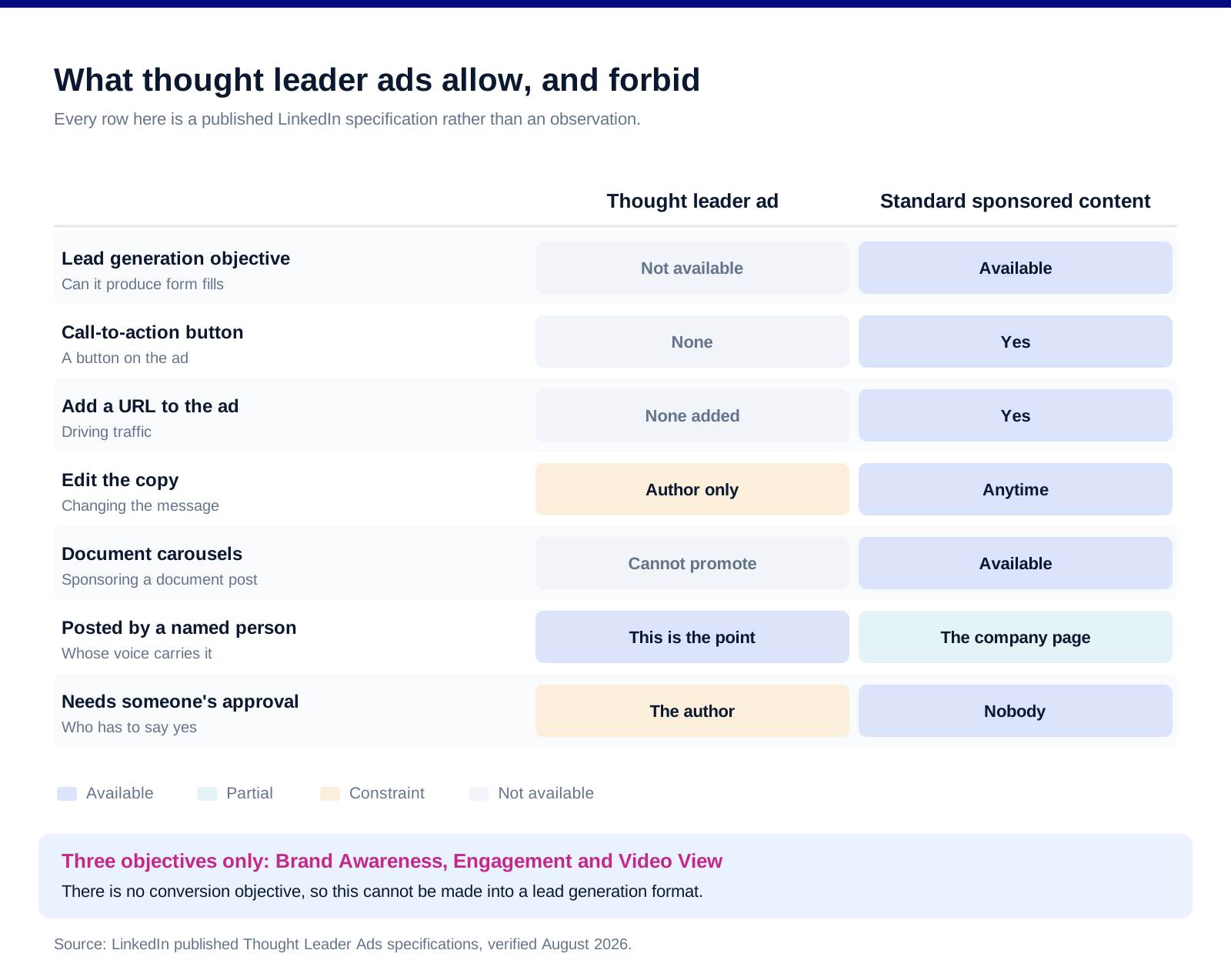
Every one of these is a published LinkedIn specification rather than an observation, and each one changes how you plan.
Three objectives only: Brand Awareness, Engagement and Video View. There is no conversion or lead generation objective. If your plan involves a form fill attributed to this campaign, the plan is wrong at the objective level and no amount of creative will fix it.
No call-to-action button. Standard sponsored content gets a button. This format does not, because it is a real post and posts do not have them.
No URL can be added to the ad. LinkedIn states plainly that no URLs are added to thought leader ads. Links inside the original post still work, which is the important corollary: the only route to your site is a link the author put there before you ever sponsored it.
No headline and no introductory text, and you cannot edit. Any change must come from the original author. Whatever the post says on the day you sponsor it is the ad copy, permanently.
Multiple images, polls and documents cannot be promoted. Single image, video and text posts only. Document carousels are among the best-performing organic formats on LinkedIn and are simply not available here, which surprises most people the first time.
The author approves, and can decline. You search for the post in Campaign Manager and request permission; the author approves or denies. You are renting someone's identity, which is a relationship question rather than a media-buying one.
Write the post as an ad before it is one
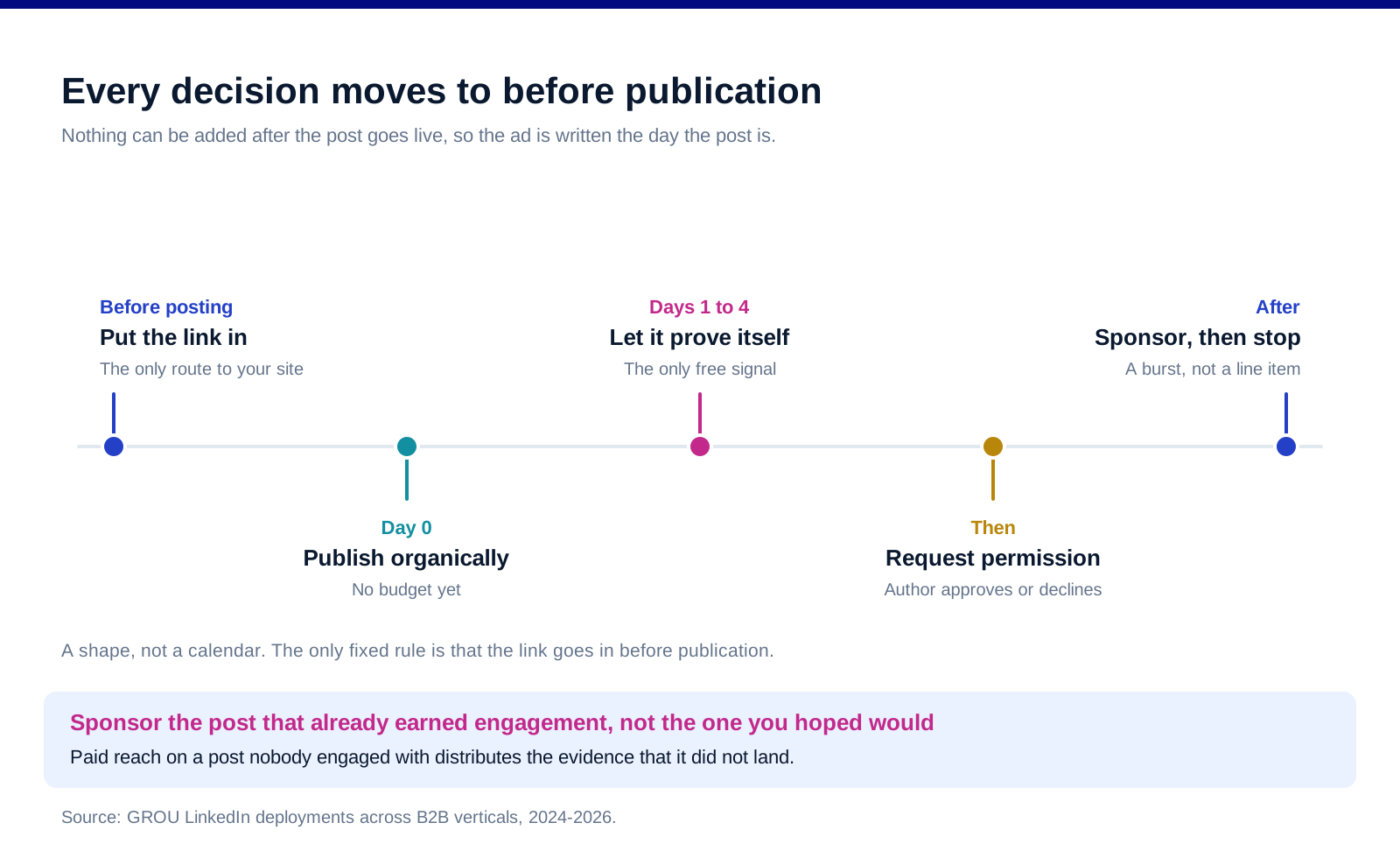
Because nothing can be added afterwards, every decision moves upstream to the day the post is written.
Decide before publication whether this post might be sponsored. If it might be, the link goes in the body now. This is the single highest-leverage habit for this format, and it costs nothing.
Publish it organically and let it prove itself. Sponsor the post that already earned engagement rather than the one you wish had. Paid amplification of a post nobody engaged with organically produces a well-distributed piece of evidence that the message does not land.
Wait long enough for a real read. A few days of organic performance is enough to separate the posts worth money from the ones that are not. Sponsoring on day one throws away the only free signal you get.
Request permission and keep the author informed. The approval is a click, but the relationship is not. Tell them what you are spending and what you are seeing, because you will want to do it again.
Sponsor for reach, then measure downstream. Engagement rate against the organic baseline, and branded search and direct traffic in the following days. Not clicks, which this format is not built to produce.
Do not sponsor forever. The post ages, the comments stop, and the audience that was going to respond has responded. Treat it as a burst behind a good post rather than an always-on line item.
When to use it, and when not to
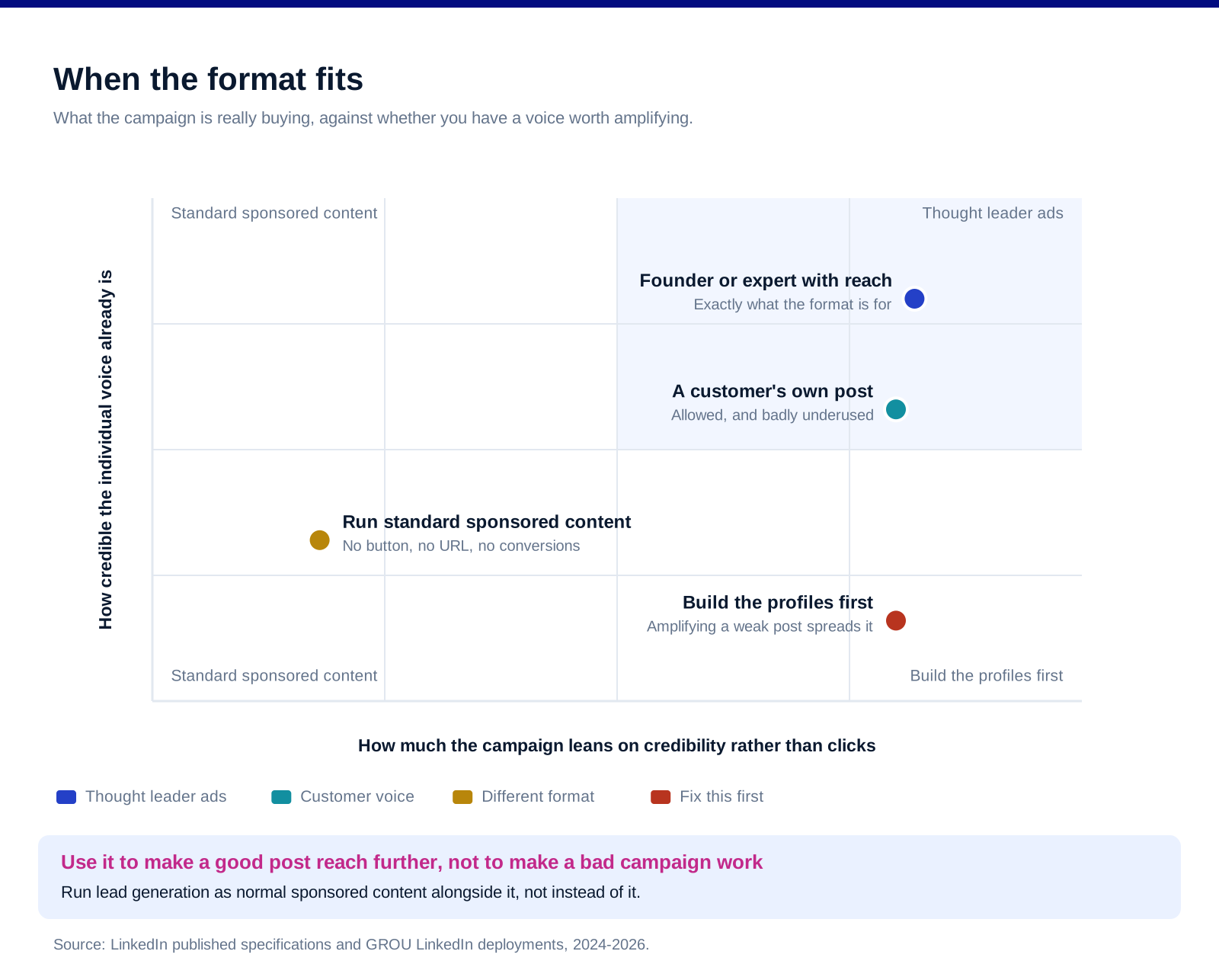
You have a credible voice and want reach: this is exactly the format. A founder or subject expert whose posts already perform, put in front of a larger targeted audience, with the credibility intact. Nothing else LinkedIn sells does this.
You need clicks or leads: use standard sponsored content. No button, no added URL and no conversion objective is not a limitation you can work around. Run the lead generation campaign as a normal sponsored post and use thought leader ads alongside it for the credibility layer.
Nobody on the team posts credibly: fix that first. Sponsoring a weak post amplifies a weak post. Building two or three profiles worth amplifying is the prerequisite, and our B2B content distribution playbook covers why people outperform brand pages in the first place.
Your best content is document carousels: it will not work. Documents cannot be sponsored. Either reformat the argument as a single image or video post, or accept that this format is not available for that content.
You want customer voices rather than employees: allowed, and underused. The format supports experts, customers and creators, not just employees. A customer's own post about a problem you solved is a stronger asset than anything your marketing team can write, and almost nobody asks.
What to measure
Engagement rate against the same author's organic baseline. The honest question is whether the paid audience responded like the organic one. If engagement collapses when you add budget, the targeting is wrong rather than the post.
Comment quality, not comment count. This format lives or dies on whether real practitioners engage. Ten substantive comments from your buyer beats two hundred reactions from nobody in particular.
Branded search and direct traffic in the days after. With no button and no added link, most of the response will not be attributable. A visible lift in people looking you up is the signal.
Follower growth on the author's profile. A working thought leader ad grows the person's audience, which is an asset that keeps paying after the campaign stops.
Not clicks, and not cost per lead. The format has no lead objective. Judging it on a metric it was not built to produce is how good campaigns get cancelled. Our B2B paid ads budget allocation piece covers where this sits in a wider paid mix.
FAQ
What are LinkedIn thought leader ads?
They are sponsored versions of an existing organic post from an individual rather than from a company page. The person can be an employee, an expert, a customer or a creator, and they approve the request through Campaign Manager. The post keeps the author's name and profile, so the credibility of the voice carries into the paid distribution.
Can thought leader ads generate leads?
Not directly, and this is the most important thing to know before planning one. LinkedIn supports the format on Brand Awareness, Engagement and Video View objectives only. There is no call-to-action button and no URL can be added to the ad, so the only path to your site is a link the author placed in the post before it was sponsored.
What post formats can be used for thought leader ads?
Single image posts, video posts and text posts. LinkedIn states that posts containing multiple images, polls or documents cannot be promoted. That excludes document carousels, which is worth planning around because they are one of the strongest organic formats on the platform.
Can you edit a post after sponsoring it?
No. You cannot add a headline or introductory text, and any edit to the post must come from the original author. This is why the decision about whether a post might be sponsored, and whether it contains a link, has to be made before it is published rather than afterwards.
Do thought leader ads perform better than company page ads?
LinkedIn publishes no performance statistics for the format, so any specific multiplier you have seen quoted is unsourced. What can be said is that the format exists because a named person carries credibility a logo does not, and that the constraints make it a poor substitute for a conversion campaign. Run both and compare against your own baseline rather than against a borrowed figure.
Can you sponsor a customer's post rather than an employee's?
Yes. The format supports employees, experts, customers and content creators, and the customer case is the most underused version of it. The approval flow is the same: you request permission and they approve or decline. A customer describing a problem in their own words is a stronger asset than most branded content.
Bottom line
Treat this as an amplification format for posts that already work, not as a campaign type. Because nothing can be added after publication, decide before the post goes live whether it might be sponsored and put the link in the body then. Sponsor the post that earned organic engagement rather than the one you hoped would. Accept that there is no button, no added URL and no conversion objective, and run your lead generation as standard sponsored content alongside. Measure engagement against the author's own baseline plus branded search afterwards, and ignore any performance multiplier you see quoted, because LinkedIn does not publish one.
Want the profiles built so there is something worth amplifying? Book a call with GROU. We run LinkedIn content and paid distribution inside B2B revenue engines across verticals.
We are GROU, a B2B pipeline agency that runs lead generation, outbound, and LinkedIn content for clients across manufacturing, fintech, iGaming, software, and professional services. The sequencing and measurement guidance reflects our LinkedIn deployments between 2024 and 2026, anonymized to protect client confidentiality.
Thought leader ads let you put paid budget behind a person's post rather than your company's. They work, and they are also the most constrained ad format LinkedIn sells: three objectives, no call-to-action button, no link you can add, no editing, and several of the post formats that perform best organically cannot be sponsored at all.
Those constraints are the whole article, because almost everything that goes wrong with this format comes from someone planning it as a lead generation channel and discovering the limits after the post is already live.
TL;DR
A thought leader ad sponsors an existing post from an employee, expert, customer or creator, with the author approving the request through Campaign Manager. LinkedIn supports it on Brand Awareness, Engagement and Video View objectives only, which means it is structurally not a lead generation format and cannot be made into one. You cannot add a headline, introductory text, a call-to-action button or a URL, and any edit has to come from the original author. Any link in the ad has to have been in the post before you sponsored it, so the post must be written with sponsorship in mind or it will drive no traffic at all. Posts containing multiple images, polls or documents cannot be promoted, which rules out the document carousel, one of the strongest organic formats on the platform. What you are buying is credibility and reach on a voice people already trust, measured on engagement and downstream branded search rather than on clicks. LinkedIn publishes no performance statistics for the format, so treat any "two times the click-through rate" figure you have seen as unsourced. Use it to make a good post reach further, not to make a bad campaign work.
What the format actually allows
Every one of these is a published LinkedIn specification rather than an observation, and each one changes how you plan.
Three objectives only: Brand Awareness, Engagement and Video View. There is no conversion or lead generation objective. If your plan involves a form fill attributed to this campaign, the plan is wrong at the objective level and no amount of creative will fix it.
No call-to-action button. Standard sponsored content gets a button. This format does not, because it is a real post and posts do not have them.
No URL can be added to the ad. LinkedIn states plainly that no URLs are added to thought leader ads. Links inside the original post still work, which is the important corollary: the only route to your site is a link the author put there before you ever sponsored it.
No headline and no introductory text, and you cannot edit. Any change must come from the original author. Whatever the post says on the day you sponsor it is the ad copy, permanently.
Multiple images, polls and documents cannot be promoted. Single image, video and text posts only. Document carousels are among the best-performing organic formats on LinkedIn and are simply not available here, which surprises most people the first time.
The author approves, and can decline. You search for the post in Campaign Manager and request permission; the author approves or denies. You are renting someone's identity, which is a relationship question rather than a media-buying one.
Write the post as an ad before it is one
Because nothing can be added afterwards, every decision moves upstream to the day the post is written.
Decide before publication whether this post might be sponsored. If it might be, the link goes in the body now. This is the single highest-leverage habit for this format, and it costs nothing.
Publish it organically and let it prove itself. Sponsor the post that already earned engagement rather than the one you wish had. Paid amplification of a post nobody engaged with organically produces a well-distributed piece of evidence that the message does not land.
Wait long enough for a real read. A few days of organic performance is enough to separate the posts worth money from the ones that are not. Sponsoring on day one throws away the only free signal you get.
Request permission and keep the author informed. The approval is a click, but the relationship is not. Tell them what you are spending and what you are seeing, because you will want to do it again.
Sponsor for reach, then measure downstream. Engagement rate against the organic baseline, and branded search and direct traffic in the following days. Not clicks, which this format is not built to produce.
Do not sponsor forever. The post ages, the comments stop, and the audience that was going to respond has responded. Treat it as a burst behind a good post rather than an always-on line item.
When to use it, and when not to
You have a credible voice and want reach: this is exactly the format. A founder or subject expert whose posts already perform, put in front of a larger targeted audience, with the credibility intact. Nothing else LinkedIn sells does this.
You need clicks or leads: use standard sponsored content. No button, no added URL and no conversion objective is not a limitation you can work around. Run the lead generation campaign as a normal sponsored post and use thought leader ads alongside it for the credibility layer.
Nobody on the team posts credibly: fix that first. Sponsoring a weak post amplifies a weak post. Building two or three profiles worth amplifying is the prerequisite, and our B2B content distribution playbook covers why people outperform brand pages in the first place.
Your best content is document carousels: it will not work. Documents cannot be sponsored. Either reformat the argument as a single image or video post, or accept that this format is not available for that content.
You want customer voices rather than employees: allowed, and underused. The format supports experts, customers and creators, not just employees. A customer's own post about a problem you solved is a stronger asset than anything your marketing team can write, and almost nobody asks.
What to measure
Engagement rate against the same author's organic baseline. The honest question is whether the paid audience responded like the organic one. If engagement collapses when you add budget, the targeting is wrong rather than the post.
Comment quality, not comment count. This format lives or dies on whether real practitioners engage. Ten substantive comments from your buyer beats two hundred reactions from nobody in particular.
Branded search and direct traffic in the days after. With no button and no added link, most of the response will not be attributable. A visible lift in people looking you up is the signal.
Follower growth on the author's profile. A working thought leader ad grows the person's audience, which is an asset that keeps paying after the campaign stops.
Not clicks, and not cost per lead. The format has no lead objective. Judging it on a metric it was not built to produce is how good campaigns get cancelled. Our B2B paid ads budget allocation piece covers where this sits in a wider paid mix.
FAQ
What are LinkedIn thought leader ads?
They are sponsored versions of an existing organic post from an individual rather than from a company page. The person can be an employee, an expert, a customer or a creator, and they approve the request through Campaign Manager. The post keeps the author's name and profile, so the credibility of the voice carries into the paid distribution.
Can thought leader ads generate leads?
Not directly, and this is the most important thing to know before planning one. LinkedIn supports the format on Brand Awareness, Engagement and Video View objectives only. There is no call-to-action button and no URL can be added to the ad, so the only path to your site is a link the author placed in the post before it was sponsored.
What post formats can be used for thought leader ads?
Single image posts, video posts and text posts. LinkedIn states that posts containing multiple images, polls or documents cannot be promoted. That excludes document carousels, which is worth planning around because they are one of the strongest organic formats on the platform.
Can you edit a post after sponsoring it?
No. You cannot add a headline or introductory text, and any edit to the post must come from the original author. This is why the decision about whether a post might be sponsored, and whether it contains a link, has to be made before it is published rather than afterwards.
Do thought leader ads perform better than company page ads?
LinkedIn publishes no performance statistics for the format, so any specific multiplier you have seen quoted is unsourced. What can be said is that the format exists because a named person carries credibility a logo does not, and that the constraints make it a poor substitute for a conversion campaign. Run both and compare against your own baseline rather than against a borrowed figure.
Can you sponsor a customer's post rather than an employee's?
Yes. The format supports employees, experts, customers and content creators, and the customer case is the most underused version of it. The approval flow is the same: you request permission and they approve or decline. A customer describing a problem in their own words is a stronger asset than most branded content.
Bottom line
Treat this as an amplification format for posts that already work, not as a campaign type. Because nothing can be added after publication, decide before the post goes live whether it might be sponsored and put the link in the body then. Sponsor the post that earned organic engagement rather than the one you hoped would. Accept that there is no button, no added URL and no conversion objective, and run your lead generation as standard sponsored content alongside. Measure engagement against the author's own baseline plus branded search afterwards, and ignore any performance multiplier you see quoted, because LinkedIn does not publish one.
Want the profiles built so there is something worth amplifying? Book a call with GROU. We run LinkedIn content and paid distribution inside B2B revenue engines across verticals.
We are GROU, a B2B pipeline agency that runs lead generation, outbound, and LinkedIn content for clients across manufacturing, fintech, iGaming, software, and professional services. The sequencing and measurement guidance reflects our LinkedIn deployments between 2024 and 2026, anonymized to protect client confidentiality.
Thought leader ads let you put paid budget behind a person's post rather than your company's. They work, and they are also the most constrained ad format LinkedIn sells: three objectives, no call-to-action button, no link you can add, no editing, and several of the post formats that perform best organically cannot be sponsored at all.
Those constraints are the whole article, because almost everything that goes wrong with this format comes from someone planning it as a lead generation channel and discovering the limits after the post is already live.
TL;DR
A thought leader ad sponsors an existing post from an employee, expert, customer or creator, with the author approving the request through Campaign Manager. LinkedIn supports it on Brand Awareness, Engagement and Video View objectives only, which means it is structurally not a lead generation format and cannot be made into one. You cannot add a headline, introductory text, a call-to-action button or a URL, and any edit has to come from the original author. Any link in the ad has to have been in the post before you sponsored it, so the post must be written with sponsorship in mind or it will drive no traffic at all. Posts containing multiple images, polls or documents cannot be promoted, which rules out the document carousel, one of the strongest organic formats on the platform. What you are buying is credibility and reach on a voice people already trust, measured on engagement and downstream branded search rather than on clicks. LinkedIn publishes no performance statistics for the format, so treat any "two times the click-through rate" figure you have seen as unsourced. Use it to make a good post reach further, not to make a bad campaign work.
What the format actually allows
Every one of these is a published LinkedIn specification rather than an observation, and each one changes how you plan.
Three objectives only: Brand Awareness, Engagement and Video View. There is no conversion or lead generation objective. If your plan involves a form fill attributed to this campaign, the plan is wrong at the objective level and no amount of creative will fix it.
No call-to-action button. Standard sponsored content gets a button. This format does not, because it is a real post and posts do not have them.
No URL can be added to the ad. LinkedIn states plainly that no URLs are added to thought leader ads. Links inside the original post still work, which is the important corollary: the only route to your site is a link the author put there before you ever sponsored it.
No headline and no introductory text, and you cannot edit. Any change must come from the original author. Whatever the post says on the day you sponsor it is the ad copy, permanently.
Multiple images, polls and documents cannot be promoted. Single image, video and text posts only. Document carousels are among the best-performing organic formats on LinkedIn and are simply not available here, which surprises most people the first time.
The author approves, and can decline. You search for the post in Campaign Manager and request permission; the author approves or denies. You are renting someone's identity, which is a relationship question rather than a media-buying one.
Write the post as an ad before it is one
Because nothing can be added afterwards, every decision moves upstream to the day the post is written.
Decide before publication whether this post might be sponsored. If it might be, the link goes in the body now. This is the single highest-leverage habit for this format, and it costs nothing.
Publish it organically and let it prove itself. Sponsor the post that already earned engagement rather than the one you wish had. Paid amplification of a post nobody engaged with organically produces a well-distributed piece of evidence that the message does not land.
Wait long enough for a real read. A few days of organic performance is enough to separate the posts worth money from the ones that are not. Sponsoring on day one throws away the only free signal you get.
Request permission and keep the author informed. The approval is a click, but the relationship is not. Tell them what you are spending and what you are seeing, because you will want to do it again.
Sponsor for reach, then measure downstream. Engagement rate against the organic baseline, and branded search and direct traffic in the following days. Not clicks, which this format is not built to produce.
Do not sponsor forever. The post ages, the comments stop, and the audience that was going to respond has responded. Treat it as a burst behind a good post rather than an always-on line item.
When to use it, and when not to
You have a credible voice and want reach: this is exactly the format. A founder or subject expert whose posts already perform, put in front of a larger targeted audience, with the credibility intact. Nothing else LinkedIn sells does this.
You need clicks or leads: use standard sponsored content. No button, no added URL and no conversion objective is not a limitation you can work around. Run the lead generation campaign as a normal sponsored post and use thought leader ads alongside it for the credibility layer.
Nobody on the team posts credibly: fix that first. Sponsoring a weak post amplifies a weak post. Building two or three profiles worth amplifying is the prerequisite, and our B2B content distribution playbook covers why people outperform brand pages in the first place.
Your best content is document carousels: it will not work. Documents cannot be sponsored. Either reformat the argument as a single image or video post, or accept that this format is not available for that content.
You want customer voices rather than employees: allowed, and underused. The format supports experts, customers and creators, not just employees. A customer's own post about a problem you solved is a stronger asset than anything your marketing team can write, and almost nobody asks.
What to measure
Engagement rate against the same author's organic baseline. The honest question is whether the paid audience responded like the organic one. If engagement collapses when you add budget, the targeting is wrong rather than the post.
Comment quality, not comment count. This format lives or dies on whether real practitioners engage. Ten substantive comments from your buyer beats two hundred reactions from nobody in particular.
Branded search and direct traffic in the days after. With no button and no added link, most of the response will not be attributable. A visible lift in people looking you up is the signal.
Follower growth on the author's profile. A working thought leader ad grows the person's audience, which is an asset that keeps paying after the campaign stops.
Not clicks, and not cost per lead. The format has no lead objective. Judging it on a metric it was not built to produce is how good campaigns get cancelled. Our B2B paid ads budget allocation piece covers where this sits in a wider paid mix.
FAQ
What are LinkedIn thought leader ads?
They are sponsored versions of an existing organic post from an individual rather than from a company page. The person can be an employee, an expert, a customer or a creator, and they approve the request through Campaign Manager. The post keeps the author's name and profile, so the credibility of the voice carries into the paid distribution.
Can thought leader ads generate leads?
Not directly, and this is the most important thing to know before planning one. LinkedIn supports the format on Brand Awareness, Engagement and Video View objectives only. There is no call-to-action button and no URL can be added to the ad, so the only path to your site is a link the author placed in the post before it was sponsored.
What post formats can be used for thought leader ads?
Single image posts, video posts and text posts. LinkedIn states that posts containing multiple images, polls or documents cannot be promoted. That excludes document carousels, which is worth planning around because they are one of the strongest organic formats on the platform.
Can you edit a post after sponsoring it?
No. You cannot add a headline or introductory text, and any edit to the post must come from the original author. This is why the decision about whether a post might be sponsored, and whether it contains a link, has to be made before it is published rather than afterwards.
Do thought leader ads perform better than company page ads?
LinkedIn publishes no performance statistics for the format, so any specific multiplier you have seen quoted is unsourced. What can be said is that the format exists because a named person carries credibility a logo does not, and that the constraints make it a poor substitute for a conversion campaign. Run both and compare against your own baseline rather than against a borrowed figure.
Can you sponsor a customer's post rather than an employee's?
Yes. The format supports employees, experts, customers and content creators, and the customer case is the most underused version of it. The approval flow is the same: you request permission and they approve or decline. A customer describing a problem in their own words is a stronger asset than most branded content.
Bottom line
Treat this as an amplification format for posts that already work, not as a campaign type. Because nothing can be added after publication, decide before the post goes live whether it might be sponsored and put the link in the body then. Sponsor the post that earned organic engagement rather than the one you hoped would. Accept that there is no button, no added URL and no conversion objective, and run your lead generation as standard sponsored content alongside. Measure engagement against the author's own baseline plus branded search afterwards, and ignore any performance multiplier you see quoted, because LinkedIn does not publish one.
Want the profiles built so there is something worth amplifying? Book a call with GROU. We run LinkedIn content and paid distribution inside B2B revenue engines across verticals.
We are GROU, a B2B pipeline agency that runs lead generation, outbound, and LinkedIn content for clients across manufacturing, fintech, iGaming, software, and professional services. The sequencing and measurement guidance reflects our LinkedIn deployments between 2024 and 2026, anonymized to protect client confidentiality.
Pipeline OS Newsletter
Build qualified pipeline
Get weekly tactics to generate demand, improve lead quality, and book more meetings.





Trusted by industry leaders
Trusted by industry leaders
Trusted by industry leaders
Ready to build qualified pipeline?
Ready to build qualified pipeline?
Ready to build qualified pipeline?
Book a call to see if we're the right fit, or take the 2-minute quiz to get a clear starting point.
Book a call to see if we're the right fit, or take the 2-minute quiz to get a clear starting point.
Book a call to see if we're the right fit, or take the 2-minute quiz to get a clear starting point.
" height="30.21639343089746px" id="hfGbXmQR2" width="30.216393430897455px"/></svg>)
Copyright © 2026 – All Right Reserved
Copyright © 2026 – All Right Reserved
Copyright © 2026 – All Right Reserved