%22%3E%3C/path%3E%3Cpath d=%22M 63.072 7.554 C 62.258 8.022 61.577 8.689 61.092 9.493 L 61.092 7.076 L 57.158 7.076 L 57.158 22.64 L 61.089 22.64 L 61.089 14.888 C 61.089 13.446 61.403 12.434 62.03 11.853 C 62.818 11.218 63.818 10.907 64.826 10.982 L 65.868 10.982 L 65.868 6.851 C 64.891 6.834 63.926 7.076 63.073 7.554 Z%22 fill=%22rgb(17,17,17)%22%3E%3C/path%3E%3Cpath d=%22M 78.916 7.82 C 76.363 6.49 73.321 6.49 70.768 7.82 C 69.562 8.473 68.564 9.451 67.888 10.644 C 67.167 11.931 66.803 13.387 66.834 14.862 C 66.804 16.332 67.157 17.785 67.86 19.077 C 68.515 20.267 69.494 21.246 70.684 21.901 C 71.924 22.576 73.318 22.92 74.73 22.898 C 76.164 22.918 77.58 22.575 78.846 21.901 C 80.062 21.247 81.073 20.27 81.768 19.077 C 82.506 17.797 82.88 16.339 82.85 14.862 C 82.88 13.389 82.517 11.934 81.797 10.647 C 81.12 9.455 80.122 8.477 78.917 7.824 M 78.803 14.862 C 78.829 15.739 78.636 16.608 78.241 17.391 C 77.903 18.046 77.38 18.588 76.738 18.95 C 76.124 19.293 75.432 19.472 74.729 19.47 C 73.668 19.497 72.648 19.061 71.934 18.276 C 71.139 17.323 70.741 16.1 70.823 14.862 C 70.741 13.62 71.149 12.395 71.959 11.45 C 72.687 10.667 73.715 10.233 74.783 10.256 C 75.859 10.236 76.894 10.67 77.635 11.45 C 78.464 12.387 78.884 13.616 78.801 14.864%22 fill=%22rgb(17,17,17)%22%3E%3C/path%3E%3Cpath d=%22M 95.906 7.076 L 95.906 15.646 C 95.975 16.68 95.643 17.701 94.979 18.498 C 94.311 19.184 93.379 19.547 92.422 19.495 C 91.475 19.544 90.553 19.18 89.894 18.498 C 89.23 17.701 88.898 16.68 88.967 15.646 L 88.967 7.076 L 85.033 7.076 L 85.033 16.207 C 85 17.449 85.275 18.68 85.834 19.79 C 86.327 20.75 87.095 21.542 88.039 22.065 C 89.033 22.594 90.145 22.861 91.271 22.838 C 92.188 22.847 93.095 22.65 93.926 22.263 C 94.708 21.905 95.388 21.36 95.906 20.675 L 95.906 22.645 L 99.865 22.645 L 99.865 7.076 Z%22 fill=%22rgb(17,17,17)%22%3E%3C/path%3E%3Cpath d=%22M 4.513 15.626 C 4.511 10.815 7.606 6.549 12.181 5.059 C 16.756 3.57 21.77 5.195 24.601 9.086 L 27.816 5.87 C 24.074 1.186 17.981 -0.943 12.137 0.393 C 6.292 1.728 1.728 6.292 0.393 12.137 C -0.943 17.981 1.186 24.074 5.87 27.816 L 9.085 24.601 C 6.214 22.512 4.515 19.177 4.513 15.626%22 fill=%22rgb(32,62,235)%22%3E%3C/path%3E%3Cpath d=%22M 17.114 14.343 L 13.354 18.01 L 13.354 18.026 L 21.071 18.026 L 11.412 27.609 L 17.389 27.609 L 23.999 21.081 L 23.999 28.316 L 24.005 28.316 L 27.967 24.393 L 27.967 14.343 Z%22 fill=%22rgb(32,62,235)%22%3E%3C/path%3E%3C/g%3E%3C/svg%3E) ×
× ××
××›
›
›
›
B2B paid ads budget allocation: how much per channel
B2B paid ads budget allocation: how much per channel
B2B paid ads budget allocation: how much per channel
B2B paid ads budget allocation: how much per channel
B2B paid ads budget allocation: how much per channel
B2B paid ads budget allocation: how much per channel

Author
Aljaz Peklaj

Most B2B paid budgets are split the wrong way round. The question gets asked as a percentage problem, something like forty percent to LinkedIn and thirty to Google, when it is really a division problem: how many separate things are you trying to learn, and can you afford the floor price of learning each one.
This is how to work out the allocation from the platforms' own published minimums and your own numbers, rather than from someone else's percentage split.
TL;DR
Start from the floor, not the split. LinkedIn requires a minimum of $10 a day for any ad format and a minimum lifetime budget of $100 for a new campaign, so a single LinkedIn campaign has a floor of roughly $304 a month once you apply Google's own convention of 30.4 days in an average month. Three audience tests means three campaigns, which means the floor is about $912 a month before you have bought anything you would call a programme. Google Ads publishes no minimum daily budget, but caps monthly spend at 30.4 times your average daily budget and daily spend at twice it, so a Google budget is more forgiving to run thin and correspondingly easier to waste. The practical rule that falls out: your budget determines how many channels you can run, not how thinly you can spread across all of them. Below roughly $3,000 a month, run one channel properly. The channels do different jobs, so the split should follow the job you actually need done, which is usually capture before creation. And whatever you allocate, the first thing to buy is a measurable conversion, because a budget aimed at a number nobody trusts gets cut at the first review regardless of how well it performed.
The floor is set by the platform, not by you
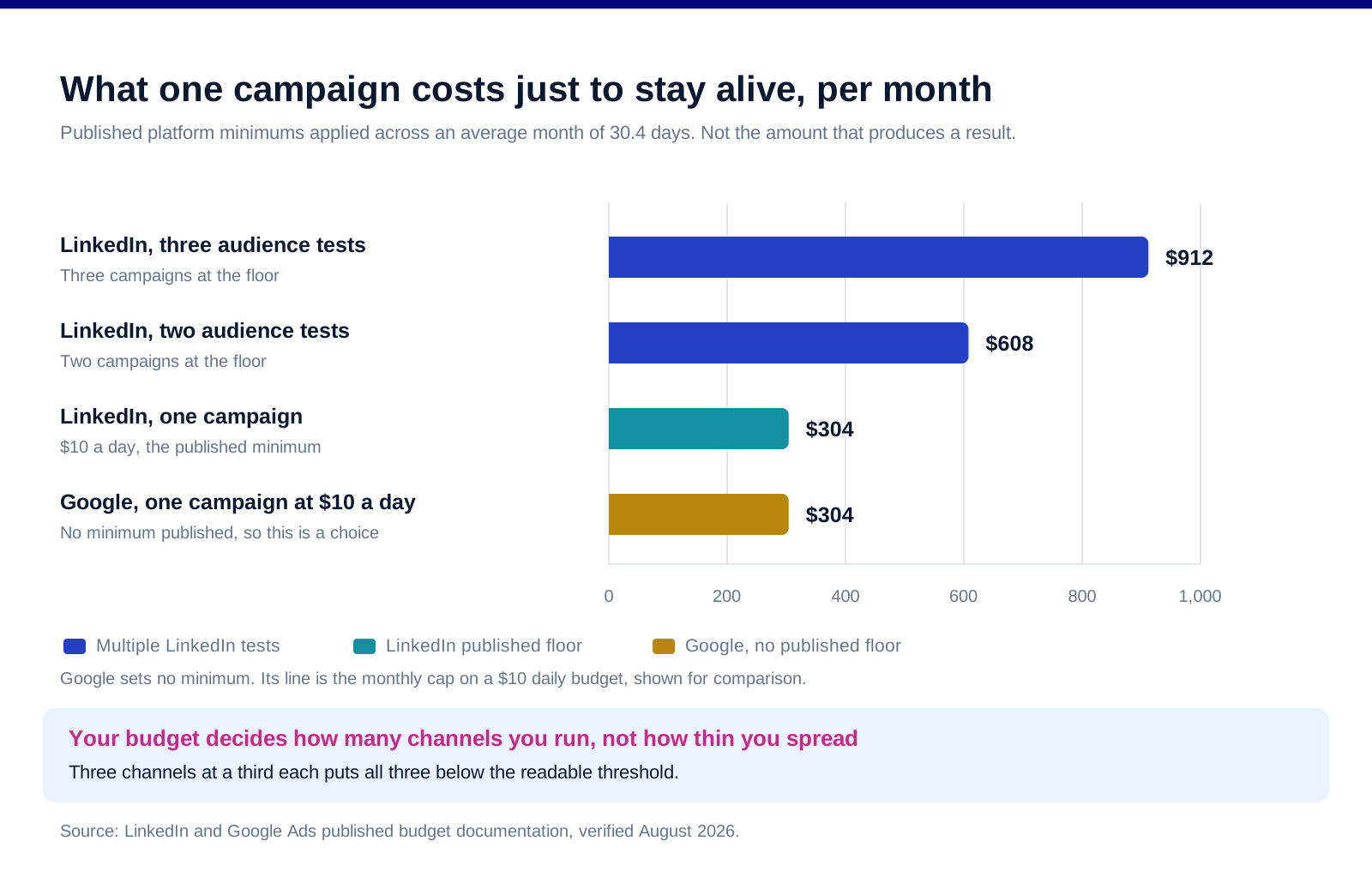
Before any allocation question, work out what a single campaign costs to keep alive on each platform. These are the published minimums, not estimates.
LinkedIn sets a hard floor. LinkedIn states a minimum daily budget of $10 for any ad format, and a minimum lifetime budget of $100 for new, inactive campaigns. Applied across an average month, that is roughly $304 per campaign per month at the absolute floor. That is the price of the campaign existing, not the price of it producing anything.
The floor multiplies by the number of tests. If you want to test three audience segments, that is three campaigns and roughly $912 a month before any of them has enough data to judge. This is the number that decides most B2B allocations, and it is the number almost nobody starts from.
Google publishes no minimum. You can run a Google Ads campaign at any daily budget. Google does cap the downside in the other direction: it will not spend more than twice your average daily budget on a given day, and not more than 30.4 times your average daily budget in a month. So a $10 a day Google budget can spend up to $304 in a month, the same ceiling as LinkedIn's floor.
No minimum is not the same as viable. A search campaign on a low daily budget will simply stop showing partway through the day in a competitive B2B category, which produces a slow trickle of data rather than a clean read. Google's flexibility is real, and it is also the reason B2B teams spread Google budgets too thin without noticing.
Channels do different jobs, so split by job
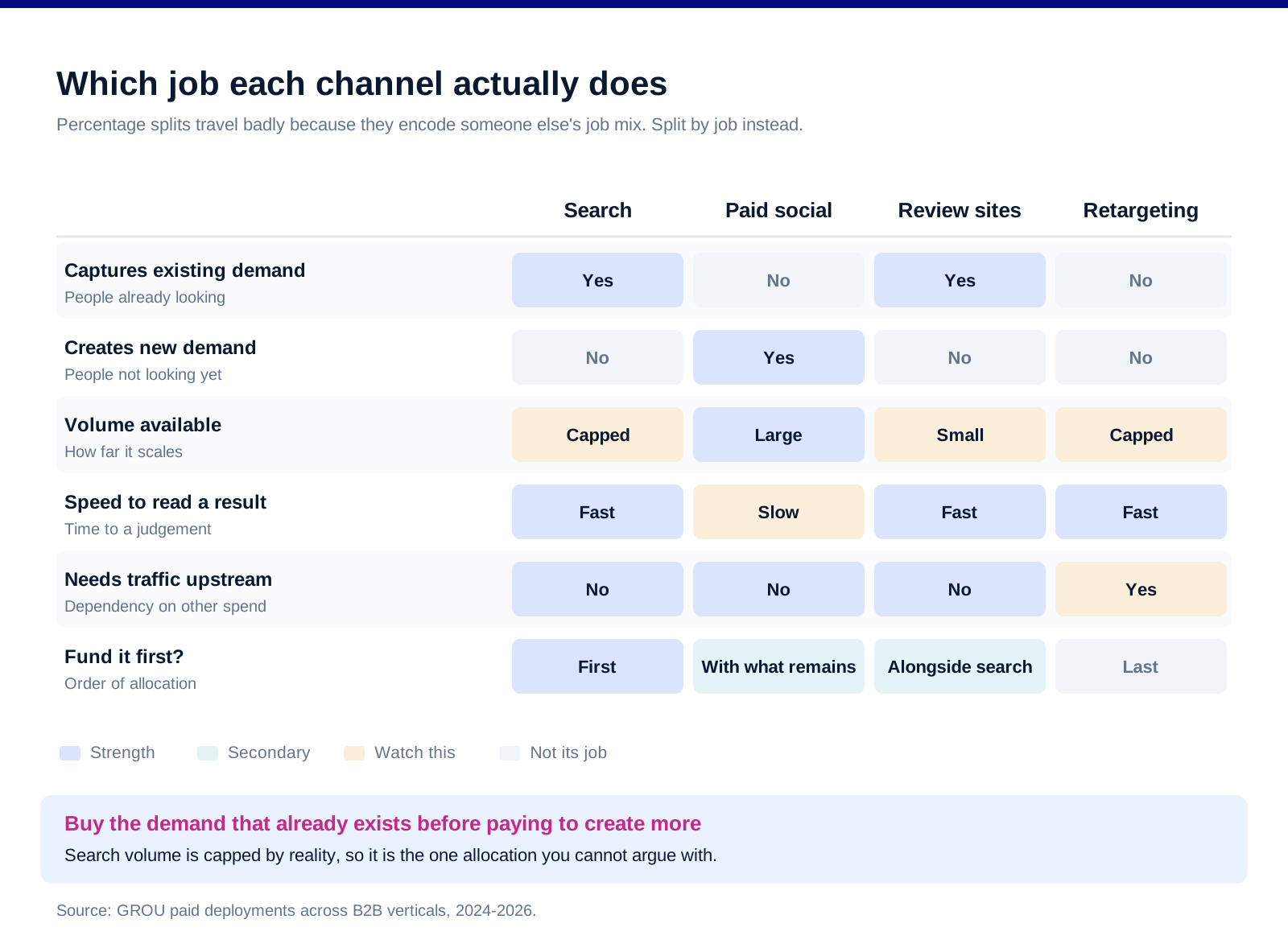
The reason percentage splits travel badly between companies is that they encode someone else's job mix.
Search captures demand that already exists. If people are searching for what you sell, this is the highest-intent money you can spend and it should be funded first. The ceiling is the search volume, which is usually much smaller in B2B than anyone expects, and once you own that volume additional budget does nothing.
Paid social creates demand that does not yet exist. LinkedIn and Meta reach people who are not looking. That is more expensive per action and the payback is slower, which is exactly why it gets cut first and why cutting it is usually the wrong call if search volume is already saturated. Our LinkedIn ads CPC benchmarks cover what that costs, and Meta ads for B2B covers the channel most B2B teams write off too early.
Review and comparison sites capture people already shortlisting. Intent here is close to search intent, and the volume is small and finite. Treat it as a capture line rather than a growth line, as our G2 and Capterra ads playbook sets out.
Retargeting is not a channel, it is a multiplier. It has no demand of its own. It is worth funding only once something upstream is generating enough traffic to retarget, which is why funding it first is a common and expensive mistake.
Video builds recognition slowly and cheaply. Cheap per impression, slow to attribute, and easy to over-fund on the strength of the view counts. YouTube ads for B2B covers where it earns its place.
Working out your own split
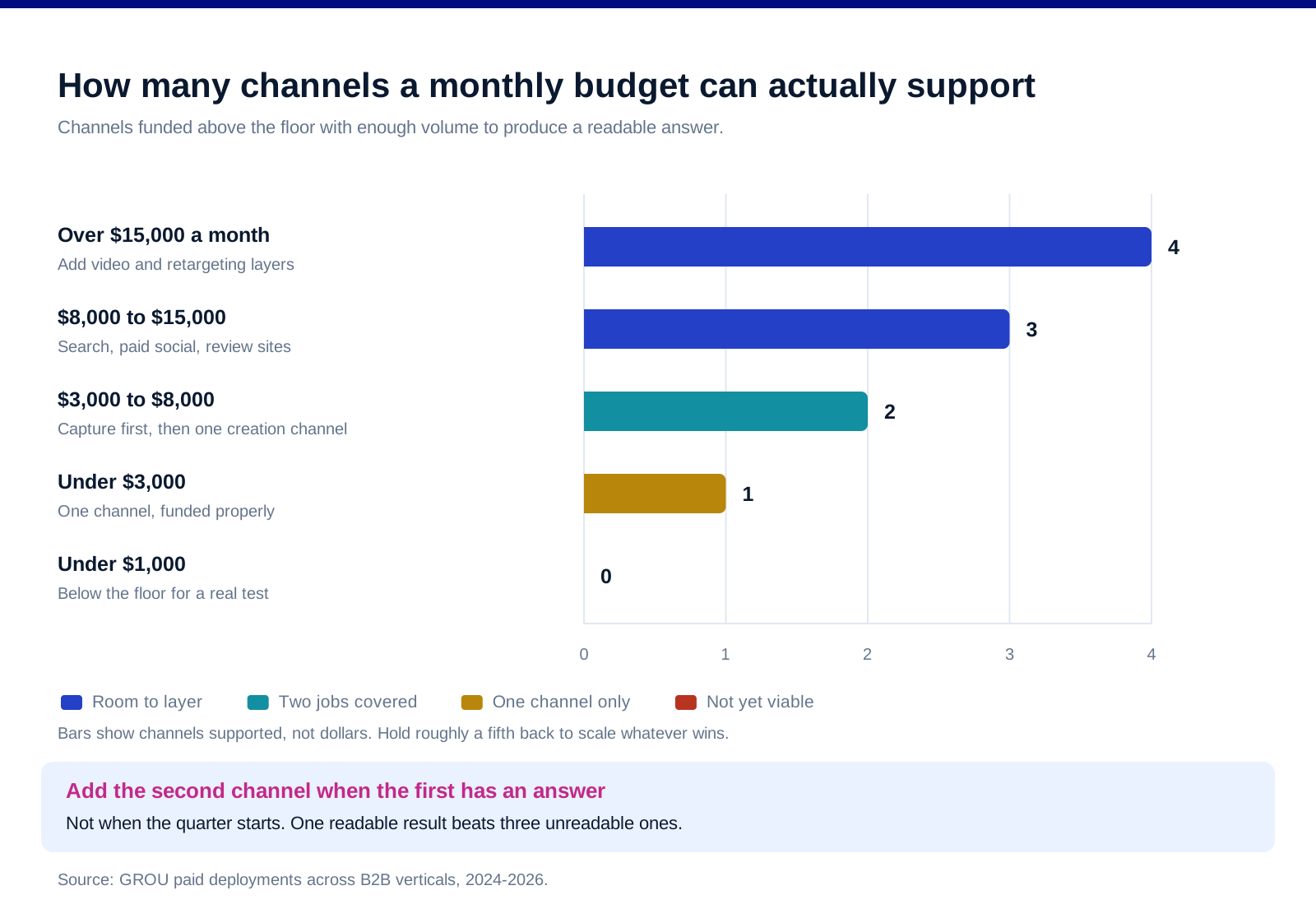
Do this arithmetic rather than adopting a percentage.
Count the tests you actually need, then multiply by the floor. Two audiences on LinkedIn and one search campaign is three campaigns. At LinkedIn's published floor that is roughly $608 for the LinkedIn half before you have bought meaningful volume, and the honest number for a readable test is a multiple of that, not the floor itself.
Fund capture before creation. Take the search volume for what you sell and buy as much of it as exists. That is your first allocation and it is capped by reality rather than by preference. Only what is left over goes to demand creation.
Below roughly $3,000 a month, run one channel. Three channels at a third each puts every one of them near or below the floor, which produces three campaigns that cannot be judged and a quarter with no learning in it. One channel funded properly produces an answer.
Give each test a fixed window before you touch it. A campaign judged weekly gets adjusted before it has produced a readable result, and every adjustment restarts the clock. Set the window when you set the budget.
Hold back a fifth for the thing that works. Committing the full budget on day one means the winner cannot be scaled without taking money from a test that has not finished. A reserve is the difference between a programme and a fixed plan.
What to fix before adding budget
A conversion nobody argues about. If the finance conversation ends in a dispute about whether the leads were real, no allocation was ever going to survive. Define the conversion, instrument it, and agree it with sales before the money goes out.
One offer per campaign. Multiple offers inside one campaign make the result unreadable, and unreadable results are the reason budgets get cut rather than reallocated.
Enough landing page for the click. Paid traffic to a page that answers a different question than the ad asked is the most common way B2B budget disappears, and it costs nothing to fix relative to the media spend.
A cost you can actually carry. Work backwards from deal value and win rate to what a qualified conversation is worth to you. If the channel cannot deliver one at that price, no split fixes it.
FAQ
How much should a B2B company spend on paid ads per month?
Start from the floor rather than a percentage of revenue. LinkedIn's published minimum is $10 a day per campaign, which is roughly $304 a month per campaign, so the honest minimum is that figure multiplied by the number of separate things you want to test, then multiplied again to get past the floor into readable volume. Below roughly $3,000 a month, the useful question is which single channel to run rather than how to split.
What percentage of B2B paid budget should go to LinkedIn versus Google?
There is no transferable percentage, because the right answer depends on how much search demand exists for what you sell. Buy the available search volume first, since it is capped by reality and it is the highest-intent spend available. What remains goes to demand creation on paid social. A company selling something nobody searches for will end up almost entirely on social; one selling into an established category will not.
What is the minimum budget for LinkedIn ads?
LinkedIn states a minimum daily budget of $10 for any ad format and a minimum lifetime budget of $100 for new, inactive campaigns. Once a campaign has launched, the lifetime minimum becomes $10 multiplied by the number of scheduled days. Those are the floors for a campaign to run, not the amount needed to produce a result you can act on.
Does Google Ads have a minimum budget?
No. Google publishes no minimum daily budget, but it does cap spend on the other side: no more than twice your average daily budget on a given day, and no more than 30.4 times your average daily budget in a month. That flexibility makes Google easier to start and easier to underfund without noticing.
How many channels should a B2B paid programme run at once?
As many as your budget can fund above the floor, which for most B2B companies is fewer than they are currently running. One channel with enough budget to produce a readable answer beats three that each sit near the minimum. Add the second channel when the first has an answer, not when the quarter starts.
How long before you judge a B2B paid campaign?
Set the window before you set the budget, and do not touch the campaign inside it. B2B sales cycles mean the useful signal is rarely visible in the first fortnight, and every mid-flight adjustment restarts the learning. The most common cause of an unreadable paid programme is not a bad allocation, it is a campaign that was changed four times before anyone could read it.
Bottom line
Allocation is division, not percentage. Work out what one campaign costs to keep alive on each platform, multiply by the number of things you need to learn, and you have your real minimum. Buy existing search demand first because it is capped and high intent, then fund demand creation with what remains. Under about $3,000 a month, pick one channel and do it properly rather than three badly. Set the judging window in advance, hold a fifth back for whatever wins, and make sure the conversion you are counting is one the sales team will not dispute, because that argument kills more paid programmes than any split ever did.
Want the channel mix decided against your numbers rather than a benchmark? Book a call with GROU. We run paid acquisition inside B2B revenue engines across verticals.
We are GROU, a B2B pipeline agency that runs lead generation, outbound, and LinkedIn content for clients across manufacturing, fintech, iGaming, software, and professional services. The allocation method reflects our paid deployments between 2024 and 2026, anonymized to protect client confidentiality.
Most B2B paid budgets are split the wrong way round. The question gets asked as a percentage problem, something like forty percent to LinkedIn and thirty to Google, when it is really a division problem: how many separate things are you trying to learn, and can you afford the floor price of learning each one.
This is how to work out the allocation from the platforms' own published minimums and your own numbers, rather than from someone else's percentage split.
TL;DR
Start from the floor, not the split. LinkedIn requires a minimum of $10 a day for any ad format and a minimum lifetime budget of $100 for a new campaign, so a single LinkedIn campaign has a floor of roughly $304 a month once you apply Google's own convention of 30.4 days in an average month. Three audience tests means three campaigns, which means the floor is about $912 a month before you have bought anything you would call a programme. Google Ads publishes no minimum daily budget, but caps monthly spend at 30.4 times your average daily budget and daily spend at twice it, so a Google budget is more forgiving to run thin and correspondingly easier to waste. The practical rule that falls out: your budget determines how many channels you can run, not how thinly you can spread across all of them. Below roughly $3,000 a month, run one channel properly. The channels do different jobs, so the split should follow the job you actually need done, which is usually capture before creation. And whatever you allocate, the first thing to buy is a measurable conversion, because a budget aimed at a number nobody trusts gets cut at the first review regardless of how well it performed.
The floor is set by the platform, not by you
Before any allocation question, work out what a single campaign costs to keep alive on each platform. These are the published minimums, not estimates.
LinkedIn sets a hard floor. LinkedIn states a minimum daily budget of $10 for any ad format, and a minimum lifetime budget of $100 for new, inactive campaigns. Applied across an average month, that is roughly $304 per campaign per month at the absolute floor. That is the price of the campaign existing, not the price of it producing anything.
The floor multiplies by the number of tests. If you want to test three audience segments, that is three campaigns and roughly $912 a month before any of them has enough data to judge. This is the number that decides most B2B allocations, and it is the number almost nobody starts from.
Google publishes no minimum. You can run a Google Ads campaign at any daily budget. Google does cap the downside in the other direction: it will not spend more than twice your average daily budget on a given day, and not more than 30.4 times your average daily budget in a month. So a $10 a day Google budget can spend up to $304 in a month, the same ceiling as LinkedIn's floor.
No minimum is not the same as viable. A search campaign on a low daily budget will simply stop showing partway through the day in a competitive B2B category, which produces a slow trickle of data rather than a clean read. Google's flexibility is real, and it is also the reason B2B teams spread Google budgets too thin without noticing.
Channels do different jobs, so split by job
The reason percentage splits travel badly between companies is that they encode someone else's job mix.
Search captures demand that already exists. If people are searching for what you sell, this is the highest-intent money you can spend and it should be funded first. The ceiling is the search volume, which is usually much smaller in B2B than anyone expects, and once you own that volume additional budget does nothing.
Paid social creates demand that does not yet exist. LinkedIn and Meta reach people who are not looking. That is more expensive per action and the payback is slower, which is exactly why it gets cut first and why cutting it is usually the wrong call if search volume is already saturated. Our LinkedIn ads CPC benchmarks cover what that costs, and Meta ads for B2B covers the channel most B2B teams write off too early.
Review and comparison sites capture people already shortlisting. Intent here is close to search intent, and the volume is small and finite. Treat it as a capture line rather than a growth line, as our G2 and Capterra ads playbook sets out.
Retargeting is not a channel, it is a multiplier. It has no demand of its own. It is worth funding only once something upstream is generating enough traffic to retarget, which is why funding it first is a common and expensive mistake.
Video builds recognition slowly and cheaply. Cheap per impression, slow to attribute, and easy to over-fund on the strength of the view counts. YouTube ads for B2B covers where it earns its place.
Working out your own split
Do this arithmetic rather than adopting a percentage.
Count the tests you actually need, then multiply by the floor. Two audiences on LinkedIn and one search campaign is three campaigns. At LinkedIn's published floor that is roughly $608 for the LinkedIn half before you have bought meaningful volume, and the honest number for a readable test is a multiple of that, not the floor itself.
Fund capture before creation. Take the search volume for what you sell and buy as much of it as exists. That is your first allocation and it is capped by reality rather than by preference. Only what is left over goes to demand creation.
Below roughly $3,000 a month, run one channel. Three channels at a third each puts every one of them near or below the floor, which produces three campaigns that cannot be judged and a quarter with no learning in it. One channel funded properly produces an answer.
Give each test a fixed window before you touch it. A campaign judged weekly gets adjusted before it has produced a readable result, and every adjustment restarts the clock. Set the window when you set the budget.
Hold back a fifth for the thing that works. Committing the full budget on day one means the winner cannot be scaled without taking money from a test that has not finished. A reserve is the difference between a programme and a fixed plan.
What to fix before adding budget
A conversion nobody argues about. If the finance conversation ends in a dispute about whether the leads were real, no allocation was ever going to survive. Define the conversion, instrument it, and agree it with sales before the money goes out.
One offer per campaign. Multiple offers inside one campaign make the result unreadable, and unreadable results are the reason budgets get cut rather than reallocated.
Enough landing page for the click. Paid traffic to a page that answers a different question than the ad asked is the most common way B2B budget disappears, and it costs nothing to fix relative to the media spend.
A cost you can actually carry. Work backwards from deal value and win rate to what a qualified conversation is worth to you. If the channel cannot deliver one at that price, no split fixes it.
FAQ
How much should a B2B company spend on paid ads per month?
Start from the floor rather than a percentage of revenue. LinkedIn's published minimum is $10 a day per campaign, which is roughly $304 a month per campaign, so the honest minimum is that figure multiplied by the number of separate things you want to test, then multiplied again to get past the floor into readable volume. Below roughly $3,000 a month, the useful question is which single channel to run rather than how to split.
What percentage of B2B paid budget should go to LinkedIn versus Google?
There is no transferable percentage, because the right answer depends on how much search demand exists for what you sell. Buy the available search volume first, since it is capped by reality and it is the highest-intent spend available. What remains goes to demand creation on paid social. A company selling something nobody searches for will end up almost entirely on social; one selling into an established category will not.
What is the minimum budget for LinkedIn ads?
LinkedIn states a minimum daily budget of $10 for any ad format and a minimum lifetime budget of $100 for new, inactive campaigns. Once a campaign has launched, the lifetime minimum becomes $10 multiplied by the number of scheduled days. Those are the floors for a campaign to run, not the amount needed to produce a result you can act on.
Does Google Ads have a minimum budget?
No. Google publishes no minimum daily budget, but it does cap spend on the other side: no more than twice your average daily budget on a given day, and no more than 30.4 times your average daily budget in a month. That flexibility makes Google easier to start and easier to underfund without noticing.
How many channels should a B2B paid programme run at once?
As many as your budget can fund above the floor, which for most B2B companies is fewer than they are currently running. One channel with enough budget to produce a readable answer beats three that each sit near the minimum. Add the second channel when the first has an answer, not when the quarter starts.
How long before you judge a B2B paid campaign?
Set the window before you set the budget, and do not touch the campaign inside it. B2B sales cycles mean the useful signal is rarely visible in the first fortnight, and every mid-flight adjustment restarts the learning. The most common cause of an unreadable paid programme is not a bad allocation, it is a campaign that was changed four times before anyone could read it.
Bottom line
Allocation is division, not percentage. Work out what one campaign costs to keep alive on each platform, multiply by the number of things you need to learn, and you have your real minimum. Buy existing search demand first because it is capped and high intent, then fund demand creation with what remains. Under about $3,000 a month, pick one channel and do it properly rather than three badly. Set the judging window in advance, hold a fifth back for whatever wins, and make sure the conversion you are counting is one the sales team will not dispute, because that argument kills more paid programmes than any split ever did.
Want the channel mix decided against your numbers rather than a benchmark? Book a call with GROU. We run paid acquisition inside B2B revenue engines across verticals.
We are GROU, a B2B pipeline agency that runs lead generation, outbound, and LinkedIn content for clients across manufacturing, fintech, iGaming, software, and professional services. The allocation method reflects our paid deployments between 2024 and 2026, anonymized to protect client confidentiality.
Most B2B paid budgets are split the wrong way round. The question gets asked as a percentage problem, something like forty percent to LinkedIn and thirty to Google, when it is really a division problem: how many separate things are you trying to learn, and can you afford the floor price of learning each one.
This is how to work out the allocation from the platforms' own published minimums and your own numbers, rather than from someone else's percentage split.
TL;DR
Start from the floor, not the split. LinkedIn requires a minimum of $10 a day for any ad format and a minimum lifetime budget of $100 for a new campaign, so a single LinkedIn campaign has a floor of roughly $304 a month once you apply Google's own convention of 30.4 days in an average month. Three audience tests means three campaigns, which means the floor is about $912 a month before you have bought anything you would call a programme. Google Ads publishes no minimum daily budget, but caps monthly spend at 30.4 times your average daily budget and daily spend at twice it, so a Google budget is more forgiving to run thin and correspondingly easier to waste. The practical rule that falls out: your budget determines how many channels you can run, not how thinly you can spread across all of them. Below roughly $3,000 a month, run one channel properly. The channels do different jobs, so the split should follow the job you actually need done, which is usually capture before creation. And whatever you allocate, the first thing to buy is a measurable conversion, because a budget aimed at a number nobody trusts gets cut at the first review regardless of how well it performed.
The floor is set by the platform, not by you
Before any allocation question, work out what a single campaign costs to keep alive on each platform. These are the published minimums, not estimates.
LinkedIn sets a hard floor. LinkedIn states a minimum daily budget of $10 for any ad format, and a minimum lifetime budget of $100 for new, inactive campaigns. Applied across an average month, that is roughly $304 per campaign per month at the absolute floor. That is the price of the campaign existing, not the price of it producing anything.
The floor multiplies by the number of tests. If you want to test three audience segments, that is three campaigns and roughly $912 a month before any of them has enough data to judge. This is the number that decides most B2B allocations, and it is the number almost nobody starts from.
Google publishes no minimum. You can run a Google Ads campaign at any daily budget. Google does cap the downside in the other direction: it will not spend more than twice your average daily budget on a given day, and not more than 30.4 times your average daily budget in a month. So a $10 a day Google budget can spend up to $304 in a month, the same ceiling as LinkedIn's floor.
No minimum is not the same as viable. A search campaign on a low daily budget will simply stop showing partway through the day in a competitive B2B category, which produces a slow trickle of data rather than a clean read. Google's flexibility is real, and it is also the reason B2B teams spread Google budgets too thin without noticing.
Channels do different jobs, so split by job
The reason percentage splits travel badly between companies is that they encode someone else's job mix.
Search captures demand that already exists. If people are searching for what you sell, this is the highest-intent money you can spend and it should be funded first. The ceiling is the search volume, which is usually much smaller in B2B than anyone expects, and once you own that volume additional budget does nothing.
Paid social creates demand that does not yet exist. LinkedIn and Meta reach people who are not looking. That is more expensive per action and the payback is slower, which is exactly why it gets cut first and why cutting it is usually the wrong call if search volume is already saturated. Our LinkedIn ads CPC benchmarks cover what that costs, and Meta ads for B2B covers the channel most B2B teams write off too early.
Review and comparison sites capture people already shortlisting. Intent here is close to search intent, and the volume is small and finite. Treat it as a capture line rather than a growth line, as our G2 and Capterra ads playbook sets out.
Retargeting is not a channel, it is a multiplier. It has no demand of its own. It is worth funding only once something upstream is generating enough traffic to retarget, which is why funding it first is a common and expensive mistake.
Video builds recognition slowly and cheaply. Cheap per impression, slow to attribute, and easy to over-fund on the strength of the view counts. YouTube ads for B2B covers where it earns its place.
Working out your own split
Do this arithmetic rather than adopting a percentage.
Count the tests you actually need, then multiply by the floor. Two audiences on LinkedIn and one search campaign is three campaigns. At LinkedIn's published floor that is roughly $608 for the LinkedIn half before you have bought meaningful volume, and the honest number for a readable test is a multiple of that, not the floor itself.
Fund capture before creation. Take the search volume for what you sell and buy as much of it as exists. That is your first allocation and it is capped by reality rather than by preference. Only what is left over goes to demand creation.
Below roughly $3,000 a month, run one channel. Three channels at a third each puts every one of them near or below the floor, which produces three campaigns that cannot be judged and a quarter with no learning in it. One channel funded properly produces an answer.
Give each test a fixed window before you touch it. A campaign judged weekly gets adjusted before it has produced a readable result, and every adjustment restarts the clock. Set the window when you set the budget.
Hold back a fifth for the thing that works. Committing the full budget on day one means the winner cannot be scaled without taking money from a test that has not finished. A reserve is the difference between a programme and a fixed plan.
What to fix before adding budget
A conversion nobody argues about. If the finance conversation ends in a dispute about whether the leads were real, no allocation was ever going to survive. Define the conversion, instrument it, and agree it with sales before the money goes out.
One offer per campaign. Multiple offers inside one campaign make the result unreadable, and unreadable results are the reason budgets get cut rather than reallocated.
Enough landing page for the click. Paid traffic to a page that answers a different question than the ad asked is the most common way B2B budget disappears, and it costs nothing to fix relative to the media spend.
A cost you can actually carry. Work backwards from deal value and win rate to what a qualified conversation is worth to you. If the channel cannot deliver one at that price, no split fixes it.
FAQ
How much should a B2B company spend on paid ads per month?
Start from the floor rather than a percentage of revenue. LinkedIn's published minimum is $10 a day per campaign, which is roughly $304 a month per campaign, so the honest minimum is that figure multiplied by the number of separate things you want to test, then multiplied again to get past the floor into readable volume. Below roughly $3,000 a month, the useful question is which single channel to run rather than how to split.
What percentage of B2B paid budget should go to LinkedIn versus Google?
There is no transferable percentage, because the right answer depends on how much search demand exists for what you sell. Buy the available search volume first, since it is capped by reality and it is the highest-intent spend available. What remains goes to demand creation on paid social. A company selling something nobody searches for will end up almost entirely on social; one selling into an established category will not.
What is the minimum budget for LinkedIn ads?
LinkedIn states a minimum daily budget of $10 for any ad format and a minimum lifetime budget of $100 for new, inactive campaigns. Once a campaign has launched, the lifetime minimum becomes $10 multiplied by the number of scheduled days. Those are the floors for a campaign to run, not the amount needed to produce a result you can act on.
Does Google Ads have a minimum budget?
No. Google publishes no minimum daily budget, but it does cap spend on the other side: no more than twice your average daily budget on a given day, and no more than 30.4 times your average daily budget in a month. That flexibility makes Google easier to start and easier to underfund without noticing.
How many channels should a B2B paid programme run at once?
As many as your budget can fund above the floor, which for most B2B companies is fewer than they are currently running. One channel with enough budget to produce a readable answer beats three that each sit near the minimum. Add the second channel when the first has an answer, not when the quarter starts.
How long before you judge a B2B paid campaign?
Set the window before you set the budget, and do not touch the campaign inside it. B2B sales cycles mean the useful signal is rarely visible in the first fortnight, and every mid-flight adjustment restarts the learning. The most common cause of an unreadable paid programme is not a bad allocation, it is a campaign that was changed four times before anyone could read it.
Bottom line
Allocation is division, not percentage. Work out what one campaign costs to keep alive on each platform, multiply by the number of things you need to learn, and you have your real minimum. Buy existing search demand first because it is capped and high intent, then fund demand creation with what remains. Under about $3,000 a month, pick one channel and do it properly rather than three badly. Set the judging window in advance, hold a fifth back for whatever wins, and make sure the conversion you are counting is one the sales team will not dispute, because that argument kills more paid programmes than any split ever did.
Want the channel mix decided against your numbers rather than a benchmark? Book a call with GROU. We run paid acquisition inside B2B revenue engines across verticals.
We are GROU, a B2B pipeline agency that runs lead generation, outbound, and LinkedIn content for clients across manufacturing, fintech, iGaming, software, and professional services. The allocation method reflects our paid deployments between 2024 and 2026, anonymized to protect client confidentiality.

Pipeline OS Newsletter
Build qualified pipeline
Get weekly tactics to generate demand, improve lead quality, and book more meetings.





Trusted by industry leaders
Trusted by industry leaders
Trusted by industry leaders
Ready to build qualified pipeline?
Ready to build qualified pipeline?
Ready to build qualified pipeline?
Book a call to see if we're the right fit, or take the 2-minute quiz to get a clear starting point.
Book a call to see if we're the right fit, or take the 2-minute quiz to get a clear starting point.
Book a call to see if we're the right fit, or take the 2-minute quiz to get a clear starting point.
" height="30.21639343089746px" id="hfGbXmQR2" width="30.216393430897455px"/></svg>)
Copyright © 2026 – All Right Reserved
Copyright © 2026 – All Right Reserved
Copyright © 2026 – All Right Reserved