%22%3E%3C/path%3E%3Cpath d=%22M 63.072 7.554 C 62.258 8.022 61.577 8.689 61.092 9.493 L 61.092 7.076 L 57.158 7.076 L 57.158 22.64 L 61.089 22.64 L 61.089 14.888 C 61.089 13.446 61.403 12.434 62.03 11.853 C 62.818 11.218 63.818 10.907 64.826 10.982 L 65.868 10.982 L 65.868 6.851 C 64.891 6.834 63.926 7.076 63.073 7.554 Z%22 fill=%22rgb(17,17,17)%22%3E%3C/path%3E%3Cpath d=%22M 78.916 7.82 C 76.363 6.49 73.321 6.49 70.768 7.82 C 69.562 8.473 68.564 9.451 67.888 10.644 C 67.167 11.931 66.803 13.387 66.834 14.862 C 66.804 16.332 67.157 17.785 67.86 19.077 C 68.515 20.267 69.494 21.246 70.684 21.901 C 71.924 22.576 73.318 22.92 74.73 22.898 C 76.164 22.918 77.58 22.575 78.846 21.901 C 80.062 21.247 81.073 20.27 81.768 19.077 C 82.506 17.797 82.88 16.339 82.85 14.862 C 82.88 13.389 82.517 11.934 81.797 10.647 C 81.12 9.455 80.122 8.477 78.917 7.824 M 78.803 14.862 C 78.829 15.739 78.636 16.608 78.241 17.391 C 77.903 18.046 77.38 18.588 76.738 18.95 C 76.124 19.293 75.432 19.472 74.729 19.47 C 73.668 19.497 72.648 19.061 71.934 18.276 C 71.139 17.323 70.741 16.1 70.823 14.862 C 70.741 13.62 71.149 12.395 71.959 11.45 C 72.687 10.667 73.715 10.233 74.783 10.256 C 75.859 10.236 76.894 10.67 77.635 11.45 C 78.464 12.387 78.884 13.616 78.801 14.864%22 fill=%22rgb(17,17,17)%22%3E%3C/path%3E%3Cpath d=%22M 95.906 7.076 L 95.906 15.646 C 95.975 16.68 95.643 17.701 94.979 18.498 C 94.311 19.184 93.379 19.547 92.422 19.495 C 91.475 19.544 90.553 19.18 89.894 18.498 C 89.23 17.701 88.898 16.68 88.967 15.646 L 88.967 7.076 L 85.033 7.076 L 85.033 16.207 C 85 17.449 85.275 18.68 85.834 19.79 C 86.327 20.75 87.095 21.542 88.039 22.065 C 89.033 22.594 90.145 22.861 91.271 22.838 C 92.188 22.847 93.095 22.65 93.926 22.263 C 94.708 21.905 95.388 21.36 95.906 20.675 L 95.906 22.645 L 99.865 22.645 L 99.865 7.076 Z%22 fill=%22rgb(17,17,17)%22%3E%3C/path%3E%3Cpath d=%22M 4.513 15.626 C 4.511 10.815 7.606 6.549 12.181 5.059 C 16.756 3.57 21.77 5.195 24.601 9.086 L 27.816 5.87 C 24.074 1.186 17.981 -0.943 12.137 0.393 C 6.292 1.728 1.728 6.292 0.393 12.137 C -0.943 17.981 1.186 24.074 5.87 27.816 L 9.085 24.601 C 6.214 22.512 4.515 19.177 4.513 15.626%22 fill=%22rgb(32,62,235)%22%3E%3C/path%3E%3Cpath d=%22M 17.114 14.343 L 13.354 18.01 L 13.354 18.026 L 21.071 18.026 L 11.412 27.609 L 17.389 27.609 L 23.999 21.081 L 23.999 28.316 L 24.005 28.316 L 27.967 24.393 L 27.967 14.343 Z%22 fill=%22rgb(32,62,235)%22%3E%3C/path%3E%3C/g%3E%3C/svg%3E) ×
× ××
××

A post has to go out and find its audience. A comment arrives with the audience already assembled.
That is the whole case for commenting, and it is also why most of it is wasted. Turning up in a room somebody else filled and saying "great post" is publishing something, in front of exactly the people you wanted to reach, that says nothing at all. The decision is not whether to comment. It is what a comment has to contain before it earns the four minutes it costs.
TL;DR
LinkedIn has published more about its own feed than most people commenting on it have read, and two of those posts are the entire foundation for a comment strategy. Its engineering blog describes ranking models that estimate "P(action) = Probability of Alice taking this action on the update", explains that clicks are a weak signal because they are rare, binary and noisy, and introduces dwell time as something "Always measurable", a "Real-valued measure of engagement" that "Can be a more reliable indicator of engagement". A second post introduces "probability of contribution", which "captures members' intent to share, comment, or react to a particular feed update", added so that the model considers "timely feedback to content creators" and so "all members have a chance to feel heard". Three consequences follow, and none of them is a trick. Comments are not a side effect of the feed, they are one of the things it was built to produce. Timing is part of the published rationale rather than folklore, because the stated point was feedback arriving early rather than eventually. And none of it helps unless the comment is worth reading, because the same machinery that distributes a good one distributes a worthless one to the same people.
What LinkedIn has actually published about its feed
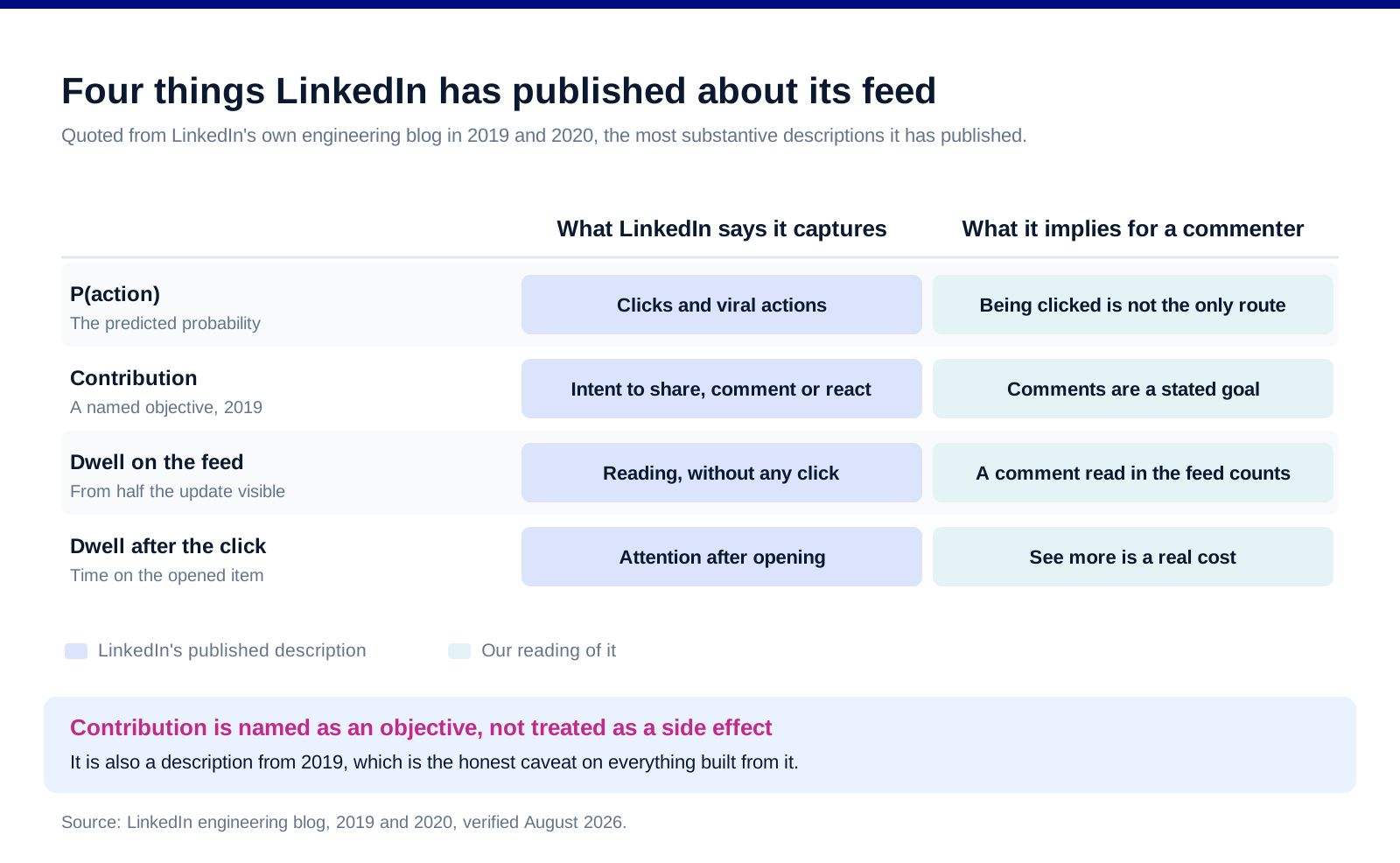
The feed is ranked on estimated probabilities, and LinkedIn names them. Its dwell time post sets out the form directly: the models estimate "P(action) = Probability of Alice taking this action on the update", for clicks and for viral actions, alongside downstream and upstream effects. That is a description of a ranking function published by the company that built it, which puts it in a different category from everything written about the LinkedIn algorithm by people who have not seen one.
Clicks were the problem it set out to fix. LinkedIn's own account gives three limitations. Clicks are rare, particularly for the large number of members who read without acting. They are binary, so a careful read and an accidental tap look identical. And they are noisy, because someone can click and leave immediately.
Dwell time was the answer to that. The post describes dwell time "on the feed," which "starts measuring when at least half of a feed update is visible as a member scrolls through their feed", and separately dwell time "after the click". Its stated advantages are that it is "Always measurable", a "Real-valued measure of engagement" and something that "Can be a more reliable indicator of engagement".
And contribution is a named objective rather than a by-product. The community-focused feed post defines probability of contribution as capturing "members' intent to share, comment, or react to a particular feed update", introduced to facilitate professional conversations in the feed. The model, it says, considers "timely feedback to content creators", so that "all members have a chance to feel heard". Reported results included more members "participating in professional conversations due to better candidate selection" and "more reactions given to a broader range of creators."
Now the caveat that most writing on this subject leaves out. Those two posts are from 2019 and 2020. They remain the most substantive published descriptions of how the feed is optimised, and they are also six and seven years old. Treat them as evidence of what the system was built to do rather than as a current specification, and be sceptical of anyone, this article included, who describes the 2026 ranking function with more confidence than the sources support. Our note on what to measure on LinkedIn takes the same position on the metrics side.
A comment is a post with somebody else's distribution
Everything you write on LinkedIn is published. A comment sits in a feed, attached to your name and your headline, and it can be read by people who have never heard of you. The only structural difference between a comment and a post is who assembled the room.
Which changes what a bad one costs. A weak post is seen by your own network and forgotten. A weak comment is seen by the audience of somebody with far more reach than you, with your job title sitting next to it. The downside is not neutral, it is negative: "Great post, thanks for sharing" is the most efficient method available for reaching a large number of relevant buyers and demonstrating to all of them at once that you have nothing to say.
And it changes who you are writing for. You are not writing for the author. You are writing for the third person down the thread, who is scrolling, who has decided nothing about you yet, and who will give your first line about three seconds. Our note on LinkedIn posts that get meetings covers the same problem on your own content, where the audience is smaller and more forgiving.
So use the standalone test. Would this comment work as a two-sentence post if you deleted the thing it is replying to? If it would not, you are not commenting, you are applauding, and applause is not a distribution strategy.
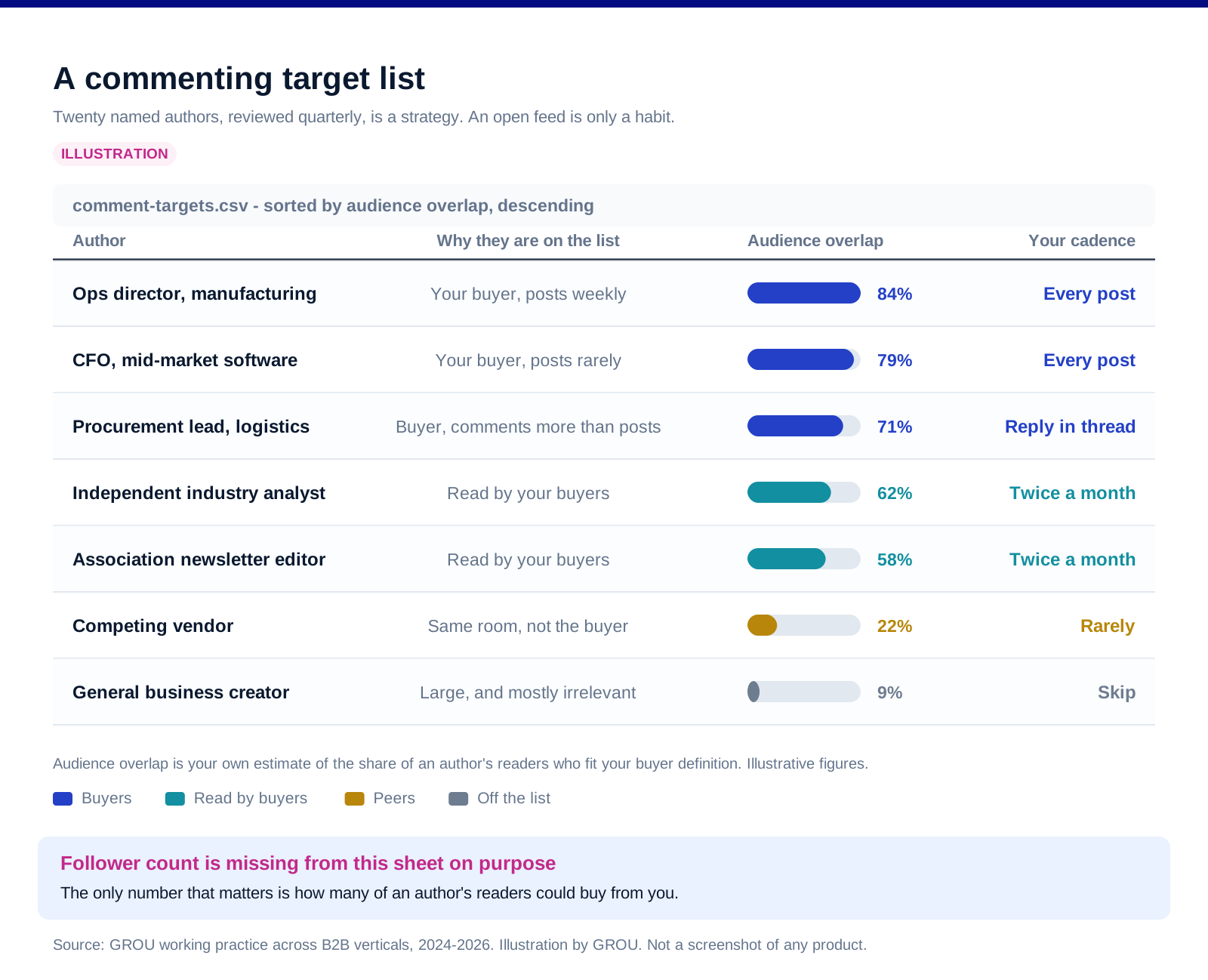
Where to comment is a list problem, not a volume problem
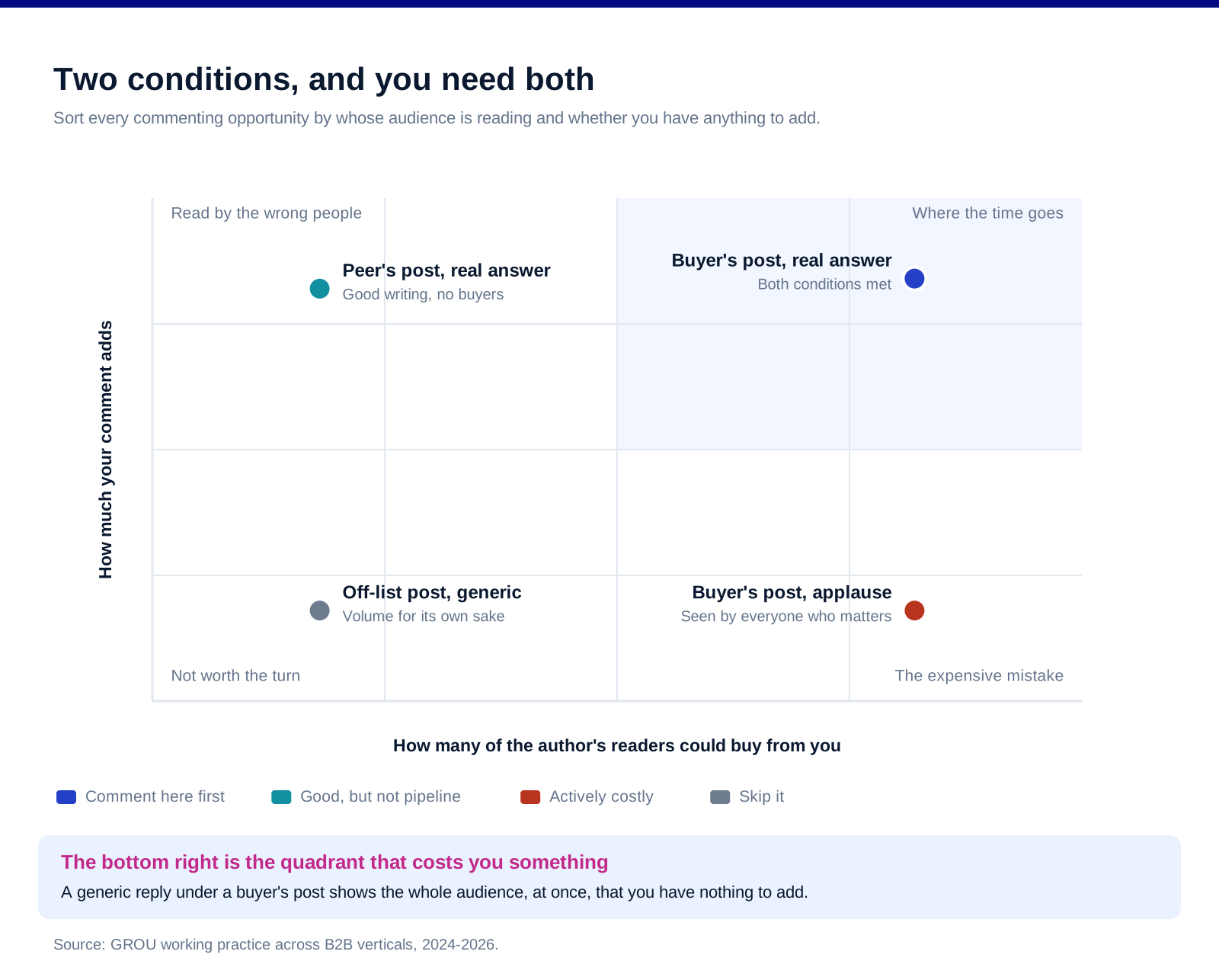
Pick the authors before you pick the posts. Commenting without a list means commenting on whatever the feed served you, which means your reach is decided by an algorithm optimising for your engagement rather than for your pipeline. Twenty named authors, reviewed quarterly, is a strategy. An open feed is a habit.
Rank by audience overlap, not by follower count. A consultant with 4,000 followers who are all heads of operations in manufacturing is worth more to a manufacturing vendor than an influencer with 200,000 followers drawn from everywhere. The number you care about is how many of their readers could buy from you, and it is usually a small fraction of the number on their profile.
Your buyers outrank your peers. Most commenting programmes drift towards commenting on other vendors, because vendors post more and reply faster. That is a pleasant professional network and a poor pipeline. Split the list explicitly: buyers, people your buyers read, and everyone else, and hold the third group to a small share of your time.
Let posting frequency set your cadence. Someone who posts daily gives you twenty chances a month and will not notice if you take five. Someone who posts monthly gives you twelve chances a year, and each one deserves preparation. Our note on the ideal customer profile covers how to define the buying group whose feeds you are trying to appear in.
And skip the posts where you have nothing to add. A list tells you where to look. It does not obligate you to comment on a post about someone's marathon. The discipline that makes commenting work is being willing to read a post from a priority account and write nothing.
What a comment has to contain
Add a number the post did not have. The most reliably useful comment supplies a figure with a source attached: a published rate, a regulatory date, a benchmark from a primary source. It is also the hardest to fake, which is why it stands out.
Or add the counter-case. "This holds until X, and here is what happens after X" is a contribution. It is also the shape most likely to start the conversation the feed was explicitly built to encourage, and it does not require disagreeing rudely with anyone.
Or add the operational detail. Posts stop at the principle. Anyone who has actually run the thing can say what breaks in week three, and that is a comment nobody else in the thread can write.
Or ask the question the post left open. Not a question you know the answer to, and not a question designed to make you look thoughtful. The genuine gap, named plainly. Authors answer those, which puts your name in the thread twice.
Two to five sentences. Long enough to contain something, short enough to read in the feed. A comment that needs a "see more" click has been converted from something always measurable into something rare, binary and noisy, which is the exact trade LinkedIn's own engineering wrote about moving away from.
Never open with a compliment. The first line is the only line most readers see. Spending it on "love this" wastes the whole asset. If you want to be gracious, be gracious in the second sentence.
And say something falsifiable. A comment that could be pasted under any post on the topic is a comment nobody will remember, including the author. Our note on repurposing LinkedIn content covers what to do with the ones that turn out to be worth more than the thread they were written in.
Measuring it without lying to yourself
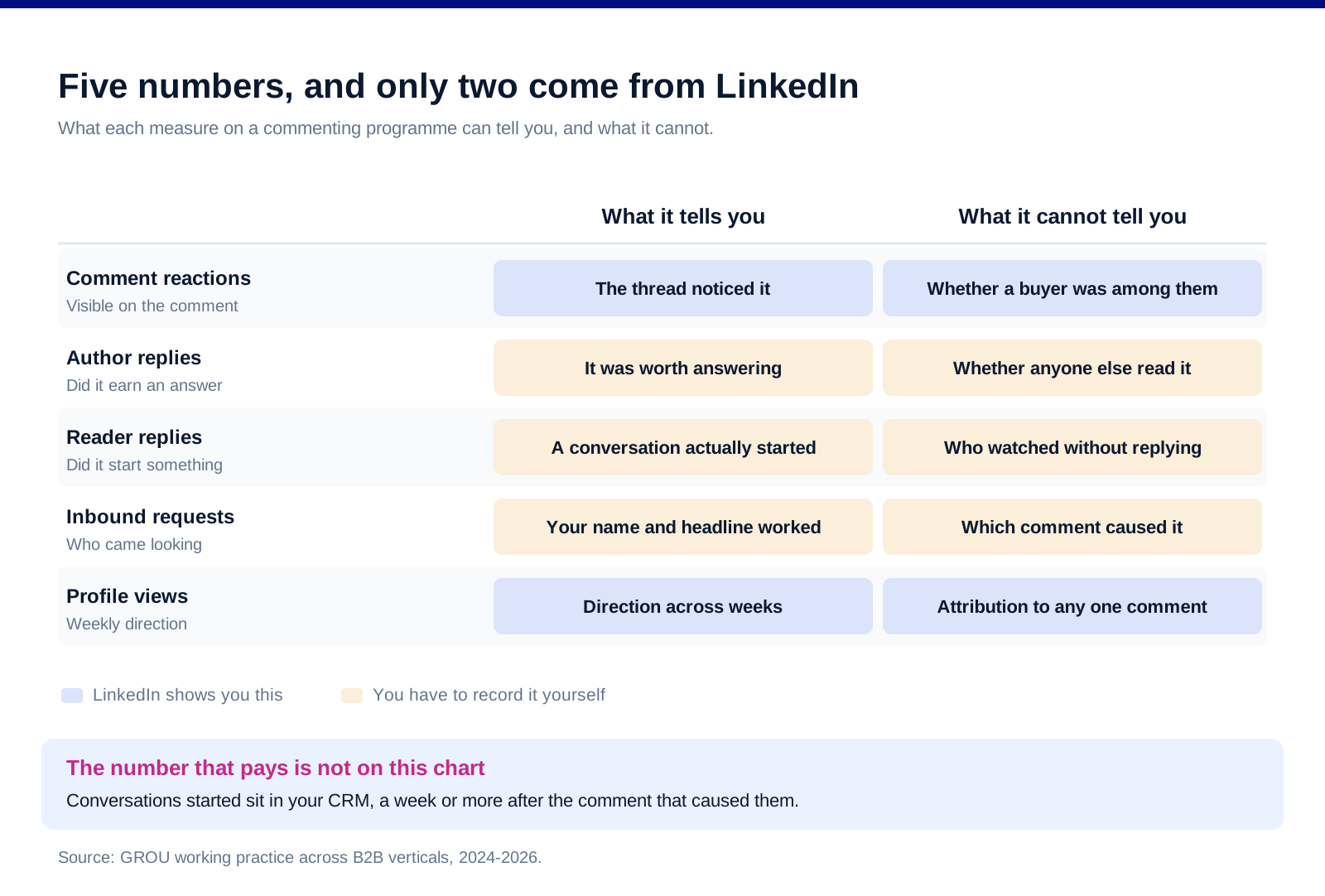
Comment likes are the vanity metric here. They are the easiest number to collect and the least connected to anything. A comment can collect forty reactions from other commenters and produce nothing, and a comment with two reactions can produce a meeting.
The platform gives you less than you think. Profile views and search appearances are yours, and they move for many reasons at once. Whether a specific comment produced a specific profile view is not something LinkedIn tells you, so anyone quoting a conversion rate from comments has built it from an assumption rather than from data.
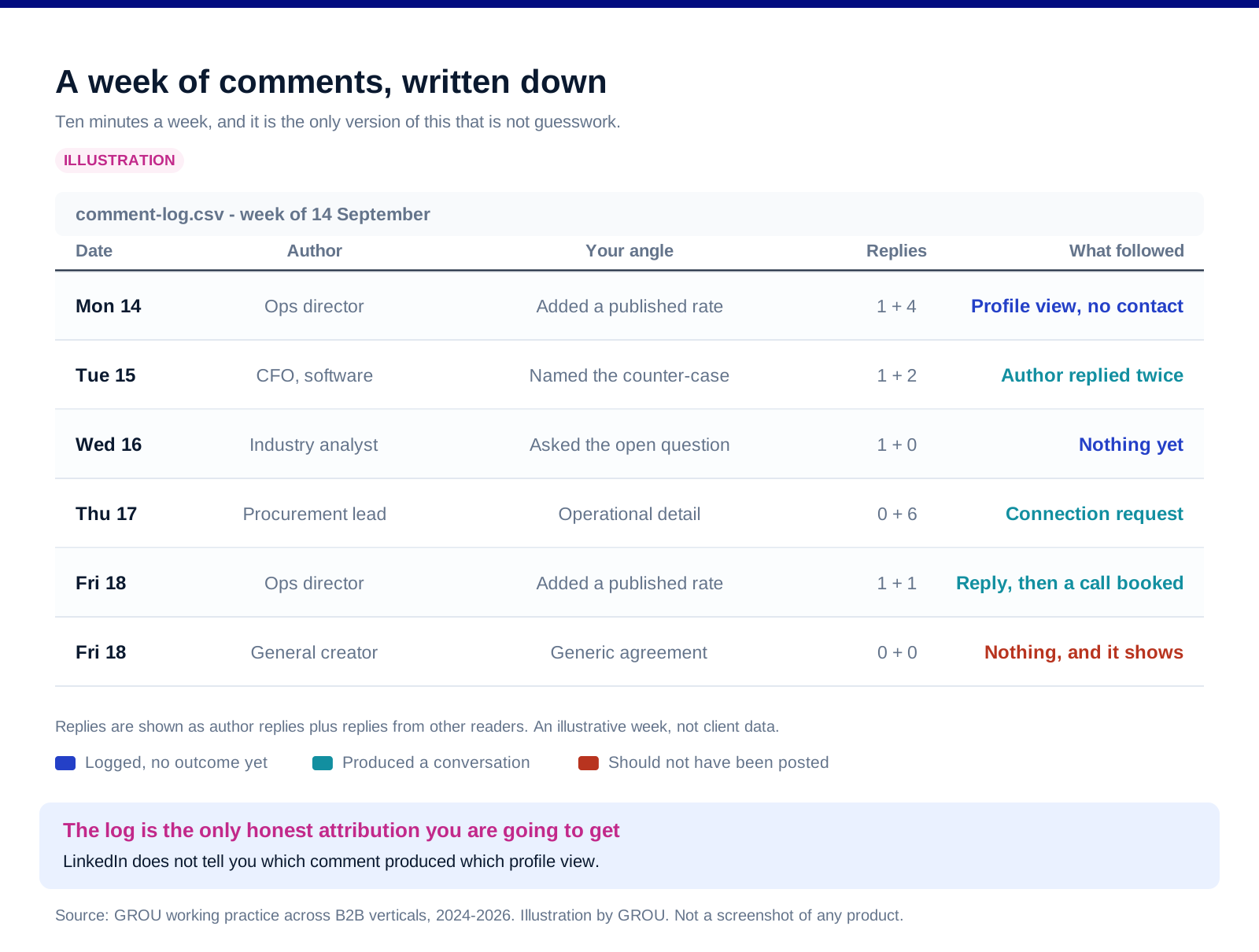
Which means you have to write the outcomes down yourself. Inbound connection requests, replies from the author, replies from other readers, and any conversation that starts within a week of a comment, each logged against the comment that plausibly caused it. It is manual, it takes ten minutes a week, and it is the only honest version.
Give it a quarter before judging it. Commenting compounds through repeated exposure to the same audience, which means a four-week test measures the setup rather than the strategy. Set the review date at the start so the decision is not made on the first quiet fortnight.
And keep it separate from your posting numbers. Mixing the two produces a chart that always shows growth and never shows why. Our note on LinkedIn employee advocacy covers the same discipline where several people are contributing at once.
The feed you are optimising for is not the only feed
LinkedIn is a designated Very Large Online Platform in the EU. The European Commission's published list names LinkedIn Ireland Unlimited Company, designated on 25 April 2023, with its Digital Services Coordinator in Ireland.
That designation carries feed obligations. The Commission states that designated services must provide an option in their recommender systems that is not based on profiling, and must be transparent about advertising, recommender systems and content moderation decisions.
Which has a quiet consequence for anyone writing comments. Some share of your European readers may be viewing a feed that is not personalised to them at all. Whatever the ranking function does with contribution and dwell time, it is not doing it for every reader, and a strategy built entirely on inferred algorithmic behaviour has an audience it cannot reach by that route.
The resolution is the same as it always is. Write comments that a person would want to read, on posts by people your buyers already read, and the plumbing underneath matters less than the copy on top of it. Our note on LinkedIn engagement strategies covers the wider engagement picture that commenting sits inside.
What we do not publish here
Any claim about how the 2026 ranking function weights comments. LinkedIn has not published it. The 2019 and 2020 material is what exists, it is quoted above with its age disclosed, and extrapolating from it to a current weighting would be inventing a number.
Reply rate or profile view benchmarks for commenting. Ours come from a specific set of accounts in specific categories, and they would mislead anyone applying them elsewhere. The measurement section above tells you how to build your own.
A recommended number of comments per day. It depends entirely on the size of your target list and how often those people post, which is why the article gives you the list method instead.
Anything about engagement pods. Coordinated reciprocal engagement is a different activity with different risks, and we are not going to describe how to run one.
Client examples. We do not cite client work by name anywhere on this blog, and in a commenting context a named example identifies the account whether or not we intended it to.
FAQ
Do LinkedIn comments actually help reach?
LinkedIn's own engineering blog describes "probability of contribution", defined as capturing "members' intent to share, comment, or react to a particular feed update", as an optimisation objective introduced to facilitate professional conversations in the feed. So comments are something the system was explicitly built to encourage. How the current ranking function weights them is not published, and nobody outside LinkedIn can tell you.
How long should a LinkedIn comment be?
Two to five sentences. Long enough to contain a fact, a counter-case or an operational detail, short enough to be read in the feed without a "see more" click. LinkedIn's published work on dwell time is about capturing engagement from people who read rather than click, and a comment that has to be expanded before it can be read gives that up.
Is it better to comment early on a post?
LinkedIn's stated rationale for the contribution objective includes "timely feedback to content creators" and adjusting freshness so that viewers "can provide creator feedback earlier and stay in active conversations". That is a published reason to be early rather than an algorithm rumour. It is not a promise about reach, and a late comment with something in it still beats an early one without.
Whose posts should you comment on?
Your buyers first, then the people your buyers read, then everybody else, with the third group kept small. Rank by how much of an author's audience could actually buy from you rather than by follower count, because a 4,000-follower account made entirely of your buyers is worth more than a 200,000-follower account that is not.
How do you measure a commenting programme?
Manually, because the platform will not do it for you. Log each comment with the author, the topic and your angle, then record inbound connection requests, author replies, replies from other readers and any conversation that started within a week. Profile views and search appearances give you direction but cannot be attributed to a single comment.
What makes a comment worth writing?
The standalone test: would it work as a two-sentence post if you deleted the thing it replies to? A number with a source, a counter-case, an operational detail that only an operator would know, or the genuine open question the post left behind will all pass it. "Great post" will not, and it publishes that fact to the audience you were trying to impress.
Bottom line
Treat a comment as publishing, because that is what it is, and the only unusual thing about it is that somebody else assembled the audience for you. That reframing does most of the work: it tells you to build a list of authors ranked by how much of their audience could buy from you rather than by follower count, it tells you to write for the third reader down rather than for the author, and it tells you that a compliment in the first line has wasted the only line most people will see. LinkedIn's published engineering material supports two specific habits, being early and being worth replying to, and it is honest to say that the material is from 2019 and 2020 and describes what the feed was built to do rather than what it does today. Everything beyond that is inference. So measure it yourself, in a log you keep by hand, give it a quarter before you judge it, and hold to the standalone test on every comment: if it would not survive as a two-sentence post, do not publish it under somebody else's.
Want the LinkedIn programme run rather than debated? Book a call with GROU. We run LinkedIn content and lead generation inside B2B revenue engines across verticals.
We are GROU, a B2B pipeline agency that runs lead generation, outbound, and LinkedIn content for clients across manufacturing, fintech, iGaming, software, and professional services. Every quoted description of LinkedIn's feed is taken from LinkedIn's own engineering blog, published in 2019 and 2020 and dated in the text, and the regulatory descriptions are quoted from published European Commission material, all verified in August 2026. Platform behaviour changes without notice, so treat published descriptions as evidence of intent rather than as current specification.
A post has to go out and find its audience. A comment arrives with the audience already assembled.
That is the whole case for commenting, and it is also why most of it is wasted. Turning up in a room somebody else filled and saying "great post" is publishing something, in front of exactly the people you wanted to reach, that says nothing at all. The decision is not whether to comment. It is what a comment has to contain before it earns the four minutes it costs.
TL;DR
LinkedIn has published more about its own feed than most people commenting on it have read, and two of those posts are the entire foundation for a comment strategy. Its engineering blog describes ranking models that estimate "P(action) = Probability of Alice taking this action on the update", explains that clicks are a weak signal because they are rare, binary and noisy, and introduces dwell time as something "Always measurable", a "Real-valued measure of engagement" that "Can be a more reliable indicator of engagement". A second post introduces "probability of contribution", which "captures members' intent to share, comment, or react to a particular feed update", added so that the model considers "timely feedback to content creators" and so "all members have a chance to feel heard". Three consequences follow, and none of them is a trick. Comments are not a side effect of the feed, they are one of the things it was built to produce. Timing is part of the published rationale rather than folklore, because the stated point was feedback arriving early rather than eventually. And none of it helps unless the comment is worth reading, because the same machinery that distributes a good one distributes a worthless one to the same people.
What LinkedIn has actually published about its feed
The feed is ranked on estimated probabilities, and LinkedIn names them. Its dwell time post sets out the form directly: the models estimate "P(action) = Probability of Alice taking this action on the update", for clicks and for viral actions, alongside downstream and upstream effects. That is a description of a ranking function published by the company that built it, which puts it in a different category from everything written about the LinkedIn algorithm by people who have not seen one.
Clicks were the problem it set out to fix. LinkedIn's own account gives three limitations. Clicks are rare, particularly for the large number of members who read without acting. They are binary, so a careful read and an accidental tap look identical. And they are noisy, because someone can click and leave immediately.
Dwell time was the answer to that. The post describes dwell time "on the feed," which "starts measuring when at least half of a feed update is visible as a member scrolls through their feed", and separately dwell time "after the click". Its stated advantages are that it is "Always measurable", a "Real-valued measure of engagement" and something that "Can be a more reliable indicator of engagement".
And contribution is a named objective rather than a by-product. The community-focused feed post defines probability of contribution as capturing "members' intent to share, comment, or react to a particular feed update", introduced to facilitate professional conversations in the feed. The model, it says, considers "timely feedback to content creators", so that "all members have a chance to feel heard". Reported results included more members "participating in professional conversations due to better candidate selection" and "more reactions given to a broader range of creators."
Now the caveat that most writing on this subject leaves out. Those two posts are from 2019 and 2020. They remain the most substantive published descriptions of how the feed is optimised, and they are also six and seven years old. Treat them as evidence of what the system was built to do rather than as a current specification, and be sceptical of anyone, this article included, who describes the 2026 ranking function with more confidence than the sources support. Our note on what to measure on LinkedIn takes the same position on the metrics side.
A comment is a post with somebody else's distribution
Everything you write on LinkedIn is published. A comment sits in a feed, attached to your name and your headline, and it can be read by people who have never heard of you. The only structural difference between a comment and a post is who assembled the room.
Which changes what a bad one costs. A weak post is seen by your own network and forgotten. A weak comment is seen by the audience of somebody with far more reach than you, with your job title sitting next to it. The downside is not neutral, it is negative: "Great post, thanks for sharing" is the most efficient method available for reaching a large number of relevant buyers and demonstrating to all of them at once that you have nothing to say.
And it changes who you are writing for. You are not writing for the author. You are writing for the third person down the thread, who is scrolling, who has decided nothing about you yet, and who will give your first line about three seconds. Our note on LinkedIn posts that get meetings covers the same problem on your own content, where the audience is smaller and more forgiving.
So use the standalone test. Would this comment work as a two-sentence post if you deleted the thing it is replying to? If it would not, you are not commenting, you are applauding, and applause is not a distribution strategy.
Where to comment is a list problem, not a volume problem
Pick the authors before you pick the posts. Commenting without a list means commenting on whatever the feed served you, which means your reach is decided by an algorithm optimising for your engagement rather than for your pipeline. Twenty named authors, reviewed quarterly, is a strategy. An open feed is a habit.
Rank by audience overlap, not by follower count. A consultant with 4,000 followers who are all heads of operations in manufacturing is worth more to a manufacturing vendor than an influencer with 200,000 followers drawn from everywhere. The number you care about is how many of their readers could buy from you, and it is usually a small fraction of the number on their profile.
Your buyers outrank your peers. Most commenting programmes drift towards commenting on other vendors, because vendors post more and reply faster. That is a pleasant professional network and a poor pipeline. Split the list explicitly: buyers, people your buyers read, and everyone else, and hold the third group to a small share of your time.
Let posting frequency set your cadence. Someone who posts daily gives you twenty chances a month and will not notice if you take five. Someone who posts monthly gives you twelve chances a year, and each one deserves preparation. Our note on the ideal customer profile covers how to define the buying group whose feeds you are trying to appear in.
And skip the posts where you have nothing to add. A list tells you where to look. It does not obligate you to comment on a post about someone's marathon. The discipline that makes commenting work is being willing to read a post from a priority account and write nothing.
What a comment has to contain
Add a number the post did not have. The most reliably useful comment supplies a figure with a source attached: a published rate, a regulatory date, a benchmark from a primary source. It is also the hardest to fake, which is why it stands out.
Or add the counter-case. "This holds until X, and here is what happens after X" is a contribution. It is also the shape most likely to start the conversation the feed was explicitly built to encourage, and it does not require disagreeing rudely with anyone.
Or add the operational detail. Posts stop at the principle. Anyone who has actually run the thing can say what breaks in week three, and that is a comment nobody else in the thread can write.
Or ask the question the post left open. Not a question you know the answer to, and not a question designed to make you look thoughtful. The genuine gap, named plainly. Authors answer those, which puts your name in the thread twice.
Two to five sentences. Long enough to contain something, short enough to read in the feed. A comment that needs a "see more" click has been converted from something always measurable into something rare, binary and noisy, which is the exact trade LinkedIn's own engineering wrote about moving away from.
Never open with a compliment. The first line is the only line most readers see. Spending it on "love this" wastes the whole asset. If you want to be gracious, be gracious in the second sentence.
And say something falsifiable. A comment that could be pasted under any post on the topic is a comment nobody will remember, including the author. Our note on repurposing LinkedIn content covers what to do with the ones that turn out to be worth more than the thread they were written in.
Measuring it without lying to yourself
Comment likes are the vanity metric here. They are the easiest number to collect and the least connected to anything. A comment can collect forty reactions from other commenters and produce nothing, and a comment with two reactions can produce a meeting.
The platform gives you less than you think. Profile views and search appearances are yours, and they move for many reasons at once. Whether a specific comment produced a specific profile view is not something LinkedIn tells you, so anyone quoting a conversion rate from comments has built it from an assumption rather than from data.
Which means you have to write the outcomes down yourself. Inbound connection requests, replies from the author, replies from other readers, and any conversation that starts within a week of a comment, each logged against the comment that plausibly caused it. It is manual, it takes ten minutes a week, and it is the only honest version.
Give it a quarter before judging it. Commenting compounds through repeated exposure to the same audience, which means a four-week test measures the setup rather than the strategy. Set the review date at the start so the decision is not made on the first quiet fortnight.
And keep it separate from your posting numbers. Mixing the two produces a chart that always shows growth and never shows why. Our note on LinkedIn employee advocacy covers the same discipline where several people are contributing at once.
The feed you are optimising for is not the only feed
LinkedIn is a designated Very Large Online Platform in the EU. The European Commission's published list names LinkedIn Ireland Unlimited Company, designated on 25 April 2023, with its Digital Services Coordinator in Ireland.
That designation carries feed obligations. The Commission states that designated services must provide an option in their recommender systems that is not based on profiling, and must be transparent about advertising, recommender systems and content moderation decisions.
Which has a quiet consequence for anyone writing comments. Some share of your European readers may be viewing a feed that is not personalised to them at all. Whatever the ranking function does with contribution and dwell time, it is not doing it for every reader, and a strategy built entirely on inferred algorithmic behaviour has an audience it cannot reach by that route.
The resolution is the same as it always is. Write comments that a person would want to read, on posts by people your buyers already read, and the plumbing underneath matters less than the copy on top of it. Our note on LinkedIn engagement strategies covers the wider engagement picture that commenting sits inside.
What we do not publish here
Any claim about how the 2026 ranking function weights comments. LinkedIn has not published it. The 2019 and 2020 material is what exists, it is quoted above with its age disclosed, and extrapolating from it to a current weighting would be inventing a number.
Reply rate or profile view benchmarks for commenting. Ours come from a specific set of accounts in specific categories, and they would mislead anyone applying them elsewhere. The measurement section above tells you how to build your own.
A recommended number of comments per day. It depends entirely on the size of your target list and how often those people post, which is why the article gives you the list method instead.
Anything about engagement pods. Coordinated reciprocal engagement is a different activity with different risks, and we are not going to describe how to run one.
Client examples. We do not cite client work by name anywhere on this blog, and in a commenting context a named example identifies the account whether or not we intended it to.
FAQ
Do LinkedIn comments actually help reach?
LinkedIn's own engineering blog describes "probability of contribution", defined as capturing "members' intent to share, comment, or react to a particular feed update", as an optimisation objective introduced to facilitate professional conversations in the feed. So comments are something the system was explicitly built to encourage. How the current ranking function weights them is not published, and nobody outside LinkedIn can tell you.
How long should a LinkedIn comment be?
Two to five sentences. Long enough to contain a fact, a counter-case or an operational detail, short enough to be read in the feed without a "see more" click. LinkedIn's published work on dwell time is about capturing engagement from people who read rather than click, and a comment that has to be expanded before it can be read gives that up.
Is it better to comment early on a post?
LinkedIn's stated rationale for the contribution objective includes "timely feedback to content creators" and adjusting freshness so that viewers "can provide creator feedback earlier and stay in active conversations". That is a published reason to be early rather than an algorithm rumour. It is not a promise about reach, and a late comment with something in it still beats an early one without.
Whose posts should you comment on?
Your buyers first, then the people your buyers read, then everybody else, with the third group kept small. Rank by how much of an author's audience could actually buy from you rather than by follower count, because a 4,000-follower account made entirely of your buyers is worth more than a 200,000-follower account that is not.
How do you measure a commenting programme?
Manually, because the platform will not do it for you. Log each comment with the author, the topic and your angle, then record inbound connection requests, author replies, replies from other readers and any conversation that started within a week. Profile views and search appearances give you direction but cannot be attributed to a single comment.
What makes a comment worth writing?
The standalone test: would it work as a two-sentence post if you deleted the thing it replies to? A number with a source, a counter-case, an operational detail that only an operator would know, or the genuine open question the post left behind will all pass it. "Great post" will not, and it publishes that fact to the audience you were trying to impress.
Bottom line
Treat a comment as publishing, because that is what it is, and the only unusual thing about it is that somebody else assembled the audience for you. That reframing does most of the work: it tells you to build a list of authors ranked by how much of their audience could buy from you rather than by follower count, it tells you to write for the third reader down rather than for the author, and it tells you that a compliment in the first line has wasted the only line most people will see. LinkedIn's published engineering material supports two specific habits, being early and being worth replying to, and it is honest to say that the material is from 2019 and 2020 and describes what the feed was built to do rather than what it does today. Everything beyond that is inference. So measure it yourself, in a log you keep by hand, give it a quarter before you judge it, and hold to the standalone test on every comment: if it would not survive as a two-sentence post, do not publish it under somebody else's.
Want the LinkedIn programme run rather than debated? Book a call with GROU. We run LinkedIn content and lead generation inside B2B revenue engines across verticals.
We are GROU, a B2B pipeline agency that runs lead generation, outbound, and LinkedIn content for clients across manufacturing, fintech, iGaming, software, and professional services. Every quoted description of LinkedIn's feed is taken from LinkedIn's own engineering blog, published in 2019 and 2020 and dated in the text, and the regulatory descriptions are quoted from published European Commission material, all verified in August 2026. Platform behaviour changes without notice, so treat published descriptions as evidence of intent rather than as current specification.
A post has to go out and find its audience. A comment arrives with the audience already assembled.
That is the whole case for commenting, and it is also why most of it is wasted. Turning up in a room somebody else filled and saying "great post" is publishing something, in front of exactly the people you wanted to reach, that says nothing at all. The decision is not whether to comment. It is what a comment has to contain before it earns the four minutes it costs.
TL;DR
LinkedIn has published more about its own feed than most people commenting on it have read, and two of those posts are the entire foundation for a comment strategy. Its engineering blog describes ranking models that estimate "P(action) = Probability of Alice taking this action on the update", explains that clicks are a weak signal because they are rare, binary and noisy, and introduces dwell time as something "Always measurable", a "Real-valued measure of engagement" that "Can be a more reliable indicator of engagement". A second post introduces "probability of contribution", which "captures members' intent to share, comment, or react to a particular feed update", added so that the model considers "timely feedback to content creators" and so "all members have a chance to feel heard". Three consequences follow, and none of them is a trick. Comments are not a side effect of the feed, they are one of the things it was built to produce. Timing is part of the published rationale rather than folklore, because the stated point was feedback arriving early rather than eventually. And none of it helps unless the comment is worth reading, because the same machinery that distributes a good one distributes a worthless one to the same people.
What LinkedIn has actually published about its feed
The feed is ranked on estimated probabilities, and LinkedIn names them. Its dwell time post sets out the form directly: the models estimate "P(action) = Probability of Alice taking this action on the update", for clicks and for viral actions, alongside downstream and upstream effects. That is a description of a ranking function published by the company that built it, which puts it in a different category from everything written about the LinkedIn algorithm by people who have not seen one.
Clicks were the problem it set out to fix. LinkedIn's own account gives three limitations. Clicks are rare, particularly for the large number of members who read without acting. They are binary, so a careful read and an accidental tap look identical. And they are noisy, because someone can click and leave immediately.
Dwell time was the answer to that. The post describes dwell time "on the feed," which "starts measuring when at least half of a feed update is visible as a member scrolls through their feed", and separately dwell time "after the click". Its stated advantages are that it is "Always measurable", a "Real-valued measure of engagement" and something that "Can be a more reliable indicator of engagement".
And contribution is a named objective rather than a by-product. The community-focused feed post defines probability of contribution as capturing "members' intent to share, comment, or react to a particular feed update", introduced to facilitate professional conversations in the feed. The model, it says, considers "timely feedback to content creators", so that "all members have a chance to feel heard". Reported results included more members "participating in professional conversations due to better candidate selection" and "more reactions given to a broader range of creators."
Now the caveat that most writing on this subject leaves out. Those two posts are from 2019 and 2020. They remain the most substantive published descriptions of how the feed is optimised, and they are also six and seven years old. Treat them as evidence of what the system was built to do rather than as a current specification, and be sceptical of anyone, this article included, who describes the 2026 ranking function with more confidence than the sources support. Our note on what to measure on LinkedIn takes the same position on the metrics side.
A comment is a post with somebody else's distribution
Everything you write on LinkedIn is published. A comment sits in a feed, attached to your name and your headline, and it can be read by people who have never heard of you. The only structural difference between a comment and a post is who assembled the room.
Which changes what a bad one costs. A weak post is seen by your own network and forgotten. A weak comment is seen by the audience of somebody with far more reach than you, with your job title sitting next to it. The downside is not neutral, it is negative: "Great post, thanks for sharing" is the most efficient method available for reaching a large number of relevant buyers and demonstrating to all of them at once that you have nothing to say.
And it changes who you are writing for. You are not writing for the author. You are writing for the third person down the thread, who is scrolling, who has decided nothing about you yet, and who will give your first line about three seconds. Our note on LinkedIn posts that get meetings covers the same problem on your own content, where the audience is smaller and more forgiving.
So use the standalone test. Would this comment work as a two-sentence post if you deleted the thing it is replying to? If it would not, you are not commenting, you are applauding, and applause is not a distribution strategy.
Where to comment is a list problem, not a volume problem
Pick the authors before you pick the posts. Commenting without a list means commenting on whatever the feed served you, which means your reach is decided by an algorithm optimising for your engagement rather than for your pipeline. Twenty named authors, reviewed quarterly, is a strategy. An open feed is a habit.
Rank by audience overlap, not by follower count. A consultant with 4,000 followers who are all heads of operations in manufacturing is worth more to a manufacturing vendor than an influencer with 200,000 followers drawn from everywhere. The number you care about is how many of their readers could buy from you, and it is usually a small fraction of the number on their profile.
Your buyers outrank your peers. Most commenting programmes drift towards commenting on other vendors, because vendors post more and reply faster. That is a pleasant professional network and a poor pipeline. Split the list explicitly: buyers, people your buyers read, and everyone else, and hold the third group to a small share of your time.
Let posting frequency set your cadence. Someone who posts daily gives you twenty chances a month and will not notice if you take five. Someone who posts monthly gives you twelve chances a year, and each one deserves preparation. Our note on the ideal customer profile covers how to define the buying group whose feeds you are trying to appear in.
And skip the posts where you have nothing to add. A list tells you where to look. It does not obligate you to comment on a post about someone's marathon. The discipline that makes commenting work is being willing to read a post from a priority account and write nothing.
What a comment has to contain
Add a number the post did not have. The most reliably useful comment supplies a figure with a source attached: a published rate, a regulatory date, a benchmark from a primary source. It is also the hardest to fake, which is why it stands out.
Or add the counter-case. "This holds until X, and here is what happens after X" is a contribution. It is also the shape most likely to start the conversation the feed was explicitly built to encourage, and it does not require disagreeing rudely with anyone.
Or add the operational detail. Posts stop at the principle. Anyone who has actually run the thing can say what breaks in week three, and that is a comment nobody else in the thread can write.
Or ask the question the post left open. Not a question you know the answer to, and not a question designed to make you look thoughtful. The genuine gap, named plainly. Authors answer those, which puts your name in the thread twice.
Two to five sentences. Long enough to contain something, short enough to read in the feed. A comment that needs a "see more" click has been converted from something always measurable into something rare, binary and noisy, which is the exact trade LinkedIn's own engineering wrote about moving away from.
Never open with a compliment. The first line is the only line most readers see. Spending it on "love this" wastes the whole asset. If you want to be gracious, be gracious in the second sentence.
And say something falsifiable. A comment that could be pasted under any post on the topic is a comment nobody will remember, including the author. Our note on repurposing LinkedIn content covers what to do with the ones that turn out to be worth more than the thread they were written in.
Measuring it without lying to yourself
Comment likes are the vanity metric here. They are the easiest number to collect and the least connected to anything. A comment can collect forty reactions from other commenters and produce nothing, and a comment with two reactions can produce a meeting.
The platform gives you less than you think. Profile views and search appearances are yours, and they move for many reasons at once. Whether a specific comment produced a specific profile view is not something LinkedIn tells you, so anyone quoting a conversion rate from comments has built it from an assumption rather than from data.
Which means you have to write the outcomes down yourself. Inbound connection requests, replies from the author, replies from other readers, and any conversation that starts within a week of a comment, each logged against the comment that plausibly caused it. It is manual, it takes ten minutes a week, and it is the only honest version.
Give it a quarter before judging it. Commenting compounds through repeated exposure to the same audience, which means a four-week test measures the setup rather than the strategy. Set the review date at the start so the decision is not made on the first quiet fortnight.
And keep it separate from your posting numbers. Mixing the two produces a chart that always shows growth and never shows why. Our note on LinkedIn employee advocacy covers the same discipline where several people are contributing at once.
The feed you are optimising for is not the only feed
LinkedIn is a designated Very Large Online Platform in the EU. The European Commission's published list names LinkedIn Ireland Unlimited Company, designated on 25 April 2023, with its Digital Services Coordinator in Ireland.
That designation carries feed obligations. The Commission states that designated services must provide an option in their recommender systems that is not based on profiling, and must be transparent about advertising, recommender systems and content moderation decisions.
Which has a quiet consequence for anyone writing comments. Some share of your European readers may be viewing a feed that is not personalised to them at all. Whatever the ranking function does with contribution and dwell time, it is not doing it for every reader, and a strategy built entirely on inferred algorithmic behaviour has an audience it cannot reach by that route.
The resolution is the same as it always is. Write comments that a person would want to read, on posts by people your buyers already read, and the plumbing underneath matters less than the copy on top of it. Our note on LinkedIn engagement strategies covers the wider engagement picture that commenting sits inside.
What we do not publish here
Any claim about how the 2026 ranking function weights comments. LinkedIn has not published it. The 2019 and 2020 material is what exists, it is quoted above with its age disclosed, and extrapolating from it to a current weighting would be inventing a number.
Reply rate or profile view benchmarks for commenting. Ours come from a specific set of accounts in specific categories, and they would mislead anyone applying them elsewhere. The measurement section above tells you how to build your own.
A recommended number of comments per day. It depends entirely on the size of your target list and how often those people post, which is why the article gives you the list method instead.
Anything about engagement pods. Coordinated reciprocal engagement is a different activity with different risks, and we are not going to describe how to run one.
Client examples. We do not cite client work by name anywhere on this blog, and in a commenting context a named example identifies the account whether or not we intended it to.
FAQ
Do LinkedIn comments actually help reach?
LinkedIn's own engineering blog describes "probability of contribution", defined as capturing "members' intent to share, comment, or react to a particular feed update", as an optimisation objective introduced to facilitate professional conversations in the feed. So comments are something the system was explicitly built to encourage. How the current ranking function weights them is not published, and nobody outside LinkedIn can tell you.
How long should a LinkedIn comment be?
Two to five sentences. Long enough to contain a fact, a counter-case or an operational detail, short enough to be read in the feed without a "see more" click. LinkedIn's published work on dwell time is about capturing engagement from people who read rather than click, and a comment that has to be expanded before it can be read gives that up.
Is it better to comment early on a post?
LinkedIn's stated rationale for the contribution objective includes "timely feedback to content creators" and adjusting freshness so that viewers "can provide creator feedback earlier and stay in active conversations". That is a published reason to be early rather than an algorithm rumour. It is not a promise about reach, and a late comment with something in it still beats an early one without.
Whose posts should you comment on?
Your buyers first, then the people your buyers read, then everybody else, with the third group kept small. Rank by how much of an author's audience could actually buy from you rather than by follower count, because a 4,000-follower account made entirely of your buyers is worth more than a 200,000-follower account that is not.
How do you measure a commenting programme?
Manually, because the platform will not do it for you. Log each comment with the author, the topic and your angle, then record inbound connection requests, author replies, replies from other readers and any conversation that started within a week. Profile views and search appearances give you direction but cannot be attributed to a single comment.
What makes a comment worth writing?
The standalone test: would it work as a two-sentence post if you deleted the thing it replies to? A number with a source, a counter-case, an operational detail that only an operator would know, or the genuine open question the post left behind will all pass it. "Great post" will not, and it publishes that fact to the audience you were trying to impress.
Bottom line
Treat a comment as publishing, because that is what it is, and the only unusual thing about it is that somebody else assembled the audience for you. That reframing does most of the work: it tells you to build a list of authors ranked by how much of their audience could buy from you rather than by follower count, it tells you to write for the third reader down rather than for the author, and it tells you that a compliment in the first line has wasted the only line most people will see. LinkedIn's published engineering material supports two specific habits, being early and being worth replying to, and it is honest to say that the material is from 2019 and 2020 and describes what the feed was built to do rather than what it does today. Everything beyond that is inference. So measure it yourself, in a log you keep by hand, give it a quarter before you judge it, and hold to the standalone test on every comment: if it would not survive as a two-sentence post, do not publish it under somebody else's.
Want the LinkedIn programme run rather than debated? Book a call with GROU. We run LinkedIn content and lead generation inside B2B revenue engines across verticals.
We are GROU, a B2B pipeline agency that runs lead generation, outbound, and LinkedIn content for clients across manufacturing, fintech, iGaming, software, and professional services. Every quoted description of LinkedIn's feed is taken from LinkedIn's own engineering blog, published in 2019 and 2020 and dated in the text, and the regulatory descriptions are quoted from published European Commission material, all verified in August 2026. Platform behaviour changes without notice, so treat published descriptions as evidence of intent rather than as current specification.
Pipeline OS Newsletter
Build qualified pipeline
Get weekly tactics to generate demand, improve lead quality, and book more meetings.






Trusted by industry leaders
Trusted by industry leaders
Trusted by industry leaders
Ready to build qualified pipeline?
Ready to build qualified pipeline?
Ready to build qualified pipeline?
Book a call to see if we're the right fit, or take the 2-minute quiz to get a clear starting point.
Book a call to see if we're the right fit, or take the 2-minute quiz to get a clear starting point.
Book a call to see if we're the right fit, or take the 2-minute quiz to get a clear starting point.
" height="30.21639343089746px" id="hfGbXmQR2" width="30.216393430897455px"/></svg>)
Copyright © 2026 – All Right Reserved
Copyright © 2026 – All Right Reserved
Copyright © 2026 – All Right Reserved