%22%3E%3C/path%3E%3Cpath d=%22M 63.072 7.554 C 62.258 8.022 61.577 8.689 61.092 9.493 L 61.092 7.076 L 57.158 7.076 L 57.158 22.64 L 61.089 22.64 L 61.089 14.888 C 61.089 13.446 61.403 12.434 62.03 11.853 C 62.818 11.218 63.818 10.907 64.826 10.982 L 65.868 10.982 L 65.868 6.851 C 64.891 6.834 63.926 7.076 63.073 7.554 Z%22 fill=%22rgb(17,17,17)%22%3E%3C/path%3E%3Cpath d=%22M 78.916 7.82 C 76.363 6.49 73.321 6.49 70.768 7.82 C 69.562 8.473 68.564 9.451 67.888 10.644 C 67.167 11.931 66.803 13.387 66.834 14.862 C 66.804 16.332 67.157 17.785 67.86 19.077 C 68.515 20.267 69.494 21.246 70.684 21.901 C 71.924 22.576 73.318 22.92 74.73 22.898 C 76.164 22.918 77.58 22.575 78.846 21.901 C 80.062 21.247 81.073 20.27 81.768 19.077 C 82.506 17.797 82.88 16.339 82.85 14.862 C 82.88 13.389 82.517 11.934 81.797 10.647 C 81.12 9.455 80.122 8.477 78.917 7.824 M 78.803 14.862 C 78.829 15.739 78.636 16.608 78.241 17.391 C 77.903 18.046 77.38 18.588 76.738 18.95 C 76.124 19.293 75.432 19.472 74.729 19.47 C 73.668 19.497 72.648 19.061 71.934 18.276 C 71.139 17.323 70.741 16.1 70.823 14.862 C 70.741 13.62 71.149 12.395 71.959 11.45 C 72.687 10.667 73.715 10.233 74.783 10.256 C 75.859 10.236 76.894 10.67 77.635 11.45 C 78.464 12.387 78.884 13.616 78.801 14.864%22 fill=%22rgb(17,17,17)%22%3E%3C/path%3E%3Cpath d=%22M 95.906 7.076 L 95.906 15.646 C 95.975 16.68 95.643 17.701 94.979 18.498 C 94.311 19.184 93.379 19.547 92.422 19.495 C 91.475 19.544 90.553 19.18 89.894 18.498 C 89.23 17.701 88.898 16.68 88.967 15.646 L 88.967 7.076 L 85.033 7.076 L 85.033 16.207 C 85 17.449 85.275 18.68 85.834 19.79 C 86.327 20.75 87.095 21.542 88.039 22.065 C 89.033 22.594 90.145 22.861 91.271 22.838 C 92.188 22.847 93.095 22.65 93.926 22.263 C 94.708 21.905 95.388 21.36 95.906 20.675 L 95.906 22.645 L 99.865 22.645 L 99.865 7.076 Z%22 fill=%22rgb(17,17,17)%22%3E%3C/path%3E%3Cpath d=%22M 4.513 15.626 C 4.511 10.815 7.606 6.549 12.181 5.059 C 16.756 3.57 21.77 5.195 24.601 9.086 L 27.816 5.87 C 24.074 1.186 17.981 -0.943 12.137 0.393 C 6.292 1.728 1.728 6.292 0.393 12.137 C -0.943 17.981 1.186 24.074 5.87 27.816 L 9.085 24.601 C 6.214 22.512 4.515 19.177 4.513 15.626%22 fill=%22rgb(32,62,235)%22%3E%3C/path%3E%3Cpath d=%22M 17.114 14.343 L 13.354 18.01 L 13.354 18.026 L 21.071 18.026 L 11.412 27.609 L 17.389 27.609 L 23.999 21.081 L 23.999 28.316 L 24.005 28.316 L 27.967 24.393 L 27.967 14.343 Z%22 fill=%22rgb(32,62,235)%22%3E%3C/path%3E%3C/g%3E%3C/svg%3E) ×
× ××
××

Most B2B teams have a content problem they have already solved and do not know it. The best-performing thing they published last quarter was a LinkedIn post that took twenty minutes, got read by four thousand people, and then disappeared.
Repurposing is usually sold as a productivity trick, one piece becoming ten. That framing is why it produces so much thin output. The version that works treats the LinkedIn post as evidence rather than raw material: it already proved which argument lands, and repurposing is how you spend that proof somewhere it compounds.
TL;DR
Repurpose selectively and only from posts that earned it. The signal to watch is not likes, it is whether the comments contain a question you had not anticipated, because that is a piece of demand you can now serve properly. Four destinations are worth the effort and each needs a different transformation: the newsletter, where the post becomes the argument plus the working detail LinkedIn cut; the blog, where it becomes a searchable answer with the structure a post cannot carry; sales collateral, where it becomes a one-page answer to an objection your reps hear weekly; and back into LinkedIn as a different format, since a post that worked as text often works again as a carousel or a video for the portion of the audience that never saw it. On the SEO question, Google states that some duplicate content is normal and not a spam violation, and that canonical preference is a hint rather than a rule, so the risk of putting a post on your blog is not a penalty, it is that the thin version competes with the good one. The discipline that matters is the ratio: publishing everything everywhere produces exactly the "extensive automation to produce content on many topics" pattern Google names as a warning sign. Repurpose one post in ten, not ten in ten.
Only repurpose what earned it
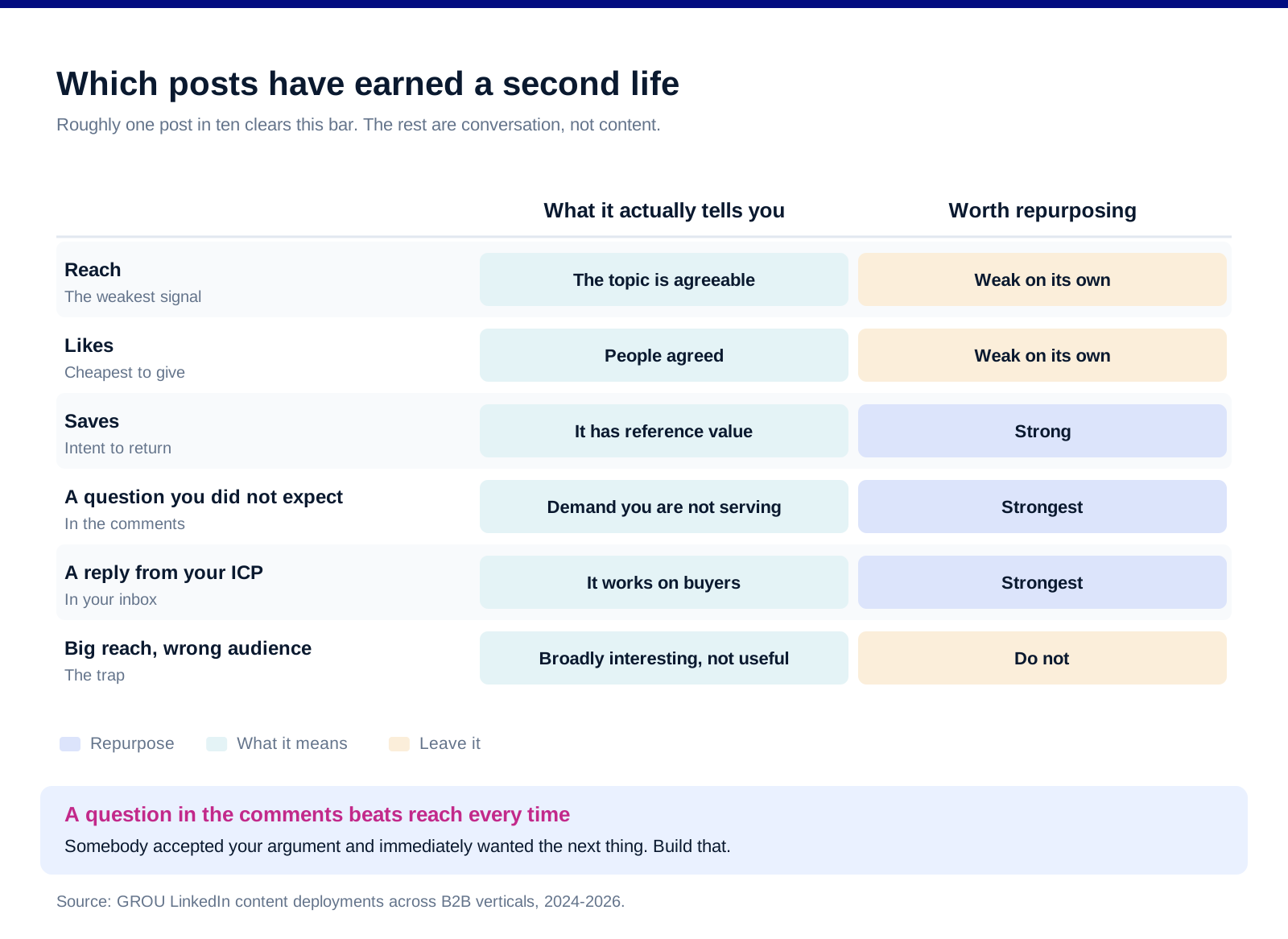
Reach is the weakest signal on the list. A post can travel a long way because it was agreeable. Agreeable is not the same as useful, and it does not survive the transfer to a format where someone has to choose to read it.
Comments containing a question you did not anticipate are the strongest signal. That is a piece of demand surfacing. Somebody read your argument, accepted it, and immediately wanted the next thing. The repurposed asset is the next thing.
Saves and shares beat likes. A save means the reader intends to come back, which is the closest LinkedIn gets to telling you something has reference value. Reference value is exactly what survives repurposing.
A reply in your inbox outranks all of it. If a post produced a conversation with someone in your ICP, the argument works on the people you are actually selling to, which is the only audience that matters.
And a post that took off with the wrong audience is a warning, not an opportunity. Large reach among people who will never buy tells you the topic is broadly interesting, not that it is commercially useful. Repurposing it multiplies a distraction.
The practical filter is roughly one in ten. Most posts are conversation, not content. Treating every one as a seed for four assets is how teams end up with a blog full of five-hundred-word posts that rank for nothing and a newsletter nobody finishes.
Four destinations, four different transformations
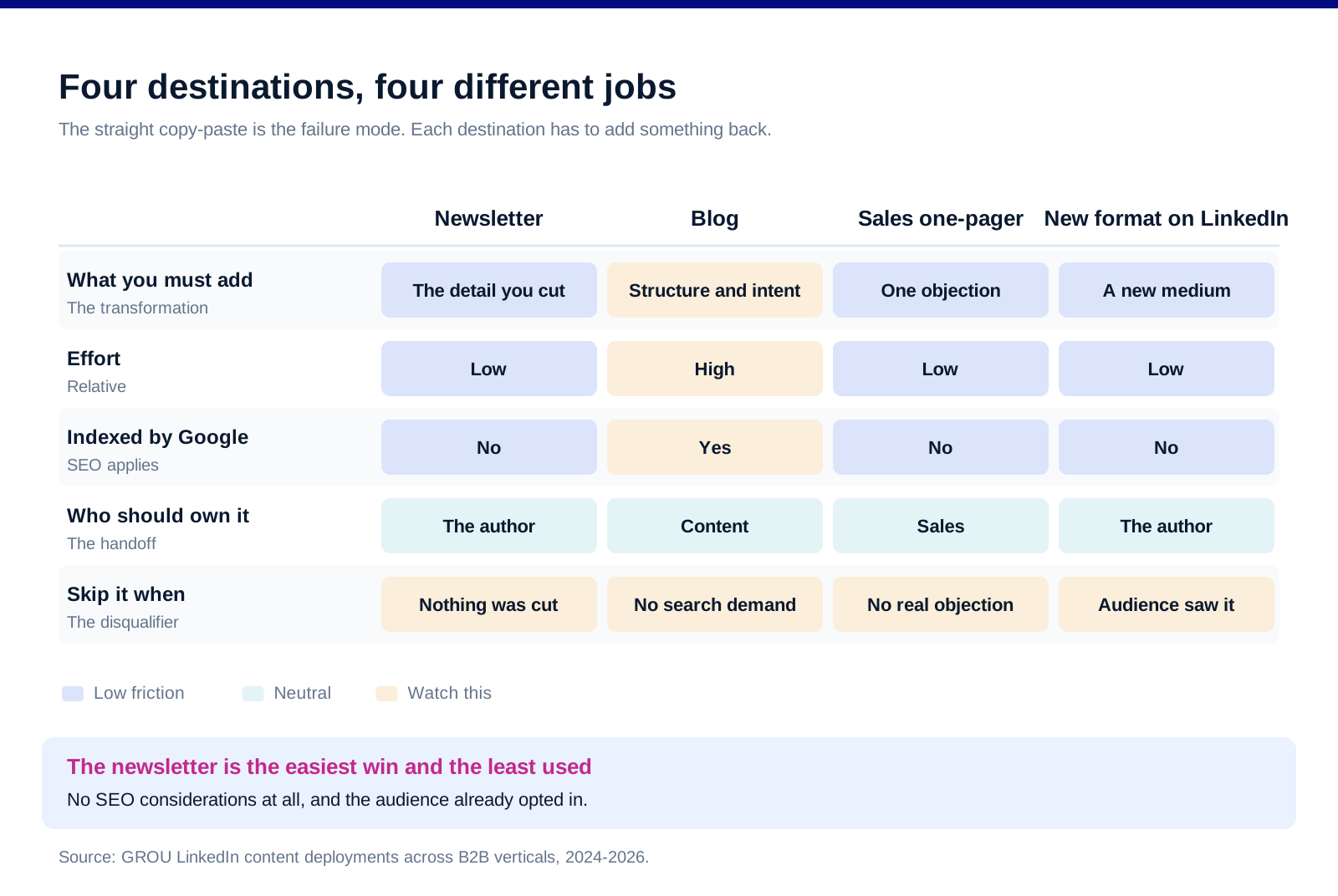
Into the newsletter: add the working detail LinkedIn made you cut. A post has to be skimmable, so the caveats, the numbers and the exception that makes the advice usable get removed. Your newsletter audience has already opted in and will read them. The transformation is restoring what the format cost you, not padding what survived.
Into the blog: add the structure and the search intent. A post answers the question its author had. A blog page answers the question a stranger typed. That means a different opening, a real title, headings, the surrounding context a reader without your feed will need, and enough depth to be the best available answer. If you cannot add those things, the post was not a blog post.
Into sales collateral: cut it to one objection and one page. The most under-used destination by a distance. If a post argued something your reps argue weekly, it is already the raw material for a leave-behind. Our LinkedIn content engine piece covers how to run that handoff when more than one person is posting.
Back into LinkedIn as a different format: change the medium, not the argument. Most of your audience did not see the original. A text post that worked often works again as a carousel or a short video, and the audience overlap is smaller than people assume.
What never works is the straight copy-paste. Same words, second location, no addition. That is the version that produces the thin duplicate everyone worries about, and it is worth naming as the actual failure mode rather than blaming the practice.
The SEO question, answered properly
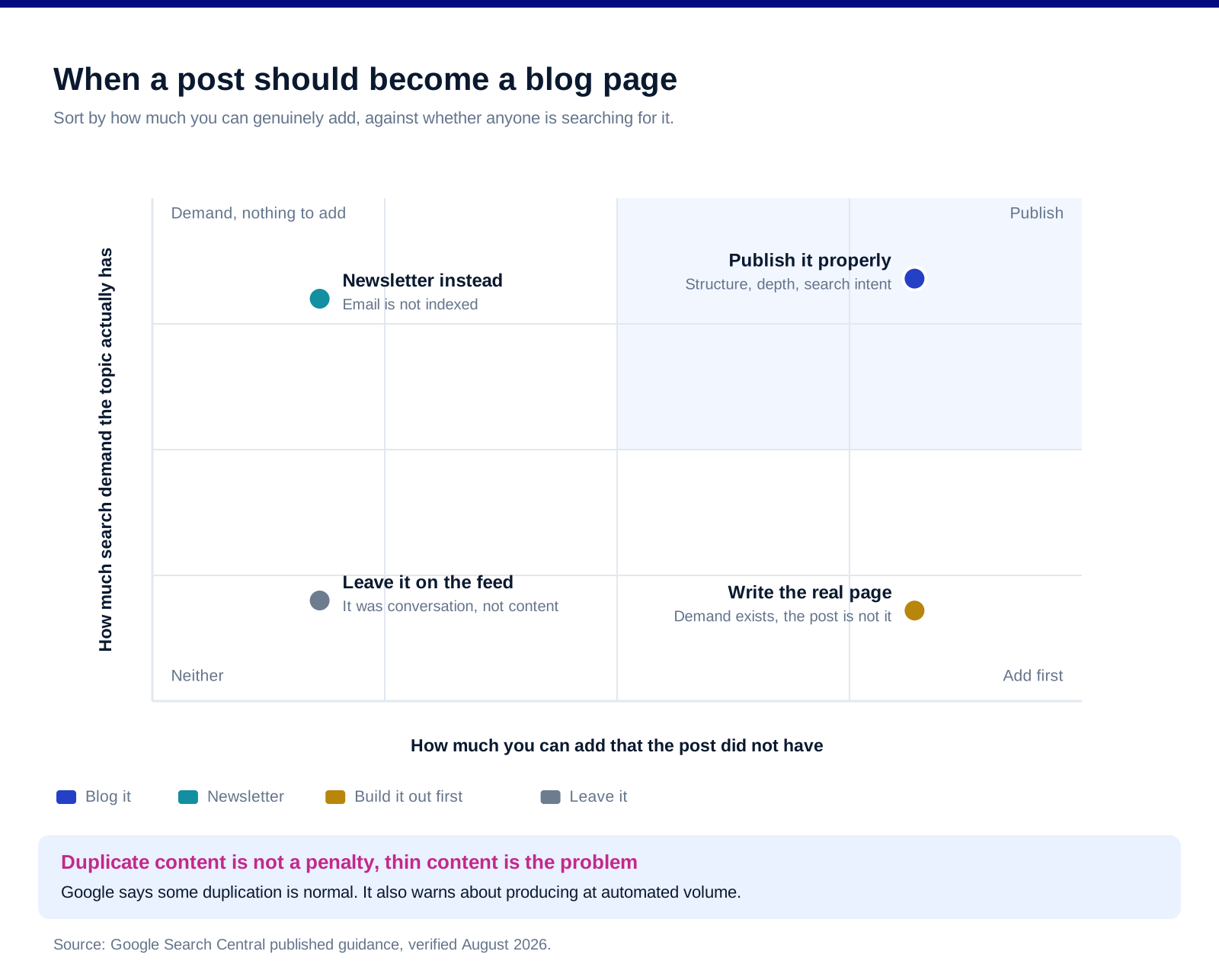
Duplicate content is not a penalty, and Google says so plainly. Its canonicalization documentation states that some duplicate content on a site is normal and it is not a violation of Google's spam policies. The fear most teams carry into this decision is misplaced.
What Google actually does is pick a canonical, and your preference is a hint. The same documentation says Google chooses the page that, based on the signals the indexing process collected, is objectively the most complete and useful for search users, and that indicating a canonical preference is a hint, not a rule. So the risk is not punishment; it is that a thin repurposed page competes with a better one you already have and neither wins.
The bar is helpfulness, and Google publishes the self-assessment. Its helpful content guidance asks whether content provides original information, reporting, research or analysis, and whether it is the sort of page you would want to bookmark or recommend. A LinkedIn post pasted into a CMS rarely clears that.
The genuine risk is volume, not duplication. The same guidance warns about using extensive automation to produce content on many topics, and states that using automation including AI generation to produce content for the primary purpose of manipulating search rankings violates the spam policies. Repurposing every post into every channel with a model in the middle is precisely that pattern.
So the rule is simple. Publish it on the blog when you can add structure, depth and search intent that the post did not have, and when there is real demand for the topic. Otherwise put it in the newsletter, where none of this applies, because email is not indexed.
Running it without it becoming a job
Batch the decision, not the writing. Once a month, look at the last thirty posts, pick the two or three that cleared the bar, and decide their destination. The selection is the work; the transformation is comparatively easy.
Keep the original's voice. Whatever made the post land was partly how it was written. Repurposing that strips the voice out to sound more corporate removes the thing that worked.
Give each asset one owner. The person who wrote the post is usually the wrong person to build the sales one-pager, and the handoff fails silently unless someone owns it.
Do not repurpose in public twice in a week. The overlap between your newsletter list and your LinkedIn audience is higher than the rest, and they are the people most likely to notice.
Measure the destination, not the origin. The question is whether the newsletter issue got read and whether the blog page ranks, not whether the original post did well. You already know that part.
FAQ
Does reposting LinkedIn content on your blog hurt SEO?
Not through a duplicate content penalty. Google states that some duplicate content is normal and not a violation of its spam policies, and that canonical preference is a hint rather than a rule. The real risk is publishing a thin page that competes with a stronger one you already have, or producing repurposed pages at a volume that looks like automation for ranking purposes, which Google does name as a violation.
How do you know which LinkedIn posts are worth repurposing?
Look for a question in the comments you had not anticipated, saves rather than likes, and replies from people inside your ICP. Reach on its own is the weakest signal, because agreeable posts travel without being useful. In practice roughly one post in ten clears the bar; the rest are conversation rather than content.
What is the best format to repurpose a LinkedIn post into?
The newsletter, because it needs the least transformation and has no SEO considerations at all. You restore the detail the LinkedIn format made you cut, and the audience has already opted in. The blog is the highest-effort destination and should only be used when you can add structure, depth and genuine search intent.
How often should you repurpose LinkedIn content?
Batch the decision monthly and expect two or three assets from thirty posts. Repurposing everything is the failure mode: it produces thin pages, a newsletter nobody finishes, and the extensive-automation pattern Google warns about. The constraint is deliberately tight because selection is what makes the practice work.
Should you repurpose a post back onto LinkedIn?
Yes, in a different format. Most of your audience did not see the original, and a text post that worked often works again as a carousel or a short video. Change the medium and keep the argument. What does not work is reposting the same text, which the audience that did see it will notice.
Can you use AI to repurpose LinkedIn content?
For the mechanical part, reasonably. For the decision about what deserves repurposing and what each version needs to add, no, because that judgement is the entire value of the practice. Google's guidance is explicit that using automation to produce content primarily to manipulate rankings violates its spam policies, and repurposing at volume with a model in the middle is the shape of that problem.
Bottom line
Treat the LinkedIn post as a completed experiment rather than a first draft. It already told you which argument lands and which question people ask next, which is information most content programmes never get before publishing. Spend that on a small number of assets that add something the post could not carry: the detail in the newsletter, the structure and search intent on the blog, the single objection on the sales one-pager, a different format back on the feed. The SEO worry is largely misplaced, since Google says duplicate content is not a violation, but the volume worry is not, because publishing everything everywhere is the pattern its guidance actually warns about. One in ten, four destinations, and the selection done once a month.
Want the LinkedIn programme run rather than the posts recycled? Book a call with GROU. We run LinkedIn content and lead generation inside B2B revenue engines across verticals.
We are GROU, a B2B pipeline agency that runs lead generation, outbound, and LinkedIn content for clients across manufacturing, fintech, iGaming, software, and professional services. The operating guidance reflects our LinkedIn content deployments between 2024 and 2026, anonymized to protect client confidentiality.
Most B2B teams have a content problem they have already solved and do not know it. The best-performing thing they published last quarter was a LinkedIn post that took twenty minutes, got read by four thousand people, and then disappeared.
Repurposing is usually sold as a productivity trick, one piece becoming ten. That framing is why it produces so much thin output. The version that works treats the LinkedIn post as evidence rather than raw material: it already proved which argument lands, and repurposing is how you spend that proof somewhere it compounds.
TL;DR
Repurpose selectively and only from posts that earned it. The signal to watch is not likes, it is whether the comments contain a question you had not anticipated, because that is a piece of demand you can now serve properly. Four destinations are worth the effort and each needs a different transformation: the newsletter, where the post becomes the argument plus the working detail LinkedIn cut; the blog, where it becomes a searchable answer with the structure a post cannot carry; sales collateral, where it becomes a one-page answer to an objection your reps hear weekly; and back into LinkedIn as a different format, since a post that worked as text often works again as a carousel or a video for the portion of the audience that never saw it. On the SEO question, Google states that some duplicate content is normal and not a spam violation, and that canonical preference is a hint rather than a rule, so the risk of putting a post on your blog is not a penalty, it is that the thin version competes with the good one. The discipline that matters is the ratio: publishing everything everywhere produces exactly the "extensive automation to produce content on many topics" pattern Google names as a warning sign. Repurpose one post in ten, not ten in ten.
Only repurpose what earned it
Reach is the weakest signal on the list. A post can travel a long way because it was agreeable. Agreeable is not the same as useful, and it does not survive the transfer to a format where someone has to choose to read it.
Comments containing a question you did not anticipate are the strongest signal. That is a piece of demand surfacing. Somebody read your argument, accepted it, and immediately wanted the next thing. The repurposed asset is the next thing.
Saves and shares beat likes. A save means the reader intends to come back, which is the closest LinkedIn gets to telling you something has reference value. Reference value is exactly what survives repurposing.
A reply in your inbox outranks all of it. If a post produced a conversation with someone in your ICP, the argument works on the people you are actually selling to, which is the only audience that matters.
And a post that took off with the wrong audience is a warning, not an opportunity. Large reach among people who will never buy tells you the topic is broadly interesting, not that it is commercially useful. Repurposing it multiplies a distraction.
The practical filter is roughly one in ten. Most posts are conversation, not content. Treating every one as a seed for four assets is how teams end up with a blog full of five-hundred-word posts that rank for nothing and a newsletter nobody finishes.
Four destinations, four different transformations
Into the newsletter: add the working detail LinkedIn made you cut. A post has to be skimmable, so the caveats, the numbers and the exception that makes the advice usable get removed. Your newsletter audience has already opted in and will read them. The transformation is restoring what the format cost you, not padding what survived.
Into the blog: add the structure and the search intent. A post answers the question its author had. A blog page answers the question a stranger typed. That means a different opening, a real title, headings, the surrounding context a reader without your feed will need, and enough depth to be the best available answer. If you cannot add those things, the post was not a blog post.
Into sales collateral: cut it to one objection and one page. The most under-used destination by a distance. If a post argued something your reps argue weekly, it is already the raw material for a leave-behind. Our LinkedIn content engine piece covers how to run that handoff when more than one person is posting.
Back into LinkedIn as a different format: change the medium, not the argument. Most of your audience did not see the original. A text post that worked often works again as a carousel or a short video, and the audience overlap is smaller than people assume.
What never works is the straight copy-paste. Same words, second location, no addition. That is the version that produces the thin duplicate everyone worries about, and it is worth naming as the actual failure mode rather than blaming the practice.
The SEO question, answered properly
Duplicate content is not a penalty, and Google says so plainly. Its canonicalization documentation states that some duplicate content on a site is normal and it is not a violation of Google's spam policies. The fear most teams carry into this decision is misplaced.
What Google actually does is pick a canonical, and your preference is a hint. The same documentation says Google chooses the page that, based on the signals the indexing process collected, is objectively the most complete and useful for search users, and that indicating a canonical preference is a hint, not a rule. So the risk is not punishment; it is that a thin repurposed page competes with a better one you already have and neither wins.
The bar is helpfulness, and Google publishes the self-assessment. Its helpful content guidance asks whether content provides original information, reporting, research or analysis, and whether it is the sort of page you would want to bookmark or recommend. A LinkedIn post pasted into a CMS rarely clears that.
The genuine risk is volume, not duplication. The same guidance warns about using extensive automation to produce content on many topics, and states that using automation including AI generation to produce content for the primary purpose of manipulating search rankings violates the spam policies. Repurposing every post into every channel with a model in the middle is precisely that pattern.
So the rule is simple. Publish it on the blog when you can add structure, depth and search intent that the post did not have, and when there is real demand for the topic. Otherwise put it in the newsletter, where none of this applies, because email is not indexed.
Running it without it becoming a job
Batch the decision, not the writing. Once a month, look at the last thirty posts, pick the two or three that cleared the bar, and decide their destination. The selection is the work; the transformation is comparatively easy.
Keep the original's voice. Whatever made the post land was partly how it was written. Repurposing that strips the voice out to sound more corporate removes the thing that worked.
Give each asset one owner. The person who wrote the post is usually the wrong person to build the sales one-pager, and the handoff fails silently unless someone owns it.
Do not repurpose in public twice in a week. The overlap between your newsletter list and your LinkedIn audience is higher than the rest, and they are the people most likely to notice.
Measure the destination, not the origin. The question is whether the newsletter issue got read and whether the blog page ranks, not whether the original post did well. You already know that part.
FAQ
Does reposting LinkedIn content on your blog hurt SEO?
Not through a duplicate content penalty. Google states that some duplicate content is normal and not a violation of its spam policies, and that canonical preference is a hint rather than a rule. The real risk is publishing a thin page that competes with a stronger one you already have, or producing repurposed pages at a volume that looks like automation for ranking purposes, which Google does name as a violation.
How do you know which LinkedIn posts are worth repurposing?
Look for a question in the comments you had not anticipated, saves rather than likes, and replies from people inside your ICP. Reach on its own is the weakest signal, because agreeable posts travel without being useful. In practice roughly one post in ten clears the bar; the rest are conversation rather than content.
What is the best format to repurpose a LinkedIn post into?
The newsletter, because it needs the least transformation and has no SEO considerations at all. You restore the detail the LinkedIn format made you cut, and the audience has already opted in. The blog is the highest-effort destination and should only be used when you can add structure, depth and genuine search intent.
How often should you repurpose LinkedIn content?
Batch the decision monthly and expect two or three assets from thirty posts. Repurposing everything is the failure mode: it produces thin pages, a newsletter nobody finishes, and the extensive-automation pattern Google warns about. The constraint is deliberately tight because selection is what makes the practice work.
Should you repurpose a post back onto LinkedIn?
Yes, in a different format. Most of your audience did not see the original, and a text post that worked often works again as a carousel or a short video. Change the medium and keep the argument. What does not work is reposting the same text, which the audience that did see it will notice.
Can you use AI to repurpose LinkedIn content?
For the mechanical part, reasonably. For the decision about what deserves repurposing and what each version needs to add, no, because that judgement is the entire value of the practice. Google's guidance is explicit that using automation to produce content primarily to manipulate rankings violates its spam policies, and repurposing at volume with a model in the middle is the shape of that problem.
Bottom line
Treat the LinkedIn post as a completed experiment rather than a first draft. It already told you which argument lands and which question people ask next, which is information most content programmes never get before publishing. Spend that on a small number of assets that add something the post could not carry: the detail in the newsletter, the structure and search intent on the blog, the single objection on the sales one-pager, a different format back on the feed. The SEO worry is largely misplaced, since Google says duplicate content is not a violation, but the volume worry is not, because publishing everything everywhere is the pattern its guidance actually warns about. One in ten, four destinations, and the selection done once a month.
Want the LinkedIn programme run rather than the posts recycled? Book a call with GROU. We run LinkedIn content and lead generation inside B2B revenue engines across verticals.
We are GROU, a B2B pipeline agency that runs lead generation, outbound, and LinkedIn content for clients across manufacturing, fintech, iGaming, software, and professional services. The operating guidance reflects our LinkedIn content deployments between 2024 and 2026, anonymized to protect client confidentiality.
Most B2B teams have a content problem they have already solved and do not know it. The best-performing thing they published last quarter was a LinkedIn post that took twenty minutes, got read by four thousand people, and then disappeared.
Repurposing is usually sold as a productivity trick, one piece becoming ten. That framing is why it produces so much thin output. The version that works treats the LinkedIn post as evidence rather than raw material: it already proved which argument lands, and repurposing is how you spend that proof somewhere it compounds.
TL;DR
Repurpose selectively and only from posts that earned it. The signal to watch is not likes, it is whether the comments contain a question you had not anticipated, because that is a piece of demand you can now serve properly. Four destinations are worth the effort and each needs a different transformation: the newsletter, where the post becomes the argument plus the working detail LinkedIn cut; the blog, where it becomes a searchable answer with the structure a post cannot carry; sales collateral, where it becomes a one-page answer to an objection your reps hear weekly; and back into LinkedIn as a different format, since a post that worked as text often works again as a carousel or a video for the portion of the audience that never saw it. On the SEO question, Google states that some duplicate content is normal and not a spam violation, and that canonical preference is a hint rather than a rule, so the risk of putting a post on your blog is not a penalty, it is that the thin version competes with the good one. The discipline that matters is the ratio: publishing everything everywhere produces exactly the "extensive automation to produce content on many topics" pattern Google names as a warning sign. Repurpose one post in ten, not ten in ten.
Only repurpose what earned it
Reach is the weakest signal on the list. A post can travel a long way because it was agreeable. Agreeable is not the same as useful, and it does not survive the transfer to a format where someone has to choose to read it.
Comments containing a question you did not anticipate are the strongest signal. That is a piece of demand surfacing. Somebody read your argument, accepted it, and immediately wanted the next thing. The repurposed asset is the next thing.
Saves and shares beat likes. A save means the reader intends to come back, which is the closest LinkedIn gets to telling you something has reference value. Reference value is exactly what survives repurposing.
A reply in your inbox outranks all of it. If a post produced a conversation with someone in your ICP, the argument works on the people you are actually selling to, which is the only audience that matters.
And a post that took off with the wrong audience is a warning, not an opportunity. Large reach among people who will never buy tells you the topic is broadly interesting, not that it is commercially useful. Repurposing it multiplies a distraction.
The practical filter is roughly one in ten. Most posts are conversation, not content. Treating every one as a seed for four assets is how teams end up with a blog full of five-hundred-word posts that rank for nothing and a newsletter nobody finishes.
Four destinations, four different transformations
Into the newsletter: add the working detail LinkedIn made you cut. A post has to be skimmable, so the caveats, the numbers and the exception that makes the advice usable get removed. Your newsletter audience has already opted in and will read them. The transformation is restoring what the format cost you, not padding what survived.
Into the blog: add the structure and the search intent. A post answers the question its author had. A blog page answers the question a stranger typed. That means a different opening, a real title, headings, the surrounding context a reader without your feed will need, and enough depth to be the best available answer. If you cannot add those things, the post was not a blog post.
Into sales collateral: cut it to one objection and one page. The most under-used destination by a distance. If a post argued something your reps argue weekly, it is already the raw material for a leave-behind. Our LinkedIn content engine piece covers how to run that handoff when more than one person is posting.
Back into LinkedIn as a different format: change the medium, not the argument. Most of your audience did not see the original. A text post that worked often works again as a carousel or a short video, and the audience overlap is smaller than people assume.
What never works is the straight copy-paste. Same words, second location, no addition. That is the version that produces the thin duplicate everyone worries about, and it is worth naming as the actual failure mode rather than blaming the practice.
The SEO question, answered properly
Duplicate content is not a penalty, and Google says so plainly. Its canonicalization documentation states that some duplicate content on a site is normal and it is not a violation of Google's spam policies. The fear most teams carry into this decision is misplaced.
What Google actually does is pick a canonical, and your preference is a hint. The same documentation says Google chooses the page that, based on the signals the indexing process collected, is objectively the most complete and useful for search users, and that indicating a canonical preference is a hint, not a rule. So the risk is not punishment; it is that a thin repurposed page competes with a better one you already have and neither wins.
The bar is helpfulness, and Google publishes the self-assessment. Its helpful content guidance asks whether content provides original information, reporting, research or analysis, and whether it is the sort of page you would want to bookmark or recommend. A LinkedIn post pasted into a CMS rarely clears that.
The genuine risk is volume, not duplication. The same guidance warns about using extensive automation to produce content on many topics, and states that using automation including AI generation to produce content for the primary purpose of manipulating search rankings violates the spam policies. Repurposing every post into every channel with a model in the middle is precisely that pattern.
So the rule is simple. Publish it on the blog when you can add structure, depth and search intent that the post did not have, and when there is real demand for the topic. Otherwise put it in the newsletter, where none of this applies, because email is not indexed.
Running it without it becoming a job
Batch the decision, not the writing. Once a month, look at the last thirty posts, pick the two or three that cleared the bar, and decide their destination. The selection is the work; the transformation is comparatively easy.
Keep the original's voice. Whatever made the post land was partly how it was written. Repurposing that strips the voice out to sound more corporate removes the thing that worked.
Give each asset one owner. The person who wrote the post is usually the wrong person to build the sales one-pager, and the handoff fails silently unless someone owns it.
Do not repurpose in public twice in a week. The overlap between your newsletter list and your LinkedIn audience is higher than the rest, and they are the people most likely to notice.
Measure the destination, not the origin. The question is whether the newsletter issue got read and whether the blog page ranks, not whether the original post did well. You already know that part.
FAQ
Does reposting LinkedIn content on your blog hurt SEO?
Not through a duplicate content penalty. Google states that some duplicate content is normal and not a violation of its spam policies, and that canonical preference is a hint rather than a rule. The real risk is publishing a thin page that competes with a stronger one you already have, or producing repurposed pages at a volume that looks like automation for ranking purposes, which Google does name as a violation.
How do you know which LinkedIn posts are worth repurposing?
Look for a question in the comments you had not anticipated, saves rather than likes, and replies from people inside your ICP. Reach on its own is the weakest signal, because agreeable posts travel without being useful. In practice roughly one post in ten clears the bar; the rest are conversation rather than content.
What is the best format to repurpose a LinkedIn post into?
The newsletter, because it needs the least transformation and has no SEO considerations at all. You restore the detail the LinkedIn format made you cut, and the audience has already opted in. The blog is the highest-effort destination and should only be used when you can add structure, depth and genuine search intent.
How often should you repurpose LinkedIn content?
Batch the decision monthly and expect two or three assets from thirty posts. Repurposing everything is the failure mode: it produces thin pages, a newsletter nobody finishes, and the extensive-automation pattern Google warns about. The constraint is deliberately tight because selection is what makes the practice work.
Should you repurpose a post back onto LinkedIn?
Yes, in a different format. Most of your audience did not see the original, and a text post that worked often works again as a carousel or a short video. Change the medium and keep the argument. What does not work is reposting the same text, which the audience that did see it will notice.
Can you use AI to repurpose LinkedIn content?
For the mechanical part, reasonably. For the decision about what deserves repurposing and what each version needs to add, no, because that judgement is the entire value of the practice. Google's guidance is explicit that using automation to produce content primarily to manipulate rankings violates its spam policies, and repurposing at volume with a model in the middle is the shape of that problem.
Bottom line
Treat the LinkedIn post as a completed experiment rather than a first draft. It already told you which argument lands and which question people ask next, which is information most content programmes never get before publishing. Spend that on a small number of assets that add something the post could not carry: the detail in the newsletter, the structure and search intent on the blog, the single objection on the sales one-pager, a different format back on the feed. The SEO worry is largely misplaced, since Google says duplicate content is not a violation, but the volume worry is not, because publishing everything everywhere is the pattern its guidance actually warns about. One in ten, four destinations, and the selection done once a month.
Want the LinkedIn programme run rather than the posts recycled? Book a call with GROU. We run LinkedIn content and lead generation inside B2B revenue engines across verticals.
We are GROU, a B2B pipeline agency that runs lead generation, outbound, and LinkedIn content for clients across manufacturing, fintech, iGaming, software, and professional services. The operating guidance reflects our LinkedIn content deployments between 2024 and 2026, anonymized to protect client confidentiality.

Pipeline OS Newsletter
Build qualified pipeline
Get weekly tactics to generate demand, improve lead quality, and book more meetings.







Trusted by industry leaders
Trusted by industry leaders
Trusted by industry leaders
Ready to build qualified pipeline?
Ready to build qualified pipeline?
Ready to build qualified pipeline?
Book a call to see if we're the right fit, or take the 2-minute quiz to get a clear starting point.
Book a call to see if we're the right fit, or take the 2-minute quiz to get a clear starting point.
Book a call to see if we're the right fit, or take the 2-minute quiz to get a clear starting point.
" height="30.21639343089746px" id="hfGbXmQR2" width="30.216393430897455px"/></svg>)
Copyright © 2026 – All Right Reserved
Copyright © 2026 – All Right Reserved
Copyright © 2026 – All Right Reserved