%22%3E%3C/path%3E%3Cpath d=%22M 63.072 7.554 C 62.258 8.022 61.577 8.689 61.092 9.493 L 61.092 7.076 L 57.158 7.076 L 57.158 22.64 L 61.089 22.64 L 61.089 14.888 C 61.089 13.446 61.403 12.434 62.03 11.853 C 62.818 11.218 63.818 10.907 64.826 10.982 L 65.868 10.982 L 65.868 6.851 C 64.891 6.834 63.926 7.076 63.073 7.554 Z%22 fill=%22rgb(17,17,17)%22%3E%3C/path%3E%3Cpath d=%22M 78.916 7.82 C 76.363 6.49 73.321 6.49 70.768 7.82 C 69.562 8.473 68.564 9.451 67.888 10.644 C 67.167 11.931 66.803 13.387 66.834 14.862 C 66.804 16.332 67.157 17.785 67.86 19.077 C 68.515 20.267 69.494 21.246 70.684 21.901 C 71.924 22.576 73.318 22.92 74.73 22.898 C 76.164 22.918 77.58 22.575 78.846 21.901 C 80.062 21.247 81.073 20.27 81.768 19.077 C 82.506 17.797 82.88 16.339 82.85 14.862 C 82.88 13.389 82.517 11.934 81.797 10.647 C 81.12 9.455 80.122 8.477 78.917 7.824 M 78.803 14.862 C 78.829 15.739 78.636 16.608 78.241 17.391 C 77.903 18.046 77.38 18.588 76.738 18.95 C 76.124 19.293 75.432 19.472 74.729 19.47 C 73.668 19.497 72.648 19.061 71.934 18.276 C 71.139 17.323 70.741 16.1 70.823 14.862 C 70.741 13.62 71.149 12.395 71.959 11.45 C 72.687 10.667 73.715 10.233 74.783 10.256 C 75.859 10.236 76.894 10.67 77.635 11.45 C 78.464 12.387 78.884 13.616 78.801 14.864%22 fill=%22rgb(17,17,17)%22%3E%3C/path%3E%3Cpath d=%22M 95.906 7.076 L 95.906 15.646 C 95.975 16.68 95.643 17.701 94.979 18.498 C 94.311 19.184 93.379 19.547 92.422 19.495 C 91.475 19.544 90.553 19.18 89.894 18.498 C 89.23 17.701 88.898 16.68 88.967 15.646 L 88.967 7.076 L 85.033 7.076 L 85.033 16.207 C 85 17.449 85.275 18.68 85.834 19.79 C 86.327 20.75 87.095 21.542 88.039 22.065 C 89.033 22.594 90.145 22.861 91.271 22.838 C 92.188 22.847 93.095 22.65 93.926 22.263 C 94.708 21.905 95.388 21.36 95.906 20.675 L 95.906 22.645 L 99.865 22.645 L 99.865 7.076 Z%22 fill=%22rgb(17,17,17)%22%3E%3C/path%3E%3Cpath d=%22M 4.513 15.626 C 4.511 10.815 7.606 6.549 12.181 5.059 C 16.756 3.57 21.77 5.195 24.601 9.086 L 27.816 5.87 C 24.074 1.186 17.981 -0.943 12.137 0.393 C 6.292 1.728 1.728 6.292 0.393 12.137 C -0.943 17.981 1.186 24.074 5.87 27.816 L 9.085 24.601 C 6.214 22.512 4.515 19.177 4.513 15.626%22 fill=%22rgb(32,62,235)%22%3E%3C/path%3E%3Cpath d=%22M 17.114 14.343 L 13.354 18.01 L 13.354 18.026 L 21.071 18.026 L 11.412 27.609 L 17.389 27.609 L 23.999 21.081 L 23.999 28.316 L 24.005 28.316 L 27.967 24.393 L 27.967 14.343 Z%22 fill=%22rgb(32,62,235)%22%3E%3C/path%3E%3C/g%3E%3C/svg%3E) ×
× ××
××›
›
›
›
LinkedIn employee advocacy programme 2026
LinkedIn employee advocacy programme 2026
LinkedIn employee advocacy programme 2026
LinkedIn employee advocacy programme 2026
LinkedIn employee advocacy programme 2026
LinkedIn employee advocacy programme 2026

Author
Aljaz Peklaj

Employee advocacy is the last distribution channel on LinkedIn that costs nothing and is not throttled by an ad budget. It is also the one most companies run as a nagging exercise until everyone quietly stops.
The failure is rarely enthusiasm. It is that companies ask employees for engagement when what employees actually need is something to say, and that almost nobody tells them about the disclosure obligation that attaches the moment they post about their own employer.
TL;DR
LinkedIn gives every organisation a free employee-only surface for this. The My Company tab is described by LinkedIn as "a trusted, employee-only space to help them join the conversations that matter most", with a Curator role that lets nominated people recommend content and see content analytics. LinkedIn publishes uplift claims for it but not, in the material we could read, the numbers behind them, so this article publishes no figure for what advocacy is worth. The part that gets skipped is legal rather than tactical: the FTC's endorsement guides say an employee posting about their employer "should disclose your relationship to the company", that having the employer listed on a profile is not enough because readers of an individual post will not necessarily see it, and that companies should "establish a formal program to remind employees periodically of your policy". Build the programme around supply rather than compliance. Give people something specific to say, ask for a reshare with one line of their own rather than a like, write the disclosure line for them, and measure it the way you measure the rest of LinkedIn: reach that lands on your ICP, and replies.
What LinkedIn actually gives you for free
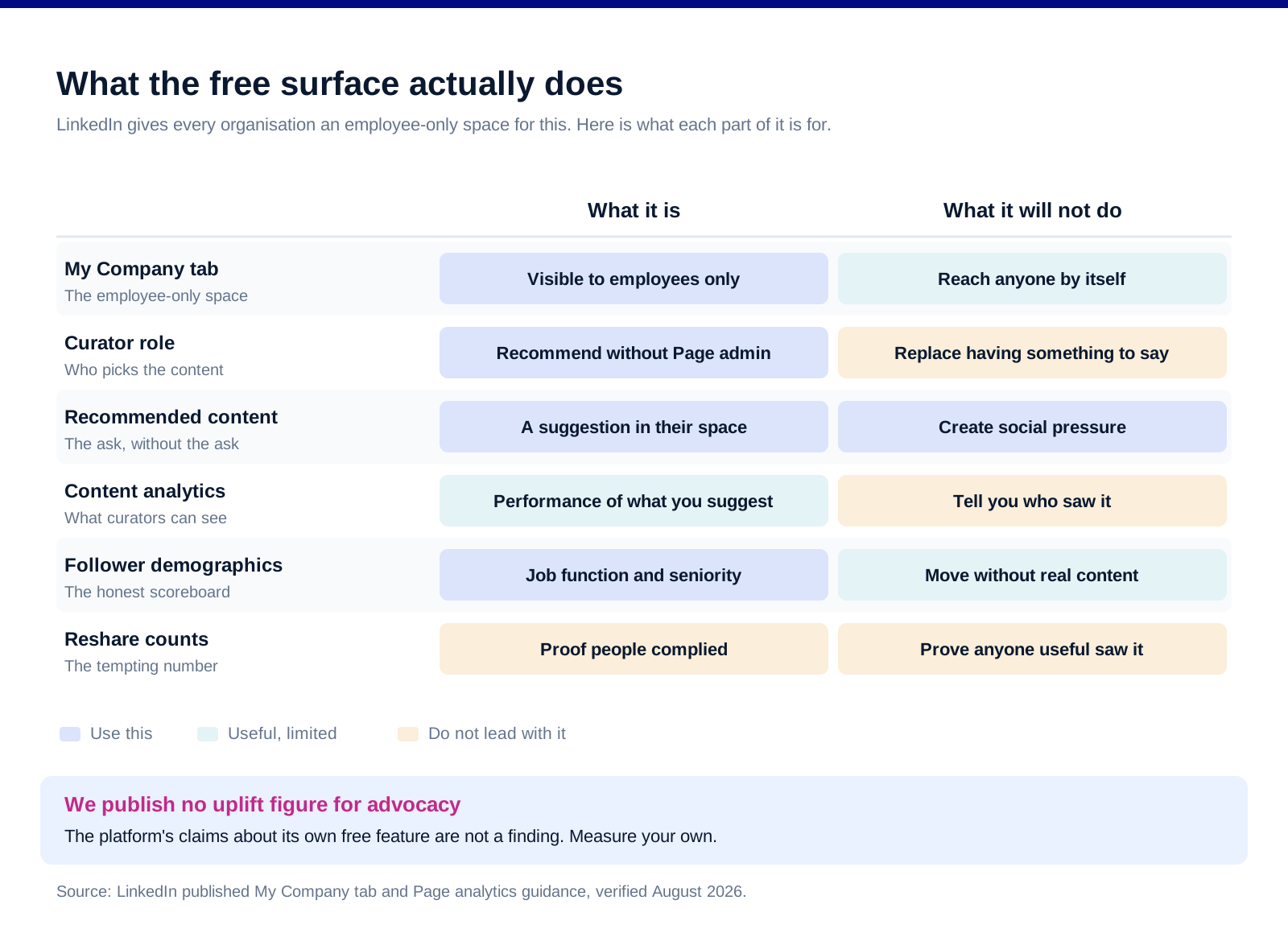
The My Company tab is the surface. LinkedIn describes it as "a trusted, employee-only space to help them join the conversations that matter most", visible to verified employees rather than to the public.
Curators are the mechanism. LinkedIn's My Company tab documentation names a Curator role that can recommend content to employees and view content analytics without holding full Page admin rights. That separation matters, because the people best placed to pick content are rarely the people who own the Page.
Recommending is not the same as posting. Content you recommend appears to employees as a suggestion in their own space. Nobody is tagged, nobody is publicly asked, and there is no group chat where the ask becomes social pressure.
The Page analytics you already have cover the aftermath. LinkedIn's Page analytics guidance points you at impressions, clicks, comments and social engagement percentage, plus follower demographics broken down by location, job function and seniority. The demographics are the useful half, for reasons we cover below.
We are publishing no uplift figure. LinkedIn's own materials claim advocacy raises Page views, followers and job applications. The specific multipliers were not readable in the pages we could access, and a claim by the platform about its own free feature is not a finding. If you want a number, measure your own.
The disclosure obligation nobody mentions
Employees posting about their employer are endorsers. The FTC's endorsement guides are direct about it: "you should disclose your relationship to the company. Put yourself in the reader's shoes."
Having it on the profile does not count. The guides make the point that someone reading an individual post will not necessarily look at the poster's profile, so the employment relationship has to be visible in the post itself.
The bar for an adequate disclosure is low. "Check out my company's great new product" is offered as an example that does the job. One possessive pronoun. This is not a compliance burden, it is a sentence.
The obligation lands on the company too. The guides accept it is unreasonable to monitor every employee's posting, but they expect companies to "establish a formal program to remind employees periodically of your policy" and to act when a non-compliant post comes to their attention.
Which makes the policy a one-page document, not a project. Say that employees are welcome to post, that they must make the relationship clear in the post, that they should never post a review of your product without disclosing, and that nobody is required to participate. Send it once a quarter. That is the formal programme.
And write the disclosure into the suggested copy. If you recommend content with a suggested line, put the possessive in it. Employees who have to invent the disclosure themselves will either forget it or write something stilted.
Why most programmes die
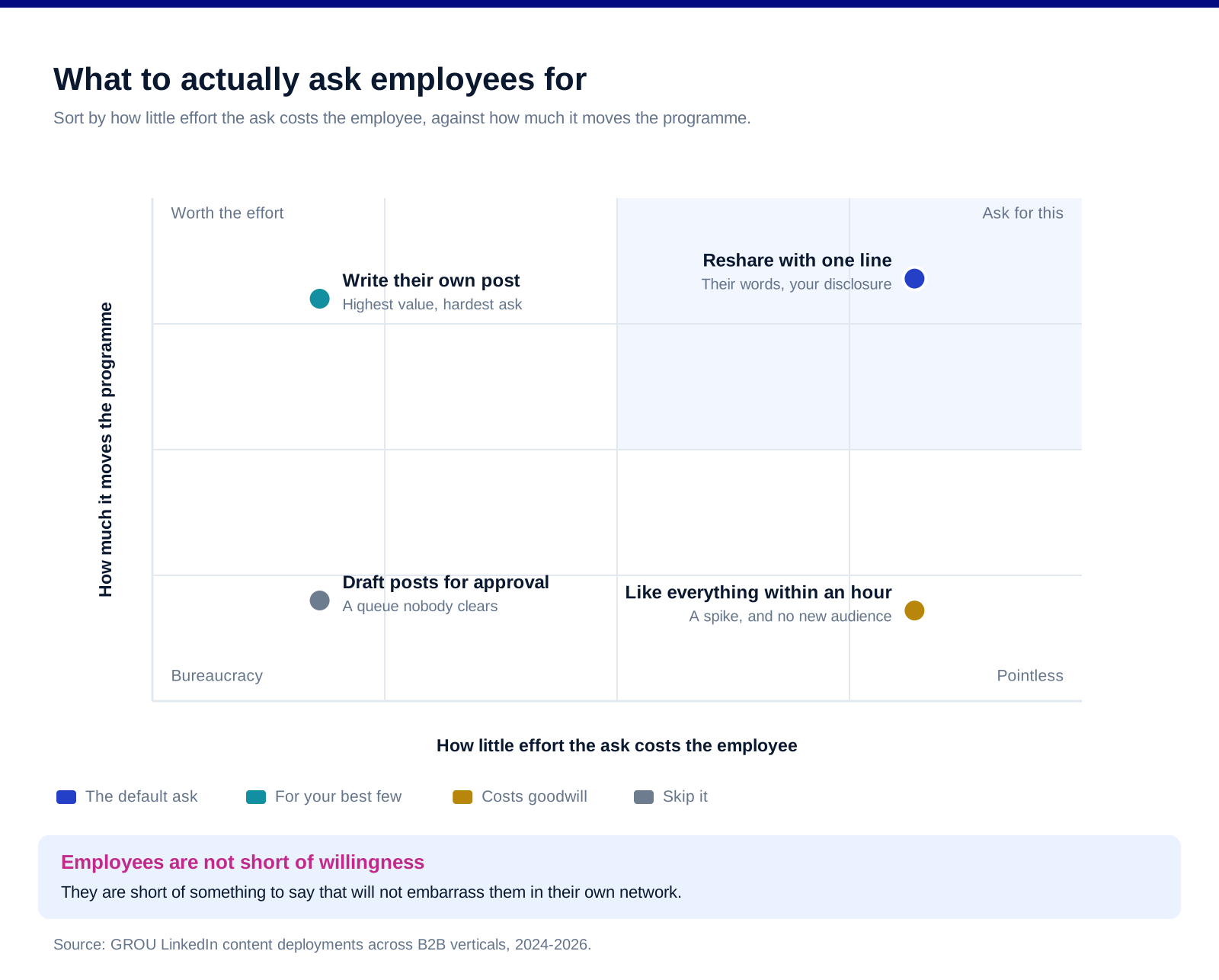
They are run as an engagement rota. A message asking twelve people to like a post within the hour is a request for coordinated activity that produces a spike, no new audience, and a slow build of resentment.
The ask is backwards. Employees are not short of willingness. They are short of something to say that will not embarrass them in front of their own network, which is the network they will still have after they leave.
A reshare with one line beats a like. The line is what carries into their network with their name attached to it. A like carries almost nothing and costs the same social capital.
Give them the line, and let them change it. Two or three suggested openers per piece, written in first person, with the disclosure built in. Most people will edit one rather than write from nothing, and the edit is what makes it theirs.
Five committed people beat fifty conscripts. Pick the people whose networks contain your buyers, which is a targeting question rather than a seniority question. Your best advocate is often a technical lead nobody thought to ask.
Never make it a metric on anyone's review. The moment participation is measured per person you have bought yourself a compliance behaviour that reads exactly like what it is.
And accept that the content has to be worth it. Our repurposing guide covers turning one substantial piece into things people are actually willing to put their name to.
Measure it the way you measure the rest of LinkedIn
Reshare counts are a delivery statistic. They tell you employees complied. They do not tell you anyone useful saw it, which is the same trap the platform metrics set everywhere else. Our piece on what to actually measure on LinkedIn covers the general case.
Follower demographics are the honest scoreboard. If advocacy is working, the job functions and seniorities in your follower base should drift toward the people you sell to. LinkedIn publishes that breakdown, and it is the one native metric that separates useful reach from any reach.
Count replies and profile views from target accounts. A person from a target company looking at an employee's profile after a reshare is the actual event you were hoping for.
Ask on discovery calls whether they saw anything from the team. Manual, unglamorous, and better information than any dashboard will give you on this channel.
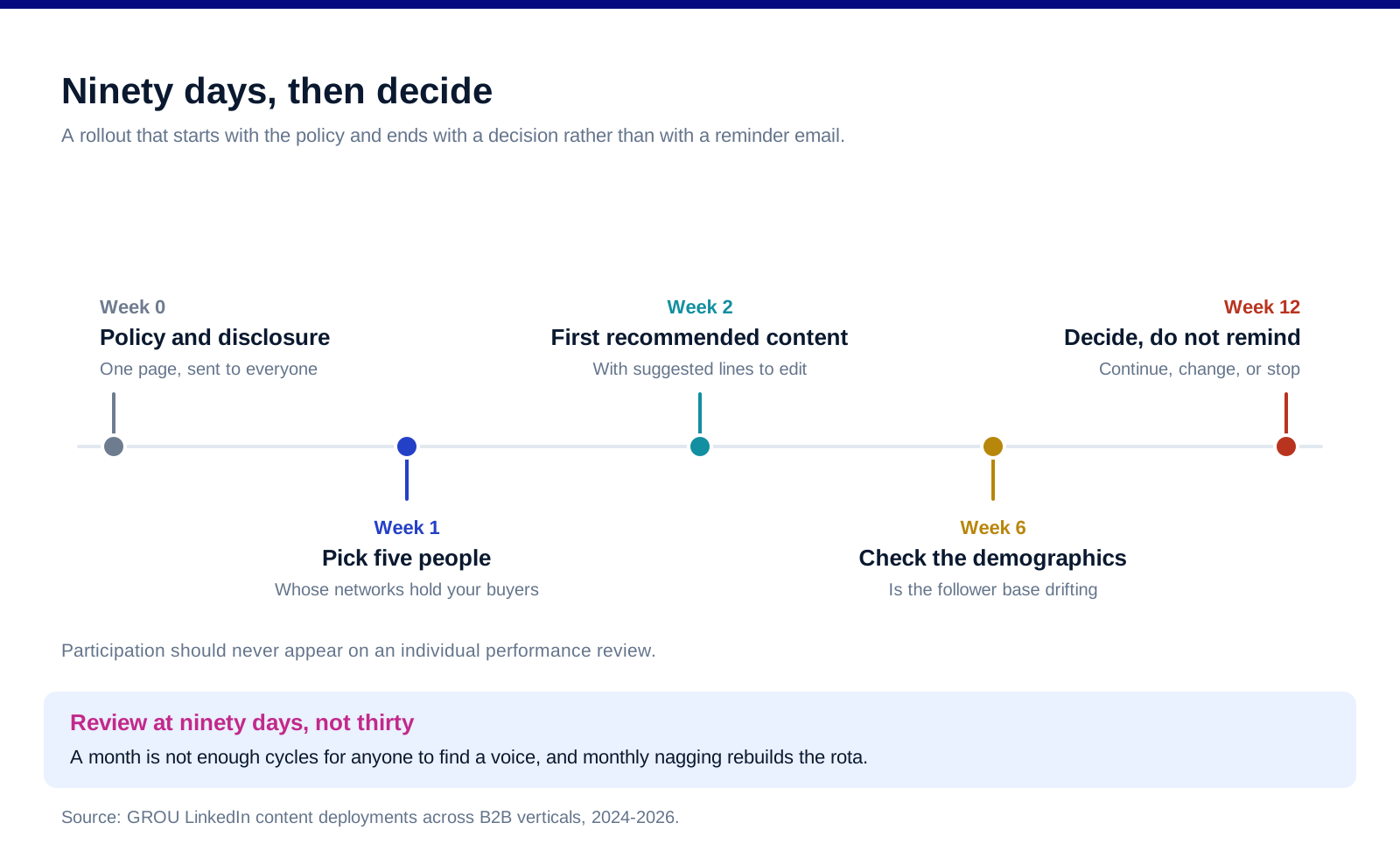
Review at ninety days, not thirty. A programme needs enough cycles for people to find a voice, and reacting after one month produces a rota again.
What nobody publishes
No credible benchmark for advocacy reach. Every figure in circulation comes from a platform selling advocacy software or from LinkedIn describing its own feature.
No participation rate you should aim for. It depends entirely on how many of your employees have a network worth reaching, which is a property of your company rather than of your programme.
No answer on whether reshares are algorithmically favoured. LinkedIn does not publish distribution mechanics, and anyone who tells you the ratio is guessing.
No legal certainty outside the United States. The FTC guides are US guidance. Disclosure expectations elsewhere are set by other regimes, and the practical answer is to disclose everywhere rather than to work out where you technically must.
FAQ
What is a LinkedIn employee advocacy programme?
A structured way of giving employees content they are willing to share with their own networks, rather than asking them to engage with company posts. LinkedIn provides a free surface for it in the My Company tab, which it describes as an employee-only space, with a Curator role that lets nominated people recommend content and see content analytics without holding full Page admin rights.
Do employees have to disclose that they work for the company?
Under the FTC's endorsement guides, yes. An employee posting about their employer should disclose the relationship, and the guides make clear that listing the employer on a profile is not sufficient because readers of an individual post will not necessarily see it. The disclosure can be as light as a possessive pronoun, and the simplest fix is to write it into the suggested copy.
Does a company need a social media policy for this?
The FTC guides do not mandate one, but they recommend it, and they expect companies to establish a formal programme to remind employees periodically of the policy and to act on non-compliant posts they learn about. In practice that is a one-page document sent quarterly rather than a project.
How many employees do you need for advocacy to work?
Fewer than most programmes assume. Five people whose networks contain your buyers will outperform fifty who share out of obligation, because the value is in whose feed the content lands in rather than in how many times it was reshared. Pick on network relevance, not seniority.
What should you ask employees to do?
Reshare with one line of their own, using a suggested opener they are free to edit, with the disclosure built into it. Avoid asking for likes or timed engagement, which produces a spike, no new audience, and resentment. Never attach participation to a performance review, because the resulting behaviour reads exactly like what it is.
How do you measure employee advocacy on LinkedIn?
Not by reshare counts, which only tell you people complied. Watch whether your follower demographics drift toward the job functions and seniorities you sell to, since LinkedIn publishes that breakdown, and count replies and profile views from target accounts. Then ask on discovery calls whether the person had seen anything from your team, which is better information than the dashboard.
Bottom line
Treat advocacy as a supply problem. Employees will share things they are proud to have their name on and will quietly stop sharing things they are not, and no amount of internal messaging changes that ratio. Use the free surface LinkedIn already gives you, put a Curator on it who knows what your buyers care about, and hand people a line they can edit rather than a post they must approve of. Write the disclosure into that line, because the obligation is real and satisfying it costs one word. Then judge the programme on whether your follower base is drifting toward your buyers and whether anyone replied, not on how many reshares you counted, and give it ninety days before you decide.
Want the LinkedIn programme run rather than the reshare rota chased? Book a call with GROU. We run LinkedIn content and lead generation inside B2B revenue engines across verticals.
We are GROU, a B2B pipeline agency that runs lead generation, outbound, and LinkedIn content for clients across manufacturing, fintech, iGaming, software, and professional services. Nothing in this article is legal advice, and the programme guidance reflects our LinkedIn content deployments between 2024 and 2026, anonymized to protect client confidentiality.
Employee advocacy is the last distribution channel on LinkedIn that costs nothing and is not throttled by an ad budget. It is also the one most companies run as a nagging exercise until everyone quietly stops.
The failure is rarely enthusiasm. It is that companies ask employees for engagement when what employees actually need is something to say, and that almost nobody tells them about the disclosure obligation that attaches the moment they post about their own employer.
TL;DR
LinkedIn gives every organisation a free employee-only surface for this. The My Company tab is described by LinkedIn as "a trusted, employee-only space to help them join the conversations that matter most", with a Curator role that lets nominated people recommend content and see content analytics. LinkedIn publishes uplift claims for it but not, in the material we could read, the numbers behind them, so this article publishes no figure for what advocacy is worth. The part that gets skipped is legal rather than tactical: the FTC's endorsement guides say an employee posting about their employer "should disclose your relationship to the company", that having the employer listed on a profile is not enough because readers of an individual post will not necessarily see it, and that companies should "establish a formal program to remind employees periodically of your policy". Build the programme around supply rather than compliance. Give people something specific to say, ask for a reshare with one line of their own rather than a like, write the disclosure line for them, and measure it the way you measure the rest of LinkedIn: reach that lands on your ICP, and replies.
What LinkedIn actually gives you for free
The My Company tab is the surface. LinkedIn describes it as "a trusted, employee-only space to help them join the conversations that matter most", visible to verified employees rather than to the public.
Curators are the mechanism. LinkedIn's My Company tab documentation names a Curator role that can recommend content to employees and view content analytics without holding full Page admin rights. That separation matters, because the people best placed to pick content are rarely the people who own the Page.
Recommending is not the same as posting. Content you recommend appears to employees as a suggestion in their own space. Nobody is tagged, nobody is publicly asked, and there is no group chat where the ask becomes social pressure.
The Page analytics you already have cover the aftermath. LinkedIn's Page analytics guidance points you at impressions, clicks, comments and social engagement percentage, plus follower demographics broken down by location, job function and seniority. The demographics are the useful half, for reasons we cover below.
We are publishing no uplift figure. LinkedIn's own materials claim advocacy raises Page views, followers and job applications. The specific multipliers were not readable in the pages we could access, and a claim by the platform about its own free feature is not a finding. If you want a number, measure your own.
The disclosure obligation nobody mentions
Employees posting about their employer are endorsers. The FTC's endorsement guides are direct about it: "you should disclose your relationship to the company. Put yourself in the reader's shoes."
Having it on the profile does not count. The guides make the point that someone reading an individual post will not necessarily look at the poster's profile, so the employment relationship has to be visible in the post itself.
The bar for an adequate disclosure is low. "Check out my company's great new product" is offered as an example that does the job. One possessive pronoun. This is not a compliance burden, it is a sentence.
The obligation lands on the company too. The guides accept it is unreasonable to monitor every employee's posting, but they expect companies to "establish a formal program to remind employees periodically of your policy" and to act when a non-compliant post comes to their attention.
Which makes the policy a one-page document, not a project. Say that employees are welcome to post, that they must make the relationship clear in the post, that they should never post a review of your product without disclosing, and that nobody is required to participate. Send it once a quarter. That is the formal programme.
And write the disclosure into the suggested copy. If you recommend content with a suggested line, put the possessive in it. Employees who have to invent the disclosure themselves will either forget it or write something stilted.
Why most programmes die
They are run as an engagement rota. A message asking twelve people to like a post within the hour is a request for coordinated activity that produces a spike, no new audience, and a slow build of resentment.
The ask is backwards. Employees are not short of willingness. They are short of something to say that will not embarrass them in front of their own network, which is the network they will still have after they leave.
A reshare with one line beats a like. The line is what carries into their network with their name attached to it. A like carries almost nothing and costs the same social capital.
Give them the line, and let them change it. Two or three suggested openers per piece, written in first person, with the disclosure built in. Most people will edit one rather than write from nothing, and the edit is what makes it theirs.
Five committed people beat fifty conscripts. Pick the people whose networks contain your buyers, which is a targeting question rather than a seniority question. Your best advocate is often a technical lead nobody thought to ask.
Never make it a metric on anyone's review. The moment participation is measured per person you have bought yourself a compliance behaviour that reads exactly like what it is.
And accept that the content has to be worth it. Our repurposing guide covers turning one substantial piece into things people are actually willing to put their name to.
Measure it the way you measure the rest of LinkedIn
Reshare counts are a delivery statistic. They tell you employees complied. They do not tell you anyone useful saw it, which is the same trap the platform metrics set everywhere else. Our piece on what to actually measure on LinkedIn covers the general case.
Follower demographics are the honest scoreboard. If advocacy is working, the job functions and seniorities in your follower base should drift toward the people you sell to. LinkedIn publishes that breakdown, and it is the one native metric that separates useful reach from any reach.
Count replies and profile views from target accounts. A person from a target company looking at an employee's profile after a reshare is the actual event you were hoping for.
Ask on discovery calls whether they saw anything from the team. Manual, unglamorous, and better information than any dashboard will give you on this channel.
Review at ninety days, not thirty. A programme needs enough cycles for people to find a voice, and reacting after one month produces a rota again.
What nobody publishes
No credible benchmark for advocacy reach. Every figure in circulation comes from a platform selling advocacy software or from LinkedIn describing its own feature.
No participation rate you should aim for. It depends entirely on how many of your employees have a network worth reaching, which is a property of your company rather than of your programme.
No answer on whether reshares are algorithmically favoured. LinkedIn does not publish distribution mechanics, and anyone who tells you the ratio is guessing.
No legal certainty outside the United States. The FTC guides are US guidance. Disclosure expectations elsewhere are set by other regimes, and the practical answer is to disclose everywhere rather than to work out where you technically must.
FAQ
What is a LinkedIn employee advocacy programme?
A structured way of giving employees content they are willing to share with their own networks, rather than asking them to engage with company posts. LinkedIn provides a free surface for it in the My Company tab, which it describes as an employee-only space, with a Curator role that lets nominated people recommend content and see content analytics without holding full Page admin rights.
Do employees have to disclose that they work for the company?
Under the FTC's endorsement guides, yes. An employee posting about their employer should disclose the relationship, and the guides make clear that listing the employer on a profile is not sufficient because readers of an individual post will not necessarily see it. The disclosure can be as light as a possessive pronoun, and the simplest fix is to write it into the suggested copy.
Does a company need a social media policy for this?
The FTC guides do not mandate one, but they recommend it, and they expect companies to establish a formal programme to remind employees periodically of the policy and to act on non-compliant posts they learn about. In practice that is a one-page document sent quarterly rather than a project.
How many employees do you need for advocacy to work?
Fewer than most programmes assume. Five people whose networks contain your buyers will outperform fifty who share out of obligation, because the value is in whose feed the content lands in rather than in how many times it was reshared. Pick on network relevance, not seniority.
What should you ask employees to do?
Reshare with one line of their own, using a suggested opener they are free to edit, with the disclosure built into it. Avoid asking for likes or timed engagement, which produces a spike, no new audience, and resentment. Never attach participation to a performance review, because the resulting behaviour reads exactly like what it is.
How do you measure employee advocacy on LinkedIn?
Not by reshare counts, which only tell you people complied. Watch whether your follower demographics drift toward the job functions and seniorities you sell to, since LinkedIn publishes that breakdown, and count replies and profile views from target accounts. Then ask on discovery calls whether the person had seen anything from your team, which is better information than the dashboard.
Bottom line
Treat advocacy as a supply problem. Employees will share things they are proud to have their name on and will quietly stop sharing things they are not, and no amount of internal messaging changes that ratio. Use the free surface LinkedIn already gives you, put a Curator on it who knows what your buyers care about, and hand people a line they can edit rather than a post they must approve of. Write the disclosure into that line, because the obligation is real and satisfying it costs one word. Then judge the programme on whether your follower base is drifting toward your buyers and whether anyone replied, not on how many reshares you counted, and give it ninety days before you decide.
Want the LinkedIn programme run rather than the reshare rota chased? Book a call with GROU. We run LinkedIn content and lead generation inside B2B revenue engines across verticals.
We are GROU, a B2B pipeline agency that runs lead generation, outbound, and LinkedIn content for clients across manufacturing, fintech, iGaming, software, and professional services. Nothing in this article is legal advice, and the programme guidance reflects our LinkedIn content deployments between 2024 and 2026, anonymized to protect client confidentiality.
Employee advocacy is the last distribution channel on LinkedIn that costs nothing and is not throttled by an ad budget. It is also the one most companies run as a nagging exercise until everyone quietly stops.
The failure is rarely enthusiasm. It is that companies ask employees for engagement when what employees actually need is something to say, and that almost nobody tells them about the disclosure obligation that attaches the moment they post about their own employer.
TL;DR
LinkedIn gives every organisation a free employee-only surface for this. The My Company tab is described by LinkedIn as "a trusted, employee-only space to help them join the conversations that matter most", with a Curator role that lets nominated people recommend content and see content analytics. LinkedIn publishes uplift claims for it but not, in the material we could read, the numbers behind them, so this article publishes no figure for what advocacy is worth. The part that gets skipped is legal rather than tactical: the FTC's endorsement guides say an employee posting about their employer "should disclose your relationship to the company", that having the employer listed on a profile is not enough because readers of an individual post will not necessarily see it, and that companies should "establish a formal program to remind employees periodically of your policy". Build the programme around supply rather than compliance. Give people something specific to say, ask for a reshare with one line of their own rather than a like, write the disclosure line for them, and measure it the way you measure the rest of LinkedIn: reach that lands on your ICP, and replies.
What LinkedIn actually gives you for free
The My Company tab is the surface. LinkedIn describes it as "a trusted, employee-only space to help them join the conversations that matter most", visible to verified employees rather than to the public.
Curators are the mechanism. LinkedIn's My Company tab documentation names a Curator role that can recommend content to employees and view content analytics without holding full Page admin rights. That separation matters, because the people best placed to pick content are rarely the people who own the Page.
Recommending is not the same as posting. Content you recommend appears to employees as a suggestion in their own space. Nobody is tagged, nobody is publicly asked, and there is no group chat where the ask becomes social pressure.
The Page analytics you already have cover the aftermath. LinkedIn's Page analytics guidance points you at impressions, clicks, comments and social engagement percentage, plus follower demographics broken down by location, job function and seniority. The demographics are the useful half, for reasons we cover below.
We are publishing no uplift figure. LinkedIn's own materials claim advocacy raises Page views, followers and job applications. The specific multipliers were not readable in the pages we could access, and a claim by the platform about its own free feature is not a finding. If you want a number, measure your own.
The disclosure obligation nobody mentions
Employees posting about their employer are endorsers. The FTC's endorsement guides are direct about it: "you should disclose your relationship to the company. Put yourself in the reader's shoes."
Having it on the profile does not count. The guides make the point that someone reading an individual post will not necessarily look at the poster's profile, so the employment relationship has to be visible in the post itself.
The bar for an adequate disclosure is low. "Check out my company's great new product" is offered as an example that does the job. One possessive pronoun. This is not a compliance burden, it is a sentence.
The obligation lands on the company too. The guides accept it is unreasonable to monitor every employee's posting, but they expect companies to "establish a formal program to remind employees periodically of your policy" and to act when a non-compliant post comes to their attention.
Which makes the policy a one-page document, not a project. Say that employees are welcome to post, that they must make the relationship clear in the post, that they should never post a review of your product without disclosing, and that nobody is required to participate. Send it once a quarter. That is the formal programme.
And write the disclosure into the suggested copy. If you recommend content with a suggested line, put the possessive in it. Employees who have to invent the disclosure themselves will either forget it or write something stilted.
Why most programmes die
They are run as an engagement rota. A message asking twelve people to like a post within the hour is a request for coordinated activity that produces a spike, no new audience, and a slow build of resentment.
The ask is backwards. Employees are not short of willingness. They are short of something to say that will not embarrass them in front of their own network, which is the network they will still have after they leave.
A reshare with one line beats a like. The line is what carries into their network with their name attached to it. A like carries almost nothing and costs the same social capital.
Give them the line, and let them change it. Two or three suggested openers per piece, written in first person, with the disclosure built in. Most people will edit one rather than write from nothing, and the edit is what makes it theirs.
Five committed people beat fifty conscripts. Pick the people whose networks contain your buyers, which is a targeting question rather than a seniority question. Your best advocate is often a technical lead nobody thought to ask.
Never make it a metric on anyone's review. The moment participation is measured per person you have bought yourself a compliance behaviour that reads exactly like what it is.
And accept that the content has to be worth it. Our repurposing guide covers turning one substantial piece into things people are actually willing to put their name to.
Measure it the way you measure the rest of LinkedIn
Reshare counts are a delivery statistic. They tell you employees complied. They do not tell you anyone useful saw it, which is the same trap the platform metrics set everywhere else. Our piece on what to actually measure on LinkedIn covers the general case.
Follower demographics are the honest scoreboard. If advocacy is working, the job functions and seniorities in your follower base should drift toward the people you sell to. LinkedIn publishes that breakdown, and it is the one native metric that separates useful reach from any reach.
Count replies and profile views from target accounts. A person from a target company looking at an employee's profile after a reshare is the actual event you were hoping for.
Ask on discovery calls whether they saw anything from the team. Manual, unglamorous, and better information than any dashboard will give you on this channel.
Review at ninety days, not thirty. A programme needs enough cycles for people to find a voice, and reacting after one month produces a rota again.
What nobody publishes
No credible benchmark for advocacy reach. Every figure in circulation comes from a platform selling advocacy software or from LinkedIn describing its own feature.
No participation rate you should aim for. It depends entirely on how many of your employees have a network worth reaching, which is a property of your company rather than of your programme.
No answer on whether reshares are algorithmically favoured. LinkedIn does not publish distribution mechanics, and anyone who tells you the ratio is guessing.
No legal certainty outside the United States. The FTC guides are US guidance. Disclosure expectations elsewhere are set by other regimes, and the practical answer is to disclose everywhere rather than to work out where you technically must.
FAQ
What is a LinkedIn employee advocacy programme?
A structured way of giving employees content they are willing to share with their own networks, rather than asking them to engage with company posts. LinkedIn provides a free surface for it in the My Company tab, which it describes as an employee-only space, with a Curator role that lets nominated people recommend content and see content analytics without holding full Page admin rights.
Do employees have to disclose that they work for the company?
Under the FTC's endorsement guides, yes. An employee posting about their employer should disclose the relationship, and the guides make clear that listing the employer on a profile is not sufficient because readers of an individual post will not necessarily see it. The disclosure can be as light as a possessive pronoun, and the simplest fix is to write it into the suggested copy.
Does a company need a social media policy for this?
The FTC guides do not mandate one, but they recommend it, and they expect companies to establish a formal programme to remind employees periodically of the policy and to act on non-compliant posts they learn about. In practice that is a one-page document sent quarterly rather than a project.
How many employees do you need for advocacy to work?
Fewer than most programmes assume. Five people whose networks contain your buyers will outperform fifty who share out of obligation, because the value is in whose feed the content lands in rather than in how many times it was reshared. Pick on network relevance, not seniority.
What should you ask employees to do?
Reshare with one line of their own, using a suggested opener they are free to edit, with the disclosure built into it. Avoid asking for likes or timed engagement, which produces a spike, no new audience, and resentment. Never attach participation to a performance review, because the resulting behaviour reads exactly like what it is.
How do you measure employee advocacy on LinkedIn?
Not by reshare counts, which only tell you people complied. Watch whether your follower demographics drift toward the job functions and seniorities you sell to, since LinkedIn publishes that breakdown, and count replies and profile views from target accounts. Then ask on discovery calls whether the person had seen anything from your team, which is better information than the dashboard.
Bottom line
Treat advocacy as a supply problem. Employees will share things they are proud to have their name on and will quietly stop sharing things they are not, and no amount of internal messaging changes that ratio. Use the free surface LinkedIn already gives you, put a Curator on it who knows what your buyers care about, and hand people a line they can edit rather than a post they must approve of. Write the disclosure into that line, because the obligation is real and satisfying it costs one word. Then judge the programme on whether your follower base is drifting toward your buyers and whether anyone replied, not on how many reshares you counted, and give it ninety days before you decide.
Want the LinkedIn programme run rather than the reshare rota chased? Book a call with GROU. We run LinkedIn content and lead generation inside B2B revenue engines across verticals.
We are GROU, a B2B pipeline agency that runs lead generation, outbound, and LinkedIn content for clients across manufacturing, fintech, iGaming, software, and professional services. Nothing in this article is legal advice, and the programme guidance reflects our LinkedIn content deployments between 2024 and 2026, anonymized to protect client confidentiality.
Pipeline OS Newsletter
Build qualified pipeline
Get weekly tactics to generate demand, improve lead quality, and book more meetings.





Trusted by industry leaders
Trusted by industry leaders
Trusted by industry leaders
Ready to build qualified pipeline?
Ready to build qualified pipeline?
Ready to build qualified pipeline?
Book a call to see if we're the right fit, or take the 2-minute quiz to get a clear starting point.
Book a call to see if we're the right fit, or take the 2-minute quiz to get a clear starting point.
Book a call to see if we're the right fit, or take the 2-minute quiz to get a clear starting point.
" height="30.21639343089746px" id="hfGbXmQR2" width="30.216393430897455px"/></svg>)
Copyright © 2026 – All Right Reserved
Copyright © 2026 – All Right Reserved
Copyright © 2026 – All Right Reserved