%22%3E%3C/path%3E%3Cpath d=%22M 63.072 7.554 C 62.258 8.022 61.577 8.689 61.092 9.493 L 61.092 7.076 L 57.158 7.076 L 57.158 22.64 L 61.089 22.64 L 61.089 14.888 C 61.089 13.446 61.403 12.434 62.03 11.853 C 62.818 11.218 63.818 10.907 64.826 10.982 L 65.868 10.982 L 65.868 6.851 C 64.891 6.834 63.926 7.076 63.073 7.554 Z%22 fill=%22rgb(17,17,17)%22%3E%3C/path%3E%3Cpath d=%22M 78.916 7.82 C 76.363 6.49 73.321 6.49 70.768 7.82 C 69.562 8.473 68.564 9.451 67.888 10.644 C 67.167 11.931 66.803 13.387 66.834 14.862 C 66.804 16.332 67.157 17.785 67.86 19.077 C 68.515 20.267 69.494 21.246 70.684 21.901 C 71.924 22.576 73.318 22.92 74.73 22.898 C 76.164 22.918 77.58 22.575 78.846 21.901 C 80.062 21.247 81.073 20.27 81.768 19.077 C 82.506 17.797 82.88 16.339 82.85 14.862 C 82.88 13.389 82.517 11.934 81.797 10.647 C 81.12 9.455 80.122 8.477 78.917 7.824 M 78.803 14.862 C 78.829 15.739 78.636 16.608 78.241 17.391 C 77.903 18.046 77.38 18.588 76.738 18.95 C 76.124 19.293 75.432 19.472 74.729 19.47 C 73.668 19.497 72.648 19.061 71.934 18.276 C 71.139 17.323 70.741 16.1 70.823 14.862 C 70.741 13.62 71.149 12.395 71.959 11.45 C 72.687 10.667 73.715 10.233 74.783 10.256 C 75.859 10.236 76.894 10.67 77.635 11.45 C 78.464 12.387 78.884 13.616 78.801 14.864%22 fill=%22rgb(17,17,17)%22%3E%3C/path%3E%3Cpath d=%22M 95.906 7.076 L 95.906 15.646 C 95.975 16.68 95.643 17.701 94.979 18.498 C 94.311 19.184 93.379 19.547 92.422 19.495 C 91.475 19.544 90.553 19.18 89.894 18.498 C 89.23 17.701 88.898 16.68 88.967 15.646 L 88.967 7.076 L 85.033 7.076 L 85.033 16.207 C 85 17.449 85.275 18.68 85.834 19.79 C 86.327 20.75 87.095 21.542 88.039 22.065 C 89.033 22.594 90.145 22.861 91.271 22.838 C 92.188 22.847 93.095 22.65 93.926 22.263 C 94.708 21.905 95.388 21.36 95.906 20.675 L 95.906 22.645 L 99.865 22.645 L 99.865 7.076 Z%22 fill=%22rgb(17,17,17)%22%3E%3C/path%3E%3Cpath d=%22M 4.513 15.626 C 4.511 10.815 7.606 6.549 12.181 5.059 C 16.756 3.57 21.77 5.195 24.601 9.086 L 27.816 5.87 C 24.074 1.186 17.981 -0.943 12.137 0.393 C 6.292 1.728 1.728 6.292 0.393 12.137 C -0.943 17.981 1.186 24.074 5.87 27.816 L 9.085 24.601 C 6.214 22.512 4.515 19.177 4.513 15.626%22 fill=%22rgb(32,62,235)%22%3E%3C/path%3E%3Cpath d=%22M 17.114 14.343 L 13.354 18.01 L 13.354 18.026 L 21.071 18.026 L 11.412 27.609 L 17.389 27.609 L 23.999 21.081 L 23.999 28.316 L 24.005 28.316 L 27.967 24.393 L 27.967 14.343 Z%22 fill=%22rgb(32,62,235)%22%3E%3C/path%3E%3C/g%3E%3C/svg%3E) ×
× ××
××›
›
›
›
LinkedIn posts that get meetings, not likes 2026
LinkedIn posts that get meetings, not likes 2026
LinkedIn posts that get meetings, not likes 2026
LinkedIn posts that get meetings, not likes 2026
LinkedIn posts that get meetings, not likes 2026
LinkedIn posts that get meetings, not likes 2026

Author
Aljaz Peklaj

A post cannot book a meeting. It has never booked one and it never will.
What a post can do is produce a moment where a specific person identifies themselves as someone worth talking to. Everything after that is a conversation, and the conversation is where meetings come from. Which means the thing most people optimise, the post, is one link in a chain of four, and it is not the link that usually breaks.
TL;DR
Reach and meetings pull in opposite directions more often than anyone admits, because the post that travels furthest is usually the one written to be agreeable to the largest number of people, and agreeable is the opposite of self-selecting. The chain runs post, identification, conversation, meeting, and each link has a different failure mode. Most teams grade themselves on link one and never instrument links two and three. The fix is to write posts that make a specific person raise their hand rather than posts that make a general audience nod, to treat the comment as the beginning rather than the result, and to move to a conversation deliberately rather than hoping. And when that conversation moves off the platform into email you have crossed into direct marketing, where the European Commission's guidance requires that individuals be told "at the latest at the time of the first communication with them" that their data is being processed for marketing. Measure replies and conversations, not impressions, and accept that a post with 800 impressions and four real conversations beat the one with 40,000 and none.
Reach and meetings are different goals
Broad posts travel because they are easy to agree with. A post that says something most of your industry already believes will collect reactions from people who have no reason to talk to you. That is not a failure of the algorithm. It is exactly what you asked it for.
Specific posts are read by fewer people and by more of the right ones. Naming a role, a sector, a system or a number narrows the audience and raises the proportion of it that has a live problem.
Which is why impressions and meetings can move in opposite directions. A quarter of rising reach and falling conversations is a common pattern and it usually means the content drifted toward the general.
The uncomfortable version of this. If your best-performing post by reach is one you would be embarrassed to have a buyer judge you on, the algorithm has been optimising something you do not want.
Pick the goal before you write. Awareness content and pipeline content are both legitimate and they are not the same post. Our piece on what to actually measure covers separating them in reporting so one does not quietly eat the other.
The chain, and where it actually breaks
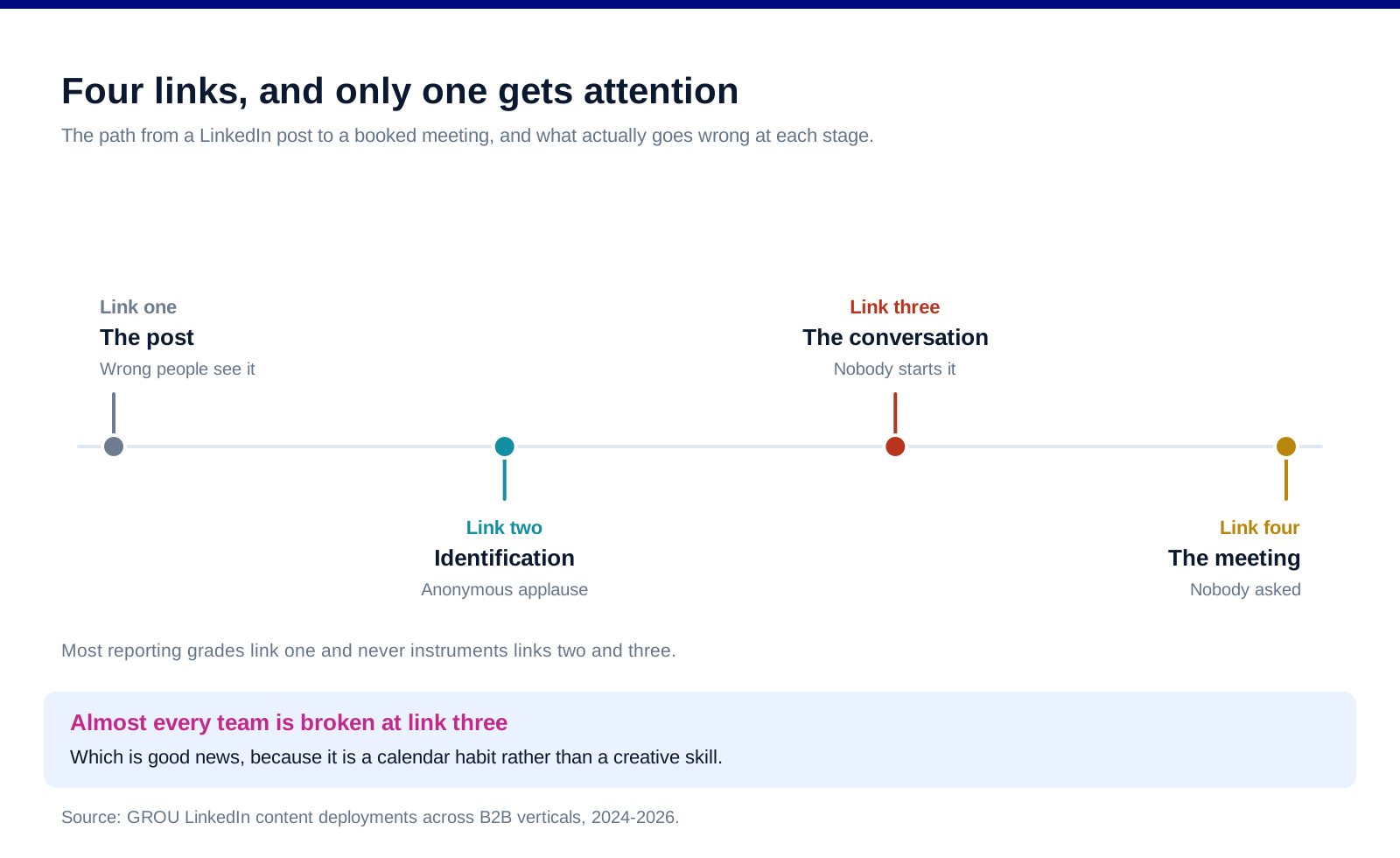
Link one, the post. Failure mode: nobody sees it, or the wrong people do. This is the only link most teams work on.
Link two, identification. Somebody does something that tells you who they are: a comment, a profile view, a follow, a connection request, a DM. Failure mode: the post gives no one a reason to act, so the engagement is anonymous applause.
Link three, the conversation. You and that person exchange something specific. Failure mode: nobody starts it, or somebody starts it with a pitch and it dies in one message.
Link four, the meeting. Failure mode: the conversation was pleasant and nobody asked.
Almost every team we have seen is broken at link three. The posts are fine, people comment, and then nothing happens because starting the conversation is nobody's job and there is no process for it.
Which is good news, because link three is the cheapest one to fix. It is a calendar habit rather than a creative skill.
What makes a post produce a replyable moment
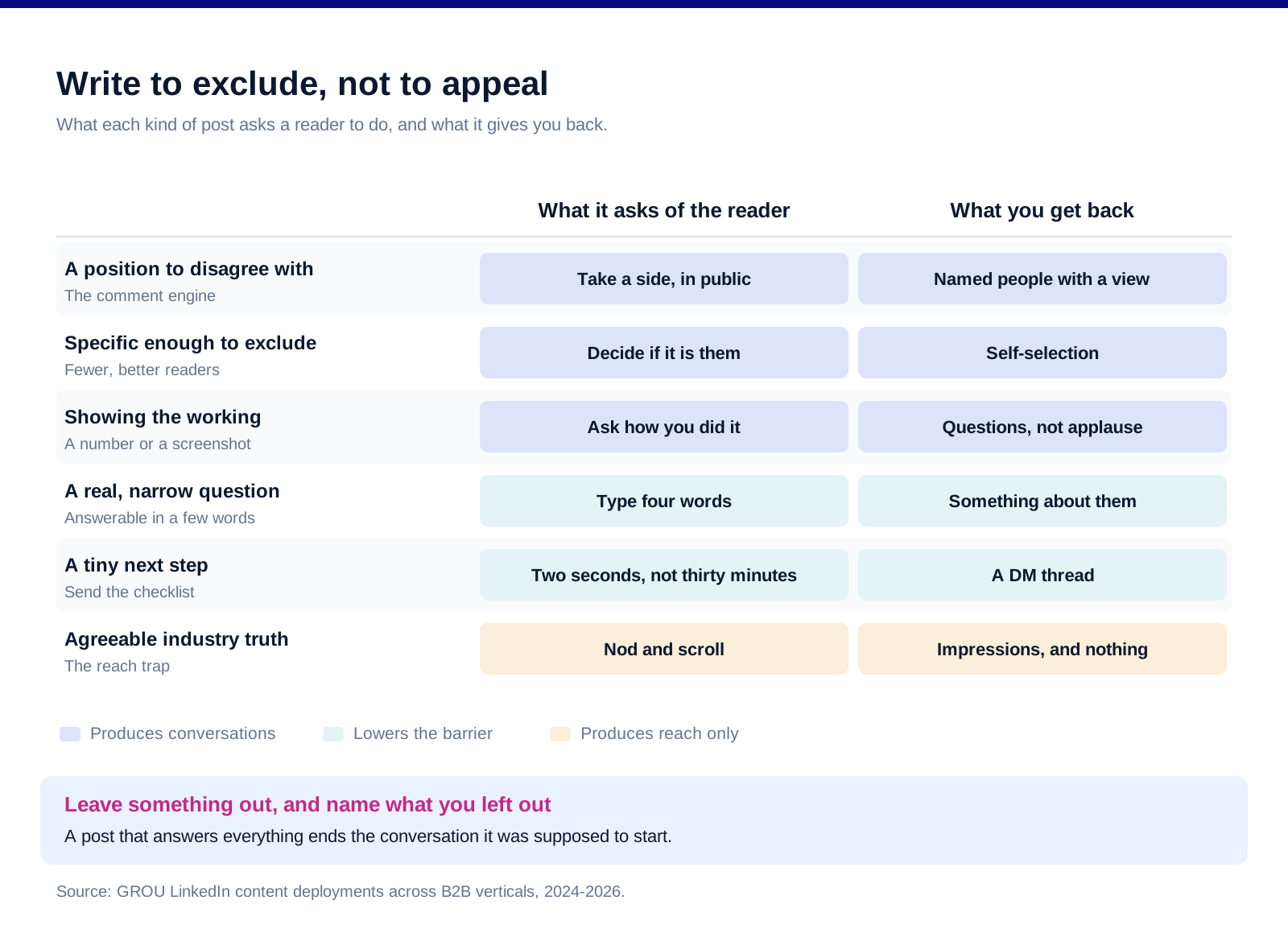
Take a position someone could disagree with. Agreement produces likes. Disagreement produces comments, and comments are named people with a stated view.
Be specific enough to exclude people. "Most B2B teams should stop doing X" reaches everyone. "If you run outbound into regulated financial services, X is costing you the security review" reaches fewer people and every one of them knows whether it applies to them.
Show the work rather than the conclusion. A number, a screenshot, a process, a thing that went wrong. Conclusions get agreement. Working gets questions, and a question is a conversation that has already started.
Ask a question you actually want the answer to. Not an engagement-bait question. A real one, narrow enough to answer in a few words, where the answer tells you something about the person.
Make the next step tiny and specific. "Happy to send the checklist" outperforms "book a call" by a wide margin, because it asks for two seconds rather than thirty minutes and it produces a DM thread rather than a calendar decision.
And leave something out. A post that answers everything ends the conversation. A post that answers most of it and names the part it has skipped invites the message you actually want.
Our polls piece covers the version of this that produces a segment, and our events piece covers the only organic format that returns contact details rather than identities.
The move after the comment
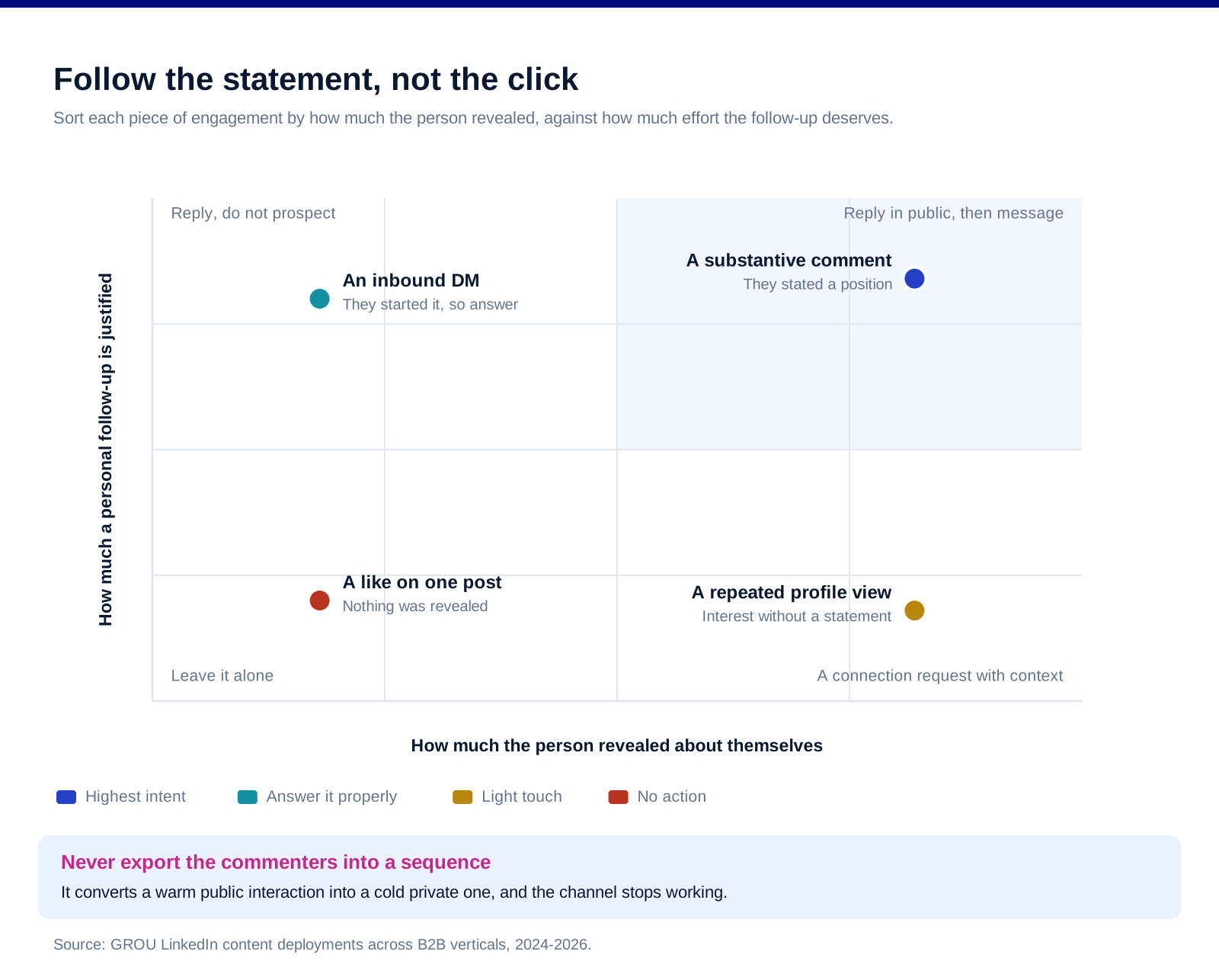
Reply to every comment as a person, in the thread, first. Publicly, specifically, and without a pitch. This is visible to everyone else reading and it is the cheapest credibility you will ever buy.
Then move exactly one step, and only for the ones worth it. A DM that references what they said. Not a template, not a pitch, and not a calendar link.
The message that works is short and asks about them. They made a statement in public. Ask the obvious follow-up question about it. That is the whole message.
Do not treat commenters as a list. Exporting everyone who engaged and running a sequence at them is the single fastest way to make a working channel stop working, and it converts a warm public interaction into a cold private one.
Profile views are a weaker signal and worth a lighter touch. Somebody looked. That is interest without a statement, so it justifies a connection request with a line of context rather than a question about a position they never took.
When it moves to email, the rules change. The European Commission's guidance on data received from another source states that an organisation must inform individuals "at the latest at the time of the first communication with them, that it has collected their personal data and that it will be processing it for sending them adverts", and that "individuals will have a right to object to such processing". The ICO's electronic mail marketing guidance separately states that "You can send unsolicited electronic mail marketing to corporate subscribers without consent or a soft opt-in", which is the rule most B2B email relies on. Neither is a reason to avoid the move. Both are reasons to say plainly why you are writing. None of this is legal advice.
If your team posts, the rules apply to them too
Employee amplification is the highest-leverage distribution you have. It is also the point where a compliance question appears that nobody expects.
The FTC's Endorsement Guides put the responsibility on the company. They state that "Advertisers need to have reasonable programs in place to train and monitor members of their network" and that "Your company is ultimately responsible for what others do on your behalf."
Which means an advocacy programme needs written guidance, not just a Slack link. Our employee advocacy piece covers what that guidance should contain.
And it means the disclosure is theirs to make, visibly. An employee posting about their employer is an insider, and the relationship should be obvious in the post rather than inferable from their profile.
What to measure
![[INSERT CHART 4, linkedin-posts-that-get-meetings-chart-4-metrics.svg] Alt: Which LinkedIn metrics predict pipeline in 2026, sorted by how early they appear against how much they tell you.](https://framerusercontent.com/images/WJ22NjOwiZprtJ0EbWaBa89Q.svg)
Conversations started, weekly. The single most useful number, and almost nobody tracks it. A conversation is any thread where both parties sent something substantive.
Comments from people in your target roles. Not comment count. Comment count includes your peers, your competitors and people who comment on everything.
Inbound connection requests and DMs. These are the honest demand signal, because the other person initiated.
Meetings that trace back to a post or a thread. Imperfect attribution, and worth logging by hand rather than not at all.
Not impressions. Our measurement piece covers why in detail, and the short version is that it is the number that most reliably rises while pipeline falls.
Not follower count. It is a lagging vanity number that moves for reasons unrelated to whether anyone wants to buy from you.
What we do not publish here
Post frequency, engagement rate or conversion benchmarks. Ours come from a specific set of clients, offers and markets. Every public benchmark on LinkedIn performance comes from a company selling scheduling or analytics software.
Any claim about how the LinkedIn feed ranks content. LinkedIn does not publish its distribution mechanics for any format, and everything in circulation is inference presented as fact.
Best times to post. Same reason. There is no published source and the confident answers all trace back to vendor datasets.
A template for the DM. A template is the thing that breaks this. The message has to reference what the specific person said, which is the entire mechanism.
Hook formulas. Our post hooks piece covers the opening line as a craft question. This article is about what happens after someone has read it, and a hook that wins attention from the wrong audience makes the rest of this harder rather than easier.
FAQ
Why do my LinkedIn posts get engagement but no meetings?
Usually because the chain breaks at the conversation, not at the post. People comment, nobody starts a thread, and the engagement stays anonymous. The second common cause is that the posts are broad enough to be agreeable to everyone, which produces reactions from people who have no reason to talk to you.
Should you DM people who comment on your posts?
Yes, selectively, and only after replying to them publicly first. Reference what they actually said and ask the obvious follow-up question. Do not export commenters into a sequence, because that converts a warm public interaction into a cold private one and it is the fastest way to kill the channel.
How many impressions do you need to get a meeting?
There is no published answer and any number you have seen comes from a vendor's own dataset. The more useful framing is that a post with 800 impressions and four real conversations beats one with 40,000 and none, and the second one will look better in every report you run.
What kind of LinkedIn post actually produces conversations?
Ones with a position somebody could disagree with, ones specific enough to exclude people, ones that show working rather than conclusions, and ones that deliberately leave a gap and name it. All four give a reader a reason to type something rather than tap something.
Is it legal to email someone after they engage with your post?
Engaging with a post is not consent to a marketing email. The European Commission's guidance requires individuals to be informed at the latest at the time of first communication that their data is being processed for marketing, and that they retain a right to object. The ICO separately states that unsolicited electronic mail marketing to corporate subscribers is possible without consent. Say plainly why you are writing. This is not legal advice.
What should a LinkedIn content programme actually report?
Conversations started, comments from target roles, inbound requests and DMs, and meetings traced back by hand. Not impressions, not followers, and not engagement rate. If a metric can rise while pipeline falls, it belongs in a diagnostic view rather than in the report your board reads.
Bottom line
Stop grading the post and start instrumenting the chain. The post exists to make one specific person raise their hand, which means writing to exclude rather than to appeal, showing working rather than conclusions, and leaving a gap you name. Then fix the link that is actually broken, which is almost always the conversation: reply publicly to everyone, move privately to a few, reference what they said, and ask a question instead of pitching. Make that a named person's weekly job rather than a hope. Track conversations started and comments from your target roles, and put impressions in a diagnostic view where they cannot flatter anyone. And when the thread moves to email, say plainly why you are writing, because the rules that apply there are published and the honest opening is also the one that gets read.
Want the LinkedIn programme run rather than the posts scheduled? Book a call with GROU. We run LinkedIn content and lead generation inside B2B revenue engines across verticals.
We are GROU, a B2B pipeline agency that runs lead generation, outbound, and LinkedIn content for clients across manufacturing, fintech, iGaming, software, and professional services. Nothing in this article is legal advice, every regulatory statement is quoted from the institution that publishes it, and the content framework reflects our own LinkedIn deployments between 2024 and 2026, anonymized to protect client confidentiality.
A post cannot book a meeting. It has never booked one and it never will.
What a post can do is produce a moment where a specific person identifies themselves as someone worth talking to. Everything after that is a conversation, and the conversation is where meetings come from. Which means the thing most people optimise, the post, is one link in a chain of four, and it is not the link that usually breaks.
TL;DR
Reach and meetings pull in opposite directions more often than anyone admits, because the post that travels furthest is usually the one written to be agreeable to the largest number of people, and agreeable is the opposite of self-selecting. The chain runs post, identification, conversation, meeting, and each link has a different failure mode. Most teams grade themselves on link one and never instrument links two and three. The fix is to write posts that make a specific person raise their hand rather than posts that make a general audience nod, to treat the comment as the beginning rather than the result, and to move to a conversation deliberately rather than hoping. And when that conversation moves off the platform into email you have crossed into direct marketing, where the European Commission's guidance requires that individuals be told "at the latest at the time of the first communication with them" that their data is being processed for marketing. Measure replies and conversations, not impressions, and accept that a post with 800 impressions and four real conversations beat the one with 40,000 and none.
Reach and meetings are different goals
Broad posts travel because they are easy to agree with. A post that says something most of your industry already believes will collect reactions from people who have no reason to talk to you. That is not a failure of the algorithm. It is exactly what you asked it for.
Specific posts are read by fewer people and by more of the right ones. Naming a role, a sector, a system or a number narrows the audience and raises the proportion of it that has a live problem.
Which is why impressions and meetings can move in opposite directions. A quarter of rising reach and falling conversations is a common pattern and it usually means the content drifted toward the general.
The uncomfortable version of this. If your best-performing post by reach is one you would be embarrassed to have a buyer judge you on, the algorithm has been optimising something you do not want.
Pick the goal before you write. Awareness content and pipeline content are both legitimate and they are not the same post. Our piece on what to actually measure covers separating them in reporting so one does not quietly eat the other.
The chain, and where it actually breaks
Link one, the post. Failure mode: nobody sees it, or the wrong people do. This is the only link most teams work on.
Link two, identification. Somebody does something that tells you who they are: a comment, a profile view, a follow, a connection request, a DM. Failure mode: the post gives no one a reason to act, so the engagement is anonymous applause.
Link three, the conversation. You and that person exchange something specific. Failure mode: nobody starts it, or somebody starts it with a pitch and it dies in one message.
Link four, the meeting. Failure mode: the conversation was pleasant and nobody asked.
Almost every team we have seen is broken at link three. The posts are fine, people comment, and then nothing happens because starting the conversation is nobody's job and there is no process for it.
Which is good news, because link three is the cheapest one to fix. It is a calendar habit rather than a creative skill.
What makes a post produce a replyable moment
Take a position someone could disagree with. Agreement produces likes. Disagreement produces comments, and comments are named people with a stated view.
Be specific enough to exclude people. "Most B2B teams should stop doing X" reaches everyone. "If you run outbound into regulated financial services, X is costing you the security review" reaches fewer people and every one of them knows whether it applies to them.
Show the work rather than the conclusion. A number, a screenshot, a process, a thing that went wrong. Conclusions get agreement. Working gets questions, and a question is a conversation that has already started.
Ask a question you actually want the answer to. Not an engagement-bait question. A real one, narrow enough to answer in a few words, where the answer tells you something about the person.
Make the next step tiny and specific. "Happy to send the checklist" outperforms "book a call" by a wide margin, because it asks for two seconds rather than thirty minutes and it produces a DM thread rather than a calendar decision.
And leave something out. A post that answers everything ends the conversation. A post that answers most of it and names the part it has skipped invites the message you actually want.
Our polls piece covers the version of this that produces a segment, and our events piece covers the only organic format that returns contact details rather than identities.
The move after the comment
Reply to every comment as a person, in the thread, first. Publicly, specifically, and without a pitch. This is visible to everyone else reading and it is the cheapest credibility you will ever buy.
Then move exactly one step, and only for the ones worth it. A DM that references what they said. Not a template, not a pitch, and not a calendar link.
The message that works is short and asks about them. They made a statement in public. Ask the obvious follow-up question about it. That is the whole message.
Do not treat commenters as a list. Exporting everyone who engaged and running a sequence at them is the single fastest way to make a working channel stop working, and it converts a warm public interaction into a cold private one.
Profile views are a weaker signal and worth a lighter touch. Somebody looked. That is interest without a statement, so it justifies a connection request with a line of context rather than a question about a position they never took.
When it moves to email, the rules change. The European Commission's guidance on data received from another source states that an organisation must inform individuals "at the latest at the time of the first communication with them, that it has collected their personal data and that it will be processing it for sending them adverts", and that "individuals will have a right to object to such processing". The ICO's electronic mail marketing guidance separately states that "You can send unsolicited electronic mail marketing to corporate subscribers without consent or a soft opt-in", which is the rule most B2B email relies on. Neither is a reason to avoid the move. Both are reasons to say plainly why you are writing. None of this is legal advice.
If your team posts, the rules apply to them too
Employee amplification is the highest-leverage distribution you have. It is also the point where a compliance question appears that nobody expects.
The FTC's Endorsement Guides put the responsibility on the company. They state that "Advertisers need to have reasonable programs in place to train and monitor members of their network" and that "Your company is ultimately responsible for what others do on your behalf."
Which means an advocacy programme needs written guidance, not just a Slack link. Our employee advocacy piece covers what that guidance should contain.
And it means the disclosure is theirs to make, visibly. An employee posting about their employer is an insider, and the relationship should be obvious in the post rather than inferable from their profile.
What to measure
Conversations started, weekly. The single most useful number, and almost nobody tracks it. A conversation is any thread where both parties sent something substantive.
Comments from people in your target roles. Not comment count. Comment count includes your peers, your competitors and people who comment on everything.
Inbound connection requests and DMs. These are the honest demand signal, because the other person initiated.
Meetings that trace back to a post or a thread. Imperfect attribution, and worth logging by hand rather than not at all.
Not impressions. Our measurement piece covers why in detail, and the short version is that it is the number that most reliably rises while pipeline falls.
Not follower count. It is a lagging vanity number that moves for reasons unrelated to whether anyone wants to buy from you.
What we do not publish here
Post frequency, engagement rate or conversion benchmarks. Ours come from a specific set of clients, offers and markets. Every public benchmark on LinkedIn performance comes from a company selling scheduling or analytics software.
Any claim about how the LinkedIn feed ranks content. LinkedIn does not publish its distribution mechanics for any format, and everything in circulation is inference presented as fact.
Best times to post. Same reason. There is no published source and the confident answers all trace back to vendor datasets.
A template for the DM. A template is the thing that breaks this. The message has to reference what the specific person said, which is the entire mechanism.
Hook formulas. Our post hooks piece covers the opening line as a craft question. This article is about what happens after someone has read it, and a hook that wins attention from the wrong audience makes the rest of this harder rather than easier.
FAQ
Why do my LinkedIn posts get engagement but no meetings?
Usually because the chain breaks at the conversation, not at the post. People comment, nobody starts a thread, and the engagement stays anonymous. The second common cause is that the posts are broad enough to be agreeable to everyone, which produces reactions from people who have no reason to talk to you.
Should you DM people who comment on your posts?
Yes, selectively, and only after replying to them publicly first. Reference what they actually said and ask the obvious follow-up question. Do not export commenters into a sequence, because that converts a warm public interaction into a cold private one and it is the fastest way to kill the channel.
How many impressions do you need to get a meeting?
There is no published answer and any number you have seen comes from a vendor's own dataset. The more useful framing is that a post with 800 impressions and four real conversations beats one with 40,000 and none, and the second one will look better in every report you run.
What kind of LinkedIn post actually produces conversations?
Ones with a position somebody could disagree with, ones specific enough to exclude people, ones that show working rather than conclusions, and ones that deliberately leave a gap and name it. All four give a reader a reason to type something rather than tap something.
Is it legal to email someone after they engage with your post?
Engaging with a post is not consent to a marketing email. The European Commission's guidance requires individuals to be informed at the latest at the time of first communication that their data is being processed for marketing, and that they retain a right to object. The ICO separately states that unsolicited electronic mail marketing to corporate subscribers is possible without consent. Say plainly why you are writing. This is not legal advice.
What should a LinkedIn content programme actually report?
Conversations started, comments from target roles, inbound requests and DMs, and meetings traced back by hand. Not impressions, not followers, and not engagement rate. If a metric can rise while pipeline falls, it belongs in a diagnostic view rather than in the report your board reads.
Bottom line
Stop grading the post and start instrumenting the chain. The post exists to make one specific person raise their hand, which means writing to exclude rather than to appeal, showing working rather than conclusions, and leaving a gap you name. Then fix the link that is actually broken, which is almost always the conversation: reply publicly to everyone, move privately to a few, reference what they said, and ask a question instead of pitching. Make that a named person's weekly job rather than a hope. Track conversations started and comments from your target roles, and put impressions in a diagnostic view where they cannot flatter anyone. And when the thread moves to email, say plainly why you are writing, because the rules that apply there are published and the honest opening is also the one that gets read.
Want the LinkedIn programme run rather than the posts scheduled? Book a call with GROU. We run LinkedIn content and lead generation inside B2B revenue engines across verticals.
We are GROU, a B2B pipeline agency that runs lead generation, outbound, and LinkedIn content for clients across manufacturing, fintech, iGaming, software, and professional services. Nothing in this article is legal advice, every regulatory statement is quoted from the institution that publishes it, and the content framework reflects our own LinkedIn deployments between 2024 and 2026, anonymized to protect client confidentiality.
A post cannot book a meeting. It has never booked one and it never will.
What a post can do is produce a moment where a specific person identifies themselves as someone worth talking to. Everything after that is a conversation, and the conversation is where meetings come from. Which means the thing most people optimise, the post, is one link in a chain of four, and it is not the link that usually breaks.
TL;DR
Reach and meetings pull in opposite directions more often than anyone admits, because the post that travels furthest is usually the one written to be agreeable to the largest number of people, and agreeable is the opposite of self-selecting. The chain runs post, identification, conversation, meeting, and each link has a different failure mode. Most teams grade themselves on link one and never instrument links two and three. The fix is to write posts that make a specific person raise their hand rather than posts that make a general audience nod, to treat the comment as the beginning rather than the result, and to move to a conversation deliberately rather than hoping. And when that conversation moves off the platform into email you have crossed into direct marketing, where the European Commission's guidance requires that individuals be told "at the latest at the time of the first communication with them" that their data is being processed for marketing. Measure replies and conversations, not impressions, and accept that a post with 800 impressions and four real conversations beat the one with 40,000 and none.
Reach and meetings are different goals
Broad posts travel because they are easy to agree with. A post that says something most of your industry already believes will collect reactions from people who have no reason to talk to you. That is not a failure of the algorithm. It is exactly what you asked it for.
Specific posts are read by fewer people and by more of the right ones. Naming a role, a sector, a system or a number narrows the audience and raises the proportion of it that has a live problem.
Which is why impressions and meetings can move in opposite directions. A quarter of rising reach and falling conversations is a common pattern and it usually means the content drifted toward the general.
The uncomfortable version of this. If your best-performing post by reach is one you would be embarrassed to have a buyer judge you on, the algorithm has been optimising something you do not want.
Pick the goal before you write. Awareness content and pipeline content are both legitimate and they are not the same post. Our piece on what to actually measure covers separating them in reporting so one does not quietly eat the other.
The chain, and where it actually breaks
Link one, the post. Failure mode: nobody sees it, or the wrong people do. This is the only link most teams work on.
Link two, identification. Somebody does something that tells you who they are: a comment, a profile view, a follow, a connection request, a DM. Failure mode: the post gives no one a reason to act, so the engagement is anonymous applause.
Link three, the conversation. You and that person exchange something specific. Failure mode: nobody starts it, or somebody starts it with a pitch and it dies in one message.
Link four, the meeting. Failure mode: the conversation was pleasant and nobody asked.
Almost every team we have seen is broken at link three. The posts are fine, people comment, and then nothing happens because starting the conversation is nobody's job and there is no process for it.
Which is good news, because link three is the cheapest one to fix. It is a calendar habit rather than a creative skill.
What makes a post produce a replyable moment
Take a position someone could disagree with. Agreement produces likes. Disagreement produces comments, and comments are named people with a stated view.
Be specific enough to exclude people. "Most B2B teams should stop doing X" reaches everyone. "If you run outbound into regulated financial services, X is costing you the security review" reaches fewer people and every one of them knows whether it applies to them.
Show the work rather than the conclusion. A number, a screenshot, a process, a thing that went wrong. Conclusions get agreement. Working gets questions, and a question is a conversation that has already started.
Ask a question you actually want the answer to. Not an engagement-bait question. A real one, narrow enough to answer in a few words, where the answer tells you something about the person.
Make the next step tiny and specific. "Happy to send the checklist" outperforms "book a call" by a wide margin, because it asks for two seconds rather than thirty minutes and it produces a DM thread rather than a calendar decision.
And leave something out. A post that answers everything ends the conversation. A post that answers most of it and names the part it has skipped invites the message you actually want.
Our polls piece covers the version of this that produces a segment, and our events piece covers the only organic format that returns contact details rather than identities.
The move after the comment
Reply to every comment as a person, in the thread, first. Publicly, specifically, and without a pitch. This is visible to everyone else reading and it is the cheapest credibility you will ever buy.
Then move exactly one step, and only for the ones worth it. A DM that references what they said. Not a template, not a pitch, and not a calendar link.
The message that works is short and asks about them. They made a statement in public. Ask the obvious follow-up question about it. That is the whole message.
Do not treat commenters as a list. Exporting everyone who engaged and running a sequence at them is the single fastest way to make a working channel stop working, and it converts a warm public interaction into a cold private one.
Profile views are a weaker signal and worth a lighter touch. Somebody looked. That is interest without a statement, so it justifies a connection request with a line of context rather than a question about a position they never took.
When it moves to email, the rules change. The European Commission's guidance on data received from another source states that an organisation must inform individuals "at the latest at the time of the first communication with them, that it has collected their personal data and that it will be processing it for sending them adverts", and that "individuals will have a right to object to such processing". The ICO's electronic mail marketing guidance separately states that "You can send unsolicited electronic mail marketing to corporate subscribers without consent or a soft opt-in", which is the rule most B2B email relies on. Neither is a reason to avoid the move. Both are reasons to say plainly why you are writing. None of this is legal advice.
If your team posts, the rules apply to them too
Employee amplification is the highest-leverage distribution you have. It is also the point where a compliance question appears that nobody expects.
The FTC's Endorsement Guides put the responsibility on the company. They state that "Advertisers need to have reasonable programs in place to train and monitor members of their network" and that "Your company is ultimately responsible for what others do on your behalf."
Which means an advocacy programme needs written guidance, not just a Slack link. Our employee advocacy piece covers what that guidance should contain.
And it means the disclosure is theirs to make, visibly. An employee posting about their employer is an insider, and the relationship should be obvious in the post rather than inferable from their profile.
What to measure
Conversations started, weekly. The single most useful number, and almost nobody tracks it. A conversation is any thread where both parties sent something substantive.
Comments from people in your target roles. Not comment count. Comment count includes your peers, your competitors and people who comment on everything.
Inbound connection requests and DMs. These are the honest demand signal, because the other person initiated.
Meetings that trace back to a post or a thread. Imperfect attribution, and worth logging by hand rather than not at all.
Not impressions. Our measurement piece covers why in detail, and the short version is that it is the number that most reliably rises while pipeline falls.
Not follower count. It is a lagging vanity number that moves for reasons unrelated to whether anyone wants to buy from you.
What we do not publish here
Post frequency, engagement rate or conversion benchmarks. Ours come from a specific set of clients, offers and markets. Every public benchmark on LinkedIn performance comes from a company selling scheduling or analytics software.
Any claim about how the LinkedIn feed ranks content. LinkedIn does not publish its distribution mechanics for any format, and everything in circulation is inference presented as fact.
Best times to post. Same reason. There is no published source and the confident answers all trace back to vendor datasets.
A template for the DM. A template is the thing that breaks this. The message has to reference what the specific person said, which is the entire mechanism.
Hook formulas. Our post hooks piece covers the opening line as a craft question. This article is about what happens after someone has read it, and a hook that wins attention from the wrong audience makes the rest of this harder rather than easier.
FAQ
Why do my LinkedIn posts get engagement but no meetings?
Usually because the chain breaks at the conversation, not at the post. People comment, nobody starts a thread, and the engagement stays anonymous. The second common cause is that the posts are broad enough to be agreeable to everyone, which produces reactions from people who have no reason to talk to you.
Should you DM people who comment on your posts?
Yes, selectively, and only after replying to them publicly first. Reference what they actually said and ask the obvious follow-up question. Do not export commenters into a sequence, because that converts a warm public interaction into a cold private one and it is the fastest way to kill the channel.
How many impressions do you need to get a meeting?
There is no published answer and any number you have seen comes from a vendor's own dataset. The more useful framing is that a post with 800 impressions and four real conversations beats one with 40,000 and none, and the second one will look better in every report you run.
What kind of LinkedIn post actually produces conversations?
Ones with a position somebody could disagree with, ones specific enough to exclude people, ones that show working rather than conclusions, and ones that deliberately leave a gap and name it. All four give a reader a reason to type something rather than tap something.
Is it legal to email someone after they engage with your post?
Engaging with a post is not consent to a marketing email. The European Commission's guidance requires individuals to be informed at the latest at the time of first communication that their data is being processed for marketing, and that they retain a right to object. The ICO separately states that unsolicited electronic mail marketing to corporate subscribers is possible without consent. Say plainly why you are writing. This is not legal advice.
What should a LinkedIn content programme actually report?
Conversations started, comments from target roles, inbound requests and DMs, and meetings traced back by hand. Not impressions, not followers, and not engagement rate. If a metric can rise while pipeline falls, it belongs in a diagnostic view rather than in the report your board reads.
Bottom line
Stop grading the post and start instrumenting the chain. The post exists to make one specific person raise their hand, which means writing to exclude rather than to appeal, showing working rather than conclusions, and leaving a gap you name. Then fix the link that is actually broken, which is almost always the conversation: reply publicly to everyone, move privately to a few, reference what they said, and ask a question instead of pitching. Make that a named person's weekly job rather than a hope. Track conversations started and comments from your target roles, and put impressions in a diagnostic view where they cannot flatter anyone. And when the thread moves to email, say plainly why you are writing, because the rules that apply there are published and the honest opening is also the one that gets read.
Want the LinkedIn programme run rather than the posts scheduled? Book a call with GROU. We run LinkedIn content and lead generation inside B2B revenue engines across verticals.
We are GROU, a B2B pipeline agency that runs lead generation, outbound, and LinkedIn content for clients across manufacturing, fintech, iGaming, software, and professional services. Nothing in this article is legal advice, every regulatory statement is quoted from the institution that publishes it, and the content framework reflects our own LinkedIn deployments between 2024 and 2026, anonymized to protect client confidentiality.
Pipeline OS Newsletter
Build qualified pipeline
Get weekly tactics to generate demand, improve lead quality, and book more meetings.







Trusted by industry leaders
Trusted by industry leaders
Trusted by industry leaders
Ready to build qualified pipeline?
Ready to build qualified pipeline?
Ready to build qualified pipeline?
Book a call to see if we're the right fit, or take the 2-minute quiz to get a clear starting point.
Book a call to see if we're the right fit, or take the 2-minute quiz to get a clear starting point.
Book a call to see if we're the right fit, or take the 2-minute quiz to get a clear starting point.
" height="30.21639343089746px" id="hfGbXmQR2" width="30.216393430897455px"/></svg>)
Copyright © 2026 – All Right Reserved
Copyright © 2026 – All Right Reserved
Copyright © 2026 – All Right Reserved