%22%3E%3C/path%3E%3Cpath d=%22M 63.072 7.554 C 62.258 8.022 61.577 8.689 61.092 9.493 L 61.092 7.076 L 57.158 7.076 L 57.158 22.64 L 61.089 22.64 L 61.089 14.888 C 61.089 13.446 61.403 12.434 62.03 11.853 C 62.818 11.218 63.818 10.907 64.826 10.982 L 65.868 10.982 L 65.868 6.851 C 64.891 6.834 63.926 7.076 63.073 7.554 Z%22 fill=%22rgb(17,17,17)%22%3E%3C/path%3E%3Cpath d=%22M 78.916 7.82 C 76.363 6.49 73.321 6.49 70.768 7.82 C 69.562 8.473 68.564 9.451 67.888 10.644 C 67.167 11.931 66.803 13.387 66.834 14.862 C 66.804 16.332 67.157 17.785 67.86 19.077 C 68.515 20.267 69.494 21.246 70.684 21.901 C 71.924 22.576 73.318 22.92 74.73 22.898 C 76.164 22.918 77.58 22.575 78.846 21.901 C 80.062 21.247 81.073 20.27 81.768 19.077 C 82.506 17.797 82.88 16.339 82.85 14.862 C 82.88 13.389 82.517 11.934 81.797 10.647 C 81.12 9.455 80.122 8.477 78.917 7.824 M 78.803 14.862 C 78.829 15.739 78.636 16.608 78.241 17.391 C 77.903 18.046 77.38 18.588 76.738 18.95 C 76.124 19.293 75.432 19.472 74.729 19.47 C 73.668 19.497 72.648 19.061 71.934 18.276 C 71.139 17.323 70.741 16.1 70.823 14.862 C 70.741 13.62 71.149 12.395 71.959 11.45 C 72.687 10.667 73.715 10.233 74.783 10.256 C 75.859 10.236 76.894 10.67 77.635 11.45 C 78.464 12.387 78.884 13.616 78.801 14.864%22 fill=%22rgb(17,17,17)%22%3E%3C/path%3E%3Cpath d=%22M 95.906 7.076 L 95.906 15.646 C 95.975 16.68 95.643 17.701 94.979 18.498 C 94.311 19.184 93.379 19.547 92.422 19.495 C 91.475 19.544 90.553 19.18 89.894 18.498 C 89.23 17.701 88.898 16.68 88.967 15.646 L 88.967 7.076 L 85.033 7.076 L 85.033 16.207 C 85 17.449 85.275 18.68 85.834 19.79 C 86.327 20.75 87.095 21.542 88.039 22.065 C 89.033 22.594 90.145 22.861 91.271 22.838 C 92.188 22.847 93.095 22.65 93.926 22.263 C 94.708 21.905 95.388 21.36 95.906 20.675 L 95.906 22.645 L 99.865 22.645 L 99.865 7.076 Z%22 fill=%22rgb(17,17,17)%22%3E%3C/path%3E%3Cpath d=%22M 4.513 15.626 C 4.511 10.815 7.606 6.549 12.181 5.059 C 16.756 3.57 21.77 5.195 24.601 9.086 L 27.816 5.87 C 24.074 1.186 17.981 -0.943 12.137 0.393 C 6.292 1.728 1.728 6.292 0.393 12.137 C -0.943 17.981 1.186 24.074 5.87 27.816 L 9.085 24.601 C 6.214 22.512 4.515 19.177 4.513 15.626%22 fill=%22rgb(32,62,235)%22%3E%3C/path%3E%3Cpath d=%22M 17.114 14.343 L 13.354 18.01 L 13.354 18.026 L 21.071 18.026 L 11.412 27.609 L 17.389 27.609 L 23.999 21.081 L 23.999 28.316 L 24.005 28.316 L 27.967 24.393 L 27.967 14.343 Z%22 fill=%22rgb(32,62,235)%22%3E%3C/path%3E%3C/g%3E%3C/svg%3E) ×
× ××
××

A LinkedIn poll gives you a name. A LinkedIn Event gives you a name, a job title, a company, a country and contact information, because the registration form collects them and you download the list.
That is a materially different asset, and it explains why events are the most underused organic surface on the platform for B2B teams. It also means you are collecting personal data on purpose, which changes what your follow-up has to say.
TL;DR
LinkedIn describes Events as a way to build awareness, drive registrations and spark connections at scale, covering webinars, livestreams and in-person gatherings. The mechanic that matters commercially is the registration form, which LinkedIn says collects "the name, contact information, job title, company, and country of people who sign up", after which an organiser can "Download a list directly from your event page or sync leads directly with your CRM" and see "advanced analytics, including rich firmographic details on your viewers". Two limits are published: registration forms are not available for Audio Events, and Audio Events are not available for replay. The practical consequences are that gating is the whole point, that registration is not attendance and you should plan for both lists separately, and that the follow-up is regulated rather than optional, since the European Commission states individuals must be told at the latest at the time of first communication that their data is being processed for marketing and retain a right to object. Run a small, specific event for the right hundred people rather than a broad one for a thousand.
What the registration form actually gives you
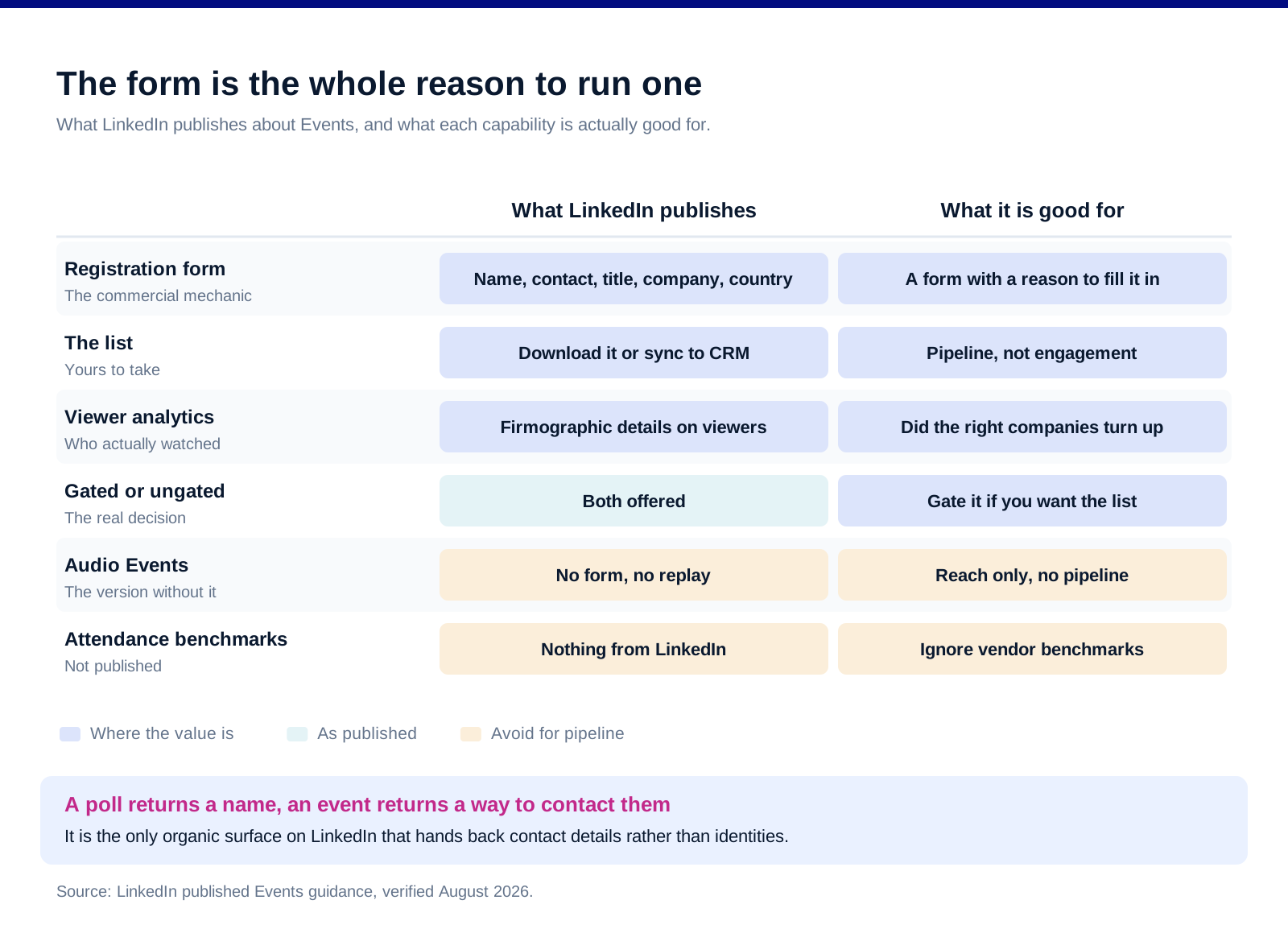
Five fields, collected by LinkedIn rather than by your form. LinkedIn's Events page states that the registration form collects "the name, contact information, job title, company, and country of people who sign up".
And the list is yours to take. Organisers can "Download a list directly from your event page or sync leads directly with your CRM", which is the difference between an engagement surface and a pipeline surface.
Plus firmographics on who actually watched. LinkedIn describes "advanced analytics, including rich firmographic details on your viewers", which is the closest thing organic LinkedIn offers to knowing whether the right companies turned up.
Gating is therefore the decision, not a detail. LinkedIn describes events as gated or ungated. An ungated event is a broadcast. A gated one is a lead form with a reason to fill it in.
Two published limits worth knowing. Registration forms are not available for Audio Events, and LinkedIn states that "LinkedIn Audio Events are not available for replay at this time". If the format you pick is audio, you have chosen the version without the mechanic that makes this worth doing.
We publish no attendance or conversion figure. LinkedIn does not publish one, and every benchmark in circulation comes from a webinar platform with something to sell.
Registration is not attendance
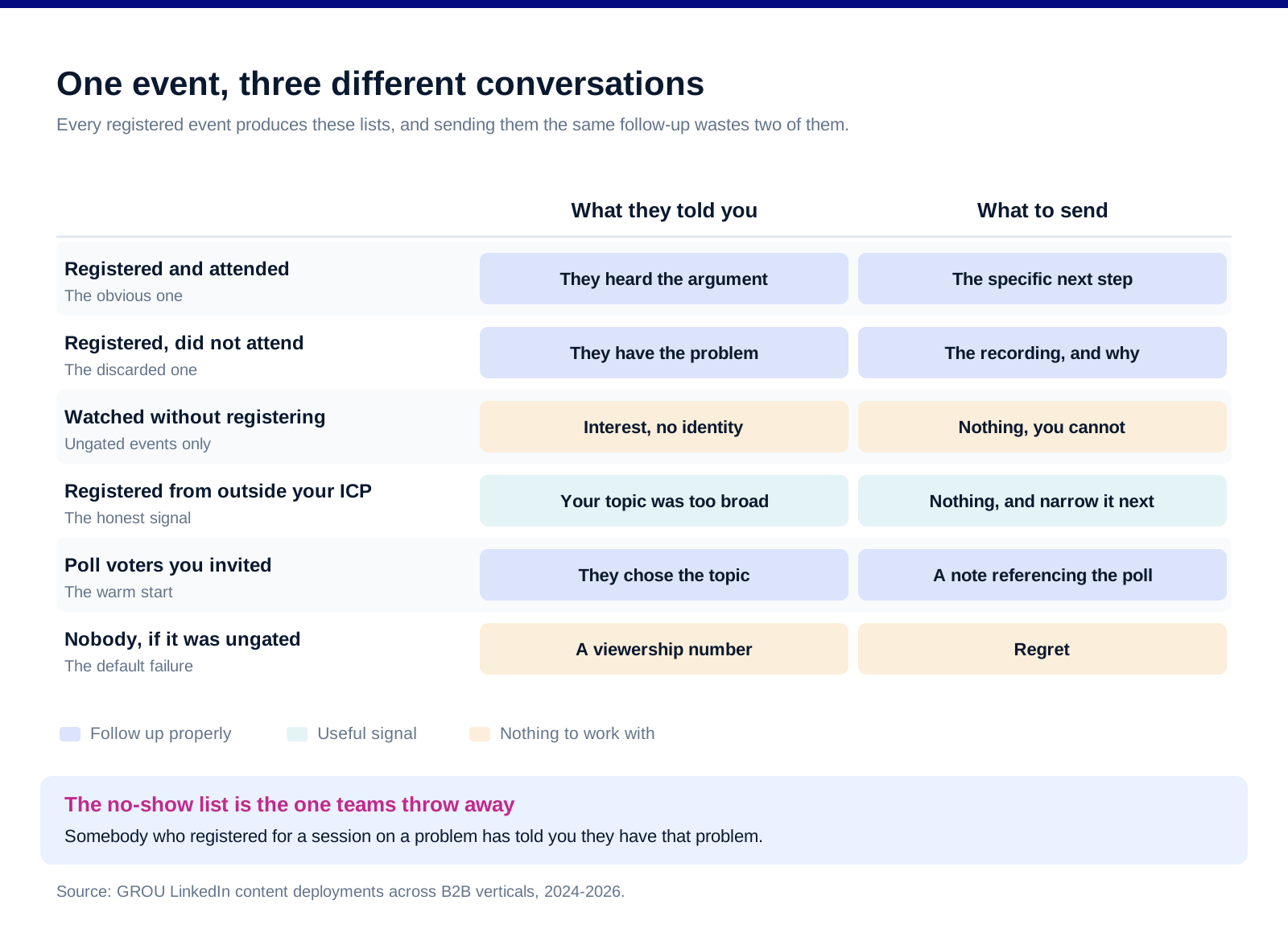
You end up with three lists, not one. People who registered and attended, people who registered and did not, and people who watched without registering if the event was ungated.
All three are useful and none of them is the same conversation. An attendee saw the argument. A no-show liked the premise enough to sign up and then something else happened. Treating both to the same follow-up wastes the more interesting of the two.
The no-show list is the one teams throw away. Someone who registered for a session about a specific problem has told you they have that problem. Their calendar failing is not a signal about their interest.
Plan the follow-up before you plan the content. Three short messages written in advance, one per list, beats a single blast written on the Monday after when everyone is tired.
And record it, unless you picked audio. The recording is what the no-show list is for, and it is what makes the event a durable asset rather than an hour.
The follow-up is regulated, not optional
You collected the data deliberately, which is the point and the obligation. LinkedIn gathered it on your behalf through a form the person filled in, so the person knows they gave it to you. That is a much better position than a scraped list, and it does not remove the requirement to be clear about what happens next.
The European Commission is specific on first contact. Its guidance on using data from another source for marketing states that an organisation must inform individuals "at the latest at the time of the first communication with them, that it has collected their personal data and that it will be processing it for sending them adverts", and that "individuals will have a right to object to such processing".
Which points at the obvious opening line. Say you are writing because they registered for the session. It is honest, it is the reason they will read it, and it satisfies the instinct behind the rule.
Registering for an event is not consent to a sequence. A follow-up about the thing they signed up for is a different act from adding them to an unrelated nurture programme, and treating the two as identical is where this goes wrong.
Your sending rules still apply. If the follow-up goes out at volume, Google's sender guidelines require senders above 5,000 messages a day to Gmail to hold spam rates in Postmaster Tools "below 0.30%" and to support one-click unsubscribe on marketing messages.
Nothing here is legal advice. The rules vary by jurisdiction and by what you actually do with the list.
How to run one that produces pipeline
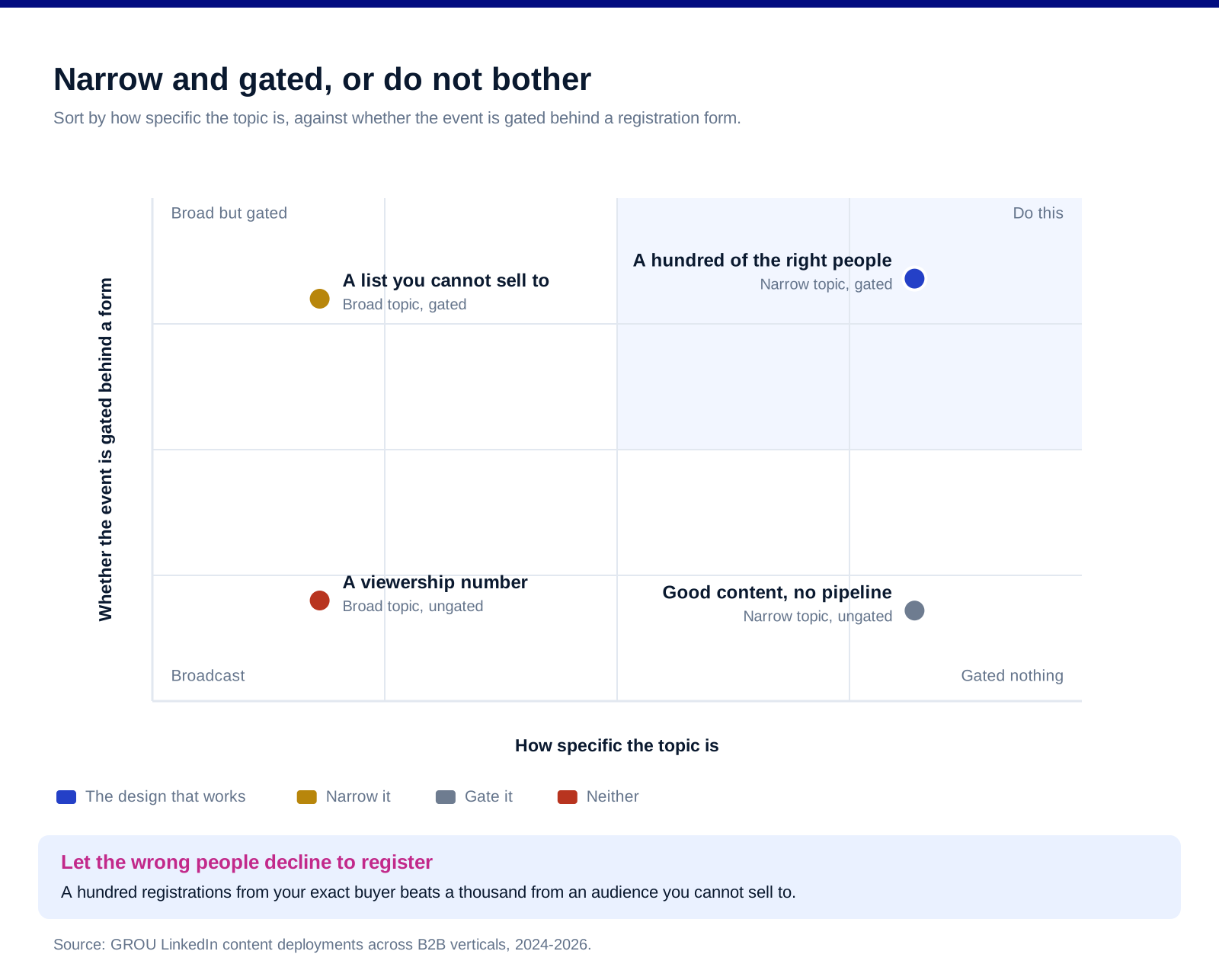
Pick a topic narrow enough that the wrong people do not register. A hundred registrations from your exact buyer is worth more than a thousand from an audience you cannot sell to, and the registration list is where you find out which you built.
Gate it. The ungated version optimises for a number you cannot act on.
Promote it from personal profiles, not only the Page. The reshare with a line of their own is the mechanic that moves it into other networks, which our employee advocacy piece covers.
Use a poll to choose the topic. A poll tells you which of two or three problems your network actually has, and the poll voters are the first people to invite. Our polls piece covers writing one that produces a usable segment.
Keep the panel small and the argument specific. Four speakers agreeing pleasantly is the format that produces no follow-up conversations.
Measure it the way you measure everything else here. Not attendance, but whether the registrations came from your target job functions and whether anyone replied. Our piece on what to actually measure on LinkedIn covers the general case.
What LinkedIn does not publish
Any attendance or registration benchmark. No figure exists from LinkedIn, and the ones in circulation come from webinar vendors.
Limits on how many events you can run. Not stated in the material we could read.
Exactly which contact fields the form returns. Described as contact information without a field list, so verify what you actually receive before you design the CRM mapping.
How the feed treats event posts. LinkedIn does not publish distribution mechanics for any format, and we are not going to infer them.
Whether replay availability differs by event type beyond audio. Only the audio limitation is stated.
FAQ
What data do you get from a LinkedIn Event?
LinkedIn states that the registration form collects the name, contact information, job title, company and country of people who sign up, and that organisers can download the list from the event page or sync leads directly with a CRM. Organisers also get analytics including firmographic details on viewers. Registration forms are not available for Audio Events.
Should you gate a LinkedIn Event?
If the point is pipeline, yes. Gating is what produces the registration list, and the list is the entire commercial reason to run an event on this surface rather than simply posting. An ungated event optimises for viewership, which is a number you cannot follow up.
What should you do with people who register and do not attend?
Treat them as a separate and genuinely interesting list. Someone who signed up for a session on a specific problem has told you they have that problem, and a diary clash is not a signal about interest. Send them the recording with a short note referring to what they registered for, which is both the most useful thing you can send and the most likely to get a reply.
Are LinkedIn Audio Events worth using for pipeline?
Not for this purpose. LinkedIn states that registration forms are not available for Audio Events and that Audio Events are not available for replay, which removes both the list and the durable asset. Use audio for conversation and reach, and use a registered event when the goal is pipeline.
Can you email people who registered for your LinkedIn Event?
You have their details because they gave them to you through a form, which is a stronger position than a scraped list. The European Commission's guidance still requires that individuals are informed at the latest at the time of first communication that their data is being processed for marketing, and that they retain a right to object. Say plainly that you are writing because they registered, and treat unrelated nurture as a separate decision. This is not legal advice.
How do you measure whether a LinkedIn Event worked?
Not by attendance. Look at whether the registrations came from the job functions and companies you sell to, since that is the question the firmographic analytics can answer, and count replies and meetings that trace back to the session. A hundred registrations from your exact buyer beats a thousand from an audience you cannot sell to.
Bottom line
This is the one organic surface on LinkedIn that hands back contact details rather than identities, and everything follows from that. Gate the event, because the registration list is the reason to run it. Pick a topic narrow enough that the wrong people decline to register, since a small precise list is the output you want. Plan three follow-ups before you plan the content, because the no-show list is the one most teams discard and it is full of people who told you what problem they have. Avoid audio if pipeline is the goal, since it has neither the form nor the replay. And open every follow-up by saying you are writing because they registered, which is both the compliant instinct and the reason they will read it.
Want the LinkedIn programme run rather than the event calendar filled? Book a call with GROU. We run LinkedIn content and lead generation inside B2B revenue engines across verticals.
We are GROU, a B2B pipeline agency that runs lead generation, outbound, and LinkedIn content for clients across manufacturing, fintech, iGaming, software, and professional services. Nothing in this article is legal advice, and the event guidance reflects our LinkedIn content deployments between 2024 and 2026, anonymized to protect client confidentiality.
A LinkedIn poll gives you a name. A LinkedIn Event gives you a name, a job title, a company, a country and contact information, because the registration form collects them and you download the list.
That is a materially different asset, and it explains why events are the most underused organic surface on the platform for B2B teams. It also means you are collecting personal data on purpose, which changes what your follow-up has to say.
TL;DR
LinkedIn describes Events as a way to build awareness, drive registrations and spark connections at scale, covering webinars, livestreams and in-person gatherings. The mechanic that matters commercially is the registration form, which LinkedIn says collects "the name, contact information, job title, company, and country of people who sign up", after which an organiser can "Download a list directly from your event page or sync leads directly with your CRM" and see "advanced analytics, including rich firmographic details on your viewers". Two limits are published: registration forms are not available for Audio Events, and Audio Events are not available for replay. The practical consequences are that gating is the whole point, that registration is not attendance and you should plan for both lists separately, and that the follow-up is regulated rather than optional, since the European Commission states individuals must be told at the latest at the time of first communication that their data is being processed for marketing and retain a right to object. Run a small, specific event for the right hundred people rather than a broad one for a thousand.
What the registration form actually gives you
Five fields, collected by LinkedIn rather than by your form. LinkedIn's Events page states that the registration form collects "the name, contact information, job title, company, and country of people who sign up".
And the list is yours to take. Organisers can "Download a list directly from your event page or sync leads directly with your CRM", which is the difference between an engagement surface and a pipeline surface.
Plus firmographics on who actually watched. LinkedIn describes "advanced analytics, including rich firmographic details on your viewers", which is the closest thing organic LinkedIn offers to knowing whether the right companies turned up.
Gating is therefore the decision, not a detail. LinkedIn describes events as gated or ungated. An ungated event is a broadcast. A gated one is a lead form with a reason to fill it in.
Two published limits worth knowing. Registration forms are not available for Audio Events, and LinkedIn states that "LinkedIn Audio Events are not available for replay at this time". If the format you pick is audio, you have chosen the version without the mechanic that makes this worth doing.
We publish no attendance or conversion figure. LinkedIn does not publish one, and every benchmark in circulation comes from a webinar platform with something to sell.
Registration is not attendance
You end up with three lists, not one. People who registered and attended, people who registered and did not, and people who watched without registering if the event was ungated.
All three are useful and none of them is the same conversation. An attendee saw the argument. A no-show liked the premise enough to sign up and then something else happened. Treating both to the same follow-up wastes the more interesting of the two.
The no-show list is the one teams throw away. Someone who registered for a session about a specific problem has told you they have that problem. Their calendar failing is not a signal about their interest.
Plan the follow-up before you plan the content. Three short messages written in advance, one per list, beats a single blast written on the Monday after when everyone is tired.
And record it, unless you picked audio. The recording is what the no-show list is for, and it is what makes the event a durable asset rather than an hour.
The follow-up is regulated, not optional
You collected the data deliberately, which is the point and the obligation. LinkedIn gathered it on your behalf through a form the person filled in, so the person knows they gave it to you. That is a much better position than a scraped list, and it does not remove the requirement to be clear about what happens next.
The European Commission is specific on first contact. Its guidance on using data from another source for marketing states that an organisation must inform individuals "at the latest at the time of the first communication with them, that it has collected their personal data and that it will be processing it for sending them adverts", and that "individuals will have a right to object to such processing".
Which points at the obvious opening line. Say you are writing because they registered for the session. It is honest, it is the reason they will read it, and it satisfies the instinct behind the rule.
Registering for an event is not consent to a sequence. A follow-up about the thing they signed up for is a different act from adding them to an unrelated nurture programme, and treating the two as identical is where this goes wrong.
Your sending rules still apply. If the follow-up goes out at volume, Google's sender guidelines require senders above 5,000 messages a day to Gmail to hold spam rates in Postmaster Tools "below 0.30%" and to support one-click unsubscribe on marketing messages.
Nothing here is legal advice. The rules vary by jurisdiction and by what you actually do with the list.
How to run one that produces pipeline
Pick a topic narrow enough that the wrong people do not register. A hundred registrations from your exact buyer is worth more than a thousand from an audience you cannot sell to, and the registration list is where you find out which you built.
Gate it. The ungated version optimises for a number you cannot act on.
Promote it from personal profiles, not only the Page. The reshare with a line of their own is the mechanic that moves it into other networks, which our employee advocacy piece covers.
Use a poll to choose the topic. A poll tells you which of two or three problems your network actually has, and the poll voters are the first people to invite. Our polls piece covers writing one that produces a usable segment.
Keep the panel small and the argument specific. Four speakers agreeing pleasantly is the format that produces no follow-up conversations.
Measure it the way you measure everything else here. Not attendance, but whether the registrations came from your target job functions and whether anyone replied. Our piece on what to actually measure on LinkedIn covers the general case.
What LinkedIn does not publish
Any attendance or registration benchmark. No figure exists from LinkedIn, and the ones in circulation come from webinar vendors.
Limits on how many events you can run. Not stated in the material we could read.
Exactly which contact fields the form returns. Described as contact information without a field list, so verify what you actually receive before you design the CRM mapping.
How the feed treats event posts. LinkedIn does not publish distribution mechanics for any format, and we are not going to infer them.
Whether replay availability differs by event type beyond audio. Only the audio limitation is stated.
FAQ
What data do you get from a LinkedIn Event?
LinkedIn states that the registration form collects the name, contact information, job title, company and country of people who sign up, and that organisers can download the list from the event page or sync leads directly with a CRM. Organisers also get analytics including firmographic details on viewers. Registration forms are not available for Audio Events.
Should you gate a LinkedIn Event?
If the point is pipeline, yes. Gating is what produces the registration list, and the list is the entire commercial reason to run an event on this surface rather than simply posting. An ungated event optimises for viewership, which is a number you cannot follow up.
What should you do with people who register and do not attend?
Treat them as a separate and genuinely interesting list. Someone who signed up for a session on a specific problem has told you they have that problem, and a diary clash is not a signal about interest. Send them the recording with a short note referring to what they registered for, which is both the most useful thing you can send and the most likely to get a reply.
Are LinkedIn Audio Events worth using for pipeline?
Not for this purpose. LinkedIn states that registration forms are not available for Audio Events and that Audio Events are not available for replay, which removes both the list and the durable asset. Use audio for conversation and reach, and use a registered event when the goal is pipeline.
Can you email people who registered for your LinkedIn Event?
You have their details because they gave them to you through a form, which is a stronger position than a scraped list. The European Commission's guidance still requires that individuals are informed at the latest at the time of first communication that their data is being processed for marketing, and that they retain a right to object. Say plainly that you are writing because they registered, and treat unrelated nurture as a separate decision. This is not legal advice.
How do you measure whether a LinkedIn Event worked?
Not by attendance. Look at whether the registrations came from the job functions and companies you sell to, since that is the question the firmographic analytics can answer, and count replies and meetings that trace back to the session. A hundred registrations from your exact buyer beats a thousand from an audience you cannot sell to.
Bottom line
This is the one organic surface on LinkedIn that hands back contact details rather than identities, and everything follows from that. Gate the event, because the registration list is the reason to run it. Pick a topic narrow enough that the wrong people decline to register, since a small precise list is the output you want. Plan three follow-ups before you plan the content, because the no-show list is the one most teams discard and it is full of people who told you what problem they have. Avoid audio if pipeline is the goal, since it has neither the form nor the replay. And open every follow-up by saying you are writing because they registered, which is both the compliant instinct and the reason they will read it.
Want the LinkedIn programme run rather than the event calendar filled? Book a call with GROU. We run LinkedIn content and lead generation inside B2B revenue engines across verticals.
We are GROU, a B2B pipeline agency that runs lead generation, outbound, and LinkedIn content for clients across manufacturing, fintech, iGaming, software, and professional services. Nothing in this article is legal advice, and the event guidance reflects our LinkedIn content deployments between 2024 and 2026, anonymized to protect client confidentiality.
A LinkedIn poll gives you a name. A LinkedIn Event gives you a name, a job title, a company, a country and contact information, because the registration form collects them and you download the list.
That is a materially different asset, and it explains why events are the most underused organic surface on the platform for B2B teams. It also means you are collecting personal data on purpose, which changes what your follow-up has to say.
TL;DR
LinkedIn describes Events as a way to build awareness, drive registrations and spark connections at scale, covering webinars, livestreams and in-person gatherings. The mechanic that matters commercially is the registration form, which LinkedIn says collects "the name, contact information, job title, company, and country of people who sign up", after which an organiser can "Download a list directly from your event page or sync leads directly with your CRM" and see "advanced analytics, including rich firmographic details on your viewers". Two limits are published: registration forms are not available for Audio Events, and Audio Events are not available for replay. The practical consequences are that gating is the whole point, that registration is not attendance and you should plan for both lists separately, and that the follow-up is regulated rather than optional, since the European Commission states individuals must be told at the latest at the time of first communication that their data is being processed for marketing and retain a right to object. Run a small, specific event for the right hundred people rather than a broad one for a thousand.
What the registration form actually gives you
Five fields, collected by LinkedIn rather than by your form. LinkedIn's Events page states that the registration form collects "the name, contact information, job title, company, and country of people who sign up".
And the list is yours to take. Organisers can "Download a list directly from your event page or sync leads directly with your CRM", which is the difference between an engagement surface and a pipeline surface.
Plus firmographics on who actually watched. LinkedIn describes "advanced analytics, including rich firmographic details on your viewers", which is the closest thing organic LinkedIn offers to knowing whether the right companies turned up.
Gating is therefore the decision, not a detail. LinkedIn describes events as gated or ungated. An ungated event is a broadcast. A gated one is a lead form with a reason to fill it in.
Two published limits worth knowing. Registration forms are not available for Audio Events, and LinkedIn states that "LinkedIn Audio Events are not available for replay at this time". If the format you pick is audio, you have chosen the version without the mechanic that makes this worth doing.
We publish no attendance or conversion figure. LinkedIn does not publish one, and every benchmark in circulation comes from a webinar platform with something to sell.
Registration is not attendance
You end up with three lists, not one. People who registered and attended, people who registered and did not, and people who watched without registering if the event was ungated.
All three are useful and none of them is the same conversation. An attendee saw the argument. A no-show liked the premise enough to sign up and then something else happened. Treating both to the same follow-up wastes the more interesting of the two.
The no-show list is the one teams throw away. Someone who registered for a session about a specific problem has told you they have that problem. Their calendar failing is not a signal about their interest.
Plan the follow-up before you plan the content. Three short messages written in advance, one per list, beats a single blast written on the Monday after when everyone is tired.
And record it, unless you picked audio. The recording is what the no-show list is for, and it is what makes the event a durable asset rather than an hour.
The follow-up is regulated, not optional
You collected the data deliberately, which is the point and the obligation. LinkedIn gathered it on your behalf through a form the person filled in, so the person knows they gave it to you. That is a much better position than a scraped list, and it does not remove the requirement to be clear about what happens next.
The European Commission is specific on first contact. Its guidance on using data from another source for marketing states that an organisation must inform individuals "at the latest at the time of the first communication with them, that it has collected their personal data and that it will be processing it for sending them adverts", and that "individuals will have a right to object to such processing".
Which points at the obvious opening line. Say you are writing because they registered for the session. It is honest, it is the reason they will read it, and it satisfies the instinct behind the rule.
Registering for an event is not consent to a sequence. A follow-up about the thing they signed up for is a different act from adding them to an unrelated nurture programme, and treating the two as identical is where this goes wrong.
Your sending rules still apply. If the follow-up goes out at volume, Google's sender guidelines require senders above 5,000 messages a day to Gmail to hold spam rates in Postmaster Tools "below 0.30%" and to support one-click unsubscribe on marketing messages.
Nothing here is legal advice. The rules vary by jurisdiction and by what you actually do with the list.
How to run one that produces pipeline
Pick a topic narrow enough that the wrong people do not register. A hundred registrations from your exact buyer is worth more than a thousand from an audience you cannot sell to, and the registration list is where you find out which you built.
Gate it. The ungated version optimises for a number you cannot act on.
Promote it from personal profiles, not only the Page. The reshare with a line of their own is the mechanic that moves it into other networks, which our employee advocacy piece covers.
Use a poll to choose the topic. A poll tells you which of two or three problems your network actually has, and the poll voters are the first people to invite. Our polls piece covers writing one that produces a usable segment.
Keep the panel small and the argument specific. Four speakers agreeing pleasantly is the format that produces no follow-up conversations.
Measure it the way you measure everything else here. Not attendance, but whether the registrations came from your target job functions and whether anyone replied. Our piece on what to actually measure on LinkedIn covers the general case.
What LinkedIn does not publish
Any attendance or registration benchmark. No figure exists from LinkedIn, and the ones in circulation come from webinar vendors.
Limits on how many events you can run. Not stated in the material we could read.
Exactly which contact fields the form returns. Described as contact information without a field list, so verify what you actually receive before you design the CRM mapping.
How the feed treats event posts. LinkedIn does not publish distribution mechanics for any format, and we are not going to infer them.
Whether replay availability differs by event type beyond audio. Only the audio limitation is stated.
FAQ
What data do you get from a LinkedIn Event?
LinkedIn states that the registration form collects the name, contact information, job title, company and country of people who sign up, and that organisers can download the list from the event page or sync leads directly with a CRM. Organisers also get analytics including firmographic details on viewers. Registration forms are not available for Audio Events.
Should you gate a LinkedIn Event?
If the point is pipeline, yes. Gating is what produces the registration list, and the list is the entire commercial reason to run an event on this surface rather than simply posting. An ungated event optimises for viewership, which is a number you cannot follow up.
What should you do with people who register and do not attend?
Treat them as a separate and genuinely interesting list. Someone who signed up for a session on a specific problem has told you they have that problem, and a diary clash is not a signal about interest. Send them the recording with a short note referring to what they registered for, which is both the most useful thing you can send and the most likely to get a reply.
Are LinkedIn Audio Events worth using for pipeline?
Not for this purpose. LinkedIn states that registration forms are not available for Audio Events and that Audio Events are not available for replay, which removes both the list and the durable asset. Use audio for conversation and reach, and use a registered event when the goal is pipeline.
Can you email people who registered for your LinkedIn Event?
You have their details because they gave them to you through a form, which is a stronger position than a scraped list. The European Commission's guidance still requires that individuals are informed at the latest at the time of first communication that their data is being processed for marketing, and that they retain a right to object. Say plainly that you are writing because they registered, and treat unrelated nurture as a separate decision. This is not legal advice.
How do you measure whether a LinkedIn Event worked?
Not by attendance. Look at whether the registrations came from the job functions and companies you sell to, since that is the question the firmographic analytics can answer, and count replies and meetings that trace back to the session. A hundred registrations from your exact buyer beats a thousand from an audience you cannot sell to.
Bottom line
This is the one organic surface on LinkedIn that hands back contact details rather than identities, and everything follows from that. Gate the event, because the registration list is the reason to run it. Pick a topic narrow enough that the wrong people decline to register, since a small precise list is the output you want. Plan three follow-ups before you plan the content, because the no-show list is the one most teams discard and it is full of people who told you what problem they have. Avoid audio if pipeline is the goal, since it has neither the form nor the replay. And open every follow-up by saying you are writing because they registered, which is both the compliant instinct and the reason they will read it.
Want the LinkedIn programme run rather than the event calendar filled? Book a call with GROU. We run LinkedIn content and lead generation inside B2B revenue engines across verticals.
We are GROU, a B2B pipeline agency that runs lead generation, outbound, and LinkedIn content for clients across manufacturing, fintech, iGaming, software, and professional services. Nothing in this article is legal advice, and the event guidance reflects our LinkedIn content deployments between 2024 and 2026, anonymized to protect client confidentiality.

Pipeline OS Newsletter
Build qualified pipeline
Get weekly tactics to generate demand, improve lead quality, and book more meetings.





Trusted by industry leaders
Trusted by industry leaders
Trusted by industry leaders
Ready to build qualified pipeline?
Ready to build qualified pipeline?
Ready to build qualified pipeline?
Book a call to see if we're the right fit, or take the 2-minute quiz to get a clear starting point.
Book a call to see if we're the right fit, or take the 2-minute quiz to get a clear starting point.
Book a call to see if we're the right fit, or take the 2-minute quiz to get a clear starting point.
" height="30.21639343089746px" id="hfGbXmQR2" width="30.216393430897455px"/></svg>)
Copyright © 2026 – All Right Reserved
Copyright © 2026 – All Right Reserved
Copyright © 2026 – All Right Reserved