%22%3E%3C/path%3E%3Cpath d=%22M 63.072 7.554 C 62.258 8.022 61.577 8.689 61.092 9.493 L 61.092 7.076 L 57.158 7.076 L 57.158 22.64 L 61.089 22.64 L 61.089 14.888 C 61.089 13.446 61.403 12.434 62.03 11.853 C 62.818 11.218 63.818 10.907 64.826 10.982 L 65.868 10.982 L 65.868 6.851 C 64.891 6.834 63.926 7.076 63.073 7.554 Z%22 fill=%22rgb(17,17,17)%22%3E%3C/path%3E%3Cpath d=%22M 78.916 7.82 C 76.363 6.49 73.321 6.49 70.768 7.82 C 69.562 8.473 68.564 9.451 67.888 10.644 C 67.167 11.931 66.803 13.387 66.834 14.862 C 66.804 16.332 67.157 17.785 67.86 19.077 C 68.515 20.267 69.494 21.246 70.684 21.901 C 71.924 22.576 73.318 22.92 74.73 22.898 C 76.164 22.918 77.58 22.575 78.846 21.901 C 80.062 21.247 81.073 20.27 81.768 19.077 C 82.506 17.797 82.88 16.339 82.85 14.862 C 82.88 13.389 82.517 11.934 81.797 10.647 C 81.12 9.455 80.122 8.477 78.917 7.824 M 78.803 14.862 C 78.829 15.739 78.636 16.608 78.241 17.391 C 77.903 18.046 77.38 18.588 76.738 18.95 C 76.124 19.293 75.432 19.472 74.729 19.47 C 73.668 19.497 72.648 19.061 71.934 18.276 C 71.139 17.323 70.741 16.1 70.823 14.862 C 70.741 13.62 71.149 12.395 71.959 11.45 C 72.687 10.667 73.715 10.233 74.783 10.256 C 75.859 10.236 76.894 10.67 77.635 11.45 C 78.464 12.387 78.884 13.616 78.801 14.864%22 fill=%22rgb(17,17,17)%22%3E%3C/path%3E%3Cpath d=%22M 95.906 7.076 L 95.906 15.646 C 95.975 16.68 95.643 17.701 94.979 18.498 C 94.311 19.184 93.379 19.547 92.422 19.495 C 91.475 19.544 90.553 19.18 89.894 18.498 C 89.23 17.701 88.898 16.68 88.967 15.646 L 88.967 7.076 L 85.033 7.076 L 85.033 16.207 C 85 17.449 85.275 18.68 85.834 19.79 C 86.327 20.75 87.095 21.542 88.039 22.065 C 89.033 22.594 90.145 22.861 91.271 22.838 C 92.188 22.847 93.095 22.65 93.926 22.263 C 94.708 21.905 95.388 21.36 95.906 20.675 L 95.906 22.645 L 99.865 22.645 L 99.865 7.076 Z%22 fill=%22rgb(17,17,17)%22%3E%3C/path%3E%3Cpath d=%22M 4.513 15.626 C 4.511 10.815 7.606 6.549 12.181 5.059 C 16.756 3.57 21.77 5.195 24.601 9.086 L 27.816 5.87 C 24.074 1.186 17.981 -0.943 12.137 0.393 C 6.292 1.728 1.728 6.292 0.393 12.137 C -0.943 17.981 1.186 24.074 5.87 27.816 L 9.085 24.601 C 6.214 22.512 4.515 19.177 4.513 15.626%22 fill=%22rgb(32,62,235)%22%3E%3C/path%3E%3Cpath d=%22M 17.114 14.343 L 13.354 18.01 L 13.354 18.026 L 21.071 18.026 L 11.412 27.609 L 17.389 27.609 L 23.999 21.081 L 23.999 28.316 L 24.005 28.316 L 27.967 24.393 L 27.967 14.343 Z%22 fill=%22rgb(32,62,235)%22%3E%3C/path%3E%3C/g%3E%3C/svg%3E) ×
× ××
××›
›
›
›
B2B directory listing checklist 2026
B2B directory listing checklist 2026
B2B directory listing checklist 2026
B2B directory listing checklist 2026
B2B directory listing checklist 2026
B2B directory listing checklist 2026

Author
Aljaz Peklaj

Every directory listing you own is read by two audiences with opposite tastes. One of them is a buyer deciding whether to shortlist you. The other is a search engine, and unlike the buyer, it has published what it thinks.
Most listing checklists serve the first reader and quietly damage the second, usually at the exact point where the listing includes a link back to your site. The two jobs are reconcilable, but only if you know which field belongs to which reader.
TL;DR
A directory listing is two artefacts sharing one form. Google's spam policies name "Low-quality directory or bookmark site links" as a link spam example and treat "Buying or selling links for ranking purposes" as a violation, while stating plainly that "It's not a violation of our policies to have such links as long as they are qualified with a rel="nofollow" or rel="sponsored" attribute value to the <a> tag." Google separately defines those values: sponsored for "links that are advertisements or paid placements (commonly called paid links)", ugc for "user-generated content (UGC) links, such as comments and forum posts", and nofollow "when other values don't apply". Three things follow. Buy a listing for the link and you have bought a problem; buy it for the buyers who use the directory and the link question stops mattering. The fields matter more than the prose, because they are what gets matched against everything else published about you. And your own site is where you declare which listings are yours, using Organization structured data, where Google states "There are no required properties" and recommends sameAs for "The URL of a page on another website with additional information about your organization".
The same listing is judged twice
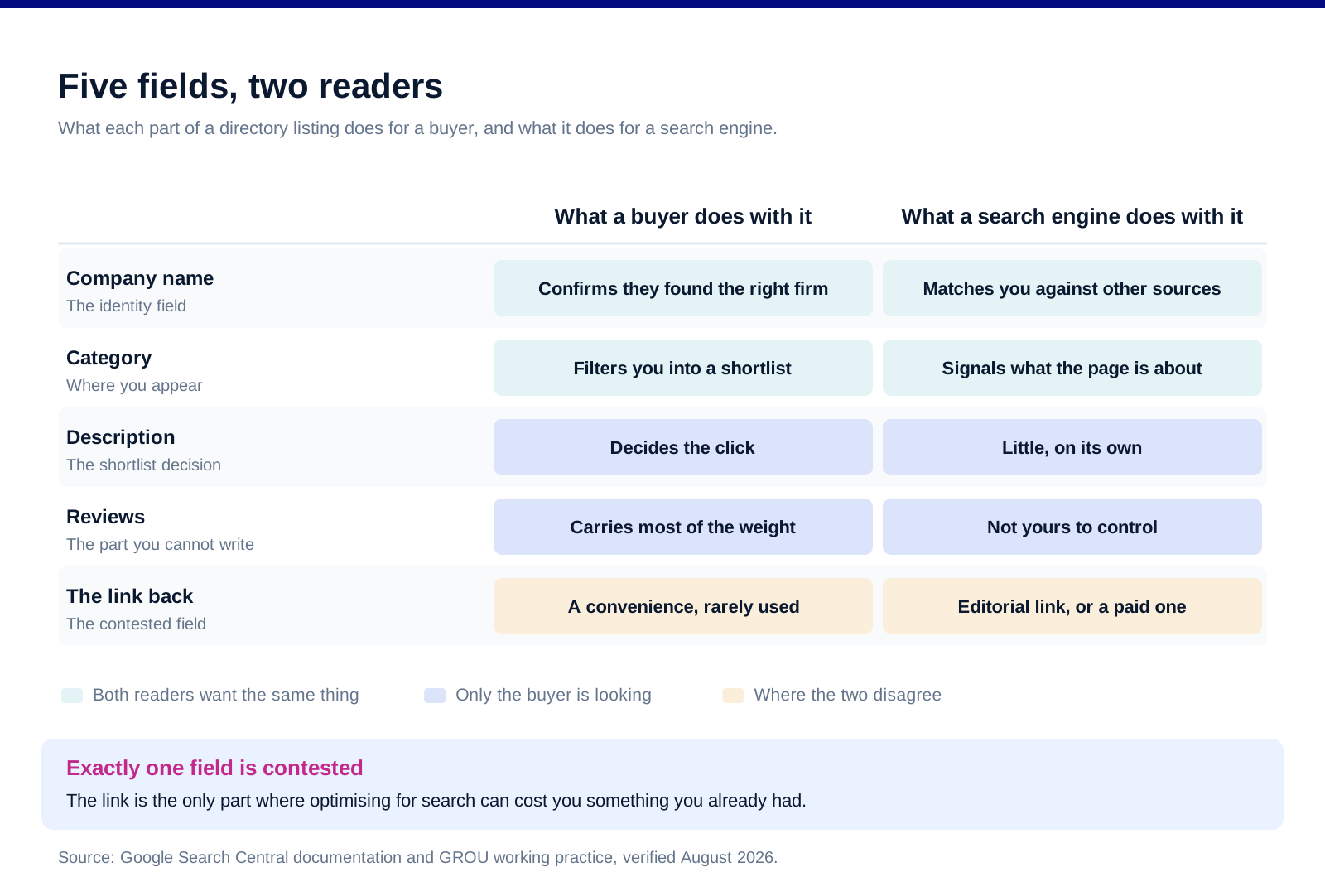
A buyer is doing a shortlisting job. They arrived at the directory because they wanted a filtered set rather than a search result, and they are scanning categories, review counts, pricing signals and one or two lines of description to decide whether you make the next round. Everything they need is on the listing itself. Most of them never click through.
A search engine is doing a different job entirely. It is deciding what your listing says about the identity of your business, whether the link back to you is editorial or purchased, and whether the details on the listing agree with the details everywhere else. None of that is what the buyer is looking at.
The two readers disagree about exactly one field. The link. To the buyer it is a convenience. To the search engine it is the thing that determines whether the listing is a citation or a link scheme, and that determination is the only part of a listing that can cost you something you already had.
They agree about the rest, which is the useful news. Accurate name, real address, working phone number, a category that matches what you actually sell, a description with specifics in it. A listing built for a buyer who has to choose between five vendors is also a listing that is internally consistent, which is the thing being checked on the other side. Our note on getting B2B leads from directories covers choosing which directories to be in at all; this piece assumes that decision is made and deals with the listing itself.
The link is the part that can hurt you
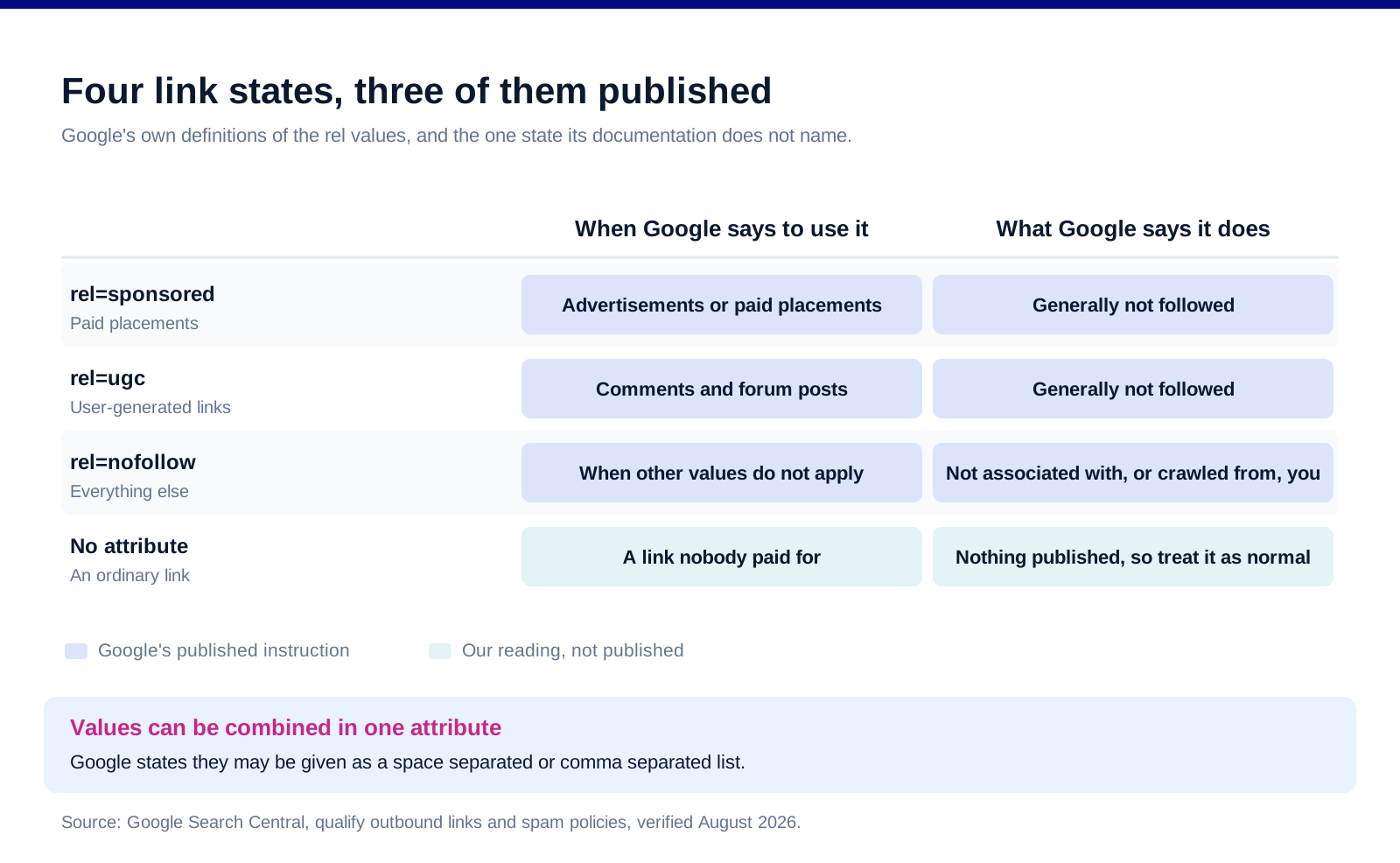
Google names directory links specifically. Its spam policies give "Low-quality directory or bookmark site links" as an example of link spam, alongside "Buying or selling links for ranking purposes. This includes: Exchanging money for links, or posts that contain links".
And it publishes the resolution in the same breath. The policy states that "It's not a violation of our policies to have such links as long as they are qualified with a rel="nofollow" or rel="sponsored" attribute value to the <a> tag." That single sentence is the difference between a paid listing being a normal marketing purchase and a paid listing being a risk.
The values have distinct published meanings. Google says to mark "links that are advertisements or paid placements (commonly called paid links)" with sponsored; to mark "user-generated content (UGC) links, such as comments and forum posts" with ugc; and to use nofollow "when other values don't apply, and you'd rather Google not associate your site with, or crawl the linked page from, your site." It adds that links carrying these attributes "will generally not be followed", and that you "may specify multiple rel values as a space- or comma-separated list".
Be clear about which side of this you control. You control the attribute on links leaving your own site, which matters if you link out to partners, sponsors or affiliates. You do not control the attribute a directory puts on the link back to you. What you can do is look at it, in about ten seconds, by viewing the page source of an existing listing on that directory and reading the anchor tag.
And treat the answer as information rather than a verdict. A directory that qualifies its outbound links is behaving exactly as Google's documentation describes and has nothing to explain. A paid directory that passes unqualified links to every advertiser is telling you what it is selling, which is not audience. Either way, the sane purchase test is the same one it always was: would you still buy this listing if the link were worth nothing? If yes, buy it. If no, you are buying links.
The fields come before the prose
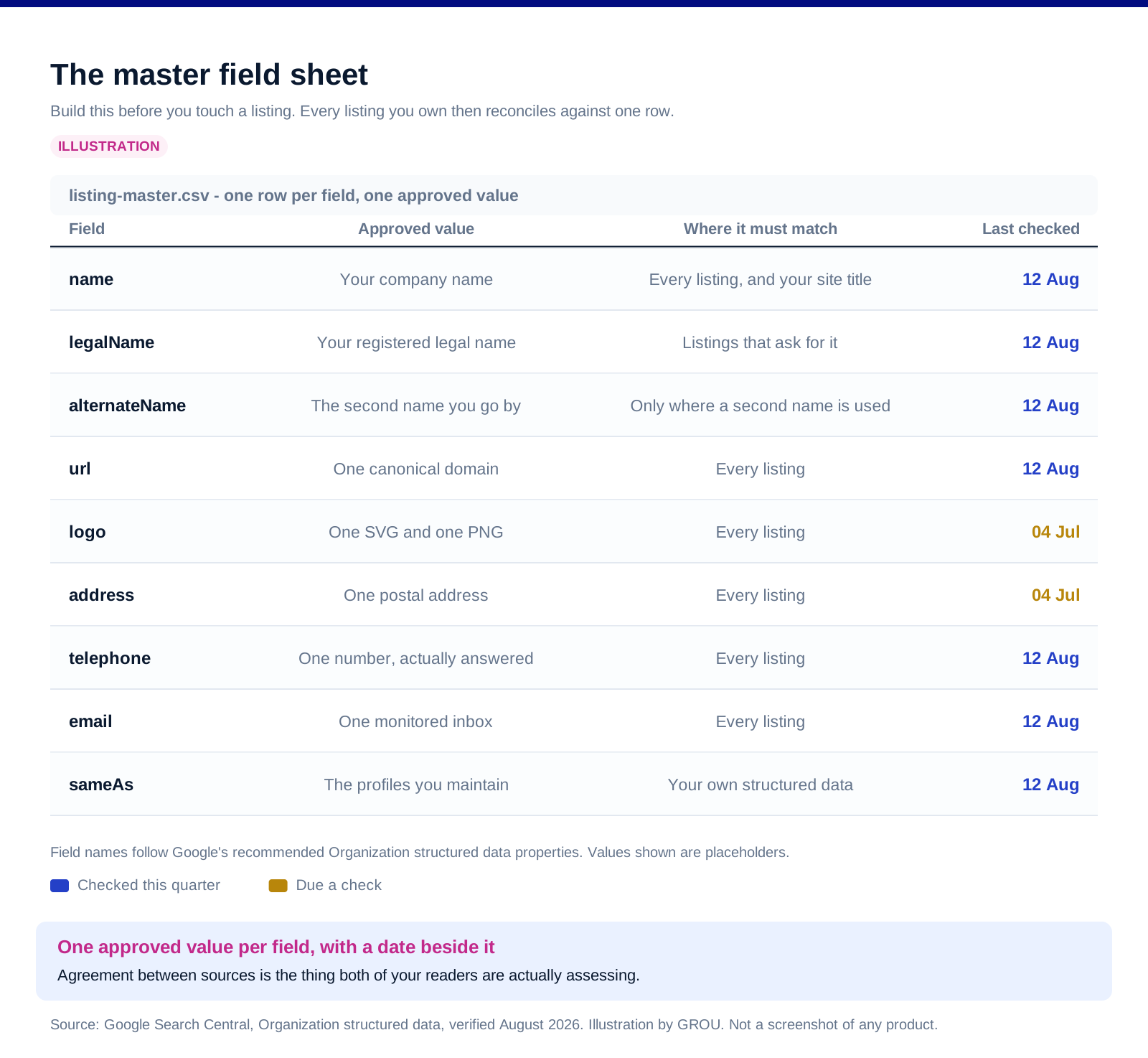
Get the name exactly right, in one form, everywhere. Google's Organization structured data guidance recommends name as "The name of your organization" and instructs you to "Use the same name and alternateName that you're using for your site name", with legalName for "The registered, legal name of your Organization, if different from the name property". A company listed under its trading name in one directory, its trading name plus a suffix in another, and its registered entity name in a third has published three companies.
Fill the contact fields even when they feel redundant. The recommended set includes url ("The URL of the website of your organization, if applicable. This helps Google uniquely identify it"), logo, address ("Include all properties that apply to your country"), telephone ("A business phone number meant to be the primary contact method for customers"), email and contactPoint ("The best way for a user to contact your business").
Note what Google does not require. The guidance states "There are no required properties; instead, we recommend adding as many properties that are relevant to your organization." Read that as permission to be complete rather than an excuse to be thin, because completeness is the whole mechanism by which separate listings resolve to one company.
Categories are a commitment, not a checkbox. Directories rank and filter on category, and the wrong one puts you in a comparison you lose. Pick the category where your differentiator is legible, not the one with the most traffic.
And check the eligibility rules before you write anything. G2's listing documentation states that "G2 does not accept business-to-consumer (B2C) products or products that are currently in the alpha or beta stage of development", and that after submission "G2's research team will verify eligibility and categorization" before you can claim and customise the profile. Our guides to getting listed on G2 and getting listed on Capterra cover each of those processes end to end.
Declare the listings from your own site
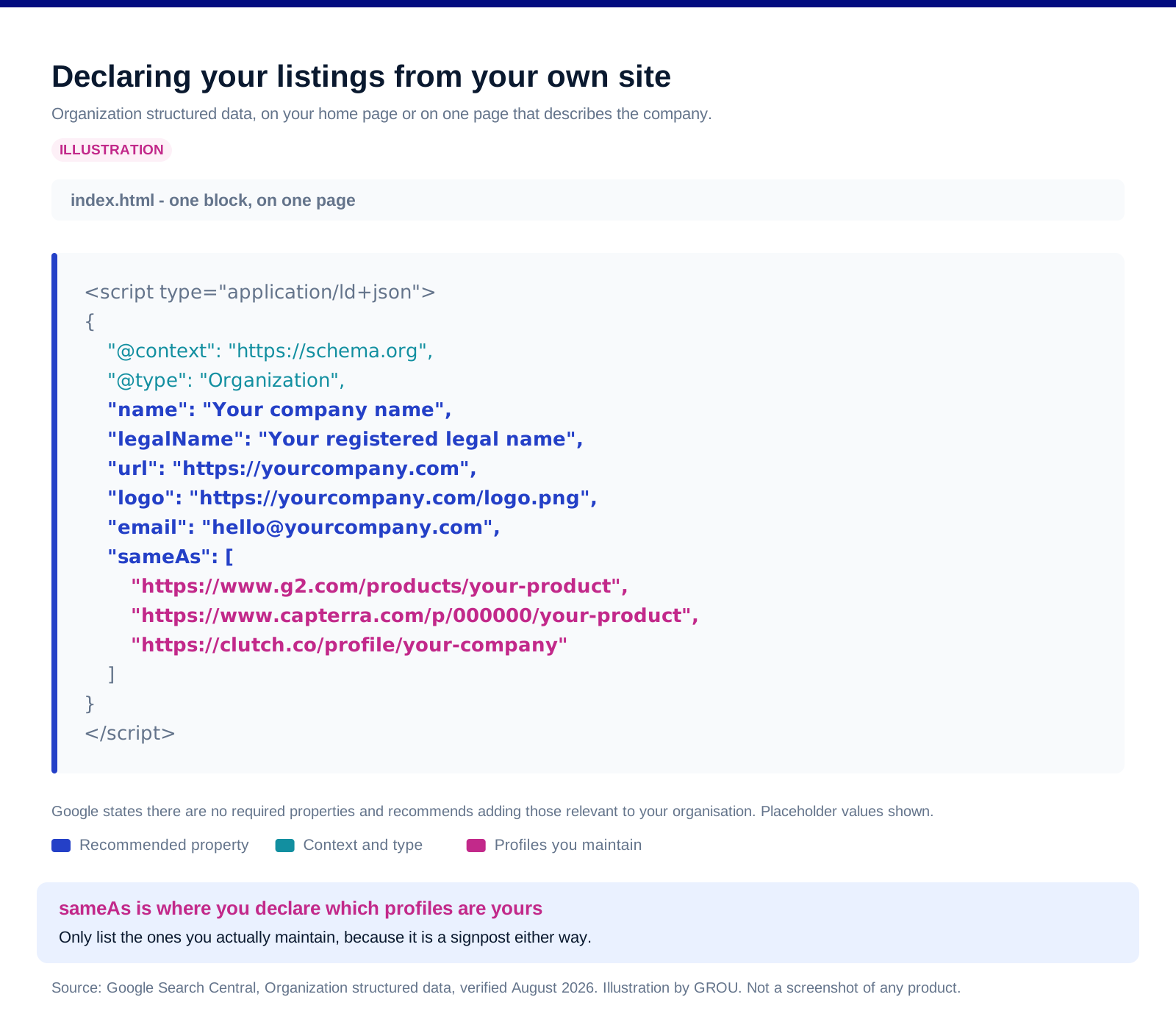
Your website is where you say which listings are yours. Google's recommended sameAs property is "The URL of a page on another website with additional information about your organization, if applicable." A directory profile you control is precisely that, and listing it is how you connect a scattered set of profiles back to one identity.
Put it in one place rather than everywhere. Google recommends "placing this information on your home page, or a single page that describes your organization" rather than repeating it site-wide.
Only list profiles you actually maintain. A sameAs entry pointing at a stale profile with a dead phone number and a 2021 description is a signpost to your worst public asset. Delist or update before you declare.
And keep the values identical to the master sheet. The point of the exercise is agreement between sources. Structured data that disagrees with the listing it points at is worse than no structured data at all, because you have now published the inconsistency in machine-readable form.
What the description actually has to do
Answer who it is for in the first line. Directory descriptions are read in a list, against four or five competitors, by someone who has already decided the category. The first line is the only one guaranteed to be read, and "leading provider of innovative solutions" spends it saying nothing.
Name the thing you do that the others do not. In a filtered list every vendor claims the category. The listing that gets clicked is the one that risks a specific claim, and a specific claim is also the one your reviews can corroborate.
Include the constraints. Minimum contract, geography served, company sizes you work with, integrations you do not have. Buyers self-qualify on constraints, and a listing that qualifies people out produces fewer, better enquiries, which is the only kind worth having from a directory.
Do not repeat your homepage copy. It was written for a visitor who arrived knowing your name, which is the opposite of a directory reader.
And keep the proof current. Reviews are the part of a listing you cannot write, and on most directories they are also the part that carries the most weight. Our note on getting software reviews from customers covers how to collect them without breaking any directory's incentive rules.
Which listings deserve the effort, and how often to check
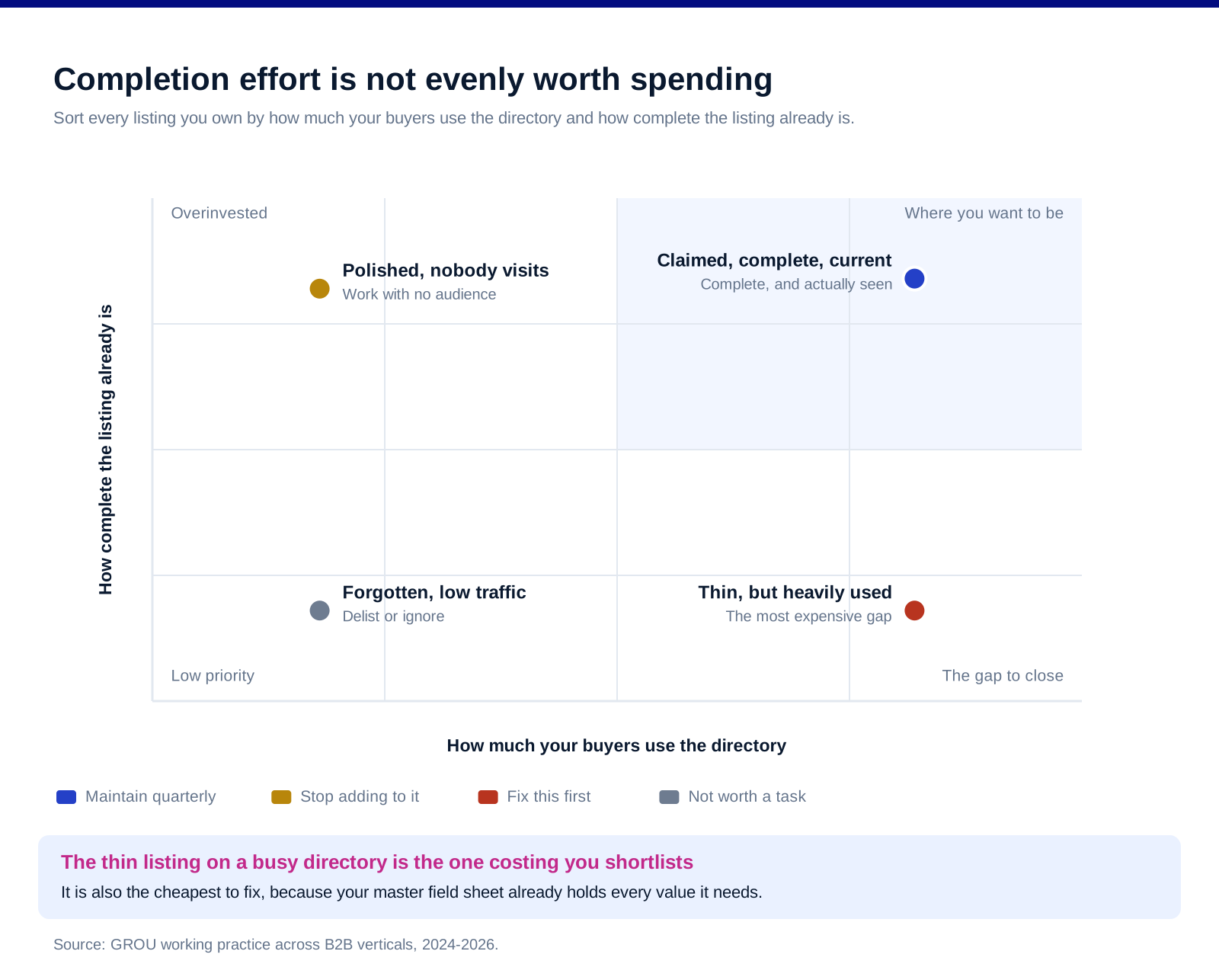
Completion effort is not evenly worth spending. A thin listing on a directory your buyers use every week is the most expensive gap you have. A perfect listing on a directory nobody in your category opens is a hobby. Sort by usage first, then by how far the current listing is from complete.
Audit quarterly, and audit the facts rather than the copy. Phone number, address, pricing statement, category, the people named, and whether the link still resolves. Copy can age gracefully. A dead phone number cannot.
Audit immediately on four events. A pricing change, a move, a rebrand, and any change to the product's category. Those are the four that make every listing wrong at once.
Count the listings you have forgotten. Most companies with a five-year history have profiles they no longer remember creating, and those are the ones with the outdated claims. Search your company name in quotes and see what comes back before you write another new listing.
And write the audit down. A field sheet with a last-checked date beside every value turns this from an annual panic into a fifteen-minute quarterly task. Our note on Clutch profile optimisation works through the same discipline on one specific directory.
What we do not publish here
A ranked list of directories. That is a different article and we have one; repeating it here would duplicate a live page and it would age faster than this checklist does.
Any estimate of what a directory link is worth. Nobody outside a search engine knows, the published guidance is about qualification rather than value, and a number here would be invented.
Traffic or lead volume figures by directory. Ours come from a specific set of programmes in specific categories and would mislead anyone applying them to a different one.
A judgement on whether a specific directory is low quality. Google names the category of link but not the sites, and we are not going to name sites on the basis of an inference.
Template listing copy. Every vendor in your category would be pasting the same thing, which defeats the only purpose a description has.
FAQ
Do B2B directory listings help SEO?
Ask a different question, because that one leads people into buying links. Google's spam policies name "Low-quality directory or bookmark site links" as link spam and treat buying links for ranking purposes as a violation, while stating that such links are fine when qualified with rel="nofollow" or rel="sponsored". Buy a listing for the buyers who use the directory, and the link is a bonus rather than the purchase.
What is the difference between rel="sponsored" and rel="nofollow"?
Google says to use sponsored for "links that are advertisements or paid placements (commonly called paid links)", and nofollow "when other values don't apply, and you'd rather Google not associate your site with, or crawl the linked page from, your site." There is also ugc for "user-generated content (UGC) links, such as comments and forum posts". Links with these attributes "will generally not be followed", and multiple values can be combined in one attribute.
What information should every directory listing contain?
One approved company name, the legal name where it differs, the website URL, a logo, a full address, a phone number, an email, a contact route, and a category that matches what you actually sell. Google's Organization guidance recommends all of those properties and states there are no required ones, which is an argument for completeness rather than for minimalism.
How do you connect directory profiles to your website?
With the sameAs property in Organization structured data, described by Google as "The URL of a page on another website with additional information about your organization, if applicable." Google recommends placing that markup on your home page or a single page describing your organisation rather than repeating it everywhere, and you should only declare profiles you actually maintain.
How often should you review your directory listings?
Quarterly for the facts, and immediately after a pricing change, a move, a rebrand or a change in product category, because each of those makes every listing wrong at the same time. Keep a master field sheet with one approved value per field and a last-checked date, which turns the review into a short task rather than an audit.
Can you list a product that has not launched yet?
Not everywhere. G2's documentation states that it "does not accept business-to-consumer (B2C) products or products that are currently in the alpha or beta stage of development", and that its research team verifies eligibility and categorisation before a listing goes live. Check each directory's stated rules before writing the submission, because they differ.
Bottom line
Build the master sheet before you touch a single listing. One approved company name, one legal name, one address, one phone number, one email, one logo, one category, each with a last-checked date beside it, and every listing you own reconciled against it. That single artefact does most of the work in this checklist, because agreement between sources is what both of your readers are actually assessing. Then be honest about the link: Google names low-quality directory links as spam and paid links as a violation, and says in the same policy that qualifying them with rel="nofollow" or rel="sponsored" resolves it, which means the only safe way to buy a listing is to buy it for the buyers who use the directory and treat the link as worth nothing. Declare the profiles you maintain from your own site with sameAs, delist the ones you have abandoned, write descriptions that name a constraint rather than a superlative, and put a quarterly reminder in the calendar. None of that is difficult. It is just the part everybody skips, which is exactly why the listings that do it are the ones getting shortlisted.
Want the pipeline built rather than the profiles maintained? Book a call with GROU. We run lead generation and outbound inside B2B revenue engines across verticals.
We are GROU, a B2B pipeline agency that runs lead generation, outbound, and LinkedIn content for clients across manufacturing, fintech, iGaming, software, and professional services. Every policy and property quoted is taken from Google's own published Search Central documentation or from G2's published documentation, and verified in August 2026. Search guidance and directory rules change, so check them before building a process around them.
Every directory listing you own is read by two audiences with opposite tastes. One of them is a buyer deciding whether to shortlist you. The other is a search engine, and unlike the buyer, it has published what it thinks.
Most listing checklists serve the first reader and quietly damage the second, usually at the exact point where the listing includes a link back to your site. The two jobs are reconcilable, but only if you know which field belongs to which reader.
TL;DR
A directory listing is two artefacts sharing one form. Google's spam policies name "Low-quality directory or bookmark site links" as a link spam example and treat "Buying or selling links for ranking purposes" as a violation, while stating plainly that "It's not a violation of our policies to have such links as long as they are qualified with a rel="nofollow" or rel="sponsored" attribute value to the <a> tag." Google separately defines those values: sponsored for "links that are advertisements or paid placements (commonly called paid links)", ugc for "user-generated content (UGC) links, such as comments and forum posts", and nofollow "when other values don't apply". Three things follow. Buy a listing for the link and you have bought a problem; buy it for the buyers who use the directory and the link question stops mattering. The fields matter more than the prose, because they are what gets matched against everything else published about you. And your own site is where you declare which listings are yours, using Organization structured data, where Google states "There are no required properties" and recommends sameAs for "The URL of a page on another website with additional information about your organization".
The same listing is judged twice
A buyer is doing a shortlisting job. They arrived at the directory because they wanted a filtered set rather than a search result, and they are scanning categories, review counts, pricing signals and one or two lines of description to decide whether you make the next round. Everything they need is on the listing itself. Most of them never click through.
A search engine is doing a different job entirely. It is deciding what your listing says about the identity of your business, whether the link back to you is editorial or purchased, and whether the details on the listing agree with the details everywhere else. None of that is what the buyer is looking at.
The two readers disagree about exactly one field. The link. To the buyer it is a convenience. To the search engine it is the thing that determines whether the listing is a citation or a link scheme, and that determination is the only part of a listing that can cost you something you already had.
They agree about the rest, which is the useful news. Accurate name, real address, working phone number, a category that matches what you actually sell, a description with specifics in it. A listing built for a buyer who has to choose between five vendors is also a listing that is internally consistent, which is the thing being checked on the other side. Our note on getting B2B leads from directories covers choosing which directories to be in at all; this piece assumes that decision is made and deals with the listing itself.
The link is the part that can hurt you
Google names directory links specifically. Its spam policies give "Low-quality directory or bookmark site links" as an example of link spam, alongside "Buying or selling links for ranking purposes. This includes: Exchanging money for links, or posts that contain links".
And it publishes the resolution in the same breath. The policy states that "It's not a violation of our policies to have such links as long as they are qualified with a rel="nofollow" or rel="sponsored" attribute value to the <a> tag." That single sentence is the difference between a paid listing being a normal marketing purchase and a paid listing being a risk.
The values have distinct published meanings. Google says to mark "links that are advertisements or paid placements (commonly called paid links)" with sponsored; to mark "user-generated content (UGC) links, such as comments and forum posts" with ugc; and to use nofollow "when other values don't apply, and you'd rather Google not associate your site with, or crawl the linked page from, your site." It adds that links carrying these attributes "will generally not be followed", and that you "may specify multiple rel values as a space- or comma-separated list".
Be clear about which side of this you control. You control the attribute on links leaving your own site, which matters if you link out to partners, sponsors or affiliates. You do not control the attribute a directory puts on the link back to you. What you can do is look at it, in about ten seconds, by viewing the page source of an existing listing on that directory and reading the anchor tag.
And treat the answer as information rather than a verdict. A directory that qualifies its outbound links is behaving exactly as Google's documentation describes and has nothing to explain. A paid directory that passes unqualified links to every advertiser is telling you what it is selling, which is not audience. Either way, the sane purchase test is the same one it always was: would you still buy this listing if the link were worth nothing? If yes, buy it. If no, you are buying links.
The fields come before the prose
Get the name exactly right, in one form, everywhere. Google's Organization structured data guidance recommends name as "The name of your organization" and instructs you to "Use the same name and alternateName that you're using for your site name", with legalName for "The registered, legal name of your Organization, if different from the name property". A company listed under its trading name in one directory, its trading name plus a suffix in another, and its registered entity name in a third has published three companies.
Fill the contact fields even when they feel redundant. The recommended set includes url ("The URL of the website of your organization, if applicable. This helps Google uniquely identify it"), logo, address ("Include all properties that apply to your country"), telephone ("A business phone number meant to be the primary contact method for customers"), email and contactPoint ("The best way for a user to contact your business").
Note what Google does not require. The guidance states "There are no required properties; instead, we recommend adding as many properties that are relevant to your organization." Read that as permission to be complete rather than an excuse to be thin, because completeness is the whole mechanism by which separate listings resolve to one company.
Categories are a commitment, not a checkbox. Directories rank and filter on category, and the wrong one puts you in a comparison you lose. Pick the category where your differentiator is legible, not the one with the most traffic.
And check the eligibility rules before you write anything. G2's listing documentation states that "G2 does not accept business-to-consumer (B2C) products or products that are currently in the alpha or beta stage of development", and that after submission "G2's research team will verify eligibility and categorization" before you can claim and customise the profile. Our guides to getting listed on G2 and getting listed on Capterra cover each of those processes end to end.
Declare the listings from your own site
Your website is where you say which listings are yours. Google's recommended sameAs property is "The URL of a page on another website with additional information about your organization, if applicable." A directory profile you control is precisely that, and listing it is how you connect a scattered set of profiles back to one identity.
Put it in one place rather than everywhere. Google recommends "placing this information on your home page, or a single page that describes your organization" rather than repeating it site-wide.
Only list profiles you actually maintain. A sameAs entry pointing at a stale profile with a dead phone number and a 2021 description is a signpost to your worst public asset. Delist or update before you declare.
And keep the values identical to the master sheet. The point of the exercise is agreement between sources. Structured data that disagrees with the listing it points at is worse than no structured data at all, because you have now published the inconsistency in machine-readable form.
What the description actually has to do
Answer who it is for in the first line. Directory descriptions are read in a list, against four or five competitors, by someone who has already decided the category. The first line is the only one guaranteed to be read, and "leading provider of innovative solutions" spends it saying nothing.
Name the thing you do that the others do not. In a filtered list every vendor claims the category. The listing that gets clicked is the one that risks a specific claim, and a specific claim is also the one your reviews can corroborate.
Include the constraints. Minimum contract, geography served, company sizes you work with, integrations you do not have. Buyers self-qualify on constraints, and a listing that qualifies people out produces fewer, better enquiries, which is the only kind worth having from a directory.
Do not repeat your homepage copy. It was written for a visitor who arrived knowing your name, which is the opposite of a directory reader.
And keep the proof current. Reviews are the part of a listing you cannot write, and on most directories they are also the part that carries the most weight. Our note on getting software reviews from customers covers how to collect them without breaking any directory's incentive rules.
Which listings deserve the effort, and how often to check
Completion effort is not evenly worth spending. A thin listing on a directory your buyers use every week is the most expensive gap you have. A perfect listing on a directory nobody in your category opens is a hobby. Sort by usage first, then by how far the current listing is from complete.
Audit quarterly, and audit the facts rather than the copy. Phone number, address, pricing statement, category, the people named, and whether the link still resolves. Copy can age gracefully. A dead phone number cannot.
Audit immediately on four events. A pricing change, a move, a rebrand, and any change to the product's category. Those are the four that make every listing wrong at once.
Count the listings you have forgotten. Most companies with a five-year history have profiles they no longer remember creating, and those are the ones with the outdated claims. Search your company name in quotes and see what comes back before you write another new listing.
And write the audit down. A field sheet with a last-checked date beside every value turns this from an annual panic into a fifteen-minute quarterly task. Our note on Clutch profile optimisation works through the same discipline on one specific directory.
What we do not publish here
A ranked list of directories. That is a different article and we have one; repeating it here would duplicate a live page and it would age faster than this checklist does.
Any estimate of what a directory link is worth. Nobody outside a search engine knows, the published guidance is about qualification rather than value, and a number here would be invented.
Traffic or lead volume figures by directory. Ours come from a specific set of programmes in specific categories and would mislead anyone applying them to a different one.
A judgement on whether a specific directory is low quality. Google names the category of link but not the sites, and we are not going to name sites on the basis of an inference.
Template listing copy. Every vendor in your category would be pasting the same thing, which defeats the only purpose a description has.
FAQ
Do B2B directory listings help SEO?
Ask a different question, because that one leads people into buying links. Google's spam policies name "Low-quality directory or bookmark site links" as link spam and treat buying links for ranking purposes as a violation, while stating that such links are fine when qualified with rel="nofollow" or rel="sponsored". Buy a listing for the buyers who use the directory, and the link is a bonus rather than the purchase.
What is the difference between rel="sponsored" and rel="nofollow"?
Google says to use sponsored for "links that are advertisements or paid placements (commonly called paid links)", and nofollow "when other values don't apply, and you'd rather Google not associate your site with, or crawl the linked page from, your site." There is also ugc for "user-generated content (UGC) links, such as comments and forum posts". Links with these attributes "will generally not be followed", and multiple values can be combined in one attribute.
What information should every directory listing contain?
One approved company name, the legal name where it differs, the website URL, a logo, a full address, a phone number, an email, a contact route, and a category that matches what you actually sell. Google's Organization guidance recommends all of those properties and states there are no required ones, which is an argument for completeness rather than for minimalism.
How do you connect directory profiles to your website?
With the sameAs property in Organization structured data, described by Google as "The URL of a page on another website with additional information about your organization, if applicable." Google recommends placing that markup on your home page or a single page describing your organisation rather than repeating it everywhere, and you should only declare profiles you actually maintain.
How often should you review your directory listings?
Quarterly for the facts, and immediately after a pricing change, a move, a rebrand or a change in product category, because each of those makes every listing wrong at the same time. Keep a master field sheet with one approved value per field and a last-checked date, which turns the review into a short task rather than an audit.
Can you list a product that has not launched yet?
Not everywhere. G2's documentation states that it "does not accept business-to-consumer (B2C) products or products that are currently in the alpha or beta stage of development", and that its research team verifies eligibility and categorisation before a listing goes live. Check each directory's stated rules before writing the submission, because they differ.
Bottom line
Build the master sheet before you touch a single listing. One approved company name, one legal name, one address, one phone number, one email, one logo, one category, each with a last-checked date beside it, and every listing you own reconciled against it. That single artefact does most of the work in this checklist, because agreement between sources is what both of your readers are actually assessing. Then be honest about the link: Google names low-quality directory links as spam and paid links as a violation, and says in the same policy that qualifying them with rel="nofollow" or rel="sponsored" resolves it, which means the only safe way to buy a listing is to buy it for the buyers who use the directory and treat the link as worth nothing. Declare the profiles you maintain from your own site with sameAs, delist the ones you have abandoned, write descriptions that name a constraint rather than a superlative, and put a quarterly reminder in the calendar. None of that is difficult. It is just the part everybody skips, which is exactly why the listings that do it are the ones getting shortlisted.
Want the pipeline built rather than the profiles maintained? Book a call with GROU. We run lead generation and outbound inside B2B revenue engines across verticals.
We are GROU, a B2B pipeline agency that runs lead generation, outbound, and LinkedIn content for clients across manufacturing, fintech, iGaming, software, and professional services. Every policy and property quoted is taken from Google's own published Search Central documentation or from G2's published documentation, and verified in August 2026. Search guidance and directory rules change, so check them before building a process around them.
Every directory listing you own is read by two audiences with opposite tastes. One of them is a buyer deciding whether to shortlist you. The other is a search engine, and unlike the buyer, it has published what it thinks.
Most listing checklists serve the first reader and quietly damage the second, usually at the exact point where the listing includes a link back to your site. The two jobs are reconcilable, but only if you know which field belongs to which reader.
TL;DR
A directory listing is two artefacts sharing one form. Google's spam policies name "Low-quality directory or bookmark site links" as a link spam example and treat "Buying or selling links for ranking purposes" as a violation, while stating plainly that "It's not a violation of our policies to have such links as long as they are qualified with a rel="nofollow" or rel="sponsored" attribute value to the <a> tag." Google separately defines those values: sponsored for "links that are advertisements or paid placements (commonly called paid links)", ugc for "user-generated content (UGC) links, such as comments and forum posts", and nofollow "when other values don't apply". Three things follow. Buy a listing for the link and you have bought a problem; buy it for the buyers who use the directory and the link question stops mattering. The fields matter more than the prose, because they are what gets matched against everything else published about you. And your own site is where you declare which listings are yours, using Organization structured data, where Google states "There are no required properties" and recommends sameAs for "The URL of a page on another website with additional information about your organization".
The same listing is judged twice
A buyer is doing a shortlisting job. They arrived at the directory because they wanted a filtered set rather than a search result, and they are scanning categories, review counts, pricing signals and one or two lines of description to decide whether you make the next round. Everything they need is on the listing itself. Most of them never click through.
A search engine is doing a different job entirely. It is deciding what your listing says about the identity of your business, whether the link back to you is editorial or purchased, and whether the details on the listing agree with the details everywhere else. None of that is what the buyer is looking at.
The two readers disagree about exactly one field. The link. To the buyer it is a convenience. To the search engine it is the thing that determines whether the listing is a citation or a link scheme, and that determination is the only part of a listing that can cost you something you already had.
They agree about the rest, which is the useful news. Accurate name, real address, working phone number, a category that matches what you actually sell, a description with specifics in it. A listing built for a buyer who has to choose between five vendors is also a listing that is internally consistent, which is the thing being checked on the other side. Our note on getting B2B leads from directories covers choosing which directories to be in at all; this piece assumes that decision is made and deals with the listing itself.
The link is the part that can hurt you
Google names directory links specifically. Its spam policies give "Low-quality directory or bookmark site links" as an example of link spam, alongside "Buying or selling links for ranking purposes. This includes: Exchanging money for links, or posts that contain links".
And it publishes the resolution in the same breath. The policy states that "It's not a violation of our policies to have such links as long as they are qualified with a rel="nofollow" or rel="sponsored" attribute value to the <a> tag." That single sentence is the difference between a paid listing being a normal marketing purchase and a paid listing being a risk.
The values have distinct published meanings. Google says to mark "links that are advertisements or paid placements (commonly called paid links)" with sponsored; to mark "user-generated content (UGC) links, such as comments and forum posts" with ugc; and to use nofollow "when other values don't apply, and you'd rather Google not associate your site with, or crawl the linked page from, your site." It adds that links carrying these attributes "will generally not be followed", and that you "may specify multiple rel values as a space- or comma-separated list".
Be clear about which side of this you control. You control the attribute on links leaving your own site, which matters if you link out to partners, sponsors or affiliates. You do not control the attribute a directory puts on the link back to you. What you can do is look at it, in about ten seconds, by viewing the page source of an existing listing on that directory and reading the anchor tag.
And treat the answer as information rather than a verdict. A directory that qualifies its outbound links is behaving exactly as Google's documentation describes and has nothing to explain. A paid directory that passes unqualified links to every advertiser is telling you what it is selling, which is not audience. Either way, the sane purchase test is the same one it always was: would you still buy this listing if the link were worth nothing? If yes, buy it. If no, you are buying links.
The fields come before the prose
Get the name exactly right, in one form, everywhere. Google's Organization structured data guidance recommends name as "The name of your organization" and instructs you to "Use the same name and alternateName that you're using for your site name", with legalName for "The registered, legal name of your Organization, if different from the name property". A company listed under its trading name in one directory, its trading name plus a suffix in another, and its registered entity name in a third has published three companies.
Fill the contact fields even when they feel redundant. The recommended set includes url ("The URL of the website of your organization, if applicable. This helps Google uniquely identify it"), logo, address ("Include all properties that apply to your country"), telephone ("A business phone number meant to be the primary contact method for customers"), email and contactPoint ("The best way for a user to contact your business").
Note what Google does not require. The guidance states "There are no required properties; instead, we recommend adding as many properties that are relevant to your organization." Read that as permission to be complete rather than an excuse to be thin, because completeness is the whole mechanism by which separate listings resolve to one company.
Categories are a commitment, not a checkbox. Directories rank and filter on category, and the wrong one puts you in a comparison you lose. Pick the category where your differentiator is legible, not the one with the most traffic.
And check the eligibility rules before you write anything. G2's listing documentation states that "G2 does not accept business-to-consumer (B2C) products or products that are currently in the alpha or beta stage of development", and that after submission "G2's research team will verify eligibility and categorization" before you can claim and customise the profile. Our guides to getting listed on G2 and getting listed on Capterra cover each of those processes end to end.
Declare the listings from your own site
Your website is where you say which listings are yours. Google's recommended sameAs property is "The URL of a page on another website with additional information about your organization, if applicable." A directory profile you control is precisely that, and listing it is how you connect a scattered set of profiles back to one identity.
Put it in one place rather than everywhere. Google recommends "placing this information on your home page, or a single page that describes your organization" rather than repeating it site-wide.
Only list profiles you actually maintain. A sameAs entry pointing at a stale profile with a dead phone number and a 2021 description is a signpost to your worst public asset. Delist or update before you declare.
And keep the values identical to the master sheet. The point of the exercise is agreement between sources. Structured data that disagrees with the listing it points at is worse than no structured data at all, because you have now published the inconsistency in machine-readable form.
What the description actually has to do
Answer who it is for in the first line. Directory descriptions are read in a list, against four or five competitors, by someone who has already decided the category. The first line is the only one guaranteed to be read, and "leading provider of innovative solutions" spends it saying nothing.
Name the thing you do that the others do not. In a filtered list every vendor claims the category. The listing that gets clicked is the one that risks a specific claim, and a specific claim is also the one your reviews can corroborate.
Include the constraints. Minimum contract, geography served, company sizes you work with, integrations you do not have. Buyers self-qualify on constraints, and a listing that qualifies people out produces fewer, better enquiries, which is the only kind worth having from a directory.
Do not repeat your homepage copy. It was written for a visitor who arrived knowing your name, which is the opposite of a directory reader.
And keep the proof current. Reviews are the part of a listing you cannot write, and on most directories they are also the part that carries the most weight. Our note on getting software reviews from customers covers how to collect them without breaking any directory's incentive rules.
Which listings deserve the effort, and how often to check
Completion effort is not evenly worth spending. A thin listing on a directory your buyers use every week is the most expensive gap you have. A perfect listing on a directory nobody in your category opens is a hobby. Sort by usage first, then by how far the current listing is from complete.
Audit quarterly, and audit the facts rather than the copy. Phone number, address, pricing statement, category, the people named, and whether the link still resolves. Copy can age gracefully. A dead phone number cannot.
Audit immediately on four events. A pricing change, a move, a rebrand, and any change to the product's category. Those are the four that make every listing wrong at once.
Count the listings you have forgotten. Most companies with a five-year history have profiles they no longer remember creating, and those are the ones with the outdated claims. Search your company name in quotes and see what comes back before you write another new listing.
And write the audit down. A field sheet with a last-checked date beside every value turns this from an annual panic into a fifteen-minute quarterly task. Our note on Clutch profile optimisation works through the same discipline on one specific directory.
What we do not publish here
A ranked list of directories. That is a different article and we have one; repeating it here would duplicate a live page and it would age faster than this checklist does.
Any estimate of what a directory link is worth. Nobody outside a search engine knows, the published guidance is about qualification rather than value, and a number here would be invented.
Traffic or lead volume figures by directory. Ours come from a specific set of programmes in specific categories and would mislead anyone applying them to a different one.
A judgement on whether a specific directory is low quality. Google names the category of link but not the sites, and we are not going to name sites on the basis of an inference.
Template listing copy. Every vendor in your category would be pasting the same thing, which defeats the only purpose a description has.
FAQ
Do B2B directory listings help SEO?
Ask a different question, because that one leads people into buying links. Google's spam policies name "Low-quality directory or bookmark site links" as link spam and treat buying links for ranking purposes as a violation, while stating that such links are fine when qualified with rel="nofollow" or rel="sponsored". Buy a listing for the buyers who use the directory, and the link is a bonus rather than the purchase.
What is the difference between rel="sponsored" and rel="nofollow"?
Google says to use sponsored for "links that are advertisements or paid placements (commonly called paid links)", and nofollow "when other values don't apply, and you'd rather Google not associate your site with, or crawl the linked page from, your site." There is also ugc for "user-generated content (UGC) links, such as comments and forum posts". Links with these attributes "will generally not be followed", and multiple values can be combined in one attribute.
What information should every directory listing contain?
One approved company name, the legal name where it differs, the website URL, a logo, a full address, a phone number, an email, a contact route, and a category that matches what you actually sell. Google's Organization guidance recommends all of those properties and states there are no required ones, which is an argument for completeness rather than for minimalism.
How do you connect directory profiles to your website?
With the sameAs property in Organization structured data, described by Google as "The URL of a page on another website with additional information about your organization, if applicable." Google recommends placing that markup on your home page or a single page describing your organisation rather than repeating it everywhere, and you should only declare profiles you actually maintain.
How often should you review your directory listings?
Quarterly for the facts, and immediately after a pricing change, a move, a rebrand or a change in product category, because each of those makes every listing wrong at the same time. Keep a master field sheet with one approved value per field and a last-checked date, which turns the review into a short task rather than an audit.
Can you list a product that has not launched yet?
Not everywhere. G2's documentation states that it "does not accept business-to-consumer (B2C) products or products that are currently in the alpha or beta stage of development", and that its research team verifies eligibility and categorisation before a listing goes live. Check each directory's stated rules before writing the submission, because they differ.
Bottom line
Build the master sheet before you touch a single listing. One approved company name, one legal name, one address, one phone number, one email, one logo, one category, each with a last-checked date beside it, and every listing you own reconciled against it. That single artefact does most of the work in this checklist, because agreement between sources is what both of your readers are actually assessing. Then be honest about the link: Google names low-quality directory links as spam and paid links as a violation, and says in the same policy that qualifying them with rel="nofollow" or rel="sponsored" resolves it, which means the only safe way to buy a listing is to buy it for the buyers who use the directory and treat the link as worth nothing. Declare the profiles you maintain from your own site with sameAs, delist the ones you have abandoned, write descriptions that name a constraint rather than a superlative, and put a quarterly reminder in the calendar. None of that is difficult. It is just the part everybody skips, which is exactly why the listings that do it are the ones getting shortlisted.
Want the pipeline built rather than the profiles maintained? Book a call with GROU. We run lead generation and outbound inside B2B revenue engines across verticals.
We are GROU, a B2B pipeline agency that runs lead generation, outbound, and LinkedIn content for clients across manufacturing, fintech, iGaming, software, and professional services. Every policy and property quoted is taken from Google's own published Search Central documentation or from G2's published documentation, and verified in August 2026. Search guidance and directory rules change, so check them before building a process around them.

Pipeline OS Newsletter
Build qualified pipeline
Get weekly tactics to generate demand, improve lead quality, and book more meetings.





Trusted by industry leaders
Trusted by industry leaders
Trusted by industry leaders
Ready to build qualified pipeline?
Ready to build qualified pipeline?
Ready to build qualified pipeline?
Book a call to see if we're the right fit, or take the 2-minute quiz to get a clear starting point.
Book a call to see if we're the right fit, or take the 2-minute quiz to get a clear starting point.
Book a call to see if we're the right fit, or take the 2-minute quiz to get a clear starting point.
" height="30.21639343089746px" id="hfGbXmQR2" width="30.216393430897455px"/></svg>)
Copyright © 2026 – All Right Reserved
Copyright © 2026 – All Right Reserved
Copyright © 2026 – All Right Reserved