%22%3E%3C/path%3E%3Cpath d=%22M 63.072 7.554 C 62.258 8.022 61.577 8.689 61.092 9.493 L 61.092 7.076 L 57.158 7.076 L 57.158 22.64 L 61.089 22.64 L 61.089 14.888 C 61.089 13.446 61.403 12.434 62.03 11.853 C 62.818 11.218 63.818 10.907 64.826 10.982 L 65.868 10.982 L 65.868 6.851 C 64.891 6.834 63.926 7.076 63.073 7.554 Z%22 fill=%22rgb(17,17,17)%22%3E%3C/path%3E%3Cpath d=%22M 78.916 7.82 C 76.363 6.49 73.321 6.49 70.768 7.82 C 69.562 8.473 68.564 9.451 67.888 10.644 C 67.167 11.931 66.803 13.387 66.834 14.862 C 66.804 16.332 67.157 17.785 67.86 19.077 C 68.515 20.267 69.494 21.246 70.684 21.901 C 71.924 22.576 73.318 22.92 74.73 22.898 C 76.164 22.918 77.58 22.575 78.846 21.901 C 80.062 21.247 81.073 20.27 81.768 19.077 C 82.506 17.797 82.88 16.339 82.85 14.862 C 82.88 13.389 82.517 11.934 81.797 10.647 C 81.12 9.455 80.122 8.477 78.917 7.824 M 78.803 14.862 C 78.829 15.739 78.636 16.608 78.241 17.391 C 77.903 18.046 77.38 18.588 76.738 18.95 C 76.124 19.293 75.432 19.472 74.729 19.47 C 73.668 19.497 72.648 19.061 71.934 18.276 C 71.139 17.323 70.741 16.1 70.823 14.862 C 70.741 13.62 71.149 12.395 71.959 11.45 C 72.687 10.667 73.715 10.233 74.783 10.256 C 75.859 10.236 76.894 10.67 77.635 11.45 C 78.464 12.387 78.884 13.616 78.801 14.864%22 fill=%22rgb(17,17,17)%22%3E%3C/path%3E%3Cpath d=%22M 95.906 7.076 L 95.906 15.646 C 95.975 16.68 95.643 17.701 94.979 18.498 C 94.311 19.184 93.379 19.547 92.422 19.495 C 91.475 19.544 90.553 19.18 89.894 18.498 C 89.23 17.701 88.898 16.68 88.967 15.646 L 88.967 7.076 L 85.033 7.076 L 85.033 16.207 C 85 17.449 85.275 18.68 85.834 19.79 C 86.327 20.75 87.095 21.542 88.039 22.065 C 89.033 22.594 90.145 22.861 91.271 22.838 C 92.188 22.847 93.095 22.65 93.926 22.263 C 94.708 21.905 95.388 21.36 95.906 20.675 L 95.906 22.645 L 99.865 22.645 L 99.865 7.076 Z%22 fill=%22rgb(17,17,17)%22%3E%3C/path%3E%3Cpath d=%22M 4.513 15.626 C 4.511 10.815 7.606 6.549 12.181 5.059 C 16.756 3.57 21.77 5.195 24.601 9.086 L 27.816 5.87 C 24.074 1.186 17.981 -0.943 12.137 0.393 C 6.292 1.728 1.728 6.292 0.393 12.137 C -0.943 17.981 1.186 24.074 5.87 27.816 L 9.085 24.601 C 6.214 22.512 4.515 19.177 4.513 15.626%22 fill=%22rgb(32,62,235)%22%3E%3C/path%3E%3Cpath d=%22M 17.114 14.343 L 13.354 18.01 L 13.354 18.026 L 21.071 18.026 L 11.412 27.609 L 17.389 27.609 L 23.999 21.081 L 23.999 28.316 L 24.005 28.316 L 27.967 24.393 L 27.967 14.343 Z%22 fill=%22rgb(32,62,235)%22%3E%3C/path%3E%3C/g%3E%3C/svg%3E) ×
× ××
××›
›
›
›
How to get software reviews from customers 2026
How to get software reviews from customers 2026
How to get software reviews from customers 2026
How to get software reviews from customers 2026
How to get software reviews from customers 2026
How to get software reviews from customers 2026

Author
Aljaz Peklaj

The standard advice is to ask your happiest customers. On G2 that is against the rules, and it is written down.
Which is the useful thing to know about this subject: the constraints that actually govern how you collect software reviews are not the regulator's, they are the platforms' own, and they are published, specific and stricter than most vendors assume.
TL;DR
Read the platform rules before you design the campaign. G2 caps incentives at "$100 USD", labels incentivised reviews as such, bars employees and direct competitors from reviewing, and requires vendors to avoid "collecting reviews by any method that segments out potentially negative reviews or exclusively targets positive reviews". Capterra requires that "Incentives must be offered equally to all eligible participants, regardless of the rating provided" and prohibits vendors from coaching or directing customers on review content. Then use the mechanic almost nobody uses: G2's Review Refresh lets you request an update to reviews "submitted between seven months and four years ago", and the updated review carries a new timestamp. The catch, and the reason this belongs to customer success rather than to marketing, is that gift cards are "only issued once per review" and updating a previously rewarded review earns nothing further. The freshest reviews on your profile are the ones you cannot pay for.
The rules that actually bind you
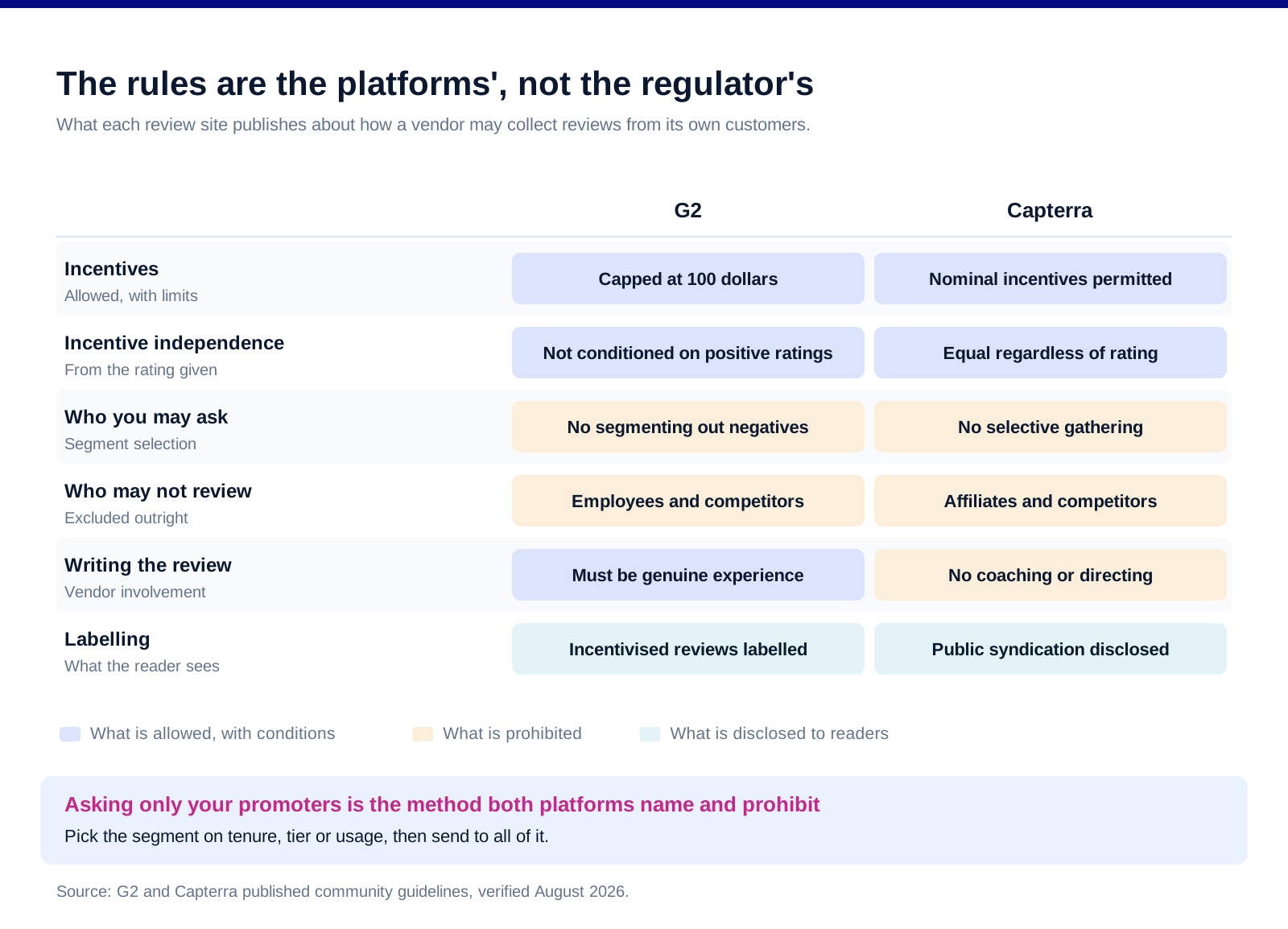
Incentives are allowed, capped and labelled. G2 states it "limits the value of any incentive offered in exchange for a review to $100 USD" and that "If a review is incentivized, G2 will clearly label the review as incentivized." Capterra permits "nominal incentives to encourage reviews, in compliance with applicable laws".
But they cannot depend on the rating. Capterra puts it flatly: "Incentives must be offered equally to all eligible participants, regardless of the rating provided", and vendors must communicate that "Incentives are not contingent on submitting a positive review; honest and unbiased feedback is required."
And the selection itself is regulated, which is the part people miss. G2 requires vendors to avoid "collecting reviews by any method that segments out potentially negative reviews or exclusively targets positive reviews". Sending the request only to your NPS promoters is exactly that method.
Some people cannot review at all. G2 allows "actual users of those products or services, business partners, or guest users", while "Employees working for the product's company and employees of a direct competitor may not leave reviews, as those would be considered biased". Business partner and guest user reviews carry their own labels. Capterra bars anyone "affiliated with the vendor, a direct competitor, or [with] any financial interest in the product".
And you cannot write the review for them. Capterra states that a vendor "may not submit reviews for its own product...or coach or direct customers on the content of their reviews", and prohibits "using third-party services that generate large volumes of unverified or incentivized reviews".
Capterra also excludes two groups from incentives specifically. Reviewers "who are employees, officers, directors, agents, subsidiaries, family members or otherwise affiliated with the Vendor", and reviewers "who are government and public sector employees". If you sell to the public sector, your incentive campaign quietly excludes a large part of your customer base.
Recency is the asset, and it decays
A review is a dated artefact. It describes a product version, a price and a support experience that all move on. A buyer reading a two-year-old review is reading about a product that no longer exists in that form, and they know it.
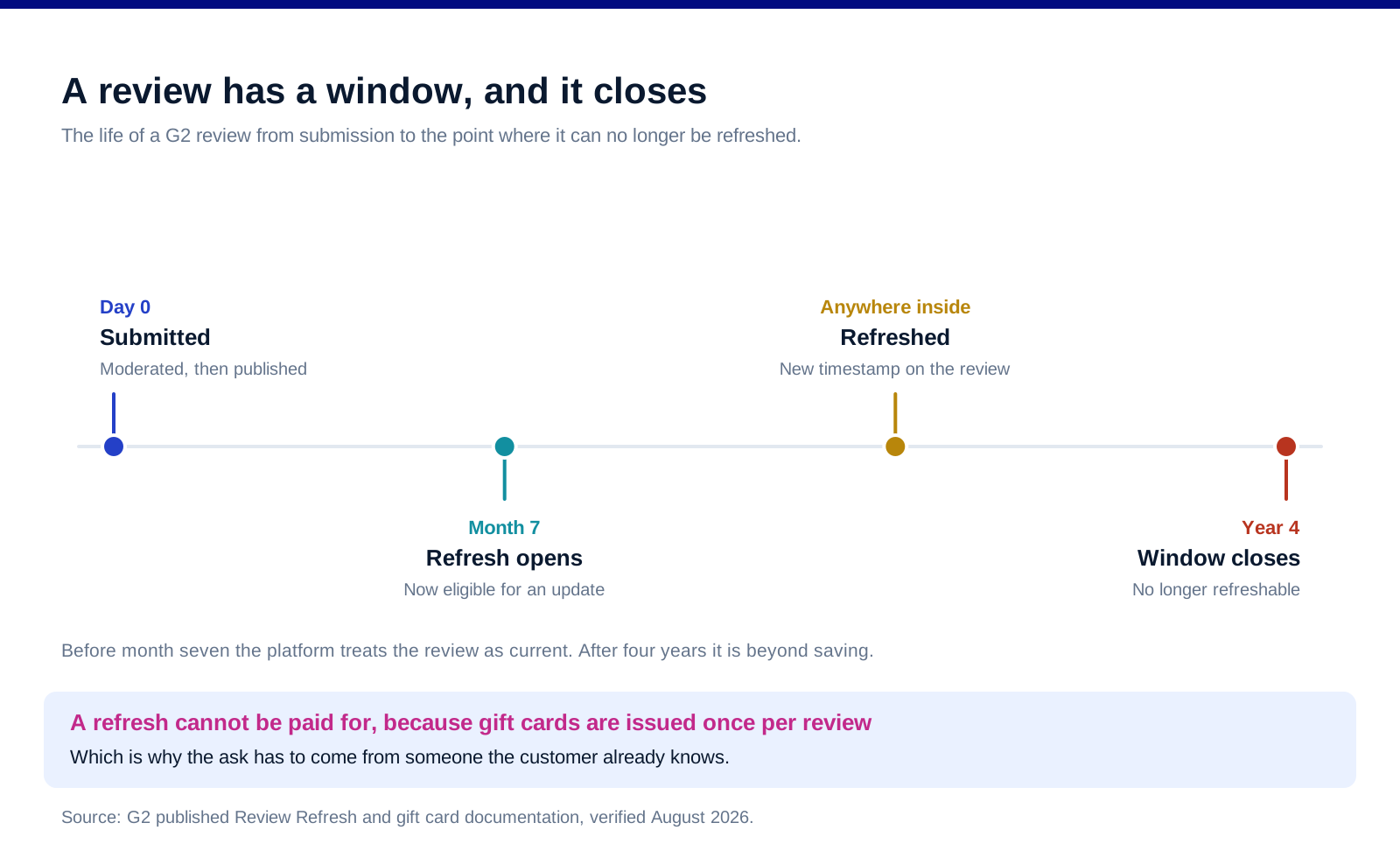
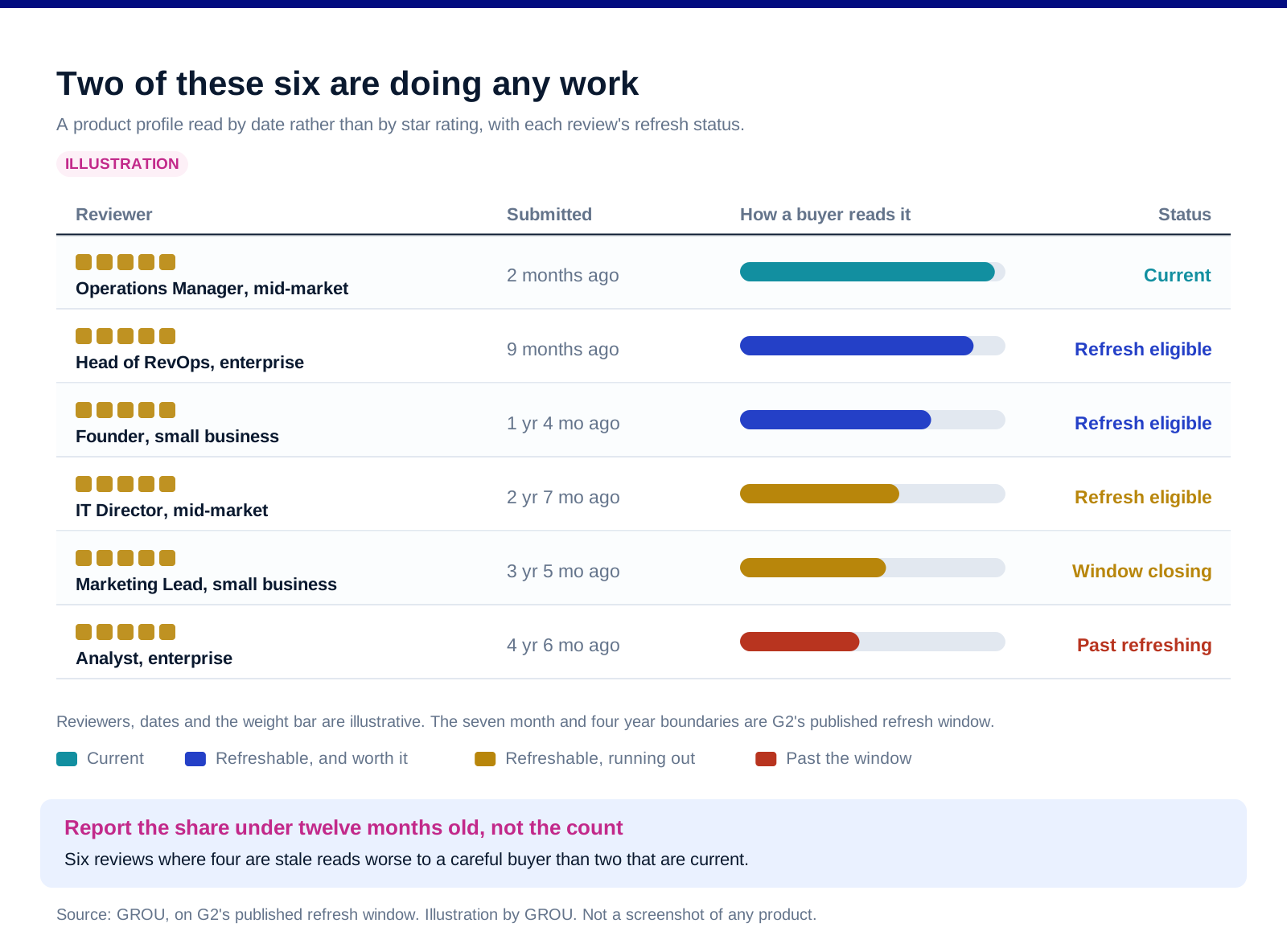
G2 built a mechanism for this and hardly anyone uses it. Review Refresh lets you "request a refresh for reviews submitted between seven months and four years ago", sending the original reviewer an email plus one reminder, after which "Updated reviews appear with a new timestamp once submitted".
Read those two boundaries carefully. Before seven months a review is not eligible, which is the platform saying it still counts as current. After four years it falls out of the window entirely, which is the platform saying it is beyond saving. Between those points you have an asset you already own and can renew.
And the economics are the interesting part. Gift cards are "only issued once per review", a reviewer is ineligible if "You updated a previously rewarded review", and repeat submissions for the same product earn nothing further. So the refresh cannot be bought. It has to be asked for by someone the customer actually knows.
Which is why this sits with customer success, not marketing. The person who can credibly ask a customer to spend ten minutes updating a two-year-old review is the person who has been talking to them for two years. A campaign from an unfamiliar address will not do it, and no budget fixes that.
Build the refresh into the account calendar rather than into a quarterly push. Renewal conversations, successful escalations and product upgrades are all natural moments, and they are already in someone's diary. Our note on the B2B proof library makes the same argument about capturing proof at the moment it is cheapest rather than when you need it.
How to run the ask without breaking anything
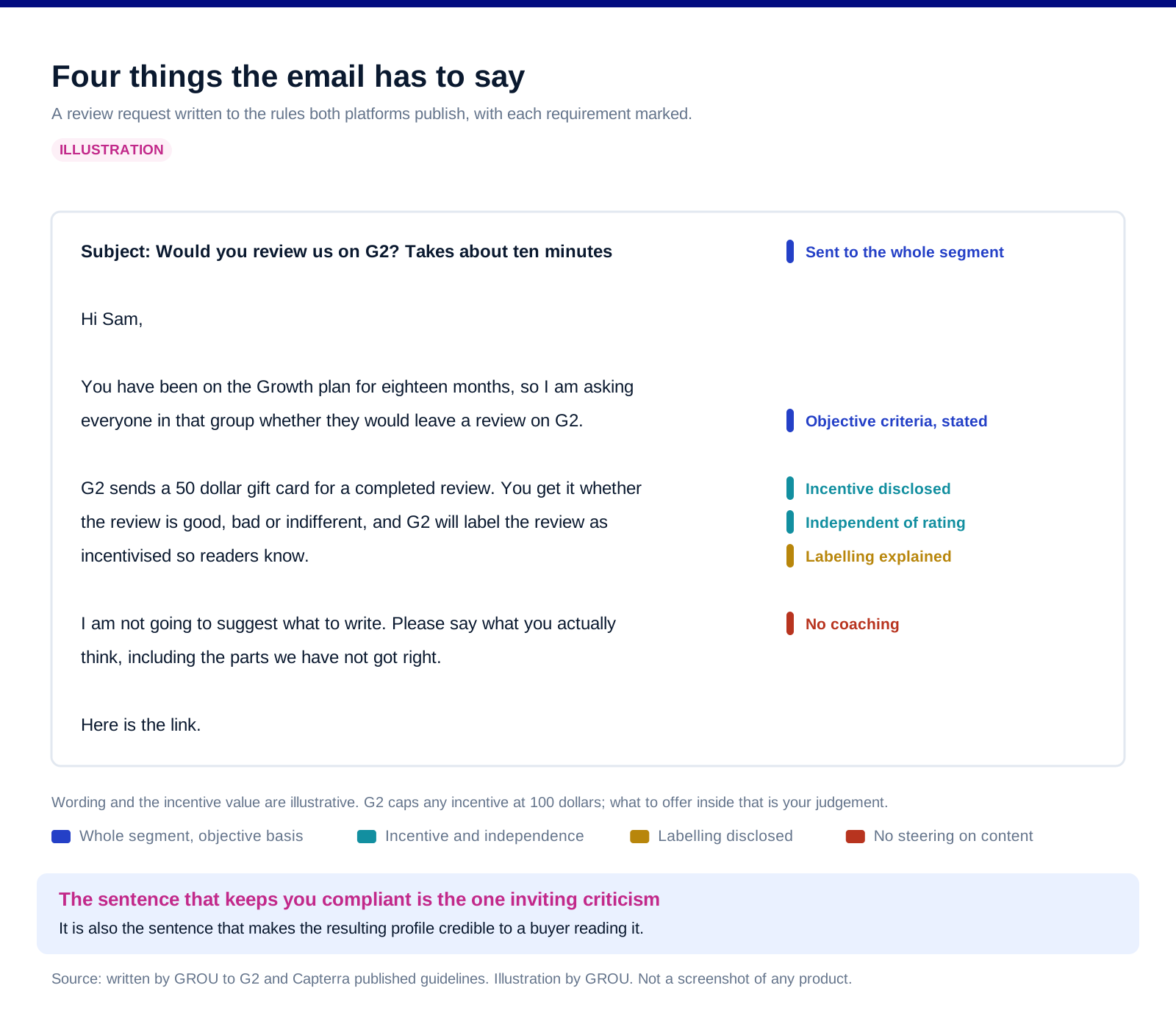
Send to everyone in the segment, not to the happy ones. Pick the segment on objective criteria, tenure, product tier, usage, and send to all of it. That is both the rule and, awkwardly for the sceptics, the thing that produces a profile buyers believe.
Say what the incentive is and what it is not. That it exists, what it is worth, that it is available regardless of what they write, and that the platform will label the review as incentivised. All four, in the email.
Do not suggest what to write. No talking points, no "it would be great if you mentioned", no draft. Capterra prohibits coaching, and a review that reads like your marketing copy is worth less than no review at all.
Exclude the people who are not allowed to review. Employees, competitors, and for incentives specifically, affiliated parties and public sector employees. Build the exclusion into the list rather than hoping nobody notices.
Expect moderation to remove some of them. G2 states that only approved reviews are eligible for gift cards, and rejects reviews lacking genuine user experience, containing confidential information, or copied from elsewhere. Plan on a completion rate, not a send count.
And put the reviews where they earn. Our notes on getting listed on G2 and getting listed on Capterra cover the profile side, and our comparison of G2, Capterra and TrustRadius covers which of them is worth the effort now that two of the three share an owner.
Where to spend the effort
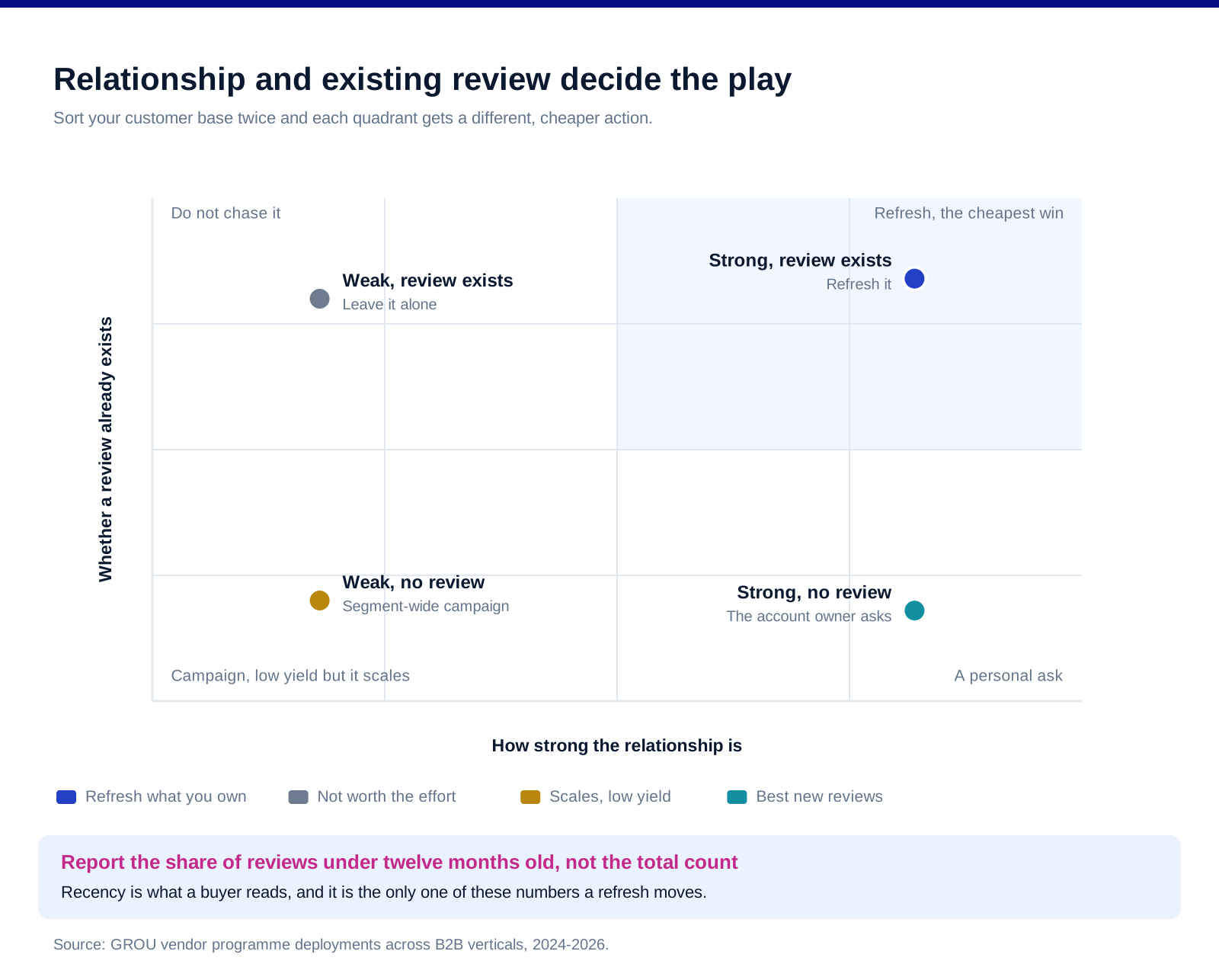
Strong relationship, review already exists. Refresh it. Cheapest possible fresh review, and it is the quadrant almost every vendor ignores in favour of chasing new ones.
Strong relationship, no review yet. Ask, and let the account owner do it. This is where your best new reviews come from and it does not scale, which is fine, because it does not need to.
Weak relationship, review exists. Leave it. Chasing an update from someone you have not spoken to in a year produces silence at best.
Weak relationship, no review. A campaign, sent to the whole segment, with the incentive disclosed. Low yield, compliant, and worth running because it is the only one of the four that scales.
Then measure the profile, not the campaign. How many reviews are under twelve months old, and what share of your total that is. That number moves buyers. Total review count, the metric everyone reports, mostly does not.
What we do not publish here
Conversion rates for review requests. Ours come from a specific set of programmes and would set someone's expectations wrongly.
Which incentive value works best. G2 publishes a cap of $100 and Capterra permits nominal incentives. What to offer inside that is a judgement about your customers, and a recommended number from us would be guesswork with authority attached.
TrustRadius or Gartner Peer Insights rules. We verified G2 and Capterra first-hand for this piece and did not verify the others, so we are not going to summarise them from memory.
Any workaround for the segmentation rule. There is a version of this article that explains how to technically comply while effectively only asking promoters. We are not writing it, because the profile it produces is the one buyers have learned to discount.
Legal advice on incentive disclosure in your market. The platform rules are quoted from the platforms. Advertising and consumer protection law varies and is a question for your own counsel.
FAQ
Can you offer customers an incentive for a software review?
Yes, within limits the platforms publish. G2 caps any incentive at $100 and labels incentivised reviews. Capterra allows nominal incentives but requires they be "offered equally to all eligible participants, regardless of the rating provided", and excludes affiliated parties and public sector employees from receiving them.
Can you ask only your happy customers for reviews?
No, and this is the rule most vendors break unknowingly. G2 requires vendors to avoid "collecting reviews by any method that segments out potentially negative reviews or exclusively targets positive reviews". Select the segment on objective criteria such as tenure or product tier and send to all of it.
How do you refresh an old review?
G2's Review Refresh lets you request an update to reviews submitted between seven months and four years ago. The reviewer receives an email and one reminder, and the updated review appears with a new timestamp. It is the cheapest source of fresh reviews you have, and it cannot be incentivised.
Can you pay someone to update an existing review?
No. Gift cards are "only issued once per review", and a reviewer who updated a previously rewarded review is explicitly ineligible for another. That is why refreshes come from relationships rather than budgets, and why customer success rather than marketing should own them.
Who is not allowed to review your product?
On G2, employees of the vendor and employees of direct competitors. Capterra bars anyone affiliated with the vendor, a direct competitor, or anyone with a financial interest in the product. Business partners and guest users may review on G2 but their reviews carry labels identifying them as such.
What should you measure?
The share of your reviews that are under twelve months old, rather than the total count. Recency is what a buyer reads and what a refresh campaign moves. A large profile of old reviews reads worse to a careful buyer than a smaller current one.
Bottom line
Design the campaign around the published rules rather than around the usual advice, because the usual advice breaks them. Send to a whole segment chosen on objective criteria, disclose the incentive and its independence from the rating, never suggest what to write, and exclude the people the platforms say cannot review or cannot be paid. Then do the thing almost nobody does and work the reviews you already have: G2's refresh window runs from seven months to four years, an updated review carries a new timestamp, and because the platform will not pay a second gift card for it, the ask has to come from someone the customer already trusts. That puts it with customer success and into the account calendar rather than into a quarterly marketing push. And change the number you report. The share of reviews under twelve months old is what a buyer is actually reading, and it is the only one of these metrics a refresh programme moves.
Want the pipeline built rather than the profile managed? Book a call with GROU. We run lead generation and outbound inside B2B revenue engines across verticals.
We are GROU, a B2B pipeline agency that runs lead generation, outbound, and LinkedIn content for clients across manufacturing, fintech, iGaming, software, and professional services. We have no affiliate relationship with any review platform named here. Every rule quoted is taken from G2's or Capterra's own published guidelines and documentation and verified in August 2026, and is a summary of those sources rather than legal advice.
The standard advice is to ask your happiest customers. On G2 that is against the rules, and it is written down.
Which is the useful thing to know about this subject: the constraints that actually govern how you collect software reviews are not the regulator's, they are the platforms' own, and they are published, specific and stricter than most vendors assume.
TL;DR
Read the platform rules before you design the campaign. G2 caps incentives at "$100 USD", labels incentivised reviews as such, bars employees and direct competitors from reviewing, and requires vendors to avoid "collecting reviews by any method that segments out potentially negative reviews or exclusively targets positive reviews". Capterra requires that "Incentives must be offered equally to all eligible participants, regardless of the rating provided" and prohibits vendors from coaching or directing customers on review content. Then use the mechanic almost nobody uses: G2's Review Refresh lets you request an update to reviews "submitted between seven months and four years ago", and the updated review carries a new timestamp. The catch, and the reason this belongs to customer success rather than to marketing, is that gift cards are "only issued once per review" and updating a previously rewarded review earns nothing further. The freshest reviews on your profile are the ones you cannot pay for.
The rules that actually bind you
Incentives are allowed, capped and labelled. G2 states it "limits the value of any incentive offered in exchange for a review to $100 USD" and that "If a review is incentivized, G2 will clearly label the review as incentivized." Capterra permits "nominal incentives to encourage reviews, in compliance with applicable laws".
But they cannot depend on the rating. Capterra puts it flatly: "Incentives must be offered equally to all eligible participants, regardless of the rating provided", and vendors must communicate that "Incentives are not contingent on submitting a positive review; honest and unbiased feedback is required."
And the selection itself is regulated, which is the part people miss. G2 requires vendors to avoid "collecting reviews by any method that segments out potentially negative reviews or exclusively targets positive reviews". Sending the request only to your NPS promoters is exactly that method.
Some people cannot review at all. G2 allows "actual users of those products or services, business partners, or guest users", while "Employees working for the product's company and employees of a direct competitor may not leave reviews, as those would be considered biased". Business partner and guest user reviews carry their own labels. Capterra bars anyone "affiliated with the vendor, a direct competitor, or [with] any financial interest in the product".
And you cannot write the review for them. Capterra states that a vendor "may not submit reviews for its own product...or coach or direct customers on the content of their reviews", and prohibits "using third-party services that generate large volumes of unverified or incentivized reviews".
Capterra also excludes two groups from incentives specifically. Reviewers "who are employees, officers, directors, agents, subsidiaries, family members or otherwise affiliated with the Vendor", and reviewers "who are government and public sector employees". If you sell to the public sector, your incentive campaign quietly excludes a large part of your customer base.
Recency is the asset, and it decays
A review is a dated artefact. It describes a product version, a price and a support experience that all move on. A buyer reading a two-year-old review is reading about a product that no longer exists in that form, and they know it.
G2 built a mechanism for this and hardly anyone uses it. Review Refresh lets you "request a refresh for reviews submitted between seven months and four years ago", sending the original reviewer an email plus one reminder, after which "Updated reviews appear with a new timestamp once submitted".
Read those two boundaries carefully. Before seven months a review is not eligible, which is the platform saying it still counts as current. After four years it falls out of the window entirely, which is the platform saying it is beyond saving. Between those points you have an asset you already own and can renew.
And the economics are the interesting part. Gift cards are "only issued once per review", a reviewer is ineligible if "You updated a previously rewarded review", and repeat submissions for the same product earn nothing further. So the refresh cannot be bought. It has to be asked for by someone the customer actually knows.
Which is why this sits with customer success, not marketing. The person who can credibly ask a customer to spend ten minutes updating a two-year-old review is the person who has been talking to them for two years. A campaign from an unfamiliar address will not do it, and no budget fixes that.
Build the refresh into the account calendar rather than into a quarterly push. Renewal conversations, successful escalations and product upgrades are all natural moments, and they are already in someone's diary. Our note on the B2B proof library makes the same argument about capturing proof at the moment it is cheapest rather than when you need it.
How to run the ask without breaking anything
Send to everyone in the segment, not to the happy ones. Pick the segment on objective criteria, tenure, product tier, usage, and send to all of it. That is both the rule and, awkwardly for the sceptics, the thing that produces a profile buyers believe.
Say what the incentive is and what it is not. That it exists, what it is worth, that it is available regardless of what they write, and that the platform will label the review as incentivised. All four, in the email.
Do not suggest what to write. No talking points, no "it would be great if you mentioned", no draft. Capterra prohibits coaching, and a review that reads like your marketing copy is worth less than no review at all.
Exclude the people who are not allowed to review. Employees, competitors, and for incentives specifically, affiliated parties and public sector employees. Build the exclusion into the list rather than hoping nobody notices.
Expect moderation to remove some of them. G2 states that only approved reviews are eligible for gift cards, and rejects reviews lacking genuine user experience, containing confidential information, or copied from elsewhere. Plan on a completion rate, not a send count.
And put the reviews where they earn. Our notes on getting listed on G2 and getting listed on Capterra cover the profile side, and our comparison of G2, Capterra and TrustRadius covers which of them is worth the effort now that two of the three share an owner.
Where to spend the effort
Strong relationship, review already exists. Refresh it. Cheapest possible fresh review, and it is the quadrant almost every vendor ignores in favour of chasing new ones.
Strong relationship, no review yet. Ask, and let the account owner do it. This is where your best new reviews come from and it does not scale, which is fine, because it does not need to.
Weak relationship, review exists. Leave it. Chasing an update from someone you have not spoken to in a year produces silence at best.
Weak relationship, no review. A campaign, sent to the whole segment, with the incentive disclosed. Low yield, compliant, and worth running because it is the only one of the four that scales.
Then measure the profile, not the campaign. How many reviews are under twelve months old, and what share of your total that is. That number moves buyers. Total review count, the metric everyone reports, mostly does not.
What we do not publish here
Conversion rates for review requests. Ours come from a specific set of programmes and would set someone's expectations wrongly.
Which incentive value works best. G2 publishes a cap of $100 and Capterra permits nominal incentives. What to offer inside that is a judgement about your customers, and a recommended number from us would be guesswork with authority attached.
TrustRadius or Gartner Peer Insights rules. We verified G2 and Capterra first-hand for this piece and did not verify the others, so we are not going to summarise them from memory.
Any workaround for the segmentation rule. There is a version of this article that explains how to technically comply while effectively only asking promoters. We are not writing it, because the profile it produces is the one buyers have learned to discount.
Legal advice on incentive disclosure in your market. The platform rules are quoted from the platforms. Advertising and consumer protection law varies and is a question for your own counsel.
FAQ
Can you offer customers an incentive for a software review?
Yes, within limits the platforms publish. G2 caps any incentive at $100 and labels incentivised reviews. Capterra allows nominal incentives but requires they be "offered equally to all eligible participants, regardless of the rating provided", and excludes affiliated parties and public sector employees from receiving them.
Can you ask only your happy customers for reviews?
No, and this is the rule most vendors break unknowingly. G2 requires vendors to avoid "collecting reviews by any method that segments out potentially negative reviews or exclusively targets positive reviews". Select the segment on objective criteria such as tenure or product tier and send to all of it.
How do you refresh an old review?
G2's Review Refresh lets you request an update to reviews submitted between seven months and four years ago. The reviewer receives an email and one reminder, and the updated review appears with a new timestamp. It is the cheapest source of fresh reviews you have, and it cannot be incentivised.
Can you pay someone to update an existing review?
No. Gift cards are "only issued once per review", and a reviewer who updated a previously rewarded review is explicitly ineligible for another. That is why refreshes come from relationships rather than budgets, and why customer success rather than marketing should own them.
Who is not allowed to review your product?
On G2, employees of the vendor and employees of direct competitors. Capterra bars anyone affiliated with the vendor, a direct competitor, or anyone with a financial interest in the product. Business partners and guest users may review on G2 but their reviews carry labels identifying them as such.
What should you measure?
The share of your reviews that are under twelve months old, rather than the total count. Recency is what a buyer reads and what a refresh campaign moves. A large profile of old reviews reads worse to a careful buyer than a smaller current one.
Bottom line
Design the campaign around the published rules rather than around the usual advice, because the usual advice breaks them. Send to a whole segment chosen on objective criteria, disclose the incentive and its independence from the rating, never suggest what to write, and exclude the people the platforms say cannot review or cannot be paid. Then do the thing almost nobody does and work the reviews you already have: G2's refresh window runs from seven months to four years, an updated review carries a new timestamp, and because the platform will not pay a second gift card for it, the ask has to come from someone the customer already trusts. That puts it with customer success and into the account calendar rather than into a quarterly marketing push. And change the number you report. The share of reviews under twelve months old is what a buyer is actually reading, and it is the only one of these metrics a refresh programme moves.
Want the pipeline built rather than the profile managed? Book a call with GROU. We run lead generation and outbound inside B2B revenue engines across verticals.
We are GROU, a B2B pipeline agency that runs lead generation, outbound, and LinkedIn content for clients across manufacturing, fintech, iGaming, software, and professional services. We have no affiliate relationship with any review platform named here. Every rule quoted is taken from G2's or Capterra's own published guidelines and documentation and verified in August 2026, and is a summary of those sources rather than legal advice.
The standard advice is to ask your happiest customers. On G2 that is against the rules, and it is written down.
Which is the useful thing to know about this subject: the constraints that actually govern how you collect software reviews are not the regulator's, they are the platforms' own, and they are published, specific and stricter than most vendors assume.
TL;DR
Read the platform rules before you design the campaign. G2 caps incentives at "$100 USD", labels incentivised reviews as such, bars employees and direct competitors from reviewing, and requires vendors to avoid "collecting reviews by any method that segments out potentially negative reviews or exclusively targets positive reviews". Capterra requires that "Incentives must be offered equally to all eligible participants, regardless of the rating provided" and prohibits vendors from coaching or directing customers on review content. Then use the mechanic almost nobody uses: G2's Review Refresh lets you request an update to reviews "submitted between seven months and four years ago", and the updated review carries a new timestamp. The catch, and the reason this belongs to customer success rather than to marketing, is that gift cards are "only issued once per review" and updating a previously rewarded review earns nothing further. The freshest reviews on your profile are the ones you cannot pay for.
The rules that actually bind you
Incentives are allowed, capped and labelled. G2 states it "limits the value of any incentive offered in exchange for a review to $100 USD" and that "If a review is incentivized, G2 will clearly label the review as incentivized." Capterra permits "nominal incentives to encourage reviews, in compliance with applicable laws".
But they cannot depend on the rating. Capterra puts it flatly: "Incentives must be offered equally to all eligible participants, regardless of the rating provided", and vendors must communicate that "Incentives are not contingent on submitting a positive review; honest and unbiased feedback is required."
And the selection itself is regulated, which is the part people miss. G2 requires vendors to avoid "collecting reviews by any method that segments out potentially negative reviews or exclusively targets positive reviews". Sending the request only to your NPS promoters is exactly that method.
Some people cannot review at all. G2 allows "actual users of those products or services, business partners, or guest users", while "Employees working for the product's company and employees of a direct competitor may not leave reviews, as those would be considered biased". Business partner and guest user reviews carry their own labels. Capterra bars anyone "affiliated with the vendor, a direct competitor, or [with] any financial interest in the product".
And you cannot write the review for them. Capterra states that a vendor "may not submit reviews for its own product...or coach or direct customers on the content of their reviews", and prohibits "using third-party services that generate large volumes of unverified or incentivized reviews".
Capterra also excludes two groups from incentives specifically. Reviewers "who are employees, officers, directors, agents, subsidiaries, family members or otherwise affiliated with the Vendor", and reviewers "who are government and public sector employees". If you sell to the public sector, your incentive campaign quietly excludes a large part of your customer base.
Recency is the asset, and it decays
A review is a dated artefact. It describes a product version, a price and a support experience that all move on. A buyer reading a two-year-old review is reading about a product that no longer exists in that form, and they know it.
G2 built a mechanism for this and hardly anyone uses it. Review Refresh lets you "request a refresh for reviews submitted between seven months and four years ago", sending the original reviewer an email plus one reminder, after which "Updated reviews appear with a new timestamp once submitted".
Read those two boundaries carefully. Before seven months a review is not eligible, which is the platform saying it still counts as current. After four years it falls out of the window entirely, which is the platform saying it is beyond saving. Between those points you have an asset you already own and can renew.
And the economics are the interesting part. Gift cards are "only issued once per review", a reviewer is ineligible if "You updated a previously rewarded review", and repeat submissions for the same product earn nothing further. So the refresh cannot be bought. It has to be asked for by someone the customer actually knows.
Which is why this sits with customer success, not marketing. The person who can credibly ask a customer to spend ten minutes updating a two-year-old review is the person who has been talking to them for two years. A campaign from an unfamiliar address will not do it, and no budget fixes that.
Build the refresh into the account calendar rather than into a quarterly push. Renewal conversations, successful escalations and product upgrades are all natural moments, and they are already in someone's diary. Our note on the B2B proof library makes the same argument about capturing proof at the moment it is cheapest rather than when you need it.
How to run the ask without breaking anything
Send to everyone in the segment, not to the happy ones. Pick the segment on objective criteria, tenure, product tier, usage, and send to all of it. That is both the rule and, awkwardly for the sceptics, the thing that produces a profile buyers believe.
Say what the incentive is and what it is not. That it exists, what it is worth, that it is available regardless of what they write, and that the platform will label the review as incentivised. All four, in the email.
Do not suggest what to write. No talking points, no "it would be great if you mentioned", no draft. Capterra prohibits coaching, and a review that reads like your marketing copy is worth less than no review at all.
Exclude the people who are not allowed to review. Employees, competitors, and for incentives specifically, affiliated parties and public sector employees. Build the exclusion into the list rather than hoping nobody notices.
Expect moderation to remove some of them. G2 states that only approved reviews are eligible for gift cards, and rejects reviews lacking genuine user experience, containing confidential information, or copied from elsewhere. Plan on a completion rate, not a send count.
And put the reviews where they earn. Our notes on getting listed on G2 and getting listed on Capterra cover the profile side, and our comparison of G2, Capterra and TrustRadius covers which of them is worth the effort now that two of the three share an owner.
Where to spend the effort
Strong relationship, review already exists. Refresh it. Cheapest possible fresh review, and it is the quadrant almost every vendor ignores in favour of chasing new ones.
Strong relationship, no review yet. Ask, and let the account owner do it. This is where your best new reviews come from and it does not scale, which is fine, because it does not need to.
Weak relationship, review exists. Leave it. Chasing an update from someone you have not spoken to in a year produces silence at best.
Weak relationship, no review. A campaign, sent to the whole segment, with the incentive disclosed. Low yield, compliant, and worth running because it is the only one of the four that scales.
Then measure the profile, not the campaign. How many reviews are under twelve months old, and what share of your total that is. That number moves buyers. Total review count, the metric everyone reports, mostly does not.
What we do not publish here
Conversion rates for review requests. Ours come from a specific set of programmes and would set someone's expectations wrongly.
Which incentive value works best. G2 publishes a cap of $100 and Capterra permits nominal incentives. What to offer inside that is a judgement about your customers, and a recommended number from us would be guesswork with authority attached.
TrustRadius or Gartner Peer Insights rules. We verified G2 and Capterra first-hand for this piece and did not verify the others, so we are not going to summarise them from memory.
Any workaround for the segmentation rule. There is a version of this article that explains how to technically comply while effectively only asking promoters. We are not writing it, because the profile it produces is the one buyers have learned to discount.
Legal advice on incentive disclosure in your market. The platform rules are quoted from the platforms. Advertising and consumer protection law varies and is a question for your own counsel.
FAQ
Can you offer customers an incentive for a software review?
Yes, within limits the platforms publish. G2 caps any incentive at $100 and labels incentivised reviews. Capterra allows nominal incentives but requires they be "offered equally to all eligible participants, regardless of the rating provided", and excludes affiliated parties and public sector employees from receiving them.
Can you ask only your happy customers for reviews?
No, and this is the rule most vendors break unknowingly. G2 requires vendors to avoid "collecting reviews by any method that segments out potentially negative reviews or exclusively targets positive reviews". Select the segment on objective criteria such as tenure or product tier and send to all of it.
How do you refresh an old review?
G2's Review Refresh lets you request an update to reviews submitted between seven months and four years ago. The reviewer receives an email and one reminder, and the updated review appears with a new timestamp. It is the cheapest source of fresh reviews you have, and it cannot be incentivised.
Can you pay someone to update an existing review?
No. Gift cards are "only issued once per review", and a reviewer who updated a previously rewarded review is explicitly ineligible for another. That is why refreshes come from relationships rather than budgets, and why customer success rather than marketing should own them.
Who is not allowed to review your product?
On G2, employees of the vendor and employees of direct competitors. Capterra bars anyone affiliated with the vendor, a direct competitor, or anyone with a financial interest in the product. Business partners and guest users may review on G2 but their reviews carry labels identifying them as such.
What should you measure?
The share of your reviews that are under twelve months old, rather than the total count. Recency is what a buyer reads and what a refresh campaign moves. A large profile of old reviews reads worse to a careful buyer than a smaller current one.
Bottom line
Design the campaign around the published rules rather than around the usual advice, because the usual advice breaks them. Send to a whole segment chosen on objective criteria, disclose the incentive and its independence from the rating, never suggest what to write, and exclude the people the platforms say cannot review or cannot be paid. Then do the thing almost nobody does and work the reviews you already have: G2's refresh window runs from seven months to four years, an updated review carries a new timestamp, and because the platform will not pay a second gift card for it, the ask has to come from someone the customer already trusts. That puts it with customer success and into the account calendar rather than into a quarterly marketing push. And change the number you report. The share of reviews under twelve months old is what a buyer is actually reading, and it is the only one of these metrics a refresh programme moves.
Want the pipeline built rather than the profile managed? Book a call with GROU. We run lead generation and outbound inside B2B revenue engines across verticals.
We are GROU, a B2B pipeline agency that runs lead generation, outbound, and LinkedIn content for clients across manufacturing, fintech, iGaming, software, and professional services. We have no affiliate relationship with any review platform named here. Every rule quoted is taken from G2's or Capterra's own published guidelines and documentation and verified in August 2026, and is a summary of those sources rather than legal advice.
Pipeline OS Newsletter
Build qualified pipeline
Get weekly tactics to generate demand, improve lead quality, and book more meetings.







Trusted by industry leaders
Trusted by industry leaders
Trusted by industry leaders
Ready to build qualified pipeline?
Ready to build qualified pipeline?
Ready to build qualified pipeline?
Book a call to see if we're the right fit, or take the 2-minute quiz to get a clear starting point.
Book a call to see if we're the right fit, or take the 2-minute quiz to get a clear starting point.
Book a call to see if we're the right fit, or take the 2-minute quiz to get a clear starting point.
" height="30.21639343089746px" id="hfGbXmQR2" width="30.216393430897455px"/></svg>)
Copyright © 2026 – All Right Reserved
Copyright © 2026 – All Right Reserved
Copyright © 2026 – All Right Reserved