%22%3E%3C/path%3E%3Cpath d=%22M 63.072 7.554 C 62.258 8.022 61.577 8.689 61.092 9.493 L 61.092 7.076 L 57.158 7.076 L 57.158 22.64 L 61.089 22.64 L 61.089 14.888 C 61.089 13.446 61.403 12.434 62.03 11.853 C 62.818 11.218 63.818 10.907 64.826 10.982 L 65.868 10.982 L 65.868 6.851 C 64.891 6.834 63.926 7.076 63.073 7.554 Z%22 fill=%22rgb(17,17,17)%22%3E%3C/path%3E%3Cpath d=%22M 78.916 7.82 C 76.363 6.49 73.321 6.49 70.768 7.82 C 69.562 8.473 68.564 9.451 67.888 10.644 C 67.167 11.931 66.803 13.387 66.834 14.862 C 66.804 16.332 67.157 17.785 67.86 19.077 C 68.515 20.267 69.494 21.246 70.684 21.901 C 71.924 22.576 73.318 22.92 74.73 22.898 C 76.164 22.918 77.58 22.575 78.846 21.901 C 80.062 21.247 81.073 20.27 81.768 19.077 C 82.506 17.797 82.88 16.339 82.85 14.862 C 82.88 13.389 82.517 11.934 81.797 10.647 C 81.12 9.455 80.122 8.477 78.917 7.824 M 78.803 14.862 C 78.829 15.739 78.636 16.608 78.241 17.391 C 77.903 18.046 77.38 18.588 76.738 18.95 C 76.124 19.293 75.432 19.472 74.729 19.47 C 73.668 19.497 72.648 19.061 71.934 18.276 C 71.139 17.323 70.741 16.1 70.823 14.862 C 70.741 13.62 71.149 12.395 71.959 11.45 C 72.687 10.667 73.715 10.233 74.783 10.256 C 75.859 10.236 76.894 10.67 77.635 11.45 C 78.464 12.387 78.884 13.616 78.801 14.864%22 fill=%22rgb(17,17,17)%22%3E%3C/path%3E%3Cpath d=%22M 95.906 7.076 L 95.906 15.646 C 95.975 16.68 95.643 17.701 94.979 18.498 C 94.311 19.184 93.379 19.547 92.422 19.495 C 91.475 19.544 90.553 19.18 89.894 18.498 C 89.23 17.701 88.898 16.68 88.967 15.646 L 88.967 7.076 L 85.033 7.076 L 85.033 16.207 C 85 17.449 85.275 18.68 85.834 19.79 C 86.327 20.75 87.095 21.542 88.039 22.065 C 89.033 22.594 90.145 22.861 91.271 22.838 C 92.188 22.847 93.095 22.65 93.926 22.263 C 94.708 21.905 95.388 21.36 95.906 20.675 L 95.906 22.645 L 99.865 22.645 L 99.865 7.076 Z%22 fill=%22rgb(17,17,17)%22%3E%3C/path%3E%3Cpath d=%22M 4.513 15.626 C 4.511 10.815 7.606 6.549 12.181 5.059 C 16.756 3.57 21.77 5.195 24.601 9.086 L 27.816 5.87 C 24.074 1.186 17.981 -0.943 12.137 0.393 C 6.292 1.728 1.728 6.292 0.393 12.137 C -0.943 17.981 1.186 24.074 5.87 27.816 L 9.085 24.601 C 6.214 22.512 4.515 19.177 4.513 15.626%22 fill=%22rgb(32,62,235)%22%3E%3C/path%3E%3Cpath d=%22M 17.114 14.343 L 13.354 18.01 L 13.354 18.026 L 21.071 18.026 L 11.412 27.609 L 17.389 27.609 L 23.999 21.081 L 23.999 28.316 L 24.005 28.316 L 27.967 24.393 L 27.967 14.343 Z%22 fill=%22rgb(32,62,235)%22%3E%3C/path%3E%3C/g%3E%3C/svg%3E) ×
× ××
××›
›
›
›
G2 vs Capterra vs TrustRadius for vendors 2026
G2 vs Capterra vs TrustRadius for vendors 2026
G2 vs Capterra vs TrustRadius for vendors 2026
G2 vs Capterra vs TrustRadius for vendors 2026
G2 vs Capterra vs TrustRadius for vendors 2026
G2 vs Capterra vs TrustRadius for vendors 2026

Author
Aljaz Peklaj

This is no longer a comparison of three companies. It is a comparison of two.
On 29 January 2026 G2 announced it had agreed to acquire Capterra, Software Advice and GetApp from Gartner. TrustRadius was acquired by HG Insights in June 2025 and now operates as its subsidiary. So a vendor splitting budget across G2 and Capterra to diversify is buying twice from the same company, and the third option belongs to a data business rather than a review business.
TL;DR
Ownership is the story and almost nobody has repriced their thinking around it. G2's own announcement states it has "formally agreed to acquire" Capterra, Software Advice and GetApp from Gartner, dated 29 January 2026, and pitches vendors "a more streamlined way to reach the world's largest audience of in-market buyers" with "up to 3x more Buyer Intent signals" through new pay-per-lead offerings. TrustRadius announced on 18 June 2025 that HG Insights had acquired it, and describes itself as "an independent subsidiary of H.G. Insights", with the deal framed around enriching "buyer intent data and in-market leads". Read those two announcements together and the shape of the category is clear: these are intent-data businesses now, and your reviews are the raw material they sell. That does not make them a bad buy. It changes what you are buying, which is a lead and intent product rather than a directory listing, and it means the old advice to spread spend across sites for independence no longer describes the market.
What each acquisition actually said
G2, on 29 January 2026. The announcement covers Capterra, Software Advice and GetApp, acquired from Gartner. It gives no closing date and no statement about whether the brands will keep operating under their own names, which are the two things a vendor budgeting for next year most needs to know.
What G2 promised vendors. "A more streamlined way to reach the world's largest audience of in-market buyers", access to "up to 3x more Buyer Intent signals" through new pay-per-lead offerings, and for buyers "AI-driven recommendations at a scale that was previously impossible" through G2.ai.
Note what the vendor pitch is denominated in. Intent signals and pay-per-lead, not profile views or category placement. That is the product now.
TrustRadius, on 18 June 2025. HG Insights acquired TrustRadius, described as "a leading provider of buyer intelligence fueled by verified customer reviews". The stated rationale combines "TrustRadius' buyer intent data, intent driven leads, and customer voice content with HG Insights' AI-powered revenue growth intelligence."
And the operating status is stated. "TrustRadius is an independent subsidiary of H.G. Insights", which suggests continuity of the brand rather than absorption, though independence in this context is a corporate structure rather than a promise about the product.
What changes for a vendor budgeting across them
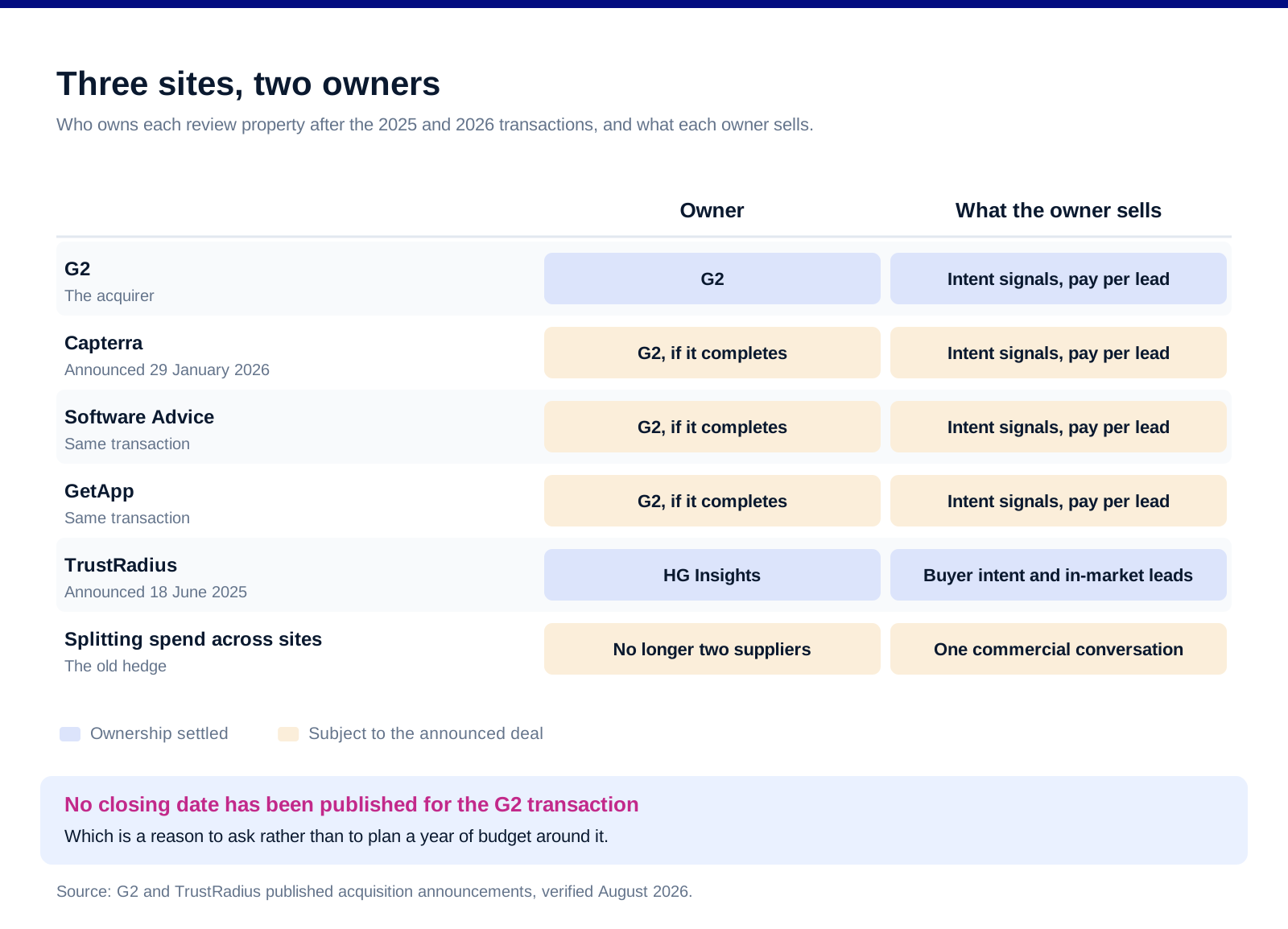
The diversification argument mostly collapses. Spending on G2 and Capterra was once a hedge across two independent gatekeepers. If the transaction completes as announced, it is one supplier with two invoices, and your negotiating position is worse than your spreadsheet suggests.
Which is an argument for renegotiating rather than for leaving. A single supplier holding several of your channels is a reason to consolidate the conversation into one commercial discussion at renewal, not a reason to walk away from a channel that produces pipeline.
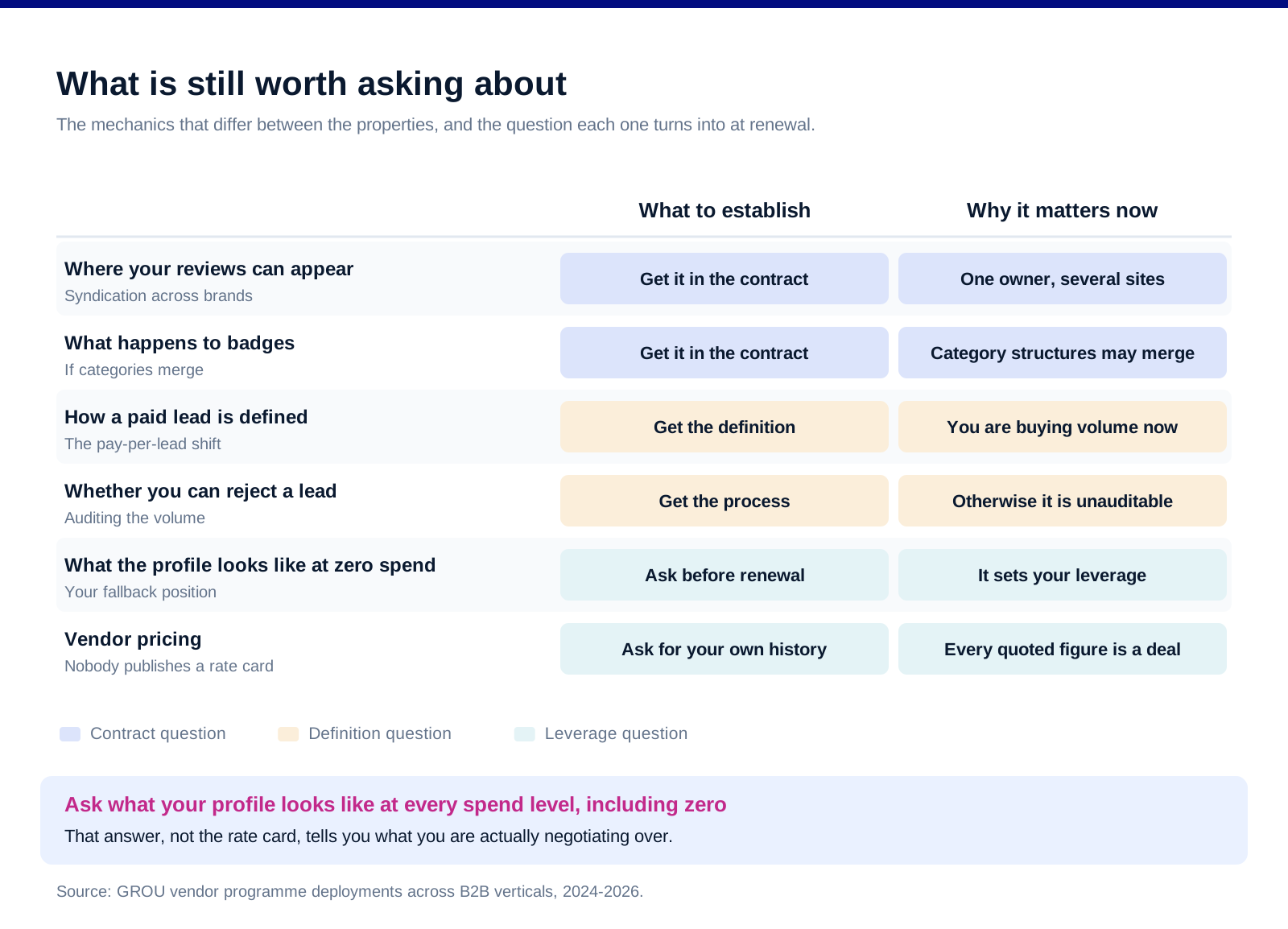
Ask what happens to your reviews. You have spent years asking customers to write them. Where they can appear, whether they syndicate across the acquired brands, and what happens if you stop paying, are contract questions worth asking now rather than at renewal.
Ask what happens to category placement. Two sites with separate category structures becoming one owner raises an obvious question about whether the categories merge, and what that does to a badge you currently hold.
And read the pay-per-lead shift carefully. A pay-per-lead model moves the risk profile: you stop buying presence and start buying volume, which is better if the leads convert and worse if you cannot audit them. Ask how a lead is defined, what disqualification looks like, and whether you can reject one.
What you are actually buying is intent
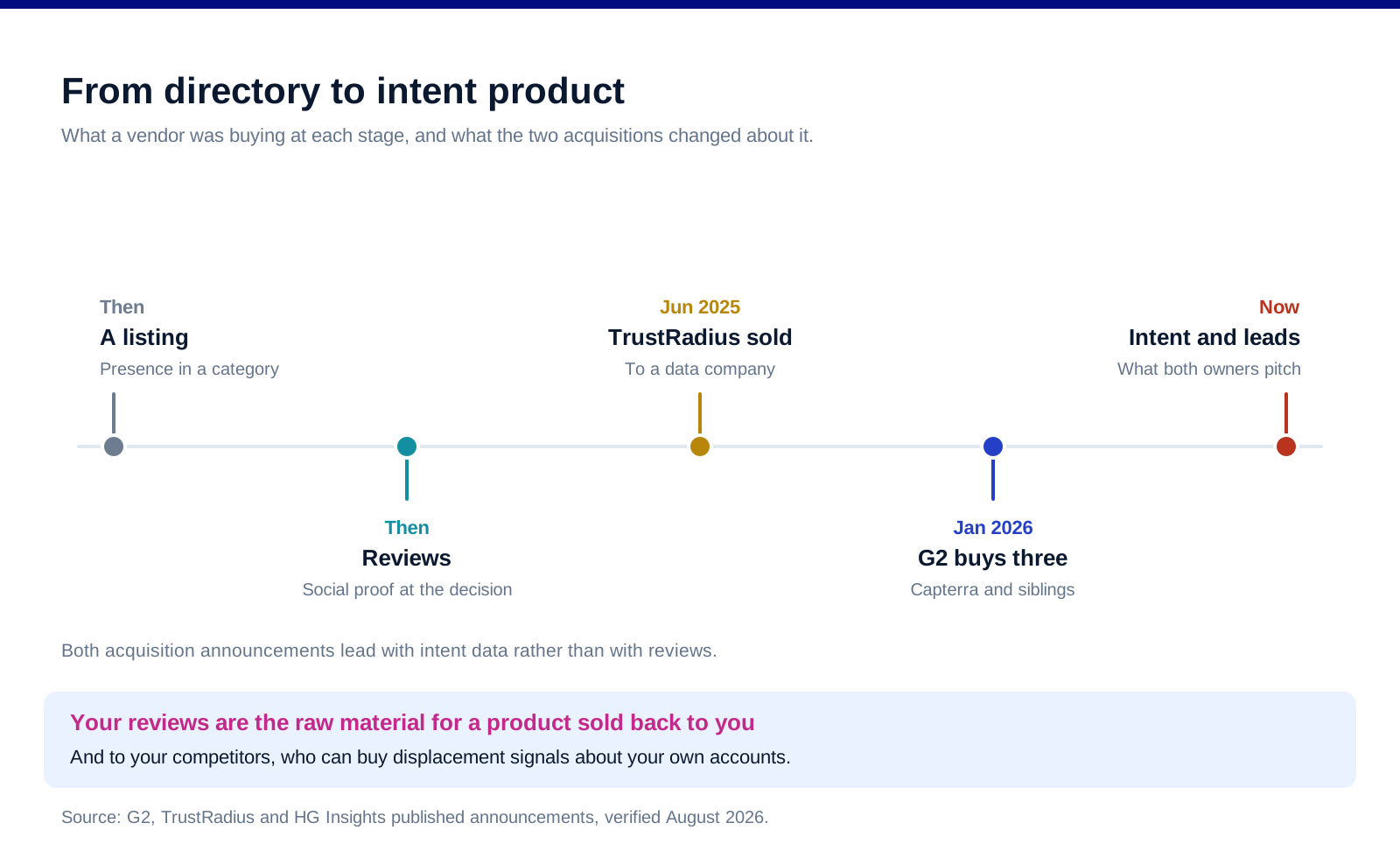
Both announcements lead with intent data, not with reviews. G2 offers "up to 3x more Buyer Intent signals". HG Insights bought TrustRadius to enrich "buyer intent data and in-market leads" with "granular account-level data".
HG Insights is more specific than G2 about what the signals are. Its own announcement describes layering buyer intent signals covering "problem awareness, solution evaluation, product comparisons, and displacement or expansion signals", and enterprise clients getting "account-level intent signals, enriched with firmographics, spend intelligence, and competitor penetration" to find expansion opportunities.
Read that list again from the position of a vendor being reviewed. Product comparisons and displacement signals are, in plain terms, a record of buyers considering leaving you for somebody else, sold as a product. It is the same data whichever side of it you are on.
Which reframes the reviews you have collected. They are the reason buyers arrive, which is what produces the intent signal, which is the product being sold. Your review programme is feeding an asset owned by someone else and resold to you and to your competitors.
That is not a scandal, it is a business model, and it has been the model for longer than the acquisitions. What is new is that it is now stated openly in the vendor pitch, which makes it easier to price.
So price it as a lead source, not as a branding buy. If it is intent and leads, it should be held to the standard of any other paid channel: cost per qualified opportunity, measured over your real sales cycle, against your other sources. Our pipeline coverage piece covers how to judge whether the volume is even readable.
And check whether your competitors can buy intent signals about your category. They can, and the reverse is also true. That symmetry is worth understanding before you decide how much of your budget belongs here.
The mechanics that still differ
Review requirements and decay differ by site. G2 publishes explicit thresholds for category inclusion and applies age weighting to reviews, which our piece on getting listed on G2 covers in detail. Plan a continuous review programme rather than a launch push, because a batch collected once decays.
Audience differs more than the marketing suggests, and our roundup of B2B directories covers what sits outside these three. Capterra and GetApp have historically skewed towards smaller businesses and self-serve buying, G2 towards mid-market and enterprise software, TrustRadius towards longer, more detailed enterprise reviews. Whether that survives common ownership is precisely the thing to watch.
Nobody publishes vendor pricing. Our G2 and Capterra ads playbook covers the paid side as it stood. None of these sites publishes a rate card, so every figure you have seen quoted comes from someone's negotiated deal rather than a list price. That is worth knowing when a salesperson tells you what other companies pay.
Which means benchmarking is impossible and negotiating is not. Ask for the pipeline and closed-won attributable to the channel over your last two renewals before you agree the next one, and ask what happens to your profile and badges at every spend level including zero.
What we do not publish here
Pricing for any of the three. None of them publishes a rate card, every number in circulation is somebody's negotiated deal, and repeating one would mislead you about your own.
Lead volume or conversion benchmarks. Ours come from a specific set of clients and categories, and the vendor-published figures are marketing.
A ranking of the three for vendors. It depends on your category, your buyer size and your existing review base, none of which we know, and after the acquisitions it partly depends on decisions that have not been announced.
A prediction about what G2 does with the acquired brands. The announcement does not say, and we are not going to speculate about category merges or brand retirements in an article people will use to plan a budget.
Anything about review gating or incentives. Both the sites' own policies and the FTC's endorsement rules bear on how you solicit reviews, and that is a policy question for your own counsel rather than a tactic to publish.
FAQ
Does G2 own Capterra now?
G2 announced on 29 January 2026 that it had formally agreed to acquire Capterra, Software Advice and GetApp from Gartner. The announcement gives no closing date and does not say whether the brands will continue to operate separately, so confirm current status with the vendor before you plan around it.
Who owns TrustRadius?
HG Insights, which announced the acquisition on 18 June 2025. TrustRadius describes itself as an independent subsidiary of HG Insights, and the deal was framed around combining TrustRadius' buyer intent data and reviews with HG Insights' account-level data.
Should you still split budget across G2 and Capterra?
Not as a diversification strategy, because if the transaction completes as announced they share an owner. Splitting may still make sense if the audiences genuinely differ for your category, but treat it as one commercial relationship at renewal rather than two.
How much do these sites cost for vendors?
None of them publishes a rate card. Every figure you see quoted is somebody's negotiated deal. Ask for attributable pipeline over your last two renewals before agreeing the next one, and ask what your profile and badges look like at every spend level including zero.
What is pay-per-lead on G2?
G2's acquisition announcement refers to new pay-per-lead offerings alongside up to 3x more buyer intent signals. Before buying one, establish how a lead is defined, what disqualification looks like, and whether you can reject leads that do not meet the definition.
Which review site is best for enterprise software?
TrustRadius has historically carried longer, more detailed enterprise reviews and G2 has the largest overall audience, but the honest answer is that it depends on where your buyers actually look, which you can find out by asking the last ten people who bought from you.
Bottom line
Update the map before you update the budget, because the three-way comparison this query implies has become a two-way one. G2 has agreed to buy Capterra, Software Advice and GetApp, and TrustRadius sits inside HG Insights, so splitting spend across the first two is no longer a hedge and the third is owned by a data company. Then read what both owners actually said they were selling, which is intent signals and leads rather than listings, and hold the spend to the standard you would apply to any other paid channel. Ask the questions the announcements leave open: what happens to your reviews and badges, whether categories merge, how a paid lead is defined and whether you can reject one. And do not plan a year of budget around a transaction whose closing date has not been published.
Want the pipeline built rather than the directories negotiated? Book a call with GROU. We run lead generation and outbound inside B2B revenue engines across verticals.
We are GROU, a B2B pipeline agency that runs lead generation, outbound, and LinkedIn content for clients across manufacturing, fintech, iGaming, software, and professional services. We have no affiliate relationship with any review site named here. The acquisition details are quoted from the companies' own announcements and verified in August 2026.
This is no longer a comparison of three companies. It is a comparison of two.
On 29 January 2026 G2 announced it had agreed to acquire Capterra, Software Advice and GetApp from Gartner. TrustRadius was acquired by HG Insights in June 2025 and now operates as its subsidiary. So a vendor splitting budget across G2 and Capterra to diversify is buying twice from the same company, and the third option belongs to a data business rather than a review business.
TL;DR
Ownership is the story and almost nobody has repriced their thinking around it. G2's own announcement states it has "formally agreed to acquire" Capterra, Software Advice and GetApp from Gartner, dated 29 January 2026, and pitches vendors "a more streamlined way to reach the world's largest audience of in-market buyers" with "up to 3x more Buyer Intent signals" through new pay-per-lead offerings. TrustRadius announced on 18 June 2025 that HG Insights had acquired it, and describes itself as "an independent subsidiary of H.G. Insights", with the deal framed around enriching "buyer intent data and in-market leads". Read those two announcements together and the shape of the category is clear: these are intent-data businesses now, and your reviews are the raw material they sell. That does not make them a bad buy. It changes what you are buying, which is a lead and intent product rather than a directory listing, and it means the old advice to spread spend across sites for independence no longer describes the market.
What each acquisition actually said
G2, on 29 January 2026. The announcement covers Capterra, Software Advice and GetApp, acquired from Gartner. It gives no closing date and no statement about whether the brands will keep operating under their own names, which are the two things a vendor budgeting for next year most needs to know.
What G2 promised vendors. "A more streamlined way to reach the world's largest audience of in-market buyers", access to "up to 3x more Buyer Intent signals" through new pay-per-lead offerings, and for buyers "AI-driven recommendations at a scale that was previously impossible" through G2.ai.
Note what the vendor pitch is denominated in. Intent signals and pay-per-lead, not profile views or category placement. That is the product now.
TrustRadius, on 18 June 2025. HG Insights acquired TrustRadius, described as "a leading provider of buyer intelligence fueled by verified customer reviews". The stated rationale combines "TrustRadius' buyer intent data, intent driven leads, and customer voice content with HG Insights' AI-powered revenue growth intelligence."
And the operating status is stated. "TrustRadius is an independent subsidiary of H.G. Insights", which suggests continuity of the brand rather than absorption, though independence in this context is a corporate structure rather than a promise about the product.
What changes for a vendor budgeting across them
The diversification argument mostly collapses. Spending on G2 and Capterra was once a hedge across two independent gatekeepers. If the transaction completes as announced, it is one supplier with two invoices, and your negotiating position is worse than your spreadsheet suggests.
Which is an argument for renegotiating rather than for leaving. A single supplier holding several of your channels is a reason to consolidate the conversation into one commercial discussion at renewal, not a reason to walk away from a channel that produces pipeline.
Ask what happens to your reviews. You have spent years asking customers to write them. Where they can appear, whether they syndicate across the acquired brands, and what happens if you stop paying, are contract questions worth asking now rather than at renewal.
Ask what happens to category placement. Two sites with separate category structures becoming one owner raises an obvious question about whether the categories merge, and what that does to a badge you currently hold.
And read the pay-per-lead shift carefully. A pay-per-lead model moves the risk profile: you stop buying presence and start buying volume, which is better if the leads convert and worse if you cannot audit them. Ask how a lead is defined, what disqualification looks like, and whether you can reject one.
What you are actually buying is intent
Both announcements lead with intent data, not with reviews. G2 offers "up to 3x more Buyer Intent signals". HG Insights bought TrustRadius to enrich "buyer intent data and in-market leads" with "granular account-level data".
HG Insights is more specific than G2 about what the signals are. Its own announcement describes layering buyer intent signals covering "problem awareness, solution evaluation, product comparisons, and displacement or expansion signals", and enterprise clients getting "account-level intent signals, enriched with firmographics, spend intelligence, and competitor penetration" to find expansion opportunities.
Read that list again from the position of a vendor being reviewed. Product comparisons and displacement signals are, in plain terms, a record of buyers considering leaving you for somebody else, sold as a product. It is the same data whichever side of it you are on.
Which reframes the reviews you have collected. They are the reason buyers arrive, which is what produces the intent signal, which is the product being sold. Your review programme is feeding an asset owned by someone else and resold to you and to your competitors.
That is not a scandal, it is a business model, and it has been the model for longer than the acquisitions. What is new is that it is now stated openly in the vendor pitch, which makes it easier to price.
So price it as a lead source, not as a branding buy. If it is intent and leads, it should be held to the standard of any other paid channel: cost per qualified opportunity, measured over your real sales cycle, against your other sources. Our pipeline coverage piece covers how to judge whether the volume is even readable.
And check whether your competitors can buy intent signals about your category. They can, and the reverse is also true. That symmetry is worth understanding before you decide how much of your budget belongs here.
The mechanics that still differ
Review requirements and decay differ by site. G2 publishes explicit thresholds for category inclusion and applies age weighting to reviews, which our piece on getting listed on G2 covers in detail. Plan a continuous review programme rather than a launch push, because a batch collected once decays.
Audience differs more than the marketing suggests, and our roundup of B2B directories covers what sits outside these three. Capterra and GetApp have historically skewed towards smaller businesses and self-serve buying, G2 towards mid-market and enterprise software, TrustRadius towards longer, more detailed enterprise reviews. Whether that survives common ownership is precisely the thing to watch.
Nobody publishes vendor pricing. Our G2 and Capterra ads playbook covers the paid side as it stood. None of these sites publishes a rate card, so every figure you have seen quoted comes from someone's negotiated deal rather than a list price. That is worth knowing when a salesperson tells you what other companies pay.
Which means benchmarking is impossible and negotiating is not. Ask for the pipeline and closed-won attributable to the channel over your last two renewals before you agree the next one, and ask what happens to your profile and badges at every spend level including zero.
What we do not publish here
Pricing for any of the three. None of them publishes a rate card, every number in circulation is somebody's negotiated deal, and repeating one would mislead you about your own.
Lead volume or conversion benchmarks. Ours come from a specific set of clients and categories, and the vendor-published figures are marketing.
A ranking of the three for vendors. It depends on your category, your buyer size and your existing review base, none of which we know, and after the acquisitions it partly depends on decisions that have not been announced.
A prediction about what G2 does with the acquired brands. The announcement does not say, and we are not going to speculate about category merges or brand retirements in an article people will use to plan a budget.
Anything about review gating or incentives. Both the sites' own policies and the FTC's endorsement rules bear on how you solicit reviews, and that is a policy question for your own counsel rather than a tactic to publish.
FAQ
Does G2 own Capterra now?
G2 announced on 29 January 2026 that it had formally agreed to acquire Capterra, Software Advice and GetApp from Gartner. The announcement gives no closing date and does not say whether the brands will continue to operate separately, so confirm current status with the vendor before you plan around it.
Who owns TrustRadius?
HG Insights, which announced the acquisition on 18 June 2025. TrustRadius describes itself as an independent subsidiary of HG Insights, and the deal was framed around combining TrustRadius' buyer intent data and reviews with HG Insights' account-level data.
Should you still split budget across G2 and Capterra?
Not as a diversification strategy, because if the transaction completes as announced they share an owner. Splitting may still make sense if the audiences genuinely differ for your category, but treat it as one commercial relationship at renewal rather than two.
How much do these sites cost for vendors?
None of them publishes a rate card. Every figure you see quoted is somebody's negotiated deal. Ask for attributable pipeline over your last two renewals before agreeing the next one, and ask what your profile and badges look like at every spend level including zero.
What is pay-per-lead on G2?
G2's acquisition announcement refers to new pay-per-lead offerings alongside up to 3x more buyer intent signals. Before buying one, establish how a lead is defined, what disqualification looks like, and whether you can reject leads that do not meet the definition.
Which review site is best for enterprise software?
TrustRadius has historically carried longer, more detailed enterprise reviews and G2 has the largest overall audience, but the honest answer is that it depends on where your buyers actually look, which you can find out by asking the last ten people who bought from you.
Bottom line
Update the map before you update the budget, because the three-way comparison this query implies has become a two-way one. G2 has agreed to buy Capterra, Software Advice and GetApp, and TrustRadius sits inside HG Insights, so splitting spend across the first two is no longer a hedge and the third is owned by a data company. Then read what both owners actually said they were selling, which is intent signals and leads rather than listings, and hold the spend to the standard you would apply to any other paid channel. Ask the questions the announcements leave open: what happens to your reviews and badges, whether categories merge, how a paid lead is defined and whether you can reject one. And do not plan a year of budget around a transaction whose closing date has not been published.
Want the pipeline built rather than the directories negotiated? Book a call with GROU. We run lead generation and outbound inside B2B revenue engines across verticals.
We are GROU, a B2B pipeline agency that runs lead generation, outbound, and LinkedIn content for clients across manufacturing, fintech, iGaming, software, and professional services. We have no affiliate relationship with any review site named here. The acquisition details are quoted from the companies' own announcements and verified in August 2026.
This is no longer a comparison of three companies. It is a comparison of two.
On 29 January 2026 G2 announced it had agreed to acquire Capterra, Software Advice and GetApp from Gartner. TrustRadius was acquired by HG Insights in June 2025 and now operates as its subsidiary. So a vendor splitting budget across G2 and Capterra to diversify is buying twice from the same company, and the third option belongs to a data business rather than a review business.
TL;DR
Ownership is the story and almost nobody has repriced their thinking around it. G2's own announcement states it has "formally agreed to acquire" Capterra, Software Advice and GetApp from Gartner, dated 29 January 2026, and pitches vendors "a more streamlined way to reach the world's largest audience of in-market buyers" with "up to 3x more Buyer Intent signals" through new pay-per-lead offerings. TrustRadius announced on 18 June 2025 that HG Insights had acquired it, and describes itself as "an independent subsidiary of H.G. Insights", with the deal framed around enriching "buyer intent data and in-market leads". Read those two announcements together and the shape of the category is clear: these are intent-data businesses now, and your reviews are the raw material they sell. That does not make them a bad buy. It changes what you are buying, which is a lead and intent product rather than a directory listing, and it means the old advice to spread spend across sites for independence no longer describes the market.
What each acquisition actually said
G2, on 29 January 2026. The announcement covers Capterra, Software Advice and GetApp, acquired from Gartner. It gives no closing date and no statement about whether the brands will keep operating under their own names, which are the two things a vendor budgeting for next year most needs to know.
What G2 promised vendors. "A more streamlined way to reach the world's largest audience of in-market buyers", access to "up to 3x more Buyer Intent signals" through new pay-per-lead offerings, and for buyers "AI-driven recommendations at a scale that was previously impossible" through G2.ai.
Note what the vendor pitch is denominated in. Intent signals and pay-per-lead, not profile views or category placement. That is the product now.
TrustRadius, on 18 June 2025. HG Insights acquired TrustRadius, described as "a leading provider of buyer intelligence fueled by verified customer reviews". The stated rationale combines "TrustRadius' buyer intent data, intent driven leads, and customer voice content with HG Insights' AI-powered revenue growth intelligence."
And the operating status is stated. "TrustRadius is an independent subsidiary of H.G. Insights", which suggests continuity of the brand rather than absorption, though independence in this context is a corporate structure rather than a promise about the product.
What changes for a vendor budgeting across them
The diversification argument mostly collapses. Spending on G2 and Capterra was once a hedge across two independent gatekeepers. If the transaction completes as announced, it is one supplier with two invoices, and your negotiating position is worse than your spreadsheet suggests.
Which is an argument for renegotiating rather than for leaving. A single supplier holding several of your channels is a reason to consolidate the conversation into one commercial discussion at renewal, not a reason to walk away from a channel that produces pipeline.
Ask what happens to your reviews. You have spent years asking customers to write them. Where they can appear, whether they syndicate across the acquired brands, and what happens if you stop paying, are contract questions worth asking now rather than at renewal.
Ask what happens to category placement. Two sites with separate category structures becoming one owner raises an obvious question about whether the categories merge, and what that does to a badge you currently hold.
And read the pay-per-lead shift carefully. A pay-per-lead model moves the risk profile: you stop buying presence and start buying volume, which is better if the leads convert and worse if you cannot audit them. Ask how a lead is defined, what disqualification looks like, and whether you can reject one.
What you are actually buying is intent
Both announcements lead with intent data, not with reviews. G2 offers "up to 3x more Buyer Intent signals". HG Insights bought TrustRadius to enrich "buyer intent data and in-market leads" with "granular account-level data".
HG Insights is more specific than G2 about what the signals are. Its own announcement describes layering buyer intent signals covering "problem awareness, solution evaluation, product comparisons, and displacement or expansion signals", and enterprise clients getting "account-level intent signals, enriched with firmographics, spend intelligence, and competitor penetration" to find expansion opportunities.
Read that list again from the position of a vendor being reviewed. Product comparisons and displacement signals are, in plain terms, a record of buyers considering leaving you for somebody else, sold as a product. It is the same data whichever side of it you are on.
Which reframes the reviews you have collected. They are the reason buyers arrive, which is what produces the intent signal, which is the product being sold. Your review programme is feeding an asset owned by someone else and resold to you and to your competitors.
That is not a scandal, it is a business model, and it has been the model for longer than the acquisitions. What is new is that it is now stated openly in the vendor pitch, which makes it easier to price.
So price it as a lead source, not as a branding buy. If it is intent and leads, it should be held to the standard of any other paid channel: cost per qualified opportunity, measured over your real sales cycle, against your other sources. Our pipeline coverage piece covers how to judge whether the volume is even readable.
And check whether your competitors can buy intent signals about your category. They can, and the reverse is also true. That symmetry is worth understanding before you decide how much of your budget belongs here.
The mechanics that still differ
Review requirements and decay differ by site. G2 publishes explicit thresholds for category inclusion and applies age weighting to reviews, which our piece on getting listed on G2 covers in detail. Plan a continuous review programme rather than a launch push, because a batch collected once decays.
Audience differs more than the marketing suggests, and our roundup of B2B directories covers what sits outside these three. Capterra and GetApp have historically skewed towards smaller businesses and self-serve buying, G2 towards mid-market and enterprise software, TrustRadius towards longer, more detailed enterprise reviews. Whether that survives common ownership is precisely the thing to watch.
Nobody publishes vendor pricing. Our G2 and Capterra ads playbook covers the paid side as it stood. None of these sites publishes a rate card, so every figure you have seen quoted comes from someone's negotiated deal rather than a list price. That is worth knowing when a salesperson tells you what other companies pay.
Which means benchmarking is impossible and negotiating is not. Ask for the pipeline and closed-won attributable to the channel over your last two renewals before you agree the next one, and ask what happens to your profile and badges at every spend level including zero.
What we do not publish here
Pricing for any of the three. None of them publishes a rate card, every number in circulation is somebody's negotiated deal, and repeating one would mislead you about your own.
Lead volume or conversion benchmarks. Ours come from a specific set of clients and categories, and the vendor-published figures are marketing.
A ranking of the three for vendors. It depends on your category, your buyer size and your existing review base, none of which we know, and after the acquisitions it partly depends on decisions that have not been announced.
A prediction about what G2 does with the acquired brands. The announcement does not say, and we are not going to speculate about category merges or brand retirements in an article people will use to plan a budget.
Anything about review gating or incentives. Both the sites' own policies and the FTC's endorsement rules bear on how you solicit reviews, and that is a policy question for your own counsel rather than a tactic to publish.
FAQ
Does G2 own Capterra now?
G2 announced on 29 January 2026 that it had formally agreed to acquire Capterra, Software Advice and GetApp from Gartner. The announcement gives no closing date and does not say whether the brands will continue to operate separately, so confirm current status with the vendor before you plan around it.
Who owns TrustRadius?
HG Insights, which announced the acquisition on 18 June 2025. TrustRadius describes itself as an independent subsidiary of HG Insights, and the deal was framed around combining TrustRadius' buyer intent data and reviews with HG Insights' account-level data.
Should you still split budget across G2 and Capterra?
Not as a diversification strategy, because if the transaction completes as announced they share an owner. Splitting may still make sense if the audiences genuinely differ for your category, but treat it as one commercial relationship at renewal rather than two.
How much do these sites cost for vendors?
None of them publishes a rate card. Every figure you see quoted is somebody's negotiated deal. Ask for attributable pipeline over your last two renewals before agreeing the next one, and ask what your profile and badges look like at every spend level including zero.
What is pay-per-lead on G2?
G2's acquisition announcement refers to new pay-per-lead offerings alongside up to 3x more buyer intent signals. Before buying one, establish how a lead is defined, what disqualification looks like, and whether you can reject leads that do not meet the definition.
Which review site is best for enterprise software?
TrustRadius has historically carried longer, more detailed enterprise reviews and G2 has the largest overall audience, but the honest answer is that it depends on where your buyers actually look, which you can find out by asking the last ten people who bought from you.
Bottom line
Update the map before you update the budget, because the three-way comparison this query implies has become a two-way one. G2 has agreed to buy Capterra, Software Advice and GetApp, and TrustRadius sits inside HG Insights, so splitting spend across the first two is no longer a hedge and the third is owned by a data company. Then read what both owners actually said they were selling, which is intent signals and leads rather than listings, and hold the spend to the standard you would apply to any other paid channel. Ask the questions the announcements leave open: what happens to your reviews and badges, whether categories merge, how a paid lead is defined and whether you can reject one. And do not plan a year of budget around a transaction whose closing date has not been published.
Want the pipeline built rather than the directories negotiated? Book a call with GROU. We run lead generation and outbound inside B2B revenue engines across verticals.
We are GROU, a B2B pipeline agency that runs lead generation, outbound, and LinkedIn content for clients across manufacturing, fintech, iGaming, software, and professional services. We have no affiliate relationship with any review site named here. The acquisition details are quoted from the companies' own announcements and verified in August 2026.
Pipeline OS Newsletter
Build qualified pipeline
Get weekly tactics to generate demand, improve lead quality, and book more meetings.





Trusted by industry leaders
Trusted by industry leaders
Trusted by industry leaders
Ready to build qualified pipeline?
Ready to build qualified pipeline?
Ready to build qualified pipeline?
Book a call to see if we're the right fit, or take the 2-minute quiz to get a clear starting point.
Book a call to see if we're the right fit, or take the 2-minute quiz to get a clear starting point.
Book a call to see if we're the right fit, or take the 2-minute quiz to get a clear starting point.
" height="30.21639343089746px" id="hfGbXmQR2" width="30.216393430897455px"/></svg>)
Copyright © 2026 – All Right Reserved
Copyright © 2026 – All Right Reserved
Copyright © 2026 – All Right Reserved