%22%3E%3C/path%3E%3Cpath d=%22M 63.072 7.554 C 62.258 8.022 61.577 8.689 61.092 9.493 L 61.092 7.076 L 57.158 7.076 L 57.158 22.64 L 61.089 22.64 L 61.089 14.888 C 61.089 13.446 61.403 12.434 62.03 11.853 C 62.818 11.218 63.818 10.907 64.826 10.982 L 65.868 10.982 L 65.868 6.851 C 64.891 6.834 63.926 7.076 63.073 7.554 Z%22 fill=%22rgb(17,17,17)%22%3E%3C/path%3E%3Cpath d=%22M 78.916 7.82 C 76.363 6.49 73.321 6.49 70.768 7.82 C 69.562 8.473 68.564 9.451 67.888 10.644 C 67.167 11.931 66.803 13.387 66.834 14.862 C 66.804 16.332 67.157 17.785 67.86 19.077 C 68.515 20.267 69.494 21.246 70.684 21.901 C 71.924 22.576 73.318 22.92 74.73 22.898 C 76.164 22.918 77.58 22.575 78.846 21.901 C 80.062 21.247 81.073 20.27 81.768 19.077 C 82.506 17.797 82.88 16.339 82.85 14.862 C 82.88 13.389 82.517 11.934 81.797 10.647 C 81.12 9.455 80.122 8.477 78.917 7.824 M 78.803 14.862 C 78.829 15.739 78.636 16.608 78.241 17.391 C 77.903 18.046 77.38 18.588 76.738 18.95 C 76.124 19.293 75.432 19.472 74.729 19.47 C 73.668 19.497 72.648 19.061 71.934 18.276 C 71.139 17.323 70.741 16.1 70.823 14.862 C 70.741 13.62 71.149 12.395 71.959 11.45 C 72.687 10.667 73.715 10.233 74.783 10.256 C 75.859 10.236 76.894 10.67 77.635 11.45 C 78.464 12.387 78.884 13.616 78.801 14.864%22 fill=%22rgb(17,17,17)%22%3E%3C/path%3E%3Cpath d=%22M 95.906 7.076 L 95.906 15.646 C 95.975 16.68 95.643 17.701 94.979 18.498 C 94.311 19.184 93.379 19.547 92.422 19.495 C 91.475 19.544 90.553 19.18 89.894 18.498 C 89.23 17.701 88.898 16.68 88.967 15.646 L 88.967 7.076 L 85.033 7.076 L 85.033 16.207 C 85 17.449 85.275 18.68 85.834 19.79 C 86.327 20.75 87.095 21.542 88.039 22.065 C 89.033 22.594 90.145 22.861 91.271 22.838 C 92.188 22.847 93.095 22.65 93.926 22.263 C 94.708 21.905 95.388 21.36 95.906 20.675 L 95.906 22.645 L 99.865 22.645 L 99.865 7.076 Z%22 fill=%22rgb(17,17,17)%22%3E%3C/path%3E%3Cpath d=%22M 4.513 15.626 C 4.511 10.815 7.606 6.549 12.181 5.059 C 16.756 3.57 21.77 5.195 24.601 9.086 L 27.816 5.87 C 24.074 1.186 17.981 -0.943 12.137 0.393 C 6.292 1.728 1.728 6.292 0.393 12.137 C -0.943 17.981 1.186 24.074 5.87 27.816 L 9.085 24.601 C 6.214 22.512 4.515 19.177 4.513 15.626%22 fill=%22rgb(32,62,235)%22%3E%3C/path%3E%3Cpath d=%22M 17.114 14.343 L 13.354 18.01 L 13.354 18.026 L 21.071 18.026 L 11.412 27.609 L 17.389 27.609 L 23.999 21.081 L 23.999 28.316 L 24.005 28.316 L 27.967 24.393 L 27.967 14.343 Z%22 fill=%22rgb(32,62,235)%22%3E%3C/path%3E%3C/g%3E%3C/svg%3E) ×
× ××
××›
›
›
›
How to optimize a Clutch profile 2026
How to optimize a Clutch profile 2026
How to optimize a Clutch profile 2026
How to optimize a Clutch profile 2026
How to optimize a Clutch profile 2026
How to optimize a Clutch profile 2026

Author
Aljaz Peklaj

Most agencies treat their Clutch profile as a review-collection problem. Get more reviews, rank higher, win more enquiries.
Reviews are the heaviest single component, so that instinct is not wrong. But Clutch plots you on two axes, and the second one has nothing to do with reviews at all. It is Focus, it is decided by how you fill in your own service lines, and it is the only part of the ranking you control outright.
TL;DR
Clutch scores agencies on Ability to Deliver, made up of a Reviews Score worth 20 points, a Clients and Experience Score worth 10, and a Market Presence Score worth 10. Reviews are half the total and Clutch states they are "the most heavily weighted portion" of the methodology, assessed on "overall rating, recency, and verification status". The other axis is Focus, which Clutch describes as taking "into account the services, or focus areas, that the company specializes in", represented as the service lines on your own profile. On the Leaders Matrix, Focus is the horizontal axis measuring "how specialized the company is in the service being mapped" and Ability to Deliver is the vertical one measuring "how much verified evidence backs up their capability". Sponsorship moves you up the default directory order but Clutch states it "doesn't change a company's underlying Clutch Rank score" and "does not affect award selection". Every review is checked by a human editor. And do not copy your Clutch ratings into your own site's structured data, because Google explicitly says not to aggregate ratings from other websites.
What Clutch is actually scoring
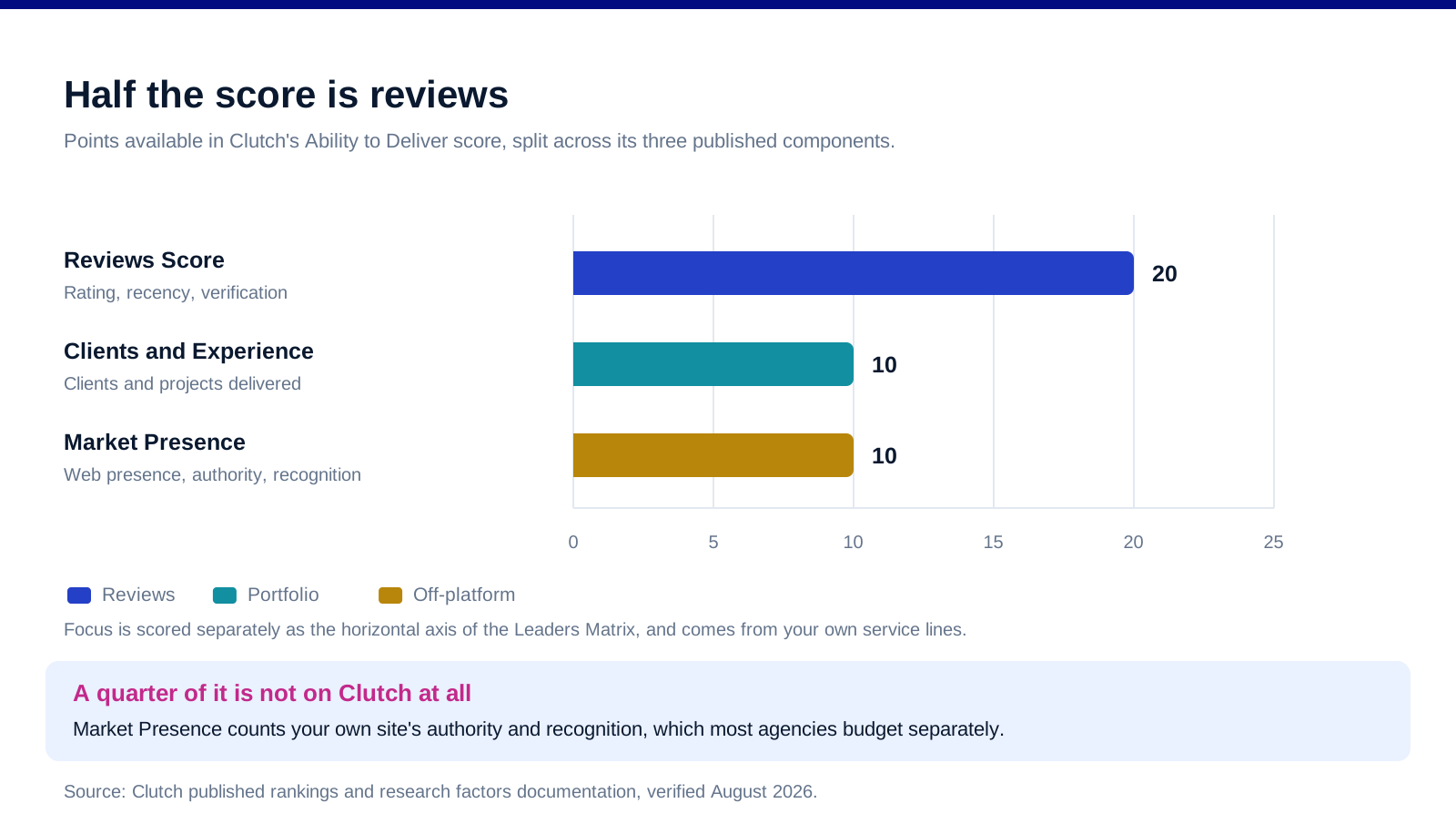
Ability to Deliver is a forty point score in three parts. Clutch's ranking factors documentation sets out a Reviews Score worth 20 points, a Clients and Experience Score worth 10, and a Market Presence Score worth 10.
Reviews are half of it, and Clutch says so plainly. The same page states that "Reviews are the most heavily weighted portion of Clutch's scoring methodology", and that the Reviews Score "assesses a company's reviews based on their overall rating, recency, and verification status".
Recency is scored, not just volume. Reviews are weighted by time. For the recognition side, Clutch is explicit that "Recognition from the last 1-2 years carries the most weight, because it reflects the work your team is doing now."
Which means a profile decays. Twelve reviews from 2023 is a worse asset than six from this year, and an agency that ran one review drive two years ago is quietly falling down the page while nothing appears to have changed.
The Clients and Experience Score is about the work. Clutch describes it as evaluating "past experience based on their clients and projects", which is the portfolio half of the profile most agencies fill in once and never touch.
And Market Presence is a quarter of the score that sits outside Clutch entirely. It assesses "a company's web presence, domain authority, industry recognition, and thought leadership". Your own site and your own publishing feed a directory ranking, which is not obvious and is why the two efforts should not be run as separate projects.
Focus is the axis you fully control
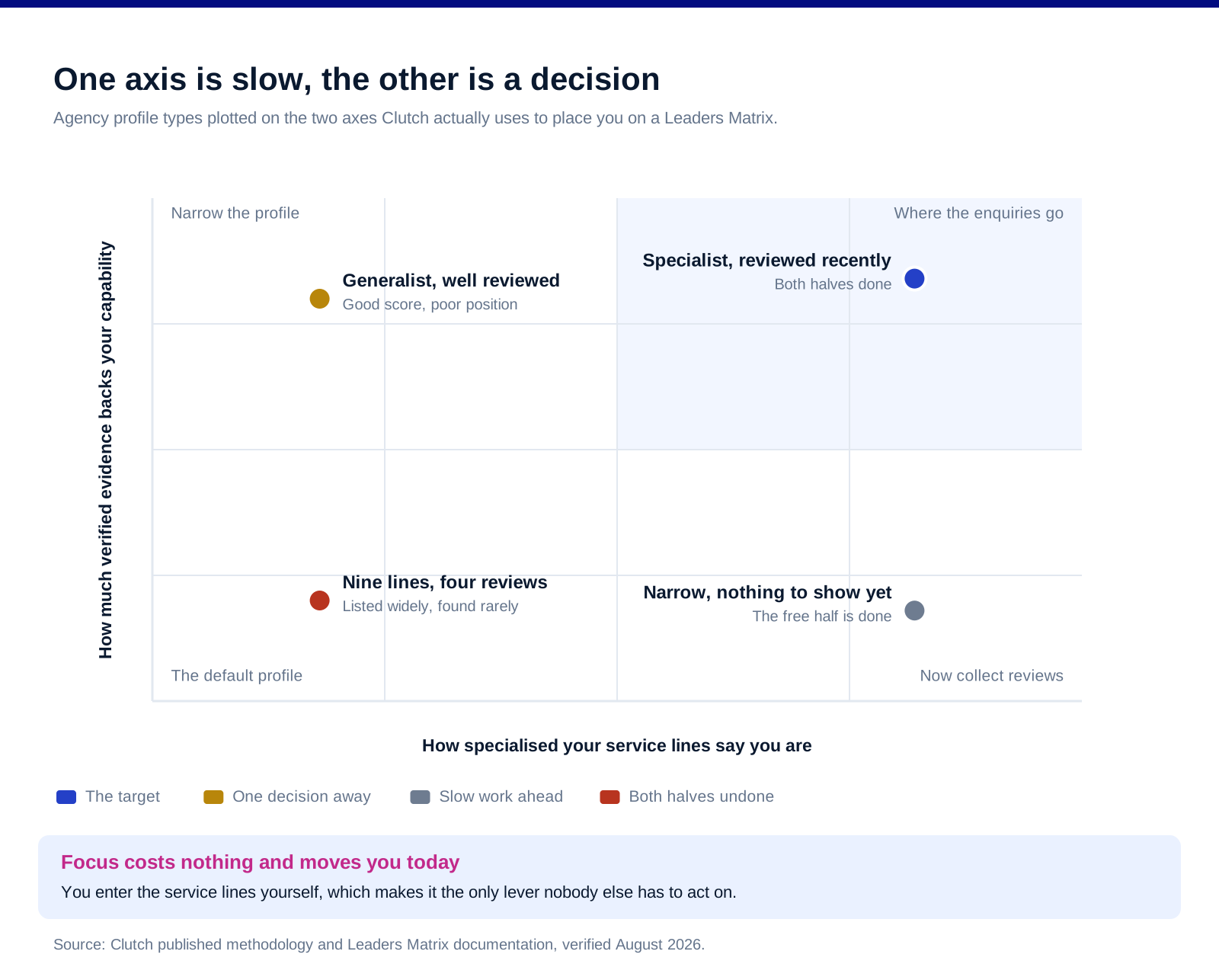
The Leaders Matrix has two axes and only one of them is earned slowly. Clutch's methodology defines Focus as the horizontal axis, measuring "how specialized the company is in the service being mapped", and Ability to Deliver as the vertical one, measuring "how much verified evidence backs up their capability".
Focus comes from your own service lines. Clutch states that "A company's Focus score takes into account the services, or focus areas, that the company specializes in. These services are represented as service lines on each company's Clutch profile." You enter those percentages yourself.
So a generalist profile is a self-inflicted ranking problem. Nine service lines at roughly eleven percent each describes an agency that specialises in nothing, and it will sit at the left of every matrix it appears on regardless of how good the reviews are.
Narrowing the profile is free and it is fast. It is the only lever here that does not require a client to do something, a quarter to pass, or a budget. It requires a decision about what you are, which is why it is the one most agencies avoid.
The decision has a real cost, and it should. Concentrating your service lines removes you from matrices you currently appear on. That is the trade: fewer listings, better position in the ones that match what you actually sell. Our positioning piece covers making that call properly rather than hedging it.
Match the profile to the enquiries you want, not to the work you have done. The service line split is a statement of intent that a buyer reads as a statement of specialism, and it is worth spending an afternoon getting right.
Reviews, and the two rules people get wrong
Verification is a person, not a filter. Clutch's methodology describes a three-step process: a reviewer must "log in via LinkedIn, Google, or a company email address", proprietary software "evaluates the reviewer's digital footprint and compares it against site-wide trends in review submission, looking for discrepancies", and "A Clutch Content Operations editor checks every submission, using both the automated signals and online research." Clutch states directly: "Every review is read by a human editor. Many platforms auto-publish; we don't."
Anonymous reviews are allowed and cost you something. Clutch notes that reviewers can "remain anonymous" but that "non-anonymous reviews carry more credibility with buyers". Worth asking, not worth insisting on.
Do not incentivise a positive review. Under the FTC's Rule on the Use of Consumer Reviews and Testimonials, in effect since 21 October 2024, buying positive reviews sits squarely inside the prohibited conduct, and insiders including employees, managers, officers and their relatives must disclose the relationship clearly, conspicuously and unavoidably. The FTC treats a disclosure as avoidable if someone has to click a link or hover to see it. Asking a client for an honest review is fine. Attaching a reward to the rating is not, and none of this is legal advice.
Ask at the moment the work landed. The same timing logic that governs referrals governs this, and our referral programme piece covers why a request right after a delivered result outperforms a quarterly reminder.
Run it as a rolling process, not a campaign. Because recency is scored, three reviews a quarter beats twelve in one month followed by two years of silence, and the second pattern is what most agency profiles actually show.
Market presence is the quarter nobody works on
Domain authority is named as a factor. Clutch lists "web presence, domain authority, industry recognition, and thought leadership" inside the Market Presence Score, which means your own site's link profile is feeding a directory ranking.
So the blog and the profile are the same project. An agency publishing consistently and earning links is improving its Clutch position as a side effect, which is not how most people budget these two things.
Awards and recognition have a shelf life. Recognition from the last one to two years carries the most weight, so a 2021 award on your profile is decoration rather than score.
And listings work as a set. Being present and current across the directories your buyers actually check compounds, which our B2B directories piece and our Capterra listing guide cover for the software side of the same problem.
Sponsorship buys position, not score
Clutch is unusually direct about this. The methodology states that "sponsorship affects the default directory position (sponsored listings appear above organic ones), but it doesn't change a company's underlying Clutch Rank score. When buyers re-sort by Clutch Rank, sponsorship doesn't factor in." It adds that "sponsorship does not affect award selection."
Read that as a media buy, and price it like one. You are buying placement above the organic list for buyers who do not re-sort. That is a real audience and a legitimate purchase, and it is not a ranking improvement.
Which makes the question a straightforward one. What does a lead from this category cost you elsewhere, and does the sponsored position beat it. Not whether it will help you rank.
We do not publish a view on whether it converts. We have not run a controlled test of Clutch sponsorship and every figure in circulation comes from someone selling either the placement or the service.
The structured data trap
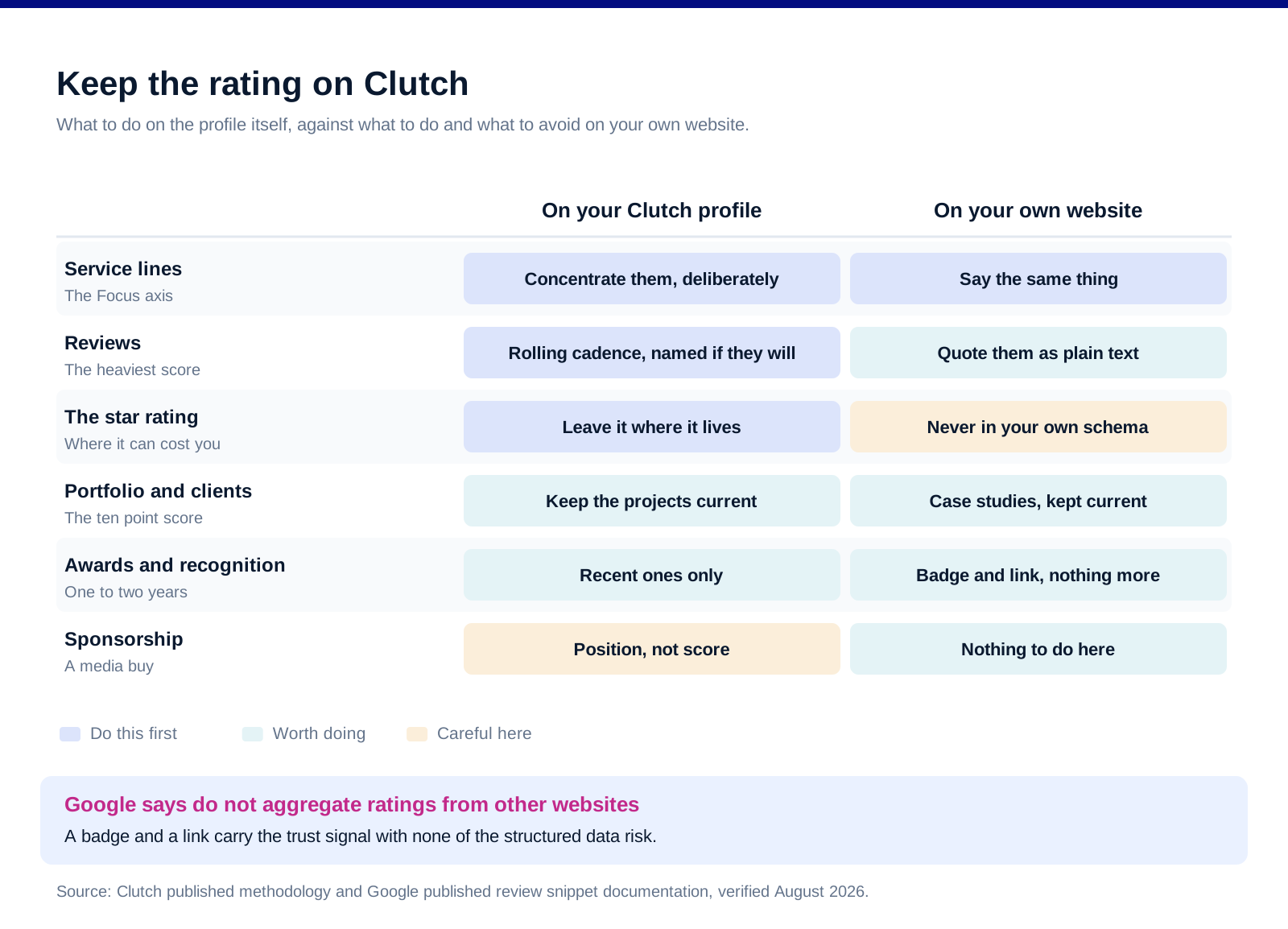
Do not copy your Clutch star rating into your own site's schema. Google's review snippet documentation states plainly: "Don't aggregate reviews or ratings from other websites."
And self-controlled reviews are not eligible for star features anyway. Google's guidance is that pages using LocalBusiness or Organization structured data where the entity being reviewed controls the reviews about itself are ineligible, including reviews surfaced "through an embedded third-party widget".
The review content has to be visible if you do mark anything up. Google requires that "It must be immediately obvious to users that the page has review content", with the rating shown on the page rather than only in the markup.
So put the badge on the page and leave the schema alone. A Clutch badge linking to your profile is a trust signal for humans and carries none of this risk. A hand-built AggregateRating block quoting your Clutch score is the version that can cost you.
What we do not publish here
Any minimum number of reviews needed to rank. Clutch does not state one in the material we could read, and we are not going to guess at a threshold.
Any lead volume or conversion figure from Clutch. Ours would come from a specific set of profiles and offers, and the public ones come from people selling sponsorship or profile services.
A cost for Clutch sponsorship. Not published in the material we could access, and it varies by category and geography.
How the Focus percentages translate into a horizontal position. Clutch describes what the axis measures, not the formula, and inventing one would be worse than saying so.
Whether a specific agency deserves its position. Not knowable from outside and not a claim we would make.
FAQ
How does Clutch rank agencies?
On an Ability to Deliver score made up of a 20 point Reviews Score, a 10 point Clients and Experience Score and a 10 point Market Presence Score. Reviews are the most heavily weighted portion and are assessed on overall rating, recency and verification status. Separately, the Leaders Matrix plots that score against Focus, which reflects how specialised your profile's service lines say you are.
Does paying Clutch improve your ranking?
Clutch says no. Sponsorship moves you above the organic listings in the default directory order, but Clutch states it "doesn't change a company's underlying Clutch Rank score" and that when buyers re-sort by Clutch Rank "sponsorship doesn't factor in". It also states that sponsorship does not affect award selection.
How many service lines should an agency list on Clutch?
Fewer than most list. Focus measures how specialised you are in the service being mapped, and a profile spread evenly across eight or nine service lines will sit at the left of every matrix. The trade is real: concentrating removes you from listings. Match the split to the enquiries you want rather than to everything you have ever delivered.
Do old Clutch reviews still count?
Less than new ones. Recency is one of the three things the Reviews Score assesses, and Clutch states that recognition from the last one to two years carries the most weight. A rolling cadence of a few reviews a quarter is worth more than a single burst followed by silence.
Can you offer clients an incentive to leave a Clutch review?
Do not attach a reward to a positive rating. The FTC's Rule on the Use of Consumer Reviews and Testimonials, in effect since 21 October 2024, covers buying positive reviews, and separately requires insiders including employees and their relatives to disclose the relationship clearly, conspicuously and unavoidably. Asking clients for an honest review is a different thing entirely. This is not legal advice.
Should you put Clutch reviews on your own website?
Link to the profile and use the badge. Do not rebuild the rating in structured data: Google states "Don't aggregate reviews or ratings from other websites", and pages where the reviewed entity controls the reviews about itself are not eligible for star features regardless.
Bottom line
There are two levers here and they move on completely different timescales. Ability to Deliver is earned slowly, through reviews collected on a rolling cadence, a portfolio kept current, and a web presence you were building anyway. Focus is a decision you can make this afternoon, costs nothing, and will move you further right on every matrix that matters than a quarter of review chasing will move you up. Most agencies do the slow half badly and skip the fast half entirely. Fix the service lines first, then set a review cadence you can actually sustain, then treat sponsorship as the media buy Clutch says it is. And keep your Clutch rating on Clutch, because copying it into your own structured data is the one action on this list that can cost you something.
Want the pipeline built rather than the profile tuned? Book a call with GROU. We run lead generation and outbound inside B2B revenue engines across verticals. If directories are a channel for you, our leads from directories piece covers working them properly.
We are GROU, a B2B pipeline agency that runs lead generation, outbound, and LinkedIn content for clients across manufacturing, fintech, iGaming, software, and professional services. Nothing in this article is legal advice, every ranking mechanic quoted comes from Clutch's own published methodology and help centre, and the profile guidance reflects our own B2B deployments between 2024 and 2026, anonymized to protect client confidentiality.
Most agencies treat their Clutch profile as a review-collection problem. Get more reviews, rank higher, win more enquiries.
Reviews are the heaviest single component, so that instinct is not wrong. But Clutch plots you on two axes, and the second one has nothing to do with reviews at all. It is Focus, it is decided by how you fill in your own service lines, and it is the only part of the ranking you control outright.
TL;DR
Clutch scores agencies on Ability to Deliver, made up of a Reviews Score worth 20 points, a Clients and Experience Score worth 10, and a Market Presence Score worth 10. Reviews are half the total and Clutch states they are "the most heavily weighted portion" of the methodology, assessed on "overall rating, recency, and verification status". The other axis is Focus, which Clutch describes as taking "into account the services, or focus areas, that the company specializes in", represented as the service lines on your own profile. On the Leaders Matrix, Focus is the horizontal axis measuring "how specialized the company is in the service being mapped" and Ability to Deliver is the vertical one measuring "how much verified evidence backs up their capability". Sponsorship moves you up the default directory order but Clutch states it "doesn't change a company's underlying Clutch Rank score" and "does not affect award selection". Every review is checked by a human editor. And do not copy your Clutch ratings into your own site's structured data, because Google explicitly says not to aggregate ratings from other websites.
What Clutch is actually scoring
Ability to Deliver is a forty point score in three parts. Clutch's ranking factors documentation sets out a Reviews Score worth 20 points, a Clients and Experience Score worth 10, and a Market Presence Score worth 10.
Reviews are half of it, and Clutch says so plainly. The same page states that "Reviews are the most heavily weighted portion of Clutch's scoring methodology", and that the Reviews Score "assesses a company's reviews based on their overall rating, recency, and verification status".
Recency is scored, not just volume. Reviews are weighted by time. For the recognition side, Clutch is explicit that "Recognition from the last 1-2 years carries the most weight, because it reflects the work your team is doing now."
Which means a profile decays. Twelve reviews from 2023 is a worse asset than six from this year, and an agency that ran one review drive two years ago is quietly falling down the page while nothing appears to have changed.
The Clients and Experience Score is about the work. Clutch describes it as evaluating "past experience based on their clients and projects", which is the portfolio half of the profile most agencies fill in once and never touch.
And Market Presence is a quarter of the score that sits outside Clutch entirely. It assesses "a company's web presence, domain authority, industry recognition, and thought leadership". Your own site and your own publishing feed a directory ranking, which is not obvious and is why the two efforts should not be run as separate projects.
Focus is the axis you fully control
The Leaders Matrix has two axes and only one of them is earned slowly. Clutch's methodology defines Focus as the horizontal axis, measuring "how specialized the company is in the service being mapped", and Ability to Deliver as the vertical one, measuring "how much verified evidence backs up their capability".
Focus comes from your own service lines. Clutch states that "A company's Focus score takes into account the services, or focus areas, that the company specializes in. These services are represented as service lines on each company's Clutch profile." You enter those percentages yourself.
So a generalist profile is a self-inflicted ranking problem. Nine service lines at roughly eleven percent each describes an agency that specialises in nothing, and it will sit at the left of every matrix it appears on regardless of how good the reviews are.
Narrowing the profile is free and it is fast. It is the only lever here that does not require a client to do something, a quarter to pass, or a budget. It requires a decision about what you are, which is why it is the one most agencies avoid.
The decision has a real cost, and it should. Concentrating your service lines removes you from matrices you currently appear on. That is the trade: fewer listings, better position in the ones that match what you actually sell. Our positioning piece covers making that call properly rather than hedging it.
Match the profile to the enquiries you want, not to the work you have done. The service line split is a statement of intent that a buyer reads as a statement of specialism, and it is worth spending an afternoon getting right.
Reviews, and the two rules people get wrong
Verification is a person, not a filter. Clutch's methodology describes a three-step process: a reviewer must "log in via LinkedIn, Google, or a company email address", proprietary software "evaluates the reviewer's digital footprint and compares it against site-wide trends in review submission, looking for discrepancies", and "A Clutch Content Operations editor checks every submission, using both the automated signals and online research." Clutch states directly: "Every review is read by a human editor. Many platforms auto-publish; we don't."
Anonymous reviews are allowed and cost you something. Clutch notes that reviewers can "remain anonymous" but that "non-anonymous reviews carry more credibility with buyers". Worth asking, not worth insisting on.
Do not incentivise a positive review. Under the FTC's Rule on the Use of Consumer Reviews and Testimonials, in effect since 21 October 2024, buying positive reviews sits squarely inside the prohibited conduct, and insiders including employees, managers, officers and their relatives must disclose the relationship clearly, conspicuously and unavoidably. The FTC treats a disclosure as avoidable if someone has to click a link or hover to see it. Asking a client for an honest review is fine. Attaching a reward to the rating is not, and none of this is legal advice.
Ask at the moment the work landed. The same timing logic that governs referrals governs this, and our referral programme piece covers why a request right after a delivered result outperforms a quarterly reminder.
Run it as a rolling process, not a campaign. Because recency is scored, three reviews a quarter beats twelve in one month followed by two years of silence, and the second pattern is what most agency profiles actually show.
Market presence is the quarter nobody works on
Domain authority is named as a factor. Clutch lists "web presence, domain authority, industry recognition, and thought leadership" inside the Market Presence Score, which means your own site's link profile is feeding a directory ranking.
So the blog and the profile are the same project. An agency publishing consistently and earning links is improving its Clutch position as a side effect, which is not how most people budget these two things.
Awards and recognition have a shelf life. Recognition from the last one to two years carries the most weight, so a 2021 award on your profile is decoration rather than score.
And listings work as a set. Being present and current across the directories your buyers actually check compounds, which our B2B directories piece and our Capterra listing guide cover for the software side of the same problem.
Sponsorship buys position, not score
Clutch is unusually direct about this. The methodology states that "sponsorship affects the default directory position (sponsored listings appear above organic ones), but it doesn't change a company's underlying Clutch Rank score. When buyers re-sort by Clutch Rank, sponsorship doesn't factor in." It adds that "sponsorship does not affect award selection."
Read that as a media buy, and price it like one. You are buying placement above the organic list for buyers who do not re-sort. That is a real audience and a legitimate purchase, and it is not a ranking improvement.
Which makes the question a straightforward one. What does a lead from this category cost you elsewhere, and does the sponsored position beat it. Not whether it will help you rank.
We do not publish a view on whether it converts. We have not run a controlled test of Clutch sponsorship and every figure in circulation comes from someone selling either the placement or the service.
The structured data trap
Do not copy your Clutch star rating into your own site's schema. Google's review snippet documentation states plainly: "Don't aggregate reviews or ratings from other websites."
And self-controlled reviews are not eligible for star features anyway. Google's guidance is that pages using LocalBusiness or Organization structured data where the entity being reviewed controls the reviews about itself are ineligible, including reviews surfaced "through an embedded third-party widget".
The review content has to be visible if you do mark anything up. Google requires that "It must be immediately obvious to users that the page has review content", with the rating shown on the page rather than only in the markup.
So put the badge on the page and leave the schema alone. A Clutch badge linking to your profile is a trust signal for humans and carries none of this risk. A hand-built AggregateRating block quoting your Clutch score is the version that can cost you.
What we do not publish here
Any minimum number of reviews needed to rank. Clutch does not state one in the material we could read, and we are not going to guess at a threshold.
Any lead volume or conversion figure from Clutch. Ours would come from a specific set of profiles and offers, and the public ones come from people selling sponsorship or profile services.
A cost for Clutch sponsorship. Not published in the material we could access, and it varies by category and geography.
How the Focus percentages translate into a horizontal position. Clutch describes what the axis measures, not the formula, and inventing one would be worse than saying so.
Whether a specific agency deserves its position. Not knowable from outside and not a claim we would make.
FAQ
How does Clutch rank agencies?
On an Ability to Deliver score made up of a 20 point Reviews Score, a 10 point Clients and Experience Score and a 10 point Market Presence Score. Reviews are the most heavily weighted portion and are assessed on overall rating, recency and verification status. Separately, the Leaders Matrix plots that score against Focus, which reflects how specialised your profile's service lines say you are.
Does paying Clutch improve your ranking?
Clutch says no. Sponsorship moves you above the organic listings in the default directory order, but Clutch states it "doesn't change a company's underlying Clutch Rank score" and that when buyers re-sort by Clutch Rank "sponsorship doesn't factor in". It also states that sponsorship does not affect award selection.
How many service lines should an agency list on Clutch?
Fewer than most list. Focus measures how specialised you are in the service being mapped, and a profile spread evenly across eight or nine service lines will sit at the left of every matrix. The trade is real: concentrating removes you from listings. Match the split to the enquiries you want rather than to everything you have ever delivered.
Do old Clutch reviews still count?
Less than new ones. Recency is one of the three things the Reviews Score assesses, and Clutch states that recognition from the last one to two years carries the most weight. A rolling cadence of a few reviews a quarter is worth more than a single burst followed by silence.
Can you offer clients an incentive to leave a Clutch review?
Do not attach a reward to a positive rating. The FTC's Rule on the Use of Consumer Reviews and Testimonials, in effect since 21 October 2024, covers buying positive reviews, and separately requires insiders including employees and their relatives to disclose the relationship clearly, conspicuously and unavoidably. Asking clients for an honest review is a different thing entirely. This is not legal advice.
Should you put Clutch reviews on your own website?
Link to the profile and use the badge. Do not rebuild the rating in structured data: Google states "Don't aggregate reviews or ratings from other websites", and pages where the reviewed entity controls the reviews about itself are not eligible for star features regardless.
Bottom line
There are two levers here and they move on completely different timescales. Ability to Deliver is earned slowly, through reviews collected on a rolling cadence, a portfolio kept current, and a web presence you were building anyway. Focus is a decision you can make this afternoon, costs nothing, and will move you further right on every matrix that matters than a quarter of review chasing will move you up. Most agencies do the slow half badly and skip the fast half entirely. Fix the service lines first, then set a review cadence you can actually sustain, then treat sponsorship as the media buy Clutch says it is. And keep your Clutch rating on Clutch, because copying it into your own structured data is the one action on this list that can cost you something.
Want the pipeline built rather than the profile tuned? Book a call with GROU. We run lead generation and outbound inside B2B revenue engines across verticals. If directories are a channel for you, our leads from directories piece covers working them properly.
We are GROU, a B2B pipeline agency that runs lead generation, outbound, and LinkedIn content for clients across manufacturing, fintech, iGaming, software, and professional services. Nothing in this article is legal advice, every ranking mechanic quoted comes from Clutch's own published methodology and help centre, and the profile guidance reflects our own B2B deployments between 2024 and 2026, anonymized to protect client confidentiality.
Most agencies treat their Clutch profile as a review-collection problem. Get more reviews, rank higher, win more enquiries.
Reviews are the heaviest single component, so that instinct is not wrong. But Clutch plots you on two axes, and the second one has nothing to do with reviews at all. It is Focus, it is decided by how you fill in your own service lines, and it is the only part of the ranking you control outright.
TL;DR
Clutch scores agencies on Ability to Deliver, made up of a Reviews Score worth 20 points, a Clients and Experience Score worth 10, and a Market Presence Score worth 10. Reviews are half the total and Clutch states they are "the most heavily weighted portion" of the methodology, assessed on "overall rating, recency, and verification status". The other axis is Focus, which Clutch describes as taking "into account the services, or focus areas, that the company specializes in", represented as the service lines on your own profile. On the Leaders Matrix, Focus is the horizontal axis measuring "how specialized the company is in the service being mapped" and Ability to Deliver is the vertical one measuring "how much verified evidence backs up their capability". Sponsorship moves you up the default directory order but Clutch states it "doesn't change a company's underlying Clutch Rank score" and "does not affect award selection". Every review is checked by a human editor. And do not copy your Clutch ratings into your own site's structured data, because Google explicitly says not to aggregate ratings from other websites.
What Clutch is actually scoring
Ability to Deliver is a forty point score in three parts. Clutch's ranking factors documentation sets out a Reviews Score worth 20 points, a Clients and Experience Score worth 10, and a Market Presence Score worth 10.
Reviews are half of it, and Clutch says so plainly. The same page states that "Reviews are the most heavily weighted portion of Clutch's scoring methodology", and that the Reviews Score "assesses a company's reviews based on their overall rating, recency, and verification status".
Recency is scored, not just volume. Reviews are weighted by time. For the recognition side, Clutch is explicit that "Recognition from the last 1-2 years carries the most weight, because it reflects the work your team is doing now."
Which means a profile decays. Twelve reviews from 2023 is a worse asset than six from this year, and an agency that ran one review drive two years ago is quietly falling down the page while nothing appears to have changed.
The Clients and Experience Score is about the work. Clutch describes it as evaluating "past experience based on their clients and projects", which is the portfolio half of the profile most agencies fill in once and never touch.
And Market Presence is a quarter of the score that sits outside Clutch entirely. It assesses "a company's web presence, domain authority, industry recognition, and thought leadership". Your own site and your own publishing feed a directory ranking, which is not obvious and is why the two efforts should not be run as separate projects.
Focus is the axis you fully control
The Leaders Matrix has two axes and only one of them is earned slowly. Clutch's methodology defines Focus as the horizontal axis, measuring "how specialized the company is in the service being mapped", and Ability to Deliver as the vertical one, measuring "how much verified evidence backs up their capability".
Focus comes from your own service lines. Clutch states that "A company's Focus score takes into account the services, or focus areas, that the company specializes in. These services are represented as service lines on each company's Clutch profile." You enter those percentages yourself.
So a generalist profile is a self-inflicted ranking problem. Nine service lines at roughly eleven percent each describes an agency that specialises in nothing, and it will sit at the left of every matrix it appears on regardless of how good the reviews are.
Narrowing the profile is free and it is fast. It is the only lever here that does not require a client to do something, a quarter to pass, or a budget. It requires a decision about what you are, which is why it is the one most agencies avoid.
The decision has a real cost, and it should. Concentrating your service lines removes you from matrices you currently appear on. That is the trade: fewer listings, better position in the ones that match what you actually sell. Our positioning piece covers making that call properly rather than hedging it.
Match the profile to the enquiries you want, not to the work you have done. The service line split is a statement of intent that a buyer reads as a statement of specialism, and it is worth spending an afternoon getting right.
Reviews, and the two rules people get wrong
Verification is a person, not a filter. Clutch's methodology describes a three-step process: a reviewer must "log in via LinkedIn, Google, or a company email address", proprietary software "evaluates the reviewer's digital footprint and compares it against site-wide trends in review submission, looking for discrepancies", and "A Clutch Content Operations editor checks every submission, using both the automated signals and online research." Clutch states directly: "Every review is read by a human editor. Many platforms auto-publish; we don't."
Anonymous reviews are allowed and cost you something. Clutch notes that reviewers can "remain anonymous" but that "non-anonymous reviews carry more credibility with buyers". Worth asking, not worth insisting on.
Do not incentivise a positive review. Under the FTC's Rule on the Use of Consumer Reviews and Testimonials, in effect since 21 October 2024, buying positive reviews sits squarely inside the prohibited conduct, and insiders including employees, managers, officers and their relatives must disclose the relationship clearly, conspicuously and unavoidably. The FTC treats a disclosure as avoidable if someone has to click a link or hover to see it. Asking a client for an honest review is fine. Attaching a reward to the rating is not, and none of this is legal advice.
Ask at the moment the work landed. The same timing logic that governs referrals governs this, and our referral programme piece covers why a request right after a delivered result outperforms a quarterly reminder.
Run it as a rolling process, not a campaign. Because recency is scored, three reviews a quarter beats twelve in one month followed by two years of silence, and the second pattern is what most agency profiles actually show.
Market presence is the quarter nobody works on
Domain authority is named as a factor. Clutch lists "web presence, domain authority, industry recognition, and thought leadership" inside the Market Presence Score, which means your own site's link profile is feeding a directory ranking.
So the blog and the profile are the same project. An agency publishing consistently and earning links is improving its Clutch position as a side effect, which is not how most people budget these two things.
Awards and recognition have a shelf life. Recognition from the last one to two years carries the most weight, so a 2021 award on your profile is decoration rather than score.
And listings work as a set. Being present and current across the directories your buyers actually check compounds, which our B2B directories piece and our Capterra listing guide cover for the software side of the same problem.
Sponsorship buys position, not score
Clutch is unusually direct about this. The methodology states that "sponsorship affects the default directory position (sponsored listings appear above organic ones), but it doesn't change a company's underlying Clutch Rank score. When buyers re-sort by Clutch Rank, sponsorship doesn't factor in." It adds that "sponsorship does not affect award selection."
Read that as a media buy, and price it like one. You are buying placement above the organic list for buyers who do not re-sort. That is a real audience and a legitimate purchase, and it is not a ranking improvement.
Which makes the question a straightforward one. What does a lead from this category cost you elsewhere, and does the sponsored position beat it. Not whether it will help you rank.
We do not publish a view on whether it converts. We have not run a controlled test of Clutch sponsorship and every figure in circulation comes from someone selling either the placement or the service.
The structured data trap
Do not copy your Clutch star rating into your own site's schema. Google's review snippet documentation states plainly: "Don't aggregate reviews or ratings from other websites."
And self-controlled reviews are not eligible for star features anyway. Google's guidance is that pages using LocalBusiness or Organization structured data where the entity being reviewed controls the reviews about itself are ineligible, including reviews surfaced "through an embedded third-party widget".
The review content has to be visible if you do mark anything up. Google requires that "It must be immediately obvious to users that the page has review content", with the rating shown on the page rather than only in the markup.
So put the badge on the page and leave the schema alone. A Clutch badge linking to your profile is a trust signal for humans and carries none of this risk. A hand-built AggregateRating block quoting your Clutch score is the version that can cost you.
What we do not publish here
Any minimum number of reviews needed to rank. Clutch does not state one in the material we could read, and we are not going to guess at a threshold.
Any lead volume or conversion figure from Clutch. Ours would come from a specific set of profiles and offers, and the public ones come from people selling sponsorship or profile services.
A cost for Clutch sponsorship. Not published in the material we could access, and it varies by category and geography.
How the Focus percentages translate into a horizontal position. Clutch describes what the axis measures, not the formula, and inventing one would be worse than saying so.
Whether a specific agency deserves its position. Not knowable from outside and not a claim we would make.
FAQ
How does Clutch rank agencies?
On an Ability to Deliver score made up of a 20 point Reviews Score, a 10 point Clients and Experience Score and a 10 point Market Presence Score. Reviews are the most heavily weighted portion and are assessed on overall rating, recency and verification status. Separately, the Leaders Matrix plots that score against Focus, which reflects how specialised your profile's service lines say you are.
Does paying Clutch improve your ranking?
Clutch says no. Sponsorship moves you above the organic listings in the default directory order, but Clutch states it "doesn't change a company's underlying Clutch Rank score" and that when buyers re-sort by Clutch Rank "sponsorship doesn't factor in". It also states that sponsorship does not affect award selection.
How many service lines should an agency list on Clutch?
Fewer than most list. Focus measures how specialised you are in the service being mapped, and a profile spread evenly across eight or nine service lines will sit at the left of every matrix. The trade is real: concentrating removes you from listings. Match the split to the enquiries you want rather than to everything you have ever delivered.
Do old Clutch reviews still count?
Less than new ones. Recency is one of the three things the Reviews Score assesses, and Clutch states that recognition from the last one to two years carries the most weight. A rolling cadence of a few reviews a quarter is worth more than a single burst followed by silence.
Can you offer clients an incentive to leave a Clutch review?
Do not attach a reward to a positive rating. The FTC's Rule on the Use of Consumer Reviews and Testimonials, in effect since 21 October 2024, covers buying positive reviews, and separately requires insiders including employees and their relatives to disclose the relationship clearly, conspicuously and unavoidably. Asking clients for an honest review is a different thing entirely. This is not legal advice.
Should you put Clutch reviews on your own website?
Link to the profile and use the badge. Do not rebuild the rating in structured data: Google states "Don't aggregate reviews or ratings from other websites", and pages where the reviewed entity controls the reviews about itself are not eligible for star features regardless.
Bottom line
There are two levers here and they move on completely different timescales. Ability to Deliver is earned slowly, through reviews collected on a rolling cadence, a portfolio kept current, and a web presence you were building anyway. Focus is a decision you can make this afternoon, costs nothing, and will move you further right on every matrix that matters than a quarter of review chasing will move you up. Most agencies do the slow half badly and skip the fast half entirely. Fix the service lines first, then set a review cadence you can actually sustain, then treat sponsorship as the media buy Clutch says it is. And keep your Clutch rating on Clutch, because copying it into your own structured data is the one action on this list that can cost you something.
Want the pipeline built rather than the profile tuned? Book a call with GROU. We run lead generation and outbound inside B2B revenue engines across verticals. If directories are a channel for you, our leads from directories piece covers working them properly.
We are GROU, a B2B pipeline agency that runs lead generation, outbound, and LinkedIn content for clients across manufacturing, fintech, iGaming, software, and professional services. Nothing in this article is legal advice, every ranking mechanic quoted comes from Clutch's own published methodology and help centre, and the profile guidance reflects our own B2B deployments between 2024 and 2026, anonymized to protect client confidentiality.

Pipeline OS Newsletter
Build qualified pipeline
Get weekly tactics to generate demand, improve lead quality, and book more meetings.





Trusted by industry leaders
Trusted by industry leaders
Trusted by industry leaders
Ready to build qualified pipeline?
Ready to build qualified pipeline?
Ready to build qualified pipeline?
Book a call to see if we're the right fit, or take the 2-minute quiz to get a clear starting point.
Book a call to see if we're the right fit, or take the 2-minute quiz to get a clear starting point.
Book a call to see if we're the right fit, or take the 2-minute quiz to get a clear starting point.
" height="30.21639343089746px" id="hfGbXmQR2" width="30.216393430897455px"/></svg>)
Copyright © 2026 – All Right Reserved
Copyright © 2026 – All Right Reserved
Copyright © 2026 – All Right Reserved