%22%3E%3C/path%3E%3Cpath d=%22M 63.072 7.554 C 62.258 8.022 61.577 8.689 61.092 9.493 L 61.092 7.076 L 57.158 7.076 L 57.158 22.64 L 61.089 22.64 L 61.089 14.888 C 61.089 13.446 61.403 12.434 62.03 11.853 C 62.818 11.218 63.818 10.907 64.826 10.982 L 65.868 10.982 L 65.868 6.851 C 64.891 6.834 63.926 7.076 63.073 7.554 Z%22 fill=%22rgb(17,17,17)%22%3E%3C/path%3E%3Cpath d=%22M 78.916 7.82 C 76.363 6.49 73.321 6.49 70.768 7.82 C 69.562 8.473 68.564 9.451 67.888 10.644 C 67.167 11.931 66.803 13.387 66.834 14.862 C 66.804 16.332 67.157 17.785 67.86 19.077 C 68.515 20.267 69.494 21.246 70.684 21.901 C 71.924 22.576 73.318 22.92 74.73 22.898 C 76.164 22.918 77.58 22.575 78.846 21.901 C 80.062 21.247 81.073 20.27 81.768 19.077 C 82.506 17.797 82.88 16.339 82.85 14.862 C 82.88 13.389 82.517 11.934 81.797 10.647 C 81.12 9.455 80.122 8.477 78.917 7.824 M 78.803 14.862 C 78.829 15.739 78.636 16.608 78.241 17.391 C 77.903 18.046 77.38 18.588 76.738 18.95 C 76.124 19.293 75.432 19.472 74.729 19.47 C 73.668 19.497 72.648 19.061 71.934 18.276 C 71.139 17.323 70.741 16.1 70.823 14.862 C 70.741 13.62 71.149 12.395 71.959 11.45 C 72.687 10.667 73.715 10.233 74.783 10.256 C 75.859 10.236 76.894 10.67 77.635 11.45 C 78.464 12.387 78.884 13.616 78.801 14.864%22 fill=%22rgb(17,17,17)%22%3E%3C/path%3E%3Cpath d=%22M 95.906 7.076 L 95.906 15.646 C 95.975 16.68 95.643 17.701 94.979 18.498 C 94.311 19.184 93.379 19.547 92.422 19.495 C 91.475 19.544 90.553 19.18 89.894 18.498 C 89.23 17.701 88.898 16.68 88.967 15.646 L 88.967 7.076 L 85.033 7.076 L 85.033 16.207 C 85 17.449 85.275 18.68 85.834 19.79 C 86.327 20.75 87.095 21.542 88.039 22.065 C 89.033 22.594 90.145 22.861 91.271 22.838 C 92.188 22.847 93.095 22.65 93.926 22.263 C 94.708 21.905 95.388 21.36 95.906 20.675 L 95.906 22.645 L 99.865 22.645 L 99.865 7.076 Z%22 fill=%22rgb(17,17,17)%22%3E%3C/path%3E%3Cpath d=%22M 4.513 15.626 C 4.511 10.815 7.606 6.549 12.181 5.059 C 16.756 3.57 21.77 5.195 24.601 9.086 L 27.816 5.87 C 24.074 1.186 17.981 -0.943 12.137 0.393 C 6.292 1.728 1.728 6.292 0.393 12.137 C -0.943 17.981 1.186 24.074 5.87 27.816 L 9.085 24.601 C 6.214 22.512 4.515 19.177 4.513 15.626%22 fill=%22rgb(32,62,235)%22%3E%3C/path%3E%3Cpath d=%22M 17.114 14.343 L 13.354 18.01 L 13.354 18.026 L 21.071 18.026 L 11.412 27.609 L 17.389 27.609 L 23.999 21.081 L 23.999 28.316 L 24.005 28.316 L 27.967 24.393 L 27.967 14.343 Z%22 fill=%22rgb(32,62,235)%22%3E%3C/path%3E%3C/g%3E%3C/svg%3E) ×
× ××
××

Something has changed in how buyers reach a services firm, and you can see it in your own Search Console if you look at the long queries rather than the short ones.
A growing share of what arrives is not a category name. It is a sentence in which the buyer describes themselves and then asks their question. Positioning that only works when somebody types the name of your category is losing reach to positioning that describes the buyer's situation.
TL;DR
Read your own query data before you rewrite a word of your site. In ours, a meaningful share of long queries now arrive as self-describing prompts, in the shape of a role, a company size and a question, rather than as a category term. That is what AI-mediated search does to the input side. On the output side, Google is unusually direct about what it takes to appear in those surfaces: "There are no additional requirements to appear in AI Overviews or AI Mode, nor other special optimizations necessary", and "You don't need to create new machine readable files, AI text files, or markup to appear in these features." So there is no trick. What there is instead is a content standard, and Google's own self-assessment asks whether your content "clearly demonstrate[s] first-hand expertise and a depth of knowledge" and whether you have "an existing or intended audience for your business or site that would find the content useful if they came directly to you". For a services firm, that turns positioning from a brand exercise into a retrieval problem. Name the problem in the buyer's words, name who has it, name what you replace, publish the evidence, and give a number they can defend internally.
What the queries actually look like now
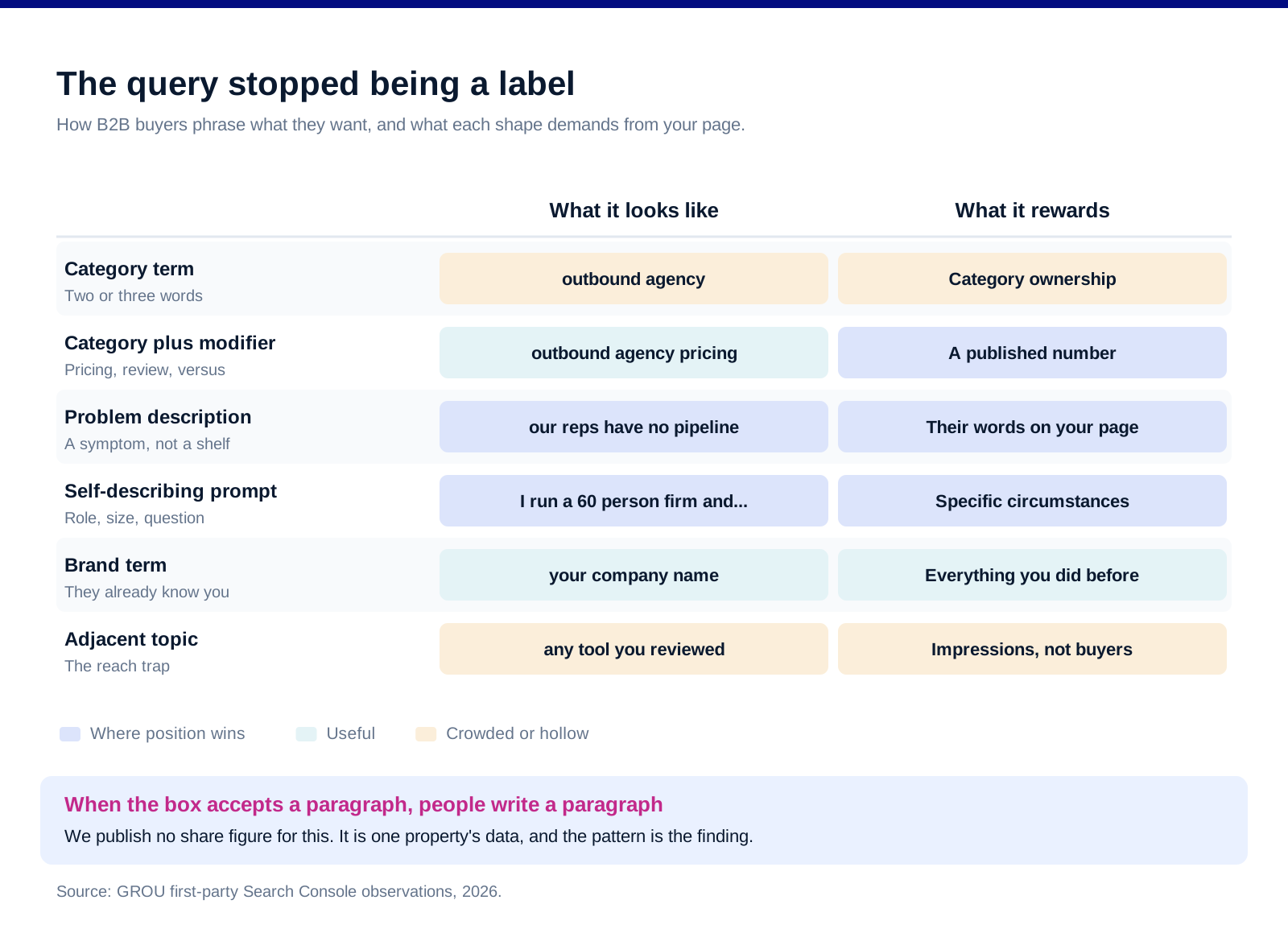
Short category queries still exist and they are crowded. Two or three words naming a service. Everyone in your category is competing for them and the intent behind them is ambiguous.
The long queries are the interesting ones. In our own Search Console data we see queries that open by describing the searcher, along the lines of a role, a company size and a situation, and then ask a specific question. They read like the opening of a conversation rather than a search.
That shape is a consequence of how people now search. When the interface accepts a paragraph, people write a paragraph. The query stops being a label for a category and becomes a description of a circumstance.
Which changes what a page has to contain to be retrievable. A page that says what category you are in matches a category term. A page that describes a buyer's circumstance, in the buyer's words, can match a description of that circumstance.
We are not publishing volumes for this. It is one site's data, the pattern is what matters, and a share figure from a single property would imply more than it can support.
And it does not mean short queries stopped mattering. It means the set of things you can be found for got wider, and the wider part rewards specificity rather than category ownership.
There is no AI positioning trick
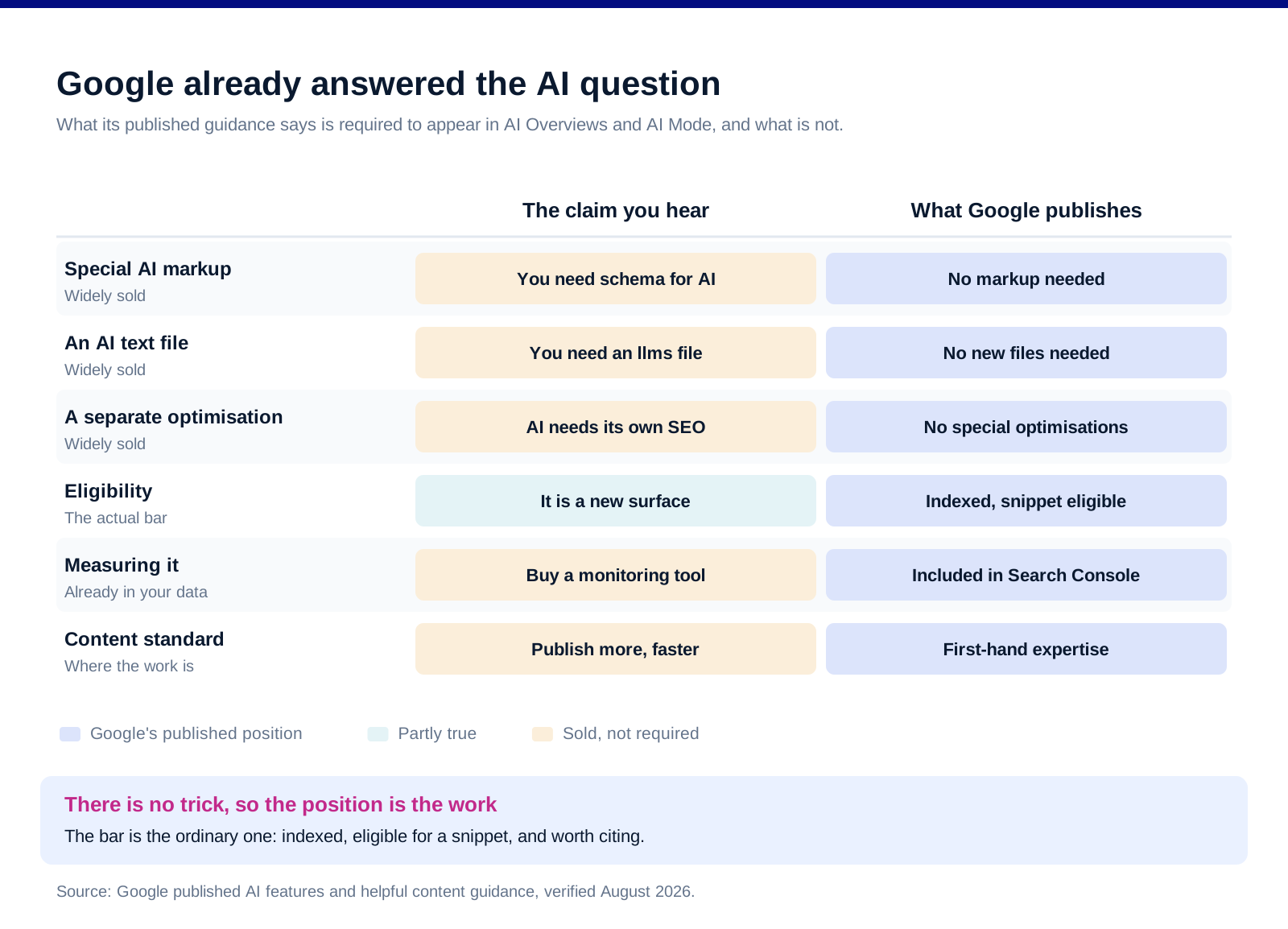
Google states the requirement plainly. Its AI features guidance says "There are no additional requirements to appear in AI Overviews or AI Mode, nor other special optimizations necessary."
And explicitly rules out the thing people are selling. The same page says "You don't need to create new machine readable files, AI text files, or markup to appear in these features."
Eligibility is the ordinary standard. To be a supporting link, "a page must be indexed and eligible to be shown in Google Search with a snippet, fulfilling the Search technical requirements."
The traffic is already in your reporting. Google states that "sites appearing in AI features (such as AI Overviews and AI Mode) are included in the overall search traffic in Search Console", so you do not need a separate product to know whether anything is happening.
Which leaves the content standard as the whole game. Google's helpful content guidance asks whether content demonstrates "first-hand expertise and a depth of knowledge (for example, expertise that comes from having actually used a product or service, or visiting a place)", and warns against "producing lots of content on many different topics in hopes that some of it might perform well in search results".
That second warning is a positioning diagnosis. A services firm publishing about everything adjacent to its market has a positioning problem that shows up as a content problem.
Position on the problem, not the category
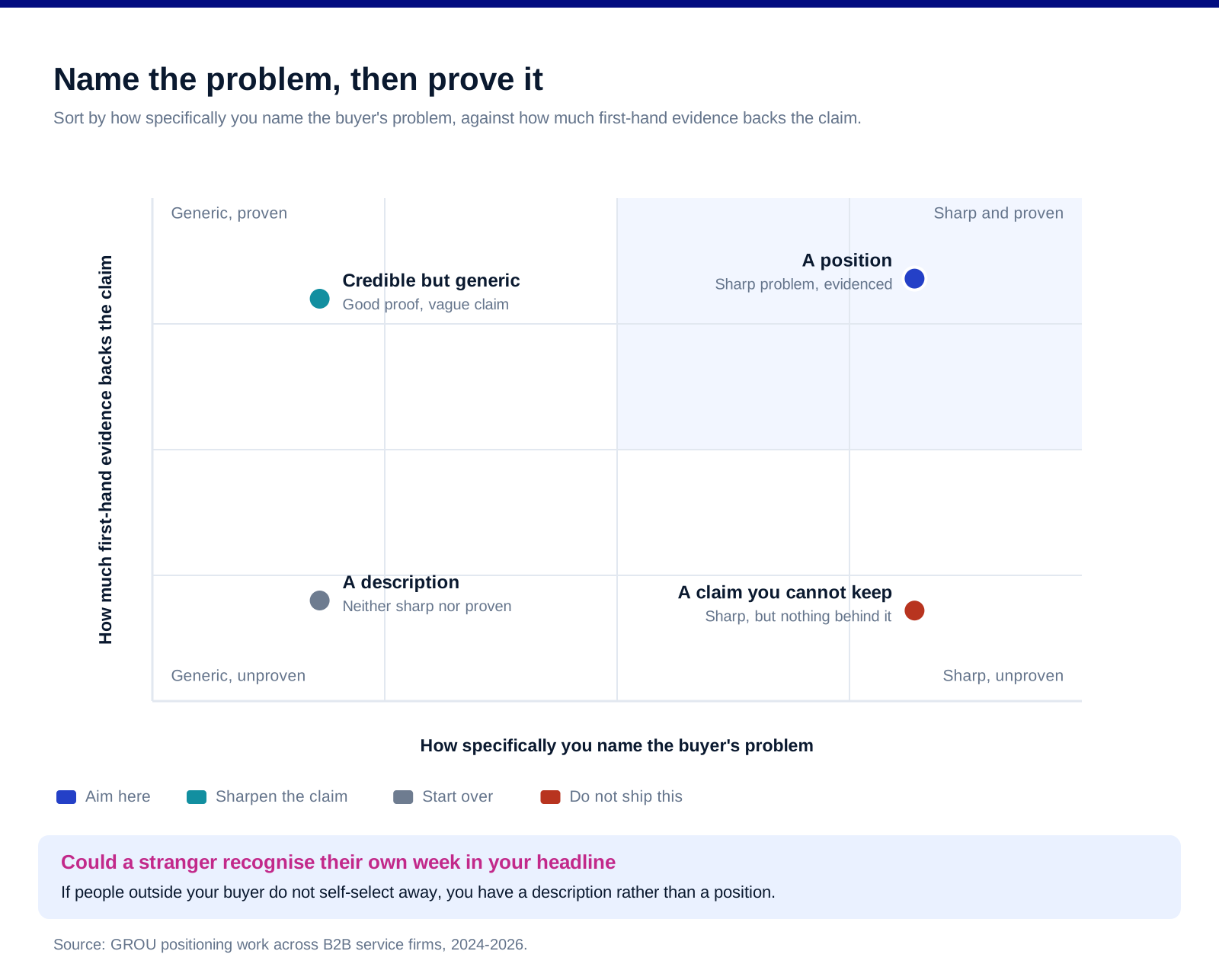
Category positioning tells the buyer what shelf you are on. Useful when the buyer already knows they want that shelf. Useless when they are describing a symptom.
Problem positioning names the situation they are actually in. Not "outbound agency" but the state of affairs that makes someone go looking, described the way they would describe it to a colleague.
The test is whether a stranger could match themselves to it. Read your homepage headline and ask whether a buyer who has never heard of your category would recognise their own week in it.
Naming what you replace does most of the work. Buyers place you fastest against the thing they are currently doing badly, whether that is an internal hire, a freelancer, a tool they bought and did not implement, or nothing at all.
And specificity is not the same as narrowness. Naming a sharp problem does not stop you serving adjacent ones. It gives someone a reason to start a conversation, which is the only job the positioning has.
The five things a services page has to name
The problem, in their words. Not the service. The situation that makes someone start looking, written in language a buyer would use rather than language a vendor would use.
Who has it. A role and a context specific enough that people outside it self-select away. A page that tries not to exclude anyone gives nobody a reason to recognise themselves.
What you replace. The status quo you are the alternative to. This is the single fastest way a buyer works out what you are.
The evidence, first-hand. Google's own standard asks for expertise "that comes from having actually used a product or service". For a services firm that means specifics from work you have done rather than restated industry commentary.
A number they can defend internally. Buyers need a figure to take to someone else. Published usability research on B2B sites is blunt about the cost of withholding it: Nielsen Norman Group reports that "participants go to competitors' sites when websites do not show prices" and that "People view companies that hide costs as being evasive and untrustworthy". If you cannot publish a rate, publish a floor, a range or a worked scenario. Our pricing page piece covers the mechanics.
And the machine-readable version, if you want it. Schema.org's Service type gives you serviceType, audience, areaServed, provider and offers, which is a useful discipline even though Google says no special markup is required. If you cannot fill in audience and offers, the positioning is not finished.
Where this goes wrong for service firms
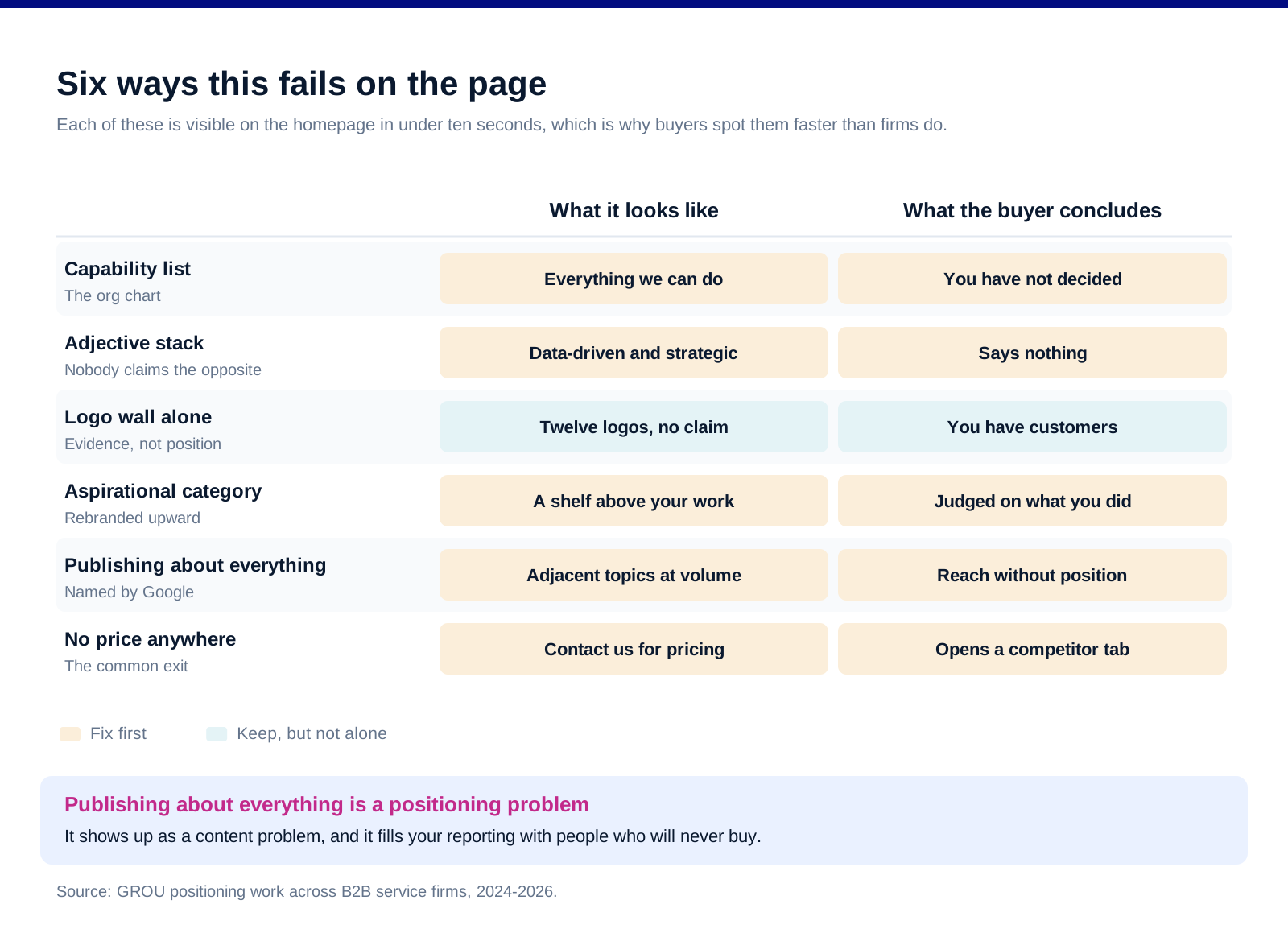
Positioning by capability list. Everything you can do, in order of what you can do, which is an organisation chart rather than a position.
Positioning by adjective. Data-driven, strategic, partner-led. These are not claims because nobody claims the opposite.
Positioning by client logo. Logos are evidence, not position. They tell a buyer you have customers, not whether you solve their problem.
Positioning by category you would like to be in. Common when a firm rebrands upward before its work has changed. Buyers place you by what you did, not by what the site says.
Publishing about everything. The pattern Google names directly, and it usually means the firm has not decided who it is for. It also fills your reporting with impressions from people who will never buy.
Refusing to say the price. Covered above, and it is the most common single reason a qualified buyer leaves without contacting you.
FAQ
What is positioning for a B2B services firm?
The decision about which problem you are the obvious answer to, and for whom. It is not a tagline or a category label. In practice it shows up as whether a buyer who has never heard of your category can read your page and recognise their own situation in it, which is also what makes the page retrievable when someone describes that situation in a long query.
Has AI search changed B2B positioning?
It has changed the input more than the output. Queries increasingly arrive as descriptions of a person and a situation rather than as category labels, which rewards pages that describe circumstances specifically. On the output side Google states there are no additional requirements to appear in AI Overviews or AI Mode and no special markup to create, so there is no optimisation trick to buy.
Do you need special markup or an AI text file to appear in AI Overviews?
No. Google states directly that "You don't need to create new machine readable files, AI text files, or markup to appear in these features", and that a page needs only to be indexed and eligible to be shown in Search with a snippet. Schema markup remains useful as a discipline for describing a service, but it is not an eligibility requirement for these surfaces.
Should a services firm publish prices?
Publish something. Nielsen Norman Group's research on B2B buyers found that participants go to competitors' sites when a website does not show prices, and that people view companies hiding costs as evasive and untrustworthy. Where an exact figure is impossible, a floor, a range or a worked scenario with a real number in it does most of the same work.
How narrow should positioning be?
Narrow enough that people outside your intended buyer self-select away, which is uncomfortable and is the point. Naming a sharp problem does not prevent you serving adjacent ones once a conversation starts. It gives a specific person a reason to begin that conversation, which is the only job positioning has to do.
How do you know if your positioning is working?
Look at what you are found for rather than what you rank for. If your query data is dominated by terms unrelated to what you sell, you have reach without position. If long, specific queries describing your buyer's situation are arriving and converting, the positioning is doing its job even when total impressions are lower.
Bottom line
Open your own Search Console before you open a blank document. The queries tell you whether you are being found for the problem you solve or for a pile of adjacent topics, and that diagnosis is more useful than any framework. Then accept what Google has said plainly: there is no special file, no markup, no optimisation to buy for AI surfaces, only the ordinary standard of being indexed and being worth citing. So the work is positioning work. Name the problem in the buyer's words, name who has it tightly enough that others leave, name what you replace, show evidence from work you actually did, and give a number a buyer can defend to a colleague. If you cannot fill in who it is for and what it costs, you have a description rather than a position.
Want the demand built rather than the homepage rewritten again? Book a call with GROU. We run lead generation, outbound and LinkedIn content inside B2B revenue engines across verticals.
We are GROU, a B2B pipeline agency that runs lead generation, outbound, and LinkedIn content for clients across manufacturing, fintech, iGaming, software, and professional services. The query observations above come from our own Search Console property, described as a pattern rather than published as figures, because one site's data cannot support a share claim.
Something has changed in how buyers reach a services firm, and you can see it in your own Search Console if you look at the long queries rather than the short ones.
A growing share of what arrives is not a category name. It is a sentence in which the buyer describes themselves and then asks their question. Positioning that only works when somebody types the name of your category is losing reach to positioning that describes the buyer's situation.
TL;DR
Read your own query data before you rewrite a word of your site. In ours, a meaningful share of long queries now arrive as self-describing prompts, in the shape of a role, a company size and a question, rather than as a category term. That is what AI-mediated search does to the input side. On the output side, Google is unusually direct about what it takes to appear in those surfaces: "There are no additional requirements to appear in AI Overviews or AI Mode, nor other special optimizations necessary", and "You don't need to create new machine readable files, AI text files, or markup to appear in these features." So there is no trick. What there is instead is a content standard, and Google's own self-assessment asks whether your content "clearly demonstrate[s] first-hand expertise and a depth of knowledge" and whether you have "an existing or intended audience for your business or site that would find the content useful if they came directly to you". For a services firm, that turns positioning from a brand exercise into a retrieval problem. Name the problem in the buyer's words, name who has it, name what you replace, publish the evidence, and give a number they can defend internally.
What the queries actually look like now
Short category queries still exist and they are crowded. Two or three words naming a service. Everyone in your category is competing for them and the intent behind them is ambiguous.
The long queries are the interesting ones. In our own Search Console data we see queries that open by describing the searcher, along the lines of a role, a company size and a situation, and then ask a specific question. They read like the opening of a conversation rather than a search.
That shape is a consequence of how people now search. When the interface accepts a paragraph, people write a paragraph. The query stops being a label for a category and becomes a description of a circumstance.
Which changes what a page has to contain to be retrievable. A page that says what category you are in matches a category term. A page that describes a buyer's circumstance, in the buyer's words, can match a description of that circumstance.
We are not publishing volumes for this. It is one site's data, the pattern is what matters, and a share figure from a single property would imply more than it can support.
And it does not mean short queries stopped mattering. It means the set of things you can be found for got wider, and the wider part rewards specificity rather than category ownership.
There is no AI positioning trick
Google states the requirement plainly. Its AI features guidance says "There are no additional requirements to appear in AI Overviews or AI Mode, nor other special optimizations necessary."
And explicitly rules out the thing people are selling. The same page says "You don't need to create new machine readable files, AI text files, or markup to appear in these features."
Eligibility is the ordinary standard. To be a supporting link, "a page must be indexed and eligible to be shown in Google Search with a snippet, fulfilling the Search technical requirements."
The traffic is already in your reporting. Google states that "sites appearing in AI features (such as AI Overviews and AI Mode) are included in the overall search traffic in Search Console", so you do not need a separate product to know whether anything is happening.
Which leaves the content standard as the whole game. Google's helpful content guidance asks whether content demonstrates "first-hand expertise and a depth of knowledge (for example, expertise that comes from having actually used a product or service, or visiting a place)", and warns against "producing lots of content on many different topics in hopes that some of it might perform well in search results".
That second warning is a positioning diagnosis. A services firm publishing about everything adjacent to its market has a positioning problem that shows up as a content problem.
Position on the problem, not the category
Category positioning tells the buyer what shelf you are on. Useful when the buyer already knows they want that shelf. Useless when they are describing a symptom.
Problem positioning names the situation they are actually in. Not "outbound agency" but the state of affairs that makes someone go looking, described the way they would describe it to a colleague.
The test is whether a stranger could match themselves to it. Read your homepage headline and ask whether a buyer who has never heard of your category would recognise their own week in it.
Naming what you replace does most of the work. Buyers place you fastest against the thing they are currently doing badly, whether that is an internal hire, a freelancer, a tool they bought and did not implement, or nothing at all.
And specificity is not the same as narrowness. Naming a sharp problem does not stop you serving adjacent ones. It gives someone a reason to start a conversation, which is the only job the positioning has.
The five things a services page has to name
The problem, in their words. Not the service. The situation that makes someone start looking, written in language a buyer would use rather than language a vendor would use.
Who has it. A role and a context specific enough that people outside it self-select away. A page that tries not to exclude anyone gives nobody a reason to recognise themselves.
What you replace. The status quo you are the alternative to. This is the single fastest way a buyer works out what you are.
The evidence, first-hand. Google's own standard asks for expertise "that comes from having actually used a product or service". For a services firm that means specifics from work you have done rather than restated industry commentary.
A number they can defend internally. Buyers need a figure to take to someone else. Published usability research on B2B sites is blunt about the cost of withholding it: Nielsen Norman Group reports that "participants go to competitors' sites when websites do not show prices" and that "People view companies that hide costs as being evasive and untrustworthy". If you cannot publish a rate, publish a floor, a range or a worked scenario. Our pricing page piece covers the mechanics.
And the machine-readable version, if you want it. Schema.org's Service type gives you serviceType, audience, areaServed, provider and offers, which is a useful discipline even though Google says no special markup is required. If you cannot fill in audience and offers, the positioning is not finished.
Where this goes wrong for service firms
Positioning by capability list. Everything you can do, in order of what you can do, which is an organisation chart rather than a position.
Positioning by adjective. Data-driven, strategic, partner-led. These are not claims because nobody claims the opposite.
Positioning by client logo. Logos are evidence, not position. They tell a buyer you have customers, not whether you solve their problem.
Positioning by category you would like to be in. Common when a firm rebrands upward before its work has changed. Buyers place you by what you did, not by what the site says.
Publishing about everything. The pattern Google names directly, and it usually means the firm has not decided who it is for. It also fills your reporting with impressions from people who will never buy.
Refusing to say the price. Covered above, and it is the most common single reason a qualified buyer leaves without contacting you.
FAQ
What is positioning for a B2B services firm?
The decision about which problem you are the obvious answer to, and for whom. It is not a tagline or a category label. In practice it shows up as whether a buyer who has never heard of your category can read your page and recognise their own situation in it, which is also what makes the page retrievable when someone describes that situation in a long query.
Has AI search changed B2B positioning?
It has changed the input more than the output. Queries increasingly arrive as descriptions of a person and a situation rather than as category labels, which rewards pages that describe circumstances specifically. On the output side Google states there are no additional requirements to appear in AI Overviews or AI Mode and no special markup to create, so there is no optimisation trick to buy.
Do you need special markup or an AI text file to appear in AI Overviews?
No. Google states directly that "You don't need to create new machine readable files, AI text files, or markup to appear in these features", and that a page needs only to be indexed and eligible to be shown in Search with a snippet. Schema markup remains useful as a discipline for describing a service, but it is not an eligibility requirement for these surfaces.
Should a services firm publish prices?
Publish something. Nielsen Norman Group's research on B2B buyers found that participants go to competitors' sites when a website does not show prices, and that people view companies hiding costs as evasive and untrustworthy. Where an exact figure is impossible, a floor, a range or a worked scenario with a real number in it does most of the same work.
How narrow should positioning be?
Narrow enough that people outside your intended buyer self-select away, which is uncomfortable and is the point. Naming a sharp problem does not prevent you serving adjacent ones once a conversation starts. It gives a specific person a reason to begin that conversation, which is the only job positioning has to do.
How do you know if your positioning is working?
Look at what you are found for rather than what you rank for. If your query data is dominated by terms unrelated to what you sell, you have reach without position. If long, specific queries describing your buyer's situation are arriving and converting, the positioning is doing its job even when total impressions are lower.
Bottom line
Open your own Search Console before you open a blank document. The queries tell you whether you are being found for the problem you solve or for a pile of adjacent topics, and that diagnosis is more useful than any framework. Then accept what Google has said plainly: there is no special file, no markup, no optimisation to buy for AI surfaces, only the ordinary standard of being indexed and being worth citing. So the work is positioning work. Name the problem in the buyer's words, name who has it tightly enough that others leave, name what you replace, show evidence from work you actually did, and give a number a buyer can defend to a colleague. If you cannot fill in who it is for and what it costs, you have a description rather than a position.
Want the demand built rather than the homepage rewritten again? Book a call with GROU. We run lead generation, outbound and LinkedIn content inside B2B revenue engines across verticals.
We are GROU, a B2B pipeline agency that runs lead generation, outbound, and LinkedIn content for clients across manufacturing, fintech, iGaming, software, and professional services. The query observations above come from our own Search Console property, described as a pattern rather than published as figures, because one site's data cannot support a share claim.
Something has changed in how buyers reach a services firm, and you can see it in your own Search Console if you look at the long queries rather than the short ones.
A growing share of what arrives is not a category name. It is a sentence in which the buyer describes themselves and then asks their question. Positioning that only works when somebody types the name of your category is losing reach to positioning that describes the buyer's situation.
TL;DR
Read your own query data before you rewrite a word of your site. In ours, a meaningful share of long queries now arrive as self-describing prompts, in the shape of a role, a company size and a question, rather than as a category term. That is what AI-mediated search does to the input side. On the output side, Google is unusually direct about what it takes to appear in those surfaces: "There are no additional requirements to appear in AI Overviews or AI Mode, nor other special optimizations necessary", and "You don't need to create new machine readable files, AI text files, or markup to appear in these features." So there is no trick. What there is instead is a content standard, and Google's own self-assessment asks whether your content "clearly demonstrate[s] first-hand expertise and a depth of knowledge" and whether you have "an existing or intended audience for your business or site that would find the content useful if they came directly to you". For a services firm, that turns positioning from a brand exercise into a retrieval problem. Name the problem in the buyer's words, name who has it, name what you replace, publish the evidence, and give a number they can defend internally.
What the queries actually look like now
Short category queries still exist and they are crowded. Two or three words naming a service. Everyone in your category is competing for them and the intent behind them is ambiguous.
The long queries are the interesting ones. In our own Search Console data we see queries that open by describing the searcher, along the lines of a role, a company size and a situation, and then ask a specific question. They read like the opening of a conversation rather than a search.
That shape is a consequence of how people now search. When the interface accepts a paragraph, people write a paragraph. The query stops being a label for a category and becomes a description of a circumstance.
Which changes what a page has to contain to be retrievable. A page that says what category you are in matches a category term. A page that describes a buyer's circumstance, in the buyer's words, can match a description of that circumstance.
We are not publishing volumes for this. It is one site's data, the pattern is what matters, and a share figure from a single property would imply more than it can support.
And it does not mean short queries stopped mattering. It means the set of things you can be found for got wider, and the wider part rewards specificity rather than category ownership.
There is no AI positioning trick
Google states the requirement plainly. Its AI features guidance says "There are no additional requirements to appear in AI Overviews or AI Mode, nor other special optimizations necessary."
And explicitly rules out the thing people are selling. The same page says "You don't need to create new machine readable files, AI text files, or markup to appear in these features."
Eligibility is the ordinary standard. To be a supporting link, "a page must be indexed and eligible to be shown in Google Search with a snippet, fulfilling the Search technical requirements."
The traffic is already in your reporting. Google states that "sites appearing in AI features (such as AI Overviews and AI Mode) are included in the overall search traffic in Search Console", so you do not need a separate product to know whether anything is happening.
Which leaves the content standard as the whole game. Google's helpful content guidance asks whether content demonstrates "first-hand expertise and a depth of knowledge (for example, expertise that comes from having actually used a product or service, or visiting a place)", and warns against "producing lots of content on many different topics in hopes that some of it might perform well in search results".
That second warning is a positioning diagnosis. A services firm publishing about everything adjacent to its market has a positioning problem that shows up as a content problem.
Position on the problem, not the category
Category positioning tells the buyer what shelf you are on. Useful when the buyer already knows they want that shelf. Useless when they are describing a symptom.
Problem positioning names the situation they are actually in. Not "outbound agency" but the state of affairs that makes someone go looking, described the way they would describe it to a colleague.
The test is whether a stranger could match themselves to it. Read your homepage headline and ask whether a buyer who has never heard of your category would recognise their own week in it.
Naming what you replace does most of the work. Buyers place you fastest against the thing they are currently doing badly, whether that is an internal hire, a freelancer, a tool they bought and did not implement, or nothing at all.
And specificity is not the same as narrowness. Naming a sharp problem does not stop you serving adjacent ones. It gives someone a reason to start a conversation, which is the only job the positioning has.
The five things a services page has to name
The problem, in their words. Not the service. The situation that makes someone start looking, written in language a buyer would use rather than language a vendor would use.
Who has it. A role and a context specific enough that people outside it self-select away. A page that tries not to exclude anyone gives nobody a reason to recognise themselves.
What you replace. The status quo you are the alternative to. This is the single fastest way a buyer works out what you are.
The evidence, first-hand. Google's own standard asks for expertise "that comes from having actually used a product or service". For a services firm that means specifics from work you have done rather than restated industry commentary.
A number they can defend internally. Buyers need a figure to take to someone else. Published usability research on B2B sites is blunt about the cost of withholding it: Nielsen Norman Group reports that "participants go to competitors' sites when websites do not show prices" and that "People view companies that hide costs as being evasive and untrustworthy". If you cannot publish a rate, publish a floor, a range or a worked scenario. Our pricing page piece covers the mechanics.
And the machine-readable version, if you want it. Schema.org's Service type gives you serviceType, audience, areaServed, provider and offers, which is a useful discipline even though Google says no special markup is required. If you cannot fill in audience and offers, the positioning is not finished.
Where this goes wrong for service firms
Positioning by capability list. Everything you can do, in order of what you can do, which is an organisation chart rather than a position.
Positioning by adjective. Data-driven, strategic, partner-led. These are not claims because nobody claims the opposite.
Positioning by client logo. Logos are evidence, not position. They tell a buyer you have customers, not whether you solve their problem.
Positioning by category you would like to be in. Common when a firm rebrands upward before its work has changed. Buyers place you by what you did, not by what the site says.
Publishing about everything. The pattern Google names directly, and it usually means the firm has not decided who it is for. It also fills your reporting with impressions from people who will never buy.
Refusing to say the price. Covered above, and it is the most common single reason a qualified buyer leaves without contacting you.
FAQ
What is positioning for a B2B services firm?
The decision about which problem you are the obvious answer to, and for whom. It is not a tagline or a category label. In practice it shows up as whether a buyer who has never heard of your category can read your page and recognise their own situation in it, which is also what makes the page retrievable when someone describes that situation in a long query.
Has AI search changed B2B positioning?
It has changed the input more than the output. Queries increasingly arrive as descriptions of a person and a situation rather than as category labels, which rewards pages that describe circumstances specifically. On the output side Google states there are no additional requirements to appear in AI Overviews or AI Mode and no special markup to create, so there is no optimisation trick to buy.
Do you need special markup or an AI text file to appear in AI Overviews?
No. Google states directly that "You don't need to create new machine readable files, AI text files, or markup to appear in these features", and that a page needs only to be indexed and eligible to be shown in Search with a snippet. Schema markup remains useful as a discipline for describing a service, but it is not an eligibility requirement for these surfaces.
Should a services firm publish prices?
Publish something. Nielsen Norman Group's research on B2B buyers found that participants go to competitors' sites when a website does not show prices, and that people view companies hiding costs as evasive and untrustworthy. Where an exact figure is impossible, a floor, a range or a worked scenario with a real number in it does most of the same work.
How narrow should positioning be?
Narrow enough that people outside your intended buyer self-select away, which is uncomfortable and is the point. Naming a sharp problem does not prevent you serving adjacent ones once a conversation starts. It gives a specific person a reason to begin that conversation, which is the only job positioning has to do.
How do you know if your positioning is working?
Look at what you are found for rather than what you rank for. If your query data is dominated by terms unrelated to what you sell, you have reach without position. If long, specific queries describing your buyer's situation are arriving and converting, the positioning is doing its job even when total impressions are lower.
Bottom line
Open your own Search Console before you open a blank document. The queries tell you whether you are being found for the problem you solve or for a pile of adjacent topics, and that diagnosis is more useful than any framework. Then accept what Google has said plainly: there is no special file, no markup, no optimisation to buy for AI surfaces, only the ordinary standard of being indexed and being worth citing. So the work is positioning work. Name the problem in the buyer's words, name who has it tightly enough that others leave, name what you replace, show evidence from work you actually did, and give a number a buyer can defend to a colleague. If you cannot fill in who it is for and what it costs, you have a description rather than a position.
Want the demand built rather than the homepage rewritten again? Book a call with GROU. We run lead generation, outbound and LinkedIn content inside B2B revenue engines across verticals.
We are GROU, a B2B pipeline agency that runs lead generation, outbound, and LinkedIn content for clients across manufacturing, fintech, iGaming, software, and professional services. The query observations above come from our own Search Console property, described as a pattern rather than published as figures, because one site's data cannot support a share claim.
Pipeline OS Newsletter
Build qualified pipeline
Get weekly tactics to generate demand, improve lead quality, and book more meetings.







Trusted by industry leaders
Trusted by industry leaders
Trusted by industry leaders
Ready to build qualified pipeline?
Ready to build qualified pipeline?
Ready to build qualified pipeline?
Book a call to see if we're the right fit, or take the 2-minute quiz to get a clear starting point.
Book a call to see if we're the right fit, or take the 2-minute quiz to get a clear starting point.
Book a call to see if we're the right fit, or take the 2-minute quiz to get a clear starting point.
" height="30.21639343089746px" id="hfGbXmQR2" width="30.216393430897455px"/></svg>)
Copyright © 2026 – All Right Reserved
Copyright © 2026 – All Right Reserved
Copyright © 2026 – All Right Reserved