%22%3E%3C/path%3E%3Cpath d=%22M 63.072 7.554 C 62.258 8.022 61.577 8.689 61.092 9.493 L 61.092 7.076 L 57.158 7.076 L 57.158 22.64 L 61.089 22.64 L 61.089 14.888 C 61.089 13.446 61.403 12.434 62.03 11.853 C 62.818 11.218 63.818 10.907 64.826 10.982 L 65.868 10.982 L 65.868 6.851 C 64.891 6.834 63.926 7.076 63.073 7.554 Z%22 fill=%22rgb(17,17,17)%22%3E%3C/path%3E%3Cpath d=%22M 78.916 7.82 C 76.363 6.49 73.321 6.49 70.768 7.82 C 69.562 8.473 68.564 9.451 67.888 10.644 C 67.167 11.931 66.803 13.387 66.834 14.862 C 66.804 16.332 67.157 17.785 67.86 19.077 C 68.515 20.267 69.494 21.246 70.684 21.901 C 71.924 22.576 73.318 22.92 74.73 22.898 C 76.164 22.918 77.58 22.575 78.846 21.901 C 80.062 21.247 81.073 20.27 81.768 19.077 C 82.506 17.797 82.88 16.339 82.85 14.862 C 82.88 13.389 82.517 11.934 81.797 10.647 C 81.12 9.455 80.122 8.477 78.917 7.824 M 78.803 14.862 C 78.829 15.739 78.636 16.608 78.241 17.391 C 77.903 18.046 77.38 18.588 76.738 18.95 C 76.124 19.293 75.432 19.472 74.729 19.47 C 73.668 19.497 72.648 19.061 71.934 18.276 C 71.139 17.323 70.741 16.1 70.823 14.862 C 70.741 13.62 71.149 12.395 71.959 11.45 C 72.687 10.667 73.715 10.233 74.783 10.256 C 75.859 10.236 76.894 10.67 77.635 11.45 C 78.464 12.387 78.884 13.616 78.801 14.864%22 fill=%22rgb(17,17,17)%22%3E%3C/path%3E%3Cpath d=%22M 95.906 7.076 L 95.906 15.646 C 95.975 16.68 95.643 17.701 94.979 18.498 C 94.311 19.184 93.379 19.547 92.422 19.495 C 91.475 19.544 90.553 19.18 89.894 18.498 C 89.23 17.701 88.898 16.68 88.967 15.646 L 88.967 7.076 L 85.033 7.076 L 85.033 16.207 C 85 17.449 85.275 18.68 85.834 19.79 C 86.327 20.75 87.095 21.542 88.039 22.065 C 89.033 22.594 90.145 22.861 91.271 22.838 C 92.188 22.847 93.095 22.65 93.926 22.263 C 94.708 21.905 95.388 21.36 95.906 20.675 L 95.906 22.645 L 99.865 22.645 L 99.865 7.076 Z%22 fill=%22rgb(17,17,17)%22%3E%3C/path%3E%3Cpath d=%22M 4.513 15.626 C 4.511 10.815 7.606 6.549 12.181 5.059 C 16.756 3.57 21.77 5.195 24.601 9.086 L 27.816 5.87 C 24.074 1.186 17.981 -0.943 12.137 0.393 C 6.292 1.728 1.728 6.292 0.393 12.137 C -0.943 17.981 1.186 24.074 5.87 27.816 L 9.085 24.601 C 6.214 22.512 4.515 19.177 4.513 15.626%22 fill=%22rgb(32,62,235)%22%3E%3C/path%3E%3Cpath d=%22M 17.114 14.343 L 13.354 18.01 L 13.354 18.026 L 21.071 18.026 L 11.412 27.609 L 17.389 27.609 L 23.999 21.081 L 23.999 28.316 L 24.005 28.316 L 27.967 24.393 L 27.967 14.343 Z%22 fill=%22rgb(32,62,235)%22%3E%3C/path%3E%3C/g%3E%3C/svg%3E) ×
× ××
××›
›
›
›
B2B referral programme playbook 2026
B2B referral programme playbook 2026
B2B referral programme playbook 2026
B2B referral programme playbook 2026
B2B referral programme playbook 2026
B2B referral programme playbook 2026

Author
Aljaz Peklaj

Most B2B referral programmes fail for two reasons that have nothing to do with the size of the incentive. The ask is too vague to act on, and it arrives at a moment when the person has nothing fresh to say about you.
The third reason is the one nobody plans for. The moment you attach money to a referral, the recommendation stops being a private opinion and becomes marketing you are responsible for.
TL;DR
A referral programme is three decisions: what you ask for, when you ask, and whether you pay. The first two decide whether it works and the third decides which rules you have signed up to. An unpaid introduction between two people is the clean case. Once an incentive exists, the FTC's Endorsement Guides treat it as a material connection and the FTC is explicit that "Your company is ultimately responsible for what others do on your behalf". A refer-a-friend email is your message, not your customer's: the ICO states that if you encourage people to forward your marketing "you're likely to be instigating those messages and you must comply with PECR", and that "You must not rely on the soft opt-ins for 'refer a friend' schemes. You must obtain valid consent." The FTC says the same thing about incentives in a different register, noting that a seller offering "money, coupons, discounts, awards, additional entries in a sweepstakes, or the like in exchange for forwarding a message" may be responsible for CAN-SPAM compliance, where each violating email carries penalties of up to $53,088. And employees praising their employer are insiders whose relationship must be disclosed clearly and conspicuously under the Rule on the Use of Consumer Reviews and Testimonials, in effect since 21 October 2024. Ask for one named person, ask immediately after a delivered result, and think very hard before paying.
Why the programme is not producing referrals
The ask is almost always too broad to answer. "Let us know if you think of anyone" asks the other person to run a search across everyone they know against criteria they do not have. It is a request for work, delivered as a favour.
And the answer to a broad ask is always the same. They say of course, they mean it, and nothing happens, because there was no specific action attached to the yes.
The moment is usually wrong too. Most programmes ask at contract signature or on a quarterly cadence, which are calendar events for you and nothing at all for them. The moment that matters is when something you did just worked.
The incentive is the part teams tune, and it is the least important variable. In B2B the referrer is usually risking their professional reputation with a peer, and a voucher does not price that. What prices it is confidence that you will not embarrass them.
Which is why the best referral source is a client who has just been made to look good internally. They are not doing you a favour at that point. They are telling a colleague about something that worked, and your job is to make that easy rather than to pay for it.
The moment is the whole programme
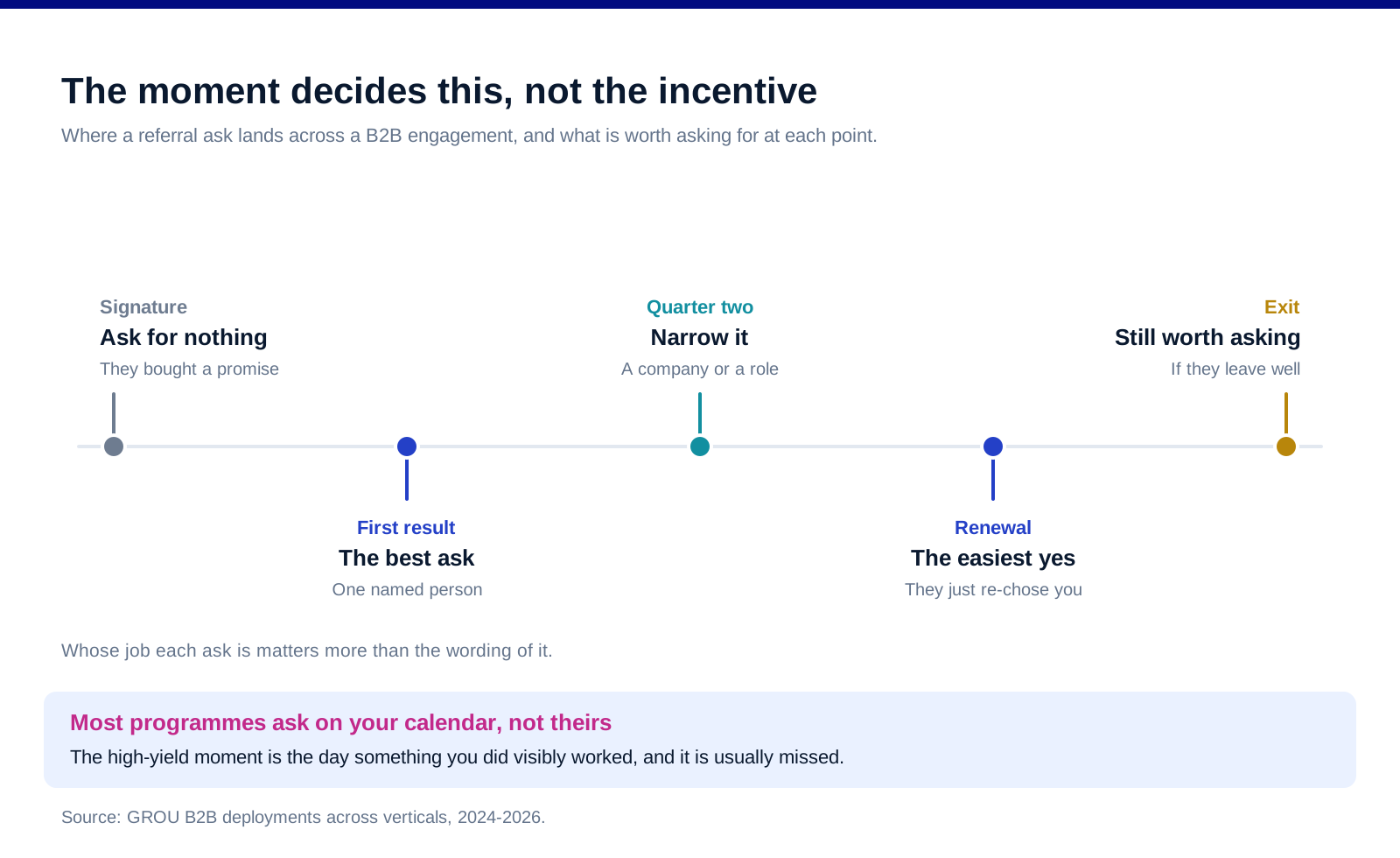
Do not ask at signature. They have bought a promise, not a result. An ask at this point tells them you are already thinking about your next deal, which is the opposite of the impression the first month should create.
Ask after the first delivered result. Not a milestone, a result: the thing they can describe to a colleague in one sentence. This is the highest-yield moment in the entire relationship and most teams miss it because nobody has decided whose job it is.
Ask again at the review, and narrow it. By the second quarter you know their market well enough to name a company or a role rather than a category, which converts the ask from a search into a recognition.
Renewal is the easiest yes you will ever get. Somebody who has just chosen to buy again has publicly committed to the decision, and asking then costs you nothing.
And ask when they leave, if they leave well. A client who is offboarding for a reason that is not your fault, a budget cut or a restructure, is often more willing to help than one mid-engagement, because there is nothing left to negotiate.
Write down whose job each of those is. A referral programme that lives in a marketing plan produces nothing. One that lives as a named step in an account manager's process produces referrals, and the difference is entirely administrative.
The incentive is what changes the legal shape
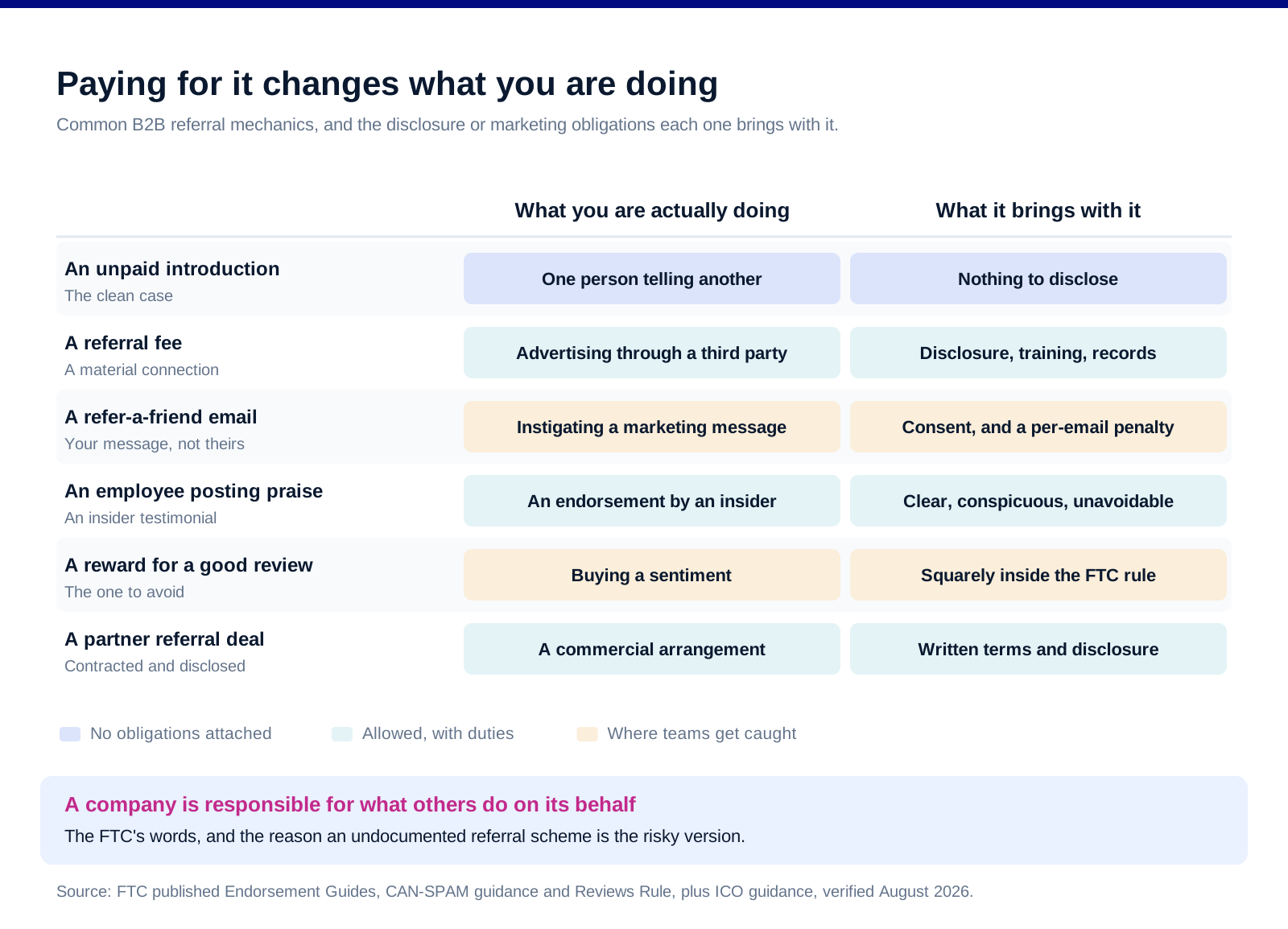
An unpaid introduction is the clean case. The FTC's Endorsement Guides FAQ puts it simply for the equivalent situation: "If you mention a product you paid for yourself, there isn't an issue." Nothing here is a reason to avoid referrals. It is a reason to be careful about paying for them.
A referral fee is a material connection, and the disclosure duty is yours as much as theirs. The same guidance states that "Advertisers need to have reasonable programs in place to train and monitor members of their network" and that "Your company is ultimately responsible for what others do on your behalf". A referral scheme with no written rules and no record of who was told what is the thing that sentence describes.
A refer-a-friend email is your email. The ICO's electronic mail marketing guidance states that "Asking people to send your electronic mail marketing to friends or family is often called 'refer a friend', 'tell a friend' or 'viral marketing'. If you encourage people to do this, you're likely to be instigating those messages and you must comply with PECR", and that "You must not rely on the soft opt-ins for 'refer a friend' schemes. You must obtain valid consent."
The US framing lands in the same place through a different route. The FTC's CAN-SPAM compliance guide states that "If the seller offers money, coupons, discounts, awards, additional entries in a sweepstakes, or the like in exchange for forwarding a message, the seller may be responsible for compliance", and that each separate violating email "is subject to penalties of up to $53,088". One of its eight headline requirements is simply "Monitor what others are doing on your behalf."
Employees are insiders, and that is a separate rule. The Rule on the Use of Consumer Reviews and Testimonials, in effect since 21 October 2024, requires that insiders including employees, managers, officers and their relatives disclose the relationship, with disclosures that are clear, conspicuous and unavoidable. The FTC notes that "a disclosure is avoidable when 'a consumer must take any action, such as clicking on a hyperlink or hovering over an icon, to see' it". Our employee advocacy piece covers how that plays out on LinkedIn specifically.
And the referred contact has rights the moment you use their details. The European Commission's guidance on data received from another source states that an organisation must inform individuals "at the latest at the time of the first communication with them, that it has collected their personal data and that it will be processing it for sending them adverts", and that "individuals will have a right to object to such processing".
One genuinely useful B2B nuance sits alongside all of this. The ICO also states that "You can send unsolicited electronic mail marketing to corporate subscribers without consent or a soft opt-in", which is why B2B outbound to business addresses is possible in the first place. It does not undo the refer-a-friend position above, and none of this is legal advice. Check your own jurisdiction and your own facts.
Designing an ask people can actually answer
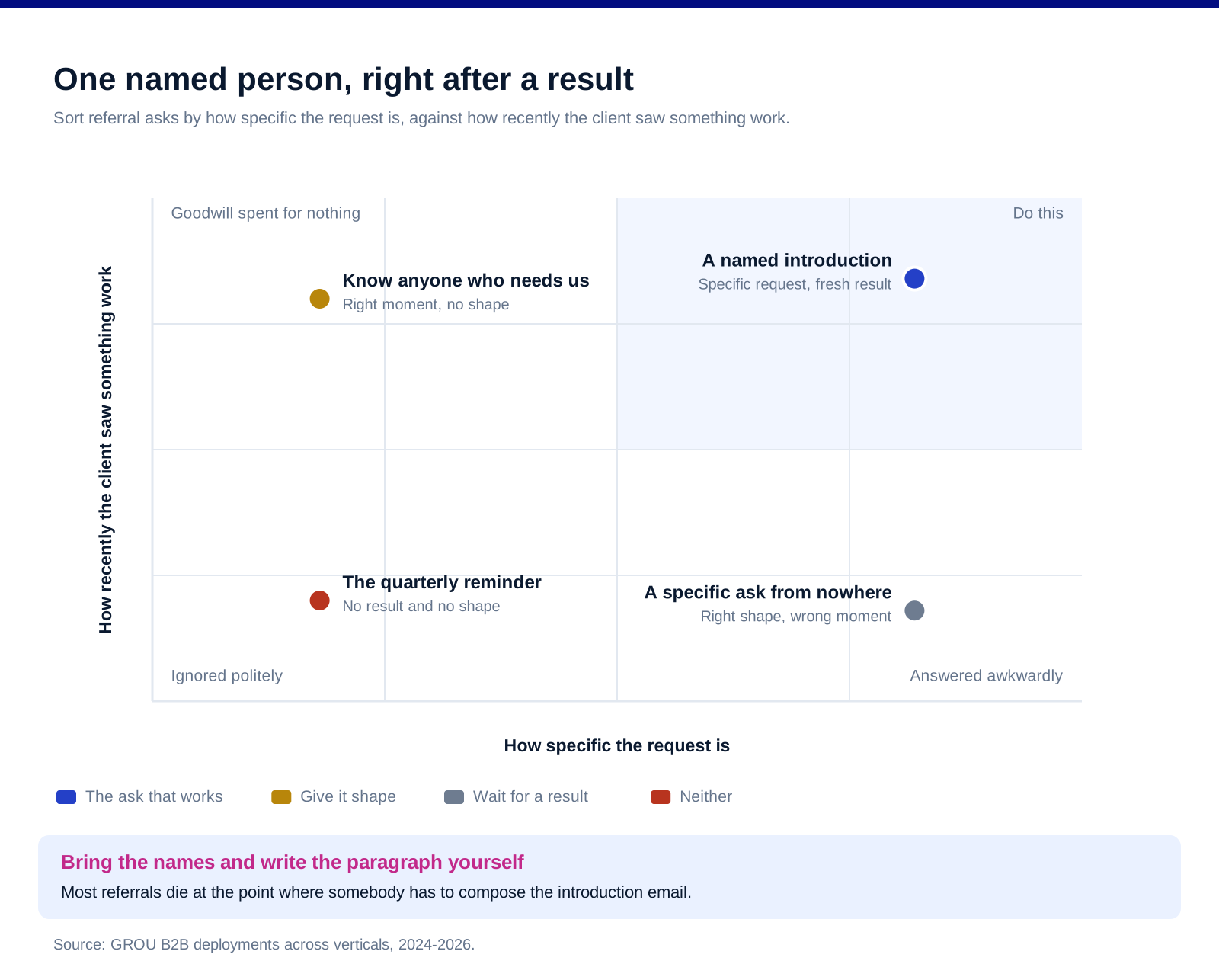
Ask for one person, by name where you can. "Would you introduce me to the operations director at that company you mentioned" is answerable in thirty seconds. "Do you know anyone" is not answerable at all.
Do the research so they do not have to. Bring two or three names you have already identified from their network or their market. You are asking for a warm path to someone specific, not for their address book.
Make the introduction one message long. Write the forwardable paragraph yourself, in their voice, and offer it. Almost every referral that dies, dies at the point where somebody has to compose an email.
Give them a reason that is about the other person. People make introductions to help the person being introduced. Frame it as something useful for their peer rather than as something useful for you.
Never put them in a position where the introduction could embarrass them. The single fastest way to end a referral relationship is to treat the introduction as a lead and run a sequence at it. Our positioning piece covers making the offer clear enough that a referrer can describe it accurately without your help.
And say thank you in a way that is not a payment. Telling them what happened, and telling their boss they helped, is worth more to a professional than a gift card and it carries none of the obligations in the section above.
What to measure
Count asks, not just referrals. A programme producing nothing is almost always a programme where nobody actually asked, and you cannot see that unless the ask is logged.
Count introductions made, separately from meetings held. They fail for different reasons and lumping them together hides which half is broken.
Track time from result to ask. If that number is measured in months, the moment is your problem and no amount of incentive design will fix it.
Do not build a referral attribution model. In B2B the referral is frequently a conversation you never see, surfacing months later as an inbound enquiry that mentions somebody's name. Chasing that into a dashboard produces a false number and a lot of wasted work.
What we do not publish here
Any referral conversion rate or programme benchmark. We have our own figures across our own clients and offers, and they would not predict yours. Every public benchmark on this topic that we have seen comes from a company selling referral software.
A recommended incentive amount. It varies by contract value, by market and by whether an incentive is appropriate at all, and a number here would be invented.
A ranking of referral platforms. We have not run a comparable evaluation across them, so we are not going to imply one.
Legal guidance for your jurisdiction. Everything above is quoted from a published regulator page and linked. What applies to you depends on where you and the recipient are, and on facts we do not have.
FAQ
Should you pay for B2B referrals?
Often not. An incentive turns a private recommendation into a disclosed commercial relationship, brings the FTC's material connection rules into play, and in some markets makes the referrer look compromised to the person they are recommending you to. If you do pay, write the rules down, tell referrers what they must disclose, and keep a record, because the FTC states that a company is ultimately responsible for what others do on its behalf.
When is the best time to ask a client for a referral?
Immediately after a delivered result they can describe in one sentence, and again at renewal. Not at signature, when they have bought a promise rather than an outcome, and not on a quarterly marketing cadence that means nothing to them.
Is a refer-a-friend email legal in B2B?
It is a message you are responsible for rather than one your customer sent. The ICO states that encouraging people to forward your marketing likely makes you the instigator and that you must obtain valid consent rather than relying on soft opt-in for refer-a-friend schemes. The FTC separately warns that offering an incentive to forward a message may make the seller responsible for CAN-SPAM compliance. This is not legal advice.
Do employees have to disclose when they recommend their employer?
Under the FTC's Rule on the Use of Consumer Reviews and Testimonials, in effect since 21 October 2024, insiders including employees, managers, officers and their relatives must disclose the relationship, clearly, conspicuously and unavoidably. The FTC treats a disclosure as avoidable if someone has to click a link or hover over an icon to see it.
What should you actually ask for?
One named person, with a forwardable paragraph already written, framed as something useful for that person. The most common failure is asking a client to search their memory against criteria they do not have, and the second most common is asking them to compose the email themselves.
How do you follow up on a referred contact?
Carefully, and as a person rather than as a sequence. Reference the introduction, say plainly why you are writing, and remember that the European Commission's guidance requires individuals to be informed at the latest at the time of the first communication that their data is being processed for marketing, and that they retain a right to object. Treating a warm introduction like a cold list is how you lose both contacts at once.
Bottom line
Referral programmes do not fail on incentive design. They fail because nobody asked, or because the ask was too broad to answer, or because it landed at a moment when the client had nothing fresh to say. Fix the moment first: name the point after a delivered result, put it in someone's process, and log whether the ask happened. Fix the ask second: one named person, research already done, forwardable paragraph already written. Leave the incentive until last, and be aware that adding one changes what you are doing from a conversation into marketing you are accountable for, with disclosure duties, consent questions and, in the case of forwarded email, a per-message penalty attached. The cheapest referral programme in B2B is a good result and somebody whose job it is to ask.
Want the pipeline built rather than the referral spreadsheet maintained? Book a call with GROU. We run lead generation and outbound inside B2B revenue engines across verticals. If you want the version of this where the trigger is a published date rather than a relationship, our logistics playbook covers it.
We are GROU, a B2B pipeline agency that runs lead generation, outbound, and LinkedIn content for clients across manufacturing, fintech, iGaming, software, and professional services. Nothing in this article is legal advice, every regulatory statement is quoted from the regulator page linked beside it, and the programme design reflects our own B2B deployments between 2024 and 2026, anonymized to protect client confidentiality.
Most B2B referral programmes fail for two reasons that have nothing to do with the size of the incentive. The ask is too vague to act on, and it arrives at a moment when the person has nothing fresh to say about you.
The third reason is the one nobody plans for. The moment you attach money to a referral, the recommendation stops being a private opinion and becomes marketing you are responsible for.
TL;DR
A referral programme is three decisions: what you ask for, when you ask, and whether you pay. The first two decide whether it works and the third decides which rules you have signed up to. An unpaid introduction between two people is the clean case. Once an incentive exists, the FTC's Endorsement Guides treat it as a material connection and the FTC is explicit that "Your company is ultimately responsible for what others do on your behalf". A refer-a-friend email is your message, not your customer's: the ICO states that if you encourage people to forward your marketing "you're likely to be instigating those messages and you must comply with PECR", and that "You must not rely on the soft opt-ins for 'refer a friend' schemes. You must obtain valid consent." The FTC says the same thing about incentives in a different register, noting that a seller offering "money, coupons, discounts, awards, additional entries in a sweepstakes, or the like in exchange for forwarding a message" may be responsible for CAN-SPAM compliance, where each violating email carries penalties of up to $53,088. And employees praising their employer are insiders whose relationship must be disclosed clearly and conspicuously under the Rule on the Use of Consumer Reviews and Testimonials, in effect since 21 October 2024. Ask for one named person, ask immediately after a delivered result, and think very hard before paying.
Why the programme is not producing referrals
The ask is almost always too broad to answer. "Let us know if you think of anyone" asks the other person to run a search across everyone they know against criteria they do not have. It is a request for work, delivered as a favour.
And the answer to a broad ask is always the same. They say of course, they mean it, and nothing happens, because there was no specific action attached to the yes.
The moment is usually wrong too. Most programmes ask at contract signature or on a quarterly cadence, which are calendar events for you and nothing at all for them. The moment that matters is when something you did just worked.
The incentive is the part teams tune, and it is the least important variable. In B2B the referrer is usually risking their professional reputation with a peer, and a voucher does not price that. What prices it is confidence that you will not embarrass them.
Which is why the best referral source is a client who has just been made to look good internally. They are not doing you a favour at that point. They are telling a colleague about something that worked, and your job is to make that easy rather than to pay for it.
The moment is the whole programme
Do not ask at signature. They have bought a promise, not a result. An ask at this point tells them you are already thinking about your next deal, which is the opposite of the impression the first month should create.
Ask after the first delivered result. Not a milestone, a result: the thing they can describe to a colleague in one sentence. This is the highest-yield moment in the entire relationship and most teams miss it because nobody has decided whose job it is.
Ask again at the review, and narrow it. By the second quarter you know their market well enough to name a company or a role rather than a category, which converts the ask from a search into a recognition.
Renewal is the easiest yes you will ever get. Somebody who has just chosen to buy again has publicly committed to the decision, and asking then costs you nothing.
And ask when they leave, if they leave well. A client who is offboarding for a reason that is not your fault, a budget cut or a restructure, is often more willing to help than one mid-engagement, because there is nothing left to negotiate.
Write down whose job each of those is. A referral programme that lives in a marketing plan produces nothing. One that lives as a named step in an account manager's process produces referrals, and the difference is entirely administrative.
The incentive is what changes the legal shape
An unpaid introduction is the clean case. The FTC's Endorsement Guides FAQ puts it simply for the equivalent situation: "If you mention a product you paid for yourself, there isn't an issue." Nothing here is a reason to avoid referrals. It is a reason to be careful about paying for them.
A referral fee is a material connection, and the disclosure duty is yours as much as theirs. The same guidance states that "Advertisers need to have reasonable programs in place to train and monitor members of their network" and that "Your company is ultimately responsible for what others do on your behalf". A referral scheme with no written rules and no record of who was told what is the thing that sentence describes.
A refer-a-friend email is your email. The ICO's electronic mail marketing guidance states that "Asking people to send your electronic mail marketing to friends or family is often called 'refer a friend', 'tell a friend' or 'viral marketing'. If you encourage people to do this, you're likely to be instigating those messages and you must comply with PECR", and that "You must not rely on the soft opt-ins for 'refer a friend' schemes. You must obtain valid consent."
The US framing lands in the same place through a different route. The FTC's CAN-SPAM compliance guide states that "If the seller offers money, coupons, discounts, awards, additional entries in a sweepstakes, or the like in exchange for forwarding a message, the seller may be responsible for compliance", and that each separate violating email "is subject to penalties of up to $53,088". One of its eight headline requirements is simply "Monitor what others are doing on your behalf."
Employees are insiders, and that is a separate rule. The Rule on the Use of Consumer Reviews and Testimonials, in effect since 21 October 2024, requires that insiders including employees, managers, officers and their relatives disclose the relationship, with disclosures that are clear, conspicuous and unavoidable. The FTC notes that "a disclosure is avoidable when 'a consumer must take any action, such as clicking on a hyperlink or hovering over an icon, to see' it". Our employee advocacy piece covers how that plays out on LinkedIn specifically.
And the referred contact has rights the moment you use their details. The European Commission's guidance on data received from another source states that an organisation must inform individuals "at the latest at the time of the first communication with them, that it has collected their personal data and that it will be processing it for sending them adverts", and that "individuals will have a right to object to such processing".
One genuinely useful B2B nuance sits alongside all of this. The ICO also states that "You can send unsolicited electronic mail marketing to corporate subscribers without consent or a soft opt-in", which is why B2B outbound to business addresses is possible in the first place. It does not undo the refer-a-friend position above, and none of this is legal advice. Check your own jurisdiction and your own facts.
Designing an ask people can actually answer
Ask for one person, by name where you can. "Would you introduce me to the operations director at that company you mentioned" is answerable in thirty seconds. "Do you know anyone" is not answerable at all.
Do the research so they do not have to. Bring two or three names you have already identified from their network or their market. You are asking for a warm path to someone specific, not for their address book.
Make the introduction one message long. Write the forwardable paragraph yourself, in their voice, and offer it. Almost every referral that dies, dies at the point where somebody has to compose an email.
Give them a reason that is about the other person. People make introductions to help the person being introduced. Frame it as something useful for their peer rather than as something useful for you.
Never put them in a position where the introduction could embarrass them. The single fastest way to end a referral relationship is to treat the introduction as a lead and run a sequence at it. Our positioning piece covers making the offer clear enough that a referrer can describe it accurately without your help.
And say thank you in a way that is not a payment. Telling them what happened, and telling their boss they helped, is worth more to a professional than a gift card and it carries none of the obligations in the section above.
What to measure
Count asks, not just referrals. A programme producing nothing is almost always a programme where nobody actually asked, and you cannot see that unless the ask is logged.
Count introductions made, separately from meetings held. They fail for different reasons and lumping them together hides which half is broken.
Track time from result to ask. If that number is measured in months, the moment is your problem and no amount of incentive design will fix it.
Do not build a referral attribution model. In B2B the referral is frequently a conversation you never see, surfacing months later as an inbound enquiry that mentions somebody's name. Chasing that into a dashboard produces a false number and a lot of wasted work.
What we do not publish here
Any referral conversion rate or programme benchmark. We have our own figures across our own clients and offers, and they would not predict yours. Every public benchmark on this topic that we have seen comes from a company selling referral software.
A recommended incentive amount. It varies by contract value, by market and by whether an incentive is appropriate at all, and a number here would be invented.
A ranking of referral platforms. We have not run a comparable evaluation across them, so we are not going to imply one.
Legal guidance for your jurisdiction. Everything above is quoted from a published regulator page and linked. What applies to you depends on where you and the recipient are, and on facts we do not have.
FAQ
Should you pay for B2B referrals?
Often not. An incentive turns a private recommendation into a disclosed commercial relationship, brings the FTC's material connection rules into play, and in some markets makes the referrer look compromised to the person they are recommending you to. If you do pay, write the rules down, tell referrers what they must disclose, and keep a record, because the FTC states that a company is ultimately responsible for what others do on its behalf.
When is the best time to ask a client for a referral?
Immediately after a delivered result they can describe in one sentence, and again at renewal. Not at signature, when they have bought a promise rather than an outcome, and not on a quarterly marketing cadence that means nothing to them.
Is a refer-a-friend email legal in B2B?
It is a message you are responsible for rather than one your customer sent. The ICO states that encouraging people to forward your marketing likely makes you the instigator and that you must obtain valid consent rather than relying on soft opt-in for refer-a-friend schemes. The FTC separately warns that offering an incentive to forward a message may make the seller responsible for CAN-SPAM compliance. This is not legal advice.
Do employees have to disclose when they recommend their employer?
Under the FTC's Rule on the Use of Consumer Reviews and Testimonials, in effect since 21 October 2024, insiders including employees, managers, officers and their relatives must disclose the relationship, clearly, conspicuously and unavoidably. The FTC treats a disclosure as avoidable if someone has to click a link or hover over an icon to see it.
What should you actually ask for?
One named person, with a forwardable paragraph already written, framed as something useful for that person. The most common failure is asking a client to search their memory against criteria they do not have, and the second most common is asking them to compose the email themselves.
How do you follow up on a referred contact?
Carefully, and as a person rather than as a sequence. Reference the introduction, say plainly why you are writing, and remember that the European Commission's guidance requires individuals to be informed at the latest at the time of the first communication that their data is being processed for marketing, and that they retain a right to object. Treating a warm introduction like a cold list is how you lose both contacts at once.
Bottom line
Referral programmes do not fail on incentive design. They fail because nobody asked, or because the ask was too broad to answer, or because it landed at a moment when the client had nothing fresh to say. Fix the moment first: name the point after a delivered result, put it in someone's process, and log whether the ask happened. Fix the ask second: one named person, research already done, forwardable paragraph already written. Leave the incentive until last, and be aware that adding one changes what you are doing from a conversation into marketing you are accountable for, with disclosure duties, consent questions and, in the case of forwarded email, a per-message penalty attached. The cheapest referral programme in B2B is a good result and somebody whose job it is to ask.
Want the pipeline built rather than the referral spreadsheet maintained? Book a call with GROU. We run lead generation and outbound inside B2B revenue engines across verticals. If you want the version of this where the trigger is a published date rather than a relationship, our logistics playbook covers it.
We are GROU, a B2B pipeline agency that runs lead generation, outbound, and LinkedIn content for clients across manufacturing, fintech, iGaming, software, and professional services. Nothing in this article is legal advice, every regulatory statement is quoted from the regulator page linked beside it, and the programme design reflects our own B2B deployments between 2024 and 2026, anonymized to protect client confidentiality.
Most B2B referral programmes fail for two reasons that have nothing to do with the size of the incentive. The ask is too vague to act on, and it arrives at a moment when the person has nothing fresh to say about you.
The third reason is the one nobody plans for. The moment you attach money to a referral, the recommendation stops being a private opinion and becomes marketing you are responsible for.
TL;DR
A referral programme is three decisions: what you ask for, when you ask, and whether you pay. The first two decide whether it works and the third decides which rules you have signed up to. An unpaid introduction between two people is the clean case. Once an incentive exists, the FTC's Endorsement Guides treat it as a material connection and the FTC is explicit that "Your company is ultimately responsible for what others do on your behalf". A refer-a-friend email is your message, not your customer's: the ICO states that if you encourage people to forward your marketing "you're likely to be instigating those messages and you must comply with PECR", and that "You must not rely on the soft opt-ins for 'refer a friend' schemes. You must obtain valid consent." The FTC says the same thing about incentives in a different register, noting that a seller offering "money, coupons, discounts, awards, additional entries in a sweepstakes, or the like in exchange for forwarding a message" may be responsible for CAN-SPAM compliance, where each violating email carries penalties of up to $53,088. And employees praising their employer are insiders whose relationship must be disclosed clearly and conspicuously under the Rule on the Use of Consumer Reviews and Testimonials, in effect since 21 October 2024. Ask for one named person, ask immediately after a delivered result, and think very hard before paying.
Why the programme is not producing referrals
The ask is almost always too broad to answer. "Let us know if you think of anyone" asks the other person to run a search across everyone they know against criteria they do not have. It is a request for work, delivered as a favour.
And the answer to a broad ask is always the same. They say of course, they mean it, and nothing happens, because there was no specific action attached to the yes.
The moment is usually wrong too. Most programmes ask at contract signature or on a quarterly cadence, which are calendar events for you and nothing at all for them. The moment that matters is when something you did just worked.
The incentive is the part teams tune, and it is the least important variable. In B2B the referrer is usually risking their professional reputation with a peer, and a voucher does not price that. What prices it is confidence that you will not embarrass them.
Which is why the best referral source is a client who has just been made to look good internally. They are not doing you a favour at that point. They are telling a colleague about something that worked, and your job is to make that easy rather than to pay for it.
The moment is the whole programme
Do not ask at signature. They have bought a promise, not a result. An ask at this point tells them you are already thinking about your next deal, which is the opposite of the impression the first month should create.
Ask after the first delivered result. Not a milestone, a result: the thing they can describe to a colleague in one sentence. This is the highest-yield moment in the entire relationship and most teams miss it because nobody has decided whose job it is.
Ask again at the review, and narrow it. By the second quarter you know their market well enough to name a company or a role rather than a category, which converts the ask from a search into a recognition.
Renewal is the easiest yes you will ever get. Somebody who has just chosen to buy again has publicly committed to the decision, and asking then costs you nothing.
And ask when they leave, if they leave well. A client who is offboarding for a reason that is not your fault, a budget cut or a restructure, is often more willing to help than one mid-engagement, because there is nothing left to negotiate.
Write down whose job each of those is. A referral programme that lives in a marketing plan produces nothing. One that lives as a named step in an account manager's process produces referrals, and the difference is entirely administrative.
The incentive is what changes the legal shape
An unpaid introduction is the clean case. The FTC's Endorsement Guides FAQ puts it simply for the equivalent situation: "If you mention a product you paid for yourself, there isn't an issue." Nothing here is a reason to avoid referrals. It is a reason to be careful about paying for them.
A referral fee is a material connection, and the disclosure duty is yours as much as theirs. The same guidance states that "Advertisers need to have reasonable programs in place to train and monitor members of their network" and that "Your company is ultimately responsible for what others do on your behalf". A referral scheme with no written rules and no record of who was told what is the thing that sentence describes.
A refer-a-friend email is your email. The ICO's electronic mail marketing guidance states that "Asking people to send your electronic mail marketing to friends or family is often called 'refer a friend', 'tell a friend' or 'viral marketing'. If you encourage people to do this, you're likely to be instigating those messages and you must comply with PECR", and that "You must not rely on the soft opt-ins for 'refer a friend' schemes. You must obtain valid consent."
The US framing lands in the same place through a different route. The FTC's CAN-SPAM compliance guide states that "If the seller offers money, coupons, discounts, awards, additional entries in a sweepstakes, or the like in exchange for forwarding a message, the seller may be responsible for compliance", and that each separate violating email "is subject to penalties of up to $53,088". One of its eight headline requirements is simply "Monitor what others are doing on your behalf."
Employees are insiders, and that is a separate rule. The Rule on the Use of Consumer Reviews and Testimonials, in effect since 21 October 2024, requires that insiders including employees, managers, officers and their relatives disclose the relationship, with disclosures that are clear, conspicuous and unavoidable. The FTC notes that "a disclosure is avoidable when 'a consumer must take any action, such as clicking on a hyperlink or hovering over an icon, to see' it". Our employee advocacy piece covers how that plays out on LinkedIn specifically.
And the referred contact has rights the moment you use their details. The European Commission's guidance on data received from another source states that an organisation must inform individuals "at the latest at the time of the first communication with them, that it has collected their personal data and that it will be processing it for sending them adverts", and that "individuals will have a right to object to such processing".
One genuinely useful B2B nuance sits alongside all of this. The ICO also states that "You can send unsolicited electronic mail marketing to corporate subscribers without consent or a soft opt-in", which is why B2B outbound to business addresses is possible in the first place. It does not undo the refer-a-friend position above, and none of this is legal advice. Check your own jurisdiction and your own facts.
Designing an ask people can actually answer
Ask for one person, by name where you can. "Would you introduce me to the operations director at that company you mentioned" is answerable in thirty seconds. "Do you know anyone" is not answerable at all.
Do the research so they do not have to. Bring two or three names you have already identified from their network or their market. You are asking for a warm path to someone specific, not for their address book.
Make the introduction one message long. Write the forwardable paragraph yourself, in their voice, and offer it. Almost every referral that dies, dies at the point where somebody has to compose an email.
Give them a reason that is about the other person. People make introductions to help the person being introduced. Frame it as something useful for their peer rather than as something useful for you.
Never put them in a position where the introduction could embarrass them. The single fastest way to end a referral relationship is to treat the introduction as a lead and run a sequence at it. Our positioning piece covers making the offer clear enough that a referrer can describe it accurately without your help.
And say thank you in a way that is not a payment. Telling them what happened, and telling their boss they helped, is worth more to a professional than a gift card and it carries none of the obligations in the section above.
What to measure
Count asks, not just referrals. A programme producing nothing is almost always a programme where nobody actually asked, and you cannot see that unless the ask is logged.
Count introductions made, separately from meetings held. They fail for different reasons and lumping them together hides which half is broken.
Track time from result to ask. If that number is measured in months, the moment is your problem and no amount of incentive design will fix it.
Do not build a referral attribution model. In B2B the referral is frequently a conversation you never see, surfacing months later as an inbound enquiry that mentions somebody's name. Chasing that into a dashboard produces a false number and a lot of wasted work.
What we do not publish here
Any referral conversion rate or programme benchmark. We have our own figures across our own clients and offers, and they would not predict yours. Every public benchmark on this topic that we have seen comes from a company selling referral software.
A recommended incentive amount. It varies by contract value, by market and by whether an incentive is appropriate at all, and a number here would be invented.
A ranking of referral platforms. We have not run a comparable evaluation across them, so we are not going to imply one.
Legal guidance for your jurisdiction. Everything above is quoted from a published regulator page and linked. What applies to you depends on where you and the recipient are, and on facts we do not have.
FAQ
Should you pay for B2B referrals?
Often not. An incentive turns a private recommendation into a disclosed commercial relationship, brings the FTC's material connection rules into play, and in some markets makes the referrer look compromised to the person they are recommending you to. If you do pay, write the rules down, tell referrers what they must disclose, and keep a record, because the FTC states that a company is ultimately responsible for what others do on its behalf.
When is the best time to ask a client for a referral?
Immediately after a delivered result they can describe in one sentence, and again at renewal. Not at signature, when they have bought a promise rather than an outcome, and not on a quarterly marketing cadence that means nothing to them.
Is a refer-a-friend email legal in B2B?
It is a message you are responsible for rather than one your customer sent. The ICO states that encouraging people to forward your marketing likely makes you the instigator and that you must obtain valid consent rather than relying on soft opt-in for refer-a-friend schemes. The FTC separately warns that offering an incentive to forward a message may make the seller responsible for CAN-SPAM compliance. This is not legal advice.
Do employees have to disclose when they recommend their employer?
Under the FTC's Rule on the Use of Consumer Reviews and Testimonials, in effect since 21 October 2024, insiders including employees, managers, officers and their relatives must disclose the relationship, clearly, conspicuously and unavoidably. The FTC treats a disclosure as avoidable if someone has to click a link or hover over an icon to see it.
What should you actually ask for?
One named person, with a forwardable paragraph already written, framed as something useful for that person. The most common failure is asking a client to search their memory against criteria they do not have, and the second most common is asking them to compose the email themselves.
How do you follow up on a referred contact?
Carefully, and as a person rather than as a sequence. Reference the introduction, say plainly why you are writing, and remember that the European Commission's guidance requires individuals to be informed at the latest at the time of the first communication that their data is being processed for marketing, and that they retain a right to object. Treating a warm introduction like a cold list is how you lose both contacts at once.
Bottom line
Referral programmes do not fail on incentive design. They fail because nobody asked, or because the ask was too broad to answer, or because it landed at a moment when the client had nothing fresh to say. Fix the moment first: name the point after a delivered result, put it in someone's process, and log whether the ask happened. Fix the ask second: one named person, research already done, forwardable paragraph already written. Leave the incentive until last, and be aware that adding one changes what you are doing from a conversation into marketing you are accountable for, with disclosure duties, consent questions and, in the case of forwarded email, a per-message penalty attached. The cheapest referral programme in B2B is a good result and somebody whose job it is to ask.
Want the pipeline built rather than the referral spreadsheet maintained? Book a call with GROU. We run lead generation and outbound inside B2B revenue engines across verticals. If you want the version of this where the trigger is a published date rather than a relationship, our logistics playbook covers it.
We are GROU, a B2B pipeline agency that runs lead generation, outbound, and LinkedIn content for clients across manufacturing, fintech, iGaming, software, and professional services. Nothing in this article is legal advice, every regulatory statement is quoted from the regulator page linked beside it, and the programme design reflects our own B2B deployments between 2024 and 2026, anonymized to protect client confidentiality.
Pipeline OS Newsletter
Build qualified pipeline
Get weekly tactics to generate demand, improve lead quality, and book more meetings.





Trusted by industry leaders
Trusted by industry leaders
Trusted by industry leaders
Ready to build qualified pipeline?
Ready to build qualified pipeline?
Ready to build qualified pipeline?
Book a call to see if we're the right fit, or take the 2-minute quiz to get a clear starting point.
Book a call to see if we're the right fit, or take the 2-minute quiz to get a clear starting point.
Book a call to see if we're the right fit, or take the 2-minute quiz to get a clear starting point.
" height="30.21639343089746px" id="hfGbXmQR2" width="30.216393430897455px"/></svg>)
Copyright © 2026 – All Right Reserved
Copyright © 2026 – All Right Reserved
Copyright © 2026 – All Right Reserved