%22%3E%3C/path%3E%3Cpath d=%22M 63.072 7.554 C 62.258 8.022 61.577 8.689 61.092 9.493 L 61.092 7.076 L 57.158 7.076 L 57.158 22.64 L 61.089 22.64 L 61.089 14.888 C 61.089 13.446 61.403 12.434 62.03 11.853 C 62.818 11.218 63.818 10.907 64.826 10.982 L 65.868 10.982 L 65.868 6.851 C 64.891 6.834 63.926 7.076 63.073 7.554 Z%22 fill=%22rgb(17,17,17)%22%3E%3C/path%3E%3Cpath d=%22M 78.916 7.82 C 76.363 6.49 73.321 6.49 70.768 7.82 C 69.562 8.473 68.564 9.451 67.888 10.644 C 67.167 11.931 66.803 13.387 66.834 14.862 C 66.804 16.332 67.157 17.785 67.86 19.077 C 68.515 20.267 69.494 21.246 70.684 21.901 C 71.924 22.576 73.318 22.92 74.73 22.898 C 76.164 22.918 77.58 22.575 78.846 21.901 C 80.062 21.247 81.073 20.27 81.768 19.077 C 82.506 17.797 82.88 16.339 82.85 14.862 C 82.88 13.389 82.517 11.934 81.797 10.647 C 81.12 9.455 80.122 8.477 78.917 7.824 M 78.803 14.862 C 78.829 15.739 78.636 16.608 78.241 17.391 C 77.903 18.046 77.38 18.588 76.738 18.95 C 76.124 19.293 75.432 19.472 74.729 19.47 C 73.668 19.497 72.648 19.061 71.934 18.276 C 71.139 17.323 70.741 16.1 70.823 14.862 C 70.741 13.62 71.149 12.395 71.959 11.45 C 72.687 10.667 73.715 10.233 74.783 10.256 C 75.859 10.236 76.894 10.67 77.635 11.45 C 78.464 12.387 78.884 13.616 78.801 14.864%22 fill=%22rgb(17,17,17)%22%3E%3C/path%3E%3Cpath d=%22M 95.906 7.076 L 95.906 15.646 C 95.975 16.68 95.643 17.701 94.979 18.498 C 94.311 19.184 93.379 19.547 92.422 19.495 C 91.475 19.544 90.553 19.18 89.894 18.498 C 89.23 17.701 88.898 16.68 88.967 15.646 L 88.967 7.076 L 85.033 7.076 L 85.033 16.207 C 85 17.449 85.275 18.68 85.834 19.79 C 86.327 20.75 87.095 21.542 88.039 22.065 C 89.033 22.594 90.145 22.861 91.271 22.838 C 92.188 22.847 93.095 22.65 93.926 22.263 C 94.708 21.905 95.388 21.36 95.906 20.675 L 95.906 22.645 L 99.865 22.645 L 99.865 7.076 Z%22 fill=%22rgb(17,17,17)%22%3E%3C/path%3E%3Cpath d=%22M 4.513 15.626 C 4.511 10.815 7.606 6.549 12.181 5.059 C 16.756 3.57 21.77 5.195 24.601 9.086 L 27.816 5.87 C 24.074 1.186 17.981 -0.943 12.137 0.393 C 6.292 1.728 1.728 6.292 0.393 12.137 C -0.943 17.981 1.186 24.074 5.87 27.816 L 9.085 24.601 C 6.214 22.512 4.515 19.177 4.513 15.626%22 fill=%22rgb(32,62,235)%22%3E%3C/path%3E%3Cpath d=%22M 17.114 14.343 L 13.354 18.01 L 13.354 18.026 L 21.071 18.026 L 11.412 27.609 L 17.389 27.609 L 23.999 21.081 L 23.999 28.316 L 24.005 28.316 L 27.967 24.393 L 27.967 14.343 Z%22 fill=%22rgb(32,62,235)%22%3E%3C/path%3E%3C/g%3E%3C/svg%3E) ×
× ××
××›
›
›
›
Logistics lead generation playbook 2026
Logistics lead generation playbook 2026
Logistics lead generation playbook 2026
Logistics lead generation playbook 2026
Logistics lead generation playbook 2026
Logistics lead generation playbook 2026

Author
Aljaz Peklaj

Almost nobody in logistics buys because a supplier got in touch at the right moment. They buy because something with a date on it forced a decision: a contract ended, a lane changed, or a rule came into force that made the current setup non-compliant.
That is unusually good news for anyone selling into this market, because a large share of those dates are published years in advance, and they name the population they hit.
TL;DR
The EU has spent three years installing a set of dated obligations across freight, and each one is a prospecting list with a deadline attached. ICS2 became fully operational for all transport modes on 1 September 2025, and the Commission states that goods "might be stopped at the EU borders and might not be cleared by the customs authorities" where traders miss the requirements. FuelEU Maritime has applied in full since 1 January 2025, starting with a 2% cut in greenhouse gas intensity and reaching up to 80% by 2050, for ships above 5,000 gross tonnage calling at European ports. The EU Emissions Trading System covers shipping on a rising scale: 40% of 2024 emissions surrendered in 2025, 70% of 2025 emissions in 2026, and 100% from 2027 onwards, with the shipping company always the responsible entity. The eFTI Regulation applies in full on 9 July 2027, when Member State authorities must accept freight information shared electronically through certified platforms, and the Commission estimates it could save the sector up to 1 billion euros a year. Build your pipeline off that calendar rather than off interest, sell to the compliance owner rather than the logistics manager, and accept that the only question that predicts a deal in this market is when the incumbent contract ends.
The compliance calendar is the only pipeline calendar that publishes itself
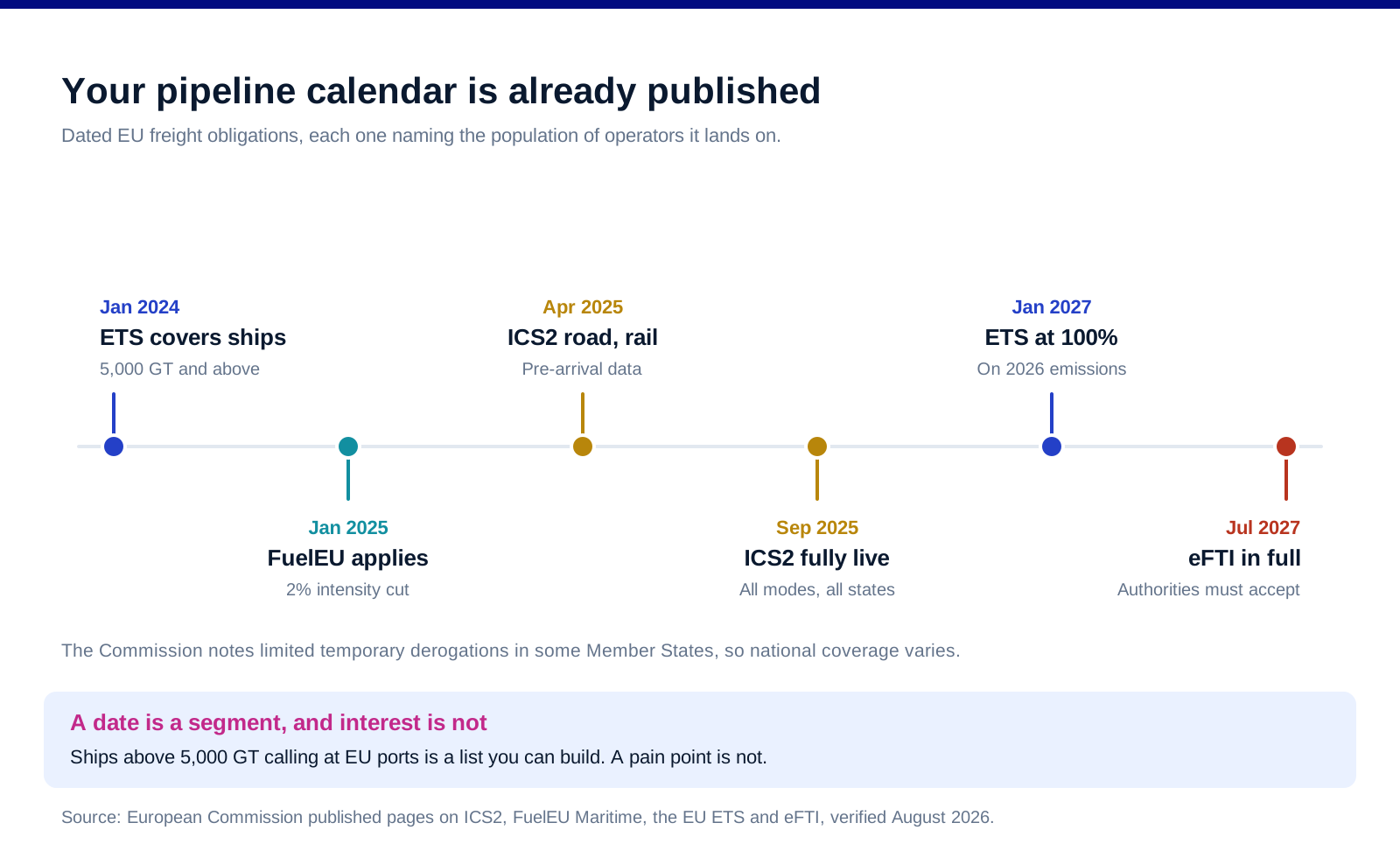
ICS2 is done, and it is now an enforcement story rather than a project story. The Commission confirmed that "As of 1 September 2025, ICS2 will be fully operational in all Member States for all means of transport", now including road and rail, after road and rail carriers came into scope from 1 April 2025. Several Member States and the United Kingdom in respect of Northern Ireland requested temporary extensions, so coverage in practice is uneven rather than uniform.
The consequence is stated plainly. The Commission's own guidance says goods "might be stopped at the EU borders and might not be cleared by the customs authorities if traders do not meet the ICS2 requirements on time". That is a sentence you can put in front of a buyer without inventing anything.
FuelEU Maritime has been live since the start of 2025. The Commission states the regulation "is fully applied from 1 January 2025 except for articles 8 and 9 on monitoring plans that are applied from August 2024", starting with a 2% decrease by 2025 in greenhouse gas intensity and reaching up to an 80% reduction by 2050, for ships above 5,000 gross tonnage calling at European ports regardless of flag.
The ETS clock is the one with an escalating cost attached. Under the Commission's published schedule, 40% of emissions reported for 2024 had to be covered by allowances in 2025, 70% of 2025 emissions in 2026, and "2027 and beyond: 100% of reported emissions". It covers 100% of intra-EU voyages and 50% of voyages with one end outside the EU, and "The shipping company always remains the responsible entity for surrendering allowances".
And the paperwork deadline is the one most operators have not started. The eFTI Regulation applies in full on 9 July 2027, at which point "Member State authorities must accept information shared electronically by operators via certified eFTI platforms". Platforms and service providers could begin preparing from January 2026, which means the buying window for anything that touches freight documentation is open now and closes on a known date.
Every one of those dates is a segment. Not a topic, a segment: ships above 5,000 gross tonnage calling at EU ports is a list you can build. So is road and rail carriers moving goods into the EU. Interest is not a segment.
The rule creates a buyer who is not on your list
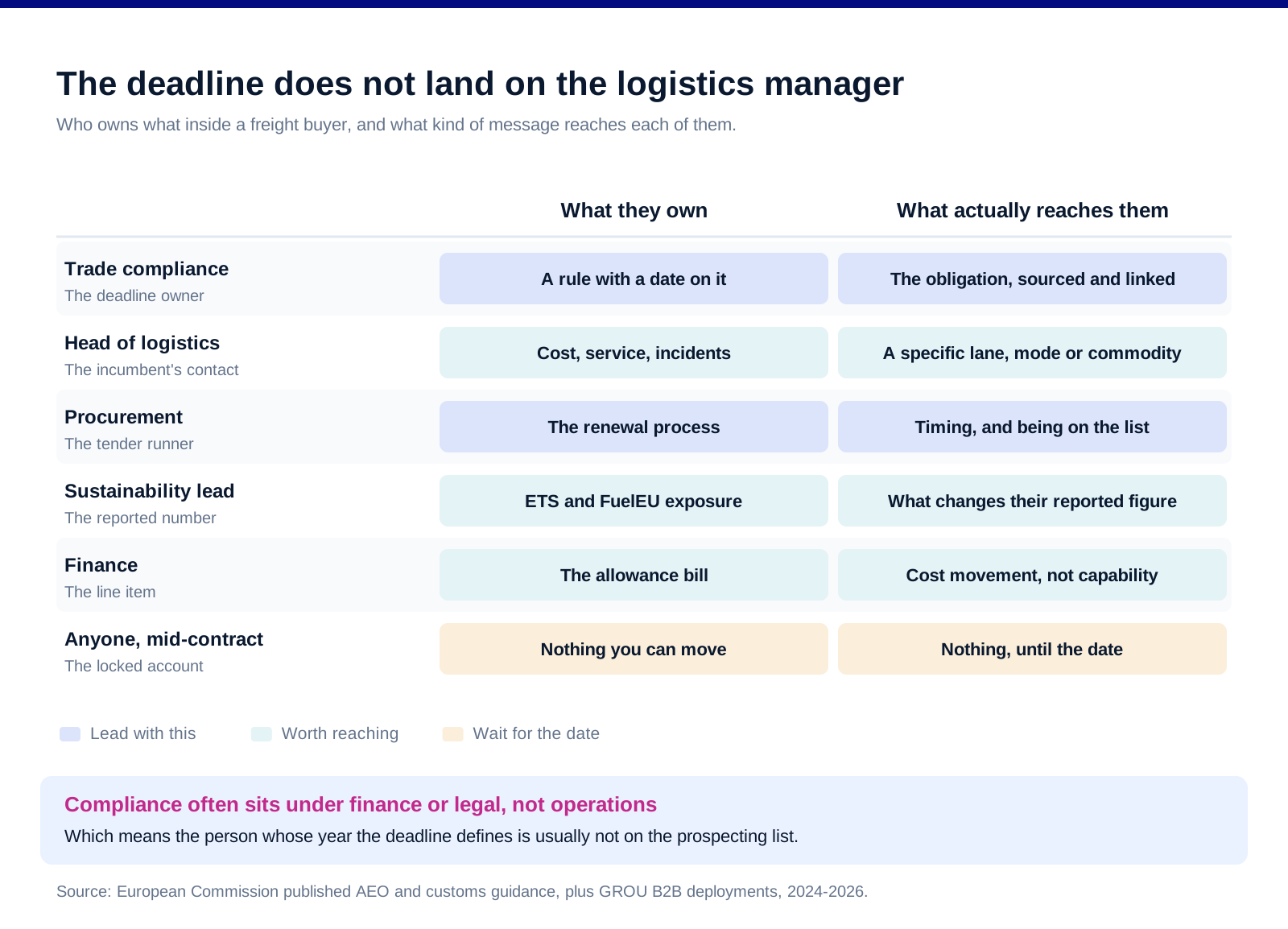
The head of logistics is not the person the deadline lands on. Customs and trade compliance sits somewhere else in most organisations, often reporting into finance or legal rather than operations, and that is the person whose year is defined by a date in a regulation.
Which changes the message, not just the address. Cost and service arguments reach the logistics manager. A dated obligation with a named consequence reaches the compliance owner, and it reaches them because it is their problem rather than an improvement to their existing arrangement.
Compliance status is also a public segmentation axis. The Authorised Economic Operator programme is described by the Commission as "A partnership programme between customs authorities and economic operators to ensure supply chain security and facilitate legitimate trade", split into AEOC for customs simplification and AEOS for security and safety, with benefits including "Fewer physical and document-based controls", "Priority treatment if selected for control" and advance notification of controls. The Commission publishes a search facility for authorised operators.
That tells you something a firmographic filter cannot. A company holding AEO status has already spent money and management attention on customs compliance, has documented procedures, and has a named person who owns them. A company in the same size band without it has a different conversation ahead of it.
Do not confuse the two into one campaign. Selling simplification to an operator who already has AEOC is a different argument from selling readiness to one who does not, and sending both the same sequence is how a good list gets burned.
Sequence length matters more here than in most categories because you are often waiting for a date rather than persuading anyone. Our piece on touch counts covers how to think about that without simply sending more.
The contract is the constraint, not the appetite
Freight is bought on contracts, and contracts end on dates. Whether a prospect likes their current provider is close to irrelevant if they are eighteen months into a three year agreement, and whether they dislike them is close to irrelevant if the renewal is four months away and the tender is already drafted.
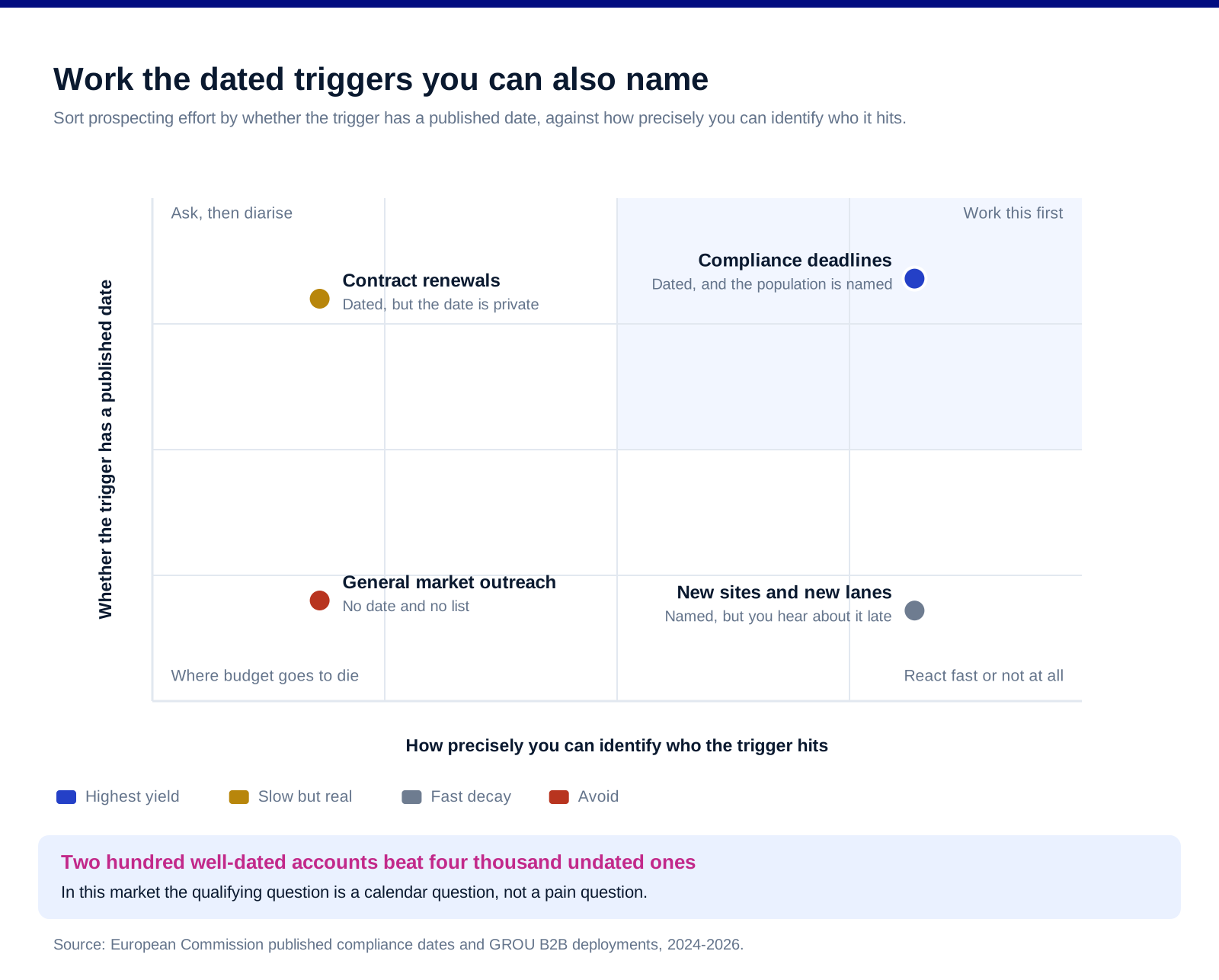
So the qualifying question is a calendar question. When does the current agreement end, who runs the tender, and what did the last one look like. Not what their challenges are.
Public logistics contracts are advertised, and awards are published. The same mechanism that makes construction pipeline readable applies here, and the award notice is the useful half because it dates the contract that will eventually be re-let. Our construction and engineering playbook covers how to work that data properly, and the method transfers.
Private contracts are the harder half, and the answer is patience rather than cleverness. You find the renewal date by asking, repeatedly, across a long relationship, and you diarise it. There is no data product that reliably tells you this.
Which makes the account list smaller than most teams want it to be. A logistics seller with two hundred well-dated accounts will beat one with four thousand undated ones, and it is not close.
And it makes nurture the actual programme. If a third of your target list has a live contract at any given moment, the job between now and their renewal is to be the obvious second call, which is a content and consistency problem rather than an outreach volume problem.
What to say when the date finally arrives
Name the lane, the mode and the commodity. Logistics buyers hear "supply chain optimisation" several times a week and it carries no information. "Groupage into Northern Italy" carries a great deal.
Lead with the obligation, not with your capability. If a prospect is inside the ETS scope, the useful opening is the surrender percentage rising to 100% from 2027 and what that does to their cost per voyage. Your service is the second sentence.
Attribute every regulatory claim to the source. Say the Commission states it, and link the page. Logistics compliance people check, and a claim that turns out to be a summary of a summary ends the conversation permanently.
Do not quantify their exposure for them. You do not know their volumes, their fuel mix or their contract structure, and a confident number that turns out to be wrong is worse than no number.
Offer the thing that gets checked, not the thing that gets read. A readiness checklist against a specific dated requirement is worth more than a market outlook, because one of them creates a follow-up question and the other creates a download.
And write the follow-up for the date, not for the week. The deadline is the event; your sequence should arrive around it rather than around your quarter. Our guide to briefing a lead generation agency covers how to hand that timing over without losing it.
What we do not publish here
Any conversion, reply or meeting rate for the logistics vertical. We have our own numbers and they are ours, from a specific mix of clients and offers, and they would not predict yours.
Market size or growth figures for European freight. Every figure in circulation comes from a research firm selling the report it appears in, and we have not read the methodology.
How many companies fall inside each compliance scope. The Commission publishes the thresholds, not the counts, and we are not going to estimate them.
Whether any specific carrier or forwarder is compliant. That is not knowable from outside and is not a claim we would make about a named company.
What the derogations cover in each Member State. The Commission confirms several exist without a published end date in the material we could read, so treat national coverage as something to check rather than assume.
FAQ
What actually triggers a logistics purchase?
A date, usually. A contract ending, a regulatory obligation coming into force, a new facility opening, a new lane, or a change in customs status. Interest in improving cost or service is real but it rarely moves budget on its own, because there is almost always an incumbent contract in the way.
Should you sell to the head of logistics or to compliance?
To both, with different messages. Cost and service arguments belong with operations. A dated obligation and its consequences belong with whoever owns customs and trade compliance, because that is the person the deadline actually lands on and often the one who can open a budget line that operations cannot.
How do you find out when a contract ends?
For public contracts, from published award notices, which date the agreement and therefore the re-let. For private contracts, by asking during a long relationship and writing the answer down. There is no reliable data source for private freight contract expiry, and treating a nurture programme as the mechanism for collecting those dates is the practical answer.
Which EU rules matter most for a logistics seller in 2026?
The ones with dates. ICS2 has been fully operational across all transport modes since 1 September 2025. FuelEU Maritime has applied since 1 January 2025 for ships above 5,000 gross tonnage. The ETS surrender obligation reaches 100% of reported emissions from 2027. The eFTI Regulation applies in full on 9 July 2027. Each of those defines a population you can list.
Is AEO status a useful prospecting filter?
Yes, as a segmentation axis rather than a target. A holder has already invested in customs compliance and has a named owner for it, which changes the argument you should make. The Commission runs the programme and publishes a search facility for authorised operators, so it is checkable rather than inferred.
How long should a logistics outbound sequence be?
Longer than in most categories, and spaced around the prospect's calendar rather than yours, because you are frequently waiting for a contract to end rather than persuading someone to want something. The failure mode is not too few touches, it is a sequence that finishes eleven months before the renewal.
Bottom line
Treat this market as a calendar rather than a funnel. The compliance dates are published, they name the population they hit, and they are the closest thing to a free prospecting list that exists in B2B. The contract dates are not published but they are askable, and a smaller list with renewal dates on it will outperform a larger list without them every time. Sell the obligation to the person who owns it, attribute every regulatory claim to the source that published it, and resist quantifying anyone's exposure for them. The teams that win here are not the ones with the best outreach copy. They are the ones who were already in the conversation when the date arrived.
Want the pipeline built rather than the compliance calendar read? Book a call with GROU. We run lead generation and outbound inside B2B revenue engines across manufacturing, industrial and logistics-adjacent verticals. If you are working a longer-cycle industrial market, our renewable energy playbook covers the version where policy sets the clock.
We are GROU, a B2B pipeline agency that runs lead generation, outbound, and LinkedIn content for clients across manufacturing, fintech, iGaming, software, and professional services. Nothing in this article is legal or compliance advice, and every regulatory date quoted here comes from the European Commission page linked beside it. The playbook reflects our own B2B deployments between 2024 and 2026, anonymized to protect client confidentiality.
Almost nobody in logistics buys because a supplier got in touch at the right moment. They buy because something with a date on it forced a decision: a contract ended, a lane changed, or a rule came into force that made the current setup non-compliant.
That is unusually good news for anyone selling into this market, because a large share of those dates are published years in advance, and they name the population they hit.
TL;DR
The EU has spent three years installing a set of dated obligations across freight, and each one is a prospecting list with a deadline attached. ICS2 became fully operational for all transport modes on 1 September 2025, and the Commission states that goods "might be stopped at the EU borders and might not be cleared by the customs authorities" where traders miss the requirements. FuelEU Maritime has applied in full since 1 January 2025, starting with a 2% cut in greenhouse gas intensity and reaching up to 80% by 2050, for ships above 5,000 gross tonnage calling at European ports. The EU Emissions Trading System covers shipping on a rising scale: 40% of 2024 emissions surrendered in 2025, 70% of 2025 emissions in 2026, and 100% from 2027 onwards, with the shipping company always the responsible entity. The eFTI Regulation applies in full on 9 July 2027, when Member State authorities must accept freight information shared electronically through certified platforms, and the Commission estimates it could save the sector up to 1 billion euros a year. Build your pipeline off that calendar rather than off interest, sell to the compliance owner rather than the logistics manager, and accept that the only question that predicts a deal in this market is when the incumbent contract ends.
The compliance calendar is the only pipeline calendar that publishes itself
ICS2 is done, and it is now an enforcement story rather than a project story. The Commission confirmed that "As of 1 September 2025, ICS2 will be fully operational in all Member States for all means of transport", now including road and rail, after road and rail carriers came into scope from 1 April 2025. Several Member States and the United Kingdom in respect of Northern Ireland requested temporary extensions, so coverage in practice is uneven rather than uniform.
The consequence is stated plainly. The Commission's own guidance says goods "might be stopped at the EU borders and might not be cleared by the customs authorities if traders do not meet the ICS2 requirements on time". That is a sentence you can put in front of a buyer without inventing anything.
FuelEU Maritime has been live since the start of 2025. The Commission states the regulation "is fully applied from 1 January 2025 except for articles 8 and 9 on monitoring plans that are applied from August 2024", starting with a 2% decrease by 2025 in greenhouse gas intensity and reaching up to an 80% reduction by 2050, for ships above 5,000 gross tonnage calling at European ports regardless of flag.
The ETS clock is the one with an escalating cost attached. Under the Commission's published schedule, 40% of emissions reported for 2024 had to be covered by allowances in 2025, 70% of 2025 emissions in 2026, and "2027 and beyond: 100% of reported emissions". It covers 100% of intra-EU voyages and 50% of voyages with one end outside the EU, and "The shipping company always remains the responsible entity for surrendering allowances".
And the paperwork deadline is the one most operators have not started. The eFTI Regulation applies in full on 9 July 2027, at which point "Member State authorities must accept information shared electronically by operators via certified eFTI platforms". Platforms and service providers could begin preparing from January 2026, which means the buying window for anything that touches freight documentation is open now and closes on a known date.
Every one of those dates is a segment. Not a topic, a segment: ships above 5,000 gross tonnage calling at EU ports is a list you can build. So is road and rail carriers moving goods into the EU. Interest is not a segment.
The rule creates a buyer who is not on your list
The head of logistics is not the person the deadline lands on. Customs and trade compliance sits somewhere else in most organisations, often reporting into finance or legal rather than operations, and that is the person whose year is defined by a date in a regulation.
Which changes the message, not just the address. Cost and service arguments reach the logistics manager. A dated obligation with a named consequence reaches the compliance owner, and it reaches them because it is their problem rather than an improvement to their existing arrangement.
Compliance status is also a public segmentation axis. The Authorised Economic Operator programme is described by the Commission as "A partnership programme between customs authorities and economic operators to ensure supply chain security and facilitate legitimate trade", split into AEOC for customs simplification and AEOS for security and safety, with benefits including "Fewer physical and document-based controls", "Priority treatment if selected for control" and advance notification of controls. The Commission publishes a search facility for authorised operators.
That tells you something a firmographic filter cannot. A company holding AEO status has already spent money and management attention on customs compliance, has documented procedures, and has a named person who owns them. A company in the same size band without it has a different conversation ahead of it.
Do not confuse the two into one campaign. Selling simplification to an operator who already has AEOC is a different argument from selling readiness to one who does not, and sending both the same sequence is how a good list gets burned.
Sequence length matters more here than in most categories because you are often waiting for a date rather than persuading anyone. Our piece on touch counts covers how to think about that without simply sending more.
The contract is the constraint, not the appetite
Freight is bought on contracts, and contracts end on dates. Whether a prospect likes their current provider is close to irrelevant if they are eighteen months into a three year agreement, and whether they dislike them is close to irrelevant if the renewal is four months away and the tender is already drafted.
So the qualifying question is a calendar question. When does the current agreement end, who runs the tender, and what did the last one look like. Not what their challenges are.
Public logistics contracts are advertised, and awards are published. The same mechanism that makes construction pipeline readable applies here, and the award notice is the useful half because it dates the contract that will eventually be re-let. Our construction and engineering playbook covers how to work that data properly, and the method transfers.
Private contracts are the harder half, and the answer is patience rather than cleverness. You find the renewal date by asking, repeatedly, across a long relationship, and you diarise it. There is no data product that reliably tells you this.
Which makes the account list smaller than most teams want it to be. A logistics seller with two hundred well-dated accounts will beat one with four thousand undated ones, and it is not close.
And it makes nurture the actual programme. If a third of your target list has a live contract at any given moment, the job between now and their renewal is to be the obvious second call, which is a content and consistency problem rather than an outreach volume problem.
What to say when the date finally arrives
Name the lane, the mode and the commodity. Logistics buyers hear "supply chain optimisation" several times a week and it carries no information. "Groupage into Northern Italy" carries a great deal.
Lead with the obligation, not with your capability. If a prospect is inside the ETS scope, the useful opening is the surrender percentage rising to 100% from 2027 and what that does to their cost per voyage. Your service is the second sentence.
Attribute every regulatory claim to the source. Say the Commission states it, and link the page. Logistics compliance people check, and a claim that turns out to be a summary of a summary ends the conversation permanently.
Do not quantify their exposure for them. You do not know their volumes, their fuel mix or their contract structure, and a confident number that turns out to be wrong is worse than no number.
Offer the thing that gets checked, not the thing that gets read. A readiness checklist against a specific dated requirement is worth more than a market outlook, because one of them creates a follow-up question and the other creates a download.
And write the follow-up for the date, not for the week. The deadline is the event; your sequence should arrive around it rather than around your quarter. Our guide to briefing a lead generation agency covers how to hand that timing over without losing it.
What we do not publish here
Any conversion, reply or meeting rate for the logistics vertical. We have our own numbers and they are ours, from a specific mix of clients and offers, and they would not predict yours.
Market size or growth figures for European freight. Every figure in circulation comes from a research firm selling the report it appears in, and we have not read the methodology.
How many companies fall inside each compliance scope. The Commission publishes the thresholds, not the counts, and we are not going to estimate them.
Whether any specific carrier or forwarder is compliant. That is not knowable from outside and is not a claim we would make about a named company.
What the derogations cover in each Member State. The Commission confirms several exist without a published end date in the material we could read, so treat national coverage as something to check rather than assume.
FAQ
What actually triggers a logistics purchase?
A date, usually. A contract ending, a regulatory obligation coming into force, a new facility opening, a new lane, or a change in customs status. Interest in improving cost or service is real but it rarely moves budget on its own, because there is almost always an incumbent contract in the way.
Should you sell to the head of logistics or to compliance?
To both, with different messages. Cost and service arguments belong with operations. A dated obligation and its consequences belong with whoever owns customs and trade compliance, because that is the person the deadline actually lands on and often the one who can open a budget line that operations cannot.
How do you find out when a contract ends?
For public contracts, from published award notices, which date the agreement and therefore the re-let. For private contracts, by asking during a long relationship and writing the answer down. There is no reliable data source for private freight contract expiry, and treating a nurture programme as the mechanism for collecting those dates is the practical answer.
Which EU rules matter most for a logistics seller in 2026?
The ones with dates. ICS2 has been fully operational across all transport modes since 1 September 2025. FuelEU Maritime has applied since 1 January 2025 for ships above 5,000 gross tonnage. The ETS surrender obligation reaches 100% of reported emissions from 2027. The eFTI Regulation applies in full on 9 July 2027. Each of those defines a population you can list.
Is AEO status a useful prospecting filter?
Yes, as a segmentation axis rather than a target. A holder has already invested in customs compliance and has a named owner for it, which changes the argument you should make. The Commission runs the programme and publishes a search facility for authorised operators, so it is checkable rather than inferred.
How long should a logistics outbound sequence be?
Longer than in most categories, and spaced around the prospect's calendar rather than yours, because you are frequently waiting for a contract to end rather than persuading someone to want something. The failure mode is not too few touches, it is a sequence that finishes eleven months before the renewal.
Bottom line
Treat this market as a calendar rather than a funnel. The compliance dates are published, they name the population they hit, and they are the closest thing to a free prospecting list that exists in B2B. The contract dates are not published but they are askable, and a smaller list with renewal dates on it will outperform a larger list without them every time. Sell the obligation to the person who owns it, attribute every regulatory claim to the source that published it, and resist quantifying anyone's exposure for them. The teams that win here are not the ones with the best outreach copy. They are the ones who were already in the conversation when the date arrived.
Want the pipeline built rather than the compliance calendar read? Book a call with GROU. We run lead generation and outbound inside B2B revenue engines across manufacturing, industrial and logistics-adjacent verticals. If you are working a longer-cycle industrial market, our renewable energy playbook covers the version where policy sets the clock.
We are GROU, a B2B pipeline agency that runs lead generation, outbound, and LinkedIn content for clients across manufacturing, fintech, iGaming, software, and professional services. Nothing in this article is legal or compliance advice, and every regulatory date quoted here comes from the European Commission page linked beside it. The playbook reflects our own B2B deployments between 2024 and 2026, anonymized to protect client confidentiality.
Almost nobody in logistics buys because a supplier got in touch at the right moment. They buy because something with a date on it forced a decision: a contract ended, a lane changed, or a rule came into force that made the current setup non-compliant.
That is unusually good news for anyone selling into this market, because a large share of those dates are published years in advance, and they name the population they hit.
TL;DR
The EU has spent three years installing a set of dated obligations across freight, and each one is a prospecting list with a deadline attached. ICS2 became fully operational for all transport modes on 1 September 2025, and the Commission states that goods "might be stopped at the EU borders and might not be cleared by the customs authorities" where traders miss the requirements. FuelEU Maritime has applied in full since 1 January 2025, starting with a 2% cut in greenhouse gas intensity and reaching up to 80% by 2050, for ships above 5,000 gross tonnage calling at European ports. The EU Emissions Trading System covers shipping on a rising scale: 40% of 2024 emissions surrendered in 2025, 70% of 2025 emissions in 2026, and 100% from 2027 onwards, with the shipping company always the responsible entity. The eFTI Regulation applies in full on 9 July 2027, when Member State authorities must accept freight information shared electronically through certified platforms, and the Commission estimates it could save the sector up to 1 billion euros a year. Build your pipeline off that calendar rather than off interest, sell to the compliance owner rather than the logistics manager, and accept that the only question that predicts a deal in this market is when the incumbent contract ends.
The compliance calendar is the only pipeline calendar that publishes itself
ICS2 is done, and it is now an enforcement story rather than a project story. The Commission confirmed that "As of 1 September 2025, ICS2 will be fully operational in all Member States for all means of transport", now including road and rail, after road and rail carriers came into scope from 1 April 2025. Several Member States and the United Kingdom in respect of Northern Ireland requested temporary extensions, so coverage in practice is uneven rather than uniform.
The consequence is stated plainly. The Commission's own guidance says goods "might be stopped at the EU borders and might not be cleared by the customs authorities if traders do not meet the ICS2 requirements on time". That is a sentence you can put in front of a buyer without inventing anything.
FuelEU Maritime has been live since the start of 2025. The Commission states the regulation "is fully applied from 1 January 2025 except for articles 8 and 9 on monitoring plans that are applied from August 2024", starting with a 2% decrease by 2025 in greenhouse gas intensity and reaching up to an 80% reduction by 2050, for ships above 5,000 gross tonnage calling at European ports regardless of flag.
The ETS clock is the one with an escalating cost attached. Under the Commission's published schedule, 40% of emissions reported for 2024 had to be covered by allowances in 2025, 70% of 2025 emissions in 2026, and "2027 and beyond: 100% of reported emissions". It covers 100% of intra-EU voyages and 50% of voyages with one end outside the EU, and "The shipping company always remains the responsible entity for surrendering allowances".
And the paperwork deadline is the one most operators have not started. The eFTI Regulation applies in full on 9 July 2027, at which point "Member State authorities must accept information shared electronically by operators via certified eFTI platforms". Platforms and service providers could begin preparing from January 2026, which means the buying window for anything that touches freight documentation is open now and closes on a known date.
Every one of those dates is a segment. Not a topic, a segment: ships above 5,000 gross tonnage calling at EU ports is a list you can build. So is road and rail carriers moving goods into the EU. Interest is not a segment.
The rule creates a buyer who is not on your list
The head of logistics is not the person the deadline lands on. Customs and trade compliance sits somewhere else in most organisations, often reporting into finance or legal rather than operations, and that is the person whose year is defined by a date in a regulation.
Which changes the message, not just the address. Cost and service arguments reach the logistics manager. A dated obligation with a named consequence reaches the compliance owner, and it reaches them because it is their problem rather than an improvement to their existing arrangement.
Compliance status is also a public segmentation axis. The Authorised Economic Operator programme is described by the Commission as "A partnership programme between customs authorities and economic operators to ensure supply chain security and facilitate legitimate trade", split into AEOC for customs simplification and AEOS for security and safety, with benefits including "Fewer physical and document-based controls", "Priority treatment if selected for control" and advance notification of controls. The Commission publishes a search facility for authorised operators.
That tells you something a firmographic filter cannot. A company holding AEO status has already spent money and management attention on customs compliance, has documented procedures, and has a named person who owns them. A company in the same size band without it has a different conversation ahead of it.
Do not confuse the two into one campaign. Selling simplification to an operator who already has AEOC is a different argument from selling readiness to one who does not, and sending both the same sequence is how a good list gets burned.
Sequence length matters more here than in most categories because you are often waiting for a date rather than persuading anyone. Our piece on touch counts covers how to think about that without simply sending more.
The contract is the constraint, not the appetite
Freight is bought on contracts, and contracts end on dates. Whether a prospect likes their current provider is close to irrelevant if they are eighteen months into a three year agreement, and whether they dislike them is close to irrelevant if the renewal is four months away and the tender is already drafted.
So the qualifying question is a calendar question. When does the current agreement end, who runs the tender, and what did the last one look like. Not what their challenges are.
Public logistics contracts are advertised, and awards are published. The same mechanism that makes construction pipeline readable applies here, and the award notice is the useful half because it dates the contract that will eventually be re-let. Our construction and engineering playbook covers how to work that data properly, and the method transfers.
Private contracts are the harder half, and the answer is patience rather than cleverness. You find the renewal date by asking, repeatedly, across a long relationship, and you diarise it. There is no data product that reliably tells you this.
Which makes the account list smaller than most teams want it to be. A logistics seller with two hundred well-dated accounts will beat one with four thousand undated ones, and it is not close.
And it makes nurture the actual programme. If a third of your target list has a live contract at any given moment, the job between now and their renewal is to be the obvious second call, which is a content and consistency problem rather than an outreach volume problem.
What to say when the date finally arrives
Name the lane, the mode and the commodity. Logistics buyers hear "supply chain optimisation" several times a week and it carries no information. "Groupage into Northern Italy" carries a great deal.
Lead with the obligation, not with your capability. If a prospect is inside the ETS scope, the useful opening is the surrender percentage rising to 100% from 2027 and what that does to their cost per voyage. Your service is the second sentence.
Attribute every regulatory claim to the source. Say the Commission states it, and link the page. Logistics compliance people check, and a claim that turns out to be a summary of a summary ends the conversation permanently.
Do not quantify their exposure for them. You do not know their volumes, their fuel mix or their contract structure, and a confident number that turns out to be wrong is worse than no number.
Offer the thing that gets checked, not the thing that gets read. A readiness checklist against a specific dated requirement is worth more than a market outlook, because one of them creates a follow-up question and the other creates a download.
And write the follow-up for the date, not for the week. The deadline is the event; your sequence should arrive around it rather than around your quarter. Our guide to briefing a lead generation agency covers how to hand that timing over without losing it.
What we do not publish here
Any conversion, reply or meeting rate for the logistics vertical. We have our own numbers and they are ours, from a specific mix of clients and offers, and they would not predict yours.
Market size or growth figures for European freight. Every figure in circulation comes from a research firm selling the report it appears in, and we have not read the methodology.
How many companies fall inside each compliance scope. The Commission publishes the thresholds, not the counts, and we are not going to estimate them.
Whether any specific carrier or forwarder is compliant. That is not knowable from outside and is not a claim we would make about a named company.
What the derogations cover in each Member State. The Commission confirms several exist without a published end date in the material we could read, so treat national coverage as something to check rather than assume.
FAQ
What actually triggers a logistics purchase?
A date, usually. A contract ending, a regulatory obligation coming into force, a new facility opening, a new lane, or a change in customs status. Interest in improving cost or service is real but it rarely moves budget on its own, because there is almost always an incumbent contract in the way.
Should you sell to the head of logistics or to compliance?
To both, with different messages. Cost and service arguments belong with operations. A dated obligation and its consequences belong with whoever owns customs and trade compliance, because that is the person the deadline actually lands on and often the one who can open a budget line that operations cannot.
How do you find out when a contract ends?
For public contracts, from published award notices, which date the agreement and therefore the re-let. For private contracts, by asking during a long relationship and writing the answer down. There is no reliable data source for private freight contract expiry, and treating a nurture programme as the mechanism for collecting those dates is the practical answer.
Which EU rules matter most for a logistics seller in 2026?
The ones with dates. ICS2 has been fully operational across all transport modes since 1 September 2025. FuelEU Maritime has applied since 1 January 2025 for ships above 5,000 gross tonnage. The ETS surrender obligation reaches 100% of reported emissions from 2027. The eFTI Regulation applies in full on 9 July 2027. Each of those defines a population you can list.
Is AEO status a useful prospecting filter?
Yes, as a segmentation axis rather than a target. A holder has already invested in customs compliance and has a named owner for it, which changes the argument you should make. The Commission runs the programme and publishes a search facility for authorised operators, so it is checkable rather than inferred.
How long should a logistics outbound sequence be?
Longer than in most categories, and spaced around the prospect's calendar rather than yours, because you are frequently waiting for a contract to end rather than persuading someone to want something. The failure mode is not too few touches, it is a sequence that finishes eleven months before the renewal.
Bottom line
Treat this market as a calendar rather than a funnel. The compliance dates are published, they name the population they hit, and they are the closest thing to a free prospecting list that exists in B2B. The contract dates are not published but they are askable, and a smaller list with renewal dates on it will outperform a larger list without them every time. Sell the obligation to the person who owns it, attribute every regulatory claim to the source that published it, and resist quantifying anyone's exposure for them. The teams that win here are not the ones with the best outreach copy. They are the ones who were already in the conversation when the date arrived.
Want the pipeline built rather than the compliance calendar read? Book a call with GROU. We run lead generation and outbound inside B2B revenue engines across manufacturing, industrial and logistics-adjacent verticals. If you are working a longer-cycle industrial market, our renewable energy playbook covers the version where policy sets the clock.
We are GROU, a B2B pipeline agency that runs lead generation, outbound, and LinkedIn content for clients across manufacturing, fintech, iGaming, software, and professional services. Nothing in this article is legal or compliance advice, and every regulatory date quoted here comes from the European Commission page linked beside it. The playbook reflects our own B2B deployments between 2024 and 2026, anonymized to protect client confidentiality.

Pipeline OS Newsletter
Build qualified pipeline
Get weekly tactics to generate demand, improve lead quality, and book more meetings.





Trusted by industry leaders
Trusted by industry leaders
Trusted by industry leaders
Ready to build qualified pipeline?
Ready to build qualified pipeline?
Ready to build qualified pipeline?
Book a call to see if we're the right fit, or take the 2-minute quiz to get a clear starting point.
Book a call to see if we're the right fit, or take the 2-minute quiz to get a clear starting point.
Book a call to see if we're the right fit, or take the 2-minute quiz to get a clear starting point.
" height="30.21639343089746px" id="hfGbXmQR2" width="30.216393430897455px"/></svg>)
Copyright © 2026 – All Right Reserved
Copyright © 2026 – All Right Reserved
Copyright © 2026 – All Right Reserved