%22%3E%3C/path%3E%3Cpath d=%22M 63.072 7.554 C 62.258 8.022 61.577 8.689 61.092 9.493 L 61.092 7.076 L 57.158 7.076 L 57.158 22.64 L 61.089 22.64 L 61.089 14.888 C 61.089 13.446 61.403 12.434 62.03 11.853 C 62.818 11.218 63.818 10.907 64.826 10.982 L 65.868 10.982 L 65.868 6.851 C 64.891 6.834 63.926 7.076 63.073 7.554 Z%22 fill=%22rgb(17,17,17)%22%3E%3C/path%3E%3Cpath d=%22M 78.916 7.82 C 76.363 6.49 73.321 6.49 70.768 7.82 C 69.562 8.473 68.564 9.451 67.888 10.644 C 67.167 11.931 66.803 13.387 66.834 14.862 C 66.804 16.332 67.157 17.785 67.86 19.077 C 68.515 20.267 69.494 21.246 70.684 21.901 C 71.924 22.576 73.318 22.92 74.73 22.898 C 76.164 22.918 77.58 22.575 78.846 21.901 C 80.062 21.247 81.073 20.27 81.768 19.077 C 82.506 17.797 82.88 16.339 82.85 14.862 C 82.88 13.389 82.517 11.934 81.797 10.647 C 81.12 9.455 80.122 8.477 78.917 7.824 M 78.803 14.862 C 78.829 15.739 78.636 16.608 78.241 17.391 C 77.903 18.046 77.38 18.588 76.738 18.95 C 76.124 19.293 75.432 19.472 74.729 19.47 C 73.668 19.497 72.648 19.061 71.934 18.276 C 71.139 17.323 70.741 16.1 70.823 14.862 C 70.741 13.62 71.149 12.395 71.959 11.45 C 72.687 10.667 73.715 10.233 74.783 10.256 C 75.859 10.236 76.894 10.67 77.635 11.45 C 78.464 12.387 78.884 13.616 78.801 14.864%22 fill=%22rgb(17,17,17)%22%3E%3C/path%3E%3Cpath d=%22M 95.906 7.076 L 95.906 15.646 C 95.975 16.68 95.643 17.701 94.979 18.498 C 94.311 19.184 93.379 19.547 92.422 19.495 C 91.475 19.544 90.553 19.18 89.894 18.498 C 89.23 17.701 88.898 16.68 88.967 15.646 L 88.967 7.076 L 85.033 7.076 L 85.033 16.207 C 85 17.449 85.275 18.68 85.834 19.79 C 86.327 20.75 87.095 21.542 88.039 22.065 C 89.033 22.594 90.145 22.861 91.271 22.838 C 92.188 22.847 93.095 22.65 93.926 22.263 C 94.708 21.905 95.388 21.36 95.906 20.675 L 95.906 22.645 L 99.865 22.645 L 99.865 7.076 Z%22 fill=%22rgb(17,17,17)%22%3E%3C/path%3E%3Cpath d=%22M 4.513 15.626 C 4.511 10.815 7.606 6.549 12.181 5.059 C 16.756 3.57 21.77 5.195 24.601 9.086 L 27.816 5.87 C 24.074 1.186 17.981 -0.943 12.137 0.393 C 6.292 1.728 1.728 6.292 0.393 12.137 C -0.943 17.981 1.186 24.074 5.87 27.816 L 9.085 24.601 C 6.214 22.512 4.515 19.177 4.513 15.626%22 fill=%22rgb(32,62,235)%22%3E%3C/path%3E%3Cpath d=%22M 17.114 14.343 L 13.354 18.01 L 13.354 18.026 L 21.071 18.026 L 11.412 27.609 L 17.389 27.609 L 23.999 21.081 L 23.999 28.316 L 24.005 28.316 L 27.967 24.393 L 27.967 14.343 Z%22 fill=%22rgb(32,62,235)%22%3E%3C/path%3E%3C/g%3E%3C/svg%3E) ×
× ××
××›
›
›
›
Renewable energy B2B lead generation 2026
Renewable energy B2B lead generation 2026
Renewable energy B2B lead generation 2026
Renewable energy B2B lead generation 2026
Renewable energy B2B lead generation 2026
Renewable energy B2B lead generation 2026

Author
Aljaz Peklaj

Something changed in this market on 30 December 2025 and most sales teams selling into it have not noticed.
EU renewable energy auctions are now required to score bidders on things that are not price. Responsible business conduct, cybersecurity, the ability to deliver on time, and a sustainability and resilience contribution, applied both as pre-qualification and as award criteria. If you supply into renewable projects, the document that decides whether you are even eligible is no longer your quote.
TL;DR
The demand in this market is policy-shaped rather than sentiment-shaped. The EU has "at least 42.5% binding target for the share of renewables in the energy mix by 2030 but is aiming for 45%", and the revised Renewable Energy Directive required member states to transpose most provisions by around May 2025, with the permitting provisions carrying an earlier deadline in July 2024. On top of that sits the Net-Zero Industry Act, which sets a manufacturing benchmark of "at least 40% of the EU's annual deployment needs by 2030" across 18 technology categories, makes sustainability a minimum mandatory requirement in relevant public procurement, and requires member states to apply non-price criteria to at least 30% of the volume auctioned annually in each country, or 6 gigawatts. Those obligations became applicable on 30 December 2025, and the Commission published implementation guidance on 22 July 2026. The practical consequence for a supplier is that your evidence pack is now a gating asset rather than a marketing asset, because the criteria operate at pre-qualification as well as at award. Build it before you build the pipeline.
The demand here is policy-shaped
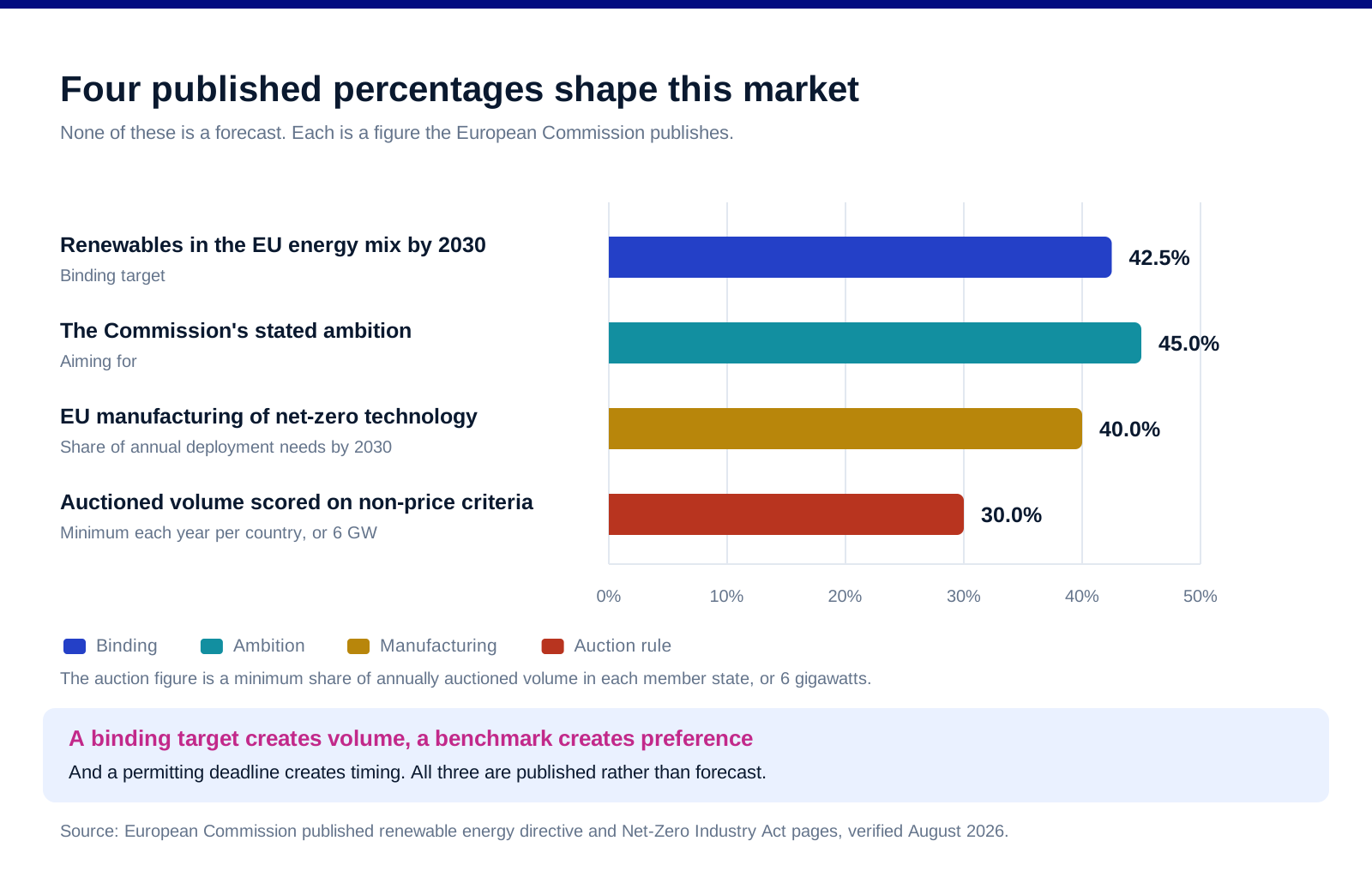
The target is binding, which makes the demand durable. The European Commission's renewable energy directive page sets "at least 42.5% binding target for the share of renewables in the energy mix by 2030 but is aiming for 45%".
Permitting was the acknowledged bottleneck, and it got its own deadline. Member states had roughly 18 months from 20 November 2023 to transpose most of the revised directive, with the permitting provisions carrying an earlier deadline in July 2024. Faster approvals and renewables acceleration areas are the mechanism.
Which matters commercially because it moves projects, not policy. A shorter approval period compresses the window between a project becoming real and a supplier being chosen. Sales cycles in this market are long, but the decision points arrive faster than they used to.
And a second regulation now shapes who supplies it. The Net-Zero Industry Act sets a benchmark of "at least 40% of the EU's annual deployment needs by 2030" for EU manufacturing capacity across 18 technology categories covering solar, wind, batteries, heat pumps, hydrogen, carbon capture and more.
Read together, these are a buying signal you can act on. A binding target creates volume. A manufacturing benchmark creates preference. A permitting deadline creates timing. None of it is forecast, and all of it is published.
Auctions now score you on things that are not price
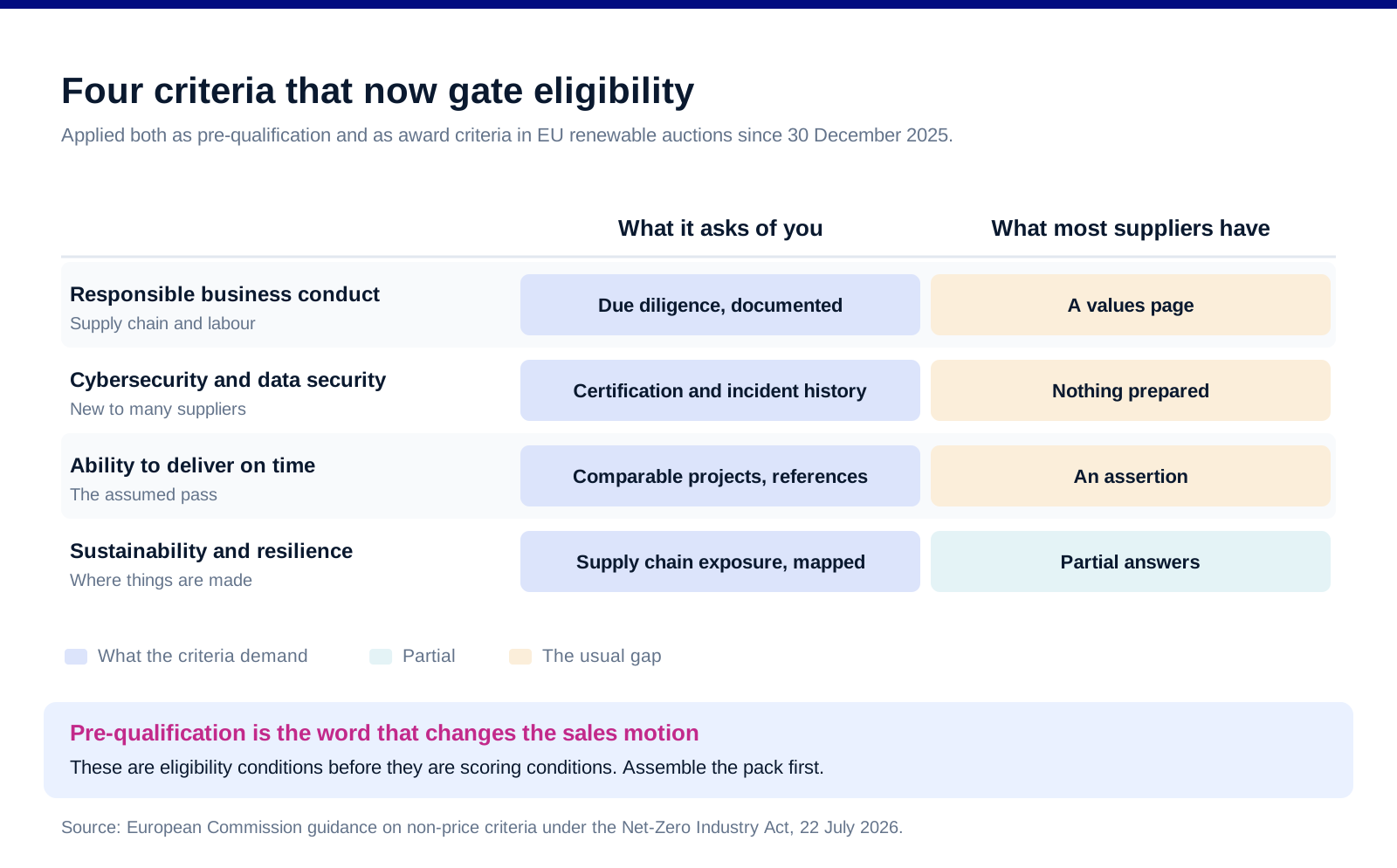
This is the change worth building around. The Commission's guidance on non-price criteria, published 22 July 2026, covers Articles 25 and 26 of the Net-Zero Industry Act and states that the obligations became applicable on 30 December 2025.
The criteria are named. The guidance describes them as running from "responsible business conduct, cybersecurity and data security, to the ability to deliver projects fully and on time, and the sustainability and resilience contribution".
They apply at two stages, not one. Article 26 requires the criteria to be applied "both as pre-qualification and as award criteria" in renewable energy auctions. Pre-qualification is the word that changes the sales motion, because it means these are eligibility conditions before they are scoring conditions.
The volume covered is substantial. The Commission states the criteria apply to at least 30% of the volume auctioned annually in each EU country, or 6 gigawatts.
Public procurement moved in the same direction. For relevant contracts the Commission describes sustainability as a minimum mandatory requirement, alongside resilience, cybersecurity, social sustainability and timely delivery.
So the question a buyer asks first has changed. It used to be what does it cost. It is now increasingly whether you clear the criteria at all, and only then what it costs.
Which makes the evidence pack the sales asset
Responsible business conduct means documentation, not a values page. Supply chain due diligence, labour standards, grievance mechanisms. If your answer lives in a brochure, you do not have an answer.
Cybersecurity and data security are now a supplier question in energy. Certification, incident history, and how your equipment or software is maintained over its life. Firms that have never been asked this in a tender will be.
Delivery certainty has to be evidenced, not asserted. Comparable projects at comparable scale, delivered to schedule, with references who will confirm it. This is the criterion most suppliers assume they pass and most cannot document.
Sustainability and resilience contribution is where the manufacturing benchmark bites. Where things are made, how the supply chain is structured, and how exposed it is to a single source.
Assemble it once, centrally, and keep it current. The same pack answers pre-qualification for every auction and every EPC questionnaire, and the cost of assembling it under deadline is far higher than the cost of assembling it now.
Then treat it as a marketing asset too. A supplier who can publish credible answers to these four questions is doing something almost no competitor is doing, and it is the most defensible content this sector has available.
Running the motion
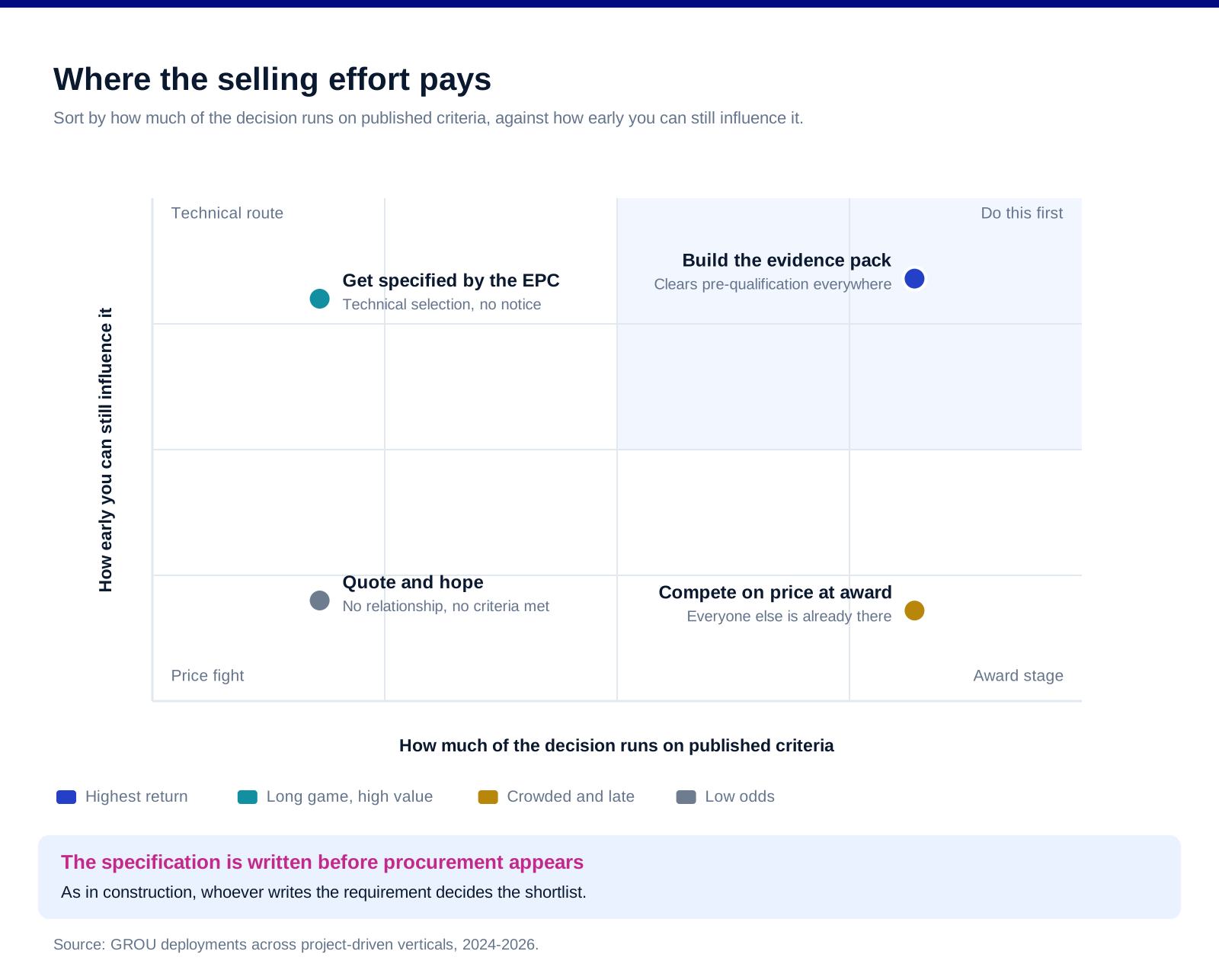
Sell to three different buyers, and stop conflating them. Developers decide whether a project happens. EPC contractors decide who supplies it. Utilities and offtakers decide whether it is financed. The same deck fails all three.
The EPC is usually the technical gatekeeper. As in construction, the specification is written before procurement appears, and whoever writes it decides the shortlist. Our construction and engineering playbook covers that mechanic in depth, and it transfers almost intact.
Time the outreach to permitting, not to quarter end. A project moving through approval is a project about to select suppliers. A project waiting on a grid connection is not, however keen the developer sounds.
Expect discontinuity and resource for it. Projects go quiet for reasons that have nothing to do with you and then move in a week. Pressure applied during the quiet stretch signals that you do not understand how these projects work.
Count projects, not companies. A single developer is a sequence of separate decisions, often made by different teams with no shared memory. Our manufacturing playbook covers the contrast with more centralised buying.
What nobody publishes
No market size figure appears in this article. Every renewable market sizing in circulation comes from a research firm selling the report, and none is verifiable from the summary.
No sales cycle length. There is no credible cross-sector figure, and every number in circulation traces to a vendor survey.
No auction win rate or pre-qualification pass rate. Member states run auctions differently and results are not aggregated in a form that supports a benchmark.
No permitting duration by country. The directive sets the framework and member states implement it, so the real timeline is national and changes.
No claim about which technologies will win. The Act names 18 categories. Picking among them is speculation, and we are not going to do it in an article you might read a year from now.
FAQ
How do you generate leads in the renewable energy sector?
Start from published policy rather than from prospecting. A binding EU target of at least 42.5% renewables by 2030 creates durable volume, permitting deadlines compress the window in which suppliers get chosen, and the Net-Zero Industry Act now shapes who is eligible to supply. Then build the evidence pack that clears auction pre-qualification, because from 30 December 2025 those criteria gate participation rather than merely scoring it.
What are the non-price criteria in EU renewable auctions?
The Commission describes them as spanning responsible business conduct, cybersecurity and data security, the ability to deliver projects fully and on time, and the sustainability and resilience contribution. Under Article 26 of the Net-Zero Industry Act they must be applied both as pre-qualification and as award criteria, and the Commission states they cover at least 30% of the volume auctioned annually in each EU country, or 6 gigawatts.
When did the Net-Zero Industry Act auction obligations start applying?
The Commission states the obligations became applicable on 30 December 2025, and it published guidance on the application of the non-price criteria on 22 July 2026. That gap is why most published advice on selling into this sector does not reflect the change.
Who actually decides which supplier gets used on a renewable project?
Usually not the party you are talking to. Developers decide whether a project proceeds, EPC contractors typically write the technical specification that determines the shortlist, and utilities or offtakers decide whether it is financed. The specification is generally settled before any procurement notice appears, which makes the EPC the earliest useful relationship.
What is the EU renewable energy target for 2030?
At least 42.5% of the energy mix, stated as a binding target, with the Commission saying it is aiming for 45%. The revised Renewable Energy Directive required member states to transpose most provisions within about 18 months of 20 November 2023, with the permitting provisions carrying an earlier deadline in July 2024.
How long is a renewable energy sales cycle?
Long and discontinuous, driven by permitting and financing timelines rather than by buyer intent. We publish no benchmark figure, because no credible cross-market source exists and every number in circulation comes from a vendor survey. Plan for extended quiet periods that end abruptly, and resource the waiting rather than trying to compress it.
Bottom line
The useful change in this market is not a trend, it is a rule with a date on it. Since 30 December 2025, EU renewable auctions have to weigh responsible business conduct, cybersecurity, delivery capability and a sustainability and resilience contribution, at pre-qualification as well as at award, across a minimum share of the volume auctioned each year. That turns four things most suppliers treat as marketing into eligibility conditions. Build the evidence pack first, because you cannot assemble it under a tender deadline, and publish the credible parts of it because almost nobody else will. Then work the sales motion the way project-driven markets actually run: three different buyers with three different messages, timing tied to permitting rather than to your quarter, and a pipeline counted in projects rather than accounts.
Want the pipeline built rather than the directive read? Book a call with GROU. We run lead generation and outbound inside B2B revenue engines across verticals.
We are GROU, a B2B pipeline agency that runs lead generation, outbound, and LinkedIn content for clients across manufacturing, fintech, iGaming, software, and professional services. Nothing here is legal or regulatory advice, and the targeting guidance reflects our deployments across project-driven verticals between 2024 and 2026, anonymized to protect client confidentiality.
Something changed in this market on 30 December 2025 and most sales teams selling into it have not noticed.
EU renewable energy auctions are now required to score bidders on things that are not price. Responsible business conduct, cybersecurity, the ability to deliver on time, and a sustainability and resilience contribution, applied both as pre-qualification and as award criteria. If you supply into renewable projects, the document that decides whether you are even eligible is no longer your quote.
TL;DR
The demand in this market is policy-shaped rather than sentiment-shaped. The EU has "at least 42.5% binding target for the share of renewables in the energy mix by 2030 but is aiming for 45%", and the revised Renewable Energy Directive required member states to transpose most provisions by around May 2025, with the permitting provisions carrying an earlier deadline in July 2024. On top of that sits the Net-Zero Industry Act, which sets a manufacturing benchmark of "at least 40% of the EU's annual deployment needs by 2030" across 18 technology categories, makes sustainability a minimum mandatory requirement in relevant public procurement, and requires member states to apply non-price criteria to at least 30% of the volume auctioned annually in each country, or 6 gigawatts. Those obligations became applicable on 30 December 2025, and the Commission published implementation guidance on 22 July 2026. The practical consequence for a supplier is that your evidence pack is now a gating asset rather than a marketing asset, because the criteria operate at pre-qualification as well as at award. Build it before you build the pipeline.
The demand here is policy-shaped
The target is binding, which makes the demand durable. The European Commission's renewable energy directive page sets "at least 42.5% binding target for the share of renewables in the energy mix by 2030 but is aiming for 45%".
Permitting was the acknowledged bottleneck, and it got its own deadline. Member states had roughly 18 months from 20 November 2023 to transpose most of the revised directive, with the permitting provisions carrying an earlier deadline in July 2024. Faster approvals and renewables acceleration areas are the mechanism.
Which matters commercially because it moves projects, not policy. A shorter approval period compresses the window between a project becoming real and a supplier being chosen. Sales cycles in this market are long, but the decision points arrive faster than they used to.
And a second regulation now shapes who supplies it. The Net-Zero Industry Act sets a benchmark of "at least 40% of the EU's annual deployment needs by 2030" for EU manufacturing capacity across 18 technology categories covering solar, wind, batteries, heat pumps, hydrogen, carbon capture and more.
Read together, these are a buying signal you can act on. A binding target creates volume. A manufacturing benchmark creates preference. A permitting deadline creates timing. None of it is forecast, and all of it is published.
Auctions now score you on things that are not price
This is the change worth building around. The Commission's guidance on non-price criteria, published 22 July 2026, covers Articles 25 and 26 of the Net-Zero Industry Act and states that the obligations became applicable on 30 December 2025.
The criteria are named. The guidance describes them as running from "responsible business conduct, cybersecurity and data security, to the ability to deliver projects fully and on time, and the sustainability and resilience contribution".
They apply at two stages, not one. Article 26 requires the criteria to be applied "both as pre-qualification and as award criteria" in renewable energy auctions. Pre-qualification is the word that changes the sales motion, because it means these are eligibility conditions before they are scoring conditions.
The volume covered is substantial. The Commission states the criteria apply to at least 30% of the volume auctioned annually in each EU country, or 6 gigawatts.
Public procurement moved in the same direction. For relevant contracts the Commission describes sustainability as a minimum mandatory requirement, alongside resilience, cybersecurity, social sustainability and timely delivery.
So the question a buyer asks first has changed. It used to be what does it cost. It is now increasingly whether you clear the criteria at all, and only then what it costs.
Which makes the evidence pack the sales asset
Responsible business conduct means documentation, not a values page. Supply chain due diligence, labour standards, grievance mechanisms. If your answer lives in a brochure, you do not have an answer.
Cybersecurity and data security are now a supplier question in energy. Certification, incident history, and how your equipment or software is maintained over its life. Firms that have never been asked this in a tender will be.
Delivery certainty has to be evidenced, not asserted. Comparable projects at comparable scale, delivered to schedule, with references who will confirm it. This is the criterion most suppliers assume they pass and most cannot document.
Sustainability and resilience contribution is where the manufacturing benchmark bites. Where things are made, how the supply chain is structured, and how exposed it is to a single source.
Assemble it once, centrally, and keep it current. The same pack answers pre-qualification for every auction and every EPC questionnaire, and the cost of assembling it under deadline is far higher than the cost of assembling it now.
Then treat it as a marketing asset too. A supplier who can publish credible answers to these four questions is doing something almost no competitor is doing, and it is the most defensible content this sector has available.
Running the motion
Sell to three different buyers, and stop conflating them. Developers decide whether a project happens. EPC contractors decide who supplies it. Utilities and offtakers decide whether it is financed. The same deck fails all three.
The EPC is usually the technical gatekeeper. As in construction, the specification is written before procurement appears, and whoever writes it decides the shortlist. Our construction and engineering playbook covers that mechanic in depth, and it transfers almost intact.
Time the outreach to permitting, not to quarter end. A project moving through approval is a project about to select suppliers. A project waiting on a grid connection is not, however keen the developer sounds.
Expect discontinuity and resource for it. Projects go quiet for reasons that have nothing to do with you and then move in a week. Pressure applied during the quiet stretch signals that you do not understand how these projects work.
Count projects, not companies. A single developer is a sequence of separate decisions, often made by different teams with no shared memory. Our manufacturing playbook covers the contrast with more centralised buying.
What nobody publishes
No market size figure appears in this article. Every renewable market sizing in circulation comes from a research firm selling the report, and none is verifiable from the summary.
No sales cycle length. There is no credible cross-sector figure, and every number in circulation traces to a vendor survey.
No auction win rate or pre-qualification pass rate. Member states run auctions differently and results are not aggregated in a form that supports a benchmark.
No permitting duration by country. The directive sets the framework and member states implement it, so the real timeline is national and changes.
No claim about which technologies will win. The Act names 18 categories. Picking among them is speculation, and we are not going to do it in an article you might read a year from now.
FAQ
How do you generate leads in the renewable energy sector?
Start from published policy rather than from prospecting. A binding EU target of at least 42.5% renewables by 2030 creates durable volume, permitting deadlines compress the window in which suppliers get chosen, and the Net-Zero Industry Act now shapes who is eligible to supply. Then build the evidence pack that clears auction pre-qualification, because from 30 December 2025 those criteria gate participation rather than merely scoring it.
What are the non-price criteria in EU renewable auctions?
The Commission describes them as spanning responsible business conduct, cybersecurity and data security, the ability to deliver projects fully and on time, and the sustainability and resilience contribution. Under Article 26 of the Net-Zero Industry Act they must be applied both as pre-qualification and as award criteria, and the Commission states they cover at least 30% of the volume auctioned annually in each EU country, or 6 gigawatts.
When did the Net-Zero Industry Act auction obligations start applying?
The Commission states the obligations became applicable on 30 December 2025, and it published guidance on the application of the non-price criteria on 22 July 2026. That gap is why most published advice on selling into this sector does not reflect the change.
Who actually decides which supplier gets used on a renewable project?
Usually not the party you are talking to. Developers decide whether a project proceeds, EPC contractors typically write the technical specification that determines the shortlist, and utilities or offtakers decide whether it is financed. The specification is generally settled before any procurement notice appears, which makes the EPC the earliest useful relationship.
What is the EU renewable energy target for 2030?
At least 42.5% of the energy mix, stated as a binding target, with the Commission saying it is aiming for 45%. The revised Renewable Energy Directive required member states to transpose most provisions within about 18 months of 20 November 2023, with the permitting provisions carrying an earlier deadline in July 2024.
How long is a renewable energy sales cycle?
Long and discontinuous, driven by permitting and financing timelines rather than by buyer intent. We publish no benchmark figure, because no credible cross-market source exists and every number in circulation comes from a vendor survey. Plan for extended quiet periods that end abruptly, and resource the waiting rather than trying to compress it.
Bottom line
The useful change in this market is not a trend, it is a rule with a date on it. Since 30 December 2025, EU renewable auctions have to weigh responsible business conduct, cybersecurity, delivery capability and a sustainability and resilience contribution, at pre-qualification as well as at award, across a minimum share of the volume auctioned each year. That turns four things most suppliers treat as marketing into eligibility conditions. Build the evidence pack first, because you cannot assemble it under a tender deadline, and publish the credible parts of it because almost nobody else will. Then work the sales motion the way project-driven markets actually run: three different buyers with three different messages, timing tied to permitting rather than to your quarter, and a pipeline counted in projects rather than accounts.
Want the pipeline built rather than the directive read? Book a call with GROU. We run lead generation and outbound inside B2B revenue engines across verticals.
We are GROU, a B2B pipeline agency that runs lead generation, outbound, and LinkedIn content for clients across manufacturing, fintech, iGaming, software, and professional services. Nothing here is legal or regulatory advice, and the targeting guidance reflects our deployments across project-driven verticals between 2024 and 2026, anonymized to protect client confidentiality.
Something changed in this market on 30 December 2025 and most sales teams selling into it have not noticed.
EU renewable energy auctions are now required to score bidders on things that are not price. Responsible business conduct, cybersecurity, the ability to deliver on time, and a sustainability and resilience contribution, applied both as pre-qualification and as award criteria. If you supply into renewable projects, the document that decides whether you are even eligible is no longer your quote.
TL;DR
The demand in this market is policy-shaped rather than sentiment-shaped. The EU has "at least 42.5% binding target for the share of renewables in the energy mix by 2030 but is aiming for 45%", and the revised Renewable Energy Directive required member states to transpose most provisions by around May 2025, with the permitting provisions carrying an earlier deadline in July 2024. On top of that sits the Net-Zero Industry Act, which sets a manufacturing benchmark of "at least 40% of the EU's annual deployment needs by 2030" across 18 technology categories, makes sustainability a minimum mandatory requirement in relevant public procurement, and requires member states to apply non-price criteria to at least 30% of the volume auctioned annually in each country, or 6 gigawatts. Those obligations became applicable on 30 December 2025, and the Commission published implementation guidance on 22 July 2026. The practical consequence for a supplier is that your evidence pack is now a gating asset rather than a marketing asset, because the criteria operate at pre-qualification as well as at award. Build it before you build the pipeline.
The demand here is policy-shaped
The target is binding, which makes the demand durable. The European Commission's renewable energy directive page sets "at least 42.5% binding target for the share of renewables in the energy mix by 2030 but is aiming for 45%".
Permitting was the acknowledged bottleneck, and it got its own deadline. Member states had roughly 18 months from 20 November 2023 to transpose most of the revised directive, with the permitting provisions carrying an earlier deadline in July 2024. Faster approvals and renewables acceleration areas are the mechanism.
Which matters commercially because it moves projects, not policy. A shorter approval period compresses the window between a project becoming real and a supplier being chosen. Sales cycles in this market are long, but the decision points arrive faster than they used to.
And a second regulation now shapes who supplies it. The Net-Zero Industry Act sets a benchmark of "at least 40% of the EU's annual deployment needs by 2030" for EU manufacturing capacity across 18 technology categories covering solar, wind, batteries, heat pumps, hydrogen, carbon capture and more.
Read together, these are a buying signal you can act on. A binding target creates volume. A manufacturing benchmark creates preference. A permitting deadline creates timing. None of it is forecast, and all of it is published.
Auctions now score you on things that are not price
This is the change worth building around. The Commission's guidance on non-price criteria, published 22 July 2026, covers Articles 25 and 26 of the Net-Zero Industry Act and states that the obligations became applicable on 30 December 2025.
The criteria are named. The guidance describes them as running from "responsible business conduct, cybersecurity and data security, to the ability to deliver projects fully and on time, and the sustainability and resilience contribution".
They apply at two stages, not one. Article 26 requires the criteria to be applied "both as pre-qualification and as award criteria" in renewable energy auctions. Pre-qualification is the word that changes the sales motion, because it means these are eligibility conditions before they are scoring conditions.
The volume covered is substantial. The Commission states the criteria apply to at least 30% of the volume auctioned annually in each EU country, or 6 gigawatts.
Public procurement moved in the same direction. For relevant contracts the Commission describes sustainability as a minimum mandatory requirement, alongside resilience, cybersecurity, social sustainability and timely delivery.
So the question a buyer asks first has changed. It used to be what does it cost. It is now increasingly whether you clear the criteria at all, and only then what it costs.
Which makes the evidence pack the sales asset
Responsible business conduct means documentation, not a values page. Supply chain due diligence, labour standards, grievance mechanisms. If your answer lives in a brochure, you do not have an answer.
Cybersecurity and data security are now a supplier question in energy. Certification, incident history, and how your equipment or software is maintained over its life. Firms that have never been asked this in a tender will be.
Delivery certainty has to be evidenced, not asserted. Comparable projects at comparable scale, delivered to schedule, with references who will confirm it. This is the criterion most suppliers assume they pass and most cannot document.
Sustainability and resilience contribution is where the manufacturing benchmark bites. Where things are made, how the supply chain is structured, and how exposed it is to a single source.
Assemble it once, centrally, and keep it current. The same pack answers pre-qualification for every auction and every EPC questionnaire, and the cost of assembling it under deadline is far higher than the cost of assembling it now.
Then treat it as a marketing asset too. A supplier who can publish credible answers to these four questions is doing something almost no competitor is doing, and it is the most defensible content this sector has available.
Running the motion
Sell to three different buyers, and stop conflating them. Developers decide whether a project happens. EPC contractors decide who supplies it. Utilities and offtakers decide whether it is financed. The same deck fails all three.
The EPC is usually the technical gatekeeper. As in construction, the specification is written before procurement appears, and whoever writes it decides the shortlist. Our construction and engineering playbook covers that mechanic in depth, and it transfers almost intact.
Time the outreach to permitting, not to quarter end. A project moving through approval is a project about to select suppliers. A project waiting on a grid connection is not, however keen the developer sounds.
Expect discontinuity and resource for it. Projects go quiet for reasons that have nothing to do with you and then move in a week. Pressure applied during the quiet stretch signals that you do not understand how these projects work.
Count projects, not companies. A single developer is a sequence of separate decisions, often made by different teams with no shared memory. Our manufacturing playbook covers the contrast with more centralised buying.
What nobody publishes
No market size figure appears in this article. Every renewable market sizing in circulation comes from a research firm selling the report, and none is verifiable from the summary.
No sales cycle length. There is no credible cross-sector figure, and every number in circulation traces to a vendor survey.
No auction win rate or pre-qualification pass rate. Member states run auctions differently and results are not aggregated in a form that supports a benchmark.
No permitting duration by country. The directive sets the framework and member states implement it, so the real timeline is national and changes.
No claim about which technologies will win. The Act names 18 categories. Picking among them is speculation, and we are not going to do it in an article you might read a year from now.
FAQ
How do you generate leads in the renewable energy sector?
Start from published policy rather than from prospecting. A binding EU target of at least 42.5% renewables by 2030 creates durable volume, permitting deadlines compress the window in which suppliers get chosen, and the Net-Zero Industry Act now shapes who is eligible to supply. Then build the evidence pack that clears auction pre-qualification, because from 30 December 2025 those criteria gate participation rather than merely scoring it.
What are the non-price criteria in EU renewable auctions?
The Commission describes them as spanning responsible business conduct, cybersecurity and data security, the ability to deliver projects fully and on time, and the sustainability and resilience contribution. Under Article 26 of the Net-Zero Industry Act they must be applied both as pre-qualification and as award criteria, and the Commission states they cover at least 30% of the volume auctioned annually in each EU country, or 6 gigawatts.
When did the Net-Zero Industry Act auction obligations start applying?
The Commission states the obligations became applicable on 30 December 2025, and it published guidance on the application of the non-price criteria on 22 July 2026. That gap is why most published advice on selling into this sector does not reflect the change.
Who actually decides which supplier gets used on a renewable project?
Usually not the party you are talking to. Developers decide whether a project proceeds, EPC contractors typically write the technical specification that determines the shortlist, and utilities or offtakers decide whether it is financed. The specification is generally settled before any procurement notice appears, which makes the EPC the earliest useful relationship.
What is the EU renewable energy target for 2030?
At least 42.5% of the energy mix, stated as a binding target, with the Commission saying it is aiming for 45%. The revised Renewable Energy Directive required member states to transpose most provisions within about 18 months of 20 November 2023, with the permitting provisions carrying an earlier deadline in July 2024.
How long is a renewable energy sales cycle?
Long and discontinuous, driven by permitting and financing timelines rather than by buyer intent. We publish no benchmark figure, because no credible cross-market source exists and every number in circulation comes from a vendor survey. Plan for extended quiet periods that end abruptly, and resource the waiting rather than trying to compress it.
Bottom line
The useful change in this market is not a trend, it is a rule with a date on it. Since 30 December 2025, EU renewable auctions have to weigh responsible business conduct, cybersecurity, delivery capability and a sustainability and resilience contribution, at pre-qualification as well as at award, across a minimum share of the volume auctioned each year. That turns four things most suppliers treat as marketing into eligibility conditions. Build the evidence pack first, because you cannot assemble it under a tender deadline, and publish the credible parts of it because almost nobody else will. Then work the sales motion the way project-driven markets actually run: three different buyers with three different messages, timing tied to permitting rather than to your quarter, and a pipeline counted in projects rather than accounts.
Want the pipeline built rather than the directive read? Book a call with GROU. We run lead generation and outbound inside B2B revenue engines across verticals.
We are GROU, a B2B pipeline agency that runs lead generation, outbound, and LinkedIn content for clients across manufacturing, fintech, iGaming, software, and professional services. Nothing here is legal or regulatory advice, and the targeting guidance reflects our deployments across project-driven verticals between 2024 and 2026, anonymized to protect client confidentiality.

Pipeline OS Newsletter
Build qualified pipeline
Get weekly tactics to generate demand, improve lead quality, and book more meetings.




Trusted by industry leaders
Trusted by industry leaders
Trusted by industry leaders
Ready to build qualified pipeline?
Ready to build qualified pipeline?
Ready to build qualified pipeline?
Book a call to see if we're the right fit, or take the 2-minute quiz to get a clear starting point.
Book a call to see if we're the right fit, or take the 2-minute quiz to get a clear starting point.
Book a call to see if we're the right fit, or take the 2-minute quiz to get a clear starting point.
" height="30.21639343089746px" id="hfGbXmQR2" width="30.216393430897455px"/></svg>)
Copyright © 2026 – All Right Reserved
Copyright © 2026 – All Right Reserved
Copyright © 2026 – All Right Reserved