%22%3E%3C/path%3E%3Cpath d=%22M 63.072 7.554 C 62.258 8.022 61.577 8.689 61.092 9.493 L 61.092 7.076 L 57.158 7.076 L 57.158 22.64 L 61.089 22.64 L 61.089 14.888 C 61.089 13.446 61.403 12.434 62.03 11.853 C 62.818 11.218 63.818 10.907 64.826 10.982 L 65.868 10.982 L 65.868 6.851 C 64.891 6.834 63.926 7.076 63.073 7.554 Z%22 fill=%22rgb(17,17,17)%22%3E%3C/path%3E%3Cpath d=%22M 78.916 7.82 C 76.363 6.49 73.321 6.49 70.768 7.82 C 69.562 8.473 68.564 9.451 67.888 10.644 C 67.167 11.931 66.803 13.387 66.834 14.862 C 66.804 16.332 67.157 17.785 67.86 19.077 C 68.515 20.267 69.494 21.246 70.684 21.901 C 71.924 22.576 73.318 22.92 74.73 22.898 C 76.164 22.918 77.58 22.575 78.846 21.901 C 80.062 21.247 81.073 20.27 81.768 19.077 C 82.506 17.797 82.88 16.339 82.85 14.862 C 82.88 13.389 82.517 11.934 81.797 10.647 C 81.12 9.455 80.122 8.477 78.917 7.824 M 78.803 14.862 C 78.829 15.739 78.636 16.608 78.241 17.391 C 77.903 18.046 77.38 18.588 76.738 18.95 C 76.124 19.293 75.432 19.472 74.729 19.47 C 73.668 19.497 72.648 19.061 71.934 18.276 C 71.139 17.323 70.741 16.1 70.823 14.862 C 70.741 13.62 71.149 12.395 71.959 11.45 C 72.687 10.667 73.715 10.233 74.783 10.256 C 75.859 10.236 76.894 10.67 77.635 11.45 C 78.464 12.387 78.884 13.616 78.801 14.864%22 fill=%22rgb(17,17,17)%22%3E%3C/path%3E%3Cpath d=%22M 95.906 7.076 L 95.906 15.646 C 95.975 16.68 95.643 17.701 94.979 18.498 C 94.311 19.184 93.379 19.547 92.422 19.495 C 91.475 19.544 90.553 19.18 89.894 18.498 C 89.23 17.701 88.898 16.68 88.967 15.646 L 88.967 7.076 L 85.033 7.076 L 85.033 16.207 C 85 17.449 85.275 18.68 85.834 19.79 C 86.327 20.75 87.095 21.542 88.039 22.065 C 89.033 22.594 90.145 22.861 91.271 22.838 C 92.188 22.847 93.095 22.65 93.926 22.263 C 94.708 21.905 95.388 21.36 95.906 20.675 L 95.906 22.645 L 99.865 22.645 L 99.865 7.076 Z%22 fill=%22rgb(17,17,17)%22%3E%3C/path%3E%3Cpath d=%22M 4.513 15.626 C 4.511 10.815 7.606 6.549 12.181 5.059 C 16.756 3.57 21.77 5.195 24.601 9.086 L 27.816 5.87 C 24.074 1.186 17.981 -0.943 12.137 0.393 C 6.292 1.728 1.728 6.292 0.393 12.137 C -0.943 17.981 1.186 24.074 5.87 27.816 L 9.085 24.601 C 6.214 22.512 4.515 19.177 4.513 15.626%22 fill=%22rgb(32,62,235)%22%3E%3C/path%3E%3Cpath d=%22M 17.114 14.343 L 13.354 18.01 L 13.354 18.026 L 21.071 18.026 L 11.412 27.609 L 17.389 27.609 L 23.999 21.081 L 23.999 28.316 L 24.005 28.316 L 27.967 24.393 L 27.967 14.343 Z%22 fill=%22rgb(32,62,235)%22%3E%3C/path%3E%3C/g%3E%3C/svg%3E) ×
× ××
××

Most B2B video fails a test nobody applies to it: does watching this change what a reader believes in a way reading it could not?
For an argument, a framework or a point of view, the answer is no. Text is faster to consume, easier to skim, quotable, searchable, and does not require anyone to find headphones. Video earns its cost only where seeing something is the evidence: a thing working, a process running, a person's manner before a stranger books time with them. Apply that test honestly and most of what a B2B team plans to film should be written instead.
TL;DR
Video is not a better version of a post, it is a different instrument, and it is the right one only when seeing something changes belief. That rules out most explainers and rules in demonstrations, physical processes, and the founder's face before a first meeting. Two constraints are not optional and both are checkable. Captions are a formal accessibility requirement, not a growth tactic: WCAG Success Criterion 1.2.2 at Level A states that "Captions are provided for all prerecorded audio content in synchronized media". And if you use an AI avatar, a voice clone or any generated likeness, the EU AI Act's transparency rules that started applying on 2 August 2026 require deepfakes to be labelled, with no public interest test to hide behind, unlike the rule for text. Everything else in this article is a production decision. We publish no claim about how LinkedIn distributes video, because LinkedIn does not publish that and everything in circulation is inference.
The test: what does watching prove?
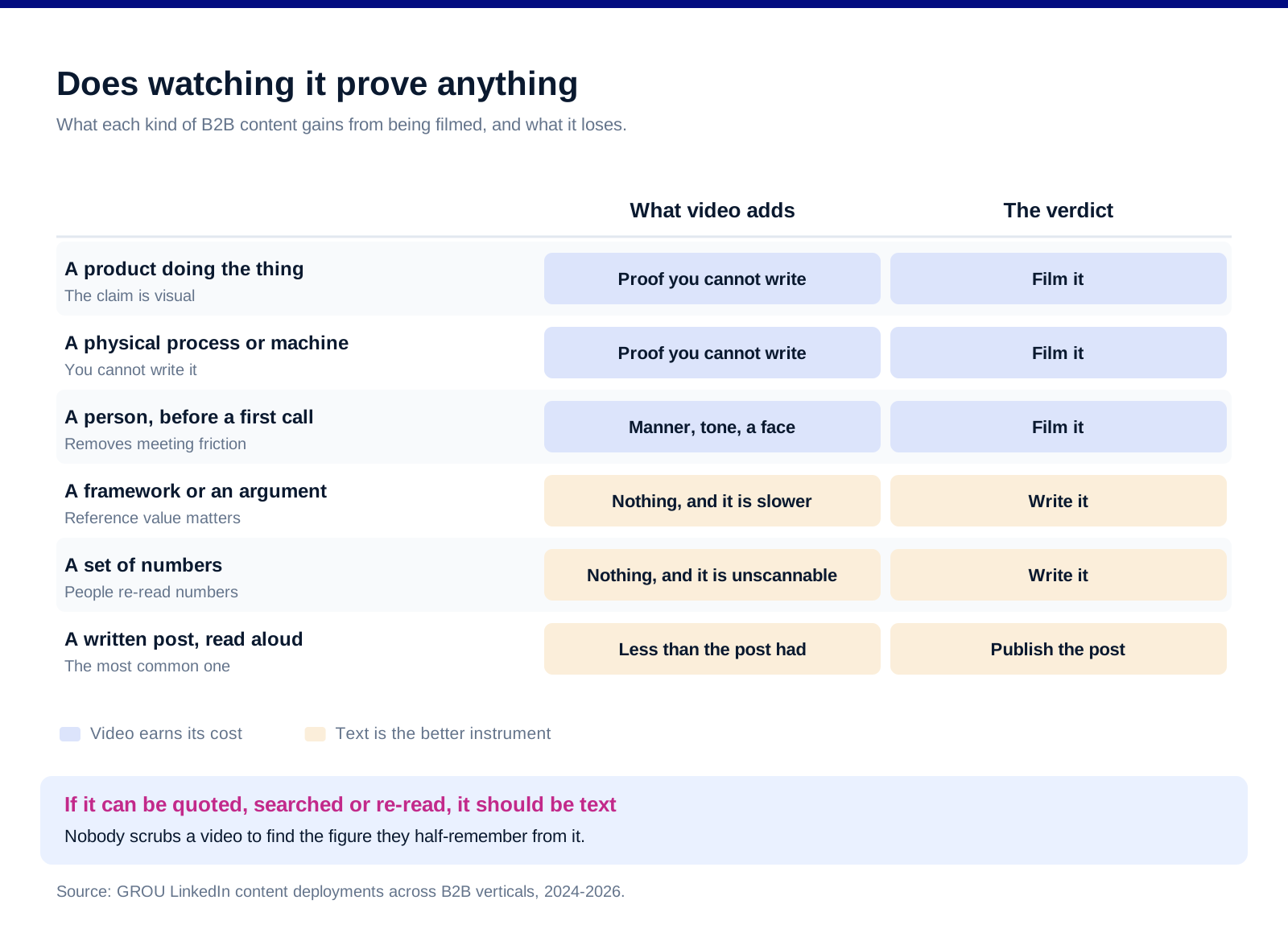
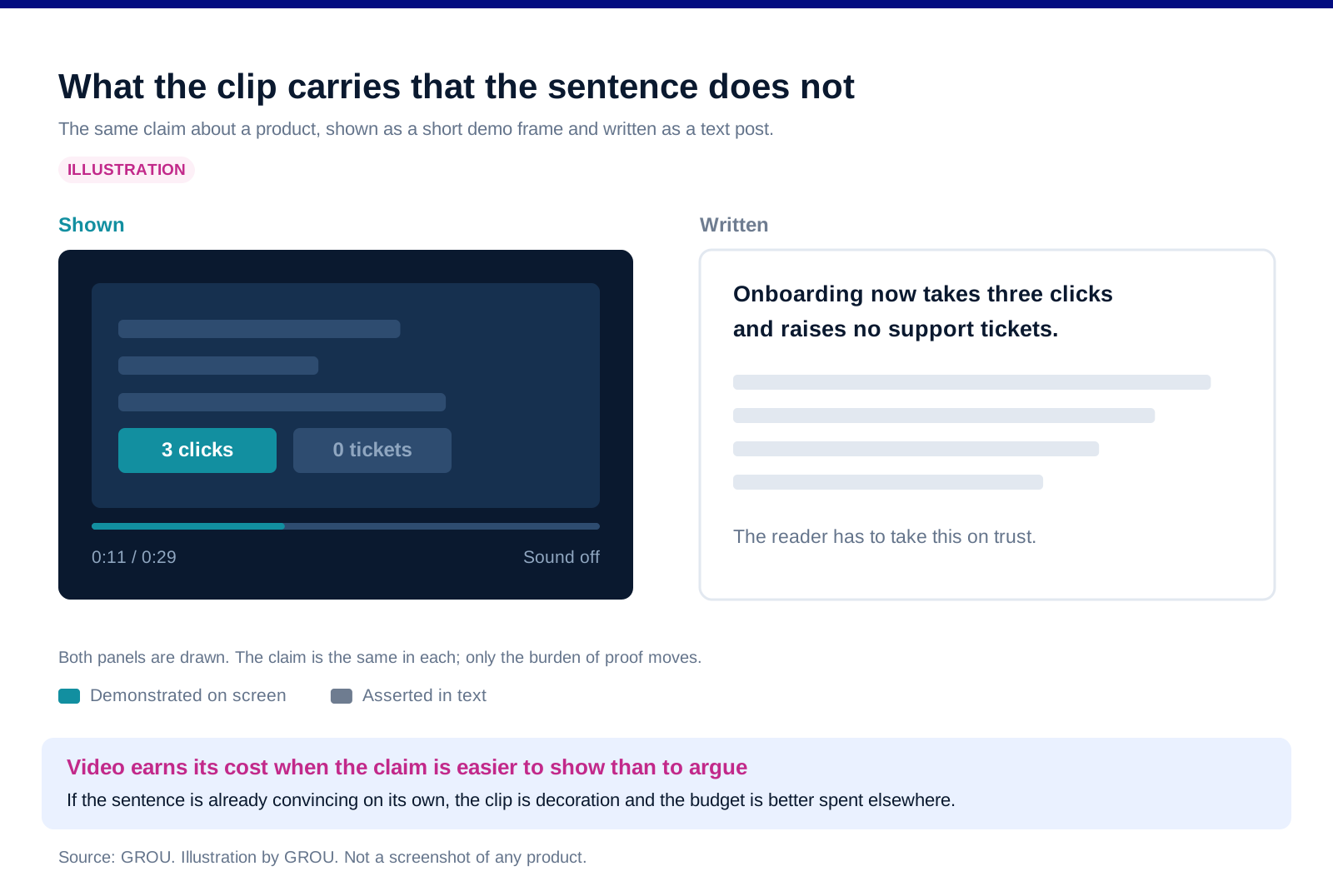
Video wins when the claim is visual. A machine running. A dashboard doing the thing you say it does. A workflow that takes eleven clicks in the competitor and two in yours. You cannot write that as convincingly as you can show it, and every word you spend describing it is a word the reader has to take on trust.
Video wins when the subject is a person. Before someone books thirty minutes with a stranger, thirty seconds of that stranger talking removes more friction than any amount of copy. This is the single highest-return use of video for a founder-led business and it does not need production value.
Video loses on arguments. A position, a framework, a comparison, a set of numbers. All of it is faster to read, easier to skim, possible to quote and possible to search. Filming an argument makes it slower to consume and harder to reference.
Video loses on anything the reader might need again. Nobody scrubs a video to find the figure they half-remember. If the content has reference value, it belongs in text, and the video can point at it.
And video loses whenever it is a written post read aloud. That is the most common B2B video on the platform and it is strictly worse than the post it came from.
Captions are a requirement, not an optimisation
This is written about as a reach tactic and it is actually a standard. WCAG 2.2 Success Criterion 1.2.2, at Level A, the lowest conformance level, states that "Captions are provided for all prerecorded audio content in synchronized media, except when the media is a media alternative for text and is clearly labeled as such."
Level A is the floor, not the aspiration. If your company makes any accessibility commitment in its enterprise contracts, in a public statement, or in a procurement questionnaire, uncaptioned video sits below the level you have claimed.
Auto-generated captions are a draft. They are usually adequate for common words and reliably wrong on product names, people's names and acronyms, which in B2B is most of the words that matter. Read them before publishing.
And the practical case is the same as the compliance case. People watch in offices, on trains and in meetings they should be paying attention to. A video that only works with sound is a video that only works some of the time.
Consider what else the standard asks for. Audio description exists as a separate criterion because a screen recording narrated as "and then you just click here" is unusable to someone who cannot see where here is. Narrate what you are doing, not where you are pointing. That costs nothing and it improves the video for everyone watching on a phone.
If it is AI-generated, label it
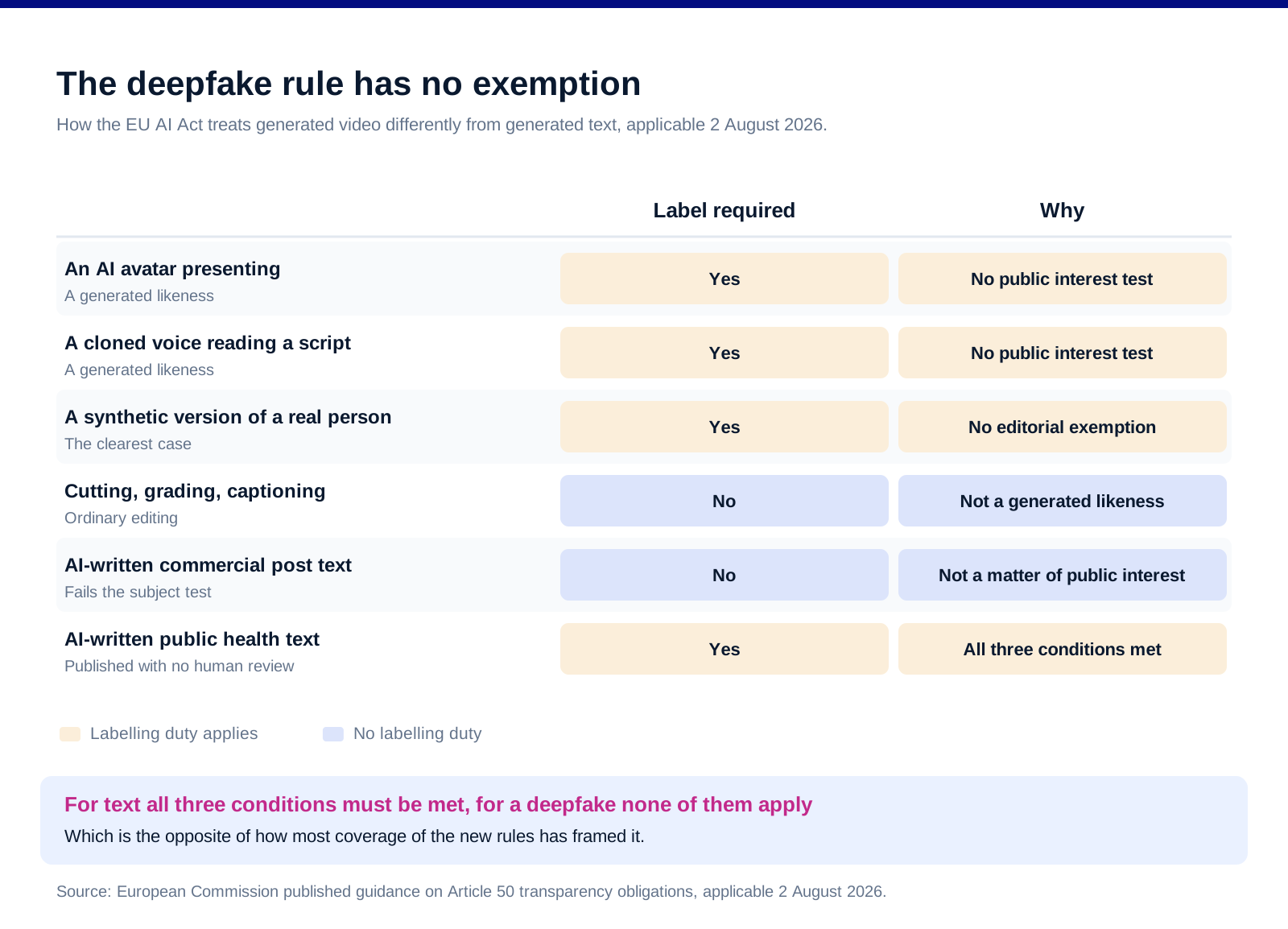
The deepfake duty is stricter than the text duty, and this is the part people get backwards. The Commission's Article 50 guidance requires deployers to "clearly label deepfakes and AI-generated or manipulated text published on matters of public interest without human review or editorial control". For text, all three of those conditions have to be met, which is why almost no commercial post is caught. For deepfakes there is no public interest test and no editorial review exemption.
And the Commission's own announcement is unambiguous about scope. It states that "Deepfakes (images, videos, or audio that have been edited or generated using AI) will have to be labelled", as part of the transparency rules that started applying on 2 August 2026.
So the question for a B2B team is narrow and practical. Are you generating or manipulating a likeness? An AI avatar presenting your content, a cloned voice reading your script, a synthetic version of a real person: those are the cases to look at. Editing, colour grading, captions and cutting are not.
Label it visibly, not in the fifth line of the description. The purpose is that a viewer knows what they are watching, and a disclosure nobody reads has not achieved that.
This is not legal advice and the boundaries are new. Take your own advice on your own markets, particularly if you are producing at scale or using a real person's likeness. Our content engine piece covers where this sits in an approval process.
Put a real person on camera, and get the endorsement rules right
The customer story is the most common B2B video and the most commonly mishandled. If a customer appears on camera describing their results, that is an endorsement, and the FTC's Endorsement Guides FAQ is direct about the standard: "An endorsement has to represent the accurate experience and opinion of the endorser."
Which rules out the two things everyone does. You cannot script a customer into saying something they did not experience, and you cannot put someone on camera who has not actually used what they are describing. The guides say an endorser cannot "talk about your experience with a product if you haven't tried it", and cannot "suggest you use it regularly" if they used it once.
Exceptional results need context, not a caption saying they are exceptional. Where you do not hold proof that one customer's result is representative, the guidance is that the advertising has to make clear what people generally achieve. In practice this means either publishing your typical figure alongside the exceptional one, or not publishing the exceptional one.
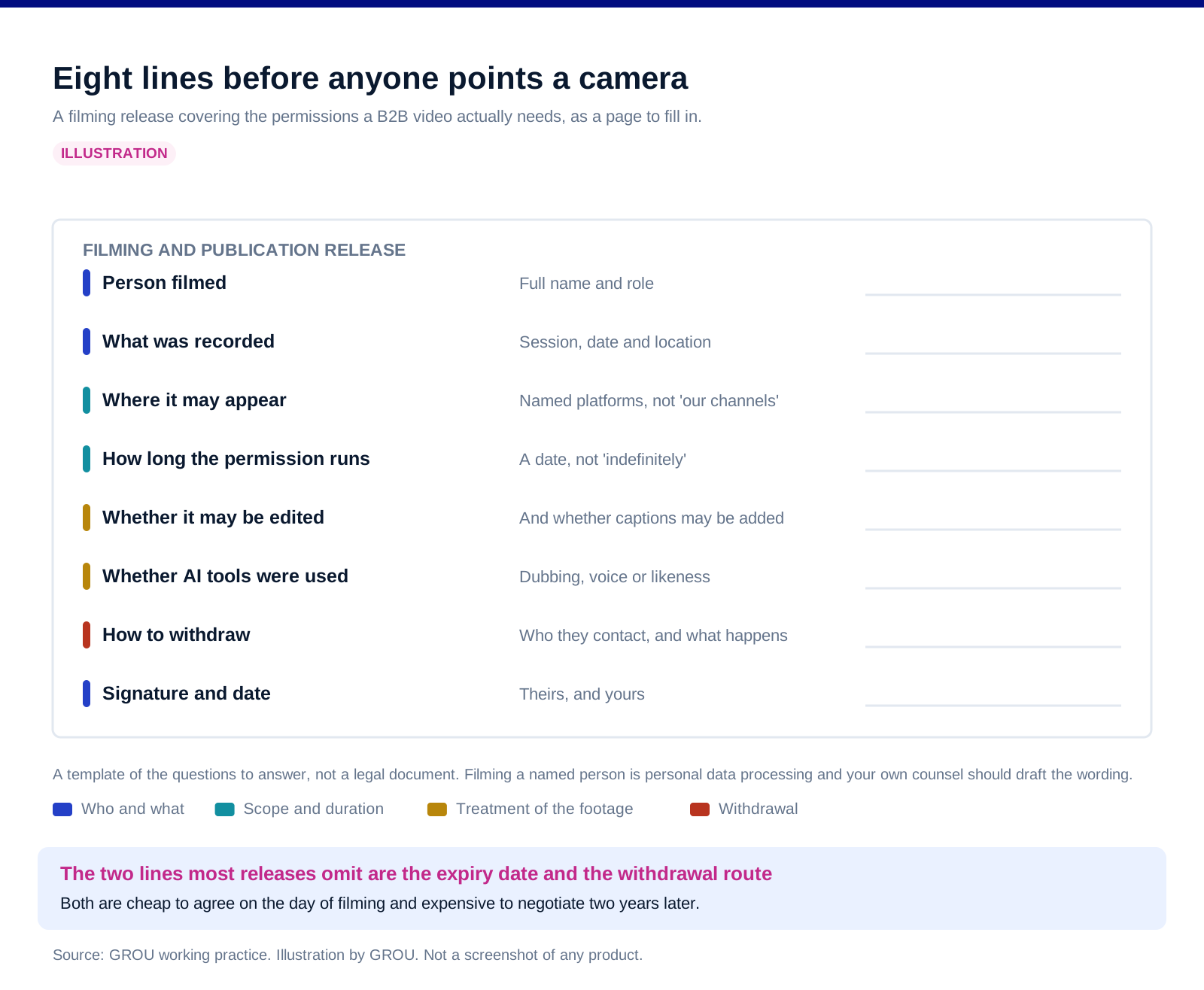
Get filming permission in writing, separately from the case study permission. Appearing on camera is a different thing from being named in a written case study, and people who are comfortable with one are often not comfortable with the other.
The production model that survives contact with a quarter
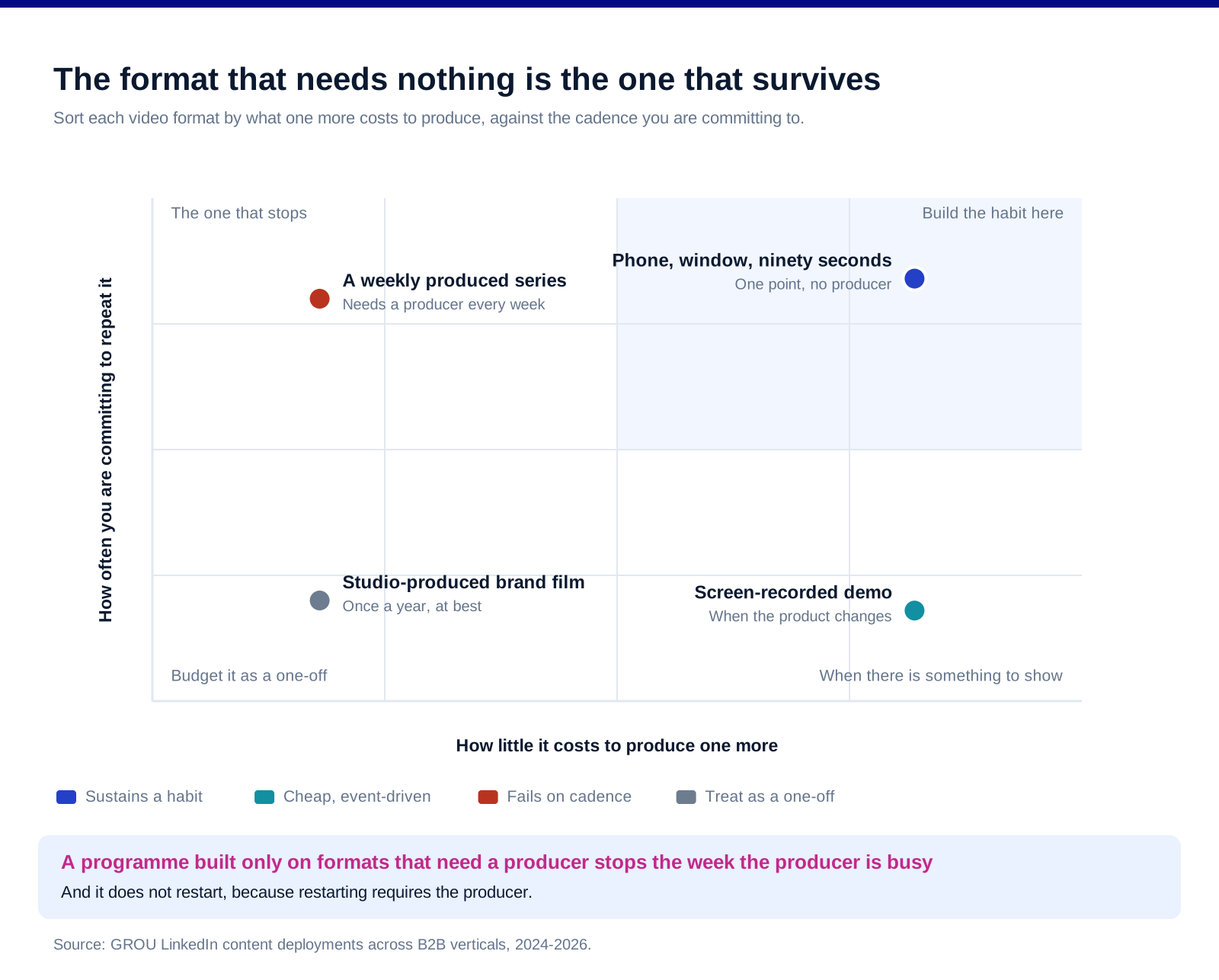
Film in batches, publish singly. The cost of B2B video is almost entirely setup: the room, the lighting, the person getting into the right head-space. Doing six in one sitting costs perhaps 1.5 times what doing one costs, and the sixth is usually the best because they have warmed up.
Keep one format that requires nothing. A phone, a window, ninety seconds, one point. If the only formats you have require a producer, the programme stops the first week the producer is busy, and it does not restart.
Do not build a series until you have shipped ten singles. A series is a commitment to a cadence you have not yet demonstrated you can hold, and abandoning one publicly is worse than never starting it.
Write the point first, in one sentence. If you cannot, the video will not have one either. This is also the fastest way to discover that the point should have been a post.
Budget the edit, not the shoot. Teams consistently underestimate the editing and captioning time, which is where a batch of six becomes a backlog of six.
What we do not publish here
Any claim about how LinkedIn distributes or ranks video. LinkedIn does not publish its distribution mechanics, everything in circulation is inference presented as fact, and a strategy built on inferred mechanics breaks whenever the inference does.
Optimal video length, aspect ratio or posting time. Same reason. Every published figure of this kind traces back to a company selling scheduling or analytics software.
View, watch-time or engagement benchmarks. Ours come from a specific set of clients, offers and markets.
A hook formula. They stop working when enough people use them, and by the time one is published enough people have.
A recommendation on any specific AI video tool. We have not run a controlled comparison, and the compliance question above matters more than the feature list.
FAQ
Does B2B video need captions?
Yes, and not for the reason usually given. WCAG Success Criterion 1.2.2 at Level A requires captions for all prerecorded audio in synchronized media. If your company has made any accessibility commitment in a contract or a public statement, uncaptioned video falls below it. Check auto-generated captions before publishing, because they reliably mangle product and people names.
Do you have to disclose AI-generated video on LinkedIn?
If it is a deepfake, meaning a generated or manipulated likeness, the EU AI Act transparency rules that began applying on 2 August 2026 require labelling, and unlike the rule for AI-generated text there is no public interest test and no human review exemption. Editing, grading and captioning are not caught. Take your own legal advice.
What kind of video works for B2B?
Anything where seeing it is the evidence: a demonstration, a physical process, a comparison you can watch happen, or a person talking before someone books time with them. Arguments, frameworks and numbers are faster to read and easier to reference in text.
How long should a B2B LinkedIn video be?
We do not publish a number, because the honest answer depends on what you are showing and nobody outside LinkedIn can measure distribution effects. Long enough to make one point, and stop.
Can you script a customer testimonial video?
You can structure the questions. You cannot script the answers. The FTC's guidance is that an endorsement has to represent the accurate experience and opinion of the endorser, so anything the customer did not experience should not be in their mouth.
How often should you post video?
As often as your production model actually supports, which you find out by shipping ten before committing to a cadence. A format that needs a producer will stop the week the producer is busy.
Bottom line
Run the test before you book the room: does watching this change what someone believes in a way reading it could not? Most B2B content fails that test and should be written, which is why so much B2B video is a post read aloud at a quarter of the speed. For the content that passes, caption it because a Level A accessibility criterion requires it rather than because someone told you it lifts reach, label any generated likeness because the AI Act's deepfake rule has no exemption to hide behind, and keep the endorsement rules in mind the moment a real customer appears on camera. Then film in batches, keep one format that needs nothing but a phone and a window, and write the point in one sentence before anything else, because that sentence is also the cheapest way to find out you did not need the video.
Want the pipeline built rather than the content calendar filled? Book a call with GROU. We run LinkedIn content and lead generation inside B2B revenue engines across verticals.
We are GROU, a B2B pipeline agency that runs lead generation, outbound, and LinkedIn content for clients across manufacturing, fintech, iGaming, software, and professional services. The accessibility and regulatory material here is quoted from the W3C's, the European Commission's and the FTC's own published guidance. Nothing here is legal advice.
Most B2B video fails a test nobody applies to it: does watching this change what a reader believes in a way reading it could not?
For an argument, a framework or a point of view, the answer is no. Text is faster to consume, easier to skim, quotable, searchable, and does not require anyone to find headphones. Video earns its cost only where seeing something is the evidence: a thing working, a process running, a person's manner before a stranger books time with them. Apply that test honestly and most of what a B2B team plans to film should be written instead.
TL;DR
Video is not a better version of a post, it is a different instrument, and it is the right one only when seeing something changes belief. That rules out most explainers and rules in demonstrations, physical processes, and the founder's face before a first meeting. Two constraints are not optional and both are checkable. Captions are a formal accessibility requirement, not a growth tactic: WCAG Success Criterion 1.2.2 at Level A states that "Captions are provided for all prerecorded audio content in synchronized media". And if you use an AI avatar, a voice clone or any generated likeness, the EU AI Act's transparency rules that started applying on 2 August 2026 require deepfakes to be labelled, with no public interest test to hide behind, unlike the rule for text. Everything else in this article is a production decision. We publish no claim about how LinkedIn distributes video, because LinkedIn does not publish that and everything in circulation is inference.
The test: what does watching prove?
Video wins when the claim is visual. A machine running. A dashboard doing the thing you say it does. A workflow that takes eleven clicks in the competitor and two in yours. You cannot write that as convincingly as you can show it, and every word you spend describing it is a word the reader has to take on trust.
Video wins when the subject is a person. Before someone books thirty minutes with a stranger, thirty seconds of that stranger talking removes more friction than any amount of copy. This is the single highest-return use of video for a founder-led business and it does not need production value.
Video loses on arguments. A position, a framework, a comparison, a set of numbers. All of it is faster to read, easier to skim, possible to quote and possible to search. Filming an argument makes it slower to consume and harder to reference.
Video loses on anything the reader might need again. Nobody scrubs a video to find the figure they half-remember. If the content has reference value, it belongs in text, and the video can point at it.
And video loses whenever it is a written post read aloud. That is the most common B2B video on the platform and it is strictly worse than the post it came from.
Captions are a requirement, not an optimisation
This is written about as a reach tactic and it is actually a standard. WCAG 2.2 Success Criterion 1.2.2, at Level A, the lowest conformance level, states that "Captions are provided for all prerecorded audio content in synchronized media, except when the media is a media alternative for text and is clearly labeled as such."
Level A is the floor, not the aspiration. If your company makes any accessibility commitment in its enterprise contracts, in a public statement, or in a procurement questionnaire, uncaptioned video sits below the level you have claimed.
Auto-generated captions are a draft. They are usually adequate for common words and reliably wrong on product names, people's names and acronyms, which in B2B is most of the words that matter. Read them before publishing.
And the practical case is the same as the compliance case. People watch in offices, on trains and in meetings they should be paying attention to. A video that only works with sound is a video that only works some of the time.
Consider what else the standard asks for. Audio description exists as a separate criterion because a screen recording narrated as "and then you just click here" is unusable to someone who cannot see where here is. Narrate what you are doing, not where you are pointing. That costs nothing and it improves the video for everyone watching on a phone.
If it is AI-generated, label it
The deepfake duty is stricter than the text duty, and this is the part people get backwards. The Commission's Article 50 guidance requires deployers to "clearly label deepfakes and AI-generated or manipulated text published on matters of public interest without human review or editorial control". For text, all three of those conditions have to be met, which is why almost no commercial post is caught. For deepfakes there is no public interest test and no editorial review exemption.
And the Commission's own announcement is unambiguous about scope. It states that "Deepfakes (images, videos, or audio that have been edited or generated using AI) will have to be labelled", as part of the transparency rules that started applying on 2 August 2026.
So the question for a B2B team is narrow and practical. Are you generating or manipulating a likeness? An AI avatar presenting your content, a cloned voice reading your script, a synthetic version of a real person: those are the cases to look at. Editing, colour grading, captions and cutting are not.
Label it visibly, not in the fifth line of the description. The purpose is that a viewer knows what they are watching, and a disclosure nobody reads has not achieved that.
This is not legal advice and the boundaries are new. Take your own advice on your own markets, particularly if you are producing at scale or using a real person's likeness. Our content engine piece covers where this sits in an approval process.
Put a real person on camera, and get the endorsement rules right
The customer story is the most common B2B video and the most commonly mishandled. If a customer appears on camera describing their results, that is an endorsement, and the FTC's Endorsement Guides FAQ is direct about the standard: "An endorsement has to represent the accurate experience and opinion of the endorser."
Which rules out the two things everyone does. You cannot script a customer into saying something they did not experience, and you cannot put someone on camera who has not actually used what they are describing. The guides say an endorser cannot "talk about your experience with a product if you haven't tried it", and cannot "suggest you use it regularly" if they used it once.
Exceptional results need context, not a caption saying they are exceptional. Where you do not hold proof that one customer's result is representative, the guidance is that the advertising has to make clear what people generally achieve. In practice this means either publishing your typical figure alongside the exceptional one, or not publishing the exceptional one.
Get filming permission in writing, separately from the case study permission. Appearing on camera is a different thing from being named in a written case study, and people who are comfortable with one are often not comfortable with the other.
The production model that survives contact with a quarter
Film in batches, publish singly. The cost of B2B video is almost entirely setup: the room, the lighting, the person getting into the right head-space. Doing six in one sitting costs perhaps 1.5 times what doing one costs, and the sixth is usually the best because they have warmed up.
Keep one format that requires nothing. A phone, a window, ninety seconds, one point. If the only formats you have require a producer, the programme stops the first week the producer is busy, and it does not restart.
Do not build a series until you have shipped ten singles. A series is a commitment to a cadence you have not yet demonstrated you can hold, and abandoning one publicly is worse than never starting it.
Write the point first, in one sentence. If you cannot, the video will not have one either. This is also the fastest way to discover that the point should have been a post.
Budget the edit, not the shoot. Teams consistently underestimate the editing and captioning time, which is where a batch of six becomes a backlog of six.
What we do not publish here
Any claim about how LinkedIn distributes or ranks video. LinkedIn does not publish its distribution mechanics, everything in circulation is inference presented as fact, and a strategy built on inferred mechanics breaks whenever the inference does.
Optimal video length, aspect ratio or posting time. Same reason. Every published figure of this kind traces back to a company selling scheduling or analytics software.
View, watch-time or engagement benchmarks. Ours come from a specific set of clients, offers and markets.
A hook formula. They stop working when enough people use them, and by the time one is published enough people have.
A recommendation on any specific AI video tool. We have not run a controlled comparison, and the compliance question above matters more than the feature list.
FAQ
Does B2B video need captions?
Yes, and not for the reason usually given. WCAG Success Criterion 1.2.2 at Level A requires captions for all prerecorded audio in synchronized media. If your company has made any accessibility commitment in a contract or a public statement, uncaptioned video falls below it. Check auto-generated captions before publishing, because they reliably mangle product and people names.
Do you have to disclose AI-generated video on LinkedIn?
If it is a deepfake, meaning a generated or manipulated likeness, the EU AI Act transparency rules that began applying on 2 August 2026 require labelling, and unlike the rule for AI-generated text there is no public interest test and no human review exemption. Editing, grading and captioning are not caught. Take your own legal advice.
What kind of video works for B2B?
Anything where seeing it is the evidence: a demonstration, a physical process, a comparison you can watch happen, or a person talking before someone books time with them. Arguments, frameworks and numbers are faster to read and easier to reference in text.
How long should a B2B LinkedIn video be?
We do not publish a number, because the honest answer depends on what you are showing and nobody outside LinkedIn can measure distribution effects. Long enough to make one point, and stop.
Can you script a customer testimonial video?
You can structure the questions. You cannot script the answers. The FTC's guidance is that an endorsement has to represent the accurate experience and opinion of the endorser, so anything the customer did not experience should not be in their mouth.
How often should you post video?
As often as your production model actually supports, which you find out by shipping ten before committing to a cadence. A format that needs a producer will stop the week the producer is busy.
Bottom line
Run the test before you book the room: does watching this change what someone believes in a way reading it could not? Most B2B content fails that test and should be written, which is why so much B2B video is a post read aloud at a quarter of the speed. For the content that passes, caption it because a Level A accessibility criterion requires it rather than because someone told you it lifts reach, label any generated likeness because the AI Act's deepfake rule has no exemption to hide behind, and keep the endorsement rules in mind the moment a real customer appears on camera. Then film in batches, keep one format that needs nothing but a phone and a window, and write the point in one sentence before anything else, because that sentence is also the cheapest way to find out you did not need the video.
Want the pipeline built rather than the content calendar filled? Book a call with GROU. We run LinkedIn content and lead generation inside B2B revenue engines across verticals.
We are GROU, a B2B pipeline agency that runs lead generation, outbound, and LinkedIn content for clients across manufacturing, fintech, iGaming, software, and professional services. The accessibility and regulatory material here is quoted from the W3C's, the European Commission's and the FTC's own published guidance. Nothing here is legal advice.
Most B2B video fails a test nobody applies to it: does watching this change what a reader believes in a way reading it could not?
For an argument, a framework or a point of view, the answer is no. Text is faster to consume, easier to skim, quotable, searchable, and does not require anyone to find headphones. Video earns its cost only where seeing something is the evidence: a thing working, a process running, a person's manner before a stranger books time with them. Apply that test honestly and most of what a B2B team plans to film should be written instead.
TL;DR
Video is not a better version of a post, it is a different instrument, and it is the right one only when seeing something changes belief. That rules out most explainers and rules in demonstrations, physical processes, and the founder's face before a first meeting. Two constraints are not optional and both are checkable. Captions are a formal accessibility requirement, not a growth tactic: WCAG Success Criterion 1.2.2 at Level A states that "Captions are provided for all prerecorded audio content in synchronized media". And if you use an AI avatar, a voice clone or any generated likeness, the EU AI Act's transparency rules that started applying on 2 August 2026 require deepfakes to be labelled, with no public interest test to hide behind, unlike the rule for text. Everything else in this article is a production decision. We publish no claim about how LinkedIn distributes video, because LinkedIn does not publish that and everything in circulation is inference.
The test: what does watching prove?
Video wins when the claim is visual. A machine running. A dashboard doing the thing you say it does. A workflow that takes eleven clicks in the competitor and two in yours. You cannot write that as convincingly as you can show it, and every word you spend describing it is a word the reader has to take on trust.
Video wins when the subject is a person. Before someone books thirty minutes with a stranger, thirty seconds of that stranger talking removes more friction than any amount of copy. This is the single highest-return use of video for a founder-led business and it does not need production value.
Video loses on arguments. A position, a framework, a comparison, a set of numbers. All of it is faster to read, easier to skim, possible to quote and possible to search. Filming an argument makes it slower to consume and harder to reference.
Video loses on anything the reader might need again. Nobody scrubs a video to find the figure they half-remember. If the content has reference value, it belongs in text, and the video can point at it.
And video loses whenever it is a written post read aloud. That is the most common B2B video on the platform and it is strictly worse than the post it came from.
Captions are a requirement, not an optimisation
This is written about as a reach tactic and it is actually a standard. WCAG 2.2 Success Criterion 1.2.2, at Level A, the lowest conformance level, states that "Captions are provided for all prerecorded audio content in synchronized media, except when the media is a media alternative for text and is clearly labeled as such."
Level A is the floor, not the aspiration. If your company makes any accessibility commitment in its enterprise contracts, in a public statement, or in a procurement questionnaire, uncaptioned video sits below the level you have claimed.
Auto-generated captions are a draft. They are usually adequate for common words and reliably wrong on product names, people's names and acronyms, which in B2B is most of the words that matter. Read them before publishing.
And the practical case is the same as the compliance case. People watch in offices, on trains and in meetings they should be paying attention to. A video that only works with sound is a video that only works some of the time.
Consider what else the standard asks for. Audio description exists as a separate criterion because a screen recording narrated as "and then you just click here" is unusable to someone who cannot see where here is. Narrate what you are doing, not where you are pointing. That costs nothing and it improves the video for everyone watching on a phone.
If it is AI-generated, label it
The deepfake duty is stricter than the text duty, and this is the part people get backwards. The Commission's Article 50 guidance requires deployers to "clearly label deepfakes and AI-generated or manipulated text published on matters of public interest without human review or editorial control". For text, all three of those conditions have to be met, which is why almost no commercial post is caught. For deepfakes there is no public interest test and no editorial review exemption.
And the Commission's own announcement is unambiguous about scope. It states that "Deepfakes (images, videos, or audio that have been edited or generated using AI) will have to be labelled", as part of the transparency rules that started applying on 2 August 2026.
So the question for a B2B team is narrow and practical. Are you generating or manipulating a likeness? An AI avatar presenting your content, a cloned voice reading your script, a synthetic version of a real person: those are the cases to look at. Editing, colour grading, captions and cutting are not.
Label it visibly, not in the fifth line of the description. The purpose is that a viewer knows what they are watching, and a disclosure nobody reads has not achieved that.
This is not legal advice and the boundaries are new. Take your own advice on your own markets, particularly if you are producing at scale or using a real person's likeness. Our content engine piece covers where this sits in an approval process.
Put a real person on camera, and get the endorsement rules right
The customer story is the most common B2B video and the most commonly mishandled. If a customer appears on camera describing their results, that is an endorsement, and the FTC's Endorsement Guides FAQ is direct about the standard: "An endorsement has to represent the accurate experience and opinion of the endorser."
Which rules out the two things everyone does. You cannot script a customer into saying something they did not experience, and you cannot put someone on camera who has not actually used what they are describing. The guides say an endorser cannot "talk about your experience with a product if you haven't tried it", and cannot "suggest you use it regularly" if they used it once.
Exceptional results need context, not a caption saying they are exceptional. Where you do not hold proof that one customer's result is representative, the guidance is that the advertising has to make clear what people generally achieve. In practice this means either publishing your typical figure alongside the exceptional one, or not publishing the exceptional one.
Get filming permission in writing, separately from the case study permission. Appearing on camera is a different thing from being named in a written case study, and people who are comfortable with one are often not comfortable with the other.
The production model that survives contact with a quarter
Film in batches, publish singly. The cost of B2B video is almost entirely setup: the room, the lighting, the person getting into the right head-space. Doing six in one sitting costs perhaps 1.5 times what doing one costs, and the sixth is usually the best because they have warmed up.
Keep one format that requires nothing. A phone, a window, ninety seconds, one point. If the only formats you have require a producer, the programme stops the first week the producer is busy, and it does not restart.
Do not build a series until you have shipped ten singles. A series is a commitment to a cadence you have not yet demonstrated you can hold, and abandoning one publicly is worse than never starting it.
Write the point first, in one sentence. If you cannot, the video will not have one either. This is also the fastest way to discover that the point should have been a post.
Budget the edit, not the shoot. Teams consistently underestimate the editing and captioning time, which is where a batch of six becomes a backlog of six.
What we do not publish here
Any claim about how LinkedIn distributes or ranks video. LinkedIn does not publish its distribution mechanics, everything in circulation is inference presented as fact, and a strategy built on inferred mechanics breaks whenever the inference does.
Optimal video length, aspect ratio or posting time. Same reason. Every published figure of this kind traces back to a company selling scheduling or analytics software.
View, watch-time or engagement benchmarks. Ours come from a specific set of clients, offers and markets.
A hook formula. They stop working when enough people use them, and by the time one is published enough people have.
A recommendation on any specific AI video tool. We have not run a controlled comparison, and the compliance question above matters more than the feature list.
FAQ
Does B2B video need captions?
Yes, and not for the reason usually given. WCAG Success Criterion 1.2.2 at Level A requires captions for all prerecorded audio in synchronized media. If your company has made any accessibility commitment in a contract or a public statement, uncaptioned video falls below it. Check auto-generated captions before publishing, because they reliably mangle product and people names.
Do you have to disclose AI-generated video on LinkedIn?
If it is a deepfake, meaning a generated or manipulated likeness, the EU AI Act transparency rules that began applying on 2 August 2026 require labelling, and unlike the rule for AI-generated text there is no public interest test and no human review exemption. Editing, grading and captioning are not caught. Take your own legal advice.
What kind of video works for B2B?
Anything where seeing it is the evidence: a demonstration, a physical process, a comparison you can watch happen, or a person talking before someone books time with them. Arguments, frameworks and numbers are faster to read and easier to reference in text.
How long should a B2B LinkedIn video be?
We do not publish a number, because the honest answer depends on what you are showing and nobody outside LinkedIn can measure distribution effects. Long enough to make one point, and stop.
Can you script a customer testimonial video?
You can structure the questions. You cannot script the answers. The FTC's guidance is that an endorsement has to represent the accurate experience and opinion of the endorser, so anything the customer did not experience should not be in their mouth.
How often should you post video?
As often as your production model actually supports, which you find out by shipping ten before committing to a cadence. A format that needs a producer will stop the week the producer is busy.
Bottom line
Run the test before you book the room: does watching this change what someone believes in a way reading it could not? Most B2B content fails that test and should be written, which is why so much B2B video is a post read aloud at a quarter of the speed. For the content that passes, caption it because a Level A accessibility criterion requires it rather than because someone told you it lifts reach, label any generated likeness because the AI Act's deepfake rule has no exemption to hide behind, and keep the endorsement rules in mind the moment a real customer appears on camera. Then film in batches, keep one format that needs nothing but a phone and a window, and write the point in one sentence before anything else, because that sentence is also the cheapest way to find out you did not need the video.
Want the pipeline built rather than the content calendar filled? Book a call with GROU. We run LinkedIn content and lead generation inside B2B revenue engines across verticals.
We are GROU, a B2B pipeline agency that runs lead generation, outbound, and LinkedIn content for clients across manufacturing, fintech, iGaming, software, and professional services. The accessibility and regulatory material here is quoted from the W3C's, the European Commission's and the FTC's own published guidance. Nothing here is legal advice.
Pipeline OS Newsletter
Build qualified pipeline
Get weekly tactics to generate demand, improve lead quality, and book more meetings.





Trusted by industry leaders
Trusted by industry leaders
Trusted by industry leaders
Ready to build qualified pipeline?
Ready to build qualified pipeline?
Ready to build qualified pipeline?
Book a call to see if we're the right fit, or take the 2-minute quiz to get a clear starting point.
Book a call to see if we're the right fit, or take the 2-minute quiz to get a clear starting point.
Book a call to see if we're the right fit, or take the 2-minute quiz to get a clear starting point.
" height="30.21639343089746px" id="hfGbXmQR2" width="30.216393430897455px"/></svg>)
Copyright © 2026 – All Right Reserved
Copyright © 2026 – All Right Reserved
Copyright © 2026 – All Right Reserved