%22%3E%3C/path%3E%3Cpath d=%22M 63.072 7.554 C 62.258 8.022 61.577 8.689 61.092 9.493 L 61.092 7.076 L 57.158 7.076 L 57.158 22.64 L 61.089 22.64 L 61.089 14.888 C 61.089 13.446 61.403 12.434 62.03 11.853 C 62.818 11.218 63.818 10.907 64.826 10.982 L 65.868 10.982 L 65.868 6.851 C 64.891 6.834 63.926 7.076 63.073 7.554 Z%22 fill=%22rgb(17,17,17)%22%3E%3C/path%3E%3Cpath d=%22M 78.916 7.82 C 76.363 6.49 73.321 6.49 70.768 7.82 C 69.562 8.473 68.564 9.451 67.888 10.644 C 67.167 11.931 66.803 13.387 66.834 14.862 C 66.804 16.332 67.157 17.785 67.86 19.077 C 68.515 20.267 69.494 21.246 70.684 21.901 C 71.924 22.576 73.318 22.92 74.73 22.898 C 76.164 22.918 77.58 22.575 78.846 21.901 C 80.062 21.247 81.073 20.27 81.768 19.077 C 82.506 17.797 82.88 16.339 82.85 14.862 C 82.88 13.389 82.517 11.934 81.797 10.647 C 81.12 9.455 80.122 8.477 78.917 7.824 M 78.803 14.862 C 78.829 15.739 78.636 16.608 78.241 17.391 C 77.903 18.046 77.38 18.588 76.738 18.95 C 76.124 19.293 75.432 19.472 74.729 19.47 C 73.668 19.497 72.648 19.061 71.934 18.276 C 71.139 17.323 70.741 16.1 70.823 14.862 C 70.741 13.62 71.149 12.395 71.959 11.45 C 72.687 10.667 73.715 10.233 74.783 10.256 C 75.859 10.236 76.894 10.67 77.635 11.45 C 78.464 12.387 78.884 13.616 78.801 14.864%22 fill=%22rgb(17,17,17)%22%3E%3C/path%3E%3Cpath d=%22M 95.906 7.076 L 95.906 15.646 C 95.975 16.68 95.643 17.701 94.979 18.498 C 94.311 19.184 93.379 19.547 92.422 19.495 C 91.475 19.544 90.553 19.18 89.894 18.498 C 89.23 17.701 88.898 16.68 88.967 15.646 L 88.967 7.076 L 85.033 7.076 L 85.033 16.207 C 85 17.449 85.275 18.68 85.834 19.79 C 86.327 20.75 87.095 21.542 88.039 22.065 C 89.033 22.594 90.145 22.861 91.271 22.838 C 92.188 22.847 93.095 22.65 93.926 22.263 C 94.708 21.905 95.388 21.36 95.906 20.675 L 95.906 22.645 L 99.865 22.645 L 99.865 7.076 Z%22 fill=%22rgb(17,17,17)%22%3E%3C/path%3E%3Cpath d=%22M 4.513 15.626 C 4.511 10.815 7.606 6.549 12.181 5.059 C 16.756 3.57 21.77 5.195 24.601 9.086 L 27.816 5.87 C 24.074 1.186 17.981 -0.943 12.137 0.393 C 6.292 1.728 1.728 6.292 0.393 12.137 C -0.943 17.981 1.186 24.074 5.87 27.816 L 9.085 24.601 C 6.214 22.512 4.515 19.177 4.513 15.626%22 fill=%22rgb(32,62,235)%22%3E%3C/path%3E%3Cpath d=%22M 17.114 14.343 L 13.354 18.01 L 13.354 18.026 L 21.071 18.026 L 11.412 27.609 L 17.389 27.609 L 23.999 21.081 L 23.999 28.316 L 24.005 28.316 L 27.967 24.393 L 27.967 14.343 Z%22 fill=%22rgb(32,62,235)%22%3E%3C/path%3E%3C/g%3E%3C/svg%3E) ×
× ××
××›
›
›
›
Onboarding email sequence for B2B SaaS trials
Onboarding email sequence for B2B SaaS trials
Onboarding email sequence for B2B SaaS trials
Onboarding email sequence for B2B SaaS trials
Onboarding email sequence for B2B SaaS trials
Onboarding email sequence for B2B SaaS trials

Author
Aljaz Peklaj

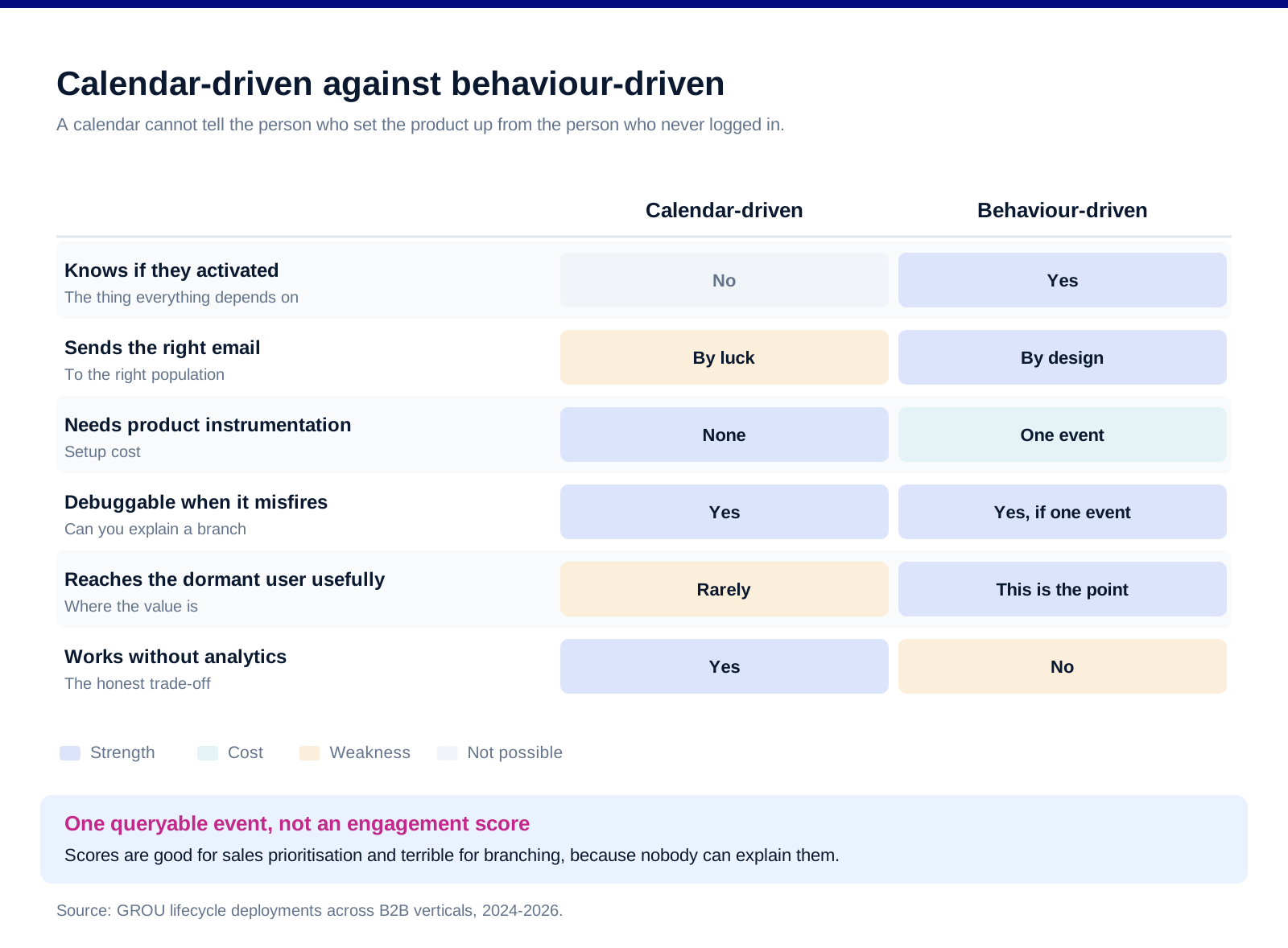
Most trial onboarding sequences are calendar-driven: day one welcome, day three tips, day seven check-in, day twelve last chance. They send the same emails to the person who set the product up on the first afternoon and to the person who has not logged in since signup. One of those people needs help and the other needs congratulating, and a calendar cannot tell them apart.
This is how to build the sequence around what the user did rather than what day it is, starting with the one definition that everything else depends on.
TL;DR
Define your activation event before you write a single email. It is the smallest action that predicts someone becoming a paying customer, it is specific enough to query, and if you cannot name it the sequence cannot work because every branch depends on knowing whether it happened. Then split the trial into two populations, activated and not activated, and write different sequences for each: the unactivated person needs one obstacle removed, the activated person needs to reach a second habit and to know what happens at the end. Send fewer emails than you think, because a trial user is already receiving in-product notifications, and the most common failure is not too few touches but a sequence that ignores everything the person has done. Put a human in the loop once, from a real person, asking one question rather than pitching. And measure the sequence on trial-to-paid by branch rather than on open rates, because an unactivated cohort converting at all is worth more than an activated cohort you would have won anyway. Tooling matters less than the branching: any platform with behaviour-based automation, including ActiveCampaign, will run this, and the design work is the part that is usually missing.
Start with the activation event
Nothing else in this article works until this is settled, and it is where most teams skip straight to writing copy.
The activation event is the smallest action that predicts payment. Not signup, not a login. Something like connecting a data source, inviting a second user, completing one real piece of work in the product. It should be the point at which the person has seen the thing they came for.
It has to be one specific, queryable thing. If your activation definition is "engaged with the product", no automation can branch on it. If it is "created their first project", every email in the sequence can know the answer.
Find it by looking at customers, not at the product roadmap. Take the accounts that converted last quarter and the ones that did not, and look for the action that separates them in the first few days. It is usually more mundane than the team expects, and it is usually not the feature marketing leads with.
One event, not a score. Engagement scores are useful for sales prioritisation and terrible for email branching, because nobody can explain why a given person is in a given branch. A single yes-or-no keeps the sequence debuggable.
If nobody knows the answer, that is the project. Instrumenting the activation event is more valuable than any sequence you could write in the meantime, and it takes a week rather than a quarter.
The two sequences
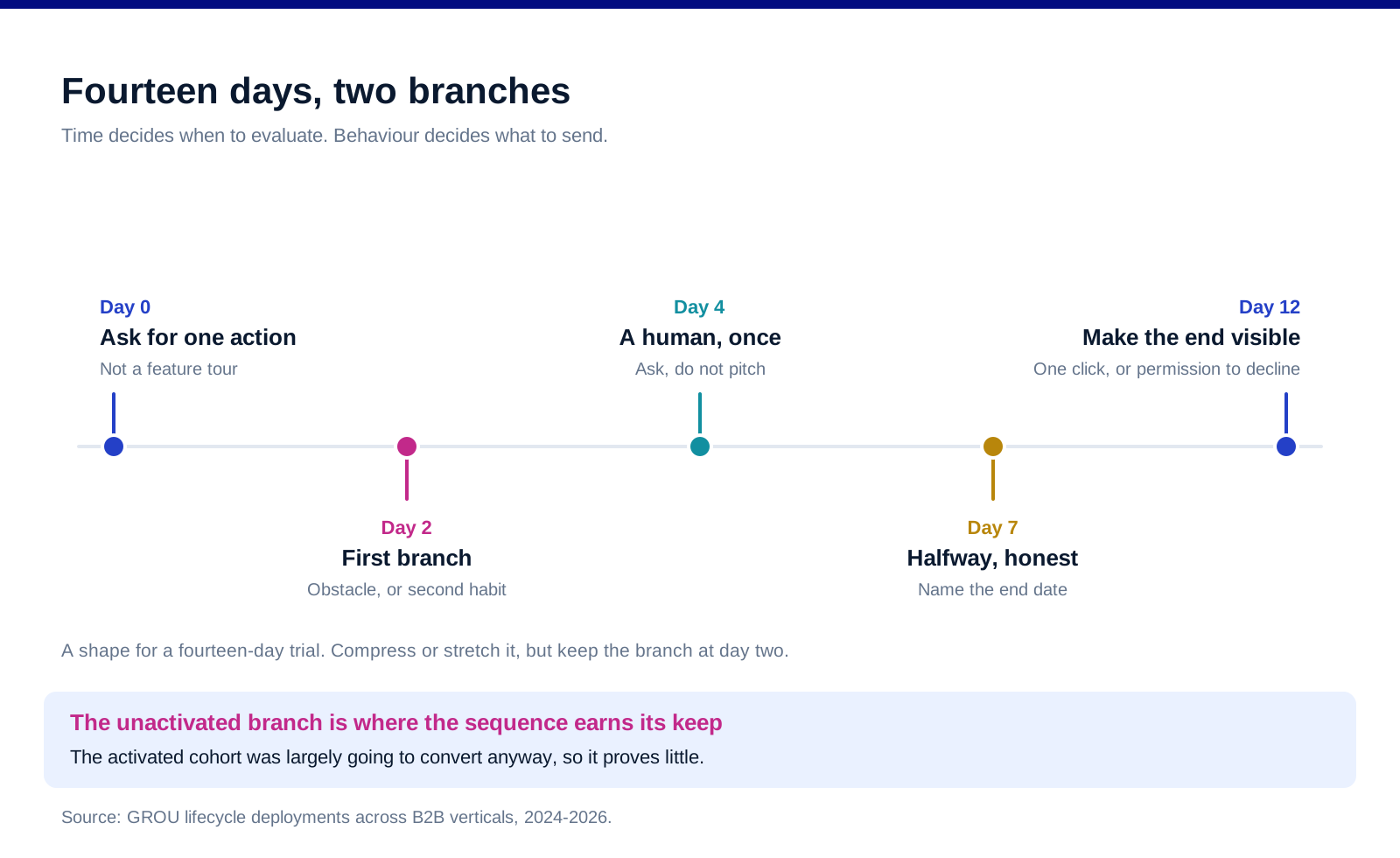
The shape below assumes a fourteen-day trial. Compress or stretch it, but keep the branch.
Day zero, the welcome does one job. Point at the single action that constitutes activation. Not a feature tour, not a list of resources. One link, one outcome, and a sentence saying what happens if they get stuck. This is the highest-read email in the sequence and it is routinely wasted on a greeting.
Day two, branch for the first time. Activated users get a second step that builds a habit. Unactivated users get one obstacle removed, and the email should name the obstacle rather than repeating the invitation. The most useful version asks what stopped them.
Day four to five, the human touch. One email from a real person at your company, asking a question rather than pitching. This works better on the unactivated branch, because those people frequently have a specific blocker that no automated email will guess.
Day seven, halfway and honest. Activated users get the next capability worth learning plus a clear statement of what happens on day fourteen. Unactivated users get the last genuine attempt, which is usually an offer to do the setup for them or to extend the trial from a real start.
Day eleven to twelve, the end is visible. Both branches need to know what happens when the trial ends and what they lose. Activated users need the path to buying to be one click. Unactivated users need permission to say no, which converts better than pressure and costs you nothing.
After it ends, one email, then stop. A trial that ended without conversion is not dead, but it is not a nurture sequence either. One honest close, then move them to your normal list.
What to put in each branch
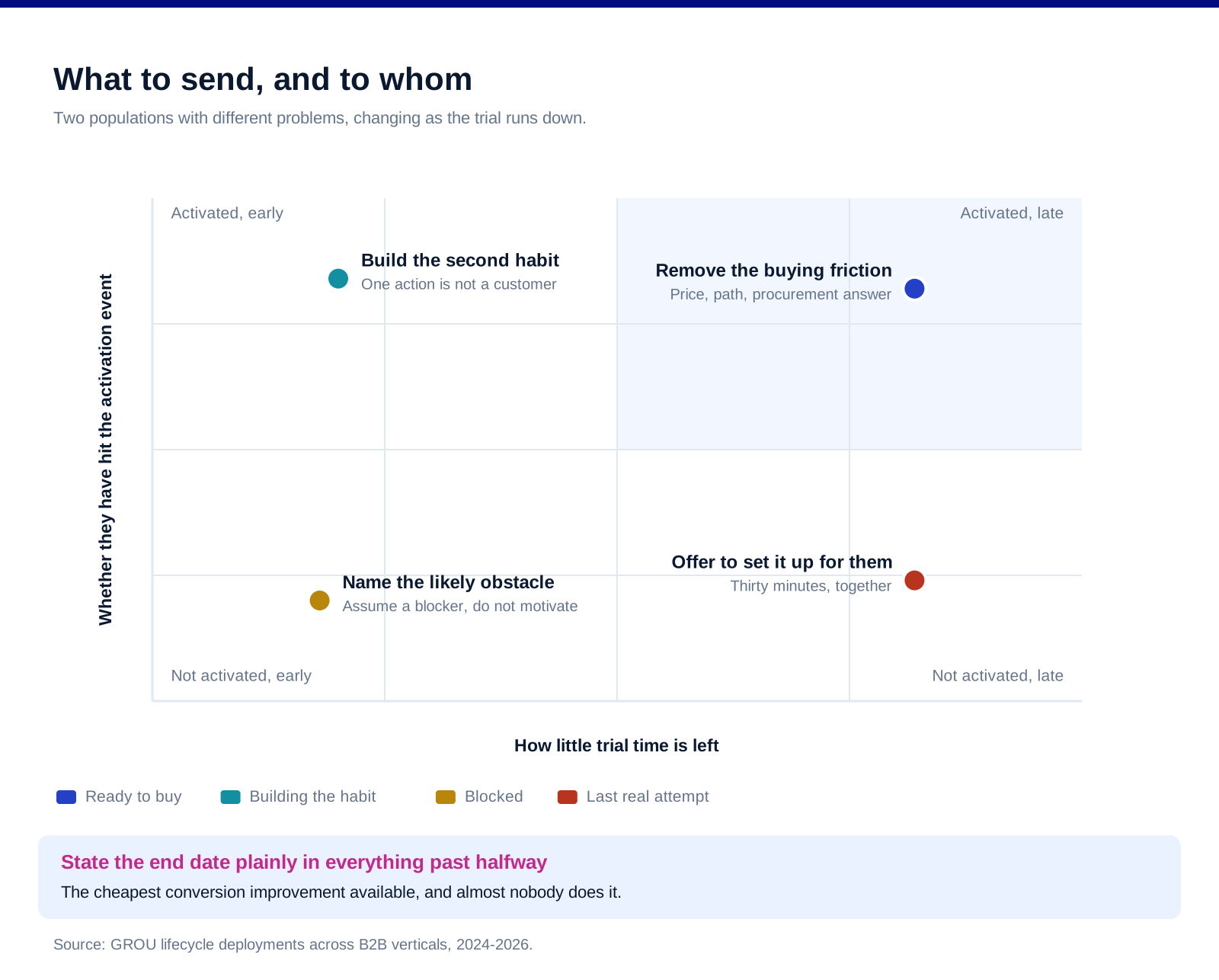
Unactivated, early: remove one obstacle. The email should assume a specific blocker rather than motivating. Something did not connect, the data was not ready, they could not find the setting. Naming the likely obstacle gets replies that a friendly nudge never will.
Unactivated, late: offer to do it for them. By day seven, another instruction will not work. A concrete offer of thirty minutes to set it up together converts a portion of a group that was otherwise entirely lost, and it also tells you why the product is hard to start.
Activated, early: build the second habit. One action does not make a customer. The email should point at the next thing that makes the first one more valuable, so the product becomes part of a routine rather than an experiment.
Activated, late: remove the buying friction. They have seen it work. What they need now is the price, the path and any answer to the objection their procurement will raise. This is where a link to your pricing and a named contact beats another feature.
Both branches, always: make the end date explicit. People forget when the trial ends. Saying it plainly in every email past the halfway point is the cheapest conversion improvement available and almost nobody does it.
Where trial sequences go wrong
Sending on a calendar regardless of behaviour. Congratulating someone on their progress when they never logged in is the fastest way to be ignored for the rest of the trial.
Too many emails. The trial user is also getting in-product notifications, and possibly a sales sequence. Five or six well-branched emails beat twelve on a schedule.
Leading with features rather than the activation action. The welcome email that tours the product produces fewer activations than the one that asks for a single specific thing.
No human in the sequence at all. For B2B, one real message from one real person changes reply rates in a way no automated copy does. It also surfaces the blockers you did not know about.
Judging the sequence on opens. Open rates are unreliable and were unreliable before mail privacy protection made them worse, as our email deliverability benchmarks piece covers. Trial-to-paid by branch is the number.
Ignoring the people who never came back. The unactivated branch is where the sequence earns its keep. The activated cohort was largely going to convert anyway.
FAQ
How many emails should a B2B SaaS trial onboarding sequence have?
Five or six, branched, is usually right for a fourteen-day trial. The user is also receiving in-product notifications and possibly outreach from sales, so the volume that feels light in isolation is often already enough in aggregate. Adding emails is rarely the fix; branching them on behaviour usually is.
What is an activation event and how do you choose one?
It is the smallest specific action that predicts someone becoming a customer, such as connecting a data source or completing one real piece of work in the product. Choose it by comparing accounts that converted with accounts that did not and finding the action that separates them early. It has to be a single queryable yes or no, because every branch in the sequence depends on knowing the answer.
Should trial emails be behaviour-based or time-based?
Behaviour-based, with time as a secondary trigger. A purely time-based sequence sends the same email to someone who has set the product up and someone who has never logged in, which wastes the one advantage email has in a trial. Use time to decide when to evaluate, and behaviour to decide what to send.
When should a human reach out during a trial?
Once, around day four or five, and more importantly on the unactivated branch. A short message from a named person asking what stopped them surfaces blockers that no automated sequence will guess, and it converts a group that further instructions will not reach.
How do you measure a trial onboarding sequence?
Trial-to-paid conversion split by branch. The activated cohort tells you relatively little because many of those users would have converted regardless. The number that shows whether the sequence is working is the conversion rate of people who had not activated by the first branch point, because that group is entirely attributable to what you sent them.
What tool do you need to run this?
Any marketing automation platform that can branch on a behavioural event rather than only on time. ActiveCampaign handles it, and so do most competitors at similar tiers. The tooling is not the constraint. The constraint is almost always that the activation event is not instrumented, which is a product analytics job rather than an email one.
Bottom line
Define the activation event first, because a sequence that cannot tell an activated user from a dormant one is just a newsletter with a countdown. Split into two branches and write for two different problems: the unactivated person has an obstacle, the activated person has a habit to build and a purchase to make. Keep it to five or six emails, put one real human message in around day four on the unactivated side, and state the end date plainly in everything past halfway. Then judge the whole thing on trial-to-paid among people who had not activated, because that is the only cohort the emails can genuinely claim.
Want the lifecycle programme built rather than described? Book a call with GROU. We run demand generation and lifecycle inside B2B revenue engines across verticals.
We are GROU, a B2B pipeline agency that runs lead generation, outbound, and LinkedIn content for clients across manufacturing, fintech, iGaming, software, and professional services. The sequence structure reflects our lifecycle deployments between 2024 and 2026, anonymized to protect client confidentiality.
Some links in this article are affiliate. We may earn a small commission at no extra cost to you. We only recommend tools we've deployed for clients.
Most trial onboarding sequences are calendar-driven: day one welcome, day three tips, day seven check-in, day twelve last chance. They send the same emails to the person who set the product up on the first afternoon and to the person who has not logged in since signup. One of those people needs help and the other needs congratulating, and a calendar cannot tell them apart.
This is how to build the sequence around what the user did rather than what day it is, starting with the one definition that everything else depends on.
TL;DR
Define your activation event before you write a single email. It is the smallest action that predicts someone becoming a paying customer, it is specific enough to query, and if you cannot name it the sequence cannot work because every branch depends on knowing whether it happened. Then split the trial into two populations, activated and not activated, and write different sequences for each: the unactivated person needs one obstacle removed, the activated person needs to reach a second habit and to know what happens at the end. Send fewer emails than you think, because a trial user is already receiving in-product notifications, and the most common failure is not too few touches but a sequence that ignores everything the person has done. Put a human in the loop once, from a real person, asking one question rather than pitching. And measure the sequence on trial-to-paid by branch rather than on open rates, because an unactivated cohort converting at all is worth more than an activated cohort you would have won anyway. Tooling matters less than the branching: any platform with behaviour-based automation, including ActiveCampaign, will run this, and the design work is the part that is usually missing.
Start with the activation event
Nothing else in this article works until this is settled, and it is where most teams skip straight to writing copy.
The activation event is the smallest action that predicts payment. Not signup, not a login. Something like connecting a data source, inviting a second user, completing one real piece of work in the product. It should be the point at which the person has seen the thing they came for.
It has to be one specific, queryable thing. If your activation definition is "engaged with the product", no automation can branch on it. If it is "created their first project", every email in the sequence can know the answer.
Find it by looking at customers, not at the product roadmap. Take the accounts that converted last quarter and the ones that did not, and look for the action that separates them in the first few days. It is usually more mundane than the team expects, and it is usually not the feature marketing leads with.
One event, not a score. Engagement scores are useful for sales prioritisation and terrible for email branching, because nobody can explain why a given person is in a given branch. A single yes-or-no keeps the sequence debuggable.
If nobody knows the answer, that is the project. Instrumenting the activation event is more valuable than any sequence you could write in the meantime, and it takes a week rather than a quarter.
The two sequences
The shape below assumes a fourteen-day trial. Compress or stretch it, but keep the branch.
Day zero, the welcome does one job. Point at the single action that constitutes activation. Not a feature tour, not a list of resources. One link, one outcome, and a sentence saying what happens if they get stuck. This is the highest-read email in the sequence and it is routinely wasted on a greeting.
Day two, branch for the first time. Activated users get a second step that builds a habit. Unactivated users get one obstacle removed, and the email should name the obstacle rather than repeating the invitation. The most useful version asks what stopped them.
Day four to five, the human touch. One email from a real person at your company, asking a question rather than pitching. This works better on the unactivated branch, because those people frequently have a specific blocker that no automated email will guess.
Day seven, halfway and honest. Activated users get the next capability worth learning plus a clear statement of what happens on day fourteen. Unactivated users get the last genuine attempt, which is usually an offer to do the setup for them or to extend the trial from a real start.
Day eleven to twelve, the end is visible. Both branches need to know what happens when the trial ends and what they lose. Activated users need the path to buying to be one click. Unactivated users need permission to say no, which converts better than pressure and costs you nothing.
After it ends, one email, then stop. A trial that ended without conversion is not dead, but it is not a nurture sequence either. One honest close, then move them to your normal list.
What to put in each branch
Unactivated, early: remove one obstacle. The email should assume a specific blocker rather than motivating. Something did not connect, the data was not ready, they could not find the setting. Naming the likely obstacle gets replies that a friendly nudge never will.
Unactivated, late: offer to do it for them. By day seven, another instruction will not work. A concrete offer of thirty minutes to set it up together converts a portion of a group that was otherwise entirely lost, and it also tells you why the product is hard to start.
Activated, early: build the second habit. One action does not make a customer. The email should point at the next thing that makes the first one more valuable, so the product becomes part of a routine rather than an experiment.
Activated, late: remove the buying friction. They have seen it work. What they need now is the price, the path and any answer to the objection their procurement will raise. This is where a link to your pricing and a named contact beats another feature.
Both branches, always: make the end date explicit. People forget when the trial ends. Saying it plainly in every email past the halfway point is the cheapest conversion improvement available and almost nobody does it.
Where trial sequences go wrong
Sending on a calendar regardless of behaviour. Congratulating someone on their progress when they never logged in is the fastest way to be ignored for the rest of the trial.
Too many emails. The trial user is also getting in-product notifications, and possibly a sales sequence. Five or six well-branched emails beat twelve on a schedule.
Leading with features rather than the activation action. The welcome email that tours the product produces fewer activations than the one that asks for a single specific thing.
No human in the sequence at all. For B2B, one real message from one real person changes reply rates in a way no automated copy does. It also surfaces the blockers you did not know about.
Judging the sequence on opens. Open rates are unreliable and were unreliable before mail privacy protection made them worse, as our email deliverability benchmarks piece covers. Trial-to-paid by branch is the number.
Ignoring the people who never came back. The unactivated branch is where the sequence earns its keep. The activated cohort was largely going to convert anyway.
FAQ
How many emails should a B2B SaaS trial onboarding sequence have?
Five or six, branched, is usually right for a fourteen-day trial. The user is also receiving in-product notifications and possibly outreach from sales, so the volume that feels light in isolation is often already enough in aggregate. Adding emails is rarely the fix; branching them on behaviour usually is.
What is an activation event and how do you choose one?
It is the smallest specific action that predicts someone becoming a customer, such as connecting a data source or completing one real piece of work in the product. Choose it by comparing accounts that converted with accounts that did not and finding the action that separates them early. It has to be a single queryable yes or no, because every branch in the sequence depends on knowing the answer.
Should trial emails be behaviour-based or time-based?
Behaviour-based, with time as a secondary trigger. A purely time-based sequence sends the same email to someone who has set the product up and someone who has never logged in, which wastes the one advantage email has in a trial. Use time to decide when to evaluate, and behaviour to decide what to send.
When should a human reach out during a trial?
Once, around day four or five, and more importantly on the unactivated branch. A short message from a named person asking what stopped them surfaces blockers that no automated sequence will guess, and it converts a group that further instructions will not reach.
How do you measure a trial onboarding sequence?
Trial-to-paid conversion split by branch. The activated cohort tells you relatively little because many of those users would have converted regardless. The number that shows whether the sequence is working is the conversion rate of people who had not activated by the first branch point, because that group is entirely attributable to what you sent them.
What tool do you need to run this?
Any marketing automation platform that can branch on a behavioural event rather than only on time. ActiveCampaign handles it, and so do most competitors at similar tiers. The tooling is not the constraint. The constraint is almost always that the activation event is not instrumented, which is a product analytics job rather than an email one.
Bottom line
Define the activation event first, because a sequence that cannot tell an activated user from a dormant one is just a newsletter with a countdown. Split into two branches and write for two different problems: the unactivated person has an obstacle, the activated person has a habit to build and a purchase to make. Keep it to five or six emails, put one real human message in around day four on the unactivated side, and state the end date plainly in everything past halfway. Then judge the whole thing on trial-to-paid among people who had not activated, because that is the only cohort the emails can genuinely claim.
Want the lifecycle programme built rather than described? Book a call with GROU. We run demand generation and lifecycle inside B2B revenue engines across verticals.
We are GROU, a B2B pipeline agency that runs lead generation, outbound, and LinkedIn content for clients across manufacturing, fintech, iGaming, software, and professional services. The sequence structure reflects our lifecycle deployments between 2024 and 2026, anonymized to protect client confidentiality.
Some links in this article are affiliate. We may earn a small commission at no extra cost to you. We only recommend tools we've deployed for clients.
Most trial onboarding sequences are calendar-driven: day one welcome, day three tips, day seven check-in, day twelve last chance. They send the same emails to the person who set the product up on the first afternoon and to the person who has not logged in since signup. One of those people needs help and the other needs congratulating, and a calendar cannot tell them apart.
This is how to build the sequence around what the user did rather than what day it is, starting with the one definition that everything else depends on.
TL;DR
Define your activation event before you write a single email. It is the smallest action that predicts someone becoming a paying customer, it is specific enough to query, and if you cannot name it the sequence cannot work because every branch depends on knowing whether it happened. Then split the trial into two populations, activated and not activated, and write different sequences for each: the unactivated person needs one obstacle removed, the activated person needs to reach a second habit and to know what happens at the end. Send fewer emails than you think, because a trial user is already receiving in-product notifications, and the most common failure is not too few touches but a sequence that ignores everything the person has done. Put a human in the loop once, from a real person, asking one question rather than pitching. And measure the sequence on trial-to-paid by branch rather than on open rates, because an unactivated cohort converting at all is worth more than an activated cohort you would have won anyway. Tooling matters less than the branching: any platform with behaviour-based automation, including ActiveCampaign, will run this, and the design work is the part that is usually missing.
Start with the activation event
Nothing else in this article works until this is settled, and it is where most teams skip straight to writing copy.
The activation event is the smallest action that predicts payment. Not signup, not a login. Something like connecting a data source, inviting a second user, completing one real piece of work in the product. It should be the point at which the person has seen the thing they came for.
It has to be one specific, queryable thing. If your activation definition is "engaged with the product", no automation can branch on it. If it is "created their first project", every email in the sequence can know the answer.
Find it by looking at customers, not at the product roadmap. Take the accounts that converted last quarter and the ones that did not, and look for the action that separates them in the first few days. It is usually more mundane than the team expects, and it is usually not the feature marketing leads with.
One event, not a score. Engagement scores are useful for sales prioritisation and terrible for email branching, because nobody can explain why a given person is in a given branch. A single yes-or-no keeps the sequence debuggable.
If nobody knows the answer, that is the project. Instrumenting the activation event is more valuable than any sequence you could write in the meantime, and it takes a week rather than a quarter.
The two sequences
The shape below assumes a fourteen-day trial. Compress or stretch it, but keep the branch.
Day zero, the welcome does one job. Point at the single action that constitutes activation. Not a feature tour, not a list of resources. One link, one outcome, and a sentence saying what happens if they get stuck. This is the highest-read email in the sequence and it is routinely wasted on a greeting.
Day two, branch for the first time. Activated users get a second step that builds a habit. Unactivated users get one obstacle removed, and the email should name the obstacle rather than repeating the invitation. The most useful version asks what stopped them.
Day four to five, the human touch. One email from a real person at your company, asking a question rather than pitching. This works better on the unactivated branch, because those people frequently have a specific blocker that no automated email will guess.
Day seven, halfway and honest. Activated users get the next capability worth learning plus a clear statement of what happens on day fourteen. Unactivated users get the last genuine attempt, which is usually an offer to do the setup for them or to extend the trial from a real start.
Day eleven to twelve, the end is visible. Both branches need to know what happens when the trial ends and what they lose. Activated users need the path to buying to be one click. Unactivated users need permission to say no, which converts better than pressure and costs you nothing.
After it ends, one email, then stop. A trial that ended without conversion is not dead, but it is not a nurture sequence either. One honest close, then move them to your normal list.
What to put in each branch
Unactivated, early: remove one obstacle. The email should assume a specific blocker rather than motivating. Something did not connect, the data was not ready, they could not find the setting. Naming the likely obstacle gets replies that a friendly nudge never will.
Unactivated, late: offer to do it for them. By day seven, another instruction will not work. A concrete offer of thirty minutes to set it up together converts a portion of a group that was otherwise entirely lost, and it also tells you why the product is hard to start.
Activated, early: build the second habit. One action does not make a customer. The email should point at the next thing that makes the first one more valuable, so the product becomes part of a routine rather than an experiment.
Activated, late: remove the buying friction. They have seen it work. What they need now is the price, the path and any answer to the objection their procurement will raise. This is where a link to your pricing and a named contact beats another feature.
Both branches, always: make the end date explicit. People forget when the trial ends. Saying it plainly in every email past the halfway point is the cheapest conversion improvement available and almost nobody does it.
Where trial sequences go wrong
Sending on a calendar regardless of behaviour. Congratulating someone on their progress when they never logged in is the fastest way to be ignored for the rest of the trial.
Too many emails. The trial user is also getting in-product notifications, and possibly a sales sequence. Five or six well-branched emails beat twelve on a schedule.
Leading with features rather than the activation action. The welcome email that tours the product produces fewer activations than the one that asks for a single specific thing.
No human in the sequence at all. For B2B, one real message from one real person changes reply rates in a way no automated copy does. It also surfaces the blockers you did not know about.
Judging the sequence on opens. Open rates are unreliable and were unreliable before mail privacy protection made them worse, as our email deliverability benchmarks piece covers. Trial-to-paid by branch is the number.
Ignoring the people who never came back. The unactivated branch is where the sequence earns its keep. The activated cohort was largely going to convert anyway.
FAQ
How many emails should a B2B SaaS trial onboarding sequence have?
Five or six, branched, is usually right for a fourteen-day trial. The user is also receiving in-product notifications and possibly outreach from sales, so the volume that feels light in isolation is often already enough in aggregate. Adding emails is rarely the fix; branching them on behaviour usually is.
What is an activation event and how do you choose one?
It is the smallest specific action that predicts someone becoming a customer, such as connecting a data source or completing one real piece of work in the product. Choose it by comparing accounts that converted with accounts that did not and finding the action that separates them early. It has to be a single queryable yes or no, because every branch in the sequence depends on knowing the answer.
Should trial emails be behaviour-based or time-based?
Behaviour-based, with time as a secondary trigger. A purely time-based sequence sends the same email to someone who has set the product up and someone who has never logged in, which wastes the one advantage email has in a trial. Use time to decide when to evaluate, and behaviour to decide what to send.
When should a human reach out during a trial?
Once, around day four or five, and more importantly on the unactivated branch. A short message from a named person asking what stopped them surfaces blockers that no automated sequence will guess, and it converts a group that further instructions will not reach.
How do you measure a trial onboarding sequence?
Trial-to-paid conversion split by branch. The activated cohort tells you relatively little because many of those users would have converted regardless. The number that shows whether the sequence is working is the conversion rate of people who had not activated by the first branch point, because that group is entirely attributable to what you sent them.
What tool do you need to run this?
Any marketing automation platform that can branch on a behavioural event rather than only on time. ActiveCampaign handles it, and so do most competitors at similar tiers. The tooling is not the constraint. The constraint is almost always that the activation event is not instrumented, which is a product analytics job rather than an email one.
Bottom line
Define the activation event first, because a sequence that cannot tell an activated user from a dormant one is just a newsletter with a countdown. Split into two branches and write for two different problems: the unactivated person has an obstacle, the activated person has a habit to build and a purchase to make. Keep it to five or six emails, put one real human message in around day four on the unactivated side, and state the end date plainly in everything past halfway. Then judge the whole thing on trial-to-paid among people who had not activated, because that is the only cohort the emails can genuinely claim.
Want the lifecycle programme built rather than described? Book a call with GROU. We run demand generation and lifecycle inside B2B revenue engines across verticals.
We are GROU, a B2B pipeline agency that runs lead generation, outbound, and LinkedIn content for clients across manufacturing, fintech, iGaming, software, and professional services. The sequence structure reflects our lifecycle deployments between 2024 and 2026, anonymized to protect client confidentiality.
Some links in this article are affiliate. We may earn a small commission at no extra cost to you. We only recommend tools we've deployed for clients.
Pipeline OS Newsletter
Build qualified pipeline
Get weekly tactics to generate demand, improve lead quality, and book more meetings.





Trusted by industry leaders
Trusted by industry leaders
Trusted by industry leaders
Ready to build qualified pipeline?
Ready to build qualified pipeline?
Ready to build qualified pipeline?
Book a call to see if we're the right fit, or take the 2-minute quiz to get a clear starting point.
Book a call to see if we're the right fit, or take the 2-minute quiz to get a clear starting point.
Book a call to see if we're the right fit, or take the 2-minute quiz to get a clear starting point.
" height="30.21639343089746px" id="hfGbXmQR2" width="30.216393430897455px"/></svg>)
Copyright © 2026 – All Right Reserved
Copyright © 2026 – All Right Reserved
Copyright © 2026 – All Right Reserved