%22%3E%3C/path%3E%3Cpath d=%22M 63.072 7.554 C 62.258 8.022 61.577 8.689 61.092 9.493 L 61.092 7.076 L 57.158 7.076 L 57.158 22.64 L 61.089 22.64 L 61.089 14.888 C 61.089 13.446 61.403 12.434 62.03 11.853 C 62.818 11.218 63.818 10.907 64.826 10.982 L 65.868 10.982 L 65.868 6.851 C 64.891 6.834 63.926 7.076 63.073 7.554 Z%22 fill=%22rgb(17,17,17)%22%3E%3C/path%3E%3Cpath d=%22M 78.916 7.82 C 76.363 6.49 73.321 6.49 70.768 7.82 C 69.562 8.473 68.564 9.451 67.888 10.644 C 67.167 11.931 66.803 13.387 66.834 14.862 C 66.804 16.332 67.157 17.785 67.86 19.077 C 68.515 20.267 69.494 21.246 70.684 21.901 C 71.924 22.576 73.318 22.92 74.73 22.898 C 76.164 22.918 77.58 22.575 78.846 21.901 C 80.062 21.247 81.073 20.27 81.768 19.077 C 82.506 17.797 82.88 16.339 82.85 14.862 C 82.88 13.389 82.517 11.934 81.797 10.647 C 81.12 9.455 80.122 8.477 78.917 7.824 M 78.803 14.862 C 78.829 15.739 78.636 16.608 78.241 17.391 C 77.903 18.046 77.38 18.588 76.738 18.95 C 76.124 19.293 75.432 19.472 74.729 19.47 C 73.668 19.497 72.648 19.061 71.934 18.276 C 71.139 17.323 70.741 16.1 70.823 14.862 C 70.741 13.62 71.149 12.395 71.959 11.45 C 72.687 10.667 73.715 10.233 74.783 10.256 C 75.859 10.236 76.894 10.67 77.635 11.45 C 78.464 12.387 78.884 13.616 78.801 14.864%22 fill=%22rgb(17,17,17)%22%3E%3C/path%3E%3Cpath d=%22M 95.906 7.076 L 95.906 15.646 C 95.975 16.68 95.643 17.701 94.979 18.498 C 94.311 19.184 93.379 19.547 92.422 19.495 C 91.475 19.544 90.553 19.18 89.894 18.498 C 89.23 17.701 88.898 16.68 88.967 15.646 L 88.967 7.076 L 85.033 7.076 L 85.033 16.207 C 85 17.449 85.275 18.68 85.834 19.79 C 86.327 20.75 87.095 21.542 88.039 22.065 C 89.033 22.594 90.145 22.861 91.271 22.838 C 92.188 22.847 93.095 22.65 93.926 22.263 C 94.708 21.905 95.388 21.36 95.906 20.675 L 95.906 22.645 L 99.865 22.645 L 99.865 7.076 Z%22 fill=%22rgb(17,17,17)%22%3E%3C/path%3E%3Cpath d=%22M 4.513 15.626 C 4.511 10.815 7.606 6.549 12.181 5.059 C 16.756 3.57 21.77 5.195 24.601 9.086 L 27.816 5.87 C 24.074 1.186 17.981 -0.943 12.137 0.393 C 6.292 1.728 1.728 6.292 0.393 12.137 C -0.943 17.981 1.186 24.074 5.87 27.816 L 9.085 24.601 C 6.214 22.512 4.515 19.177 4.513 15.626%22 fill=%22rgb(32,62,235)%22%3E%3C/path%3E%3Cpath d=%22M 17.114 14.343 L 13.354 18.01 L 13.354 18.026 L 21.071 18.026 L 11.412 27.609 L 17.389 27.609 L 23.999 21.081 L 23.999 28.316 L 24.005 28.316 L 27.967 24.393 L 27.967 14.343 Z%22 fill=%22rgb(32,62,235)%22%3E%3C/path%3E%3C/g%3E%3C/svg%3E) ×
× ××
××›
›
›
›
AI search optimization (GEO) playbook for B2B
AI search optimization (GEO) playbook for B2B
AI search optimization (GEO) playbook for B2B
AI search optimization (GEO) playbook for B2B
AI search optimization (GEO) playbook for B2B
AI search optimization (GEO) playbook for B2B

Author
Aljaz Peklaj

There is a large and growing market selling B2B companies optimization for AI search. Most of what it sells is contradicted by the documentation the platforms publish themselves, and you can check that in an afternoon rather than taking anyone's word for it.
This playbook is built entirely from what Google and OpenAI publish about how their systems use your content. It covers what those documents say works, what they say is unnecessary, the one technical decision that genuinely costs visibility if you get it wrong, and how to measure any of it.
TL;DR
Google's own guidance says that optimizing for generative AI search is optimizing for search, and thus still SEO, because its AI features are rooted in the same ranking and quality systems. It states directly that you do not need to create AI text files, special markup or Markdown to appear, that structured data is not required for generative AI search, that there is no requirement to break content into tiny pieces, and that you do not need to write in a particular way because the systems understand synonyms. It also advises caution about third-party AEO and GEO services. The genuine technical requirements are that the page is indexed, eligible to show with a snippet, and crawlable. The one decision that does cost you real visibility is on the crawler side, and it is not a Google decision: OpenAI runs separate crawlers for training and for ChatGPT search, so a site that blocked GPTBot to keep its content out of model training may also have blocked OAI-SearchBot and removed itself from ChatGPT's search results without intending to. Check your robots.txt for that specific mistake before you spend anything on GEO. Then measure with the Search Console generative AI performance report rather than with a vendor's visibility score.
What Google actually publishes
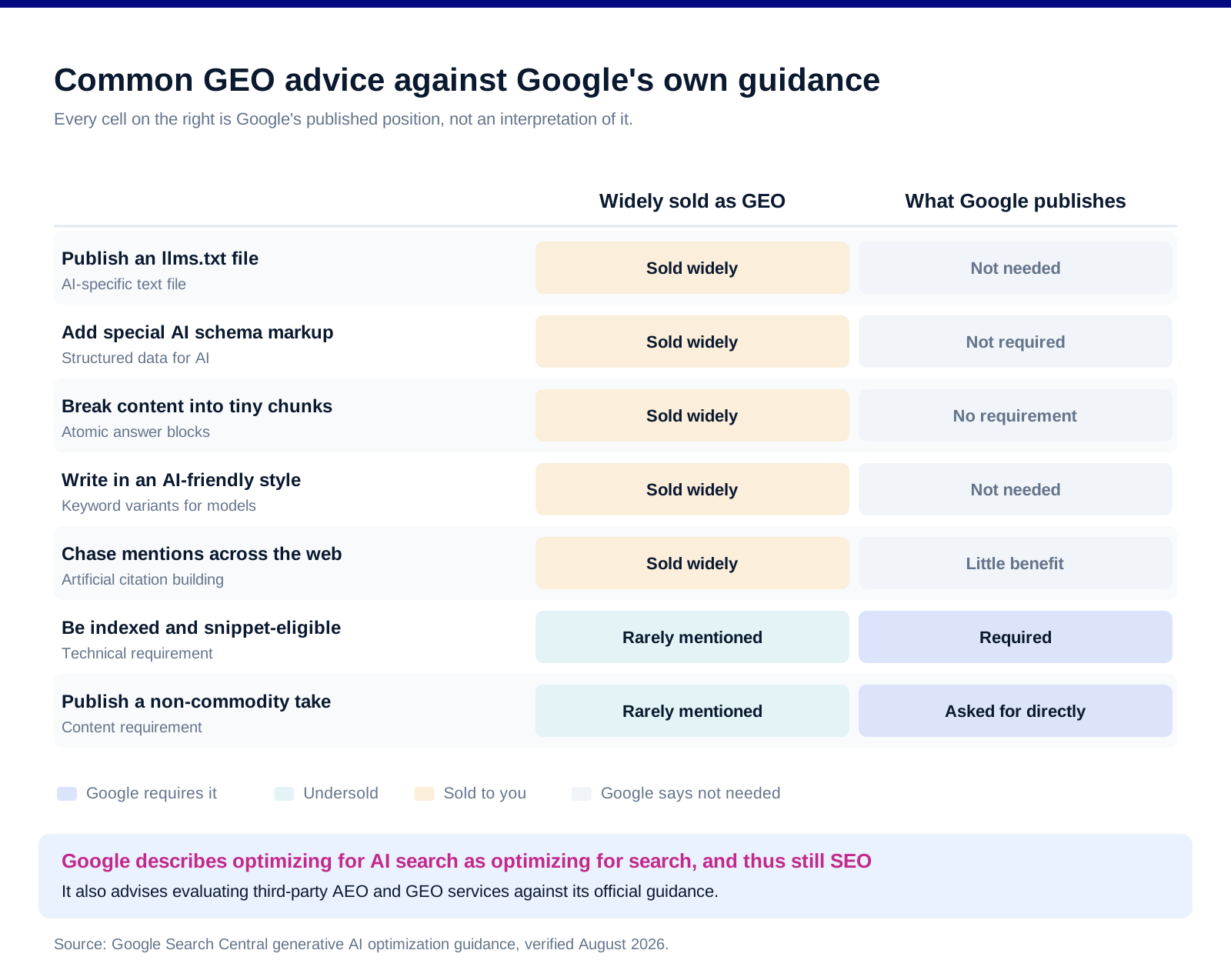
These are Google's own words from its optimization guidance, not an interpretation of them.
"The best practices for SEO continue to be relevant because our generative AI features on Google Search are rooted in our core Search ranking and quality systems." That is the frame for everything else. The AI layer sits on top of the ranking systems you already optimise for.
On llms.txt and AI-specific files: "You don't need to create new machine readable files, AI text files, markup, or Markdown to appear in Google Search." A great deal of GEO advice currently centres on publishing an llms.txt. For Google specifically, its own documentation says this does nothing.
On structured data: "Structured data isn't required for generative AI search, and there's no special schema.org markup you need to add." Schema remains useful for rich results, which is a separate and real benefit. It is not an AI-search lever.
On chunking: "There's no requirement to break your content into tiny pieces for AI to better understand it." The advice to rewrite everything into short atomic answer blocks is not supported by Google's published guidance.
On writing style: "You don't need to write in a specific way just for generative AI search. AI systems can understand synonyms and general meanings." Keyword-variant stuffing for AI is a solved problem the systems handle themselves.
And on the industry itself, Google advises caution about third-party AEO or GEO advice and services, recommending they be evaluated against its official guidance. We are an agency publishing a GEO article, so we will say plainly: apply that caution here too, and check the source documents linked throughout.
The requirements that are real
Indexed and snippet-eligible. Google states that a page must be indexed and eligible to be shown in Search with a snippet, fulfilling the technical requirements. If you have a nosnippet directive or a restrictive max-snippet value in place, you have opted out of the thing you are trying to appear in.
Crawlable. Google's generative AI features use publicly accessible, crawlable content. Gated content is not in the pool.
JavaScript handled properly. Standard JavaScript SEO practice applies, which for B2B sites on modern frameworks is the most common silent failure.
Content with a distinct perspective. Google's guidance asks for unique expert or experienced takes that go beyond common knowledge, clear heading structure, and quality supporting media. That is a content brief rather than a technical one, and it is the part that actually differentiates in a category where everyone publishes the same summary.
Which means the honest GEO checklist is short. Be indexable, be crawlable, allow snippets, and publish something that is not a commodity restatement of what already ranks. Anyone selling you more than that for Google should be asked which published guidance supports it.
The crawler decision that genuinely costs visibility
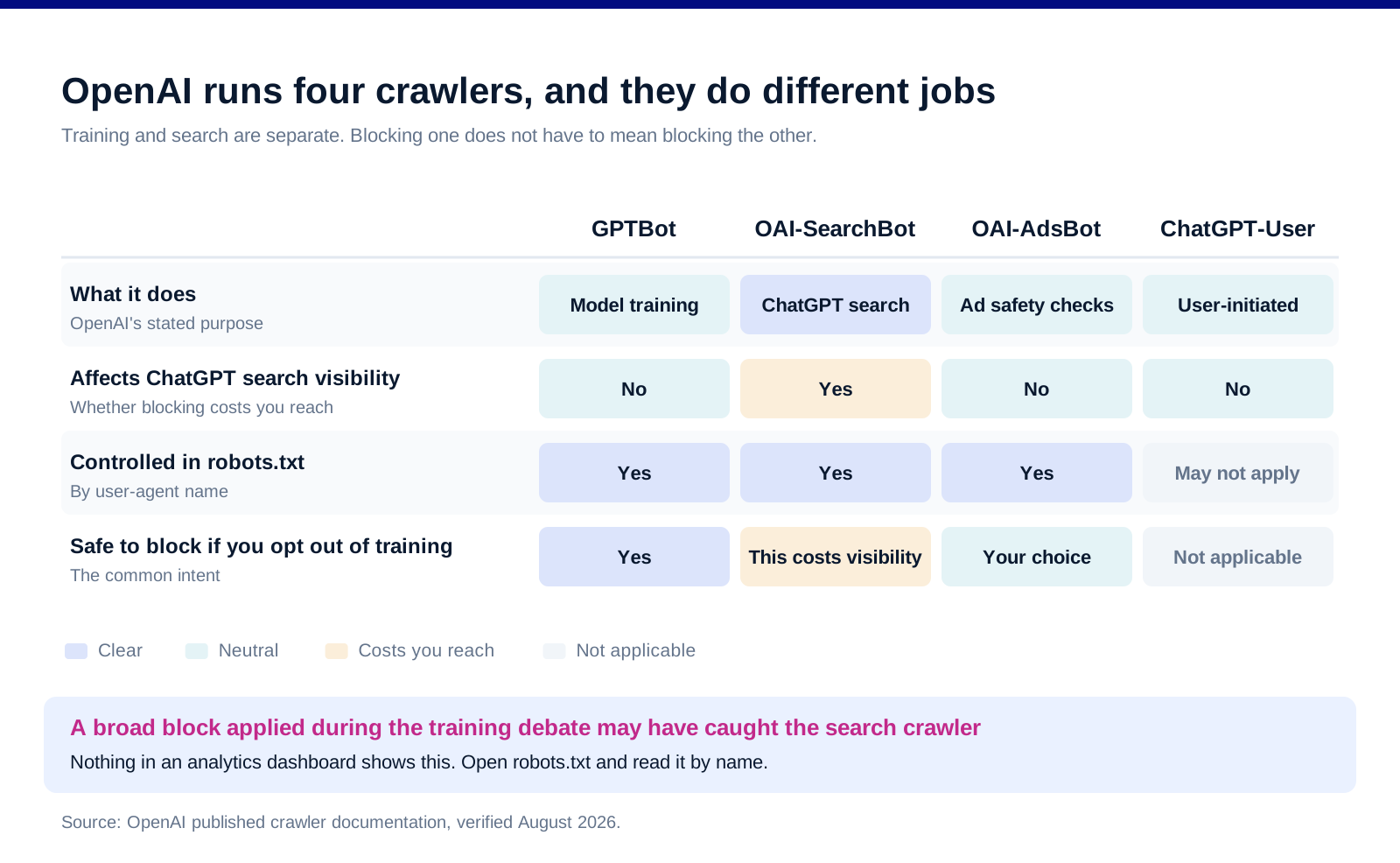
This is the part with real consequences, and it is the part almost nobody checks.
OpenAI runs four separate crawlers with separate user agents. GPTBot crawls content that may be used to train foundation models. OAI-SearchBot surfaces websites in ChatGPT's search features. OAI-AdsBot validates pages submitted as ads on ChatGPT. ChatGPT-User handles user-initiated page visits, and OpenAI notes that robots.txt rules may not apply to those because a person requested them.
Training and search are different crawlers. GPTBot is training. OAI-SearchBot is visibility. They are controlled independently in robots.txt.
Which produced a widespread and invisible mistake. A great many sites blocked OpenAI wholesale when the training debate peaked, using broad rules. If those rules caught OAI-SearchBot, the site removed itself from ChatGPT search results while intending only to opt out of training. Nothing in an analytics dashboard would show this.
So check the file before you buy anything. Open your robots.txt and look at what is disallowed by name. Blocking GPTBot while allowing OAI-SearchBot is a coherent position: no training, still discoverable. Blocking both is also coherent, provided it was a decision rather than an accident.
Every platform publishes its own crawler names. The same audit applies to any other assistant whose citations you care about. The names are published; the work is reading your own file against them.
What to actually do
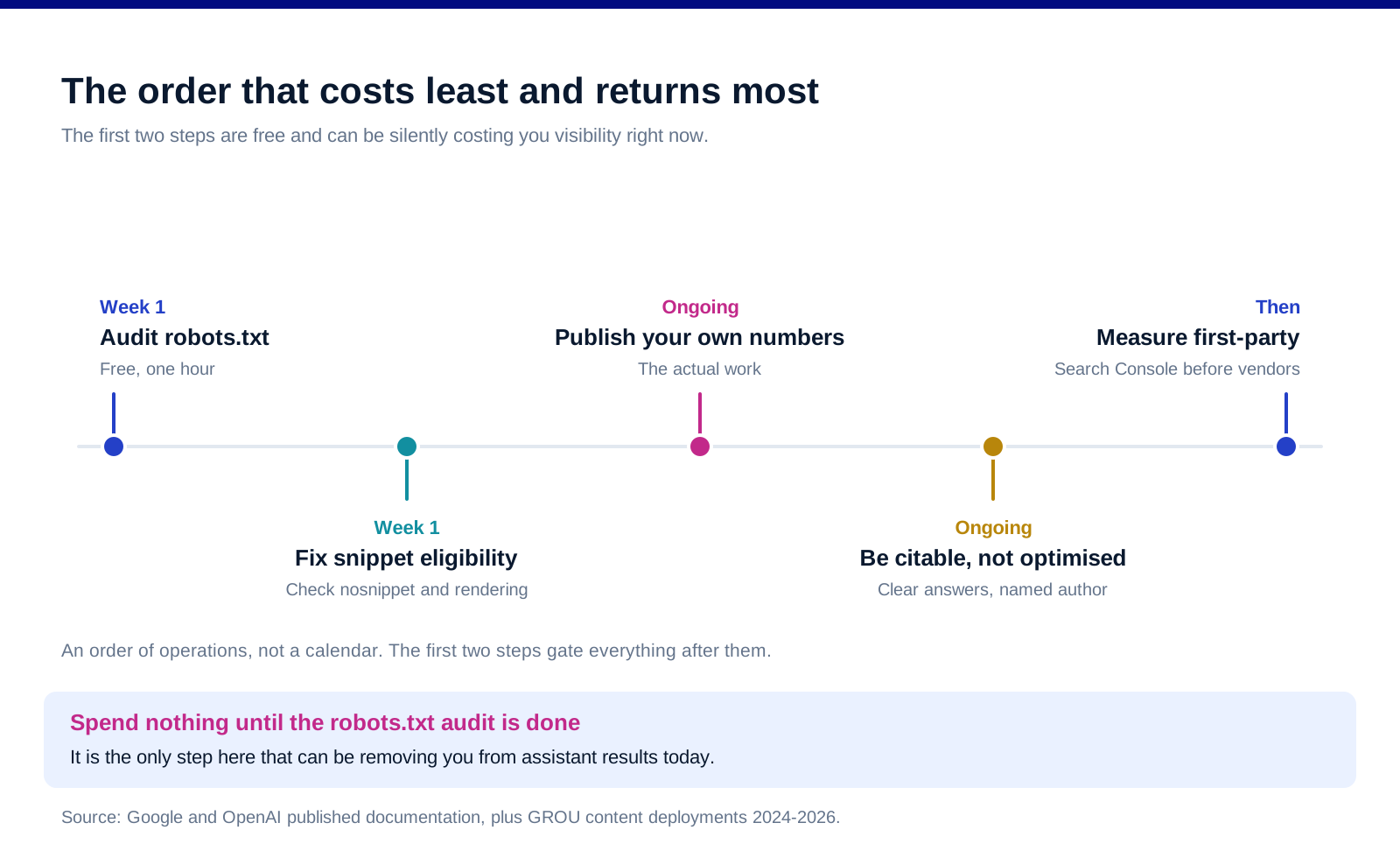
First, audit robots.txt against the published crawler names. An hour of work, no budget, and it is the only step on this list that can be silently costing you visibility right now.
Second, fix indexing and snippet eligibility. Check for nosnippet and restrictive max-snippet directives, confirm the pages you care about are indexed, and verify that a JavaScript-rendered site is actually rendering for crawlers.
Third, write the thing that is not a commodity. Google's guidance explicitly asks for takes that go beyond common knowledge. In B2B that usually means publishing your own numbers, your own method, or a position other people will not take, which is slow and is the actual work.
Fourth, become citable rather than optimised. Assistants surface sources that answer a specific question cleanly and can be attributed. Clear headings, direct answers near the question, and a named author with real expertise do more than any file you can add to the root of your domain.
Fifth, measure before you conclude anything. Google has shipped a generative AI performance report in Search Console. Use your own data before you use a vendor's score.
Measuring it honestly
Search Console's generative AI performance report is the first-party source. It is Google's own data about your own site, which puts it in a different category from any third-party estimate.
Third-party visibility trackers answer a different question. Tools such as Rank Prompt and Outrank sample assistant responses to see whether and how you get cited across prompts, which first-party reporting does not show you. That is genuinely useful as monitoring. Treat their scores as an observation of sampled outputs rather than as a ranking you can optimise against, and note that Google's own guidance advises evaluating GEO tooling against official documentation.
Watch branded search and direct traffic. An assistant mentioning you frequently produces a lookup rather than a click, so the effect often shows up as people arriving by name rather than by link.
Do not set an AI visibility target. The same failure that impressions targets cause in content applies here: a number you can move by producing more generic coverage is a number that will detach from pipeline. Judge it on whether qualified people arrive and say they found you that way.
Ask new leads, in a free-text field. Crude, and currently more reliable than any attribution for assistant-sourced traffic.
Where B2B has an advantage
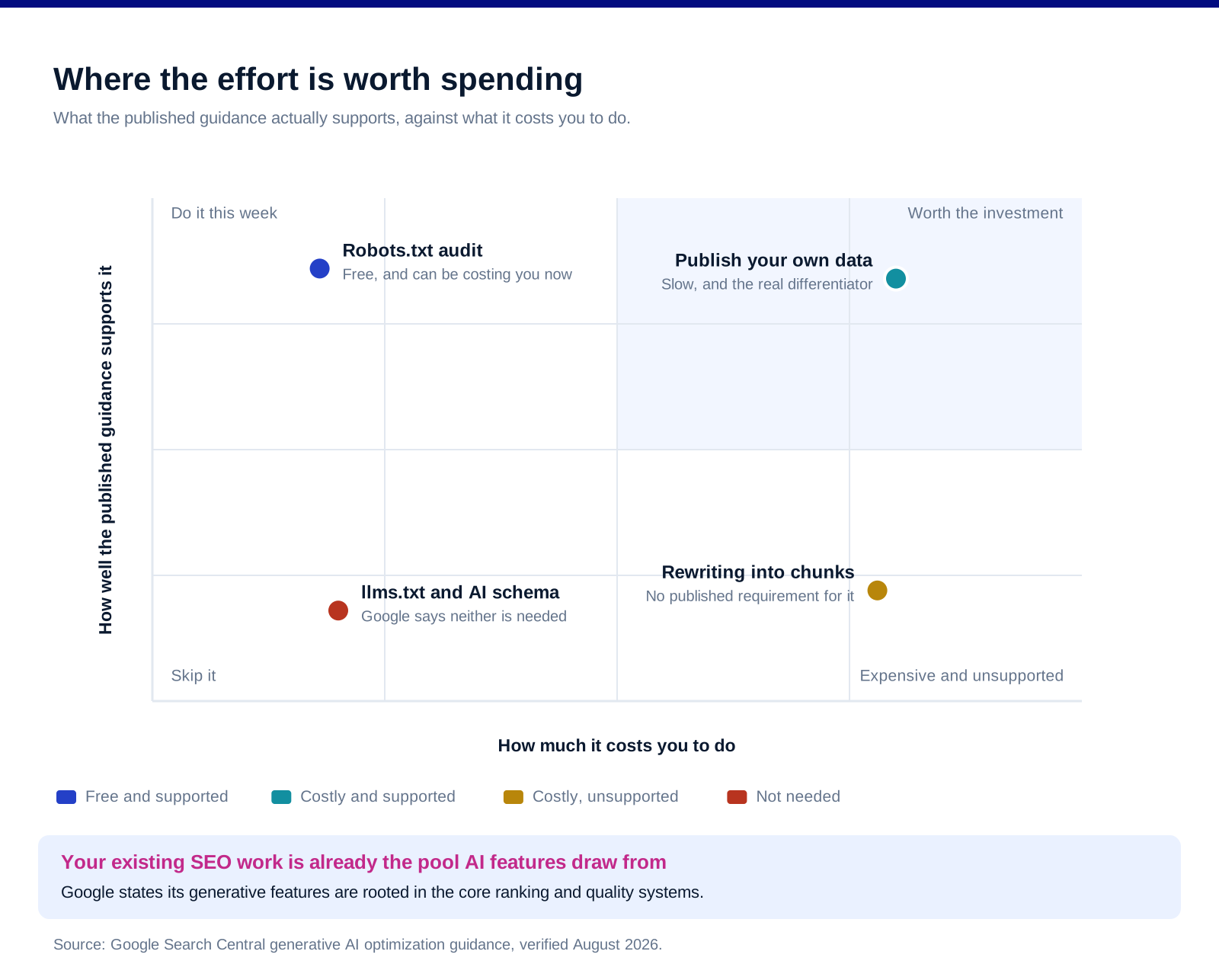
Narrow questions have thin competition. Assistants have to source an answer from somewhere, and for specific B2B questions the pool of genuinely informed pages is small. That is a structural advantage consumer categories do not have.
First-party data is the strongest possible differentiator. If you publish numbers only you have, you become the source rather than one of many restatements. This is the single highest-return GEO activity and it is not technical.
Named expertise matters more than it did. Attribution to a real person with demonstrable experience supports the expert-take criterion Google names, and it is the part competitors copying your structure cannot copy.
Your existing SEO work is not wasted. Since the AI features run on the core ranking systems, the pages that already rank are the pages already in the pool. Our SEO content refresh playbook and programmatic SEO piece both still apply directly.
FAQ
Does llms.txt help with AI search?
Not for Google. Its optimization guidance states that you do not need to create new machine readable files, AI text files, markup or Markdown to appear in Google Search. Other platforms may treat such files differently and their documentation is worth checking individually, but the file is not the lever much current advice presents it as.
Do you need structured data for generative AI search?
Google states that structured data is not required for generative AI search and that there is no special schema.org markup to add. Structured data remains worth implementing for rich results in classic search, which is a separate and real benefit, but it is not an AI-search optimization.
What is the difference between GPTBot and OAI-SearchBot?
GPTBot crawls content that may be used to train OpenAI's foundation models. OAI-SearchBot surfaces websites in ChatGPT's search features. They are separate crawlers with separate user agents and separate robots.txt controls, which means blocking training does not have to mean blocking visibility. Many sites blocked both by accident.
Is GEO different from SEO?
From Google's stated perspective, no: it describes optimizing for generative AI search as optimizing for the search experience, and thus still SEO, because the AI features are rooted in the core ranking and quality systems. It also advises caution about third-party AEO and GEO services. The practical difference is in measurement and in the crawler decisions for non-Google assistants rather than in a separate optimization discipline.
How do you measure AI search visibility?
Start with the generative AI performance report in Google Search Console, which is first-party data about your own site. Third-party trackers sample assistant responses across prompts and are useful monitoring for whether you get cited, but their scores are observations of sampled outputs rather than a ranking. Watch branded search and ask new leads how they found you.
What should a B2B company actually do first?
Audit your robots.txt against the published crawler names, because a broad block applied during the training debate may be removing you from assistant search results right now, and that costs nothing to check. Then confirm your key pages are indexed and snippet-eligible. Only after those two should you spend anything on content or tooling.
Bottom line
Read the source documents before you buy the service. Google publishes that its AI features run on the same ranking systems as search, that AI text files and special schema are not required, that content does not need chunking, and that GEO services should be evaluated against its official guidance. What it does require is that pages are indexed, crawlable and snippet-eligible, and that the content says something that is not already common knowledge. The one thing worth doing this week is the robots.txt audit, because OpenAI's training crawler and its search crawler are separate and a lot of sites blocked both by accident. Everything after that is the SEO work you were already doing, plus publishing something only you can publish.
Want the content programme built around what actually gets cited? Book a call with GROU. We run demand generation and content inside B2B revenue engines across verticals.
We are GROU, a B2B pipeline agency that runs lead generation, outbound, and LinkedIn content for clients across manufacturing, fintech, iGaming, software, and professional services. The sequencing and measurement guidance reflects our content deployments between 2024 and 2026, anonymized to protect client confidentiality.
Some links in this article are affiliate. We may earn a small commission at no extra cost to you. We only recommend tools we've deployed for clients.
There is a large and growing market selling B2B companies optimization for AI search. Most of what it sells is contradicted by the documentation the platforms publish themselves, and you can check that in an afternoon rather than taking anyone's word for it.
This playbook is built entirely from what Google and OpenAI publish about how their systems use your content. It covers what those documents say works, what they say is unnecessary, the one technical decision that genuinely costs visibility if you get it wrong, and how to measure any of it.
TL;DR
Google's own guidance says that optimizing for generative AI search is optimizing for search, and thus still SEO, because its AI features are rooted in the same ranking and quality systems. It states directly that you do not need to create AI text files, special markup or Markdown to appear, that structured data is not required for generative AI search, that there is no requirement to break content into tiny pieces, and that you do not need to write in a particular way because the systems understand synonyms. It also advises caution about third-party AEO and GEO services. The genuine technical requirements are that the page is indexed, eligible to show with a snippet, and crawlable. The one decision that does cost you real visibility is on the crawler side, and it is not a Google decision: OpenAI runs separate crawlers for training and for ChatGPT search, so a site that blocked GPTBot to keep its content out of model training may also have blocked OAI-SearchBot and removed itself from ChatGPT's search results without intending to. Check your robots.txt for that specific mistake before you spend anything on GEO. Then measure with the Search Console generative AI performance report rather than with a vendor's visibility score.
What Google actually publishes
These are Google's own words from its optimization guidance, not an interpretation of them.
"The best practices for SEO continue to be relevant because our generative AI features on Google Search are rooted in our core Search ranking and quality systems." That is the frame for everything else. The AI layer sits on top of the ranking systems you already optimise for.
On llms.txt and AI-specific files: "You don't need to create new machine readable files, AI text files, markup, or Markdown to appear in Google Search." A great deal of GEO advice currently centres on publishing an llms.txt. For Google specifically, its own documentation says this does nothing.
On structured data: "Structured data isn't required for generative AI search, and there's no special schema.org markup you need to add." Schema remains useful for rich results, which is a separate and real benefit. It is not an AI-search lever.
On chunking: "There's no requirement to break your content into tiny pieces for AI to better understand it." The advice to rewrite everything into short atomic answer blocks is not supported by Google's published guidance.
On writing style: "You don't need to write in a specific way just for generative AI search. AI systems can understand synonyms and general meanings." Keyword-variant stuffing for AI is a solved problem the systems handle themselves.
And on the industry itself, Google advises caution about third-party AEO or GEO advice and services, recommending they be evaluated against its official guidance. We are an agency publishing a GEO article, so we will say plainly: apply that caution here too, and check the source documents linked throughout.
The requirements that are real
Indexed and snippet-eligible. Google states that a page must be indexed and eligible to be shown in Search with a snippet, fulfilling the technical requirements. If you have a nosnippet directive or a restrictive max-snippet value in place, you have opted out of the thing you are trying to appear in.
Crawlable. Google's generative AI features use publicly accessible, crawlable content. Gated content is not in the pool.
JavaScript handled properly. Standard JavaScript SEO practice applies, which for B2B sites on modern frameworks is the most common silent failure.
Content with a distinct perspective. Google's guidance asks for unique expert or experienced takes that go beyond common knowledge, clear heading structure, and quality supporting media. That is a content brief rather than a technical one, and it is the part that actually differentiates in a category where everyone publishes the same summary.
Which means the honest GEO checklist is short. Be indexable, be crawlable, allow snippets, and publish something that is not a commodity restatement of what already ranks. Anyone selling you more than that for Google should be asked which published guidance supports it.
The crawler decision that genuinely costs visibility
This is the part with real consequences, and it is the part almost nobody checks.
OpenAI runs four separate crawlers with separate user agents. GPTBot crawls content that may be used to train foundation models. OAI-SearchBot surfaces websites in ChatGPT's search features. OAI-AdsBot validates pages submitted as ads on ChatGPT. ChatGPT-User handles user-initiated page visits, and OpenAI notes that robots.txt rules may not apply to those because a person requested them.
Training and search are different crawlers. GPTBot is training. OAI-SearchBot is visibility. They are controlled independently in robots.txt.
Which produced a widespread and invisible mistake. A great many sites blocked OpenAI wholesale when the training debate peaked, using broad rules. If those rules caught OAI-SearchBot, the site removed itself from ChatGPT search results while intending only to opt out of training. Nothing in an analytics dashboard would show this.
So check the file before you buy anything. Open your robots.txt and look at what is disallowed by name. Blocking GPTBot while allowing OAI-SearchBot is a coherent position: no training, still discoverable. Blocking both is also coherent, provided it was a decision rather than an accident.
Every platform publishes its own crawler names. The same audit applies to any other assistant whose citations you care about. The names are published; the work is reading your own file against them.
What to actually do
First, audit robots.txt against the published crawler names. An hour of work, no budget, and it is the only step on this list that can be silently costing you visibility right now.
Second, fix indexing and snippet eligibility. Check for nosnippet and restrictive max-snippet directives, confirm the pages you care about are indexed, and verify that a JavaScript-rendered site is actually rendering for crawlers.
Third, write the thing that is not a commodity. Google's guidance explicitly asks for takes that go beyond common knowledge. In B2B that usually means publishing your own numbers, your own method, or a position other people will not take, which is slow and is the actual work.
Fourth, become citable rather than optimised. Assistants surface sources that answer a specific question cleanly and can be attributed. Clear headings, direct answers near the question, and a named author with real expertise do more than any file you can add to the root of your domain.
Fifth, measure before you conclude anything. Google has shipped a generative AI performance report in Search Console. Use your own data before you use a vendor's score.
Measuring it honestly
Search Console's generative AI performance report is the first-party source. It is Google's own data about your own site, which puts it in a different category from any third-party estimate.
Third-party visibility trackers answer a different question. Tools such as Rank Prompt and Outrank sample assistant responses to see whether and how you get cited across prompts, which first-party reporting does not show you. That is genuinely useful as monitoring. Treat their scores as an observation of sampled outputs rather than as a ranking you can optimise against, and note that Google's own guidance advises evaluating GEO tooling against official documentation.
Watch branded search and direct traffic. An assistant mentioning you frequently produces a lookup rather than a click, so the effect often shows up as people arriving by name rather than by link.
Do not set an AI visibility target. The same failure that impressions targets cause in content applies here: a number you can move by producing more generic coverage is a number that will detach from pipeline. Judge it on whether qualified people arrive and say they found you that way.
Ask new leads, in a free-text field. Crude, and currently more reliable than any attribution for assistant-sourced traffic.
Where B2B has an advantage
Narrow questions have thin competition. Assistants have to source an answer from somewhere, and for specific B2B questions the pool of genuinely informed pages is small. That is a structural advantage consumer categories do not have.
First-party data is the strongest possible differentiator. If you publish numbers only you have, you become the source rather than one of many restatements. This is the single highest-return GEO activity and it is not technical.
Named expertise matters more than it did. Attribution to a real person with demonstrable experience supports the expert-take criterion Google names, and it is the part competitors copying your structure cannot copy.
Your existing SEO work is not wasted. Since the AI features run on the core ranking systems, the pages that already rank are the pages already in the pool. Our SEO content refresh playbook and programmatic SEO piece both still apply directly.
FAQ
Does llms.txt help with AI search?
Not for Google. Its optimization guidance states that you do not need to create new machine readable files, AI text files, markup or Markdown to appear in Google Search. Other platforms may treat such files differently and their documentation is worth checking individually, but the file is not the lever much current advice presents it as.
Do you need structured data for generative AI search?
Google states that structured data is not required for generative AI search and that there is no special schema.org markup to add. Structured data remains worth implementing for rich results in classic search, which is a separate and real benefit, but it is not an AI-search optimization.
What is the difference between GPTBot and OAI-SearchBot?
GPTBot crawls content that may be used to train OpenAI's foundation models. OAI-SearchBot surfaces websites in ChatGPT's search features. They are separate crawlers with separate user agents and separate robots.txt controls, which means blocking training does not have to mean blocking visibility. Many sites blocked both by accident.
Is GEO different from SEO?
From Google's stated perspective, no: it describes optimizing for generative AI search as optimizing for the search experience, and thus still SEO, because the AI features are rooted in the core ranking and quality systems. It also advises caution about third-party AEO and GEO services. The practical difference is in measurement and in the crawler decisions for non-Google assistants rather than in a separate optimization discipline.
How do you measure AI search visibility?
Start with the generative AI performance report in Google Search Console, which is first-party data about your own site. Third-party trackers sample assistant responses across prompts and are useful monitoring for whether you get cited, but their scores are observations of sampled outputs rather than a ranking. Watch branded search and ask new leads how they found you.
What should a B2B company actually do first?
Audit your robots.txt against the published crawler names, because a broad block applied during the training debate may be removing you from assistant search results right now, and that costs nothing to check. Then confirm your key pages are indexed and snippet-eligible. Only after those two should you spend anything on content or tooling.
Bottom line
Read the source documents before you buy the service. Google publishes that its AI features run on the same ranking systems as search, that AI text files and special schema are not required, that content does not need chunking, and that GEO services should be evaluated against its official guidance. What it does require is that pages are indexed, crawlable and snippet-eligible, and that the content says something that is not already common knowledge. The one thing worth doing this week is the robots.txt audit, because OpenAI's training crawler and its search crawler are separate and a lot of sites blocked both by accident. Everything after that is the SEO work you were already doing, plus publishing something only you can publish.
Want the content programme built around what actually gets cited? Book a call with GROU. We run demand generation and content inside B2B revenue engines across verticals.
We are GROU, a B2B pipeline agency that runs lead generation, outbound, and LinkedIn content for clients across manufacturing, fintech, iGaming, software, and professional services. The sequencing and measurement guidance reflects our content deployments between 2024 and 2026, anonymized to protect client confidentiality.
Some links in this article are affiliate. We may earn a small commission at no extra cost to you. We only recommend tools we've deployed for clients.
There is a large and growing market selling B2B companies optimization for AI search. Most of what it sells is contradicted by the documentation the platforms publish themselves, and you can check that in an afternoon rather than taking anyone's word for it.
This playbook is built entirely from what Google and OpenAI publish about how their systems use your content. It covers what those documents say works, what they say is unnecessary, the one technical decision that genuinely costs visibility if you get it wrong, and how to measure any of it.
TL;DR
Google's own guidance says that optimizing for generative AI search is optimizing for search, and thus still SEO, because its AI features are rooted in the same ranking and quality systems. It states directly that you do not need to create AI text files, special markup or Markdown to appear, that structured data is not required for generative AI search, that there is no requirement to break content into tiny pieces, and that you do not need to write in a particular way because the systems understand synonyms. It also advises caution about third-party AEO and GEO services. The genuine technical requirements are that the page is indexed, eligible to show with a snippet, and crawlable. The one decision that does cost you real visibility is on the crawler side, and it is not a Google decision: OpenAI runs separate crawlers for training and for ChatGPT search, so a site that blocked GPTBot to keep its content out of model training may also have blocked OAI-SearchBot and removed itself from ChatGPT's search results without intending to. Check your robots.txt for that specific mistake before you spend anything on GEO. Then measure with the Search Console generative AI performance report rather than with a vendor's visibility score.
What Google actually publishes
These are Google's own words from its optimization guidance, not an interpretation of them.
"The best practices for SEO continue to be relevant because our generative AI features on Google Search are rooted in our core Search ranking and quality systems." That is the frame for everything else. The AI layer sits on top of the ranking systems you already optimise for.
On llms.txt and AI-specific files: "You don't need to create new machine readable files, AI text files, markup, or Markdown to appear in Google Search." A great deal of GEO advice currently centres on publishing an llms.txt. For Google specifically, its own documentation says this does nothing.
On structured data: "Structured data isn't required for generative AI search, and there's no special schema.org markup you need to add." Schema remains useful for rich results, which is a separate and real benefit. It is not an AI-search lever.
On chunking: "There's no requirement to break your content into tiny pieces for AI to better understand it." The advice to rewrite everything into short atomic answer blocks is not supported by Google's published guidance.
On writing style: "You don't need to write in a specific way just for generative AI search. AI systems can understand synonyms and general meanings." Keyword-variant stuffing for AI is a solved problem the systems handle themselves.
And on the industry itself, Google advises caution about third-party AEO or GEO advice and services, recommending they be evaluated against its official guidance. We are an agency publishing a GEO article, so we will say plainly: apply that caution here too, and check the source documents linked throughout.
The requirements that are real
Indexed and snippet-eligible. Google states that a page must be indexed and eligible to be shown in Search with a snippet, fulfilling the technical requirements. If you have a nosnippet directive or a restrictive max-snippet value in place, you have opted out of the thing you are trying to appear in.
Crawlable. Google's generative AI features use publicly accessible, crawlable content. Gated content is not in the pool.
JavaScript handled properly. Standard JavaScript SEO practice applies, which for B2B sites on modern frameworks is the most common silent failure.
Content with a distinct perspective. Google's guidance asks for unique expert or experienced takes that go beyond common knowledge, clear heading structure, and quality supporting media. That is a content brief rather than a technical one, and it is the part that actually differentiates in a category where everyone publishes the same summary.
Which means the honest GEO checklist is short. Be indexable, be crawlable, allow snippets, and publish something that is not a commodity restatement of what already ranks. Anyone selling you more than that for Google should be asked which published guidance supports it.
The crawler decision that genuinely costs visibility
This is the part with real consequences, and it is the part almost nobody checks.
OpenAI runs four separate crawlers with separate user agents. GPTBot crawls content that may be used to train foundation models. OAI-SearchBot surfaces websites in ChatGPT's search features. OAI-AdsBot validates pages submitted as ads on ChatGPT. ChatGPT-User handles user-initiated page visits, and OpenAI notes that robots.txt rules may not apply to those because a person requested them.
Training and search are different crawlers. GPTBot is training. OAI-SearchBot is visibility. They are controlled independently in robots.txt.
Which produced a widespread and invisible mistake. A great many sites blocked OpenAI wholesale when the training debate peaked, using broad rules. If those rules caught OAI-SearchBot, the site removed itself from ChatGPT search results while intending only to opt out of training. Nothing in an analytics dashboard would show this.
So check the file before you buy anything. Open your robots.txt and look at what is disallowed by name. Blocking GPTBot while allowing OAI-SearchBot is a coherent position: no training, still discoverable. Blocking both is also coherent, provided it was a decision rather than an accident.
Every platform publishes its own crawler names. The same audit applies to any other assistant whose citations you care about. The names are published; the work is reading your own file against them.
What to actually do
First, audit robots.txt against the published crawler names. An hour of work, no budget, and it is the only step on this list that can be silently costing you visibility right now.
Second, fix indexing and snippet eligibility. Check for nosnippet and restrictive max-snippet directives, confirm the pages you care about are indexed, and verify that a JavaScript-rendered site is actually rendering for crawlers.
Third, write the thing that is not a commodity. Google's guidance explicitly asks for takes that go beyond common knowledge. In B2B that usually means publishing your own numbers, your own method, or a position other people will not take, which is slow and is the actual work.
Fourth, become citable rather than optimised. Assistants surface sources that answer a specific question cleanly and can be attributed. Clear headings, direct answers near the question, and a named author with real expertise do more than any file you can add to the root of your domain.
Fifth, measure before you conclude anything. Google has shipped a generative AI performance report in Search Console. Use your own data before you use a vendor's score.
Measuring it honestly
Search Console's generative AI performance report is the first-party source. It is Google's own data about your own site, which puts it in a different category from any third-party estimate.
Third-party visibility trackers answer a different question. Tools such as Rank Prompt and Outrank sample assistant responses to see whether and how you get cited across prompts, which first-party reporting does not show you. That is genuinely useful as monitoring. Treat their scores as an observation of sampled outputs rather than as a ranking you can optimise against, and note that Google's own guidance advises evaluating GEO tooling against official documentation.
Watch branded search and direct traffic. An assistant mentioning you frequently produces a lookup rather than a click, so the effect often shows up as people arriving by name rather than by link.
Do not set an AI visibility target. The same failure that impressions targets cause in content applies here: a number you can move by producing more generic coverage is a number that will detach from pipeline. Judge it on whether qualified people arrive and say they found you that way.
Ask new leads, in a free-text field. Crude, and currently more reliable than any attribution for assistant-sourced traffic.
Where B2B has an advantage
Narrow questions have thin competition. Assistants have to source an answer from somewhere, and for specific B2B questions the pool of genuinely informed pages is small. That is a structural advantage consumer categories do not have.
First-party data is the strongest possible differentiator. If you publish numbers only you have, you become the source rather than one of many restatements. This is the single highest-return GEO activity and it is not technical.
Named expertise matters more than it did. Attribution to a real person with demonstrable experience supports the expert-take criterion Google names, and it is the part competitors copying your structure cannot copy.
Your existing SEO work is not wasted. Since the AI features run on the core ranking systems, the pages that already rank are the pages already in the pool. Our SEO content refresh playbook and programmatic SEO piece both still apply directly.
FAQ
Does llms.txt help with AI search?
Not for Google. Its optimization guidance states that you do not need to create new machine readable files, AI text files, markup or Markdown to appear in Google Search. Other platforms may treat such files differently and their documentation is worth checking individually, but the file is not the lever much current advice presents it as.
Do you need structured data for generative AI search?
Google states that structured data is not required for generative AI search and that there is no special schema.org markup to add. Structured data remains worth implementing for rich results in classic search, which is a separate and real benefit, but it is not an AI-search optimization.
What is the difference between GPTBot and OAI-SearchBot?
GPTBot crawls content that may be used to train OpenAI's foundation models. OAI-SearchBot surfaces websites in ChatGPT's search features. They are separate crawlers with separate user agents and separate robots.txt controls, which means blocking training does not have to mean blocking visibility. Many sites blocked both by accident.
Is GEO different from SEO?
From Google's stated perspective, no: it describes optimizing for generative AI search as optimizing for the search experience, and thus still SEO, because the AI features are rooted in the core ranking and quality systems. It also advises caution about third-party AEO and GEO services. The practical difference is in measurement and in the crawler decisions for non-Google assistants rather than in a separate optimization discipline.
How do you measure AI search visibility?
Start with the generative AI performance report in Google Search Console, which is first-party data about your own site. Third-party trackers sample assistant responses across prompts and are useful monitoring for whether you get cited, but their scores are observations of sampled outputs rather than a ranking. Watch branded search and ask new leads how they found you.
What should a B2B company actually do first?
Audit your robots.txt against the published crawler names, because a broad block applied during the training debate may be removing you from assistant search results right now, and that costs nothing to check. Then confirm your key pages are indexed and snippet-eligible. Only after those two should you spend anything on content or tooling.
Bottom line
Read the source documents before you buy the service. Google publishes that its AI features run on the same ranking systems as search, that AI text files and special schema are not required, that content does not need chunking, and that GEO services should be evaluated against its official guidance. What it does require is that pages are indexed, crawlable and snippet-eligible, and that the content says something that is not already common knowledge. The one thing worth doing this week is the robots.txt audit, because OpenAI's training crawler and its search crawler are separate and a lot of sites blocked both by accident. Everything after that is the SEO work you were already doing, plus publishing something only you can publish.
Want the content programme built around what actually gets cited? Book a call with GROU. We run demand generation and content inside B2B revenue engines across verticals.
We are GROU, a B2B pipeline agency that runs lead generation, outbound, and LinkedIn content for clients across manufacturing, fintech, iGaming, software, and professional services. The sequencing and measurement guidance reflects our content deployments between 2024 and 2026, anonymized to protect client confidentiality.
Some links in this article are affiliate. We may earn a small commission at no extra cost to you. We only recommend tools we've deployed for clients.
Pipeline OS Newsletter
Build qualified pipeline
Get weekly tactics to generate demand, improve lead quality, and book more meetings.





Trusted by industry leaders
Trusted by industry leaders
Trusted by industry leaders
Ready to build qualified pipeline?
Ready to build qualified pipeline?
Ready to build qualified pipeline?
Book a call to see if we're the right fit, or take the 2-minute quiz to get a clear starting point.
Book a call to see if we're the right fit, or take the 2-minute quiz to get a clear starting point.
Book a call to see if we're the right fit, or take the 2-minute quiz to get a clear starting point.
" height="30.21639343089746px" id="hfGbXmQR2" width="30.216393430897455px"/></svg>)
Copyright © 2026 – All Right Reserved
Copyright © 2026 – All Right Reserved
Copyright © 2026 – All Right Reserved