%22%3E%3C/path%3E%3Cpath d=%22M 63.072 7.554 C 62.258 8.022 61.577 8.689 61.092 9.493 L 61.092 7.076 L 57.158 7.076 L 57.158 22.64 L 61.089 22.64 L 61.089 14.888 C 61.089 13.446 61.403 12.434 62.03 11.853 C 62.818 11.218 63.818 10.907 64.826 10.982 L 65.868 10.982 L 65.868 6.851 C 64.891 6.834 63.926 7.076 63.073 7.554 Z%22 fill=%22rgb(17,17,17)%22%3E%3C/path%3E%3Cpath d=%22M 78.916 7.82 C 76.363 6.49 73.321 6.49 70.768 7.82 C 69.562 8.473 68.564 9.451 67.888 10.644 C 67.167 11.931 66.803 13.387 66.834 14.862 C 66.804 16.332 67.157 17.785 67.86 19.077 C 68.515 20.267 69.494 21.246 70.684 21.901 C 71.924 22.576 73.318 22.92 74.73 22.898 C 76.164 22.918 77.58 22.575 78.846 21.901 C 80.062 21.247 81.073 20.27 81.768 19.077 C 82.506 17.797 82.88 16.339 82.85 14.862 C 82.88 13.389 82.517 11.934 81.797 10.647 C 81.12 9.455 80.122 8.477 78.917 7.824 M 78.803 14.862 C 78.829 15.739 78.636 16.608 78.241 17.391 C 77.903 18.046 77.38 18.588 76.738 18.95 C 76.124 19.293 75.432 19.472 74.729 19.47 C 73.668 19.497 72.648 19.061 71.934 18.276 C 71.139 17.323 70.741 16.1 70.823 14.862 C 70.741 13.62 71.149 12.395 71.959 11.45 C 72.687 10.667 73.715 10.233 74.783 10.256 C 75.859 10.236 76.894 10.67 77.635 11.45 C 78.464 12.387 78.884 13.616 78.801 14.864%22 fill=%22rgb(17,17,17)%22%3E%3C/path%3E%3Cpath d=%22M 95.906 7.076 L 95.906 15.646 C 95.975 16.68 95.643 17.701 94.979 18.498 C 94.311 19.184 93.379 19.547 92.422 19.495 C 91.475 19.544 90.553 19.18 89.894 18.498 C 89.23 17.701 88.898 16.68 88.967 15.646 L 88.967 7.076 L 85.033 7.076 L 85.033 16.207 C 85 17.449 85.275 18.68 85.834 19.79 C 86.327 20.75 87.095 21.542 88.039 22.065 C 89.033 22.594 90.145 22.861 91.271 22.838 C 92.188 22.847 93.095 22.65 93.926 22.263 C 94.708 21.905 95.388 21.36 95.906 20.675 L 95.906 22.645 L 99.865 22.645 L 99.865 7.076 Z%22 fill=%22rgb(17,17,17)%22%3E%3C/path%3E%3Cpath d=%22M 4.513 15.626 C 4.511 10.815 7.606 6.549 12.181 5.059 C 16.756 3.57 21.77 5.195 24.601 9.086 L 27.816 5.87 C 24.074 1.186 17.981 -0.943 12.137 0.393 C 6.292 1.728 1.728 6.292 0.393 12.137 C -0.943 17.981 1.186 24.074 5.87 27.816 L 9.085 24.601 C 6.214 22.512 4.515 19.177 4.513 15.626%22 fill=%22rgb(32,62,235)%22%3E%3C/path%3E%3Cpath d=%22M 17.114 14.343 L 13.354 18.01 L 13.354 18.026 L 21.071 18.026 L 11.412 27.609 L 17.389 27.609 L 23.999 21.081 L 23.999 28.316 L 24.005 28.316 L 27.967 24.393 L 27.967 14.343 Z%22 fill=%22rgb(32,62,235)%22%3E%3C/path%3E%3C/g%3E%3C/svg%3E) ×
× ××
××›
›
›
›
SEO content refresh playbook 2026: what to update first
SEO content refresh playbook 2026: what to update first
SEO content refresh playbook 2026: what to update first
SEO content refresh playbook 2026: what to update first
SEO content refresh playbook 2026: what to update first
SEO content refresh playbook 2026: what to update first

Author
Aljaz Peklaj

Refreshing existing pages is the highest-ROI move in B2B SEO: the page already has age, links, and impressions, and you are fixing the last broken variable instead of starting from zero. HubSpot's historical optimization program made this famous years ago, and it holds harder in 2026, when AI search engines cite the freshest credible version of an answer. This playbook covers which pages qualify, the 6-step process, and how to prioritize, with two real worked examples from our own Search Console.
Written for B2B teams with 50+ published posts and not enough hands to rewrite them all.
TL;DR
Refresh beats rewrite beats net-new for any page that already earns impressions. Five triggers qualify a page: striking distance (position 11-30 with real impressions), CTR failure (high impressions, sub-1% CTR at a good position), click decay (down 30%+ over 90 days), dated content (old year, stale prices or screenshots), and cannibalization (two URLs splitting one query). Work them in priority order: CTR fixes first because a title and meta rewrite takes 20 minutes, striking-distance pages second, decay saves third, full rewrites last. Never change the slug, always update the substance before the date, and re-request indexing when done. Expect movement in 2-6 weeks.
The upstream system this plugs into: our B2B keyword research framework and content cluster strategy.
The five triggers that qualify a page for refresh
Refreshing on gut feel wastes the quarter. Pull 90 days of Search Console performance data and let five thresholds pick the candidates.
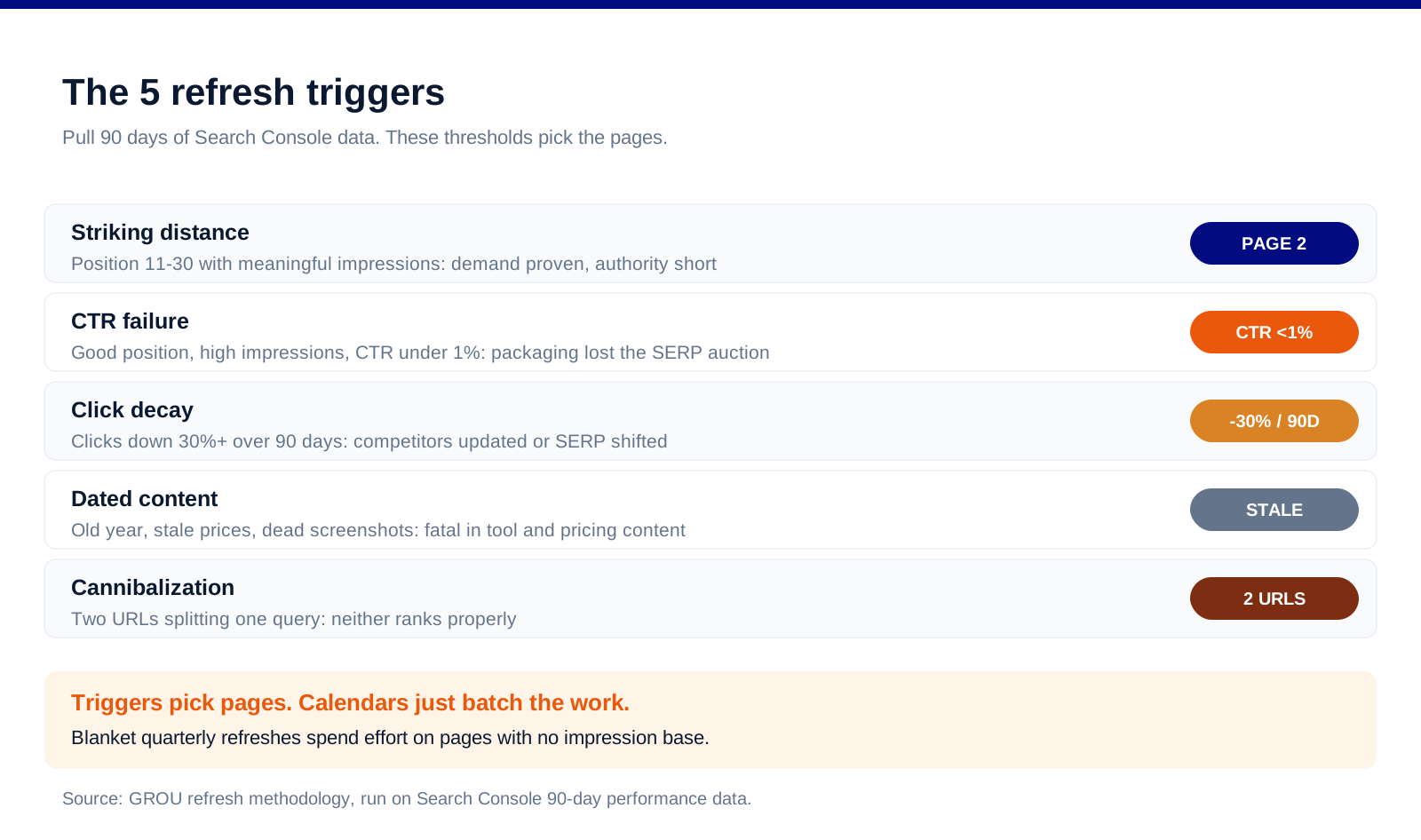
1. Striking distance: position 11-30 with meaningful impressions. Page two is where refresh ROI peaks. The query demand is proven; the page just needs more authority and sharper on-page relevance.
2. CTR failure: strong position, high impressions, CTR under 1%. Ranking is done, packaging is broken. The title and meta are losing the SERP auction, and this is the 20-minute fix on the whole list.
3. Click decay: clicks down 30%+ over 90 days. Competitors updated, your page aged, or the SERP layout changed. Catch it early and the recovery is cheap.
4. Dated content: old year in the title, stale pricing, dead screenshots. In tool and pricing content this is fatal, and it is the reason our own pricing pages carry a refresh cadence, not a publish date mindset.
5. Cannibalization: two URLs splitting one query. Neither page ranks properly when both compete. Consolidate, redirect the weaker, and the survivor usually jumps.
The 6-step refresh process
The order matters: substance first, packaging second, signals last. Google's own guidance is blunt that changing dates without changing content does nothing, per the helpful content documentation.
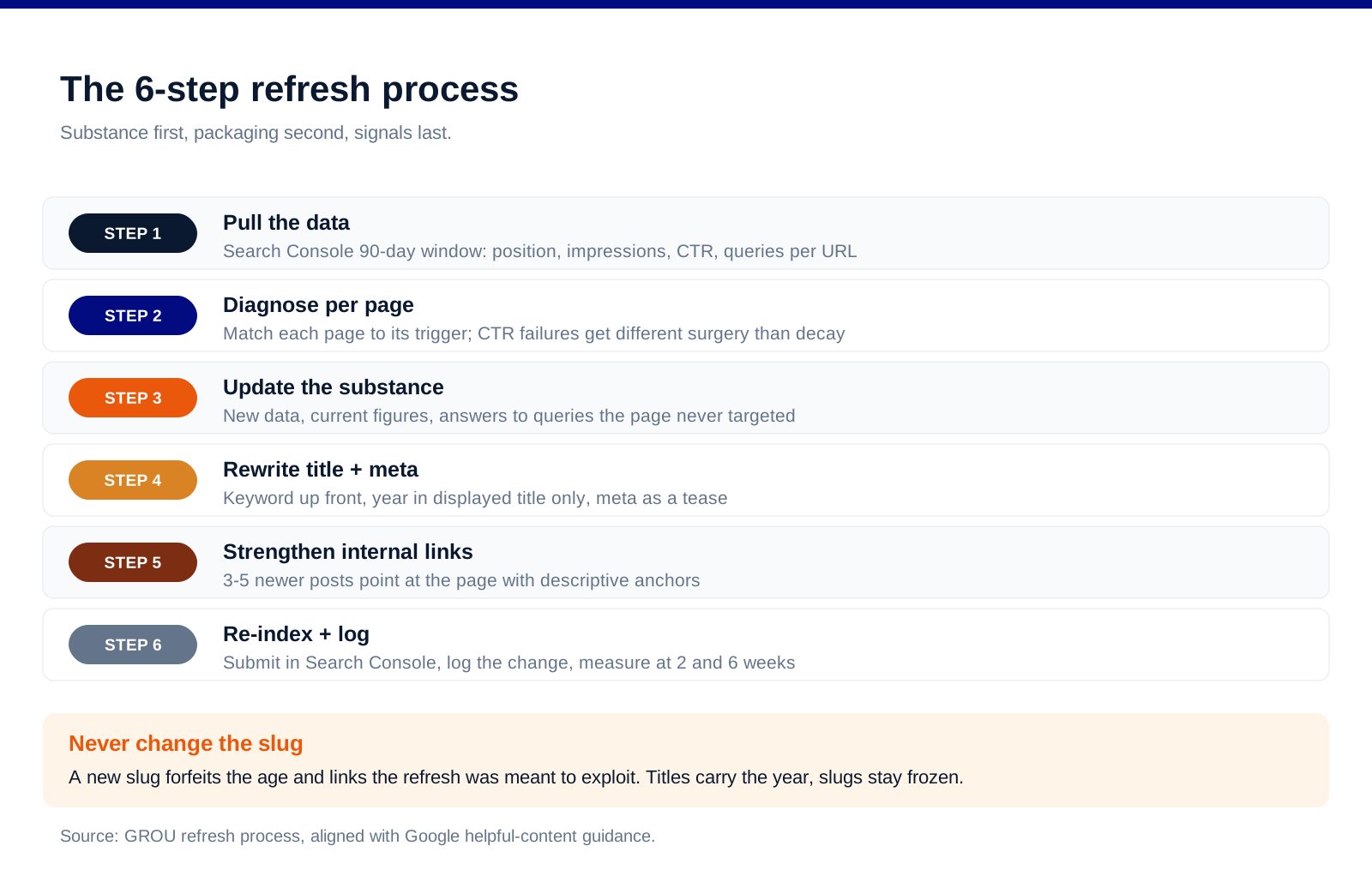
Step 1: pull the data. Search Console, 90-day window, filtered by page: position, impressions, CTR, and the query list per URL. A tool layer like Semrush adds rank tracking and competitor deltas on top.
Step 2: diagnose per page. Match each candidate to its trigger. A CTR failure gets different surgery than a decay save; do not run one generic "update" on both.
Step 3: update the substance. New data, current-year figures, refreshed examples, answers to the new queries in the GSC report that the page never targeted. A content optimizer like SurferSEO or an AI-search-oriented tool like Outrank shortens this step; neither replaces actually fixing the numbers.
Step 4: rewrite title and meta. Lead with the primary keyword, update the year in the displayed title (never in the slug), and rebuild the meta as a tease. This step alone is the whole fix for CTR-failure pages.
Step 5: strengthen internal links. Point 3-5 relevant newer posts at the refreshed page with descriptive anchors. Striking-distance pages move on this more than on any on-page change.
Step 6: re-request indexing and log it. Submit the URL in Search Console, note the date and the change in a refresh log, and measure at 2 and 6 weeks. No log means no learning about which fixes move your site.
Priority order, with two live examples
Refresh capacity is finite, so sequence by effort-to-impact. This is the order we run, and the July audit of our own blog handed us textbook specimens of the top two classes.
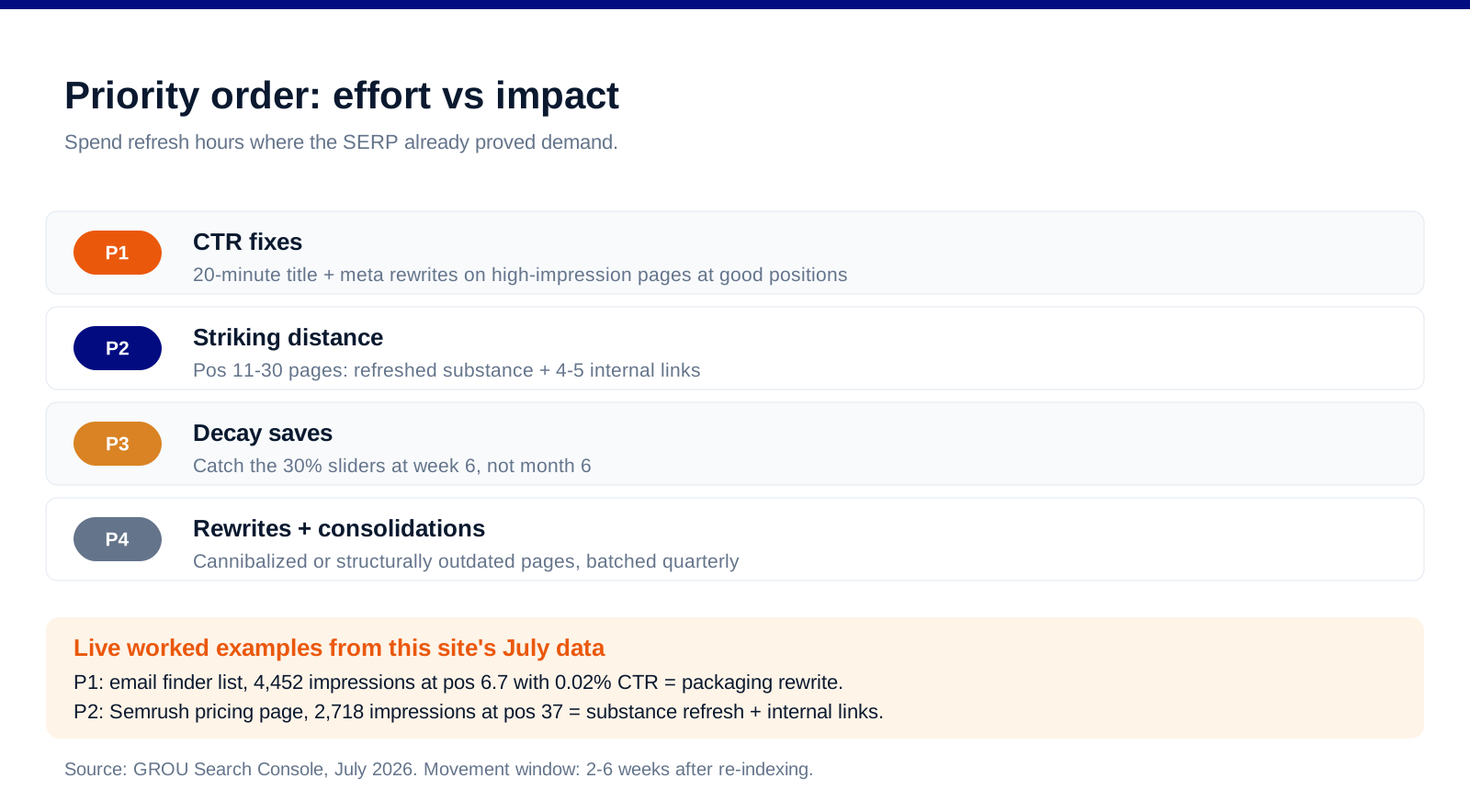
Priority 1, CTR fixes. Example from our own Search Console: our email finder tools list earned 4,452 impressions in July at position 6.7, with a 0.02% CTR. The ranking work is done; the title and meta are simply losing the click. Twenty minutes of packaging rewrite against weeks of content work anywhere else.
Priority 2, striking distance. Our Semrush pricing page pulled 2,718 impressions at position 37. Demand confirmed, authority short: refreshed figures plus 4-5 internal links from related tool pages is the play, not a rewrite.
Priority 3, decay saves. Pages sliding 30%+ get substance updates before the slide compounds. Decay caught at week 6 is a refresh; decay caught at month 6 is a rewrite.
Priority 4, full rewrites and consolidations. Cannibalized or structurally outdated pages take real hours. Batch them quarterly, redirect the losers, and feed the survivors into the internal-link step of every future refresh.
The refresh mistakes that undo the work
Mistake 1: changing the slug. A refreshed URL with a new slug is a new page plus a redirect, and it forfeits the age and links you were trying to exploit. Slugs stay evergreen; only titles carry the year.
Mistake 2: updating the date without the substance. Google's documentation and every serious test agree: cosmetic date bumps do not move rankings and can erode trust when readers notice.
Mistake 3: refreshing everything on a schedule. Blanket quarterly refreshes spend effort on pages with no impression base. Triggers pick pages; calendars just batch the work.
Mistake 4: skipping the measurement window. Without the 2-week and 6-week checks against the log, you cannot tell which class of fix works on your site, and next quarter's refresh list is guesswork again.
FAQ
How often should B2B content be refreshed?
On trigger, not on schedule: review Search Console quarterly and refresh pages that hit one of the five triggers. Pricing and tool pages typically qualify every 6-12 months; evergreen frameworks can hold for years untouched.
What is the difference between a refresh and a rewrite?
A refresh keeps the URL, structure, and most of the content, updating data, examples, packaging, and links: hours of work. A rewrite replaces the substance or consolidates URLs: days. Refresh anything with an impression base; rewrite only structural failures.
How long does a content refresh take to show results?
Movement typically shows inside 2-6 weeks of re-indexing, faster for CTR fixes (the next crawl of the SERP applies the new title) and slower for striking-distance pages that depend on internal-link equity flowing.
Should I update the publish date after a refresh?
Show an updated date only when the substance genuinely changed. Date-only bumps do nothing for rankings per Google's guidance, and pricing pages that claim freshness with stale numbers burn reader trust permanently.
Does content refreshing help with AI search (GEO)?
Disproportionately, yes. LLM-driven engines favor the freshest credible version of an answer and cite pages with current figures and clean structure. A refreshed page with 2026 data routinely replaces a staler competitor in AI citations well before classic rankings move.
Which pages should I never refresh?
Pages with near-zero impressions after 6+ months (the topic failed; write the better version fresh), pages already ranking 1-3 with healthy CTR (do not disturb), and seasonal pages outside their window. Refresh spends its ROI on proven, underperforming demand.
Bottom line
The refresh playbook is a sorting problem wearing a writing problem's clothes: five triggers pick the pages, the 6-step process fixes them in the right order, and the priority ladder spends your hours where the SERP already proved demand. Run it quarterly off Search Console, keep the slugs frozen, log every change, and the compounding beats a net-new calendar of equal effort within two quarters.
Want the audit and the refresh sprints run for you? Book a call with GROU. We run SEO and content programs for B2B companies where organic pipeline is the goal, not traffic.
We are GROU, a B2B pipeline agency that runs lead generation, outbound, and LinkedIn content for clients across manufacturing, fintech, iGaming, software, and professional services. The worked examples in this playbook come from our own site's July 2026 Search Console data; the process is the one we run on client content programs.
Some links in this article are affiliate. We may earn a small commission at no extra cost to you. We only recommend tools we've deployed for clients.
Refreshing existing pages is the highest-ROI move in B2B SEO: the page already has age, links, and impressions, and you are fixing the last broken variable instead of starting from zero. HubSpot's historical optimization program made this famous years ago, and it holds harder in 2026, when AI search engines cite the freshest credible version of an answer. This playbook covers which pages qualify, the 6-step process, and how to prioritize, with two real worked examples from our own Search Console.
Written for B2B teams with 50+ published posts and not enough hands to rewrite them all.
TL;DR
Refresh beats rewrite beats net-new for any page that already earns impressions. Five triggers qualify a page: striking distance (position 11-30 with real impressions), CTR failure (high impressions, sub-1% CTR at a good position), click decay (down 30%+ over 90 days), dated content (old year, stale prices or screenshots), and cannibalization (two URLs splitting one query). Work them in priority order: CTR fixes first because a title and meta rewrite takes 20 minutes, striking-distance pages second, decay saves third, full rewrites last. Never change the slug, always update the substance before the date, and re-request indexing when done. Expect movement in 2-6 weeks.
The upstream system this plugs into: our B2B keyword research framework and content cluster strategy.
The five triggers that qualify a page for refresh
Refreshing on gut feel wastes the quarter. Pull 90 days of Search Console performance data and let five thresholds pick the candidates.
1. Striking distance: position 11-30 with meaningful impressions. Page two is where refresh ROI peaks. The query demand is proven; the page just needs more authority and sharper on-page relevance.
2. CTR failure: strong position, high impressions, CTR under 1%. Ranking is done, packaging is broken. The title and meta are losing the SERP auction, and this is the 20-minute fix on the whole list.
3. Click decay: clicks down 30%+ over 90 days. Competitors updated, your page aged, or the SERP layout changed. Catch it early and the recovery is cheap.
4. Dated content: old year in the title, stale pricing, dead screenshots. In tool and pricing content this is fatal, and it is the reason our own pricing pages carry a refresh cadence, not a publish date mindset.
5. Cannibalization: two URLs splitting one query. Neither page ranks properly when both compete. Consolidate, redirect the weaker, and the survivor usually jumps.
The 6-step refresh process
The order matters: substance first, packaging second, signals last. Google's own guidance is blunt that changing dates without changing content does nothing, per the helpful content documentation.
Step 1: pull the data. Search Console, 90-day window, filtered by page: position, impressions, CTR, and the query list per URL. A tool layer like Semrush adds rank tracking and competitor deltas on top.
Step 2: diagnose per page. Match each candidate to its trigger. A CTR failure gets different surgery than a decay save; do not run one generic "update" on both.
Step 3: update the substance. New data, current-year figures, refreshed examples, answers to the new queries in the GSC report that the page never targeted. A content optimizer like SurferSEO or an AI-search-oriented tool like Outrank shortens this step; neither replaces actually fixing the numbers.
Step 4: rewrite title and meta. Lead with the primary keyword, update the year in the displayed title (never in the slug), and rebuild the meta as a tease. This step alone is the whole fix for CTR-failure pages.
Step 5: strengthen internal links. Point 3-5 relevant newer posts at the refreshed page with descriptive anchors. Striking-distance pages move on this more than on any on-page change.
Step 6: re-request indexing and log it. Submit the URL in Search Console, note the date and the change in a refresh log, and measure at 2 and 6 weeks. No log means no learning about which fixes move your site.
Priority order, with two live examples
Refresh capacity is finite, so sequence by effort-to-impact. This is the order we run, and the July audit of our own blog handed us textbook specimens of the top two classes.
Priority 1, CTR fixes. Example from our own Search Console: our email finder tools list earned 4,452 impressions in July at position 6.7, with a 0.02% CTR. The ranking work is done; the title and meta are simply losing the click. Twenty minutes of packaging rewrite against weeks of content work anywhere else.
Priority 2, striking distance. Our Semrush pricing page pulled 2,718 impressions at position 37. Demand confirmed, authority short: refreshed figures plus 4-5 internal links from related tool pages is the play, not a rewrite.
Priority 3, decay saves. Pages sliding 30%+ get substance updates before the slide compounds. Decay caught at week 6 is a refresh; decay caught at month 6 is a rewrite.
Priority 4, full rewrites and consolidations. Cannibalized or structurally outdated pages take real hours. Batch them quarterly, redirect the losers, and feed the survivors into the internal-link step of every future refresh.
The refresh mistakes that undo the work
Mistake 1: changing the slug. A refreshed URL with a new slug is a new page plus a redirect, and it forfeits the age and links you were trying to exploit. Slugs stay evergreen; only titles carry the year.
Mistake 2: updating the date without the substance. Google's documentation and every serious test agree: cosmetic date bumps do not move rankings and can erode trust when readers notice.
Mistake 3: refreshing everything on a schedule. Blanket quarterly refreshes spend effort on pages with no impression base. Triggers pick pages; calendars just batch the work.
Mistake 4: skipping the measurement window. Without the 2-week and 6-week checks against the log, you cannot tell which class of fix works on your site, and next quarter's refresh list is guesswork again.
FAQ
How often should B2B content be refreshed?
On trigger, not on schedule: review Search Console quarterly and refresh pages that hit one of the five triggers. Pricing and tool pages typically qualify every 6-12 months; evergreen frameworks can hold for years untouched.
What is the difference between a refresh and a rewrite?
A refresh keeps the URL, structure, and most of the content, updating data, examples, packaging, and links: hours of work. A rewrite replaces the substance or consolidates URLs: days. Refresh anything with an impression base; rewrite only structural failures.
How long does a content refresh take to show results?
Movement typically shows inside 2-6 weeks of re-indexing, faster for CTR fixes (the next crawl of the SERP applies the new title) and slower for striking-distance pages that depend on internal-link equity flowing.
Should I update the publish date after a refresh?
Show an updated date only when the substance genuinely changed. Date-only bumps do nothing for rankings per Google's guidance, and pricing pages that claim freshness with stale numbers burn reader trust permanently.
Does content refreshing help with AI search (GEO)?
Disproportionately, yes. LLM-driven engines favor the freshest credible version of an answer and cite pages with current figures and clean structure. A refreshed page with 2026 data routinely replaces a staler competitor in AI citations well before classic rankings move.
Which pages should I never refresh?
Pages with near-zero impressions after 6+ months (the topic failed; write the better version fresh), pages already ranking 1-3 with healthy CTR (do not disturb), and seasonal pages outside their window. Refresh spends its ROI on proven, underperforming demand.
Bottom line
The refresh playbook is a sorting problem wearing a writing problem's clothes: five triggers pick the pages, the 6-step process fixes them in the right order, and the priority ladder spends your hours where the SERP already proved demand. Run it quarterly off Search Console, keep the slugs frozen, log every change, and the compounding beats a net-new calendar of equal effort within two quarters.
Want the audit and the refresh sprints run for you? Book a call with GROU. We run SEO and content programs for B2B companies where organic pipeline is the goal, not traffic.
We are GROU, a B2B pipeline agency that runs lead generation, outbound, and LinkedIn content for clients across manufacturing, fintech, iGaming, software, and professional services. The worked examples in this playbook come from our own site's July 2026 Search Console data; the process is the one we run on client content programs.
Some links in this article are affiliate. We may earn a small commission at no extra cost to you. We only recommend tools we've deployed for clients.
Refreshing existing pages is the highest-ROI move in B2B SEO: the page already has age, links, and impressions, and you are fixing the last broken variable instead of starting from zero. HubSpot's historical optimization program made this famous years ago, and it holds harder in 2026, when AI search engines cite the freshest credible version of an answer. This playbook covers which pages qualify, the 6-step process, and how to prioritize, with two real worked examples from our own Search Console.
Written for B2B teams with 50+ published posts and not enough hands to rewrite them all.
TL;DR
Refresh beats rewrite beats net-new for any page that already earns impressions. Five triggers qualify a page: striking distance (position 11-30 with real impressions), CTR failure (high impressions, sub-1% CTR at a good position), click decay (down 30%+ over 90 days), dated content (old year, stale prices or screenshots), and cannibalization (two URLs splitting one query). Work them in priority order: CTR fixes first because a title and meta rewrite takes 20 minutes, striking-distance pages second, decay saves third, full rewrites last. Never change the slug, always update the substance before the date, and re-request indexing when done. Expect movement in 2-6 weeks.
The upstream system this plugs into: our B2B keyword research framework and content cluster strategy.
The five triggers that qualify a page for refresh
Refreshing on gut feel wastes the quarter. Pull 90 days of Search Console performance data and let five thresholds pick the candidates.
1. Striking distance: position 11-30 with meaningful impressions. Page two is where refresh ROI peaks. The query demand is proven; the page just needs more authority and sharper on-page relevance.
2. CTR failure: strong position, high impressions, CTR under 1%. Ranking is done, packaging is broken. The title and meta are losing the SERP auction, and this is the 20-minute fix on the whole list.
3. Click decay: clicks down 30%+ over 90 days. Competitors updated, your page aged, or the SERP layout changed. Catch it early and the recovery is cheap.
4. Dated content: old year in the title, stale pricing, dead screenshots. In tool and pricing content this is fatal, and it is the reason our own pricing pages carry a refresh cadence, not a publish date mindset.
5. Cannibalization: two URLs splitting one query. Neither page ranks properly when both compete. Consolidate, redirect the weaker, and the survivor usually jumps.
The 6-step refresh process
The order matters: substance first, packaging second, signals last. Google's own guidance is blunt that changing dates without changing content does nothing, per the helpful content documentation.
Step 1: pull the data. Search Console, 90-day window, filtered by page: position, impressions, CTR, and the query list per URL. A tool layer like Semrush adds rank tracking and competitor deltas on top.
Step 2: diagnose per page. Match each candidate to its trigger. A CTR failure gets different surgery than a decay save; do not run one generic "update" on both.
Step 3: update the substance. New data, current-year figures, refreshed examples, answers to the new queries in the GSC report that the page never targeted. A content optimizer like SurferSEO or an AI-search-oriented tool like Outrank shortens this step; neither replaces actually fixing the numbers.
Step 4: rewrite title and meta. Lead with the primary keyword, update the year in the displayed title (never in the slug), and rebuild the meta as a tease. This step alone is the whole fix for CTR-failure pages.
Step 5: strengthen internal links. Point 3-5 relevant newer posts at the refreshed page with descriptive anchors. Striking-distance pages move on this more than on any on-page change.
Step 6: re-request indexing and log it. Submit the URL in Search Console, note the date and the change in a refresh log, and measure at 2 and 6 weeks. No log means no learning about which fixes move your site.
Priority order, with two live examples
Refresh capacity is finite, so sequence by effort-to-impact. This is the order we run, and the July audit of our own blog handed us textbook specimens of the top two classes.
Priority 1, CTR fixes. Example from our own Search Console: our email finder tools list earned 4,452 impressions in July at position 6.7, with a 0.02% CTR. The ranking work is done; the title and meta are simply losing the click. Twenty minutes of packaging rewrite against weeks of content work anywhere else.
Priority 2, striking distance. Our Semrush pricing page pulled 2,718 impressions at position 37. Demand confirmed, authority short: refreshed figures plus 4-5 internal links from related tool pages is the play, not a rewrite.
Priority 3, decay saves. Pages sliding 30%+ get substance updates before the slide compounds. Decay caught at week 6 is a refresh; decay caught at month 6 is a rewrite.
Priority 4, full rewrites and consolidations. Cannibalized or structurally outdated pages take real hours. Batch them quarterly, redirect the losers, and feed the survivors into the internal-link step of every future refresh.
The refresh mistakes that undo the work
Mistake 1: changing the slug. A refreshed URL with a new slug is a new page plus a redirect, and it forfeits the age and links you were trying to exploit. Slugs stay evergreen; only titles carry the year.
Mistake 2: updating the date without the substance. Google's documentation and every serious test agree: cosmetic date bumps do not move rankings and can erode trust when readers notice.
Mistake 3: refreshing everything on a schedule. Blanket quarterly refreshes spend effort on pages with no impression base. Triggers pick pages; calendars just batch the work.
Mistake 4: skipping the measurement window. Without the 2-week and 6-week checks against the log, you cannot tell which class of fix works on your site, and next quarter's refresh list is guesswork again.
FAQ
How often should B2B content be refreshed?
On trigger, not on schedule: review Search Console quarterly and refresh pages that hit one of the five triggers. Pricing and tool pages typically qualify every 6-12 months; evergreen frameworks can hold for years untouched.
What is the difference between a refresh and a rewrite?
A refresh keeps the URL, structure, and most of the content, updating data, examples, packaging, and links: hours of work. A rewrite replaces the substance or consolidates URLs: days. Refresh anything with an impression base; rewrite only structural failures.
How long does a content refresh take to show results?
Movement typically shows inside 2-6 weeks of re-indexing, faster for CTR fixes (the next crawl of the SERP applies the new title) and slower for striking-distance pages that depend on internal-link equity flowing.
Should I update the publish date after a refresh?
Show an updated date only when the substance genuinely changed. Date-only bumps do nothing for rankings per Google's guidance, and pricing pages that claim freshness with stale numbers burn reader trust permanently.
Does content refreshing help with AI search (GEO)?
Disproportionately, yes. LLM-driven engines favor the freshest credible version of an answer and cite pages with current figures and clean structure. A refreshed page with 2026 data routinely replaces a staler competitor in AI citations well before classic rankings move.
Which pages should I never refresh?
Pages with near-zero impressions after 6+ months (the topic failed; write the better version fresh), pages already ranking 1-3 with healthy CTR (do not disturb), and seasonal pages outside their window. Refresh spends its ROI on proven, underperforming demand.
Bottom line
The refresh playbook is a sorting problem wearing a writing problem's clothes: five triggers pick the pages, the 6-step process fixes them in the right order, and the priority ladder spends your hours where the SERP already proved demand. Run it quarterly off Search Console, keep the slugs frozen, log every change, and the compounding beats a net-new calendar of equal effort within two quarters.
Want the audit and the refresh sprints run for you? Book a call with GROU. We run SEO and content programs for B2B companies where organic pipeline is the goal, not traffic.
We are GROU, a B2B pipeline agency that runs lead generation, outbound, and LinkedIn content for clients across manufacturing, fintech, iGaming, software, and professional services. The worked examples in this playbook come from our own site's July 2026 Search Console data; the process is the one we run on client content programs.
Some links in this article are affiliate. We may earn a small commission at no extra cost to you. We only recommend tools we've deployed for clients.

Pipeline OS Newsletter
Build qualified pipeline
Get weekly tactics to generate demand, improve lead quality, and book more meetings.





Trusted by industry leaders
Trusted by industry leaders
Trusted by industry leaders
Ready to build qualified pipeline?
Ready to build qualified pipeline?
Ready to build qualified pipeline?
Book a call to see if we're the right fit, or take the 2-minute quiz to get a clear starting point.
Book a call to see if we're the right fit, or take the 2-minute quiz to get a clear starting point.
Book a call to see if we're the right fit, or take the 2-minute quiz to get a clear starting point.
" height="30.21639343089746px" id="hfGbXmQR2" width="30.216393430897455px"/></svg>)
Copyright © 2026 – All Right Reserved
Copyright © 2026 – All Right Reserved
Copyright © 2026 – All Right Reserved