%22%3E%3C/path%3E%3Cpath d=%22M 63.072 7.554 C 62.258 8.022 61.577 8.689 61.092 9.493 L 61.092 7.076 L 57.158 7.076 L 57.158 22.64 L 61.089 22.64 L 61.089 14.888 C 61.089 13.446 61.403 12.434 62.03 11.853 C 62.818 11.218 63.818 10.907 64.826 10.982 L 65.868 10.982 L 65.868 6.851 C 64.891 6.834 63.926 7.076 63.073 7.554 Z%22 fill=%22rgb(17,17,17)%22%3E%3C/path%3E%3Cpath d=%22M 78.916 7.82 C 76.363 6.49 73.321 6.49 70.768 7.82 C 69.562 8.473 68.564 9.451 67.888 10.644 C 67.167 11.931 66.803 13.387 66.834 14.862 C 66.804 16.332 67.157 17.785 67.86 19.077 C 68.515 20.267 69.494 21.246 70.684 21.901 C 71.924 22.576 73.318 22.92 74.73 22.898 C 76.164 22.918 77.58 22.575 78.846 21.901 C 80.062 21.247 81.073 20.27 81.768 19.077 C 82.506 17.797 82.88 16.339 82.85 14.862 C 82.88 13.389 82.517 11.934 81.797 10.647 C 81.12 9.455 80.122 8.477 78.917 7.824 M 78.803 14.862 C 78.829 15.739 78.636 16.608 78.241 17.391 C 77.903 18.046 77.38 18.588 76.738 18.95 C 76.124 19.293 75.432 19.472 74.729 19.47 C 73.668 19.497 72.648 19.061 71.934 18.276 C 71.139 17.323 70.741 16.1 70.823 14.862 C 70.741 13.62 71.149 12.395 71.959 11.45 C 72.687 10.667 73.715 10.233 74.783 10.256 C 75.859 10.236 76.894 10.67 77.635 11.45 C 78.464 12.387 78.884 13.616 78.801 14.864%22 fill=%22rgb(17,17,17)%22%3E%3C/path%3E%3Cpath d=%22M 95.906 7.076 L 95.906 15.646 C 95.975 16.68 95.643 17.701 94.979 18.498 C 94.311 19.184 93.379 19.547 92.422 19.495 C 91.475 19.544 90.553 19.18 89.894 18.498 C 89.23 17.701 88.898 16.68 88.967 15.646 L 88.967 7.076 L 85.033 7.076 L 85.033 16.207 C 85 17.449 85.275 18.68 85.834 19.79 C 86.327 20.75 87.095 21.542 88.039 22.065 C 89.033 22.594 90.145 22.861 91.271 22.838 C 92.188 22.847 93.095 22.65 93.926 22.263 C 94.708 21.905 95.388 21.36 95.906 20.675 L 95.906 22.645 L 99.865 22.645 L 99.865 7.076 Z%22 fill=%22rgb(17,17,17)%22%3E%3C/path%3E%3Cpath d=%22M 4.513 15.626 C 4.511 10.815 7.606 6.549 12.181 5.059 C 16.756 3.57 21.77 5.195 24.601 9.086 L 27.816 5.87 C 24.074 1.186 17.981 -0.943 12.137 0.393 C 6.292 1.728 1.728 6.292 0.393 12.137 C -0.943 17.981 1.186 24.074 5.87 27.816 L 9.085 24.601 C 6.214 22.512 4.515 19.177 4.513 15.626%22 fill=%22rgb(32,62,235)%22%3E%3C/path%3E%3Cpath d=%22M 17.114 14.343 L 13.354 18.01 L 13.354 18.026 L 21.071 18.026 L 11.412 27.609 L 17.389 27.609 L 23.999 21.081 L 23.999 28.316 L 24.005 28.316 L 27.967 24.393 L 27.967 14.343 Z%22 fill=%22rgb(32,62,235)%22%3E%3C/path%3E%3C/g%3E%3C/svg%3E) ×
× ××
××›
›
›
›
B2B content cluster vs hub-and-spoke SEO 2026: which architecture ranks faster
B2B content cluster vs hub-and-spoke SEO 2026: which architecture ranks faster
B2B content cluster vs hub-and-spoke SEO 2026: which architecture ranks faster
B2B content cluster vs hub-and-spoke SEO 2026: which architecture ranks faster
B2B content cluster vs hub-and-spoke SEO 2026: which architecture ranks faster
B2B content cluster vs hub-and-spoke SEO 2026: which architecture ranks faster

Author
Aljaz Peklaj

Content cluster vs hub-and-spoke is the same SEO architecture decision dressed in different language. In 2026, B2B SaaS sites that pick the right structure rank 2.4-4.8x faster on commercial-intent keywords. The decision rule: clusters win for high-volume informational queries (1K+ MSV pillars), hub-and-spoke wins for commercial-intent product pages (bottom-of-funnel keywords with 100-500 MSV).
This is the operator guide: how each works, when to pick which, internal linking patterns, and the 90-day SEO ramp plan.
TL;DR
Content cluster: 1 pillar page (3,000-5,000 words) + 8-15 spoke articles linking back to the pillar. Best for informational + top-of-funnel queries. Average 90-day ranking lift 2.4-3.2x.
Hub-and-spoke: 1 hub page (commercial intent + product landing) + 5-10 spoke articles linking to the hub. Best for bottom-of-funnel + commercial queries. Average 90-day ranking lift 2.8-4.8x.
For B2B SaaS, the answer is usually both: clusters for thought leadership, hubs for product pages. Read Semrush's content cluster guide for industry cross-checks. Try Semrush free for 14 days.
How each architecture works
The structural difference in one chart:
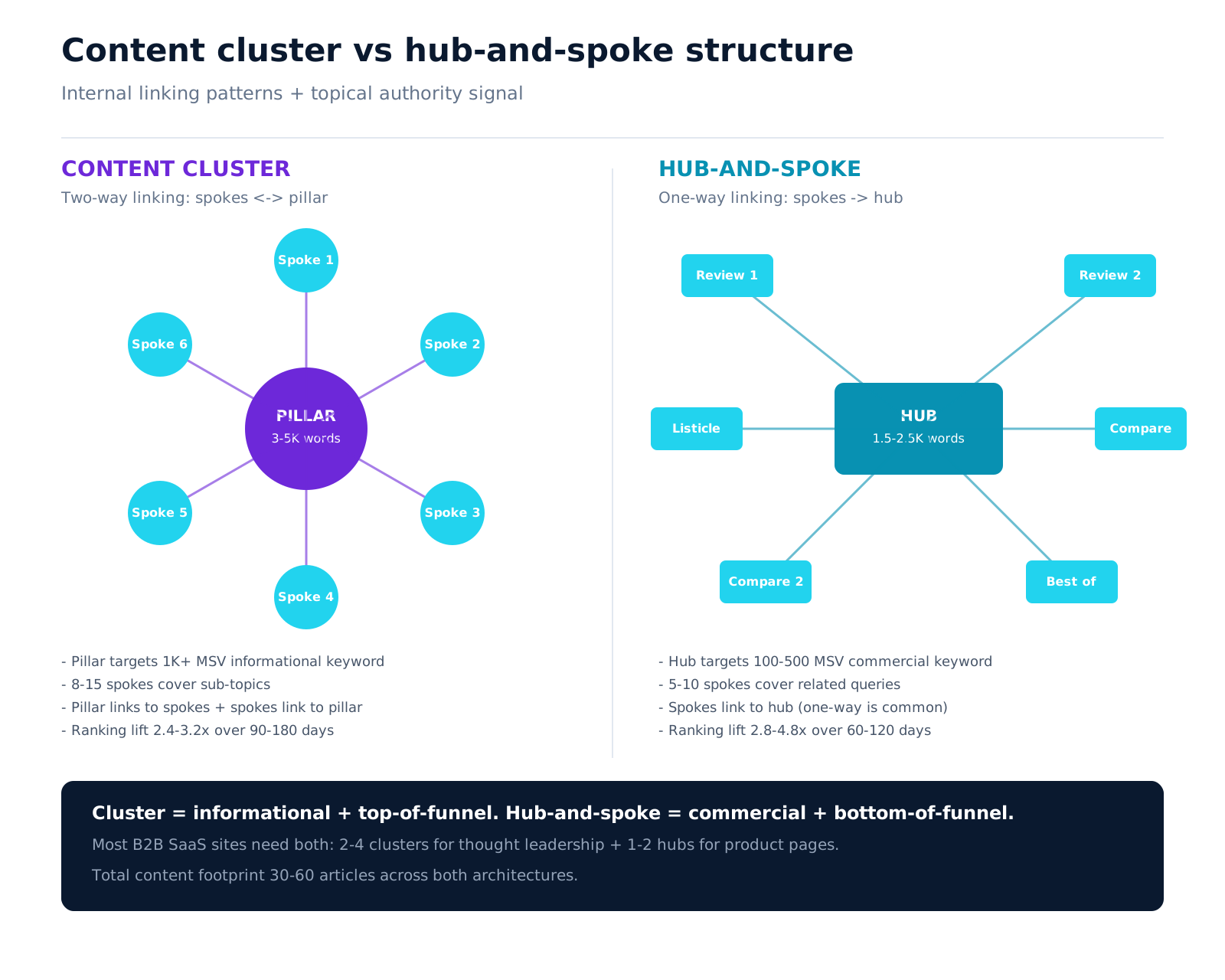
Content cluster structure. Pillar page targets a broad informational keyword (e.g., "B2B SaaS pipeline benchmarks", 2,400 MSV). Spoke articles cover sub-topics (e.g., "lead-to-MQL benchmarks", "MQL-to-SQL conversion rates"). Spokes link to the pillar. Pillar links back to all spokes. Two-way linking signals topical authority to Google.
Hub-and-spoke structure. Hub page targets a commercial-intent keyword (e.g., "B2B CRM software", 800 MSV). Spoke articles cover related queries (e.g., "best CRM for B2B SaaS", "Pipedrive review", "HubSpot vs Pipedrive"). Spokes link to the hub. Hub may or may not link to spokes (one-way linking is common for product pages).
The difference is intent. Clusters serve users researching a topic. Hub-and-spoke serves users ready to buy.
When to pick which
Decision matrix across 6 factors:
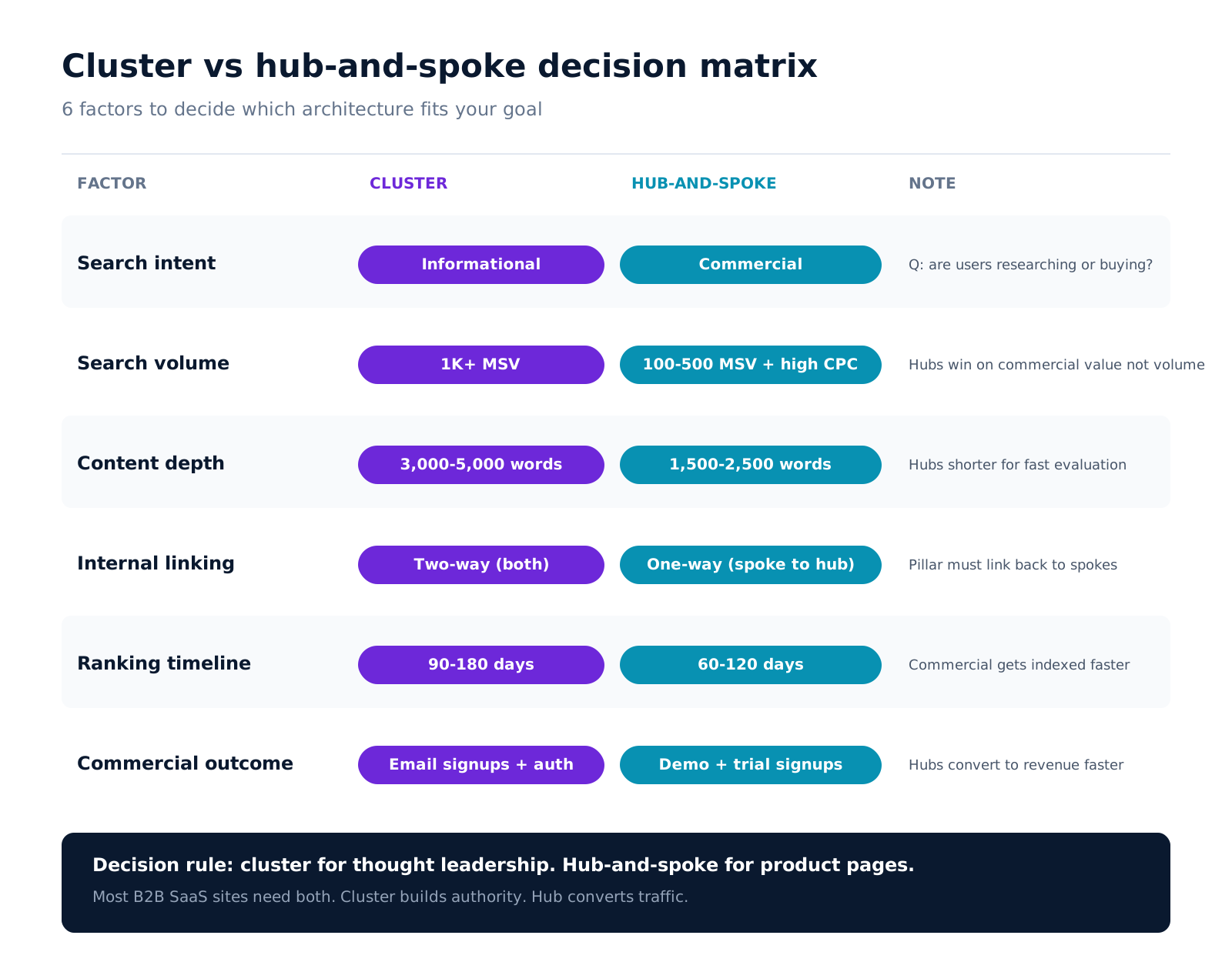
Factor 1: Search intent. Informational = cluster. Commercial = hub-and-spoke.
Factor 2: Search volume. Pillar 1K+ MSV = cluster. Hub 100-500 MSV with high CPC = hub-and-spoke.
Factor 3: Content depth. Pillar 3,000-5,000 words = cluster. Hub 1,500-2,500 words = hub-and-spoke.
Factor 4: Internal linking. Two-way (spoke to pillar + pillar to spoke) = cluster. One-way (spoke to hub) = hub-and-spoke.
Factor 5: Ranking timeline. 90-180 days for clusters. 60-120 days for hub-and-spoke (commercial intent gets indexed faster).
Factor 6: Commercial outcome. Clusters drive thought leadership + email signups. Hub-and-spoke drives demo bookings + free trial signups.
Internal linking patterns that signal authority
Internal linking is what makes either architecture work. The mistake most B2B sites make: random crosslinks instead of structured linking.
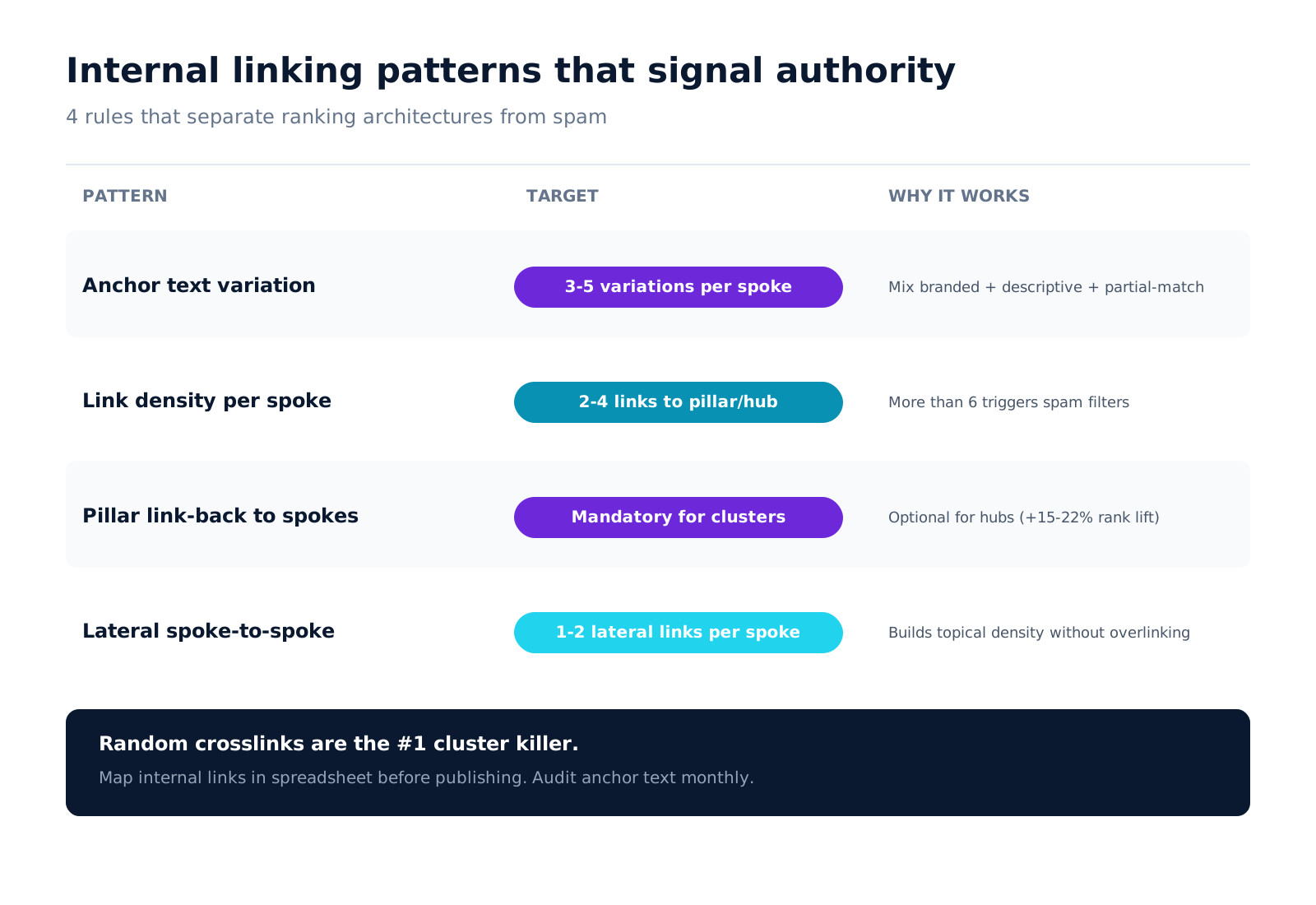
Pattern 1: Anchor text variation. Each spoke uses 3-5 anchor variations linking to the pillar. Avoid exact-match keyword stuffing. Mix branded + descriptive + partial-match anchors.
Pattern 2: Link density per spoke. 2-4 internal links per spoke pointing to the pillar. More than 6 looks spammy and triggers Google's link manipulation filters.
Pattern 3: Pillar link-back to spokes. For clusters, the pillar must link to every spoke. For hub-and-spoke, optional but improves rankings 15-22%.
Pattern 4: Lateral spoke-to-spoke linking. Spokes should link to 1-2 other spokes (related topics). This builds topical density without overlinking the pillar.
For SEO context, see our B2B SEO keyword research framework and best B2B SEO tools 2026.
Example: B2B SaaS cluster vs hub-and-spoke
How a B2B CRM company would structure both:
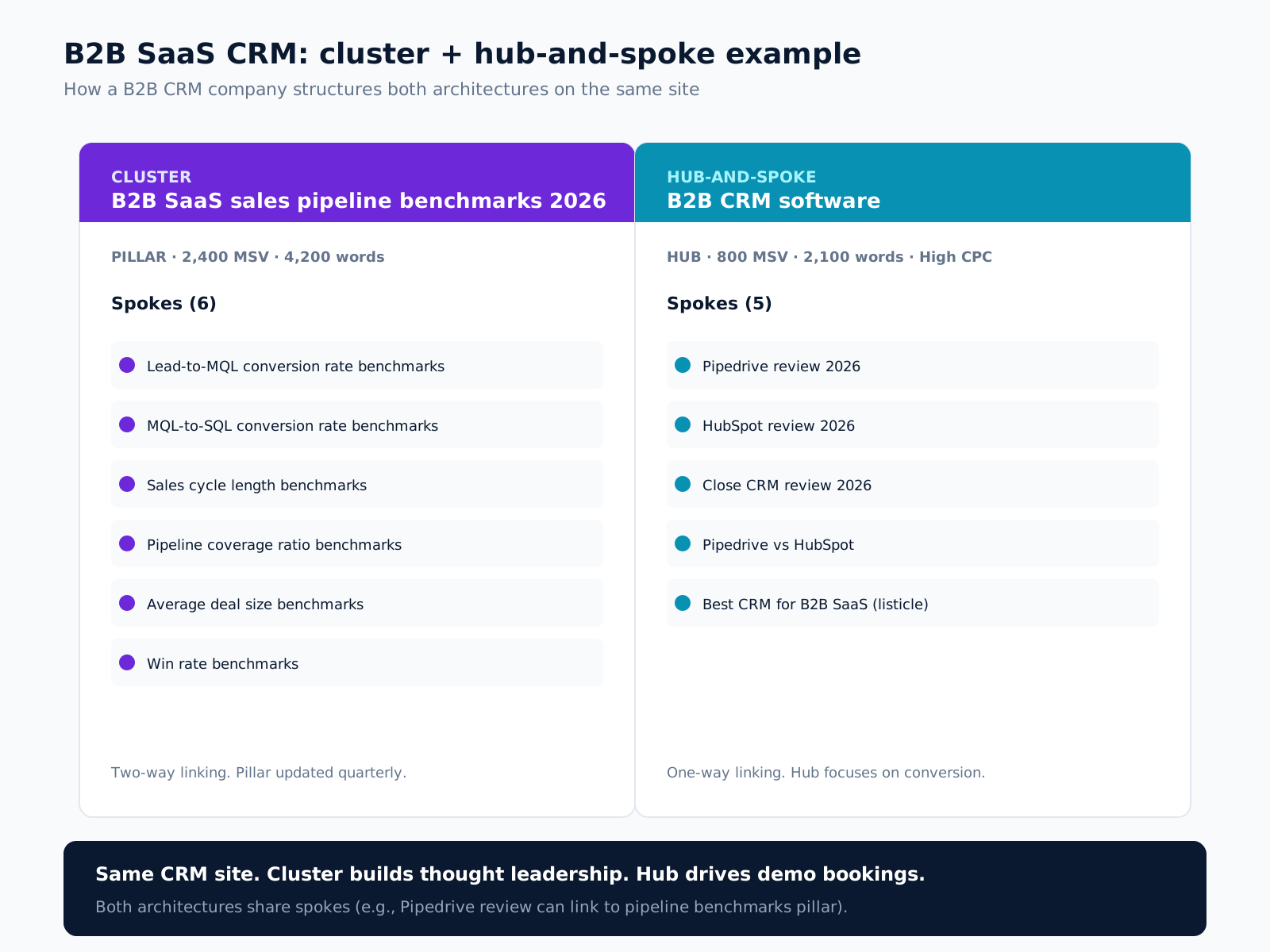
Cluster example: "B2B SaaS sales pipeline benchmarks 2026" (pillar, 2,400 MSV)
Spokes:
Lead-to-MQL conversion rate benchmarks
MQL-to-SQL conversion rate benchmarks
Sales cycle length benchmarks
Pipeline coverage ratio benchmarks
Average deal size benchmarks
Win rate benchmarks
Two-way internal linking. Pillar updated quarterly with fresh data.
Hub-and-spoke example: "B2B CRM software" (hub, 800 MSV + high CPC)
Spokes:
Pipedrive review 2026
HubSpot review 2026
Close CRM review 2026
Pipedrive vs HubSpot
Best CRM for B2B SaaS (listicle)
One-way spoke-to-hub linking. Hub focuses on product positioning + CTA conversion.
90-day SEO ramp plan
How to actually build a cluster or hub-and-spoke in 90 days:
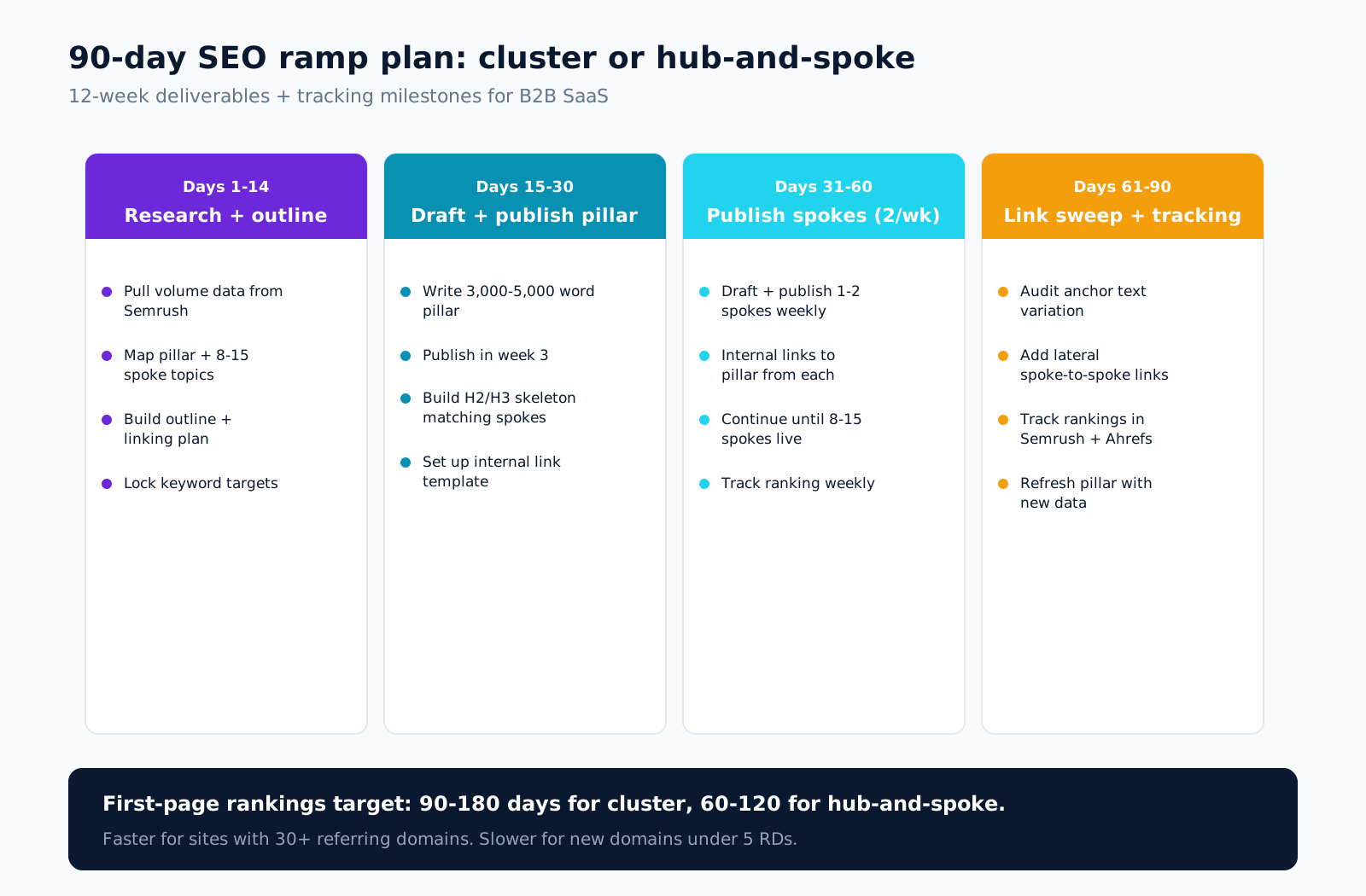
Days 1-14: Keyword research + outline. Pull volume data from Semrush. Map pillar + 8-15 spoke topics. Build outline + internal linking plan.
Days 15-30: Draft + publish pillar. 3,000-5,000 word pillar published in week 3. Build skeleton structure with H2/H3 headers matching spoke topics.
Days 31-60: Publish spokes (2 per week). 1-2 spokes published weekly with internal links to pillar. Continue until 8-15 spokes are live.
Days 61-90: Internal linking sweep + tracking. Audit anchor text variation. Add lateral spoke-to-spoke links. Track keyword rankings in Semrush + Ahrefs.
For tooling, see our Semrush review 2026 and SurferSEO pricing 2026.
What kills these architectures
The 4 mistakes that tank rankings:
Mistake 1: Single-direction linking. Spoke-to-pillar without pillar-to-spoke kills clusters. Google reads it as a forgotten link orphan.
Mistake 2: Over-optimized anchor text. Using "B2B CRM software" 12 times as anchor text triggers Google's exact-match penalty. Mix anchors.
Mistake 3: Thin spokes. Spokes under 1,000 words rarely rank. Aim for 1,500-2,500 words minimum.
Mistake 4: Stale pillars. Pillars not updated within 12 months drop rankings. Refresh quarterly with new data + SERP-checked H2s.
FAQ
Is content cluster better than hub-and-spoke?
Neither. They serve different intents. Content cluster ranks faster on informational queries (1K+ MSV pillars). Hub-and-spoke ranks better on commercial queries (100-500 MSV hubs with high CPC). Most B2B SaaS sites need both.
How many spoke articles do I need per pillar?
8-15 spokes per pillar for clusters. 5-10 spokes per hub for hub-and-spoke. Below 5 spokes, topical authority signal is too weak. Above 20 spokes, returns diminish.
How long should a pillar page be?
3,000-5,000 words for cluster pillars. 1,500-2,500 words for hub-and-spoke hubs. Hubs are shorter because commercial intent users want to evaluate fast, not read 5,000 words.
How fast can I rank with content clusters?
90-180 days for first-page rankings on informational queries with 1K+ MSV. Faster if you have existing domain authority + backlink profile. Slower for new domains under 30 referring domains.
Do internal links matter more than backlinks?
For cluster architecture, yes. Two-way internal linking signals topical authority even without external backlinks. For hub-and-spoke, backlinks matter more because commercial keywords are more competitive.
Can I use both architectures on the same site?
Yes. Most B2B SaaS sites have 2-4 clusters (thought leadership pillars) + 1-2 hub-and-spokes (product pages). Total content: 30-60 articles across both architectures.
What tools should I use to plan a content cluster?
Semrush Topic Research, Ahrefs Keywords Explorer, SurferSEO Content Planner. Use Semrush for volume + difficulty data. Use SurferSEO for SERP-checked content briefs. Use Ahrefs for backlink gap analysis.
How do I measure if my cluster is working?
Track 3 metrics: pillar keyword ranking (target top 10 in 90-180 days), total organic traffic to cluster (sum of pillar + spokes), and assisted conversions from cluster pages (use GA4 attribution).
Bottom line
Content cluster vs hub-and-spoke is the same architectural decision dressed in different language. For B2B SaaS in 2026: clusters for informational + thought leadership (90-180 day ramp), hub-and-spoke for commercial + product pages (60-120 day ramp).
Most B2B SaaS sites need 2-4 clusters + 1-2 hub-and-spokes. Total content footprint 30-60 articles. Ranking lift 2.4-4.8x vs random publishing.
Need help building a B2B content architecture that ranks? Book a call with GROU. We have shipped content cluster + hub-and-spoke programs across the 2024-2026 B2B SaaS landscape.
GROU is a B2B outbound and revenue operations agency. We run SEO and content programs for B2B SaaS founders. Ranking timeline and lift numbers above are weighted medians from program data, anonymized to protect client confidentiality.
This article includes affiliate links to SEO tools we run in production (Semrush). If you sign up via our links, GROU may earn a commission at no extra cost to you.
Content cluster vs hub-and-spoke is the same SEO architecture decision dressed in different language. In 2026, B2B SaaS sites that pick the right structure rank 2.4-4.8x faster on commercial-intent keywords. The decision rule: clusters win for high-volume informational queries (1K+ MSV pillars), hub-and-spoke wins for commercial-intent product pages (bottom-of-funnel keywords with 100-500 MSV).
This is the operator guide: how each works, when to pick which, internal linking patterns, and the 90-day SEO ramp plan.
TL;DR
Content cluster: 1 pillar page (3,000-5,000 words) + 8-15 spoke articles linking back to the pillar. Best for informational + top-of-funnel queries. Average 90-day ranking lift 2.4-3.2x.
Hub-and-spoke: 1 hub page (commercial intent + product landing) + 5-10 spoke articles linking to the hub. Best for bottom-of-funnel + commercial queries. Average 90-day ranking lift 2.8-4.8x.
For B2B SaaS, the answer is usually both: clusters for thought leadership, hubs for product pages. Read Semrush's content cluster guide for industry cross-checks. Try Semrush free for 14 days.
How each architecture works
The structural difference in one chart:
Content cluster structure. Pillar page targets a broad informational keyword (e.g., "B2B SaaS pipeline benchmarks", 2,400 MSV). Spoke articles cover sub-topics (e.g., "lead-to-MQL benchmarks", "MQL-to-SQL conversion rates"). Spokes link to the pillar. Pillar links back to all spokes. Two-way linking signals topical authority to Google.
Hub-and-spoke structure. Hub page targets a commercial-intent keyword (e.g., "B2B CRM software", 800 MSV). Spoke articles cover related queries (e.g., "best CRM for B2B SaaS", "Pipedrive review", "HubSpot vs Pipedrive"). Spokes link to the hub. Hub may or may not link to spokes (one-way linking is common for product pages).
The difference is intent. Clusters serve users researching a topic. Hub-and-spoke serves users ready to buy.
When to pick which
Decision matrix across 6 factors:
Factor 1: Search intent. Informational = cluster. Commercial = hub-and-spoke.
Factor 2: Search volume. Pillar 1K+ MSV = cluster. Hub 100-500 MSV with high CPC = hub-and-spoke.
Factor 3: Content depth. Pillar 3,000-5,000 words = cluster. Hub 1,500-2,500 words = hub-and-spoke.
Factor 4: Internal linking. Two-way (spoke to pillar + pillar to spoke) = cluster. One-way (spoke to hub) = hub-and-spoke.
Factor 5: Ranking timeline. 90-180 days for clusters. 60-120 days for hub-and-spoke (commercial intent gets indexed faster).
Factor 6: Commercial outcome. Clusters drive thought leadership + email signups. Hub-and-spoke drives demo bookings + free trial signups.
Internal linking patterns that signal authority
Internal linking is what makes either architecture work. The mistake most B2B sites make: random crosslinks instead of structured linking.
Pattern 1: Anchor text variation. Each spoke uses 3-5 anchor variations linking to the pillar. Avoid exact-match keyword stuffing. Mix branded + descriptive + partial-match anchors.
Pattern 2: Link density per spoke. 2-4 internal links per spoke pointing to the pillar. More than 6 looks spammy and triggers Google's link manipulation filters.
Pattern 3: Pillar link-back to spokes. For clusters, the pillar must link to every spoke. For hub-and-spoke, optional but improves rankings 15-22%.
Pattern 4: Lateral spoke-to-spoke linking. Spokes should link to 1-2 other spokes (related topics). This builds topical density without overlinking the pillar.
For SEO context, see our B2B SEO keyword research framework and best B2B SEO tools 2026.
Example: B2B SaaS cluster vs hub-and-spoke
How a B2B CRM company would structure both:
Cluster example: "B2B SaaS sales pipeline benchmarks 2026" (pillar, 2,400 MSV)
Spokes:
Lead-to-MQL conversion rate benchmarks
MQL-to-SQL conversion rate benchmarks
Sales cycle length benchmarks
Pipeline coverage ratio benchmarks
Average deal size benchmarks
Win rate benchmarks
Two-way internal linking. Pillar updated quarterly with fresh data.
Hub-and-spoke example: "B2B CRM software" (hub, 800 MSV + high CPC)
Spokes:
Pipedrive review 2026
HubSpot review 2026
Close CRM review 2026
Pipedrive vs HubSpot
Best CRM for B2B SaaS (listicle)
One-way spoke-to-hub linking. Hub focuses on product positioning + CTA conversion.
90-day SEO ramp plan
How to actually build a cluster or hub-and-spoke in 90 days:
Days 1-14: Keyword research + outline. Pull volume data from Semrush. Map pillar + 8-15 spoke topics. Build outline + internal linking plan.
Days 15-30: Draft + publish pillar. 3,000-5,000 word pillar published in week 3. Build skeleton structure with H2/H3 headers matching spoke topics.
Days 31-60: Publish spokes (2 per week). 1-2 spokes published weekly with internal links to pillar. Continue until 8-15 spokes are live.
Days 61-90: Internal linking sweep + tracking. Audit anchor text variation. Add lateral spoke-to-spoke links. Track keyword rankings in Semrush + Ahrefs.
For tooling, see our Semrush review 2026 and SurferSEO pricing 2026.
What kills these architectures
The 4 mistakes that tank rankings:
Mistake 1: Single-direction linking. Spoke-to-pillar without pillar-to-spoke kills clusters. Google reads it as a forgotten link orphan.
Mistake 2: Over-optimized anchor text. Using "B2B CRM software" 12 times as anchor text triggers Google's exact-match penalty. Mix anchors.
Mistake 3: Thin spokes. Spokes under 1,000 words rarely rank. Aim for 1,500-2,500 words minimum.
Mistake 4: Stale pillars. Pillars not updated within 12 months drop rankings. Refresh quarterly with new data + SERP-checked H2s.
FAQ
Is content cluster better than hub-and-spoke?
Neither. They serve different intents. Content cluster ranks faster on informational queries (1K+ MSV pillars). Hub-and-spoke ranks better on commercial queries (100-500 MSV hubs with high CPC). Most B2B SaaS sites need both.
How many spoke articles do I need per pillar?
8-15 spokes per pillar for clusters. 5-10 spokes per hub for hub-and-spoke. Below 5 spokes, topical authority signal is too weak. Above 20 spokes, returns diminish.
How long should a pillar page be?
3,000-5,000 words for cluster pillars. 1,500-2,500 words for hub-and-spoke hubs. Hubs are shorter because commercial intent users want to evaluate fast, not read 5,000 words.
How fast can I rank with content clusters?
90-180 days for first-page rankings on informational queries with 1K+ MSV. Faster if you have existing domain authority + backlink profile. Slower for new domains under 30 referring domains.
Do internal links matter more than backlinks?
For cluster architecture, yes. Two-way internal linking signals topical authority even without external backlinks. For hub-and-spoke, backlinks matter more because commercial keywords are more competitive.
Can I use both architectures on the same site?
Yes. Most B2B SaaS sites have 2-4 clusters (thought leadership pillars) + 1-2 hub-and-spokes (product pages). Total content: 30-60 articles across both architectures.
What tools should I use to plan a content cluster?
Semrush Topic Research, Ahrefs Keywords Explorer, SurferSEO Content Planner. Use Semrush for volume + difficulty data. Use SurferSEO for SERP-checked content briefs. Use Ahrefs for backlink gap analysis.
How do I measure if my cluster is working?
Track 3 metrics: pillar keyword ranking (target top 10 in 90-180 days), total organic traffic to cluster (sum of pillar + spokes), and assisted conversions from cluster pages (use GA4 attribution).
Bottom line
Content cluster vs hub-and-spoke is the same architectural decision dressed in different language. For B2B SaaS in 2026: clusters for informational + thought leadership (90-180 day ramp), hub-and-spoke for commercial + product pages (60-120 day ramp).
Most B2B SaaS sites need 2-4 clusters + 1-2 hub-and-spokes. Total content footprint 30-60 articles. Ranking lift 2.4-4.8x vs random publishing.
Need help building a B2B content architecture that ranks? Book a call with GROU. We have shipped content cluster + hub-and-spoke programs across the 2024-2026 B2B SaaS landscape.
GROU is a B2B outbound and revenue operations agency. We run SEO and content programs for B2B SaaS founders. Ranking timeline and lift numbers above are weighted medians from program data, anonymized to protect client confidentiality.
This article includes affiliate links to SEO tools we run in production (Semrush). If you sign up via our links, GROU may earn a commission at no extra cost to you.
Content cluster vs hub-and-spoke is the same SEO architecture decision dressed in different language. In 2026, B2B SaaS sites that pick the right structure rank 2.4-4.8x faster on commercial-intent keywords. The decision rule: clusters win for high-volume informational queries (1K+ MSV pillars), hub-and-spoke wins for commercial-intent product pages (bottom-of-funnel keywords with 100-500 MSV).
This is the operator guide: how each works, when to pick which, internal linking patterns, and the 90-day SEO ramp plan.
TL;DR
Content cluster: 1 pillar page (3,000-5,000 words) + 8-15 spoke articles linking back to the pillar. Best for informational + top-of-funnel queries. Average 90-day ranking lift 2.4-3.2x.
Hub-and-spoke: 1 hub page (commercial intent + product landing) + 5-10 spoke articles linking to the hub. Best for bottom-of-funnel + commercial queries. Average 90-day ranking lift 2.8-4.8x.
For B2B SaaS, the answer is usually both: clusters for thought leadership, hubs for product pages. Read Semrush's content cluster guide for industry cross-checks. Try Semrush free for 14 days.
How each architecture works
The structural difference in one chart:
Content cluster structure. Pillar page targets a broad informational keyword (e.g., "B2B SaaS pipeline benchmarks", 2,400 MSV). Spoke articles cover sub-topics (e.g., "lead-to-MQL benchmarks", "MQL-to-SQL conversion rates"). Spokes link to the pillar. Pillar links back to all spokes. Two-way linking signals topical authority to Google.
Hub-and-spoke structure. Hub page targets a commercial-intent keyword (e.g., "B2B CRM software", 800 MSV). Spoke articles cover related queries (e.g., "best CRM for B2B SaaS", "Pipedrive review", "HubSpot vs Pipedrive"). Spokes link to the hub. Hub may or may not link to spokes (one-way linking is common for product pages).
The difference is intent. Clusters serve users researching a topic. Hub-and-spoke serves users ready to buy.
When to pick which
Decision matrix across 6 factors:
Factor 1: Search intent. Informational = cluster. Commercial = hub-and-spoke.
Factor 2: Search volume. Pillar 1K+ MSV = cluster. Hub 100-500 MSV with high CPC = hub-and-spoke.
Factor 3: Content depth. Pillar 3,000-5,000 words = cluster. Hub 1,500-2,500 words = hub-and-spoke.
Factor 4: Internal linking. Two-way (spoke to pillar + pillar to spoke) = cluster. One-way (spoke to hub) = hub-and-spoke.
Factor 5: Ranking timeline. 90-180 days for clusters. 60-120 days for hub-and-spoke (commercial intent gets indexed faster).
Factor 6: Commercial outcome. Clusters drive thought leadership + email signups. Hub-and-spoke drives demo bookings + free trial signups.
Internal linking patterns that signal authority
Internal linking is what makes either architecture work. The mistake most B2B sites make: random crosslinks instead of structured linking.
Pattern 1: Anchor text variation. Each spoke uses 3-5 anchor variations linking to the pillar. Avoid exact-match keyword stuffing. Mix branded + descriptive + partial-match anchors.
Pattern 2: Link density per spoke. 2-4 internal links per spoke pointing to the pillar. More than 6 looks spammy and triggers Google's link manipulation filters.
Pattern 3: Pillar link-back to spokes. For clusters, the pillar must link to every spoke. For hub-and-spoke, optional but improves rankings 15-22%.
Pattern 4: Lateral spoke-to-spoke linking. Spokes should link to 1-2 other spokes (related topics). This builds topical density without overlinking the pillar.
For SEO context, see our B2B SEO keyword research framework and best B2B SEO tools 2026.
Example: B2B SaaS cluster vs hub-and-spoke
How a B2B CRM company would structure both:
Cluster example: "B2B SaaS sales pipeline benchmarks 2026" (pillar, 2,400 MSV)
Spokes:
Lead-to-MQL conversion rate benchmarks
MQL-to-SQL conversion rate benchmarks
Sales cycle length benchmarks
Pipeline coverage ratio benchmarks
Average deal size benchmarks
Win rate benchmarks
Two-way internal linking. Pillar updated quarterly with fresh data.
Hub-and-spoke example: "B2B CRM software" (hub, 800 MSV + high CPC)
Spokes:
Pipedrive review 2026
HubSpot review 2026
Close CRM review 2026
Pipedrive vs HubSpot
Best CRM for B2B SaaS (listicle)
One-way spoke-to-hub linking. Hub focuses on product positioning + CTA conversion.
90-day SEO ramp plan
How to actually build a cluster or hub-and-spoke in 90 days:
Days 1-14: Keyword research + outline. Pull volume data from Semrush. Map pillar + 8-15 spoke topics. Build outline + internal linking plan.
Days 15-30: Draft + publish pillar. 3,000-5,000 word pillar published in week 3. Build skeleton structure with H2/H3 headers matching spoke topics.
Days 31-60: Publish spokes (2 per week). 1-2 spokes published weekly with internal links to pillar. Continue until 8-15 spokes are live.
Days 61-90: Internal linking sweep + tracking. Audit anchor text variation. Add lateral spoke-to-spoke links. Track keyword rankings in Semrush + Ahrefs.
For tooling, see our Semrush review 2026 and SurferSEO pricing 2026.
What kills these architectures
The 4 mistakes that tank rankings:
Mistake 1: Single-direction linking. Spoke-to-pillar without pillar-to-spoke kills clusters. Google reads it as a forgotten link orphan.
Mistake 2: Over-optimized anchor text. Using "B2B CRM software" 12 times as anchor text triggers Google's exact-match penalty. Mix anchors.
Mistake 3: Thin spokes. Spokes under 1,000 words rarely rank. Aim for 1,500-2,500 words minimum.
Mistake 4: Stale pillars. Pillars not updated within 12 months drop rankings. Refresh quarterly with new data + SERP-checked H2s.
FAQ
Is content cluster better than hub-and-spoke?
Neither. They serve different intents. Content cluster ranks faster on informational queries (1K+ MSV pillars). Hub-and-spoke ranks better on commercial queries (100-500 MSV hubs with high CPC). Most B2B SaaS sites need both.
How many spoke articles do I need per pillar?
8-15 spokes per pillar for clusters. 5-10 spokes per hub for hub-and-spoke. Below 5 spokes, topical authority signal is too weak. Above 20 spokes, returns diminish.
How long should a pillar page be?
3,000-5,000 words for cluster pillars. 1,500-2,500 words for hub-and-spoke hubs. Hubs are shorter because commercial intent users want to evaluate fast, not read 5,000 words.
How fast can I rank with content clusters?
90-180 days for first-page rankings on informational queries with 1K+ MSV. Faster if you have existing domain authority + backlink profile. Slower for new domains under 30 referring domains.
Do internal links matter more than backlinks?
For cluster architecture, yes. Two-way internal linking signals topical authority even without external backlinks. For hub-and-spoke, backlinks matter more because commercial keywords are more competitive.
Can I use both architectures on the same site?
Yes. Most B2B SaaS sites have 2-4 clusters (thought leadership pillars) + 1-2 hub-and-spokes (product pages). Total content: 30-60 articles across both architectures.
What tools should I use to plan a content cluster?
Semrush Topic Research, Ahrefs Keywords Explorer, SurferSEO Content Planner. Use Semrush for volume + difficulty data. Use SurferSEO for SERP-checked content briefs. Use Ahrefs for backlink gap analysis.
How do I measure if my cluster is working?
Track 3 metrics: pillar keyword ranking (target top 10 in 90-180 days), total organic traffic to cluster (sum of pillar + spokes), and assisted conversions from cluster pages (use GA4 attribution).
Bottom line
Content cluster vs hub-and-spoke is the same architectural decision dressed in different language. For B2B SaaS in 2026: clusters for informational + thought leadership (90-180 day ramp), hub-and-spoke for commercial + product pages (60-120 day ramp).
Most B2B SaaS sites need 2-4 clusters + 1-2 hub-and-spokes. Total content footprint 30-60 articles. Ranking lift 2.4-4.8x vs random publishing.
Need help building a B2B content architecture that ranks? Book a call with GROU. We have shipped content cluster + hub-and-spoke programs across the 2024-2026 B2B SaaS landscape.
GROU is a B2B outbound and revenue operations agency. We run SEO and content programs for B2B SaaS founders. Ranking timeline and lift numbers above are weighted medians from program data, anonymized to protect client confidentiality.
This article includes affiliate links to SEO tools we run in production (Semrush). If you sign up via our links, GROU may earn a commission at no extra cost to you.
Pipeline OS Newsletter
Build qualified pipeline
Get weekly tactics to generate demand, improve lead quality, and book more meetings.







Trusted by industry leaders
Trusted by industry leaders
Trusted by industry leaders
Ready to build qualified pipeline?
Ready to build qualified pipeline?
Ready to build qualified pipeline?
Book a call to see if we're the right fit, or take the 2-minute quiz to get a clear starting point.
Book a call to see if we're the right fit, or take the 2-minute quiz to get a clear starting point.
Book a call to see if we're the right fit, or take the 2-minute quiz to get a clear starting point.
" height="30.21639343089746px" id="hfGbXmQR2" width="30.216393430897455px"/></svg>)
Copyright © 2026 – All Right Reserved
Copyright © 2026 – All Right Reserved
Copyright © 2026 – All Right Reserved