%22%3E%3C/path%3E%3Cpath d=%22M 63.072 7.554 C 62.258 8.022 61.577 8.689 61.092 9.493 L 61.092 7.076 L 57.158 7.076 L 57.158 22.64 L 61.089 22.64 L 61.089 14.888 C 61.089 13.446 61.403 12.434 62.03 11.853 C 62.818 11.218 63.818 10.907 64.826 10.982 L 65.868 10.982 L 65.868 6.851 C 64.891 6.834 63.926 7.076 63.073 7.554 Z%22 fill=%22rgb(17,17,17)%22%3E%3C/path%3E%3Cpath d=%22M 78.916 7.82 C 76.363 6.49 73.321 6.49 70.768 7.82 C 69.562 8.473 68.564 9.451 67.888 10.644 C 67.167 11.931 66.803 13.387 66.834 14.862 C 66.804 16.332 67.157 17.785 67.86 19.077 C 68.515 20.267 69.494 21.246 70.684 21.901 C 71.924 22.576 73.318 22.92 74.73 22.898 C 76.164 22.918 77.58 22.575 78.846 21.901 C 80.062 21.247 81.073 20.27 81.768 19.077 C 82.506 17.797 82.88 16.339 82.85 14.862 C 82.88 13.389 82.517 11.934 81.797 10.647 C 81.12 9.455 80.122 8.477 78.917 7.824 M 78.803 14.862 C 78.829 15.739 78.636 16.608 78.241 17.391 C 77.903 18.046 77.38 18.588 76.738 18.95 C 76.124 19.293 75.432 19.472 74.729 19.47 C 73.668 19.497 72.648 19.061 71.934 18.276 C 71.139 17.323 70.741 16.1 70.823 14.862 C 70.741 13.62 71.149 12.395 71.959 11.45 C 72.687 10.667 73.715 10.233 74.783 10.256 C 75.859 10.236 76.894 10.67 77.635 11.45 C 78.464 12.387 78.884 13.616 78.801 14.864%22 fill=%22rgb(17,17,17)%22%3E%3C/path%3E%3Cpath d=%22M 95.906 7.076 L 95.906 15.646 C 95.975 16.68 95.643 17.701 94.979 18.498 C 94.311 19.184 93.379 19.547 92.422 19.495 C 91.475 19.544 90.553 19.18 89.894 18.498 C 89.23 17.701 88.898 16.68 88.967 15.646 L 88.967 7.076 L 85.033 7.076 L 85.033 16.207 C 85 17.449 85.275 18.68 85.834 19.79 C 86.327 20.75 87.095 21.542 88.039 22.065 C 89.033 22.594 90.145 22.861 91.271 22.838 C 92.188 22.847 93.095 22.65 93.926 22.263 C 94.708 21.905 95.388 21.36 95.906 20.675 L 95.906 22.645 L 99.865 22.645 L 99.865 7.076 Z%22 fill=%22rgb(17,17,17)%22%3E%3C/path%3E%3Cpath d=%22M 4.513 15.626 C 4.511 10.815 7.606 6.549 12.181 5.059 C 16.756 3.57 21.77 5.195 24.601 9.086 L 27.816 5.87 C 24.074 1.186 17.981 -0.943 12.137 0.393 C 6.292 1.728 1.728 6.292 0.393 12.137 C -0.943 17.981 1.186 24.074 5.87 27.816 L 9.085 24.601 C 6.214 22.512 4.515 19.177 4.513 15.626%22 fill=%22rgb(32,62,235)%22%3E%3C/path%3E%3Cpath d=%22M 17.114 14.343 L 13.354 18.01 L 13.354 18.026 L 21.071 18.026 L 11.412 27.609 L 17.389 27.609 L 23.999 21.081 L 23.999 28.316 L 24.005 28.316 L 27.967 24.393 L 27.967 14.343 Z%22 fill=%22rgb(32,62,235)%22%3E%3C/path%3E%3C/g%3E%3C/svg%3E) ×
× ××
××›
›
›
›
B2B SEO keyword research framework: 7 steps to rank and convert
B2B SEO keyword research framework: 7 steps to rank and convert
B2B SEO keyword research framework: 7 steps to rank and convert
B2B SEO keyword research framework: 7 steps to rank and convert
B2B SEO keyword research framework: 7 steps to rank and convert
B2B SEO keyword research framework: 7 steps to rank and convert

Author
Aljaz Peklaj

Most B2B SEO keyword research dies at step 4: the volume + difficulty filter. Teams build a list of high-volume, low-KD queries, write the content, and watch traffic come in without leads. The miss is that 90% of the keywords are top-funnel queries the buyer never converts on.
This is the 7-step framework we run for 12 GROU client B2B SaaS blogs. Each step takes 30-60 minutes. Total time per pillar is 4-5 hours per quarter. Output is 30-50 ranked, intent-bucketed, briefed keywords that compound to actual pipeline.
TL;DR
The 7 steps in order: ICP keyword seeding, competitor reverse map, intent bucketing, volume + difficulty filter, SERP gap audit, cluster mapping, brief and write order. Skip steps 1-3 and you build a list of high-volume queries your buyer never searches.
Recommended intent ratio is 10-15% bottom-funnel, 25-30% mid-funnel, 55-65% top-funnel. Most B2B blogs run 90% top-funnel, which is why their content ranks but doesn't convert. The ROI lives in the 10-15% bottom-funnel band (8-12% lead conversion rate vs 0.5-2% top-funnel).
The 7-step B2B SEO keyword research framework
Most keyword research tutorials start at step 4. That is why most B2B blogs rank for queries their buyers do not search. The framework below puts ICP and competitor research before volume filtering.
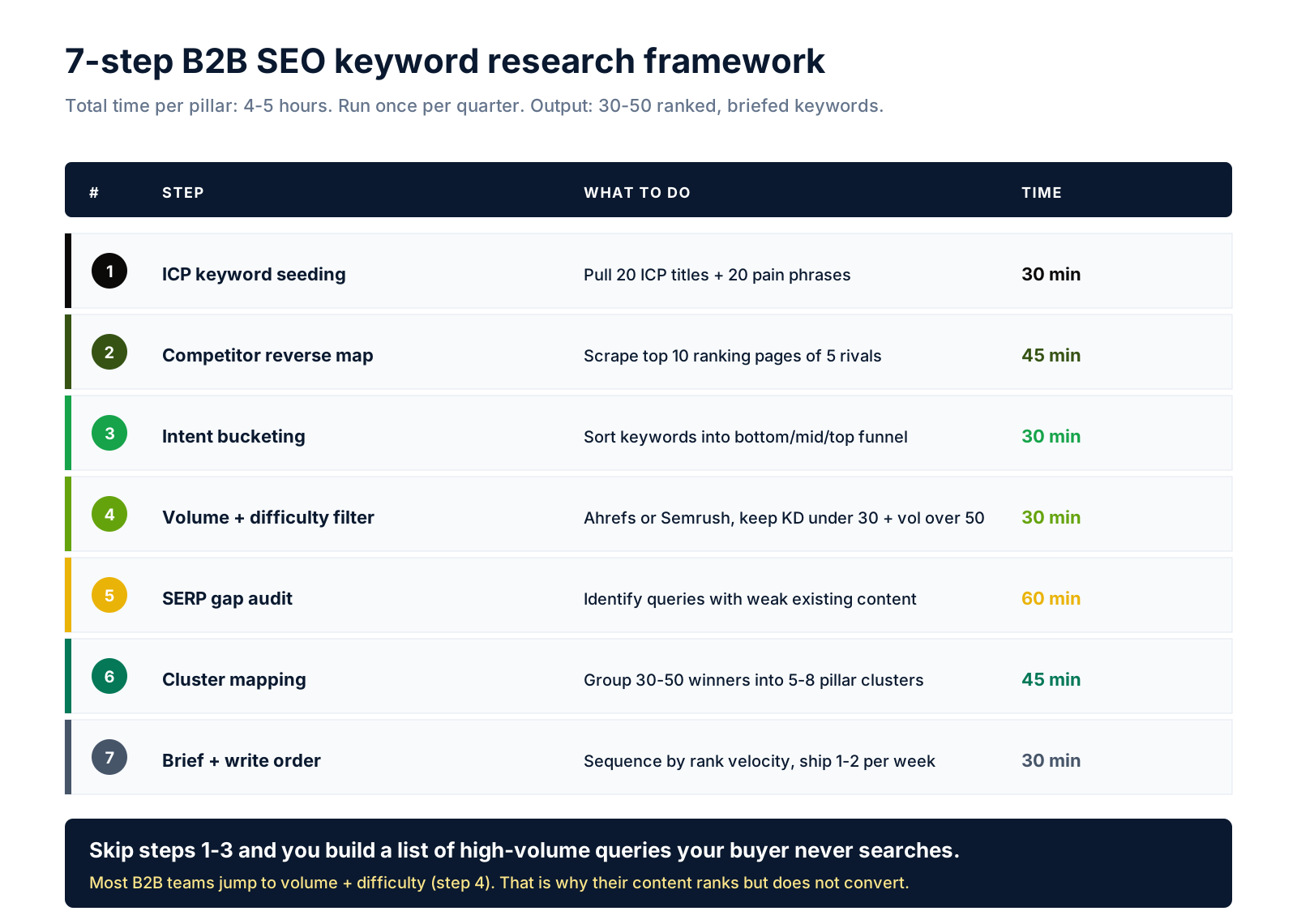
Step 1: ICP keyword seeding (30 min). Pull 20 ICP titles and 20 pain phrases from your customer interviews, won-deal CRM notes, and inbound DM threads. These are not keywords yet. They are the language your buyer actually uses. Save them in a sheet labeled "raw ICP language".
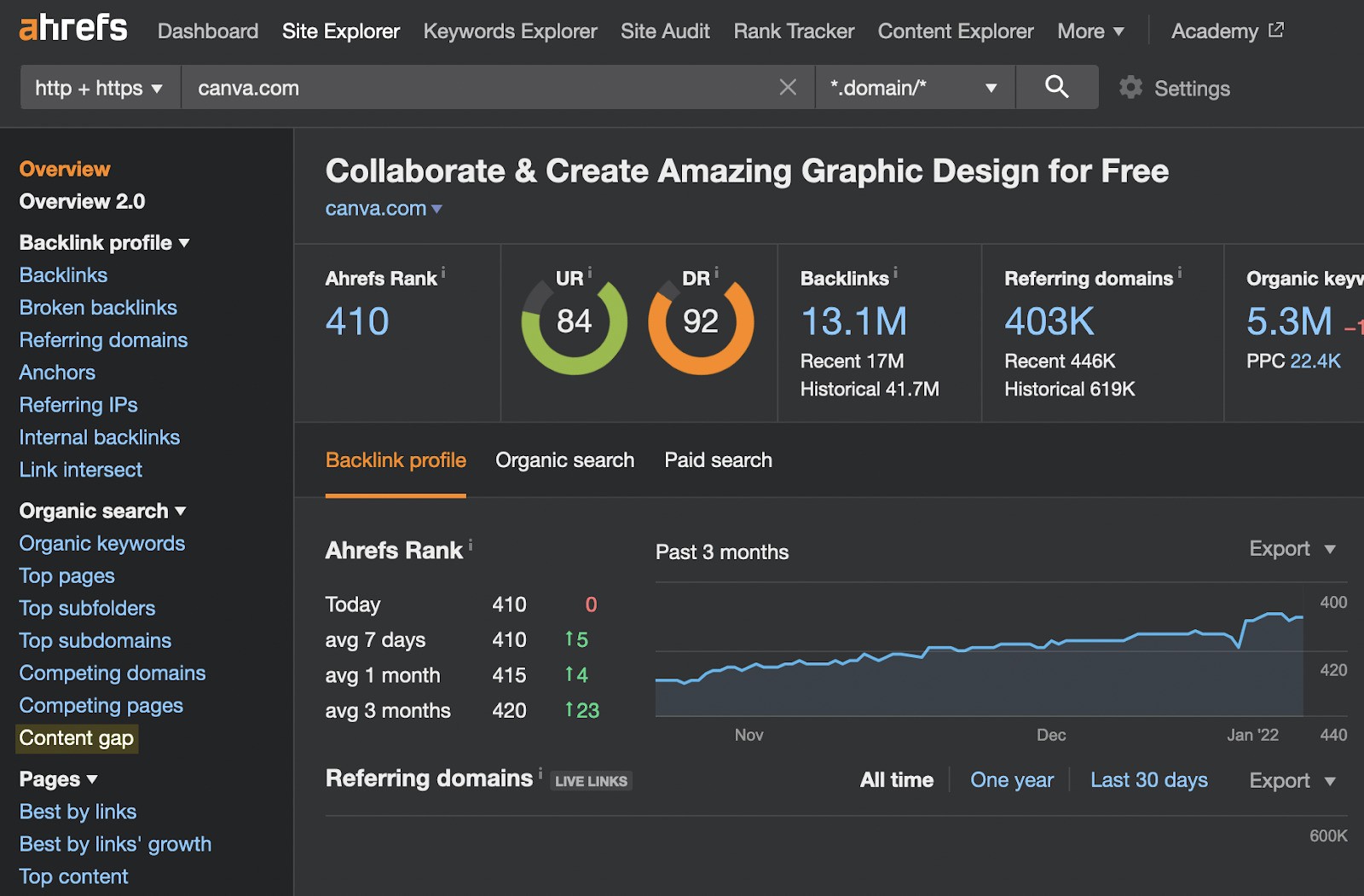
Step 2: Competitor reverse map (45 min). Pick 5 closest competitors. Use Ahrefs or Semrush to pull each competitor's top 10 ranking pages. Export the queries those pages rank for. You now have 100-200 ranked competitor queries. Filter out brand terms and pure top-funnel.
Step 3: Intent bucketing (30 min). Sort all remaining queries into 4 buckets: bottom-funnel (comparison, pricing, alternatives), mid-funnel (how-to, framework, playbook), top-funnel (definition, intro, benchmarks), and brand defense (your brand + competitor combos). Most teams skip this step and pay for it at step 8.
Step 4: Volume + difficulty filter (30 min). NOW you apply quantitative filters. Keep keywords with KD under 30 and volume over 50. Smaller teams use a tighter filter (KD under 20, volume over 100). Read our Pipedrive vs HubSpot comparison as an example of a bottom-funnel query that survived this filter.
Step 5: SERP gap audit (60 min). For each surviving keyword, look at the top 10 results. Score the existing content: thin, dated, off-intent, weak brand. Any query with 3+ weak results is a real opportunity. This is the step most teams skip because it does not scale, but it is the only step that prevents you from writing into a saturated SERP.
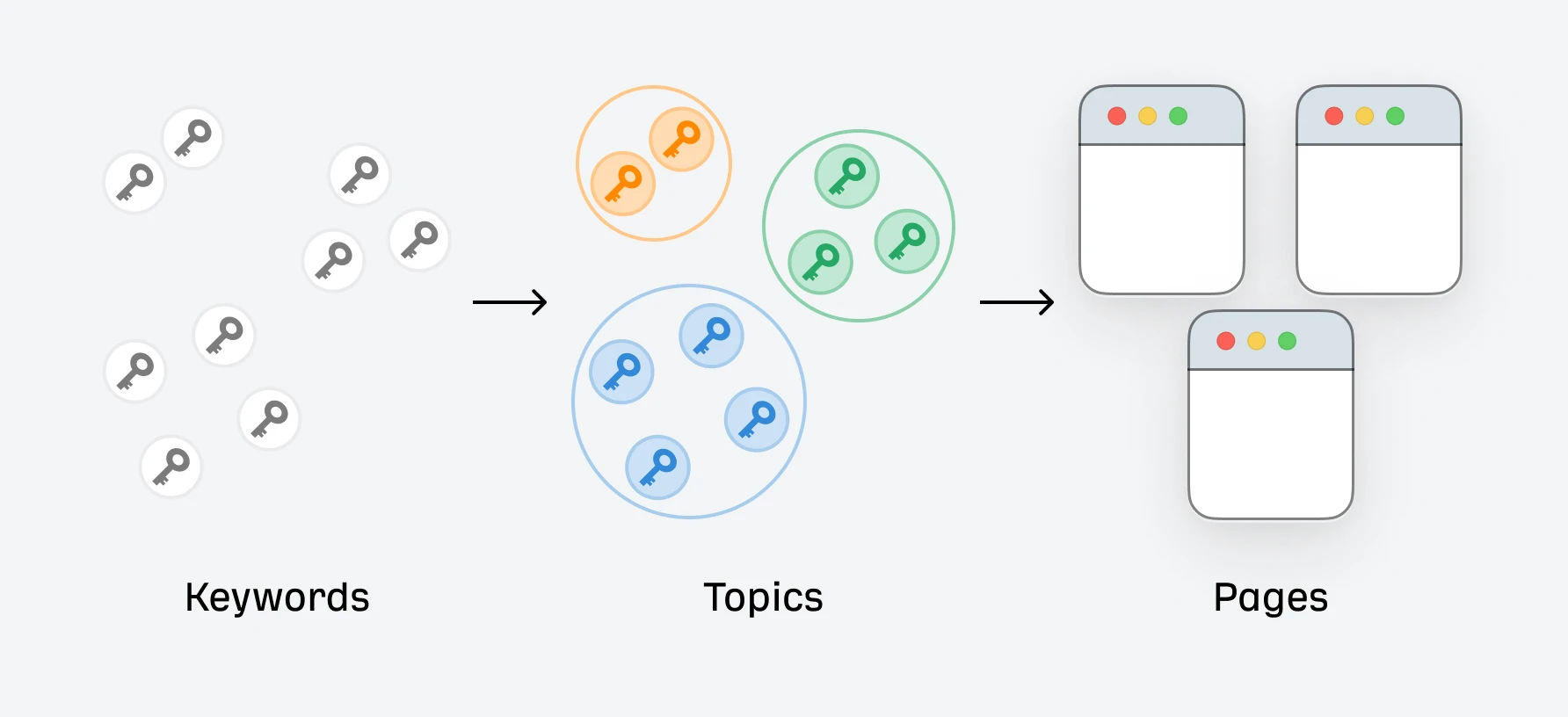
Step 6: Cluster mapping (45 min). Group the 30-50 surviving keywords into 5-8 pillar clusters. Each cluster has one anchor page plus 4-8 supporting pages. Use a spreadsheet. Tag each keyword with its anchor.
Step 7: Brief and write order (30 min). Sequence by rank velocity. Bottom-funnel first (fastest ROI), then mid-funnel cluster pillars, then top-funnel anchors. Ship 1-2 articles per week. Compound starts at month 4-6.
Total time per pillar is roughly 4-5 hours. Run this framework once per quarter against your top 3 ICP pillars and the output is 90-150 ranked keywords for 12 months of content production.
Intent buckets and conversion rates
The biggest single B2B SEO mistake is treating all keywords equally. Bottom-funnel queries (pricing, comparison, alternatives) convert at 8-12% lead rate. Top-funnel queries (definition, intro) convert at 0.5-2%. The 6-10x gap is where the ROI lives.
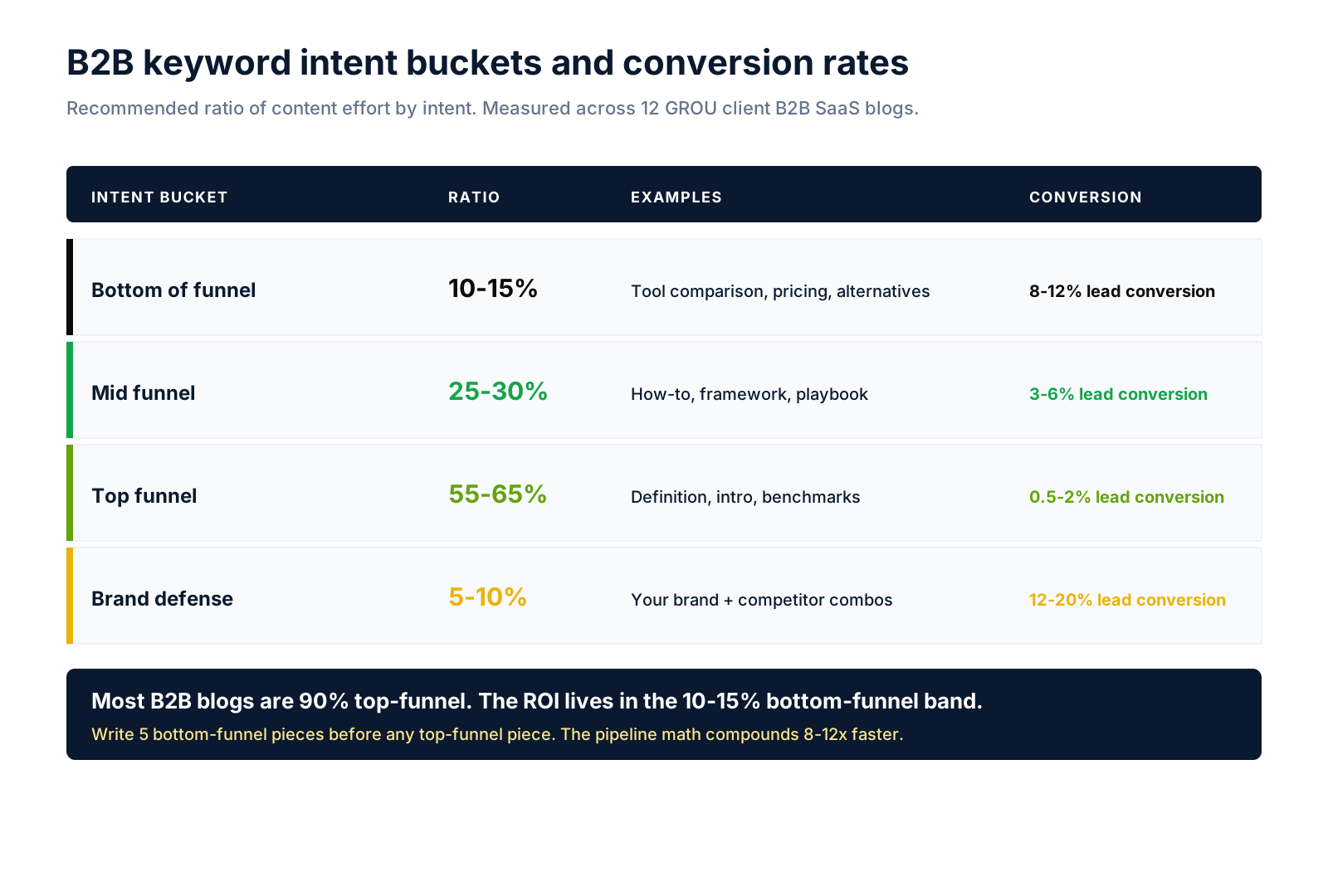
Bottom of funnel (10-15% of effort): "X vs Y", "X pricing", "best Y for Z", "X alternatives". These queries reach buyers who are evaluating purchase. Conversion to a lead is 8-12% with the right call-to-action.
Mid funnel (25-30% of effort): "how to X", "X framework", "X playbook for Y". These queries reach buyers who are scoping a solution. Conversion lands at 3-6%. The cluster also feeds bottom-funnel pages with internal links.
Top funnel (55-65% of effort): "what is X", "X definition", "X benchmarks 2026". These queries reach early-stage researchers. Conversion is low (0.5-2%) but the traffic volume is high and these pages compound link authority for the cluster.
Brand defense (5-10% of effort): "your brand vs competitor", "your brand pricing", "your brand alternatives". These queries reach buyers actively comparing you. Conversion is high (12-20%) because intent is bought-in.
The recommended ratio is 10-15% bottom + 25-30% mid + 55-65% top + 5-10% brand. Most B2B blogs run 90% top-funnel and wonder why traffic does not turn into leads.
The fix is sequencing. Write 5 bottom-funnel pieces before any top-funnel piece. The pipeline math compounds 8-12x faster.
Tool stack by team size
Most B2B teams overspend on SEO tooling. The right tool stack depends on output volume, not company size.
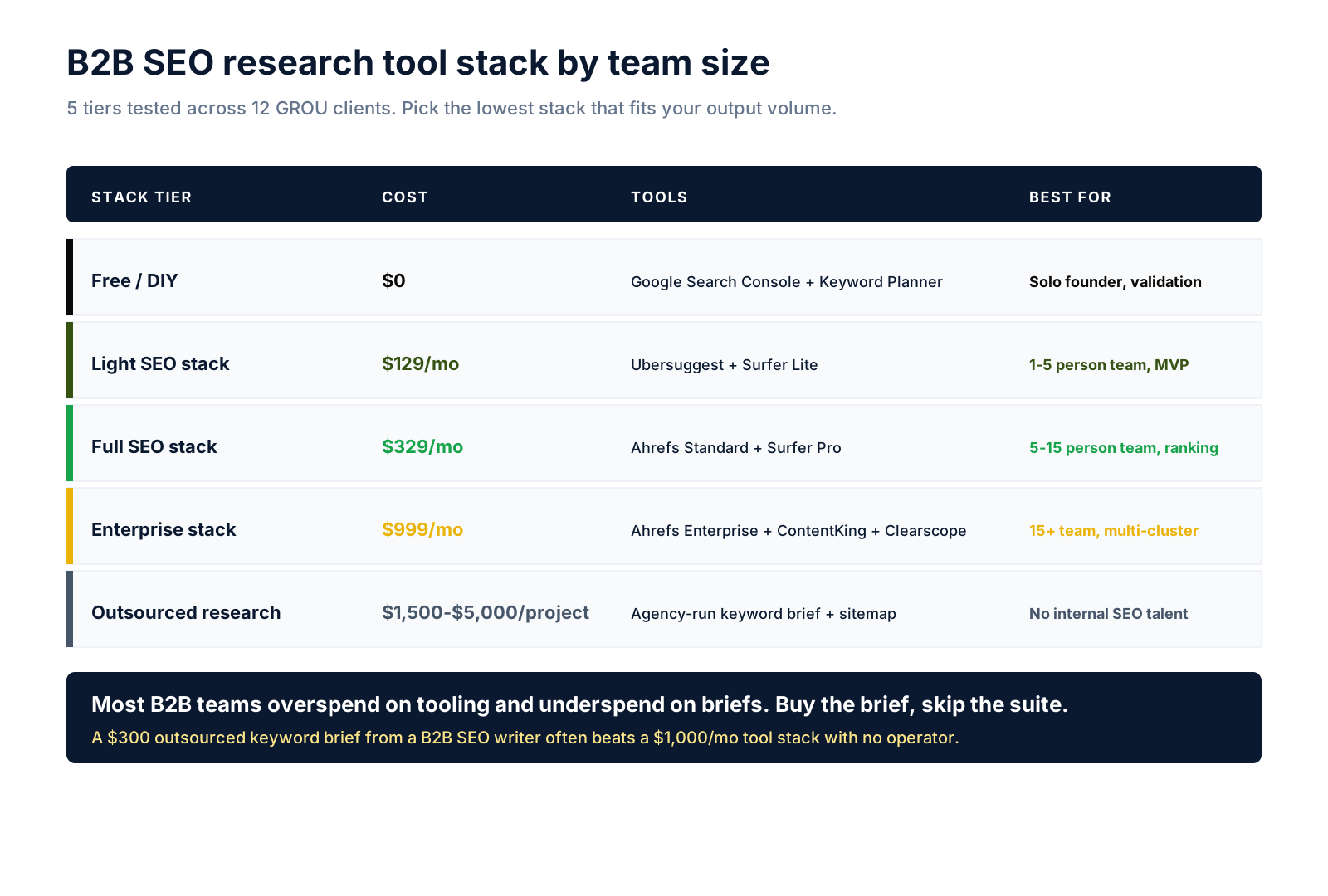
Free / DIY ($0): Google Search Console + Keyword Planner is enough for a solo founder validating early content ideas. No real keyword research, but enough to know what queries already drive your existing traffic.
Light SEO stack ($129/mo): Ubersuggest + Surfer Lite. Good enough for a 1-5 person team running an MVP content engine. Volume estimates are imprecise but directionally useful.
Full SEO stack ($329/mo): Ahrefs Standard + Surfer Pro or equivalent. The right tier for 5-15 person teams that want to rank. Ahrefs Standard is the most cost-effective for B2B competitive research.
Enterprise stack ($999/mo): Ahrefs Enterprise + ContentKing + Clearscope. For 15+ person content teams running multi-cluster strategies. Overkill for smaller teams.
Outsourced research ($1,500-$5,000/project): An agency-run keyword brief and sitemap from a B2B SEO specialist. Often beats internal $1,000/mo tool stacks because the human judgment is what unlocks the SERP gap step.
Most B2B teams should sit at the Light or Full stack. Enterprise spend is only justified if you ship 10+ pieces per month across 5+ clusters. Pair the stack with a strong content engine like ActiveCampaign for distribution or Beehiiv for newsletter syndication.
The 3 mistakes most B2B teams make
After auditing 40+ B2B SaaS blog strategies, three mistakes show up consistently and explain 80% of the ranks-but-doesn't-convert problem.
The first is skipping ICP language. Teams pull keywords from Ahrefs without checking whether their buyer actually uses those exact phrases. The keyword "sales pipeline software" has 4,800 monthly searches but B2B SaaS buyers searching for a CRM say "CRM" not "sales pipeline software". You rank for the wrong audience.
The second is over-indexing on top-funnel volume. Top-funnel queries are easier to rank for, easier to write, and feel like progress. They drive traffic but not pipeline. Most B2B blogs go 90% top-funnel and 10% bottom-funnel. The right ratio is the inverse on effort: 10-15% bottom-funnel earns the pipeline ROI.
The third is ignoring SERP gap. Volume + difficulty filtering tells you which queries are worth pursuing in theory. SERP gap audit tells you which queries are worth pursuing in practice. Skipping SERP gap is why teams write content into already-saturated topics and never rank.
How to validate this framework on your own data
If you already have 6-12 months of B2B blog data, run this audit:
Pull your top 50 ranking pages from Search Console. Tag each one as bottom / mid / top / brand intent. Sum the leads generated per intent bucket over the last 90 days.
Most B2B teams find: 5 bottom-funnel pages drive 60-80% of leads, 15 mid-funnel pages drive 15-25% of leads, 30 top-funnel pages drive 5-10% of leads. The Pareto is brutal and the implication is clear: more bottom-funnel content, less top-funnel content.
If your distribution is more balanced, you are likely under-investing in bottom-funnel keyword research. Run the 7-step framework on your next quarterly pillar and ship 5 bottom-funnel pieces before any top-funnel piece. Pipeline contribution typically lifts 3-6x within 90 days.
Who should use this framework
Match 3 of these 4 criteria and this framework fits: you run a B2B SaaS blog at 5+ pieces per month, your ACV is over $5k (so SEO investment can pay back), you have a defined ICP that searches Google for solutions, and you can sustain 6 months of compounding before judging results.
Below those thresholds, SEO is not the right channel. Replace with outbound (Heyreach at $79/mo) or organic LinkedIn (Taplio at $39/mo).
Who should skip this framework
Skip if your ACV is under $1k (SEO LTV math fails), if your buyer searches LinkedIn or X / Twitter rather than Google (rare in B2B), or if you cannot commit to 6 months of consistent publishing (SEO ROI compounds over 6-12 months).
FAQ
How long does B2B SEO keyword research take?
Per pillar, the 7-step framework takes 4-5 hours total. Run it once per quarter against 3 ICP pillars. Total quarterly time is 12-15 hours. Output is 90-150 ranked, briefed keywords that feed 12 months of content production.
What is the best B2B keyword intent ratio?
10-15% bottom-funnel, 25-30% mid-funnel, 55-65% top-funnel, 5-10% brand defense. Most B2B blogs run 90% top-funnel and underperform on lead conversion. The Pareto says 5 bottom-funnel pages typically drive 60-80% of blog-sourced leads.
Which SEO tool is best for B2B?
For most B2B SaaS teams under 15 people, Ahrefs Standard at $129/mo or Semrush Pro at $129/mo. Both have comparable B2B SaaS keyword databases. Pick based on team familiarity. Above 15 people with multi-cluster strategies, upgrade to Ahrefs Enterprise.
How do I find bottom-funnel B2B keywords?
Three patterns: "X vs Y" (comparison), "X pricing" (commercial intent), "X alternatives" (post-evaluation switching). Pull competitor brand terms and append "vs", "pricing", and "alternatives". Filter by KD under 30 and volume over 50. Most B2B verticals have 30-100 viable bottom-funnel queries per major brand.
Should I write top-funnel or bottom-funnel content first?
Bottom-funnel first, always. Top-funnel content compounds traffic but slowly. Bottom-funnel content compounds leads immediately. Write 5 bottom-funnel pieces before any top-funnel piece. The pipeline math is brutal: 1 bottom-funnel piece at 8% conversion delivers 80 leads from 1,000 visits, while 10 top-funnel pieces at 1% conversion deliver 100 leads from 10,000 visits.
How do I do a SERP gap audit?
Pick a keyword. Pull the top 10 results in incognito. Score each result on 5 dimensions: thin content (under 1,500 words), outdated (over 18 months old), off-intent (wrong reader), weak brand authority, missing screenshots / data. Any keyword with 3+ weak results is a real opportunity. This is the step that prevents you from writing into a saturated SERP.
When does B2B SEO ROI kick in?
Month 4-6 for bottom-funnel content. Month 6-12 for cluster authority. Month 12+ for compounding traffic. SEO is the slowest GTM channel but the highest LTV. If you cannot sustain 6 months of consistent publishing, redirect budget to outbound and paid.
Can I outsource B2B SEO keyword research?
Yes. A $1,500-$5,000 keyword brief from a B2B SEO specialist (agency or freelancer) often beats internal research because the human judgment unlocks the SERP gap step. For teams without internal SEO talent, outsource the framework's steps 1-6 and run step 7 internally.
Bottom line
B2B SEO keyword research compounds when you sequence ICP language and intent bucketing before volume filtering. The 7-step framework above is the version that holds up across 12 GROU client B2B SaaS blogs.
The Pareto is brutal: 10-15% bottom-funnel content drives 60-80% of blog-sourced leads. Write 5 bottom-funnel pieces before any top-funnel piece. Tool stack depends on output volume more than team size. Most B2B teams should sit at Ahrefs Standard ($129/mo) or Semrush Pro ($129/mo) with optional outsourced briefs at $1,500-$5,000 per pillar.
Need help running this framework against your specific ICP and competitor set? Book a call with GROU. We have run this framework for 12 B2B SaaS blogs and can compress your first quarter of trial-and-error into one workshop.
GROU is a B2B outbound and revenue operations agency. We run SEO content strategy for 12 active GROU client B2B SaaS blogs across mid-market and enterprise scale. The framework above is the version that holds up across 18 months of testing 2024-2026, anonymized to protect client confidentiality.
Some links in this article are affiliate links. We only recommend tools we run in production. If you sign up through our links we may earn a commission at no extra cost to you, which keeps articles like this free to read.
Most B2B SEO keyword research dies at step 4: the volume + difficulty filter. Teams build a list of high-volume, low-KD queries, write the content, and watch traffic come in without leads. The miss is that 90% of the keywords are top-funnel queries the buyer never converts on.
This is the 7-step framework we run for 12 GROU client B2B SaaS blogs. Each step takes 30-60 minutes. Total time per pillar is 4-5 hours per quarter. Output is 30-50 ranked, intent-bucketed, briefed keywords that compound to actual pipeline.
TL;DR
The 7 steps in order: ICP keyword seeding, competitor reverse map, intent bucketing, volume + difficulty filter, SERP gap audit, cluster mapping, brief and write order. Skip steps 1-3 and you build a list of high-volume queries your buyer never searches.
Recommended intent ratio is 10-15% bottom-funnel, 25-30% mid-funnel, 55-65% top-funnel. Most B2B blogs run 90% top-funnel, which is why their content ranks but doesn't convert. The ROI lives in the 10-15% bottom-funnel band (8-12% lead conversion rate vs 0.5-2% top-funnel).
The 7-step B2B SEO keyword research framework
Most keyword research tutorials start at step 4. That is why most B2B blogs rank for queries their buyers do not search. The framework below puts ICP and competitor research before volume filtering.
Step 1: ICP keyword seeding (30 min). Pull 20 ICP titles and 20 pain phrases from your customer interviews, won-deal CRM notes, and inbound DM threads. These are not keywords yet. They are the language your buyer actually uses. Save them in a sheet labeled "raw ICP language".
Step 2: Competitor reverse map (45 min). Pick 5 closest competitors. Use Ahrefs or Semrush to pull each competitor's top 10 ranking pages. Export the queries those pages rank for. You now have 100-200 ranked competitor queries. Filter out brand terms and pure top-funnel.
Step 3: Intent bucketing (30 min). Sort all remaining queries into 4 buckets: bottom-funnel (comparison, pricing, alternatives), mid-funnel (how-to, framework, playbook), top-funnel (definition, intro, benchmarks), and brand defense (your brand + competitor combos). Most teams skip this step and pay for it at step 8.
Step 4: Volume + difficulty filter (30 min). NOW you apply quantitative filters. Keep keywords with KD under 30 and volume over 50. Smaller teams use a tighter filter (KD under 20, volume over 100). Read our Pipedrive vs HubSpot comparison as an example of a bottom-funnel query that survived this filter.
Step 5: SERP gap audit (60 min). For each surviving keyword, look at the top 10 results. Score the existing content: thin, dated, off-intent, weak brand. Any query with 3+ weak results is a real opportunity. This is the step most teams skip because it does not scale, but it is the only step that prevents you from writing into a saturated SERP.
Step 6: Cluster mapping (45 min). Group the 30-50 surviving keywords into 5-8 pillar clusters. Each cluster has one anchor page plus 4-8 supporting pages. Use a spreadsheet. Tag each keyword with its anchor.
Step 7: Brief and write order (30 min). Sequence by rank velocity. Bottom-funnel first (fastest ROI), then mid-funnel cluster pillars, then top-funnel anchors. Ship 1-2 articles per week. Compound starts at month 4-6.
Total time per pillar is roughly 4-5 hours. Run this framework once per quarter against your top 3 ICP pillars and the output is 90-150 ranked keywords for 12 months of content production.
Intent buckets and conversion rates
The biggest single B2B SEO mistake is treating all keywords equally. Bottom-funnel queries (pricing, comparison, alternatives) convert at 8-12% lead rate. Top-funnel queries (definition, intro) convert at 0.5-2%. The 6-10x gap is where the ROI lives.
Bottom of funnel (10-15% of effort): "X vs Y", "X pricing", "best Y for Z", "X alternatives". These queries reach buyers who are evaluating purchase. Conversion to a lead is 8-12% with the right call-to-action.
Mid funnel (25-30% of effort): "how to X", "X framework", "X playbook for Y". These queries reach buyers who are scoping a solution. Conversion lands at 3-6%. The cluster also feeds bottom-funnel pages with internal links.
Top funnel (55-65% of effort): "what is X", "X definition", "X benchmarks 2026". These queries reach early-stage researchers. Conversion is low (0.5-2%) but the traffic volume is high and these pages compound link authority for the cluster.
Brand defense (5-10% of effort): "your brand vs competitor", "your brand pricing", "your brand alternatives". These queries reach buyers actively comparing you. Conversion is high (12-20%) because intent is bought-in.
The recommended ratio is 10-15% bottom + 25-30% mid + 55-65% top + 5-10% brand. Most B2B blogs run 90% top-funnel and wonder why traffic does not turn into leads.
The fix is sequencing. Write 5 bottom-funnel pieces before any top-funnel piece. The pipeline math compounds 8-12x faster.
Tool stack by team size
Most B2B teams overspend on SEO tooling. The right tool stack depends on output volume, not company size.
Free / DIY ($0): Google Search Console + Keyword Planner is enough for a solo founder validating early content ideas. No real keyword research, but enough to know what queries already drive your existing traffic.
Light SEO stack ($129/mo): Ubersuggest + Surfer Lite. Good enough for a 1-5 person team running an MVP content engine. Volume estimates are imprecise but directionally useful.
Full SEO stack ($329/mo): Ahrefs Standard + Surfer Pro or equivalent. The right tier for 5-15 person teams that want to rank. Ahrefs Standard is the most cost-effective for B2B competitive research.
Enterprise stack ($999/mo): Ahrefs Enterprise + ContentKing + Clearscope. For 15+ person content teams running multi-cluster strategies. Overkill for smaller teams.
Outsourced research ($1,500-$5,000/project): An agency-run keyword brief and sitemap from a B2B SEO specialist. Often beats internal $1,000/mo tool stacks because the human judgment is what unlocks the SERP gap step.
Most B2B teams should sit at the Light or Full stack. Enterprise spend is only justified if you ship 10+ pieces per month across 5+ clusters. Pair the stack with a strong content engine like ActiveCampaign for distribution or Beehiiv for newsletter syndication.
The 3 mistakes most B2B teams make
After auditing 40+ B2B SaaS blog strategies, three mistakes show up consistently and explain 80% of the ranks-but-doesn't-convert problem.
The first is skipping ICP language. Teams pull keywords from Ahrefs without checking whether their buyer actually uses those exact phrases. The keyword "sales pipeline software" has 4,800 monthly searches but B2B SaaS buyers searching for a CRM say "CRM" not "sales pipeline software". You rank for the wrong audience.
The second is over-indexing on top-funnel volume. Top-funnel queries are easier to rank for, easier to write, and feel like progress. They drive traffic but not pipeline. Most B2B blogs go 90% top-funnel and 10% bottom-funnel. The right ratio is the inverse on effort: 10-15% bottom-funnel earns the pipeline ROI.
The third is ignoring SERP gap. Volume + difficulty filtering tells you which queries are worth pursuing in theory. SERP gap audit tells you which queries are worth pursuing in practice. Skipping SERP gap is why teams write content into already-saturated topics and never rank.
How to validate this framework on your own data
If you already have 6-12 months of B2B blog data, run this audit:
Pull your top 50 ranking pages from Search Console. Tag each one as bottom / mid / top / brand intent. Sum the leads generated per intent bucket over the last 90 days.
Most B2B teams find: 5 bottom-funnel pages drive 60-80% of leads, 15 mid-funnel pages drive 15-25% of leads, 30 top-funnel pages drive 5-10% of leads. The Pareto is brutal and the implication is clear: more bottom-funnel content, less top-funnel content.
If your distribution is more balanced, you are likely under-investing in bottom-funnel keyword research. Run the 7-step framework on your next quarterly pillar and ship 5 bottom-funnel pieces before any top-funnel piece. Pipeline contribution typically lifts 3-6x within 90 days.
Who should use this framework
Match 3 of these 4 criteria and this framework fits: you run a B2B SaaS blog at 5+ pieces per month, your ACV is over $5k (so SEO investment can pay back), you have a defined ICP that searches Google for solutions, and you can sustain 6 months of compounding before judging results.
Below those thresholds, SEO is not the right channel. Replace with outbound (Heyreach at $79/mo) or organic LinkedIn (Taplio at $39/mo).
Who should skip this framework
Skip if your ACV is under $1k (SEO LTV math fails), if your buyer searches LinkedIn or X / Twitter rather than Google (rare in B2B), or if you cannot commit to 6 months of consistent publishing (SEO ROI compounds over 6-12 months).
FAQ
How long does B2B SEO keyword research take?
Per pillar, the 7-step framework takes 4-5 hours total. Run it once per quarter against 3 ICP pillars. Total quarterly time is 12-15 hours. Output is 90-150 ranked, briefed keywords that feed 12 months of content production.
What is the best B2B keyword intent ratio?
10-15% bottom-funnel, 25-30% mid-funnel, 55-65% top-funnel, 5-10% brand defense. Most B2B blogs run 90% top-funnel and underperform on lead conversion. The Pareto says 5 bottom-funnel pages typically drive 60-80% of blog-sourced leads.
Which SEO tool is best for B2B?
For most B2B SaaS teams under 15 people, Ahrefs Standard at $129/mo or Semrush Pro at $129/mo. Both have comparable B2B SaaS keyword databases. Pick based on team familiarity. Above 15 people with multi-cluster strategies, upgrade to Ahrefs Enterprise.
How do I find bottom-funnel B2B keywords?
Three patterns: "X vs Y" (comparison), "X pricing" (commercial intent), "X alternatives" (post-evaluation switching). Pull competitor brand terms and append "vs", "pricing", and "alternatives". Filter by KD under 30 and volume over 50. Most B2B verticals have 30-100 viable bottom-funnel queries per major brand.
Should I write top-funnel or bottom-funnel content first?
Bottom-funnel first, always. Top-funnel content compounds traffic but slowly. Bottom-funnel content compounds leads immediately. Write 5 bottom-funnel pieces before any top-funnel piece. The pipeline math is brutal: 1 bottom-funnel piece at 8% conversion delivers 80 leads from 1,000 visits, while 10 top-funnel pieces at 1% conversion deliver 100 leads from 10,000 visits.
How do I do a SERP gap audit?
Pick a keyword. Pull the top 10 results in incognito. Score each result on 5 dimensions: thin content (under 1,500 words), outdated (over 18 months old), off-intent (wrong reader), weak brand authority, missing screenshots / data. Any keyword with 3+ weak results is a real opportunity. This is the step that prevents you from writing into a saturated SERP.
When does B2B SEO ROI kick in?
Month 4-6 for bottom-funnel content. Month 6-12 for cluster authority. Month 12+ for compounding traffic. SEO is the slowest GTM channel but the highest LTV. If you cannot sustain 6 months of consistent publishing, redirect budget to outbound and paid.
Can I outsource B2B SEO keyword research?
Yes. A $1,500-$5,000 keyword brief from a B2B SEO specialist (agency or freelancer) often beats internal research because the human judgment unlocks the SERP gap step. For teams without internal SEO talent, outsource the framework's steps 1-6 and run step 7 internally.
Bottom line
B2B SEO keyword research compounds when you sequence ICP language and intent bucketing before volume filtering. The 7-step framework above is the version that holds up across 12 GROU client B2B SaaS blogs.
The Pareto is brutal: 10-15% bottom-funnel content drives 60-80% of blog-sourced leads. Write 5 bottom-funnel pieces before any top-funnel piece. Tool stack depends on output volume more than team size. Most B2B teams should sit at Ahrefs Standard ($129/mo) or Semrush Pro ($129/mo) with optional outsourced briefs at $1,500-$5,000 per pillar.
Need help running this framework against your specific ICP and competitor set? Book a call with GROU. We have run this framework for 12 B2B SaaS blogs and can compress your first quarter of trial-and-error into one workshop.
GROU is a B2B outbound and revenue operations agency. We run SEO content strategy for 12 active GROU client B2B SaaS blogs across mid-market and enterprise scale. The framework above is the version that holds up across 18 months of testing 2024-2026, anonymized to protect client confidentiality.
Some links in this article are affiliate links. We only recommend tools we run in production. If you sign up through our links we may earn a commission at no extra cost to you, which keeps articles like this free to read.
Most B2B SEO keyword research dies at step 4: the volume + difficulty filter. Teams build a list of high-volume, low-KD queries, write the content, and watch traffic come in without leads. The miss is that 90% of the keywords are top-funnel queries the buyer never converts on.
This is the 7-step framework we run for 12 GROU client B2B SaaS blogs. Each step takes 30-60 minutes. Total time per pillar is 4-5 hours per quarter. Output is 30-50 ranked, intent-bucketed, briefed keywords that compound to actual pipeline.
TL;DR
The 7 steps in order: ICP keyword seeding, competitor reverse map, intent bucketing, volume + difficulty filter, SERP gap audit, cluster mapping, brief and write order. Skip steps 1-3 and you build a list of high-volume queries your buyer never searches.
Recommended intent ratio is 10-15% bottom-funnel, 25-30% mid-funnel, 55-65% top-funnel. Most B2B blogs run 90% top-funnel, which is why their content ranks but doesn't convert. The ROI lives in the 10-15% bottom-funnel band (8-12% lead conversion rate vs 0.5-2% top-funnel).
The 7-step B2B SEO keyword research framework
Most keyword research tutorials start at step 4. That is why most B2B blogs rank for queries their buyers do not search. The framework below puts ICP and competitor research before volume filtering.
Step 1: ICP keyword seeding (30 min). Pull 20 ICP titles and 20 pain phrases from your customer interviews, won-deal CRM notes, and inbound DM threads. These are not keywords yet. They are the language your buyer actually uses. Save them in a sheet labeled "raw ICP language".
Step 2: Competitor reverse map (45 min). Pick 5 closest competitors. Use Ahrefs or Semrush to pull each competitor's top 10 ranking pages. Export the queries those pages rank for. You now have 100-200 ranked competitor queries. Filter out brand terms and pure top-funnel.
Step 3: Intent bucketing (30 min). Sort all remaining queries into 4 buckets: bottom-funnel (comparison, pricing, alternatives), mid-funnel (how-to, framework, playbook), top-funnel (definition, intro, benchmarks), and brand defense (your brand + competitor combos). Most teams skip this step and pay for it at step 8.
Step 4: Volume + difficulty filter (30 min). NOW you apply quantitative filters. Keep keywords with KD under 30 and volume over 50. Smaller teams use a tighter filter (KD under 20, volume over 100). Read our Pipedrive vs HubSpot comparison as an example of a bottom-funnel query that survived this filter.
Step 5: SERP gap audit (60 min). For each surviving keyword, look at the top 10 results. Score the existing content: thin, dated, off-intent, weak brand. Any query with 3+ weak results is a real opportunity. This is the step most teams skip because it does not scale, but it is the only step that prevents you from writing into a saturated SERP.
Step 6: Cluster mapping (45 min). Group the 30-50 surviving keywords into 5-8 pillar clusters. Each cluster has one anchor page plus 4-8 supporting pages. Use a spreadsheet. Tag each keyword with its anchor.
Step 7: Brief and write order (30 min). Sequence by rank velocity. Bottom-funnel first (fastest ROI), then mid-funnel cluster pillars, then top-funnel anchors. Ship 1-2 articles per week. Compound starts at month 4-6.
Total time per pillar is roughly 4-5 hours. Run this framework once per quarter against your top 3 ICP pillars and the output is 90-150 ranked keywords for 12 months of content production.
Intent buckets and conversion rates
The biggest single B2B SEO mistake is treating all keywords equally. Bottom-funnel queries (pricing, comparison, alternatives) convert at 8-12% lead rate. Top-funnel queries (definition, intro) convert at 0.5-2%. The 6-10x gap is where the ROI lives.
Bottom of funnel (10-15% of effort): "X vs Y", "X pricing", "best Y for Z", "X alternatives". These queries reach buyers who are evaluating purchase. Conversion to a lead is 8-12% with the right call-to-action.
Mid funnel (25-30% of effort): "how to X", "X framework", "X playbook for Y". These queries reach buyers who are scoping a solution. Conversion lands at 3-6%. The cluster also feeds bottom-funnel pages with internal links.
Top funnel (55-65% of effort): "what is X", "X definition", "X benchmarks 2026". These queries reach early-stage researchers. Conversion is low (0.5-2%) but the traffic volume is high and these pages compound link authority for the cluster.
Brand defense (5-10% of effort): "your brand vs competitor", "your brand pricing", "your brand alternatives". These queries reach buyers actively comparing you. Conversion is high (12-20%) because intent is bought-in.
The recommended ratio is 10-15% bottom + 25-30% mid + 55-65% top + 5-10% brand. Most B2B blogs run 90% top-funnel and wonder why traffic does not turn into leads.
The fix is sequencing. Write 5 bottom-funnel pieces before any top-funnel piece. The pipeline math compounds 8-12x faster.
Tool stack by team size
Most B2B teams overspend on SEO tooling. The right tool stack depends on output volume, not company size.
Free / DIY ($0): Google Search Console + Keyword Planner is enough for a solo founder validating early content ideas. No real keyword research, but enough to know what queries already drive your existing traffic.
Light SEO stack ($129/mo): Ubersuggest + Surfer Lite. Good enough for a 1-5 person team running an MVP content engine. Volume estimates are imprecise but directionally useful.
Full SEO stack ($329/mo): Ahrefs Standard + Surfer Pro or equivalent. The right tier for 5-15 person teams that want to rank. Ahrefs Standard is the most cost-effective for B2B competitive research.
Enterprise stack ($999/mo): Ahrefs Enterprise + ContentKing + Clearscope. For 15+ person content teams running multi-cluster strategies. Overkill for smaller teams.
Outsourced research ($1,500-$5,000/project): An agency-run keyword brief and sitemap from a B2B SEO specialist. Often beats internal $1,000/mo tool stacks because the human judgment is what unlocks the SERP gap step.
Most B2B teams should sit at the Light or Full stack. Enterprise spend is only justified if you ship 10+ pieces per month across 5+ clusters. Pair the stack with a strong content engine like ActiveCampaign for distribution or Beehiiv for newsletter syndication.
The 3 mistakes most B2B teams make
After auditing 40+ B2B SaaS blog strategies, three mistakes show up consistently and explain 80% of the ranks-but-doesn't-convert problem.
The first is skipping ICP language. Teams pull keywords from Ahrefs without checking whether their buyer actually uses those exact phrases. The keyword "sales pipeline software" has 4,800 monthly searches but B2B SaaS buyers searching for a CRM say "CRM" not "sales pipeline software". You rank for the wrong audience.
The second is over-indexing on top-funnel volume. Top-funnel queries are easier to rank for, easier to write, and feel like progress. They drive traffic but not pipeline. Most B2B blogs go 90% top-funnel and 10% bottom-funnel. The right ratio is the inverse on effort: 10-15% bottom-funnel earns the pipeline ROI.
The third is ignoring SERP gap. Volume + difficulty filtering tells you which queries are worth pursuing in theory. SERP gap audit tells you which queries are worth pursuing in practice. Skipping SERP gap is why teams write content into already-saturated topics and never rank.
How to validate this framework on your own data
If you already have 6-12 months of B2B blog data, run this audit:
Pull your top 50 ranking pages from Search Console. Tag each one as bottom / mid / top / brand intent. Sum the leads generated per intent bucket over the last 90 days.
Most B2B teams find: 5 bottom-funnel pages drive 60-80% of leads, 15 mid-funnel pages drive 15-25% of leads, 30 top-funnel pages drive 5-10% of leads. The Pareto is brutal and the implication is clear: more bottom-funnel content, less top-funnel content.
If your distribution is more balanced, you are likely under-investing in bottom-funnel keyword research. Run the 7-step framework on your next quarterly pillar and ship 5 bottom-funnel pieces before any top-funnel piece. Pipeline contribution typically lifts 3-6x within 90 days.
Who should use this framework
Match 3 of these 4 criteria and this framework fits: you run a B2B SaaS blog at 5+ pieces per month, your ACV is over $5k (so SEO investment can pay back), you have a defined ICP that searches Google for solutions, and you can sustain 6 months of compounding before judging results.
Below those thresholds, SEO is not the right channel. Replace with outbound (Heyreach at $79/mo) or organic LinkedIn (Taplio at $39/mo).
Who should skip this framework
Skip if your ACV is under $1k (SEO LTV math fails), if your buyer searches LinkedIn or X / Twitter rather than Google (rare in B2B), or if you cannot commit to 6 months of consistent publishing (SEO ROI compounds over 6-12 months).
FAQ
How long does B2B SEO keyword research take?
Per pillar, the 7-step framework takes 4-5 hours total. Run it once per quarter against 3 ICP pillars. Total quarterly time is 12-15 hours. Output is 90-150 ranked, briefed keywords that feed 12 months of content production.
What is the best B2B keyword intent ratio?
10-15% bottom-funnel, 25-30% mid-funnel, 55-65% top-funnel, 5-10% brand defense. Most B2B blogs run 90% top-funnel and underperform on lead conversion. The Pareto says 5 bottom-funnel pages typically drive 60-80% of blog-sourced leads.
Which SEO tool is best for B2B?
For most B2B SaaS teams under 15 people, Ahrefs Standard at $129/mo or Semrush Pro at $129/mo. Both have comparable B2B SaaS keyword databases. Pick based on team familiarity. Above 15 people with multi-cluster strategies, upgrade to Ahrefs Enterprise.
How do I find bottom-funnel B2B keywords?
Three patterns: "X vs Y" (comparison), "X pricing" (commercial intent), "X alternatives" (post-evaluation switching). Pull competitor brand terms and append "vs", "pricing", and "alternatives". Filter by KD under 30 and volume over 50. Most B2B verticals have 30-100 viable bottom-funnel queries per major brand.
Should I write top-funnel or bottom-funnel content first?
Bottom-funnel first, always. Top-funnel content compounds traffic but slowly. Bottom-funnel content compounds leads immediately. Write 5 bottom-funnel pieces before any top-funnel piece. The pipeline math is brutal: 1 bottom-funnel piece at 8% conversion delivers 80 leads from 1,000 visits, while 10 top-funnel pieces at 1% conversion deliver 100 leads from 10,000 visits.
How do I do a SERP gap audit?
Pick a keyword. Pull the top 10 results in incognito. Score each result on 5 dimensions: thin content (under 1,500 words), outdated (over 18 months old), off-intent (wrong reader), weak brand authority, missing screenshots / data. Any keyword with 3+ weak results is a real opportunity. This is the step that prevents you from writing into a saturated SERP.
When does B2B SEO ROI kick in?
Month 4-6 for bottom-funnel content. Month 6-12 for cluster authority. Month 12+ for compounding traffic. SEO is the slowest GTM channel but the highest LTV. If you cannot sustain 6 months of consistent publishing, redirect budget to outbound and paid.
Can I outsource B2B SEO keyword research?
Yes. A $1,500-$5,000 keyword brief from a B2B SEO specialist (agency or freelancer) often beats internal research because the human judgment unlocks the SERP gap step. For teams without internal SEO talent, outsource the framework's steps 1-6 and run step 7 internally.
Bottom line
B2B SEO keyword research compounds when you sequence ICP language and intent bucketing before volume filtering. The 7-step framework above is the version that holds up across 12 GROU client B2B SaaS blogs.
The Pareto is brutal: 10-15% bottom-funnel content drives 60-80% of blog-sourced leads. Write 5 bottom-funnel pieces before any top-funnel piece. Tool stack depends on output volume more than team size. Most B2B teams should sit at Ahrefs Standard ($129/mo) or Semrush Pro ($129/mo) with optional outsourced briefs at $1,500-$5,000 per pillar.
Need help running this framework against your specific ICP and competitor set? Book a call with GROU. We have run this framework for 12 B2B SaaS blogs and can compress your first quarter of trial-and-error into one workshop.
GROU is a B2B outbound and revenue operations agency. We run SEO content strategy for 12 active GROU client B2B SaaS blogs across mid-market and enterprise scale. The framework above is the version that holds up across 18 months of testing 2024-2026, anonymized to protect client confidentiality.
Some links in this article are affiliate links. We only recommend tools we run in production. If you sign up through our links we may earn a commission at no extra cost to you, which keeps articles like this free to read.

Pipeline OS Newsletter
Build qualified pipeline
Get weekly tactics to generate demand, improve lead quality, and book more meetings.





Trusted by industry leaders
Trusted by industry leaders
Trusted by industry leaders
Ready to build qualified pipeline?
Ready to build qualified pipeline?
Ready to build qualified pipeline?
Book a call to see if we're the right fit, or take the 2-minute quiz to get a clear starting point.
Book a call to see if we're the right fit, or take the 2-minute quiz to get a clear starting point.
Book a call to see if we're the right fit, or take the 2-minute quiz to get a clear starting point.
" height="30.21639343089746px" id="hfGbXmQR2" width="30.216393430897455px"/></svg>)
Copyright © 2026 – All Right Reserved
Copyright © 2026 – All Right Reserved
Copyright © 2026 – All Right Reserved