%22%3E%3C/path%3E%3Cpath d=%22M 63.072 7.554 C 62.258 8.022 61.577 8.689 61.092 9.493 L 61.092 7.076 L 57.158 7.076 L 57.158 22.64 L 61.089 22.64 L 61.089 14.888 C 61.089 13.446 61.403 12.434 62.03 11.853 C 62.818 11.218 63.818 10.907 64.826 10.982 L 65.868 10.982 L 65.868 6.851 C 64.891 6.834 63.926 7.076 63.073 7.554 Z%22 fill=%22rgb(17,17,17)%22%3E%3C/path%3E%3Cpath d=%22M 78.916 7.82 C 76.363 6.49 73.321 6.49 70.768 7.82 C 69.562 8.473 68.564 9.451 67.888 10.644 C 67.167 11.931 66.803 13.387 66.834 14.862 C 66.804 16.332 67.157 17.785 67.86 19.077 C 68.515 20.267 69.494 21.246 70.684 21.901 C 71.924 22.576 73.318 22.92 74.73 22.898 C 76.164 22.918 77.58 22.575 78.846 21.901 C 80.062 21.247 81.073 20.27 81.768 19.077 C 82.506 17.797 82.88 16.339 82.85 14.862 C 82.88 13.389 82.517 11.934 81.797 10.647 C 81.12 9.455 80.122 8.477 78.917 7.824 M 78.803 14.862 C 78.829 15.739 78.636 16.608 78.241 17.391 C 77.903 18.046 77.38 18.588 76.738 18.95 C 76.124 19.293 75.432 19.472 74.729 19.47 C 73.668 19.497 72.648 19.061 71.934 18.276 C 71.139 17.323 70.741 16.1 70.823 14.862 C 70.741 13.62 71.149 12.395 71.959 11.45 C 72.687 10.667 73.715 10.233 74.783 10.256 C 75.859 10.236 76.894 10.67 77.635 11.45 C 78.464 12.387 78.884 13.616 78.801 14.864%22 fill=%22rgb(17,17,17)%22%3E%3C/path%3E%3Cpath d=%22M 95.906 7.076 L 95.906 15.646 C 95.975 16.68 95.643 17.701 94.979 18.498 C 94.311 19.184 93.379 19.547 92.422 19.495 C 91.475 19.544 90.553 19.18 89.894 18.498 C 89.23 17.701 88.898 16.68 88.967 15.646 L 88.967 7.076 L 85.033 7.076 L 85.033 16.207 C 85 17.449 85.275 18.68 85.834 19.79 C 86.327 20.75 87.095 21.542 88.039 22.065 C 89.033 22.594 90.145 22.861 91.271 22.838 C 92.188 22.847 93.095 22.65 93.926 22.263 C 94.708 21.905 95.388 21.36 95.906 20.675 L 95.906 22.645 L 99.865 22.645 L 99.865 7.076 Z%22 fill=%22rgb(17,17,17)%22%3E%3C/path%3E%3Cpath d=%22M 4.513 15.626 C 4.511 10.815 7.606 6.549 12.181 5.059 C 16.756 3.57 21.77 5.195 24.601 9.086 L 27.816 5.87 C 24.074 1.186 17.981 -0.943 12.137 0.393 C 6.292 1.728 1.728 6.292 0.393 12.137 C -0.943 17.981 1.186 24.074 5.87 27.816 L 9.085 24.601 C 6.214 22.512 4.515 19.177 4.513 15.626%22 fill=%22rgb(32,62,235)%22%3E%3C/path%3E%3Cpath d=%22M 17.114 14.343 L 13.354 18.01 L 13.354 18.026 L 21.071 18.026 L 11.412 27.609 L 17.389 27.609 L 23.999 21.081 L 23.999 28.316 L 24.005 28.316 L 27.967 24.393 L 27.967 14.343 Z%22 fill=%22rgb(32,62,235)%22%3E%3C/path%3E%3C/g%3E%3C/svg%3E) ×
× ××
××›
›
›
›
Brevo pricing 2026 explained
Brevo pricing 2026 explained
Brevo pricing 2026 explained
Brevo pricing 2026 explained
Brevo pricing 2026 explained
Brevo pricing 2026 explained

Author
Aljaz Peklaj

Brevo prices on a different axis than almost every competitor: you pay for emails sent, not contacts stored. That single choice makes it the cheapest credible platform for large lists that get mailed occasionally, and a poor fit for small lists that get mailed constantly. This breakdown covers the four tiers, what the volume-based model does to your bill as you scale, the add-ons that catch people out, and who should actually pick it.
The subscriber-priced alternatives are covered in our MailerLite pricing breakdown; the wider field is ranked in top B2B email marketing tools.
TL;DR
Four tiers plus a free plan, all metered by monthly email volume with contacts effectively unlimited. Free covers 300 emails a day against a list of up to 100k contacts. Starter opens at €7/month for 5,000 emails and rises with volume (roughly $29 at 20k emails), but leaves the "Sent with Brevo" footer in place unless you pay a €9/month add-on. Standard opens at €15/month, adds marketing automation, A/B testing, send-time optimization, landing pages, and includes branding removal, which makes it the real starting tier for most B2B teams. Then the cliff: Professional jumps to €499/month for 150,000 emails, WhatsApp and push channels, 10 seats, and contact scoring, with nothing in between. Enterprise is custom for 1M+ contacts. Annual billing saves 10%, per Brevo's published pricing.
The four tiers, and what each actually gets you
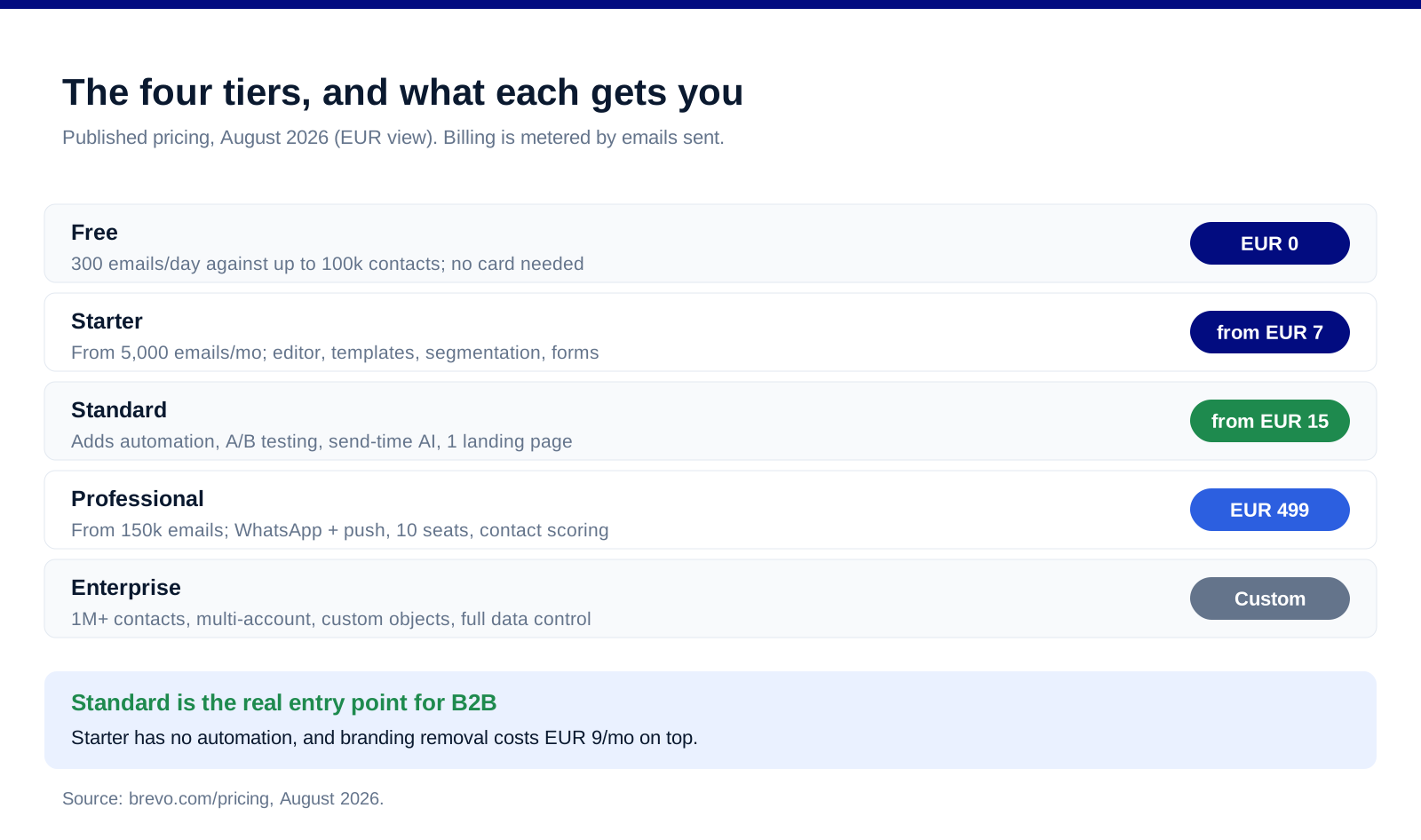
Free: 300 emails a day, up to 100k contacts. The most generous free tier in mainstream email marketing on the contact axis, and one of the tightest on the send axis. Storing a big list costs nothing; mailing it does. Fine for transactional trickle and testing, useless for a weekly newsletter of any size.
Starter: from €7/month at 5,000 emails. Email and SMS sending (SMS credits billed separately), drag-and-drop editor, templates, an AI content generator, advanced segmentation, forms, and basic reporting. The catch is what is missing: no automation, and Brevo's footer branding stays unless you add the €9/month removal. At that point you are at €16 for a plan without automation, which is why Standard usually wins.
Standard: from €15/month. Everything in Starter plus marketing automation with unlimited multi-step workflows, A/B testing, advanced reporting with click heatmaps and geography, AI send-time optimization, web and event tracking, one landing page, and branding removal included. This is the practical entry point for a B2B team running lifecycle email.
Professional: €499/month from 150,000 emails. WhatsApp, popups, and mobile/web push as additional channels, 10 seats, contact scoring (RFM, CLV), advanced ecommerce features, AI segmentation and an AI data analyst, phone support, and three hours a year of deliverability-specialist time.
Enterprise: custom, for 1M+ contacts. Multi-account management, custom objects, and full data control.
What the volume model does to your bill
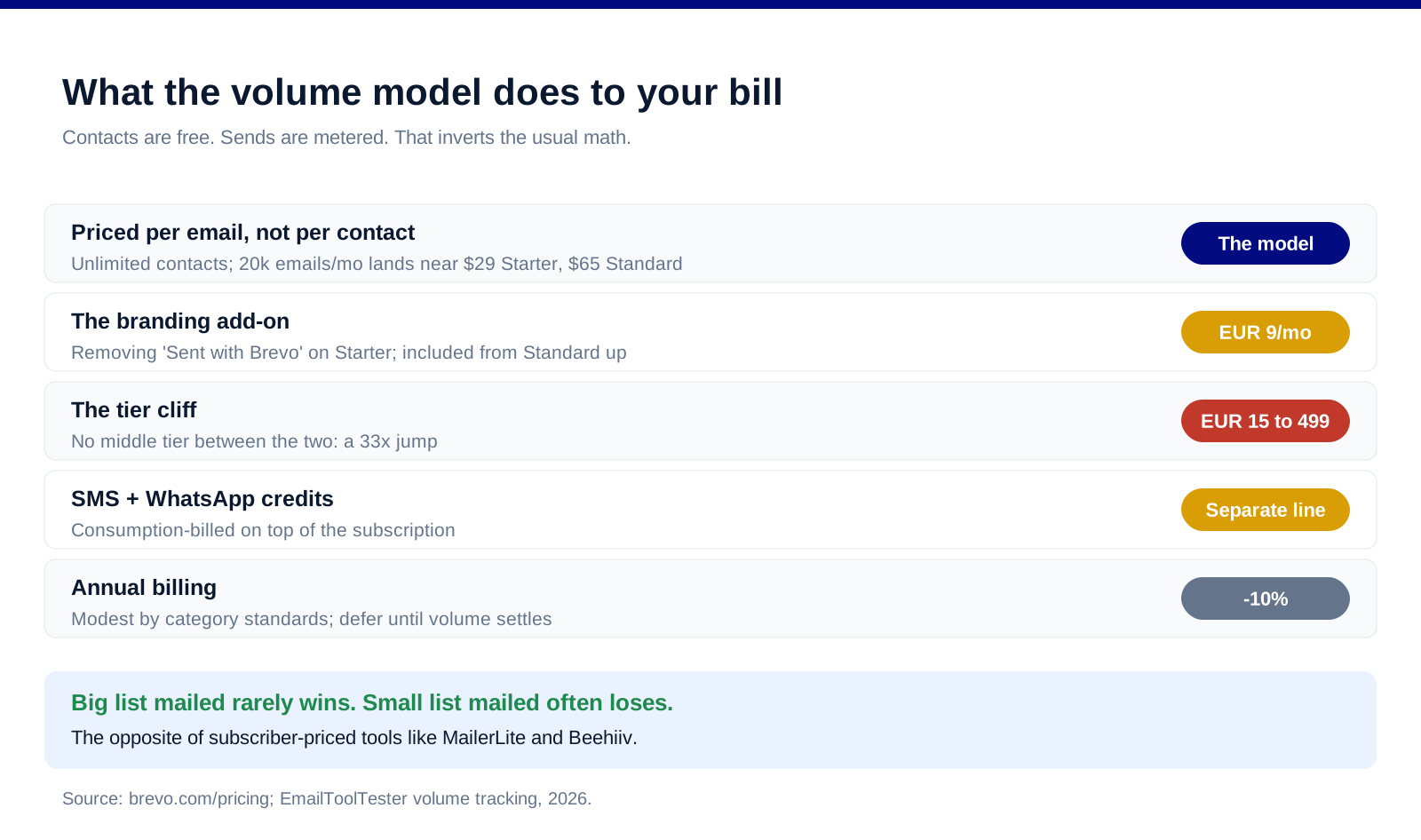
Contacts are free, sends are metered. Independent tracking by EmailToolTester puts 20,000 emails a month at roughly $29 on Starter and $65 on Standard, against unlimited contacts. Compare that to subscriber-priced tools, where a 20,000-name list costs money whether you mail it or not, and the fit becomes obvious: Brevo rewards big lists mailed selectively and punishes small lists mailed daily.
The branding add-on is the Starter tax. €9/month to remove "Sent with Brevo" is trivial in isolation and distorting in context: it more than doubles the entry price of the cheapest plan. Standard includes it, which is the cleanest argument for skipping Starter entirely.
The €15 to €499 cliff is the real planning problem. There is no middle tier. A team outgrowing Standard's channel set or seat allowance faces a 33x jump, so the honest question at renewal is whether you need WhatsApp, push, contact scoring, and 10 seats enough to justify Professional, or whether a second tool is cheaper.
SMS and WhatsApp credits sit outside the plan. Both are consumption-billed on top of the subscription, so multichannel budgets need a separate line.
Annual billing saves 10%, which is modest by category standards and worth deferring until volume stabilizes. Prices display in your local currency; the figures here are the EUR view of the pricing page.
Who should pick Brevo
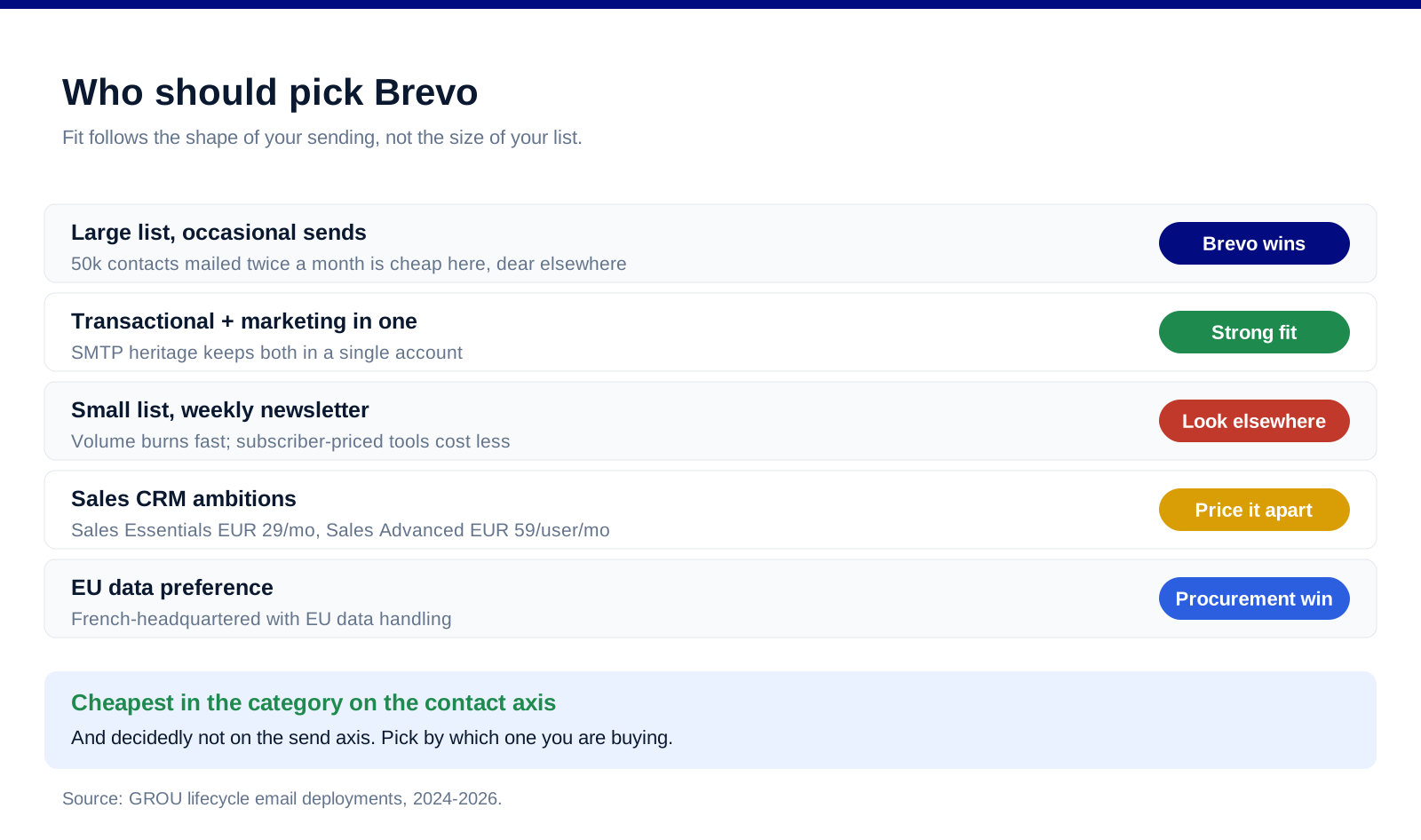
Large list, occasional sends: Brevo wins outright. A 50,000-contact database mailed twice a month is roughly 100k sends, which is cheap here and expensive almost everywhere else. This is the strongest case in the category.
Transactional plus marketing in one account: Brevo's SMTP heritage means transactional and campaign sending live together, which suits product-led B2B companies that would otherwise run two vendors.
Small list, weekly newsletter: look elsewhere. A 2,000-subscriber weekly send burns volume fast, and subscriber-priced tools cost less at that shape. Our MailerLite pricing breakdown covers that end.
Sales CRM ambitions: read the add-on line first. Sales Essentials at €29/month and Sales Advanced at €59/month per user are separate purchases, and at per-user pricing a dedicated CRM usually wins. Our CRM comparison covers the alternatives.
EU data preference: Brevo is French-headquartered with EU data handling, which shortens procurement conversations for European teams in a way US-headquartered competitors often cannot.
FAQ
How much does Brevo cost in 2026?
Free covers 300 emails a day against up to 100k contacts. Starter opens at €7/month for 5,000 emails, Standard at €15/month with automation included, and Professional at €499/month from 150,000 emails. Enterprise is custom-priced for 1M+ contacts, and annual billing saves 10%.
Does Brevo charge per contact or per email?
Per email sent, with contacts effectively unlimited. That is the defining difference from MailerLite, Beehiiv, and most of the category, and it makes Brevo cheapest for large lists mailed occasionally rather than small lists mailed often.
Is Brevo's free plan actually usable?
For storing a list and sending small volumes, yes: 100k contacts and 300 emails a day is genuinely generous on the contact side. For any regular newsletter it is not, because a single send to a few thousand people exhausts several days of allowance.
What is the Brevo branding add-on?
€9/month to remove the "Sent with Brevo" footer, required on Starter and included from Standard up. Because it nearly doubles Starter's entry price, most teams are better off starting on Standard, which also brings automation.
Why is there such a gap between Standard and Professional?
Brevo has no middle tier: Standard is €15/month and Professional is €499/month. The jump buys WhatsApp and push channels, 10 seats, contact scoring, AI segmentation, and phone support. If you only need one of those, pricing a second specialist tool is usually cheaper than the upgrade.
Is Brevo good for B2B email marketing?
For lifecycle email against a large database, yes, particularly if transactional and marketing sending share an account. Teams needing deep CRM-native attribution, heavy per-seat sales workflows, or newsletter growth mechanics will find it thinner than specialists in each of those areas.
Bottom line
Brevo pricing rewards one shape of email program: a big list mailed with restraint. Start on Standard rather than Starter, because automation plus branding removal is worth the €8 gap, budget SMS and WhatsApp separately, and plan the Professional decision deliberately, since there is no gentle step between €15 and €499. On the contact axis it is the cheapest credible option in the category; on the send axis, it is not.
Want the email stack chosen and the lifecycle flows built against your actual pipeline? Book a call with GROU. We run email and newsletter programs inside B2B revenue engines across verticals.
We are GROU, a B2B pipeline agency that runs lead generation, outbound, and LinkedIn content for clients across manufacturing, fintech, iGaming, software, and professional services. The plan guidance reflects our lifecycle email deployments between 2024 and 2026, anonymized to protect client confidentiality.
Some links in this article are affiliate. We may earn a small commission at no extra cost to you. We only recommend tools we've deployed for clients.
Brevo prices on a different axis than almost every competitor: you pay for emails sent, not contacts stored. That single choice makes it the cheapest credible platform for large lists that get mailed occasionally, and a poor fit for small lists that get mailed constantly. This breakdown covers the four tiers, what the volume-based model does to your bill as you scale, the add-ons that catch people out, and who should actually pick it.
The subscriber-priced alternatives are covered in our MailerLite pricing breakdown; the wider field is ranked in top B2B email marketing tools.
TL;DR
Four tiers plus a free plan, all metered by monthly email volume with contacts effectively unlimited. Free covers 300 emails a day against a list of up to 100k contacts. Starter opens at €7/month for 5,000 emails and rises with volume (roughly $29 at 20k emails), but leaves the "Sent with Brevo" footer in place unless you pay a €9/month add-on. Standard opens at €15/month, adds marketing automation, A/B testing, send-time optimization, landing pages, and includes branding removal, which makes it the real starting tier for most B2B teams. Then the cliff: Professional jumps to €499/month for 150,000 emails, WhatsApp and push channels, 10 seats, and contact scoring, with nothing in between. Enterprise is custom for 1M+ contacts. Annual billing saves 10%, per Brevo's published pricing.
The four tiers, and what each actually gets you
Free: 300 emails a day, up to 100k contacts. The most generous free tier in mainstream email marketing on the contact axis, and one of the tightest on the send axis. Storing a big list costs nothing; mailing it does. Fine for transactional trickle and testing, useless for a weekly newsletter of any size.
Starter: from €7/month at 5,000 emails. Email and SMS sending (SMS credits billed separately), drag-and-drop editor, templates, an AI content generator, advanced segmentation, forms, and basic reporting. The catch is what is missing: no automation, and Brevo's footer branding stays unless you add the €9/month removal. At that point you are at €16 for a plan without automation, which is why Standard usually wins.
Standard: from €15/month. Everything in Starter plus marketing automation with unlimited multi-step workflows, A/B testing, advanced reporting with click heatmaps and geography, AI send-time optimization, web and event tracking, one landing page, and branding removal included. This is the practical entry point for a B2B team running lifecycle email.
Professional: €499/month from 150,000 emails. WhatsApp, popups, and mobile/web push as additional channels, 10 seats, contact scoring (RFM, CLV), advanced ecommerce features, AI segmentation and an AI data analyst, phone support, and three hours a year of deliverability-specialist time.
Enterprise: custom, for 1M+ contacts. Multi-account management, custom objects, and full data control.
What the volume model does to your bill
Contacts are free, sends are metered. Independent tracking by EmailToolTester puts 20,000 emails a month at roughly $29 on Starter and $65 on Standard, against unlimited contacts. Compare that to subscriber-priced tools, where a 20,000-name list costs money whether you mail it or not, and the fit becomes obvious: Brevo rewards big lists mailed selectively and punishes small lists mailed daily.
The branding add-on is the Starter tax. €9/month to remove "Sent with Brevo" is trivial in isolation and distorting in context: it more than doubles the entry price of the cheapest plan. Standard includes it, which is the cleanest argument for skipping Starter entirely.
The €15 to €499 cliff is the real planning problem. There is no middle tier. A team outgrowing Standard's channel set or seat allowance faces a 33x jump, so the honest question at renewal is whether you need WhatsApp, push, contact scoring, and 10 seats enough to justify Professional, or whether a second tool is cheaper.
SMS and WhatsApp credits sit outside the plan. Both are consumption-billed on top of the subscription, so multichannel budgets need a separate line.
Annual billing saves 10%, which is modest by category standards and worth deferring until volume stabilizes. Prices display in your local currency; the figures here are the EUR view of the pricing page.
Who should pick Brevo
Large list, occasional sends: Brevo wins outright. A 50,000-contact database mailed twice a month is roughly 100k sends, which is cheap here and expensive almost everywhere else. This is the strongest case in the category.
Transactional plus marketing in one account: Brevo's SMTP heritage means transactional and campaign sending live together, which suits product-led B2B companies that would otherwise run two vendors.
Small list, weekly newsletter: look elsewhere. A 2,000-subscriber weekly send burns volume fast, and subscriber-priced tools cost less at that shape. Our MailerLite pricing breakdown covers that end.
Sales CRM ambitions: read the add-on line first. Sales Essentials at €29/month and Sales Advanced at €59/month per user are separate purchases, and at per-user pricing a dedicated CRM usually wins. Our CRM comparison covers the alternatives.
EU data preference: Brevo is French-headquartered with EU data handling, which shortens procurement conversations for European teams in a way US-headquartered competitors often cannot.
FAQ
How much does Brevo cost in 2026?
Free covers 300 emails a day against up to 100k contacts. Starter opens at €7/month for 5,000 emails, Standard at €15/month with automation included, and Professional at €499/month from 150,000 emails. Enterprise is custom-priced for 1M+ contacts, and annual billing saves 10%.
Does Brevo charge per contact or per email?
Per email sent, with contacts effectively unlimited. That is the defining difference from MailerLite, Beehiiv, and most of the category, and it makes Brevo cheapest for large lists mailed occasionally rather than small lists mailed often.
Is Brevo's free plan actually usable?
For storing a list and sending small volumes, yes: 100k contacts and 300 emails a day is genuinely generous on the contact side. For any regular newsletter it is not, because a single send to a few thousand people exhausts several days of allowance.
What is the Brevo branding add-on?
€9/month to remove the "Sent with Brevo" footer, required on Starter and included from Standard up. Because it nearly doubles Starter's entry price, most teams are better off starting on Standard, which also brings automation.
Why is there such a gap between Standard and Professional?
Brevo has no middle tier: Standard is €15/month and Professional is €499/month. The jump buys WhatsApp and push channels, 10 seats, contact scoring, AI segmentation, and phone support. If you only need one of those, pricing a second specialist tool is usually cheaper than the upgrade.
Is Brevo good for B2B email marketing?
For lifecycle email against a large database, yes, particularly if transactional and marketing sending share an account. Teams needing deep CRM-native attribution, heavy per-seat sales workflows, or newsletter growth mechanics will find it thinner than specialists in each of those areas.
Bottom line
Brevo pricing rewards one shape of email program: a big list mailed with restraint. Start on Standard rather than Starter, because automation plus branding removal is worth the €8 gap, budget SMS and WhatsApp separately, and plan the Professional decision deliberately, since there is no gentle step between €15 and €499. On the contact axis it is the cheapest credible option in the category; on the send axis, it is not.
Want the email stack chosen and the lifecycle flows built against your actual pipeline? Book a call with GROU. We run email and newsletter programs inside B2B revenue engines across verticals.
We are GROU, a B2B pipeline agency that runs lead generation, outbound, and LinkedIn content for clients across manufacturing, fintech, iGaming, software, and professional services. The plan guidance reflects our lifecycle email deployments between 2024 and 2026, anonymized to protect client confidentiality.
Some links in this article are affiliate. We may earn a small commission at no extra cost to you. We only recommend tools we've deployed for clients.
Brevo prices on a different axis than almost every competitor: you pay for emails sent, not contacts stored. That single choice makes it the cheapest credible platform for large lists that get mailed occasionally, and a poor fit for small lists that get mailed constantly. This breakdown covers the four tiers, what the volume-based model does to your bill as you scale, the add-ons that catch people out, and who should actually pick it.
The subscriber-priced alternatives are covered in our MailerLite pricing breakdown; the wider field is ranked in top B2B email marketing tools.
TL;DR
Four tiers plus a free plan, all metered by monthly email volume with contacts effectively unlimited. Free covers 300 emails a day against a list of up to 100k contacts. Starter opens at €7/month for 5,000 emails and rises with volume (roughly $29 at 20k emails), but leaves the "Sent with Brevo" footer in place unless you pay a €9/month add-on. Standard opens at €15/month, adds marketing automation, A/B testing, send-time optimization, landing pages, and includes branding removal, which makes it the real starting tier for most B2B teams. Then the cliff: Professional jumps to €499/month for 150,000 emails, WhatsApp and push channels, 10 seats, and contact scoring, with nothing in between. Enterprise is custom for 1M+ contacts. Annual billing saves 10%, per Brevo's published pricing.
The four tiers, and what each actually gets you
Free: 300 emails a day, up to 100k contacts. The most generous free tier in mainstream email marketing on the contact axis, and one of the tightest on the send axis. Storing a big list costs nothing; mailing it does. Fine for transactional trickle and testing, useless for a weekly newsletter of any size.
Starter: from €7/month at 5,000 emails. Email and SMS sending (SMS credits billed separately), drag-and-drop editor, templates, an AI content generator, advanced segmentation, forms, and basic reporting. The catch is what is missing: no automation, and Brevo's footer branding stays unless you add the €9/month removal. At that point you are at €16 for a plan without automation, which is why Standard usually wins.
Standard: from €15/month. Everything in Starter plus marketing automation with unlimited multi-step workflows, A/B testing, advanced reporting with click heatmaps and geography, AI send-time optimization, web and event tracking, one landing page, and branding removal included. This is the practical entry point for a B2B team running lifecycle email.
Professional: €499/month from 150,000 emails. WhatsApp, popups, and mobile/web push as additional channels, 10 seats, contact scoring (RFM, CLV), advanced ecommerce features, AI segmentation and an AI data analyst, phone support, and three hours a year of deliverability-specialist time.
Enterprise: custom, for 1M+ contacts. Multi-account management, custom objects, and full data control.
What the volume model does to your bill
Contacts are free, sends are metered. Independent tracking by EmailToolTester puts 20,000 emails a month at roughly $29 on Starter and $65 on Standard, against unlimited contacts. Compare that to subscriber-priced tools, where a 20,000-name list costs money whether you mail it or not, and the fit becomes obvious: Brevo rewards big lists mailed selectively and punishes small lists mailed daily.
The branding add-on is the Starter tax. €9/month to remove "Sent with Brevo" is trivial in isolation and distorting in context: it more than doubles the entry price of the cheapest plan. Standard includes it, which is the cleanest argument for skipping Starter entirely.
The €15 to €499 cliff is the real planning problem. There is no middle tier. A team outgrowing Standard's channel set or seat allowance faces a 33x jump, so the honest question at renewal is whether you need WhatsApp, push, contact scoring, and 10 seats enough to justify Professional, or whether a second tool is cheaper.
SMS and WhatsApp credits sit outside the plan. Both are consumption-billed on top of the subscription, so multichannel budgets need a separate line.
Annual billing saves 10%, which is modest by category standards and worth deferring until volume stabilizes. Prices display in your local currency; the figures here are the EUR view of the pricing page.
Who should pick Brevo
Large list, occasional sends: Brevo wins outright. A 50,000-contact database mailed twice a month is roughly 100k sends, which is cheap here and expensive almost everywhere else. This is the strongest case in the category.
Transactional plus marketing in one account: Brevo's SMTP heritage means transactional and campaign sending live together, which suits product-led B2B companies that would otherwise run two vendors.
Small list, weekly newsletter: look elsewhere. A 2,000-subscriber weekly send burns volume fast, and subscriber-priced tools cost less at that shape. Our MailerLite pricing breakdown covers that end.
Sales CRM ambitions: read the add-on line first. Sales Essentials at €29/month and Sales Advanced at €59/month per user are separate purchases, and at per-user pricing a dedicated CRM usually wins. Our CRM comparison covers the alternatives.
EU data preference: Brevo is French-headquartered with EU data handling, which shortens procurement conversations for European teams in a way US-headquartered competitors often cannot.
FAQ
How much does Brevo cost in 2026?
Free covers 300 emails a day against up to 100k contacts. Starter opens at €7/month for 5,000 emails, Standard at €15/month with automation included, and Professional at €499/month from 150,000 emails. Enterprise is custom-priced for 1M+ contacts, and annual billing saves 10%.
Does Brevo charge per contact or per email?
Per email sent, with contacts effectively unlimited. That is the defining difference from MailerLite, Beehiiv, and most of the category, and it makes Brevo cheapest for large lists mailed occasionally rather than small lists mailed often.
Is Brevo's free plan actually usable?
For storing a list and sending small volumes, yes: 100k contacts and 300 emails a day is genuinely generous on the contact side. For any regular newsletter it is not, because a single send to a few thousand people exhausts several days of allowance.
What is the Brevo branding add-on?
€9/month to remove the "Sent with Brevo" footer, required on Starter and included from Standard up. Because it nearly doubles Starter's entry price, most teams are better off starting on Standard, which also brings automation.
Why is there such a gap between Standard and Professional?
Brevo has no middle tier: Standard is €15/month and Professional is €499/month. The jump buys WhatsApp and push channels, 10 seats, contact scoring, AI segmentation, and phone support. If you only need one of those, pricing a second specialist tool is usually cheaper than the upgrade.
Is Brevo good for B2B email marketing?
For lifecycle email against a large database, yes, particularly if transactional and marketing sending share an account. Teams needing deep CRM-native attribution, heavy per-seat sales workflows, or newsletter growth mechanics will find it thinner than specialists in each of those areas.
Bottom line
Brevo pricing rewards one shape of email program: a big list mailed with restraint. Start on Standard rather than Starter, because automation plus branding removal is worth the €8 gap, budget SMS and WhatsApp separately, and plan the Professional decision deliberately, since there is no gentle step between €15 and €499. On the contact axis it is the cheapest credible option in the category; on the send axis, it is not.
Want the email stack chosen and the lifecycle flows built against your actual pipeline? Book a call with GROU. We run email and newsletter programs inside B2B revenue engines across verticals.
We are GROU, a B2B pipeline agency that runs lead generation, outbound, and LinkedIn content for clients across manufacturing, fintech, iGaming, software, and professional services. The plan guidance reflects our lifecycle email deployments between 2024 and 2026, anonymized to protect client confidentiality.
Some links in this article are affiliate. We may earn a small commission at no extra cost to you. We only recommend tools we've deployed for clients.

Pipeline OS Newsletter
Build qualified pipeline
Get weekly tactics to generate demand, improve lead quality, and book more meetings.







Trusted by industry leaders
Trusted by industry leaders
Trusted by industry leaders
Ready to build qualified pipeline?
Ready to build qualified pipeline?
Ready to build qualified pipeline?
Book a call to see if we're the right fit, or take the 2-minute quiz to get a clear starting point.
Book a call to see if we're the right fit, or take the 2-minute quiz to get a clear starting point.
Book a call to see if we're the right fit, or take the 2-minute quiz to get a clear starting point.
" height="30.21639343089746px" id="hfGbXmQR2" width="30.216393430897455px"/></svg>)
Copyright © 2026 – All Right Reserved
Copyright © 2026 – All Right Reserved
Copyright © 2026 – All Right Reserved