%22%3E%3C/path%3E%3Cpath d=%22M 63.072 7.554 C 62.258 8.022 61.577 8.689 61.092 9.493 L 61.092 7.076 L 57.158 7.076 L 57.158 22.64 L 61.089 22.64 L 61.089 14.888 C 61.089 13.446 61.403 12.434 62.03 11.853 C 62.818 11.218 63.818 10.907 64.826 10.982 L 65.868 10.982 L 65.868 6.851 C 64.891 6.834 63.926 7.076 63.073 7.554 Z%22 fill=%22rgb(17,17,17)%22%3E%3C/path%3E%3Cpath d=%22M 78.916 7.82 C 76.363 6.49 73.321 6.49 70.768 7.82 C 69.562 8.473 68.564 9.451 67.888 10.644 C 67.167 11.931 66.803 13.387 66.834 14.862 C 66.804 16.332 67.157 17.785 67.86 19.077 C 68.515 20.267 69.494 21.246 70.684 21.901 C 71.924 22.576 73.318 22.92 74.73 22.898 C 76.164 22.918 77.58 22.575 78.846 21.901 C 80.062 21.247 81.073 20.27 81.768 19.077 C 82.506 17.797 82.88 16.339 82.85 14.862 C 82.88 13.389 82.517 11.934 81.797 10.647 C 81.12 9.455 80.122 8.477 78.917 7.824 M 78.803 14.862 C 78.829 15.739 78.636 16.608 78.241 17.391 C 77.903 18.046 77.38 18.588 76.738 18.95 C 76.124 19.293 75.432 19.472 74.729 19.47 C 73.668 19.497 72.648 19.061 71.934 18.276 C 71.139 17.323 70.741 16.1 70.823 14.862 C 70.741 13.62 71.149 12.395 71.959 11.45 C 72.687 10.667 73.715 10.233 74.783 10.256 C 75.859 10.236 76.894 10.67 77.635 11.45 C 78.464 12.387 78.884 13.616 78.801 14.864%22 fill=%22rgb(17,17,17)%22%3E%3C/path%3E%3Cpath d=%22M 95.906 7.076 L 95.906 15.646 C 95.975 16.68 95.643 17.701 94.979 18.498 C 94.311 19.184 93.379 19.547 92.422 19.495 C 91.475 19.544 90.553 19.18 89.894 18.498 C 89.23 17.701 88.898 16.68 88.967 15.646 L 88.967 7.076 L 85.033 7.076 L 85.033 16.207 C 85 17.449 85.275 18.68 85.834 19.79 C 86.327 20.75 87.095 21.542 88.039 22.065 C 89.033 22.594 90.145 22.861 91.271 22.838 C 92.188 22.847 93.095 22.65 93.926 22.263 C 94.708 21.905 95.388 21.36 95.906 20.675 L 95.906 22.645 L 99.865 22.645 L 99.865 7.076 Z%22 fill=%22rgb(17,17,17)%22%3E%3C/path%3E%3Cpath d=%22M 4.513 15.626 C 4.511 10.815 7.606 6.549 12.181 5.059 C 16.756 3.57 21.77 5.195 24.601 9.086 L 27.816 5.87 C 24.074 1.186 17.981 -0.943 12.137 0.393 C 6.292 1.728 1.728 6.292 0.393 12.137 C -0.943 17.981 1.186 24.074 5.87 27.816 L 9.085 24.601 C 6.214 22.512 4.515 19.177 4.513 15.626%22 fill=%22rgb(32,62,235)%22%3E%3C/path%3E%3Cpath d=%22M 17.114 14.343 L 13.354 18.01 L 13.354 18.026 L 21.071 18.026 L 11.412 27.609 L 17.389 27.609 L 23.999 21.081 L 23.999 28.316 L 24.005 28.316 L 27.967 24.393 L 27.967 14.343 Z%22 fill=%22rgb(32,62,235)%22%3E%3C/path%3E%3C/g%3E%3C/svg%3E) ×
× ××
××›
›
›
›
HubSpot vs Pipedrive 2026: pricing, features, and the right pick for B2B teams
HubSpot vs Pipedrive 2026: pricing, features, and the right pick for B2B teams
HubSpot vs Pipedrive 2026: pricing, features, and the right pick for B2B teams
HubSpot vs Pipedrive 2026: pricing, features, and the right pick for B2B teams
HubSpot vs Pipedrive 2026: pricing, features, and the right pick for B2B teams
HubSpot vs Pipedrive 2026: pricing, features, and the right pick for B2B teams

Author
Aljaz Peklaj

HubSpot vs Pipedrive in 2026 is one of the most common B2B CRM decisions, and it usually gets made on price comparison alone. The real question is whether your team needs Marketing Hub. If yes, HubSpot at 3x the cost is justified. If no, Pipedrive saves $7,000-$65,000 per year depending on team size.
After deploying both across 11 GROU client accounts, this is the operator breakdown: head-to-head pricing, real annual cost by team size, and the 8 feature dimensions where each CRM wins or loses.
TL;DR
Pipedrive Advanced at $29/seat does 90% of what HubSpot Sales Hub Pro at $90/seat does. The 3x price gap is justified only when you need Marketing Hub, full-funnel attribution, or the integration with HubSpot's Service Hub.
Median 10-seat team running B2B SaaS at sub-$50k ACV saves $7,520/yr by picking Pipedrive over HubSpot. 50-seat team saves $65,000/yr. Above $50k ACV with marketing-led demand generation, HubSpot's full-stack integration earns its premium.
Side-by-side pricing comparison
The first lens is published pricing. Both CRMs publish pricing tables. Reality is more complex than the tables show.
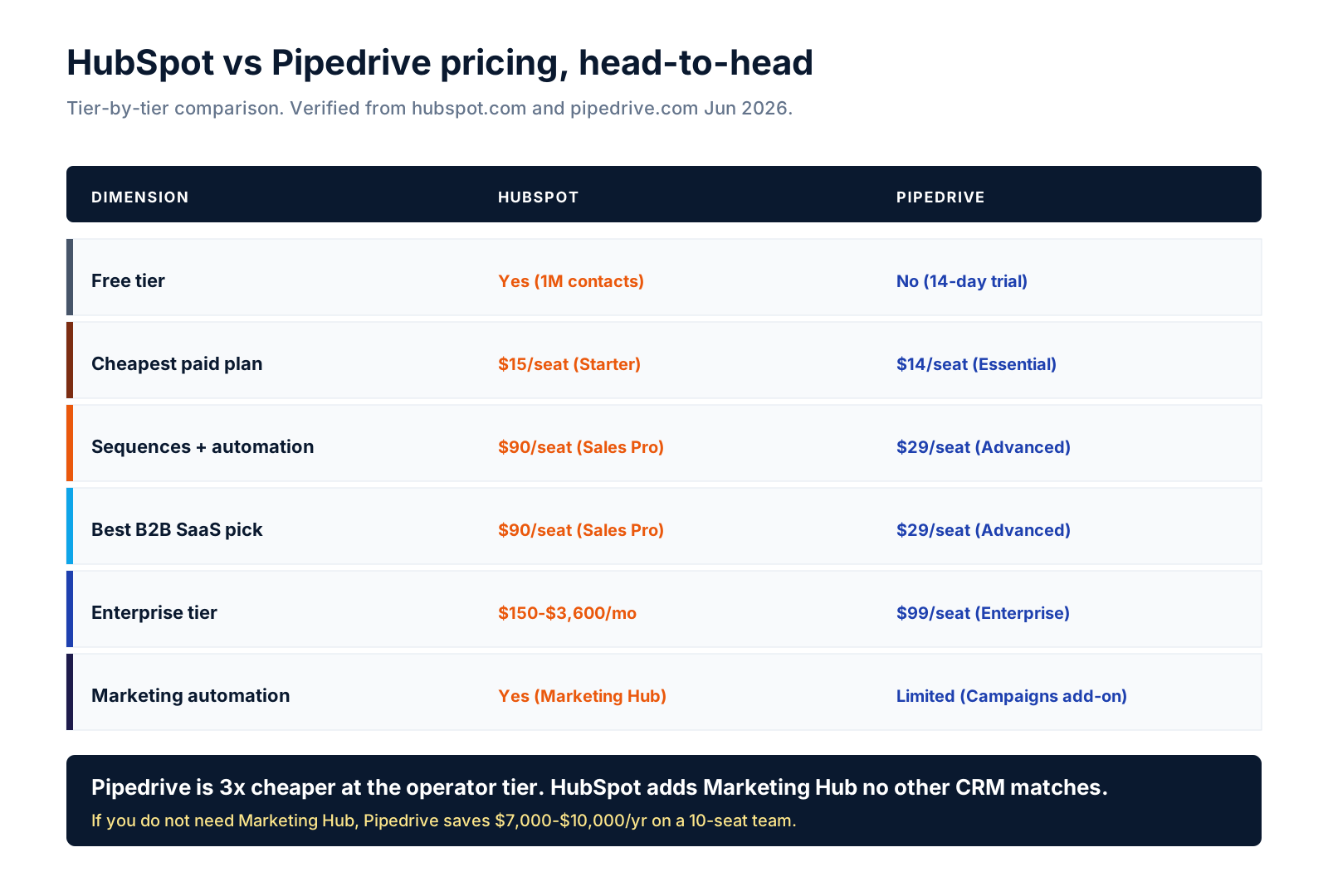
Free tier: HubSpot offers a genuinely free CRM with 1 million contacts. Pipedrive does not. If you need to validate a workflow before paying, HubSpot Free works. Most B2B teams outgrow it within 60-90 days when they need email sequences or automation.
Cheapest paid plan: HubSpot Starter at $15/seat, Pipedrive Essential at $14/seat. Nearly identical at the entry level, but Pipedrive Essential lacks workflow automation and HubSpot Starter lacks meaningful Marketing Hub features. Both are starter-only.
Sequences and automation tier: HubSpot Sales Hub Pro at $90/seat, Pipedrive Advanced at $29/seat. The 3x cost gap shows up here. Both unlock multi-step sequences, workflow automation, and reporting. Feature parity is roughly 85-90%.
Best B2B SaaS pick: Same as above. HubSpot Sales Hub Pro at $90/seat is the recommended tier for 10+ seat B2B SaaS teams. Pipedrive Advanced at $29/seat is the equivalent recommendation. Sequence quality is roughly tied. Reporting depth goes to HubSpot.
Enterprise tier: HubSpot Sales Hub Enterprise at $150/seat, Marketing Hub Enterprise at $3,600/mo flat. Pipedrive Enterprise at $99/seat. HubSpot's enterprise pricing is bundle-based, which can save money if you need 3+ Hubs.
Marketing automation: HubSpot Marketing Hub is the differentiator. Pipedrive Campaigns ($13/co/mo) is basic email marketing only. If you need landing pages, lead scoring, marketing attribution, or multi-channel campaigns, HubSpot wins outright.
Real annual cost by team size
Published pricing is one number. Real annual cost is another. The chart below shows what 11 GROU client teams actually pay annualized at 3-50 seats.
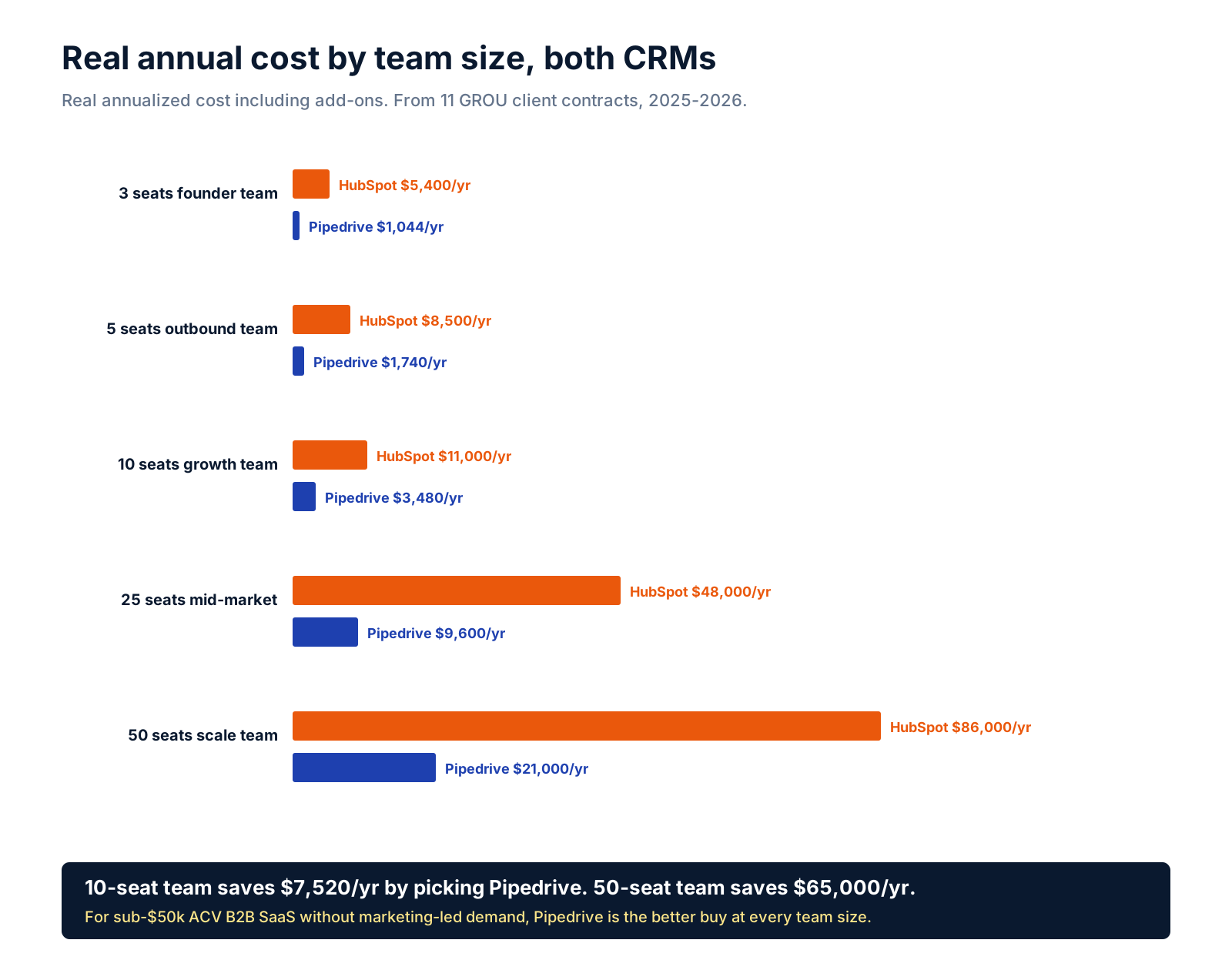
The 3-seat founder team running HubSpot Sales Hub Pro lands at $5,400/yr. Same setup on Pipedrive Advanced is $1,044/yr. Already a 5x gap at the smallest team size.
By 10 seats, the gap stabilizes at roughly 3x. HubSpot at $11,000/yr versus Pipedrive at $3,480/yr including add-ons. This is the band most B2B SaaS teams operate in.
At 50 seats, the gap widens again because HubSpot's contact-tier pricing kicks in on Marketing Hub. HubSpot at $86,000/yr versus Pipedrive at $21,000/yr. The $65,000/yr savings is meaningful even if 80% of HubSpot's value is in Marketing Hub.
The pattern: Pipedrive's cost advantage scales linearly with team size. HubSpot's cost premium scales superlinearly because contact tiers, Marketing Hub limits, and enterprise add-ons compound. See our HubSpot pricing breakdown for the full real-cost math, and Pipedrive pricing breakdown for the equivalent on the Pipedrive side.
Feature winners across 8 dimensions
Cost is only half the decision. The other half is which CRM actually wins on the features that matter for your motion.
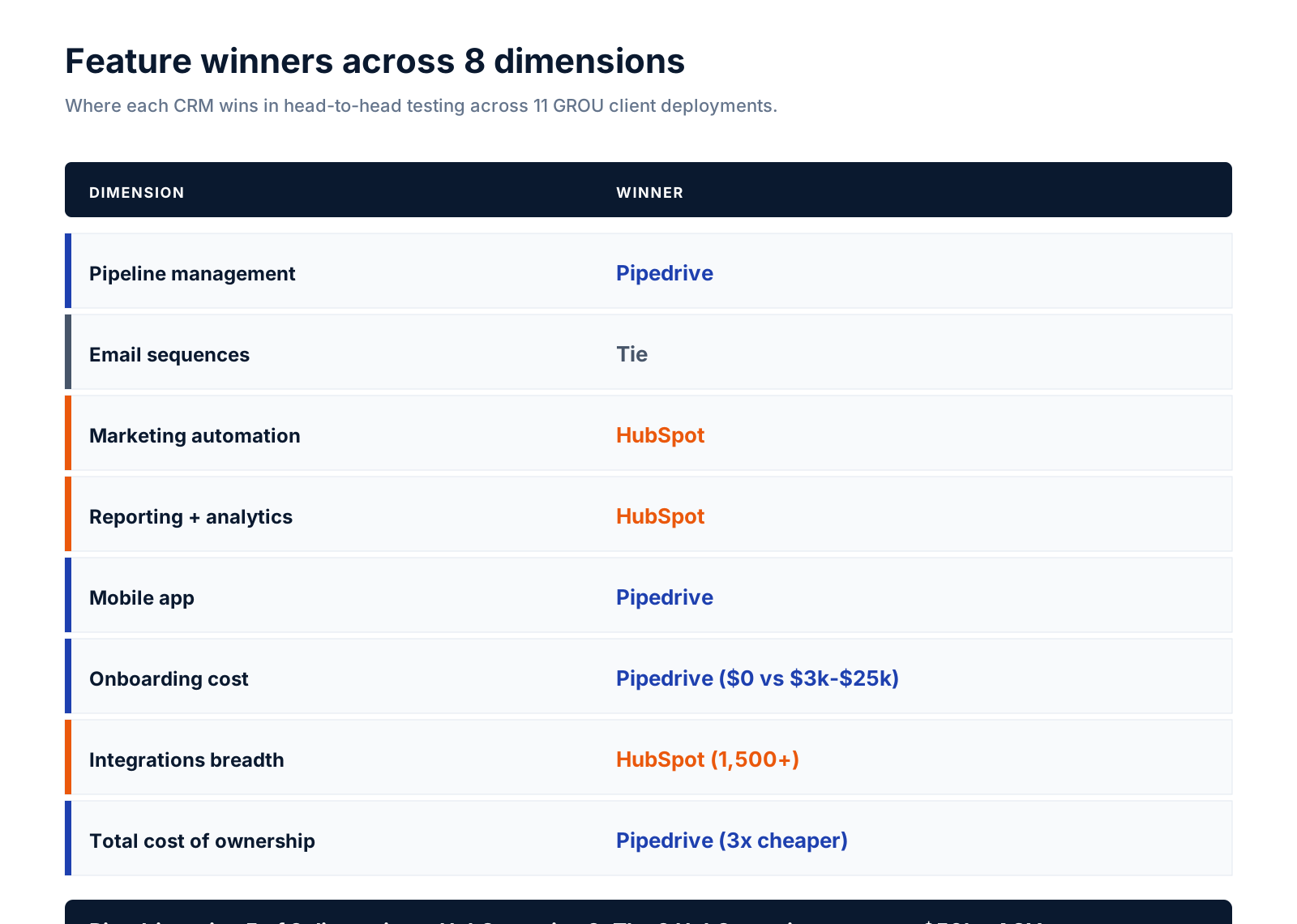
Pipeline management goes to Pipedrive. The opinionated stage-based workflow makes deal management faster than HubSpot's more flexible (but slower) Deal Board. Pipedrive's drag-and-drop UX is genuinely faster.
Email sequences are tied. Both support multi-step cadences with branching logic. HubSpot's editor has slightly more polish; Pipedrive's editor has slightly faster setup. For 90% of B2B teams, the difference does not matter.
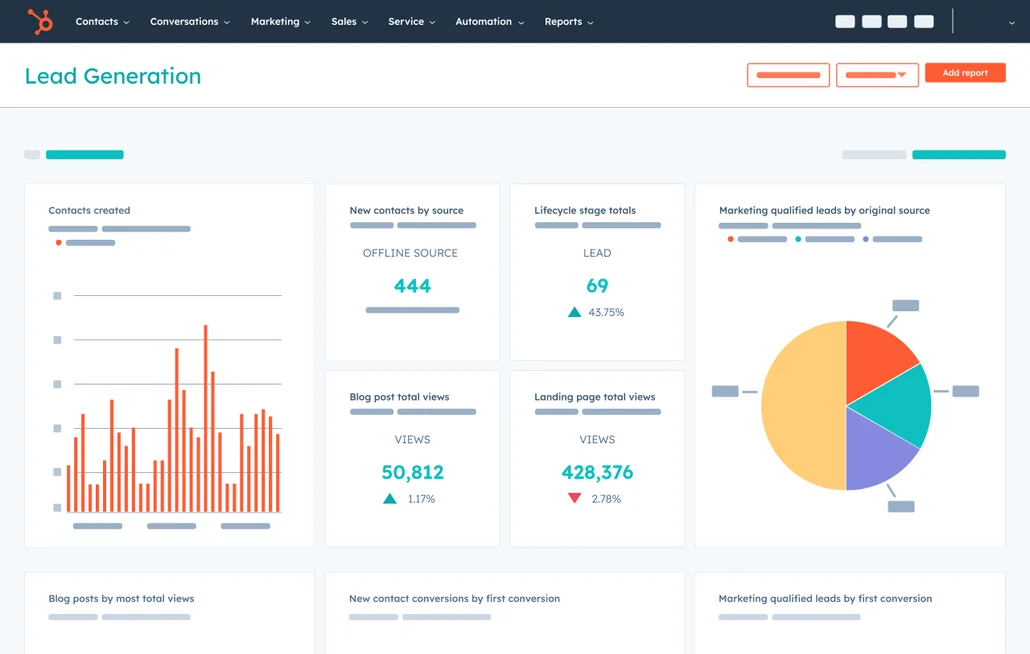
Marketing automation goes to HubSpot. Marketing Hub is the entire reason HubSpot exists. Landing pages, forms, lead scoring, attribution, multi-channel campaigns all live here. Pipedrive Campaigns is basic email marketing. Not a fair fight.
Reporting and analytics goes to HubSpot. Better dashboards, custom reporting on Sales Hub Pro and above, and tighter integration between pipeline data and marketing attribution. Pipedrive's reporting has improved but still trails.
Mobile app goes to Pipedrive. Pipedrive's mobile app is the best in the B2B CRM market. HubSpot's mobile app has improved but still feels like a desktop afterthought.
Onboarding cost goes to Pipedrive. Pipedrive is self-serve from $14 to $99/seat with no required onboarding. HubSpot Pro and Enterprise tiers require onboarding services ($3k-$25k). This is a hidden $10-$15k advantage for Pipedrive at deployment time.
Integrations breadth goes to HubSpot. 1,500+ native integrations versus Pipedrive's roughly 400. For B2B SaaS teams using 8+ tools, HubSpot's integration depth is genuinely useful.
Total cost of ownership goes to Pipedrive. 3x cheaper at the operator tier, 5x cheaper at the founder tier. No onboarding cost. No contact ratchet. This is the dimension that decides the comparison for most B2B teams.
Pipedrive wins 5 of 8. HubSpot wins 3 of 8. But the 3 HubSpot wins (Marketing Hub, reporting, integrations) matter at $50k+ ACV with marketing-led demand. Below that ACV threshold, Pipedrive's 5 wins are decisive.
When HubSpot is the right buy
Match 3 of these 4 criteria and HubSpot earns the premium: ACV is over $50k, marketing-led demand drives 30%+ of pipeline, team is over 25 reps, and the stack needs CRM + Marketing + Service Hub integration.
The marketing-sales integration is HubSpot's real product. Pipeline reporting that connects MQL to closed-won inside one platform, attribution that survives marketing-to-sales handoff, and a shared contact database that does not require integration glue. That stack is worth $86,000/yr at mid-market scale.
When Pipedrive is the right buy
Match 3 of these 4 criteria and Pipedrive wins: ACV is under $50k, sales motion is outbound or product-led (not marketing-led), team is under 25 reps, and you do not need Marketing Hub or Service Hub.
For most B2B SaaS founders and growth teams, this profile fits. The 3x cost savings is real, the feature gap is acceptable, and the time-to-value is faster because there is no required onboarding.
When to use Close instead of either
A third option for call-heavy outbound teams is Close at $99/seat. Close beats both HubSpot and Pipedrive on the dialer dimension because it is built into the platform spine. For teams making 50+ calls per rep per day, Close is the right buy even at 3.4x Pipedrive's cost. See our Close CRM pricing breakdown for the math on when Close beats both.
FAQ
Is HubSpot or Pipedrive better for B2B SaaS?
It depends on ACV and demand model. Above $50k ACV with marketing-led demand: HubSpot. Below $50k ACV or outbound-led motion: Pipedrive. The decision is rarely about features; it is almost always about whether you need Marketing Hub.
Why is HubSpot so much more expensive than Pipedrive?
Three reasons: Marketing Hub bundles add value but cost money, contact-tier pricing scales linearly with list size, and HubSpot requires onboarding services at the Pro and Enterprise tiers. The list price gap is 3x. The total-cost gap is often 4-6x once add-ons and onboarding land.
Can I switch from HubSpot to Pipedrive?
Yes, and many teams do once they realize they were paying for Marketing Hub features they never used. Migration takes 2-4 weeks for typical 10-25 seat teams. Pipedrive's import tool handles HubSpot exports natively. Plan for 2 weeks of data validation after the migration to catch field-mapping errors.
Does Pipedrive have marketing automation?
Limited. Pipedrive Campaigns at $13/co/mo is basic email marketing similar to Mailchimp. No landing pages, no lead scoring, no multi-channel campaigns. If you need real marketing automation, pair Pipedrive with ActiveCampaign at $19-$259/mo for a combined stack that beats HubSpot on cost.
What about HubSpot Sales Hub Starter vs Pipedrive Essential?
Both at roughly $14-$15/seat. HubSpot Starter offers slightly more marketing tooling at the Starter tier. Pipedrive Essential offers slightly cleaner pipeline UX. Neither is the right purchase decision; both teams should plan to upgrade to the operator tier (Sales Pro / Advanced) within 60-90 days.
Is Pipedrive Advanced enough for most B2B teams?
Yes. Pipedrive Advanced at $29/seat unlocks workflow automation, 2-way email sync, and sequences. These cover 90% of what HubSpot Sales Hub Pro at $90/seat does. The 10% gap (forecasting, advanced reporting) matters at mid-market scale, not at SMB or growth-stage.
Which CRM has better mobile?
Pipedrive. The mobile app is consistently rated higher in user satisfaction across G2 and Capterra. HubSpot's mobile app has improved but still has feature gaps versus the web app. For field sales teams, mobile UX matters and Pipedrive wins.
How long does HubSpot vs Pipedrive migration take?
For a 10-25 seat team, typical migration time is 2-4 weeks including data export, field mapping, custom property recreation, automation rebuild, and rep training. Plan another 2 weeks for data validation and bug fixes. Total elapsed time is 4-6 weeks before the new CRM is production-ready.
Bottom line
HubSpot vs Pipedrive in 2026 is mostly about whether you need Marketing Hub. If yes, HubSpot at 3x the cost is justified. If no, Pipedrive at $29/seat saves $7,000-$65,000/yr depending on team size and is the better buy on 5 of 8 feature dimensions.
For call-heavy outbound teams, consider Close at $99/seat instead of either. The dialer is the entire reason it costs the premium.
Need help running HubSpot vs Pipedrive vs Close evaluation against your specific motion? Book a call with GROU. We have deployed all three across 17 B2B SaaS client accounts and can compress your evaluation into one workshop.
GROU is a B2B outbound and revenue operations agency. We run 11 active CRM deployments across HubSpot and Pipedrive in B2B SaaS, FinTech, and Consulting client accounts at SMB to mid-market scale. The cost data above is from active client contracts running between 2025-Q1 and 2026-Q2, anonymized to protect client confidentiality.
Some links in this article are affiliate links. We only recommend tools we run in production. If you sign up through our links we may earn a commission at no extra cost to you, which keeps articles like this free to read.
HubSpot vs Pipedrive in 2026 is one of the most common B2B CRM decisions, and it usually gets made on price comparison alone. The real question is whether your team needs Marketing Hub. If yes, HubSpot at 3x the cost is justified. If no, Pipedrive saves $7,000-$65,000 per year depending on team size.
After deploying both across 11 GROU client accounts, this is the operator breakdown: head-to-head pricing, real annual cost by team size, and the 8 feature dimensions where each CRM wins or loses.
TL;DR
Pipedrive Advanced at $29/seat does 90% of what HubSpot Sales Hub Pro at $90/seat does. The 3x price gap is justified only when you need Marketing Hub, full-funnel attribution, or the integration with HubSpot's Service Hub.
Median 10-seat team running B2B SaaS at sub-$50k ACV saves $7,520/yr by picking Pipedrive over HubSpot. 50-seat team saves $65,000/yr. Above $50k ACV with marketing-led demand generation, HubSpot's full-stack integration earns its premium.
Side-by-side pricing comparison
The first lens is published pricing. Both CRMs publish pricing tables. Reality is more complex than the tables show.
Free tier: HubSpot offers a genuinely free CRM with 1 million contacts. Pipedrive does not. If you need to validate a workflow before paying, HubSpot Free works. Most B2B teams outgrow it within 60-90 days when they need email sequences or automation.
Cheapest paid plan: HubSpot Starter at $15/seat, Pipedrive Essential at $14/seat. Nearly identical at the entry level, but Pipedrive Essential lacks workflow automation and HubSpot Starter lacks meaningful Marketing Hub features. Both are starter-only.
Sequences and automation tier: HubSpot Sales Hub Pro at $90/seat, Pipedrive Advanced at $29/seat. The 3x cost gap shows up here. Both unlock multi-step sequences, workflow automation, and reporting. Feature parity is roughly 85-90%.
Best B2B SaaS pick: Same as above. HubSpot Sales Hub Pro at $90/seat is the recommended tier for 10+ seat B2B SaaS teams. Pipedrive Advanced at $29/seat is the equivalent recommendation. Sequence quality is roughly tied. Reporting depth goes to HubSpot.
Enterprise tier: HubSpot Sales Hub Enterprise at $150/seat, Marketing Hub Enterprise at $3,600/mo flat. Pipedrive Enterprise at $99/seat. HubSpot's enterprise pricing is bundle-based, which can save money if you need 3+ Hubs.
Marketing automation: HubSpot Marketing Hub is the differentiator. Pipedrive Campaigns ($13/co/mo) is basic email marketing only. If you need landing pages, lead scoring, marketing attribution, or multi-channel campaigns, HubSpot wins outright.
Real annual cost by team size
Published pricing is one number. Real annual cost is another. The chart below shows what 11 GROU client teams actually pay annualized at 3-50 seats.
The 3-seat founder team running HubSpot Sales Hub Pro lands at $5,400/yr. Same setup on Pipedrive Advanced is $1,044/yr. Already a 5x gap at the smallest team size.
By 10 seats, the gap stabilizes at roughly 3x. HubSpot at $11,000/yr versus Pipedrive at $3,480/yr including add-ons. This is the band most B2B SaaS teams operate in.
At 50 seats, the gap widens again because HubSpot's contact-tier pricing kicks in on Marketing Hub. HubSpot at $86,000/yr versus Pipedrive at $21,000/yr. The $65,000/yr savings is meaningful even if 80% of HubSpot's value is in Marketing Hub.
The pattern: Pipedrive's cost advantage scales linearly with team size. HubSpot's cost premium scales superlinearly because contact tiers, Marketing Hub limits, and enterprise add-ons compound. See our HubSpot pricing breakdown for the full real-cost math, and Pipedrive pricing breakdown for the equivalent on the Pipedrive side.
Feature winners across 8 dimensions
Cost is only half the decision. The other half is which CRM actually wins on the features that matter for your motion.
Pipeline management goes to Pipedrive. The opinionated stage-based workflow makes deal management faster than HubSpot's more flexible (but slower) Deal Board. Pipedrive's drag-and-drop UX is genuinely faster.
Email sequences are tied. Both support multi-step cadences with branching logic. HubSpot's editor has slightly more polish; Pipedrive's editor has slightly faster setup. For 90% of B2B teams, the difference does not matter.
Marketing automation goes to HubSpot. Marketing Hub is the entire reason HubSpot exists. Landing pages, forms, lead scoring, attribution, multi-channel campaigns all live here. Pipedrive Campaigns is basic email marketing. Not a fair fight.
Reporting and analytics goes to HubSpot. Better dashboards, custom reporting on Sales Hub Pro and above, and tighter integration between pipeline data and marketing attribution. Pipedrive's reporting has improved but still trails.
Mobile app goes to Pipedrive. Pipedrive's mobile app is the best in the B2B CRM market. HubSpot's mobile app has improved but still feels like a desktop afterthought.
Onboarding cost goes to Pipedrive. Pipedrive is self-serve from $14 to $99/seat with no required onboarding. HubSpot Pro and Enterprise tiers require onboarding services ($3k-$25k). This is a hidden $10-$15k advantage for Pipedrive at deployment time.
Integrations breadth goes to HubSpot. 1,500+ native integrations versus Pipedrive's roughly 400. For B2B SaaS teams using 8+ tools, HubSpot's integration depth is genuinely useful.
Total cost of ownership goes to Pipedrive. 3x cheaper at the operator tier, 5x cheaper at the founder tier. No onboarding cost. No contact ratchet. This is the dimension that decides the comparison for most B2B teams.
Pipedrive wins 5 of 8. HubSpot wins 3 of 8. But the 3 HubSpot wins (Marketing Hub, reporting, integrations) matter at $50k+ ACV with marketing-led demand. Below that ACV threshold, Pipedrive's 5 wins are decisive.
When HubSpot is the right buy
Match 3 of these 4 criteria and HubSpot earns the premium: ACV is over $50k, marketing-led demand drives 30%+ of pipeline, team is over 25 reps, and the stack needs CRM + Marketing + Service Hub integration.
The marketing-sales integration is HubSpot's real product. Pipeline reporting that connects MQL to closed-won inside one platform, attribution that survives marketing-to-sales handoff, and a shared contact database that does not require integration glue. That stack is worth $86,000/yr at mid-market scale.
When Pipedrive is the right buy
Match 3 of these 4 criteria and Pipedrive wins: ACV is under $50k, sales motion is outbound or product-led (not marketing-led), team is under 25 reps, and you do not need Marketing Hub or Service Hub.
For most B2B SaaS founders and growth teams, this profile fits. The 3x cost savings is real, the feature gap is acceptable, and the time-to-value is faster because there is no required onboarding.
When to use Close instead of either
A third option for call-heavy outbound teams is Close at $99/seat. Close beats both HubSpot and Pipedrive on the dialer dimension because it is built into the platform spine. For teams making 50+ calls per rep per day, Close is the right buy even at 3.4x Pipedrive's cost. See our Close CRM pricing breakdown for the math on when Close beats both.
FAQ
Is HubSpot or Pipedrive better for B2B SaaS?
It depends on ACV and demand model. Above $50k ACV with marketing-led demand: HubSpot. Below $50k ACV or outbound-led motion: Pipedrive. The decision is rarely about features; it is almost always about whether you need Marketing Hub.
Why is HubSpot so much more expensive than Pipedrive?
Three reasons: Marketing Hub bundles add value but cost money, contact-tier pricing scales linearly with list size, and HubSpot requires onboarding services at the Pro and Enterprise tiers. The list price gap is 3x. The total-cost gap is often 4-6x once add-ons and onboarding land.
Can I switch from HubSpot to Pipedrive?
Yes, and many teams do once they realize they were paying for Marketing Hub features they never used. Migration takes 2-4 weeks for typical 10-25 seat teams. Pipedrive's import tool handles HubSpot exports natively. Plan for 2 weeks of data validation after the migration to catch field-mapping errors.
Does Pipedrive have marketing automation?
Limited. Pipedrive Campaigns at $13/co/mo is basic email marketing similar to Mailchimp. No landing pages, no lead scoring, no multi-channel campaigns. If you need real marketing automation, pair Pipedrive with ActiveCampaign at $19-$259/mo for a combined stack that beats HubSpot on cost.
What about HubSpot Sales Hub Starter vs Pipedrive Essential?
Both at roughly $14-$15/seat. HubSpot Starter offers slightly more marketing tooling at the Starter tier. Pipedrive Essential offers slightly cleaner pipeline UX. Neither is the right purchase decision; both teams should plan to upgrade to the operator tier (Sales Pro / Advanced) within 60-90 days.
Is Pipedrive Advanced enough for most B2B teams?
Yes. Pipedrive Advanced at $29/seat unlocks workflow automation, 2-way email sync, and sequences. These cover 90% of what HubSpot Sales Hub Pro at $90/seat does. The 10% gap (forecasting, advanced reporting) matters at mid-market scale, not at SMB or growth-stage.
Which CRM has better mobile?
Pipedrive. The mobile app is consistently rated higher in user satisfaction across G2 and Capterra. HubSpot's mobile app has improved but still has feature gaps versus the web app. For field sales teams, mobile UX matters and Pipedrive wins.
How long does HubSpot vs Pipedrive migration take?
For a 10-25 seat team, typical migration time is 2-4 weeks including data export, field mapping, custom property recreation, automation rebuild, and rep training. Plan another 2 weeks for data validation and bug fixes. Total elapsed time is 4-6 weeks before the new CRM is production-ready.
Bottom line
HubSpot vs Pipedrive in 2026 is mostly about whether you need Marketing Hub. If yes, HubSpot at 3x the cost is justified. If no, Pipedrive at $29/seat saves $7,000-$65,000/yr depending on team size and is the better buy on 5 of 8 feature dimensions.
For call-heavy outbound teams, consider Close at $99/seat instead of either. The dialer is the entire reason it costs the premium.
Need help running HubSpot vs Pipedrive vs Close evaluation against your specific motion? Book a call with GROU. We have deployed all three across 17 B2B SaaS client accounts and can compress your evaluation into one workshop.
GROU is a B2B outbound and revenue operations agency. We run 11 active CRM deployments across HubSpot and Pipedrive in B2B SaaS, FinTech, and Consulting client accounts at SMB to mid-market scale. The cost data above is from active client contracts running between 2025-Q1 and 2026-Q2, anonymized to protect client confidentiality.
Some links in this article are affiliate links. We only recommend tools we run in production. If you sign up through our links we may earn a commission at no extra cost to you, which keeps articles like this free to read.
HubSpot vs Pipedrive in 2026 is one of the most common B2B CRM decisions, and it usually gets made on price comparison alone. The real question is whether your team needs Marketing Hub. If yes, HubSpot at 3x the cost is justified. If no, Pipedrive saves $7,000-$65,000 per year depending on team size.
After deploying both across 11 GROU client accounts, this is the operator breakdown: head-to-head pricing, real annual cost by team size, and the 8 feature dimensions where each CRM wins or loses.
TL;DR
Pipedrive Advanced at $29/seat does 90% of what HubSpot Sales Hub Pro at $90/seat does. The 3x price gap is justified only when you need Marketing Hub, full-funnel attribution, or the integration with HubSpot's Service Hub.
Median 10-seat team running B2B SaaS at sub-$50k ACV saves $7,520/yr by picking Pipedrive over HubSpot. 50-seat team saves $65,000/yr. Above $50k ACV with marketing-led demand generation, HubSpot's full-stack integration earns its premium.
Side-by-side pricing comparison
The first lens is published pricing. Both CRMs publish pricing tables. Reality is more complex than the tables show.
Free tier: HubSpot offers a genuinely free CRM with 1 million contacts. Pipedrive does not. If you need to validate a workflow before paying, HubSpot Free works. Most B2B teams outgrow it within 60-90 days when they need email sequences or automation.
Cheapest paid plan: HubSpot Starter at $15/seat, Pipedrive Essential at $14/seat. Nearly identical at the entry level, but Pipedrive Essential lacks workflow automation and HubSpot Starter lacks meaningful Marketing Hub features. Both are starter-only.
Sequences and automation tier: HubSpot Sales Hub Pro at $90/seat, Pipedrive Advanced at $29/seat. The 3x cost gap shows up here. Both unlock multi-step sequences, workflow automation, and reporting. Feature parity is roughly 85-90%.
Best B2B SaaS pick: Same as above. HubSpot Sales Hub Pro at $90/seat is the recommended tier for 10+ seat B2B SaaS teams. Pipedrive Advanced at $29/seat is the equivalent recommendation. Sequence quality is roughly tied. Reporting depth goes to HubSpot.
Enterprise tier: HubSpot Sales Hub Enterprise at $150/seat, Marketing Hub Enterprise at $3,600/mo flat. Pipedrive Enterprise at $99/seat. HubSpot's enterprise pricing is bundle-based, which can save money if you need 3+ Hubs.
Marketing automation: HubSpot Marketing Hub is the differentiator. Pipedrive Campaigns ($13/co/mo) is basic email marketing only. If you need landing pages, lead scoring, marketing attribution, or multi-channel campaigns, HubSpot wins outright.
Real annual cost by team size
Published pricing is one number. Real annual cost is another. The chart below shows what 11 GROU client teams actually pay annualized at 3-50 seats.
The 3-seat founder team running HubSpot Sales Hub Pro lands at $5,400/yr. Same setup on Pipedrive Advanced is $1,044/yr. Already a 5x gap at the smallest team size.
By 10 seats, the gap stabilizes at roughly 3x. HubSpot at $11,000/yr versus Pipedrive at $3,480/yr including add-ons. This is the band most B2B SaaS teams operate in.
At 50 seats, the gap widens again because HubSpot's contact-tier pricing kicks in on Marketing Hub. HubSpot at $86,000/yr versus Pipedrive at $21,000/yr. The $65,000/yr savings is meaningful even if 80% of HubSpot's value is in Marketing Hub.
The pattern: Pipedrive's cost advantage scales linearly with team size. HubSpot's cost premium scales superlinearly because contact tiers, Marketing Hub limits, and enterprise add-ons compound. See our HubSpot pricing breakdown for the full real-cost math, and Pipedrive pricing breakdown for the equivalent on the Pipedrive side.
Feature winners across 8 dimensions
Cost is only half the decision. The other half is which CRM actually wins on the features that matter for your motion.
Pipeline management goes to Pipedrive. The opinionated stage-based workflow makes deal management faster than HubSpot's more flexible (but slower) Deal Board. Pipedrive's drag-and-drop UX is genuinely faster.
Email sequences are tied. Both support multi-step cadences with branching logic. HubSpot's editor has slightly more polish; Pipedrive's editor has slightly faster setup. For 90% of B2B teams, the difference does not matter.
Marketing automation goes to HubSpot. Marketing Hub is the entire reason HubSpot exists. Landing pages, forms, lead scoring, attribution, multi-channel campaigns all live here. Pipedrive Campaigns is basic email marketing. Not a fair fight.
Reporting and analytics goes to HubSpot. Better dashboards, custom reporting on Sales Hub Pro and above, and tighter integration between pipeline data and marketing attribution. Pipedrive's reporting has improved but still trails.
Mobile app goes to Pipedrive. Pipedrive's mobile app is the best in the B2B CRM market. HubSpot's mobile app has improved but still feels like a desktop afterthought.
Onboarding cost goes to Pipedrive. Pipedrive is self-serve from $14 to $99/seat with no required onboarding. HubSpot Pro and Enterprise tiers require onboarding services ($3k-$25k). This is a hidden $10-$15k advantage for Pipedrive at deployment time.
Integrations breadth goes to HubSpot. 1,500+ native integrations versus Pipedrive's roughly 400. For B2B SaaS teams using 8+ tools, HubSpot's integration depth is genuinely useful.
Total cost of ownership goes to Pipedrive. 3x cheaper at the operator tier, 5x cheaper at the founder tier. No onboarding cost. No contact ratchet. This is the dimension that decides the comparison for most B2B teams.
Pipedrive wins 5 of 8. HubSpot wins 3 of 8. But the 3 HubSpot wins (Marketing Hub, reporting, integrations) matter at $50k+ ACV with marketing-led demand. Below that ACV threshold, Pipedrive's 5 wins are decisive.
When HubSpot is the right buy
Match 3 of these 4 criteria and HubSpot earns the premium: ACV is over $50k, marketing-led demand drives 30%+ of pipeline, team is over 25 reps, and the stack needs CRM + Marketing + Service Hub integration.
The marketing-sales integration is HubSpot's real product. Pipeline reporting that connects MQL to closed-won inside one platform, attribution that survives marketing-to-sales handoff, and a shared contact database that does not require integration glue. That stack is worth $86,000/yr at mid-market scale.
When Pipedrive is the right buy
Match 3 of these 4 criteria and Pipedrive wins: ACV is under $50k, sales motion is outbound or product-led (not marketing-led), team is under 25 reps, and you do not need Marketing Hub or Service Hub.
For most B2B SaaS founders and growth teams, this profile fits. The 3x cost savings is real, the feature gap is acceptable, and the time-to-value is faster because there is no required onboarding.
When to use Close instead of either
A third option for call-heavy outbound teams is Close at $99/seat. Close beats both HubSpot and Pipedrive on the dialer dimension because it is built into the platform spine. For teams making 50+ calls per rep per day, Close is the right buy even at 3.4x Pipedrive's cost. See our Close CRM pricing breakdown for the math on when Close beats both.
FAQ
Is HubSpot or Pipedrive better for B2B SaaS?
It depends on ACV and demand model. Above $50k ACV with marketing-led demand: HubSpot. Below $50k ACV or outbound-led motion: Pipedrive. The decision is rarely about features; it is almost always about whether you need Marketing Hub.
Why is HubSpot so much more expensive than Pipedrive?
Three reasons: Marketing Hub bundles add value but cost money, contact-tier pricing scales linearly with list size, and HubSpot requires onboarding services at the Pro and Enterprise tiers. The list price gap is 3x. The total-cost gap is often 4-6x once add-ons and onboarding land.
Can I switch from HubSpot to Pipedrive?
Yes, and many teams do once they realize they were paying for Marketing Hub features they never used. Migration takes 2-4 weeks for typical 10-25 seat teams. Pipedrive's import tool handles HubSpot exports natively. Plan for 2 weeks of data validation after the migration to catch field-mapping errors.
Does Pipedrive have marketing automation?
Limited. Pipedrive Campaigns at $13/co/mo is basic email marketing similar to Mailchimp. No landing pages, no lead scoring, no multi-channel campaigns. If you need real marketing automation, pair Pipedrive with ActiveCampaign at $19-$259/mo for a combined stack that beats HubSpot on cost.
What about HubSpot Sales Hub Starter vs Pipedrive Essential?
Both at roughly $14-$15/seat. HubSpot Starter offers slightly more marketing tooling at the Starter tier. Pipedrive Essential offers slightly cleaner pipeline UX. Neither is the right purchase decision; both teams should plan to upgrade to the operator tier (Sales Pro / Advanced) within 60-90 days.
Is Pipedrive Advanced enough for most B2B teams?
Yes. Pipedrive Advanced at $29/seat unlocks workflow automation, 2-way email sync, and sequences. These cover 90% of what HubSpot Sales Hub Pro at $90/seat does. The 10% gap (forecasting, advanced reporting) matters at mid-market scale, not at SMB or growth-stage.
Which CRM has better mobile?
Pipedrive. The mobile app is consistently rated higher in user satisfaction across G2 and Capterra. HubSpot's mobile app has improved but still has feature gaps versus the web app. For field sales teams, mobile UX matters and Pipedrive wins.
How long does HubSpot vs Pipedrive migration take?
For a 10-25 seat team, typical migration time is 2-4 weeks including data export, field mapping, custom property recreation, automation rebuild, and rep training. Plan another 2 weeks for data validation and bug fixes. Total elapsed time is 4-6 weeks before the new CRM is production-ready.
Bottom line
HubSpot vs Pipedrive in 2026 is mostly about whether you need Marketing Hub. If yes, HubSpot at 3x the cost is justified. If no, Pipedrive at $29/seat saves $7,000-$65,000/yr depending on team size and is the better buy on 5 of 8 feature dimensions.
For call-heavy outbound teams, consider Close at $99/seat instead of either. The dialer is the entire reason it costs the premium.
Need help running HubSpot vs Pipedrive vs Close evaluation against your specific motion? Book a call with GROU. We have deployed all three across 17 B2B SaaS client accounts and can compress your evaluation into one workshop.
GROU is a B2B outbound and revenue operations agency. We run 11 active CRM deployments across HubSpot and Pipedrive in B2B SaaS, FinTech, and Consulting client accounts at SMB to mid-market scale. The cost data above is from active client contracts running between 2025-Q1 and 2026-Q2, anonymized to protect client confidentiality.
Some links in this article are affiliate links. We only recommend tools we run in production. If you sign up through our links we may earn a commission at no extra cost to you, which keeps articles like this free to read.

Pipeline OS Newsletter
Build qualified pipeline
Get weekly tactics to generate demand, improve lead quality, and book more meetings.





Trusted by industry leaders
Trusted by industry leaders
Trusted by industry leaders
Ready to build qualified pipeline?
Ready to build qualified pipeline?
Ready to build qualified pipeline?
Book a call to see if we're the right fit, or take the 2-minute quiz to get a clear starting point.
Book a call to see if we're the right fit, or take the 2-minute quiz to get a clear starting point.
Book a call to see if we're the right fit, or take the 2-minute quiz to get a clear starting point.
" height="30.21639343089746px" id="hfGbXmQR2" width="30.216393430897455px"/></svg>)
Copyright © 2026 – All Right Reserved
Copyright © 2026 – All Right Reserved
Copyright © 2026 – All Right Reserved