%22%3E%3C/path%3E%3Cpath d=%22M 63.072 7.554 C 62.258 8.022 61.577 8.689 61.092 9.493 L 61.092 7.076 L 57.158 7.076 L 57.158 22.64 L 61.089 22.64 L 61.089 14.888 C 61.089 13.446 61.403 12.434 62.03 11.853 C 62.818 11.218 63.818 10.907 64.826 10.982 L 65.868 10.982 L 65.868 6.851 C 64.891 6.834 63.926 7.076 63.073 7.554 Z%22 fill=%22rgb(17,17,17)%22%3E%3C/path%3E%3Cpath d=%22M 78.916 7.82 C 76.363 6.49 73.321 6.49 70.768 7.82 C 69.562 8.473 68.564 9.451 67.888 10.644 C 67.167 11.931 66.803 13.387 66.834 14.862 C 66.804 16.332 67.157 17.785 67.86 19.077 C 68.515 20.267 69.494 21.246 70.684 21.901 C 71.924 22.576 73.318 22.92 74.73 22.898 C 76.164 22.918 77.58 22.575 78.846 21.901 C 80.062 21.247 81.073 20.27 81.768 19.077 C 82.506 17.797 82.88 16.339 82.85 14.862 C 82.88 13.389 82.517 11.934 81.797 10.647 C 81.12 9.455 80.122 8.477 78.917 7.824 M 78.803 14.862 C 78.829 15.739 78.636 16.608 78.241 17.391 C 77.903 18.046 77.38 18.588 76.738 18.95 C 76.124 19.293 75.432 19.472 74.729 19.47 C 73.668 19.497 72.648 19.061 71.934 18.276 C 71.139 17.323 70.741 16.1 70.823 14.862 C 70.741 13.62 71.149 12.395 71.959 11.45 C 72.687 10.667 73.715 10.233 74.783 10.256 C 75.859 10.236 76.894 10.67 77.635 11.45 C 78.464 12.387 78.884 13.616 78.801 14.864%22 fill=%22rgb(17,17,17)%22%3E%3C/path%3E%3Cpath d=%22M 95.906 7.076 L 95.906 15.646 C 95.975 16.68 95.643 17.701 94.979 18.498 C 94.311 19.184 93.379 19.547 92.422 19.495 C 91.475 19.544 90.553 19.18 89.894 18.498 C 89.23 17.701 88.898 16.68 88.967 15.646 L 88.967 7.076 L 85.033 7.076 L 85.033 16.207 C 85 17.449 85.275 18.68 85.834 19.79 C 86.327 20.75 87.095 21.542 88.039 22.065 C 89.033 22.594 90.145 22.861 91.271 22.838 C 92.188 22.847 93.095 22.65 93.926 22.263 C 94.708 21.905 95.388 21.36 95.906 20.675 L 95.906 22.645 L 99.865 22.645 L 99.865 7.076 Z%22 fill=%22rgb(17,17,17)%22%3E%3C/path%3E%3Cpath d=%22M 4.513 15.626 C 4.511 10.815 7.606 6.549 12.181 5.059 C 16.756 3.57 21.77 5.195 24.601 9.086 L 27.816 5.87 C 24.074 1.186 17.981 -0.943 12.137 0.393 C 6.292 1.728 1.728 6.292 0.393 12.137 C -0.943 17.981 1.186 24.074 5.87 27.816 L 9.085 24.601 C 6.214 22.512 4.515 19.177 4.513 15.626%22 fill=%22rgb(32,62,235)%22%3E%3C/path%3E%3Cpath d=%22M 17.114 14.343 L 13.354 18.01 L 13.354 18.026 L 21.071 18.026 L 11.412 27.609 L 17.389 27.609 L 23.999 21.081 L 23.999 28.316 L 24.005 28.316 L 27.967 24.393 L 27.967 14.343 Z%22 fill=%22rgb(32,62,235)%22%3E%3C/path%3E%3C/g%3E%3C/svg%3E) ×
× ××
××›
›
›
›
Lead generation for IT services companies: 2026 playbook
Lead generation for IT services companies: 2026 playbook
Lead generation for IT services companies: 2026 playbook
Lead generation for IT services companies: 2026 playbook
Lead generation for IT services companies: 2026 playbook
Lead generation for IT services companies: 2026 playbook

Author
Aljaz Peklaj

IT services lead generation has one defining fact in 2026: almost nobody in your market is buying managed IT for the first time. Kaseya's industry data shows only 12% of new MSP clients are first-time outsourcers, while 33% are switching from a competitor, which means the game is displacement: being present, credible, and specific at the moment an incumbent stumbles. This playbook covers the market math, the five channels that produce contracts, and the 90-day motion to run them.
It is the services-side companion to our lead generation for technology companies playbook, which covers product businesses; this one is for MSPs, MSSPs, and IT consultancies selling ongoing service.
TL;DR
The market is crowded, anxious, and switching: 71% of MSPs name customer acquisition their biggest challenge, deal sizes are compressing, and security is the growth engine, with cybersecurity revenue up 71% year over year across the industry, per Kaseya's 2026 State of the MSP report. The channels that win contracts: a systematized referral engine (still the highest-converting source, so stop leaving it to chance), trigger-based outbound aimed at accounts likely to switch (renewals, breaches, leadership changes, incumbent complaints), founder-led LinkedIn in your service region and vertical, directory presence where buyers shortlist, and community presence where IT managers actually talk. Lead with a security assessment as the offer, run the 90-day motion below, and measure on meetings within 30 days and contracts on a 3-6 month cycle.
The market math: displacement, not education
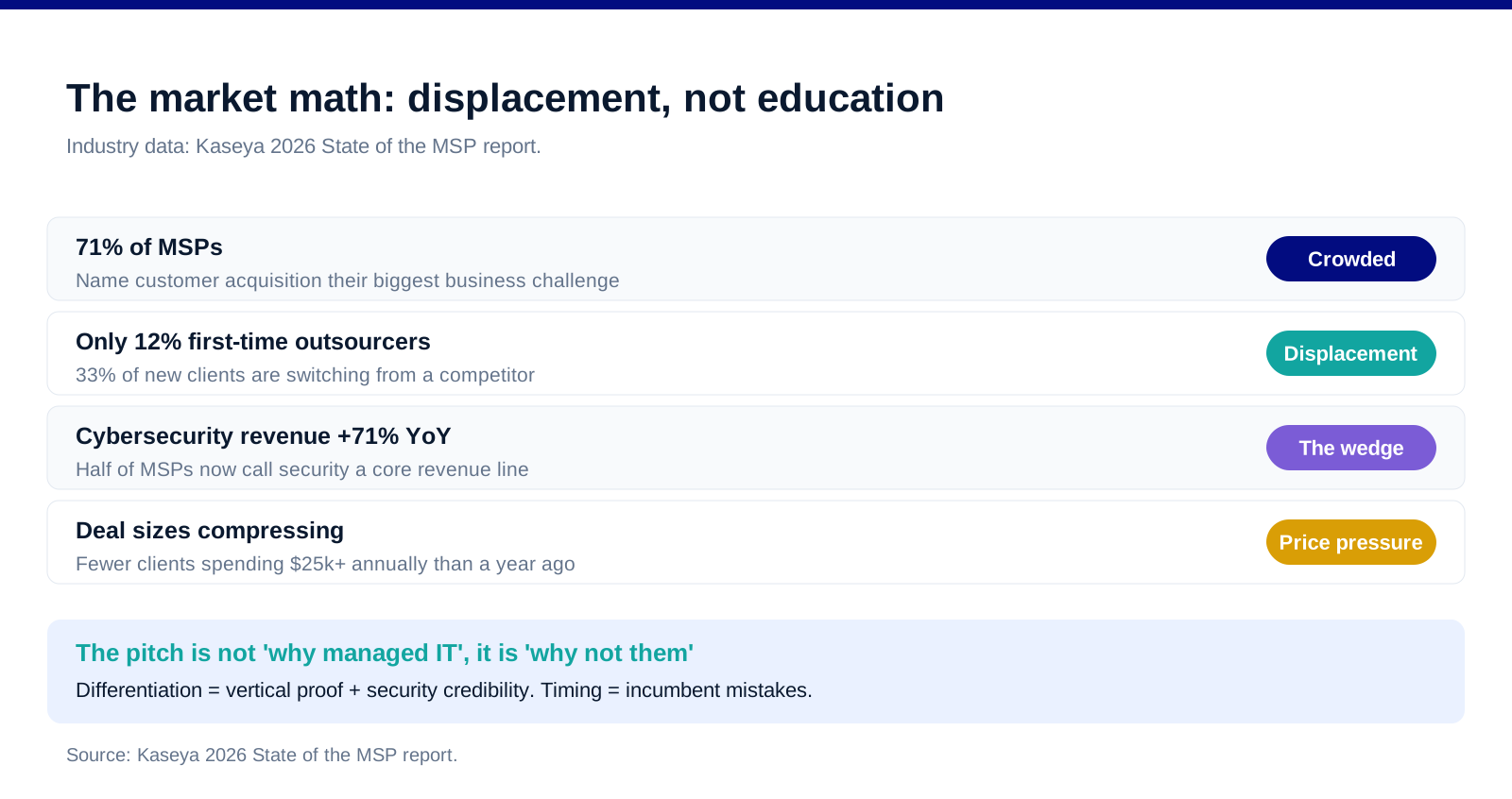
Three numbers shape the whole strategy. First, 71% of MSPs call acquiring customers their biggest challenge, so every prospect you want is being courted by providers with the same stack and the same promises. Second, only 12% of new clients are outsourcing for the first time; 33% are leaving another provider, so the pitch is not "why managed IT" but "why not them". Third, security is where the budget is moving: 71% year-over-year cybersecurity revenue growth and half of MSPs now naming security a core revenue line. The practical conclusion: differentiation lives in vertical specificity and security credibility, and timing lives in the incumbent's mistakes.
That is why generic "we handle your IT" outreach dies. The messaging that works names the vertical (per our industry vocabulary approach to manufacturing and equivalent verticals), names the moment ("renewal window", "after an incident"), and offers proof, not adjectives.
The five channels, ranked
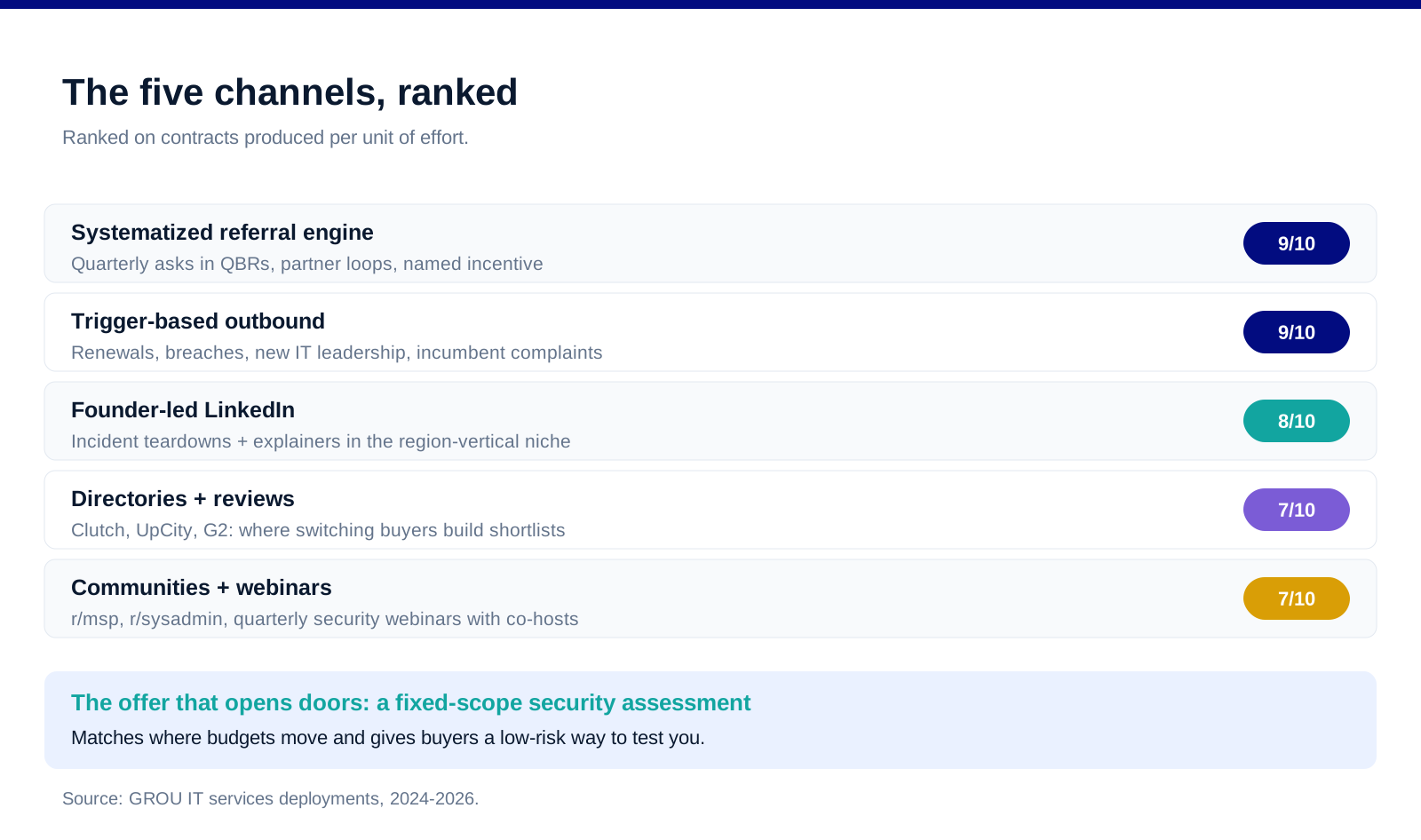
1. The systematized referral engine (9/10). Referrals are the top source for most IT services firms and almost nobody runs them as a system. The system: a quarterly ask built into the account review agenda, a named incentive (service credit or donation), a one-line referral script clients can forward, and partner referral loops with non-competing vendors (software resellers, telecoms, accountants who hear "our IT is a mess" first). Track asks made, not just referrals received.
2. Trigger-based outbound (9/10). Cold outreach to the whole TAM is spray; outreach to accounts showing switch signals converts. The triggers worth monitoring: incumbent contract renewal windows, publicized breaches or outages in the region or vertical, new IT or operations leadership, office moves and M&A, hiring that signals growth without IT capacity, and public complaints about providers. Sequence them with a specific first line about the trigger and a security assessment as the ask, with the sequences run per our trade show follow-up cadence logic: multi-channel, six touches, stop on reply.
3. Founder-led LinkedIn (8/10). IT buying is trust buying, and the founder's face outperforms the company logo. Three posts a week in the region-and-vertical niche: incident teardowns (anonymized), plain-language security explainers, and opinionated takes on vendor practices. Connection requests and DMs follow our LinkedIn DM scripts rules: question-first, no pitch in the first message.
4. Directories and review presence (7/10). Clutch, UpCity, G2, and regional listings are where switching buyers build shortlists. Complete profiles, 15+ recent reviews, and vertical keywords; the wider directory play is in our top B2B directories list. This channel converts slowly but compounds and feeds every other channel's credibility check.
5. Communities and webinars (7/10). IT managers ask for provider recommendations in communities (including subreddits like r/msp and r/sysadmin, worked per our Reddit lead generation playbook), and quarterly security-topic webinars with a co-host (vendor partner, insurance broker, lawyer) produce warm regional lists. Slow, compounding, cheap.
The 90-day motion
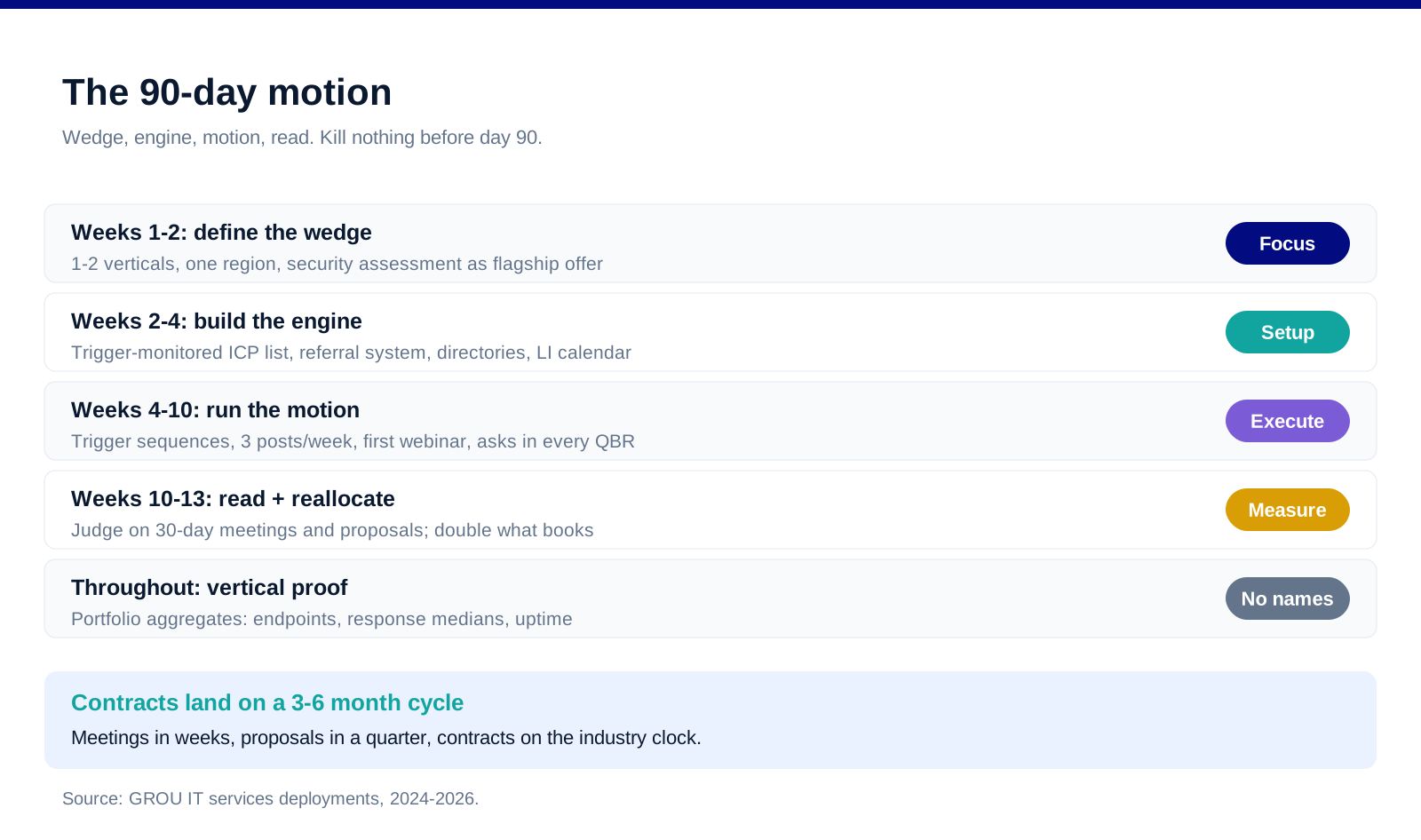
Weeks 1-2: define the wedge. One or two verticals, one region, one flagship offer. The offer that opens doors in 2026 is a fixed-scope security assessment (paid or free, but scoped), because it matches where budgets are moving and gives the buyer a low-risk way to evaluate you against the incumbent.
Weeks 2-4: build the lists and the engine. ICP account list with trigger monitoring attached, referral system installed into account reviews, directory profiles completed, founder LinkedIn calendar drafted.
Weeks 4-10: run the motion. Trigger-based sequences live, three LinkedIn posts a week, first webinar scheduled, referral asks happening in every QBR. Volume discipline: fewer, sharper accounts beat bulk sends on both reply rate and sender reputation.
Weeks 10-13: read and reallocate. Judge channels on meetings booked within 30 days and proposals out, not clicks; contracts land on a 3-6 month cycle, and the conversion chain between meeting and contract follows the bands in our MQL to SQL benchmarks. Double the two channels producing meetings, keep the compounding channels (directories, community) on maintenance, and kill nothing before day 90.
The differentiation thread through all of it: vertical proof. A case study saying "we run IT for 14 accounting firms" wins against "we serve SMBs" every time, and portfolio aggregates (endpoints managed, response-time medians, uptime) make the proof concrete without naming clients.
FAQ
What is the best lead generation channel for IT services companies?
A systematized referral engine, because trust transfers and conversion rates dwarf every cold channel, with trigger-based outbound as the best scalable second. Most firms run referrals passively; installing quarterly asks and partner loops routinely multiplies referral volume without any new spend.
How do MSPs get new clients in 2026?
Mostly by displacement: only about 12% of new clients are first-time outsourcers, so growth comes from being present when an incumbent stumbles. That means trigger monitoring (renewals, breaches, leadership changes), security-led offers, vertical proof, and consistent visibility where shortlists get built.
What offer works best for IT services outreach?
A fixed-scope security assessment. It matches where client budgets are moving, gives a low-risk evaluation path against the incumbent, and produces a findings document that naturally becomes a proposal. Generic "free consultation" offers convert a fraction as well.
Does cold outreach work for managed services?
Trigger-based cold outreach does: sequences aimed at accounts with switch signals, opened with the trigger and closed with the assessment offer. Untargeted volume outreach to every SMB in a region burns sender reputation for single-digit meetings.
How long does it take to win an IT services contract?
Meetings come in weeks; contracts take 3-6 months from first touch, longer for larger environments with notice periods on incumbent agreements. Judge channels on meetings within 30 days and proposals within a quarter, then let the cycle run.
Should IT services companies specialize in a vertical?
Yes, and it is the highest-leverage decision on this list: vertical proof ("we run IT for accounting firms") beats generalist positioning in referrals, outbound reply rates, and pricing power. Pick the vertical where you already have your densest proof and deepest workflow knowledge.
Bottom line
IT services lead generation in 2026 is a displacement game won on timing and proof: systematize referrals, monitor switch triggers and hit them with a security-assessment offer, put the founder's face on the region's feed, and hold the shortlist surfaces. Run the 90-day motion, measure on meetings and proposals, and let vertical specificity do the differentiating that adjectives cannot.
Want the whole engine built and run, triggers to sequences to booked meetings? Book a call with GROU. We run lead generation and outbound for IT services and MSP businesses, and our case studies include the IT services programs this playbook is built from.
We are GROU, a B2B pipeline agency that runs lead generation, outbound, and LinkedIn content for clients across manufacturing, fintech, iGaming, software, and professional services. The channel rankings and cadences reflect our IT services deployments between 2024 and 2026, anonymized to protect client confidentiality.
Some links in this article are affiliate. We may earn a small commission at no extra cost to you. We only recommend tools we've deployed for clients.
IT services lead generation has one defining fact in 2026: almost nobody in your market is buying managed IT for the first time. Kaseya's industry data shows only 12% of new MSP clients are first-time outsourcers, while 33% are switching from a competitor, which means the game is displacement: being present, credible, and specific at the moment an incumbent stumbles. This playbook covers the market math, the five channels that produce contracts, and the 90-day motion to run them.
It is the services-side companion to our lead generation for technology companies playbook, which covers product businesses; this one is for MSPs, MSSPs, and IT consultancies selling ongoing service.
TL;DR
The market is crowded, anxious, and switching: 71% of MSPs name customer acquisition their biggest challenge, deal sizes are compressing, and security is the growth engine, with cybersecurity revenue up 71% year over year across the industry, per Kaseya's 2026 State of the MSP report. The channels that win contracts: a systematized referral engine (still the highest-converting source, so stop leaving it to chance), trigger-based outbound aimed at accounts likely to switch (renewals, breaches, leadership changes, incumbent complaints), founder-led LinkedIn in your service region and vertical, directory presence where buyers shortlist, and community presence where IT managers actually talk. Lead with a security assessment as the offer, run the 90-day motion below, and measure on meetings within 30 days and contracts on a 3-6 month cycle.
The market math: displacement, not education
Three numbers shape the whole strategy. First, 71% of MSPs call acquiring customers their biggest challenge, so every prospect you want is being courted by providers with the same stack and the same promises. Second, only 12% of new clients are outsourcing for the first time; 33% are leaving another provider, so the pitch is not "why managed IT" but "why not them". Third, security is where the budget is moving: 71% year-over-year cybersecurity revenue growth and half of MSPs now naming security a core revenue line. The practical conclusion: differentiation lives in vertical specificity and security credibility, and timing lives in the incumbent's mistakes.
That is why generic "we handle your IT" outreach dies. The messaging that works names the vertical (per our industry vocabulary approach to manufacturing and equivalent verticals), names the moment ("renewal window", "after an incident"), and offers proof, not adjectives.
The five channels, ranked
1. The systematized referral engine (9/10). Referrals are the top source for most IT services firms and almost nobody runs them as a system. The system: a quarterly ask built into the account review agenda, a named incentive (service credit or donation), a one-line referral script clients can forward, and partner referral loops with non-competing vendors (software resellers, telecoms, accountants who hear "our IT is a mess" first). Track asks made, not just referrals received.
2. Trigger-based outbound (9/10). Cold outreach to the whole TAM is spray; outreach to accounts showing switch signals converts. The triggers worth monitoring: incumbent contract renewal windows, publicized breaches or outages in the region or vertical, new IT or operations leadership, office moves and M&A, hiring that signals growth without IT capacity, and public complaints about providers. Sequence them with a specific first line about the trigger and a security assessment as the ask, with the sequences run per our trade show follow-up cadence logic: multi-channel, six touches, stop on reply.
3. Founder-led LinkedIn (8/10). IT buying is trust buying, and the founder's face outperforms the company logo. Three posts a week in the region-and-vertical niche: incident teardowns (anonymized), plain-language security explainers, and opinionated takes on vendor practices. Connection requests and DMs follow our LinkedIn DM scripts rules: question-first, no pitch in the first message.
4. Directories and review presence (7/10). Clutch, UpCity, G2, and regional listings are where switching buyers build shortlists. Complete profiles, 15+ recent reviews, and vertical keywords; the wider directory play is in our top B2B directories list. This channel converts slowly but compounds and feeds every other channel's credibility check.
5. Communities and webinars (7/10). IT managers ask for provider recommendations in communities (including subreddits like r/msp and r/sysadmin, worked per our Reddit lead generation playbook), and quarterly security-topic webinars with a co-host (vendor partner, insurance broker, lawyer) produce warm regional lists. Slow, compounding, cheap.
The 90-day motion
Weeks 1-2: define the wedge. One or two verticals, one region, one flagship offer. The offer that opens doors in 2026 is a fixed-scope security assessment (paid or free, but scoped), because it matches where budgets are moving and gives the buyer a low-risk way to evaluate you against the incumbent.
Weeks 2-4: build the lists and the engine. ICP account list with trigger monitoring attached, referral system installed into account reviews, directory profiles completed, founder LinkedIn calendar drafted.
Weeks 4-10: run the motion. Trigger-based sequences live, three LinkedIn posts a week, first webinar scheduled, referral asks happening in every QBR. Volume discipline: fewer, sharper accounts beat bulk sends on both reply rate and sender reputation.
Weeks 10-13: read and reallocate. Judge channels on meetings booked within 30 days and proposals out, not clicks; contracts land on a 3-6 month cycle, and the conversion chain between meeting and contract follows the bands in our MQL to SQL benchmarks. Double the two channels producing meetings, keep the compounding channels (directories, community) on maintenance, and kill nothing before day 90.
The differentiation thread through all of it: vertical proof. A case study saying "we run IT for 14 accounting firms" wins against "we serve SMBs" every time, and portfolio aggregates (endpoints managed, response-time medians, uptime) make the proof concrete without naming clients.
FAQ
What is the best lead generation channel for IT services companies?
A systematized referral engine, because trust transfers and conversion rates dwarf every cold channel, with trigger-based outbound as the best scalable second. Most firms run referrals passively; installing quarterly asks and partner loops routinely multiplies referral volume without any new spend.
How do MSPs get new clients in 2026?
Mostly by displacement: only about 12% of new clients are first-time outsourcers, so growth comes from being present when an incumbent stumbles. That means trigger monitoring (renewals, breaches, leadership changes), security-led offers, vertical proof, and consistent visibility where shortlists get built.
What offer works best for IT services outreach?
A fixed-scope security assessment. It matches where client budgets are moving, gives a low-risk evaluation path against the incumbent, and produces a findings document that naturally becomes a proposal. Generic "free consultation" offers convert a fraction as well.
Does cold outreach work for managed services?
Trigger-based cold outreach does: sequences aimed at accounts with switch signals, opened with the trigger and closed with the assessment offer. Untargeted volume outreach to every SMB in a region burns sender reputation for single-digit meetings.
How long does it take to win an IT services contract?
Meetings come in weeks; contracts take 3-6 months from first touch, longer for larger environments with notice periods on incumbent agreements. Judge channels on meetings within 30 days and proposals within a quarter, then let the cycle run.
Should IT services companies specialize in a vertical?
Yes, and it is the highest-leverage decision on this list: vertical proof ("we run IT for accounting firms") beats generalist positioning in referrals, outbound reply rates, and pricing power. Pick the vertical where you already have your densest proof and deepest workflow knowledge.
Bottom line
IT services lead generation in 2026 is a displacement game won on timing and proof: systematize referrals, monitor switch triggers and hit them with a security-assessment offer, put the founder's face on the region's feed, and hold the shortlist surfaces. Run the 90-day motion, measure on meetings and proposals, and let vertical specificity do the differentiating that adjectives cannot.
Want the whole engine built and run, triggers to sequences to booked meetings? Book a call with GROU. We run lead generation and outbound for IT services and MSP businesses, and our case studies include the IT services programs this playbook is built from.
We are GROU, a B2B pipeline agency that runs lead generation, outbound, and LinkedIn content for clients across manufacturing, fintech, iGaming, software, and professional services. The channel rankings and cadences reflect our IT services deployments between 2024 and 2026, anonymized to protect client confidentiality.
Some links in this article are affiliate. We may earn a small commission at no extra cost to you. We only recommend tools we've deployed for clients.
IT services lead generation has one defining fact in 2026: almost nobody in your market is buying managed IT for the first time. Kaseya's industry data shows only 12% of new MSP clients are first-time outsourcers, while 33% are switching from a competitor, which means the game is displacement: being present, credible, and specific at the moment an incumbent stumbles. This playbook covers the market math, the five channels that produce contracts, and the 90-day motion to run them.
It is the services-side companion to our lead generation for technology companies playbook, which covers product businesses; this one is for MSPs, MSSPs, and IT consultancies selling ongoing service.
TL;DR
The market is crowded, anxious, and switching: 71% of MSPs name customer acquisition their biggest challenge, deal sizes are compressing, and security is the growth engine, with cybersecurity revenue up 71% year over year across the industry, per Kaseya's 2026 State of the MSP report. The channels that win contracts: a systematized referral engine (still the highest-converting source, so stop leaving it to chance), trigger-based outbound aimed at accounts likely to switch (renewals, breaches, leadership changes, incumbent complaints), founder-led LinkedIn in your service region and vertical, directory presence where buyers shortlist, and community presence where IT managers actually talk. Lead with a security assessment as the offer, run the 90-day motion below, and measure on meetings within 30 days and contracts on a 3-6 month cycle.
The market math: displacement, not education
Three numbers shape the whole strategy. First, 71% of MSPs call acquiring customers their biggest challenge, so every prospect you want is being courted by providers with the same stack and the same promises. Second, only 12% of new clients are outsourcing for the first time; 33% are leaving another provider, so the pitch is not "why managed IT" but "why not them". Third, security is where the budget is moving: 71% year-over-year cybersecurity revenue growth and half of MSPs now naming security a core revenue line. The practical conclusion: differentiation lives in vertical specificity and security credibility, and timing lives in the incumbent's mistakes.
That is why generic "we handle your IT" outreach dies. The messaging that works names the vertical (per our industry vocabulary approach to manufacturing and equivalent verticals), names the moment ("renewal window", "after an incident"), and offers proof, not adjectives.
The five channels, ranked
1. The systematized referral engine (9/10). Referrals are the top source for most IT services firms and almost nobody runs them as a system. The system: a quarterly ask built into the account review agenda, a named incentive (service credit or donation), a one-line referral script clients can forward, and partner referral loops with non-competing vendors (software resellers, telecoms, accountants who hear "our IT is a mess" first). Track asks made, not just referrals received.
2. Trigger-based outbound (9/10). Cold outreach to the whole TAM is spray; outreach to accounts showing switch signals converts. The triggers worth monitoring: incumbent contract renewal windows, publicized breaches or outages in the region or vertical, new IT or operations leadership, office moves and M&A, hiring that signals growth without IT capacity, and public complaints about providers. Sequence them with a specific first line about the trigger and a security assessment as the ask, with the sequences run per our trade show follow-up cadence logic: multi-channel, six touches, stop on reply.
3. Founder-led LinkedIn (8/10). IT buying is trust buying, and the founder's face outperforms the company logo. Three posts a week in the region-and-vertical niche: incident teardowns (anonymized), plain-language security explainers, and opinionated takes on vendor practices. Connection requests and DMs follow our LinkedIn DM scripts rules: question-first, no pitch in the first message.
4. Directories and review presence (7/10). Clutch, UpCity, G2, and regional listings are where switching buyers build shortlists. Complete profiles, 15+ recent reviews, and vertical keywords; the wider directory play is in our top B2B directories list. This channel converts slowly but compounds and feeds every other channel's credibility check.
5. Communities and webinars (7/10). IT managers ask for provider recommendations in communities (including subreddits like r/msp and r/sysadmin, worked per our Reddit lead generation playbook), and quarterly security-topic webinars with a co-host (vendor partner, insurance broker, lawyer) produce warm regional lists. Slow, compounding, cheap.
The 90-day motion
Weeks 1-2: define the wedge. One or two verticals, one region, one flagship offer. The offer that opens doors in 2026 is a fixed-scope security assessment (paid or free, but scoped), because it matches where budgets are moving and gives the buyer a low-risk way to evaluate you against the incumbent.
Weeks 2-4: build the lists and the engine. ICP account list with trigger monitoring attached, referral system installed into account reviews, directory profiles completed, founder LinkedIn calendar drafted.
Weeks 4-10: run the motion. Trigger-based sequences live, three LinkedIn posts a week, first webinar scheduled, referral asks happening in every QBR. Volume discipline: fewer, sharper accounts beat bulk sends on both reply rate and sender reputation.
Weeks 10-13: read and reallocate. Judge channels on meetings booked within 30 days and proposals out, not clicks; contracts land on a 3-6 month cycle, and the conversion chain between meeting and contract follows the bands in our MQL to SQL benchmarks. Double the two channels producing meetings, keep the compounding channels (directories, community) on maintenance, and kill nothing before day 90.
The differentiation thread through all of it: vertical proof. A case study saying "we run IT for 14 accounting firms" wins against "we serve SMBs" every time, and portfolio aggregates (endpoints managed, response-time medians, uptime) make the proof concrete without naming clients.
FAQ
What is the best lead generation channel for IT services companies?
A systematized referral engine, because trust transfers and conversion rates dwarf every cold channel, with trigger-based outbound as the best scalable second. Most firms run referrals passively; installing quarterly asks and partner loops routinely multiplies referral volume without any new spend.
How do MSPs get new clients in 2026?
Mostly by displacement: only about 12% of new clients are first-time outsourcers, so growth comes from being present when an incumbent stumbles. That means trigger monitoring (renewals, breaches, leadership changes), security-led offers, vertical proof, and consistent visibility where shortlists get built.
What offer works best for IT services outreach?
A fixed-scope security assessment. It matches where client budgets are moving, gives a low-risk evaluation path against the incumbent, and produces a findings document that naturally becomes a proposal. Generic "free consultation" offers convert a fraction as well.
Does cold outreach work for managed services?
Trigger-based cold outreach does: sequences aimed at accounts with switch signals, opened with the trigger and closed with the assessment offer. Untargeted volume outreach to every SMB in a region burns sender reputation for single-digit meetings.
How long does it take to win an IT services contract?
Meetings come in weeks; contracts take 3-6 months from first touch, longer for larger environments with notice periods on incumbent agreements. Judge channels on meetings within 30 days and proposals within a quarter, then let the cycle run.
Should IT services companies specialize in a vertical?
Yes, and it is the highest-leverage decision on this list: vertical proof ("we run IT for accounting firms") beats generalist positioning in referrals, outbound reply rates, and pricing power. Pick the vertical where you already have your densest proof and deepest workflow knowledge.
Bottom line
IT services lead generation in 2026 is a displacement game won on timing and proof: systematize referrals, monitor switch triggers and hit them with a security-assessment offer, put the founder's face on the region's feed, and hold the shortlist surfaces. Run the 90-day motion, measure on meetings and proposals, and let vertical specificity do the differentiating that adjectives cannot.
Want the whole engine built and run, triggers to sequences to booked meetings? Book a call with GROU. We run lead generation and outbound for IT services and MSP businesses, and our case studies include the IT services programs this playbook is built from.
We are GROU, a B2B pipeline agency that runs lead generation, outbound, and LinkedIn content for clients across manufacturing, fintech, iGaming, software, and professional services. The channel rankings and cadences reflect our IT services deployments between 2024 and 2026, anonymized to protect client confidentiality.
Some links in this article are affiliate. We may earn a small commission at no extra cost to you. We only recommend tools we've deployed for clients.
Pipeline OS Newsletter
Build qualified pipeline
Get weekly tactics to generate demand, improve lead quality, and book more meetings.






Trusted by industry leaders
Trusted by industry leaders
Trusted by industry leaders
Ready to build qualified pipeline?
Ready to build qualified pipeline?
Ready to build qualified pipeline?
Book a call to see if we're the right fit, or take the 2-minute quiz to get a clear starting point.
Book a call to see if we're the right fit, or take the 2-minute quiz to get a clear starting point.
Book a call to see if we're the right fit, or take the 2-minute quiz to get a clear starting point.
" height="30.21639343089746px" id="hfGbXmQR2" width="30.216393430897455px"/></svg>)
Copyright © 2026 – All Right Reserved
Copyright © 2026 – All Right Reserved
Copyright © 2026 – All Right Reserved