%22%3E%3C/path%3E%3Cpath d=%22M 63.072 7.554 C 62.258 8.022 61.577 8.689 61.092 9.493 L 61.092 7.076 L 57.158 7.076 L 57.158 22.64 L 61.089 22.64 L 61.089 14.888 C 61.089 13.446 61.403 12.434 62.03 11.853 C 62.818 11.218 63.818 10.907 64.826 10.982 L 65.868 10.982 L 65.868 6.851 C 64.891 6.834 63.926 7.076 63.073 7.554 Z%22 fill=%22rgb(17,17,17)%22%3E%3C/path%3E%3Cpath d=%22M 78.916 7.82 C 76.363 6.49 73.321 6.49 70.768 7.82 C 69.562 8.473 68.564 9.451 67.888 10.644 C 67.167 11.931 66.803 13.387 66.834 14.862 C 66.804 16.332 67.157 17.785 67.86 19.077 C 68.515 20.267 69.494 21.246 70.684 21.901 C 71.924 22.576 73.318 22.92 74.73 22.898 C 76.164 22.918 77.58 22.575 78.846 21.901 C 80.062 21.247 81.073 20.27 81.768 19.077 C 82.506 17.797 82.88 16.339 82.85 14.862 C 82.88 13.389 82.517 11.934 81.797 10.647 C 81.12 9.455 80.122 8.477 78.917 7.824 M 78.803 14.862 C 78.829 15.739 78.636 16.608 78.241 17.391 C 77.903 18.046 77.38 18.588 76.738 18.95 C 76.124 19.293 75.432 19.472 74.729 19.47 C 73.668 19.497 72.648 19.061 71.934 18.276 C 71.139 17.323 70.741 16.1 70.823 14.862 C 70.741 13.62 71.149 12.395 71.959 11.45 C 72.687 10.667 73.715 10.233 74.783 10.256 C 75.859 10.236 76.894 10.67 77.635 11.45 C 78.464 12.387 78.884 13.616 78.801 14.864%22 fill=%22rgb(17,17,17)%22%3E%3C/path%3E%3Cpath d=%22M 95.906 7.076 L 95.906 15.646 C 95.975 16.68 95.643 17.701 94.979 18.498 C 94.311 19.184 93.379 19.547 92.422 19.495 C 91.475 19.544 90.553 19.18 89.894 18.498 C 89.23 17.701 88.898 16.68 88.967 15.646 L 88.967 7.076 L 85.033 7.076 L 85.033 16.207 C 85 17.449 85.275 18.68 85.834 19.79 C 86.327 20.75 87.095 21.542 88.039 22.065 C 89.033 22.594 90.145 22.861 91.271 22.838 C 92.188 22.847 93.095 22.65 93.926 22.263 C 94.708 21.905 95.388 21.36 95.906 20.675 L 95.906 22.645 L 99.865 22.645 L 99.865 7.076 Z%22 fill=%22rgb(17,17,17)%22%3E%3C/path%3E%3Cpath d=%22M 4.513 15.626 C 4.511 10.815 7.606 6.549 12.181 5.059 C 16.756 3.57 21.77 5.195 24.601 9.086 L 27.816 5.87 C 24.074 1.186 17.981 -0.943 12.137 0.393 C 6.292 1.728 1.728 6.292 0.393 12.137 C -0.943 17.981 1.186 24.074 5.87 27.816 L 9.085 24.601 C 6.214 22.512 4.515 19.177 4.513 15.626%22 fill=%22rgb(32,62,235)%22%3E%3C/path%3E%3Cpath d=%22M 17.114 14.343 L 13.354 18.01 L 13.354 18.026 L 21.071 18.026 L 11.412 27.609 L 17.389 27.609 L 23.999 21.081 L 23.999 28.316 L 24.005 28.316 L 27.967 24.393 L 27.967 14.343 Z%22 fill=%22rgb(32,62,235)%22%3E%3C/path%3E%3C/g%3E%3C/svg%3E) ×
× ××
××›
›
›
›
Trade show follow-up playbook for manufacturers 2026
Trade show follow-up playbook for manufacturers 2026
Trade show follow-up playbook for manufacturers 2026
Trade show follow-up playbook for manufacturers 2026
Trade show follow-up playbook for manufacturers 2026
Trade show follow-up playbook for manufacturers 2026

Author
Aljaz Peklaj

Manufacturers spend more per lead at trade shows than on any other channel, then lose most of that spend in the two weeks after the hall closes. The fix is not more scanning, it is a follow-up system: leads tiered before you leave the venue, a 14-day multi-channel sequence that starts the same evening, and a clean handoff into nurture for everyone who is not ready. This playbook is that system, built for industrial sales cycles.
It pairs with our lead generation for manufacturing companies playbook; the events worth exhibiting at are ranked in best B2B events.
TL;DR
Speed and structure beat volume. Harvard Business Review's lead-response research found companies that contact a lead within an hour are roughly seven times likelier to qualify it than slower responders, yet most exhibitors send their first email a week after the show, into an inbox full of identical "great meeting you" notes. The system: tier every badge scan into A, B, or C before leaving the venue, send A-tier a personal recap with a meeting link the same evening, run B-tier through a 14-day email-plus-LinkedIn sequence starting day one, and route C-tier straight to the newsletter. Log everything in the CRM with the show as source, judge the show on meetings booked within 30 days, and expect closed revenue on a 3-6 month industrial cycle, not next week.
Where trade show ROI actually dies
Event leads are the best-converting leads most manufacturers touch all year. Event-sourced leads convert to closed-won at roughly 12-14% against a sub-5% average for other marketing channels, and 52% of marketers attribute at least half of their closed-won deals to events, per HockeyStack and Forrester data compiled by Vendelux. The exhibition industry's own tracking, UFI's Global Exhibition Barometer, shows the channel back at full strength. The leads are real; the follow-up is where the money leaks.
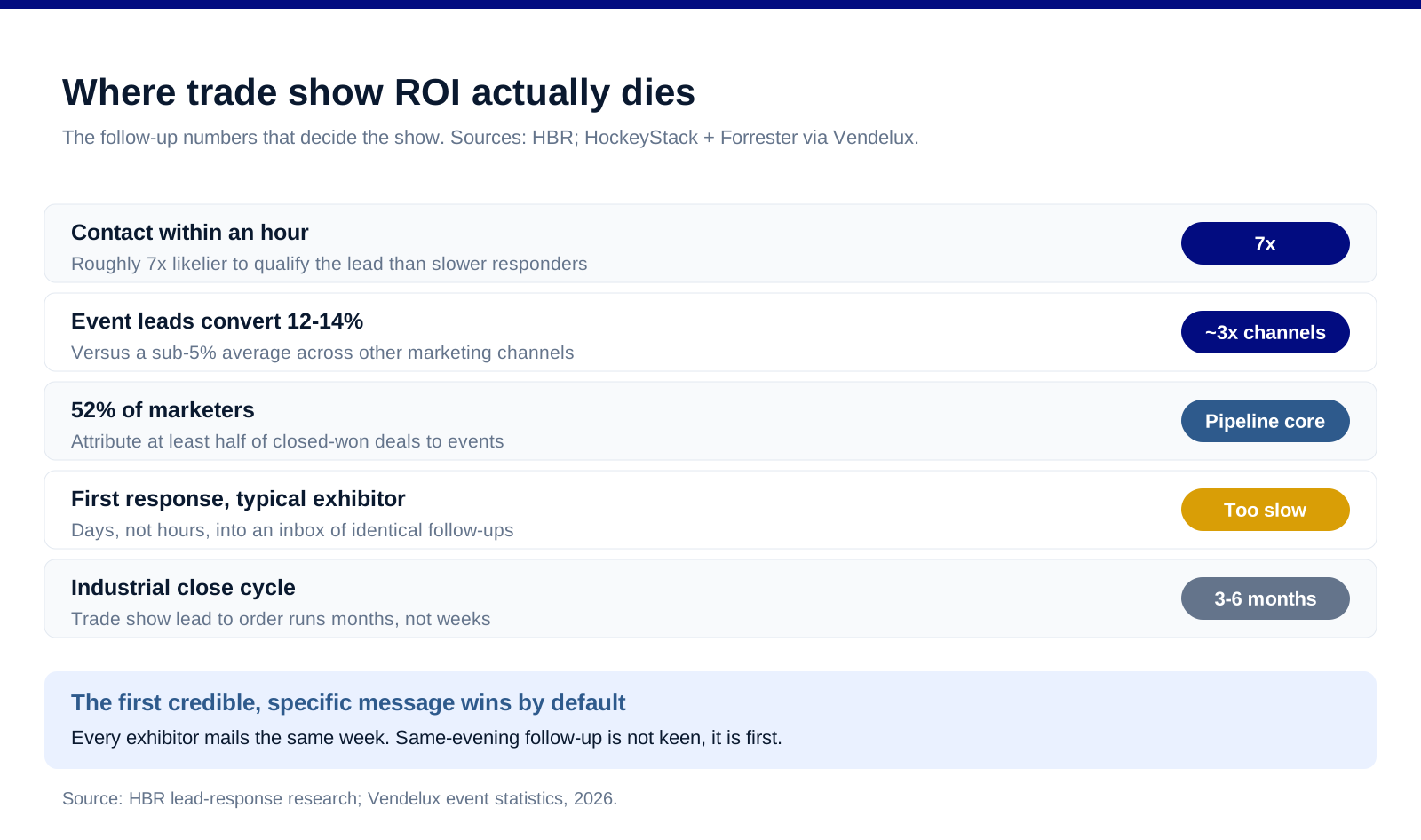
The leak has one shape: latency. HBR's response-time study found average first response measured in days, and firms responding within the hour qualified leads at roughly seven times the rate of those who waited. Now add the trade show multiplier: every exhibitor who scanned the same badge sends their email in the same post-show week. The prospect's inbox becomes a wall of interchangeable follow-ups, and the first credible, specific message wins by default. A same-evening send is not keen, it is first.
Tier the badge scans before you leave the hall
Not all scans are leads. Tier them at capture, in the booth, while the conversation is still attached to a face. Thirty seconds of discipline per scan replaces a week of CRM archaeology later.
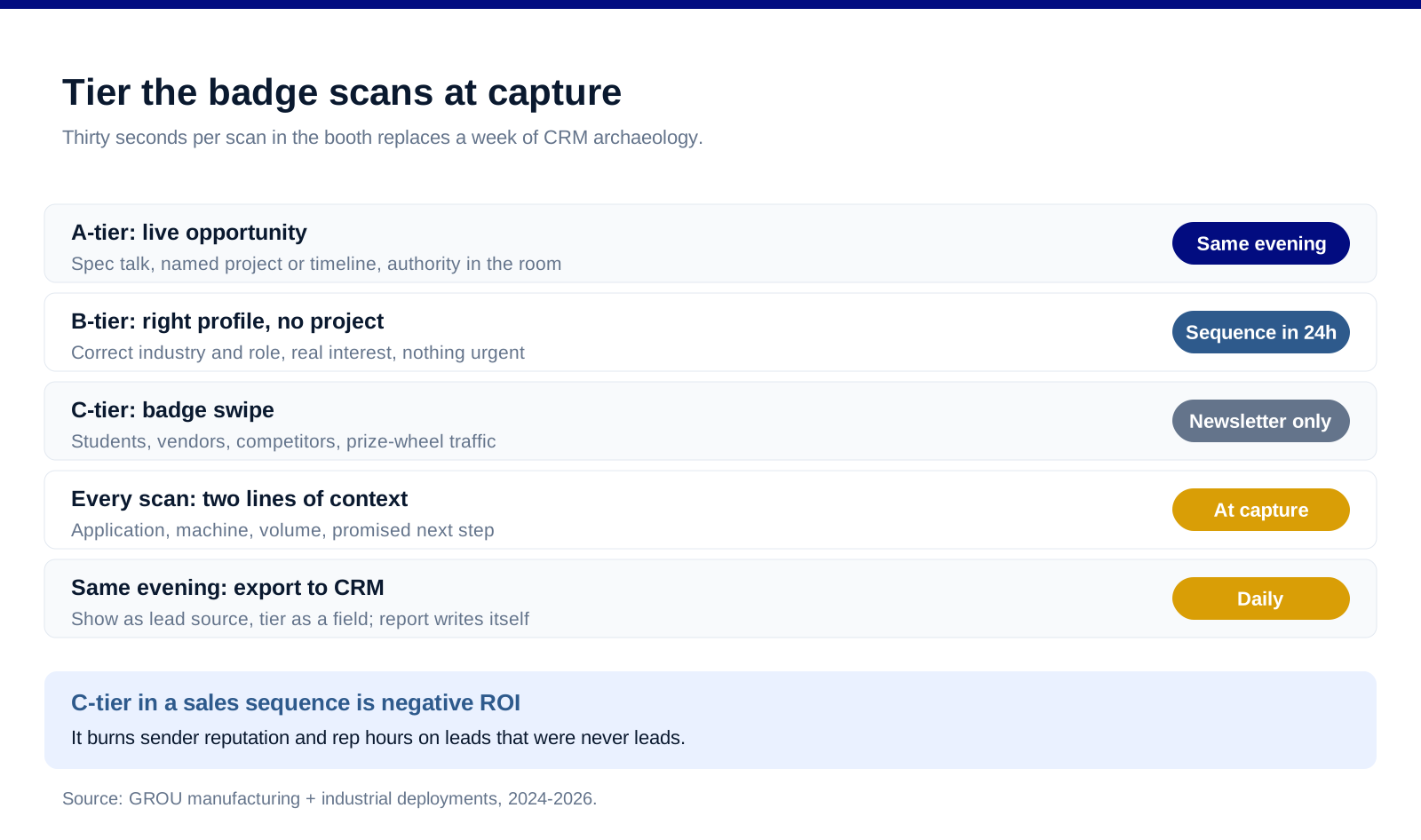
A-tier: live opportunity. Spec discussion, application fit, named project or timeline, decision authority in the conversation. Flag it at scan, add two lines of context (application, machine, volume, next step promised). SLA: personal follow-up the same evening.
B-tier: right profile, no live project. Correct industry and role, real technical interest, nothing urgent. The majority of good scans. SLA: enters the 14-day sequence within 24 hours.
C-tier: badge swipe. Students, vendors, competitors, prize-wheel traffic. SLA: one newsletter opt-in email within the week, then nothing. Every C-tier contact pushed into a sales sequence damages sender reputation and wastes rep hours.
The mechanics: whatever capture app the show provides, export the same evening, and get tiers and context into the CRM before they evaporate. We run this on Pipedrive, with the show as lead source and tier as a field, so the 30-day report writes itself.
The 14-day sequence that does the work
A-tier gets a human: personal email same evening, referencing the actual conversation, with a calendar link and the promised document attached. No sequence software sounds like the engineer they met.
B-tier gets the machine, made to sound human. Six touches, two channels, 14 days, then out.
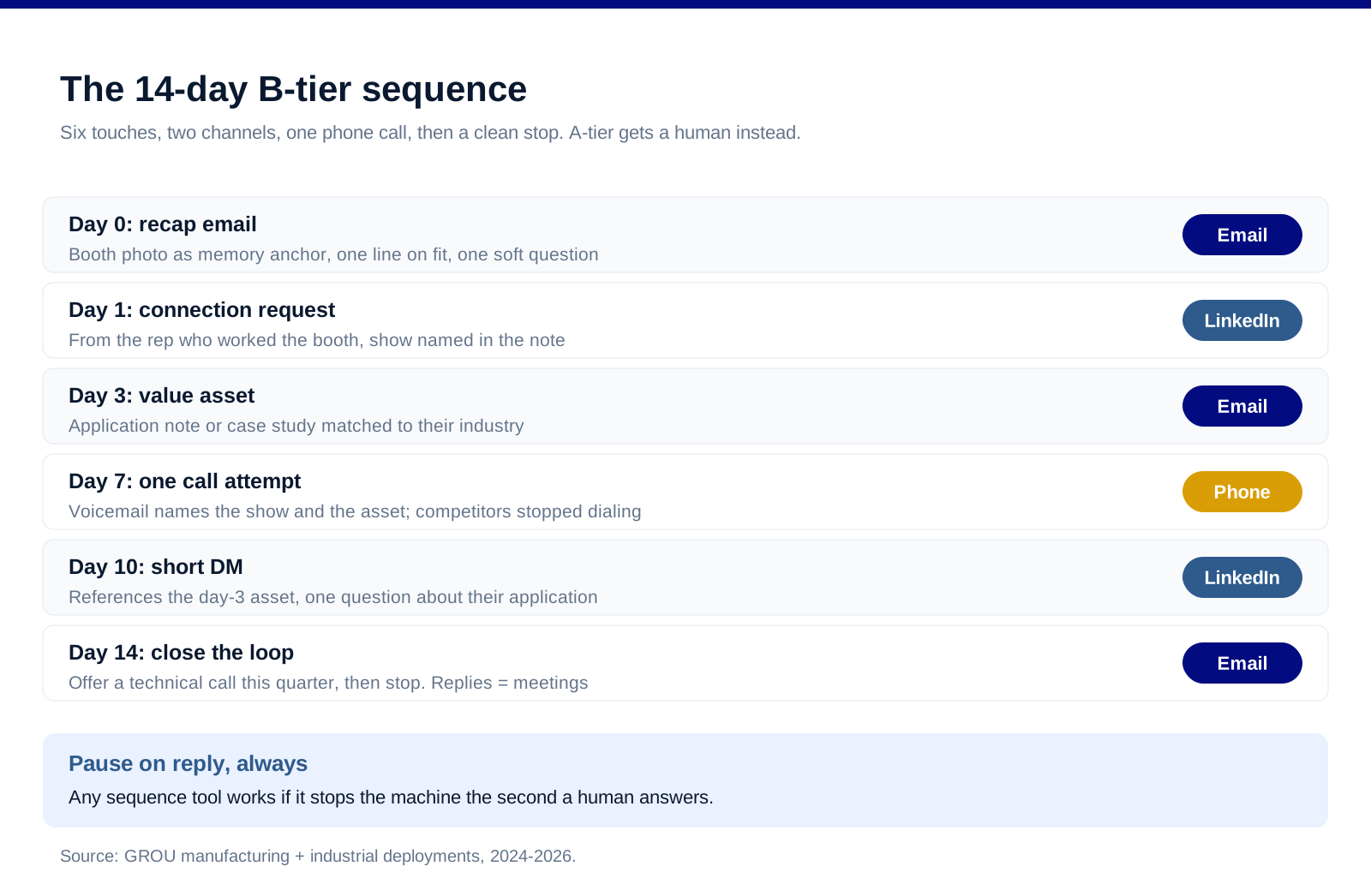
Day 0, email. Short recap send to everyone scanned that day: one line on what your line makes, one photo of the booth or demo as a memory anchor, one soft question. Sent the evening of each show day, not after the show.
Day 1, LinkedIn. Connection request from the rep who worked the booth, with the show named in the note. Fair warning: connection notes have their own craft, covered in our LinkedIn DM scripts piece.
Day 3, email. The value asset: application note, spec sheet, case study matched to their industry. This is the email that gets forwarded to the engineering team.
Day 7, phone. One call attempt per B-tier lead with a voicemail that names the show and the asset sent. Manufacturers still answer phones; most of your competitors' SDRs no longer dial.
Day 10, LinkedIn. Short DM to accepted connections referencing the day-3 asset. No pitch, one question about their application.
Day 14, email. The close-the-loop note: one line offering a technical call this quarter, one line saying you will stop nudging. Replies to this email are disproportionately meetings.
Sequences run in lemlist with the email steps automated and LinkedIn steps as rep tasks; any comparable tool works if it can pause a contact the moment they reply. Send infrastructure has to be warmed and authenticated before the show, not during, per our SPF, DKIM and DMARC setup guide.
Measure it like a channel, not an event
Judge the show on three numbers, on three clocks. Meetings booked within 30 days is the honest early signal. Pipeline created within one quarter says whether tiering held. Closed revenue lands on the 3-6 month industrial cycle, so the show that "produced nothing" by the sales meeting six weeks later is usually just on schedule; our MQL to SQL benchmarks cover the conversion math between those clocks. Booth cost divided by A-plus-B-tier scans gives cost per qualified lead, which is the only number worth comparing across shows when next year's exhibition budget gets argued.
The last step is the one nobody does: everyone who did not convert this cycle goes into a quarterly-touch nurture list, because the plant that had no project this year buys a line upgrade in eighteen months, and the vendor who stayed politely present wins that RFQ before it becomes one.
FAQ
How soon should you follow up after a trade show?
Same evening for hot leads, within 24 hours for everyone else worth sequencing. Response research shows within-the-hour contact multiplies qualification rates roughly sevenfold, and at a trade show every competitor's follow-up lands in the same week, so being first matters twice.
What should the first email after a trade show say?
Three lines: a specific reference to the conversation or booth, the document or answer you promised, and one clear next step (a calendar link for hot leads, a soft question for the rest). No brochure dump, no "checking in", nothing that reads like the other forty exhibitor emails.
How many touches does trade show follow-up need?
Six touches over 14 days across email, LinkedIn, and one phone attempt is the working pattern for B-tier leads, with a clean stop at the end. Hot leads skip the sequence entirely and get a human immediately.
How do you qualify trade show leads?
Tier at capture: A for live projects with authority, B for right-profile contacts without a current project, C for badge swipes. The tier plus two lines of context recorded in the booth beats any post-show scoring model run on bare badge data.
What conversion rate should manufacturers expect from trade show leads?
Event-sourced leads convert to closed-won in the 12-14% range in cross-industry data, several times the average of other channels, on a 3-6 month industrial cycle. Judge shows on 30-day meetings and quarterly pipeline, not on orders signed in the follow-up window.
Is trade show lead follow-up worth automating?
The B-tier sequence, yes: automation guarantees the touches happen while reps travel. The A-tier, no: live opportunities get personal emails from the person who had the conversation. Automating the hot leads is how you sound like everyone else in the inbox.
Bottom line
Trade show ROI for manufacturers is decided in the 14 days after the hall closes: tier at capture, hit A-tier the same evening, run B-tier through a six-touch two-channel sequence, and measure on meetings, pipeline, and the industrial close cycle. The booth gets the lead; the system gets the order.
Want the whole machine run for you, capture to sequence to CRM to the 30-day report? Book a call with GROU. We build lead generation and outbound engines for manufacturers and industrial B2B, and our case studies include the trade-show-heavy verticals this playbook comes from.
We are GROU, a B2B pipeline agency that runs lead generation, outbound, and LinkedIn content for clients across manufacturing, fintech, iGaming, software, and professional services. The tiering and sequence patterns reflect our manufacturing and industrial deployments between 2024 and 2026, anonymized to protect client confidentiality.
Some links in this article are affiliate. We may earn a small commission at no extra cost to you. We only recommend tools we've deployed for clients.
Manufacturers spend more per lead at trade shows than on any other channel, then lose most of that spend in the two weeks after the hall closes. The fix is not more scanning, it is a follow-up system: leads tiered before you leave the venue, a 14-day multi-channel sequence that starts the same evening, and a clean handoff into nurture for everyone who is not ready. This playbook is that system, built for industrial sales cycles.
It pairs with our lead generation for manufacturing companies playbook; the events worth exhibiting at are ranked in best B2B events.
TL;DR
Speed and structure beat volume. Harvard Business Review's lead-response research found companies that contact a lead within an hour are roughly seven times likelier to qualify it than slower responders, yet most exhibitors send their first email a week after the show, into an inbox full of identical "great meeting you" notes. The system: tier every badge scan into A, B, or C before leaving the venue, send A-tier a personal recap with a meeting link the same evening, run B-tier through a 14-day email-plus-LinkedIn sequence starting day one, and route C-tier straight to the newsletter. Log everything in the CRM with the show as source, judge the show on meetings booked within 30 days, and expect closed revenue on a 3-6 month industrial cycle, not next week.
Where trade show ROI actually dies
Event leads are the best-converting leads most manufacturers touch all year. Event-sourced leads convert to closed-won at roughly 12-14% against a sub-5% average for other marketing channels, and 52% of marketers attribute at least half of their closed-won deals to events, per HockeyStack and Forrester data compiled by Vendelux. The exhibition industry's own tracking, UFI's Global Exhibition Barometer, shows the channel back at full strength. The leads are real; the follow-up is where the money leaks.
The leak has one shape: latency. HBR's response-time study found average first response measured in days, and firms responding within the hour qualified leads at roughly seven times the rate of those who waited. Now add the trade show multiplier: every exhibitor who scanned the same badge sends their email in the same post-show week. The prospect's inbox becomes a wall of interchangeable follow-ups, and the first credible, specific message wins by default. A same-evening send is not keen, it is first.
Tier the badge scans before you leave the hall
Not all scans are leads. Tier them at capture, in the booth, while the conversation is still attached to a face. Thirty seconds of discipline per scan replaces a week of CRM archaeology later.
A-tier: live opportunity. Spec discussion, application fit, named project or timeline, decision authority in the conversation. Flag it at scan, add two lines of context (application, machine, volume, next step promised). SLA: personal follow-up the same evening.
B-tier: right profile, no live project. Correct industry and role, real technical interest, nothing urgent. The majority of good scans. SLA: enters the 14-day sequence within 24 hours.
C-tier: badge swipe. Students, vendors, competitors, prize-wheel traffic. SLA: one newsletter opt-in email within the week, then nothing. Every C-tier contact pushed into a sales sequence damages sender reputation and wastes rep hours.
The mechanics: whatever capture app the show provides, export the same evening, and get tiers and context into the CRM before they evaporate. We run this on Pipedrive, with the show as lead source and tier as a field, so the 30-day report writes itself.
The 14-day sequence that does the work
A-tier gets a human: personal email same evening, referencing the actual conversation, with a calendar link and the promised document attached. No sequence software sounds like the engineer they met.
B-tier gets the machine, made to sound human. Six touches, two channels, 14 days, then out.
Day 0, email. Short recap send to everyone scanned that day: one line on what your line makes, one photo of the booth or demo as a memory anchor, one soft question. Sent the evening of each show day, not after the show.
Day 1, LinkedIn. Connection request from the rep who worked the booth, with the show named in the note. Fair warning: connection notes have their own craft, covered in our LinkedIn DM scripts piece.
Day 3, email. The value asset: application note, spec sheet, case study matched to their industry. This is the email that gets forwarded to the engineering team.
Day 7, phone. One call attempt per B-tier lead with a voicemail that names the show and the asset sent. Manufacturers still answer phones; most of your competitors' SDRs no longer dial.
Day 10, LinkedIn. Short DM to accepted connections referencing the day-3 asset. No pitch, one question about their application.
Day 14, email. The close-the-loop note: one line offering a technical call this quarter, one line saying you will stop nudging. Replies to this email are disproportionately meetings.
Sequences run in lemlist with the email steps automated and LinkedIn steps as rep tasks; any comparable tool works if it can pause a contact the moment they reply. Send infrastructure has to be warmed and authenticated before the show, not during, per our SPF, DKIM and DMARC setup guide.
Measure it like a channel, not an event
Judge the show on three numbers, on three clocks. Meetings booked within 30 days is the honest early signal. Pipeline created within one quarter says whether tiering held. Closed revenue lands on the 3-6 month industrial cycle, so the show that "produced nothing" by the sales meeting six weeks later is usually just on schedule; our MQL to SQL benchmarks cover the conversion math between those clocks. Booth cost divided by A-plus-B-tier scans gives cost per qualified lead, which is the only number worth comparing across shows when next year's exhibition budget gets argued.
The last step is the one nobody does: everyone who did not convert this cycle goes into a quarterly-touch nurture list, because the plant that had no project this year buys a line upgrade in eighteen months, and the vendor who stayed politely present wins that RFQ before it becomes one.
FAQ
How soon should you follow up after a trade show?
Same evening for hot leads, within 24 hours for everyone else worth sequencing. Response research shows within-the-hour contact multiplies qualification rates roughly sevenfold, and at a trade show every competitor's follow-up lands in the same week, so being first matters twice.
What should the first email after a trade show say?
Three lines: a specific reference to the conversation or booth, the document or answer you promised, and one clear next step (a calendar link for hot leads, a soft question for the rest). No brochure dump, no "checking in", nothing that reads like the other forty exhibitor emails.
How many touches does trade show follow-up need?
Six touches over 14 days across email, LinkedIn, and one phone attempt is the working pattern for B-tier leads, with a clean stop at the end. Hot leads skip the sequence entirely and get a human immediately.
How do you qualify trade show leads?
Tier at capture: A for live projects with authority, B for right-profile contacts without a current project, C for badge swipes. The tier plus two lines of context recorded in the booth beats any post-show scoring model run on bare badge data.
What conversion rate should manufacturers expect from trade show leads?
Event-sourced leads convert to closed-won in the 12-14% range in cross-industry data, several times the average of other channels, on a 3-6 month industrial cycle. Judge shows on 30-day meetings and quarterly pipeline, not on orders signed in the follow-up window.
Is trade show lead follow-up worth automating?
The B-tier sequence, yes: automation guarantees the touches happen while reps travel. The A-tier, no: live opportunities get personal emails from the person who had the conversation. Automating the hot leads is how you sound like everyone else in the inbox.
Bottom line
Trade show ROI for manufacturers is decided in the 14 days after the hall closes: tier at capture, hit A-tier the same evening, run B-tier through a six-touch two-channel sequence, and measure on meetings, pipeline, and the industrial close cycle. The booth gets the lead; the system gets the order.
Want the whole machine run for you, capture to sequence to CRM to the 30-day report? Book a call with GROU. We build lead generation and outbound engines for manufacturers and industrial B2B, and our case studies include the trade-show-heavy verticals this playbook comes from.
We are GROU, a B2B pipeline agency that runs lead generation, outbound, and LinkedIn content for clients across manufacturing, fintech, iGaming, software, and professional services. The tiering and sequence patterns reflect our manufacturing and industrial deployments between 2024 and 2026, anonymized to protect client confidentiality.
Some links in this article are affiliate. We may earn a small commission at no extra cost to you. We only recommend tools we've deployed for clients.
Manufacturers spend more per lead at trade shows than on any other channel, then lose most of that spend in the two weeks after the hall closes. The fix is not more scanning, it is a follow-up system: leads tiered before you leave the venue, a 14-day multi-channel sequence that starts the same evening, and a clean handoff into nurture for everyone who is not ready. This playbook is that system, built for industrial sales cycles.
It pairs with our lead generation for manufacturing companies playbook; the events worth exhibiting at are ranked in best B2B events.
TL;DR
Speed and structure beat volume. Harvard Business Review's lead-response research found companies that contact a lead within an hour are roughly seven times likelier to qualify it than slower responders, yet most exhibitors send their first email a week after the show, into an inbox full of identical "great meeting you" notes. The system: tier every badge scan into A, B, or C before leaving the venue, send A-tier a personal recap with a meeting link the same evening, run B-tier through a 14-day email-plus-LinkedIn sequence starting day one, and route C-tier straight to the newsletter. Log everything in the CRM with the show as source, judge the show on meetings booked within 30 days, and expect closed revenue on a 3-6 month industrial cycle, not next week.
Where trade show ROI actually dies
Event leads are the best-converting leads most manufacturers touch all year. Event-sourced leads convert to closed-won at roughly 12-14% against a sub-5% average for other marketing channels, and 52% of marketers attribute at least half of their closed-won deals to events, per HockeyStack and Forrester data compiled by Vendelux. The exhibition industry's own tracking, UFI's Global Exhibition Barometer, shows the channel back at full strength. The leads are real; the follow-up is where the money leaks.
The leak has one shape: latency. HBR's response-time study found average first response measured in days, and firms responding within the hour qualified leads at roughly seven times the rate of those who waited. Now add the trade show multiplier: every exhibitor who scanned the same badge sends their email in the same post-show week. The prospect's inbox becomes a wall of interchangeable follow-ups, and the first credible, specific message wins by default. A same-evening send is not keen, it is first.
Tier the badge scans before you leave the hall
Not all scans are leads. Tier them at capture, in the booth, while the conversation is still attached to a face. Thirty seconds of discipline per scan replaces a week of CRM archaeology later.
A-tier: live opportunity. Spec discussion, application fit, named project or timeline, decision authority in the conversation. Flag it at scan, add two lines of context (application, machine, volume, next step promised). SLA: personal follow-up the same evening.
B-tier: right profile, no live project. Correct industry and role, real technical interest, nothing urgent. The majority of good scans. SLA: enters the 14-day sequence within 24 hours.
C-tier: badge swipe. Students, vendors, competitors, prize-wheel traffic. SLA: one newsletter opt-in email within the week, then nothing. Every C-tier contact pushed into a sales sequence damages sender reputation and wastes rep hours.
The mechanics: whatever capture app the show provides, export the same evening, and get tiers and context into the CRM before they evaporate. We run this on Pipedrive, with the show as lead source and tier as a field, so the 30-day report writes itself.
The 14-day sequence that does the work
A-tier gets a human: personal email same evening, referencing the actual conversation, with a calendar link and the promised document attached. No sequence software sounds like the engineer they met.
B-tier gets the machine, made to sound human. Six touches, two channels, 14 days, then out.
Day 0, email. Short recap send to everyone scanned that day: one line on what your line makes, one photo of the booth or demo as a memory anchor, one soft question. Sent the evening of each show day, not after the show.
Day 1, LinkedIn. Connection request from the rep who worked the booth, with the show named in the note. Fair warning: connection notes have their own craft, covered in our LinkedIn DM scripts piece.
Day 3, email. The value asset: application note, spec sheet, case study matched to their industry. This is the email that gets forwarded to the engineering team.
Day 7, phone. One call attempt per B-tier lead with a voicemail that names the show and the asset sent. Manufacturers still answer phones; most of your competitors' SDRs no longer dial.
Day 10, LinkedIn. Short DM to accepted connections referencing the day-3 asset. No pitch, one question about their application.
Day 14, email. The close-the-loop note: one line offering a technical call this quarter, one line saying you will stop nudging. Replies to this email are disproportionately meetings.
Sequences run in lemlist with the email steps automated and LinkedIn steps as rep tasks; any comparable tool works if it can pause a contact the moment they reply. Send infrastructure has to be warmed and authenticated before the show, not during, per our SPF, DKIM and DMARC setup guide.
Measure it like a channel, not an event
Judge the show on three numbers, on three clocks. Meetings booked within 30 days is the honest early signal. Pipeline created within one quarter says whether tiering held. Closed revenue lands on the 3-6 month industrial cycle, so the show that "produced nothing" by the sales meeting six weeks later is usually just on schedule; our MQL to SQL benchmarks cover the conversion math between those clocks. Booth cost divided by A-plus-B-tier scans gives cost per qualified lead, which is the only number worth comparing across shows when next year's exhibition budget gets argued.
The last step is the one nobody does: everyone who did not convert this cycle goes into a quarterly-touch nurture list, because the plant that had no project this year buys a line upgrade in eighteen months, and the vendor who stayed politely present wins that RFQ before it becomes one.
FAQ
How soon should you follow up after a trade show?
Same evening for hot leads, within 24 hours for everyone else worth sequencing. Response research shows within-the-hour contact multiplies qualification rates roughly sevenfold, and at a trade show every competitor's follow-up lands in the same week, so being first matters twice.
What should the first email after a trade show say?
Three lines: a specific reference to the conversation or booth, the document or answer you promised, and one clear next step (a calendar link for hot leads, a soft question for the rest). No brochure dump, no "checking in", nothing that reads like the other forty exhibitor emails.
How many touches does trade show follow-up need?
Six touches over 14 days across email, LinkedIn, and one phone attempt is the working pattern for B-tier leads, with a clean stop at the end. Hot leads skip the sequence entirely and get a human immediately.
How do you qualify trade show leads?
Tier at capture: A for live projects with authority, B for right-profile contacts without a current project, C for badge swipes. The tier plus two lines of context recorded in the booth beats any post-show scoring model run on bare badge data.
What conversion rate should manufacturers expect from trade show leads?
Event-sourced leads convert to closed-won in the 12-14% range in cross-industry data, several times the average of other channels, on a 3-6 month industrial cycle. Judge shows on 30-day meetings and quarterly pipeline, not on orders signed in the follow-up window.
Is trade show lead follow-up worth automating?
The B-tier sequence, yes: automation guarantees the touches happen while reps travel. The A-tier, no: live opportunities get personal emails from the person who had the conversation. Automating the hot leads is how you sound like everyone else in the inbox.
Bottom line
Trade show ROI for manufacturers is decided in the 14 days after the hall closes: tier at capture, hit A-tier the same evening, run B-tier through a six-touch two-channel sequence, and measure on meetings, pipeline, and the industrial close cycle. The booth gets the lead; the system gets the order.
Want the whole machine run for you, capture to sequence to CRM to the 30-day report? Book a call with GROU. We build lead generation and outbound engines for manufacturers and industrial B2B, and our case studies include the trade-show-heavy verticals this playbook comes from.
We are GROU, a B2B pipeline agency that runs lead generation, outbound, and LinkedIn content for clients across manufacturing, fintech, iGaming, software, and professional services. The tiering and sequence patterns reflect our manufacturing and industrial deployments between 2024 and 2026, anonymized to protect client confidentiality.
Some links in this article are affiliate. We may earn a small commission at no extra cost to you. We only recommend tools we've deployed for clients.
Pipeline OS Newsletter
Build qualified pipeline
Get weekly tactics to generate demand, improve lead quality, and book more meetings.







Trusted by industry leaders
Trusted by industry leaders
Trusted by industry leaders
Ready to build qualified pipeline?
Ready to build qualified pipeline?
Ready to build qualified pipeline?
Book a call to see if we're the right fit, or take the 2-minute quiz to get a clear starting point.
Book a call to see if we're the right fit, or take the 2-minute quiz to get a clear starting point.
Book a call to see if we're the right fit, or take the 2-minute quiz to get a clear starting point.
" height="30.21639343089746px" id="hfGbXmQR2" width="30.216393430897455px"/></svg>)
Copyright © 2026 – All Right Reserved
Copyright © 2026 – All Right Reserved
Copyright © 2026 – All Right Reserved