%22%3E%3C/path%3E%3Cpath d=%22M 63.072 7.554 C 62.258 8.022 61.577 8.689 61.092 9.493 L 61.092 7.076 L 57.158 7.076 L 57.158 22.64 L 61.089 22.64 L 61.089 14.888 C 61.089 13.446 61.403 12.434 62.03 11.853 C 62.818 11.218 63.818 10.907 64.826 10.982 L 65.868 10.982 L 65.868 6.851 C 64.891 6.834 63.926 7.076 63.073 7.554 Z%22 fill=%22rgb(17,17,17)%22%3E%3C/path%3E%3Cpath d=%22M 78.916 7.82 C 76.363 6.49 73.321 6.49 70.768 7.82 C 69.562 8.473 68.564 9.451 67.888 10.644 C 67.167 11.931 66.803 13.387 66.834 14.862 C 66.804 16.332 67.157 17.785 67.86 19.077 C 68.515 20.267 69.494 21.246 70.684 21.901 C 71.924 22.576 73.318 22.92 74.73 22.898 C 76.164 22.918 77.58 22.575 78.846 21.901 C 80.062 21.247 81.073 20.27 81.768 19.077 C 82.506 17.797 82.88 16.339 82.85 14.862 C 82.88 13.389 82.517 11.934 81.797 10.647 C 81.12 9.455 80.122 8.477 78.917 7.824 M 78.803 14.862 C 78.829 15.739 78.636 16.608 78.241 17.391 C 77.903 18.046 77.38 18.588 76.738 18.95 C 76.124 19.293 75.432 19.472 74.729 19.47 C 73.668 19.497 72.648 19.061 71.934 18.276 C 71.139 17.323 70.741 16.1 70.823 14.862 C 70.741 13.62 71.149 12.395 71.959 11.45 C 72.687 10.667 73.715 10.233 74.783 10.256 C 75.859 10.236 76.894 10.67 77.635 11.45 C 78.464 12.387 78.884 13.616 78.801 14.864%22 fill=%22rgb(17,17,17)%22%3E%3C/path%3E%3Cpath d=%22M 95.906 7.076 L 95.906 15.646 C 95.975 16.68 95.643 17.701 94.979 18.498 C 94.311 19.184 93.379 19.547 92.422 19.495 C 91.475 19.544 90.553 19.18 89.894 18.498 C 89.23 17.701 88.898 16.68 88.967 15.646 L 88.967 7.076 L 85.033 7.076 L 85.033 16.207 C 85 17.449 85.275 18.68 85.834 19.79 C 86.327 20.75 87.095 21.542 88.039 22.065 C 89.033 22.594 90.145 22.861 91.271 22.838 C 92.188 22.847 93.095 22.65 93.926 22.263 C 94.708 21.905 95.388 21.36 95.906 20.675 L 95.906 22.645 L 99.865 22.645 L 99.865 7.076 Z%22 fill=%22rgb(17,17,17)%22%3E%3C/path%3E%3Cpath d=%22M 4.513 15.626 C 4.511 10.815 7.606 6.549 12.181 5.059 C 16.756 3.57 21.77 5.195 24.601 9.086 L 27.816 5.87 C 24.074 1.186 17.981 -0.943 12.137 0.393 C 6.292 1.728 1.728 6.292 0.393 12.137 C -0.943 17.981 1.186 24.074 5.87 27.816 L 9.085 24.601 C 6.214 22.512 4.515 19.177 4.513 15.626%22 fill=%22rgb(32,62,235)%22%3E%3C/path%3E%3Cpath d=%22M 17.114 14.343 L 13.354 18.01 L 13.354 18.026 L 21.071 18.026 L 11.412 27.609 L 17.389 27.609 L 23.999 21.081 L 23.999 28.316 L 24.005 28.316 L 27.967 24.393 L 27.967 14.343 Z%22 fill=%22rgb(32,62,235)%22%3E%3C/path%3E%3C/g%3E%3C/svg%3E) ×
× ××
××›
›
›
›
Healthtech lead generation: a B2B playbook
Healthtech lead generation: a B2B playbook
Healthtech lead generation: a B2B playbook
Healthtech lead generation: a B2B playbook
Healthtech lead generation: a B2B playbook
Healthtech lead generation: a B2B playbook

Author
Aljaz Peklaj

Healthtech lead generation: a B2B playbook
Healthtech lead generation works when you sell to a buying committee inside hospitals and clinics, not to a single buyer. Clinicians champion, IT and security review, procurement and finance approve, and data protection can stop a deal late. The companies that win build accounts from public signals, reach each role with a message about their problem, and bring compliance into the conversation early. This playbook covers who buys, how to reach them and the rules to respect.
TL;DR
Healthtech buyers are committees: clinical leads, IT and security, procurement, finance and data protection.
Start from account signals such as new service lines, digital programmes, tenders and hiring.
Lead with outcomes clinicians and operators care about: time saved, fewer errors, patient flow.
Know the data rules for your market (HIPAA in the US, GDPR in the EU) and be ready with a security pack.
Who buys healthtech
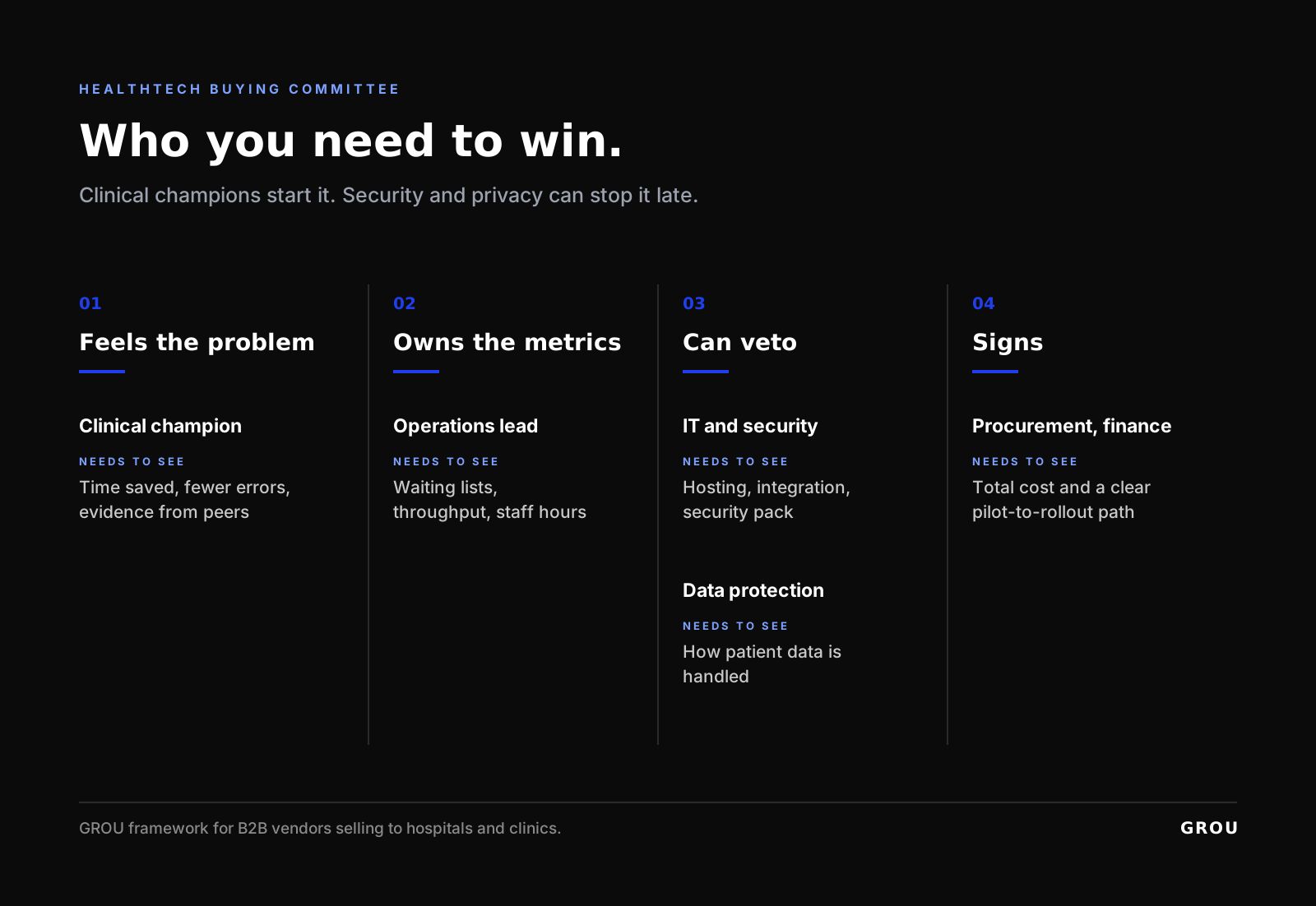
Most deals involve several functions, and the person who first says yes is rarely the one who signs:
Clinical champion: a department lead or senior clinician who feels the problem daily.
Operations or service line lead: owns throughput, waiting lists and staff time.
IT and information security: checks integration, hosting and security.
Procurement and finance: runs the buying process and the business case.
Data protection officer or privacy lead: approves how patient data is handled.
Bring IT, security and privacy in before the proposal, not after. A late security review is the most common reason good pilots stall.
Where to find accounts with a real need
Bought contact lists go stale quickly in healthcare. Start with account-level signals, then find the people:
Tenders and frameworks. Public-sector buyers publish tenders. In the EU, above-threshold tenders appear on TED, and in the UK on Find a Tender.
Digital programmes and funding. New digital health initiatives, grants and transformation programmes signal budget.
Service changes. New clinics, merged departments or new service lines create workflow problems.
Hiring. Job ads for roles your product supports, or a new head of digital, point to change.
Events. Health IT conferences and regional meetings are where operators compare notes.
For list-building from public sources, see our guide to B2B leads from directories.
How to reach each role
Clinicians: outcomes, not features
Clinicians respond to evidence and peers. Short, specific messages about time saved or errors avoided work better than product tours. Case notes, pilot results and peer quotes carry weight.
Operators: throughput and cost
Service line and operations leads care about waiting lists, staff hours and capacity. Frame the offer in their metrics.
IT and security: prove it's safe
Have a security pack ready: hosting location, certifications, integration approach, data flows and incident response. It shortens reviews more than any sales call.
Procurement and finance: make the business case easy
Give them the numbers they need to approve: total cost, savings assumptions and a clear pilot-to-rollout path.
Compliance: know the rules for your market
United States. If your product creates, receives or stores protected health information for a covered entity, HIPAA applies, usually through a business associate agreement. The HHS HIPAA pages set out the rules.
European Union. Health data is a special category under the GDPR, with stricter conditions for processing (GDPR Article 9). If your software is a medical device, the EU Medical Device Regulation also applies (European Commission).
Outreach itself. B2B outreach to named people in the EU usually relies on legitimate interest, with a documented balancing test and an easy opt-out. Our GDPR cold email playbook covers the details.
This is practical guidance, not legal advice. Check your approach with counsel for your market.
A 90-day healthtech pipeline plan
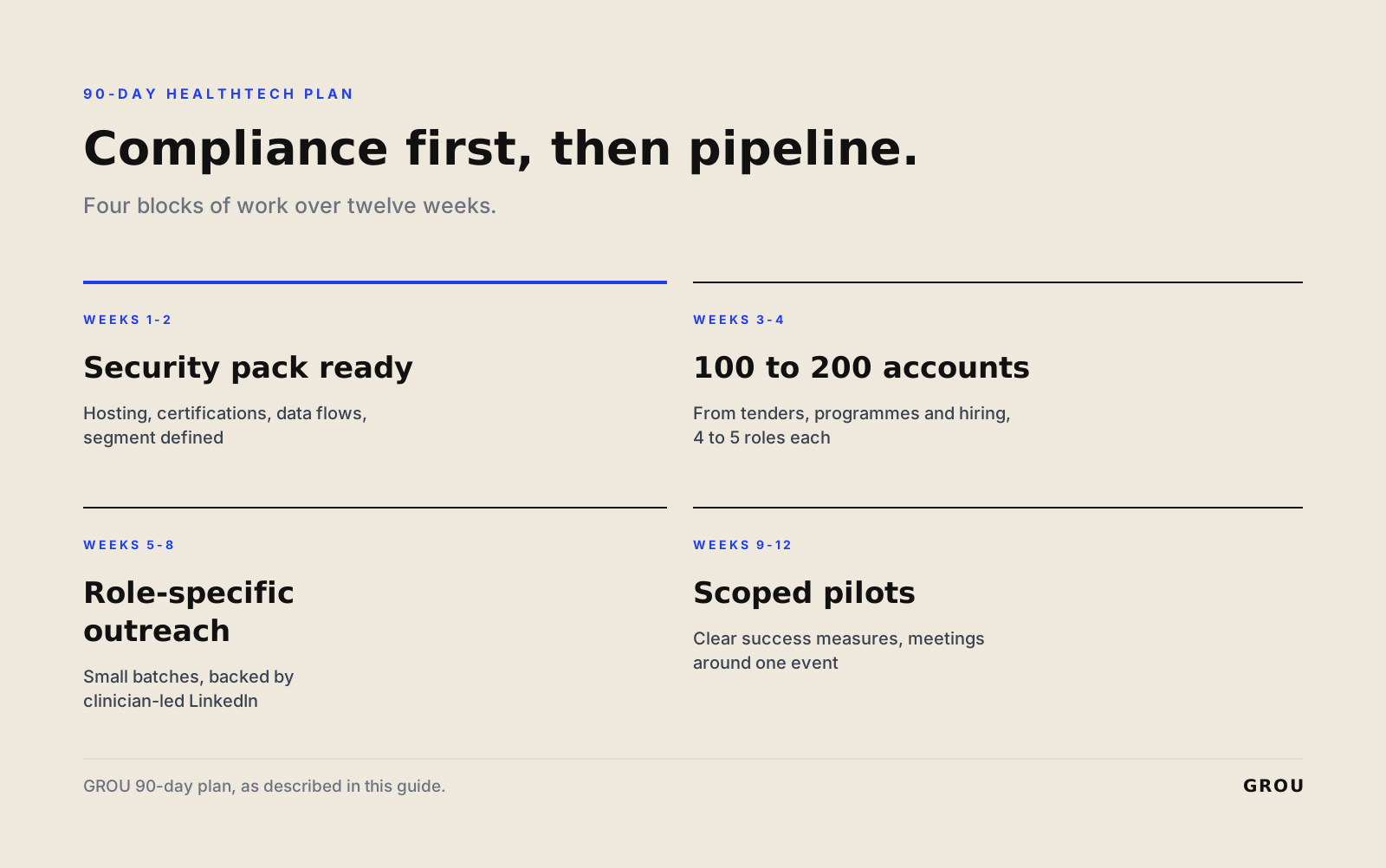
Weeks 1 to 2: prepare the security and compliance pack, and define the segment (care setting, size, region).
Weeks 3 to 4: build 100 to 200 target accounts from tenders, programmes and hiring signals. Map four or five roles per account.
Weeks 5 to 8: role-specific outreach in small batches, supported by clinician-led LinkedIn content.
Weeks 9 to 12: propose tightly scoped pilots with clear success measures, and book meetings around one health IT event.
Our lead generation team runs this model for regulated industries. The same approach works in pharma and IT services.
FAQ
What is healthtech lead generation?
It's how healthtech companies find and start conversations with hospitals, clinics and health systems that need their product, usually by reaching several roles in the same account.
Who should I contact first at a hospital?
Usually the clinical or operational lead who owns the problem. Bring IT, security and data protection in early, before a proposal.
How long is a healthtech sales cycle?
Often long, because procurement, security review and pilots all take time. Plan lead generation for a cycle measured in quarters.
Do I need HIPAA compliance to sell to US hospitals?
If your product handles protected health information for a covered entity, HIPAA applies and hospitals will expect a business associate agreement. Check with counsel for your case.
Does GDPR allow cold outreach to healthcare staff?
B2B outreach to named people can rely on legitimate interest if you document it and offer an easy opt-out. Health data itself is a special category with stricter rules.
About this guide
We are GROU, a B2B pipeline agency that runs lead generation, outbound, and LinkedIn content for clients across manufacturing, fintech, iGaming, software, pharma and professional services. Regulatory references link to their official sources.
Nothing in this guide is legal advice. For regulated markets, we align outreach and data handling with each client's legal and compliance team before launch.
Healthtech lead generation: a B2B playbook
Healthtech lead generation works when you sell to a buying committee inside hospitals and clinics, not to a single buyer. Clinicians champion, IT and security review, procurement and finance approve, and data protection can stop a deal late. The companies that win build accounts from public signals, reach each role with a message about their problem, and bring compliance into the conversation early. This playbook covers who buys, how to reach them and the rules to respect.
TL;DR
Healthtech buyers are committees: clinical leads, IT and security, procurement, finance and data protection.
Start from account signals such as new service lines, digital programmes, tenders and hiring.
Lead with outcomes clinicians and operators care about: time saved, fewer errors, patient flow.
Know the data rules for your market (HIPAA in the US, GDPR in the EU) and be ready with a security pack.
Who buys healthtech
Most deals involve several functions, and the person who first says yes is rarely the one who signs:
Clinical champion: a department lead or senior clinician who feels the problem daily.
Operations or service line lead: owns throughput, waiting lists and staff time.
IT and information security: checks integration, hosting and security.
Procurement and finance: runs the buying process and the business case.
Data protection officer or privacy lead: approves how patient data is handled.
Bring IT, security and privacy in before the proposal, not after. A late security review is the most common reason good pilots stall.
Where to find accounts with a real need
Bought contact lists go stale quickly in healthcare. Start with account-level signals, then find the people:
Tenders and frameworks. Public-sector buyers publish tenders. In the EU, above-threshold tenders appear on TED, and in the UK on Find a Tender.
Digital programmes and funding. New digital health initiatives, grants and transformation programmes signal budget.
Service changes. New clinics, merged departments or new service lines create workflow problems.
Hiring. Job ads for roles your product supports, or a new head of digital, point to change.
Events. Health IT conferences and regional meetings are where operators compare notes.
For list-building from public sources, see our guide to B2B leads from directories.
How to reach each role
Clinicians: outcomes, not features
Clinicians respond to evidence and peers. Short, specific messages about time saved or errors avoided work better than product tours. Case notes, pilot results and peer quotes carry weight.
Operators: throughput and cost
Service line and operations leads care about waiting lists, staff hours and capacity. Frame the offer in their metrics.
IT and security: prove it's safe
Have a security pack ready: hosting location, certifications, integration approach, data flows and incident response. It shortens reviews more than any sales call.
Procurement and finance: make the business case easy
Give them the numbers they need to approve: total cost, savings assumptions and a clear pilot-to-rollout path.
Compliance: know the rules for your market
United States. If your product creates, receives or stores protected health information for a covered entity, HIPAA applies, usually through a business associate agreement. The HHS HIPAA pages set out the rules.
European Union. Health data is a special category under the GDPR, with stricter conditions for processing (GDPR Article 9). If your software is a medical device, the EU Medical Device Regulation also applies (European Commission).
Outreach itself. B2B outreach to named people in the EU usually relies on legitimate interest, with a documented balancing test and an easy opt-out. Our GDPR cold email playbook covers the details.
This is practical guidance, not legal advice. Check your approach with counsel for your market.
A 90-day healthtech pipeline plan
Weeks 1 to 2: prepare the security and compliance pack, and define the segment (care setting, size, region).
Weeks 3 to 4: build 100 to 200 target accounts from tenders, programmes and hiring signals. Map four or five roles per account.
Weeks 5 to 8: role-specific outreach in small batches, supported by clinician-led LinkedIn content.
Weeks 9 to 12: propose tightly scoped pilots with clear success measures, and book meetings around one health IT event.
Our lead generation team runs this model for regulated industries. The same approach works in pharma and IT services.
FAQ
What is healthtech lead generation?
It's how healthtech companies find and start conversations with hospitals, clinics and health systems that need their product, usually by reaching several roles in the same account.
Who should I contact first at a hospital?
Usually the clinical or operational lead who owns the problem. Bring IT, security and data protection in early, before a proposal.
How long is a healthtech sales cycle?
Often long, because procurement, security review and pilots all take time. Plan lead generation for a cycle measured in quarters.
Do I need HIPAA compliance to sell to US hospitals?
If your product handles protected health information for a covered entity, HIPAA applies and hospitals will expect a business associate agreement. Check with counsel for your case.
Does GDPR allow cold outreach to healthcare staff?
B2B outreach to named people can rely on legitimate interest if you document it and offer an easy opt-out. Health data itself is a special category with stricter rules.
About this guide
We are GROU, a B2B pipeline agency that runs lead generation, outbound, and LinkedIn content for clients across manufacturing, fintech, iGaming, software, pharma and professional services. Regulatory references link to their official sources.
Nothing in this guide is legal advice. For regulated markets, we align outreach and data handling with each client's legal and compliance team before launch.
Healthtech lead generation: a B2B playbook
Healthtech lead generation works when you sell to a buying committee inside hospitals and clinics, not to a single buyer. Clinicians champion, IT and security review, procurement and finance approve, and data protection can stop a deal late. The companies that win build accounts from public signals, reach each role with a message about their problem, and bring compliance into the conversation early. This playbook covers who buys, how to reach them and the rules to respect.
TL;DR
Healthtech buyers are committees: clinical leads, IT and security, procurement, finance and data protection.
Start from account signals such as new service lines, digital programmes, tenders and hiring.
Lead with outcomes clinicians and operators care about: time saved, fewer errors, patient flow.
Know the data rules for your market (HIPAA in the US, GDPR in the EU) and be ready with a security pack.
Who buys healthtech
Most deals involve several functions, and the person who first says yes is rarely the one who signs:
Clinical champion: a department lead or senior clinician who feels the problem daily.
Operations or service line lead: owns throughput, waiting lists and staff time.
IT and information security: checks integration, hosting and security.
Procurement and finance: runs the buying process and the business case.
Data protection officer or privacy lead: approves how patient data is handled.
Bring IT, security and privacy in before the proposal, not after. A late security review is the most common reason good pilots stall.
Where to find accounts with a real need
Bought contact lists go stale quickly in healthcare. Start with account-level signals, then find the people:
Tenders and frameworks. Public-sector buyers publish tenders. In the EU, above-threshold tenders appear on TED, and in the UK on Find a Tender.
Digital programmes and funding. New digital health initiatives, grants and transformation programmes signal budget.
Service changes. New clinics, merged departments or new service lines create workflow problems.
Hiring. Job ads for roles your product supports, or a new head of digital, point to change.
Events. Health IT conferences and regional meetings are where operators compare notes.
For list-building from public sources, see our guide to B2B leads from directories.
How to reach each role
Clinicians: outcomes, not features
Clinicians respond to evidence and peers. Short, specific messages about time saved or errors avoided work better than product tours. Case notes, pilot results and peer quotes carry weight.
Operators: throughput and cost
Service line and operations leads care about waiting lists, staff hours and capacity. Frame the offer in their metrics.
IT and security: prove it's safe
Have a security pack ready: hosting location, certifications, integration approach, data flows and incident response. It shortens reviews more than any sales call.
Procurement and finance: make the business case easy
Give them the numbers they need to approve: total cost, savings assumptions and a clear pilot-to-rollout path.
Compliance: know the rules for your market
United States. If your product creates, receives or stores protected health information for a covered entity, HIPAA applies, usually through a business associate agreement. The HHS HIPAA pages set out the rules.
European Union. Health data is a special category under the GDPR, with stricter conditions for processing (GDPR Article 9). If your software is a medical device, the EU Medical Device Regulation also applies (European Commission).
Outreach itself. B2B outreach to named people in the EU usually relies on legitimate interest, with a documented balancing test and an easy opt-out. Our GDPR cold email playbook covers the details.
This is practical guidance, not legal advice. Check your approach with counsel for your market.
A 90-day healthtech pipeline plan
Weeks 1 to 2: prepare the security and compliance pack, and define the segment (care setting, size, region).
Weeks 3 to 4: build 100 to 200 target accounts from tenders, programmes and hiring signals. Map four or five roles per account.
Weeks 5 to 8: role-specific outreach in small batches, supported by clinician-led LinkedIn content.
Weeks 9 to 12: propose tightly scoped pilots with clear success measures, and book meetings around one health IT event.
Our lead generation team runs this model for regulated industries. The same approach works in pharma and IT services.
FAQ
What is healthtech lead generation?
It's how healthtech companies find and start conversations with hospitals, clinics and health systems that need their product, usually by reaching several roles in the same account.
Who should I contact first at a hospital?
Usually the clinical or operational lead who owns the problem. Bring IT, security and data protection in early, before a proposal.
How long is a healthtech sales cycle?
Often long, because procurement, security review and pilots all take time. Plan lead generation for a cycle measured in quarters.
Do I need HIPAA compliance to sell to US hospitals?
If your product handles protected health information for a covered entity, HIPAA applies and hospitals will expect a business associate agreement. Check with counsel for your case.
Does GDPR allow cold outreach to healthcare staff?
B2B outreach to named people can rely on legitimate interest if you document it and offer an easy opt-out. Health data itself is a special category with stricter rules.
About this guide
We are GROU, a B2B pipeline agency that runs lead generation, outbound, and LinkedIn content for clients across manufacturing, fintech, iGaming, software, pharma and professional services. Regulatory references link to their official sources.
Nothing in this guide is legal advice. For regulated markets, we align outreach and data handling with each client's legal and compliance team before launch.
Pipeline OS Newsletter
Build qualified pipeline
Get weekly tactics to generate demand, improve lead quality, and book more meetings.





Trusted by industry leaders
Trusted by industry leaders
Trusted by industry leaders
Ready to build qualified pipeline?
Ready to build qualified pipeline?
Ready to build qualified pipeline?
Book a call to see if we're the right fit, or take the 2-minute quiz to get a clear starting point.
Book a call to see if we're the right fit, or take the 2-minute quiz to get a clear starting point.
Book a call to see if we're the right fit, or take the 2-minute quiz to get a clear starting point.
" height="30.21639343089746px" id="hfGbXmQR2" width="30.216393430897455px"/></svg>)
Copyright © 2026 – All Right Reserved
Copyright © 2026 – All Right Reserved
Copyright © 2026 – All Right Reserved