%22%3E%3C/path%3E%3Cpath d=%22M 63.072 7.554 C 62.258 8.022 61.577 8.689 61.092 9.493 L 61.092 7.076 L 57.158 7.076 L 57.158 22.64 L 61.089 22.64 L 61.089 14.888 C 61.089 13.446 61.403 12.434 62.03 11.853 C 62.818 11.218 63.818 10.907 64.826 10.982 L 65.868 10.982 L 65.868 6.851 C 64.891 6.834 63.926 7.076 63.073 7.554 Z%22 fill=%22rgb(17,17,17)%22%3E%3C/path%3E%3Cpath d=%22M 78.916 7.82 C 76.363 6.49 73.321 6.49 70.768 7.82 C 69.562 8.473 68.564 9.451 67.888 10.644 C 67.167 11.931 66.803 13.387 66.834 14.862 C 66.804 16.332 67.157 17.785 67.86 19.077 C 68.515 20.267 69.494 21.246 70.684 21.901 C 71.924 22.576 73.318 22.92 74.73 22.898 C 76.164 22.918 77.58 22.575 78.846 21.901 C 80.062 21.247 81.073 20.27 81.768 19.077 C 82.506 17.797 82.88 16.339 82.85 14.862 C 82.88 13.389 82.517 11.934 81.797 10.647 C 81.12 9.455 80.122 8.477 78.917 7.824 M 78.803 14.862 C 78.829 15.739 78.636 16.608 78.241 17.391 C 77.903 18.046 77.38 18.588 76.738 18.95 C 76.124 19.293 75.432 19.472 74.729 19.47 C 73.668 19.497 72.648 19.061 71.934 18.276 C 71.139 17.323 70.741 16.1 70.823 14.862 C 70.741 13.62 71.149 12.395 71.959 11.45 C 72.687 10.667 73.715 10.233 74.783 10.256 C 75.859 10.236 76.894 10.67 77.635 11.45 C 78.464 12.387 78.884 13.616 78.801 14.864%22 fill=%22rgb(17,17,17)%22%3E%3C/path%3E%3Cpath d=%22M 95.906 7.076 L 95.906 15.646 C 95.975 16.68 95.643 17.701 94.979 18.498 C 94.311 19.184 93.379 19.547 92.422 19.495 C 91.475 19.544 90.553 19.18 89.894 18.498 C 89.23 17.701 88.898 16.68 88.967 15.646 L 88.967 7.076 L 85.033 7.076 L 85.033 16.207 C 85 17.449 85.275 18.68 85.834 19.79 C 86.327 20.75 87.095 21.542 88.039 22.065 C 89.033 22.594 90.145 22.861 91.271 22.838 C 92.188 22.847 93.095 22.65 93.926 22.263 C 94.708 21.905 95.388 21.36 95.906 20.675 L 95.906 22.645 L 99.865 22.645 L 99.865 7.076 Z%22 fill=%22rgb(17,17,17)%22%3E%3C/path%3E%3Cpath d=%22M 4.513 15.626 C 4.511 10.815 7.606 6.549 12.181 5.059 C 16.756 3.57 21.77 5.195 24.601 9.086 L 27.816 5.87 C 24.074 1.186 17.981 -0.943 12.137 0.393 C 6.292 1.728 1.728 6.292 0.393 12.137 C -0.943 17.981 1.186 24.074 5.87 27.816 L 9.085 24.601 C 6.214 22.512 4.515 19.177 4.513 15.626%22 fill=%22rgb(32,62,235)%22%3E%3C/path%3E%3Cpath d=%22M 17.114 14.343 L 13.354 18.01 L 13.354 18.026 L 21.071 18.026 L 11.412 27.609 L 17.389 27.609 L 23.999 21.081 L 23.999 28.316 L 24.005 28.316 L 27.967 24.393 L 27.967 14.343 Z%22 fill=%22rgb(32,62,235)%22%3E%3C/path%3E%3C/g%3E%3C/svg%3E) ×
× ××
××›
›
›
›
HeyReach vs Skylead 2026
HeyReach vs Skylead 2026
HeyReach vs Skylead 2026
HeyReach vs Skylead 2026
HeyReach vs Skylead 2026
HeyReach vs Skylead 2026

Author
Aljaz Peklaj

These two tools do not price the same thing, and that is the whole comparison. Skylead charges $100 a month for a seat that bundles LinkedIn automation, a hundred thousand emails and a data layer. HeyReach charges per LinkedIn sender and gets cheaper the more senders you run.
Which means the answer flips depending on a single number: how many LinkedIn accounts you are actually sending from.
TL;DR
HeyReach prices per LinkedIn sender on its Growth plan at $79 a month under ten senders and $59 at ten or more on monthly billing, dropping to $63 and $47 on annual. Above that it publishes agency pricing: Micro Agency 25 at $999 a month for a pooled 25 senders, Agency 50 at $1,399 for 50, and an Unlimited plan at $2,999 with no per-sender charge. Skylead publishes one number, $100 a month for an all-in-one seat, and routes annual and white label pricing through sales. At a single sender the two are close once you price the whole stack, because Skylead's $100 includes 100,000 emails a month, unlimited email accounts, an email finder and verifier and a B2B database, where HeyReach's plan description lists multichannel outreach without publishing an included email volume. By ten senders it is not close: $1,000 on Skylead against $590 on HeyReach monthly. At 25 senders it is $2,500 against $999. The asymmetry that matters beyond price is that HeyReach publishes its volume rates and Skylead does not, so an agency can budget one from the website and has to book a call for the other.
What each one charges, and for what
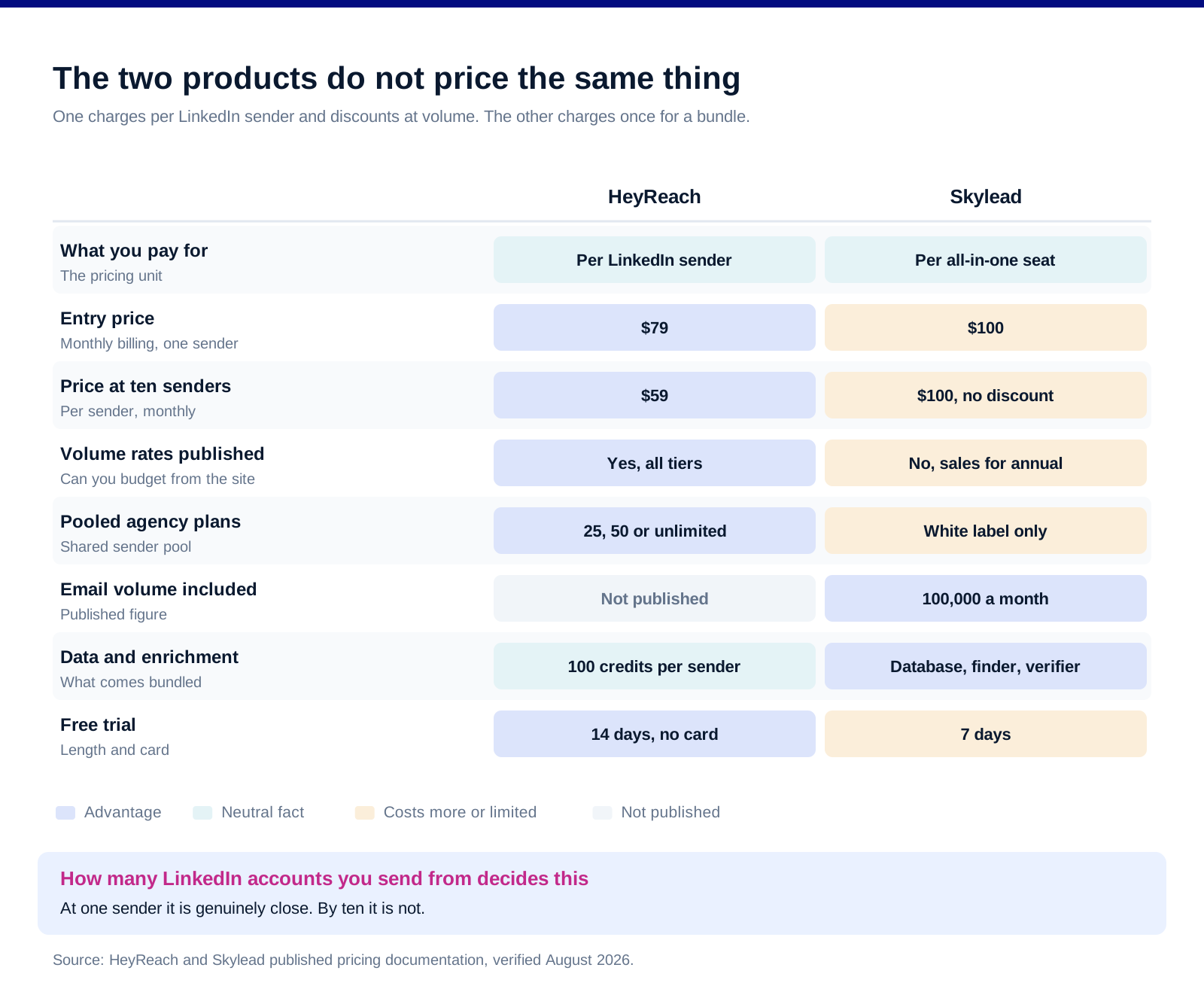
HeyReach prices per sender. Its published plans and pricing documentation puts Growth at $79 per sender a month under ten senders and $59 at ten or more, $71 and $53 on quarterly billing, and $63 and $47 on annual. Unlimited campaigns, a unified inbox, 100 enrichment credits per sender, integrations, API and webhooks.
HeyReach's agency tiers pool senders rather than charging for them individually. Micro Agency 25 is $999 a month, $899 quarterly, $799 annual, for 25 senders in a shared pool. Agency 50 is $1,399, $1,259 and $1,119 for 50. Both add white label, done-for-you onboarding, a dedicated Slack channel, 1,000 enrichment credits, client workspaces and manager roles.
The Unlimited plan is $2,999 a month, $2,699 quarterly and $2,399 annual, with no per-sender charge at all, 3,000 enrichment credits, multi-brand white labels and done-for-you migration.
Skylead publishes a single price. Its pricing page lists the All-in-one plan at $100 a month for one seat. White label and annual are both listed as talk to sales, with annual described as paying ten months and getting two free.
What that $100 covers is genuinely broad. Unlimited email accounts and 100,000 emails a month, LinkedIn automation including paid and free InMails, LinkedIn warm-up, smart sequences, unlimited campaigns, account-based prospecting, a B2B database, an email finder and verifier, image and GIF personalization, spintax and liquid syntax, plus API, webhooks and real-time sync with HubSpot, Pipedrive and Salesforce. AI data enrichment and an AI SDR are add-ons, with enrichment credits at a stated $1 per 100.
HeyReach gives fourteen days free with no card. Skylead gives seven. Small, but the longer window without a card is the lower-friction way to test a sending tool properly.
One thing we will not claim. HeyReach's published plan description says multichannel outreach but does not state an included email sending volume, while Skylead publishes 100,000 a month. That is a difference in what each vendor discloses, not proof that HeyReach sends no email, and we are not going to turn a gap in published information into a feature comparison.
The arithmetic at agency volume
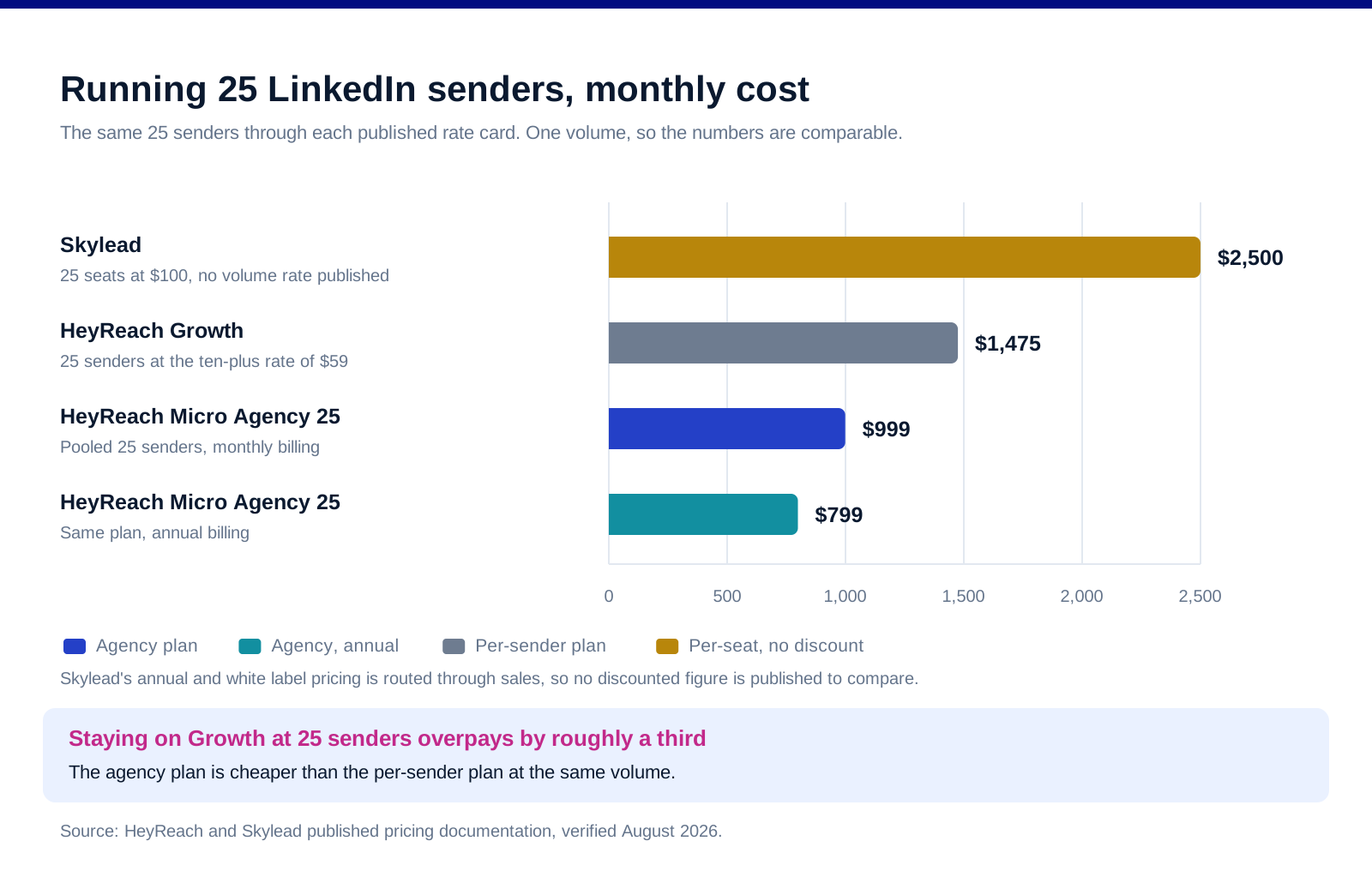
Run the same 25 senders through both rate cards. Skylead at $100 a seat is $2,500 a month. HeyReach Growth at the ten-plus rate of $59 is $1,475. HeyReach Micro Agency 25 is $999 monthly and $799 on annual billing.
The Agency plan being cheaper than Growth at the same volume is the useful detail. At 25 senders, staying on Growth costs $1,475 against $999 on Micro Agency 25, so a growing team that never re-reads the rate card overpays by roughly a third for the privilege.
At ten senders the gap is already decisive. $1,000 on Skylead against $590 on HeyReach monthly, or $470 annual. Even adding a dedicated cold email platform to the HeyReach side, which you may need to match Skylead's email volume, HeyReach comes out ahead well before you reach agency scale.
At one sender it genuinely is close. Skylead at $100 against HeyReach Growth at $79 monthly or $63 annual, except that Skylead's number also covers the email volume, the finder, the verifier and the database. Price your whole stack rather than the two line items, and the ranking can go either way depending on what else you are already paying for.
Our HeyReach pricing breakdown walks the tiers on their own if HeyReach is the side you are leaning towards, and our HeyReach versus Expandi comparison covers the other end of this category.
Which one you should actually buy
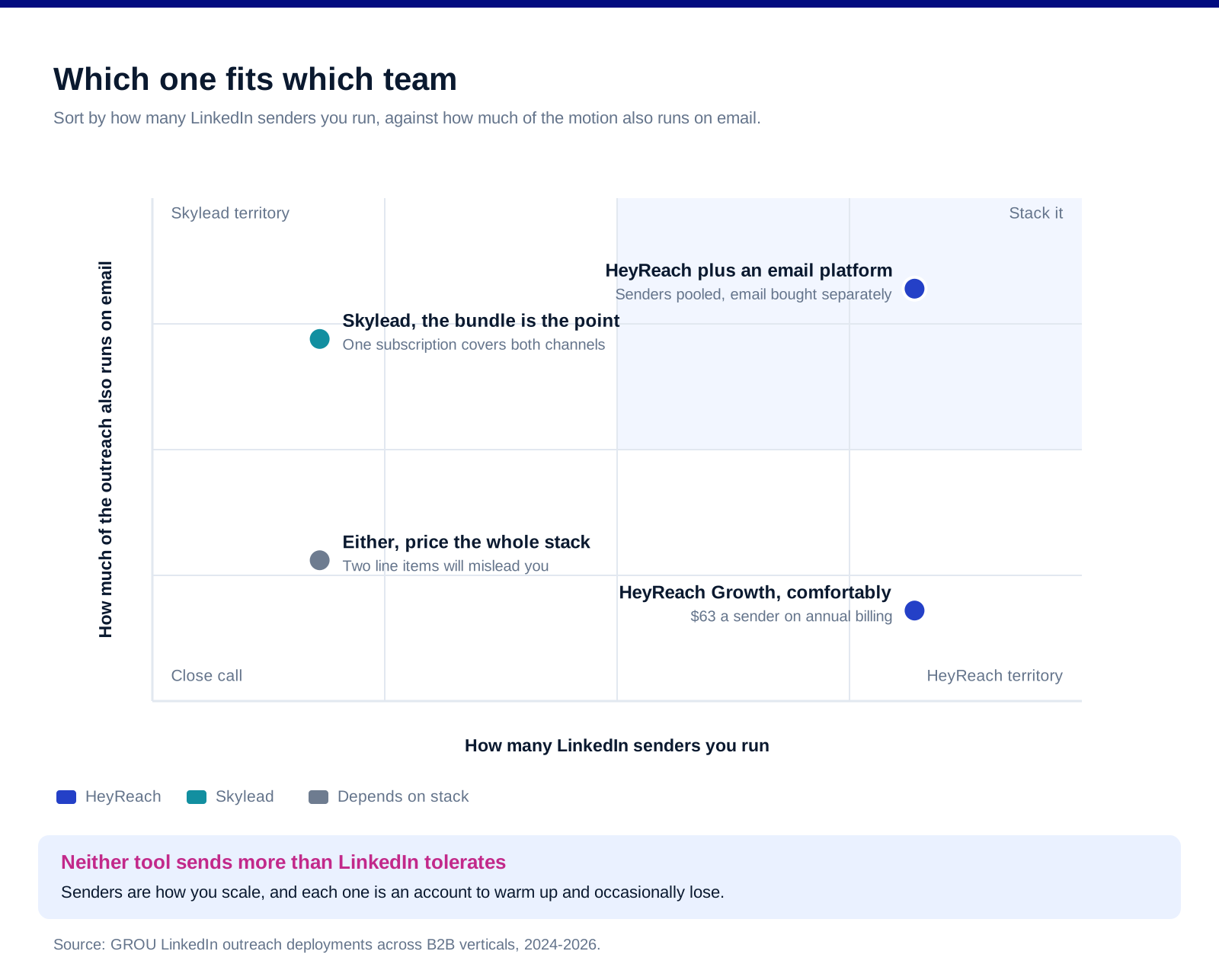
An agency running client inboxes at scale: HeyReach, comfortably. Pooled senders, published volume rates, white label from the agency tier and an Unlimited plan that caps the cost. This is what the pricing model is built for and Skylead does not compete on it at published rates.
One person running LinkedIn and cold email together: Skylead is the honest recommendation. A single $100 subscription that covers both, plus finding and verifying the addresses, is fewer moving parts than assembling the same capability from two or three tools, and probably cheaper.
A small sales team on LinkedIn only: HeyReach Growth. $63 a seat on annual billing for LinkedIn-first outreach with a unified inbox is the cheapest credible way to run this, and the ten-sender break is close enough to reach.
Anyone who needs to forecast the cost: HeyReach. Skylead routes annual and white label through sales, so you cannot build a budget from the website. That is not a criticism of the pricing, which may well be competitive, but it is a real difference in how you buy.
Anyone about to scale past ten senders: re-read the rate card first. Both products change shape at volume, and the most expensive mistake in this category is staying on the plan you signed up for.
What neither pricing page tells you
Sender count is the entire variable. Everything else in this comparison is noise next to it. Work out your number honestly, including the accounts you will add in six months, before you compare features.
LinkedIn limits, not tool limits, cap your volume. Neither product lets you send more than LinkedIn tolerates, and the tool that promises more is describing risk, not capacity. Our Waalaxy versus Expandi comparison goes into how differently vendors in this category state their limits.
Warm-up and account health are the real running cost. Budget for the accounts themselves, and for the ones you lose.
Enrichment credits are small on both. HeyReach gives 100 per sender on Growth, Skylead sells them at $1 per 100. Neither replaces a data provider, so do not price either as though it does.
Neither tool fixes a targeting problem. A precise list sent slowly beats a broad list sent at scale on both platforms, and the tool has nothing to do with which one you have.
FAQ
Is HeyReach cheaper than Skylead?
Above one sender, yes, and the gap widens fast. At ten senders HeyReach Growth is $590 a month monthly-billed against $1,000 on Skylead. At 25 it is $999 on Micro Agency 25 against $2,500. At a single sender it is closer than the headline suggests, because Skylead's $100 also covers 100,000 emails a month, an email finder and verifier and a B2B database.
What is the difference between HeyReach and Skylead?
Pricing model first: HeyReach charges per LinkedIn sender with published volume discounts and pooled agency plans, Skylead charges $100 for one all-in-one seat. Scope second: Skylead bundles LinkedIn, high-volume email and a data layer in one subscription, while HeyReach is LinkedIn-first with pooling and white label built for agencies running many client accounts.
Which is better for an agency?
HeyReach. Micro Agency 25 at $999 a month pools 25 senders, Agency 50 covers 50 at $1,399, and the Unlimited plan removes per-sender cost entirely at $2,999. Skylead offers white label but only on annual plans and only through sales, so you cannot compare it on published numbers.
Does Skylead include cold email?
Yes, and at unusual volume for the price. The All-in-one plan lists unlimited email accounts and 100,000 emails a month alongside the LinkedIn automation, plus an email finder and verifier. For a solo operator running both channels, that bundle is the strongest argument in Skylead's favour.
Do either offer a free trial?
Both do. HeyReach gives fourteen days with no credit card required, on limited features and seats. Skylead gives seven days. Fourteen days without a card is the more useful window for testing a sending tool, because account warm-up alone eats the first few days.
How many LinkedIn senders do you actually need?
Fewer than most people buy. Sending volume is capped by what LinkedIn tolerates per account, so senders are how you scale, but each one is an account to warm up, maintain and occasionally lose. Start with the number your current list justifies and add senders when the list outgrows them, not before.
Bottom line
Count your senders, then read the rate cards. One sender and a real email motion makes Skylead's $100 all-in-one bundle a legitimate answer that is hard to reassemble more cheaply from parts. Ten senders makes HeyReach cheaper by a wide margin, twenty-five makes it cheaper by more than half, and its agency tiers are pooled and published where Skylead's route through a sales conversation. Neither tool will send more than LinkedIn allows, so the number that decides your output is account health rather than anything on either pricing page.
Want the LinkedIn motion run rather than the tool chosen? Book a call with GROU. We run outbound and LinkedIn content inside B2B revenue engines across verticals.
We are GROU, a B2B pipeline agency that runs lead generation, outbound, and LinkedIn content for clients across manufacturing, fintech, iGaming, software, and professional services. The fit guidance reflects our LinkedIn outreach deployments between 2024 and 2026, anonymized to protect client confidentiality.
Some links in this article are affiliate. We may earn a small commission at no extra cost to you. We only recommend tools we've deployed for clients.
These two tools do not price the same thing, and that is the whole comparison. Skylead charges $100 a month for a seat that bundles LinkedIn automation, a hundred thousand emails and a data layer. HeyReach charges per LinkedIn sender and gets cheaper the more senders you run.
Which means the answer flips depending on a single number: how many LinkedIn accounts you are actually sending from.
TL;DR
HeyReach prices per LinkedIn sender on its Growth plan at $79 a month under ten senders and $59 at ten or more on monthly billing, dropping to $63 and $47 on annual. Above that it publishes agency pricing: Micro Agency 25 at $999 a month for a pooled 25 senders, Agency 50 at $1,399 for 50, and an Unlimited plan at $2,999 with no per-sender charge. Skylead publishes one number, $100 a month for an all-in-one seat, and routes annual and white label pricing through sales. At a single sender the two are close once you price the whole stack, because Skylead's $100 includes 100,000 emails a month, unlimited email accounts, an email finder and verifier and a B2B database, where HeyReach's plan description lists multichannel outreach without publishing an included email volume. By ten senders it is not close: $1,000 on Skylead against $590 on HeyReach monthly. At 25 senders it is $2,500 against $999. The asymmetry that matters beyond price is that HeyReach publishes its volume rates and Skylead does not, so an agency can budget one from the website and has to book a call for the other.
What each one charges, and for what
HeyReach prices per sender. Its published plans and pricing documentation puts Growth at $79 per sender a month under ten senders and $59 at ten or more, $71 and $53 on quarterly billing, and $63 and $47 on annual. Unlimited campaigns, a unified inbox, 100 enrichment credits per sender, integrations, API and webhooks.
HeyReach's agency tiers pool senders rather than charging for them individually. Micro Agency 25 is $999 a month, $899 quarterly, $799 annual, for 25 senders in a shared pool. Agency 50 is $1,399, $1,259 and $1,119 for 50. Both add white label, done-for-you onboarding, a dedicated Slack channel, 1,000 enrichment credits, client workspaces and manager roles.
The Unlimited plan is $2,999 a month, $2,699 quarterly and $2,399 annual, with no per-sender charge at all, 3,000 enrichment credits, multi-brand white labels and done-for-you migration.
Skylead publishes a single price. Its pricing page lists the All-in-one plan at $100 a month for one seat. White label and annual are both listed as talk to sales, with annual described as paying ten months and getting two free.
What that $100 covers is genuinely broad. Unlimited email accounts and 100,000 emails a month, LinkedIn automation including paid and free InMails, LinkedIn warm-up, smart sequences, unlimited campaigns, account-based prospecting, a B2B database, an email finder and verifier, image and GIF personalization, spintax and liquid syntax, plus API, webhooks and real-time sync with HubSpot, Pipedrive and Salesforce. AI data enrichment and an AI SDR are add-ons, with enrichment credits at a stated $1 per 100.
HeyReach gives fourteen days free with no card. Skylead gives seven. Small, but the longer window without a card is the lower-friction way to test a sending tool properly.
One thing we will not claim. HeyReach's published plan description says multichannel outreach but does not state an included email sending volume, while Skylead publishes 100,000 a month. That is a difference in what each vendor discloses, not proof that HeyReach sends no email, and we are not going to turn a gap in published information into a feature comparison.
The arithmetic at agency volume
Run the same 25 senders through both rate cards. Skylead at $100 a seat is $2,500 a month. HeyReach Growth at the ten-plus rate of $59 is $1,475. HeyReach Micro Agency 25 is $999 monthly and $799 on annual billing.
The Agency plan being cheaper than Growth at the same volume is the useful detail. At 25 senders, staying on Growth costs $1,475 against $999 on Micro Agency 25, so a growing team that never re-reads the rate card overpays by roughly a third for the privilege.
At ten senders the gap is already decisive. $1,000 on Skylead against $590 on HeyReach monthly, or $470 annual. Even adding a dedicated cold email platform to the HeyReach side, which you may need to match Skylead's email volume, HeyReach comes out ahead well before you reach agency scale.
At one sender it genuinely is close. Skylead at $100 against HeyReach Growth at $79 monthly or $63 annual, except that Skylead's number also covers the email volume, the finder, the verifier and the database. Price your whole stack rather than the two line items, and the ranking can go either way depending on what else you are already paying for.
Our HeyReach pricing breakdown walks the tiers on their own if HeyReach is the side you are leaning towards, and our HeyReach versus Expandi comparison covers the other end of this category.
Which one you should actually buy
An agency running client inboxes at scale: HeyReach, comfortably. Pooled senders, published volume rates, white label from the agency tier and an Unlimited plan that caps the cost. This is what the pricing model is built for and Skylead does not compete on it at published rates.
One person running LinkedIn and cold email together: Skylead is the honest recommendation. A single $100 subscription that covers both, plus finding and verifying the addresses, is fewer moving parts than assembling the same capability from two or three tools, and probably cheaper.
A small sales team on LinkedIn only: HeyReach Growth. $63 a seat on annual billing for LinkedIn-first outreach with a unified inbox is the cheapest credible way to run this, and the ten-sender break is close enough to reach.
Anyone who needs to forecast the cost: HeyReach. Skylead routes annual and white label through sales, so you cannot build a budget from the website. That is not a criticism of the pricing, which may well be competitive, but it is a real difference in how you buy.
Anyone about to scale past ten senders: re-read the rate card first. Both products change shape at volume, and the most expensive mistake in this category is staying on the plan you signed up for.
What neither pricing page tells you
Sender count is the entire variable. Everything else in this comparison is noise next to it. Work out your number honestly, including the accounts you will add in six months, before you compare features.
LinkedIn limits, not tool limits, cap your volume. Neither product lets you send more than LinkedIn tolerates, and the tool that promises more is describing risk, not capacity. Our Waalaxy versus Expandi comparison goes into how differently vendors in this category state their limits.
Warm-up and account health are the real running cost. Budget for the accounts themselves, and for the ones you lose.
Enrichment credits are small on both. HeyReach gives 100 per sender on Growth, Skylead sells them at $1 per 100. Neither replaces a data provider, so do not price either as though it does.
Neither tool fixes a targeting problem. A precise list sent slowly beats a broad list sent at scale on both platforms, and the tool has nothing to do with which one you have.
FAQ
Is HeyReach cheaper than Skylead?
Above one sender, yes, and the gap widens fast. At ten senders HeyReach Growth is $590 a month monthly-billed against $1,000 on Skylead. At 25 it is $999 on Micro Agency 25 against $2,500. At a single sender it is closer than the headline suggests, because Skylead's $100 also covers 100,000 emails a month, an email finder and verifier and a B2B database.
What is the difference between HeyReach and Skylead?
Pricing model first: HeyReach charges per LinkedIn sender with published volume discounts and pooled agency plans, Skylead charges $100 for one all-in-one seat. Scope second: Skylead bundles LinkedIn, high-volume email and a data layer in one subscription, while HeyReach is LinkedIn-first with pooling and white label built for agencies running many client accounts.
Which is better for an agency?
HeyReach. Micro Agency 25 at $999 a month pools 25 senders, Agency 50 covers 50 at $1,399, and the Unlimited plan removes per-sender cost entirely at $2,999. Skylead offers white label but only on annual plans and only through sales, so you cannot compare it on published numbers.
Does Skylead include cold email?
Yes, and at unusual volume for the price. The All-in-one plan lists unlimited email accounts and 100,000 emails a month alongside the LinkedIn automation, plus an email finder and verifier. For a solo operator running both channels, that bundle is the strongest argument in Skylead's favour.
Do either offer a free trial?
Both do. HeyReach gives fourteen days with no credit card required, on limited features and seats. Skylead gives seven days. Fourteen days without a card is the more useful window for testing a sending tool, because account warm-up alone eats the first few days.
How many LinkedIn senders do you actually need?
Fewer than most people buy. Sending volume is capped by what LinkedIn tolerates per account, so senders are how you scale, but each one is an account to warm up, maintain and occasionally lose. Start with the number your current list justifies and add senders when the list outgrows them, not before.
Bottom line
Count your senders, then read the rate cards. One sender and a real email motion makes Skylead's $100 all-in-one bundle a legitimate answer that is hard to reassemble more cheaply from parts. Ten senders makes HeyReach cheaper by a wide margin, twenty-five makes it cheaper by more than half, and its agency tiers are pooled and published where Skylead's route through a sales conversation. Neither tool will send more than LinkedIn allows, so the number that decides your output is account health rather than anything on either pricing page.
Want the LinkedIn motion run rather than the tool chosen? Book a call with GROU. We run outbound and LinkedIn content inside B2B revenue engines across verticals.
We are GROU, a B2B pipeline agency that runs lead generation, outbound, and LinkedIn content for clients across manufacturing, fintech, iGaming, software, and professional services. The fit guidance reflects our LinkedIn outreach deployments between 2024 and 2026, anonymized to protect client confidentiality.
Some links in this article are affiliate. We may earn a small commission at no extra cost to you. We only recommend tools we've deployed for clients.
These two tools do not price the same thing, and that is the whole comparison. Skylead charges $100 a month for a seat that bundles LinkedIn automation, a hundred thousand emails and a data layer. HeyReach charges per LinkedIn sender and gets cheaper the more senders you run.
Which means the answer flips depending on a single number: how many LinkedIn accounts you are actually sending from.
TL;DR
HeyReach prices per LinkedIn sender on its Growth plan at $79 a month under ten senders and $59 at ten or more on monthly billing, dropping to $63 and $47 on annual. Above that it publishes agency pricing: Micro Agency 25 at $999 a month for a pooled 25 senders, Agency 50 at $1,399 for 50, and an Unlimited plan at $2,999 with no per-sender charge. Skylead publishes one number, $100 a month for an all-in-one seat, and routes annual and white label pricing through sales. At a single sender the two are close once you price the whole stack, because Skylead's $100 includes 100,000 emails a month, unlimited email accounts, an email finder and verifier and a B2B database, where HeyReach's plan description lists multichannel outreach without publishing an included email volume. By ten senders it is not close: $1,000 on Skylead against $590 on HeyReach monthly. At 25 senders it is $2,500 against $999. The asymmetry that matters beyond price is that HeyReach publishes its volume rates and Skylead does not, so an agency can budget one from the website and has to book a call for the other.
What each one charges, and for what
HeyReach prices per sender. Its published plans and pricing documentation puts Growth at $79 per sender a month under ten senders and $59 at ten or more, $71 and $53 on quarterly billing, and $63 and $47 on annual. Unlimited campaigns, a unified inbox, 100 enrichment credits per sender, integrations, API and webhooks.
HeyReach's agency tiers pool senders rather than charging for them individually. Micro Agency 25 is $999 a month, $899 quarterly, $799 annual, for 25 senders in a shared pool. Agency 50 is $1,399, $1,259 and $1,119 for 50. Both add white label, done-for-you onboarding, a dedicated Slack channel, 1,000 enrichment credits, client workspaces and manager roles.
The Unlimited plan is $2,999 a month, $2,699 quarterly and $2,399 annual, with no per-sender charge at all, 3,000 enrichment credits, multi-brand white labels and done-for-you migration.
Skylead publishes a single price. Its pricing page lists the All-in-one plan at $100 a month for one seat. White label and annual are both listed as talk to sales, with annual described as paying ten months and getting two free.
What that $100 covers is genuinely broad. Unlimited email accounts and 100,000 emails a month, LinkedIn automation including paid and free InMails, LinkedIn warm-up, smart sequences, unlimited campaigns, account-based prospecting, a B2B database, an email finder and verifier, image and GIF personalization, spintax and liquid syntax, plus API, webhooks and real-time sync with HubSpot, Pipedrive and Salesforce. AI data enrichment and an AI SDR are add-ons, with enrichment credits at a stated $1 per 100.
HeyReach gives fourteen days free with no card. Skylead gives seven. Small, but the longer window without a card is the lower-friction way to test a sending tool properly.
One thing we will not claim. HeyReach's published plan description says multichannel outreach but does not state an included email sending volume, while Skylead publishes 100,000 a month. That is a difference in what each vendor discloses, not proof that HeyReach sends no email, and we are not going to turn a gap in published information into a feature comparison.
The arithmetic at agency volume
Run the same 25 senders through both rate cards. Skylead at $100 a seat is $2,500 a month. HeyReach Growth at the ten-plus rate of $59 is $1,475. HeyReach Micro Agency 25 is $999 monthly and $799 on annual billing.
The Agency plan being cheaper than Growth at the same volume is the useful detail. At 25 senders, staying on Growth costs $1,475 against $999 on Micro Agency 25, so a growing team that never re-reads the rate card overpays by roughly a third for the privilege.
At ten senders the gap is already decisive. $1,000 on Skylead against $590 on HeyReach monthly, or $470 annual. Even adding a dedicated cold email platform to the HeyReach side, which you may need to match Skylead's email volume, HeyReach comes out ahead well before you reach agency scale.
At one sender it genuinely is close. Skylead at $100 against HeyReach Growth at $79 monthly or $63 annual, except that Skylead's number also covers the email volume, the finder, the verifier and the database. Price your whole stack rather than the two line items, and the ranking can go either way depending on what else you are already paying for.
Our HeyReach pricing breakdown walks the tiers on their own if HeyReach is the side you are leaning towards, and our HeyReach versus Expandi comparison covers the other end of this category.
Which one you should actually buy
An agency running client inboxes at scale: HeyReach, comfortably. Pooled senders, published volume rates, white label from the agency tier and an Unlimited plan that caps the cost. This is what the pricing model is built for and Skylead does not compete on it at published rates.
One person running LinkedIn and cold email together: Skylead is the honest recommendation. A single $100 subscription that covers both, plus finding and verifying the addresses, is fewer moving parts than assembling the same capability from two or three tools, and probably cheaper.
A small sales team on LinkedIn only: HeyReach Growth. $63 a seat on annual billing for LinkedIn-first outreach with a unified inbox is the cheapest credible way to run this, and the ten-sender break is close enough to reach.
Anyone who needs to forecast the cost: HeyReach. Skylead routes annual and white label through sales, so you cannot build a budget from the website. That is not a criticism of the pricing, which may well be competitive, but it is a real difference in how you buy.
Anyone about to scale past ten senders: re-read the rate card first. Both products change shape at volume, and the most expensive mistake in this category is staying on the plan you signed up for.
What neither pricing page tells you
Sender count is the entire variable. Everything else in this comparison is noise next to it. Work out your number honestly, including the accounts you will add in six months, before you compare features.
LinkedIn limits, not tool limits, cap your volume. Neither product lets you send more than LinkedIn tolerates, and the tool that promises more is describing risk, not capacity. Our Waalaxy versus Expandi comparison goes into how differently vendors in this category state their limits.
Warm-up and account health are the real running cost. Budget for the accounts themselves, and for the ones you lose.
Enrichment credits are small on both. HeyReach gives 100 per sender on Growth, Skylead sells them at $1 per 100. Neither replaces a data provider, so do not price either as though it does.
Neither tool fixes a targeting problem. A precise list sent slowly beats a broad list sent at scale on both platforms, and the tool has nothing to do with which one you have.
FAQ
Is HeyReach cheaper than Skylead?
Above one sender, yes, and the gap widens fast. At ten senders HeyReach Growth is $590 a month monthly-billed against $1,000 on Skylead. At 25 it is $999 on Micro Agency 25 against $2,500. At a single sender it is closer than the headline suggests, because Skylead's $100 also covers 100,000 emails a month, an email finder and verifier and a B2B database.
What is the difference between HeyReach and Skylead?
Pricing model first: HeyReach charges per LinkedIn sender with published volume discounts and pooled agency plans, Skylead charges $100 for one all-in-one seat. Scope second: Skylead bundles LinkedIn, high-volume email and a data layer in one subscription, while HeyReach is LinkedIn-first with pooling and white label built for agencies running many client accounts.
Which is better for an agency?
HeyReach. Micro Agency 25 at $999 a month pools 25 senders, Agency 50 covers 50 at $1,399, and the Unlimited plan removes per-sender cost entirely at $2,999. Skylead offers white label but only on annual plans and only through sales, so you cannot compare it on published numbers.
Does Skylead include cold email?
Yes, and at unusual volume for the price. The All-in-one plan lists unlimited email accounts and 100,000 emails a month alongside the LinkedIn automation, plus an email finder and verifier. For a solo operator running both channels, that bundle is the strongest argument in Skylead's favour.
Do either offer a free trial?
Both do. HeyReach gives fourteen days with no credit card required, on limited features and seats. Skylead gives seven days. Fourteen days without a card is the more useful window for testing a sending tool, because account warm-up alone eats the first few days.
How many LinkedIn senders do you actually need?
Fewer than most people buy. Sending volume is capped by what LinkedIn tolerates per account, so senders are how you scale, but each one is an account to warm up, maintain and occasionally lose. Start with the number your current list justifies and add senders when the list outgrows them, not before.
Bottom line
Count your senders, then read the rate cards. One sender and a real email motion makes Skylead's $100 all-in-one bundle a legitimate answer that is hard to reassemble more cheaply from parts. Ten senders makes HeyReach cheaper by a wide margin, twenty-five makes it cheaper by more than half, and its agency tiers are pooled and published where Skylead's route through a sales conversation. Neither tool will send more than LinkedIn allows, so the number that decides your output is account health rather than anything on either pricing page.
Want the LinkedIn motion run rather than the tool chosen? Book a call with GROU. We run outbound and LinkedIn content inside B2B revenue engines across verticals.
We are GROU, a B2B pipeline agency that runs lead generation, outbound, and LinkedIn content for clients across manufacturing, fintech, iGaming, software, and professional services. The fit guidance reflects our LinkedIn outreach deployments between 2024 and 2026, anonymized to protect client confidentiality.
Some links in this article are affiliate. We may earn a small commission at no extra cost to you. We only recommend tools we've deployed for clients.

Pipeline OS Newsletter
Build qualified pipeline
Get weekly tactics to generate demand, improve lead quality, and book more meetings.





Trusted by industry leaders
Trusted by industry leaders
Trusted by industry leaders
Ready to build qualified pipeline?
Ready to build qualified pipeline?
Ready to build qualified pipeline?
Book a call to see if we're the right fit, or take the 2-minute quiz to get a clear starting point.
Book a call to see if we're the right fit, or take the 2-minute quiz to get a clear starting point.
Book a call to see if we're the right fit, or take the 2-minute quiz to get a clear starting point.
" height="30.21639343089746px" id="hfGbXmQR2" width="30.216393430897455px"/></svg>)
Copyright © 2026 – All Right Reserved
Copyright © 2026 – All Right Reserved
Copyright © 2026 – All Right Reserved