%22%3E%3C/path%3E%3Cpath d=%22M 63.072 7.554 C 62.258 8.022 61.577 8.689 61.092 9.493 L 61.092 7.076 L 57.158 7.076 L 57.158 22.64 L 61.089 22.64 L 61.089 14.888 C 61.089 13.446 61.403 12.434 62.03 11.853 C 62.818 11.218 63.818 10.907 64.826 10.982 L 65.868 10.982 L 65.868 6.851 C 64.891 6.834 63.926 7.076 63.073 7.554 Z%22 fill=%22rgb(17,17,17)%22%3E%3C/path%3E%3Cpath d=%22M 78.916 7.82 C 76.363 6.49 73.321 6.49 70.768 7.82 C 69.562 8.473 68.564 9.451 67.888 10.644 C 67.167 11.931 66.803 13.387 66.834 14.862 C 66.804 16.332 67.157 17.785 67.86 19.077 C 68.515 20.267 69.494 21.246 70.684 21.901 C 71.924 22.576 73.318 22.92 74.73 22.898 C 76.164 22.918 77.58 22.575 78.846 21.901 C 80.062 21.247 81.073 20.27 81.768 19.077 C 82.506 17.797 82.88 16.339 82.85 14.862 C 82.88 13.389 82.517 11.934 81.797 10.647 C 81.12 9.455 80.122 8.477 78.917 7.824 M 78.803 14.862 C 78.829 15.739 78.636 16.608 78.241 17.391 C 77.903 18.046 77.38 18.588 76.738 18.95 C 76.124 19.293 75.432 19.472 74.729 19.47 C 73.668 19.497 72.648 19.061 71.934 18.276 C 71.139 17.323 70.741 16.1 70.823 14.862 C 70.741 13.62 71.149 12.395 71.959 11.45 C 72.687 10.667 73.715 10.233 74.783 10.256 C 75.859 10.236 76.894 10.67 77.635 11.45 C 78.464 12.387 78.884 13.616 78.801 14.864%22 fill=%22rgb(17,17,17)%22%3E%3C/path%3E%3Cpath d=%22M 95.906 7.076 L 95.906 15.646 C 95.975 16.68 95.643 17.701 94.979 18.498 C 94.311 19.184 93.379 19.547 92.422 19.495 C 91.475 19.544 90.553 19.18 89.894 18.498 C 89.23 17.701 88.898 16.68 88.967 15.646 L 88.967 7.076 L 85.033 7.076 L 85.033 16.207 C 85 17.449 85.275 18.68 85.834 19.79 C 86.327 20.75 87.095 21.542 88.039 22.065 C 89.033 22.594 90.145 22.861 91.271 22.838 C 92.188 22.847 93.095 22.65 93.926 22.263 C 94.708 21.905 95.388 21.36 95.906 20.675 L 95.906 22.645 L 99.865 22.645 L 99.865 7.076 Z%22 fill=%22rgb(17,17,17)%22%3E%3C/path%3E%3Cpath d=%22M 4.513 15.626 C 4.511 10.815 7.606 6.549 12.181 5.059 C 16.756 3.57 21.77 5.195 24.601 9.086 L 27.816 5.87 C 24.074 1.186 17.981 -0.943 12.137 0.393 C 6.292 1.728 1.728 6.292 0.393 12.137 C -0.943 17.981 1.186 24.074 5.87 27.816 L 9.085 24.601 C 6.214 22.512 4.515 19.177 4.513 15.626%22 fill=%22rgb(32,62,235)%22%3E%3C/path%3E%3Cpath d=%22M 17.114 14.343 L 13.354 18.01 L 13.354 18.026 L 21.071 18.026 L 11.412 27.609 L 17.389 27.609 L 23.999 21.081 L 23.999 28.316 L 24.005 28.316 L 27.967 24.393 L 27.967 14.343 Z%22 fill=%22rgb(32,62,235)%22%3E%3C/path%3E%3C/g%3E%3C/svg%3E) ×
× ××
××›
›
›
›
Kaspr review 2026: pricing, data quality, verdict
Kaspr review 2026: pricing, data quality, verdict
Kaspr review 2026: pricing, data quality, verdict
Kaspr review 2026: pricing, data quality, verdict
Kaspr review 2026: pricing, data quality, verdict
Kaspr review 2026: pricing, data quality, verdict

Author
Aljaz Peklaj

Kaspr is the tool European SDRs reach for when the US-built databases keep returning dead numbers for Paris, Munich, and Ljubljana. It is a Chrome-extension-first contact finder that reveals emails and phone numbers on top of LinkedIn, backed by one of the strongest European datasets in the category and priced for individuals and small teams rather than enterprise procurement. This review covers the 2026 plans, where the data is actually good, and who should buy it over the bigger names.
TL;DR
Kaspr in 2026 runs a free tier (a handful of reveals to test the workflow), Starter at roughly 45-49 euro a month, Business at roughly 79-99 euro depending on billing, and a custom Organization tier with API access; paid tiers include unlimited B2B email reveals with phone credits metered at roughly 100-200 a month by plan. The reason to buy is European data: 120M+ European contacts with roughly 90% accuracy claims on EU phone reveals, GDPR-aligned processing, and coverage in markets where US-first databases thin out. The reasons to hesitate: US coverage is weaker than the big American databases, phone credits deplete fast on active teams, and there is no native sequencer, so Kaspr feeds your outreach stack rather than replacing it. For EU-focused SDRs, recruiters, and founders, it is one of the highest-value tools per euro in the category; for US-first motions, it is the wrong specialist. Pricing moves often in this category; confirm current numbers on the live page at signup.
The 2026 plans
Kaspr prices in euros, meters phones and emails separately, and resets credits monthly without rollover.
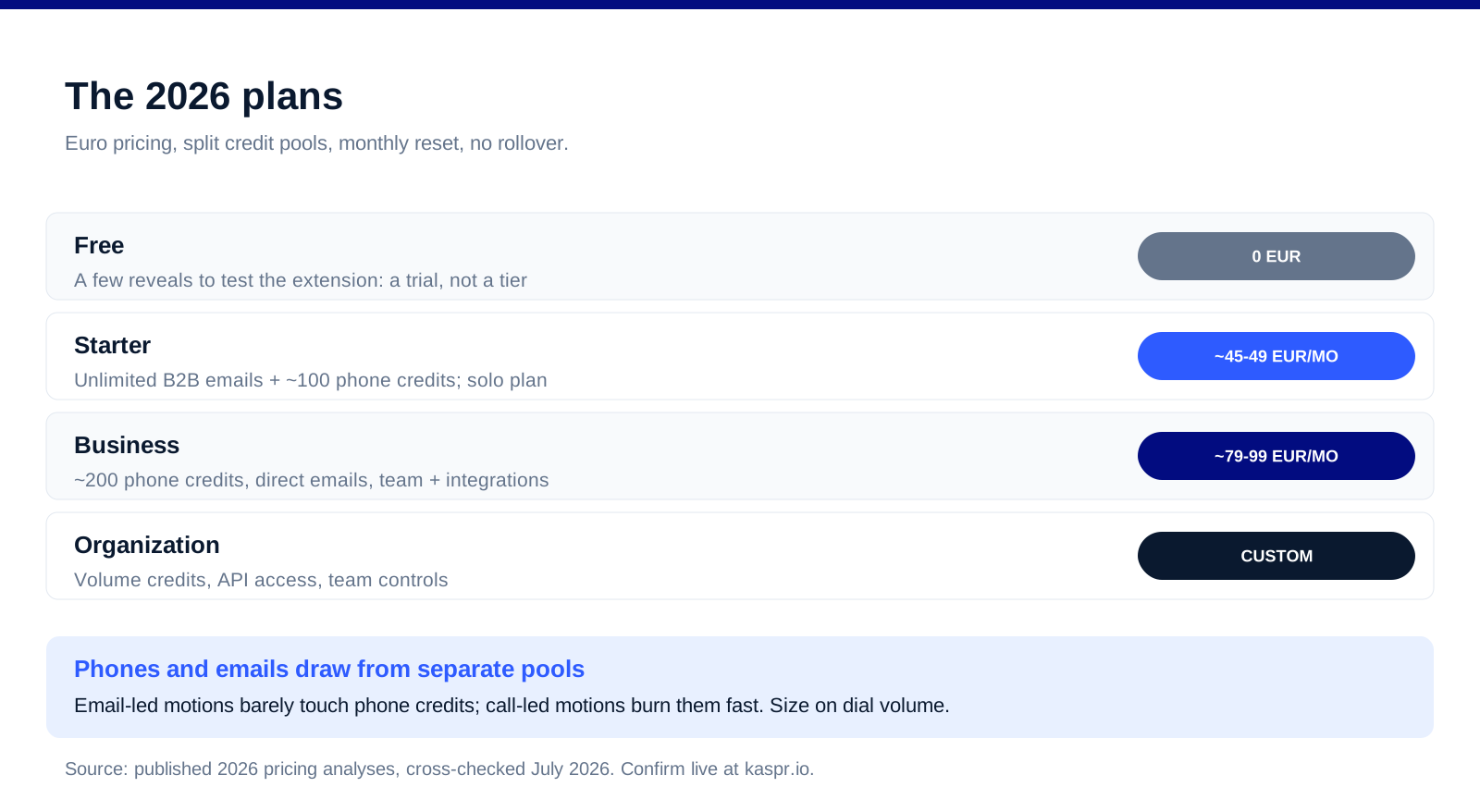
Free (0 euro). A small number of reveals to test the Chrome extension on real profiles. A trial, not a working tier.
Starter (~45-49 euro/month). Unlimited B2B email reveals and around 100 phone credits a month, plus the extension, the lead dashboard, and exports. The solo prospector's plan.
Business (~79-99 euro/month by billing). Roughly doubles phone credits (~200/month), adds direct-email credits and team features, and connects the wider integration set: HubSpot, Salesforce, Pipedrive, lemlist, Aircall, and Zapier among them.
Organization (custom). Volume credits, API access, and team controls, quoted per deal.
The credit mechanics that matter. Phone and email credits draw from separate pools, so an email-led motion barely touches phone credits while a call-led motion burns them fast. Bulk reveals from a Sales Navigator list drain pools quickest, credits do not roll over, and category pricing moves often enough that the live pricing page is the only number that counts at checkout.

Where the data is actually good
Contact databases are regional whether vendors admit it or not, and Kaspr's shape is unusually clear.
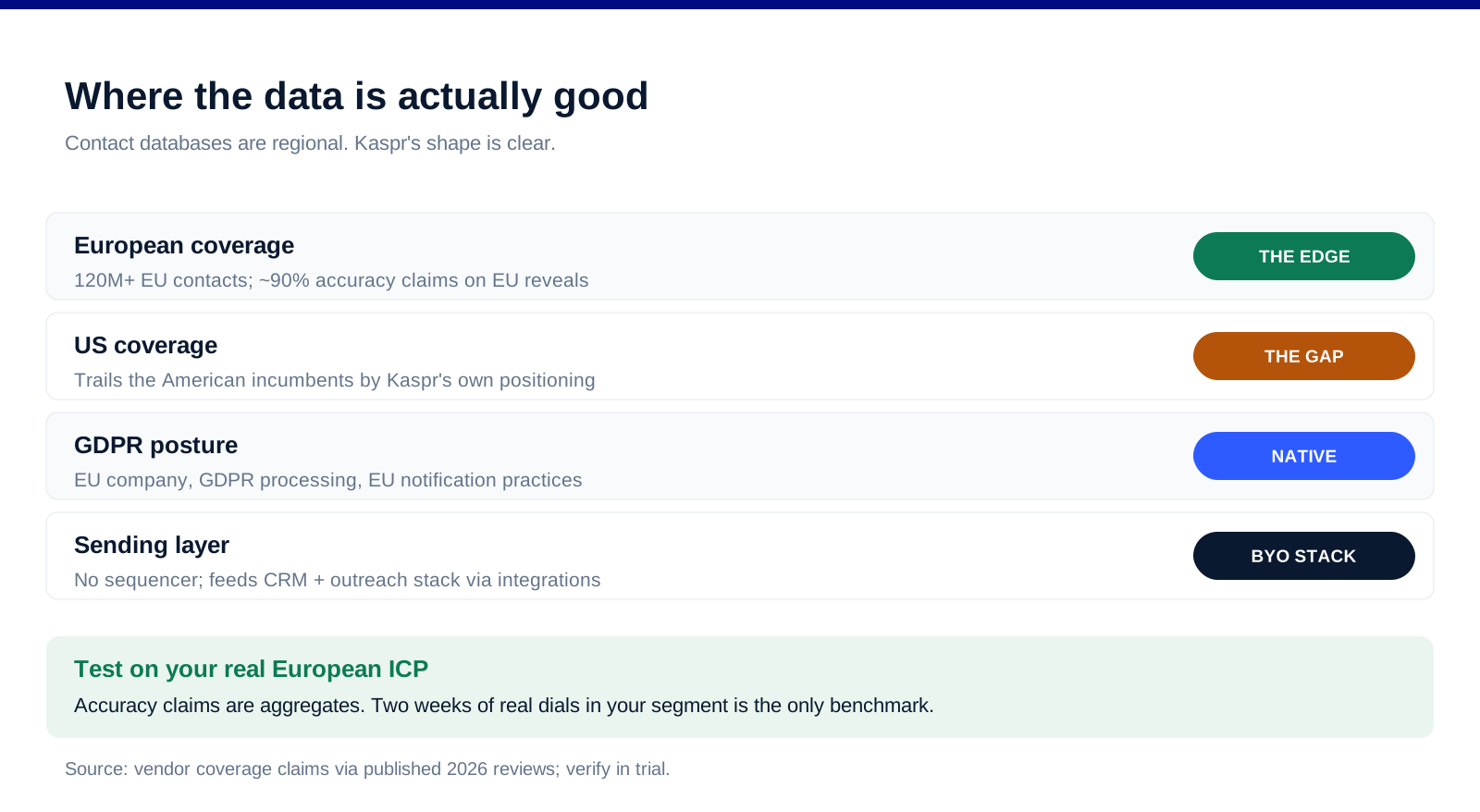
The European edge. 120M+ European contacts and 500M phones and emails globally, with accuracy claims around 90% on European reveals. In practice this is the tool's whole argument: DACH, France, Benelux, the Nordics, and CEE profiles that return working mobiles where US-built databases return switchboards or nothing. For teams prospecting Europe, that difference is the pipeline.
The US gap. Kaspr's own positioning concedes North American coverage trails the American incumbents. If your ICP is US-first, a US-built database wins, and the honest comparison set is in our Lusha review and Apollo pricing breakdowns.
GDPR posture. Kaspr is a European company processing under GDPR with notification practices built for EU prospecting. For compliance-sensitive buyers, and for anyone selling into regulated European industries, that is a real differentiator, not a checkbox.
The workflow. The Chrome extension reveals contacts directly on LinkedIn profiles and Sales Navigator lists, distinguishing mobile from direct-dial and categorizing emails; the dashboard organizes lists, tags, and exports; the integrations push everything into CRM and sequencer. What Kaspr does not do is send: there is no native sequencing, so it slots into the stack beside the outreach infrastructure rather than replacing any of it.
Verdict: who should buy Kaspr
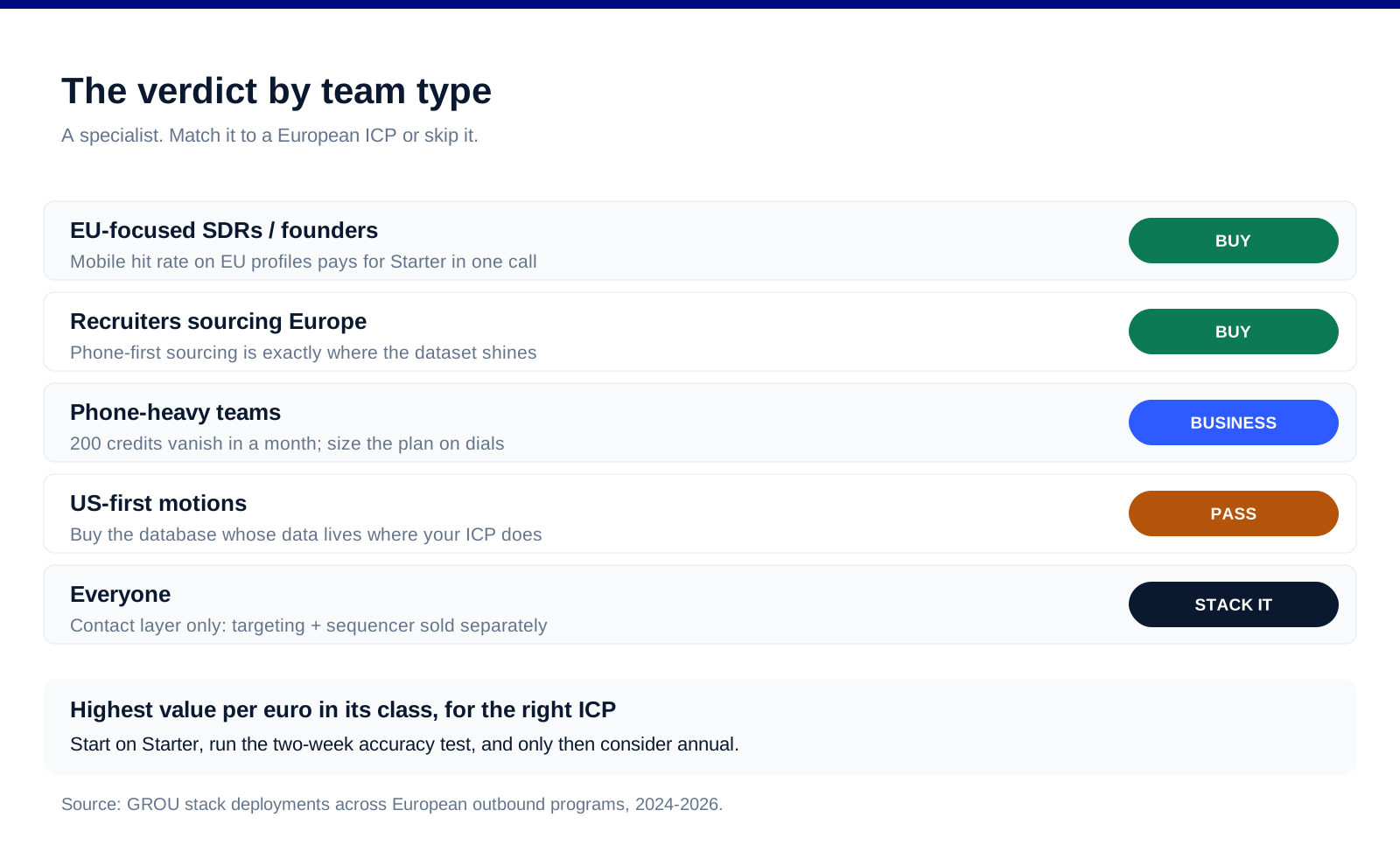
EU-focused SDRs and founders: buy. Starter covers a solo pipeline; the mobile-number hit rate on European profiles is the product, and at ~45-49 euro it pays for itself on one connected call.
Recruiters sourcing European candidates: buy. Same data advantage, same workflow, and the phone-first use case is exactly where Kaspr's EU dataset shines.
Teams running phone-heavy motions: buy Business, watch the credits. 200 phone credits disappears inside a month of real calling; size the plan on actual dial volume, not the sticker.
US-first motions: pass. Buy the database whose data lives where your ICP does.
Everyone: budget the stack, not the tool. Kaspr is the contact layer; targeting comes from Sales Navigator or your list source, sending comes from your sequencer, and the email authentication underneath decides whether any of it lands.
The mistakes buyers make with Kaspr
Mistake 1: judging it on US test lists. Run the trial on your actual European ICP; that is the dataset you are buying.
Mistake 2: bulk-revealing entire Sales Navigator lists. Credits are monthly and do not roll over; reveal after filtering, not before.
Mistake 3: expecting a sequencer. Kaspr feeds outreach tools; it does not replace them. Price the full stack.
Mistake 4: buying annual before testing phone accuracy in your niche. Accuracy claims are aggregates; two weeks of real dials in your segment is the only benchmark that matters.
FAQ
How much does Kaspr cost in 2026?
A free trial tier, Starter around 45-49 euro a month, Business around 79-99 euro depending on billing cycle, and a custom Organization tier with API access. Paid plans include unlimited B2B email reveals; phone credits are metered by plan. Pricing in this category moves often, so confirm on the live page.
Is Kaspr data accurate?
Strongest in Europe, where the company claims roughly 90% accuracy on its 120M+ European contacts, and noticeably weaker in North America by its own positioning. Test it on your actual ICP during the free tier; regional fit decides everything with contact data.
Is Kaspr GDPR compliant?
Kaspr is a European company that processes data under GDPR with EU-appropriate notification practices, which is a core part of its pitch to teams prospecting Europe. Your own outreach still needs its own lawful basis; the tool does not inherit compliance for your campaigns.
Does Kaspr include email sequencing or outreach?
No. Kaspr reveals and organizes contacts and pushes them to CRMs and sequencers (HubSpot, Salesforce, Pipedrive, lemlist, and others via Zapier and API), but sending happens elsewhere. Budget it as the contact layer in a stack, not as an all-in-one.
How many phone credits does Kaspr include?
Roughly 100 a month on Starter and 200 on Business, metered separately from email reveals, resetting monthly without rollover. Active calling teams burn these quickly, which is the main reason teams upgrade or negotiate Organization pricing.
Is Kaspr better than Lusha or Apollo?
For European contact data, usually yes; for US coverage and all-in-one workflow (database plus sequencer), usually no. Kaspr is a specialist: the sharpest EU phone-reveal tool in its price class, designed to sit inside a stack rather than be the stack.
Bottom line
Kaspr in 2026 is the clearest specialist buy in the contact-data category: European reveals that actually connect, GDPR-native processing, and a price an individual can expense, in exchange for weaker US coverage and no sending layer. Match it to a European ICP, size the phone credits to your real dial volume, and start on Starter with a two-week accuracy test in your own segment before committing annual.
Want the whole prospecting stack picked, wired, and pointed at pipeline? Book a call with GROU. We build outbound systems for B2B teams selling across Europe and beyond.
We are GROU, a B2B pipeline agency that runs lead generation, outbound, and LinkedIn content for clients across manufacturing, fintech, iGaming, software, and professional services. Assessments reflect published 2026 analyses cross-checked at publish time and our stack deployments between 2024 and 2026.
Some links in this article are affiliate. We may earn a small commission at no extra cost to you. We only recommend tools we've deployed for clients.
Kaspr is the tool European SDRs reach for when the US-built databases keep returning dead numbers for Paris, Munich, and Ljubljana. It is a Chrome-extension-first contact finder that reveals emails and phone numbers on top of LinkedIn, backed by one of the strongest European datasets in the category and priced for individuals and small teams rather than enterprise procurement. This review covers the 2026 plans, where the data is actually good, and who should buy it over the bigger names.
TL;DR
Kaspr in 2026 runs a free tier (a handful of reveals to test the workflow), Starter at roughly 45-49 euro a month, Business at roughly 79-99 euro depending on billing, and a custom Organization tier with API access; paid tiers include unlimited B2B email reveals with phone credits metered at roughly 100-200 a month by plan. The reason to buy is European data: 120M+ European contacts with roughly 90% accuracy claims on EU phone reveals, GDPR-aligned processing, and coverage in markets where US-first databases thin out. The reasons to hesitate: US coverage is weaker than the big American databases, phone credits deplete fast on active teams, and there is no native sequencer, so Kaspr feeds your outreach stack rather than replacing it. For EU-focused SDRs, recruiters, and founders, it is one of the highest-value tools per euro in the category; for US-first motions, it is the wrong specialist. Pricing moves often in this category; confirm current numbers on the live page at signup.
The 2026 plans
Kaspr prices in euros, meters phones and emails separately, and resets credits monthly without rollover.
Free (0 euro). A small number of reveals to test the Chrome extension on real profiles. A trial, not a working tier.
Starter (~45-49 euro/month). Unlimited B2B email reveals and around 100 phone credits a month, plus the extension, the lead dashboard, and exports. The solo prospector's plan.
Business (~79-99 euro/month by billing). Roughly doubles phone credits (~200/month), adds direct-email credits and team features, and connects the wider integration set: HubSpot, Salesforce, Pipedrive, lemlist, Aircall, and Zapier among them.
Organization (custom). Volume credits, API access, and team controls, quoted per deal.
The credit mechanics that matter. Phone and email credits draw from separate pools, so an email-led motion barely touches phone credits while a call-led motion burns them fast. Bulk reveals from a Sales Navigator list drain pools quickest, credits do not roll over, and category pricing moves often enough that the live pricing page is the only number that counts at checkout.
Where the data is actually good
Contact databases are regional whether vendors admit it or not, and Kaspr's shape is unusually clear.
The European edge. 120M+ European contacts and 500M phones and emails globally, with accuracy claims around 90% on European reveals. In practice this is the tool's whole argument: DACH, France, Benelux, the Nordics, and CEE profiles that return working mobiles where US-built databases return switchboards or nothing. For teams prospecting Europe, that difference is the pipeline.
The US gap. Kaspr's own positioning concedes North American coverage trails the American incumbents. If your ICP is US-first, a US-built database wins, and the honest comparison set is in our Lusha review and Apollo pricing breakdowns.
GDPR posture. Kaspr is a European company processing under GDPR with notification practices built for EU prospecting. For compliance-sensitive buyers, and for anyone selling into regulated European industries, that is a real differentiator, not a checkbox.
The workflow. The Chrome extension reveals contacts directly on LinkedIn profiles and Sales Navigator lists, distinguishing mobile from direct-dial and categorizing emails; the dashboard organizes lists, tags, and exports; the integrations push everything into CRM and sequencer. What Kaspr does not do is send: there is no native sequencing, so it slots into the stack beside the outreach infrastructure rather than replacing any of it.
Verdict: who should buy Kaspr
EU-focused SDRs and founders: buy. Starter covers a solo pipeline; the mobile-number hit rate on European profiles is the product, and at ~45-49 euro it pays for itself on one connected call.
Recruiters sourcing European candidates: buy. Same data advantage, same workflow, and the phone-first use case is exactly where Kaspr's EU dataset shines.
Teams running phone-heavy motions: buy Business, watch the credits. 200 phone credits disappears inside a month of real calling; size the plan on actual dial volume, not the sticker.
US-first motions: pass. Buy the database whose data lives where your ICP does.
Everyone: budget the stack, not the tool. Kaspr is the contact layer; targeting comes from Sales Navigator or your list source, sending comes from your sequencer, and the email authentication underneath decides whether any of it lands.
The mistakes buyers make with Kaspr
Mistake 1: judging it on US test lists. Run the trial on your actual European ICP; that is the dataset you are buying.
Mistake 2: bulk-revealing entire Sales Navigator lists. Credits are monthly and do not roll over; reveal after filtering, not before.
Mistake 3: expecting a sequencer. Kaspr feeds outreach tools; it does not replace them. Price the full stack.
Mistake 4: buying annual before testing phone accuracy in your niche. Accuracy claims are aggregates; two weeks of real dials in your segment is the only benchmark that matters.
FAQ
How much does Kaspr cost in 2026?
A free trial tier, Starter around 45-49 euro a month, Business around 79-99 euro depending on billing cycle, and a custom Organization tier with API access. Paid plans include unlimited B2B email reveals; phone credits are metered by plan. Pricing in this category moves often, so confirm on the live page.
Is Kaspr data accurate?
Strongest in Europe, where the company claims roughly 90% accuracy on its 120M+ European contacts, and noticeably weaker in North America by its own positioning. Test it on your actual ICP during the free tier; regional fit decides everything with contact data.
Is Kaspr GDPR compliant?
Kaspr is a European company that processes data under GDPR with EU-appropriate notification practices, which is a core part of its pitch to teams prospecting Europe. Your own outreach still needs its own lawful basis; the tool does not inherit compliance for your campaigns.
Does Kaspr include email sequencing or outreach?
No. Kaspr reveals and organizes contacts and pushes them to CRMs and sequencers (HubSpot, Salesforce, Pipedrive, lemlist, and others via Zapier and API), but sending happens elsewhere. Budget it as the contact layer in a stack, not as an all-in-one.
How many phone credits does Kaspr include?
Roughly 100 a month on Starter and 200 on Business, metered separately from email reveals, resetting monthly without rollover. Active calling teams burn these quickly, which is the main reason teams upgrade or negotiate Organization pricing.
Is Kaspr better than Lusha or Apollo?
For European contact data, usually yes; for US coverage and all-in-one workflow (database plus sequencer), usually no. Kaspr is a specialist: the sharpest EU phone-reveal tool in its price class, designed to sit inside a stack rather than be the stack.
Bottom line
Kaspr in 2026 is the clearest specialist buy in the contact-data category: European reveals that actually connect, GDPR-native processing, and a price an individual can expense, in exchange for weaker US coverage and no sending layer. Match it to a European ICP, size the phone credits to your real dial volume, and start on Starter with a two-week accuracy test in your own segment before committing annual.
Want the whole prospecting stack picked, wired, and pointed at pipeline? Book a call with GROU. We build outbound systems for B2B teams selling across Europe and beyond.
We are GROU, a B2B pipeline agency that runs lead generation, outbound, and LinkedIn content for clients across manufacturing, fintech, iGaming, software, and professional services. Assessments reflect published 2026 analyses cross-checked at publish time and our stack deployments between 2024 and 2026.
Some links in this article are affiliate. We may earn a small commission at no extra cost to you. We only recommend tools we've deployed for clients.
Kaspr is the tool European SDRs reach for when the US-built databases keep returning dead numbers for Paris, Munich, and Ljubljana. It is a Chrome-extension-first contact finder that reveals emails and phone numbers on top of LinkedIn, backed by one of the strongest European datasets in the category and priced for individuals and small teams rather than enterprise procurement. This review covers the 2026 plans, where the data is actually good, and who should buy it over the bigger names.
TL;DR
Kaspr in 2026 runs a free tier (a handful of reveals to test the workflow), Starter at roughly 45-49 euro a month, Business at roughly 79-99 euro depending on billing, and a custom Organization tier with API access; paid tiers include unlimited B2B email reveals with phone credits metered at roughly 100-200 a month by plan. The reason to buy is European data: 120M+ European contacts with roughly 90% accuracy claims on EU phone reveals, GDPR-aligned processing, and coverage in markets where US-first databases thin out. The reasons to hesitate: US coverage is weaker than the big American databases, phone credits deplete fast on active teams, and there is no native sequencer, so Kaspr feeds your outreach stack rather than replacing it. For EU-focused SDRs, recruiters, and founders, it is one of the highest-value tools per euro in the category; for US-first motions, it is the wrong specialist. Pricing moves often in this category; confirm current numbers on the live page at signup.
The 2026 plans
Kaspr prices in euros, meters phones and emails separately, and resets credits monthly without rollover.
Free (0 euro). A small number of reveals to test the Chrome extension on real profiles. A trial, not a working tier.
Starter (~45-49 euro/month). Unlimited B2B email reveals and around 100 phone credits a month, plus the extension, the lead dashboard, and exports. The solo prospector's plan.
Business (~79-99 euro/month by billing). Roughly doubles phone credits (~200/month), adds direct-email credits and team features, and connects the wider integration set: HubSpot, Salesforce, Pipedrive, lemlist, Aircall, and Zapier among them.
Organization (custom). Volume credits, API access, and team controls, quoted per deal.
The credit mechanics that matter. Phone and email credits draw from separate pools, so an email-led motion barely touches phone credits while a call-led motion burns them fast. Bulk reveals from a Sales Navigator list drain pools quickest, credits do not roll over, and category pricing moves often enough that the live pricing page is the only number that counts at checkout.
Where the data is actually good
Contact databases are regional whether vendors admit it or not, and Kaspr's shape is unusually clear.
The European edge. 120M+ European contacts and 500M phones and emails globally, with accuracy claims around 90% on European reveals. In practice this is the tool's whole argument: DACH, France, Benelux, the Nordics, and CEE profiles that return working mobiles where US-built databases return switchboards or nothing. For teams prospecting Europe, that difference is the pipeline.
The US gap. Kaspr's own positioning concedes North American coverage trails the American incumbents. If your ICP is US-first, a US-built database wins, and the honest comparison set is in our Lusha review and Apollo pricing breakdowns.
GDPR posture. Kaspr is a European company processing under GDPR with notification practices built for EU prospecting. For compliance-sensitive buyers, and for anyone selling into regulated European industries, that is a real differentiator, not a checkbox.
The workflow. The Chrome extension reveals contacts directly on LinkedIn profiles and Sales Navigator lists, distinguishing mobile from direct-dial and categorizing emails; the dashboard organizes lists, tags, and exports; the integrations push everything into CRM and sequencer. What Kaspr does not do is send: there is no native sequencing, so it slots into the stack beside the outreach infrastructure rather than replacing any of it.
Verdict: who should buy Kaspr
EU-focused SDRs and founders: buy. Starter covers a solo pipeline; the mobile-number hit rate on European profiles is the product, and at ~45-49 euro it pays for itself on one connected call.
Recruiters sourcing European candidates: buy. Same data advantage, same workflow, and the phone-first use case is exactly where Kaspr's EU dataset shines.
Teams running phone-heavy motions: buy Business, watch the credits. 200 phone credits disappears inside a month of real calling; size the plan on actual dial volume, not the sticker.
US-first motions: pass. Buy the database whose data lives where your ICP does.
Everyone: budget the stack, not the tool. Kaspr is the contact layer; targeting comes from Sales Navigator or your list source, sending comes from your sequencer, and the email authentication underneath decides whether any of it lands.
The mistakes buyers make with Kaspr
Mistake 1: judging it on US test lists. Run the trial on your actual European ICP; that is the dataset you are buying.
Mistake 2: bulk-revealing entire Sales Navigator lists. Credits are monthly and do not roll over; reveal after filtering, not before.
Mistake 3: expecting a sequencer. Kaspr feeds outreach tools; it does not replace them. Price the full stack.
Mistake 4: buying annual before testing phone accuracy in your niche. Accuracy claims are aggregates; two weeks of real dials in your segment is the only benchmark that matters.
FAQ
How much does Kaspr cost in 2026?
A free trial tier, Starter around 45-49 euro a month, Business around 79-99 euro depending on billing cycle, and a custom Organization tier with API access. Paid plans include unlimited B2B email reveals; phone credits are metered by plan. Pricing in this category moves often, so confirm on the live page.
Is Kaspr data accurate?
Strongest in Europe, where the company claims roughly 90% accuracy on its 120M+ European contacts, and noticeably weaker in North America by its own positioning. Test it on your actual ICP during the free tier; regional fit decides everything with contact data.
Is Kaspr GDPR compliant?
Kaspr is a European company that processes data under GDPR with EU-appropriate notification practices, which is a core part of its pitch to teams prospecting Europe. Your own outreach still needs its own lawful basis; the tool does not inherit compliance for your campaigns.
Does Kaspr include email sequencing or outreach?
No. Kaspr reveals and organizes contacts and pushes them to CRMs and sequencers (HubSpot, Salesforce, Pipedrive, lemlist, and others via Zapier and API), but sending happens elsewhere. Budget it as the contact layer in a stack, not as an all-in-one.
How many phone credits does Kaspr include?
Roughly 100 a month on Starter and 200 on Business, metered separately from email reveals, resetting monthly without rollover. Active calling teams burn these quickly, which is the main reason teams upgrade or negotiate Organization pricing.
Is Kaspr better than Lusha or Apollo?
For European contact data, usually yes; for US coverage and all-in-one workflow (database plus sequencer), usually no. Kaspr is a specialist: the sharpest EU phone-reveal tool in its price class, designed to sit inside a stack rather than be the stack.
Bottom line
Kaspr in 2026 is the clearest specialist buy in the contact-data category: European reveals that actually connect, GDPR-native processing, and a price an individual can expense, in exchange for weaker US coverage and no sending layer. Match it to a European ICP, size the phone credits to your real dial volume, and start on Starter with a two-week accuracy test in your own segment before committing annual.
Want the whole prospecting stack picked, wired, and pointed at pipeline? Book a call with GROU. We build outbound systems for B2B teams selling across Europe and beyond.
We are GROU, a B2B pipeline agency that runs lead generation, outbound, and LinkedIn content for clients across manufacturing, fintech, iGaming, software, and professional services. Assessments reflect published 2026 analyses cross-checked at publish time and our stack deployments between 2024 and 2026.
Some links in this article are affiliate. We may earn a small commission at no extra cost to you. We only recommend tools we've deployed for clients.

Pipeline OS Newsletter
Build qualified pipeline
Get weekly tactics to generate demand, improve lead quality, and book more meetings.





Trusted by industry leaders
Trusted by industry leaders
Trusted by industry leaders
Ready to build qualified pipeline?
Ready to build qualified pipeline?
Ready to build qualified pipeline?
Book a call to see if we're the right fit, or take the 2-minute quiz to get a clear starting point.
Book a call to see if we're the right fit, or take the 2-minute quiz to get a clear starting point.
Book a call to see if we're the right fit, or take the 2-minute quiz to get a clear starting point.
" height="30.21639343089746px" id="hfGbXmQR2" width="30.216393430897455px"/></svg>)
Copyright © 2026 – All Right Reserved
Copyright © 2026 – All Right Reserved
Copyright © 2026 – All Right Reserved