%22%3E%3C/path%3E%3Cpath d=%22M 63.072 7.554 C 62.258 8.022 61.577 8.689 61.092 9.493 L 61.092 7.076 L 57.158 7.076 L 57.158 22.64 L 61.089 22.64 L 61.089 14.888 C 61.089 13.446 61.403 12.434 62.03 11.853 C 62.818 11.218 63.818 10.907 64.826 10.982 L 65.868 10.982 L 65.868 6.851 C 64.891 6.834 63.926 7.076 63.073 7.554 Z%22 fill=%22rgb(17,17,17)%22%3E%3C/path%3E%3Cpath d=%22M 78.916 7.82 C 76.363 6.49 73.321 6.49 70.768 7.82 C 69.562 8.473 68.564 9.451 67.888 10.644 C 67.167 11.931 66.803 13.387 66.834 14.862 C 66.804 16.332 67.157 17.785 67.86 19.077 C 68.515 20.267 69.494 21.246 70.684 21.901 C 71.924 22.576 73.318 22.92 74.73 22.898 C 76.164 22.918 77.58 22.575 78.846 21.901 C 80.062 21.247 81.073 20.27 81.768 19.077 C 82.506 17.797 82.88 16.339 82.85 14.862 C 82.88 13.389 82.517 11.934 81.797 10.647 C 81.12 9.455 80.122 8.477 78.917 7.824 M 78.803 14.862 C 78.829 15.739 78.636 16.608 78.241 17.391 C 77.903 18.046 77.38 18.588 76.738 18.95 C 76.124 19.293 75.432 19.472 74.729 19.47 C 73.668 19.497 72.648 19.061 71.934 18.276 C 71.139 17.323 70.741 16.1 70.823 14.862 C 70.741 13.62 71.149 12.395 71.959 11.45 C 72.687 10.667 73.715 10.233 74.783 10.256 C 75.859 10.236 76.894 10.67 77.635 11.45 C 78.464 12.387 78.884 13.616 78.801 14.864%22 fill=%22rgb(17,17,17)%22%3E%3C/path%3E%3Cpath d=%22M 95.906 7.076 L 95.906 15.646 C 95.975 16.68 95.643 17.701 94.979 18.498 C 94.311 19.184 93.379 19.547 92.422 19.495 C 91.475 19.544 90.553 19.18 89.894 18.498 C 89.23 17.701 88.898 16.68 88.967 15.646 L 88.967 7.076 L 85.033 7.076 L 85.033 16.207 C 85 17.449 85.275 18.68 85.834 19.79 C 86.327 20.75 87.095 21.542 88.039 22.065 C 89.033 22.594 90.145 22.861 91.271 22.838 C 92.188 22.847 93.095 22.65 93.926 22.263 C 94.708 21.905 95.388 21.36 95.906 20.675 L 95.906 22.645 L 99.865 22.645 L 99.865 7.076 Z%22 fill=%22rgb(17,17,17)%22%3E%3C/path%3E%3Cpath d=%22M 4.513 15.626 C 4.511 10.815 7.606 6.549 12.181 5.059 C 16.756 3.57 21.77 5.195 24.601 9.086 L 27.816 5.87 C 24.074 1.186 17.981 -0.943 12.137 0.393 C 6.292 1.728 1.728 6.292 0.393 12.137 C -0.943 17.981 1.186 24.074 5.87 27.816 L 9.085 24.601 C 6.214 22.512 4.515 19.177 4.513 15.626%22 fill=%22rgb(32,62,235)%22%3E%3C/path%3E%3Cpath d=%22M 17.114 14.343 L 13.354 18.01 L 13.354 18.026 L 21.071 18.026 L 11.412 27.609 L 17.389 27.609 L 23.999 21.081 L 23.999 28.316 L 24.005 28.316 L 27.967 24.393 L 27.967 14.343 Z%22 fill=%22rgb(32,62,235)%22%3E%3C/path%3E%3C/g%3E%3C/svg%3E) ×
× ××
××›
›
›
›
Apollo pricing 2026 explained: plans, credits, real costs
Apollo pricing 2026 explained: plans, credits, real costs
Apollo pricing 2026 explained: plans, credits, real costs
Apollo pricing 2026 explained: plans, credits, real costs
Apollo pricing 2026 explained: plans, credits, real costs
Apollo pricing 2026 explained: plans, credits, real costs

Author
Aljaz Peklaj

Apollo runs four plans in 2026: Free at $0, Basic at $59, Professional at $99, and Organization at $149 per user per month, with roughly 20% off on annual billing. The sticker price is not the real story. Credits are. Mobile and export credits decide what a team actually pays, and most teams find that out on the first invoice, not before it.
This is the operator breakdown: every tier, the credit system in plain language, real monthly costs by team size, and which plan fits your motion.
TL;DR
Apollo costs $59 (Basic), $99 (Professional), or $149 (Organization) per user per month on monthly billing, dropping to $49, $79, and $119 on annual. Every plan advertises unlimited email credits, but a fair-use cap applies, and mobile plus export credits are the levers that actually gate volume: 75 and 1,000 per month on Basic, 100 and 2,000 on Professional, 200 and 4,000 on Organization. A typical 5-seat Professional team lands between $495 and roughly $1,400 per month once credit overages are counted. Most B2B teams should start on Professional annual at $79 per user: it unlocks unlimited sequences, the dialer, and enough export volume for a real outbound motion.
For context on the platform itself, see our Apollo review and Apollo vs ZoomInfo.
The four Apollo plans at a glance
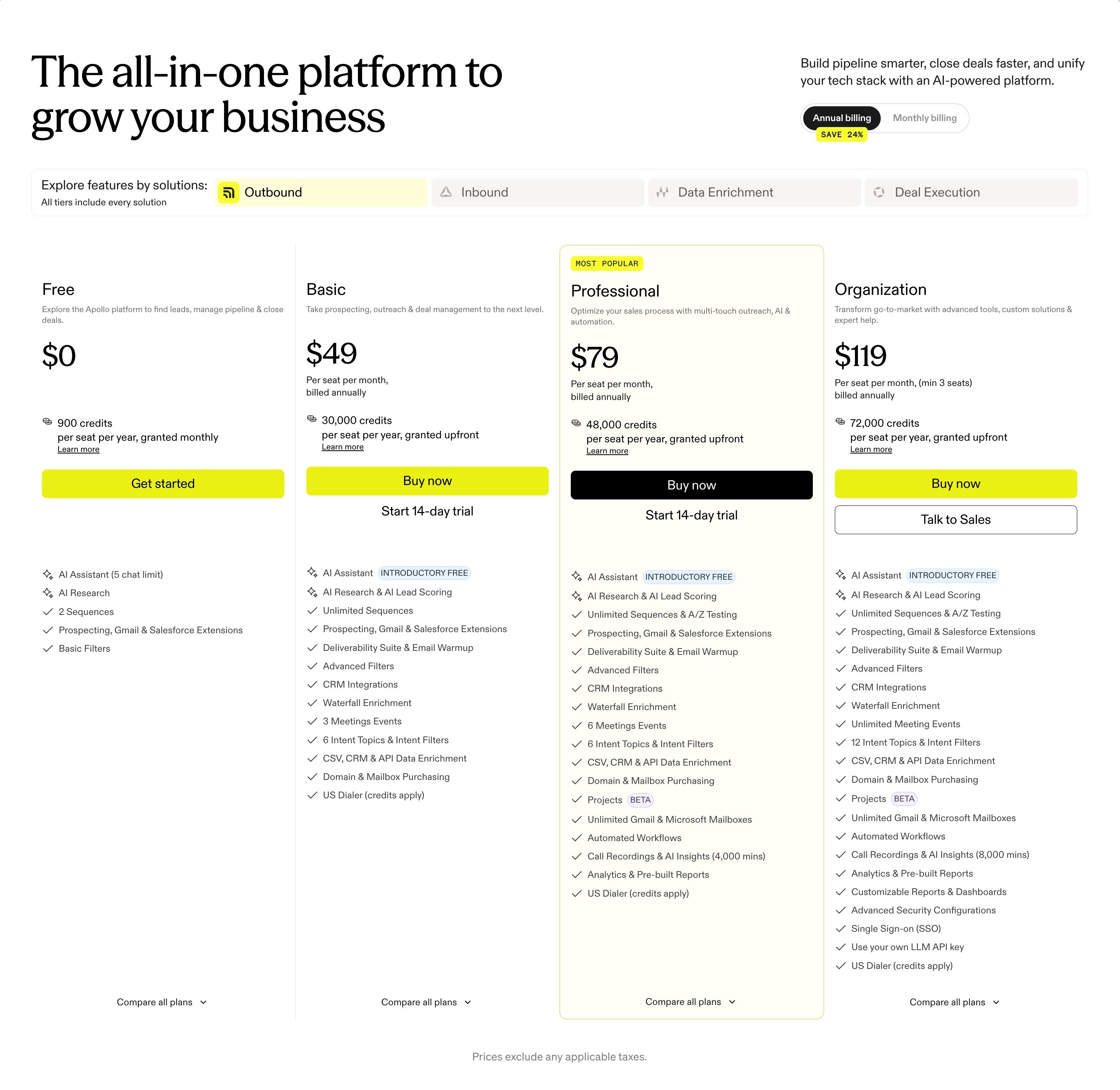
Apollo's public tiers have held stable through 2026, and the per-seat prices below are confirmed against Apollo's pricing page this month. The headline difference between tiers is not features, it is credit throughput: each step up roughly doubles what you can export.
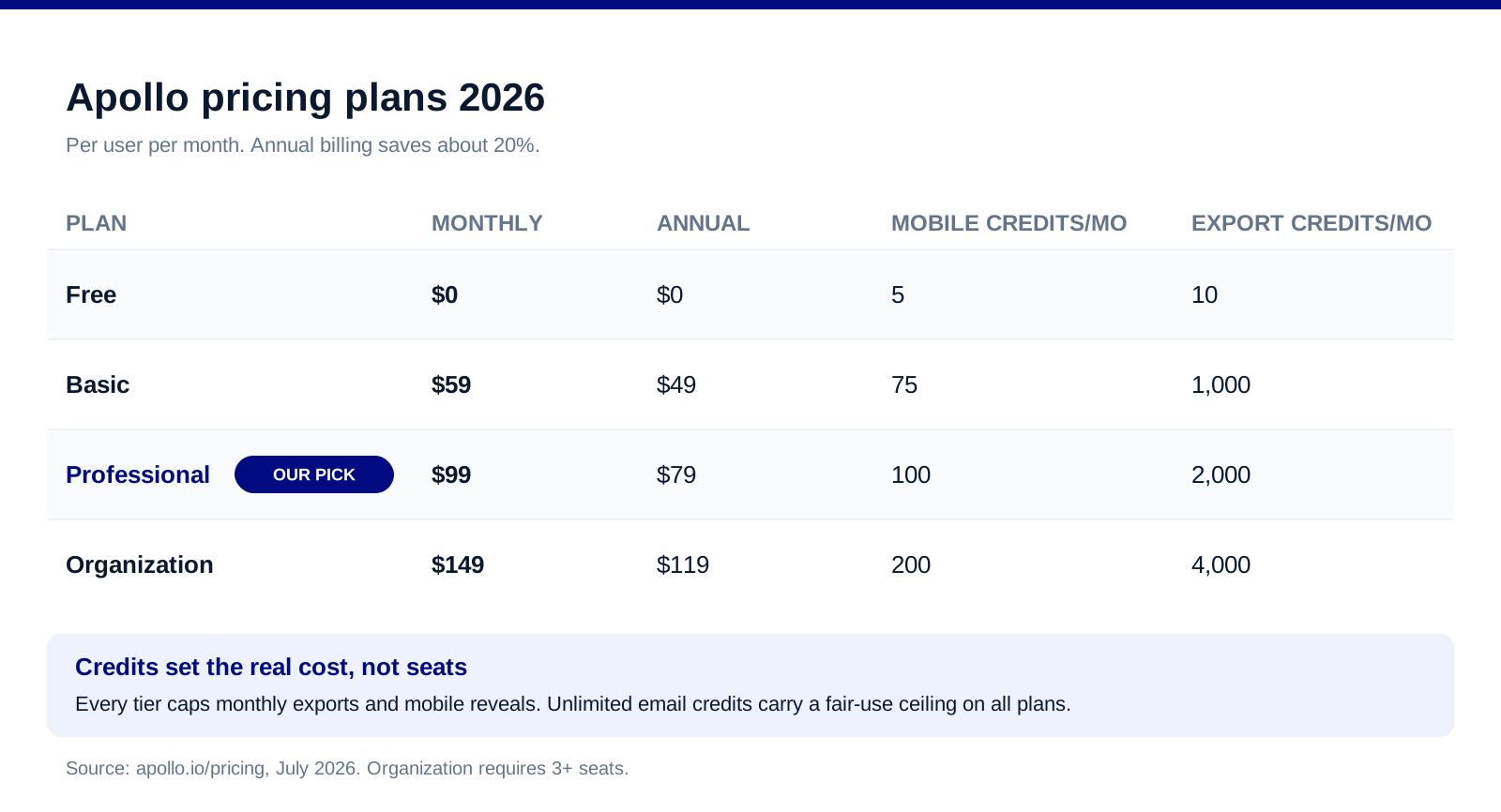
1. Free ($0). Two active sequences, 5 mobile credits, and 10 export credits a month. Enough to test the database and the sequence builder, not enough to run outbound. The advertised unlimited email credits are capped in practice for unverified accounts.
2. Basic ($59/user, $49 annual). 75 mobile credits and 1,000 export credits a month, advanced filters, and buying intent on 6 topics. Works for a solo founder doing careful, targeted prospecting.
3. Professional ($99/user, $79 annual). 100 mobile credits, 2,000 export credits, unlimited sequences, A/B testing, AI email writing, the US dialer, and 5 sending mailboxes per user. This is the tier where Apollo becomes a complete outbound platform rather than a database with a sequencer attached.
4. Organization ($149/user, $119 annual, minimum 3 seats). 200 mobile credits, 4,000 export credits, 12 intent topics, international dialer, call transcription, and 15 mailboxes per user. Built for multi-market teams that phone as well as email.
What Apollo really costs: the credit system
The plan price buys seats. Credits buy data. Apollo meters three credit types, and two of them are the ones that bite. Export credits burn when you push contacts to CSV or a CRM in bulk. Mobile credits burn when you reveal direct dials, and they are scarce on every tier. Per Apollo's own pricing terms, even unlimited email credits carry a ceiling tied to what you paid for the subscription, so no tier is truly uncapped.
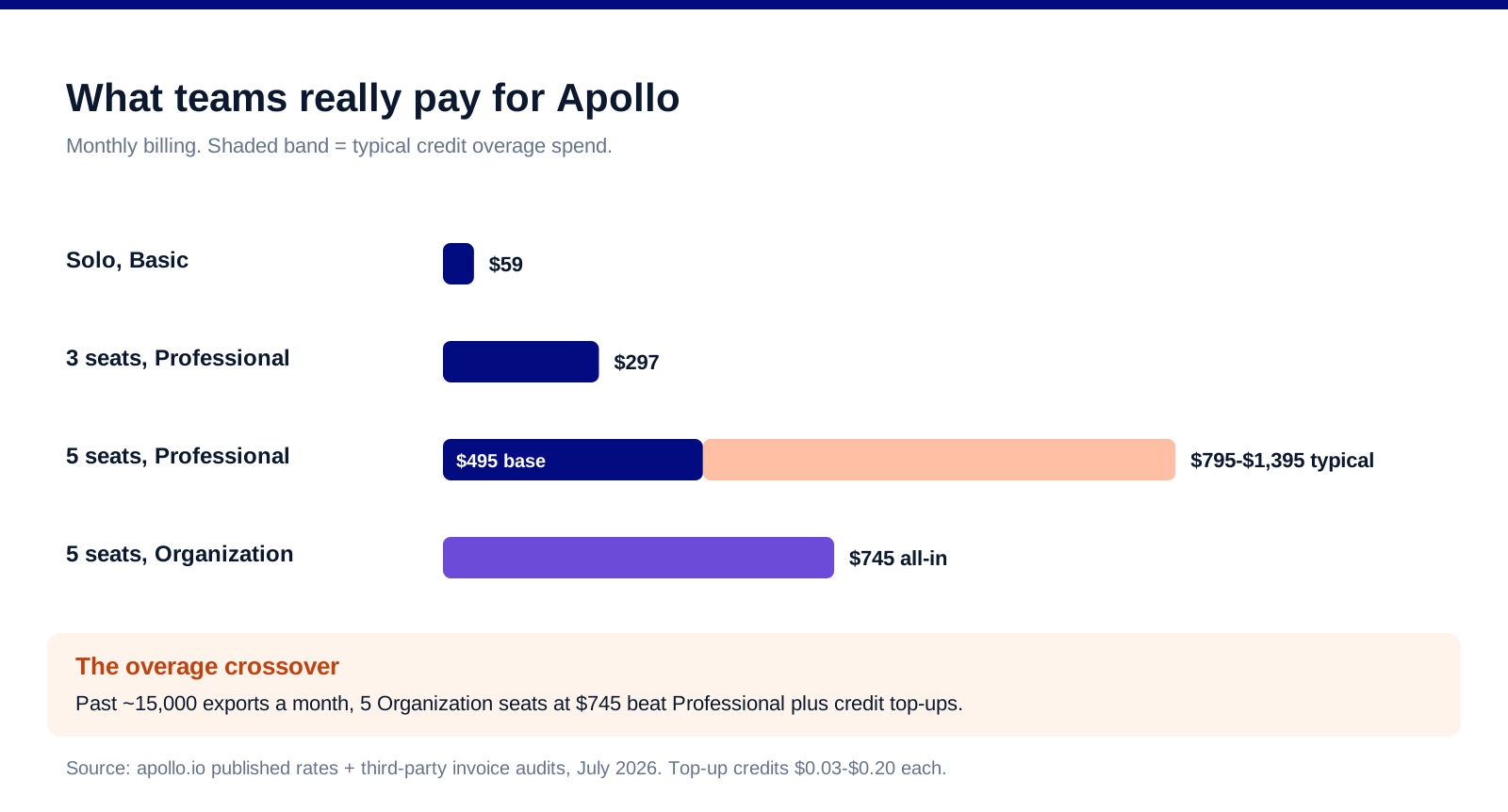
Solo on Basic: $59/mo ($49 annual). 1,000 exports is workable for 30 to 50 carefully targeted contacts a day. Mobile credits run out first if you cold call.
3 seats on Professional: $297/mo ($237 annual). 6,000 pooled exports and the dialer. The standard configuration for a first SDR pod.
5 seats on Professional: $495 to ~$1,400/mo. Base seats cost $495, but teams running volume outbound routinely buy extra credits. Third-party audits of real invoices put typical 5-seat spend between $795 and $1,395 once overages are included, with per-credit top-up prices ranging from about $0.03 in bulk to $0.20 at low volume.
5 seats on Organization: $745/mo ($595 annual). Often cheaper than Professional plus overages once a team exports more than about 15,000 contacts a month, and it adds the international dialer.
Two fine-print items to price in before you commit. Unused credits do not roll over month to month. And annual contracts auto-renew with no mid-term seat reduction, so size the seat count for your low month, not your high month.
Which plan fits which team
Match the tier to your motion, not to the feature list. The decision comes down to export volume, calling, and how many markets you work.
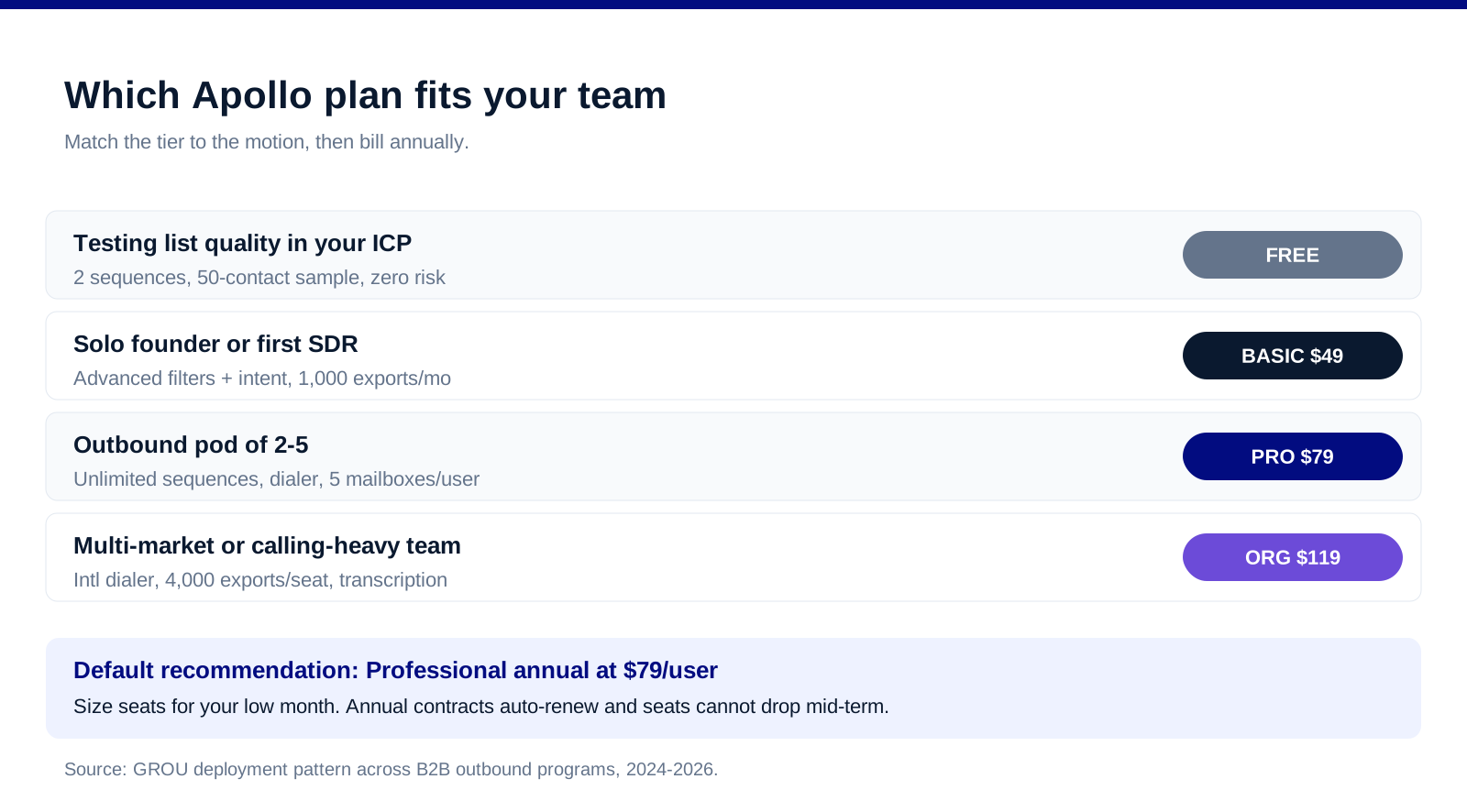
Testing the database: Free. Validate list quality in your ICP before paying. Run both sequences on a 50-contact sample.
Solo founder or first SDR: Basic annual at $49. Cheapest seat with advanced filters and intent. Upgrade the month you feel the export ceiling.
Outbound pod of 2 to 5: Professional annual at $79. Unlimited sequences, mailbox rotation, and the dialer. This is the default recommendation for most B2B teams, and the tier we deploy most often across client programs.
Multi-market or calling-heavy team: Organization annual at $119. The international dialer and 4,000 exports per seat stop the overage bleed that Professional teams hit at scale.
If Apollo's database depth in your segment is the open question, triangulate before the annual commit: our Clay vs Apollo and Lusha vs Apollo breakdowns cover where each source wins on coverage, and Apollo's G2 profile is the fastest read on how 8,000+ reviewers rate data accuracy by region.
The mistakes that inflate an Apollo bill
Mistake 1: paying monthly out of habit. The annual discount is close to 20%. A 5-seat Professional team saves $1,200 a year by switching, which funds two months of credits.
Mistake 2: exporting everything to CRM. Bulk-pushing whole search results burns export credits on contacts nobody will sequence. Enrich inside Apollo, export only sequenced contacts, and the credit allowance stretches 2 to 3 times further.
Mistake 3: buying seats for credit problems. Teams add a seat to get more credits, which is the most expensive way to buy credits. Price the credit top-up against the seat before you add either.
Mistake 4: ignoring the fair-use ceiling. Agencies and heavy scrapers hit the unlimited-email cap and only find out mid-campaign. If your motion depends on six-figure monthly enrichment volume, model the cap first, then decide.
Is Apollo worth it in 2026?
On price per usable contact, Apollo remains the strongest all-in-one value in the sales intelligence category, which is why it anchors the data layer in most of the stacks we build. The company raised at a $1.6 billion valuation on the back of that positioning, and the 2026 pricing still undercuts enterprise-contract rivals by an order of magnitude for small teams: a 5-seat Professional year costs less than most single-seat enterprise data contracts. The trade-off is credit arithmetic that punishes teams who do not plan volume, and mobile coverage that thins outside the US. For a ranked view of the whole category, see our best AI SDR tools roundup.
FAQ
How much does Apollo cost per month in 2026?
$59 per user on Basic, $99 on Professional, and $149 on Organization when billed monthly. Annual billing drops those to $49, $79, and $119. The Free plan is $0 with 2 sequences and minimal credits.
Is the Apollo free plan actually unlimited?
No. Email credits on Free are advertised as unlimited but capped in practice, and accounts without a verified corporate domain get around 100 credits a month. Treat Free as a 2-week evaluation, not a production plan.
What does a 5-person team really pay for Apollo?
$495 per month in Professional seats on monthly billing, but real invoices typically land between $795 and $1,395 once extra export and mobile credits are added. At that spend, compare against Organization at $745, which includes double the credits per seat.
What is the difference between export credits and email credits?
Email credits reveal a verified email inside Apollo and are effectively generous on paid plans. Export credits are consumed when you move contacts out of Apollo in bulk, to CSV or your CRM, and they are the ceiling most outbound teams hit first: 1,000 on Basic, 2,000 on Professional, 4,000 on Organization per month.
Is Apollo annual billing worth the lock-in?
If the team has run outbound for 3 or more months and seat count is stable, yes: the discount is about 20% and Professional drops to $79 per user. Skip annual if you are still validating channel fit, because seats cannot be reduced mid-term and the contract auto-renews.
Is Apollo cheaper than ZoomInfo?
Dramatically, at small-team scale. Apollo Professional costs under $6,000 a year for 5 seats, while ZoomInfo contracts typically start in the five figures annually. ZoomInfo answers back with deeper US enterprise org charts and compliance data. The full comparison is in our Apollo vs ZoomInfo breakdown.
Do unused Apollo credits roll over?
No. Monthly credit allowances expire at the end of each cycle on every tier. Plan campaign volume around the monthly allowance rather than saving credits for a big push.
Bottom line
Apollo's 2026 pricing rewards teams that do the credit math and punishes teams that read only the seat price. Start on Professional annual at $79 per user for any real outbound motion, size seats for your low month, export only what you will sequence, and step up to Organization when monthly exports pass roughly 15,000 contacts or international calling enters the picture. Do that and the platform stays one of the highest-leverage line items in a B2B stack.
Need the outbound engine built around it, not just the license? Book a call with GROU. We deploy and run Apollo-based outbound programs across B2B verticals from manufacturing to iGaming.
We are GROU, a B2B pipeline agency that runs lead generation, outbound, and LinkedIn content for clients across manufacturing, fintech, iGaming, software, and professional services. Pricing in this guide reflects Apollo's published 2026 rates cross-checked against live vendor pages and real deployment invoices from our client programs, refreshed at publish time.
Some links in this article are affiliate. We may earn a small commission at no extra cost to you. We only recommend tools we've deployed for clients.
Apollo runs four plans in 2026: Free at $0, Basic at $59, Professional at $99, and Organization at $149 per user per month, with roughly 20% off on annual billing. The sticker price is not the real story. Credits are. Mobile and export credits decide what a team actually pays, and most teams find that out on the first invoice, not before it.
This is the operator breakdown: every tier, the credit system in plain language, real monthly costs by team size, and which plan fits your motion.
TL;DR
Apollo costs $59 (Basic), $99 (Professional), or $149 (Organization) per user per month on monthly billing, dropping to $49, $79, and $119 on annual. Every plan advertises unlimited email credits, but a fair-use cap applies, and mobile plus export credits are the levers that actually gate volume: 75 and 1,000 per month on Basic, 100 and 2,000 on Professional, 200 and 4,000 on Organization. A typical 5-seat Professional team lands between $495 and roughly $1,400 per month once credit overages are counted. Most B2B teams should start on Professional annual at $79 per user: it unlocks unlimited sequences, the dialer, and enough export volume for a real outbound motion.
For context on the platform itself, see our Apollo review and Apollo vs ZoomInfo.
The four Apollo plans at a glance
Apollo's public tiers have held stable through 2026, and the per-seat prices below are confirmed against Apollo's pricing page this month. The headline difference between tiers is not features, it is credit throughput: each step up roughly doubles what you can export.
1. Free ($0). Two active sequences, 5 mobile credits, and 10 export credits a month. Enough to test the database and the sequence builder, not enough to run outbound. The advertised unlimited email credits are capped in practice for unverified accounts.
2. Basic ($59/user, $49 annual). 75 mobile credits and 1,000 export credits a month, advanced filters, and buying intent on 6 topics. Works for a solo founder doing careful, targeted prospecting.
3. Professional ($99/user, $79 annual). 100 mobile credits, 2,000 export credits, unlimited sequences, A/B testing, AI email writing, the US dialer, and 5 sending mailboxes per user. This is the tier where Apollo becomes a complete outbound platform rather than a database with a sequencer attached.
4. Organization ($149/user, $119 annual, minimum 3 seats). 200 mobile credits, 4,000 export credits, 12 intent topics, international dialer, call transcription, and 15 mailboxes per user. Built for multi-market teams that phone as well as email.
What Apollo really costs: the credit system
The plan price buys seats. Credits buy data. Apollo meters three credit types, and two of them are the ones that bite. Export credits burn when you push contacts to CSV or a CRM in bulk. Mobile credits burn when you reveal direct dials, and they are scarce on every tier. Per Apollo's own pricing terms, even unlimited email credits carry a ceiling tied to what you paid for the subscription, so no tier is truly uncapped.
Solo on Basic: $59/mo ($49 annual). 1,000 exports is workable for 30 to 50 carefully targeted contacts a day. Mobile credits run out first if you cold call.
3 seats on Professional: $297/mo ($237 annual). 6,000 pooled exports and the dialer. The standard configuration for a first SDR pod.
5 seats on Professional: $495 to ~$1,400/mo. Base seats cost $495, but teams running volume outbound routinely buy extra credits. Third-party audits of real invoices put typical 5-seat spend between $795 and $1,395 once overages are included, with per-credit top-up prices ranging from about $0.03 in bulk to $0.20 at low volume.
5 seats on Organization: $745/mo ($595 annual). Often cheaper than Professional plus overages once a team exports more than about 15,000 contacts a month, and it adds the international dialer.
Two fine-print items to price in before you commit. Unused credits do not roll over month to month. And annual contracts auto-renew with no mid-term seat reduction, so size the seat count for your low month, not your high month.
Which plan fits which team
Match the tier to your motion, not to the feature list. The decision comes down to export volume, calling, and how many markets you work.
Testing the database: Free. Validate list quality in your ICP before paying. Run both sequences on a 50-contact sample.
Solo founder or first SDR: Basic annual at $49. Cheapest seat with advanced filters and intent. Upgrade the month you feel the export ceiling.
Outbound pod of 2 to 5: Professional annual at $79. Unlimited sequences, mailbox rotation, and the dialer. This is the default recommendation for most B2B teams, and the tier we deploy most often across client programs.
Multi-market or calling-heavy team: Organization annual at $119. The international dialer and 4,000 exports per seat stop the overage bleed that Professional teams hit at scale.
If Apollo's database depth in your segment is the open question, triangulate before the annual commit: our Clay vs Apollo and Lusha vs Apollo breakdowns cover where each source wins on coverage, and Apollo's G2 profile is the fastest read on how 8,000+ reviewers rate data accuracy by region.
The mistakes that inflate an Apollo bill
Mistake 1: paying monthly out of habit. The annual discount is close to 20%. A 5-seat Professional team saves $1,200 a year by switching, which funds two months of credits.
Mistake 2: exporting everything to CRM. Bulk-pushing whole search results burns export credits on contacts nobody will sequence. Enrich inside Apollo, export only sequenced contacts, and the credit allowance stretches 2 to 3 times further.
Mistake 3: buying seats for credit problems. Teams add a seat to get more credits, which is the most expensive way to buy credits. Price the credit top-up against the seat before you add either.
Mistake 4: ignoring the fair-use ceiling. Agencies and heavy scrapers hit the unlimited-email cap and only find out mid-campaign. If your motion depends on six-figure monthly enrichment volume, model the cap first, then decide.
Is Apollo worth it in 2026?
On price per usable contact, Apollo remains the strongest all-in-one value in the sales intelligence category, which is why it anchors the data layer in most of the stacks we build. The company raised at a $1.6 billion valuation on the back of that positioning, and the 2026 pricing still undercuts enterprise-contract rivals by an order of magnitude for small teams: a 5-seat Professional year costs less than most single-seat enterprise data contracts. The trade-off is credit arithmetic that punishes teams who do not plan volume, and mobile coverage that thins outside the US. For a ranked view of the whole category, see our best AI SDR tools roundup.
FAQ
How much does Apollo cost per month in 2026?
$59 per user on Basic, $99 on Professional, and $149 on Organization when billed monthly. Annual billing drops those to $49, $79, and $119. The Free plan is $0 with 2 sequences and minimal credits.
Is the Apollo free plan actually unlimited?
No. Email credits on Free are advertised as unlimited but capped in practice, and accounts without a verified corporate domain get around 100 credits a month. Treat Free as a 2-week evaluation, not a production plan.
What does a 5-person team really pay for Apollo?
$495 per month in Professional seats on monthly billing, but real invoices typically land between $795 and $1,395 once extra export and mobile credits are added. At that spend, compare against Organization at $745, which includes double the credits per seat.
What is the difference between export credits and email credits?
Email credits reveal a verified email inside Apollo and are effectively generous on paid plans. Export credits are consumed when you move contacts out of Apollo in bulk, to CSV or your CRM, and they are the ceiling most outbound teams hit first: 1,000 on Basic, 2,000 on Professional, 4,000 on Organization per month.
Is Apollo annual billing worth the lock-in?
If the team has run outbound for 3 or more months and seat count is stable, yes: the discount is about 20% and Professional drops to $79 per user. Skip annual if you are still validating channel fit, because seats cannot be reduced mid-term and the contract auto-renews.
Is Apollo cheaper than ZoomInfo?
Dramatically, at small-team scale. Apollo Professional costs under $6,000 a year for 5 seats, while ZoomInfo contracts typically start in the five figures annually. ZoomInfo answers back with deeper US enterprise org charts and compliance data. The full comparison is in our Apollo vs ZoomInfo breakdown.
Do unused Apollo credits roll over?
No. Monthly credit allowances expire at the end of each cycle on every tier. Plan campaign volume around the monthly allowance rather than saving credits for a big push.
Bottom line
Apollo's 2026 pricing rewards teams that do the credit math and punishes teams that read only the seat price. Start on Professional annual at $79 per user for any real outbound motion, size seats for your low month, export only what you will sequence, and step up to Organization when monthly exports pass roughly 15,000 contacts or international calling enters the picture. Do that and the platform stays one of the highest-leverage line items in a B2B stack.
Need the outbound engine built around it, not just the license? Book a call with GROU. We deploy and run Apollo-based outbound programs across B2B verticals from manufacturing to iGaming.
We are GROU, a B2B pipeline agency that runs lead generation, outbound, and LinkedIn content for clients across manufacturing, fintech, iGaming, software, and professional services. Pricing in this guide reflects Apollo's published 2026 rates cross-checked against live vendor pages and real deployment invoices from our client programs, refreshed at publish time.
Some links in this article are affiliate. We may earn a small commission at no extra cost to you. We only recommend tools we've deployed for clients.
Apollo runs four plans in 2026: Free at $0, Basic at $59, Professional at $99, and Organization at $149 per user per month, with roughly 20% off on annual billing. The sticker price is not the real story. Credits are. Mobile and export credits decide what a team actually pays, and most teams find that out on the first invoice, not before it.
This is the operator breakdown: every tier, the credit system in plain language, real monthly costs by team size, and which plan fits your motion.
TL;DR
Apollo costs $59 (Basic), $99 (Professional), or $149 (Organization) per user per month on monthly billing, dropping to $49, $79, and $119 on annual. Every plan advertises unlimited email credits, but a fair-use cap applies, and mobile plus export credits are the levers that actually gate volume: 75 and 1,000 per month on Basic, 100 and 2,000 on Professional, 200 and 4,000 on Organization. A typical 5-seat Professional team lands between $495 and roughly $1,400 per month once credit overages are counted. Most B2B teams should start on Professional annual at $79 per user: it unlocks unlimited sequences, the dialer, and enough export volume for a real outbound motion.
For context on the platform itself, see our Apollo review and Apollo vs ZoomInfo.
The four Apollo plans at a glance
Apollo's public tiers have held stable through 2026, and the per-seat prices below are confirmed against Apollo's pricing page this month. The headline difference between tiers is not features, it is credit throughput: each step up roughly doubles what you can export.
1. Free ($0). Two active sequences, 5 mobile credits, and 10 export credits a month. Enough to test the database and the sequence builder, not enough to run outbound. The advertised unlimited email credits are capped in practice for unverified accounts.
2. Basic ($59/user, $49 annual). 75 mobile credits and 1,000 export credits a month, advanced filters, and buying intent on 6 topics. Works for a solo founder doing careful, targeted prospecting.
3. Professional ($99/user, $79 annual). 100 mobile credits, 2,000 export credits, unlimited sequences, A/B testing, AI email writing, the US dialer, and 5 sending mailboxes per user. This is the tier where Apollo becomes a complete outbound platform rather than a database with a sequencer attached.
4. Organization ($149/user, $119 annual, minimum 3 seats). 200 mobile credits, 4,000 export credits, 12 intent topics, international dialer, call transcription, and 15 mailboxes per user. Built for multi-market teams that phone as well as email.
What Apollo really costs: the credit system
The plan price buys seats. Credits buy data. Apollo meters three credit types, and two of them are the ones that bite. Export credits burn when you push contacts to CSV or a CRM in bulk. Mobile credits burn when you reveal direct dials, and they are scarce on every tier. Per Apollo's own pricing terms, even unlimited email credits carry a ceiling tied to what you paid for the subscription, so no tier is truly uncapped.
Solo on Basic: $59/mo ($49 annual). 1,000 exports is workable for 30 to 50 carefully targeted contacts a day. Mobile credits run out first if you cold call.
3 seats on Professional: $297/mo ($237 annual). 6,000 pooled exports and the dialer. The standard configuration for a first SDR pod.
5 seats on Professional: $495 to ~$1,400/mo. Base seats cost $495, but teams running volume outbound routinely buy extra credits. Third-party audits of real invoices put typical 5-seat spend between $795 and $1,395 once overages are included, with per-credit top-up prices ranging from about $0.03 in bulk to $0.20 at low volume.
5 seats on Organization: $745/mo ($595 annual). Often cheaper than Professional plus overages once a team exports more than about 15,000 contacts a month, and it adds the international dialer.
Two fine-print items to price in before you commit. Unused credits do not roll over month to month. And annual contracts auto-renew with no mid-term seat reduction, so size the seat count for your low month, not your high month.
Which plan fits which team
Match the tier to your motion, not to the feature list. The decision comes down to export volume, calling, and how many markets you work.
Testing the database: Free. Validate list quality in your ICP before paying. Run both sequences on a 50-contact sample.
Solo founder or first SDR: Basic annual at $49. Cheapest seat with advanced filters and intent. Upgrade the month you feel the export ceiling.
Outbound pod of 2 to 5: Professional annual at $79. Unlimited sequences, mailbox rotation, and the dialer. This is the default recommendation for most B2B teams, and the tier we deploy most often across client programs.
Multi-market or calling-heavy team: Organization annual at $119. The international dialer and 4,000 exports per seat stop the overage bleed that Professional teams hit at scale.
If Apollo's database depth in your segment is the open question, triangulate before the annual commit: our Clay vs Apollo and Lusha vs Apollo breakdowns cover where each source wins on coverage, and Apollo's G2 profile is the fastest read on how 8,000+ reviewers rate data accuracy by region.
The mistakes that inflate an Apollo bill
Mistake 1: paying monthly out of habit. The annual discount is close to 20%. A 5-seat Professional team saves $1,200 a year by switching, which funds two months of credits.
Mistake 2: exporting everything to CRM. Bulk-pushing whole search results burns export credits on contacts nobody will sequence. Enrich inside Apollo, export only sequenced contacts, and the credit allowance stretches 2 to 3 times further.
Mistake 3: buying seats for credit problems. Teams add a seat to get more credits, which is the most expensive way to buy credits. Price the credit top-up against the seat before you add either.
Mistake 4: ignoring the fair-use ceiling. Agencies and heavy scrapers hit the unlimited-email cap and only find out mid-campaign. If your motion depends on six-figure monthly enrichment volume, model the cap first, then decide.
Is Apollo worth it in 2026?
On price per usable contact, Apollo remains the strongest all-in-one value in the sales intelligence category, which is why it anchors the data layer in most of the stacks we build. The company raised at a $1.6 billion valuation on the back of that positioning, and the 2026 pricing still undercuts enterprise-contract rivals by an order of magnitude for small teams: a 5-seat Professional year costs less than most single-seat enterprise data contracts. The trade-off is credit arithmetic that punishes teams who do not plan volume, and mobile coverage that thins outside the US. For a ranked view of the whole category, see our best AI SDR tools roundup.
FAQ
How much does Apollo cost per month in 2026?
$59 per user on Basic, $99 on Professional, and $149 on Organization when billed monthly. Annual billing drops those to $49, $79, and $119. The Free plan is $0 with 2 sequences and minimal credits.
Is the Apollo free plan actually unlimited?
No. Email credits on Free are advertised as unlimited but capped in practice, and accounts without a verified corporate domain get around 100 credits a month. Treat Free as a 2-week evaluation, not a production plan.
What does a 5-person team really pay for Apollo?
$495 per month in Professional seats on monthly billing, but real invoices typically land between $795 and $1,395 once extra export and mobile credits are added. At that spend, compare against Organization at $745, which includes double the credits per seat.
What is the difference between export credits and email credits?
Email credits reveal a verified email inside Apollo and are effectively generous on paid plans. Export credits are consumed when you move contacts out of Apollo in bulk, to CSV or your CRM, and they are the ceiling most outbound teams hit first: 1,000 on Basic, 2,000 on Professional, 4,000 on Organization per month.
Is Apollo annual billing worth the lock-in?
If the team has run outbound for 3 or more months and seat count is stable, yes: the discount is about 20% and Professional drops to $79 per user. Skip annual if you are still validating channel fit, because seats cannot be reduced mid-term and the contract auto-renews.
Is Apollo cheaper than ZoomInfo?
Dramatically, at small-team scale. Apollo Professional costs under $6,000 a year for 5 seats, while ZoomInfo contracts typically start in the five figures annually. ZoomInfo answers back with deeper US enterprise org charts and compliance data. The full comparison is in our Apollo vs ZoomInfo breakdown.
Do unused Apollo credits roll over?
No. Monthly credit allowances expire at the end of each cycle on every tier. Plan campaign volume around the monthly allowance rather than saving credits for a big push.
Bottom line
Apollo's 2026 pricing rewards teams that do the credit math and punishes teams that read only the seat price. Start on Professional annual at $79 per user for any real outbound motion, size seats for your low month, export only what you will sequence, and step up to Organization when monthly exports pass roughly 15,000 contacts or international calling enters the picture. Do that and the platform stays one of the highest-leverage line items in a B2B stack.
Need the outbound engine built around it, not just the license? Book a call with GROU. We deploy and run Apollo-based outbound programs across B2B verticals from manufacturing to iGaming.
We are GROU, a B2B pipeline agency that runs lead generation, outbound, and LinkedIn content for clients across manufacturing, fintech, iGaming, software, and professional services. Pricing in this guide reflects Apollo's published 2026 rates cross-checked against live vendor pages and real deployment invoices from our client programs, refreshed at publish time.
Some links in this article are affiliate. We may earn a small commission at no extra cost to you. We only recommend tools we've deployed for clients.

Pipeline OS Newsletter
Build qualified pipeline
Get weekly tactics to generate demand, improve lead quality, and book more meetings.






Trusted by industry leaders
Trusted by industry leaders
Trusted by industry leaders
Ready to build qualified pipeline?
Ready to build qualified pipeline?
Ready to build qualified pipeline?
Book a call to see if we're the right fit, or take the 2-minute quiz to get a clear starting point.
Book a call to see if we're the right fit, or take the 2-minute quiz to get a clear starting point.
Book a call to see if we're the right fit, or take the 2-minute quiz to get a clear starting point.
" height="30.21639343089746px" id="hfGbXmQR2" width="30.216393430897455px"/></svg>)
Copyright © 2026 – All Right Reserved
Copyright © 2026 – All Right Reserved
Copyright © 2026 – All Right Reserved