%22%3E%3C/path%3E%3Cpath d=%22M 63.072 7.554 C 62.258 8.022 61.577 8.689 61.092 9.493 L 61.092 7.076 L 57.158 7.076 L 57.158 22.64 L 61.089 22.64 L 61.089 14.888 C 61.089 13.446 61.403 12.434 62.03 11.853 C 62.818 11.218 63.818 10.907 64.826 10.982 L 65.868 10.982 L 65.868 6.851 C 64.891 6.834 63.926 7.076 63.073 7.554 Z%22 fill=%22rgb(17,17,17)%22%3E%3C/path%3E%3Cpath d=%22M 78.916 7.82 C 76.363 6.49 73.321 6.49 70.768 7.82 C 69.562 8.473 68.564 9.451 67.888 10.644 C 67.167 11.931 66.803 13.387 66.834 14.862 C 66.804 16.332 67.157 17.785 67.86 19.077 C 68.515 20.267 69.494 21.246 70.684 21.901 C 71.924 22.576 73.318 22.92 74.73 22.898 C 76.164 22.918 77.58 22.575 78.846 21.901 C 80.062 21.247 81.073 20.27 81.768 19.077 C 82.506 17.797 82.88 16.339 82.85 14.862 C 82.88 13.389 82.517 11.934 81.797 10.647 C 81.12 9.455 80.122 8.477 78.917 7.824 M 78.803 14.862 C 78.829 15.739 78.636 16.608 78.241 17.391 C 77.903 18.046 77.38 18.588 76.738 18.95 C 76.124 19.293 75.432 19.472 74.729 19.47 C 73.668 19.497 72.648 19.061 71.934 18.276 C 71.139 17.323 70.741 16.1 70.823 14.862 C 70.741 13.62 71.149 12.395 71.959 11.45 C 72.687 10.667 73.715 10.233 74.783 10.256 C 75.859 10.236 76.894 10.67 77.635 11.45 C 78.464 12.387 78.884 13.616 78.801 14.864%22 fill=%22rgb(17,17,17)%22%3E%3C/path%3E%3Cpath d=%22M 95.906 7.076 L 95.906 15.646 C 95.975 16.68 95.643 17.701 94.979 18.498 C 94.311 19.184 93.379 19.547 92.422 19.495 C 91.475 19.544 90.553 19.18 89.894 18.498 C 89.23 17.701 88.898 16.68 88.967 15.646 L 88.967 7.076 L 85.033 7.076 L 85.033 16.207 C 85 17.449 85.275 18.68 85.834 19.79 C 86.327 20.75 87.095 21.542 88.039 22.065 C 89.033 22.594 90.145 22.861 91.271 22.838 C 92.188 22.847 93.095 22.65 93.926 22.263 C 94.708 21.905 95.388 21.36 95.906 20.675 L 95.906 22.645 L 99.865 22.645 L 99.865 7.076 Z%22 fill=%22rgb(17,17,17)%22%3E%3C/path%3E%3Cpath d=%22M 4.513 15.626 C 4.511 10.815 7.606 6.549 12.181 5.059 C 16.756 3.57 21.77 5.195 24.601 9.086 L 27.816 5.87 C 24.074 1.186 17.981 -0.943 12.137 0.393 C 6.292 1.728 1.728 6.292 0.393 12.137 C -0.943 17.981 1.186 24.074 5.87 27.816 L 9.085 24.601 C 6.214 22.512 4.515 19.177 4.513 15.626%22 fill=%22rgb(32,62,235)%22%3E%3C/path%3E%3Cpath d=%22M 17.114 14.343 L 13.354 18.01 L 13.354 18.026 L 21.071 18.026 L 11.412 27.609 L 17.389 27.609 L 23.999 21.081 L 23.999 28.316 L 24.005 28.316 L 27.967 24.393 L 27.967 14.343 Z%22 fill=%22rgb(32,62,235)%22%3E%3C/path%3E%3C/g%3E%3C/svg%3E) ×
× ××
××›
›
›
›
Relevance AI review 2026
Relevance AI review 2026
Relevance AI review 2026
Relevance AI review 2026
Relevance AI review 2026
Relevance AI review 2026

Author
Aljaz Peklaj

Most people arriving at Relevance AI are looking for a tool that does a job. What they find is a place to build the thing that does the job, which is a different purchase with a different failure mode.
That distinction runs through everything below. If you want software that prospects, writes or researches out of the box, this is not that. If you want to assemble something specific to how your business works, and you are willing to own it afterwards, the platform is unusually well built for it.
TL;DR
Relevance AI describes itself in its own documentation as "a low/no-code platform where you can build AI agents and multi-agent teams that autonomously complete tasks, much like human employees". The four building blocks are agents, which "plan and complete tasks on autopilot" and "decide how to use tools to achieve goals prompted by you", tools, which are "step-by-step automations you build in a no-code builder", workforces of multiple agents, and knowledge for retrieval. The mechanic worth buying it for is the escalation loop: an agent that cannot resolve something will "escalate to a human" over Slack or email, then "store the answer, and use it next time". The reasons to hesitate are that you are building rather than buying, that the billing splits into two separate meters, and that your data region is chosen at signup. On security the posture is strong: SOC 2 Type II, AES 256 at rest and TLS 1.2 or higher in transit, and "We don't train any models on your data, ever."
What it actually is
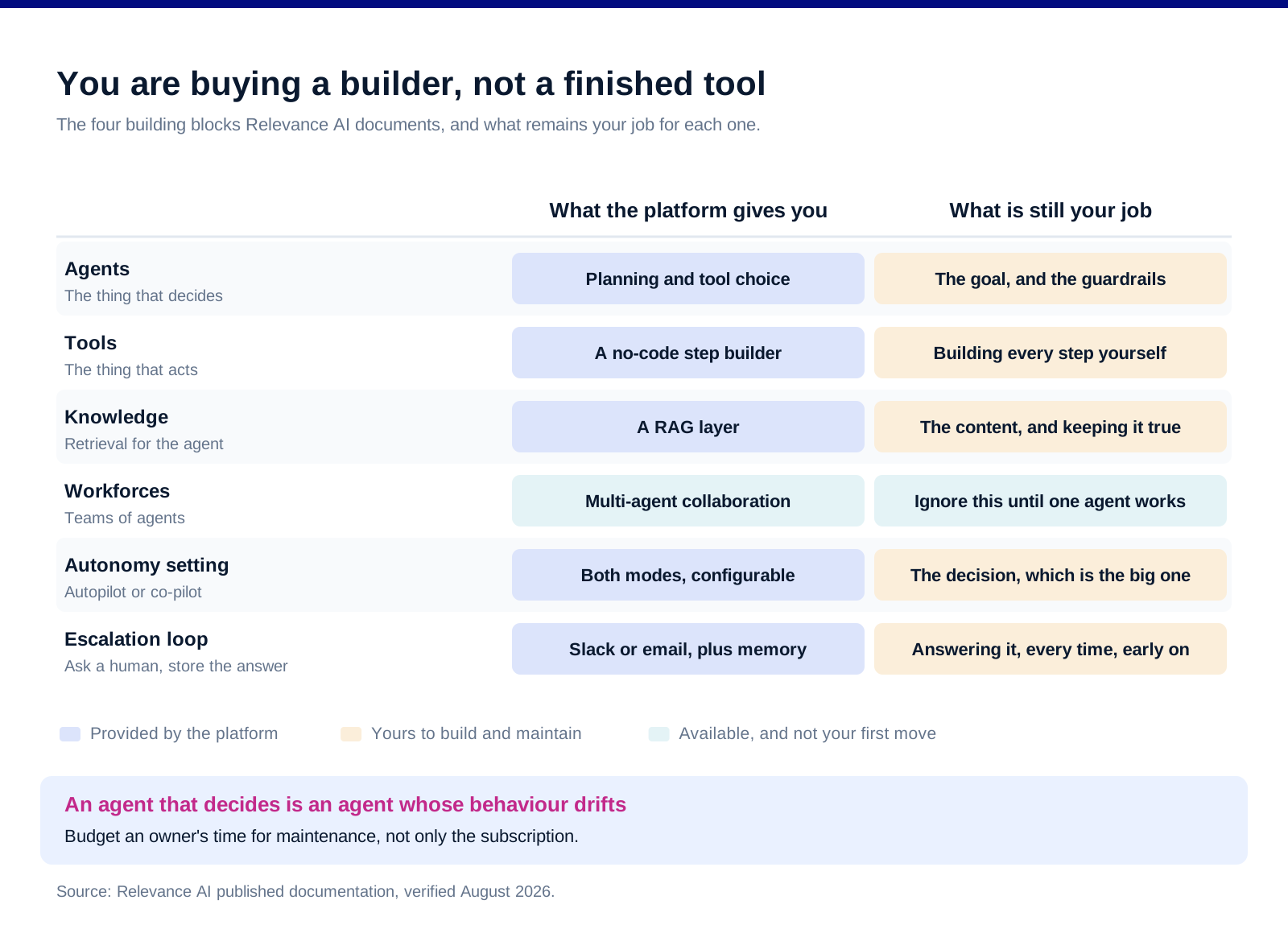
Agents are the unit you think in. The documentation describes them as "powered by LLMs that plan and complete tasks on autopilot. They are given tools, and decide how to use tools to achieve goals prompted by you." The agent is not the automation. The agent is the thing choosing which automation to run.
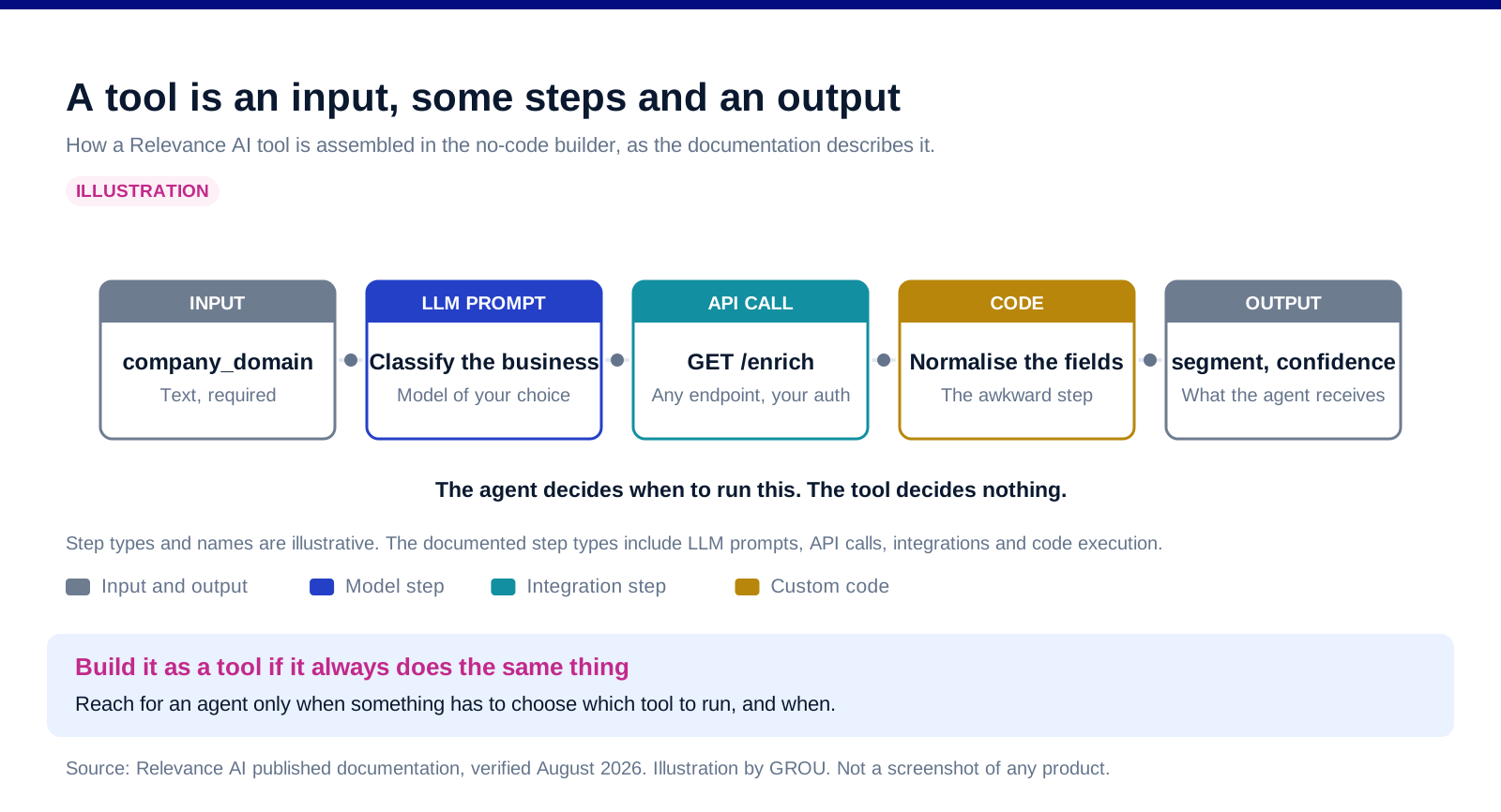
Tools are the actions. Relevance AI defines them as "the actions your agents can take", built as "step-by-step automations you build in a no-code builder", covering "calling an API, running an LLM prompt, sending an email, searching a database, or executing custom code". Every tool is an input, a set of steps, and an output.
The split between them is the platform's central idea. In its own words, "An agent thinks, plans, and decides what to do. A tool is a specific action the agent can take." Get that right and the product makes sense immediately. Get it wrong and you will build agents that should have been tools.
Workforces are teams of agents. Described as "multi-agent teams where specialized AI agents collaborate on complex tasks". This is the part most buyers should ignore at first, because a single agent with good tools solves more problems than most companies admit.
Knowledge is retrieval. A "RAG solution giving agents access to specific information beyond pre-trained knowledge". Useful, and it is the component whose quality depends most on work you do rather than on the platform.
How an agent actually runs
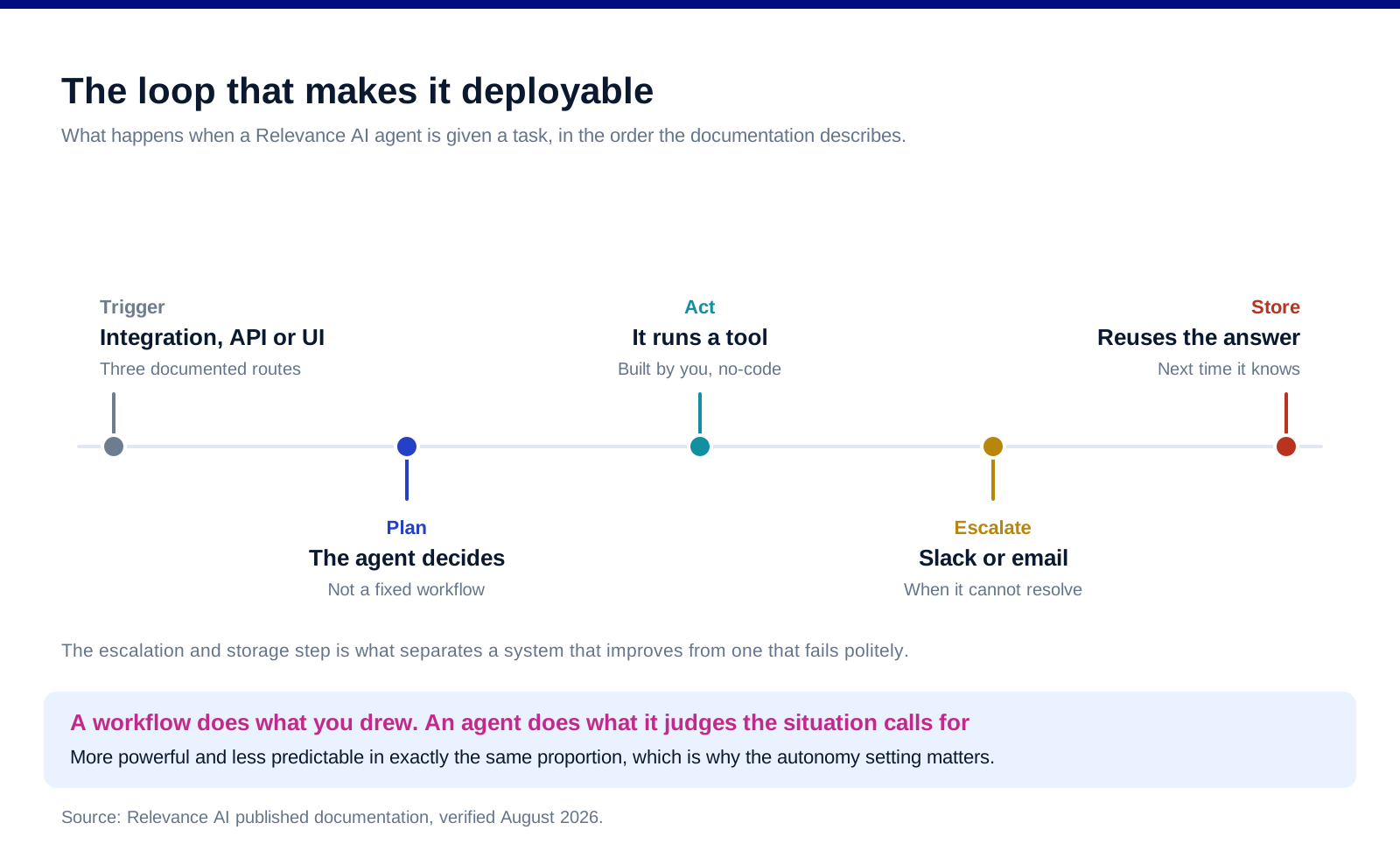
It starts three ways. The documentation lists pre-built integrations connecting to existing systems, API access for embedding into an application, and direct execution from the interface. In practice most teams start with the third and move to the first.
Then the agent decides. It is given tools and chooses among them, which is the difference between this and a workflow builder. A workflow does what you drew. An agent does what it judges the situation calls for, which is more powerful and less predictable in exactly the same proportion.
Autonomy is a dial, not a switch. Agents can run "fully autonomously or in co-pilot mode", with a human-in-the-loop mode requiring input or approval. That configuration is the single most important decision you will make in the product and it is far more consequential than any prompt.
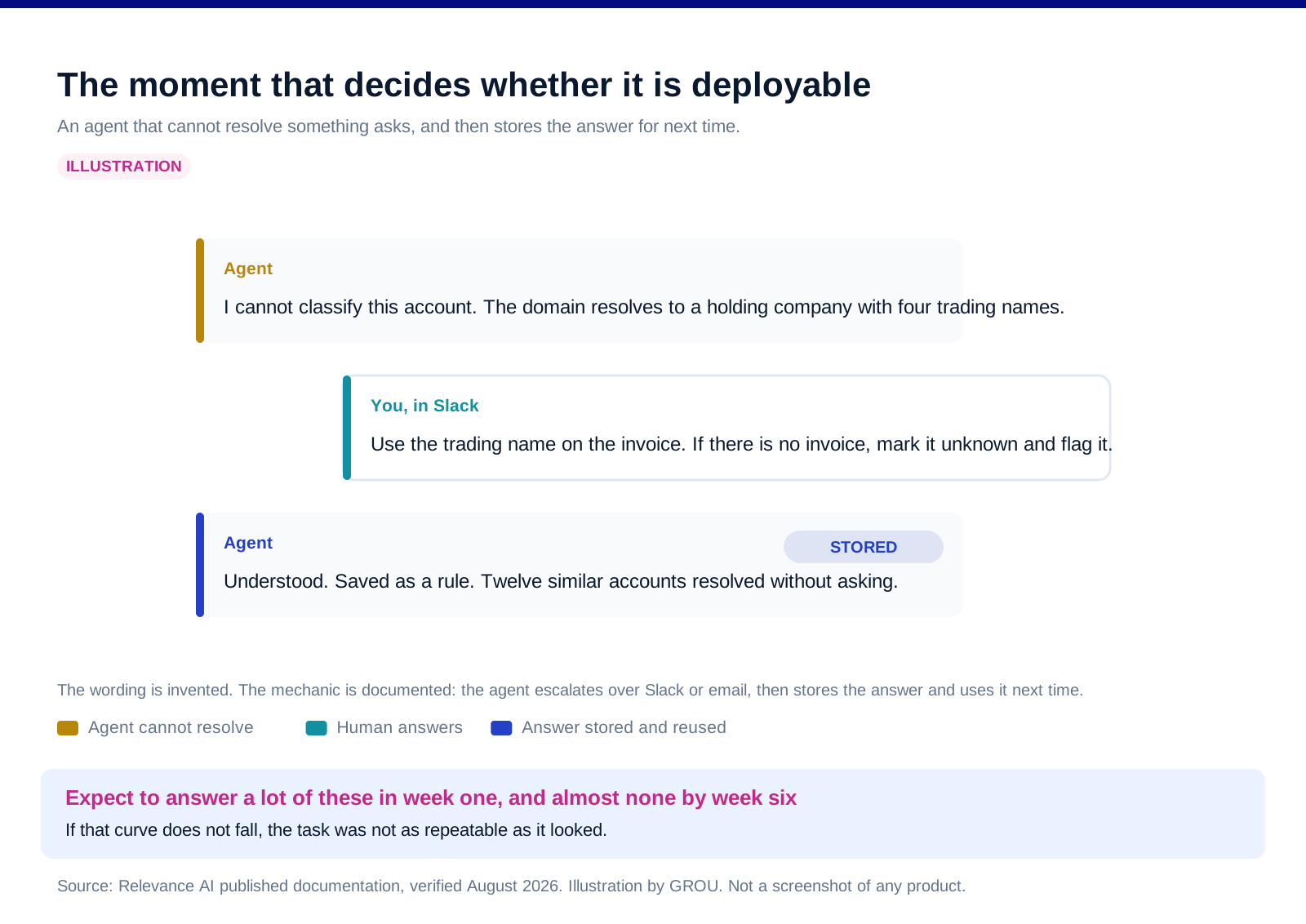
And the escalation loop is the best thing here. When an agent cannot resolve something it will "escalate to a human" through Slack or email, then "store the answer, and use it next time". That is the mechanic that separates a system which improves from one that just fails politely, and it is the reason to prefer this over a general automation platform for judgement-heavy work.
Tools can also run in bulk. The documentation notes you can "run them in bulk across a knowledge table", which is how most list-processing work actually gets done here rather than through the agent conversation.
What we like
The conceptual model is clean and it holds up. Agent, tool, knowledge, workforce. Four ideas, clearly separated in the documentation, and the separation survives contact with real work. That is rarer in this category than it sounds.
The escalation and learning loop. Described above and worth repeating, because it is the feature that makes an agent something you can deploy rather than demo.
The security posture is properly documented. SOC 2 Type II, encryption stated specifically as "TLS 1.2+ for data in transit and AES 256 for data at rest", and the training question answered flatly rather than hedged: "We do not use your data to train our models or improve our services unless you have a specific partnership agreement with us."
Data residency is offered at all. Storage in Australia, the US or the EU and UK, with the specific regions given as US North Virginia, EU London and AU Sydney. Plenty of tools in this category offer one region and do not mention it.
Custom code is available inside a no-code builder. The escape hatch matters, because the tasks worth automating tend to have one awkward step in them.
What to check before you buy
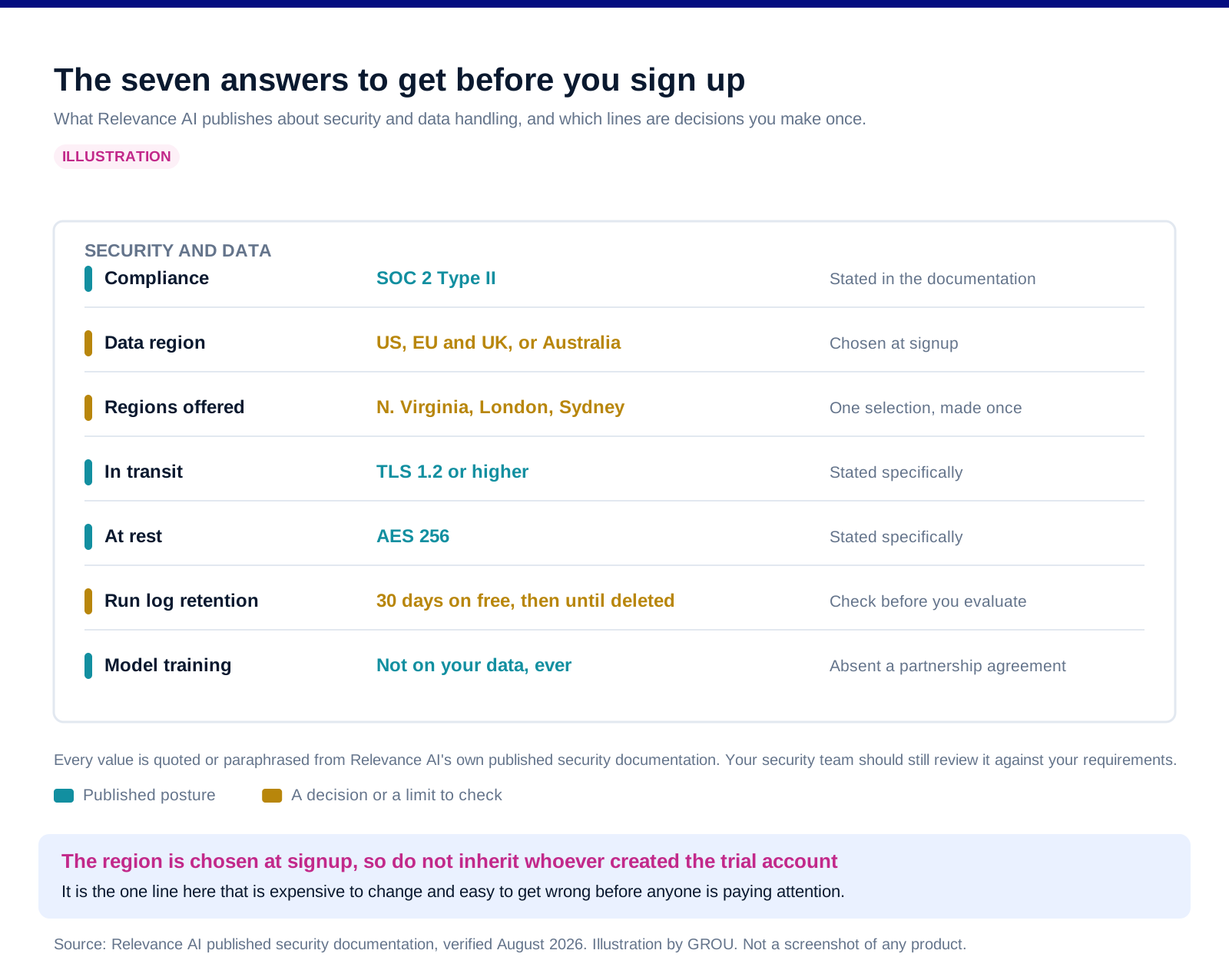
Your data region is chosen at signup. The documentation states data is stored in Australia, the US or the EU and UK "based on your selection at signup". Decide it deliberately, before someone creates a trial account for a demo and you inherit the region they picked.
Log retention on the free tier is short. "Agent and tool run logs: 30 days (free tier). For other tiers, the data is stored until you choose to delete it." If you are evaluating on free and expect to audit what happened eight weeks ago, you will not be able to.
There are system quotas. The documentation refers to "system quotas that define the maximum resource allocations", including limits on agent counts and concurrent operations. We could not read the specific numbers by tier and we are not going to guess them, so ask for them in writing if concurrency matters to you.
The billing has two meters. Actions and Vendor Credits are counted separately, which is unusual and is covered properly in our Relevance AI pricing piece rather than repeated here.
And you are taking on maintenance. An agent that decides is an agent whose decisions change when the model, the tools or the data change. Budget someone's time for that, not just the subscription.
Who it suits
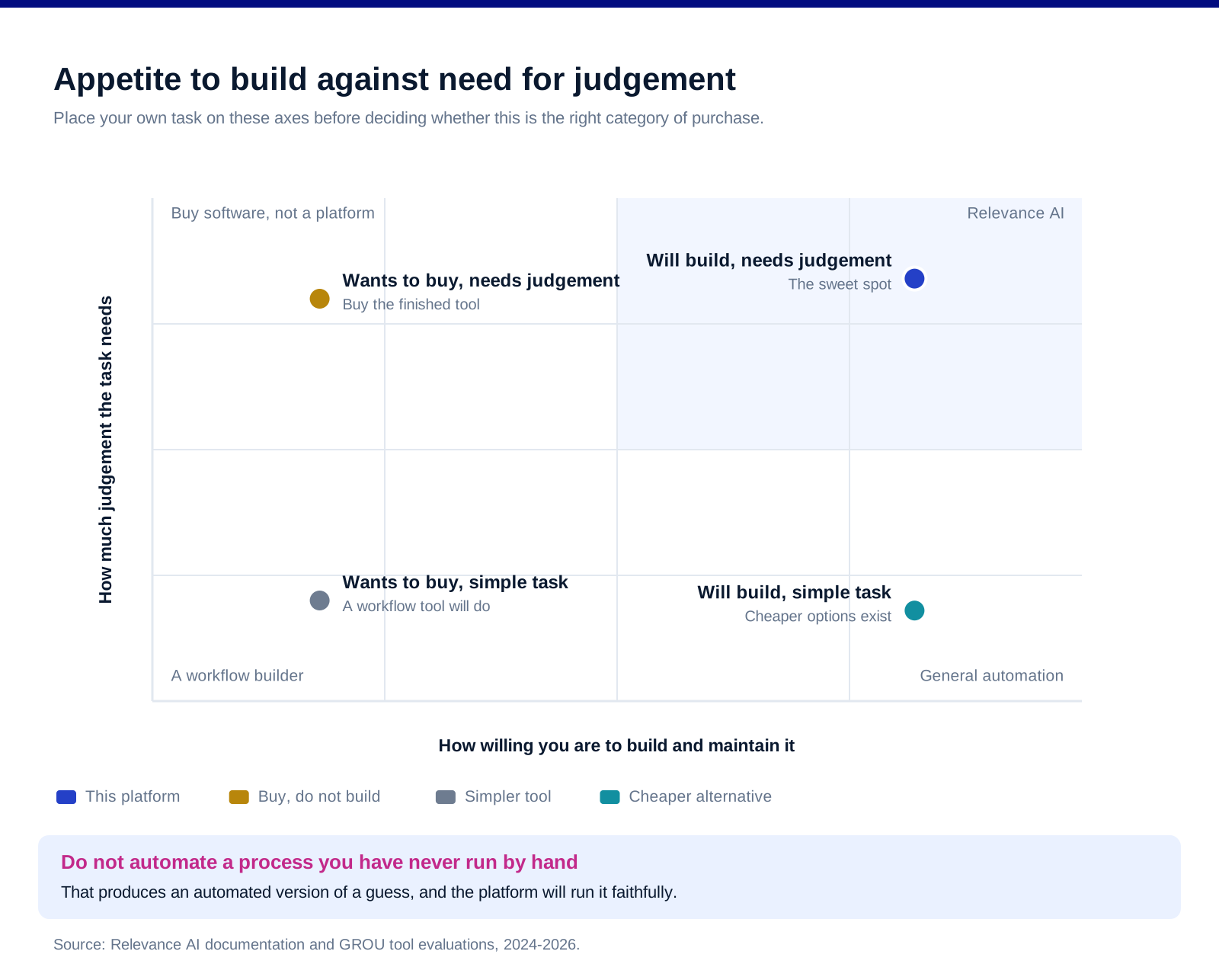
Teams with a specific, judgement-heavy, repeated task. This is the sweet spot. Something that happens often, that requires reading and deciding rather than only moving data, and that nobody sells as a finished product.
Companies that want to own the logic. If the process is a competitive advantage, building it beats buying someone else's version of it.
Not teams looking for outbound software. If you want sequences, deliverability and a dialer, buy a sales engagement tool. Our roundup of Relevance AI alternatives covers the adjacent options including the general automation platforms.
Not teams without an owner. The failure mode we see in this category is not the tool. It is a platform bought by someone who then has no time to maintain what they built, which is the same failure our note on the RevOps tech stack describes across the wider stack.
And not for a task you have not yet done manually. Automating a process you have never run by hand produces an automated version of a guess.
What we do not publish here
A score out of ten. We have not run it against a matched alternative on the same task with the same data, and a number without that is a preference with decimal places.
Its prices. Covered in our pricing piece, which is where they belong, and repeating them here would compete with our own page.
The specific system quotas by tier. The documentation refers to them without publishing the numbers we would need, and a guessed concurrency limit is exactly the sort of figure a reader would plan around.
Model quality comparisons. The platform runs whichever models you point it at, so a quality judgement here would be a judgement about those models rather than about Relevance AI.
Uptime, support responsiveness or roadmap claims. We have not measured the first two and the third is not a fact.
FAQ
What is Relevance AI?
In its own documentation, "a low/no-code platform where you can build AI agents and multi-agent teams that autonomously complete tasks, much like human employees". You build agents, give them tools, and optionally group them into workforces. It is a platform for building the thing that does the work rather than a finished application.
What is the difference between an agent and a tool?
Relevance AI puts it plainly: "An agent thinks, plans, and decides what to do. A tool is a specific action the agent can take." Tools are step-by-step automations you build; agents choose among them. Getting this the wrong way round is the most common early mistake.
Can a Relevance AI agent run without supervision?
Yes, and it does not have to. Agents run "fully autonomously or in co-pilot mode", with a human-in-the-loop option requiring input or approval. When an agent cannot resolve something it escalates to a human over Slack or email, stores the answer and reuses it next time.
Is Relevance AI secure enough for enterprise data?
Its documentation states SOC 2 Type II compliance, encryption of "TLS 1.2+ for data in transit and AES 256 for data at rest", and that customer data is not used to train models absent a specific partnership agreement. Data residency is available in the US, the EU and UK, or Australia. Your own security team should still review it against your requirements.
Where is my data stored?
In Australia, the US or the EU and UK, "based on your selection at signup", with regions given as US North Virginia, EU London and AU Sydney. Because that choice happens at signup, make it deliberately rather than inheriting whatever a colleague picked when creating a trial.
Who should not buy Relevance AI?
Anyone looking for finished sales software, anyone without a person who will own and maintain what gets built, and anyone trying to automate a process they have never run manually. The platform rewards a clear, repeated, judgement-heavy task and punishes a vague one.
Bottom line
Buy this if you have a specific repeated task that needs judgement, an owner who will maintain what you build, and a reason to want the logic in-house rather than bought. The conceptual model is clean, the separation between agents that decide and tools that act holds up under real work, and the escalation loop, where an agent that gets stuck asks a human and then stores the answer for next time, is the feature that turns a demo into something you can actually run. Before you commit, settle three things the documentation makes easy to miss: choose your data region deliberately because it is set at signup, understand that free tier run logs last thirty days, and get the system quotas in writing if concurrency matters to you. And be honest about the maintenance. An agent that decides is an agent whose behaviour drifts when the model or the tools underneath it change, and the subscription is the cheaper half of that commitment.
Want the pipeline built rather than the agent built? Book a call with GROU. We run lead generation and outbound inside B2B revenue engines across verticals.
We are GROU, a B2B pipeline agency that runs lead generation, outbound, and LinkedIn content for clients across manufacturing, fintech, iGaming, software, and professional services. Some links in this article are affiliate links, including Relevance AI. Every product description and quotation is taken from Relevance AI's own published documentation and verified in August 2026. Documentation changes, so check before you buy.
Most people arriving at Relevance AI are looking for a tool that does a job. What they find is a place to build the thing that does the job, which is a different purchase with a different failure mode.
That distinction runs through everything below. If you want software that prospects, writes or researches out of the box, this is not that. If you want to assemble something specific to how your business works, and you are willing to own it afterwards, the platform is unusually well built for it.
TL;DR
Relevance AI describes itself in its own documentation as "a low/no-code platform where you can build AI agents and multi-agent teams that autonomously complete tasks, much like human employees". The four building blocks are agents, which "plan and complete tasks on autopilot" and "decide how to use tools to achieve goals prompted by you", tools, which are "step-by-step automations you build in a no-code builder", workforces of multiple agents, and knowledge for retrieval. The mechanic worth buying it for is the escalation loop: an agent that cannot resolve something will "escalate to a human" over Slack or email, then "store the answer, and use it next time". The reasons to hesitate are that you are building rather than buying, that the billing splits into two separate meters, and that your data region is chosen at signup. On security the posture is strong: SOC 2 Type II, AES 256 at rest and TLS 1.2 or higher in transit, and "We don't train any models on your data, ever."
What it actually is
Agents are the unit you think in. The documentation describes them as "powered by LLMs that plan and complete tasks on autopilot. They are given tools, and decide how to use tools to achieve goals prompted by you." The agent is not the automation. The agent is the thing choosing which automation to run.
Tools are the actions. Relevance AI defines them as "the actions your agents can take", built as "step-by-step automations you build in a no-code builder", covering "calling an API, running an LLM prompt, sending an email, searching a database, or executing custom code". Every tool is an input, a set of steps, and an output.
The split between them is the platform's central idea. In its own words, "An agent thinks, plans, and decides what to do. A tool is a specific action the agent can take." Get that right and the product makes sense immediately. Get it wrong and you will build agents that should have been tools.
Workforces are teams of agents. Described as "multi-agent teams where specialized AI agents collaborate on complex tasks". This is the part most buyers should ignore at first, because a single agent with good tools solves more problems than most companies admit.
Knowledge is retrieval. A "RAG solution giving agents access to specific information beyond pre-trained knowledge". Useful, and it is the component whose quality depends most on work you do rather than on the platform.
How an agent actually runs
It starts three ways. The documentation lists pre-built integrations connecting to existing systems, API access for embedding into an application, and direct execution from the interface. In practice most teams start with the third and move to the first.
Then the agent decides. It is given tools and chooses among them, which is the difference between this and a workflow builder. A workflow does what you drew. An agent does what it judges the situation calls for, which is more powerful and less predictable in exactly the same proportion.
Autonomy is a dial, not a switch. Agents can run "fully autonomously or in co-pilot mode", with a human-in-the-loop mode requiring input or approval. That configuration is the single most important decision you will make in the product and it is far more consequential than any prompt.
And the escalation loop is the best thing here. When an agent cannot resolve something it will "escalate to a human" through Slack or email, then "store the answer, and use it next time". That is the mechanic that separates a system which improves from one that just fails politely, and it is the reason to prefer this over a general automation platform for judgement-heavy work.
Tools can also run in bulk. The documentation notes you can "run them in bulk across a knowledge table", which is how most list-processing work actually gets done here rather than through the agent conversation.
What we like
The conceptual model is clean and it holds up. Agent, tool, knowledge, workforce. Four ideas, clearly separated in the documentation, and the separation survives contact with real work. That is rarer in this category than it sounds.
The escalation and learning loop. Described above and worth repeating, because it is the feature that makes an agent something you can deploy rather than demo.
The security posture is properly documented. SOC 2 Type II, encryption stated specifically as "TLS 1.2+ for data in transit and AES 256 for data at rest", and the training question answered flatly rather than hedged: "We do not use your data to train our models or improve our services unless you have a specific partnership agreement with us."
Data residency is offered at all. Storage in Australia, the US or the EU and UK, with the specific regions given as US North Virginia, EU London and AU Sydney. Plenty of tools in this category offer one region and do not mention it.
Custom code is available inside a no-code builder. The escape hatch matters, because the tasks worth automating tend to have one awkward step in them.
What to check before you buy
Your data region is chosen at signup. The documentation states data is stored in Australia, the US or the EU and UK "based on your selection at signup". Decide it deliberately, before someone creates a trial account for a demo and you inherit the region they picked.
Log retention on the free tier is short. "Agent and tool run logs: 30 days (free tier). For other tiers, the data is stored until you choose to delete it." If you are evaluating on free and expect to audit what happened eight weeks ago, you will not be able to.
There are system quotas. The documentation refers to "system quotas that define the maximum resource allocations", including limits on agent counts and concurrent operations. We could not read the specific numbers by tier and we are not going to guess them, so ask for them in writing if concurrency matters to you.
The billing has two meters. Actions and Vendor Credits are counted separately, which is unusual and is covered properly in our Relevance AI pricing piece rather than repeated here.
And you are taking on maintenance. An agent that decides is an agent whose decisions change when the model, the tools or the data change. Budget someone's time for that, not just the subscription.
Who it suits
Teams with a specific, judgement-heavy, repeated task. This is the sweet spot. Something that happens often, that requires reading and deciding rather than only moving data, and that nobody sells as a finished product.
Companies that want to own the logic. If the process is a competitive advantage, building it beats buying someone else's version of it.
Not teams looking for outbound software. If you want sequences, deliverability and a dialer, buy a sales engagement tool. Our roundup of Relevance AI alternatives covers the adjacent options including the general automation platforms.
Not teams without an owner. The failure mode we see in this category is not the tool. It is a platform bought by someone who then has no time to maintain what they built, which is the same failure our note on the RevOps tech stack describes across the wider stack.
And not for a task you have not yet done manually. Automating a process you have never run by hand produces an automated version of a guess.
What we do not publish here
A score out of ten. We have not run it against a matched alternative on the same task with the same data, and a number without that is a preference with decimal places.
Its prices. Covered in our pricing piece, which is where they belong, and repeating them here would compete with our own page.
The specific system quotas by tier. The documentation refers to them without publishing the numbers we would need, and a guessed concurrency limit is exactly the sort of figure a reader would plan around.
Model quality comparisons. The platform runs whichever models you point it at, so a quality judgement here would be a judgement about those models rather than about Relevance AI.
Uptime, support responsiveness or roadmap claims. We have not measured the first two and the third is not a fact.
FAQ
What is Relevance AI?
In its own documentation, "a low/no-code platform where you can build AI agents and multi-agent teams that autonomously complete tasks, much like human employees". You build agents, give them tools, and optionally group them into workforces. It is a platform for building the thing that does the work rather than a finished application.
What is the difference between an agent and a tool?
Relevance AI puts it plainly: "An agent thinks, plans, and decides what to do. A tool is a specific action the agent can take." Tools are step-by-step automations you build; agents choose among them. Getting this the wrong way round is the most common early mistake.
Can a Relevance AI agent run without supervision?
Yes, and it does not have to. Agents run "fully autonomously or in co-pilot mode", with a human-in-the-loop option requiring input or approval. When an agent cannot resolve something it escalates to a human over Slack or email, stores the answer and reuses it next time.
Is Relevance AI secure enough for enterprise data?
Its documentation states SOC 2 Type II compliance, encryption of "TLS 1.2+ for data in transit and AES 256 for data at rest", and that customer data is not used to train models absent a specific partnership agreement. Data residency is available in the US, the EU and UK, or Australia. Your own security team should still review it against your requirements.
Where is my data stored?
In Australia, the US or the EU and UK, "based on your selection at signup", with regions given as US North Virginia, EU London and AU Sydney. Because that choice happens at signup, make it deliberately rather than inheriting whatever a colleague picked when creating a trial.
Who should not buy Relevance AI?
Anyone looking for finished sales software, anyone without a person who will own and maintain what gets built, and anyone trying to automate a process they have never run manually. The platform rewards a clear, repeated, judgement-heavy task and punishes a vague one.
Bottom line
Buy this if you have a specific repeated task that needs judgement, an owner who will maintain what you build, and a reason to want the logic in-house rather than bought. The conceptual model is clean, the separation between agents that decide and tools that act holds up under real work, and the escalation loop, where an agent that gets stuck asks a human and then stores the answer for next time, is the feature that turns a demo into something you can actually run. Before you commit, settle three things the documentation makes easy to miss: choose your data region deliberately because it is set at signup, understand that free tier run logs last thirty days, and get the system quotas in writing if concurrency matters to you. And be honest about the maintenance. An agent that decides is an agent whose behaviour drifts when the model or the tools underneath it change, and the subscription is the cheaper half of that commitment.
Want the pipeline built rather than the agent built? Book a call with GROU. We run lead generation and outbound inside B2B revenue engines across verticals.
We are GROU, a B2B pipeline agency that runs lead generation, outbound, and LinkedIn content for clients across manufacturing, fintech, iGaming, software, and professional services. Some links in this article are affiliate links, including Relevance AI. Every product description and quotation is taken from Relevance AI's own published documentation and verified in August 2026. Documentation changes, so check before you buy.
Most people arriving at Relevance AI are looking for a tool that does a job. What they find is a place to build the thing that does the job, which is a different purchase with a different failure mode.
That distinction runs through everything below. If you want software that prospects, writes or researches out of the box, this is not that. If you want to assemble something specific to how your business works, and you are willing to own it afterwards, the platform is unusually well built for it.
TL;DR
Relevance AI describes itself in its own documentation as "a low/no-code platform where you can build AI agents and multi-agent teams that autonomously complete tasks, much like human employees". The four building blocks are agents, which "plan and complete tasks on autopilot" and "decide how to use tools to achieve goals prompted by you", tools, which are "step-by-step automations you build in a no-code builder", workforces of multiple agents, and knowledge for retrieval. The mechanic worth buying it for is the escalation loop: an agent that cannot resolve something will "escalate to a human" over Slack or email, then "store the answer, and use it next time". The reasons to hesitate are that you are building rather than buying, that the billing splits into two separate meters, and that your data region is chosen at signup. On security the posture is strong: SOC 2 Type II, AES 256 at rest and TLS 1.2 or higher in transit, and "We don't train any models on your data, ever."
What it actually is
Agents are the unit you think in. The documentation describes them as "powered by LLMs that plan and complete tasks on autopilot. They are given tools, and decide how to use tools to achieve goals prompted by you." The agent is not the automation. The agent is the thing choosing which automation to run.
Tools are the actions. Relevance AI defines them as "the actions your agents can take", built as "step-by-step automations you build in a no-code builder", covering "calling an API, running an LLM prompt, sending an email, searching a database, or executing custom code". Every tool is an input, a set of steps, and an output.
The split between them is the platform's central idea. In its own words, "An agent thinks, plans, and decides what to do. A tool is a specific action the agent can take." Get that right and the product makes sense immediately. Get it wrong and you will build agents that should have been tools.
Workforces are teams of agents. Described as "multi-agent teams where specialized AI agents collaborate on complex tasks". This is the part most buyers should ignore at first, because a single agent with good tools solves more problems than most companies admit.
Knowledge is retrieval. A "RAG solution giving agents access to specific information beyond pre-trained knowledge". Useful, and it is the component whose quality depends most on work you do rather than on the platform.
How an agent actually runs
It starts three ways. The documentation lists pre-built integrations connecting to existing systems, API access for embedding into an application, and direct execution from the interface. In practice most teams start with the third and move to the first.
Then the agent decides. It is given tools and chooses among them, which is the difference between this and a workflow builder. A workflow does what you drew. An agent does what it judges the situation calls for, which is more powerful and less predictable in exactly the same proportion.
Autonomy is a dial, not a switch. Agents can run "fully autonomously or in co-pilot mode", with a human-in-the-loop mode requiring input or approval. That configuration is the single most important decision you will make in the product and it is far more consequential than any prompt.
And the escalation loop is the best thing here. When an agent cannot resolve something it will "escalate to a human" through Slack or email, then "store the answer, and use it next time". That is the mechanic that separates a system which improves from one that just fails politely, and it is the reason to prefer this over a general automation platform for judgement-heavy work.
Tools can also run in bulk. The documentation notes you can "run them in bulk across a knowledge table", which is how most list-processing work actually gets done here rather than through the agent conversation.
What we like
The conceptual model is clean and it holds up. Agent, tool, knowledge, workforce. Four ideas, clearly separated in the documentation, and the separation survives contact with real work. That is rarer in this category than it sounds.
The escalation and learning loop. Described above and worth repeating, because it is the feature that makes an agent something you can deploy rather than demo.
The security posture is properly documented. SOC 2 Type II, encryption stated specifically as "TLS 1.2+ for data in transit and AES 256 for data at rest", and the training question answered flatly rather than hedged: "We do not use your data to train our models or improve our services unless you have a specific partnership agreement with us."
Data residency is offered at all. Storage in Australia, the US or the EU and UK, with the specific regions given as US North Virginia, EU London and AU Sydney. Plenty of tools in this category offer one region and do not mention it.
Custom code is available inside a no-code builder. The escape hatch matters, because the tasks worth automating tend to have one awkward step in them.
What to check before you buy
Your data region is chosen at signup. The documentation states data is stored in Australia, the US or the EU and UK "based on your selection at signup". Decide it deliberately, before someone creates a trial account for a demo and you inherit the region they picked.
Log retention on the free tier is short. "Agent and tool run logs: 30 days (free tier). For other tiers, the data is stored until you choose to delete it." If you are evaluating on free and expect to audit what happened eight weeks ago, you will not be able to.
There are system quotas. The documentation refers to "system quotas that define the maximum resource allocations", including limits on agent counts and concurrent operations. We could not read the specific numbers by tier and we are not going to guess them, so ask for them in writing if concurrency matters to you.
The billing has two meters. Actions and Vendor Credits are counted separately, which is unusual and is covered properly in our Relevance AI pricing piece rather than repeated here.
And you are taking on maintenance. An agent that decides is an agent whose decisions change when the model, the tools or the data change. Budget someone's time for that, not just the subscription.
Who it suits
Teams with a specific, judgement-heavy, repeated task. This is the sweet spot. Something that happens often, that requires reading and deciding rather than only moving data, and that nobody sells as a finished product.
Companies that want to own the logic. If the process is a competitive advantage, building it beats buying someone else's version of it.
Not teams looking for outbound software. If you want sequences, deliverability and a dialer, buy a sales engagement tool. Our roundup of Relevance AI alternatives covers the adjacent options including the general automation platforms.
Not teams without an owner. The failure mode we see in this category is not the tool. It is a platform bought by someone who then has no time to maintain what they built, which is the same failure our note on the RevOps tech stack describes across the wider stack.
And not for a task you have not yet done manually. Automating a process you have never run by hand produces an automated version of a guess.
What we do not publish here
A score out of ten. We have not run it against a matched alternative on the same task with the same data, and a number without that is a preference with decimal places.
Its prices. Covered in our pricing piece, which is where they belong, and repeating them here would compete with our own page.
The specific system quotas by tier. The documentation refers to them without publishing the numbers we would need, and a guessed concurrency limit is exactly the sort of figure a reader would plan around.
Model quality comparisons. The platform runs whichever models you point it at, so a quality judgement here would be a judgement about those models rather than about Relevance AI.
Uptime, support responsiveness or roadmap claims. We have not measured the first two and the third is not a fact.
FAQ
What is Relevance AI?
In its own documentation, "a low/no-code platform where you can build AI agents and multi-agent teams that autonomously complete tasks, much like human employees". You build agents, give them tools, and optionally group them into workforces. It is a platform for building the thing that does the work rather than a finished application.
What is the difference between an agent and a tool?
Relevance AI puts it plainly: "An agent thinks, plans, and decides what to do. A tool is a specific action the agent can take." Tools are step-by-step automations you build; agents choose among them. Getting this the wrong way round is the most common early mistake.
Can a Relevance AI agent run without supervision?
Yes, and it does not have to. Agents run "fully autonomously or in co-pilot mode", with a human-in-the-loop option requiring input or approval. When an agent cannot resolve something it escalates to a human over Slack or email, stores the answer and reuses it next time.
Is Relevance AI secure enough for enterprise data?
Its documentation states SOC 2 Type II compliance, encryption of "TLS 1.2+ for data in transit and AES 256 for data at rest", and that customer data is not used to train models absent a specific partnership agreement. Data residency is available in the US, the EU and UK, or Australia. Your own security team should still review it against your requirements.
Where is my data stored?
In Australia, the US or the EU and UK, "based on your selection at signup", with regions given as US North Virginia, EU London and AU Sydney. Because that choice happens at signup, make it deliberately rather than inheriting whatever a colleague picked when creating a trial.
Who should not buy Relevance AI?
Anyone looking for finished sales software, anyone without a person who will own and maintain what gets built, and anyone trying to automate a process they have never run manually. The platform rewards a clear, repeated, judgement-heavy task and punishes a vague one.
Bottom line
Buy this if you have a specific repeated task that needs judgement, an owner who will maintain what you build, and a reason to want the logic in-house rather than bought. The conceptual model is clean, the separation between agents that decide and tools that act holds up under real work, and the escalation loop, where an agent that gets stuck asks a human and then stores the answer for next time, is the feature that turns a demo into something you can actually run. Before you commit, settle three things the documentation makes easy to miss: choose your data region deliberately because it is set at signup, understand that free tier run logs last thirty days, and get the system quotas in writing if concurrency matters to you. And be honest about the maintenance. An agent that decides is an agent whose behaviour drifts when the model or the tools underneath it change, and the subscription is the cheaper half of that commitment.
Want the pipeline built rather than the agent built? Book a call with GROU. We run lead generation and outbound inside B2B revenue engines across verticals.
We are GROU, a B2B pipeline agency that runs lead generation, outbound, and LinkedIn content for clients across manufacturing, fintech, iGaming, software, and professional services. Some links in this article are affiliate links, including Relevance AI. Every product description and quotation is taken from Relevance AI's own published documentation and verified in August 2026. Documentation changes, so check before you buy.
Pipeline OS Newsletter
Build qualified pipeline
Get weekly tactics to generate demand, improve lead quality, and book more meetings.





Trusted by industry leaders
Trusted by industry leaders
Trusted by industry leaders
Ready to build qualified pipeline?
Ready to build qualified pipeline?
Ready to build qualified pipeline?
Book a call to see if we're the right fit, or take the 2-minute quiz to get a clear starting point.
Book a call to see if we're the right fit, or take the 2-minute quiz to get a clear starting point.
Book a call to see if we're the right fit, or take the 2-minute quiz to get a clear starting point.
" height="30.21639343089746px" id="hfGbXmQR2" width="30.216393430897455px"/></svg>)
Copyright © 2026 – All Right Reserved
Copyright © 2026 – All Right Reserved
Copyright © 2026 – All Right Reserved