%22%3E%3C/path%3E%3Cpath d=%22M 63.072 7.554 C 62.258 8.022 61.577 8.689 61.092 9.493 L 61.092 7.076 L 57.158 7.076 L 57.158 22.64 L 61.089 22.64 L 61.089 14.888 C 61.089 13.446 61.403 12.434 62.03 11.853 C 62.818 11.218 63.818 10.907 64.826 10.982 L 65.868 10.982 L 65.868 6.851 C 64.891 6.834 63.926 7.076 63.073 7.554 Z%22 fill=%22rgb(17,17,17)%22%3E%3C/path%3E%3Cpath d=%22M 78.916 7.82 C 76.363 6.49 73.321 6.49 70.768 7.82 C 69.562 8.473 68.564 9.451 67.888 10.644 C 67.167 11.931 66.803 13.387 66.834 14.862 C 66.804 16.332 67.157 17.785 67.86 19.077 C 68.515 20.267 69.494 21.246 70.684 21.901 C 71.924 22.576 73.318 22.92 74.73 22.898 C 76.164 22.918 77.58 22.575 78.846 21.901 C 80.062 21.247 81.073 20.27 81.768 19.077 C 82.506 17.797 82.88 16.339 82.85 14.862 C 82.88 13.389 82.517 11.934 81.797 10.647 C 81.12 9.455 80.122 8.477 78.917 7.824 M 78.803 14.862 C 78.829 15.739 78.636 16.608 78.241 17.391 C 77.903 18.046 77.38 18.588 76.738 18.95 C 76.124 19.293 75.432 19.472 74.729 19.47 C 73.668 19.497 72.648 19.061 71.934 18.276 C 71.139 17.323 70.741 16.1 70.823 14.862 C 70.741 13.62 71.149 12.395 71.959 11.45 C 72.687 10.667 73.715 10.233 74.783 10.256 C 75.859 10.236 76.894 10.67 77.635 11.45 C 78.464 12.387 78.884 13.616 78.801 14.864%22 fill=%22rgb(17,17,17)%22%3E%3C/path%3E%3Cpath d=%22M 95.906 7.076 L 95.906 15.646 C 95.975 16.68 95.643 17.701 94.979 18.498 C 94.311 19.184 93.379 19.547 92.422 19.495 C 91.475 19.544 90.553 19.18 89.894 18.498 C 89.23 17.701 88.898 16.68 88.967 15.646 L 88.967 7.076 L 85.033 7.076 L 85.033 16.207 C 85 17.449 85.275 18.68 85.834 19.79 C 86.327 20.75 87.095 21.542 88.039 22.065 C 89.033 22.594 90.145 22.861 91.271 22.838 C 92.188 22.847 93.095 22.65 93.926 22.263 C 94.708 21.905 95.388 21.36 95.906 20.675 L 95.906 22.645 L 99.865 22.645 L 99.865 7.076 Z%22 fill=%22rgb(17,17,17)%22%3E%3C/path%3E%3Cpath d=%22M 4.513 15.626 C 4.511 10.815 7.606 6.549 12.181 5.059 C 16.756 3.57 21.77 5.195 24.601 9.086 L 27.816 5.87 C 24.074 1.186 17.981 -0.943 12.137 0.393 C 6.292 1.728 1.728 6.292 0.393 12.137 C -0.943 17.981 1.186 24.074 5.87 27.816 L 9.085 24.601 C 6.214 22.512 4.515 19.177 4.513 15.626%22 fill=%22rgb(32,62,235)%22%3E%3C/path%3E%3Cpath d=%22M 17.114 14.343 L 13.354 18.01 L 13.354 18.026 L 21.071 18.026 L 11.412 27.609 L 17.389 27.609 L 23.999 21.081 L 23.999 28.316 L 24.005 28.316 L 27.967 24.393 L 27.967 14.343 Z%22 fill=%22rgb(32,62,235)%22%3E%3C/path%3E%3C/g%3E%3C/svg%3E) ×
× ××
××›
›
›
›
Klenty pricing 2026
Klenty pricing 2026
Klenty pricing 2026
Klenty pricing 2026
Klenty pricing 2026
Klenty pricing 2026

Author
Aljaz Peklaj

Klenty publishes two price lists. One is on the sales engagement platform page, the other is on the dialer page, and nothing on either page explains how they relate to each other.
That is the whole problem with pricing this tool. Most buyers read one page, budget from it, and discover the second one after they have already committed. The figures below come from both pages, read the same week, with the arithmetic shown so you can check it.
TL;DR
The platform page lists Starter at $50 a month billed annually, Growth at $70 per user a month, and Plus at $99 per user a month, with a Parallel and Power Dialer add-on at $45 per user a month. The dialer has its own page and its own ladder: Basic at $40 per user a month with 500 minutes, Pro at $80 with 2,000 minutes, Scale at $140 with unlimited US calling, plus a Call Intelligence add-on at $25 and US numbers at $1.15 each per month. Every price on both pages is quoted billed annually and no month-to-month rate is published anywhere, which sits awkwardly next to the platform page describing itself as a pay as you go service you can cancel at any time. The finding worth acting on is arithmetic: Klenty publishes an overage rate of approximately $0.021 per US minute, and buying overage on Basic is cheaper than the Pro tier at every US calling volume, because the extra 1,500 minutes Pro includes work out at about $0.027 each. Scale only starts paying above roughly 5,300 US minutes per user per month. Model your minutes before you pick a tier, because on the published numbers the middle tier of the dialer ladder never wins on price alone.
Two price lists, and no page reconciles them
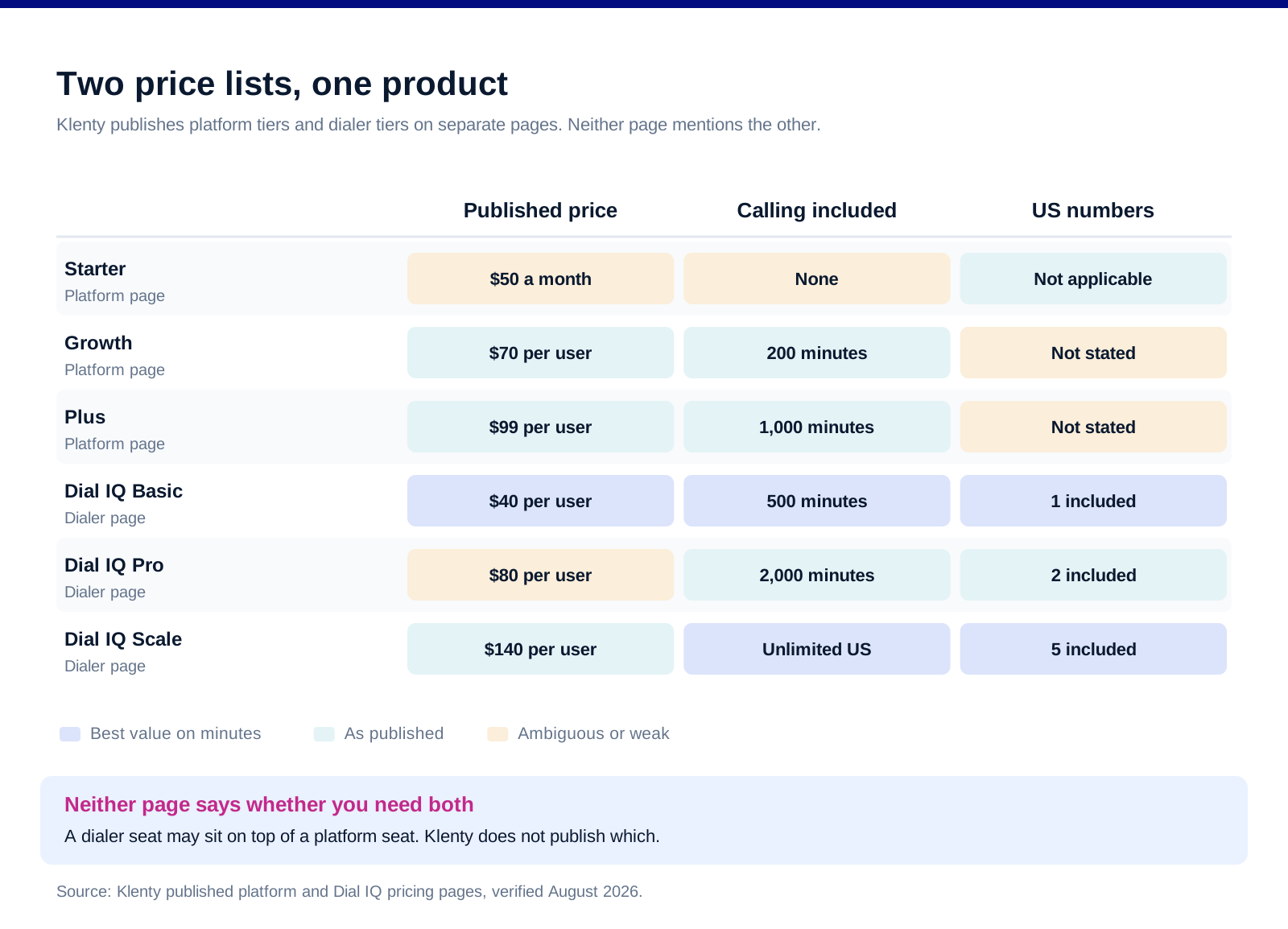
The platform ladder is the one most people find. Klenty's pricing page lists Starter at "$50 per month billed annually" with 15,000 monthly contacts and 75,000 monthly emails and no calling minutes, Growth at "$70 per user/month billed annually" with 200 minutes included, and Plus at "$99 per user/month billed annually" with 1,000 minutes and 4,000 phone and email credits.
The dialer ladder is on a separate page entirely. The Dial IQ pricing page lists Basic at "$40 per user/month billed annually" with "500 minutes included" and one US number, Pro at "$80 per user/month billed annually" with "2,000 minutes included" and two US numbers, and Scale at "$140 per user/month billed annually" with "Unlimited US calling" and five US numbers.
Neither page says whether you need both. The dialer page does not state whether a Dial IQ seat sits on top of a platform seat or replaces one, and the platform page does not mention Dial IQ by name. Ask that question before you sign anything, because the answer is the difference between $40 and $110 per user.
The $45 add-on and the dialer tiers are not obviously the same thing. The platform page sells a "Parallel & Power Dialer" add-on at "$45 per user/month". The dialer page sells a whole product. Whether the add-on is a subset of Dial IQ, a separate capability, or the same thing under a second name is not published.
Starter is the one price without a per-user qualifier. Growth and Plus are both written as per user a month. Starter is written as $50 a month. Whether that is a flat rate or a seat price is not stated, and we are not going to guess.
The tier that never pays for itself
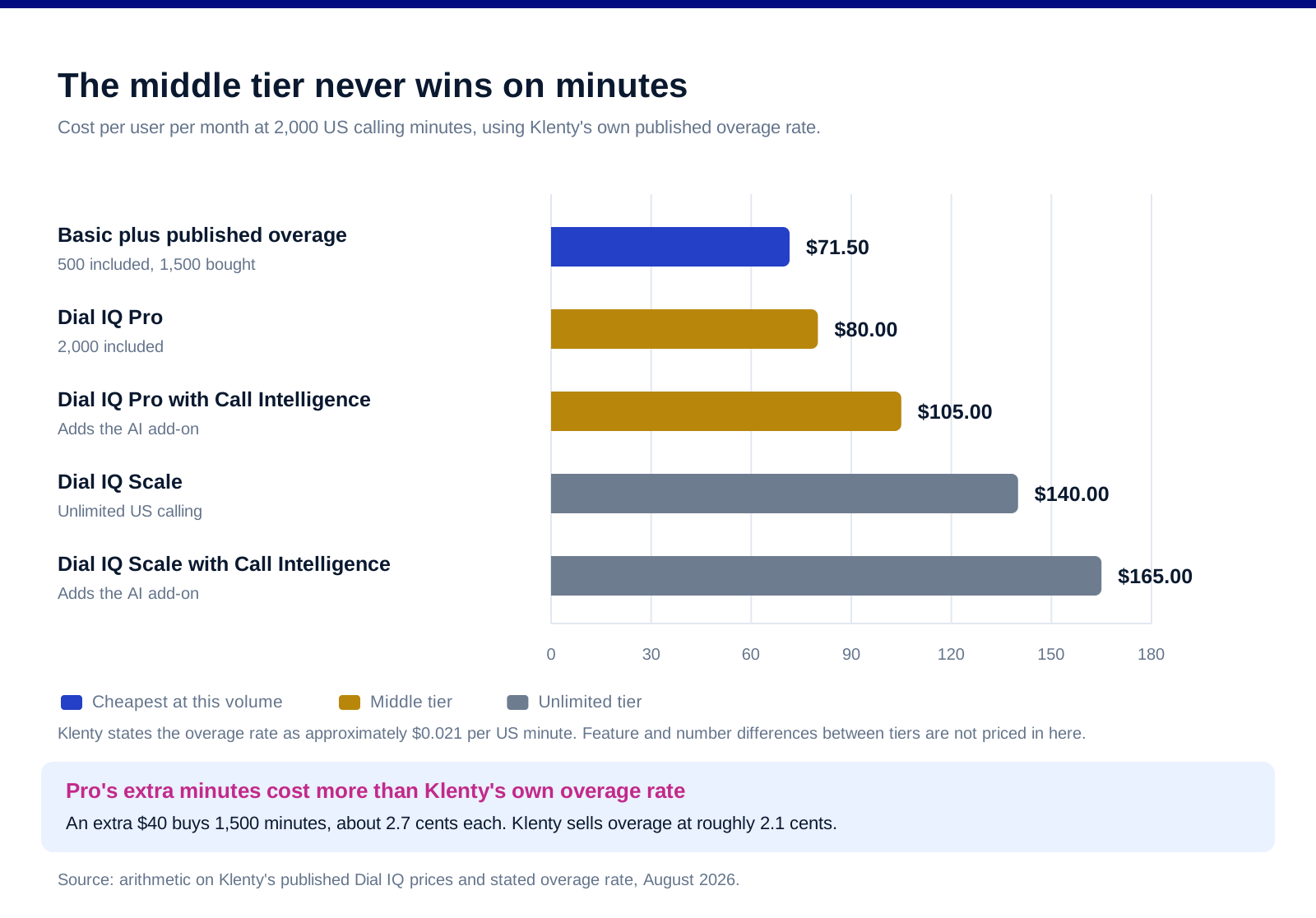
Klenty publishes a per-minute overage rate. The dialer page's FAQ states that additional minutes "can be purchased at approximately $0.021 per minute (2.1c) for the US". The word approximately is Klenty's, not ours, so treat everything below as arithmetic on an approximate published figure rather than a quotation.
Pro's extra minutes cost more than Klenty's own overage rate. Going from Basic to Pro costs an extra $40 a month and buys an extra 1,500 included minutes. That is about $0.027 per minute. Klenty will sell you the same minutes as overage for approximately $0.021.
Which means Basic plus overage undercuts Pro at every US volume. At 2,000 minutes, Basic plus overage works out at roughly $71.50 against Pro's $80. Past 2,000 minutes both tiers charge the same overage rate, so the gap simply holds at about $8.50 a month. On minutes alone, on the published figures, there is no US calling volume at which Pro is the cheaper option.
Scale needs roughly 5,300 minutes a month to justify itself. At approximately $0.021 a minute, Basic plus overage reaches $140 at about 5,260 US minutes per user per month. That is close to 88 hours of connected talk time per rep. If your reps are not doing that, unlimited is an insurance policy rather than a saving.
Two caveats we are not going to bury. Pro includes two US numbers against Basic's one, worth $1.15 a month, and the tiers differ on features that the page lists separately from minutes. If a Pro feature is the reason you are buying, buy Pro. Just do not buy it expecting the minutes to pay for it.
What the headline price leaves out
Number rental is a real line item. Klenty states that "US numbers are available instantly for $1.15 per number per month" beyond the one, two or five included by tier. Teams running mailbox-style number rotation to protect answer rates need considerably more than one number each, and that is a cost nobody models at the shortlist stage.
International calling is unpriced and gated. The dialer page says "International calling rates vary by destination" and that non-US numbers require company registration documents for that country before numbers can be set up. If you are calling outside the US, you cannot budget this tool from its own website.
The allowance changes name between the table and the FAQ. The tier table calls them minutes. The FAQ on the same page describes an allowance that refreshes monthly and applies to calls within the US and Canada. Whether Canadian minutes draw on the same pool at the same rate is not something we could establish from the page.
The email allowance is not your real email ceiling. Starter's 75,000 monthly emails is a plan allowance, not a sending limit. What actually caps a cold email programme is the mailbox provider, and Google Workspace publishes its limits at 2,000 messages a day for standard paid accounts over a rolling 24 hour period. Count mailboxes, not plan allowances. Our deliverability guide covers what that means in practice.
Everything is billed annually. No monthly rate appears on either page, while the platform page describes the service as pay as you go with no cancellation fees. Those two statements can both be true, but the reader who assumes the second one means month-to-month billing has misread the offer.
Which ladder you belong on
The number rental figure matches a published wholesale rate exactly. Twilio's US voice pricing lists a US local number at "$1.15 / mo", the same figure Klenty publishes. We do not know which carrier Klenty uses and we are not claiming one, but the match is worth noticing before you assume number rental carries a margin.
The per-minute rate does not match. Twilio publishes outbound to US local numbers at "$0.0140 / min". Klenty's approximate $0.021 is 50% above that. That is not a criticism, since a platform is not a carrier and the difference buys you software, but it does tell you that heavy callers are paying a software margin on every minute rather than a pass-through.
Which is the argument for modelling minutes first. For a team burning thousands of US minutes a rep, the per-minute margin compounds into a larger number than the tier difference you spent your time negotiating.
And the argument against buying calling capacity you will not use. Neither page states that unused minutes roll over, so an allowance you do not burn is money spent on optionality.
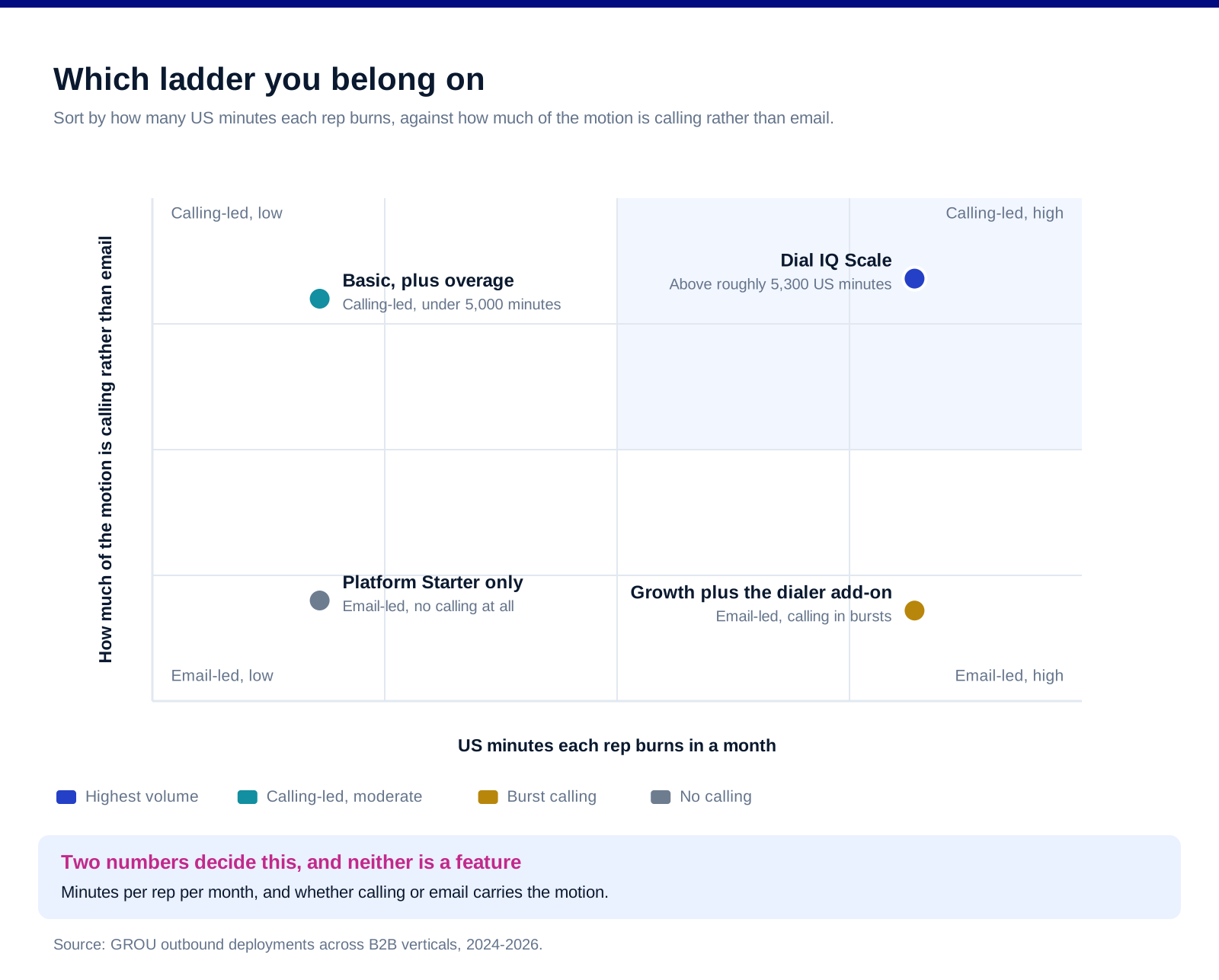
So the decision reduces to two numbers. How many US minutes each rep burns in a month, and whether calling or email carries the motion. Everything else on both pages is a feature argument, and feature arguments are easier to settle once you know which ladder you are pricing.
What Klenty does not publish
No monthly billing rate. Every figure on both pages carries "billed annually".
No relationship between the two price lists. Whether Dial IQ requires a platform seat is the single most important unpublished fact for anyone pricing this tool.
No international per-minute rates. Only that they vary.
No answer rate, connect rate or conversation figure that we would repeat. Klenty's platform page claims the parallel dialer delivers "5X dialing volume" and opens "10+ conversations per hour". Those are the vendor's claims about its own product, and we publish them as such rather than as findings.
No minimum seat count. Nothing on the platform page states one, which is worth confirming with sales rather than assuming.
FAQ
How much does Klenty cost per user?
On the platform ladder, Growth is $70 per user a month and Plus is $99 per user a month, both billed annually, with a Parallel and Power Dialer add-on at $45 per user a month. Starter is published as $50 a month without a per-user qualifier, so whether it is a seat price is not established. The dialer is priced separately at $40, $80 or $140 per user a month depending on tier.
Does Klenty charge extra for calling?
Yes, in more than one way. Calling minutes are included by tier, 200 on Growth and 1,000 on Plus, with a separate dialer product offering 500, 2,000 or unlimited US minutes. Beyond the allowance, Klenty states additional minutes can be purchased at approximately $0.021 per US minute. US numbers beyond those included are $1.15 each per month.
Is Klenty's Pro dialer tier worth it?
Not on minutes alone. Pro costs $40 more than Basic and includes 1,500 more minutes, which works out at roughly $0.027 a minute against Klenty's own published overage rate of approximately $0.021. Buying overage on Basic is cheaper at every US volume by about $8.50 a month once you pass 2,000 minutes. Pro is worth buying for its feature set or its second US number, not for the calling allowance.
Does Klenty offer monthly billing?
No monthly price is published. Every figure on both the platform and dialer pricing pages is written as billed annually. The platform page separately describes the service as pay as you go with no cancellation fees, which is not the same claim as month-to-month billing, and the two statements are worth reconciling with sales before you commit.
Is there a Klenty free trial?
The platform page offers a 14 day free trial with no credit card required, described as full access to all features with a cap of 200 emails sent during the trial. The dialer page describes a separate 14 day trial available after a demo call. Those are two different trial routes to two different products.
What does Klenty cost for a team of five?
That depends on an unpublished fact. If Dial IQ seats sit on top of platform seats, five reps on Growth with the Basic dialer would be five times $70 plus five times $40 before numbers and overage. If the dialer replaces the platform seat, it is five times $40. Nothing on either page settles it, so get the answer in writing before you model anything.
Bottom line
Klenty is not expensive so much as unreconciled. Two price lists, one product story, and the page that most buyers read does not mention the page that decides what calling actually costs. Work out your minutes per rep per month first, because that single number tells you which ladder you belong on and exposes the fact that the middle dialer tier does not beat the entry tier plus overage at any US volume on the published figures. Add number rental for anything beyond the one, two or five included. Assume annual billing until someone tells you otherwise in writing, and get the relationship between the platform seat and the dialer seat confirmed before you sign, because that is a larger swing than any tier decision you will make.
Want the calling and email programme run rather than the pricing page decoded? Book a call with GROU. We run outbound and lead generation inside B2B revenue engines across verticals. If you are evaluating the product rather than the price, our Klenty review covers what the tiers actually do, and Reply.io is the closest comparison.
We are GROU, a B2B pipeline agency that runs lead generation, outbound, and LinkedIn content for clients across manufacturing, fintech, iGaming, software, and professional services. Some links in this article are affiliate links, including Klenty. We only recommend tools we have deployed, and the cost analysis above runs against our own commercial interest.
Klenty publishes two price lists. One is on the sales engagement platform page, the other is on the dialer page, and nothing on either page explains how they relate to each other.
That is the whole problem with pricing this tool. Most buyers read one page, budget from it, and discover the second one after they have already committed. The figures below come from both pages, read the same week, with the arithmetic shown so you can check it.
TL;DR
The platform page lists Starter at $50 a month billed annually, Growth at $70 per user a month, and Plus at $99 per user a month, with a Parallel and Power Dialer add-on at $45 per user a month. The dialer has its own page and its own ladder: Basic at $40 per user a month with 500 minutes, Pro at $80 with 2,000 minutes, Scale at $140 with unlimited US calling, plus a Call Intelligence add-on at $25 and US numbers at $1.15 each per month. Every price on both pages is quoted billed annually and no month-to-month rate is published anywhere, which sits awkwardly next to the platform page describing itself as a pay as you go service you can cancel at any time. The finding worth acting on is arithmetic: Klenty publishes an overage rate of approximately $0.021 per US minute, and buying overage on Basic is cheaper than the Pro tier at every US calling volume, because the extra 1,500 minutes Pro includes work out at about $0.027 each. Scale only starts paying above roughly 5,300 US minutes per user per month. Model your minutes before you pick a tier, because on the published numbers the middle tier of the dialer ladder never wins on price alone.
Two price lists, and no page reconciles them
The platform ladder is the one most people find. Klenty's pricing page lists Starter at "$50 per month billed annually" with 15,000 monthly contacts and 75,000 monthly emails and no calling minutes, Growth at "$70 per user/month billed annually" with 200 minutes included, and Plus at "$99 per user/month billed annually" with 1,000 minutes and 4,000 phone and email credits.
The dialer ladder is on a separate page entirely. The Dial IQ pricing page lists Basic at "$40 per user/month billed annually" with "500 minutes included" and one US number, Pro at "$80 per user/month billed annually" with "2,000 minutes included" and two US numbers, and Scale at "$140 per user/month billed annually" with "Unlimited US calling" and five US numbers.
Neither page says whether you need both. The dialer page does not state whether a Dial IQ seat sits on top of a platform seat or replaces one, and the platform page does not mention Dial IQ by name. Ask that question before you sign anything, because the answer is the difference between $40 and $110 per user.
The $45 add-on and the dialer tiers are not obviously the same thing. The platform page sells a "Parallel & Power Dialer" add-on at "$45 per user/month". The dialer page sells a whole product. Whether the add-on is a subset of Dial IQ, a separate capability, or the same thing under a second name is not published.
Starter is the one price without a per-user qualifier. Growth and Plus are both written as per user a month. Starter is written as $50 a month. Whether that is a flat rate or a seat price is not stated, and we are not going to guess.
The tier that never pays for itself
Klenty publishes a per-minute overage rate. The dialer page's FAQ states that additional minutes "can be purchased at approximately $0.021 per minute (2.1c) for the US". The word approximately is Klenty's, not ours, so treat everything below as arithmetic on an approximate published figure rather than a quotation.
Pro's extra minutes cost more than Klenty's own overage rate. Going from Basic to Pro costs an extra $40 a month and buys an extra 1,500 included minutes. That is about $0.027 per minute. Klenty will sell you the same minutes as overage for approximately $0.021.
Which means Basic plus overage undercuts Pro at every US volume. At 2,000 minutes, Basic plus overage works out at roughly $71.50 against Pro's $80. Past 2,000 minutes both tiers charge the same overage rate, so the gap simply holds at about $8.50 a month. On minutes alone, on the published figures, there is no US calling volume at which Pro is the cheaper option.
Scale needs roughly 5,300 minutes a month to justify itself. At approximately $0.021 a minute, Basic plus overage reaches $140 at about 5,260 US minutes per user per month. That is close to 88 hours of connected talk time per rep. If your reps are not doing that, unlimited is an insurance policy rather than a saving.
Two caveats we are not going to bury. Pro includes two US numbers against Basic's one, worth $1.15 a month, and the tiers differ on features that the page lists separately from minutes. If a Pro feature is the reason you are buying, buy Pro. Just do not buy it expecting the minutes to pay for it.
What the headline price leaves out
Number rental is a real line item. Klenty states that "US numbers are available instantly for $1.15 per number per month" beyond the one, two or five included by tier. Teams running mailbox-style number rotation to protect answer rates need considerably more than one number each, and that is a cost nobody models at the shortlist stage.
International calling is unpriced and gated. The dialer page says "International calling rates vary by destination" and that non-US numbers require company registration documents for that country before numbers can be set up. If you are calling outside the US, you cannot budget this tool from its own website.
The allowance changes name between the table and the FAQ. The tier table calls them minutes. The FAQ on the same page describes an allowance that refreshes monthly and applies to calls within the US and Canada. Whether Canadian minutes draw on the same pool at the same rate is not something we could establish from the page.
The email allowance is not your real email ceiling. Starter's 75,000 monthly emails is a plan allowance, not a sending limit. What actually caps a cold email programme is the mailbox provider, and Google Workspace publishes its limits at 2,000 messages a day for standard paid accounts over a rolling 24 hour period. Count mailboxes, not plan allowances. Our deliverability guide covers what that means in practice.
Everything is billed annually. No monthly rate appears on either page, while the platform page describes the service as pay as you go with no cancellation fees. Those two statements can both be true, but the reader who assumes the second one means month-to-month billing has misread the offer.
Which ladder you belong on
The number rental figure matches a published wholesale rate exactly. Twilio's US voice pricing lists a US local number at "$1.15 / mo", the same figure Klenty publishes. We do not know which carrier Klenty uses and we are not claiming one, but the match is worth noticing before you assume number rental carries a margin.
The per-minute rate does not match. Twilio publishes outbound to US local numbers at "$0.0140 / min". Klenty's approximate $0.021 is 50% above that. That is not a criticism, since a platform is not a carrier and the difference buys you software, but it does tell you that heavy callers are paying a software margin on every minute rather than a pass-through.
Which is the argument for modelling minutes first. For a team burning thousands of US minutes a rep, the per-minute margin compounds into a larger number than the tier difference you spent your time negotiating.
And the argument against buying calling capacity you will not use. Neither page states that unused minutes roll over, so an allowance you do not burn is money spent on optionality.
So the decision reduces to two numbers. How many US minutes each rep burns in a month, and whether calling or email carries the motion. Everything else on both pages is a feature argument, and feature arguments are easier to settle once you know which ladder you are pricing.
What Klenty does not publish
No monthly billing rate. Every figure on both pages carries "billed annually".
No relationship between the two price lists. Whether Dial IQ requires a platform seat is the single most important unpublished fact for anyone pricing this tool.
No international per-minute rates. Only that they vary.
No answer rate, connect rate or conversation figure that we would repeat. Klenty's platform page claims the parallel dialer delivers "5X dialing volume" and opens "10+ conversations per hour". Those are the vendor's claims about its own product, and we publish them as such rather than as findings.
No minimum seat count. Nothing on the platform page states one, which is worth confirming with sales rather than assuming.
FAQ
How much does Klenty cost per user?
On the platform ladder, Growth is $70 per user a month and Plus is $99 per user a month, both billed annually, with a Parallel and Power Dialer add-on at $45 per user a month. Starter is published as $50 a month without a per-user qualifier, so whether it is a seat price is not established. The dialer is priced separately at $40, $80 or $140 per user a month depending on tier.
Does Klenty charge extra for calling?
Yes, in more than one way. Calling minutes are included by tier, 200 on Growth and 1,000 on Plus, with a separate dialer product offering 500, 2,000 or unlimited US minutes. Beyond the allowance, Klenty states additional minutes can be purchased at approximately $0.021 per US minute. US numbers beyond those included are $1.15 each per month.
Is Klenty's Pro dialer tier worth it?
Not on minutes alone. Pro costs $40 more than Basic and includes 1,500 more minutes, which works out at roughly $0.027 a minute against Klenty's own published overage rate of approximately $0.021. Buying overage on Basic is cheaper at every US volume by about $8.50 a month once you pass 2,000 minutes. Pro is worth buying for its feature set or its second US number, not for the calling allowance.
Does Klenty offer monthly billing?
No monthly price is published. Every figure on both the platform and dialer pricing pages is written as billed annually. The platform page separately describes the service as pay as you go with no cancellation fees, which is not the same claim as month-to-month billing, and the two statements are worth reconciling with sales before you commit.
Is there a Klenty free trial?
The platform page offers a 14 day free trial with no credit card required, described as full access to all features with a cap of 200 emails sent during the trial. The dialer page describes a separate 14 day trial available after a demo call. Those are two different trial routes to two different products.
What does Klenty cost for a team of five?
That depends on an unpublished fact. If Dial IQ seats sit on top of platform seats, five reps on Growth with the Basic dialer would be five times $70 plus five times $40 before numbers and overage. If the dialer replaces the platform seat, it is five times $40. Nothing on either page settles it, so get the answer in writing before you model anything.
Bottom line
Klenty is not expensive so much as unreconciled. Two price lists, one product story, and the page that most buyers read does not mention the page that decides what calling actually costs. Work out your minutes per rep per month first, because that single number tells you which ladder you belong on and exposes the fact that the middle dialer tier does not beat the entry tier plus overage at any US volume on the published figures. Add number rental for anything beyond the one, two or five included. Assume annual billing until someone tells you otherwise in writing, and get the relationship between the platform seat and the dialer seat confirmed before you sign, because that is a larger swing than any tier decision you will make.
Want the calling and email programme run rather than the pricing page decoded? Book a call with GROU. We run outbound and lead generation inside B2B revenue engines across verticals. If you are evaluating the product rather than the price, our Klenty review covers what the tiers actually do, and Reply.io is the closest comparison.
We are GROU, a B2B pipeline agency that runs lead generation, outbound, and LinkedIn content for clients across manufacturing, fintech, iGaming, software, and professional services. Some links in this article are affiliate links, including Klenty. We only recommend tools we have deployed, and the cost analysis above runs against our own commercial interest.
Klenty publishes two price lists. One is on the sales engagement platform page, the other is on the dialer page, and nothing on either page explains how they relate to each other.
That is the whole problem with pricing this tool. Most buyers read one page, budget from it, and discover the second one after they have already committed. The figures below come from both pages, read the same week, with the arithmetic shown so you can check it.
TL;DR
The platform page lists Starter at $50 a month billed annually, Growth at $70 per user a month, and Plus at $99 per user a month, with a Parallel and Power Dialer add-on at $45 per user a month. The dialer has its own page and its own ladder: Basic at $40 per user a month with 500 minutes, Pro at $80 with 2,000 minutes, Scale at $140 with unlimited US calling, plus a Call Intelligence add-on at $25 and US numbers at $1.15 each per month. Every price on both pages is quoted billed annually and no month-to-month rate is published anywhere, which sits awkwardly next to the platform page describing itself as a pay as you go service you can cancel at any time. The finding worth acting on is arithmetic: Klenty publishes an overage rate of approximately $0.021 per US minute, and buying overage on Basic is cheaper than the Pro tier at every US calling volume, because the extra 1,500 minutes Pro includes work out at about $0.027 each. Scale only starts paying above roughly 5,300 US minutes per user per month. Model your minutes before you pick a tier, because on the published numbers the middle tier of the dialer ladder never wins on price alone.
Two price lists, and no page reconciles them
The platform ladder is the one most people find. Klenty's pricing page lists Starter at "$50 per month billed annually" with 15,000 monthly contacts and 75,000 monthly emails and no calling minutes, Growth at "$70 per user/month billed annually" with 200 minutes included, and Plus at "$99 per user/month billed annually" with 1,000 minutes and 4,000 phone and email credits.
The dialer ladder is on a separate page entirely. The Dial IQ pricing page lists Basic at "$40 per user/month billed annually" with "500 minutes included" and one US number, Pro at "$80 per user/month billed annually" with "2,000 minutes included" and two US numbers, and Scale at "$140 per user/month billed annually" with "Unlimited US calling" and five US numbers.
Neither page says whether you need both. The dialer page does not state whether a Dial IQ seat sits on top of a platform seat or replaces one, and the platform page does not mention Dial IQ by name. Ask that question before you sign anything, because the answer is the difference between $40 and $110 per user.
The $45 add-on and the dialer tiers are not obviously the same thing. The platform page sells a "Parallel & Power Dialer" add-on at "$45 per user/month". The dialer page sells a whole product. Whether the add-on is a subset of Dial IQ, a separate capability, or the same thing under a second name is not published.
Starter is the one price without a per-user qualifier. Growth and Plus are both written as per user a month. Starter is written as $50 a month. Whether that is a flat rate or a seat price is not stated, and we are not going to guess.
The tier that never pays for itself
Klenty publishes a per-minute overage rate. The dialer page's FAQ states that additional minutes "can be purchased at approximately $0.021 per minute (2.1c) for the US". The word approximately is Klenty's, not ours, so treat everything below as arithmetic on an approximate published figure rather than a quotation.
Pro's extra minutes cost more than Klenty's own overage rate. Going from Basic to Pro costs an extra $40 a month and buys an extra 1,500 included minutes. That is about $0.027 per minute. Klenty will sell you the same minutes as overage for approximately $0.021.
Which means Basic plus overage undercuts Pro at every US volume. At 2,000 minutes, Basic plus overage works out at roughly $71.50 against Pro's $80. Past 2,000 minutes both tiers charge the same overage rate, so the gap simply holds at about $8.50 a month. On minutes alone, on the published figures, there is no US calling volume at which Pro is the cheaper option.
Scale needs roughly 5,300 minutes a month to justify itself. At approximately $0.021 a minute, Basic plus overage reaches $140 at about 5,260 US minutes per user per month. That is close to 88 hours of connected talk time per rep. If your reps are not doing that, unlimited is an insurance policy rather than a saving.
Two caveats we are not going to bury. Pro includes two US numbers against Basic's one, worth $1.15 a month, and the tiers differ on features that the page lists separately from minutes. If a Pro feature is the reason you are buying, buy Pro. Just do not buy it expecting the minutes to pay for it.
What the headline price leaves out
Number rental is a real line item. Klenty states that "US numbers are available instantly for $1.15 per number per month" beyond the one, two or five included by tier. Teams running mailbox-style number rotation to protect answer rates need considerably more than one number each, and that is a cost nobody models at the shortlist stage.
International calling is unpriced and gated. The dialer page says "International calling rates vary by destination" and that non-US numbers require company registration documents for that country before numbers can be set up. If you are calling outside the US, you cannot budget this tool from its own website.
The allowance changes name between the table and the FAQ. The tier table calls them minutes. The FAQ on the same page describes an allowance that refreshes monthly and applies to calls within the US and Canada. Whether Canadian minutes draw on the same pool at the same rate is not something we could establish from the page.
The email allowance is not your real email ceiling. Starter's 75,000 monthly emails is a plan allowance, not a sending limit. What actually caps a cold email programme is the mailbox provider, and Google Workspace publishes its limits at 2,000 messages a day for standard paid accounts over a rolling 24 hour period. Count mailboxes, not plan allowances. Our deliverability guide covers what that means in practice.
Everything is billed annually. No monthly rate appears on either page, while the platform page describes the service as pay as you go with no cancellation fees. Those two statements can both be true, but the reader who assumes the second one means month-to-month billing has misread the offer.
Which ladder you belong on
The number rental figure matches a published wholesale rate exactly. Twilio's US voice pricing lists a US local number at "$1.15 / mo", the same figure Klenty publishes. We do not know which carrier Klenty uses and we are not claiming one, but the match is worth noticing before you assume number rental carries a margin.
The per-minute rate does not match. Twilio publishes outbound to US local numbers at "$0.0140 / min". Klenty's approximate $0.021 is 50% above that. That is not a criticism, since a platform is not a carrier and the difference buys you software, but it does tell you that heavy callers are paying a software margin on every minute rather than a pass-through.
Which is the argument for modelling minutes first. For a team burning thousands of US minutes a rep, the per-minute margin compounds into a larger number than the tier difference you spent your time negotiating.
And the argument against buying calling capacity you will not use. Neither page states that unused minutes roll over, so an allowance you do not burn is money spent on optionality.
So the decision reduces to two numbers. How many US minutes each rep burns in a month, and whether calling or email carries the motion. Everything else on both pages is a feature argument, and feature arguments are easier to settle once you know which ladder you are pricing.
What Klenty does not publish
No monthly billing rate. Every figure on both pages carries "billed annually".
No relationship between the two price lists. Whether Dial IQ requires a platform seat is the single most important unpublished fact for anyone pricing this tool.
No international per-minute rates. Only that they vary.
No answer rate, connect rate or conversation figure that we would repeat. Klenty's platform page claims the parallel dialer delivers "5X dialing volume" and opens "10+ conversations per hour". Those are the vendor's claims about its own product, and we publish them as such rather than as findings.
No minimum seat count. Nothing on the platform page states one, which is worth confirming with sales rather than assuming.
FAQ
How much does Klenty cost per user?
On the platform ladder, Growth is $70 per user a month and Plus is $99 per user a month, both billed annually, with a Parallel and Power Dialer add-on at $45 per user a month. Starter is published as $50 a month without a per-user qualifier, so whether it is a seat price is not established. The dialer is priced separately at $40, $80 or $140 per user a month depending on tier.
Does Klenty charge extra for calling?
Yes, in more than one way. Calling minutes are included by tier, 200 on Growth and 1,000 on Plus, with a separate dialer product offering 500, 2,000 or unlimited US minutes. Beyond the allowance, Klenty states additional minutes can be purchased at approximately $0.021 per US minute. US numbers beyond those included are $1.15 each per month.
Is Klenty's Pro dialer tier worth it?
Not on minutes alone. Pro costs $40 more than Basic and includes 1,500 more minutes, which works out at roughly $0.027 a minute against Klenty's own published overage rate of approximately $0.021. Buying overage on Basic is cheaper at every US volume by about $8.50 a month once you pass 2,000 minutes. Pro is worth buying for its feature set or its second US number, not for the calling allowance.
Does Klenty offer monthly billing?
No monthly price is published. Every figure on both the platform and dialer pricing pages is written as billed annually. The platform page separately describes the service as pay as you go with no cancellation fees, which is not the same claim as month-to-month billing, and the two statements are worth reconciling with sales before you commit.
Is there a Klenty free trial?
The platform page offers a 14 day free trial with no credit card required, described as full access to all features with a cap of 200 emails sent during the trial. The dialer page describes a separate 14 day trial available after a demo call. Those are two different trial routes to two different products.
What does Klenty cost for a team of five?
That depends on an unpublished fact. If Dial IQ seats sit on top of platform seats, five reps on Growth with the Basic dialer would be five times $70 plus five times $40 before numbers and overage. If the dialer replaces the platform seat, it is five times $40. Nothing on either page settles it, so get the answer in writing before you model anything.
Bottom line
Klenty is not expensive so much as unreconciled. Two price lists, one product story, and the page that most buyers read does not mention the page that decides what calling actually costs. Work out your minutes per rep per month first, because that single number tells you which ladder you belong on and exposes the fact that the middle dialer tier does not beat the entry tier plus overage at any US volume on the published figures. Add number rental for anything beyond the one, two or five included. Assume annual billing until someone tells you otherwise in writing, and get the relationship between the platform seat and the dialer seat confirmed before you sign, because that is a larger swing than any tier decision you will make.
Want the calling and email programme run rather than the pricing page decoded? Book a call with GROU. We run outbound and lead generation inside B2B revenue engines across verticals. If you are evaluating the product rather than the price, our Klenty review covers what the tiers actually do, and Reply.io is the closest comparison.
We are GROU, a B2B pipeline agency that runs lead generation, outbound, and LinkedIn content for clients across manufacturing, fintech, iGaming, software, and professional services. Some links in this article are affiliate links, including Klenty. We only recommend tools we have deployed, and the cost analysis above runs against our own commercial interest.

Pipeline OS Newsletter
Build qualified pipeline
Get weekly tactics to generate demand, improve lead quality, and book more meetings.







Trusted by industry leaders
Trusted by industry leaders
Trusted by industry leaders
Ready to build qualified pipeline?
Ready to build qualified pipeline?
Ready to build qualified pipeline?
Book a call to see if we're the right fit, or take the 2-minute quiz to get a clear starting point.
Book a call to see if we're the right fit, or take the 2-minute quiz to get a clear starting point.
Book a call to see if we're the right fit, or take the 2-minute quiz to get a clear starting point.
" height="30.21639343089746px" id="hfGbXmQR2" width="30.216393430897455px"/></svg>)
Copyright © 2026 – All Right Reserved
Copyright © 2026 – All Right Reserved
Copyright © 2026 – All Right Reserved