%22%3E%3C/path%3E%3Cpath d=%22M 63.072 7.554 C 62.258 8.022 61.577 8.689 61.092 9.493 L 61.092 7.076 L 57.158 7.076 L 57.158 22.64 L 61.089 22.64 L 61.089 14.888 C 61.089 13.446 61.403 12.434 62.03 11.853 C 62.818 11.218 63.818 10.907 64.826 10.982 L 65.868 10.982 L 65.868 6.851 C 64.891 6.834 63.926 7.076 63.073 7.554 Z%22 fill=%22rgb(17,17,17)%22%3E%3C/path%3E%3Cpath d=%22M 78.916 7.82 C 76.363 6.49 73.321 6.49 70.768 7.82 C 69.562 8.473 68.564 9.451 67.888 10.644 C 67.167 11.931 66.803 13.387 66.834 14.862 C 66.804 16.332 67.157 17.785 67.86 19.077 C 68.515 20.267 69.494 21.246 70.684 21.901 C 71.924 22.576 73.318 22.92 74.73 22.898 C 76.164 22.918 77.58 22.575 78.846 21.901 C 80.062 21.247 81.073 20.27 81.768 19.077 C 82.506 17.797 82.88 16.339 82.85 14.862 C 82.88 13.389 82.517 11.934 81.797 10.647 C 81.12 9.455 80.122 8.477 78.917 7.824 M 78.803 14.862 C 78.829 15.739 78.636 16.608 78.241 17.391 C 77.903 18.046 77.38 18.588 76.738 18.95 C 76.124 19.293 75.432 19.472 74.729 19.47 C 73.668 19.497 72.648 19.061 71.934 18.276 C 71.139 17.323 70.741 16.1 70.823 14.862 C 70.741 13.62 71.149 12.395 71.959 11.45 C 72.687 10.667 73.715 10.233 74.783 10.256 C 75.859 10.236 76.894 10.67 77.635 11.45 C 78.464 12.387 78.884 13.616 78.801 14.864%22 fill=%22rgb(17,17,17)%22%3E%3C/path%3E%3Cpath d=%22M 95.906 7.076 L 95.906 15.646 C 95.975 16.68 95.643 17.701 94.979 18.498 C 94.311 19.184 93.379 19.547 92.422 19.495 C 91.475 19.544 90.553 19.18 89.894 18.498 C 89.23 17.701 88.898 16.68 88.967 15.646 L 88.967 7.076 L 85.033 7.076 L 85.033 16.207 C 85 17.449 85.275 18.68 85.834 19.79 C 86.327 20.75 87.095 21.542 88.039 22.065 C 89.033 22.594 90.145 22.861 91.271 22.838 C 92.188 22.847 93.095 22.65 93.926 22.263 C 94.708 21.905 95.388 21.36 95.906 20.675 L 95.906 22.645 L 99.865 22.645 L 99.865 7.076 Z%22 fill=%22rgb(17,17,17)%22%3E%3C/path%3E%3Cpath d=%22M 4.513 15.626 C 4.511 10.815 7.606 6.549 12.181 5.059 C 16.756 3.57 21.77 5.195 24.601 9.086 L 27.816 5.87 C 24.074 1.186 17.981 -0.943 12.137 0.393 C 6.292 1.728 1.728 6.292 0.393 12.137 C -0.943 17.981 1.186 24.074 5.87 27.816 L 9.085 24.601 C 6.214 22.512 4.515 19.177 4.513 15.626%22 fill=%22rgb(32,62,235)%22%3E%3C/path%3E%3Cpath d=%22M 17.114 14.343 L 13.354 18.01 L 13.354 18.026 L 21.071 18.026 L 11.412 27.609 L 17.389 27.609 L 23.999 21.081 L 23.999 28.316 L 24.005 28.316 L 27.967 24.393 L 27.967 14.343 Z%22 fill=%22rgb(32,62,235)%22%3E%3C/path%3E%3C/g%3E%3C/svg%3E) ×
× ××
××›
›
›
›
MailerLite review 2026
MailerLite review 2026
MailerLite review 2026
MailerLite review 2026
MailerLite review 2026
MailerLite review 2026

Author
Aljaz Peklaj

Almost every MailerLite review you will find describes a free plan that no longer exists. It changed in June 2026, and the change was large: the subscriber cap halved and the monthly send allowance dropped by roughly eighty percent. If you are choosing a platform on the strength of a review written before that, you are evaluating a product that has been repositioned.
This is what MailerLite actually offers now, what the free plan change means, and the specific kind of B2B company it suits.
TL;DR
MailerLite changed its free plan on 16 June 2026. Active subscribers dropped from 500 to 250 and monthly emails from 12,000 to 2,500, with feature-use limits of three automations, three forms, one landing page, one website and one digital product enforced from 13 August 2026. It was not purely a downgrade: the same update opened premium features to free accounts, including custom campaign and landing page templates, the HTML editor and promotional pop-ups, and raised free seats from one to two. So the free plan moved from generous volume with limited features to full features with very little volume. Paid starts at $12 a month on Comfort and $25 on Power at the 500-subscriber tier, with a 10% annual discount. The mechanic worth understanding is the send allowance: Comfort caps monthly sends at ten times your subscriber tier ceiling while Power is unlimited, which is the same architecture ActiveCampaign uses and it decides which tier you need. Power also includes unlimited user seats, which at $25 is unusual and genuinely useful for a team. For B2B, MailerLite is strong for newsletters and light lifecycle work and thin where you need CRM-integrated sequences and sales handoff.
The free plan change
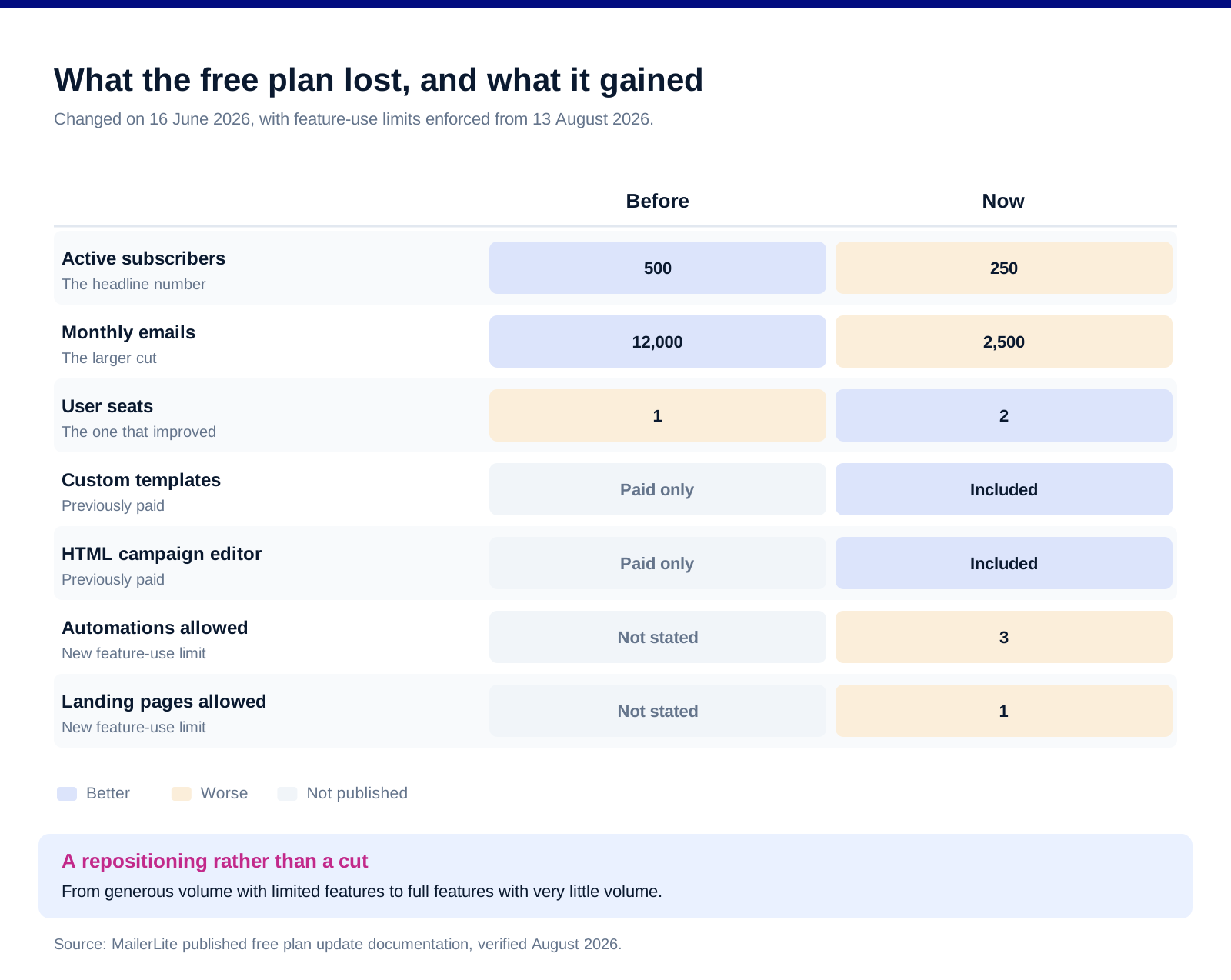
Subscribers halved, from 500 to 250. That is the headline and it is the number most reviews still get wrong.
Monthly sends fell from 12,000 to 2,500. A reduction of roughly eighty percent, and proportionally the larger cut. On the old plan a 500-subscriber list could be emailed twenty-four times a month. On the new one, 250 subscribers can be emailed ten times.
Feature-use limits arrived, enforced from 13 August 2026. Three automations, three forms, one landing page, one website and one digital product. Existing accounts kept their data, and accounts already inside the new limits carried on unaffected.
But premium features opened up. The same update gave free accounts custom campaign and landing page templates, the HTML campaign editor and promotional pop-ups, which were previously paid.
And seats went up, from one to two. Small, and the only limit that moved in the user's favour on volume.
So read it as a repositioning rather than a cut. The free plan used to be a way to run a real small list for nothing. It is now a full-featured way to try the product properly on a very small list. Whether that is worse depends entirely on which of those you needed.
What the paid tiers actually cost
![[INSERT CHART 2, mailerlite-review-chart-2-pricing.svg] Alt: MailerLite plan pricing at the 500-subscriber tier 2026, with what each tier includes.](https://framerusercontent.com/images/WjvGORbnHempSslNFnQ8FToGAdw.svg)
Comfort starts at $12 a month at the 500-subscriber tier on monthly billing, with three user seats. It adds unlimited templates, dynamic emails, the AI writing assistant, smart sending and multivariate testing.
Power starts at $25 a month at the same tier, and the two things it adds are the ones that matter most. Unlimited monthly emails rather than a capped allowance, and unlimited user seats.
The send mechanic is the thing to understand. Comfort allows ten times the ceiling of your subscriber tier each month. At the 500-subscriber tier that is 5,000 sends, which sounds generous until you run a weekly newsletter plus a lifecycle sequence to the same list. Power removes the cap entirely.
Unlimited seats at $25 is genuinely unusual. Most platforms at this price point include one or two users and charge for more, as our Brevo versus ActiveCampaign comparison sets out. If several people need access, this alone can decide it.
Annual billing is 10% off. Modest by category standards, and worth taking only if you were committing anyway.
Enterprise is custom and starts above 200,000 subscribers, with a dedicated success manager, priority support and an onboarding consultation.
Who it actually suits
![[INSERT CHART 3, mailerlite-review-chart-3-fit.svg] Alt: Which kind of B2B company MailerLite suits in 2026, mapped by publishing against automation and by the shape of the list.](https://framerusercontent.com/images/aeeLVsrvO4v34xnJV6242RnLkQY.svg)
A newsletter as a genuine channel: this is the sweet spot. The editor is fast, the landing pages and forms are good, and Power's unlimited sends remove the one constraint a publishing cadence runs into. For a B2B company treating its newsletter as a real asset, MailerLite is well matched.
Light lifecycle work: comfortably capable. Welcome sequences, a few behavioural triggers, simple segmentation. It does this cleanly and at a price that undercuts the heavier platforms.
Deep lifecycle tied to product behaviour: look elsewhere. If your sequences need to branch on events inside your product and hand off to sales in a CRM, this is not what MailerLite is built for. Our B2B SaaS trial onboarding piece describes the branching that case needs, and a platform built around it will serve you better.
A large dormant list: check the arithmetic. MailerLite prices on subscribers, so a big list you rarely mail costs you every month. That is the case where a send-priced platform wins, and it is worth running the comparison rather than assuming.
A team that needs access: Power is strong. Unlimited seats at $25 is the most B2B-relevant thing on the rate card and it is rarely mentioned in reviews.
Starting from nothing today: the free plan is a trial, not a tier. 250 subscribers and 2,500 sends is enough to evaluate the product properly and not enough to run anything. Plan to pay.
What it does well, and what it does not
The editor and templates are genuinely good. This is the thing people who like MailerLite actually like, and it holds up.
Landing pages, forms, websites and pop-ups are included rather than bolted on. For a small B2B team without a web resource, that consolidation is worth real money.
Automation is capable but not deep. Visual workflows, multiple triggers on Power. It will not do what a platform built around behavioural branching does, and the review should say so plainly.
Reporting is adequate rather than strong. Enough to run a newsletter well, not enough to make revenue arguments without exporting.
There is no CRM. Nor should there be at this price, but it means a B2B stack using MailerLite needs the CRM and the handoff solved separately.
And the free plan is now a trial. Worth saying twice, because it is the single most out-of-date fact in the reviews currently ranking.
FAQ
What changed with the MailerLite free plan in 2026?
On 16 June 2026 the free plan dropped from 500 active subscribers to 250 and from 12,000 monthly emails to 2,500. Feature-use limits of three automations, three forms, one landing page, one website and one digital product began being enforced from 13 August 2026. The same update opened previously premium features to free accounts, including custom templates, the HTML editor and pop-ups, and raised free seats from one to two.
How much does MailerLite cost in 2026?
Comfort starts at $12 a month and Power at $25 a month at the 500-subscriber tier on monthly billing, with a 10% discount for annual billing. Enterprise is custom and aimed at lists above 200,000 subscribers. Prices scale with your subscriber count, so the entry figures apply only at the entry tier.
What is the difference between MailerLite Comfort and Power?
Two things decide it. Comfort caps monthly sends at ten times the ceiling of your subscriber tier while Power is unlimited, and Comfort includes three user seats while Power includes unlimited. If you mail your list frequently or several people need access, Power at $25 is the tier you need rather than the upsell.
Is MailerLite good for B2B?
For newsletters and light lifecycle work, yes, and Power's unlimited seats make it unusually team-friendly at the price. For lifecycle sequences that branch on in-product behaviour and hand off to a CRM, no. It is a capable email and landing page platform rather than a marketing automation suite, and choosing it on that basis works out well.
Is the MailerLite free plan still worth using?
As a trial, yes. As a way to run something real, no longer. 250 subscribers and 2,500 monthly sends is enough to evaluate the editor, automations and landing pages properly, which is what the plan now appears designed for. Any actual B2B list will exceed it quickly.
Does MailerLite have a CRM?
No, and it is not priced as though it should. A B2B stack built on MailerLite needs a CRM alongside it and a defined handoff between the two, which is the main integration question to answer before committing rather than after.
Bottom line
Check the date on any MailerLite review you read, because the free plan changed materially in June 2026 and most of what is published predates it. What you get now is a strong email, landing page and forms platform with a free tier that functions as a trial, a $12 entry tier with a send cap tied to your subscriber count, and a $25 tier that removes both the send cap and the seat limit. That $25 tier is the interesting one for B2B, and unlimited seats at that price is the fact most reviews miss entirely. Choose it for newsletters and light lifecycle work. Do not choose it to run product-triggered sequences into a CRM, because that is a different category of tool.
Want the email programme built rather than the platform argued about? Book a call with GROU. We run demand generation and lifecycle inside B2B revenue engines across verticals.
We are GROU, a B2B pipeline agency that runs lead generation, outbound, and LinkedIn content for clients across manufacturing, fintech, iGaming, software, and professional services. The fit guidance reflects our email deployments between 2024 and 2026, anonymized to protect client confidentiality.
Some links in this article are affiliate. We may earn a small commission at no extra cost to you. We only recommend tools we've deployed for clients.
Almost every MailerLite review you will find describes a free plan that no longer exists. It changed in June 2026, and the change was large: the subscriber cap halved and the monthly send allowance dropped by roughly eighty percent. If you are choosing a platform on the strength of a review written before that, you are evaluating a product that has been repositioned.
This is what MailerLite actually offers now, what the free plan change means, and the specific kind of B2B company it suits.
TL;DR
MailerLite changed its free plan on 16 June 2026. Active subscribers dropped from 500 to 250 and monthly emails from 12,000 to 2,500, with feature-use limits of three automations, three forms, one landing page, one website and one digital product enforced from 13 August 2026. It was not purely a downgrade: the same update opened premium features to free accounts, including custom campaign and landing page templates, the HTML editor and promotional pop-ups, and raised free seats from one to two. So the free plan moved from generous volume with limited features to full features with very little volume. Paid starts at $12 a month on Comfort and $25 on Power at the 500-subscriber tier, with a 10% annual discount. The mechanic worth understanding is the send allowance: Comfort caps monthly sends at ten times your subscriber tier ceiling while Power is unlimited, which is the same architecture ActiveCampaign uses and it decides which tier you need. Power also includes unlimited user seats, which at $25 is unusual and genuinely useful for a team. For B2B, MailerLite is strong for newsletters and light lifecycle work and thin where you need CRM-integrated sequences and sales handoff.
The free plan change
Subscribers halved, from 500 to 250. That is the headline and it is the number most reviews still get wrong.
Monthly sends fell from 12,000 to 2,500. A reduction of roughly eighty percent, and proportionally the larger cut. On the old plan a 500-subscriber list could be emailed twenty-four times a month. On the new one, 250 subscribers can be emailed ten times.
Feature-use limits arrived, enforced from 13 August 2026. Three automations, three forms, one landing page, one website and one digital product. Existing accounts kept their data, and accounts already inside the new limits carried on unaffected.
But premium features opened up. The same update gave free accounts custom campaign and landing page templates, the HTML campaign editor and promotional pop-ups, which were previously paid.
And seats went up, from one to two. Small, and the only limit that moved in the user's favour on volume.
So read it as a repositioning rather than a cut. The free plan used to be a way to run a real small list for nothing. It is now a full-featured way to try the product properly on a very small list. Whether that is worse depends entirely on which of those you needed.
What the paid tiers actually cost
Comfort starts at $12 a month at the 500-subscriber tier on monthly billing, with three user seats. It adds unlimited templates, dynamic emails, the AI writing assistant, smart sending and multivariate testing.
Power starts at $25 a month at the same tier, and the two things it adds are the ones that matter most. Unlimited monthly emails rather than a capped allowance, and unlimited user seats.
The send mechanic is the thing to understand. Comfort allows ten times the ceiling of your subscriber tier each month. At the 500-subscriber tier that is 5,000 sends, which sounds generous until you run a weekly newsletter plus a lifecycle sequence to the same list. Power removes the cap entirely.
Unlimited seats at $25 is genuinely unusual. Most platforms at this price point include one or two users and charge for more, as our Brevo versus ActiveCampaign comparison sets out. If several people need access, this alone can decide it.
Annual billing is 10% off. Modest by category standards, and worth taking only if you were committing anyway.
Enterprise is custom and starts above 200,000 subscribers, with a dedicated success manager, priority support and an onboarding consultation.
Who it actually suits
A newsletter as a genuine channel: this is the sweet spot. The editor is fast, the landing pages and forms are good, and Power's unlimited sends remove the one constraint a publishing cadence runs into. For a B2B company treating its newsletter as a real asset, MailerLite is well matched.
Light lifecycle work: comfortably capable. Welcome sequences, a few behavioural triggers, simple segmentation. It does this cleanly and at a price that undercuts the heavier platforms.
Deep lifecycle tied to product behaviour: look elsewhere. If your sequences need to branch on events inside your product and hand off to sales in a CRM, this is not what MailerLite is built for. Our B2B SaaS trial onboarding piece describes the branching that case needs, and a platform built around it will serve you better.
A large dormant list: check the arithmetic. MailerLite prices on subscribers, so a big list you rarely mail costs you every month. That is the case where a send-priced platform wins, and it is worth running the comparison rather than assuming.
A team that needs access: Power is strong. Unlimited seats at $25 is the most B2B-relevant thing on the rate card and it is rarely mentioned in reviews.
Starting from nothing today: the free plan is a trial, not a tier. 250 subscribers and 2,500 sends is enough to evaluate the product properly and not enough to run anything. Plan to pay.
What it does well, and what it does not
The editor and templates are genuinely good. This is the thing people who like MailerLite actually like, and it holds up.
Landing pages, forms, websites and pop-ups are included rather than bolted on. For a small B2B team without a web resource, that consolidation is worth real money.
Automation is capable but not deep. Visual workflows, multiple triggers on Power. It will not do what a platform built around behavioural branching does, and the review should say so plainly.
Reporting is adequate rather than strong. Enough to run a newsletter well, not enough to make revenue arguments without exporting.
There is no CRM. Nor should there be at this price, but it means a B2B stack using MailerLite needs the CRM and the handoff solved separately.
And the free plan is now a trial. Worth saying twice, because it is the single most out-of-date fact in the reviews currently ranking.
FAQ
What changed with the MailerLite free plan in 2026?
On 16 June 2026 the free plan dropped from 500 active subscribers to 250 and from 12,000 monthly emails to 2,500. Feature-use limits of three automations, three forms, one landing page, one website and one digital product began being enforced from 13 August 2026. The same update opened previously premium features to free accounts, including custom templates, the HTML editor and pop-ups, and raised free seats from one to two.
How much does MailerLite cost in 2026?
Comfort starts at $12 a month and Power at $25 a month at the 500-subscriber tier on monthly billing, with a 10% discount for annual billing. Enterprise is custom and aimed at lists above 200,000 subscribers. Prices scale with your subscriber count, so the entry figures apply only at the entry tier.
What is the difference between MailerLite Comfort and Power?
Two things decide it. Comfort caps monthly sends at ten times the ceiling of your subscriber tier while Power is unlimited, and Comfort includes three user seats while Power includes unlimited. If you mail your list frequently or several people need access, Power at $25 is the tier you need rather than the upsell.
Is MailerLite good for B2B?
For newsletters and light lifecycle work, yes, and Power's unlimited seats make it unusually team-friendly at the price. For lifecycle sequences that branch on in-product behaviour and hand off to a CRM, no. It is a capable email and landing page platform rather than a marketing automation suite, and choosing it on that basis works out well.
Is the MailerLite free plan still worth using?
As a trial, yes. As a way to run something real, no longer. 250 subscribers and 2,500 monthly sends is enough to evaluate the editor, automations and landing pages properly, which is what the plan now appears designed for. Any actual B2B list will exceed it quickly.
Does MailerLite have a CRM?
No, and it is not priced as though it should. A B2B stack built on MailerLite needs a CRM alongside it and a defined handoff between the two, which is the main integration question to answer before committing rather than after.
Bottom line
Check the date on any MailerLite review you read, because the free plan changed materially in June 2026 and most of what is published predates it. What you get now is a strong email, landing page and forms platform with a free tier that functions as a trial, a $12 entry tier with a send cap tied to your subscriber count, and a $25 tier that removes both the send cap and the seat limit. That $25 tier is the interesting one for B2B, and unlimited seats at that price is the fact most reviews miss entirely. Choose it for newsletters and light lifecycle work. Do not choose it to run product-triggered sequences into a CRM, because that is a different category of tool.
Want the email programme built rather than the platform argued about? Book a call with GROU. We run demand generation and lifecycle inside B2B revenue engines across verticals.
We are GROU, a B2B pipeline agency that runs lead generation, outbound, and LinkedIn content for clients across manufacturing, fintech, iGaming, software, and professional services. The fit guidance reflects our email deployments between 2024 and 2026, anonymized to protect client confidentiality.
Some links in this article are affiliate. We may earn a small commission at no extra cost to you. We only recommend tools we've deployed for clients.
Almost every MailerLite review you will find describes a free plan that no longer exists. It changed in June 2026, and the change was large: the subscriber cap halved and the monthly send allowance dropped by roughly eighty percent. If you are choosing a platform on the strength of a review written before that, you are evaluating a product that has been repositioned.
This is what MailerLite actually offers now, what the free plan change means, and the specific kind of B2B company it suits.
TL;DR
MailerLite changed its free plan on 16 June 2026. Active subscribers dropped from 500 to 250 and monthly emails from 12,000 to 2,500, with feature-use limits of three automations, three forms, one landing page, one website and one digital product enforced from 13 August 2026. It was not purely a downgrade: the same update opened premium features to free accounts, including custom campaign and landing page templates, the HTML editor and promotional pop-ups, and raised free seats from one to two. So the free plan moved from generous volume with limited features to full features with very little volume. Paid starts at $12 a month on Comfort and $25 on Power at the 500-subscriber tier, with a 10% annual discount. The mechanic worth understanding is the send allowance: Comfort caps monthly sends at ten times your subscriber tier ceiling while Power is unlimited, which is the same architecture ActiveCampaign uses and it decides which tier you need. Power also includes unlimited user seats, which at $25 is unusual and genuinely useful for a team. For B2B, MailerLite is strong for newsletters and light lifecycle work and thin where you need CRM-integrated sequences and sales handoff.
The free plan change
Subscribers halved, from 500 to 250. That is the headline and it is the number most reviews still get wrong.
Monthly sends fell from 12,000 to 2,500. A reduction of roughly eighty percent, and proportionally the larger cut. On the old plan a 500-subscriber list could be emailed twenty-four times a month. On the new one, 250 subscribers can be emailed ten times.
Feature-use limits arrived, enforced from 13 August 2026. Three automations, three forms, one landing page, one website and one digital product. Existing accounts kept their data, and accounts already inside the new limits carried on unaffected.
But premium features opened up. The same update gave free accounts custom campaign and landing page templates, the HTML campaign editor and promotional pop-ups, which were previously paid.
And seats went up, from one to two. Small, and the only limit that moved in the user's favour on volume.
So read it as a repositioning rather than a cut. The free plan used to be a way to run a real small list for nothing. It is now a full-featured way to try the product properly on a very small list. Whether that is worse depends entirely on which of those you needed.
What the paid tiers actually cost
Comfort starts at $12 a month at the 500-subscriber tier on monthly billing, with three user seats. It adds unlimited templates, dynamic emails, the AI writing assistant, smart sending and multivariate testing.
Power starts at $25 a month at the same tier, and the two things it adds are the ones that matter most. Unlimited monthly emails rather than a capped allowance, and unlimited user seats.
The send mechanic is the thing to understand. Comfort allows ten times the ceiling of your subscriber tier each month. At the 500-subscriber tier that is 5,000 sends, which sounds generous until you run a weekly newsletter plus a lifecycle sequence to the same list. Power removes the cap entirely.
Unlimited seats at $25 is genuinely unusual. Most platforms at this price point include one or two users and charge for more, as our Brevo versus ActiveCampaign comparison sets out. If several people need access, this alone can decide it.
Annual billing is 10% off. Modest by category standards, and worth taking only if you were committing anyway.
Enterprise is custom and starts above 200,000 subscribers, with a dedicated success manager, priority support and an onboarding consultation.
Who it actually suits
A newsletter as a genuine channel: this is the sweet spot. The editor is fast, the landing pages and forms are good, and Power's unlimited sends remove the one constraint a publishing cadence runs into. For a B2B company treating its newsletter as a real asset, MailerLite is well matched.
Light lifecycle work: comfortably capable. Welcome sequences, a few behavioural triggers, simple segmentation. It does this cleanly and at a price that undercuts the heavier platforms.
Deep lifecycle tied to product behaviour: look elsewhere. If your sequences need to branch on events inside your product and hand off to sales in a CRM, this is not what MailerLite is built for. Our B2B SaaS trial onboarding piece describes the branching that case needs, and a platform built around it will serve you better.
A large dormant list: check the arithmetic. MailerLite prices on subscribers, so a big list you rarely mail costs you every month. That is the case where a send-priced platform wins, and it is worth running the comparison rather than assuming.
A team that needs access: Power is strong. Unlimited seats at $25 is the most B2B-relevant thing on the rate card and it is rarely mentioned in reviews.
Starting from nothing today: the free plan is a trial, not a tier. 250 subscribers and 2,500 sends is enough to evaluate the product properly and not enough to run anything. Plan to pay.
What it does well, and what it does not
The editor and templates are genuinely good. This is the thing people who like MailerLite actually like, and it holds up.
Landing pages, forms, websites and pop-ups are included rather than bolted on. For a small B2B team without a web resource, that consolidation is worth real money.
Automation is capable but not deep. Visual workflows, multiple triggers on Power. It will not do what a platform built around behavioural branching does, and the review should say so plainly.
Reporting is adequate rather than strong. Enough to run a newsletter well, not enough to make revenue arguments without exporting.
There is no CRM. Nor should there be at this price, but it means a B2B stack using MailerLite needs the CRM and the handoff solved separately.
And the free plan is now a trial. Worth saying twice, because it is the single most out-of-date fact in the reviews currently ranking.
FAQ
What changed with the MailerLite free plan in 2026?
On 16 June 2026 the free plan dropped from 500 active subscribers to 250 and from 12,000 monthly emails to 2,500. Feature-use limits of three automations, three forms, one landing page, one website and one digital product began being enforced from 13 August 2026. The same update opened previously premium features to free accounts, including custom templates, the HTML editor and pop-ups, and raised free seats from one to two.
How much does MailerLite cost in 2026?
Comfort starts at $12 a month and Power at $25 a month at the 500-subscriber tier on monthly billing, with a 10% discount for annual billing. Enterprise is custom and aimed at lists above 200,000 subscribers. Prices scale with your subscriber count, so the entry figures apply only at the entry tier.
What is the difference between MailerLite Comfort and Power?
Two things decide it. Comfort caps monthly sends at ten times the ceiling of your subscriber tier while Power is unlimited, and Comfort includes three user seats while Power includes unlimited. If you mail your list frequently or several people need access, Power at $25 is the tier you need rather than the upsell.
Is MailerLite good for B2B?
For newsletters and light lifecycle work, yes, and Power's unlimited seats make it unusually team-friendly at the price. For lifecycle sequences that branch on in-product behaviour and hand off to a CRM, no. It is a capable email and landing page platform rather than a marketing automation suite, and choosing it on that basis works out well.
Is the MailerLite free plan still worth using?
As a trial, yes. As a way to run something real, no longer. 250 subscribers and 2,500 monthly sends is enough to evaluate the editor, automations and landing pages properly, which is what the plan now appears designed for. Any actual B2B list will exceed it quickly.
Does MailerLite have a CRM?
No, and it is not priced as though it should. A B2B stack built on MailerLite needs a CRM alongside it and a defined handoff between the two, which is the main integration question to answer before committing rather than after.
Bottom line
Check the date on any MailerLite review you read, because the free plan changed materially in June 2026 and most of what is published predates it. What you get now is a strong email, landing page and forms platform with a free tier that functions as a trial, a $12 entry tier with a send cap tied to your subscriber count, and a $25 tier that removes both the send cap and the seat limit. That $25 tier is the interesting one for B2B, and unlimited seats at that price is the fact most reviews miss entirely. Choose it for newsletters and light lifecycle work. Do not choose it to run product-triggered sequences into a CRM, because that is a different category of tool.
Want the email programme built rather than the platform argued about? Book a call with GROU. We run demand generation and lifecycle inside B2B revenue engines across verticals.
We are GROU, a B2B pipeline agency that runs lead generation, outbound, and LinkedIn content for clients across manufacturing, fintech, iGaming, software, and professional services. The fit guidance reflects our email deployments between 2024 and 2026, anonymized to protect client confidentiality.
Some links in this article are affiliate. We may earn a small commission at no extra cost to you. We only recommend tools we've deployed for clients.

Pipeline OS Newsletter
Build qualified pipeline
Get weekly tactics to generate demand, improve lead quality, and book more meetings.





Trusted by industry leaders
Trusted by industry leaders
Trusted by industry leaders
Ready to build qualified pipeline?
Ready to build qualified pipeline?
Ready to build qualified pipeline?
Book a call to see if we're the right fit, or take the 2-minute quiz to get a clear starting point.
Book a call to see if we're the right fit, or take the 2-minute quiz to get a clear starting point.
Book a call to see if we're the right fit, or take the 2-minute quiz to get a clear starting point.
" height="30.21639343089746px" id="hfGbXmQR2" width="30.216393430897455px"/></svg>)
Copyright © 2026 – All Right Reserved
Copyright © 2026 – All Right Reserved
Copyright © 2026 – All Right Reserved