%22%3E%3C/path%3E%3Cpath d=%22M 63.072 7.554 C 62.258 8.022 61.577 8.689 61.092 9.493 L 61.092 7.076 L 57.158 7.076 L 57.158 22.64 L 61.089 22.64 L 61.089 14.888 C 61.089 13.446 61.403 12.434 62.03 11.853 C 62.818 11.218 63.818 10.907 64.826 10.982 L 65.868 10.982 L 65.868 6.851 C 64.891 6.834 63.926 7.076 63.073 7.554 Z%22 fill=%22rgb(17,17,17)%22%3E%3C/path%3E%3Cpath d=%22M 78.916 7.82 C 76.363 6.49 73.321 6.49 70.768 7.82 C 69.562 8.473 68.564 9.451 67.888 10.644 C 67.167 11.931 66.803 13.387 66.834 14.862 C 66.804 16.332 67.157 17.785 67.86 19.077 C 68.515 20.267 69.494 21.246 70.684 21.901 C 71.924 22.576 73.318 22.92 74.73 22.898 C 76.164 22.918 77.58 22.575 78.846 21.901 C 80.062 21.247 81.073 20.27 81.768 19.077 C 82.506 17.797 82.88 16.339 82.85 14.862 C 82.88 13.389 82.517 11.934 81.797 10.647 C 81.12 9.455 80.122 8.477 78.917 7.824 M 78.803 14.862 C 78.829 15.739 78.636 16.608 78.241 17.391 C 77.903 18.046 77.38 18.588 76.738 18.95 C 76.124 19.293 75.432 19.472 74.729 19.47 C 73.668 19.497 72.648 19.061 71.934 18.276 C 71.139 17.323 70.741 16.1 70.823 14.862 C 70.741 13.62 71.149 12.395 71.959 11.45 C 72.687 10.667 73.715 10.233 74.783 10.256 C 75.859 10.236 76.894 10.67 77.635 11.45 C 78.464 12.387 78.884 13.616 78.801 14.864%22 fill=%22rgb(17,17,17)%22%3E%3C/path%3E%3Cpath d=%22M 95.906 7.076 L 95.906 15.646 C 95.975 16.68 95.643 17.701 94.979 18.498 C 94.311 19.184 93.379 19.547 92.422 19.495 C 91.475 19.544 90.553 19.18 89.894 18.498 C 89.23 17.701 88.898 16.68 88.967 15.646 L 88.967 7.076 L 85.033 7.076 L 85.033 16.207 C 85 17.449 85.275 18.68 85.834 19.79 C 86.327 20.75 87.095 21.542 88.039 22.065 C 89.033 22.594 90.145 22.861 91.271 22.838 C 92.188 22.847 93.095 22.65 93.926 22.263 C 94.708 21.905 95.388 21.36 95.906 20.675 L 95.906 22.645 L 99.865 22.645 L 99.865 7.076 Z%22 fill=%22rgb(17,17,17)%22%3E%3C/path%3E%3Cpath d=%22M 4.513 15.626 C 4.511 10.815 7.606 6.549 12.181 5.059 C 16.756 3.57 21.77 5.195 24.601 9.086 L 27.816 5.87 C 24.074 1.186 17.981 -0.943 12.137 0.393 C 6.292 1.728 1.728 6.292 0.393 12.137 C -0.943 17.981 1.186 24.074 5.87 27.816 L 9.085 24.601 C 6.214 22.512 4.515 19.177 4.513 15.626%22 fill=%22rgb(32,62,235)%22%3E%3C/path%3E%3Cpath d=%22M 17.114 14.343 L 13.354 18.01 L 13.354 18.026 L 21.071 18.026 L 11.412 27.609 L 17.389 27.609 L 23.999 21.081 L 23.999 28.316 L 24.005 28.316 L 27.967 24.393 L 27.967 14.343 Z%22 fill=%22rgb(32,62,235)%22%3E%3C/path%3E%3C/g%3E%3C/svg%3E) ×
× ××
××›
›
›
›
How to sell to iGaming operators: outbound playbook
How to sell to iGaming operators: outbound playbook
How to sell to iGaming operators: outbound playbook
How to sell to iGaming operators: outbound playbook
How to sell to iGaming operators: outbound playbook
How to sell to iGaming operators: outbound playbook

Author
Aljaz Peklaj

Operators are inundated. Every supplier at ICE has the same target list, the same "quick call next week?" opener, and the same quarter-end desperation, which is why most vendor outreach into iGaming dies unread. Selling into operators works when the outreach sounds like it comes from inside the industry: right buyer, right operator segment, right moment in the event cycle, in the vocabulary the industry actually uses. This is the outbound playbook we run for suppliers selling into operators; the channel-mix and 90-day system lives in our iGaming lead generation companion piece.
TL;DR
Selling to operators is account-based outbound with an industry calendar. Segment operators by type (casino-led vs sportsbook-led), market posture (regulated vs gray), and size (Tier-1 giants vs mid-tier vs startups), because each buys differently: Tier-1s run 12+ month procurement cycles through many stakeholders, mid-tier operators are the outbound sweet spot, and startups buy fast but small. Target the commercial side (CCO, Head of Partnerships, Head of Acquisition) for revenue products and operations (PAM, risk, KYC roles) for infrastructure. Time everything to the event cycle: ICE Barcelona in January and SiGMA in November anchor the year, and the 6 weeks before each event are the highest-reply windows in the industry. Write like an insider (GGR, aggregators, regulated markets), never like a vendor ("innovative solutions"). Programs run this way produce reply rates well above generic B2B, and the anonymized numbers below show what good looks like.
Segment operators before you sequence them
"iGaming operators" is not an ICP; it is an industry. The outbound list has three cuts that decide everything downstream.
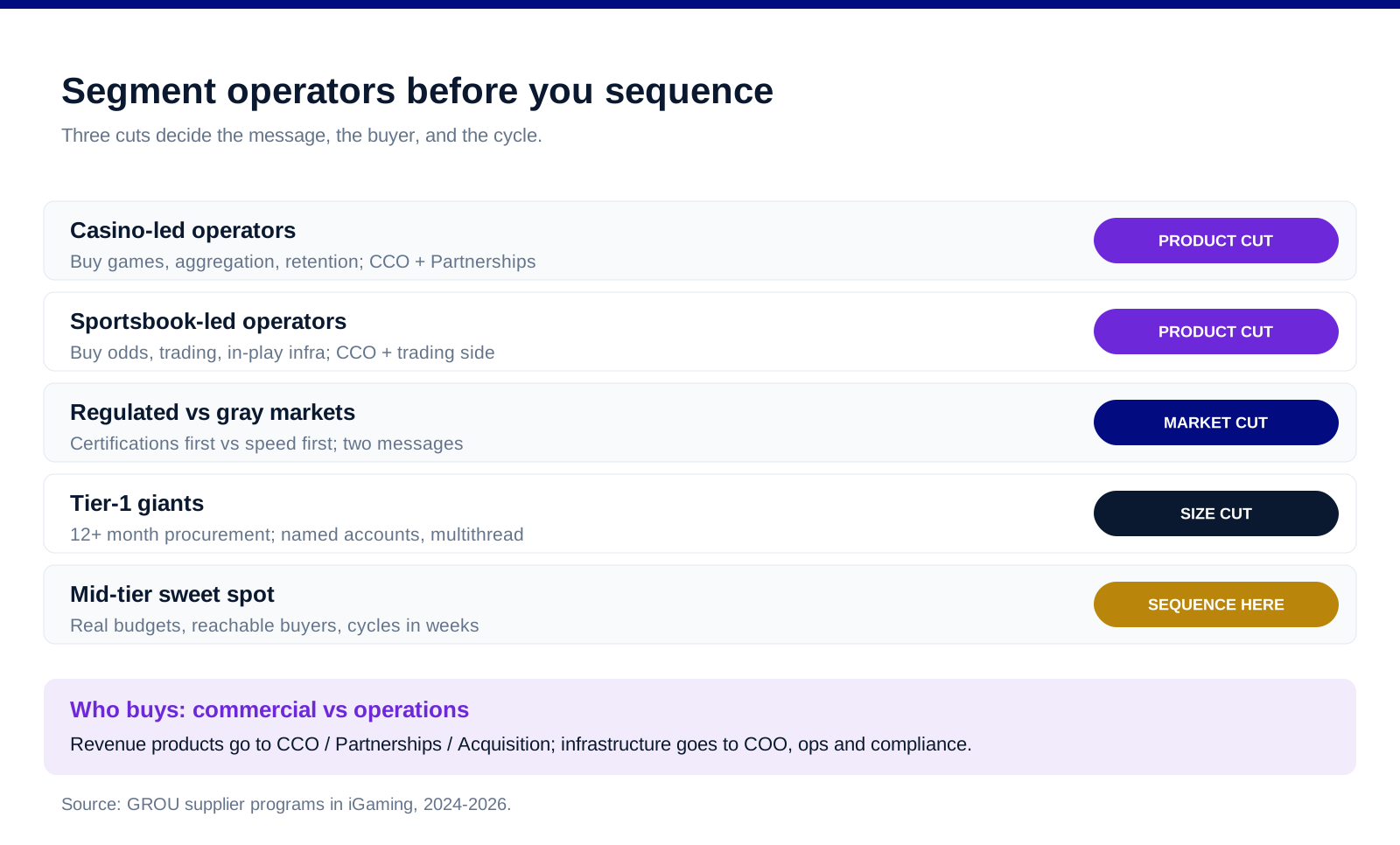
Cut 1: product focus. Casino-led operators buy games, aggregation, and retention tooling; sportsbook-led operators buy odds feeds, trading tools, and live-betting infrastructure. A game studio pitching a sportsbook-first operator is talking to the wrong roadmap, and the industry notices instantly.
Cut 2: market posture. Operators in regulated markets (UK, Sweden, Germany, US states, Netherlands) carry heavy KYC/AML and compliance burdens and buy accordingly: certifications first, integrations second. Gray-market operators optimize for speed and cost. The same product needs two different messages, and compliance language that reassures the first group is friction for the second.
Cut 3: size tier. Tier-1 operators (the Flutter and Entain class) buy through 12+ month procurement cycles with legal, compliance, and multiple commercial stakeholders; work them as named accounts with multithreading, not sequences. Mid-tier operators (the long middle of the market) are the outbound sweet spot: real budgets, reachable decision-makers, cycles measured in weeks. Startup operators buy fastest and churn fastest.
Who actually buys. For revenue-side products (games, data, marketing tech): CCO, Head of Partnerships, Head of Acquisition. For infrastructure (PAM, payments, KYC, risk): COO, Head of Operations, compliance leadership. At sub-200-employee operators, the founder is usually in the deal either way. Multithread Tier-1s from day one; single-thread mid-tier until a champion emerges.
Time the outreach to the event cycle
iGaming pipeline is lumpy by design: the industry synchronizes its buying around two anchor events, and outbound that ignores the calendar competes against it.
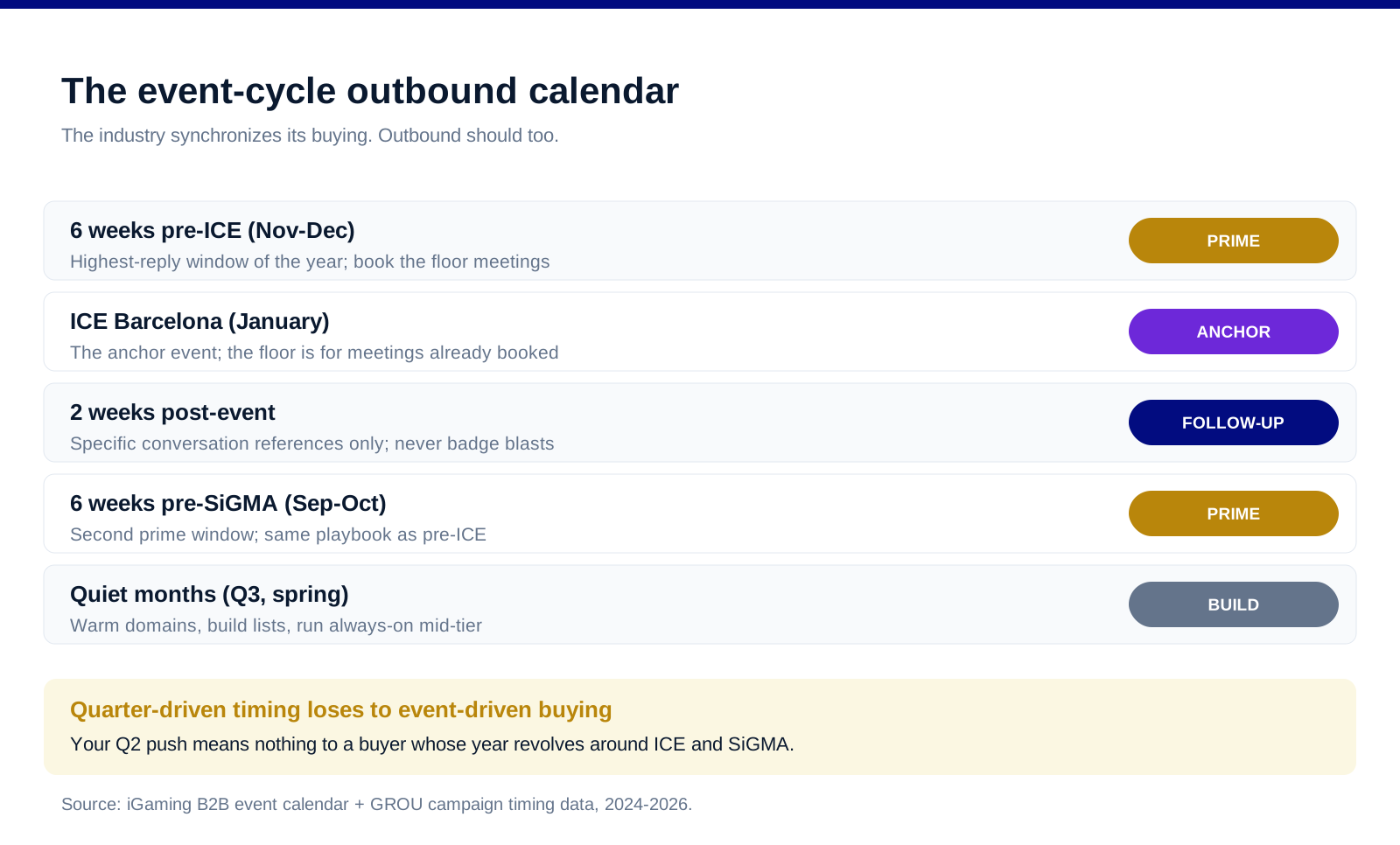
The anchors: ICE Barcelona (January) and SiGMA (November). Pre-event windows, roughly six weeks out, are the highest-reply periods of the year: everyone is building meeting calendars, and "are you at ICE?" is the one cold opener the industry answers. Book meetings before the floor opens; the floor itself is for the meetings you already booked.
Post-event follow-up: 2 weeks, then stop referencing the event. The badge-scan blast every exhibitor sends in week one is noise; a specific reference to an actual conversation is signal. After two weeks, the event is old news.
The quiet months are for building. Q3 and the post-ICE spring lull are when you warm domains, build named-account lists, and run always-on campaigns to mid-tier operators while competitors wait for the next event. The best pre-ICE campaigns are built in October, and the sending infrastructure behind them follows the same SPF, DKIM and DMARC setup and warm-up discipline as any serious outbound program.
Messaging rules and the numbers that prove them
Operators can smell an outsider in five words. The messaging bar is higher here than in almost any B2B vertical because the industry is small, reputation travels, and everyone has seen every pitch.
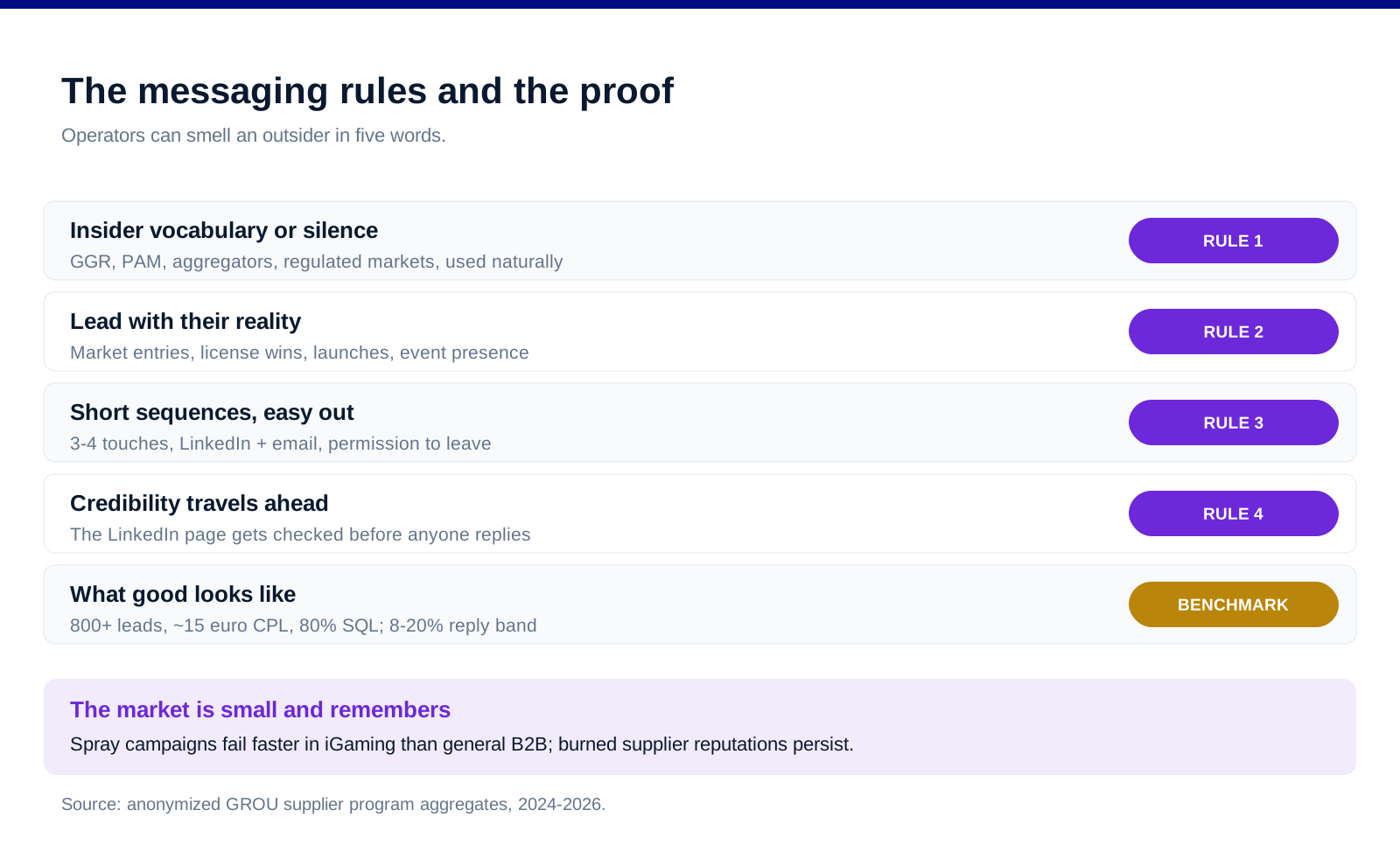
Rule 1: insider vocabulary or silence. GGR, NGR, aggregators, PAM, regulated markets, in-play: used naturally, these signal tribe membership. Used wrong ("we help casinos with gambling marketing"), they end the conversation. If the writer cannot pass this bar, fix the writer before the sequence.
Rule 2: lead with their operating reality, not your product. Openers that reference the operator's market entries, license wins, game launches, or event presence outperform product pitches by multiples. The pain language that lands is the industry's own: lumpy pipeline, compliance burden, attribution on affiliate spend.
Rule 3: short sequences, real personalization, permission to leave. Three to four touches across LinkedIn and email, each one specific, with an easy out. Spray campaigns fail faster in iGaming than in general B2B because the vendor list is finite and burned reputations persist.
Rule 4: credibility travels ahead of the sequence. An active LinkedIn presence with industry-literate content is checked before anyone replies. Suppliers who invest there first, the way the iGaming lead generation system sequences it, walk into warmer conversations.
What good looks like. Anonymized from supplier programs we run in the industry: a sports betting technology provider generated 800+ qualified leads at roughly 15 euro cost per lead with an 80% SQL rate across a multichannel EMEA program; outbound-led supplier campaigns in adjacent verticals sustain reply rates in the 8-20% band when segmentation and event timing are right. The case studies carry the detail.
The mistakes that burn supplier reputations
Mistake 1: pitching B2C operators as if they were the buyer for B2B tools, or worse, mixing up who is the operator and who is the supplier. Know which side of the market every account sits on.
Mistake 2: one message for every operator type. Casino-led vs sportsbook-led, regulated vs gray, Tier-1 vs mid-tier: each pairing changes the message, and the industry notices templates.
Mistake 3: quarter-driven timing in an event-driven industry. Your Q2 push means nothing to a buyer whose year revolves around ICE and SiGMA.
Mistake 4: badge-scan blasts. The post-event mass email is the most-deleted message in iGaming. Reference real conversations or wait for the next cycle.
Mistake 5: skipping the credibility layer. A supplier with a dead LinkedIn page and no industry footprint asking a CCO for 30 minutes is asking for a favor, not offering value.
FAQ
How do you reach iGaming operator decision-makers?
Through LinkedIn-plus-email outbound aimed at commercial roles (CCO, Head of Partnerships, Head of Acquisition) for revenue products and operations roles for infrastructure, timed to the pre-event windows before ICE and SiGMA, with insider-literate messaging. Cold calls underperform here; the industry lives on LinkedIn and the event floor.
What reply rates should iGaming outbound expect?
Well-segmented supplier programs sustain reply rates in the 8-20% band, above generic B2B averages, because tight operator segmentation and event timing beat volume. Spray campaigns underperform their general-B2B equivalents for the same reason: the market is small and remembers.
When is the best time to run outbound to operators?
The six weeks before ICE Barcelona (January) and SiGMA (November) are the strongest windows of the year, when operators actively build meeting calendars. The quiet months are for infrastructure: list building, domain warm-up, and always-on mid-tier campaigns.
Should suppliers target Tier-1 operators with cold outbound?
Not with sequences. Tier-1s run 12+ month procurement cycles through many stakeholders, so work them as named accounts: multithreaded relationships, event meetings, and content visibility, with outbound as one touch among many. Sequenced cold outreach is for the mid-tier, where it actually converts.
What should the first message to an operator say?
Something about their reality: a market entry, a license win, a product launch, or their presence at the next event, followed by one specific reason the conversation is relevant now. Never the product paragraph; operators are inundated with those, and the delete is reflexive.
Do you need iGaming-specific experience to sell to operators?
You need iGaming-literate execution: the vocabulary, the event calendar, and the segmentation logic above. Suppliers new to the vertical can buy or build that literacy, but outreach written in generic B2B language marks itself as outsider in the first line and rarely recovers.
Bottom line
Selling to iGaming operators is account-based outbound with the industry's own clock: segment by operator type, market posture, and size tier; aim at the commercial or operations buyer the product actually serves; time everything to ICE and SiGMA; and write like someone who knows what GGR means. The suppliers who win treat the vertical as a community they belong to, not a list they scrape, and the reply rates follow.
Want the operator list, the sequences, and the event-cycle system run for you? Book a call with GROU. We run outbound and lead generation programs for iGaming suppliers selling into operators across EMEA and LATAM.
We are GROU, a B2B pipeline agency that runs lead generation, outbound, and LinkedIn content for clients across manufacturing, fintech, iGaming, software, and professional services. Program numbers are aggregated and anonymized from supplier engagements between 2024 and 2026 to protect client confidentiality.
Operators are inundated. Every supplier at ICE has the same target list, the same "quick call next week?" opener, and the same quarter-end desperation, which is why most vendor outreach into iGaming dies unread. Selling into operators works when the outreach sounds like it comes from inside the industry: right buyer, right operator segment, right moment in the event cycle, in the vocabulary the industry actually uses. This is the outbound playbook we run for suppliers selling into operators; the channel-mix and 90-day system lives in our iGaming lead generation companion piece.
TL;DR
Selling to operators is account-based outbound with an industry calendar. Segment operators by type (casino-led vs sportsbook-led), market posture (regulated vs gray), and size (Tier-1 giants vs mid-tier vs startups), because each buys differently: Tier-1s run 12+ month procurement cycles through many stakeholders, mid-tier operators are the outbound sweet spot, and startups buy fast but small. Target the commercial side (CCO, Head of Partnerships, Head of Acquisition) for revenue products and operations (PAM, risk, KYC roles) for infrastructure. Time everything to the event cycle: ICE Barcelona in January and SiGMA in November anchor the year, and the 6 weeks before each event are the highest-reply windows in the industry. Write like an insider (GGR, aggregators, regulated markets), never like a vendor ("innovative solutions"). Programs run this way produce reply rates well above generic B2B, and the anonymized numbers below show what good looks like.
Segment operators before you sequence them
"iGaming operators" is not an ICP; it is an industry. The outbound list has three cuts that decide everything downstream.
Cut 1: product focus. Casino-led operators buy games, aggregation, and retention tooling; sportsbook-led operators buy odds feeds, trading tools, and live-betting infrastructure. A game studio pitching a sportsbook-first operator is talking to the wrong roadmap, and the industry notices instantly.
Cut 2: market posture. Operators in regulated markets (UK, Sweden, Germany, US states, Netherlands) carry heavy KYC/AML and compliance burdens and buy accordingly: certifications first, integrations second. Gray-market operators optimize for speed and cost. The same product needs two different messages, and compliance language that reassures the first group is friction for the second.
Cut 3: size tier. Tier-1 operators (the Flutter and Entain class) buy through 12+ month procurement cycles with legal, compliance, and multiple commercial stakeholders; work them as named accounts with multithreading, not sequences. Mid-tier operators (the long middle of the market) are the outbound sweet spot: real budgets, reachable decision-makers, cycles measured in weeks. Startup operators buy fastest and churn fastest.
Who actually buys. For revenue-side products (games, data, marketing tech): CCO, Head of Partnerships, Head of Acquisition. For infrastructure (PAM, payments, KYC, risk): COO, Head of Operations, compliance leadership. At sub-200-employee operators, the founder is usually in the deal either way. Multithread Tier-1s from day one; single-thread mid-tier until a champion emerges.
Time the outreach to the event cycle
iGaming pipeline is lumpy by design: the industry synchronizes its buying around two anchor events, and outbound that ignores the calendar competes against it.
The anchors: ICE Barcelona (January) and SiGMA (November). Pre-event windows, roughly six weeks out, are the highest-reply periods of the year: everyone is building meeting calendars, and "are you at ICE?" is the one cold opener the industry answers. Book meetings before the floor opens; the floor itself is for the meetings you already booked.
Post-event follow-up: 2 weeks, then stop referencing the event. The badge-scan blast every exhibitor sends in week one is noise; a specific reference to an actual conversation is signal. After two weeks, the event is old news.
The quiet months are for building. Q3 and the post-ICE spring lull are when you warm domains, build named-account lists, and run always-on campaigns to mid-tier operators while competitors wait for the next event. The best pre-ICE campaigns are built in October, and the sending infrastructure behind them follows the same SPF, DKIM and DMARC setup and warm-up discipline as any serious outbound program.
Messaging rules and the numbers that prove them
Operators can smell an outsider in five words. The messaging bar is higher here than in almost any B2B vertical because the industry is small, reputation travels, and everyone has seen every pitch.
Rule 1: insider vocabulary or silence. GGR, NGR, aggregators, PAM, regulated markets, in-play: used naturally, these signal tribe membership. Used wrong ("we help casinos with gambling marketing"), they end the conversation. If the writer cannot pass this bar, fix the writer before the sequence.
Rule 2: lead with their operating reality, not your product. Openers that reference the operator's market entries, license wins, game launches, or event presence outperform product pitches by multiples. The pain language that lands is the industry's own: lumpy pipeline, compliance burden, attribution on affiliate spend.
Rule 3: short sequences, real personalization, permission to leave. Three to four touches across LinkedIn and email, each one specific, with an easy out. Spray campaigns fail faster in iGaming than in general B2B because the vendor list is finite and burned reputations persist.
Rule 4: credibility travels ahead of the sequence. An active LinkedIn presence with industry-literate content is checked before anyone replies. Suppliers who invest there first, the way the iGaming lead generation system sequences it, walk into warmer conversations.
What good looks like. Anonymized from supplier programs we run in the industry: a sports betting technology provider generated 800+ qualified leads at roughly 15 euro cost per lead with an 80% SQL rate across a multichannel EMEA program; outbound-led supplier campaigns in adjacent verticals sustain reply rates in the 8-20% band when segmentation and event timing are right. The case studies carry the detail.
The mistakes that burn supplier reputations
Mistake 1: pitching B2C operators as if they were the buyer for B2B tools, or worse, mixing up who is the operator and who is the supplier. Know which side of the market every account sits on.
Mistake 2: one message for every operator type. Casino-led vs sportsbook-led, regulated vs gray, Tier-1 vs mid-tier: each pairing changes the message, and the industry notices templates.
Mistake 3: quarter-driven timing in an event-driven industry. Your Q2 push means nothing to a buyer whose year revolves around ICE and SiGMA.
Mistake 4: badge-scan blasts. The post-event mass email is the most-deleted message in iGaming. Reference real conversations or wait for the next cycle.
Mistake 5: skipping the credibility layer. A supplier with a dead LinkedIn page and no industry footprint asking a CCO for 30 minutes is asking for a favor, not offering value.
FAQ
How do you reach iGaming operator decision-makers?
Through LinkedIn-plus-email outbound aimed at commercial roles (CCO, Head of Partnerships, Head of Acquisition) for revenue products and operations roles for infrastructure, timed to the pre-event windows before ICE and SiGMA, with insider-literate messaging. Cold calls underperform here; the industry lives on LinkedIn and the event floor.
What reply rates should iGaming outbound expect?
Well-segmented supplier programs sustain reply rates in the 8-20% band, above generic B2B averages, because tight operator segmentation and event timing beat volume. Spray campaigns underperform their general-B2B equivalents for the same reason: the market is small and remembers.
When is the best time to run outbound to operators?
The six weeks before ICE Barcelona (January) and SiGMA (November) are the strongest windows of the year, when operators actively build meeting calendars. The quiet months are for infrastructure: list building, domain warm-up, and always-on mid-tier campaigns.
Should suppliers target Tier-1 operators with cold outbound?
Not with sequences. Tier-1s run 12+ month procurement cycles through many stakeholders, so work them as named accounts: multithreaded relationships, event meetings, and content visibility, with outbound as one touch among many. Sequenced cold outreach is for the mid-tier, where it actually converts.
What should the first message to an operator say?
Something about their reality: a market entry, a license win, a product launch, or their presence at the next event, followed by one specific reason the conversation is relevant now. Never the product paragraph; operators are inundated with those, and the delete is reflexive.
Do you need iGaming-specific experience to sell to operators?
You need iGaming-literate execution: the vocabulary, the event calendar, and the segmentation logic above. Suppliers new to the vertical can buy or build that literacy, but outreach written in generic B2B language marks itself as outsider in the first line and rarely recovers.
Bottom line
Selling to iGaming operators is account-based outbound with the industry's own clock: segment by operator type, market posture, and size tier; aim at the commercial or operations buyer the product actually serves; time everything to ICE and SiGMA; and write like someone who knows what GGR means. The suppliers who win treat the vertical as a community they belong to, not a list they scrape, and the reply rates follow.
Want the operator list, the sequences, and the event-cycle system run for you? Book a call with GROU. We run outbound and lead generation programs for iGaming suppliers selling into operators across EMEA and LATAM.
We are GROU, a B2B pipeline agency that runs lead generation, outbound, and LinkedIn content for clients across manufacturing, fintech, iGaming, software, and professional services. Program numbers are aggregated and anonymized from supplier engagements between 2024 and 2026 to protect client confidentiality.
Operators are inundated. Every supplier at ICE has the same target list, the same "quick call next week?" opener, and the same quarter-end desperation, which is why most vendor outreach into iGaming dies unread. Selling into operators works when the outreach sounds like it comes from inside the industry: right buyer, right operator segment, right moment in the event cycle, in the vocabulary the industry actually uses. This is the outbound playbook we run for suppliers selling into operators; the channel-mix and 90-day system lives in our iGaming lead generation companion piece.
TL;DR
Selling to operators is account-based outbound with an industry calendar. Segment operators by type (casino-led vs sportsbook-led), market posture (regulated vs gray), and size (Tier-1 giants vs mid-tier vs startups), because each buys differently: Tier-1s run 12+ month procurement cycles through many stakeholders, mid-tier operators are the outbound sweet spot, and startups buy fast but small. Target the commercial side (CCO, Head of Partnerships, Head of Acquisition) for revenue products and operations (PAM, risk, KYC roles) for infrastructure. Time everything to the event cycle: ICE Barcelona in January and SiGMA in November anchor the year, and the 6 weeks before each event are the highest-reply windows in the industry. Write like an insider (GGR, aggregators, regulated markets), never like a vendor ("innovative solutions"). Programs run this way produce reply rates well above generic B2B, and the anonymized numbers below show what good looks like.
Segment operators before you sequence them
"iGaming operators" is not an ICP; it is an industry. The outbound list has three cuts that decide everything downstream.
Cut 1: product focus. Casino-led operators buy games, aggregation, and retention tooling; sportsbook-led operators buy odds feeds, trading tools, and live-betting infrastructure. A game studio pitching a sportsbook-first operator is talking to the wrong roadmap, and the industry notices instantly.
Cut 2: market posture. Operators in regulated markets (UK, Sweden, Germany, US states, Netherlands) carry heavy KYC/AML and compliance burdens and buy accordingly: certifications first, integrations second. Gray-market operators optimize for speed and cost. The same product needs two different messages, and compliance language that reassures the first group is friction for the second.
Cut 3: size tier. Tier-1 operators (the Flutter and Entain class) buy through 12+ month procurement cycles with legal, compliance, and multiple commercial stakeholders; work them as named accounts with multithreading, not sequences. Mid-tier operators (the long middle of the market) are the outbound sweet spot: real budgets, reachable decision-makers, cycles measured in weeks. Startup operators buy fastest and churn fastest.
Who actually buys. For revenue-side products (games, data, marketing tech): CCO, Head of Partnerships, Head of Acquisition. For infrastructure (PAM, payments, KYC, risk): COO, Head of Operations, compliance leadership. At sub-200-employee operators, the founder is usually in the deal either way. Multithread Tier-1s from day one; single-thread mid-tier until a champion emerges.
Time the outreach to the event cycle
iGaming pipeline is lumpy by design: the industry synchronizes its buying around two anchor events, and outbound that ignores the calendar competes against it.
The anchors: ICE Barcelona (January) and SiGMA (November). Pre-event windows, roughly six weeks out, are the highest-reply periods of the year: everyone is building meeting calendars, and "are you at ICE?" is the one cold opener the industry answers. Book meetings before the floor opens; the floor itself is for the meetings you already booked.
Post-event follow-up: 2 weeks, then stop referencing the event. The badge-scan blast every exhibitor sends in week one is noise; a specific reference to an actual conversation is signal. After two weeks, the event is old news.
The quiet months are for building. Q3 and the post-ICE spring lull are when you warm domains, build named-account lists, and run always-on campaigns to mid-tier operators while competitors wait for the next event. The best pre-ICE campaigns are built in October, and the sending infrastructure behind them follows the same SPF, DKIM and DMARC setup and warm-up discipline as any serious outbound program.
Messaging rules and the numbers that prove them
Operators can smell an outsider in five words. The messaging bar is higher here than in almost any B2B vertical because the industry is small, reputation travels, and everyone has seen every pitch.
Rule 1: insider vocabulary or silence. GGR, NGR, aggregators, PAM, regulated markets, in-play: used naturally, these signal tribe membership. Used wrong ("we help casinos with gambling marketing"), they end the conversation. If the writer cannot pass this bar, fix the writer before the sequence.
Rule 2: lead with their operating reality, not your product. Openers that reference the operator's market entries, license wins, game launches, or event presence outperform product pitches by multiples. The pain language that lands is the industry's own: lumpy pipeline, compliance burden, attribution on affiliate spend.
Rule 3: short sequences, real personalization, permission to leave. Three to four touches across LinkedIn and email, each one specific, with an easy out. Spray campaigns fail faster in iGaming than in general B2B because the vendor list is finite and burned reputations persist.
Rule 4: credibility travels ahead of the sequence. An active LinkedIn presence with industry-literate content is checked before anyone replies. Suppliers who invest there first, the way the iGaming lead generation system sequences it, walk into warmer conversations.
What good looks like. Anonymized from supplier programs we run in the industry: a sports betting technology provider generated 800+ qualified leads at roughly 15 euro cost per lead with an 80% SQL rate across a multichannel EMEA program; outbound-led supplier campaigns in adjacent verticals sustain reply rates in the 8-20% band when segmentation and event timing are right. The case studies carry the detail.
The mistakes that burn supplier reputations
Mistake 1: pitching B2C operators as if they were the buyer for B2B tools, or worse, mixing up who is the operator and who is the supplier. Know which side of the market every account sits on.
Mistake 2: one message for every operator type. Casino-led vs sportsbook-led, regulated vs gray, Tier-1 vs mid-tier: each pairing changes the message, and the industry notices templates.
Mistake 3: quarter-driven timing in an event-driven industry. Your Q2 push means nothing to a buyer whose year revolves around ICE and SiGMA.
Mistake 4: badge-scan blasts. The post-event mass email is the most-deleted message in iGaming. Reference real conversations or wait for the next cycle.
Mistake 5: skipping the credibility layer. A supplier with a dead LinkedIn page and no industry footprint asking a CCO for 30 minutes is asking for a favor, not offering value.
FAQ
How do you reach iGaming operator decision-makers?
Through LinkedIn-plus-email outbound aimed at commercial roles (CCO, Head of Partnerships, Head of Acquisition) for revenue products and operations roles for infrastructure, timed to the pre-event windows before ICE and SiGMA, with insider-literate messaging. Cold calls underperform here; the industry lives on LinkedIn and the event floor.
What reply rates should iGaming outbound expect?
Well-segmented supplier programs sustain reply rates in the 8-20% band, above generic B2B averages, because tight operator segmentation and event timing beat volume. Spray campaigns underperform their general-B2B equivalents for the same reason: the market is small and remembers.
When is the best time to run outbound to operators?
The six weeks before ICE Barcelona (January) and SiGMA (November) are the strongest windows of the year, when operators actively build meeting calendars. The quiet months are for infrastructure: list building, domain warm-up, and always-on mid-tier campaigns.
Should suppliers target Tier-1 operators with cold outbound?
Not with sequences. Tier-1s run 12+ month procurement cycles through many stakeholders, so work them as named accounts: multithreaded relationships, event meetings, and content visibility, with outbound as one touch among many. Sequenced cold outreach is for the mid-tier, where it actually converts.
What should the first message to an operator say?
Something about their reality: a market entry, a license win, a product launch, or their presence at the next event, followed by one specific reason the conversation is relevant now. Never the product paragraph; operators are inundated with those, and the delete is reflexive.
Do you need iGaming-specific experience to sell to operators?
You need iGaming-literate execution: the vocabulary, the event calendar, and the segmentation logic above. Suppliers new to the vertical can buy or build that literacy, but outreach written in generic B2B language marks itself as outsider in the first line and rarely recovers.
Bottom line
Selling to iGaming operators is account-based outbound with the industry's own clock: segment by operator type, market posture, and size tier; aim at the commercial or operations buyer the product actually serves; time everything to ICE and SiGMA; and write like someone who knows what GGR means. The suppliers who win treat the vertical as a community they belong to, not a list they scrape, and the reply rates follow.
Want the operator list, the sequences, and the event-cycle system run for you? Book a call with GROU. We run outbound and lead generation programs for iGaming suppliers selling into operators across EMEA and LATAM.
We are GROU, a B2B pipeline agency that runs lead generation, outbound, and LinkedIn content for clients across manufacturing, fintech, iGaming, software, and professional services. Program numbers are aggregated and anonymized from supplier engagements between 2024 and 2026 to protect client confidentiality.
Pipeline OS Newsletter
Build qualified pipeline
Get weekly tactics to generate demand, improve lead quality, and book more meetings.





Trusted by industry leaders
Trusted by industry leaders
Trusted by industry leaders
Ready to build qualified pipeline?
Ready to build qualified pipeline?
Ready to build qualified pipeline?
Book a call to see if we're the right fit, or take the 2-minute quiz to get a clear starting point.
Book a call to see if we're the right fit, or take the 2-minute quiz to get a clear starting point.
Book a call to see if we're the right fit, or take the 2-minute quiz to get a clear starting point.
" height="30.21639343089746px" id="hfGbXmQR2" width="30.216393430897455px"/></svg>)
Copyright © 2026 – All Right Reserved
Copyright © 2026 – All Right Reserved
Copyright © 2026 – All Right Reserved