%22%3E%3C/path%3E%3Cpath d=%22M 63.072 7.554 C 62.258 8.022 61.577 8.689 61.092 9.493 L 61.092 7.076 L 57.158 7.076 L 57.158 22.64 L 61.089 22.64 L 61.089 14.888 C 61.089 13.446 61.403 12.434 62.03 11.853 C 62.818 11.218 63.818 10.907 64.826 10.982 L 65.868 10.982 L 65.868 6.851 C 64.891 6.834 63.926 7.076 63.073 7.554 Z%22 fill=%22rgb(17,17,17)%22%3E%3C/path%3E%3Cpath d=%22M 78.916 7.82 C 76.363 6.49 73.321 6.49 70.768 7.82 C 69.562 8.473 68.564 9.451 67.888 10.644 C 67.167 11.931 66.803 13.387 66.834 14.862 C 66.804 16.332 67.157 17.785 67.86 19.077 C 68.515 20.267 69.494 21.246 70.684 21.901 C 71.924 22.576 73.318 22.92 74.73 22.898 C 76.164 22.918 77.58 22.575 78.846 21.901 C 80.062 21.247 81.073 20.27 81.768 19.077 C 82.506 17.797 82.88 16.339 82.85 14.862 C 82.88 13.389 82.517 11.934 81.797 10.647 C 81.12 9.455 80.122 8.477 78.917 7.824 M 78.803 14.862 C 78.829 15.739 78.636 16.608 78.241 17.391 C 77.903 18.046 77.38 18.588 76.738 18.95 C 76.124 19.293 75.432 19.472 74.729 19.47 C 73.668 19.497 72.648 19.061 71.934 18.276 C 71.139 17.323 70.741 16.1 70.823 14.862 C 70.741 13.62 71.149 12.395 71.959 11.45 C 72.687 10.667 73.715 10.233 74.783 10.256 C 75.859 10.236 76.894 10.67 77.635 11.45 C 78.464 12.387 78.884 13.616 78.801 14.864%22 fill=%22rgb(17,17,17)%22%3E%3C/path%3E%3Cpath d=%22M 95.906 7.076 L 95.906 15.646 C 95.975 16.68 95.643 17.701 94.979 18.498 C 94.311 19.184 93.379 19.547 92.422 19.495 C 91.475 19.544 90.553 19.18 89.894 18.498 C 89.23 17.701 88.898 16.68 88.967 15.646 L 88.967 7.076 L 85.033 7.076 L 85.033 16.207 C 85 17.449 85.275 18.68 85.834 19.79 C 86.327 20.75 87.095 21.542 88.039 22.065 C 89.033 22.594 90.145 22.861 91.271 22.838 C 92.188 22.847 93.095 22.65 93.926 22.263 C 94.708 21.905 95.388 21.36 95.906 20.675 L 95.906 22.645 L 99.865 22.645 L 99.865 7.076 Z%22 fill=%22rgb(17,17,17)%22%3E%3C/path%3E%3Cpath d=%22M 4.513 15.626 C 4.511 10.815 7.606 6.549 12.181 5.059 C 16.756 3.57 21.77 5.195 24.601 9.086 L 27.816 5.87 C 24.074 1.186 17.981 -0.943 12.137 0.393 C 6.292 1.728 1.728 6.292 0.393 12.137 C -0.943 17.981 1.186 24.074 5.87 27.816 L 9.085 24.601 C 6.214 22.512 4.515 19.177 4.513 15.626%22 fill=%22rgb(32,62,235)%22%3E%3C/path%3E%3Cpath d=%22M 17.114 14.343 L 13.354 18.01 L 13.354 18.026 L 21.071 18.026 L 11.412 27.609 L 17.389 27.609 L 23.999 21.081 L 23.999 28.316 L 24.005 28.316 L 27.967 24.393 L 27.967 14.343 Z%22 fill=%22rgb(32,62,235)%22%3E%3C/path%3E%3C/g%3E%3C/svg%3E) ×
× ××
××›
›
›
›
B2B newsletter growth: the 2026 playbook
B2B newsletter growth: the 2026 playbook
B2B newsletter growth: the 2026 playbook
B2B newsletter growth: the 2026 playbook
B2B newsletter growth: the 2026 playbook
B2B newsletter growth: the 2026 playbook

Author
Aljaz Peklaj

A B2B newsletter is the only marketing channel you own outright: no algorithm between you and the reader, no auction, no platform tax. That is why 71% of B2B marketers run one, why B2B email clicks through at 3.18% against 2.09% for consumer lists, and why the suppliers with the strongest LinkedIn audiences all funnel them into a list. This playbook covers building the growth engine, the operating cadence that compounds, and the numbers that tell you it is working.
TL;DR
Treat the newsletter as a pipeline asset, not a content project: email acquires customers up to 40x more effectively than social, B2B nurture emails open at 36-42% with roughly 8% CTR, and segmented lists drive multiples more revenue than blast lists. Build growth on four engines in order: LinkedIn (company page plus founder profiles feeding a subscribe link), website capture on your highest-intent pages, platform recommendation networks, and event-driven signups with proper consent. Run it weekly or biweekly on a platform built for growth (we use and recommend Beehiiv), segment from subscriber one, and judge it on replies, meetings, and influenced pipeline rather than opens. Real B2B programs show what patience buys: one supplier program we run grew a 15,000-subscriber industry newsletter from a LinkedIn audience, and it now warms every sales conversation the team starts.
Why the newsletter is a pipeline asset
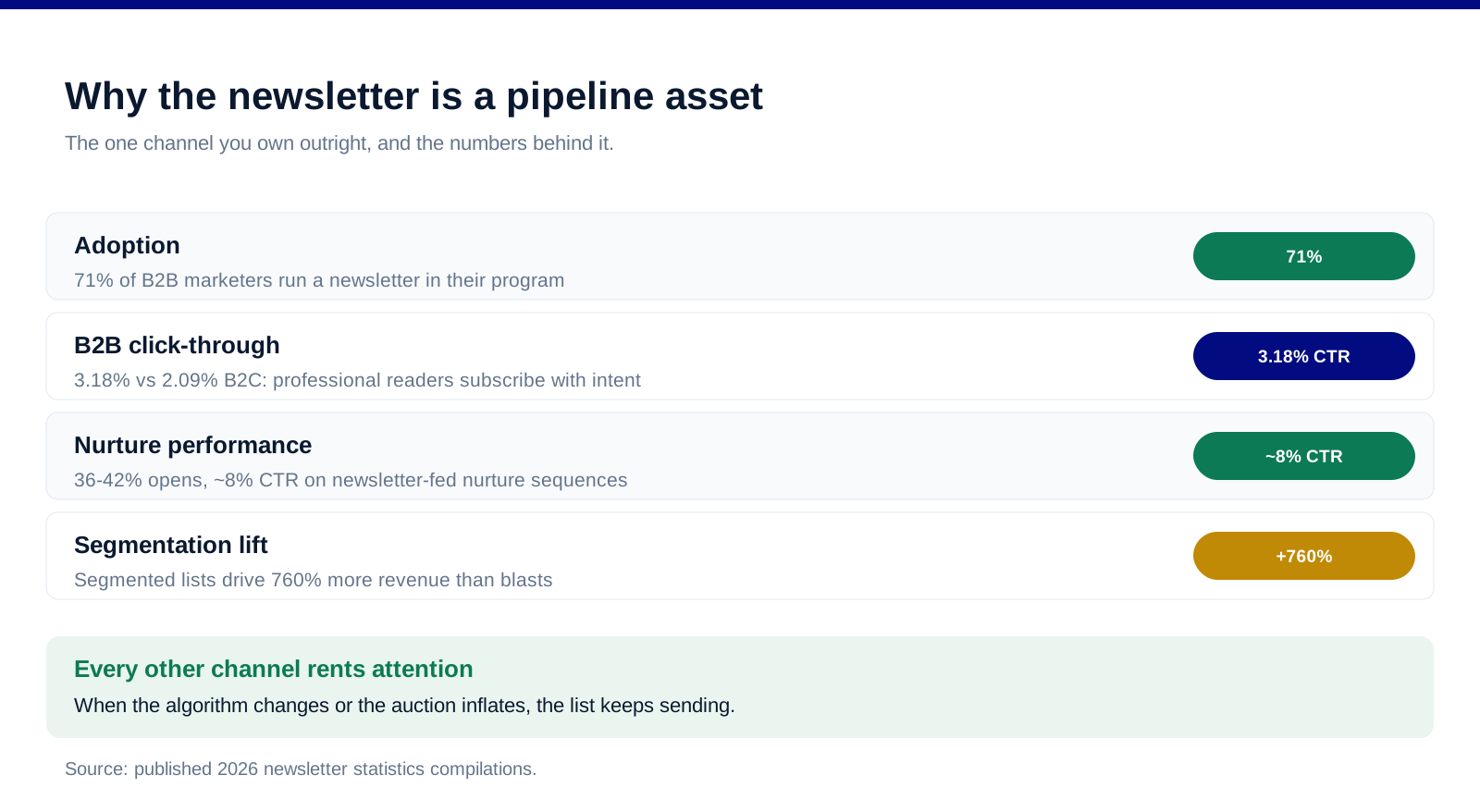
The numbers make the case better than the philosophy. Newsletter-format emails open around 40% on average, ahead of triggered and autoresponder sends. B2B lists click through at 3.18%, half again the consumer rate, because professional readers subscribe with intent. Nurture sequences built on newsletter lists open at 36-42% with CTRs near 8%, roughly 2.5x standard campaign emails. And segmented lists drive 760% more revenue than unsegmented blasts, which is why the segmentation playbook is not optional plumbing but the revenue mechanism itself.
The strategic argument is subscription itself: every other channel rents attention, the list owns it. When the algorithm changes or the ad auction inflates, the newsletter keeps sending.
The four growth engines, in order
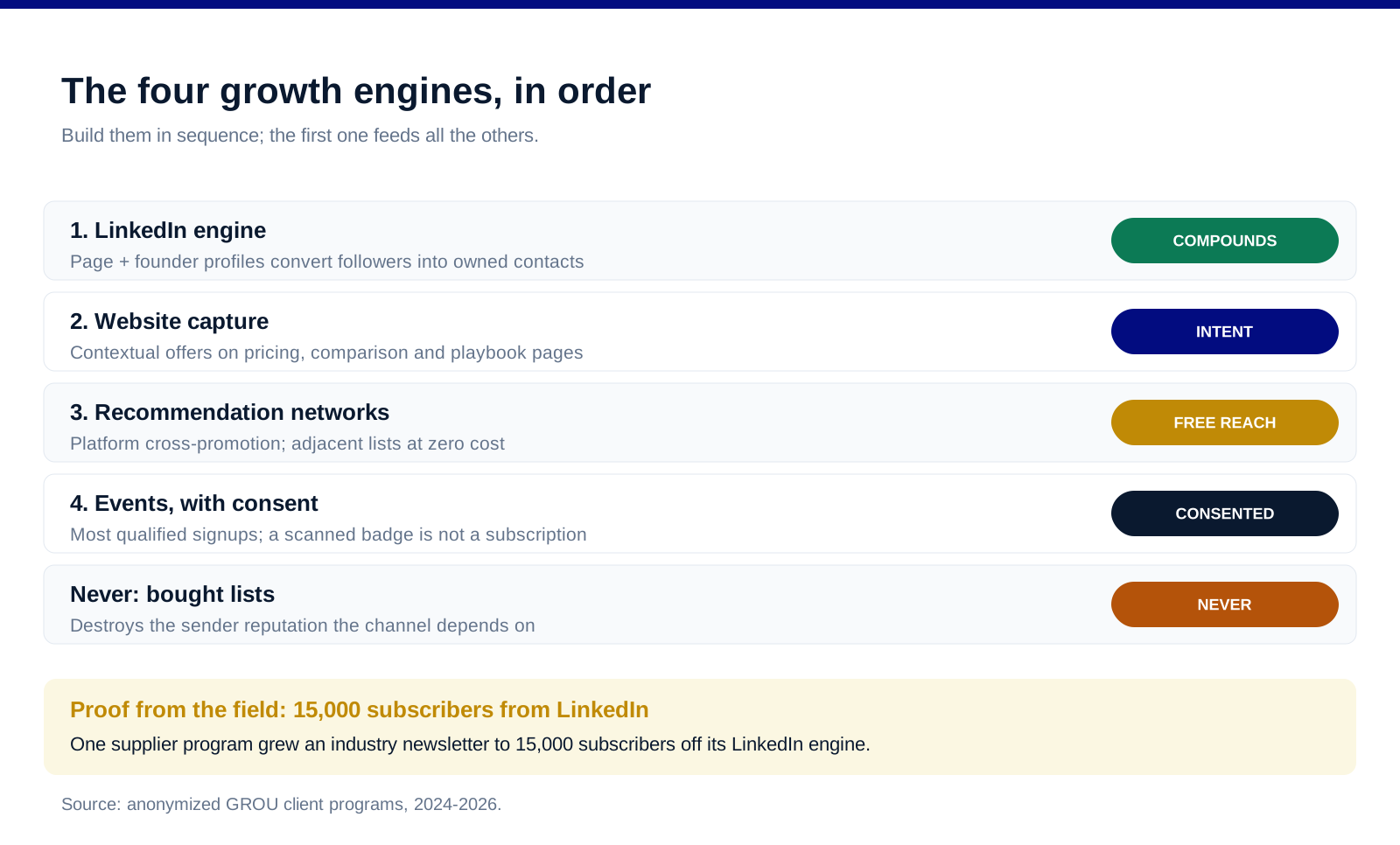
Engine 1: LinkedIn, the compounding source. The company page and the founder profiles are the top of the funnel: consistent industry-literate content builds the audience, and the newsletter converts followers into owned contacts. This is the sequence that works in practice; in one supplier program we run, a casino hardware supplier's LinkedIn engine grew into a 15,000-subscriber industry newsletter, and a second program in the same vertical built a 2,000+ subscriber list inside twelve months. The LinkedIn-side mechanics live in our LinkedIn Ads playbook.
Engine 2: website capture on intent pages. Pricing pages, comparison posts, and playbook content convert readers who already care. One contextual capture per high-intent page outperforms a sitewide popup, and the offer is specific ("the monthly teardown of what worked") rather than generic ("subscribe for updates").
Engine 3: recommendation networks. Platform-native cross-promotion, Beehiiv's recommendation system being the strongest in the category, turns adjacent newsletters into a subscriber channel at zero marginal cost. The platform choice matters here, which is the case our Beehiiv review and Beehiiv vs Substack comparison make in full.
Engine 4: events, with consent. Trade shows and webinars produce the most qualified subscribers on the calendar, provided signup is explicit; a scanned badge is not a subscription, and in GDPR markets treating it as one burns the list's deliverability and your reputation together.
What not to do: buy a list. Purchased lists destroy the sender reputation the whole channel depends on. Every rented shortcut costs more than it returns.
The operating cadence that compounds
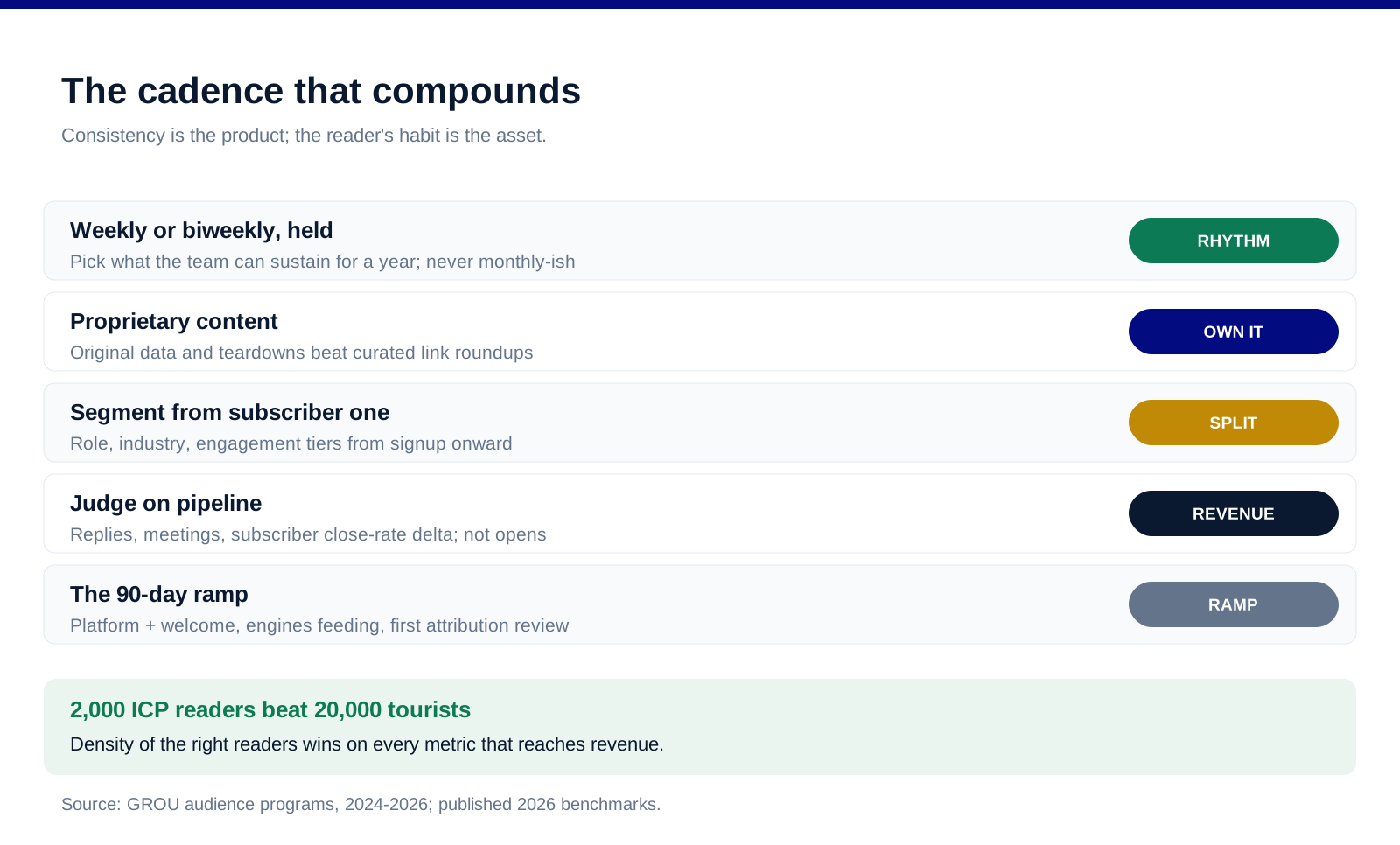
Cadence: weekly or biweekly, never monthly-when-we-remember. Consistency is the product; the reader's habit is the asset. Pick the frequency the team can sustain for a year and hold it.
Content: proprietary beats curated. B2B audiences reward original data, teardowns, and expert commentary over link roundups. One strong owned insight per issue beats five borrowed ones, and the issue that gets forwarded inside a prospect's company is worth more than a month of impressions.
Segment from subscriber one. Role, industry, and engagement tiers, captured at signup or inferred from clicks. The 760% revenue delta between segmented and blast lists is the entire economics of the channel.
Judge it on pipeline, not opens. Opens are inflated by privacy proxies and vanity by design. The metrics that matter: reply rate to the newsletter itself, meetings sourced or influenced, and the close-rate delta on deals where the buyer was a subscriber. A 2,000-subscriber list of ICP buyers outperforms a 20,000-subscriber list of tourists on every number that reaches revenue.
The 90-day ramp. Weeks 1-4: platform, welcome sequence, first two issues, capture points live. Weeks 5-8: LinkedIn engine feeding, recommendation network joined, first segmentation split. Weeks 9-12: first proprietary-data issue, first pipeline attribution review, cadence locked. Growth after that is compounding, not campaigning.
The mistakes that stall B2B newsletters
Mistake 1: launching without a distribution engine. A newsletter with no LinkedIn audience and no capture points is a diary. Build the top of funnel first or in parallel.
Mistake 2: writing for everyone. "B2B leaders" is not an audience. The tighter the reader definition, the higher every rate on the dashboard.
Mistake 3: measuring opens. Privacy changes made opens a proxy metric at best. Replies, clicks, and sourced meetings are the dashboard.
Mistake 4: skipping the welcome sequence. The first 48 hours after signup are peak attention; a 2-3 email welcome arc converts it into a habit and a reply.
Mistake 5: quitting at month four. The compounding starts after the habit forms, on both sides of the send button. Every strong B2B list looks unremarkable at 90 days.
FAQ
How do you grow a B2B newsletter in 2026?
Four engines in order: a LinkedIn content engine feeding a subscribe link, contextual capture on high-intent website pages, platform recommendation networks, and consented event signups. Paid acquisition works only after organic proves the content converts; bought lists never work.
What is a good open rate for a B2B newsletter?
Newsletter-format sends average around 40%, and B2B nurture emails run 36-42%, but privacy proxies inflate all of it. Benchmark your own trend line and judge the program on replies, clicks, and sourced meetings instead of the open column.
How often should a B2B company send its newsletter?
Weekly or biweekly, chosen by what the team can sustain for a year without quality collapsing. Consistency builds the reader habit that makes the list valuable; an excellent monthly issue loses to a good weekly one on every compounding metric.
What platform is best for a B2B newsletter?
One built for growth mechanics rather than just sending: recommendation networks, referral tooling, and clean analytics. Beehiiv leads that category in 2026, and the full comparison against Substack and the ESP incumbents is in our platform reviews.
How many subscribers does a B2B newsletter need to matter?
Fewer than most teams think: a 1,000-2,000 subscriber list that is genuinely ICP produces meetings and deal influence that a 20,000-subscriber general list never will. Density of the right readers beats volume every time revenue is the metric.
Should a B2B newsletter be monetized with sponsorships?
Usually not directly: for most B2B companies the newsletter's economics run through pipeline (sourced meetings, warmer deals, shorter cycles), which outearns CPM math at any realistic list size. Sponsorships make sense only for media-first businesses where the audience is the product.
Bottom line
A B2B newsletter in 2026 is owned distribution with compounding economics: build the four growth engines in order, send on a rhythm the team can hold for a year, segment from the first subscriber, and judge the program on replies and pipeline rather than opens. Start on a growth-built platform like Beehiiv, run the 90-day ramp, and let the compounding do what campaigns cannot.
Want the LinkedIn engine and the newsletter system built as one machine? Book a call with GROU. We run audience and pipeline programs for B2B teams across verticals.
We are GROU, a B2B pipeline agency that runs lead generation, outbound, and LinkedIn content for clients across manufacturing, fintech, iGaming, software, and professional services. Program numbers are aggregated and anonymized from client engagements between 2024 and 2026.
Some links in this article are affiliate. We may earn a small commission at no extra cost to you. We only recommend tools we've deployed for clients.
A B2B newsletter is the only marketing channel you own outright: no algorithm between you and the reader, no auction, no platform tax. That is why 71% of B2B marketers run one, why B2B email clicks through at 3.18% against 2.09% for consumer lists, and why the suppliers with the strongest LinkedIn audiences all funnel them into a list. This playbook covers building the growth engine, the operating cadence that compounds, and the numbers that tell you it is working.
TL;DR
Treat the newsletter as a pipeline asset, not a content project: email acquires customers up to 40x more effectively than social, B2B nurture emails open at 36-42% with roughly 8% CTR, and segmented lists drive multiples more revenue than blast lists. Build growth on four engines in order: LinkedIn (company page plus founder profiles feeding a subscribe link), website capture on your highest-intent pages, platform recommendation networks, and event-driven signups with proper consent. Run it weekly or biweekly on a platform built for growth (we use and recommend Beehiiv), segment from subscriber one, and judge it on replies, meetings, and influenced pipeline rather than opens. Real B2B programs show what patience buys: one supplier program we run grew a 15,000-subscriber industry newsletter from a LinkedIn audience, and it now warms every sales conversation the team starts.
Why the newsletter is a pipeline asset
The numbers make the case better than the philosophy. Newsletter-format emails open around 40% on average, ahead of triggered and autoresponder sends. B2B lists click through at 3.18%, half again the consumer rate, because professional readers subscribe with intent. Nurture sequences built on newsletter lists open at 36-42% with CTRs near 8%, roughly 2.5x standard campaign emails. And segmented lists drive 760% more revenue than unsegmented blasts, which is why the segmentation playbook is not optional plumbing but the revenue mechanism itself.
The strategic argument is subscription itself: every other channel rents attention, the list owns it. When the algorithm changes or the ad auction inflates, the newsletter keeps sending.
The four growth engines, in order
Engine 1: LinkedIn, the compounding source. The company page and the founder profiles are the top of the funnel: consistent industry-literate content builds the audience, and the newsletter converts followers into owned contacts. This is the sequence that works in practice; in one supplier program we run, a casino hardware supplier's LinkedIn engine grew into a 15,000-subscriber industry newsletter, and a second program in the same vertical built a 2,000+ subscriber list inside twelve months. The LinkedIn-side mechanics live in our LinkedIn Ads playbook.
Engine 2: website capture on intent pages. Pricing pages, comparison posts, and playbook content convert readers who already care. One contextual capture per high-intent page outperforms a sitewide popup, and the offer is specific ("the monthly teardown of what worked") rather than generic ("subscribe for updates").
Engine 3: recommendation networks. Platform-native cross-promotion, Beehiiv's recommendation system being the strongest in the category, turns adjacent newsletters into a subscriber channel at zero marginal cost. The platform choice matters here, which is the case our Beehiiv review and Beehiiv vs Substack comparison make in full.
Engine 4: events, with consent. Trade shows and webinars produce the most qualified subscribers on the calendar, provided signup is explicit; a scanned badge is not a subscription, and in GDPR markets treating it as one burns the list's deliverability and your reputation together.
What not to do: buy a list. Purchased lists destroy the sender reputation the whole channel depends on. Every rented shortcut costs more than it returns.
The operating cadence that compounds
Cadence: weekly or biweekly, never monthly-when-we-remember. Consistency is the product; the reader's habit is the asset. Pick the frequency the team can sustain for a year and hold it.
Content: proprietary beats curated. B2B audiences reward original data, teardowns, and expert commentary over link roundups. One strong owned insight per issue beats five borrowed ones, and the issue that gets forwarded inside a prospect's company is worth more than a month of impressions.
Segment from subscriber one. Role, industry, and engagement tiers, captured at signup or inferred from clicks. The 760% revenue delta between segmented and blast lists is the entire economics of the channel.
Judge it on pipeline, not opens. Opens are inflated by privacy proxies and vanity by design. The metrics that matter: reply rate to the newsletter itself, meetings sourced or influenced, and the close-rate delta on deals where the buyer was a subscriber. A 2,000-subscriber list of ICP buyers outperforms a 20,000-subscriber list of tourists on every number that reaches revenue.
The 90-day ramp. Weeks 1-4: platform, welcome sequence, first two issues, capture points live. Weeks 5-8: LinkedIn engine feeding, recommendation network joined, first segmentation split. Weeks 9-12: first proprietary-data issue, first pipeline attribution review, cadence locked. Growth after that is compounding, not campaigning.
The mistakes that stall B2B newsletters
Mistake 1: launching without a distribution engine. A newsletter with no LinkedIn audience and no capture points is a diary. Build the top of funnel first or in parallel.
Mistake 2: writing for everyone. "B2B leaders" is not an audience. The tighter the reader definition, the higher every rate on the dashboard.
Mistake 3: measuring opens. Privacy changes made opens a proxy metric at best. Replies, clicks, and sourced meetings are the dashboard.
Mistake 4: skipping the welcome sequence. The first 48 hours after signup are peak attention; a 2-3 email welcome arc converts it into a habit and a reply.
Mistake 5: quitting at month four. The compounding starts after the habit forms, on both sides of the send button. Every strong B2B list looks unremarkable at 90 days.
FAQ
How do you grow a B2B newsletter in 2026?
Four engines in order: a LinkedIn content engine feeding a subscribe link, contextual capture on high-intent website pages, platform recommendation networks, and consented event signups. Paid acquisition works only after organic proves the content converts; bought lists never work.
What is a good open rate for a B2B newsletter?
Newsletter-format sends average around 40%, and B2B nurture emails run 36-42%, but privacy proxies inflate all of it. Benchmark your own trend line and judge the program on replies, clicks, and sourced meetings instead of the open column.
How often should a B2B company send its newsletter?
Weekly or biweekly, chosen by what the team can sustain for a year without quality collapsing. Consistency builds the reader habit that makes the list valuable; an excellent monthly issue loses to a good weekly one on every compounding metric.
What platform is best for a B2B newsletter?
One built for growth mechanics rather than just sending: recommendation networks, referral tooling, and clean analytics. Beehiiv leads that category in 2026, and the full comparison against Substack and the ESP incumbents is in our platform reviews.
How many subscribers does a B2B newsletter need to matter?
Fewer than most teams think: a 1,000-2,000 subscriber list that is genuinely ICP produces meetings and deal influence that a 20,000-subscriber general list never will. Density of the right readers beats volume every time revenue is the metric.
Should a B2B newsletter be monetized with sponsorships?
Usually not directly: for most B2B companies the newsletter's economics run through pipeline (sourced meetings, warmer deals, shorter cycles), which outearns CPM math at any realistic list size. Sponsorships make sense only for media-first businesses where the audience is the product.
Bottom line
A B2B newsletter in 2026 is owned distribution with compounding economics: build the four growth engines in order, send on a rhythm the team can hold for a year, segment from the first subscriber, and judge the program on replies and pipeline rather than opens. Start on a growth-built platform like Beehiiv, run the 90-day ramp, and let the compounding do what campaigns cannot.
Want the LinkedIn engine and the newsletter system built as one machine? Book a call with GROU. We run audience and pipeline programs for B2B teams across verticals.
We are GROU, a B2B pipeline agency that runs lead generation, outbound, and LinkedIn content for clients across manufacturing, fintech, iGaming, software, and professional services. Program numbers are aggregated and anonymized from client engagements between 2024 and 2026.
Some links in this article are affiliate. We may earn a small commission at no extra cost to you. We only recommend tools we've deployed for clients.
A B2B newsletter is the only marketing channel you own outright: no algorithm between you and the reader, no auction, no platform tax. That is why 71% of B2B marketers run one, why B2B email clicks through at 3.18% against 2.09% for consumer lists, and why the suppliers with the strongest LinkedIn audiences all funnel them into a list. This playbook covers building the growth engine, the operating cadence that compounds, and the numbers that tell you it is working.
TL;DR
Treat the newsletter as a pipeline asset, not a content project: email acquires customers up to 40x more effectively than social, B2B nurture emails open at 36-42% with roughly 8% CTR, and segmented lists drive multiples more revenue than blast lists. Build growth on four engines in order: LinkedIn (company page plus founder profiles feeding a subscribe link), website capture on your highest-intent pages, platform recommendation networks, and event-driven signups with proper consent. Run it weekly or biweekly on a platform built for growth (we use and recommend Beehiiv), segment from subscriber one, and judge it on replies, meetings, and influenced pipeline rather than opens. Real B2B programs show what patience buys: one supplier program we run grew a 15,000-subscriber industry newsletter from a LinkedIn audience, and it now warms every sales conversation the team starts.
Why the newsletter is a pipeline asset
The numbers make the case better than the philosophy. Newsletter-format emails open around 40% on average, ahead of triggered and autoresponder sends. B2B lists click through at 3.18%, half again the consumer rate, because professional readers subscribe with intent. Nurture sequences built on newsletter lists open at 36-42% with CTRs near 8%, roughly 2.5x standard campaign emails. And segmented lists drive 760% more revenue than unsegmented blasts, which is why the segmentation playbook is not optional plumbing but the revenue mechanism itself.
The strategic argument is subscription itself: every other channel rents attention, the list owns it. When the algorithm changes or the ad auction inflates, the newsletter keeps sending.
The four growth engines, in order
Engine 1: LinkedIn, the compounding source. The company page and the founder profiles are the top of the funnel: consistent industry-literate content builds the audience, and the newsletter converts followers into owned contacts. This is the sequence that works in practice; in one supplier program we run, a casino hardware supplier's LinkedIn engine grew into a 15,000-subscriber industry newsletter, and a second program in the same vertical built a 2,000+ subscriber list inside twelve months. The LinkedIn-side mechanics live in our LinkedIn Ads playbook.
Engine 2: website capture on intent pages. Pricing pages, comparison posts, and playbook content convert readers who already care. One contextual capture per high-intent page outperforms a sitewide popup, and the offer is specific ("the monthly teardown of what worked") rather than generic ("subscribe for updates").
Engine 3: recommendation networks. Platform-native cross-promotion, Beehiiv's recommendation system being the strongest in the category, turns adjacent newsletters into a subscriber channel at zero marginal cost. The platform choice matters here, which is the case our Beehiiv review and Beehiiv vs Substack comparison make in full.
Engine 4: events, with consent. Trade shows and webinars produce the most qualified subscribers on the calendar, provided signup is explicit; a scanned badge is not a subscription, and in GDPR markets treating it as one burns the list's deliverability and your reputation together.
What not to do: buy a list. Purchased lists destroy the sender reputation the whole channel depends on. Every rented shortcut costs more than it returns.
The operating cadence that compounds
Cadence: weekly or biweekly, never monthly-when-we-remember. Consistency is the product; the reader's habit is the asset. Pick the frequency the team can sustain for a year and hold it.
Content: proprietary beats curated. B2B audiences reward original data, teardowns, and expert commentary over link roundups. One strong owned insight per issue beats five borrowed ones, and the issue that gets forwarded inside a prospect's company is worth more than a month of impressions.
Segment from subscriber one. Role, industry, and engagement tiers, captured at signup or inferred from clicks. The 760% revenue delta between segmented and blast lists is the entire economics of the channel.
Judge it on pipeline, not opens. Opens are inflated by privacy proxies and vanity by design. The metrics that matter: reply rate to the newsletter itself, meetings sourced or influenced, and the close-rate delta on deals where the buyer was a subscriber. A 2,000-subscriber list of ICP buyers outperforms a 20,000-subscriber list of tourists on every number that reaches revenue.
The 90-day ramp. Weeks 1-4: platform, welcome sequence, first two issues, capture points live. Weeks 5-8: LinkedIn engine feeding, recommendation network joined, first segmentation split. Weeks 9-12: first proprietary-data issue, first pipeline attribution review, cadence locked. Growth after that is compounding, not campaigning.
The mistakes that stall B2B newsletters
Mistake 1: launching without a distribution engine. A newsletter with no LinkedIn audience and no capture points is a diary. Build the top of funnel first or in parallel.
Mistake 2: writing for everyone. "B2B leaders" is not an audience. The tighter the reader definition, the higher every rate on the dashboard.
Mistake 3: measuring opens. Privacy changes made opens a proxy metric at best. Replies, clicks, and sourced meetings are the dashboard.
Mistake 4: skipping the welcome sequence. The first 48 hours after signup are peak attention; a 2-3 email welcome arc converts it into a habit and a reply.
Mistake 5: quitting at month four. The compounding starts after the habit forms, on both sides of the send button. Every strong B2B list looks unremarkable at 90 days.
FAQ
How do you grow a B2B newsletter in 2026?
Four engines in order: a LinkedIn content engine feeding a subscribe link, contextual capture on high-intent website pages, platform recommendation networks, and consented event signups. Paid acquisition works only after organic proves the content converts; bought lists never work.
What is a good open rate for a B2B newsletter?
Newsletter-format sends average around 40%, and B2B nurture emails run 36-42%, but privacy proxies inflate all of it. Benchmark your own trend line and judge the program on replies, clicks, and sourced meetings instead of the open column.
How often should a B2B company send its newsletter?
Weekly or biweekly, chosen by what the team can sustain for a year without quality collapsing. Consistency builds the reader habit that makes the list valuable; an excellent monthly issue loses to a good weekly one on every compounding metric.
What platform is best for a B2B newsletter?
One built for growth mechanics rather than just sending: recommendation networks, referral tooling, and clean analytics. Beehiiv leads that category in 2026, and the full comparison against Substack and the ESP incumbents is in our platform reviews.
How many subscribers does a B2B newsletter need to matter?
Fewer than most teams think: a 1,000-2,000 subscriber list that is genuinely ICP produces meetings and deal influence that a 20,000-subscriber general list never will. Density of the right readers beats volume every time revenue is the metric.
Should a B2B newsletter be monetized with sponsorships?
Usually not directly: for most B2B companies the newsletter's economics run through pipeline (sourced meetings, warmer deals, shorter cycles), which outearns CPM math at any realistic list size. Sponsorships make sense only for media-first businesses where the audience is the product.
Bottom line
A B2B newsletter in 2026 is owned distribution with compounding economics: build the four growth engines in order, send on a rhythm the team can hold for a year, segment from the first subscriber, and judge the program on replies and pipeline rather than opens. Start on a growth-built platform like Beehiiv, run the 90-day ramp, and let the compounding do what campaigns cannot.
Want the LinkedIn engine and the newsletter system built as one machine? Book a call with GROU. We run audience and pipeline programs for B2B teams across verticals.
We are GROU, a B2B pipeline agency that runs lead generation, outbound, and LinkedIn content for clients across manufacturing, fintech, iGaming, software, and professional services. Program numbers are aggregated and anonymized from client engagements between 2024 and 2026.
Some links in this article are affiliate. We may earn a small commission at no extra cost to you. We only recommend tools we've deployed for clients.
Pipeline OS Newsletter
Build qualified pipeline
Get weekly tactics to generate demand, improve lead quality, and book more meetings.





Trusted by industry leaders
Trusted by industry leaders
Trusted by industry leaders
Ready to build qualified pipeline?
Ready to build qualified pipeline?
Ready to build qualified pipeline?
Book a call to see if we're the right fit, or take the 2-minute quiz to get a clear starting point.
Book a call to see if we're the right fit, or take the 2-minute quiz to get a clear starting point.
Book a call to see if we're the right fit, or take the 2-minute quiz to get a clear starting point.
" height="30.21639343089746px" id="hfGbXmQR2" width="30.216393430897455px"/></svg>)
Copyright © 2026 – All Right Reserved
Copyright © 2026 – All Right Reserved
Copyright © 2026 – All Right Reserved