%22%3E%3C/path%3E%3Cpath d=%22M 63.072 7.554 C 62.258 8.022 61.577 8.689 61.092 9.493 L 61.092 7.076 L 57.158 7.076 L 57.158 22.64 L 61.089 22.64 L 61.089 14.888 C 61.089 13.446 61.403 12.434 62.03 11.853 C 62.818 11.218 63.818 10.907 64.826 10.982 L 65.868 10.982 L 65.868 6.851 C 64.891 6.834 63.926 7.076 63.073 7.554 Z%22 fill=%22rgb(17,17,17)%22%3E%3C/path%3E%3Cpath d=%22M 78.916 7.82 C 76.363 6.49 73.321 6.49 70.768 7.82 C 69.562 8.473 68.564 9.451 67.888 10.644 C 67.167 11.931 66.803 13.387 66.834 14.862 C 66.804 16.332 67.157 17.785 67.86 19.077 C 68.515 20.267 69.494 21.246 70.684 21.901 C 71.924 22.576 73.318 22.92 74.73 22.898 C 76.164 22.918 77.58 22.575 78.846 21.901 C 80.062 21.247 81.073 20.27 81.768 19.077 C 82.506 17.797 82.88 16.339 82.85 14.862 C 82.88 13.389 82.517 11.934 81.797 10.647 C 81.12 9.455 80.122 8.477 78.917 7.824 M 78.803 14.862 C 78.829 15.739 78.636 16.608 78.241 17.391 C 77.903 18.046 77.38 18.588 76.738 18.95 C 76.124 19.293 75.432 19.472 74.729 19.47 C 73.668 19.497 72.648 19.061 71.934 18.276 C 71.139 17.323 70.741 16.1 70.823 14.862 C 70.741 13.62 71.149 12.395 71.959 11.45 C 72.687 10.667 73.715 10.233 74.783 10.256 C 75.859 10.236 76.894 10.67 77.635 11.45 C 78.464 12.387 78.884 13.616 78.801 14.864%22 fill=%22rgb(17,17,17)%22%3E%3C/path%3E%3Cpath d=%22M 95.906 7.076 L 95.906 15.646 C 95.975 16.68 95.643 17.701 94.979 18.498 C 94.311 19.184 93.379 19.547 92.422 19.495 C 91.475 19.544 90.553 19.18 89.894 18.498 C 89.23 17.701 88.898 16.68 88.967 15.646 L 88.967 7.076 L 85.033 7.076 L 85.033 16.207 C 85 17.449 85.275 18.68 85.834 19.79 C 86.327 20.75 87.095 21.542 88.039 22.065 C 89.033 22.594 90.145 22.861 91.271 22.838 C 92.188 22.847 93.095 22.65 93.926 22.263 C 94.708 21.905 95.388 21.36 95.906 20.675 L 95.906 22.645 L 99.865 22.645 L 99.865 7.076 Z%22 fill=%22rgb(17,17,17)%22%3E%3C/path%3E%3Cpath d=%22M 4.513 15.626 C 4.511 10.815 7.606 6.549 12.181 5.059 C 16.756 3.57 21.77 5.195 24.601 9.086 L 27.816 5.87 C 24.074 1.186 17.981 -0.943 12.137 0.393 C 6.292 1.728 1.728 6.292 0.393 12.137 C -0.943 17.981 1.186 24.074 5.87 27.816 L 9.085 24.601 C 6.214 22.512 4.515 19.177 4.513 15.626%22 fill=%22rgb(32,62,235)%22%3E%3C/path%3E%3Cpath d=%22M 17.114 14.343 L 13.354 18.01 L 13.354 18.026 L 21.071 18.026 L 11.412 27.609 L 17.389 27.609 L 23.999 21.081 L 23.999 28.316 L 24.005 28.316 L 27.967 24.393 L 27.967 14.343 Z%22 fill=%22rgb(32,62,235)%22%3E%3C/path%3E%3C/g%3E%3C/svg%3E) ×
× ××
××›
›
›
›
Deel pricing 2026
Deel pricing 2026
Deel pricing 2026
Deel pricing 2026
Deel pricing 2026
Deel pricing 2026

Author
Aljaz Peklaj

Deel publishes five prices. It sells considerably more than five things.
Which is the useful fact about this rate card: the products with numbers on them are the ones where the market has forced transparency, and the products without numbers are where the money is negotiated. Knowing which side of that line your purchase falls on tells you more than any of the published figures.
TL;DR
Deel's published rates are $14 per worker per month to find talent, $49 per contractor per month, $325 per contractor of record per month, $125 per US PEO employee per month and $599 per EOR employee per month. Everything else it sells, including global payroll, the HR platform, immigration and equipment, carries no published price on that page, which is worth knowing before you assume the rate card describes your bill. Two things on the same page sit in tension and both are quotable: Deel states there are no long-term contracts and that month-to-month flexibility is available, while running a promotion of three months free of PEO for qualifying new orders executed between 15 July 2026 and 31 December 2026 that carries a minimum two-year term. If you take the promotion you have taken the contract, and the arithmetic of whether three free months justifies twenty-four committed ones is worth doing before signing rather than after.
The five published prices
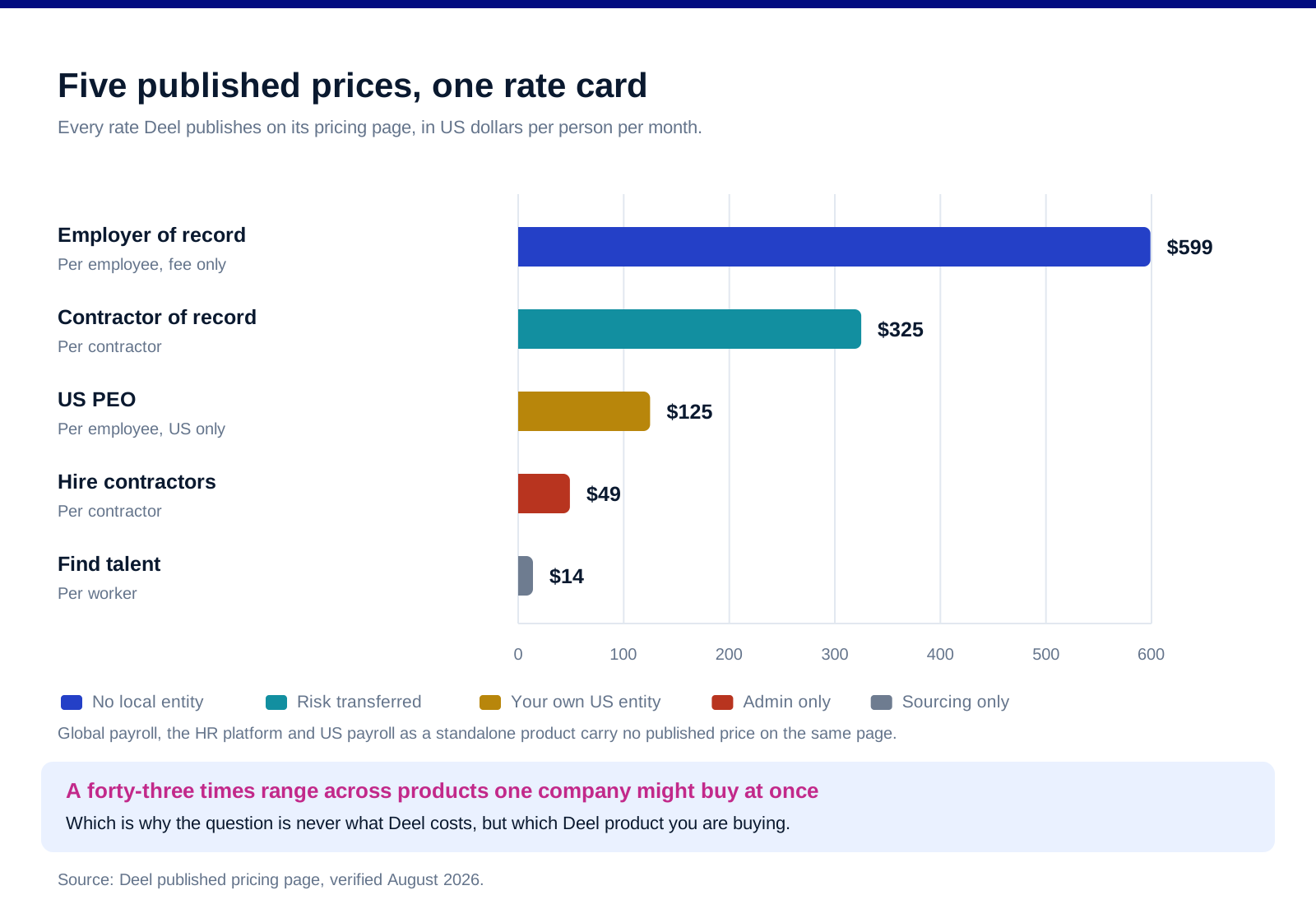
Find talent, $14 per worker per month. The cheapest published line and the one furthest from the core product.
Hire contractors, $49 per contractor per month. Contractor management. Our Deel alternatives piece covers where this sits against the field, and it is the product where the field varies most.
Contractor of record, $325 per contractor per month. A materially different product from contractor management, and the price gap of more than six times is the clearest signal on the page that they are not substitutes.
US PEO, $125 per employee per month. US-only, and the product the current promotion attaches to.
Employer of record, $599 per employee per month. The headline product and the one most people mean when they say Deel.
Read the ladder rather than the individual numbers. From $14 to $599 is a forty-three times range across products a single company might buy simultaneously, which means "what does Deel cost" has no answer until you say which product.
And check what each price is denominated in before you multiply. Three different units appear across those five lines: per worker, per contractor and per employee. They are not interchangeable, and a company with fifteen contractors, four US employees and two people in a market where it has no entity is buying on three different meters at once. Build the estimate line by line rather than taking the headline figure and multiplying by headcount.
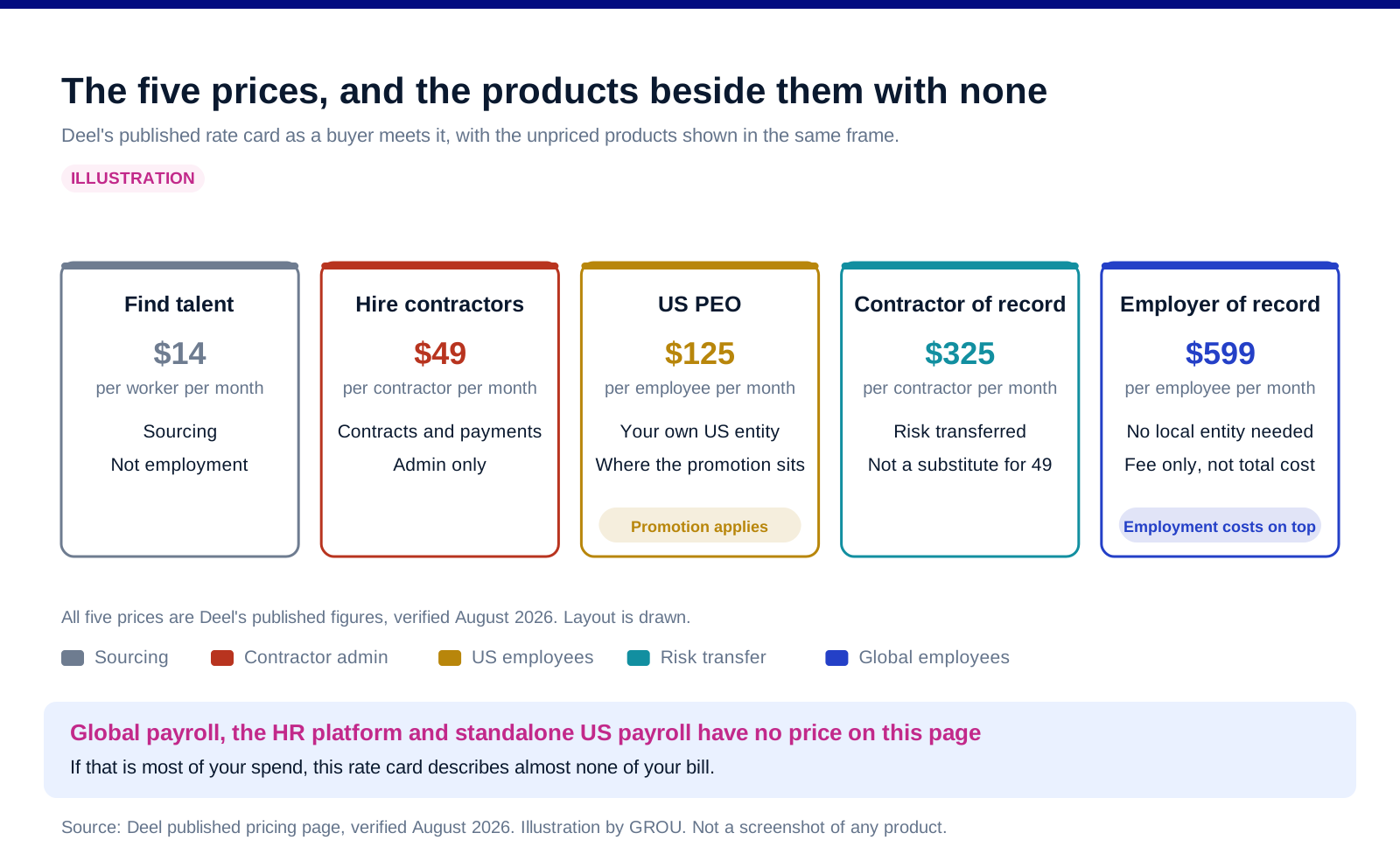
What is not priced, and why that matters
Global payroll carries no published price on the pricing page. Neither does the HR platform, nor US payroll as a standalone product.
Which is not unusual and is not a criticism. Payroll pricing depends on country count, headcount per country and pay frequency, and a single number would be wrong for almost everyone. Most of the market works this way.
But it changes how you should read the rate card. If your purchase is mostly EOR or contractors, the published prices describe most of your bill. If it is mostly payroll or platform, they describe almost none of it, and you are in a quoted negotiation where the published figures give you no anchor at all.
So establish which side you are on before the first call. A buyer whose spend is 80 percent unpriced product should prepare differently from one buying twelve EOR seats at a published rate.
And ask what the unpriced products cost per country, not per employee. Global payroll economics are usually driven by the number of countries you run rather than the number of people in them, which is the question that surfaces the real cost of a two-person entity in a small market.
Then ask for the quote in a shape you can compare. A quoted product has no rate card to hold it to, so the only leverage you have is the format of the answer. Ask for it broken out per country and per pay run rather than as a single monthly number, ask which line items are one-off implementation and which recur, and ask what changes if you add or remove a country mid-year. Any provider can answer those three questions, and a quote that resists being broken out that way is a quote you cannot compare against anyone else's.
Ask for the same shape from every vendor on your list. The published rate cards in this category are easy to compare and the quoted products are not, which is exactly why buyers end up choosing on the priced surface and paying on the unpriced one.
The promotion and the flexibility claim
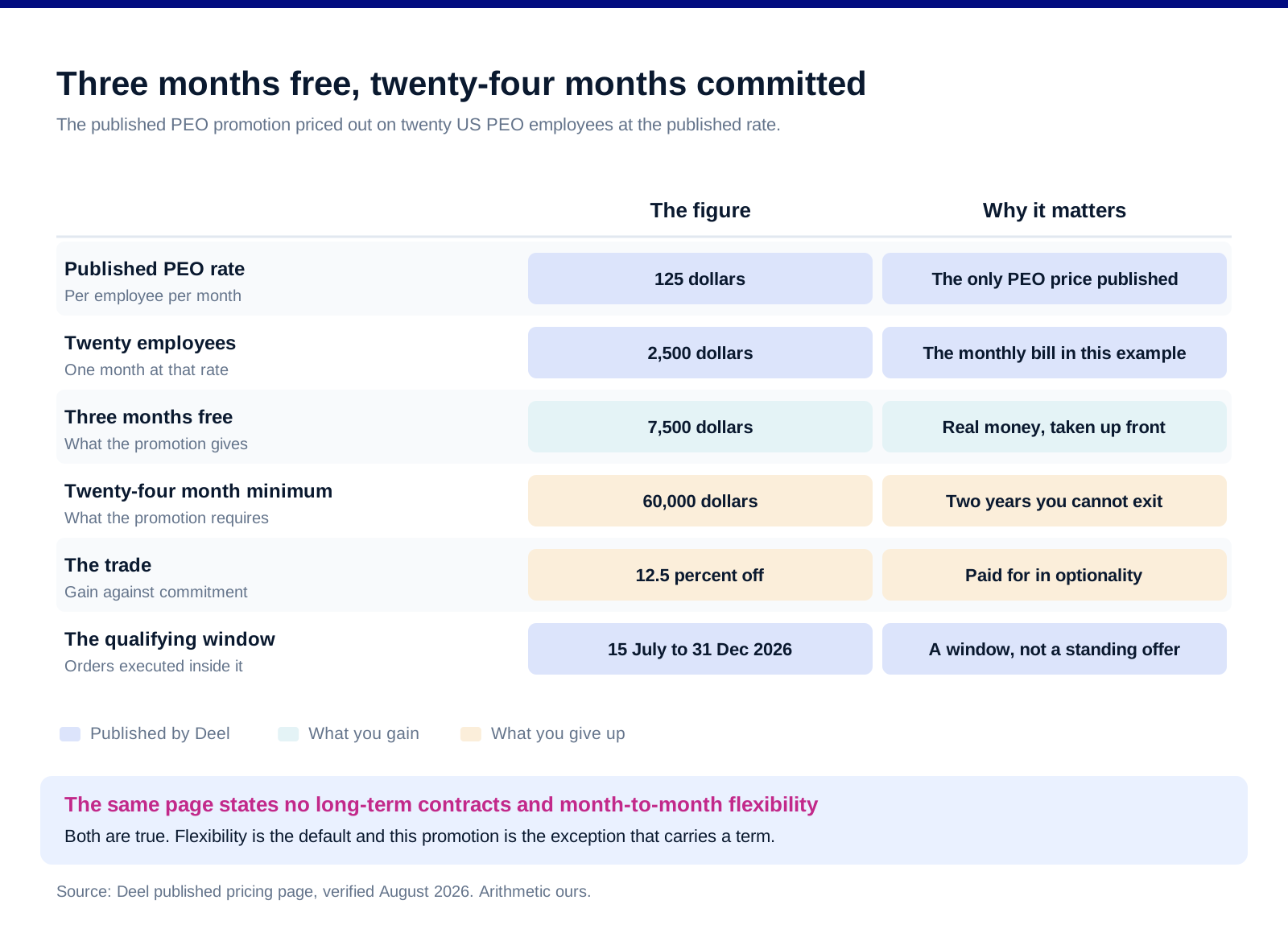
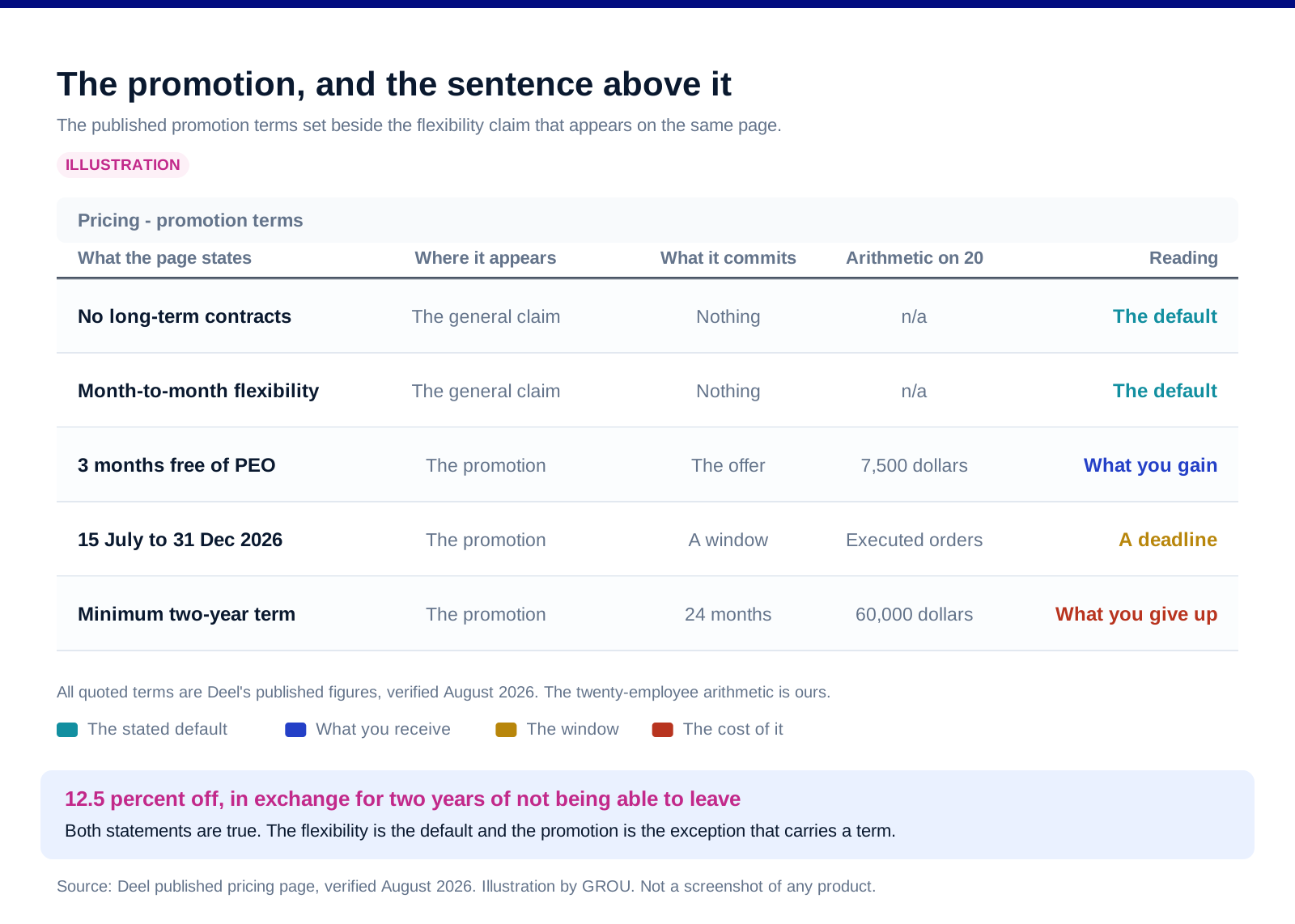
Both statements appear on the same page. Deel states no long-term contracts are required and that month-to-month flexibility is available. It also states a promotion of "3 months free of PEO" for qualifying new orders executed between 15 July 2026 and 31 December 2026, with a minimum two-year term requirement.
Those are not contradictory, they are conditional. The flexibility is the default and the promotion is the exception, which is entirely normal. The reason to point at it is that a reader who has absorbed the flexibility message will not expect the promotion to carry a term, and the term is the expensive part.
Run the arithmetic on twenty US PEO employees. At the published $125 a month that is $2,500 a month, so three free months is $7,500. The commitment is twenty-four months, which at the same rate is $60,000. You are being offered 12.5 percent off in exchange for giving up the ability to leave for two years.
Whether that is good depends entirely on how sure you are. A company certain of its US headcount for two years is being paid to commit to something it was going to do anyway. A company that might restructure, be acquired or shrink is buying a discount with an option it may need.
And check what happens to the free months if you leave early. A minimum term usually means the discount is clawed back, and the promotion text on a pricing page is not the contract.
What the published price does not include
Employer costs are separate and much larger than the fee. On employer of record the $599 is Deel's fee. The employment costs, the statutory contributions and the local benefits sit on top and vary by country, often by more than the fee itself. Our note on contractor misclassification in Europe covers what those obligations look like.
Deposits and reserves are a working capital question rather than a price question. Ask whether one is required, how much, and when it is returned. Several vendors in this category require them and the practice is not uniform.
Currency conversion. Ask whether a fee applies and when, because the answer differs across this category and is rarely on the pricing page.
Country-specific rate variation. Ask whether your specific countries carry the published rate or a different one. Some vendors in this category state openly that a share of countries do not.
Renewal. Ask what the uplift is capped at. This is the single most commonly skipped question in a category where the initial rate is the thing everyone negotiates.
None of that is a criticism of Deel specifically. It is the standard gap between a published rate card and an invoice, and the five questions above are the ones that close it.
Which product you are actually buying
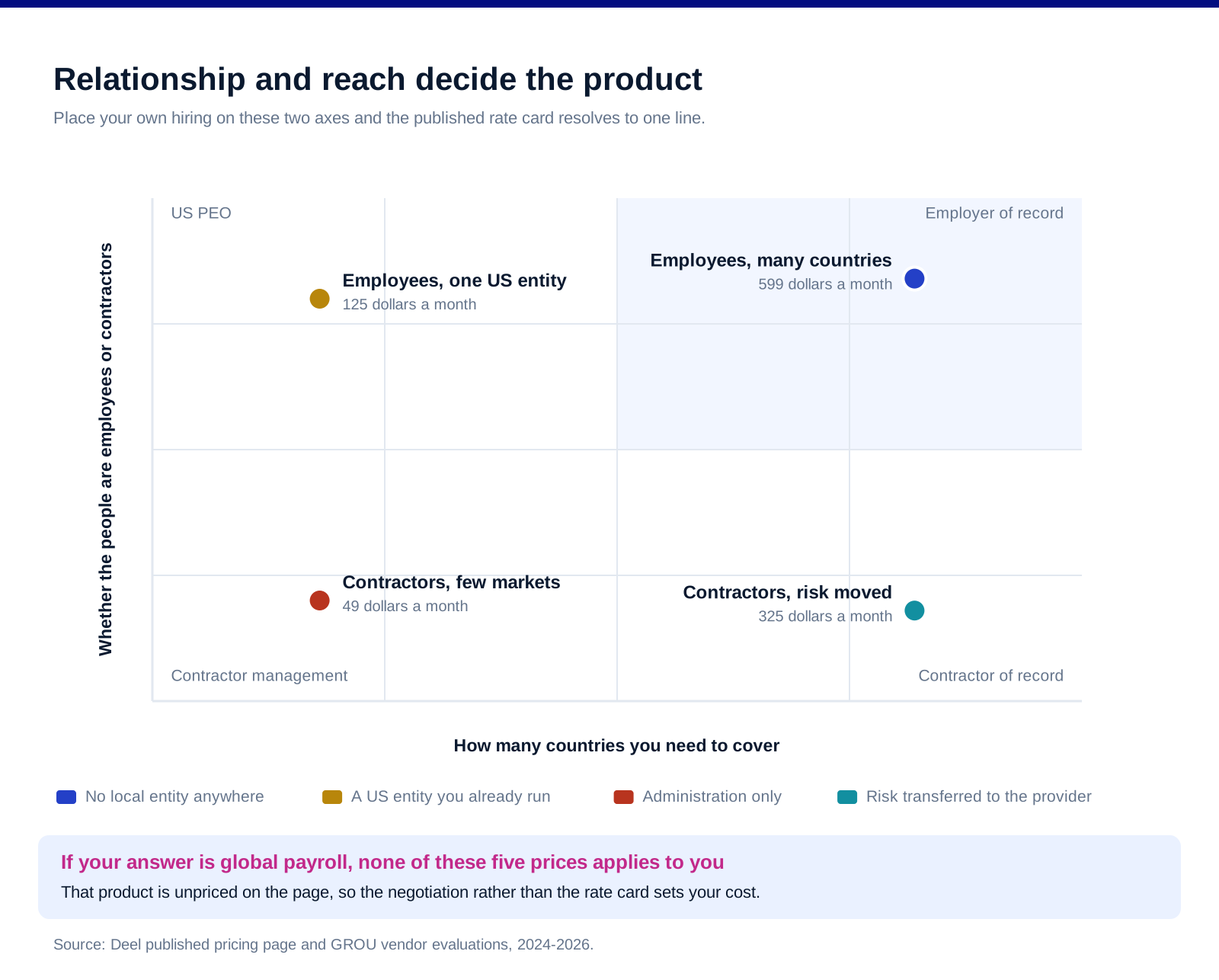
Contractors in one or two markets. Contractor management at $49, and the question is whether you need it at all rather than which vendor.
Contractors where classification is the risk. Contractor of record at $325, which is buying an indemnity rather than an admin tool, and the six times price gap is what that indemnity costs.
Employees outside your entities. Employer of record at $599 plus employment costs, which is the expensive but correct answer when you have no local entity.
Employees inside your own US entity. PEO at $125, and the product the promotion attaches to.
Employees inside entities you already run everywhere. Global payroll, which is unpriced, and where the negotiation rather than the rate card decides your cost.
What we do not publish here
Any figure for global payroll, the HR platform or immigration. Deel does not publish them on the page we read and we are not going to estimate them.
Negotiated or enterprise pricing. Everything above is published list. Volume deals exist and will differ, which is exactly why the unpriced products matter.
Employment cost estimates by country. They change with statutory rates, they vary within countries, and a stale figure here would be worse than none.
A comparison against other vendors. Our Deel alternatives piece does that on published prices. Repeating it here would duplicate a live page.
Any claim about which vendor is more compliant. That is not knowable from a pricing page.
FAQ
How much does Deel cost?
It depends entirely on the product. Deel publishes $14 per worker per month to find talent, $49 per contractor per month, $325 per contractor of record per month, $125 per US PEO employee per month and $599 per EOR employee per month. Global payroll, the HR platform and several other products carry no published price.
Does Deel require a long-term contract?
Deel states that no long-term contracts are required and that month-to-month flexibility is available. Its current PEO promotion is the exception: three months free for qualifying new orders executed between 15 July 2026 and 31 December 2026, with a minimum two-year term.
Is the Deel PEO promotion worth taking?
On twenty US PEO employees at the published $125, three free months is $7,500 against a twenty-four month commitment worth $60,000, so roughly 12.5 percent off in exchange for two years of lock-in. That is good value if your US headcount is certain and expensive if it is not. Ask what happens to the discount if you leave early.
What is the difference between $49 and $325 on contractors?
Contractor management at $49 is administration: contracts, invoicing and payments. Contractor of record at $325 is a different product in which the provider takes on the engagement and the classification risk. The price gap is what the indemnity costs, and the two are not substitutes.
Does the $599 EOR price include employment costs?
No. That is Deel's fee. Statutory employer contributions, benefits and local costs sit on top and vary by country, frequently by more than the fee itself. Ask for a full quote for your specific country before comparing anything.
What should you ask that the pricing page does not answer?
Whether a deposit is required and when it is returned, whether a currency conversion fee applies, whether your specific countries carry the published rate, what the renewal uplift is capped at, and what happens to any promotional discount if you leave inside the minimum term.
Bottom line
Start by working out whether the product you want is one of the five with a published price or one of the several without, because that single fact determines whether the rate card is useful to you at all. If you are buying EOR or contractors, the published numbers describe most of your bill and the remaining work is the five questions about deposits, currency, country variation, renewal and employment costs. If you are buying payroll or platform, you are in a quoted negotiation and the published figures give you no anchor, so prepare accordingly. And if the PEO promotion is why you are here, do the arithmetic before the paperwork: three free months against a two-year minimum term is a discount priced in optionality, and optionality is the thing companies most reliably underestimate the value of.
Want the pipeline built rather than the employment stack priced? Book a call with GROU. We run lead generation and outbound inside B2B revenue engines across verticals.
We are GROU, a B2B pipeline agency that runs lead generation, outbound, and LinkedIn content for clients across manufacturing, fintech, iGaming, software, and professional services. Some links in this article are affiliate links, including Deel. Every price quoted is the published list price taken from Deel's own pricing page and verified in August 2026. Promotions end and prices change, so check before you buy.
Deel publishes five prices. It sells considerably more than five things.
Which is the useful fact about this rate card: the products with numbers on them are the ones where the market has forced transparency, and the products without numbers are where the money is negotiated. Knowing which side of that line your purchase falls on tells you more than any of the published figures.
TL;DR
Deel's published rates are $14 per worker per month to find talent, $49 per contractor per month, $325 per contractor of record per month, $125 per US PEO employee per month and $599 per EOR employee per month. Everything else it sells, including global payroll, the HR platform, immigration and equipment, carries no published price on that page, which is worth knowing before you assume the rate card describes your bill. Two things on the same page sit in tension and both are quotable: Deel states there are no long-term contracts and that month-to-month flexibility is available, while running a promotion of three months free of PEO for qualifying new orders executed between 15 July 2026 and 31 December 2026 that carries a minimum two-year term. If you take the promotion you have taken the contract, and the arithmetic of whether three free months justifies twenty-four committed ones is worth doing before signing rather than after.
The five published prices
Find talent, $14 per worker per month. The cheapest published line and the one furthest from the core product.
Hire contractors, $49 per contractor per month. Contractor management. Our Deel alternatives piece covers where this sits against the field, and it is the product where the field varies most.
Contractor of record, $325 per contractor per month. A materially different product from contractor management, and the price gap of more than six times is the clearest signal on the page that they are not substitutes.
US PEO, $125 per employee per month. US-only, and the product the current promotion attaches to.
Employer of record, $599 per employee per month. The headline product and the one most people mean when they say Deel.
Read the ladder rather than the individual numbers. From $14 to $599 is a forty-three times range across products a single company might buy simultaneously, which means "what does Deel cost" has no answer until you say which product.
And check what each price is denominated in before you multiply. Three different units appear across those five lines: per worker, per contractor and per employee. They are not interchangeable, and a company with fifteen contractors, four US employees and two people in a market where it has no entity is buying on three different meters at once. Build the estimate line by line rather than taking the headline figure and multiplying by headcount.
What is not priced, and why that matters
Global payroll carries no published price on the pricing page. Neither does the HR platform, nor US payroll as a standalone product.
Which is not unusual and is not a criticism. Payroll pricing depends on country count, headcount per country and pay frequency, and a single number would be wrong for almost everyone. Most of the market works this way.
But it changes how you should read the rate card. If your purchase is mostly EOR or contractors, the published prices describe most of your bill. If it is mostly payroll or platform, they describe almost none of it, and you are in a quoted negotiation where the published figures give you no anchor at all.
So establish which side you are on before the first call. A buyer whose spend is 80 percent unpriced product should prepare differently from one buying twelve EOR seats at a published rate.
And ask what the unpriced products cost per country, not per employee. Global payroll economics are usually driven by the number of countries you run rather than the number of people in them, which is the question that surfaces the real cost of a two-person entity in a small market.
Then ask for the quote in a shape you can compare. A quoted product has no rate card to hold it to, so the only leverage you have is the format of the answer. Ask for it broken out per country and per pay run rather than as a single monthly number, ask which line items are one-off implementation and which recur, and ask what changes if you add or remove a country mid-year. Any provider can answer those three questions, and a quote that resists being broken out that way is a quote you cannot compare against anyone else's.
Ask for the same shape from every vendor on your list. The published rate cards in this category are easy to compare and the quoted products are not, which is exactly why buyers end up choosing on the priced surface and paying on the unpriced one.
The promotion and the flexibility claim
Both statements appear on the same page. Deel states no long-term contracts are required and that month-to-month flexibility is available. It also states a promotion of "3 months free of PEO" for qualifying new orders executed between 15 July 2026 and 31 December 2026, with a minimum two-year term requirement.
Those are not contradictory, they are conditional. The flexibility is the default and the promotion is the exception, which is entirely normal. The reason to point at it is that a reader who has absorbed the flexibility message will not expect the promotion to carry a term, and the term is the expensive part.
Run the arithmetic on twenty US PEO employees. At the published $125 a month that is $2,500 a month, so three free months is $7,500. The commitment is twenty-four months, which at the same rate is $60,000. You are being offered 12.5 percent off in exchange for giving up the ability to leave for two years.
Whether that is good depends entirely on how sure you are. A company certain of its US headcount for two years is being paid to commit to something it was going to do anyway. A company that might restructure, be acquired or shrink is buying a discount with an option it may need.
And check what happens to the free months if you leave early. A minimum term usually means the discount is clawed back, and the promotion text on a pricing page is not the contract.
What the published price does not include
Employer costs are separate and much larger than the fee. On employer of record the $599 is Deel's fee. The employment costs, the statutory contributions and the local benefits sit on top and vary by country, often by more than the fee itself. Our note on contractor misclassification in Europe covers what those obligations look like.
Deposits and reserves are a working capital question rather than a price question. Ask whether one is required, how much, and when it is returned. Several vendors in this category require them and the practice is not uniform.
Currency conversion. Ask whether a fee applies and when, because the answer differs across this category and is rarely on the pricing page.
Country-specific rate variation. Ask whether your specific countries carry the published rate or a different one. Some vendors in this category state openly that a share of countries do not.
Renewal. Ask what the uplift is capped at. This is the single most commonly skipped question in a category where the initial rate is the thing everyone negotiates.
None of that is a criticism of Deel specifically. It is the standard gap between a published rate card and an invoice, and the five questions above are the ones that close it.
Which product you are actually buying
Contractors in one or two markets. Contractor management at $49, and the question is whether you need it at all rather than which vendor.
Contractors where classification is the risk. Contractor of record at $325, which is buying an indemnity rather than an admin tool, and the six times price gap is what that indemnity costs.
Employees outside your entities. Employer of record at $599 plus employment costs, which is the expensive but correct answer when you have no local entity.
Employees inside your own US entity. PEO at $125, and the product the promotion attaches to.
Employees inside entities you already run everywhere. Global payroll, which is unpriced, and where the negotiation rather than the rate card decides your cost.
What we do not publish here
Any figure for global payroll, the HR platform or immigration. Deel does not publish them on the page we read and we are not going to estimate them.
Negotiated or enterprise pricing. Everything above is published list. Volume deals exist and will differ, which is exactly why the unpriced products matter.
Employment cost estimates by country. They change with statutory rates, they vary within countries, and a stale figure here would be worse than none.
A comparison against other vendors. Our Deel alternatives piece does that on published prices. Repeating it here would duplicate a live page.
Any claim about which vendor is more compliant. That is not knowable from a pricing page.
FAQ
How much does Deel cost?
It depends entirely on the product. Deel publishes $14 per worker per month to find talent, $49 per contractor per month, $325 per contractor of record per month, $125 per US PEO employee per month and $599 per EOR employee per month. Global payroll, the HR platform and several other products carry no published price.
Does Deel require a long-term contract?
Deel states that no long-term contracts are required and that month-to-month flexibility is available. Its current PEO promotion is the exception: three months free for qualifying new orders executed between 15 July 2026 and 31 December 2026, with a minimum two-year term.
Is the Deel PEO promotion worth taking?
On twenty US PEO employees at the published $125, three free months is $7,500 against a twenty-four month commitment worth $60,000, so roughly 12.5 percent off in exchange for two years of lock-in. That is good value if your US headcount is certain and expensive if it is not. Ask what happens to the discount if you leave early.
What is the difference between $49 and $325 on contractors?
Contractor management at $49 is administration: contracts, invoicing and payments. Contractor of record at $325 is a different product in which the provider takes on the engagement and the classification risk. The price gap is what the indemnity costs, and the two are not substitutes.
Does the $599 EOR price include employment costs?
No. That is Deel's fee. Statutory employer contributions, benefits and local costs sit on top and vary by country, frequently by more than the fee itself. Ask for a full quote for your specific country before comparing anything.
What should you ask that the pricing page does not answer?
Whether a deposit is required and when it is returned, whether a currency conversion fee applies, whether your specific countries carry the published rate, what the renewal uplift is capped at, and what happens to any promotional discount if you leave inside the minimum term.
Bottom line
Start by working out whether the product you want is one of the five with a published price or one of the several without, because that single fact determines whether the rate card is useful to you at all. If you are buying EOR or contractors, the published numbers describe most of your bill and the remaining work is the five questions about deposits, currency, country variation, renewal and employment costs. If you are buying payroll or platform, you are in a quoted negotiation and the published figures give you no anchor, so prepare accordingly. And if the PEO promotion is why you are here, do the arithmetic before the paperwork: three free months against a two-year minimum term is a discount priced in optionality, and optionality is the thing companies most reliably underestimate the value of.
Want the pipeline built rather than the employment stack priced? Book a call with GROU. We run lead generation and outbound inside B2B revenue engines across verticals.
We are GROU, a B2B pipeline agency that runs lead generation, outbound, and LinkedIn content for clients across manufacturing, fintech, iGaming, software, and professional services. Some links in this article are affiliate links, including Deel. Every price quoted is the published list price taken from Deel's own pricing page and verified in August 2026. Promotions end and prices change, so check before you buy.
Deel publishes five prices. It sells considerably more than five things.
Which is the useful fact about this rate card: the products with numbers on them are the ones where the market has forced transparency, and the products without numbers are where the money is negotiated. Knowing which side of that line your purchase falls on tells you more than any of the published figures.
TL;DR
Deel's published rates are $14 per worker per month to find talent, $49 per contractor per month, $325 per contractor of record per month, $125 per US PEO employee per month and $599 per EOR employee per month. Everything else it sells, including global payroll, the HR platform, immigration and equipment, carries no published price on that page, which is worth knowing before you assume the rate card describes your bill. Two things on the same page sit in tension and both are quotable: Deel states there are no long-term contracts and that month-to-month flexibility is available, while running a promotion of three months free of PEO for qualifying new orders executed between 15 July 2026 and 31 December 2026 that carries a minimum two-year term. If you take the promotion you have taken the contract, and the arithmetic of whether three free months justifies twenty-four committed ones is worth doing before signing rather than after.
The five published prices
Find talent, $14 per worker per month. The cheapest published line and the one furthest from the core product.
Hire contractors, $49 per contractor per month. Contractor management. Our Deel alternatives piece covers where this sits against the field, and it is the product where the field varies most.
Contractor of record, $325 per contractor per month. A materially different product from contractor management, and the price gap of more than six times is the clearest signal on the page that they are not substitutes.
US PEO, $125 per employee per month. US-only, and the product the current promotion attaches to.
Employer of record, $599 per employee per month. The headline product and the one most people mean when they say Deel.
Read the ladder rather than the individual numbers. From $14 to $599 is a forty-three times range across products a single company might buy simultaneously, which means "what does Deel cost" has no answer until you say which product.
And check what each price is denominated in before you multiply. Three different units appear across those five lines: per worker, per contractor and per employee. They are not interchangeable, and a company with fifteen contractors, four US employees and two people in a market where it has no entity is buying on three different meters at once. Build the estimate line by line rather than taking the headline figure and multiplying by headcount.
What is not priced, and why that matters
Global payroll carries no published price on the pricing page. Neither does the HR platform, nor US payroll as a standalone product.
Which is not unusual and is not a criticism. Payroll pricing depends on country count, headcount per country and pay frequency, and a single number would be wrong for almost everyone. Most of the market works this way.
But it changes how you should read the rate card. If your purchase is mostly EOR or contractors, the published prices describe most of your bill. If it is mostly payroll or platform, they describe almost none of it, and you are in a quoted negotiation where the published figures give you no anchor at all.
So establish which side you are on before the first call. A buyer whose spend is 80 percent unpriced product should prepare differently from one buying twelve EOR seats at a published rate.
And ask what the unpriced products cost per country, not per employee. Global payroll economics are usually driven by the number of countries you run rather than the number of people in them, which is the question that surfaces the real cost of a two-person entity in a small market.
Then ask for the quote in a shape you can compare. A quoted product has no rate card to hold it to, so the only leverage you have is the format of the answer. Ask for it broken out per country and per pay run rather than as a single monthly number, ask which line items are one-off implementation and which recur, and ask what changes if you add or remove a country mid-year. Any provider can answer those three questions, and a quote that resists being broken out that way is a quote you cannot compare against anyone else's.
Ask for the same shape from every vendor on your list. The published rate cards in this category are easy to compare and the quoted products are not, which is exactly why buyers end up choosing on the priced surface and paying on the unpriced one.
The promotion and the flexibility claim
Both statements appear on the same page. Deel states no long-term contracts are required and that month-to-month flexibility is available. It also states a promotion of "3 months free of PEO" for qualifying new orders executed between 15 July 2026 and 31 December 2026, with a minimum two-year term requirement.
Those are not contradictory, they are conditional. The flexibility is the default and the promotion is the exception, which is entirely normal. The reason to point at it is that a reader who has absorbed the flexibility message will not expect the promotion to carry a term, and the term is the expensive part.
Run the arithmetic on twenty US PEO employees. At the published $125 a month that is $2,500 a month, so three free months is $7,500. The commitment is twenty-four months, which at the same rate is $60,000. You are being offered 12.5 percent off in exchange for giving up the ability to leave for two years.
Whether that is good depends entirely on how sure you are. A company certain of its US headcount for two years is being paid to commit to something it was going to do anyway. A company that might restructure, be acquired or shrink is buying a discount with an option it may need.
And check what happens to the free months if you leave early. A minimum term usually means the discount is clawed back, and the promotion text on a pricing page is not the contract.
What the published price does not include
Employer costs are separate and much larger than the fee. On employer of record the $599 is Deel's fee. The employment costs, the statutory contributions and the local benefits sit on top and vary by country, often by more than the fee itself. Our note on contractor misclassification in Europe covers what those obligations look like.
Deposits and reserves are a working capital question rather than a price question. Ask whether one is required, how much, and when it is returned. Several vendors in this category require them and the practice is not uniform.
Currency conversion. Ask whether a fee applies and when, because the answer differs across this category and is rarely on the pricing page.
Country-specific rate variation. Ask whether your specific countries carry the published rate or a different one. Some vendors in this category state openly that a share of countries do not.
Renewal. Ask what the uplift is capped at. This is the single most commonly skipped question in a category where the initial rate is the thing everyone negotiates.
None of that is a criticism of Deel specifically. It is the standard gap between a published rate card and an invoice, and the five questions above are the ones that close it.
Which product you are actually buying
Contractors in one or two markets. Contractor management at $49, and the question is whether you need it at all rather than which vendor.
Contractors where classification is the risk. Contractor of record at $325, which is buying an indemnity rather than an admin tool, and the six times price gap is what that indemnity costs.
Employees outside your entities. Employer of record at $599 plus employment costs, which is the expensive but correct answer when you have no local entity.
Employees inside your own US entity. PEO at $125, and the product the promotion attaches to.
Employees inside entities you already run everywhere. Global payroll, which is unpriced, and where the negotiation rather than the rate card decides your cost.
What we do not publish here
Any figure for global payroll, the HR platform or immigration. Deel does not publish them on the page we read and we are not going to estimate them.
Negotiated or enterprise pricing. Everything above is published list. Volume deals exist and will differ, which is exactly why the unpriced products matter.
Employment cost estimates by country. They change with statutory rates, they vary within countries, and a stale figure here would be worse than none.
A comparison against other vendors. Our Deel alternatives piece does that on published prices. Repeating it here would duplicate a live page.
Any claim about which vendor is more compliant. That is not knowable from a pricing page.
FAQ
How much does Deel cost?
It depends entirely on the product. Deel publishes $14 per worker per month to find talent, $49 per contractor per month, $325 per contractor of record per month, $125 per US PEO employee per month and $599 per EOR employee per month. Global payroll, the HR platform and several other products carry no published price.
Does Deel require a long-term contract?
Deel states that no long-term contracts are required and that month-to-month flexibility is available. Its current PEO promotion is the exception: three months free for qualifying new orders executed between 15 July 2026 and 31 December 2026, with a minimum two-year term.
Is the Deel PEO promotion worth taking?
On twenty US PEO employees at the published $125, three free months is $7,500 against a twenty-four month commitment worth $60,000, so roughly 12.5 percent off in exchange for two years of lock-in. That is good value if your US headcount is certain and expensive if it is not. Ask what happens to the discount if you leave early.
What is the difference between $49 and $325 on contractors?
Contractor management at $49 is administration: contracts, invoicing and payments. Contractor of record at $325 is a different product in which the provider takes on the engagement and the classification risk. The price gap is what the indemnity costs, and the two are not substitutes.
Does the $599 EOR price include employment costs?
No. That is Deel's fee. Statutory employer contributions, benefits and local costs sit on top and vary by country, frequently by more than the fee itself. Ask for a full quote for your specific country before comparing anything.
What should you ask that the pricing page does not answer?
Whether a deposit is required and when it is returned, whether a currency conversion fee applies, whether your specific countries carry the published rate, what the renewal uplift is capped at, and what happens to any promotional discount if you leave inside the minimum term.
Bottom line
Start by working out whether the product you want is one of the five with a published price or one of the several without, because that single fact determines whether the rate card is useful to you at all. If you are buying EOR or contractors, the published numbers describe most of your bill and the remaining work is the five questions about deposits, currency, country variation, renewal and employment costs. If you are buying payroll or platform, you are in a quoted negotiation and the published figures give you no anchor, so prepare accordingly. And if the PEO promotion is why you are here, do the arithmetic before the paperwork: three free months against a two-year minimum term is a discount priced in optionality, and optionality is the thing companies most reliably underestimate the value of.
Want the pipeline built rather than the employment stack priced? Book a call with GROU. We run lead generation and outbound inside B2B revenue engines across verticals.
We are GROU, a B2B pipeline agency that runs lead generation, outbound, and LinkedIn content for clients across manufacturing, fintech, iGaming, software, and professional services. Some links in this article are affiliate links, including Deel. Every price quoted is the published list price taken from Deel's own pricing page and verified in August 2026. Promotions end and prices change, so check before you buy.

Pipeline OS Newsletter
Build qualified pipeline
Get weekly tactics to generate demand, improve lead quality, and book more meetings.







Trusted by industry leaders
Trusted by industry leaders
Trusted by industry leaders
Ready to build qualified pipeline?
Ready to build qualified pipeline?
Ready to build qualified pipeline?
Book a call to see if we're the right fit, or take the 2-minute quiz to get a clear starting point.
Book a call to see if we're the right fit, or take the 2-minute quiz to get a clear starting point.
Book a call to see if we're the right fit, or take the 2-minute quiz to get a clear starting point.
" height="30.21639343089746px" id="hfGbXmQR2" width="30.216393430897455px"/></svg>)
Copyright © 2026 – All Right Reserved
Copyright © 2026 – All Right Reserved
Copyright © 2026 – All Right Reserved