%22%3E%3C/path%3E%3Cpath d=%22M 63.072 7.554 C 62.258 8.022 61.577 8.689 61.092 9.493 L 61.092 7.076 L 57.158 7.076 L 57.158 22.64 L 61.089 22.64 L 61.089 14.888 C 61.089 13.446 61.403 12.434 62.03 11.853 C 62.818 11.218 63.818 10.907 64.826 10.982 L 65.868 10.982 L 65.868 6.851 C 64.891 6.834 63.926 7.076 63.073 7.554 Z%22 fill=%22rgb(17,17,17)%22%3E%3C/path%3E%3Cpath d=%22M 78.916 7.82 C 76.363 6.49 73.321 6.49 70.768 7.82 C 69.562 8.473 68.564 9.451 67.888 10.644 C 67.167 11.931 66.803 13.387 66.834 14.862 C 66.804 16.332 67.157 17.785 67.86 19.077 C 68.515 20.267 69.494 21.246 70.684 21.901 C 71.924 22.576 73.318 22.92 74.73 22.898 C 76.164 22.918 77.58 22.575 78.846 21.901 C 80.062 21.247 81.073 20.27 81.768 19.077 C 82.506 17.797 82.88 16.339 82.85 14.862 C 82.88 13.389 82.517 11.934 81.797 10.647 C 81.12 9.455 80.122 8.477 78.917 7.824 M 78.803 14.862 C 78.829 15.739 78.636 16.608 78.241 17.391 C 77.903 18.046 77.38 18.588 76.738 18.95 C 76.124 19.293 75.432 19.472 74.729 19.47 C 73.668 19.497 72.648 19.061 71.934 18.276 C 71.139 17.323 70.741 16.1 70.823 14.862 C 70.741 13.62 71.149 12.395 71.959 11.45 C 72.687 10.667 73.715 10.233 74.783 10.256 C 75.859 10.236 76.894 10.67 77.635 11.45 C 78.464 12.387 78.884 13.616 78.801 14.864%22 fill=%22rgb(17,17,17)%22%3E%3C/path%3E%3Cpath d=%22M 95.906 7.076 L 95.906 15.646 C 95.975 16.68 95.643 17.701 94.979 18.498 C 94.311 19.184 93.379 19.547 92.422 19.495 C 91.475 19.544 90.553 19.18 89.894 18.498 C 89.23 17.701 88.898 16.68 88.967 15.646 L 88.967 7.076 L 85.033 7.076 L 85.033 16.207 C 85 17.449 85.275 18.68 85.834 19.79 C 86.327 20.75 87.095 21.542 88.039 22.065 C 89.033 22.594 90.145 22.861 91.271 22.838 C 92.188 22.847 93.095 22.65 93.926 22.263 C 94.708 21.905 95.388 21.36 95.906 20.675 L 95.906 22.645 L 99.865 22.645 L 99.865 7.076 Z%22 fill=%22rgb(17,17,17)%22%3E%3C/path%3E%3Cpath d=%22M 4.513 15.626 C 4.511 10.815 7.606 6.549 12.181 5.059 C 16.756 3.57 21.77 5.195 24.601 9.086 L 27.816 5.87 C 24.074 1.186 17.981 -0.943 12.137 0.393 C 6.292 1.728 1.728 6.292 0.393 12.137 C -0.943 17.981 1.186 24.074 5.87 27.816 L 9.085 24.601 C 6.214 22.512 4.515 19.177 4.513 15.626%22 fill=%22rgb(32,62,235)%22%3E%3C/path%3E%3Cpath d=%22M 17.114 14.343 L 13.354 18.01 L 13.354 18.026 L 21.071 18.026 L 11.412 27.609 L 17.389 27.609 L 23.999 21.081 L 23.999 28.316 L 24.005 28.316 L 27.967 24.393 L 27.967 14.343 Z%22 fill=%22rgb(32,62,235)%22%3E%3C/path%3E%3C/g%3E%3C/svg%3E) ×
× ××
××

A B2B company page has two jobs in 2026: convert the diligence visit (every serious buyer checks the page before the first call) and feed the distribution machine that actually reaches people, which is employees resharing with commentary. Treated as a corporate noticeboard it does neither; run as a system it compounds. This playbook covers what performs on pages now, the weekly operating cadence, and the setup and measurement layer.
The strategic split between page and personal profiles is covered in our LinkedIn page vs profile comparison; this is the how-to for the page itself.
TL;DR
Company page engagement is up, and the format hierarchy is clear: Socialinsider's 2026 LinkedIn benchmarks put native documents at 7.0% engagement, multi-image posts at 6.45%, and video at 6.0%, against 4.5% for plain text, with overall page engagement averaging 5.2% and small pages (1-10k followers) growing 24-31% a year. The operating system: 3-4 posts a week mixing proof, expertise, and people content, documents and carousels carrying the flagship slots, every post reshared by 3-5 employees with their own commentary within the first hour, and personal profiles doing the outbound-facing work the page cannot. Instrument it with Shield for analytics and Metricool for scheduling and reporting, and judge the page on profile visits, followers who match ICP, and inbound conversations, not raw impressions.
What performs on company pages now
The page algorithm rewards formats that hold attention inside LinkedIn, and the benchmark data is unambiguous.
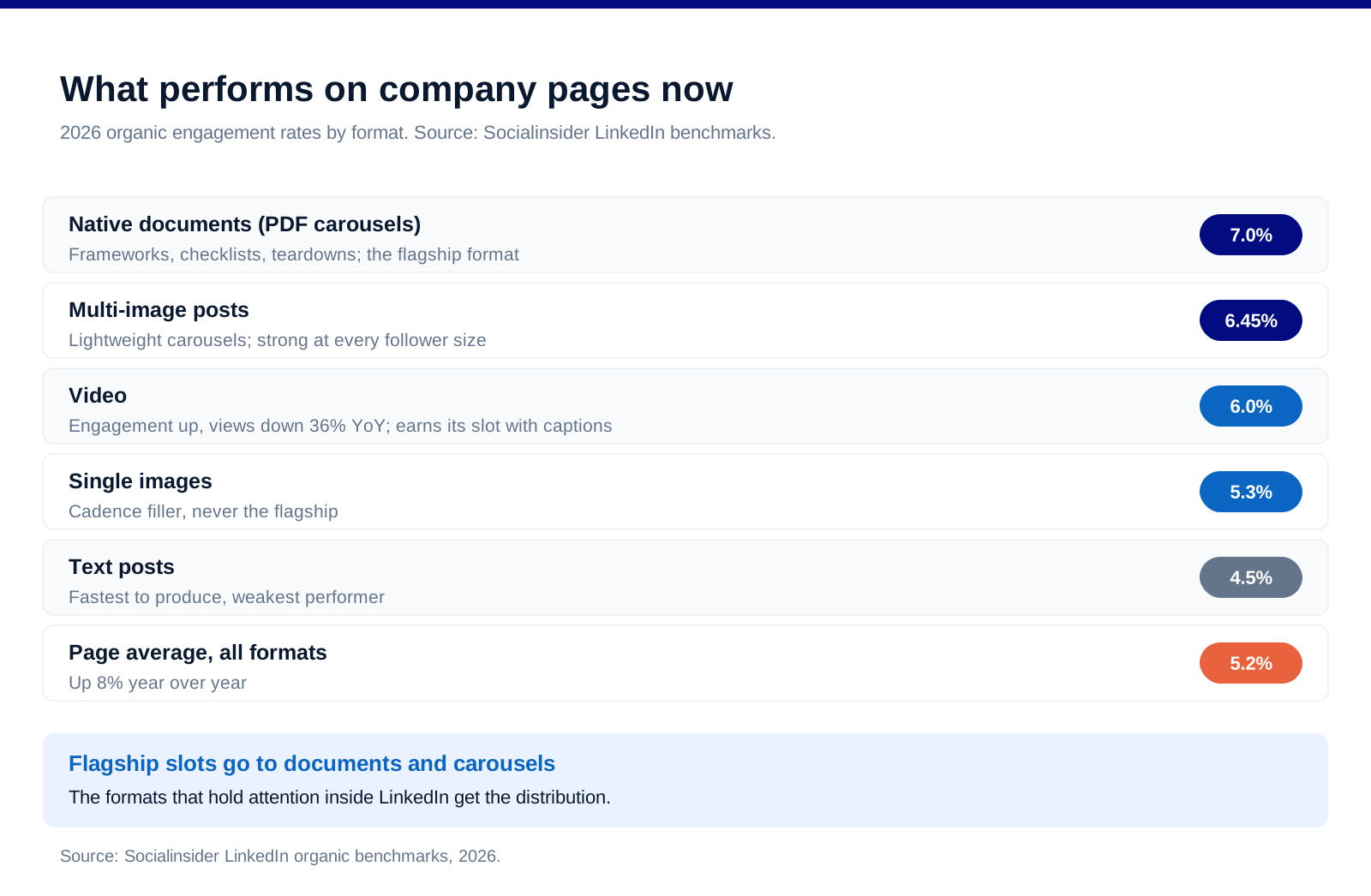
Native documents lead at 7.0%. Frameworks, checklists, teardowns, and report summaries as PDF carousels. This is the flagship format; our carousel strategy guide covers construction.
Multi-image posts at 6.45%. The lighter-weight carousel: before/after shots, event photo sets, chart pairs. Strong across every follower size.
Video at 6.0%, with a catch. Engagement rose while views fell sharply year over year, so video earns its slot with captions and a strong first three seconds, not by default.
Images at 5.3%, text at 4.5%. Still useful for speed and cadence filler, never for the flagship slots. The full format hierarchy, including what changed this year, is in our best LinkedIn content formats breakdown.
Frequency is rising across the board. Benchmark brands now post images ~7x a month, video ~4x, documents ~2x. The bar for staying visible moved up; 3-4 posts a week is the working floor for a page that wants growth.
The weekly operating system
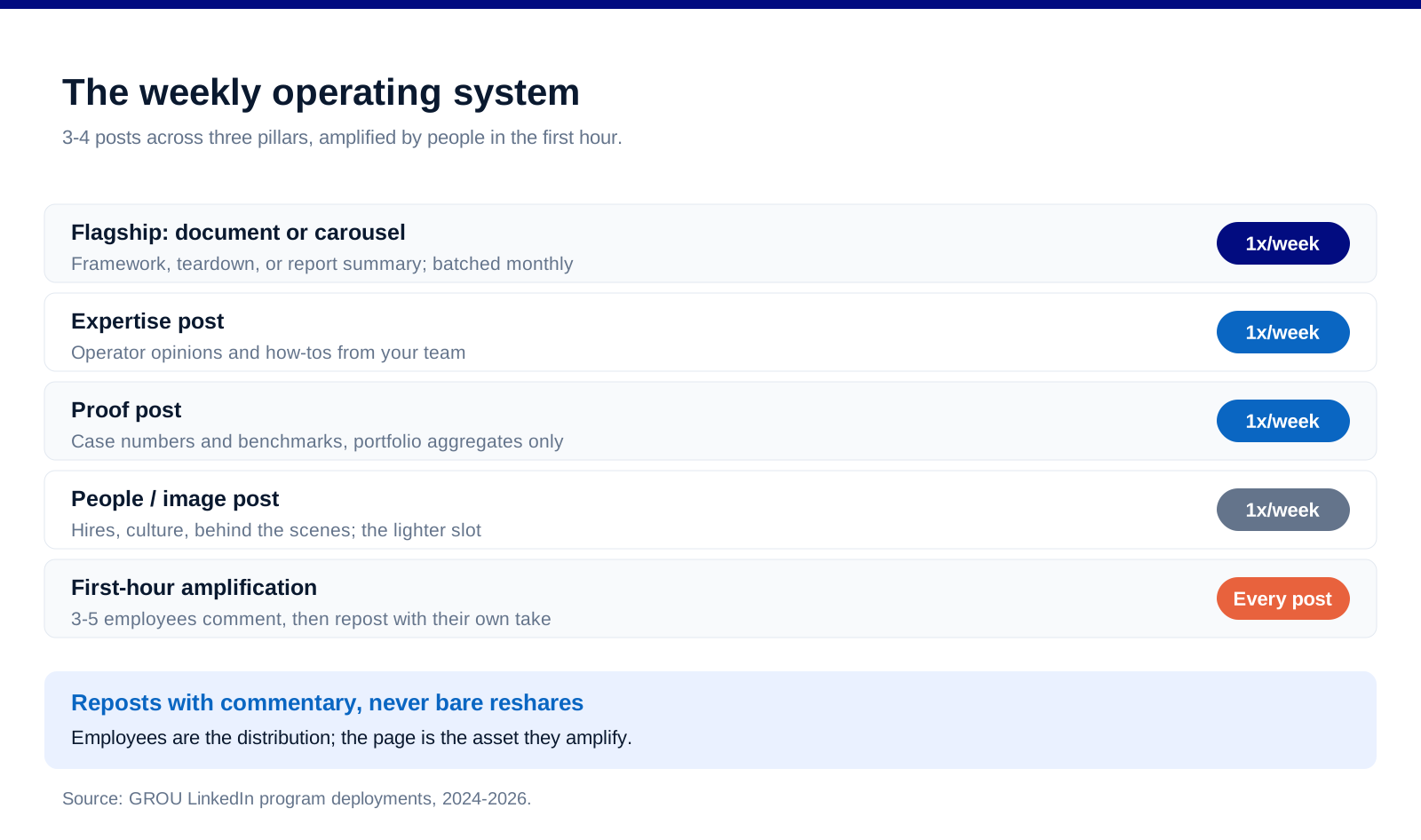
The three-pillar mix. Proof (case study numbers, client outcomes anonymized to portfolio aggregates, benchmark data), expertise (opinions, frameworks, teardowns from your operators), and people (hires, culture, behind-the-scenes). A working week: one document or carousel flagship, one expertise post, one proof post, one lighter people or image post.
The first-hour amplification loop. Page reach alone is small; employees are the distribution. The rule that works: 3-5 team members repost with their own one-to-two-line take (never a bare reshare) within the first hour, and comment before they repost. This is the single highest-leverage habit in page operations.
Division of labor with personal profiles. The page holds proof and publishes the flagship assets; founders and operators carry opinions and conversations on personal profiles, linking back when it is natural. Outreach always runs through people, never the page: connection requests and DMs belong to profiles, per our LinkedIn DM scripts.
Feed the machine from one calendar. Batch the flagship document monthly, derive the smaller posts from it, and schedule through Metricool or SocialBee so cadence survives busy weeks. Algorithm shifts change tactics quarterly; our LinkedIn algorithm changes tracker covers the current state.
Setup, optimization, measurement
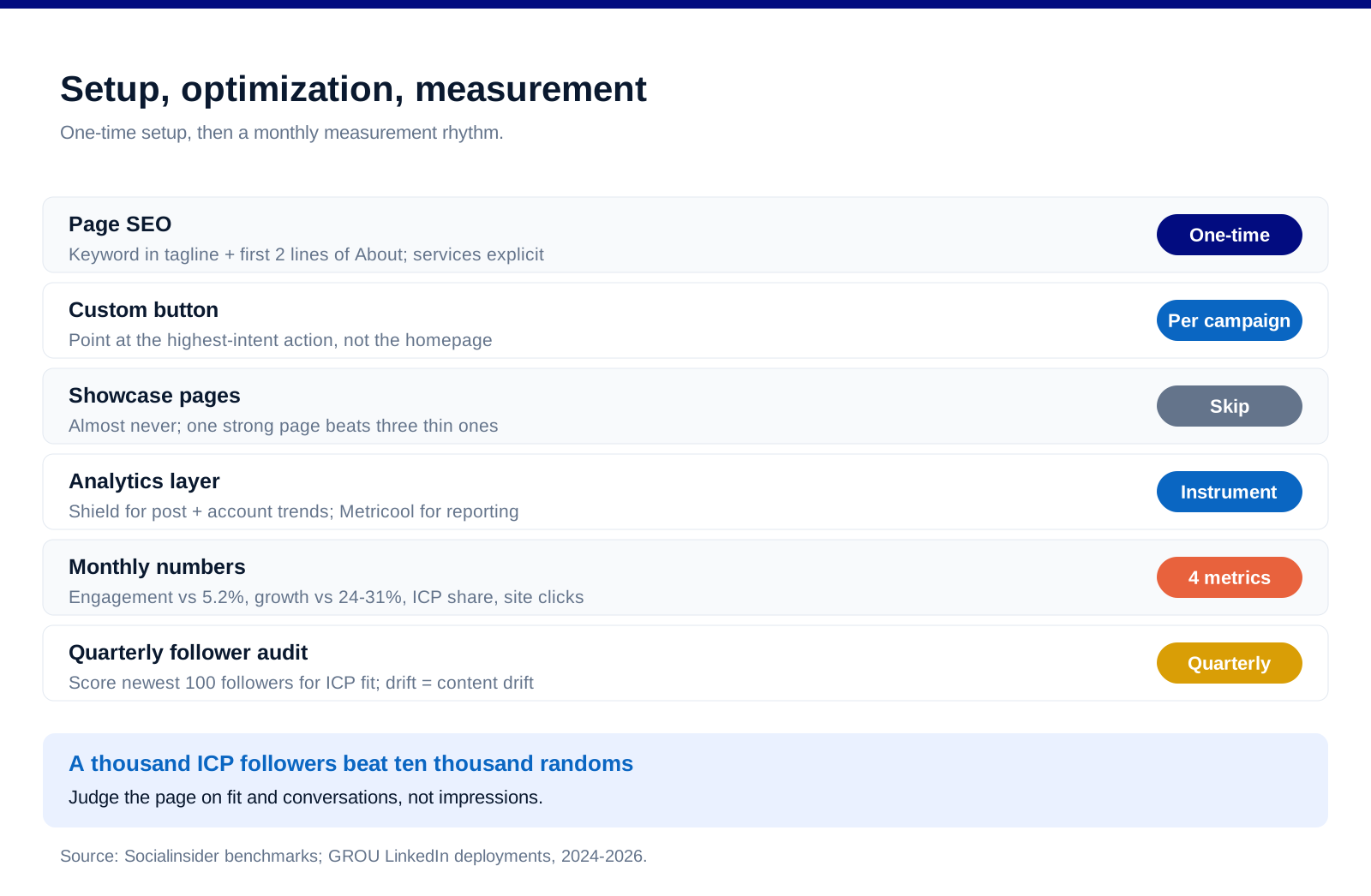
Page SEO in the fields buyers and Google read. Primary keyword in the tagline and the first two lines of About; services listed explicitly; location and industries complete. Company pages rank in Google for "{company} + reviews/alternatives" queries, so the About section is landing-page copy, not boilerplate.
The custom button. Point it at the highest-intent action you have (book a call, not "learn more" to a homepage), and change it when campaigns change.
Showcase pages: almost never. They split followers and posting capacity. One strong page beats three thin ones; the exception is a genuinely separate audience with its own content stream.
Instrument before you judge. Native page analytics are shallow; Shield tracks post-level and account-level performance over time, and Metricool consolidates page reporting alongside other channels. Watch four numbers monthly: engagement rate against the 5.2% benchmark, follower growth against the 24-31% small-page band, share of new followers matching ICP, and profile-visit-to-website clicks.
The follower quality audit. A thousand ICP followers beat ten thousand randoms: quarterly, sample the newest hundred followers and score ICP fit. If fit is dropping, the content mix has drifted toward generic engagement bait.
FAQ
How often should a company page post on LinkedIn?
Three to four posts a week is the working floor in 2026: one flagship document or carousel, one expertise post, one proof post, and one lighter slot. Benchmark brands raised frequency across every format this year, and pages posting weekly or less struggle to grow at all.
What content works best on LinkedIn company pages?
Native documents lead at 7.0% engagement, multi-image posts follow at 6.45%, then video at 6.0%, images at 5.3%, and text at 4.5%. Flagship slots go to documents and carousels; text and single images fill cadence between them.
What is a good engagement rate for a LinkedIn company page?
The 2026 cross-industry average is about 5.2%, so treat that as par and format mix as the lever: pages leaning on documents and multi-image posts routinely clear it, while text-heavy pages sit under 5%.
How do you grow LinkedIn company page followers?
Small pages (1-10k) grow 24-31% a year at benchmark: consistent cadence, employee amplification with commentary in the first hour, flagship documents worth following for, and personal profiles routing their audiences to the page. Paid follower campaigns buy volume but rarely ICP fit.
Should employees share company page posts?
Yes, and how they do it matters: a repost with their own one-to-two-line take dramatically outperforms a bare reshare, and early engagement in the first hour lifts the post's distribution. Three to five consistent amplifiers beat a hundred passive ones.
Company page or personal profile: which should B2B focus on?
Both, with different jobs: the page holds proof and flagship assets and converts diligence visits; personal profiles carry opinions, conversations, and all outreach. The full trade-off analysis is in our page vs profile comparison.
Bottom line
A LinkedIn company page in 2026 earns its keep as a proof asset and a distribution node: documents and carousels in the flagship slots, 3-4 posts a week across proof, expertise, and people, employees amplifying with commentary inside the first hour, and measurement on ICP follower quality rather than impressions. Set it up once, run the weekly system, and let the compounding do the rest.
Want the page, the personal profiles, and the content engine run as one system? Book a call with GROU. We run LinkedIn content programs inside B2B revenue engines across verticals.
We are GROU, a B2B pipeline agency that runs lead generation, outbound, and LinkedIn content for clients across manufacturing, fintech, iGaming, software, and professional services. The cadence and amplification patterns reflect our LinkedIn program deployments between 2024 and 2026, anonymized to protect client confidentiality.
Some links in this article are affiliate. We may earn a small commission at no extra cost to you. We only recommend tools we've deployed for clients.
A B2B company page has two jobs in 2026: convert the diligence visit (every serious buyer checks the page before the first call) and feed the distribution machine that actually reaches people, which is employees resharing with commentary. Treated as a corporate noticeboard it does neither; run as a system it compounds. This playbook covers what performs on pages now, the weekly operating cadence, and the setup and measurement layer.
The strategic split between page and personal profiles is covered in our LinkedIn page vs profile comparison; this is the how-to for the page itself.
TL;DR
Company page engagement is up, and the format hierarchy is clear: Socialinsider's 2026 LinkedIn benchmarks put native documents at 7.0% engagement, multi-image posts at 6.45%, and video at 6.0%, against 4.5% for plain text, with overall page engagement averaging 5.2% and small pages (1-10k followers) growing 24-31% a year. The operating system: 3-4 posts a week mixing proof, expertise, and people content, documents and carousels carrying the flagship slots, every post reshared by 3-5 employees with their own commentary within the first hour, and personal profiles doing the outbound-facing work the page cannot. Instrument it with Shield for analytics and Metricool for scheduling and reporting, and judge the page on profile visits, followers who match ICP, and inbound conversations, not raw impressions.
What performs on company pages now
The page algorithm rewards formats that hold attention inside LinkedIn, and the benchmark data is unambiguous.
Native documents lead at 7.0%. Frameworks, checklists, teardowns, and report summaries as PDF carousels. This is the flagship format; our carousel strategy guide covers construction.
Multi-image posts at 6.45%. The lighter-weight carousel: before/after shots, event photo sets, chart pairs. Strong across every follower size.
Video at 6.0%, with a catch. Engagement rose while views fell sharply year over year, so video earns its slot with captions and a strong first three seconds, not by default.
Images at 5.3%, text at 4.5%. Still useful for speed and cadence filler, never for the flagship slots. The full format hierarchy, including what changed this year, is in our best LinkedIn content formats breakdown.
Frequency is rising across the board. Benchmark brands now post images ~7x a month, video ~4x, documents ~2x. The bar for staying visible moved up; 3-4 posts a week is the working floor for a page that wants growth.
The weekly operating system
The three-pillar mix. Proof (case study numbers, client outcomes anonymized to portfolio aggregates, benchmark data), expertise (opinions, frameworks, teardowns from your operators), and people (hires, culture, behind-the-scenes). A working week: one document or carousel flagship, one expertise post, one proof post, one lighter people or image post.
The first-hour amplification loop. Page reach alone is small; employees are the distribution. The rule that works: 3-5 team members repost with their own one-to-two-line take (never a bare reshare) within the first hour, and comment before they repost. This is the single highest-leverage habit in page operations.
Division of labor with personal profiles. The page holds proof and publishes the flagship assets; founders and operators carry opinions and conversations on personal profiles, linking back when it is natural. Outreach always runs through people, never the page: connection requests and DMs belong to profiles, per our LinkedIn DM scripts.
Feed the machine from one calendar. Batch the flagship document monthly, derive the smaller posts from it, and schedule through Metricool or SocialBee so cadence survives busy weeks. Algorithm shifts change tactics quarterly; our LinkedIn algorithm changes tracker covers the current state.
Setup, optimization, measurement
Page SEO in the fields buyers and Google read. Primary keyword in the tagline and the first two lines of About; services listed explicitly; location and industries complete. Company pages rank in Google for "{company} + reviews/alternatives" queries, so the About section is landing-page copy, not boilerplate.
The custom button. Point it at the highest-intent action you have (book a call, not "learn more" to a homepage), and change it when campaigns change.
Showcase pages: almost never. They split followers and posting capacity. One strong page beats three thin ones; the exception is a genuinely separate audience with its own content stream.
Instrument before you judge. Native page analytics are shallow; Shield tracks post-level and account-level performance over time, and Metricool consolidates page reporting alongside other channels. Watch four numbers monthly: engagement rate against the 5.2% benchmark, follower growth against the 24-31% small-page band, share of new followers matching ICP, and profile-visit-to-website clicks.
The follower quality audit. A thousand ICP followers beat ten thousand randoms: quarterly, sample the newest hundred followers and score ICP fit. If fit is dropping, the content mix has drifted toward generic engagement bait.
FAQ
How often should a company page post on LinkedIn?
Three to four posts a week is the working floor in 2026: one flagship document or carousel, one expertise post, one proof post, and one lighter slot. Benchmark brands raised frequency across every format this year, and pages posting weekly or less struggle to grow at all.
What content works best on LinkedIn company pages?
Native documents lead at 7.0% engagement, multi-image posts follow at 6.45%, then video at 6.0%, images at 5.3%, and text at 4.5%. Flagship slots go to documents and carousels; text and single images fill cadence between them.
What is a good engagement rate for a LinkedIn company page?
The 2026 cross-industry average is about 5.2%, so treat that as par and format mix as the lever: pages leaning on documents and multi-image posts routinely clear it, while text-heavy pages sit under 5%.
How do you grow LinkedIn company page followers?
Small pages (1-10k) grow 24-31% a year at benchmark: consistent cadence, employee amplification with commentary in the first hour, flagship documents worth following for, and personal profiles routing their audiences to the page. Paid follower campaigns buy volume but rarely ICP fit.
Should employees share company page posts?
Yes, and how they do it matters: a repost with their own one-to-two-line take dramatically outperforms a bare reshare, and early engagement in the first hour lifts the post's distribution. Three to five consistent amplifiers beat a hundred passive ones.
Company page or personal profile: which should B2B focus on?
Both, with different jobs: the page holds proof and flagship assets and converts diligence visits; personal profiles carry opinions, conversations, and all outreach. The full trade-off analysis is in our page vs profile comparison.
Bottom line
A LinkedIn company page in 2026 earns its keep as a proof asset and a distribution node: documents and carousels in the flagship slots, 3-4 posts a week across proof, expertise, and people, employees amplifying with commentary inside the first hour, and measurement on ICP follower quality rather than impressions. Set it up once, run the weekly system, and let the compounding do the rest.
Want the page, the personal profiles, and the content engine run as one system? Book a call with GROU. We run LinkedIn content programs inside B2B revenue engines across verticals.
We are GROU, a B2B pipeline agency that runs lead generation, outbound, and LinkedIn content for clients across manufacturing, fintech, iGaming, software, and professional services. The cadence and amplification patterns reflect our LinkedIn program deployments between 2024 and 2026, anonymized to protect client confidentiality.
Some links in this article are affiliate. We may earn a small commission at no extra cost to you. We only recommend tools we've deployed for clients.
A B2B company page has two jobs in 2026: convert the diligence visit (every serious buyer checks the page before the first call) and feed the distribution machine that actually reaches people, which is employees resharing with commentary. Treated as a corporate noticeboard it does neither; run as a system it compounds. This playbook covers what performs on pages now, the weekly operating cadence, and the setup and measurement layer.
The strategic split between page and personal profiles is covered in our LinkedIn page vs profile comparison; this is the how-to for the page itself.
TL;DR
Company page engagement is up, and the format hierarchy is clear: Socialinsider's 2026 LinkedIn benchmarks put native documents at 7.0% engagement, multi-image posts at 6.45%, and video at 6.0%, against 4.5% for plain text, with overall page engagement averaging 5.2% and small pages (1-10k followers) growing 24-31% a year. The operating system: 3-4 posts a week mixing proof, expertise, and people content, documents and carousels carrying the flagship slots, every post reshared by 3-5 employees with their own commentary within the first hour, and personal profiles doing the outbound-facing work the page cannot. Instrument it with Shield for analytics and Metricool for scheduling and reporting, and judge the page on profile visits, followers who match ICP, and inbound conversations, not raw impressions.
What performs on company pages now
The page algorithm rewards formats that hold attention inside LinkedIn, and the benchmark data is unambiguous.
Native documents lead at 7.0%. Frameworks, checklists, teardowns, and report summaries as PDF carousels. This is the flagship format; our carousel strategy guide covers construction.
Multi-image posts at 6.45%. The lighter-weight carousel: before/after shots, event photo sets, chart pairs. Strong across every follower size.
Video at 6.0%, with a catch. Engagement rose while views fell sharply year over year, so video earns its slot with captions and a strong first three seconds, not by default.
Images at 5.3%, text at 4.5%. Still useful for speed and cadence filler, never for the flagship slots. The full format hierarchy, including what changed this year, is in our best LinkedIn content formats breakdown.
Frequency is rising across the board. Benchmark brands now post images ~7x a month, video ~4x, documents ~2x. The bar for staying visible moved up; 3-4 posts a week is the working floor for a page that wants growth.
The weekly operating system
The three-pillar mix. Proof (case study numbers, client outcomes anonymized to portfolio aggregates, benchmark data), expertise (opinions, frameworks, teardowns from your operators), and people (hires, culture, behind-the-scenes). A working week: one document or carousel flagship, one expertise post, one proof post, one lighter people or image post.
The first-hour amplification loop. Page reach alone is small; employees are the distribution. The rule that works: 3-5 team members repost with their own one-to-two-line take (never a bare reshare) within the first hour, and comment before they repost. This is the single highest-leverage habit in page operations.
Division of labor with personal profiles. The page holds proof and publishes the flagship assets; founders and operators carry opinions and conversations on personal profiles, linking back when it is natural. Outreach always runs through people, never the page: connection requests and DMs belong to profiles, per our LinkedIn DM scripts.
Feed the machine from one calendar. Batch the flagship document monthly, derive the smaller posts from it, and schedule through Metricool or SocialBee so cadence survives busy weeks. Algorithm shifts change tactics quarterly; our LinkedIn algorithm changes tracker covers the current state.
Setup, optimization, measurement
Page SEO in the fields buyers and Google read. Primary keyword in the tagline and the first two lines of About; services listed explicitly; location and industries complete. Company pages rank in Google for "{company} + reviews/alternatives" queries, so the About section is landing-page copy, not boilerplate.
The custom button. Point it at the highest-intent action you have (book a call, not "learn more" to a homepage), and change it when campaigns change.
Showcase pages: almost never. They split followers and posting capacity. One strong page beats three thin ones; the exception is a genuinely separate audience with its own content stream.
Instrument before you judge. Native page analytics are shallow; Shield tracks post-level and account-level performance over time, and Metricool consolidates page reporting alongside other channels. Watch four numbers monthly: engagement rate against the 5.2% benchmark, follower growth against the 24-31% small-page band, share of new followers matching ICP, and profile-visit-to-website clicks.
The follower quality audit. A thousand ICP followers beat ten thousand randoms: quarterly, sample the newest hundred followers and score ICP fit. If fit is dropping, the content mix has drifted toward generic engagement bait.
FAQ
How often should a company page post on LinkedIn?
Three to four posts a week is the working floor in 2026: one flagship document or carousel, one expertise post, one proof post, and one lighter slot. Benchmark brands raised frequency across every format this year, and pages posting weekly or less struggle to grow at all.
What content works best on LinkedIn company pages?
Native documents lead at 7.0% engagement, multi-image posts follow at 6.45%, then video at 6.0%, images at 5.3%, and text at 4.5%. Flagship slots go to documents and carousels; text and single images fill cadence between them.
What is a good engagement rate for a LinkedIn company page?
The 2026 cross-industry average is about 5.2%, so treat that as par and format mix as the lever: pages leaning on documents and multi-image posts routinely clear it, while text-heavy pages sit under 5%.
How do you grow LinkedIn company page followers?
Small pages (1-10k) grow 24-31% a year at benchmark: consistent cadence, employee amplification with commentary in the first hour, flagship documents worth following for, and personal profiles routing their audiences to the page. Paid follower campaigns buy volume but rarely ICP fit.
Should employees share company page posts?
Yes, and how they do it matters: a repost with their own one-to-two-line take dramatically outperforms a bare reshare, and early engagement in the first hour lifts the post's distribution. Three to five consistent amplifiers beat a hundred passive ones.
Company page or personal profile: which should B2B focus on?
Both, with different jobs: the page holds proof and flagship assets and converts diligence visits; personal profiles carry opinions, conversations, and all outreach. The full trade-off analysis is in our page vs profile comparison.
Bottom line
A LinkedIn company page in 2026 earns its keep as a proof asset and a distribution node: documents and carousels in the flagship slots, 3-4 posts a week across proof, expertise, and people, employees amplifying with commentary inside the first hour, and measurement on ICP follower quality rather than impressions. Set it up once, run the weekly system, and let the compounding do the rest.
Want the page, the personal profiles, and the content engine run as one system? Book a call with GROU. We run LinkedIn content programs inside B2B revenue engines across verticals.
We are GROU, a B2B pipeline agency that runs lead generation, outbound, and LinkedIn content for clients across manufacturing, fintech, iGaming, software, and professional services. The cadence and amplification patterns reflect our LinkedIn program deployments between 2024 and 2026, anonymized to protect client confidentiality.
Some links in this article are affiliate. We may earn a small commission at no extra cost to you. We only recommend tools we've deployed for clients.
Pipeline OS Newsletter
Build qualified pipeline
Get weekly tactics to generate demand, improve lead quality, and book more meetings.







Trusted by industry leaders
Trusted by industry leaders
Trusted by industry leaders
Ready to build qualified pipeline?
Ready to build qualified pipeline?
Ready to build qualified pipeline?
Book a call to see if we're the right fit, or take the 2-minute quiz to get a clear starting point.
Book a call to see if we're the right fit, or take the 2-minute quiz to get a clear starting point.
Book a call to see if we're the right fit, or take the 2-minute quiz to get a clear starting point.
" height="30.21639343089746px" id="hfGbXmQR2" width="30.216393430897455px"/></svg>)
Copyright © 2026 – All Right Reserved
Copyright © 2026 – All Right Reserved
Copyright © 2026 – All Right Reserved