%22%3E%3C/path%3E%3Cpath d=%22M 63.072 7.554 C 62.258 8.022 61.577 8.689 61.092 9.493 L 61.092 7.076 L 57.158 7.076 L 57.158 22.64 L 61.089 22.64 L 61.089 14.888 C 61.089 13.446 61.403 12.434 62.03 11.853 C 62.818 11.218 63.818 10.907 64.826 10.982 L 65.868 10.982 L 65.868 6.851 C 64.891 6.834 63.926 7.076 63.073 7.554 Z%22 fill=%22rgb(17,17,17)%22%3E%3C/path%3E%3Cpath d=%22M 78.916 7.82 C 76.363 6.49 73.321 6.49 70.768 7.82 C 69.562 8.473 68.564 9.451 67.888 10.644 C 67.167 11.931 66.803 13.387 66.834 14.862 C 66.804 16.332 67.157 17.785 67.86 19.077 C 68.515 20.267 69.494 21.246 70.684 21.901 C 71.924 22.576 73.318 22.92 74.73 22.898 C 76.164 22.918 77.58 22.575 78.846 21.901 C 80.062 21.247 81.073 20.27 81.768 19.077 C 82.506 17.797 82.88 16.339 82.85 14.862 C 82.88 13.389 82.517 11.934 81.797 10.647 C 81.12 9.455 80.122 8.477 78.917 7.824 M 78.803 14.862 C 78.829 15.739 78.636 16.608 78.241 17.391 C 77.903 18.046 77.38 18.588 76.738 18.95 C 76.124 19.293 75.432 19.472 74.729 19.47 C 73.668 19.497 72.648 19.061 71.934 18.276 C 71.139 17.323 70.741 16.1 70.823 14.862 C 70.741 13.62 71.149 12.395 71.959 11.45 C 72.687 10.667 73.715 10.233 74.783 10.256 C 75.859 10.236 76.894 10.67 77.635 11.45 C 78.464 12.387 78.884 13.616 78.801 14.864%22 fill=%22rgb(17,17,17)%22%3E%3C/path%3E%3Cpath d=%22M 95.906 7.076 L 95.906 15.646 C 95.975 16.68 95.643 17.701 94.979 18.498 C 94.311 19.184 93.379 19.547 92.422 19.495 C 91.475 19.544 90.553 19.18 89.894 18.498 C 89.23 17.701 88.898 16.68 88.967 15.646 L 88.967 7.076 L 85.033 7.076 L 85.033 16.207 C 85 17.449 85.275 18.68 85.834 19.79 C 86.327 20.75 87.095 21.542 88.039 22.065 C 89.033 22.594 90.145 22.861 91.271 22.838 C 92.188 22.847 93.095 22.65 93.926 22.263 C 94.708 21.905 95.388 21.36 95.906 20.675 L 95.906 22.645 L 99.865 22.645 L 99.865 7.076 Z%22 fill=%22rgb(17,17,17)%22%3E%3C/path%3E%3Cpath d=%22M 4.513 15.626 C 4.511 10.815 7.606 6.549 12.181 5.059 C 16.756 3.57 21.77 5.195 24.601 9.086 L 27.816 5.87 C 24.074 1.186 17.981 -0.943 12.137 0.393 C 6.292 1.728 1.728 6.292 0.393 12.137 C -0.943 17.981 1.186 24.074 5.87 27.816 L 9.085 24.601 C 6.214 22.512 4.515 19.177 4.513 15.626%22 fill=%22rgb(32,62,235)%22%3E%3C/path%3E%3Cpath d=%22M 17.114 14.343 L 13.354 18.01 L 13.354 18.026 L 21.071 18.026 L 11.412 27.609 L 17.389 27.609 L 23.999 21.081 L 23.999 28.316 L 24.005 28.316 L 27.967 24.393 L 27.967 14.343 Z%22 fill=%22rgb(32,62,235)%22%3E%3C/path%3E%3C/g%3E%3C/svg%3E) ×
× ××
××›
›
›
›
ABM tier 1 vs 2 vs 3 explained: account count, spend, and motion by tier
ABM tier 1 vs 2 vs 3 explained: account count, spend, and motion by tier
ABM tier 1 vs 2 vs 3 explained: account count, spend, and motion by tier
ABM tier 1 vs 2 vs 3 explained: account count, spend, and motion by tier
ABM tier 1 vs 2 vs 3 explained: account count, spend, and motion by tier
ABM tier 1 vs 2 vs 3 explained: account count, spend, and motion by tier

Author
Aljaz Peklaj

Account-based marketing in 2026 splits into 3 tiers based on account count, per-account spend, and personalization depth. Tier 1 is 5-50 strategic accounts with custom playbooks. Tier 2 is 50-500 named accounts with persona-led campaigns. Tier 3 is 500-5,000 accounts with programmatic targeting.
After running ABM programs across 9 GROU client B2B SaaS revenue teams over 18 months, this is the operator breakdown: what each tier actually delivers, real spend per account, win rate benchmarks, and the team and tools you need per tier.
TL;DR
Tier 1 (strategic ABM) targets 5-50 named accounts with $50K-$500K spend per account. 1-to-1 custom playbooks, dedicated AE, executive sponsor. Win rate 25-40%. Best for enterprise B2B SaaS with $100K+ ACV.
Tier 2 (named ABM) targets 50-500 accounts with $5K-$25K spend per account. Persona-led campaigns, shared AE coverage, segmented playbooks. Win rate 12-22%. Best for growth-stage B2B SaaS with $25K-$100K ACV.
Tier 3 (programmatic ABM) targets 500-5,000 accounts with $200-$1,500 spend per account. Automated multi-channel campaigns, SDR-led outreach, intent-based prioritization. Win rate 4-8%. Best for SMB/mid-market B2B SaaS with $5K-$25K ACV.
The right tier depends on your ACV and sales motion, not your preference. Most B2B SaaS teams should run a 3-tier portfolio: 70% Tier 3, 25% Tier 2, 5% Tier 1.
The 3 ABM tiers explained
ITSMA's 3-tier ABM framework (now widely adopted) maps account count + spend + personalization depth into 3 distinct motions:
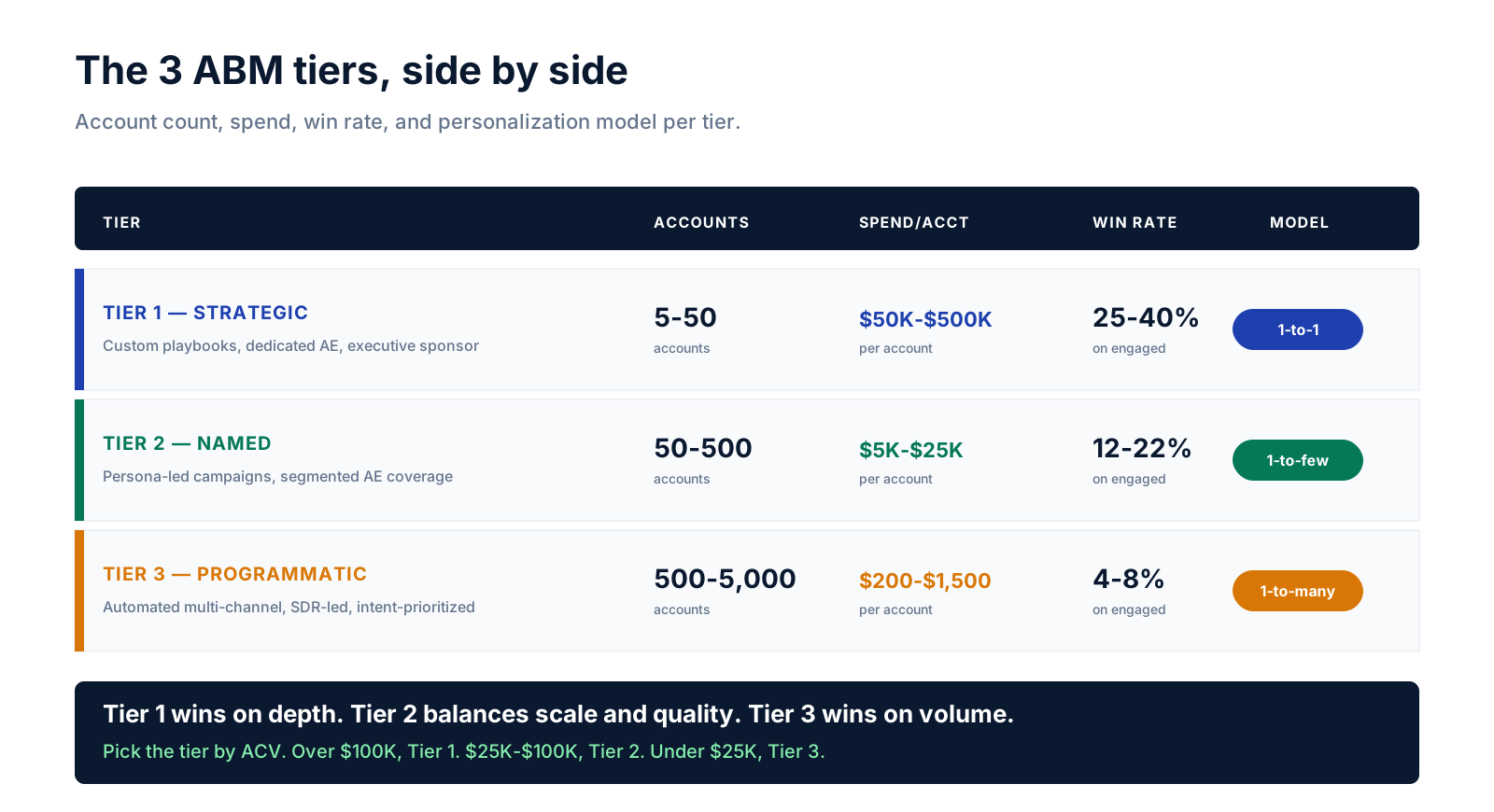
Tier 1 — Strategic ABM (5-50 accounts, $50K-$500K/account) is the deepest ABM motion. Each account gets a custom value proposition, dedicated AE, executive sponsor, and a multi-quarter engagement plan. Marketing builds account-specific content (videos, microsites, custom benchmarks). Sales runs account plans with 3-9 month horizons.
Tier 2 — Named ABM (50-500 accounts, $5K-$25K/account) balances scale and personalization. Accounts are grouped by industry, persona, or buying trigger. Campaigns are segment-personalized (not account-personalized) with persona-led messaging. AEs cover 20-50 accounts each. SDRs run prospecting at the account level.
Tier 3 — Programmatic ABM (500-5,000 accounts, $200-$1,500/account) is the volume motion. Intent data (6sense, Demandbase) prioritizes accounts showing in-market signals. Multi-channel campaigns (display, LinkedIn, email, retargeting) run automated. SDRs handle the highest-scoring accounts. AEs only get involved at MQA (Marketing Qualified Account) stage.
Spend per account and ROI
The economics shift dramatically by tier. Real numbers from 9 GROU client ABM programs:
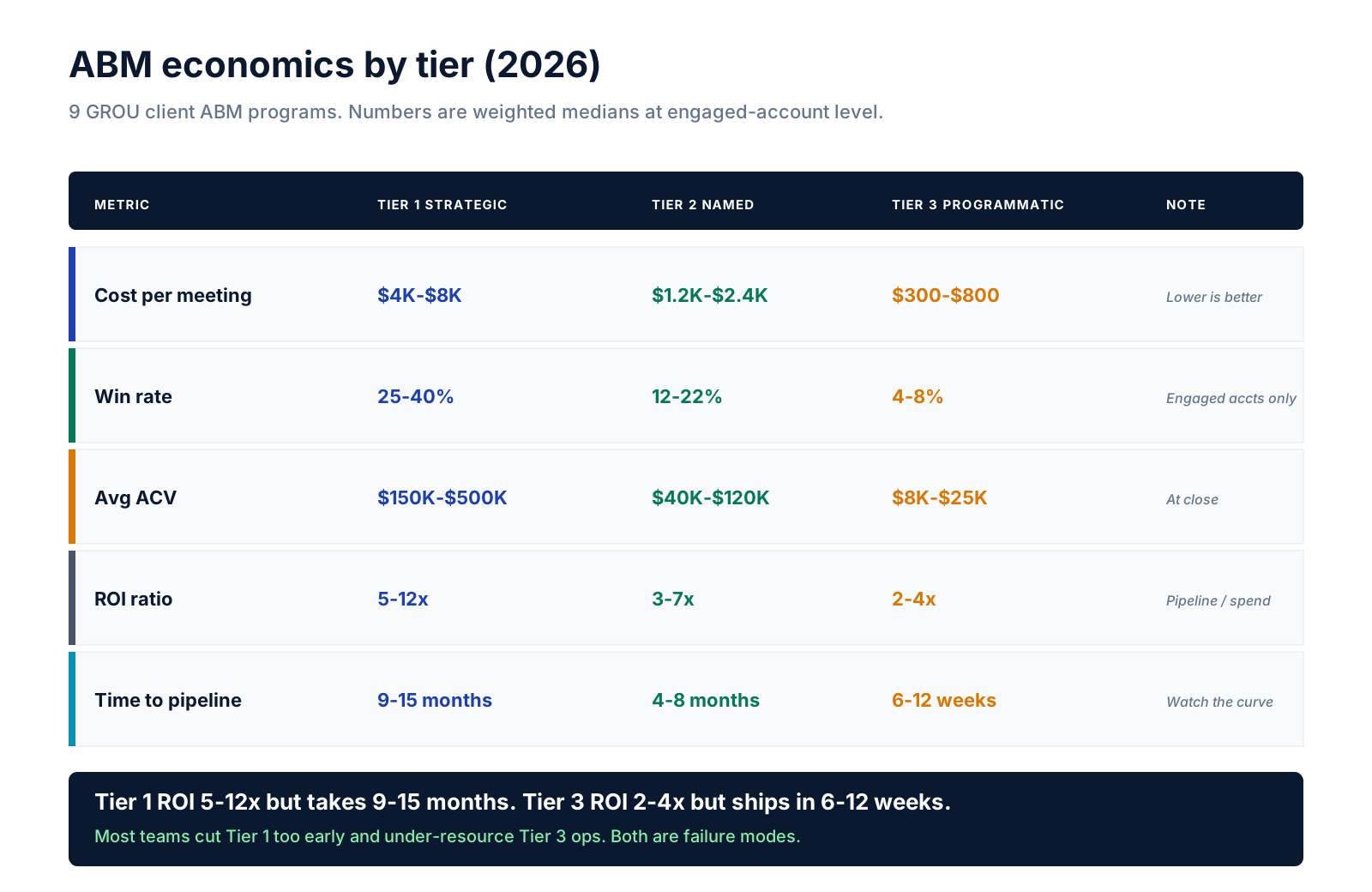
Tier 1 economics: $4,000-$8,000 cost-per-meeting, 25-40% win rate, average ACV $150K-$500K. ROI ratio of 5-12x at the account level when you close. The high meeting cost is justified by enterprise deal sizes.
Tier 2 economics: $1,200-$2,400 cost-per-meeting, 12-22% win rate, average ACV $40K-$120K. ROI ratio of 3-7x. The sweet spot for growth-stage B2B SaaS that needs both volume and quality.
Tier 3 economics: $300-$800 cost-per-meeting, 4-8% win rate, average ACV $8K-$25K. ROI ratio of 2-4x. Volume drives the math. Works only when intent data is strong and pipeline scoring is tight.
The mistake we see across 9 client programs: teams pick a tier based on what they want to run, not what their ACV can support. Tier 1 at $30K ACV is unprofitable. Tier 3 at $200K ACV under-utilizes your motion.
Team and tools by tier
Each tier requires a different team composition and tool stack. Sizing it wrong is the most common ABM failure mode.
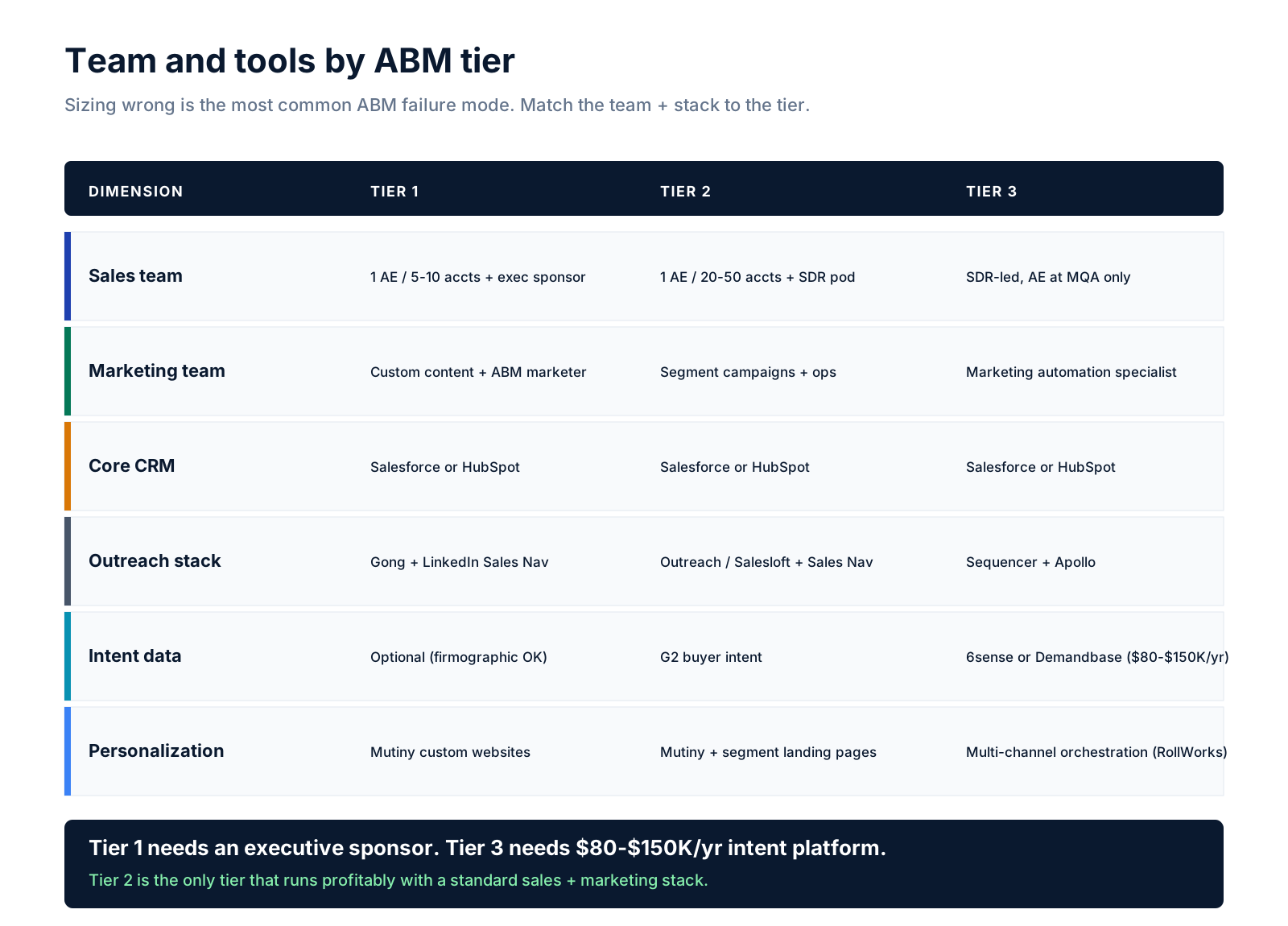
Tier 1 team: 1 AE per 5-10 accounts, executive sponsor (CEO/CRO), marketing partner who builds custom content, customer success early involvement. Tools: CRM (Salesforce/HubSpot), Gong for call analysis, Mutiny for personalized websites, custom analytics.
Tier 2 team: 1 AE per 20-50 accounts, 1 SDR per 100-200 accounts, marketing runs segment campaigns. Tools: CRM, sales engagement (Outreach/Salesloft), LinkedIn Sales Navigator, intent data (G2 buyer intent).
Tier 3 team: SDR-led with 1 SDR per 300-500 accounts, AE only at MQA, marketing automation. Tools: CRM, intent platform (6sense or Demandbase at $80K-$150K/yr), multi-channel orchestration (RollWorks), sequencer for outreach.
The hidden cost most teams miss: intent platform pricing scales with TAM, not account count. 6sense at $80K-$150K/yr is the floor for Tier 3 programs serious about programmatic targeting.
For more on ABM strategy, see our B2B prospecting list-building guide for the data sourcing layer.
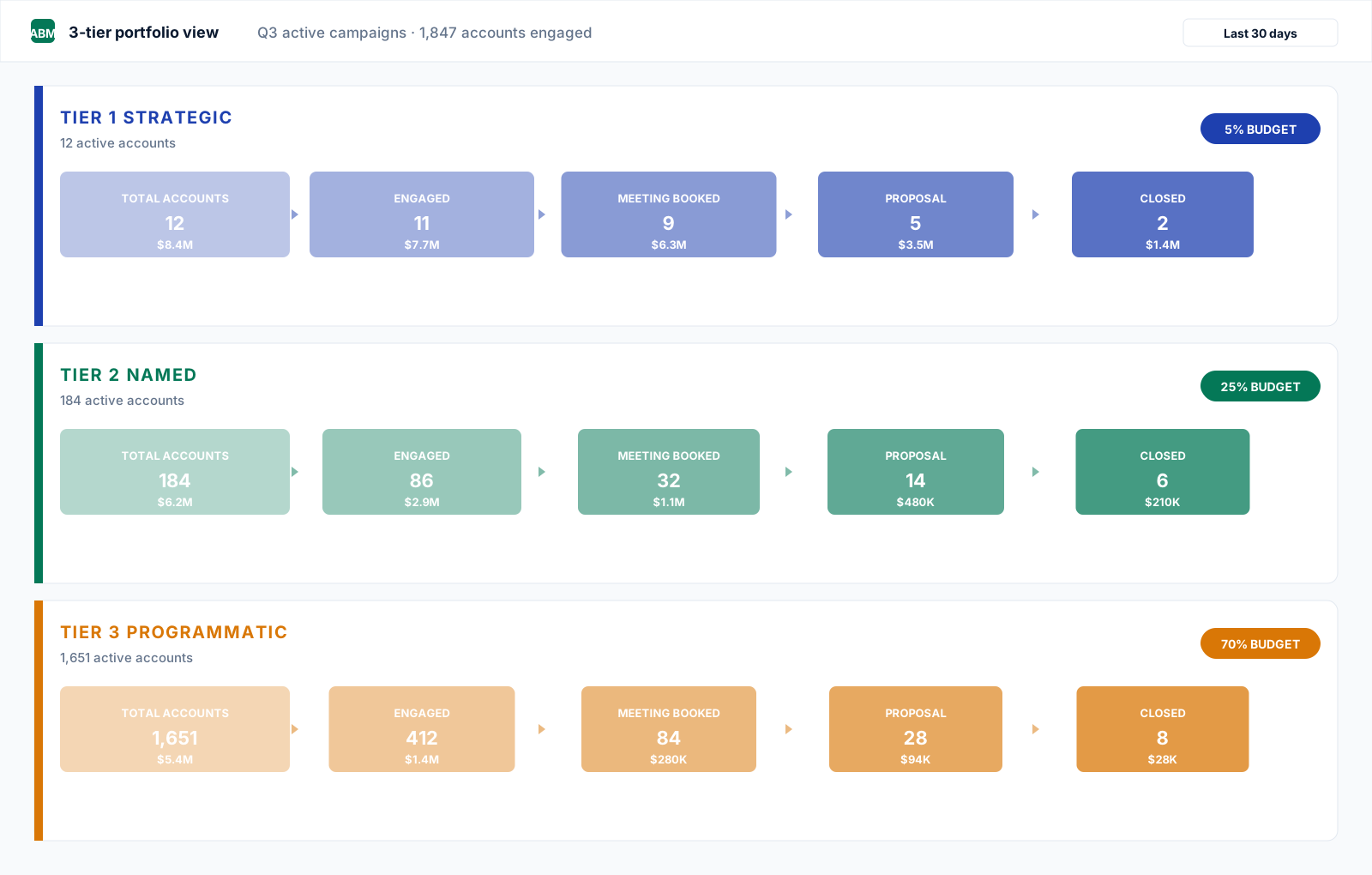
Which tier should you run
The right tier depends on your ACV, sales motion, and team size. The decision matrix from our 9-client work:
Run Tier 1 alone if: your ACV is over $100K, your team is 1-5 AEs targeting enterprise (1,000+ employees), and your sales cycle is 6-18 months. Tier 1 alone makes sense at seed-Series A B2B SaaS targeting enterprise.
Run Tier 2 alone if: your ACV is $25K-$100K, your team is 3-10 AEs targeting mid-market (200-1,000 employees), and your sales cycle is 60-180 days. Tier 2 alone makes sense at $5M-$30M ARR B2B SaaS.
Run Tier 3 alone if: your ACV is $5K-$25K, your team is SDR-heavy (5+ SDRs), and your sales cycle is 30-90 days. Tier 3 alone makes sense at SMB/mid-market B2B SaaS with strong intent data infrastructure.
Run a 3-tier portfolio if: you have a mixed motion serving enterprise + mid-market + SMB segments. Most B2B SaaS teams above $20M ARR run a 70/25/5 split (Tier 3/Tier 2/Tier 1) to balance volume and quality.
The hidden ABM cost most teams miss
The hidden cost is time-to-pipeline by tier. Tier 1 programs take 9-15 months to deliver meaningful pipeline. Tier 2 takes 4-8 months. Tier 3 takes 6-12 weeks.
Most B2B teams over-commit to Tier 1 expecting fast pipeline and cut programs at month 6 before they mature. Worse, they then under-resource Tier 3 thinking it should run on autopilot — it requires the most operational discipline of any tier.
The fix: budget realistic time-to-pipeline by tier and protect the program runway. Tier 1 needs 12+ months of executive sponsorship. Tier 3 needs strict SLA enforcement and weekly pipeline reviews.
FAQ
What is the difference between ABM tier 1, 2, and 3?
Tier 1 (strategic) targets 5-50 named accounts with $50K-$500K spend per account and custom playbooks. Tier 2 (named) targets 50-500 accounts with $5K-$25K spend and persona-led campaigns. Tier 3 (programmatic) targets 500-5,000 accounts with $200-$1,500 spend and automated multi-channel campaigns.
What is the right ABM tier for B2B SaaS?
Depends on your ACV. Over $100K ACV: Tier 1. $25K-$100K ACV: Tier 2. $5K-$25K ACV: Tier 3. Most B2B SaaS teams above $20M ARR run a 3-tier portfolio at 70% Tier 3, 25% Tier 2, 5% Tier 1.
How much should I spend per account in ABM?
Tier 1: $50K-$500K per account (custom content, executive engagement, multi-quarter plans). Tier 2: $5K-$25K per account (persona campaigns, AE coverage, segment content). Tier 3: $200-$1,500 per account (programmatic targeting, intent-based prioritization, SDR outreach).
What is the ABM win rate by tier?
Tier 1: 25-40% win rate on engaged accounts. Tier 2: 12-22%. Tier 3: 4-8%. Volume offsets lower win rates at Tier 3. Pipeline math beats win rate math at the program level.
How long does ABM take to show results?
Tier 1: 9-15 months to meaningful pipeline (long enterprise cycles + multi-quarter plans). Tier 2: 4-8 months. Tier 3: 6-12 weeks. Most teams cut Tier 1 programs at month 6 before they mature, which is the biggest ABM failure mode.
Do I need intent data for ABM?
For Tier 3, yes. 6sense at $80K-$150K/yr or Demandbase at similar pricing is the floor for programmatic ABM. For Tier 1 and Tier 2, intent data helps but is not required (account selection can rely on firmographic + persona research).
What is the cheapest ABM tier to start with?
Tier 1 with 5-10 accounts. Counter-intuitive, but Tier 1 requires the least tool investment (you can run it with CRM + Gong + LinkedIn). Tier 3 requires $80K-$150K in intent platform spend before you ship a single campaign. Most B2B SaaS startups should start with Tier 1, then expand to Tier 2/3 at $10M ARR.
How do you measure ABM ROI?
Pipeline-influenced revenue at the account level, win rate by tier, cost-per-meeting, cost-per-MQA (Marketing Qualified Account), and time-to-close vs non-ABM baseline. Reporting at the account level (not the lead level) is non-negotiable for ABM.
Bottom line
ABM in 2026 splits into 3 tiers: strategic (5-50 accounts, $50K-$500K/account), named (50-500 accounts, $5K-$25K/account), and programmatic (500-5,000 accounts, $200-$1,500/account). The right tier depends on your ACV, sales motion, and team size.
For most B2B SaaS marketing teams above $20M ARR, run a 3-tier portfolio at 70% Tier 3, 25% Tier 2, 5% Tier 1. For smaller teams, pick the single tier that matches your ACV and sales cycle.
Need help building an ABM program that matches your motion? Book a call with GROU. We have run ABM programs across 9 B2B SaaS clients from SMB to enterprise scale at every tier.
GROU is a B2B outbound and revenue operations agency. We have built and run ABM programs for 9 active GROU client B2B SaaS revenue teams at SMB through enterprise scale across all 3 tiers. Benchmarks above are weighted averages from 18 months of program data, cross-checked against ITSMA and Gartner public benchmarks, anonymized to protect client confidentiality.
This article does not promote specific tools. We do not earn affiliate revenue on ABM strategy content. Some other articles on this blog include affiliate links to tools we run in production.
Account-based marketing in 2026 splits into 3 tiers based on account count, per-account spend, and personalization depth. Tier 1 is 5-50 strategic accounts with custom playbooks. Tier 2 is 50-500 named accounts with persona-led campaigns. Tier 3 is 500-5,000 accounts with programmatic targeting.
After running ABM programs across 9 GROU client B2B SaaS revenue teams over 18 months, this is the operator breakdown: what each tier actually delivers, real spend per account, win rate benchmarks, and the team and tools you need per tier.
TL;DR
Tier 1 (strategic ABM) targets 5-50 named accounts with $50K-$500K spend per account. 1-to-1 custom playbooks, dedicated AE, executive sponsor. Win rate 25-40%. Best for enterprise B2B SaaS with $100K+ ACV.
Tier 2 (named ABM) targets 50-500 accounts with $5K-$25K spend per account. Persona-led campaigns, shared AE coverage, segmented playbooks. Win rate 12-22%. Best for growth-stage B2B SaaS with $25K-$100K ACV.
Tier 3 (programmatic ABM) targets 500-5,000 accounts with $200-$1,500 spend per account. Automated multi-channel campaigns, SDR-led outreach, intent-based prioritization. Win rate 4-8%. Best for SMB/mid-market B2B SaaS with $5K-$25K ACV.
The right tier depends on your ACV and sales motion, not your preference. Most B2B SaaS teams should run a 3-tier portfolio: 70% Tier 3, 25% Tier 2, 5% Tier 1.
The 3 ABM tiers explained
ITSMA's 3-tier ABM framework (now widely adopted) maps account count + spend + personalization depth into 3 distinct motions:
Tier 1 — Strategic ABM (5-50 accounts, $50K-$500K/account) is the deepest ABM motion. Each account gets a custom value proposition, dedicated AE, executive sponsor, and a multi-quarter engagement plan. Marketing builds account-specific content (videos, microsites, custom benchmarks). Sales runs account plans with 3-9 month horizons.
Tier 2 — Named ABM (50-500 accounts, $5K-$25K/account) balances scale and personalization. Accounts are grouped by industry, persona, or buying trigger. Campaigns are segment-personalized (not account-personalized) with persona-led messaging. AEs cover 20-50 accounts each. SDRs run prospecting at the account level.
Tier 3 — Programmatic ABM (500-5,000 accounts, $200-$1,500/account) is the volume motion. Intent data (6sense, Demandbase) prioritizes accounts showing in-market signals. Multi-channel campaigns (display, LinkedIn, email, retargeting) run automated. SDRs handle the highest-scoring accounts. AEs only get involved at MQA (Marketing Qualified Account) stage.
Spend per account and ROI
The economics shift dramatically by tier. Real numbers from 9 GROU client ABM programs:
Tier 1 economics: $4,000-$8,000 cost-per-meeting, 25-40% win rate, average ACV $150K-$500K. ROI ratio of 5-12x at the account level when you close. The high meeting cost is justified by enterprise deal sizes.
Tier 2 economics: $1,200-$2,400 cost-per-meeting, 12-22% win rate, average ACV $40K-$120K. ROI ratio of 3-7x. The sweet spot for growth-stage B2B SaaS that needs both volume and quality.
Tier 3 economics: $300-$800 cost-per-meeting, 4-8% win rate, average ACV $8K-$25K. ROI ratio of 2-4x. Volume drives the math. Works only when intent data is strong and pipeline scoring is tight.
The mistake we see across 9 client programs: teams pick a tier based on what they want to run, not what their ACV can support. Tier 1 at $30K ACV is unprofitable. Tier 3 at $200K ACV under-utilizes your motion.
Team and tools by tier
Each tier requires a different team composition and tool stack. Sizing it wrong is the most common ABM failure mode.
Tier 1 team: 1 AE per 5-10 accounts, executive sponsor (CEO/CRO), marketing partner who builds custom content, customer success early involvement. Tools: CRM (Salesforce/HubSpot), Gong for call analysis, Mutiny for personalized websites, custom analytics.
Tier 2 team: 1 AE per 20-50 accounts, 1 SDR per 100-200 accounts, marketing runs segment campaigns. Tools: CRM, sales engagement (Outreach/Salesloft), LinkedIn Sales Navigator, intent data (G2 buyer intent).
Tier 3 team: SDR-led with 1 SDR per 300-500 accounts, AE only at MQA, marketing automation. Tools: CRM, intent platform (6sense or Demandbase at $80K-$150K/yr), multi-channel orchestration (RollWorks), sequencer for outreach.
The hidden cost most teams miss: intent platform pricing scales with TAM, not account count. 6sense at $80K-$150K/yr is the floor for Tier 3 programs serious about programmatic targeting.
For more on ABM strategy, see our B2B prospecting list-building guide for the data sourcing layer.
Which tier should you run
The right tier depends on your ACV, sales motion, and team size. The decision matrix from our 9-client work:
Run Tier 1 alone if: your ACV is over $100K, your team is 1-5 AEs targeting enterprise (1,000+ employees), and your sales cycle is 6-18 months. Tier 1 alone makes sense at seed-Series A B2B SaaS targeting enterprise.
Run Tier 2 alone if: your ACV is $25K-$100K, your team is 3-10 AEs targeting mid-market (200-1,000 employees), and your sales cycle is 60-180 days. Tier 2 alone makes sense at $5M-$30M ARR B2B SaaS.
Run Tier 3 alone if: your ACV is $5K-$25K, your team is SDR-heavy (5+ SDRs), and your sales cycle is 30-90 days. Tier 3 alone makes sense at SMB/mid-market B2B SaaS with strong intent data infrastructure.
Run a 3-tier portfolio if: you have a mixed motion serving enterprise + mid-market + SMB segments. Most B2B SaaS teams above $20M ARR run a 70/25/5 split (Tier 3/Tier 2/Tier 1) to balance volume and quality.
The hidden ABM cost most teams miss
The hidden cost is time-to-pipeline by tier. Tier 1 programs take 9-15 months to deliver meaningful pipeline. Tier 2 takes 4-8 months. Tier 3 takes 6-12 weeks.
Most B2B teams over-commit to Tier 1 expecting fast pipeline and cut programs at month 6 before they mature. Worse, they then under-resource Tier 3 thinking it should run on autopilot — it requires the most operational discipline of any tier.
The fix: budget realistic time-to-pipeline by tier and protect the program runway. Tier 1 needs 12+ months of executive sponsorship. Tier 3 needs strict SLA enforcement and weekly pipeline reviews.
FAQ
What is the difference between ABM tier 1, 2, and 3?
Tier 1 (strategic) targets 5-50 named accounts with $50K-$500K spend per account and custom playbooks. Tier 2 (named) targets 50-500 accounts with $5K-$25K spend and persona-led campaigns. Tier 3 (programmatic) targets 500-5,000 accounts with $200-$1,500 spend and automated multi-channel campaigns.
What is the right ABM tier for B2B SaaS?
Depends on your ACV. Over $100K ACV: Tier 1. $25K-$100K ACV: Tier 2. $5K-$25K ACV: Tier 3. Most B2B SaaS teams above $20M ARR run a 3-tier portfolio at 70% Tier 3, 25% Tier 2, 5% Tier 1.
How much should I spend per account in ABM?
Tier 1: $50K-$500K per account (custom content, executive engagement, multi-quarter plans). Tier 2: $5K-$25K per account (persona campaigns, AE coverage, segment content). Tier 3: $200-$1,500 per account (programmatic targeting, intent-based prioritization, SDR outreach).
What is the ABM win rate by tier?
Tier 1: 25-40% win rate on engaged accounts. Tier 2: 12-22%. Tier 3: 4-8%. Volume offsets lower win rates at Tier 3. Pipeline math beats win rate math at the program level.
How long does ABM take to show results?
Tier 1: 9-15 months to meaningful pipeline (long enterprise cycles + multi-quarter plans). Tier 2: 4-8 months. Tier 3: 6-12 weeks. Most teams cut Tier 1 programs at month 6 before they mature, which is the biggest ABM failure mode.
Do I need intent data for ABM?
For Tier 3, yes. 6sense at $80K-$150K/yr or Demandbase at similar pricing is the floor for programmatic ABM. For Tier 1 and Tier 2, intent data helps but is not required (account selection can rely on firmographic + persona research).
What is the cheapest ABM tier to start with?
Tier 1 with 5-10 accounts. Counter-intuitive, but Tier 1 requires the least tool investment (you can run it with CRM + Gong + LinkedIn). Tier 3 requires $80K-$150K in intent platform spend before you ship a single campaign. Most B2B SaaS startups should start with Tier 1, then expand to Tier 2/3 at $10M ARR.
How do you measure ABM ROI?
Pipeline-influenced revenue at the account level, win rate by tier, cost-per-meeting, cost-per-MQA (Marketing Qualified Account), and time-to-close vs non-ABM baseline. Reporting at the account level (not the lead level) is non-negotiable for ABM.
Bottom line
ABM in 2026 splits into 3 tiers: strategic (5-50 accounts, $50K-$500K/account), named (50-500 accounts, $5K-$25K/account), and programmatic (500-5,000 accounts, $200-$1,500/account). The right tier depends on your ACV, sales motion, and team size.
For most B2B SaaS marketing teams above $20M ARR, run a 3-tier portfolio at 70% Tier 3, 25% Tier 2, 5% Tier 1. For smaller teams, pick the single tier that matches your ACV and sales cycle.
Need help building an ABM program that matches your motion? Book a call with GROU. We have run ABM programs across 9 B2B SaaS clients from SMB to enterprise scale at every tier.
GROU is a B2B outbound and revenue operations agency. We have built and run ABM programs for 9 active GROU client B2B SaaS revenue teams at SMB through enterprise scale across all 3 tiers. Benchmarks above are weighted averages from 18 months of program data, cross-checked against ITSMA and Gartner public benchmarks, anonymized to protect client confidentiality.
This article does not promote specific tools. We do not earn affiliate revenue on ABM strategy content. Some other articles on this blog include affiliate links to tools we run in production.
Account-based marketing in 2026 splits into 3 tiers based on account count, per-account spend, and personalization depth. Tier 1 is 5-50 strategic accounts with custom playbooks. Tier 2 is 50-500 named accounts with persona-led campaigns. Tier 3 is 500-5,000 accounts with programmatic targeting.
After running ABM programs across 9 GROU client B2B SaaS revenue teams over 18 months, this is the operator breakdown: what each tier actually delivers, real spend per account, win rate benchmarks, and the team and tools you need per tier.
TL;DR
Tier 1 (strategic ABM) targets 5-50 named accounts with $50K-$500K spend per account. 1-to-1 custom playbooks, dedicated AE, executive sponsor. Win rate 25-40%. Best for enterprise B2B SaaS with $100K+ ACV.
Tier 2 (named ABM) targets 50-500 accounts with $5K-$25K spend per account. Persona-led campaigns, shared AE coverage, segmented playbooks. Win rate 12-22%. Best for growth-stage B2B SaaS with $25K-$100K ACV.
Tier 3 (programmatic ABM) targets 500-5,000 accounts with $200-$1,500 spend per account. Automated multi-channel campaigns, SDR-led outreach, intent-based prioritization. Win rate 4-8%. Best for SMB/mid-market B2B SaaS with $5K-$25K ACV.
The right tier depends on your ACV and sales motion, not your preference. Most B2B SaaS teams should run a 3-tier portfolio: 70% Tier 3, 25% Tier 2, 5% Tier 1.
The 3 ABM tiers explained
ITSMA's 3-tier ABM framework (now widely adopted) maps account count + spend + personalization depth into 3 distinct motions:
Tier 1 — Strategic ABM (5-50 accounts, $50K-$500K/account) is the deepest ABM motion. Each account gets a custom value proposition, dedicated AE, executive sponsor, and a multi-quarter engagement plan. Marketing builds account-specific content (videos, microsites, custom benchmarks). Sales runs account plans with 3-9 month horizons.
Tier 2 — Named ABM (50-500 accounts, $5K-$25K/account) balances scale and personalization. Accounts are grouped by industry, persona, or buying trigger. Campaigns are segment-personalized (not account-personalized) with persona-led messaging. AEs cover 20-50 accounts each. SDRs run prospecting at the account level.
Tier 3 — Programmatic ABM (500-5,000 accounts, $200-$1,500/account) is the volume motion. Intent data (6sense, Demandbase) prioritizes accounts showing in-market signals. Multi-channel campaigns (display, LinkedIn, email, retargeting) run automated. SDRs handle the highest-scoring accounts. AEs only get involved at MQA (Marketing Qualified Account) stage.
Spend per account and ROI
The economics shift dramatically by tier. Real numbers from 9 GROU client ABM programs:
Tier 1 economics: $4,000-$8,000 cost-per-meeting, 25-40% win rate, average ACV $150K-$500K. ROI ratio of 5-12x at the account level when you close. The high meeting cost is justified by enterprise deal sizes.
Tier 2 economics: $1,200-$2,400 cost-per-meeting, 12-22% win rate, average ACV $40K-$120K. ROI ratio of 3-7x. The sweet spot for growth-stage B2B SaaS that needs both volume and quality.
Tier 3 economics: $300-$800 cost-per-meeting, 4-8% win rate, average ACV $8K-$25K. ROI ratio of 2-4x. Volume drives the math. Works only when intent data is strong and pipeline scoring is tight.
The mistake we see across 9 client programs: teams pick a tier based on what they want to run, not what their ACV can support. Tier 1 at $30K ACV is unprofitable. Tier 3 at $200K ACV under-utilizes your motion.
Team and tools by tier
Each tier requires a different team composition and tool stack. Sizing it wrong is the most common ABM failure mode.
Tier 1 team: 1 AE per 5-10 accounts, executive sponsor (CEO/CRO), marketing partner who builds custom content, customer success early involvement. Tools: CRM (Salesforce/HubSpot), Gong for call analysis, Mutiny for personalized websites, custom analytics.
Tier 2 team: 1 AE per 20-50 accounts, 1 SDR per 100-200 accounts, marketing runs segment campaigns. Tools: CRM, sales engagement (Outreach/Salesloft), LinkedIn Sales Navigator, intent data (G2 buyer intent).
Tier 3 team: SDR-led with 1 SDR per 300-500 accounts, AE only at MQA, marketing automation. Tools: CRM, intent platform (6sense or Demandbase at $80K-$150K/yr), multi-channel orchestration (RollWorks), sequencer for outreach.
The hidden cost most teams miss: intent platform pricing scales with TAM, not account count. 6sense at $80K-$150K/yr is the floor for Tier 3 programs serious about programmatic targeting.
For more on ABM strategy, see our B2B prospecting list-building guide for the data sourcing layer.
Which tier should you run
The right tier depends on your ACV, sales motion, and team size. The decision matrix from our 9-client work:
Run Tier 1 alone if: your ACV is over $100K, your team is 1-5 AEs targeting enterprise (1,000+ employees), and your sales cycle is 6-18 months. Tier 1 alone makes sense at seed-Series A B2B SaaS targeting enterprise.
Run Tier 2 alone if: your ACV is $25K-$100K, your team is 3-10 AEs targeting mid-market (200-1,000 employees), and your sales cycle is 60-180 days. Tier 2 alone makes sense at $5M-$30M ARR B2B SaaS.
Run Tier 3 alone if: your ACV is $5K-$25K, your team is SDR-heavy (5+ SDRs), and your sales cycle is 30-90 days. Tier 3 alone makes sense at SMB/mid-market B2B SaaS with strong intent data infrastructure.
Run a 3-tier portfolio if: you have a mixed motion serving enterprise + mid-market + SMB segments. Most B2B SaaS teams above $20M ARR run a 70/25/5 split (Tier 3/Tier 2/Tier 1) to balance volume and quality.
The hidden ABM cost most teams miss
The hidden cost is time-to-pipeline by tier. Tier 1 programs take 9-15 months to deliver meaningful pipeline. Tier 2 takes 4-8 months. Tier 3 takes 6-12 weeks.
Most B2B teams over-commit to Tier 1 expecting fast pipeline and cut programs at month 6 before they mature. Worse, they then under-resource Tier 3 thinking it should run on autopilot — it requires the most operational discipline of any tier.
The fix: budget realistic time-to-pipeline by tier and protect the program runway. Tier 1 needs 12+ months of executive sponsorship. Tier 3 needs strict SLA enforcement and weekly pipeline reviews.
FAQ
What is the difference between ABM tier 1, 2, and 3?
Tier 1 (strategic) targets 5-50 named accounts with $50K-$500K spend per account and custom playbooks. Tier 2 (named) targets 50-500 accounts with $5K-$25K spend and persona-led campaigns. Tier 3 (programmatic) targets 500-5,000 accounts with $200-$1,500 spend and automated multi-channel campaigns.
What is the right ABM tier for B2B SaaS?
Depends on your ACV. Over $100K ACV: Tier 1. $25K-$100K ACV: Tier 2. $5K-$25K ACV: Tier 3. Most B2B SaaS teams above $20M ARR run a 3-tier portfolio at 70% Tier 3, 25% Tier 2, 5% Tier 1.
How much should I spend per account in ABM?
Tier 1: $50K-$500K per account (custom content, executive engagement, multi-quarter plans). Tier 2: $5K-$25K per account (persona campaigns, AE coverage, segment content). Tier 3: $200-$1,500 per account (programmatic targeting, intent-based prioritization, SDR outreach).
What is the ABM win rate by tier?
Tier 1: 25-40% win rate on engaged accounts. Tier 2: 12-22%. Tier 3: 4-8%. Volume offsets lower win rates at Tier 3. Pipeline math beats win rate math at the program level.
How long does ABM take to show results?
Tier 1: 9-15 months to meaningful pipeline (long enterprise cycles + multi-quarter plans). Tier 2: 4-8 months. Tier 3: 6-12 weeks. Most teams cut Tier 1 programs at month 6 before they mature, which is the biggest ABM failure mode.
Do I need intent data for ABM?
For Tier 3, yes. 6sense at $80K-$150K/yr or Demandbase at similar pricing is the floor for programmatic ABM. For Tier 1 and Tier 2, intent data helps but is not required (account selection can rely on firmographic + persona research).
What is the cheapest ABM tier to start with?
Tier 1 with 5-10 accounts. Counter-intuitive, but Tier 1 requires the least tool investment (you can run it with CRM + Gong + LinkedIn). Tier 3 requires $80K-$150K in intent platform spend before you ship a single campaign. Most B2B SaaS startups should start with Tier 1, then expand to Tier 2/3 at $10M ARR.
How do you measure ABM ROI?
Pipeline-influenced revenue at the account level, win rate by tier, cost-per-meeting, cost-per-MQA (Marketing Qualified Account), and time-to-close vs non-ABM baseline. Reporting at the account level (not the lead level) is non-negotiable for ABM.
Bottom line
ABM in 2026 splits into 3 tiers: strategic (5-50 accounts, $50K-$500K/account), named (50-500 accounts, $5K-$25K/account), and programmatic (500-5,000 accounts, $200-$1,500/account). The right tier depends on your ACV, sales motion, and team size.
For most B2B SaaS marketing teams above $20M ARR, run a 3-tier portfolio at 70% Tier 3, 25% Tier 2, 5% Tier 1. For smaller teams, pick the single tier that matches your ACV and sales cycle.
Need help building an ABM program that matches your motion? Book a call with GROU. We have run ABM programs across 9 B2B SaaS clients from SMB to enterprise scale at every tier.
GROU is a B2B outbound and revenue operations agency. We have built and run ABM programs for 9 active GROU client B2B SaaS revenue teams at SMB through enterprise scale across all 3 tiers. Benchmarks above are weighted averages from 18 months of program data, cross-checked against ITSMA and Gartner public benchmarks, anonymized to protect client confidentiality.
This article does not promote specific tools. We do not earn affiliate revenue on ABM strategy content. Some other articles on this blog include affiliate links to tools we run in production.

Pipeline OS Newsletter
Build qualified pipeline
Get weekly tactics to generate demand, improve lead quality, and book more meetings.





Trusted by industry leaders
Trusted by industry leaders
Trusted by industry leaders
Ready to build qualified pipeline?
Ready to build qualified pipeline?
Ready to build qualified pipeline?
Book a call to see if we're the right fit, or take the 2-minute quiz to get a clear starting point.
Book a call to see if we're the right fit, or take the 2-minute quiz to get a clear starting point.
Book a call to see if we're the right fit, or take the 2-minute quiz to get a clear starting point.
" height="30.21639343089746px" id="hfGbXmQR2" width="30.216393430897455px"/></svg>)
Copyright © 2026 – All Right Reserved
Copyright © 2026 – All Right Reserved
Copyright © 2026 – All Right Reserved